Maple syrup and mountains, hockey and lighthouses: the second-largest country on Earth, stretching from the Atlantic to the Pacific and up to the Arctic.
Canada covers the northern part of North America, from the Atlantic Ocean in the east to the Pacific in the west and the Arctic Ocean in the north. It is the second-largest country in the world by total area, after Russia, and has the longest coastline of any country. Most Canadians live in the south, within a few hundred kilometres of the long border with the United States, while the north is a land of forests, tundra, lakes and Arctic islands.
First Nations, Inuit and Métis peoples are the Indigenous peoples of Canada, and their ancestors lived here for thousands of years before Europeans arrived. Norse sailors reached Newfoundland around the year 1000, and from the 1500s France and England sent explorers, fishermen and fur traders. New France grew along the St. Lawrence River, and after the Seven Years' War it passed to Britain. In 1867 several British colonies united to form Canada.
Questions to ask the older generation
Memories fade faster than photos. Ask these over a meal or a phone call, and write the answers down.
Which town or region of Canada did our family come from? Was it near Toronto, Montreal, Quebec City?
Who was the first in the family to leave Canada, when, and why?
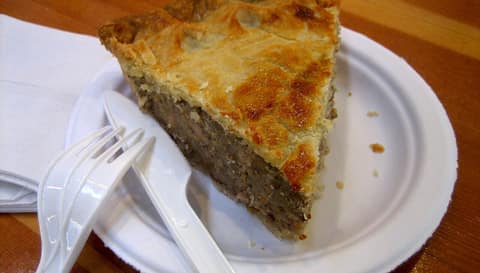
Which dishes from Canada were cooked at home? Did anyone make Poutine or Tourtière?
Does anyone in the family still speak Canadian English, or use a few words of it?
Were there songs, prayers, games or holidays from Canada that the family kept?
Are there old photos, letters or documents from Canada? Who has them?
If you could visit Canada together, where would you go first?
A short history of Canada
People have lived in what is now Canada for thousands of years: First Nations across the forests, plains and Pacific coast, and the Inuit in the Arctic. Europeans arrived first as Norse sailors, then as fishermen, explorers and fur traders. New France and British colonies fought over the land, and in 1867 Canada was born as a self-governing country. Step by step it took full control of its own affairs, and it is still working through the harder parts of its past, especially the treatment of Indigenous peoples.
1021
Vikings at L'Anse aux Meadows
Norse sailors from Greenland built a small camp at L'Anse aux Meadows, at the northern tip of Newfoundland. Tree rings in wood they cut show they were there in the year 1021, almost 500 years before Columbus crossed the Atlantic. It is the only undisputed Norse site in the Americas outside Greenland, and a UNESCO World Heritage Site since 1978.
1534
Jacques Cartier claims Gaspé for France
The French explorer Jacques Cartier claimed the Gaspé Peninsula for France in 1534 and sailed up the St. Lawrence River the next year. Iroquoian people near today's Quebec City used the word kanata, meaning 'village', and Cartier began to use 'Canada' for the whole region. That is where the country's name comes from.
1670
The Hudson's Bay Company is founded
On 2 May 1670, King Charles II of England gave the Hudson's Bay Company a charter to trade in all the lands draining into Hudson Bay, a huge area called Rupert's Land. For two centuries it traded European goods with First Nations for furs, especially beaver. It agreed in 1869 to give up Rupert's Land, which passed to Canada in 1870. In 2025, after 355 years, the company went out of business and closed all its stores.
1867
Confederation
On 1 July 1867, the Province of Canada, which was split into Ontario and Quebec, joined Nova Scotia and New Brunswick to form one self-governing Dominion under the name of Canada. The law that created it, the British North America Act, is now called the Constitution Act, 1867. Every 1 July is celebrated as Canada Day.
1917
The Battle of Vimy Ridge
From 9 to 12 April 1917, during the First World War, the Canadian Corps captured Vimy Ridge in northern France. It was the first time all four Canadian divisions fought together. About 3,600 Canadians were killed, and the battle became a lasting symbol of national pride.
1965
The maple leaf flag is raised
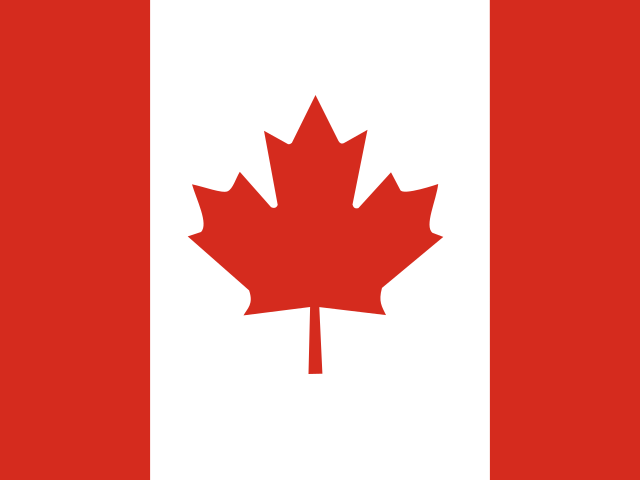
On 15 February 1965, the new red and white flag with an 11-pointed maple leaf was raised for the first time in a ceremony on Parliament Hill in Ottawa. Since 1996, 15 February has been marked as National Flag of Canada Day.
1995
The second Quebec referendum
In 1980, Quebec voters had turned down a mandate to negotiate 'sovereignty-association', by 59.6 percent to 40.4 percent. On 30 October 1995 a second referendum, on sovereignty with an offer of partnership to Canada, was much closer: 50.6 percent voted No and 49.4 percent voted Yes, with a record turnout of about 93.5 percent. Quebec remains a province of Canada.
2015
The Truth and Reconciliation Commission reports
Over more than a century, about 150,000 First Nations, Inuit and Métis children were placed in residential schools, funded by the federal government and mostly run by churches, which aimed to cut them off from their families, languages and cultures. Many children suffered abuse, and thousands died, mostly of disease. The last federally funded school closed in 1997. The government apologised in 2008, and in 2015 the Truth and Reconciliation Commission concluded that the system was a cultural genocide and published 94 Calls to Action.