Maple syrup and mountains, hockey and lighthouses: the second-largest country on Earth, stretching from the Atlantic to the Pacific and up to the Arctic.
Your trip to Canada
Ready for the trip?
10 questionsAbout 3 minutesNo timer
Explore Canada
You have explored 0 of 9 parts. Scroll on to discover the rest.
A free large-print PDF. Choose what goes in: facts, map, history, dishes and recipes, phrases, fun facts, a quiz with or without answers. Made for clubs, care homes, libraries and family afternoons.
Canada covers the northern part of North America, from the Atlantic Ocean in the east to the Pacific in the west and the Arctic Ocean in the north. It is the second-largest country in the world by total area, after Russia, and has the longest coastline of any country. Most Canadians live in the south, within a few hundred kilometres of the long border with the United States, while the north is a land of forests, tundra, lakes and Arctic islands.
First Nations, Inuit and Métis peoples are the Indigenous peoples of Canada, and their ancestors lived here for thousands of years before Europeans arrived. Norse sailors reached Newfoundland around the year 1000, and from the 1500s France and England sent explorers, fishermen and fur traders. New France grew along the St. Lawrence River, and after the Seven Years' War it passed to Britain. In 1867 several British colonies united to form Canada.
Today Canada is a federation of ten provinces and three territories, with about 42 million people. It is a parliamentary democracy and a constitutional monarchy, and it has two official languages, English and French. French is the main language of Quebec, and you will hear it all over Montreal and Quebec City, while cities such as Toronto and Vancouver are among the most multicultural in the world.
CapitalOttawa
PopulationAbout 42 million (Statistics Canada estimate for 1 July 2026: 41.8 million)
Official languageEnglish and French, equal in status at the federal level (Official Languages Act, 1969). Quebec's official language is French, New Brunswick is officially bilingual, and Nunavut and the Northwest Territories also give official status to Indigenous languages
CurrencyCanadian dollar (CAD), divided into 100 cents
AreaAbout 9.98 million km², the second-largest country in the world after Russia
GovernmentFederal parliamentary democracy and constitutional monarchy of ten provinces and three territories. As of 2026 the monarch is King Charles III, represented in Canada by the Governor General
Highest mountainMount Logan in Yukon, 5,959 m, the second-highest peak in North America after Denali
Longest riverThe Mackenzie, 1,738 km, which flows north into the Arctic Ocean. With the rivers that feed it (the Slave, Peace and Finlay) it forms Canada's longest river system, about 4,241 km
NeighboursThe United States by land, along a border of 8,891 km including Alaska. Denmark: a 2022 agreement divided tiny Hans Island, between Canada's Ellesmere Island and Greenland, so Canada now shares a land border of about 1.3 km with Greenland. France: the French islands of Saint Pierre and Miquelon lie about 19 km off Newfoundland
Drives on theRight
Calling code+1 (shared with the United States and several Caribbean countries)
People have lived in what is now Canada for thousands of years: First Nations across the forests, plains and Pacific coast, and the Inuit in the Arctic. Europeans arrived first as Norse sailors, then as fishermen, explorers and fur traders. New France and British colonies fought over the land, and in 1867 Canada was born as a self-governing country. Step by step it took full control of its own affairs, and it is still working through the harder parts of its past, especially the treatment of Indigenous peoples.
1021
Vikings at L'Anse aux Meadows
Norse sailors from Greenland built a small camp at L'Anse aux Meadows, at the northern tip of Newfoundland. Tree rings in wood they cut show they were there in the year 1021, almost 500 years before Columbus crossed the Atlantic. It is the only undisputed Norse site in the Americas outside Greenland, and a UNESCO World Heritage Site since 1978.
1497
John Cabot reaches the coast
The Italian navigator Giovanni Caboto, known in English as John Cabot, sailed from Bristol in the small ship Matthew for King Henry VII of England and sighted land on 24 June 1497. Nobody knows exactly where he landed. For the 500th anniversary, Canada and Britain chose Cape Bonavista in Newfoundland as the official landing place.
1534
Jacques Cartier claims Gaspé for France
The French explorer Jacques Cartier claimed the Gaspé Peninsula for France in 1534 and sailed up the St. Lawrence River the next year. Iroquoian people near today's Quebec City used the word kanata, meaning 'village', and Cartier began to use 'Canada' for the whole region. That is where the country's name comes from.
1608
Champlain founds Quebec
On 3 July 1608, Samuel de Champlain founded a settlement at Quebec, where the St. Lawrence River narrows, on the site of the abandoned Iroquoian village of Stadacona. It became the capital of New France, and Champlain is remembered as the 'Father of New France'.
1670
The Hudson's Bay Company is founded
On 2 May 1670, King Charles II of England gave the Hudson's Bay Company a charter to trade in all the lands draining into Hudson Bay, a huge area called Rupert's Land. For two centuries it traded European goods with First Nations for furs, especially beaver. It agreed in 1869 to give up Rupert's Land, which passed to Canada in 1870. In 2025, after 355 years, the company went out of business and closed all its stores.
1759
The Battle of the Plains of Abraham
On 13 September 1759, during the Seven Years' War, a British army under General James Wolfe defeated the French under the Marquis de Montcalm just outside Quebec City, in a battle that lasted about an hour. Both commanders died of their wounds. With the Treaty of Paris in 1763, France gave up Canada to Britain, keeping only the small islands of Saint Pierre and Miquelon nearby.
1867
Confederation
On 1 July 1867, the Province of Canada, which was split into Ontario and Quebec, joined Nova Scotia and New Brunswick to form one self-governing Dominion under the name of Canada. The law that created it, the British North America Act, is now called the Constitution Act, 1867. Every 1 July is celebrated as Canada Day.
1870
Manitoba joins Confederation
When Canada took over Rupert's Land without asking the people who lived there, the Métis of the Red River settlement, led by Louis Riel, set up a provisional government. This became known as the Red River Resistance. Negotiations led to the Manitoba Act, and on 15 July 1870 Manitoba became Canada's fifth province.
1885
The last spike of the railway
On 7 November 1885 at Craigellachie, British Columbia, the financier Donald Smith drove the last spike of the Canadian Pacific Railway. It completed Canada's first railway from coast to coast, which had been promised to British Columbia when it joined Canada in 1871.
1917
The Battle of Vimy Ridge
From 9 to 12 April 1917, during the First World War, the Canadian Corps captured Vimy Ridge in northern France. It was the first time all four Canadian divisions fought together. About 3,600 Canadians were killed, and the battle became a lasting symbol of national pride.
1949
Newfoundland joins Canada
Newfoundland had been a separate British dominion. After two referendums in 1948, it joined Canada on 31 March 1949 as the tenth and most recent province. In 2001 its name was changed to Newfoundland and Labrador.
1965
The maple leaf flag is raised
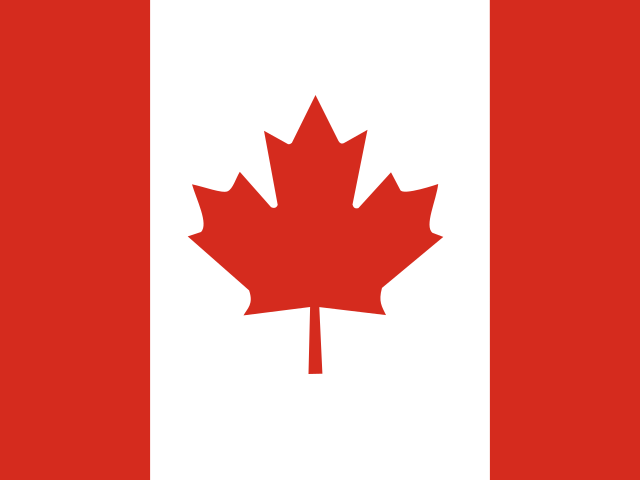
On 15 February 1965, the new red and white flag with an 11-pointed maple leaf was raised for the first time in a ceremony on Parliament Hill in Ottawa. Since 1996, 15 February has been marked as National Flag of Canada Day.
1982
The Constitution is brought home
On 17 April 1982, Queen Elizabeth II signed the proclamation of the Constitution Act, 1982. From then on Canada could change its own constitution without the British Parliament, a step known as patriation, and the Canadian Charter of Rights and Freedoms became law. The Government of Quebec has never formally approved the act, although the Supreme Court ruled that its approval was not legally needed.
1995
The second Quebec referendum
In 1980, Quebec voters had turned down a mandate to negotiate 'sovereignty-association', by 59.6 percent to 40.4 percent. On 30 October 1995 a second referendum, on sovereignty with an offer of partnership to Canada, was much closer: 50.6 percent voted No and 49.4 percent voted Yes, with a record turnout of about 93.5 percent. Quebec remains a province of Canada.
1999
Nunavut is created
On 1 April 1999, Nunavut, which means 'our land' in Inuktitut, was separated from the Northwest Territories. It was created under a land claims agreement with the Inuit, who make up most of its people, so that they could govern their own homeland. It is the largest and most northern territory, and its capital is Iqaluit.
2015
The Truth and Reconciliation Commission reports
Over more than a century, about 150,000 First Nations, Inuit and Métis children were placed in residential schools, funded by the federal government and mostly run by churches, which aimed to cut them off from their families, languages and cultures. Many children suffered abuse, and thousands died, mostly of disease. The last federally funded school closed in 1997. The government apologised in 2008, and in 2015 the Truth and Reconciliation Commission concluded that the system was a cultural genocide and published 94 Calls to Action.
Canadians usually eat three meals: breakfast, a light lunch at midday and a bigger meal in the evening, often called supper. In Quebec the words are different: le déjeuner is breakfast, le dîner is lunch and le souper is the evening meal. Canadian food mixes French, British and Irish home cooking with Indigenous foods such as wild berries and bannock, and with the dishes of newer arrivals, from Jewish delis in Montreal to Greek and Lebanese cooks in Halifax. Every region has its favourite: poutine and tourtière in Quebec, butter tarts in Ontario, Nanaimo bars in British Columbia and salt beef dinners in Newfoundland. In spring, families in Quebec and Ontario visit sugar shacks to eat maple syrup straight from the sap.
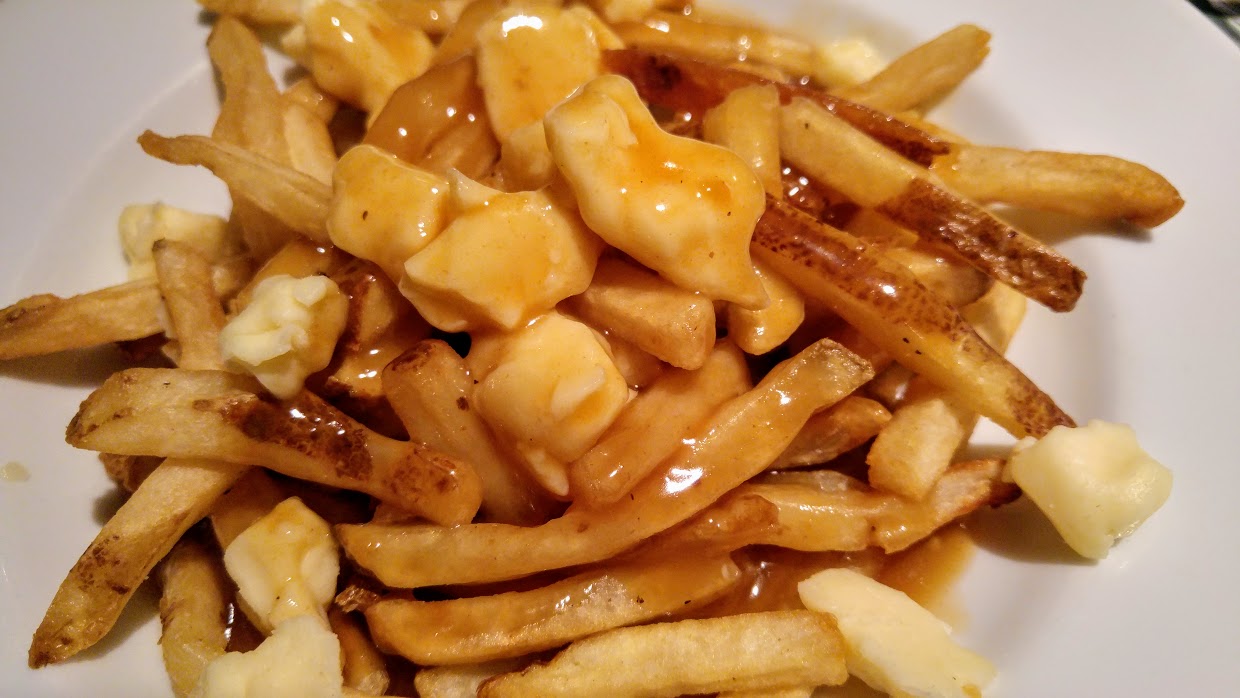
Hot French fries topped with fresh cheese curds and a light brown gravy. The hot gravy softens the curds without fully melting them, so they stay a little chewy and squeak against your teeth.
Several towns claim to have invented it, including Warwick, Drummondville and Princeville. One story says a restaurant owner in Warwick, asked to put cheese curds on fries in 1957, said it would make 'une maudite poutine', a terrible mess.
See the recipe
Serves 4
45 min
Ingredients
800 g oven or deep-fried French fries (homemade or frozen)
300 g fresh cheese curds, at room temperature (or chunks of mild mozzarella if you cannot find curds)
3 tablespoons butter
3 tablespoons plain flour
500 ml beef stock
1 tablespoon ketchup
1 teaspoon Worcestershire sauce
Black pepper
Method
Take the cheese curds out of the fridge about an hour before, so they are not cold.
Melt the butter in a saucepan, stir in the flour and cook for 2 to 3 minutes, stirring, until light brown.
Slowly whisk in the stock, then add the ketchup and Worcestershire sauce. Simmer for about 10 minutes until the gravy coats a spoon. Season with pepper.
Cook the fries until crisp and golden, following the packet or your usual method.
Put the hot fries in bowls, scatter the curds over them and pour the very hot gravy on top. Eat at once, with a fork.
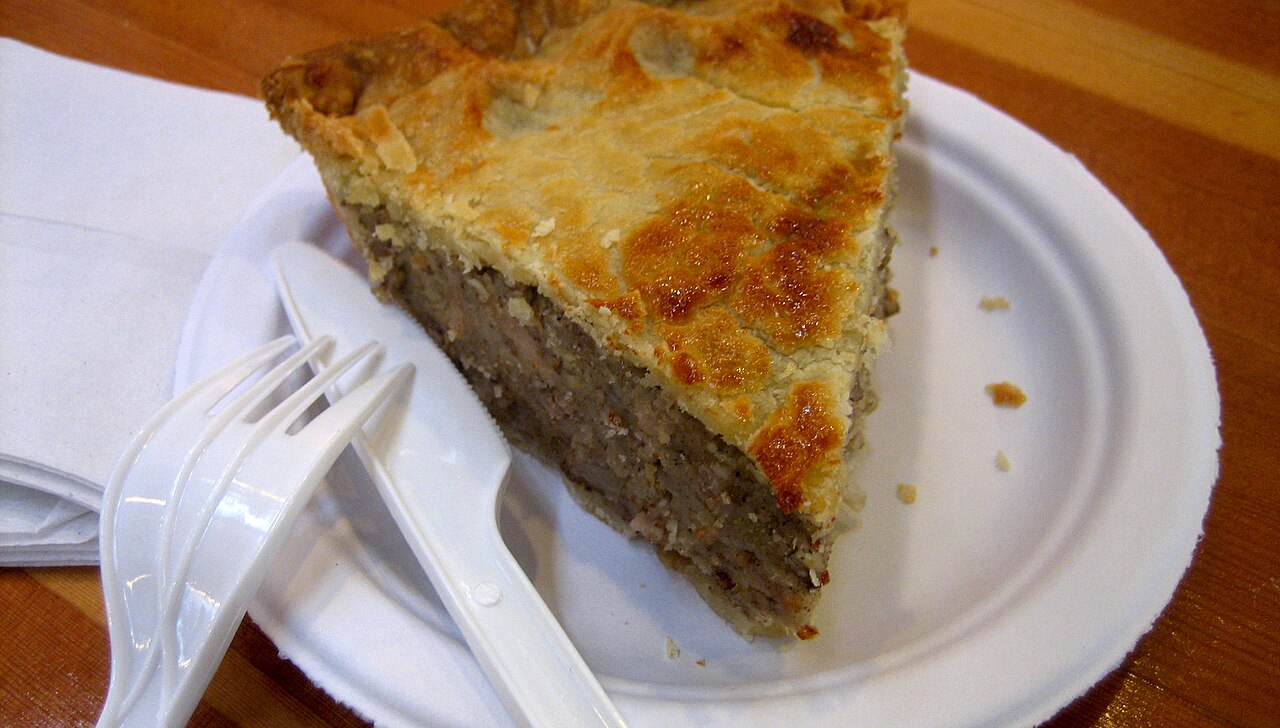
A double-crust meat pie filled with finely minced pork, often mixed with beef or veal, onion and gently warm spices such as cinnamon and cloves. In the Saguenay and Lac-Saint-Jean region it is a deep pie of cubed meats and potatoes, cooked slowly for hours.
Tourtière is a traditional part of the réveillon, the big meal after midnight Mass on Christmas Eve, and of New Year's Eve in Quebec. The name comes from the dish it was baked in, not from what is inside.
Put the pork, onion, garlic, water and spices in a large pan. Cook over medium heat, breaking up the meat, then simmer gently for about 30 minutes until the meat is cooked through and most of the liquid has gone.
Stir in the mashed potato, season well with salt and pepper and let the filling cool.
Heat the oven to 200 °C. Line a pie dish with half the pastry, add the filling and cover with the rest. Seal the edges, cut a few slits in the top and brush with beaten egg.
Bake for 15 minutes, then lower the heat to 180 °C and bake for about 30 minutes more, until golden brown.
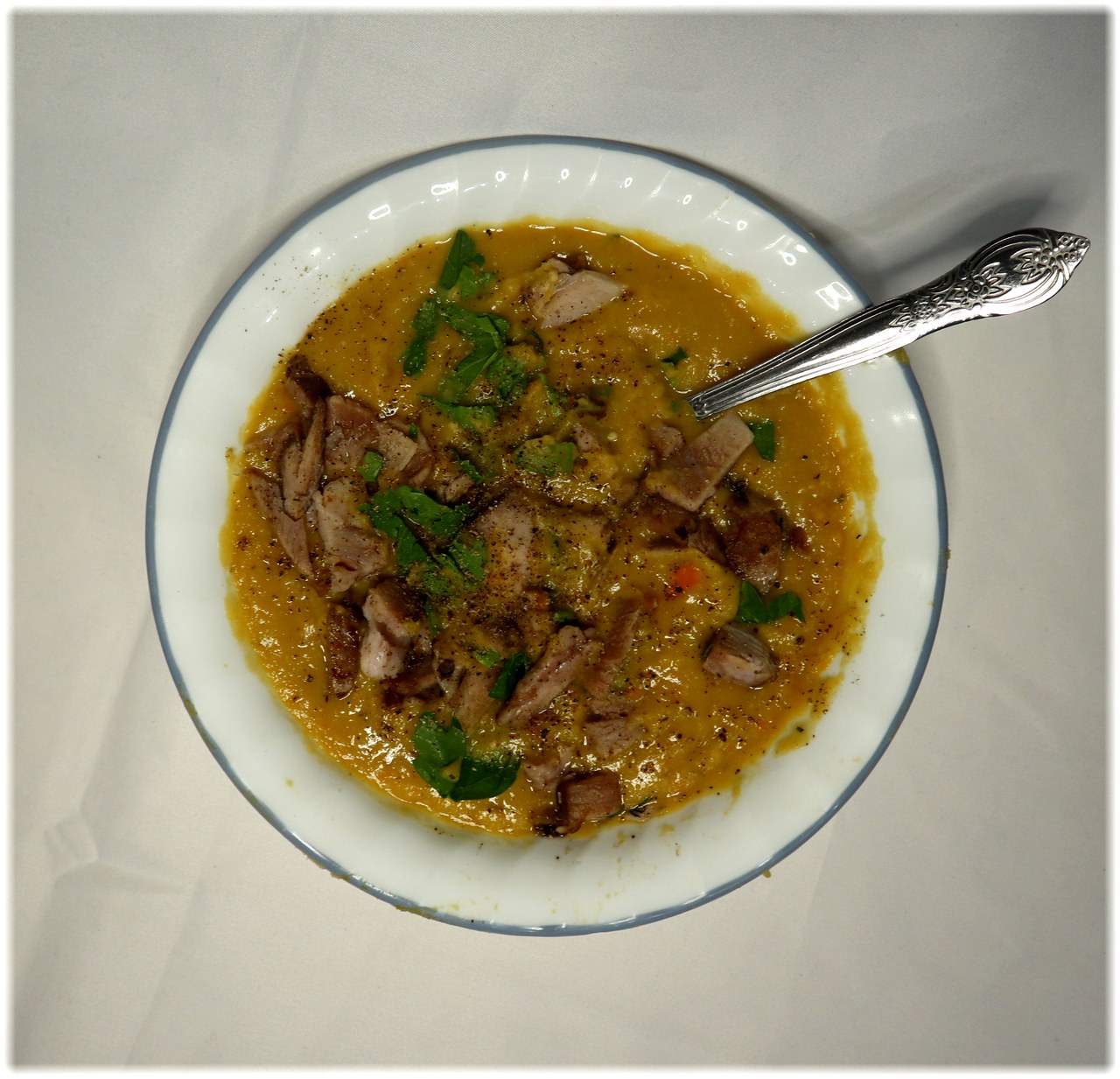
A thick, golden soup of whole yellow peas simmered for hours with salt pork and herbs. The pork is either chopped and stirred back in or served on the side in thin slices.
Settlers from Quebec carried the soup south, and it shaped early cooking in the neighbouring parts of New England, such as Maine and Vermont.
See the recipe
Serves 6
3 h
Ingredients
450 g dried whole yellow peas, soaked overnight in cold water and drained
250 g salt pork or a smoked ham hock
1 onion, chopped
1 carrot, diced
1 celery stalk, diced
2.5 litres water
1 bay leaf and 1 teaspoon dried savory or thyme
Pepper, and salt only if needed at the end
Method
Soak the peas overnight (this is not included in the cooking time), then drain and rinse them.
Put the peas, pork, vegetables, herbs and water in a large pot and bring to the boil. Skim off any foam.
Lower the heat, cover partly and simmer for 2 to 3 hours, stirring now and then, until the peas are very soft and the soup is thick. Add a little water if it gets too thick.
Take out the pork and the bay leaf. Chop the meat, removing skin, fat and bone, and stir it back into the soup.
Taste before adding salt, because the pork is already salty. Serve hot with bread.
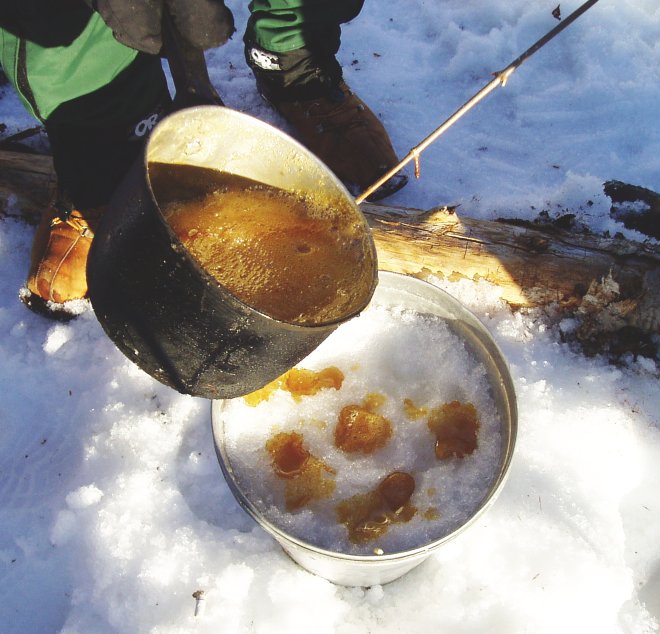
Maple syrup boiled to about 112 °C, then poured in lines onto clean snow or crushed ice. It firms up in seconds into a soft, chewy toffee that you roll up on a wooden stick and eat at once.
It is a treat of the sugar shack season, from about February to April, when the sap runs. On average, Quebec produces about 72 percent of all the maple syrup in the world.
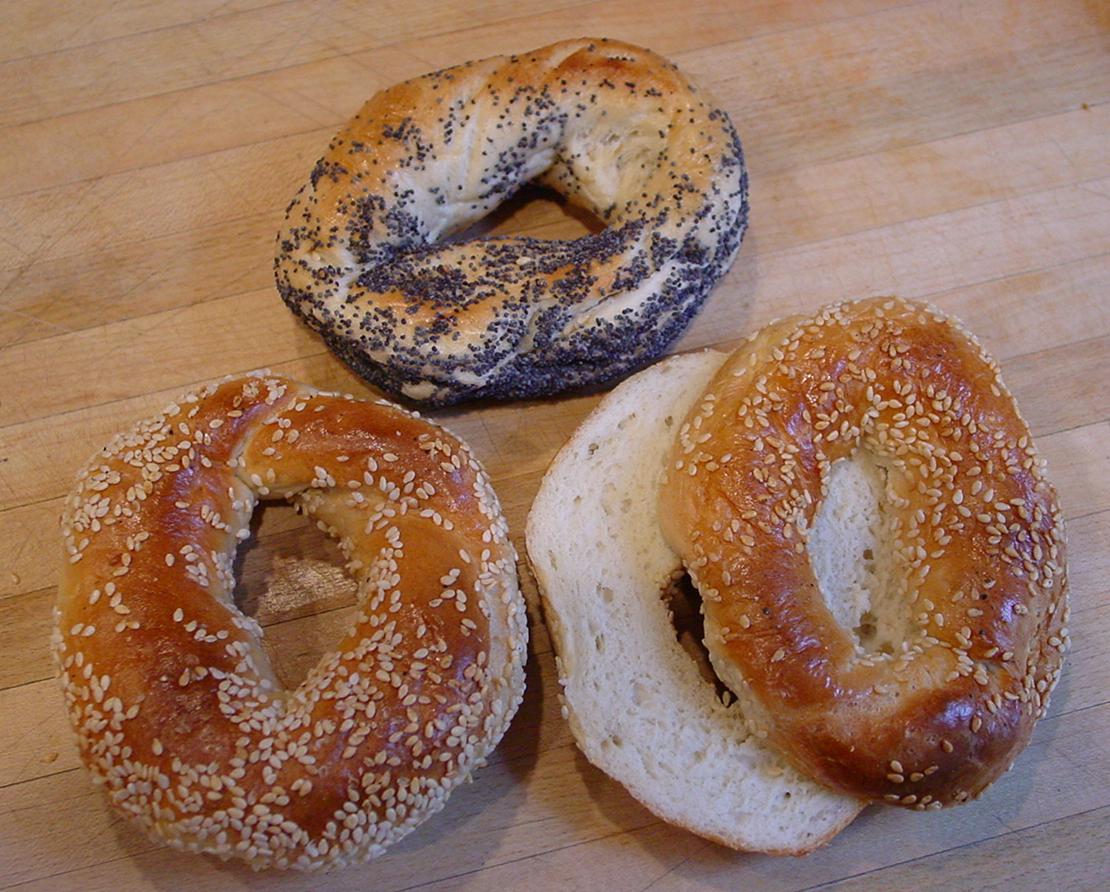
Smaller, thinner, sweeter and denser than a New York bagel, with a bigger hole. The dough contains malt and egg but no salt, and the bagels are boiled in honey-sweetened water, then baked in a wood-fired oven. Sesame and poppy seed are the classics.
Two rival bakeries in the Mile End district, Fairmount Bagel (founded 1919) and St-Viateur Bagel (1957), still bake them around the clock, and each claims to be the city's oldest bagel shop.
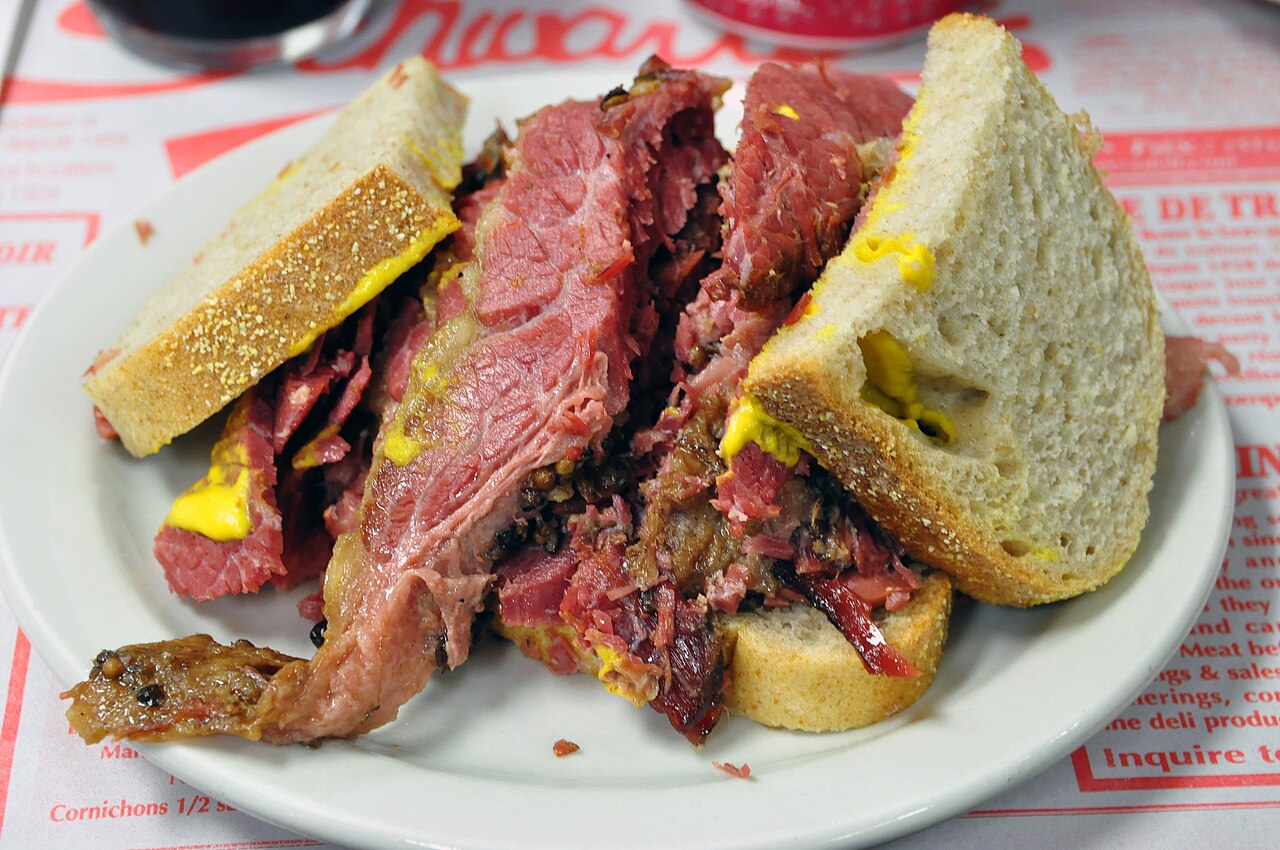
Beef brisket cured for about a week with spices such as cracked pepper, coriander, garlic and mustard seed, then smoked and steamed. It is sliced by hand and piled high on light rye bread with yellow mustard.
Schwartz's deli on Saint Laurent Boulevard, founded by Reuben Schwartz, a Jewish immigrant from Romania, has served it since 1928. You can order it lean, medium or fat.
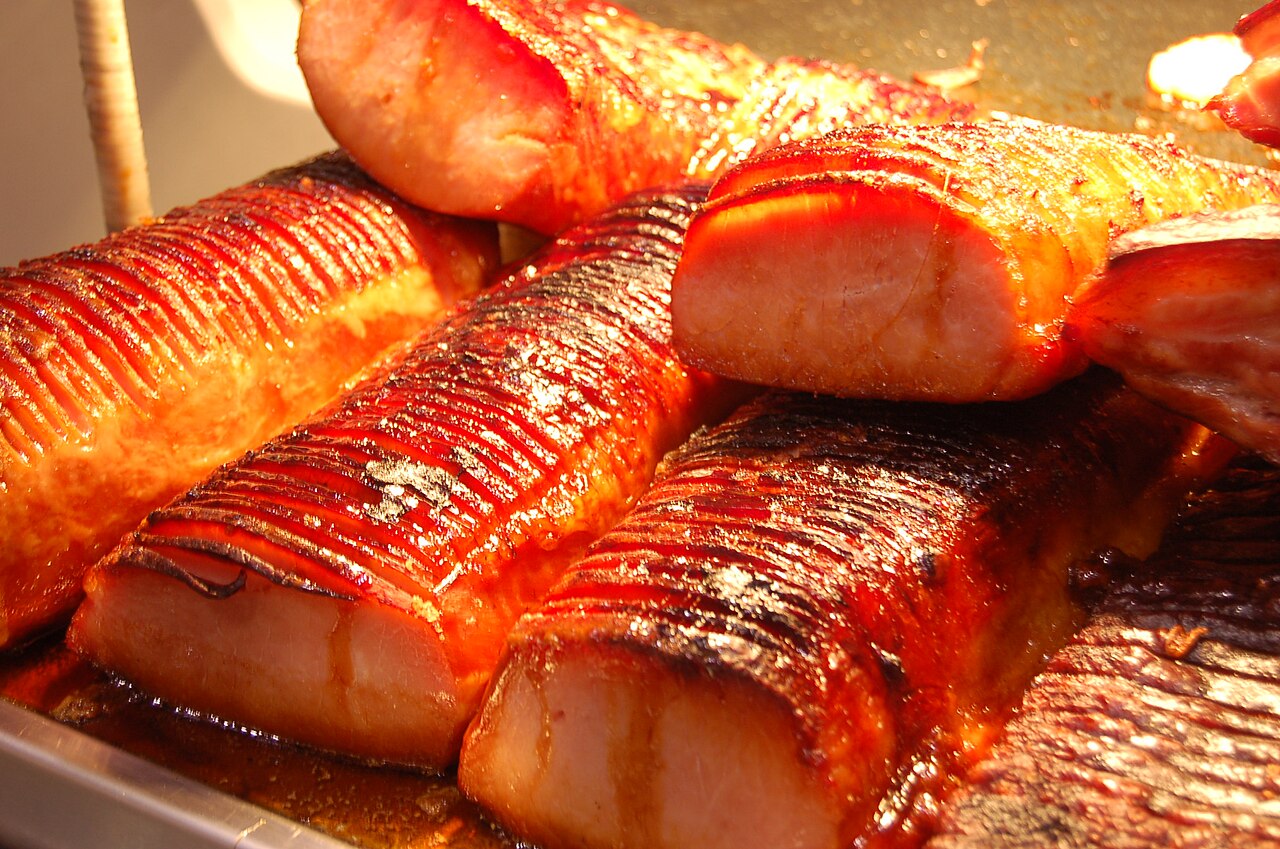
Thick slices of cured boneless pork loin, rolled in yellow cornmeal and fried, served in a soft Kaiser roll, often with mustard. It is Toronto's signature sandwich.
The name comes from dried yellow peas ground into meal and packed around the meat to keep it in Victorian times. Cornmeal replaced the peas after the First World War, but the name stayed. The sandwich is most famous at St. Lawrence Market.
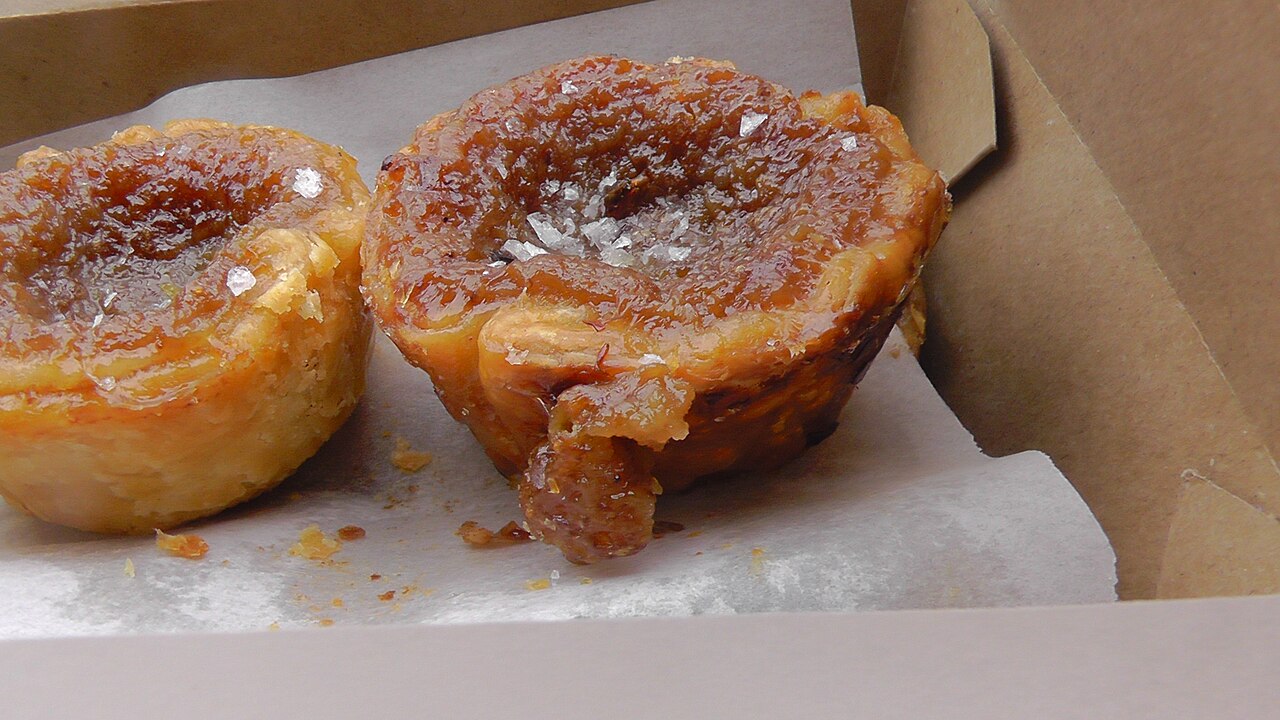
A small pastry shell filled with butter, brown sugar, syrup and egg, baked until the filling is set at the edges, runny in the middle and crackly on top.
The earliest known Canadian recipe was printed in 1900 in a hospital cookbook from Barrie, Ontario. Whether butter tarts should contain raisins is a famous, friendly Canadian argument.
See the recipe
Serves 12
50 min
Ingredients
12 unbaked tart shells, about 7 cm across (homemade shortcrust or ready-made)
125 g soft brown sugar
125 ml maple syrup or golden syrup
60 g butter, melted
1 egg
1 teaspoon vanilla extract
1 teaspoon lemon juice or white vinegar
A pinch of salt
75 g raisins or chopped pecans (optional)
Method
Heat the oven to 200 °C and put the tart shells on a baking tray or in a muffin tin.
Whisk the sugar, syrup, melted butter, egg, vanilla, lemon juice and salt together until smooth.
If you like, put a few raisins or pecans in each shell.
Fill each shell about two-thirds full with the mixture. Do not overfill, as it bubbles up.
Bake for 15 to 18 minutes, until the pastry is golden and the filling is bubbling. Cool in the tin for 10 minutes, as the filling is very hot, then lift out.
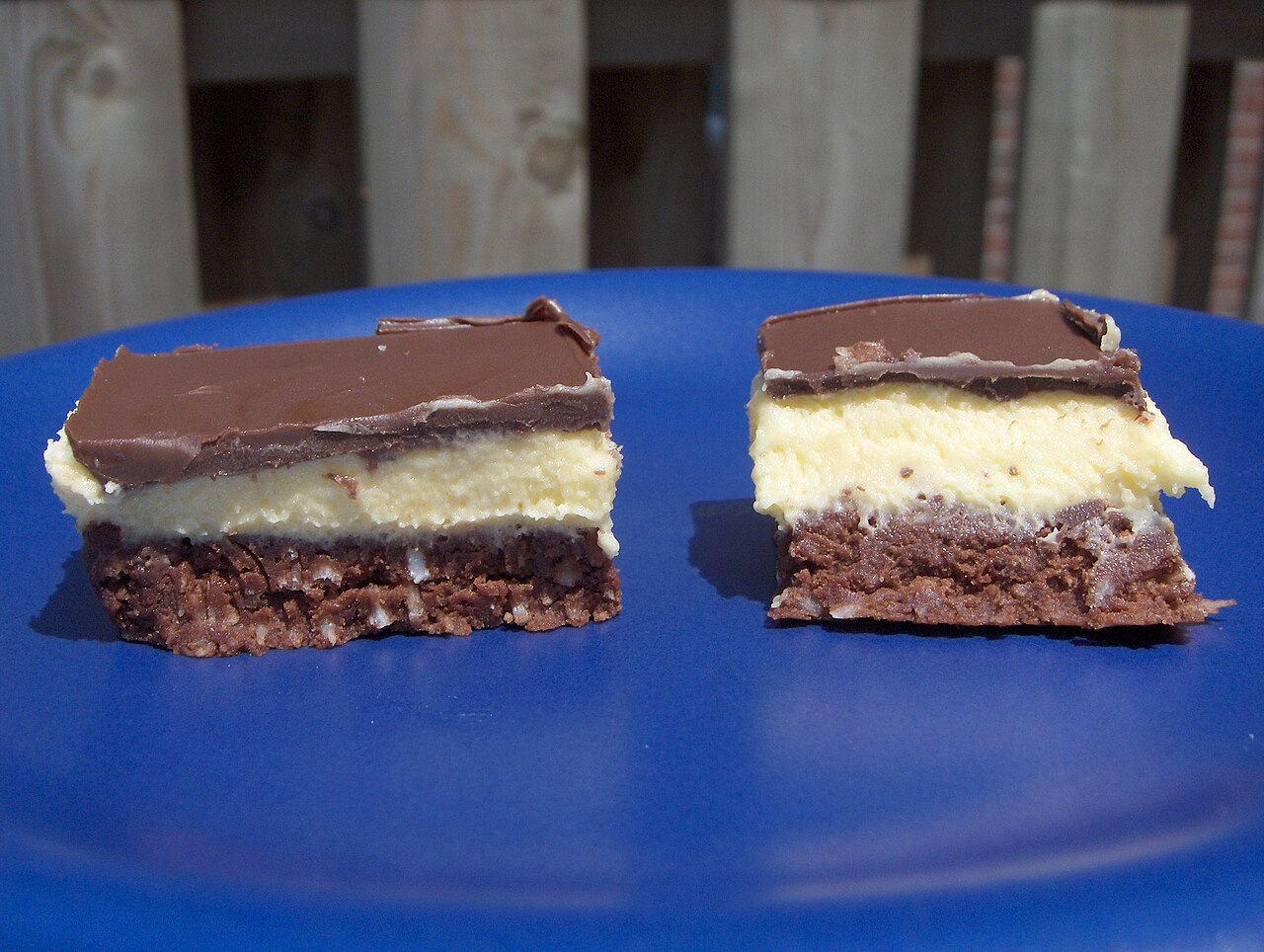
A no-bake square with three layers: a base of chocolate, crumbs, coconut and nuts, a middle of sweet yellow custard-flavoured butter icing, and a top of melted chocolate.
Very similar squares appeared in a Nanaimo hospital cookbook in 1952, and the name 'Nanaimo bars' was in print by 1953. In 1985 the city's mayor held a contest to find the best recipe.
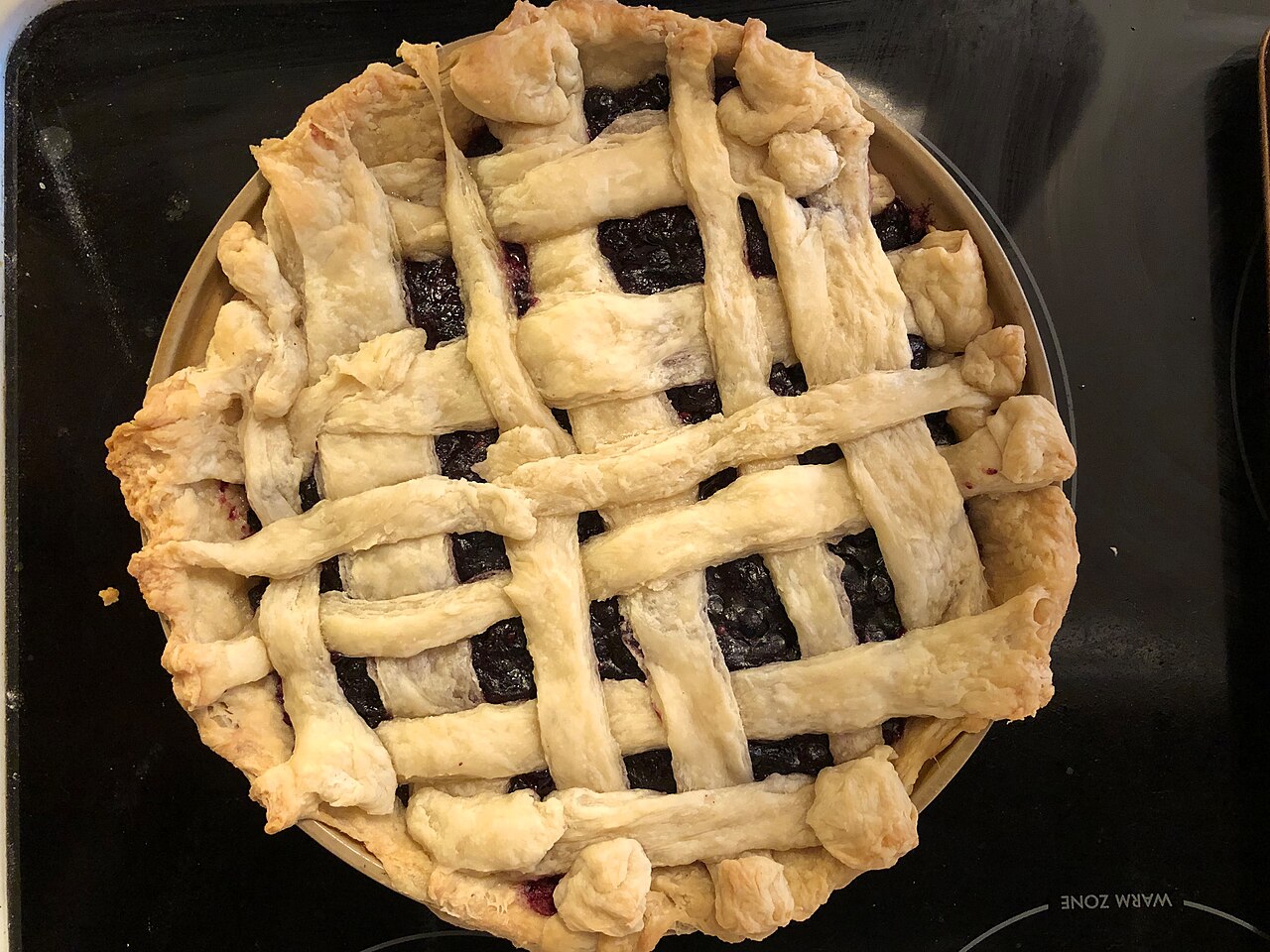
A pie of small purple saskatoon berries, which look like blueberries but have a sweet, nutty taste. It is a classic of the Prairie provinces.
The word 'saskatoon' comes from the Cree name for the berry, and the city of Saskatoon is named after it. First Nations mixed the dried berries into pemmican, a long-lasting food of dried meat and fat.
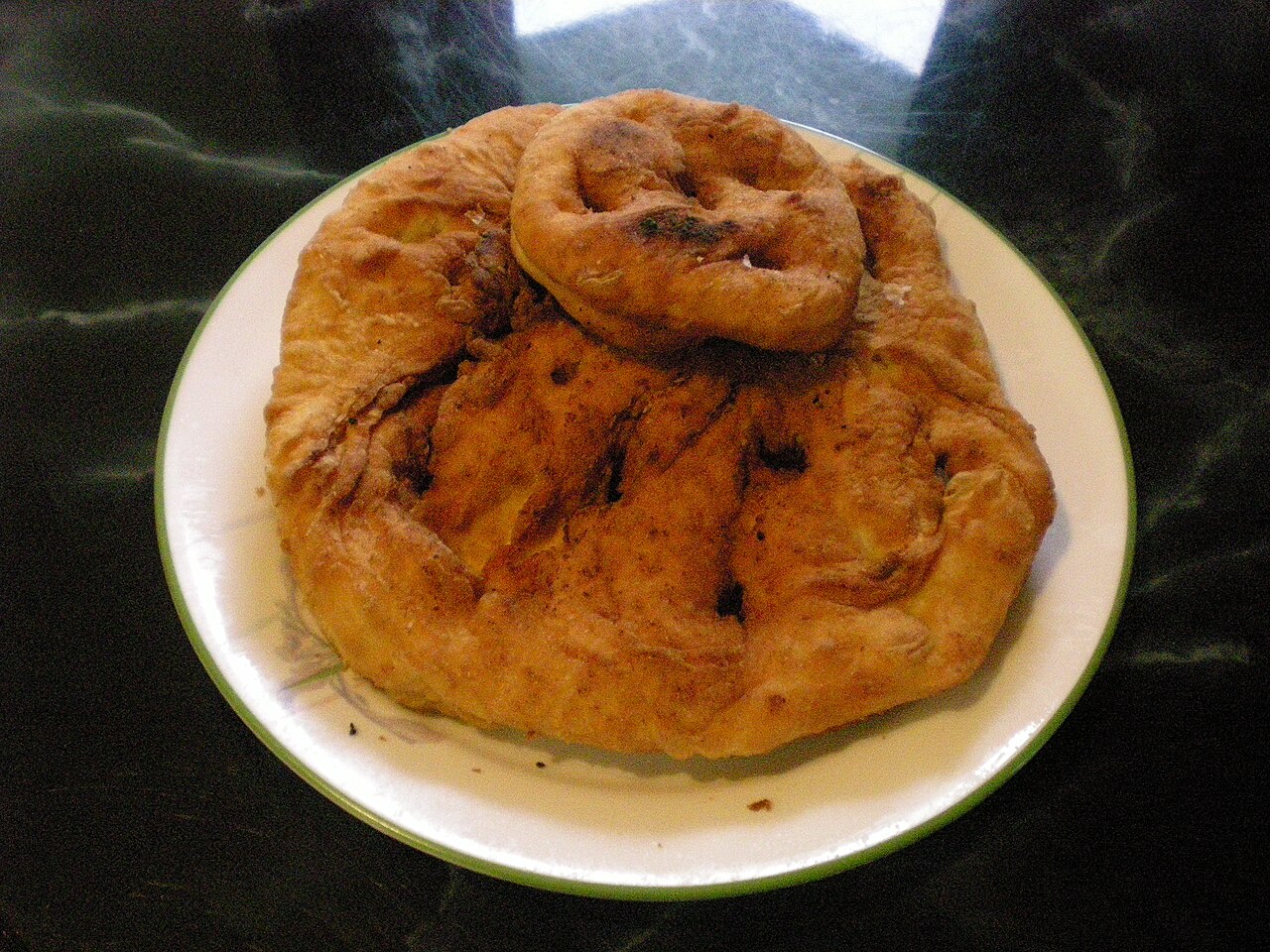
A simple quick bread of flour, baking powder, fat and water or milk, fried in a pan, baked, or wrapped around a stick over a campfire. It is found from the Arctic to the Pacific coast.
Fur traders brought the Scottish name and wheat flour, but Indigenous peoples had made breads from corn, roots and other plants long before. When government rations replaced traditional foods on reserves, bannock became a survival food, so for some people it has painful as well as happy memories.
See the recipe
Serves 6
35 min
Ingredients
500 g plain flour
1 tablespoon baking powder
1 teaspoon salt
1 tablespoon sugar (optional)
60 g lard or butter, cut small
About 300 ml water or milk
Oil or lard for frying, if you fry it
Method
Mix the flour, baking powder, salt and sugar in a large bowl.
Rub in the lard or butter with your fingertips until the mixture looks like crumbs.
Add the water or milk a little at a time and mix to a soft dough. Do not knead it much.
To bake: press the dough into a round about 2 cm thick on a greased tray and bake at 200 °C for 20 to 25 minutes, until golden and hollow-sounding underneath.
To fry: cut the dough into pieces about 1.5 cm thick and fry in hot oil for 3 to 4 minutes on each side until golden and cooked through. Serve warm with butter, jam or soup.
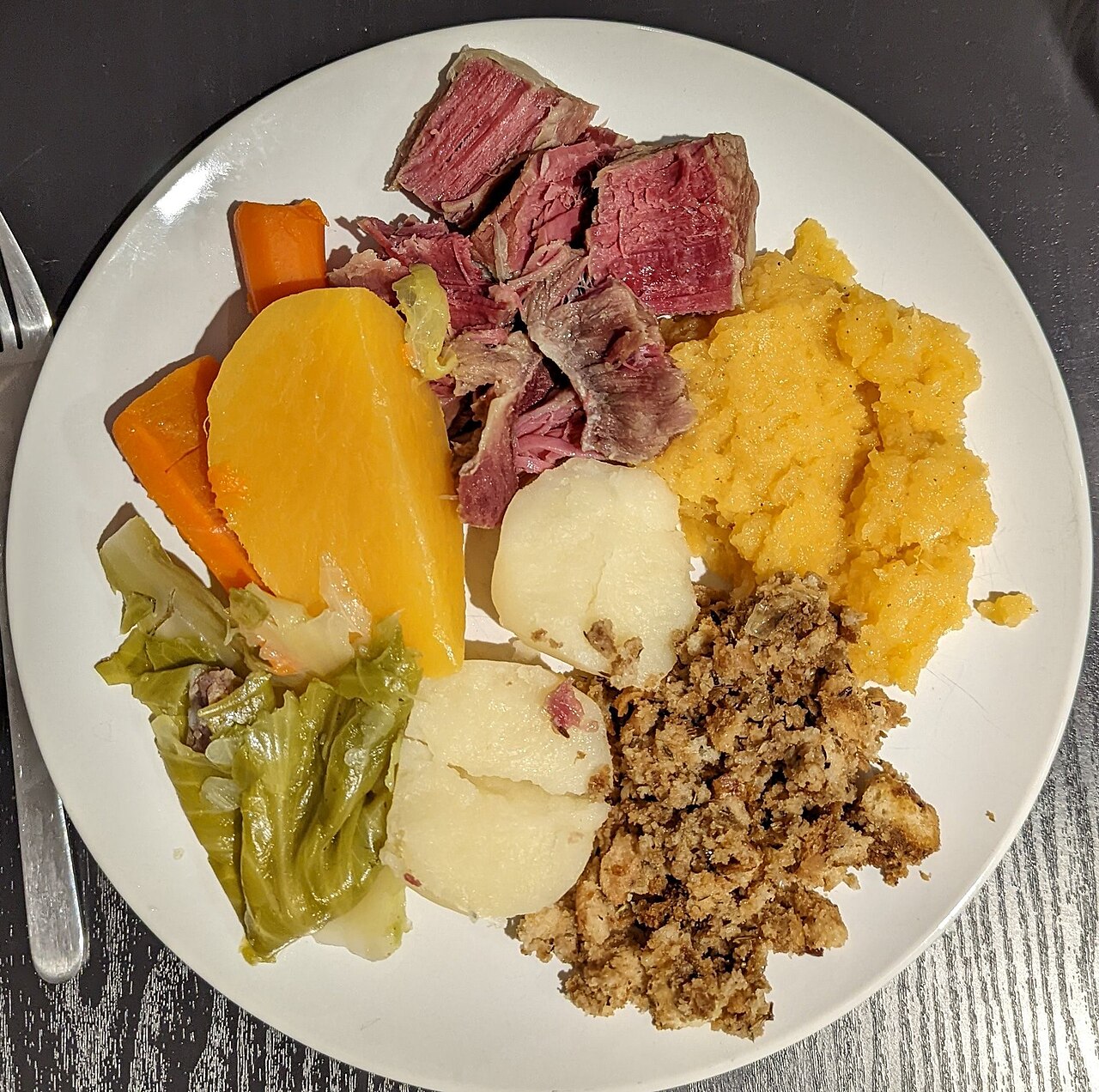
Salt beef boiled in one big pot with potatoes, carrots, cabbage, turnip and greens. A pease pudding and a steamed pudding called figgy duff cook in the same broth. It is traditionally a Sunday meal.
The name comes from Jiggs, a character in the American comic strip Bringing Up Father, whose favourite meal was corned beef and cabbage.
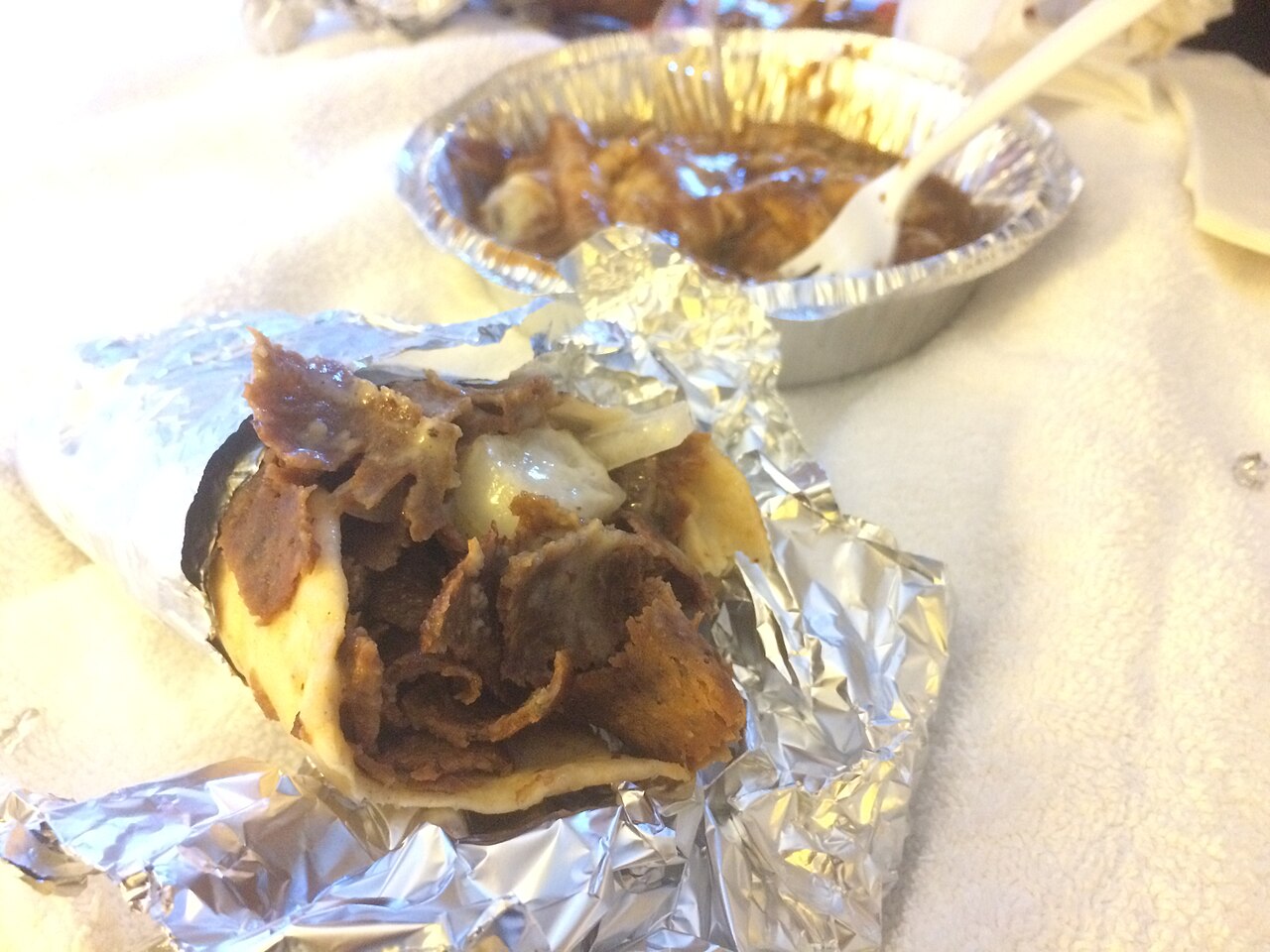
Spiced ground beef cooked on a turning spit, sliced and wrapped in a soft pita with tomato and onion, then covered with a sweet, garlicky sauce made from evaporated milk and vinegar.
It was created by Peter Gamoulakos, a Greek immigrant, who adapted the Turkish döner kebab to local tastes. In 2015 Halifax made the donair its official food, after the mayor cast the deciding vote.
A savoury cocktail of vodka and Clamato, a tomato and clam juice, with hot sauce and Worcestershire sauce, served over ice in a glass rimmed with celery salt and garnished with a celery stalk and a lime wedge. It contains alcohol; a 'Virgin Caesar' is made without the vodka.
Walter Chell, a restaurant manager at the Calgary Inn, invented it in 1969 for a new Italian restaurant, inspired by spaghetti with clams (spaghetti alle vongole).
Table manners
In a sit-down restaurant, a tip of 15 to 20 percent of the bill before tax is normal. Card machines usually suggest amounts such as 15, 18 or 20 percent.
Menu prices usually do not include sales tax. It is added to the bill at the end, so the total is higher than the prices you see.
In Quebec, 'dîner' means lunch and 'souper' means the evening meal, so an invitation to dîner is for the middle of the day.
Canadian Thanksgiving is on the second Monday of October. Families gather for roast turkey with stuffing and cranberry sauce, followed by pumpkin pie, and sometimes butter tarts or Nanaimo bars.
At a Montreal smoked meat deli, the server may ask how you want your meat: lean, medium or fat.
Most Canadians live in cities close to the southern border. Toronto, Montreal and Vancouver are the three biggest city regions, each with its own character: English and multicultural, French and historic, and green between the mountains and the sea. Each province has its own capital, from Victoria on the Pacific to St. John's on the Atlantic.
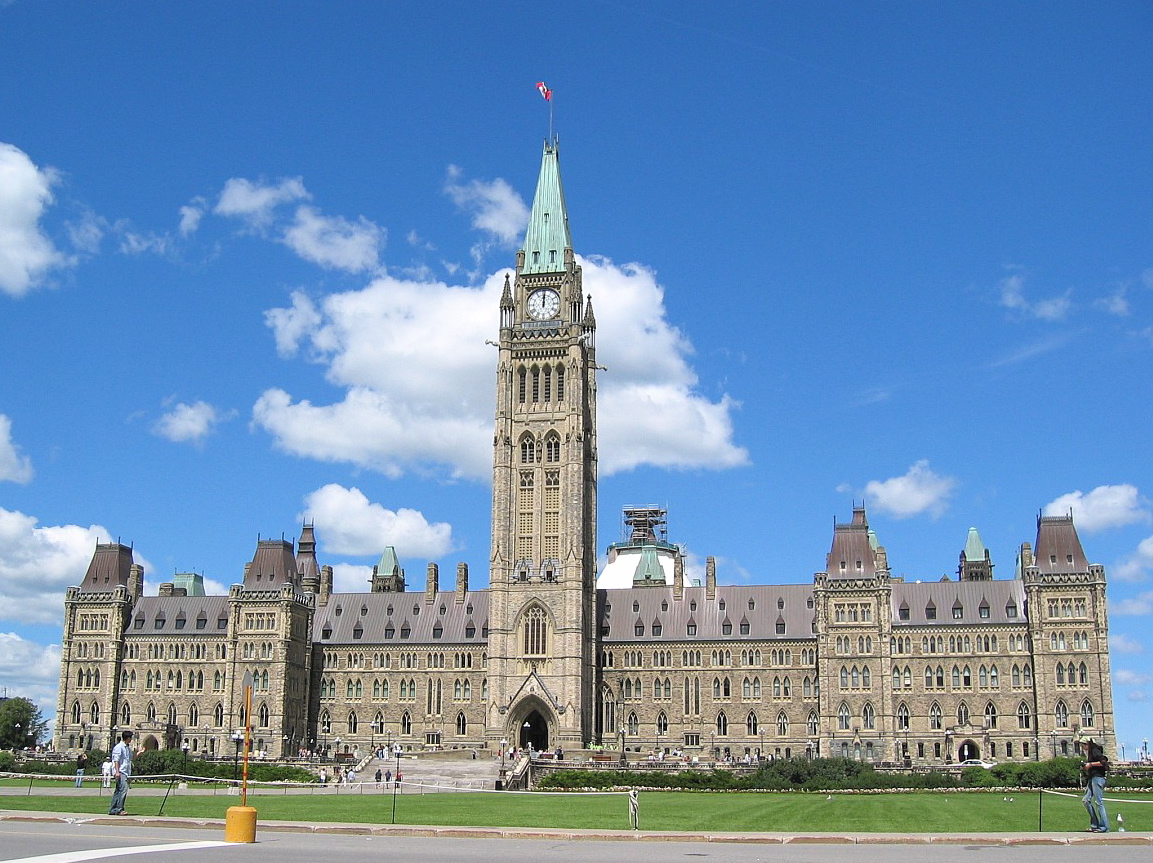
The national capital, on the Ottawa River at the border between Ontario and Quebec. It began as Bytown, a camp for workers building the Rideau Canal, was renamed Ottawa in 1855, and was chosen as the capital by Queen Victoria in 1857. Its name comes from the Algonquin word adawe, 'to trade'.
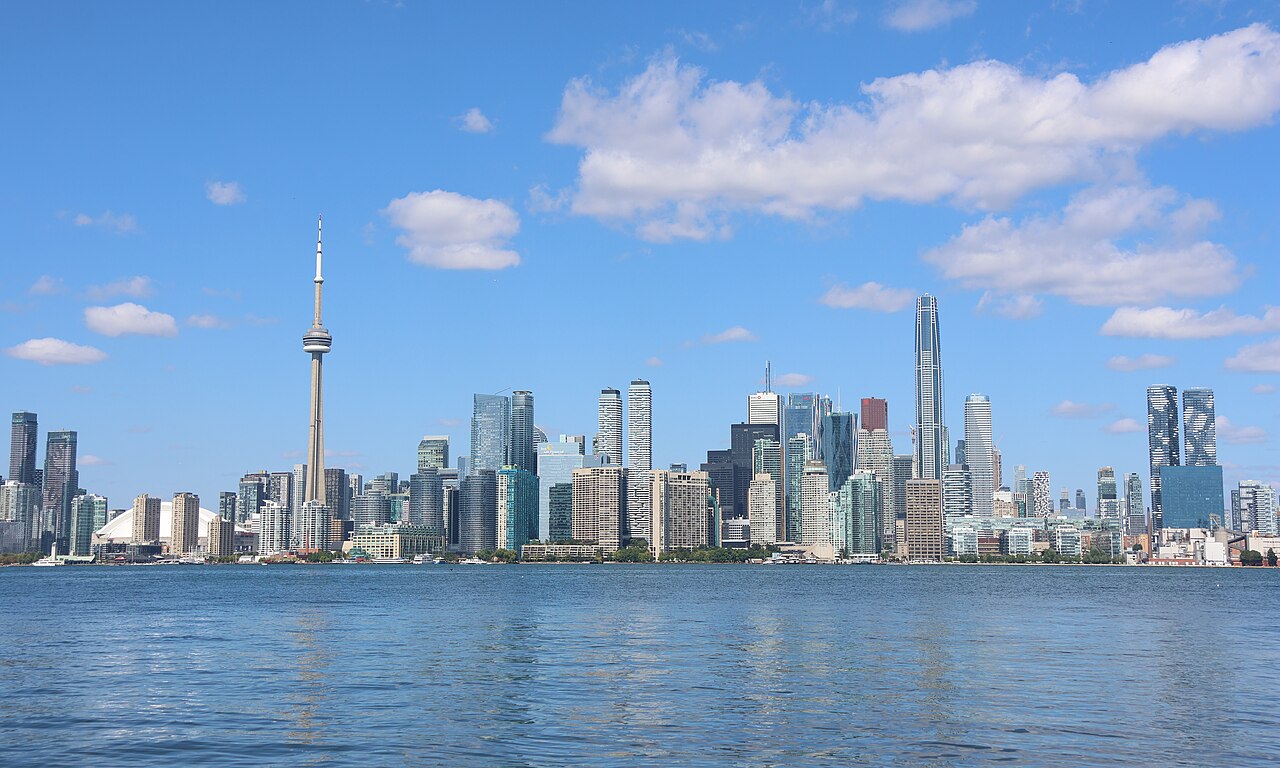
Canada's largest city and the capital of Ontario, on the shore of Lake Ontario. About half of its people were born outside Canada, and more than 160 languages are spoken here. The name comes from the Mohawk word tkaronto, 'where there are trees standing in the water'.
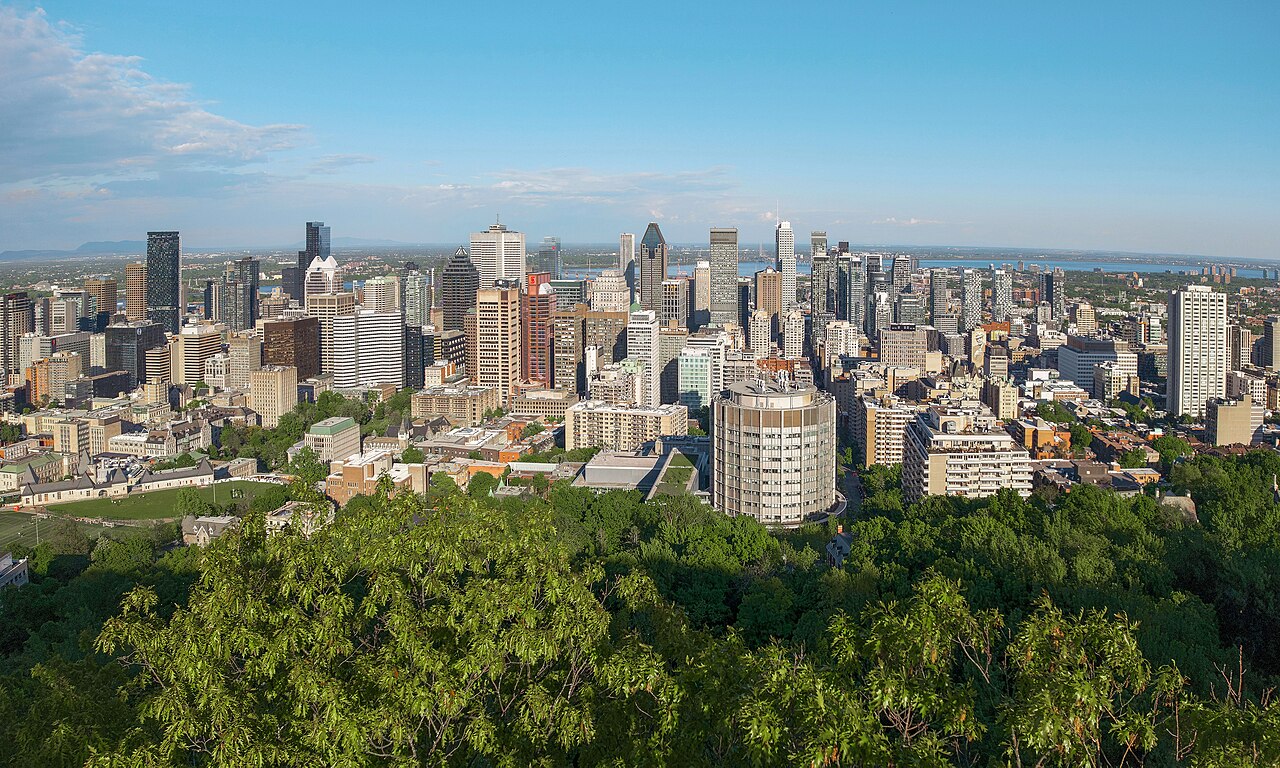
Canada's second-largest city, on an island in the St. Lawrence River, and the largest mainly French-speaking city in the Americas. It was founded in 1642 as Ville-Marie and takes its name from Mount Royal, the hill at its centre. It hosted Expo 67 and the 1976 Summer Olympics.
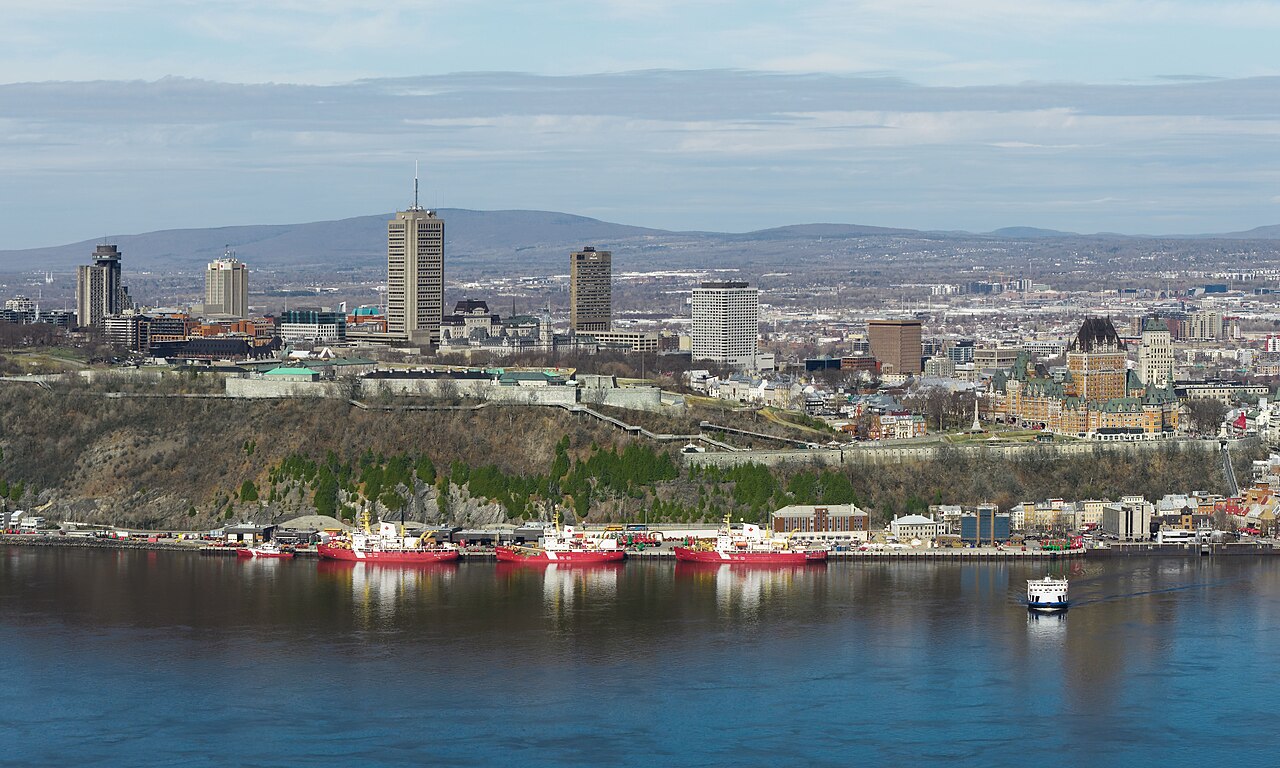
The capital of the province of Quebec, founded by Champlain in 1608 on cliffs above the St. Lawrence River. Its old town has the only fortified city walls still standing in the Americas north of Mexico, and it is a UNESCO World Heritage Site.
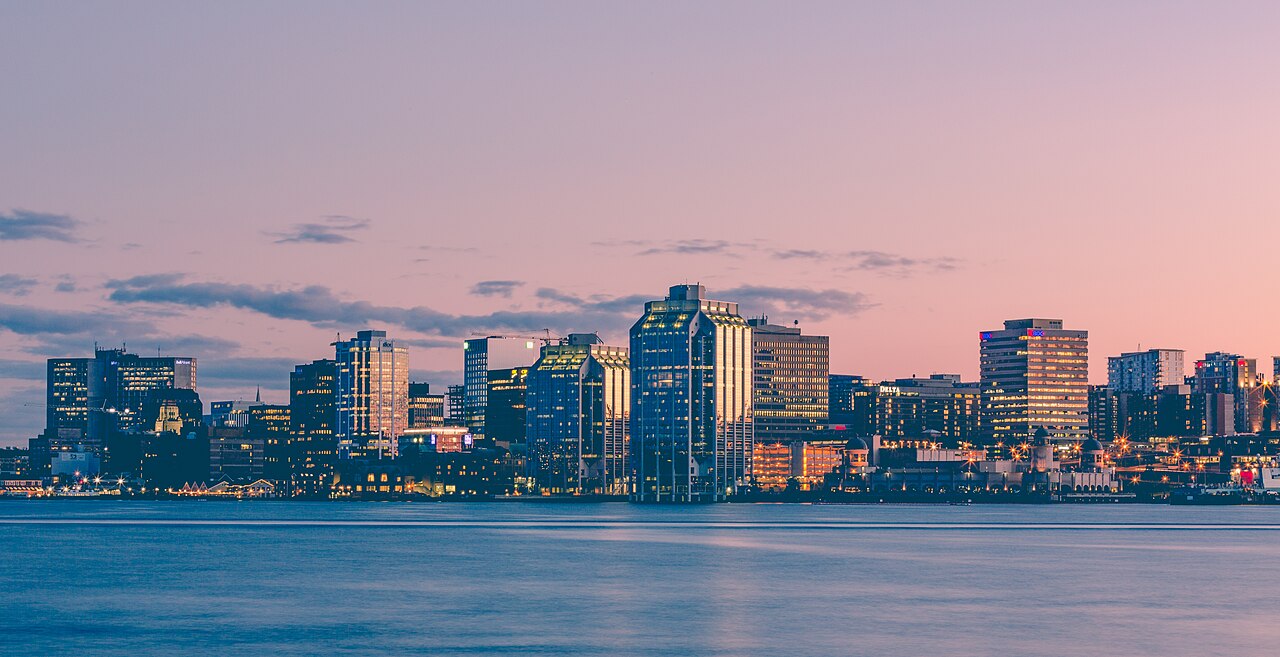
The capital of Nova Scotia and the largest city in Atlantic Canada, founded in 1749 on a large natural harbour. On 6 December 1917, two ships collided in the harbour and one, loaded with explosives, blew up, killing about 2,000 people.
The harbourfront boardwalk
The Canadian Museum of Immigration at Pier 21
Titanic exhibits at the Maritime Museum of the Atlantic
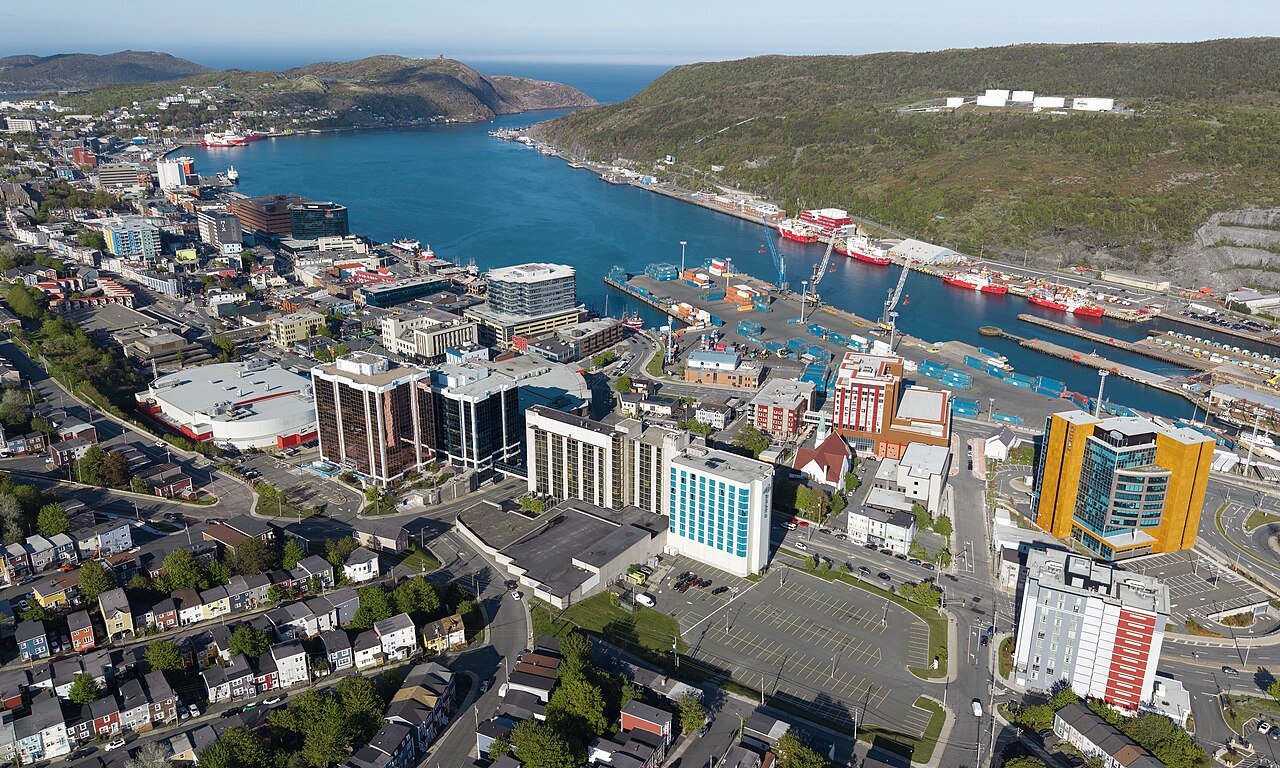
The capital of Newfoundland and Labrador and the easternmost city in North America, not counting Greenland. It grew from fishing camps of the early 1500s. It is the foggiest and windiest of Canada's major cities, and its steep streets are lined with brightly painted wooden row houses.
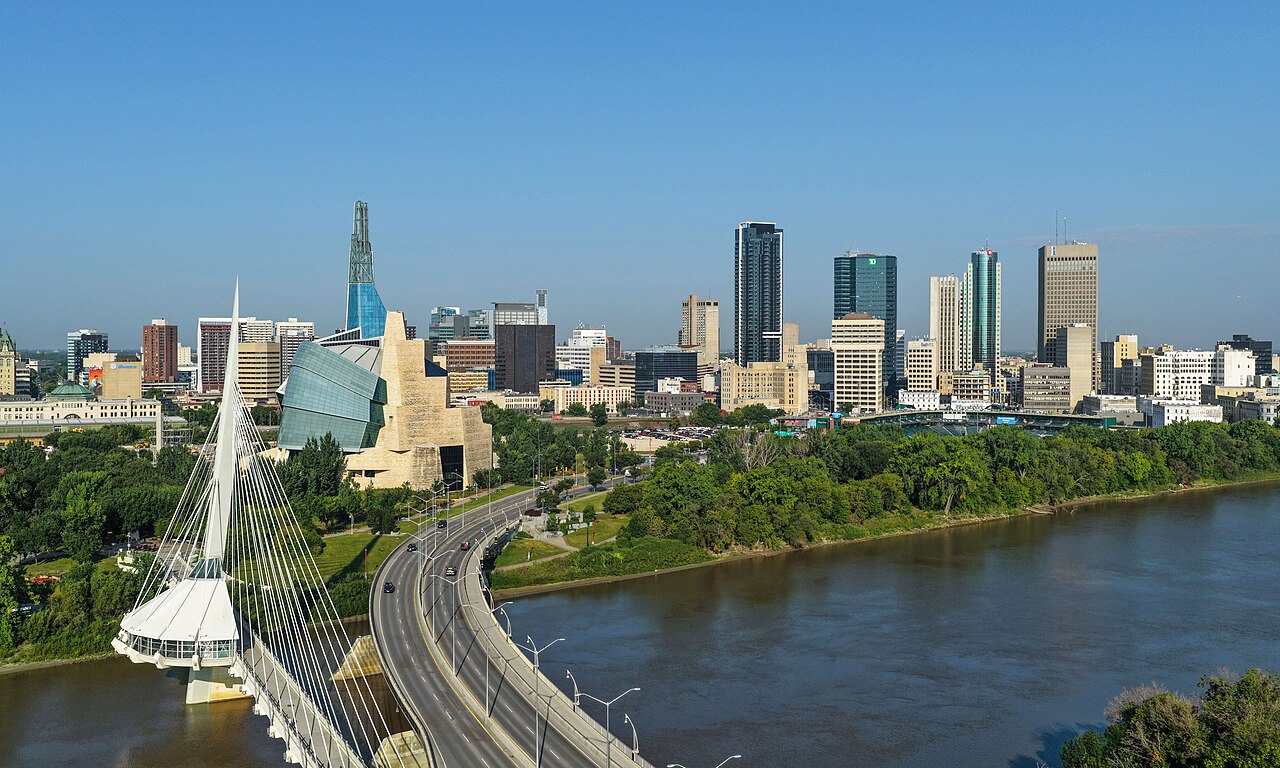
The capital of Manitoba, in the middle of the continent where the Red and Assiniboine rivers meet. Its name comes from Cree words meaning 'muddy water'. All of Canada's everyday coins are made at the Royal Canadian Mint here.
The Forks, a meeting place for 6,000 years
The Canadian Museum for Human Rights
A bear named Winnipeg, who inspired the name of Winnie-the-Pooh
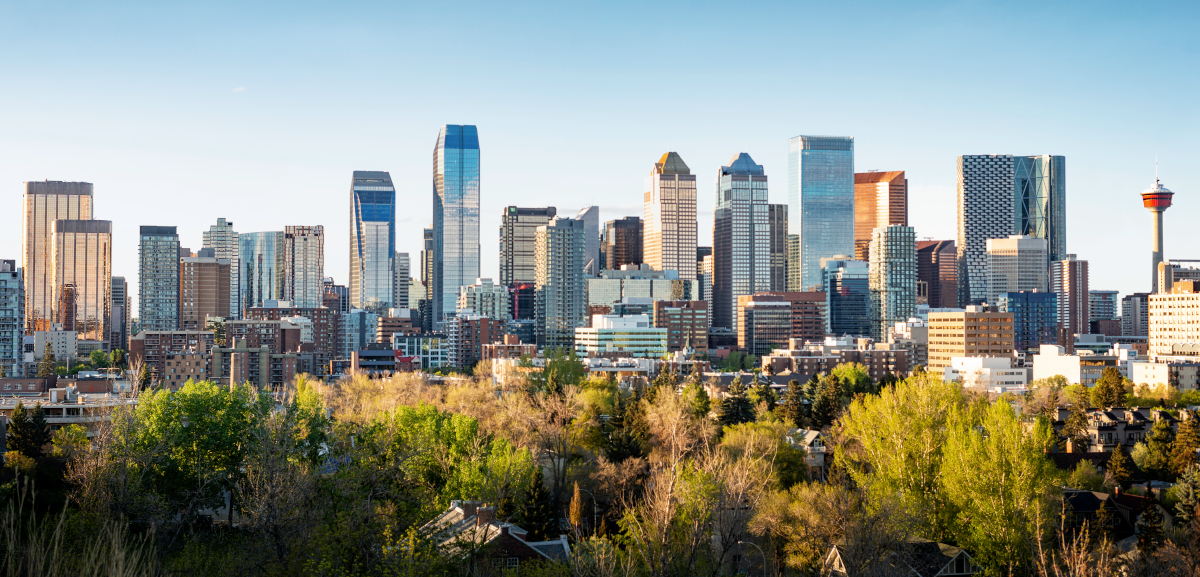
Alberta's largest city, where the Bow and Elbow rivers meet, about 80 km east of the Rocky Mountains. It began as a police fort in 1875, grew with ranching and oil, and in 1988 became the first Canadian city to host the Winter Olympics.
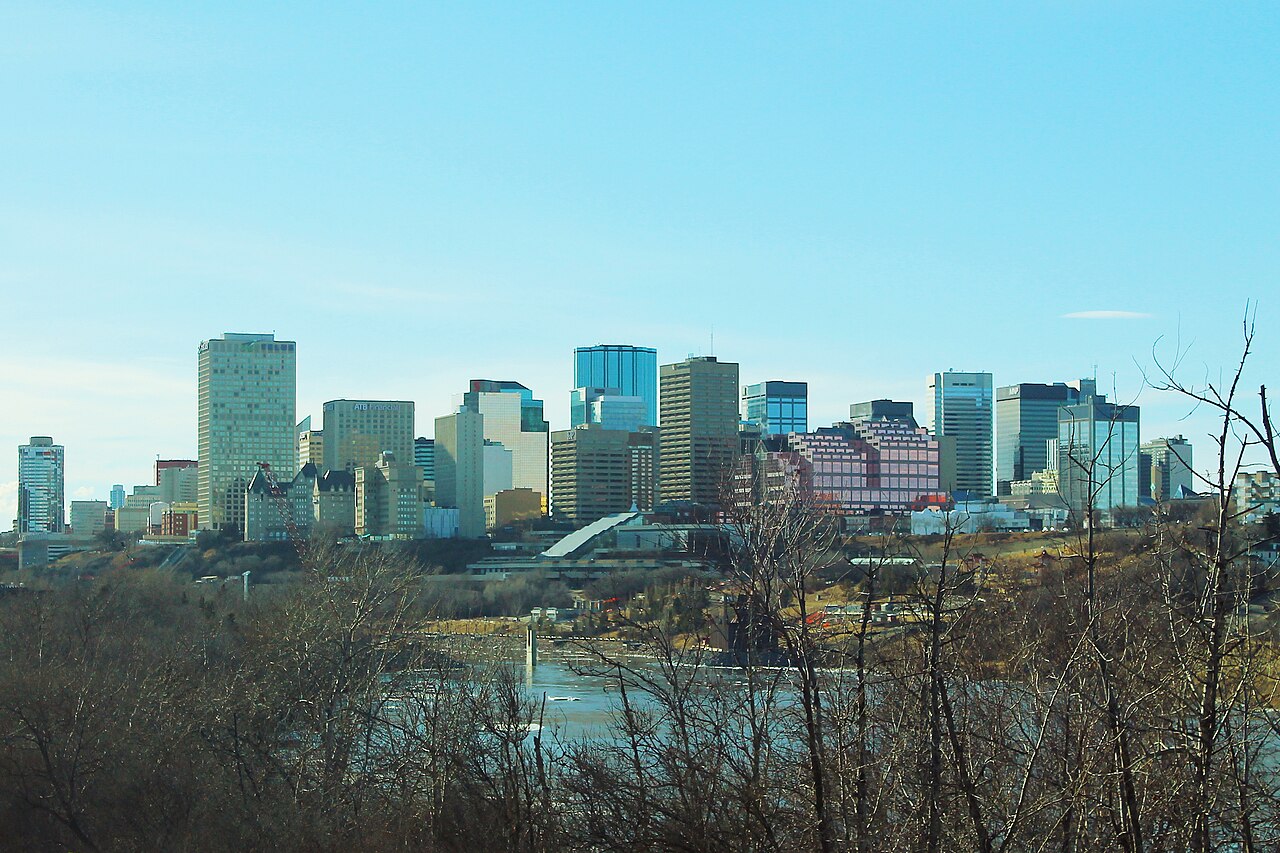
The capital of Alberta, on the North Saskatchewan River. It began as a Hudson's Bay Company trading post in 1795 and is known as the 'Gateway to the North'. It is the most northern city in North America with more than one million people.
West Edmonton Mall, Canada's largest mall
Parks along the river valley
Festivals all year, giving it the nickname 'Canada's Festival City'
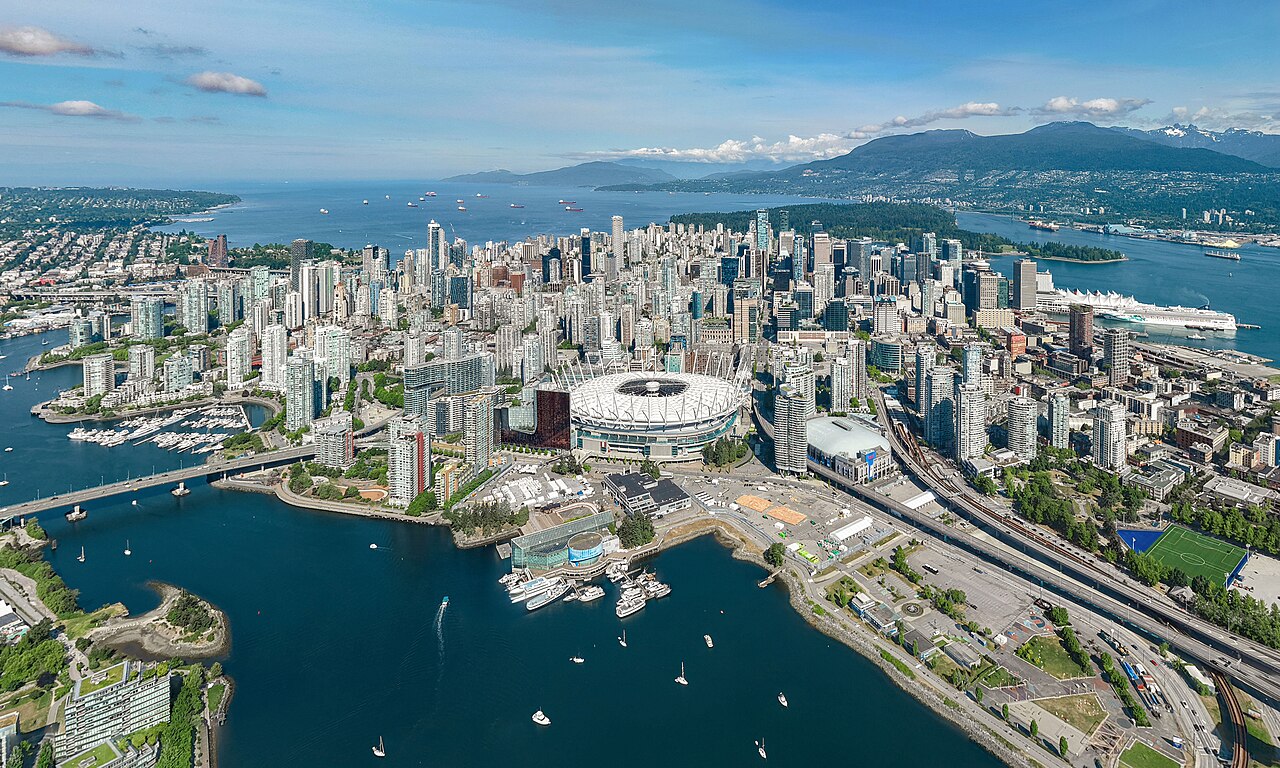
A Pacific port city between the mountains and the sea, and the heart of Canada's third-largest city region. The Musqueam, Squamish and Tsleil-Waututh peoples have lived here for thousands of years. The city was named after the British naval captain George Vancouver and hosted the 2010 Winter Olympics.
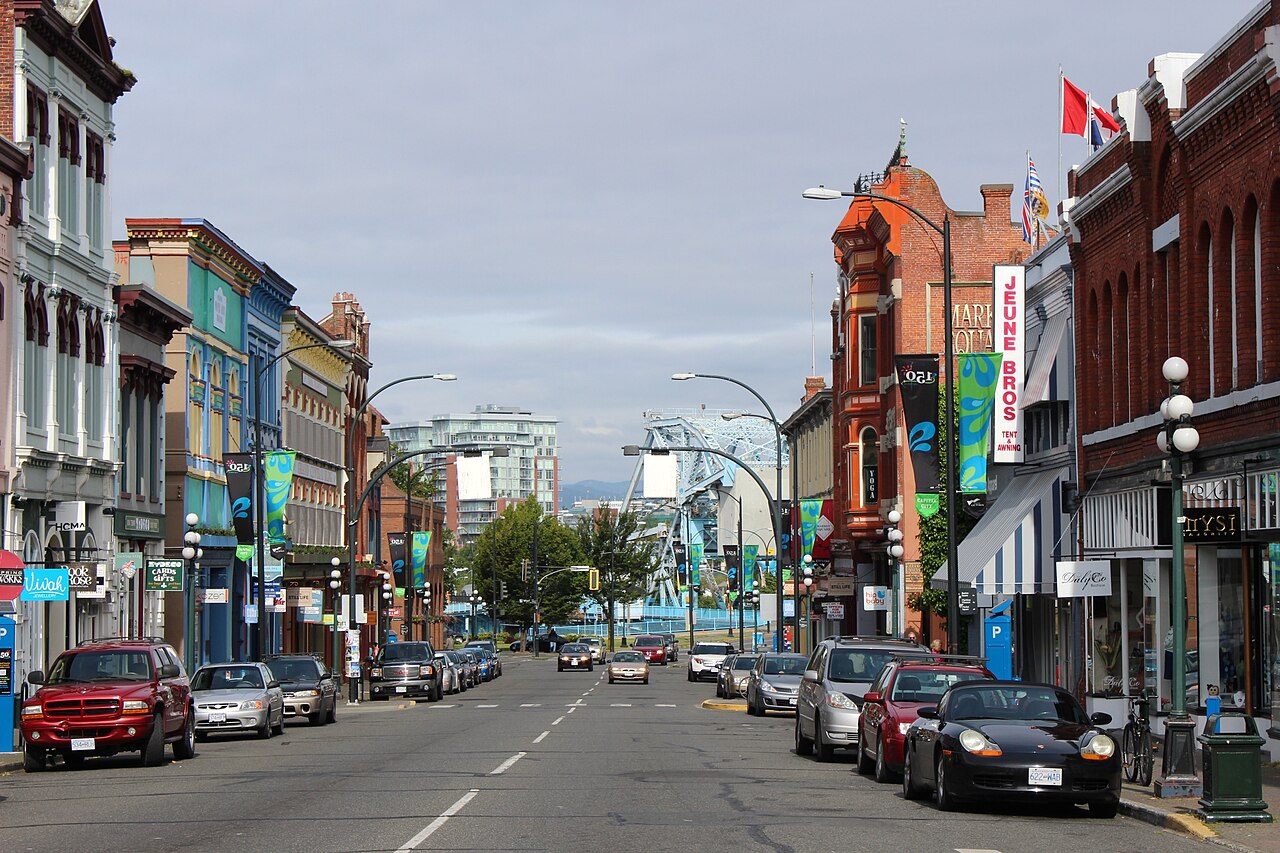
The capital of British Columbia, at the southern tip of Vancouver Island. It began as a Hudson's Bay Company fort in 1843 and was named after Queen Victoria. Its mild climate and many flowers have earned it the nickname 'the Garden City'.
The Parliament Buildings and the Empress Hotel on the harbour
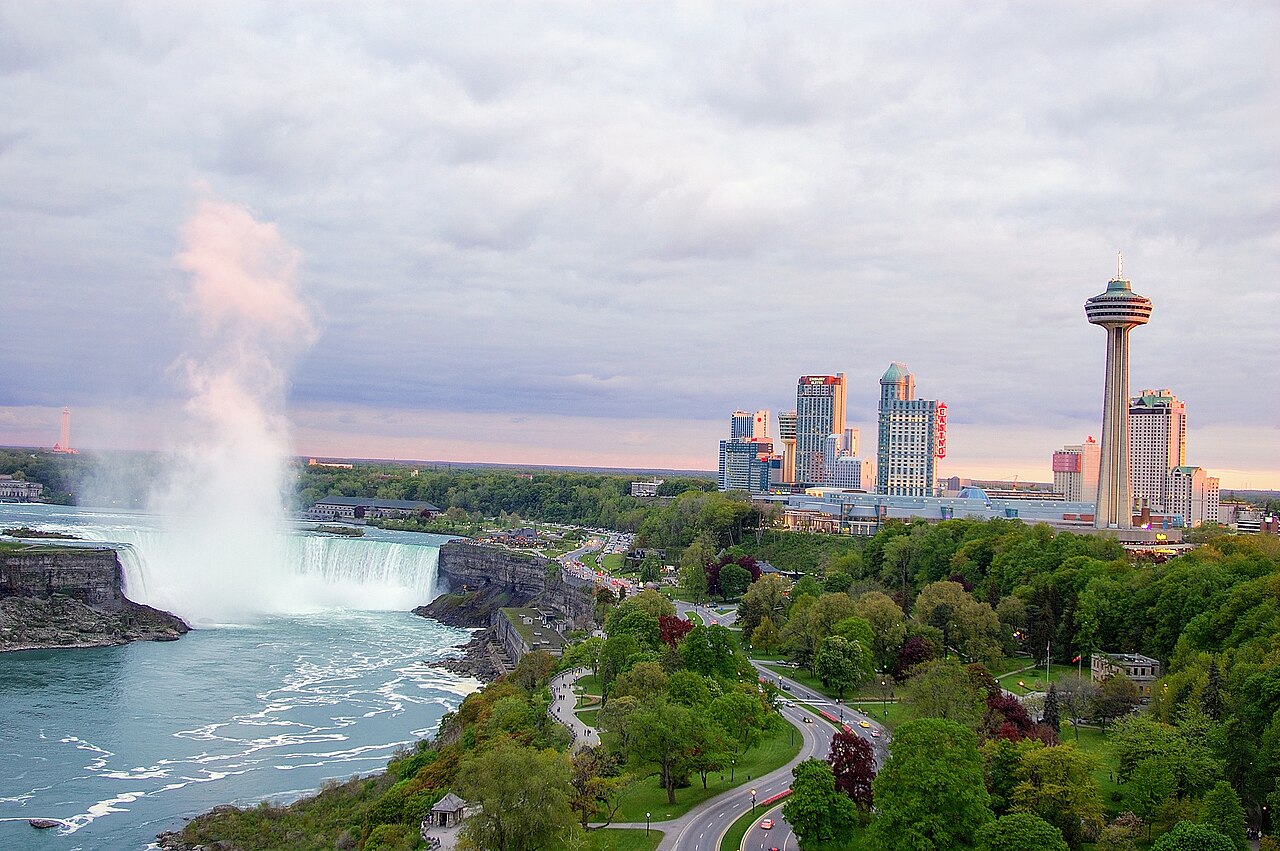
A tourist city on the Niagara River, which forms the border with the United States, facing the great waterfalls. It calls itself 'the Honeymoon Capital of the World', and its skyline of hotels and towers looks straight over the falls.
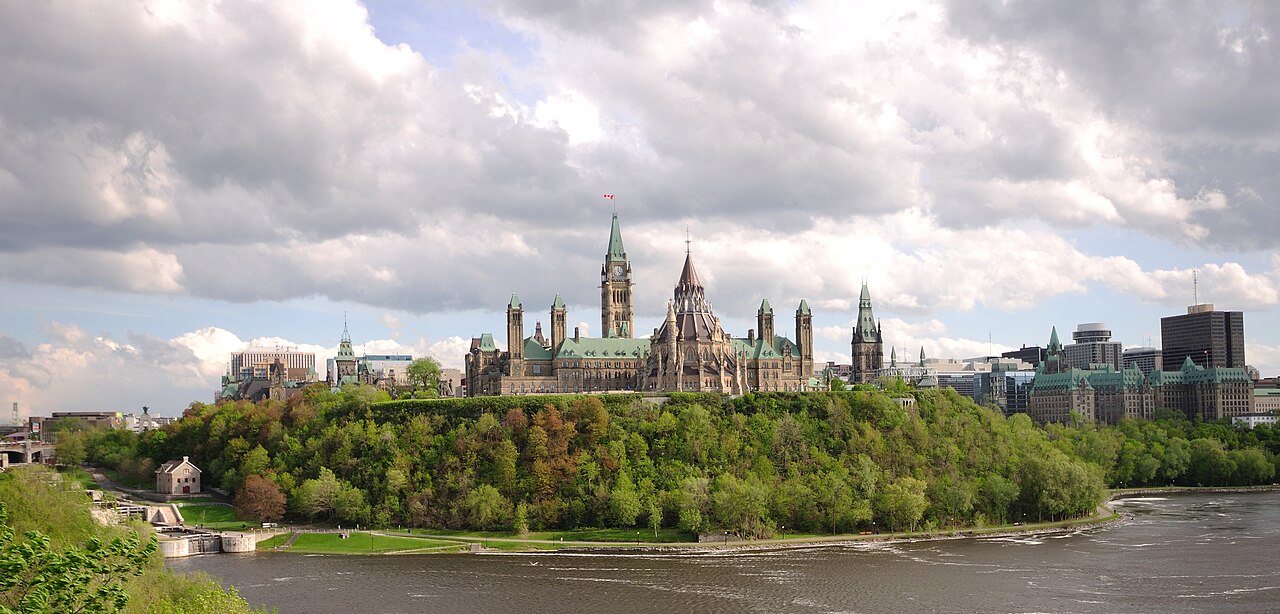
The home of Canada's Parliament, on a hill above the Ottawa River. The Peace Tower, completed in 1927, honours Canadians who died in the First World War, and the Centennial Flame has burned since 1 January 1967. As of 2026 the Centre Block is closed for a long restoration, but the grounds are open and in summer you can watch the Changing of the Guard.
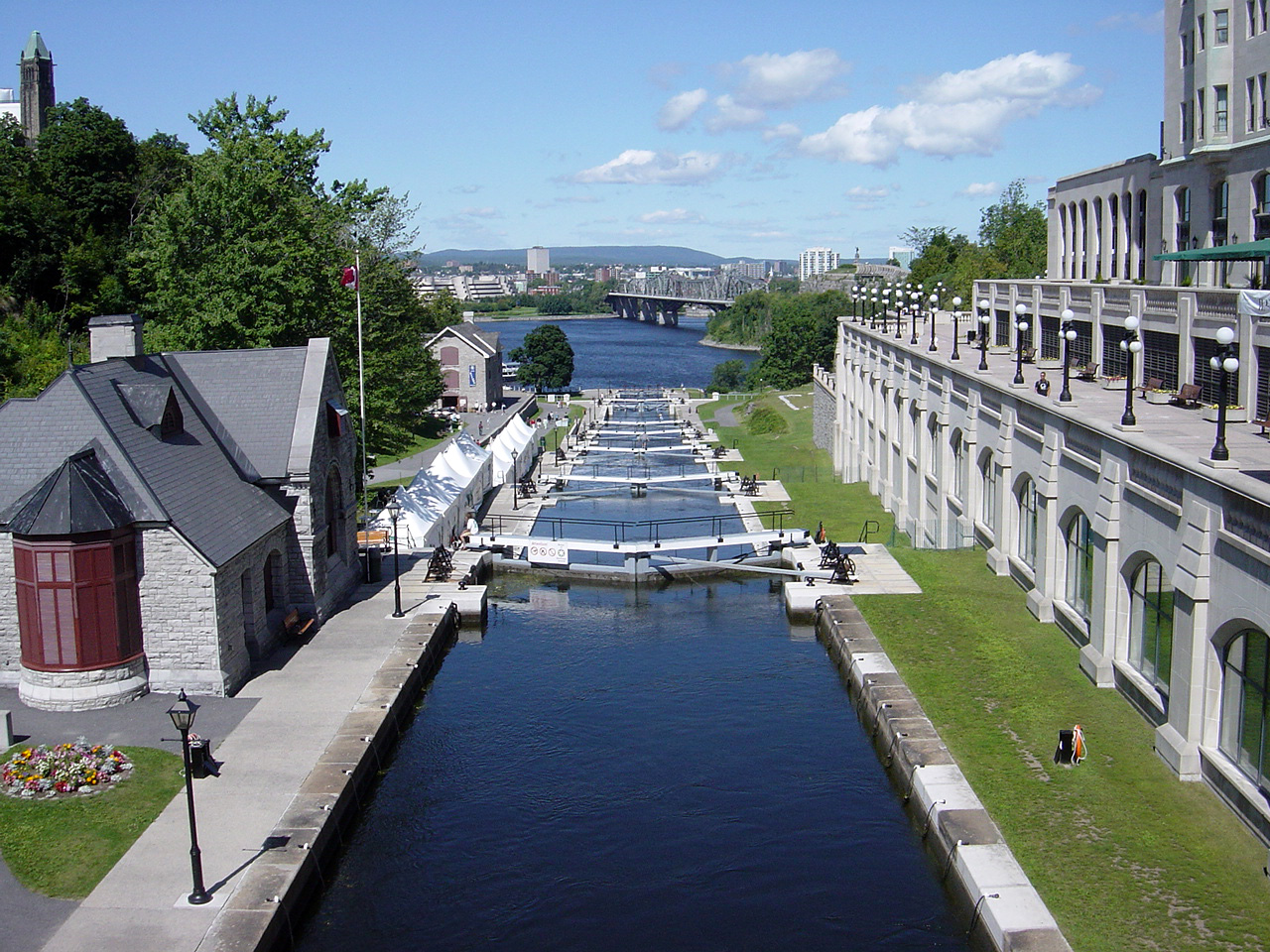
A 202 km waterway from Ottawa to Kingston on Lake Ontario, built under Lieutenant-Colonel John By after the War of 1812 and opened in 1832, as a safe military route away from the American border. It is the oldest continuously operated canal system in North America. In winter about 7.8 km of it in central Ottawa becomes the Rideau Canal Skateway. It became a World Heritage Site in 2007.
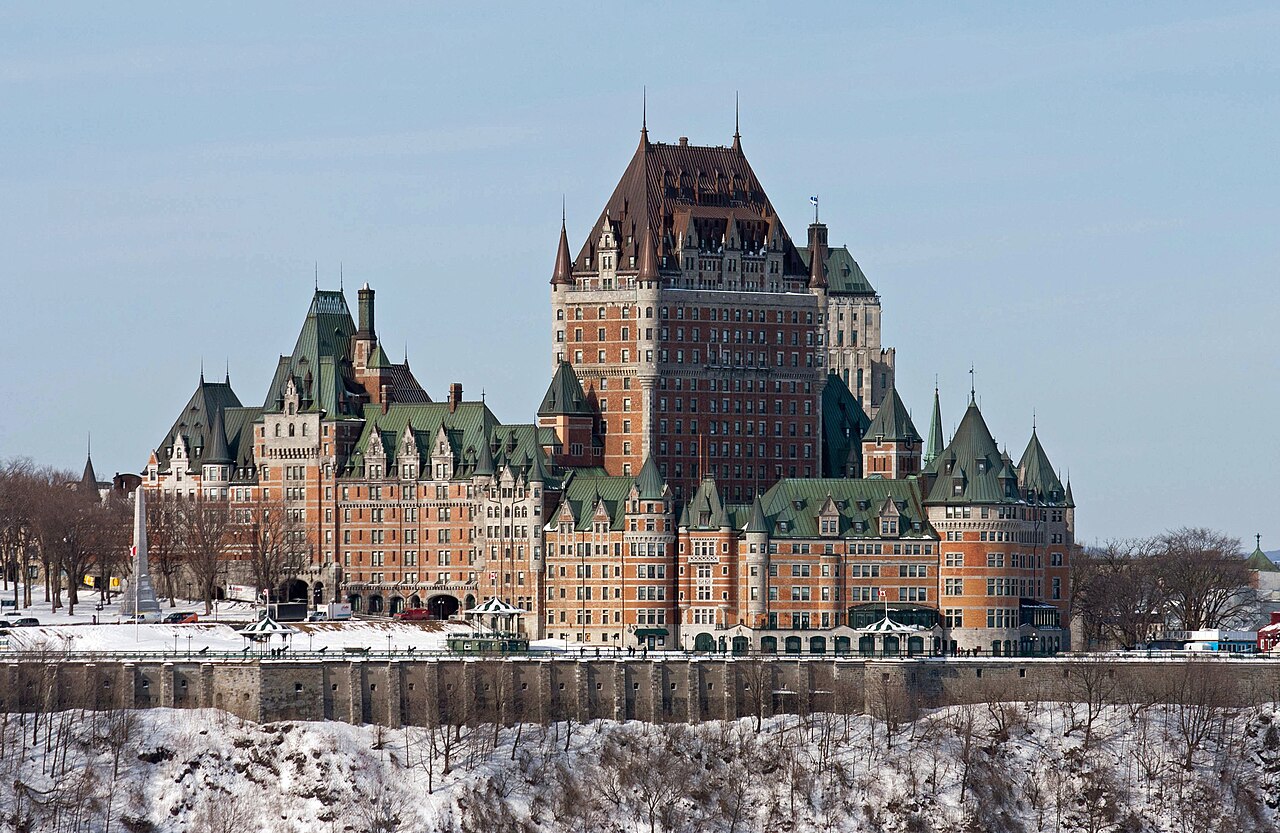
A grand hotel with copper roofs and towers, opened in 1893 by the Canadian Pacific Railway and named after the Count of Frontenac, a governor of New France. During the Second World War, Roosevelt, Churchill and Mackenzie King met here at the Quebec Conferences of 1943 and 1944. It stands in the Historic District of Old Québec, a World Heritage Site since 1985.
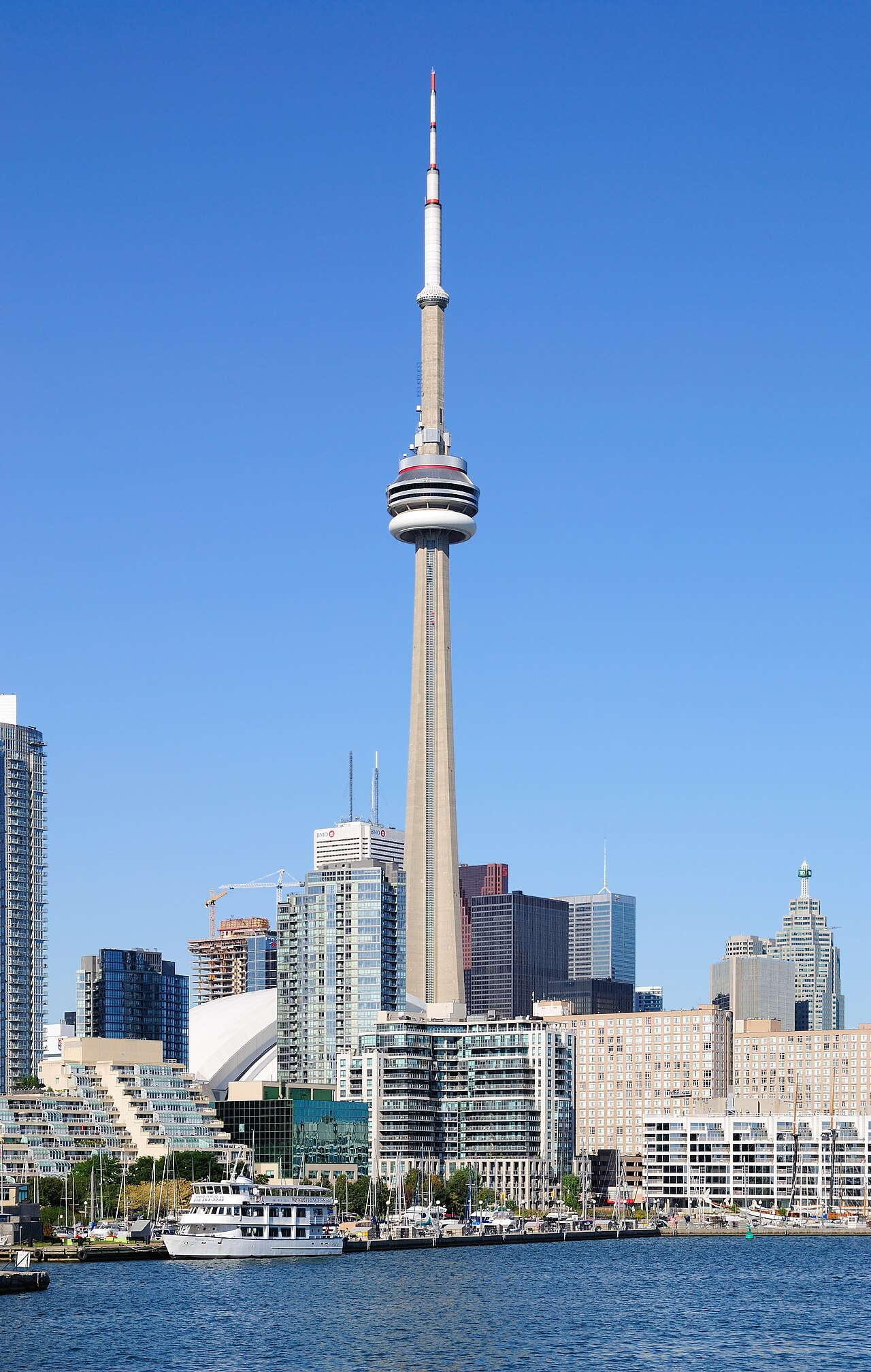
A concrete communications and observation tower 553.3 m tall, completed in 1976. It was the tallest free-standing structure in the world until 2007, when the Burj Khalifa overtook it, and as of 2026 it is still the tallest free-standing structure in the Western Hemisphere. Visitors can stand on a glass floor 342 m above the ground.
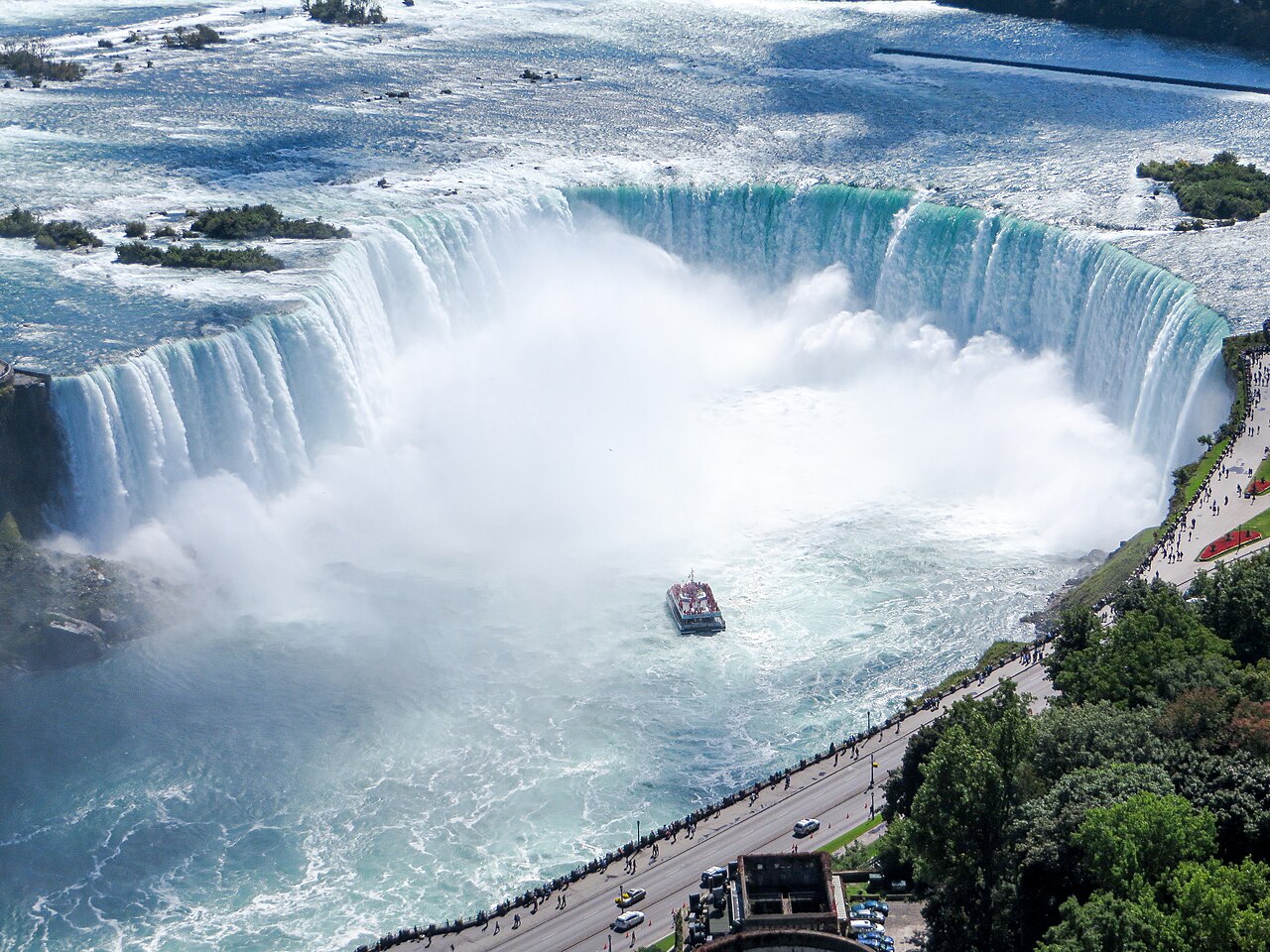
Of the three waterfalls at Niagara, the Horseshoe Falls, also called the Canadian Falls, is the largest and tallest, about 57 m high. It straddles the border, and the classic views of it are from the Canadian side. Together the falls have the highest flow rate of any waterfall in North America. Boats have carried visitors into the spray at the foot of the falls since 1846.
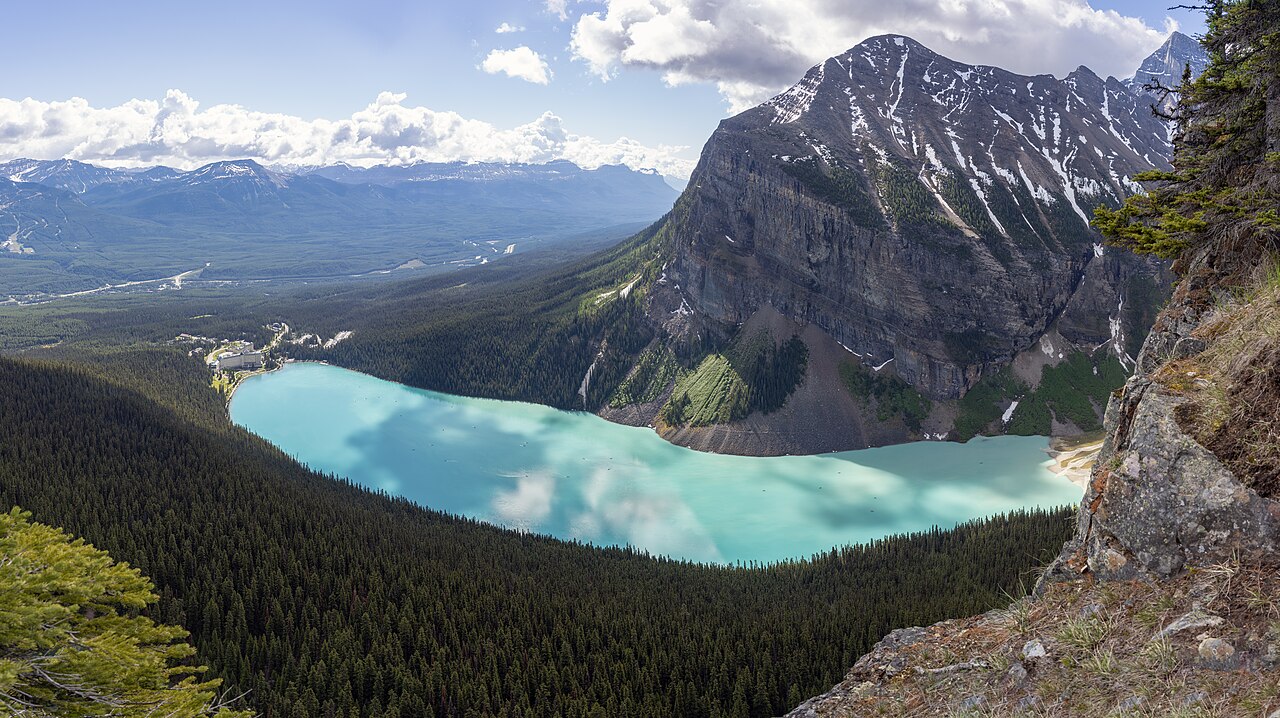
A turquoise glacier lake below snowy peaks in Banff National Park, about 180 km west of Calgary by road. Banff, created in 1885 around hot springs found by railway workers, was Canada's first national park. It is part of the Canadian Rocky Mountain Parks World Heritage Site, listed in 1984.
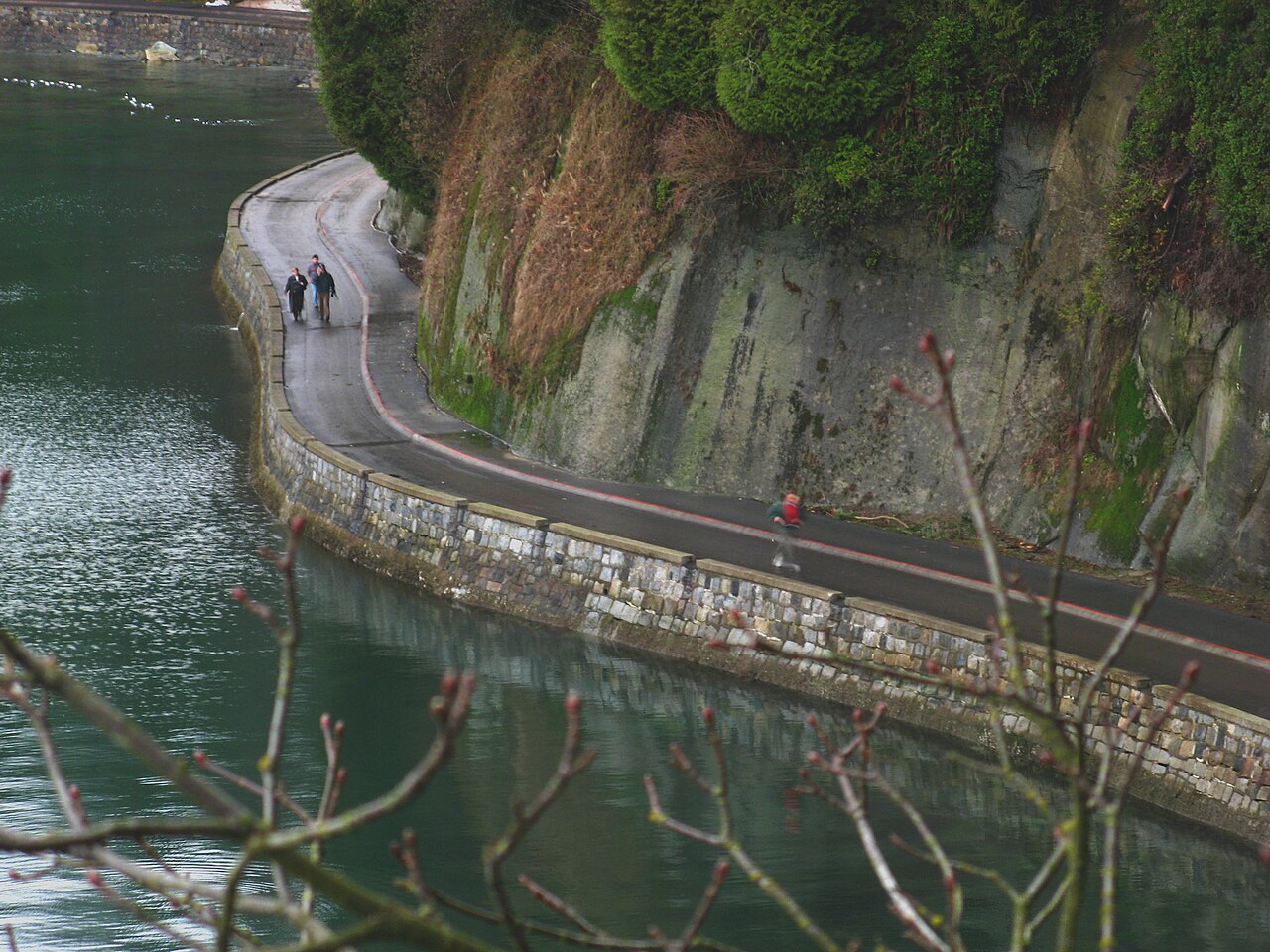
A forested park of about 405 hectares on a peninsula next to downtown Vancouver, opened in 1888. It is about one-fifth larger than New York's Central Park. A seawall path runs around its edge, and a group of carved totem poles is one of its best-known sights.
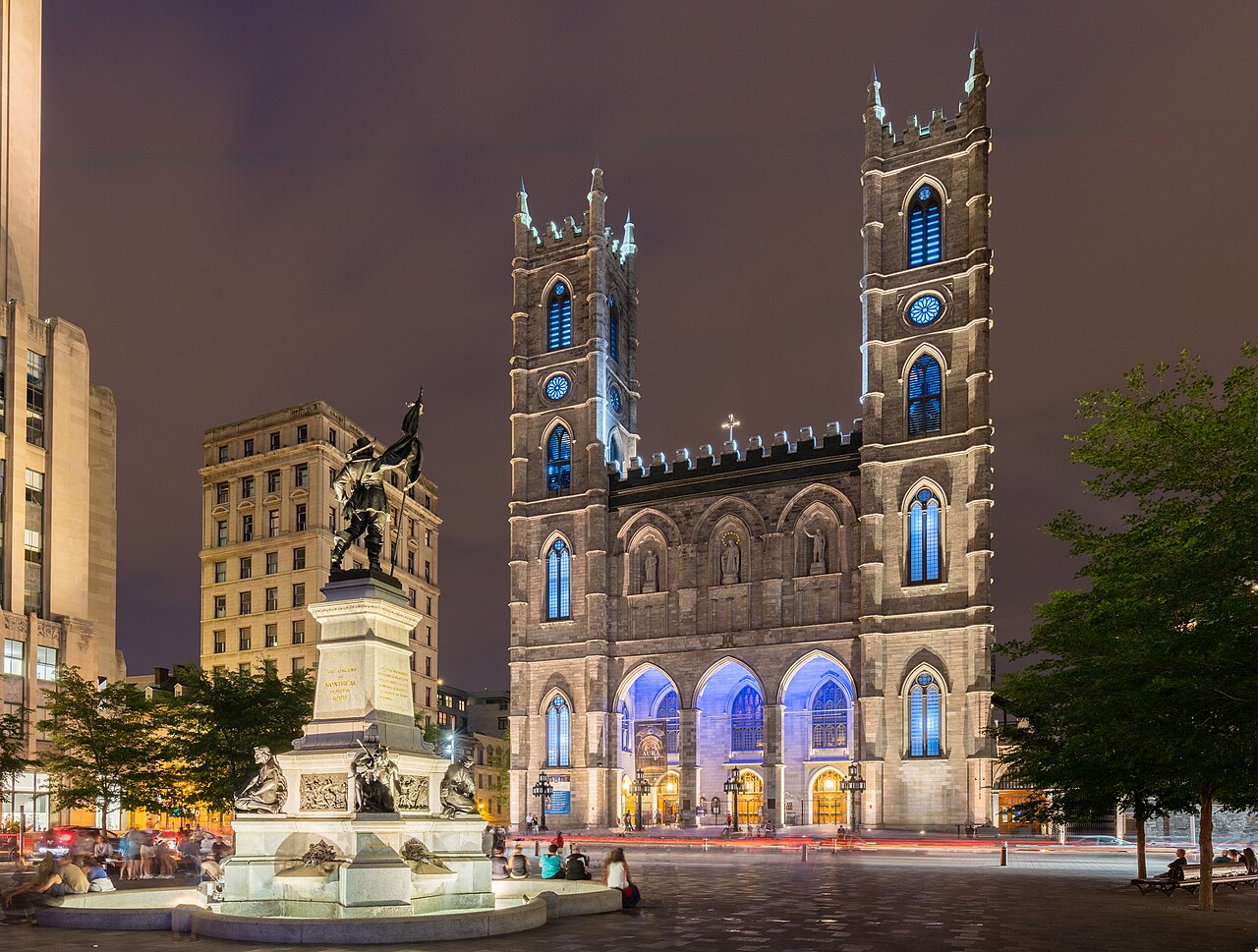
A Gothic Revival church in Old Montreal, built from 1824 to 1829 to plans by the architect James O'Donnell. Inside, the deep blue vaulted ceiling is covered with golden stars. Céline Dion was married here in 1994, and state funerals have been held here.
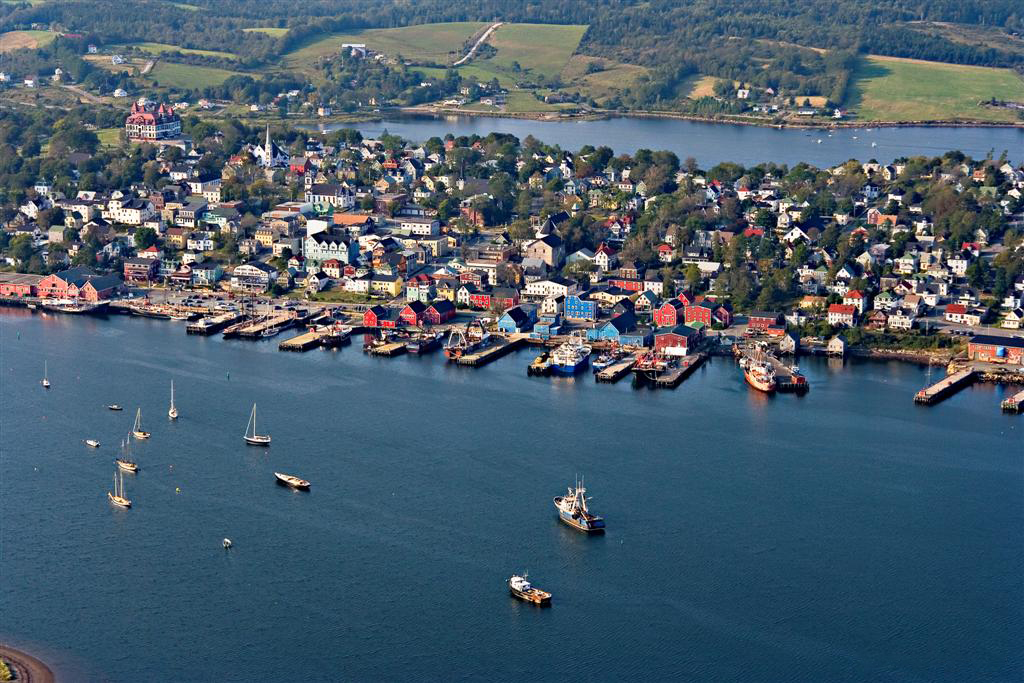
A fishing town about 100 km southwest of Halifax, founded in 1753 and laid out as a planned British colonial town. Its brightly painted wooden houses and waterfront have been a World Heritage Site since 1995. The famous racing schooner Bluenose was built here in 1921.
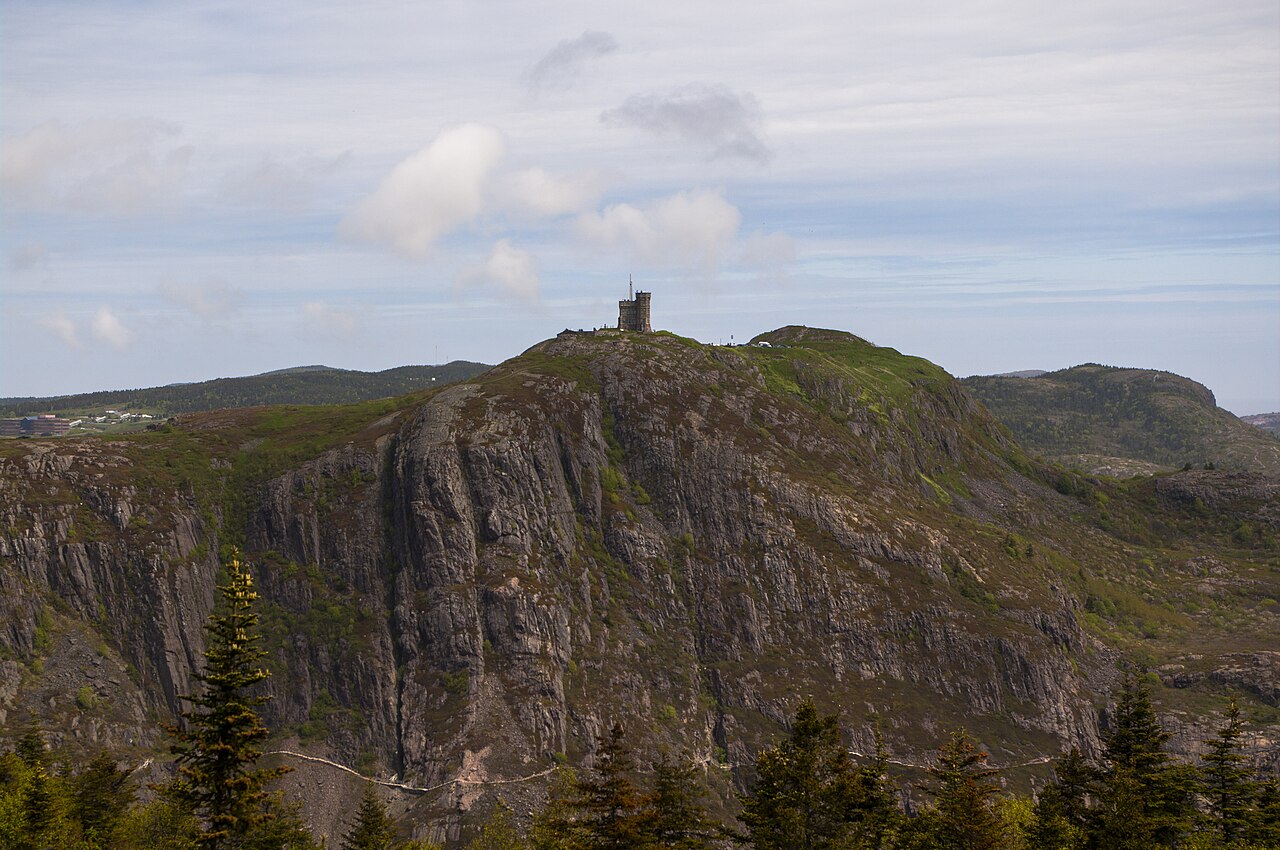
A rocky hill guarding the harbour of St. John's, where the last battle of the Seven Years' War in North America was fought in 1762. Cabot Tower on the summit opened in 1900. On 12 December 1901, Guglielmo Marconi received the first transatlantic wireless signal here, sent in Morse code from Cornwall in England.
Canada has the longest coastline of any country: about 243,000 km, counting all its islands, according to Natural Resources Canada.
02
The border between Canada and the United States, including the border with Alaska, is 8,891 km long.
03
For decades Canada and Denmark both claimed tiny Hans Island between Ellesmere Island and Greenland, and each side took turns planting its flag there and leaving a bottle of Danish schnapps or Canadian whisky for the other, the friendly 'Whisky War'. In 2022 they agreed to divide the island along a natural fault line, giving Canada a short land border with Greenland.
04
Basketball was invented by a Canadian: James Naismith, born in Almonte, Ontario, created the game in December 1891 at a YMCA school in Springfield, Massachusetts, using two peach baskets as goals.
05
Insulin was discovered at the University of Toronto in 1921. Frederick Banting and John Macleod received the Nobel Prize for it in 1923, and Banting, at 32, is as of 2026 still the youngest winner of the Nobel Prize in medicine.
06
The one-dollar coin, introduced in 1987, shows a loon, so everyone calls it the 'loonie'. The two-dollar coin of 1996 became the 'toonie'.
07
Canada stopped handing out one-cent coins on 4 February 2013. Cash payments are now rounded to the nearest 5 cents.
08
By a law of 1994, ice hockey is Canada's national winter sport and lacrosse its national summer sport.
09
The Bay of Fundy, between New Brunswick and Nova Scotia, has the highest tidal range in the world, averaging about 16 m between low and high tide.
10
Quebec produces on average about 72 percent of the world's maple syrup, and in 2025 it made about 90 percent of Canada's.
11
The maple leaf on the flag has 11 points. Wind tunnel tests showed that this design blurred the least when the flag flaps in a strong wind.
12
The Stanley Cup, hockey's great prize, was bought in 1892 by Lord Stanley, then Governor General of Canada, and first awarded in 1893. It is the oldest existing trophy awarded to a professional sports team in North America.
13
In the Klondike Gold Rush after 1896, about 100,000 people set out for the Yukon to look for gold, but only about 30,000 to 40,000 of them got there.
14
As of 2026, Canada has 22 UNESCO World Heritage Sites, from the Viking camp at L'Anse aux Meadows to the dinosaur fossils of Alberta.
Everyday words that are typically Canadian, with the American or British word where it helps. Most Canadians spell in the British way (colour, centre) but use many American words too. Pronunciation is written the way it sounds; the capital letters show where the stress goes. Audio is coming soon.
Money
loonieLOO-neethe one-dollar coin, which shows a loon
toonieTOO-neethe two-dollar coin
Food and drink
double-doubleDUB-ul DUB-ula coffee with two creams and two sugars
KDKAY DEEboxed macaroni and cheese, short for Kraft Dinner, whatever the brand
serviettesur-vee-ETa paper table napkin
freezieFREE-zeea frozen, flavoured ice in a thin plastic tube
two-fourtoo-FORa case of 24 bottles or cans of beer
Shopping
depDEPa corner shop in Quebec, short for dépanneur
Getting around
washroomWOSH-rooma toilet or restroom
parkadepar-KAYDa multi-storey car park or parking garage, especially in the West
At home
chesterfieldCHES-ter-feelda sofa or couch
eavestroughEEVZ-trofa rain gutter along the edge of a roof
garburatorGAR-byur-ay-tera garbage disposal unit in the kitchen sink
hydroHY-drohthe electricity supply, as in 'the hydro bill', in provinces such as Ontario and Quebec
bachelorBATCH-uh-lera one-room flat or studio apartment
Clothes
toqueTOOKa knitted winter hat (American: beanie)
runnersRUN-erzrunning shoes, trainers or sneakers
bunnyhugBUN-ee-huga hooded sweatshirt, in Saskatchewan
Everyday talk
pencil crayonPEN-sil KRAY-ona coloured pencil
ehAYa little word at the end of a sentence that asks 'don't you agree?' or 'do you follow?', as in 'It's cold out, eh?'
Shelf and menu prices usually do not include tax. The federal GST of 5 percent is added, plus a provincial sales tax in some provinces. In Ontario and the Atlantic provinces the two are combined into one HST of 13 to 15 percent, as of 2026. Cash totals are rounded to the nearest 5 cents, because there are no more pennies.
Tip 15 to 20 percent
In sit-down restaurants, leave 15 to 20 percent of the bill before tax. Card machines usually offer 15, 18 or 20 percent. Taxi drivers usually get 10 to 15 percent.
Start with 'Bonjour' in Quebec
French is the official language of Quebec, and signs, menus and road signs there are in French. Many people in Montreal also speak English, but a friendly 'Bonjour' before you switch to English is always appreciated.
No right turn on red in Montreal
In most of Canada you may turn right at a red light after a full stop, unless a sign says no. On the Island of Montreal it is not allowed anywhere, and large signs at the bridges remind drivers.
Flying in? Check if you need an eTA
Most visitors who do not need a visa must get an Electronic Travel Authorization (eTA) online before flying to Canada. As of 2026 it costs 7 Canadian dollars. US citizens do not need one. Apply only on the official Government of Canada website.
Give wildlife plenty of space
In national parks such as Banff, stay at least 30 m, about three bus lengths, from elk, deer, sheep and moose, and at least 100 m from bears, wolves, cougars and coyotes. Feeding wildlife in a national park is against the law.
Distances are huge
Canada is so wide that it spans several time zones. Newfoundland is half an hour ahead of the Maritime provinces. Allow plenty of time between cities, or fly for long journeys.
Emergencies: call 911
911 is the number for police, fire and ambulance across almost all of Canada. As of 2026 Nunavut, in the far north, does not have 911 yet, so check the local numbers there.
 United States