A ribbon of land more than 4,300 km long, from the driest desert on Earth to the glaciers of Patagonia, with the moai of Easter Island far out in the Pacific.
Chile runs down the western edge of South America, squeezed between the Andes and the Pacific Ocean. It is more than 4,300 km long from north to south but on average only about 175 km wide. In the north lies the Atacama Desert, in the middle a green valley of vineyards and orchards around Santiago, and in the south a land of lakes, volcanoes, fjords and glaciers that ends near Cape Horn. Far out in the Pacific, Chile also governs Easter Island.
The Mapuche and other peoples lived here long before the Spanish arrived in the 1530s and 1540s. Pedro de Valdivia founded Santiago in 1541, but the Mapuche in the south kept their independence for more than three centuries. Chile declared its independence from Spain in 1818. In the 20th century came a long democratic tradition, a military coup in 1973 and almost 17 years of dictatorship, and a peaceful return to democracy in 1990.
Questions to ask the older generation
Memories fade faster than photos. Ask these over a meal or a phone call, and write the answers down.
Which town or region of Chile did our family come from? Was it near Arica, Iquique, San Pedro de Atacama?
Who was the first in the family to leave Chile, when, and why?
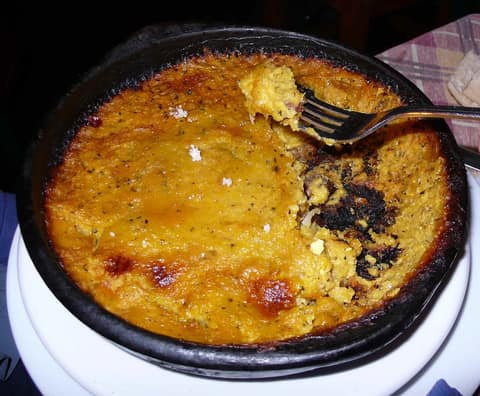
Which dishes from Chile were cooked at home? Did anyone make Empanada de pino or Pastel de choclo?
Does anyone in the family still speak Spanish, or use a few words of it?
Were there songs, prayers, games or holidays from Chile that the family kept?
Are there old photos, letters or documents from Chile? Who has them?
If you could visit Chile together, where would you go first?
A short history of Chile
Chile's story runs from fishing people who mummified their dead thousands of years before the Egyptians, through the Spanish conquest and centuries of Mapuche resistance, to independence in 1818. The 19th century brought expansion to the north and south. The 20th century brought a long democratic tradition, a military coup in 1973 and a dictatorship that lasted until 1990. Since 1990 Chile has been a democracy.
7000 BC
The Chinchorro culture begins
From about 7000 BC, fishing people lived along the desert coast of what is now northern Chile and southern Peru, with their heartland around Arica. They are famous for mummifying their dead, and their mummies are much older than those of ancient Egypt. Their settlements and mummies became a UNESCO World Heritage Site in 2021.
1541
Pedro de Valdivia founds Santiago
On 12 February 1541 the Spanish conquistador Pedro de Valdivia founded Santiago in the central valley, laying out a grid of streets around a main square, today's Plaza de Armas. Valdivia was captured and killed by the Mapuche in 1553.
1810
The first national junta
On 18 September 1810, while Spain was under Napoleon's control, leading citizens in Santiago formed a governing junta. It was the first step towards independence, and Chile's national day is still celebrated on 18 September.
1818
Chile declares independence
On 12 February 1818, the first anniversary of Chacabuco, Bernardo O'Higgins approved the declaration of independence. The victory at Maipú, near Santiago, on 5 April 1818 secured the independence of central Chile.
1888
Chile annexes Easter Island
On 9 September 1888 the Chilean naval officer Policarpo Toro and the Rapa Nui leader Atamu Tekena signed an agreement that brought Easter Island under Chile. The Rapa Nui people were granted Chilean citizenship in 1966.
1970
Salvador Allende is elected president
Salvador Allende of the Socialist Party won the 1970 election with about 36 percent of the vote, the largest share in a three-way race, and was confirmed by Congress. His government nationalised the copper mines and many banks and industries. By 1973 inflation was out of control and the country was deeply divided.
1988
Chileans vote No to Pinochet
On 5 October 1988 Chileans were asked whether Pinochet should rule for another eight years. The No side, with its rainbow logo and the slogan 'Chile, joy is coming', won about 56 percent of the vote.
2010
The 33 miners are rescued
On 5 August 2010 a mine near Copiapó in the Atacama Desert collapsed, trapping 33 men 700 m underground. After 17 days a note came up on a drill: 'We are well in the shelter, the 33'. All 33 were brought to the surface on 13 October 2010, watched live around the world.