Chilean food brings together Spanish cooking, Mapuche ingredients such as potatoes, maize and beans, the fish and shellfish of a very long coast, and the cakes and sausages of 19th-century German settlers. Bread is eaten through the whole day, and Chileans are among the biggest bread eaters in the world. Since colonial times lunch has been a bigger meal than dinner. Later in the day many families have once, a light meal of bread with tea or coffee. Empanadas are the food of the national holidays in September.
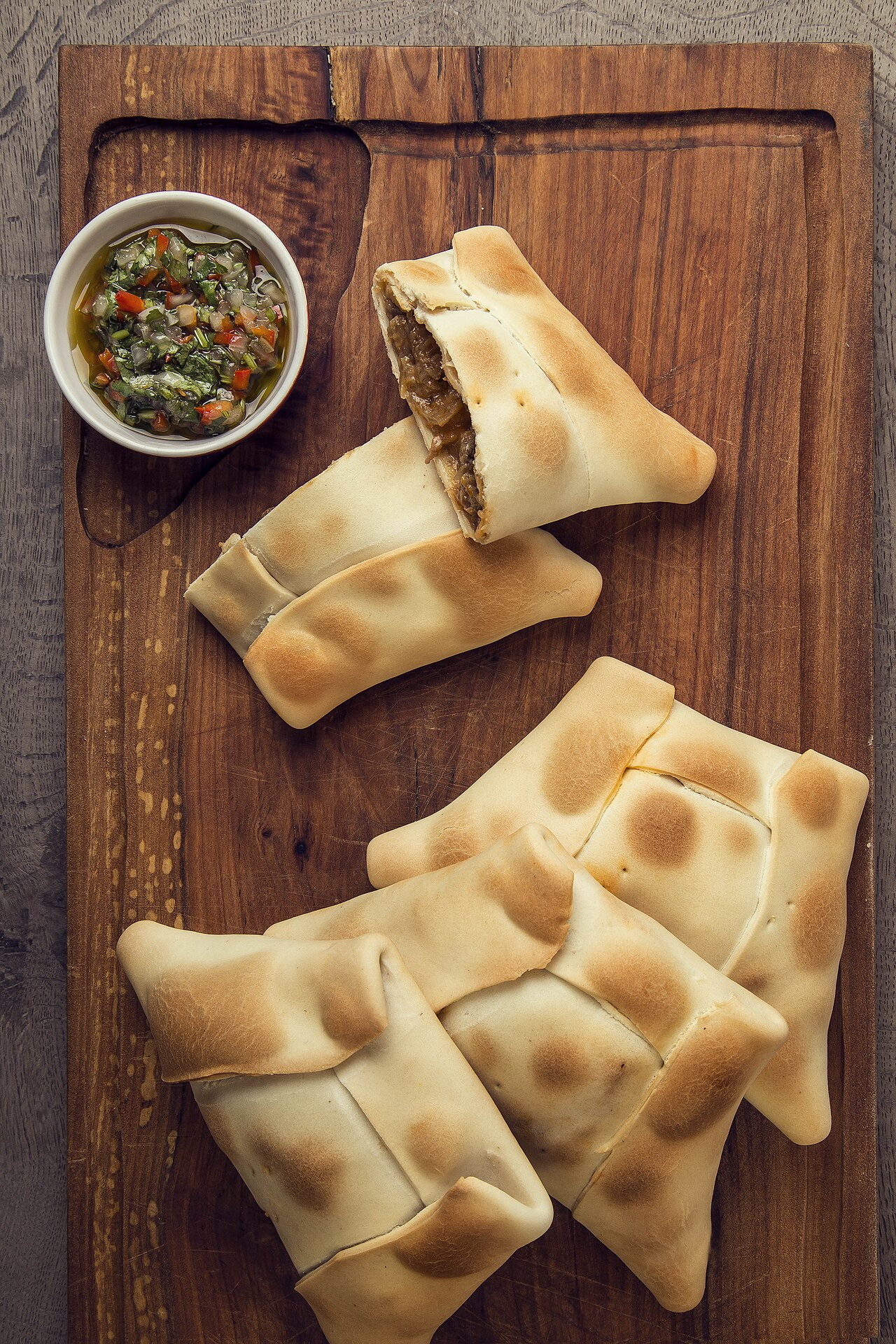
Chile's best-loved pastry: a large baked turnover filled with pino, a mixture of minced beef and onion, with a piece of hard-boiled egg, a black olive and a few raisins. There are also fried empanadas filled with cheese.
Empanadas are the food of the Fiestas Patrias, the national holidays on 18 and 19 September. Watch out for the olive: the stone is often left in.
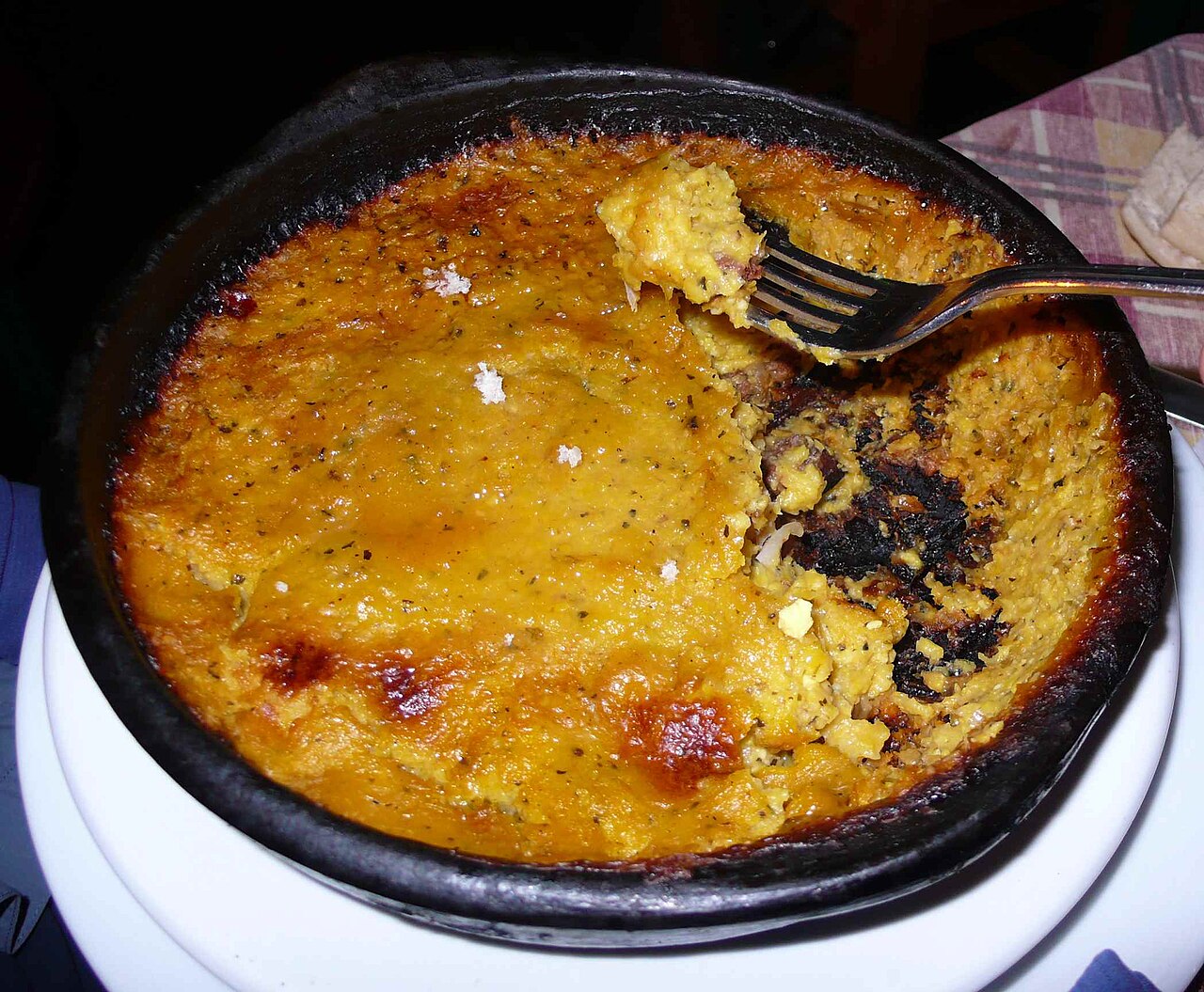
A summer corn pie. A layer of pino, the beef and onion filling, with chicken, olives, raisins and slices of hard-boiled egg is covered with a thick topping of fresh sweetcorn blended with basil and baked until golden.
It is often finished with a little sugar and butter on top, which turns the corn crust golden and slightly sweet.
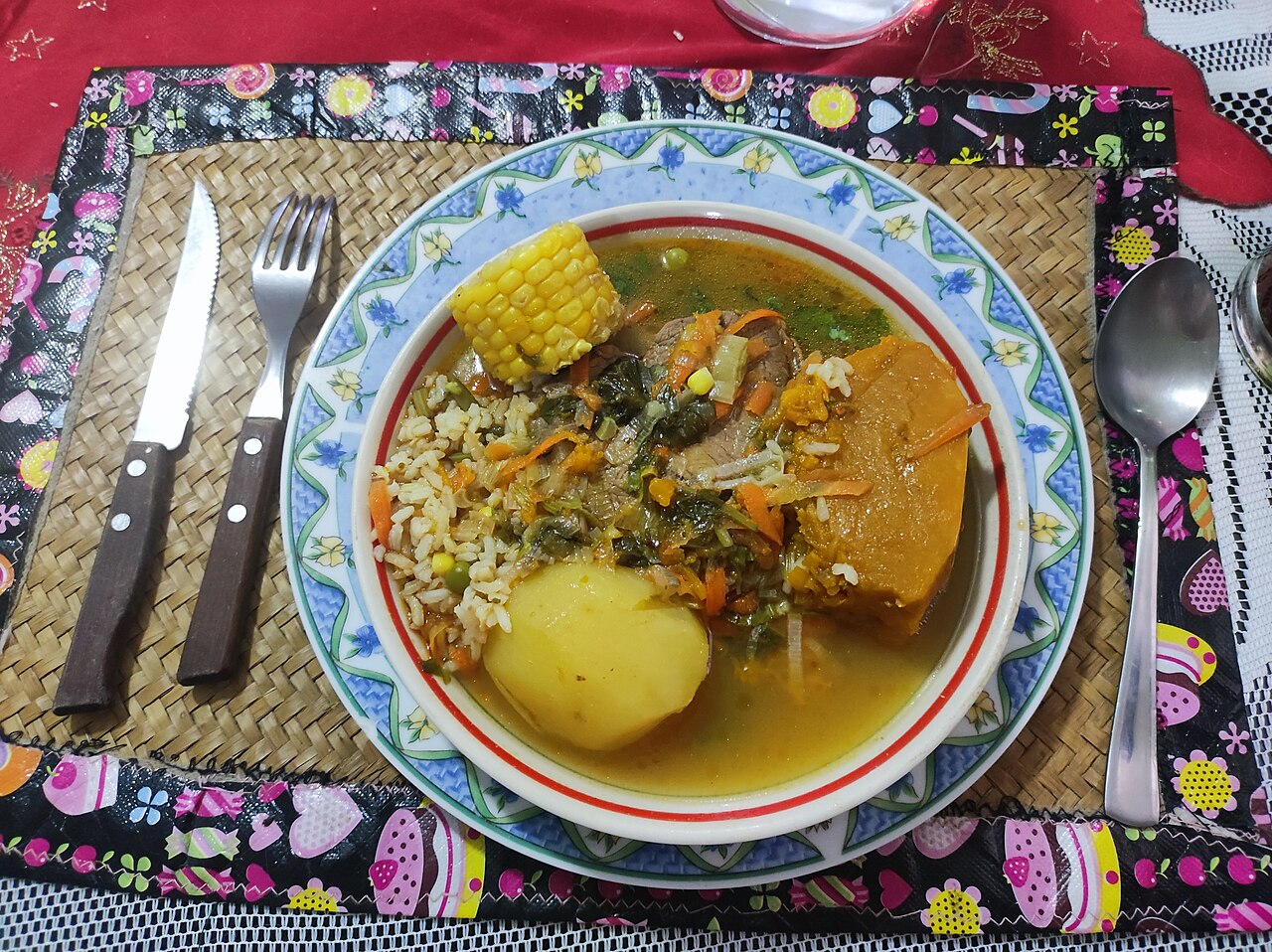
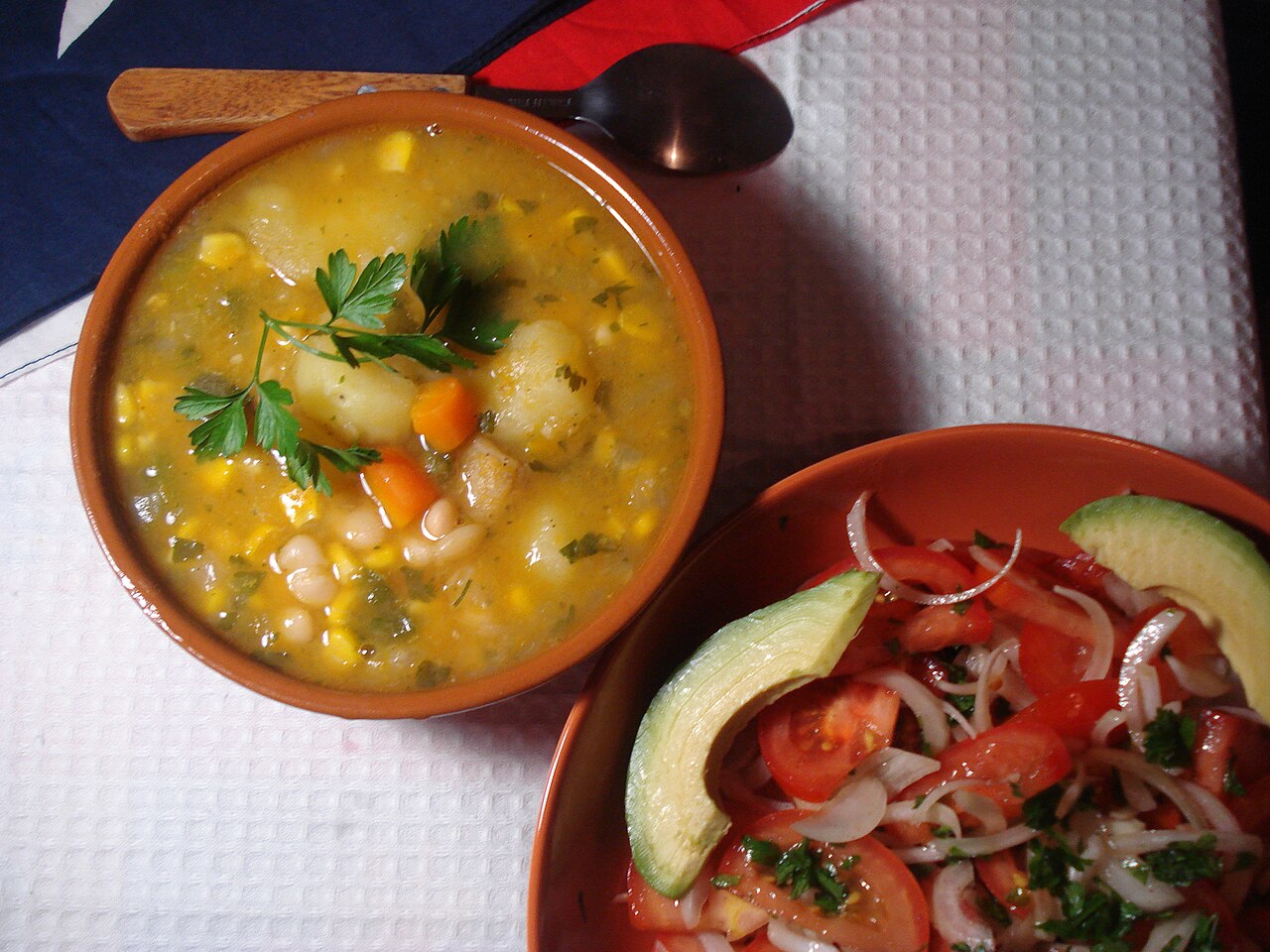
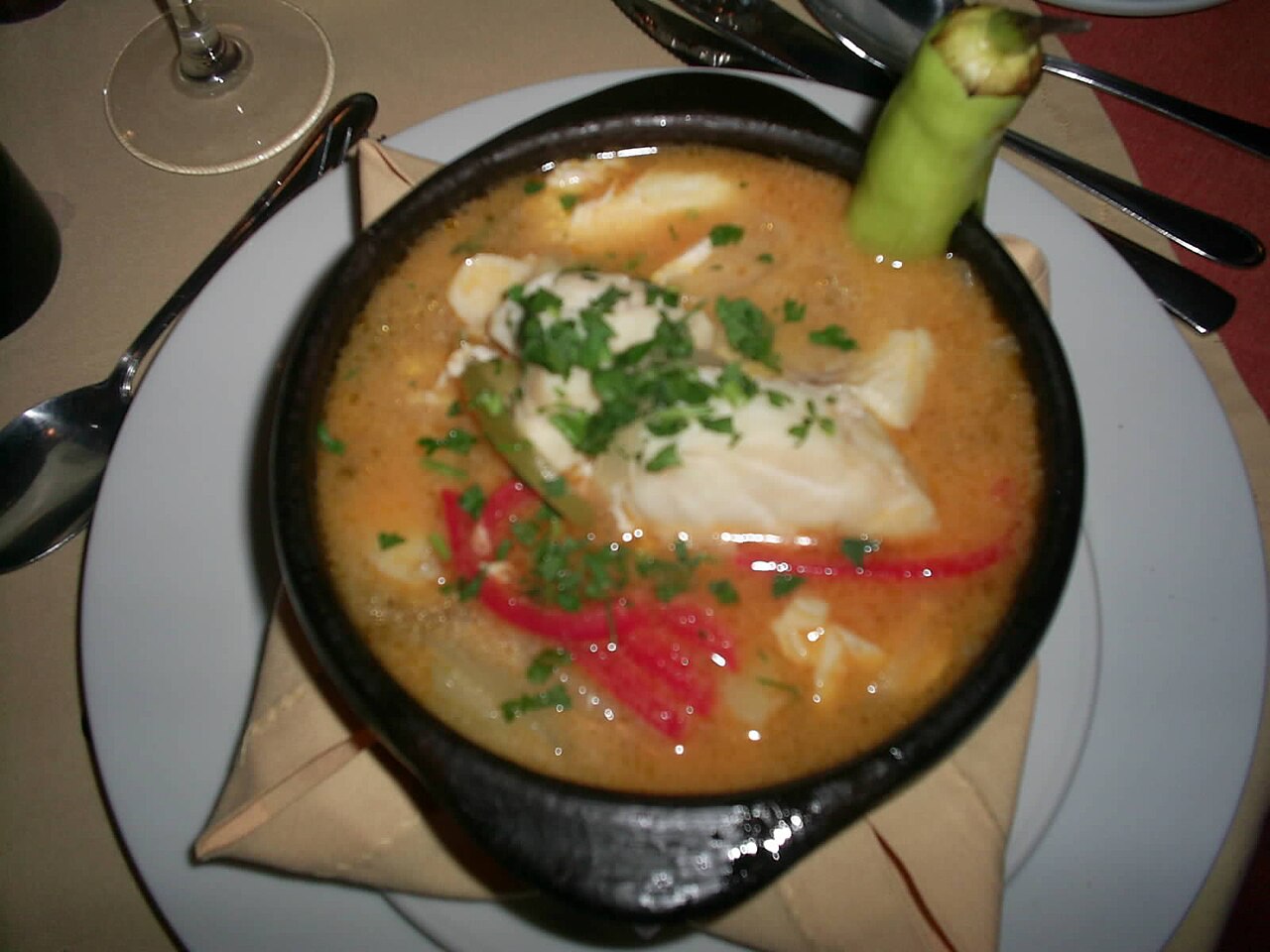
A generous soup of beef or chicken with a big piece of potato, a slice of squash, a piece of corn on the cob, green beans and rice, sprinkled with coriander or parsley. Each diner gets one of every ingredient in a deep plate.
Chileans usually drink the broth first, then eat the meat and vegetables.
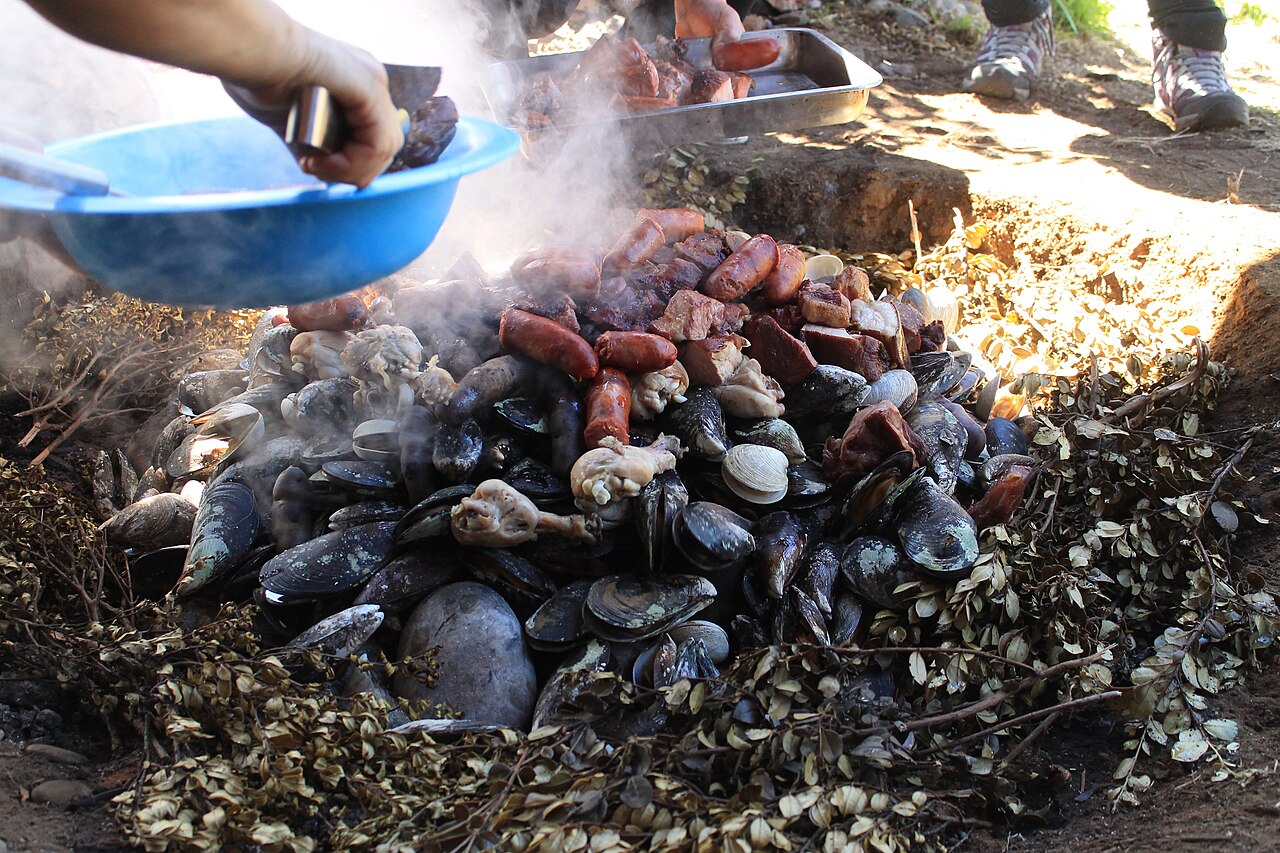
A feast cooked in a pit in the ground. Stones are heated red hot in a fire, then covered with layers of clams, mussels and giant barnacles, meat, sausages, potatoes and potato dumplings called milcao and chapaleles, and sealed with large nalca leaves and turf.
The name comes from the Mapuche word kurantu, meaning 'stony'. The traditional pit version is called curanto en hoyo.
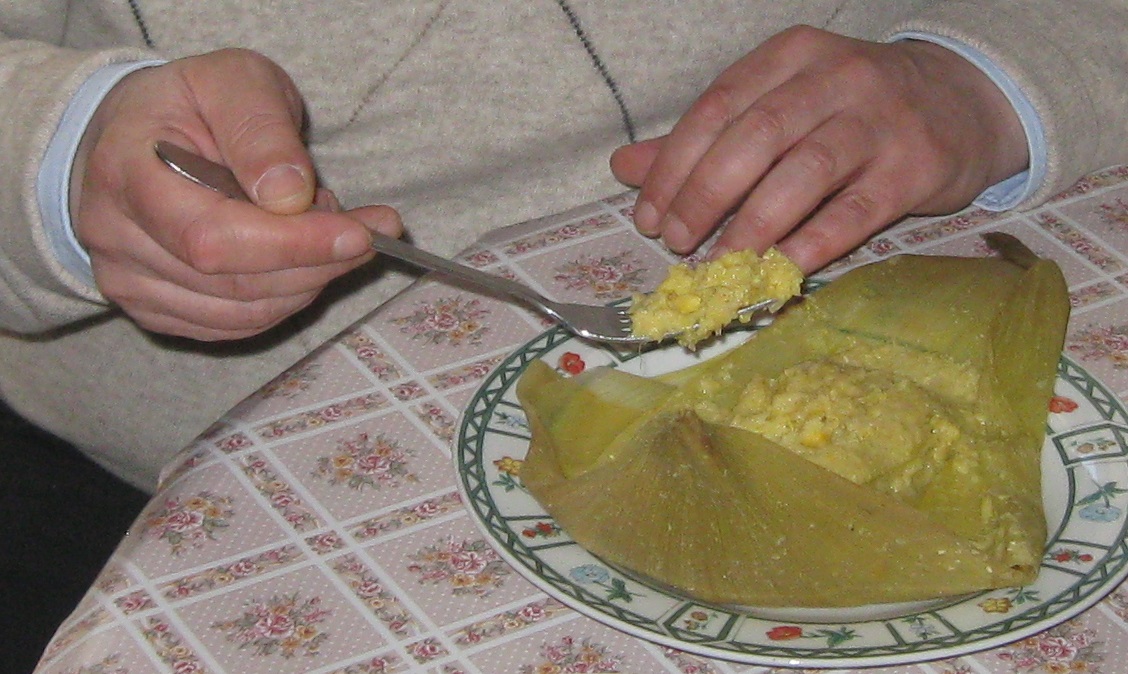
Fresh sweetcorn ground to a paste with onion, basil and butter, wrapped in corn husks, tied with string and boiled or baked. Chileans eat them with a little sugar or with a fresh tomato salad.
The dish goes back to before the Spanish conquest, and the name comes from the Quechua word umint'a.
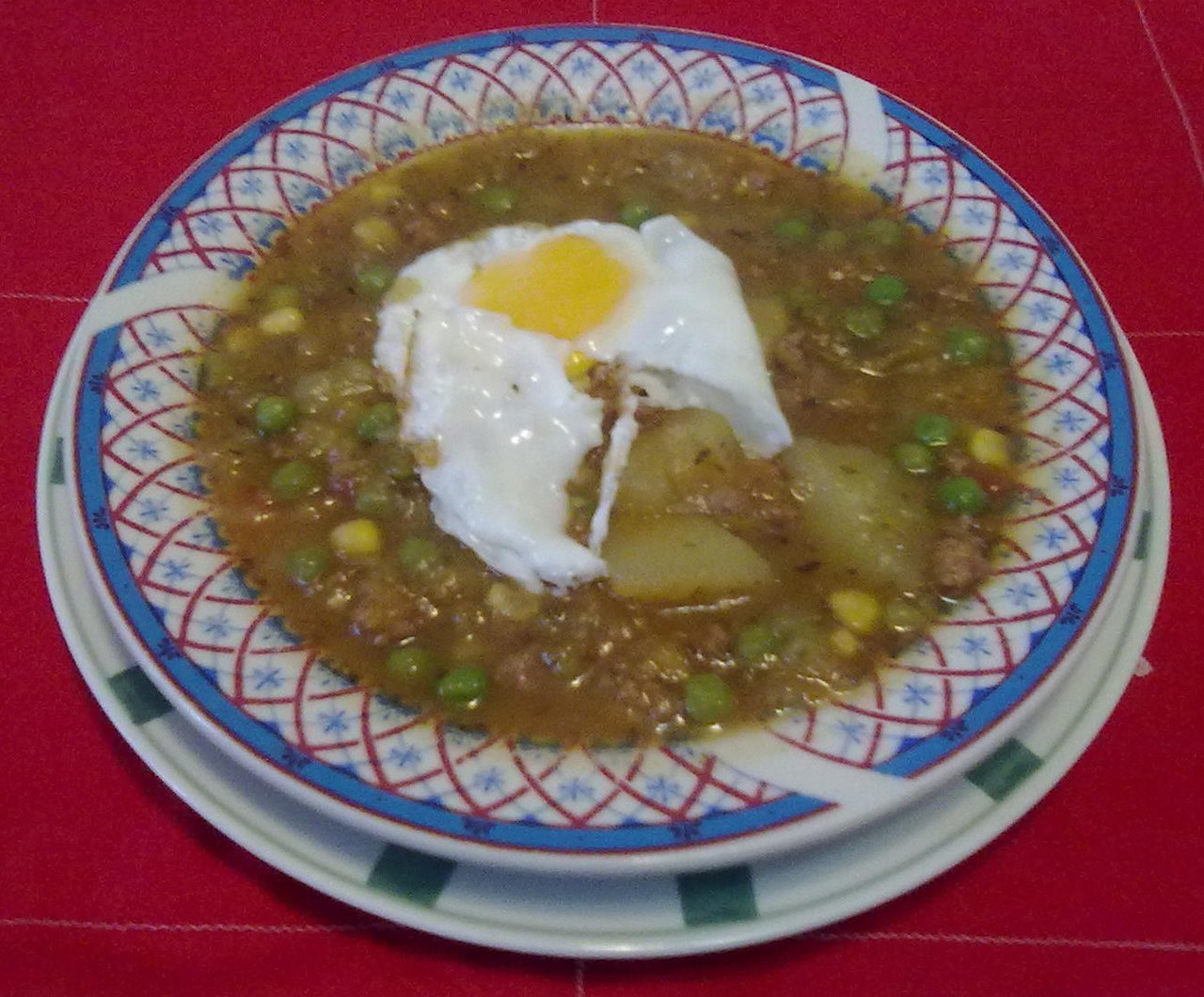
A hearty home-style stew of potatoes, pumpkin, corn and onion mashed together with beef, usually topped with a fried egg. It was first made with dried meat called charqui.
It was a common meal for the soldiers of the Army of the Andes during the wars of independence.
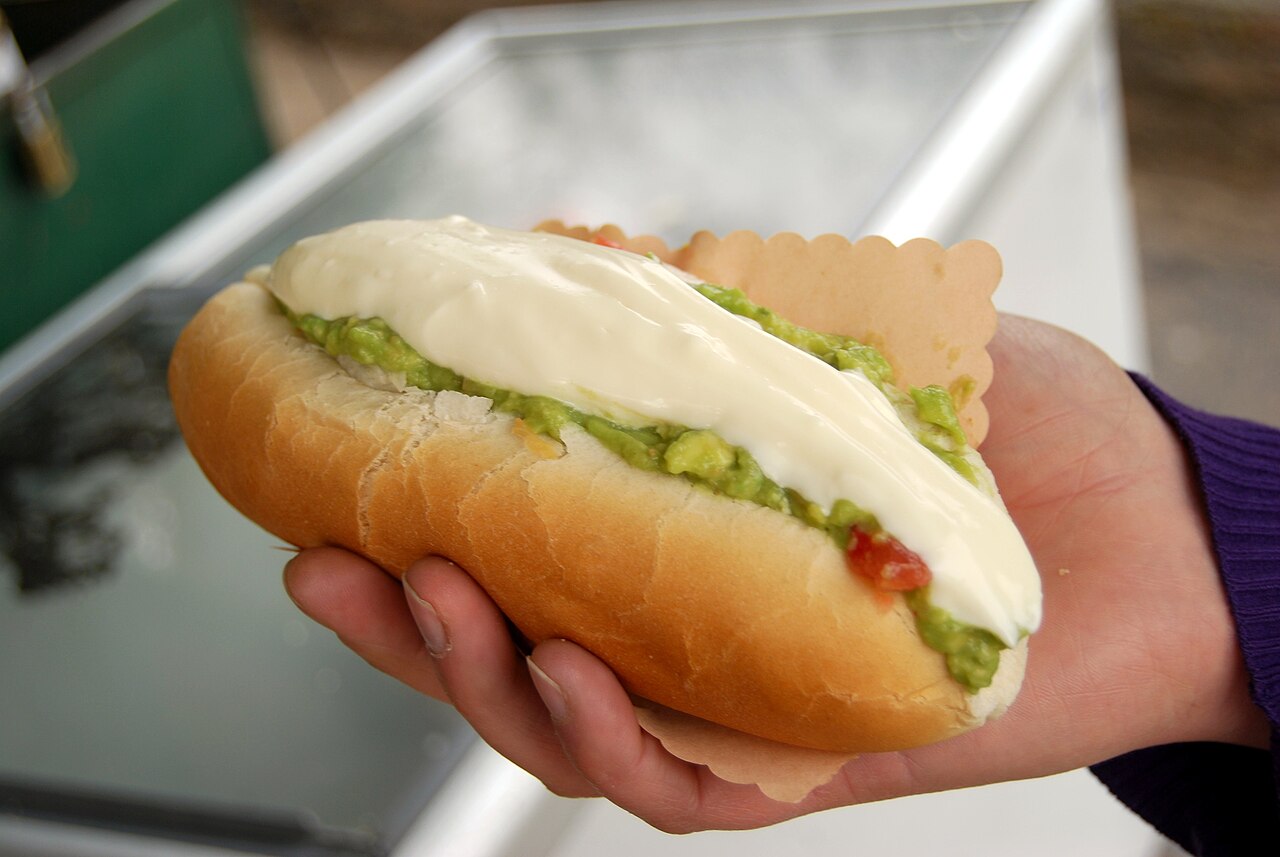
The Chilean hot dog, much bigger and more loaded than the American one. The favourite version, the completo italiano, is topped with chopped tomato, mashed avocado and mayonnaise.
The completo italiano is named for its colours, red, green and white like the Italian flag.
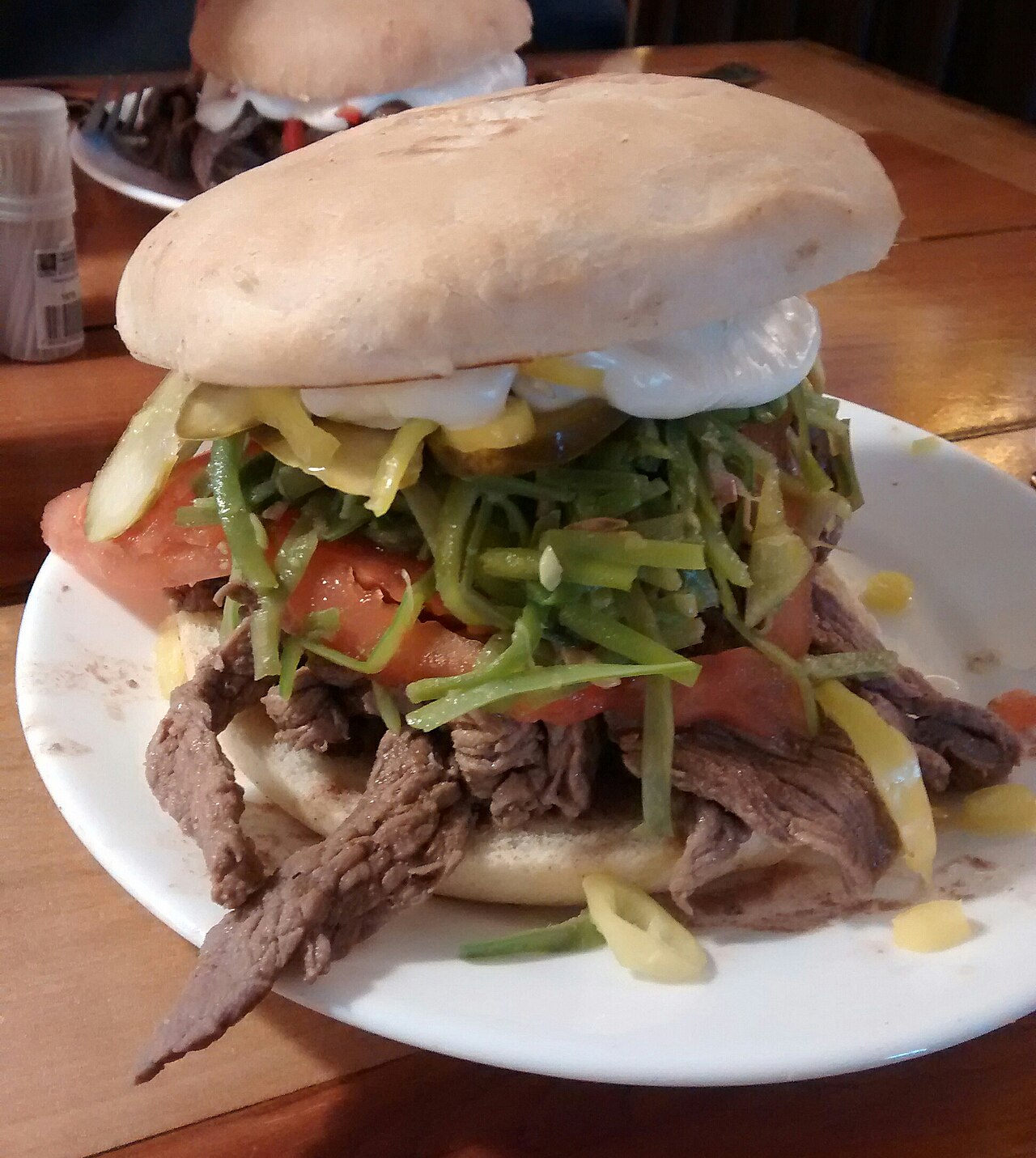
A hot sandwich of thin slices of steak on a round roll with tomato, green beans, mayonnaise and sometimes green chilli. It is a classic of the fuentes de soda, simple Chilean diners that serve sandwiches and draught beer.
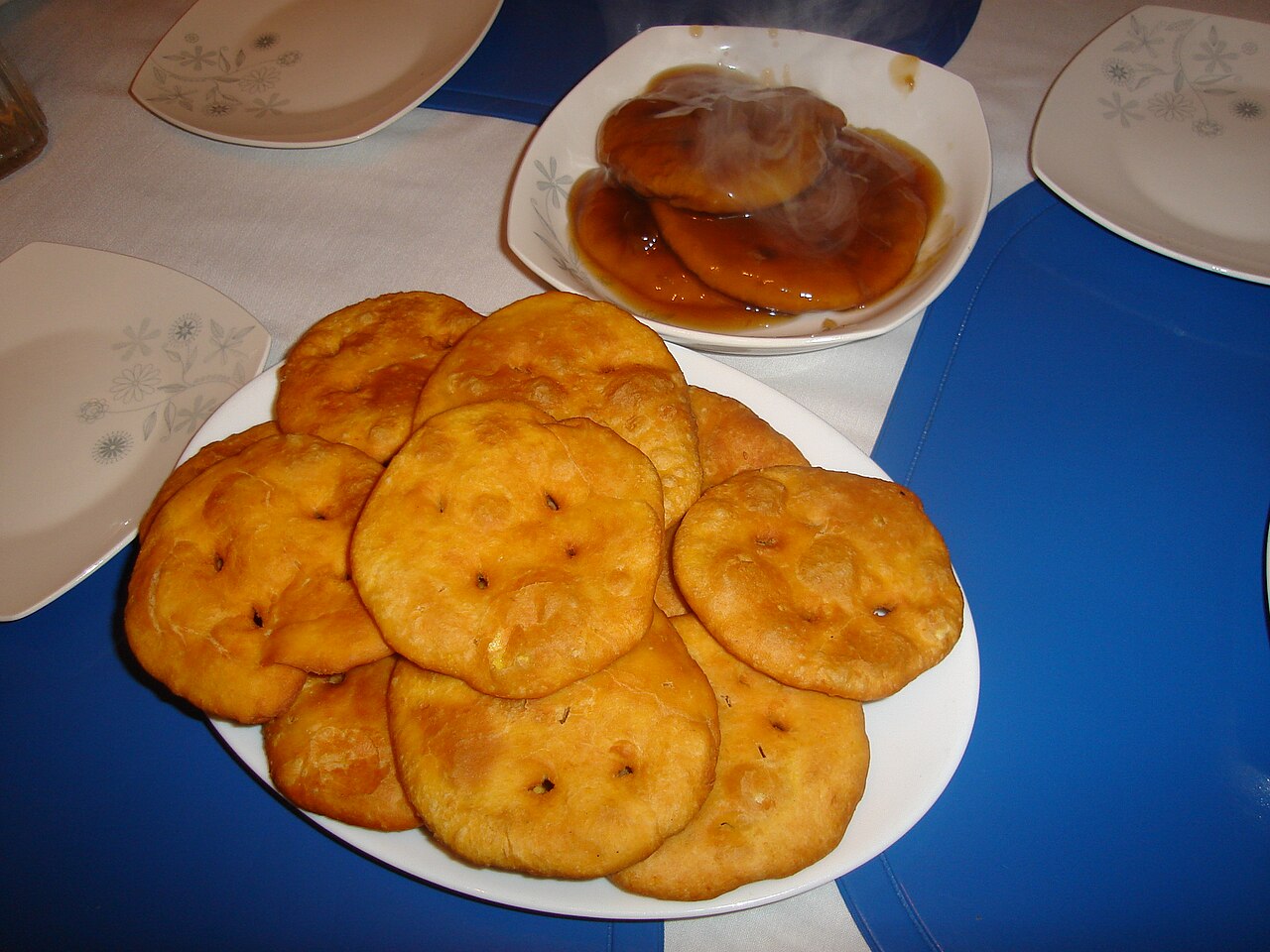
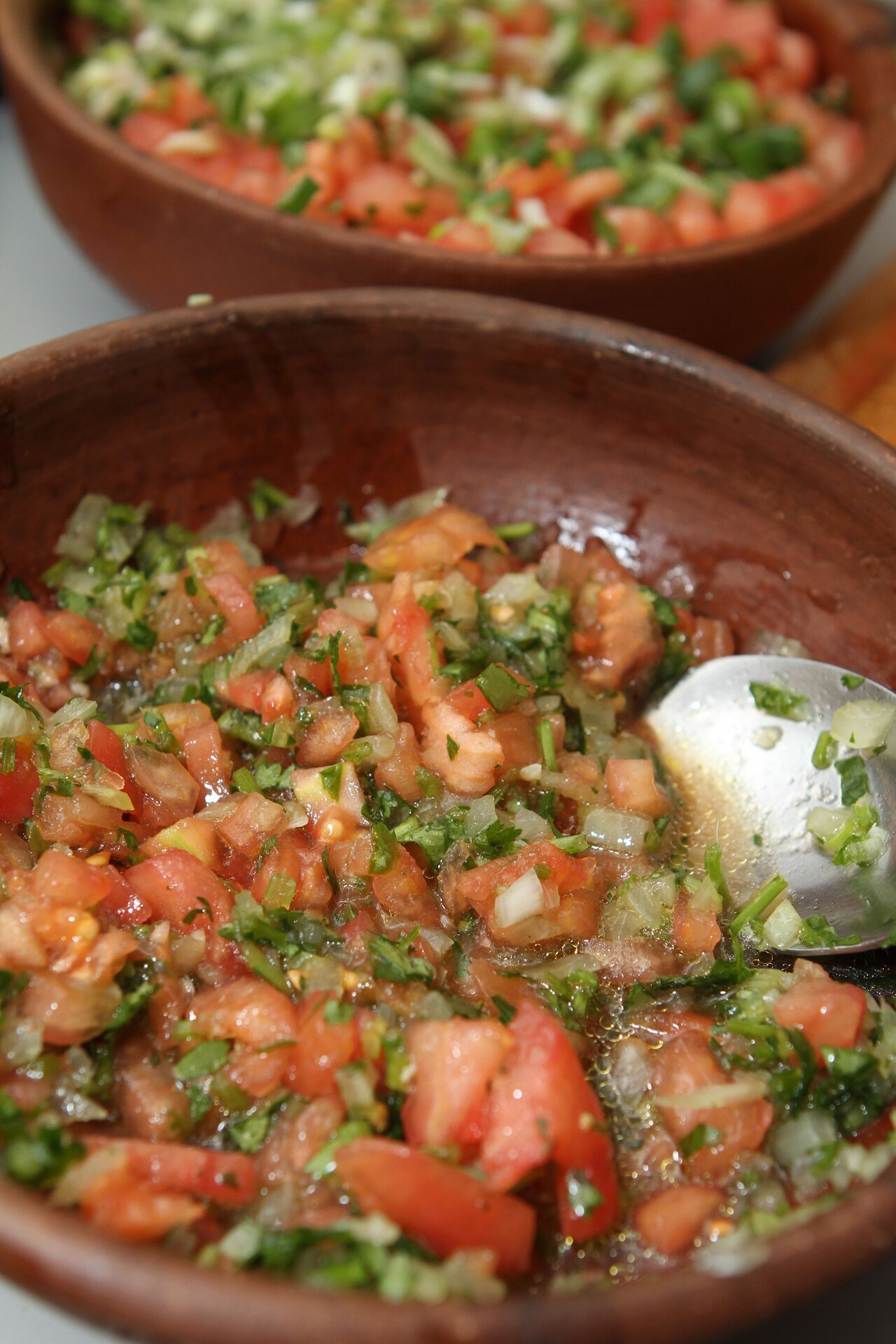
Round, flat fried dough, in central Chile made with mashed pumpkin in the dough. They are eaten as a snack with pebre or mustard, or as a dessert soaked in a warm syrup of dark sugar, orange peel and cinnamon, when they are called sopaipillas pasadas.
Chileans traditionally make sopaipillas at home on cold, rainy days.
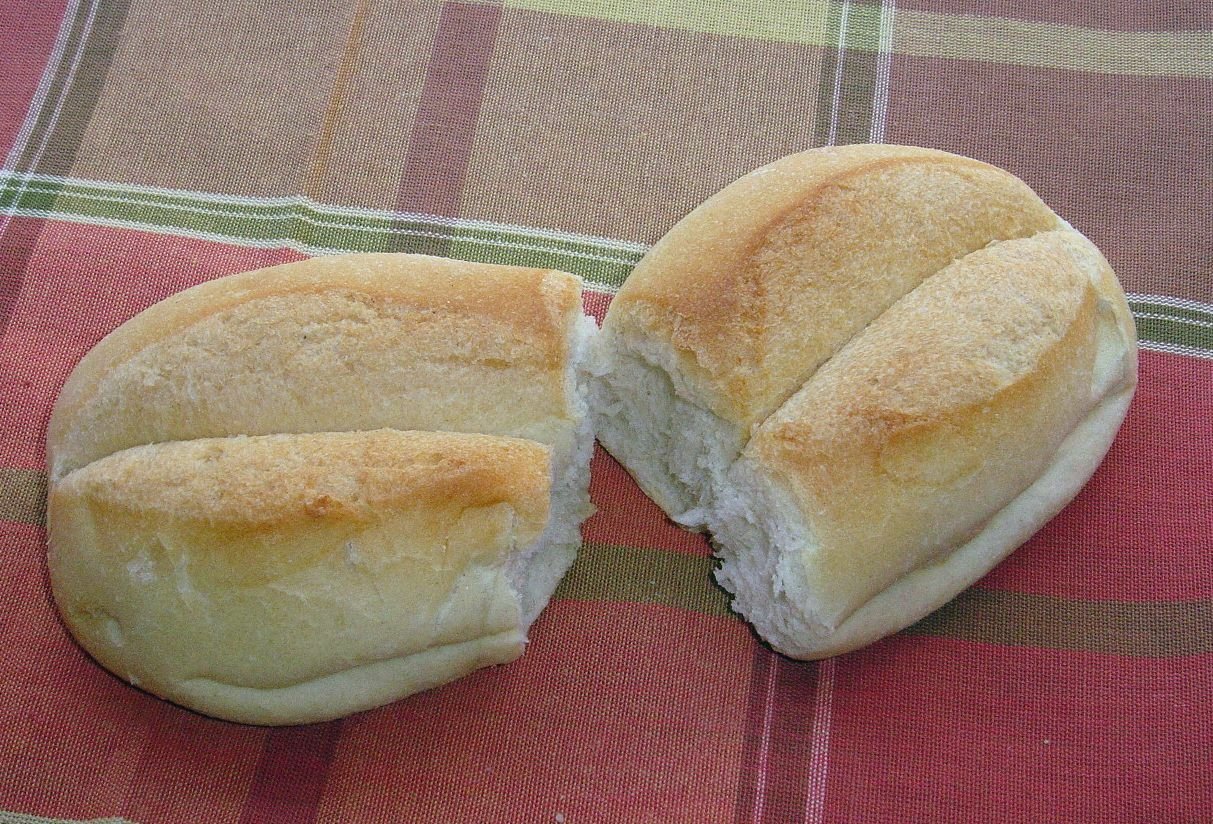
Chile's everyday bread: a crusty white roll made of four parts that can be broken apart by hand. It is eaten at every meal and often at breakfast with mashed avocado.
In some regions it is called pan batido or pan francés, 'French bread'.
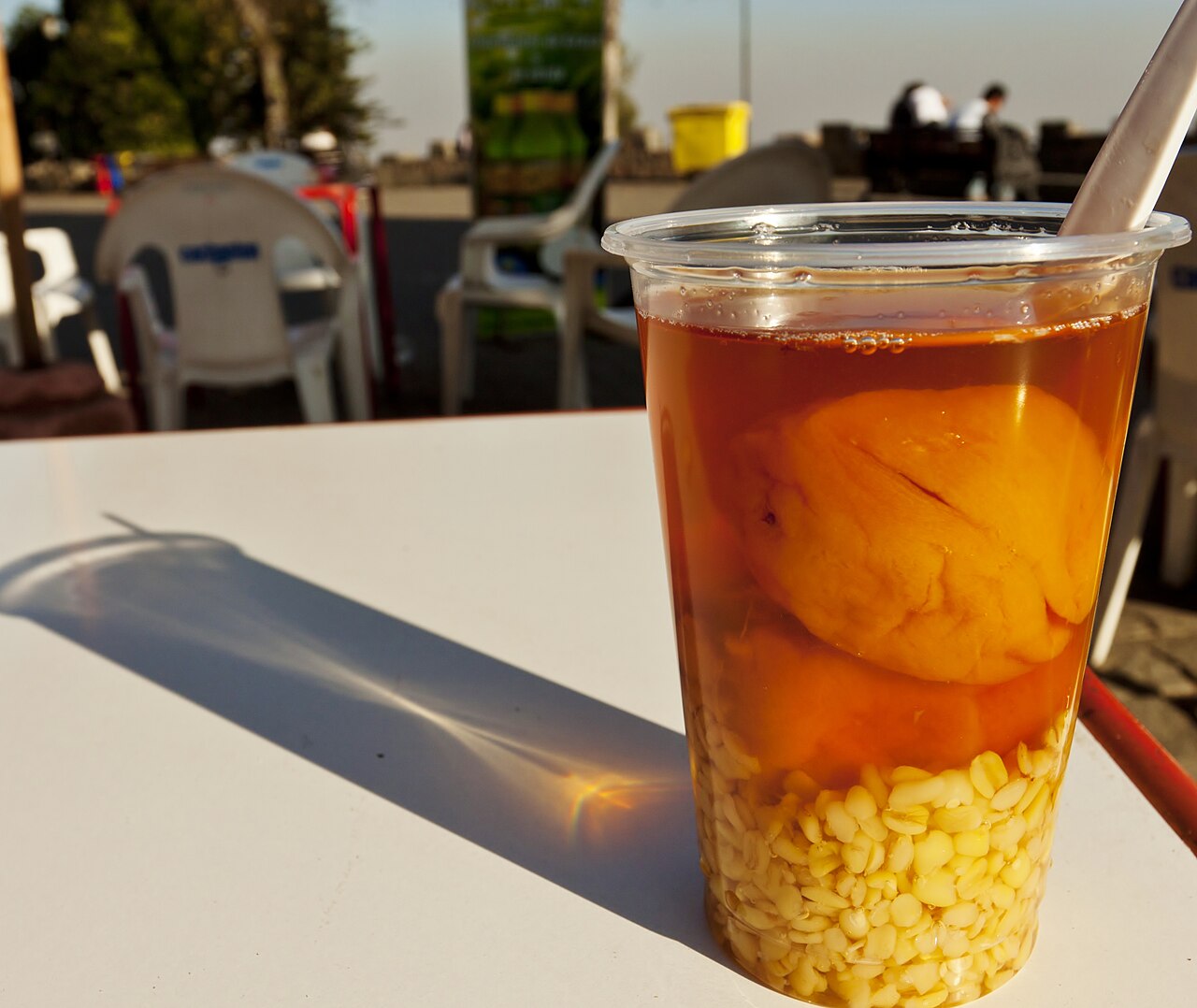
Chile's summer drink, sold from street carts: a cold, sweet nectar made by cooking dried peaches with sugar and cinnamon, served with the peaches and a spoonful of cooked husked wheat, the mote, at the bottom of the glass.
It is drunk and eaten at the same time, so it comes with a spoon.
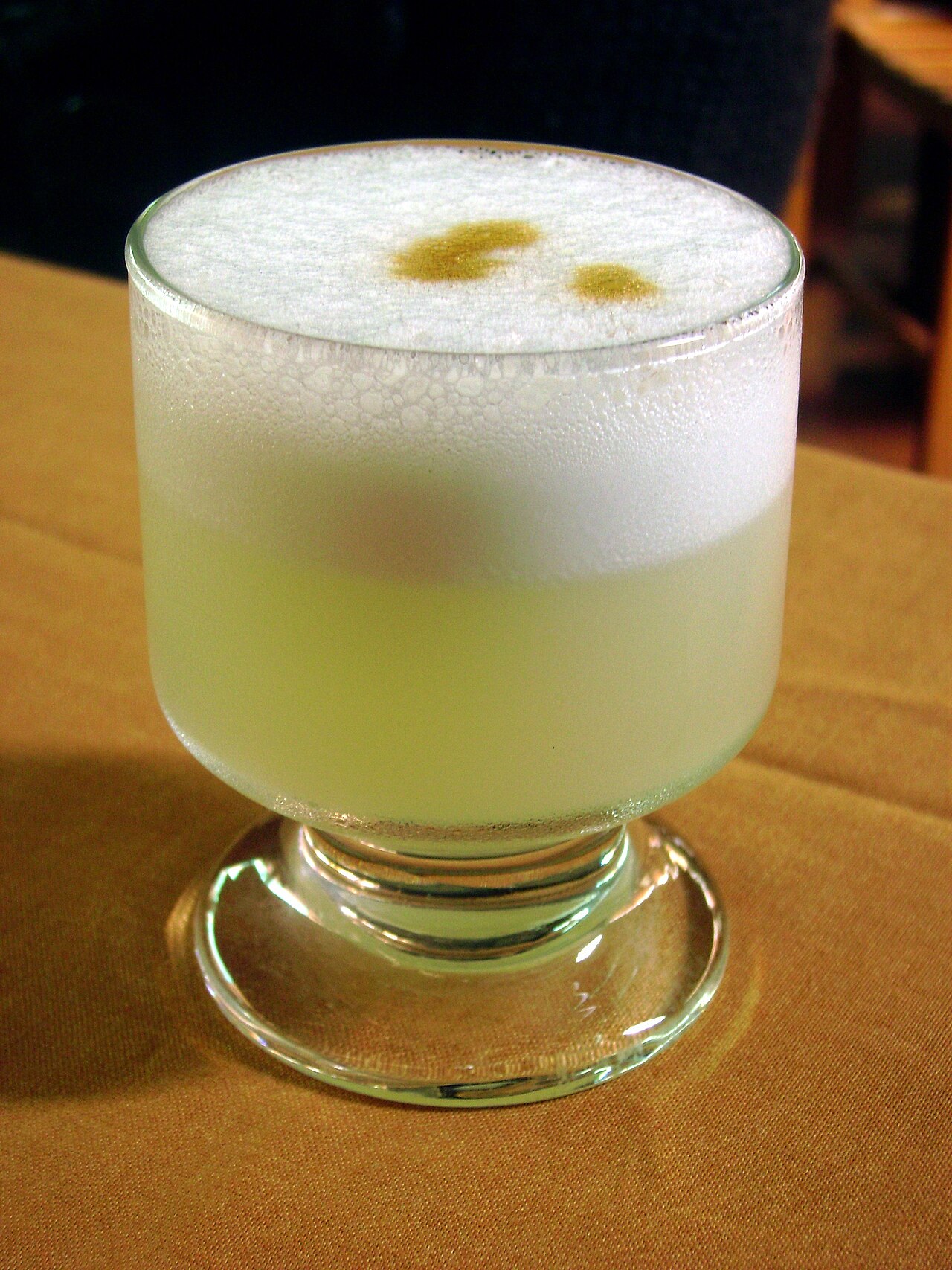
A cocktail of pisco, a grape brandy, with lemon juice and sugar, shaken with ice. The Chilean version uses Chilean pisco and small limes from Pica, and unlike the Peruvian version it has no egg white and no bitters.
Chile and Peru both call the pisco sour their national drink, and the friendly argument about it never ends.
If someone offers you something, say 'Sí, por favor' or 'No, gracias'. A bare 'sí' or 'no' sounds rude.
When you arrive at or leave a gathering, greet every person there. Men shake hands; with women, a light touch of the right cheeks is usual.
When you leave the table at a formal meal, it is polite to say 'Con permiso' (excuse me).
A tip of about 10 percent is customary in restaurants when the service is good, and some restaurants add it to the bill. Leaving no tip at all is seen as rude unless the service was very bad.