Argentine food is built on beef from the Pampas and on the cooking of millions of Italian and Spanish immigrants, with older Andean dishes of corn and squash in the northwest. Breakfast is light: coffee with milk and a few croissants called medialunas. Sunday family lunch, often an asado or a big plate of pasta, is the most important meal of the week. In the late afternoon comes the merienda, coffee or mate with something sweet. Dinner is eaten late: in Buenos Aires, restaurants fill up from about half past nine in the evening.
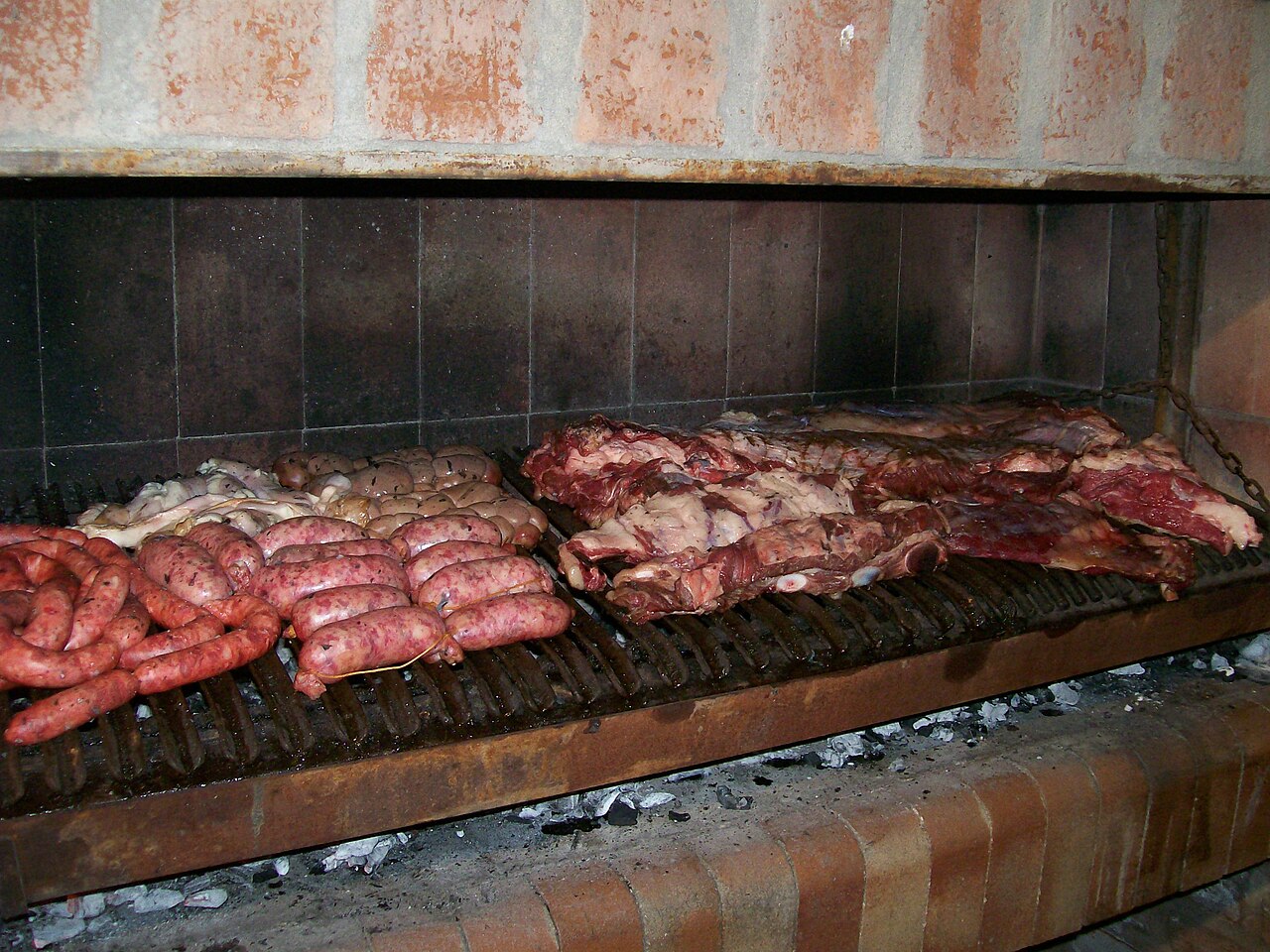
The Argentine barbecue, and a social event as much as a meal. Beef ribs, steaks, chorizo sausages, black pudding (morcilla) and other cuts are cooked slowly over wood embers on a grill called a parrilla. The person in charge of the fire is the asador, and the meal can last all afternoon.
In Argentina, the word asado also means the long strip of beef ribs that is the star of the grill.
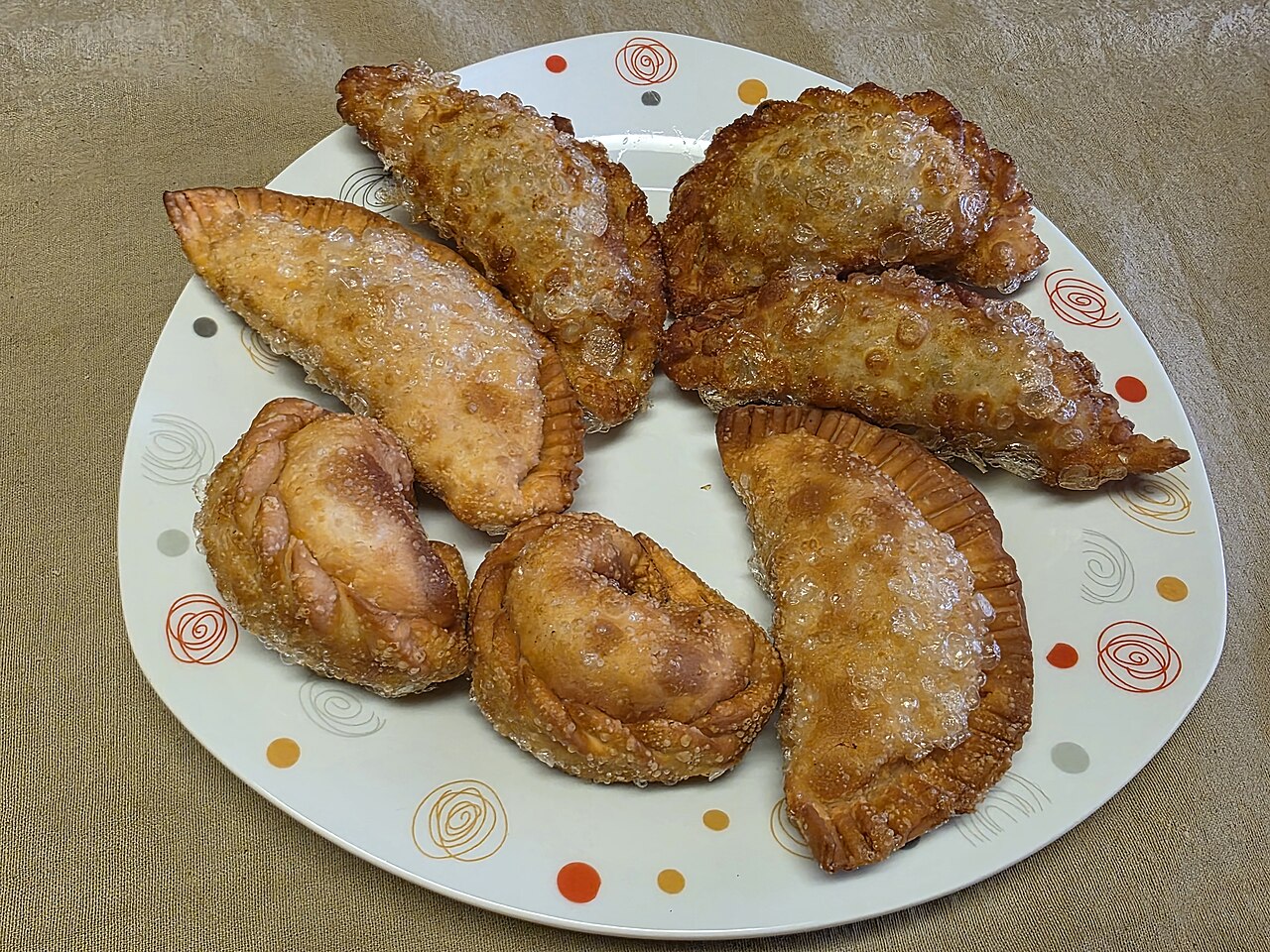
Half-moon pastries with a savoury filling, baked or fried and eaten with your hands. In Salta they are small, juicy and spicy, with potato; in Tucumán they are often made with beef cut by knife; in La Rioja the filling can include egg, olives and raisins. Each filling has its own pattern of folds on the edge, the repulgue.
Tucumán province holds a National Empanada Festival every year in the town of Famaillá.
The whole country, especially at football matches and street stalls
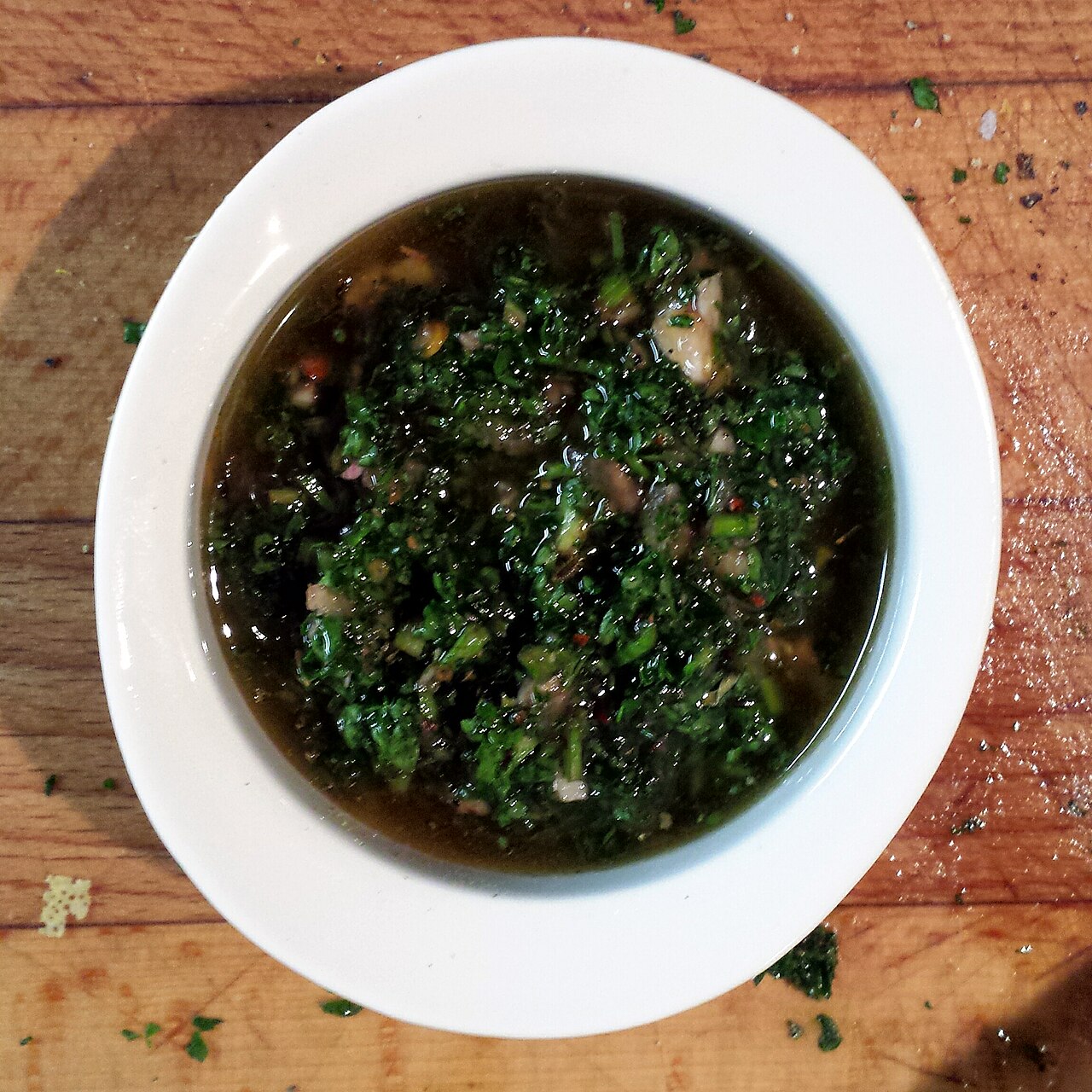
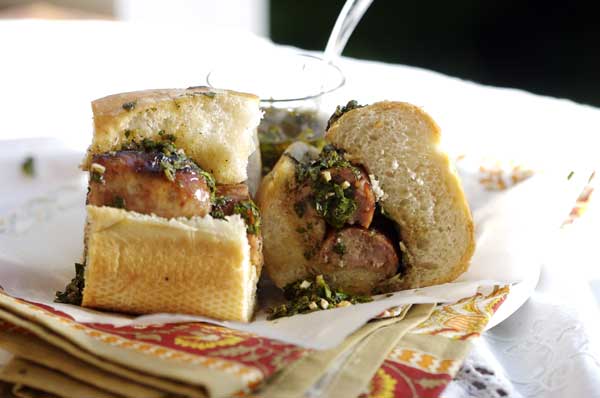
A grilled chorizo sausage of beef and pork, split open and served in a crusty roll, usually with chimichurri. It is often the first thing to come off the grill at an asado.
The name joins the two ingredients: chorizo and pan, bread.
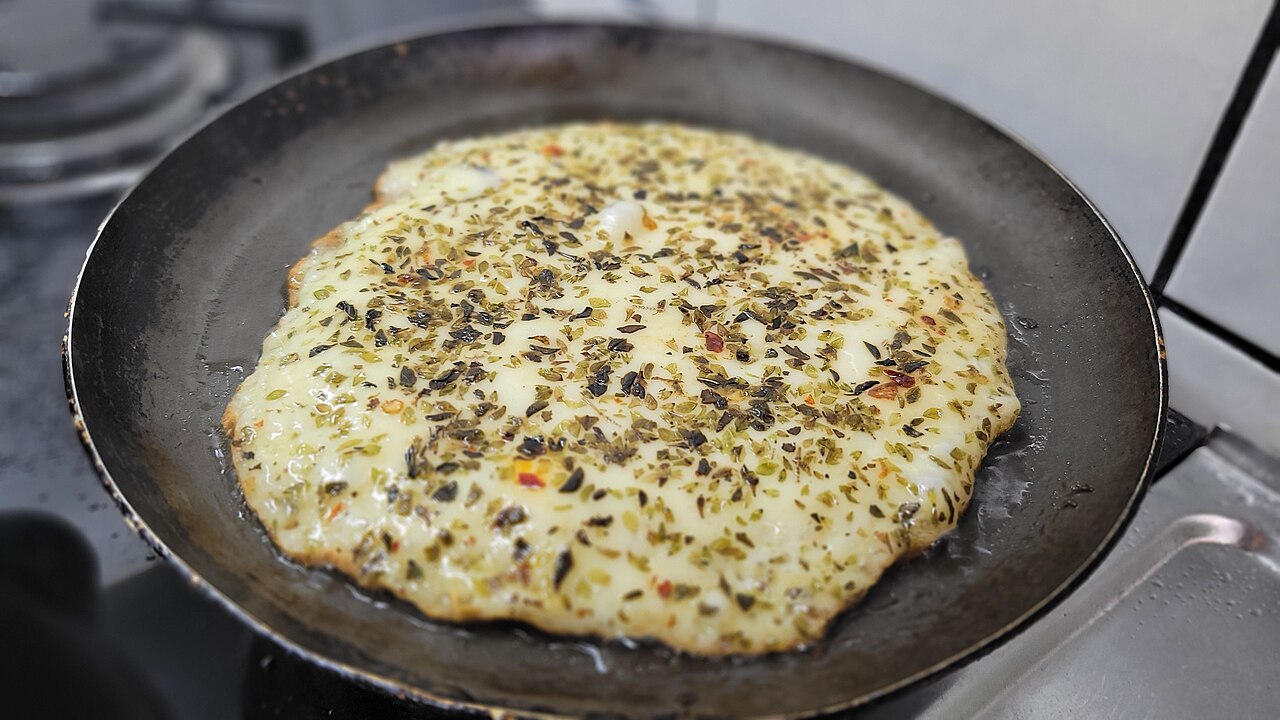
A thick round slice of provolone-style cheese, grilled until it is crisp outside and soft inside, then sprinkled with oregano and chilli. It is a favourite starter at an asado.
Provoleta is an Argentine cheese in its own right, made in small discs about 10 to 15 cm across, firm enough to keep its shape on the grill. It was first made in the 1940s by Natalio Alba, a Calabrian immigrant in Córdoba.
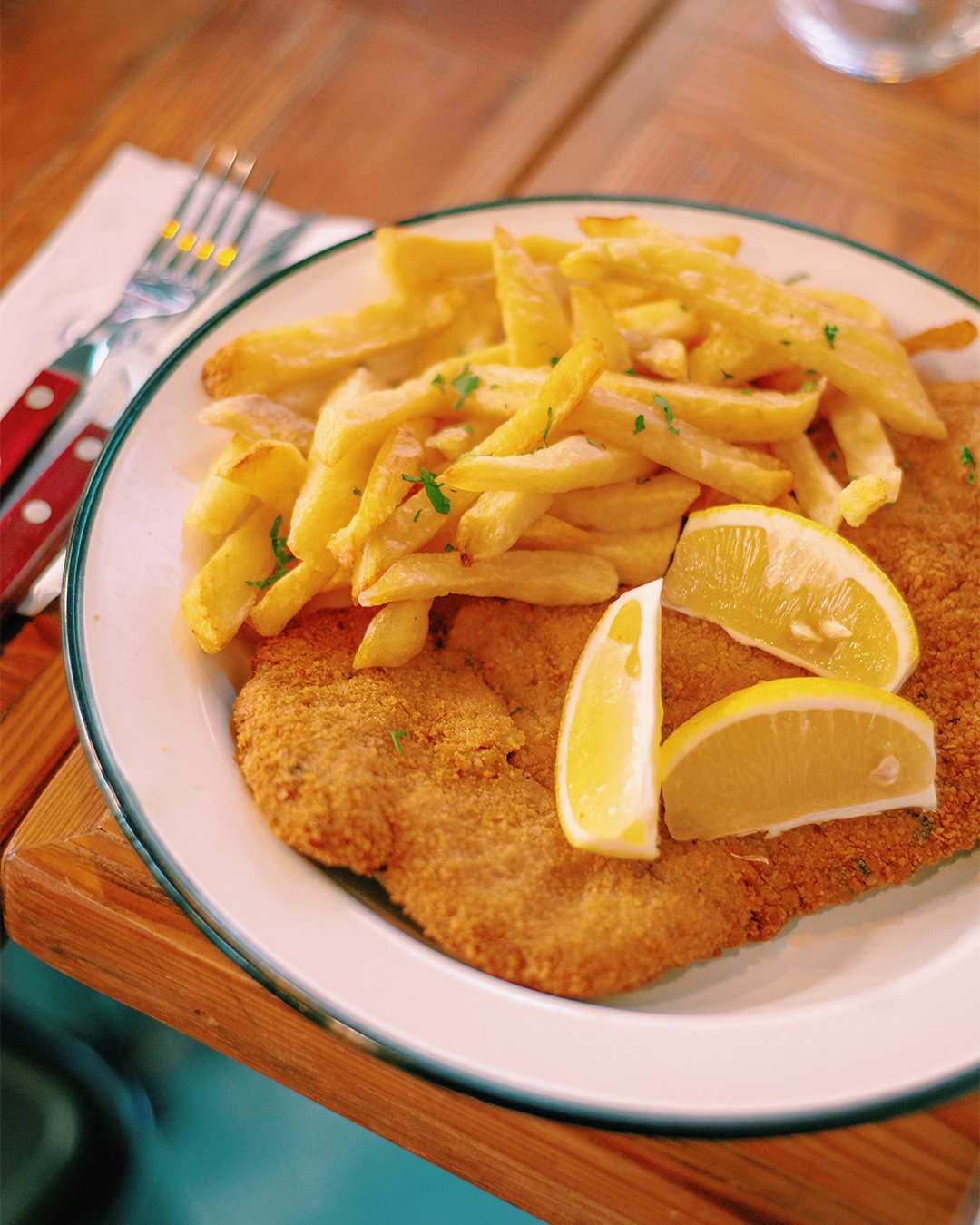
A thin slice of beef or chicken, dipped in egg and breadcrumbs and fried or baked. It is one of the most common home meals in Argentina, served with chips, mashed potatoes or salad, or in a sandwich.
The milanesa napolitana, topped with tomato sauce, ham and melted cheese, was invented in Buenos Aires, not Naples. According to a popular story, a cook in the 1940s covered a burnt milanesa to save it.
The northwest, especially Salta, Jujuy and Tucumán
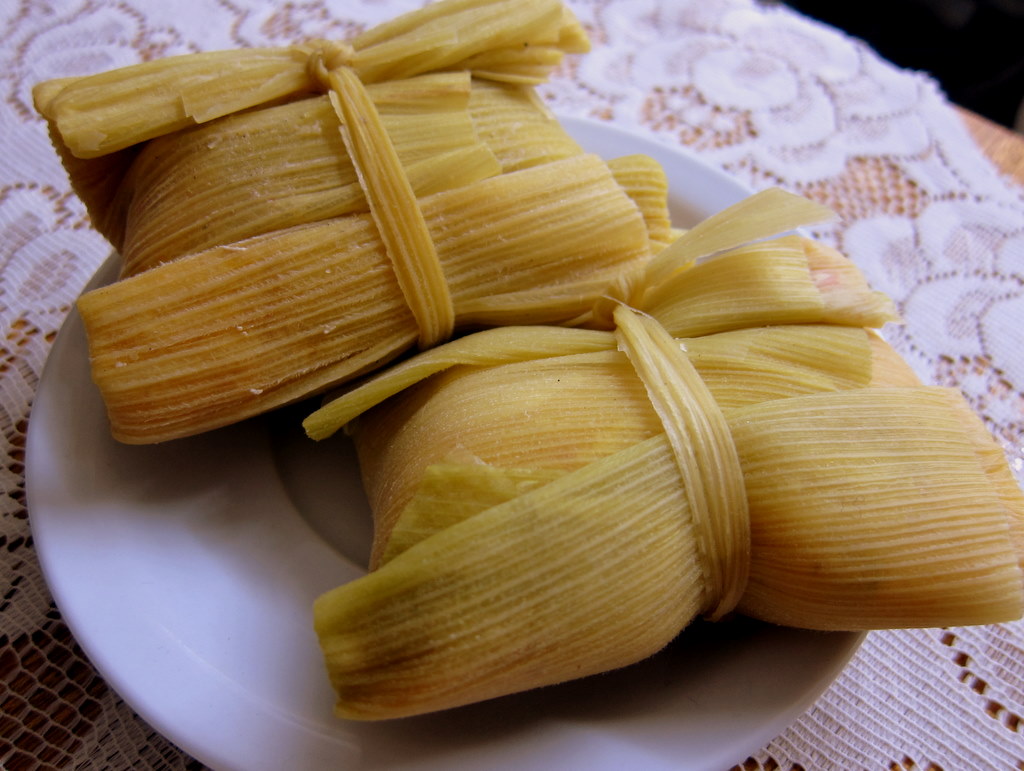
Fresh sweetcorn, grated to a cream and cooked with onion, squash, spices and sometimes cheese. It is eaten from a pot (humita a la olla) or wrapped and steamed in corn husks (humita en chala).
Humitas go back to before the Spanish arrived, and similar dishes are made in Peru, Bolivia, Chile and Ecuador.
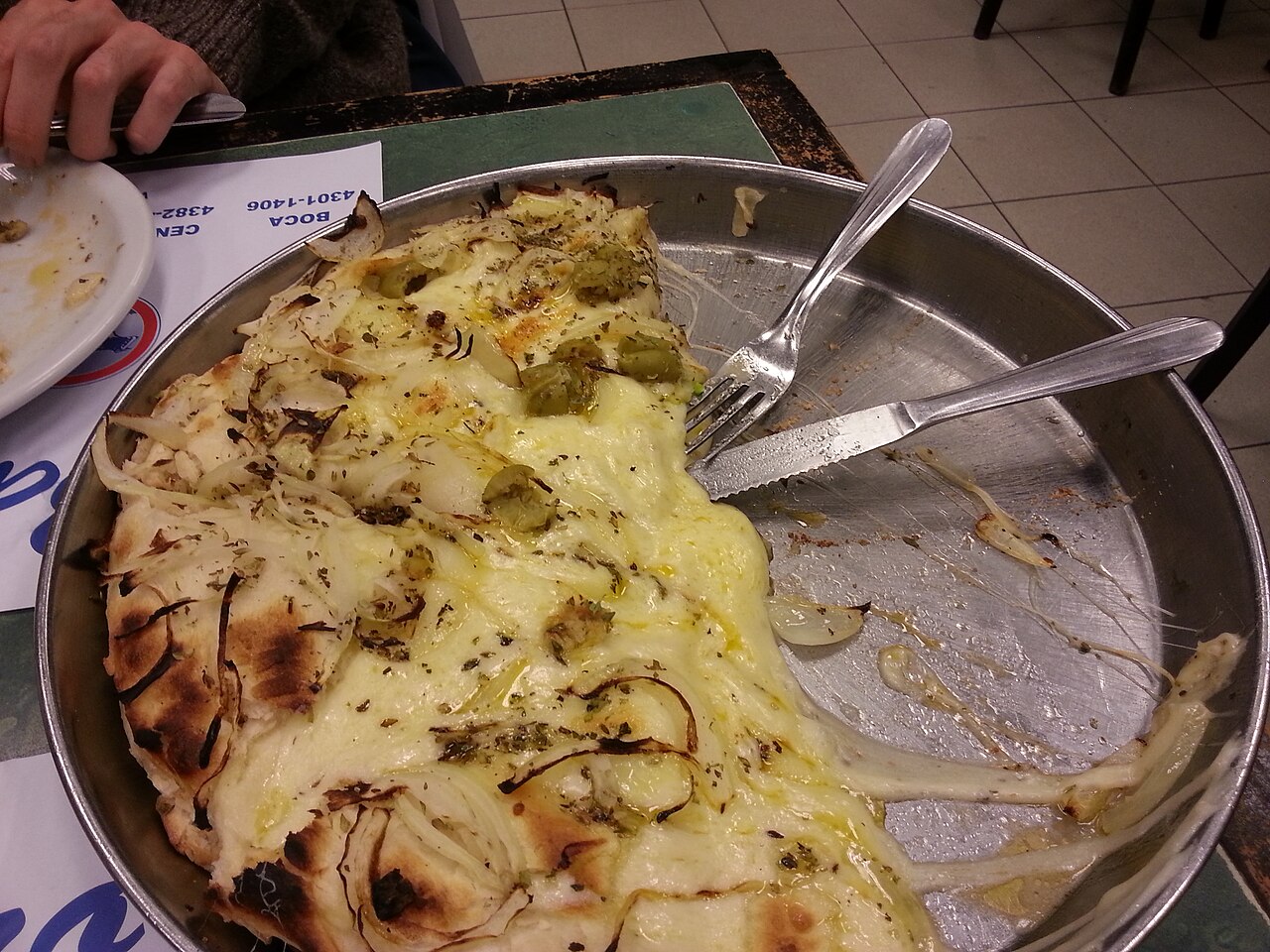
An Argentine pizza with a thick, soft base topped with lots of onion and sometimes olives. The version with cheese, fugazza con queso, is a Buenos Aires favourite.
It is believed to have been created in the La Boca neighbourhood by Juan Banchero, the son of a baker from Genoa. The name comes from the Genoese word fugassa, focaccia.
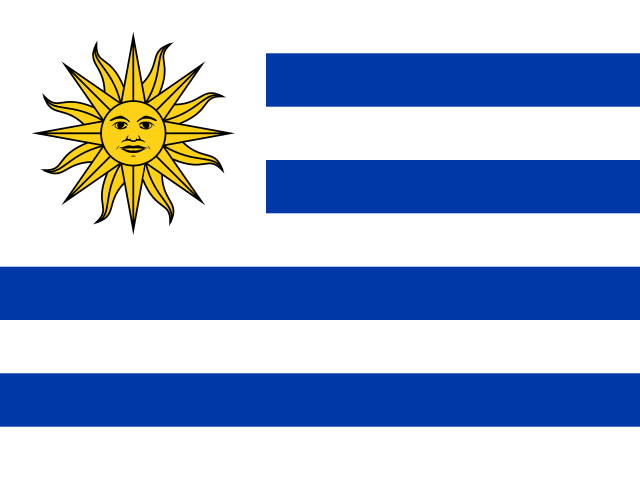
The Río de la Plata region; Argentina and Uruguay both call it their own
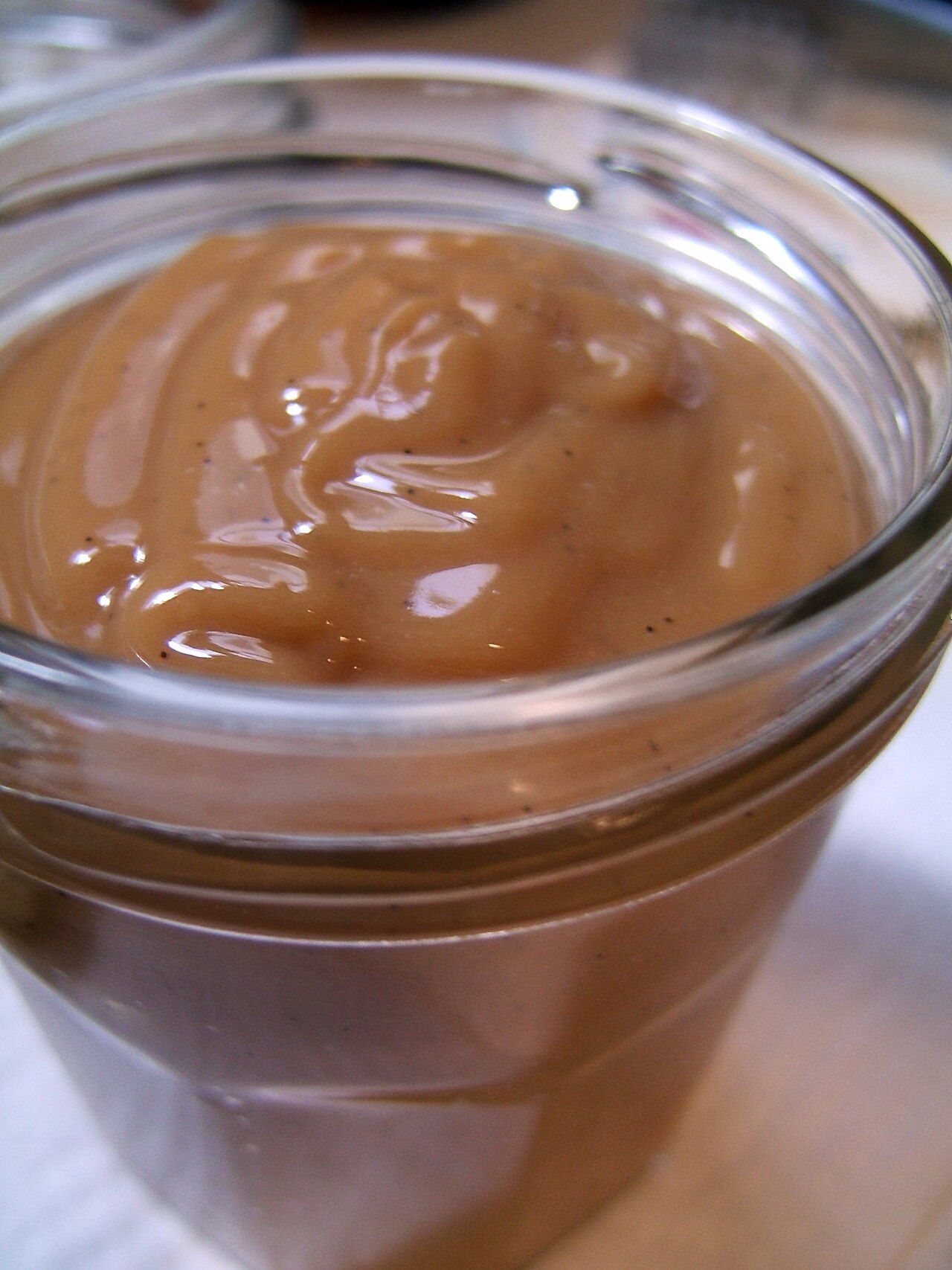
A thick, sweet spread made by slowly cooking milk and sugar until it turns a deep caramel brown. Argentines spread it on toast, fill cakes, pancakes and pastries with it, and eat it with ice cream.
Where it was first made is a matter of friendly dispute: Argentina, Uruguay and other countries all have their stories, and none holds a protected designation of origin. International Dulce de Leche Day is celebrated on 11 October.
Brought from Spain; the Argentine version is now its own classic
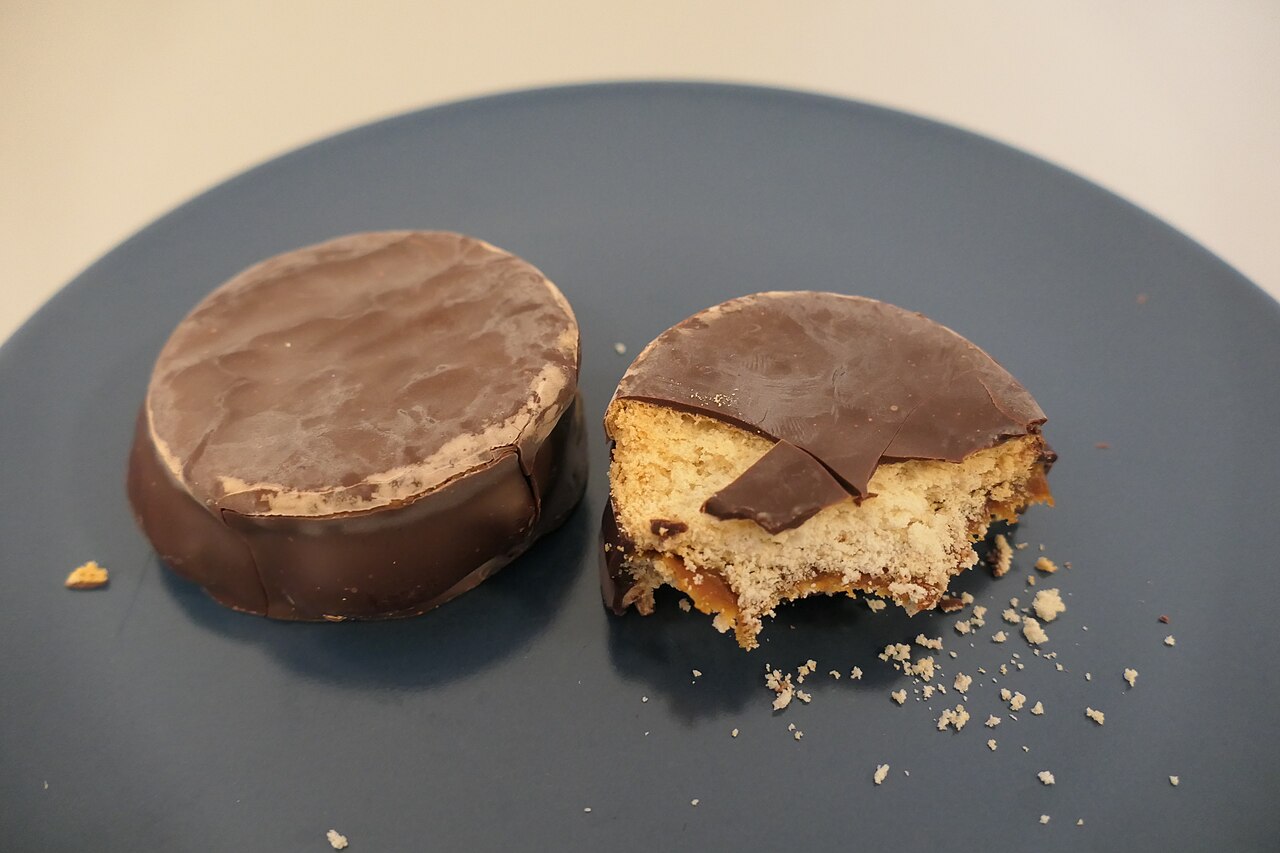
Two soft round biscuits sandwiched with dulce de leche. Some are dipped in chocolate; the homemade alfajores de maicena are made with cornflour and rolled in coconut at the edges.
The alfajor came to Spain in the time of al-Andalus, and Argentines are among the biggest alfajor eaters in the world: about 6 million a day, according to figures from 2021.
The Guaraní peoples of today's Paraguay, northeastern Argentina and southern Brazil
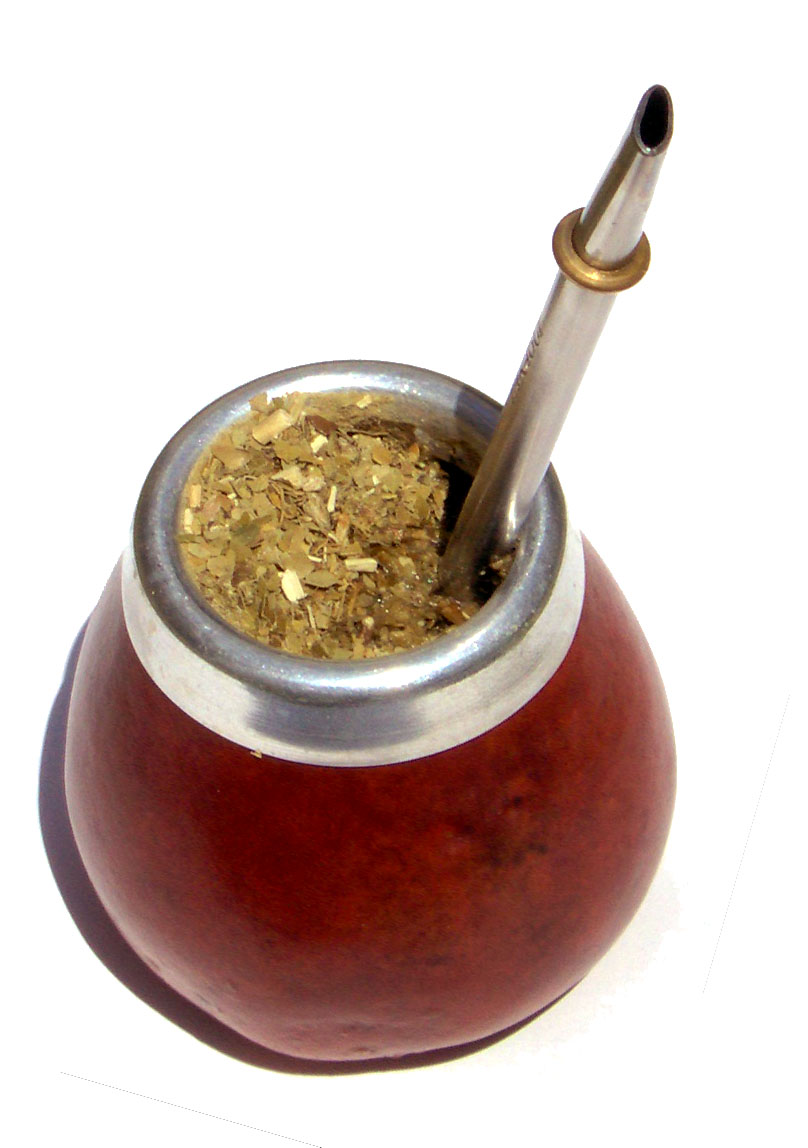
An infusion of dried yerba mate leaves, drunk hot through a metal straw called a bombilla from a gourd, also called a mate. It contains caffeine and has a strong, bitter taste. One person, the cebador, fills the gourd with hot water again and again and passes it round the group. Let the water cool a little: very hot drinks are bad for the throat.
In 2013 a national law declared mate Argentina's national infusion.
Mendoza and the other wine regions along the Andes
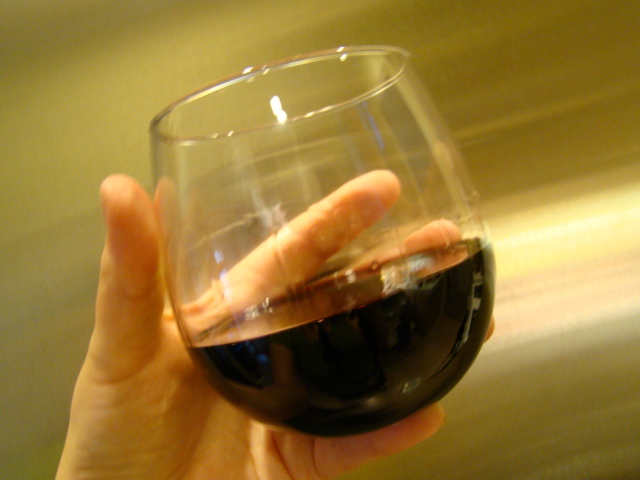
A deep red wine made from the Malbec grape, which came from southwest France in the 1800s. In the sunny valleys of Mendoza it became Argentina's most planted red grape and its best-known wine. It contains alcohol.
World Malbec Day is celebrated every year on 17 April. It was started in 2011 by Wines of Argentina.
At the table in Argentina
Dinner is late. In Buenos Aires many restaurants serve dinner from about 8 in the evening, and the busiest time is from about half past nine.
At an asado, the asador is the star. It is polite to thank and praise the cook before the meal is over.
If you are offered mate, drink the whole gourd through the straw and hand it back to the person serving. Do not stir the straw, and only say 'gracias' when you have had enough: it means 'no more for me'.
Waiters do not bring the bill until you ask. Say 'La cuenta, por favor'.
The 'cubierto' on the bill is a cover charge for bread and table service. It is not a tip.
A tip of about 10 percent is usual for good service. Leave it in cash if you can, because card machines often have no space for a tip.