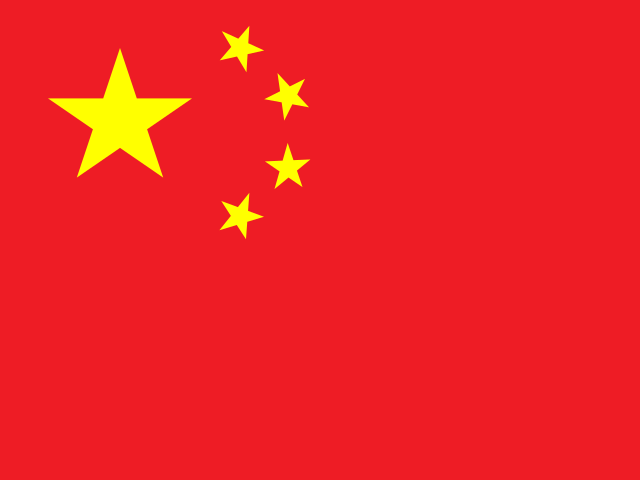
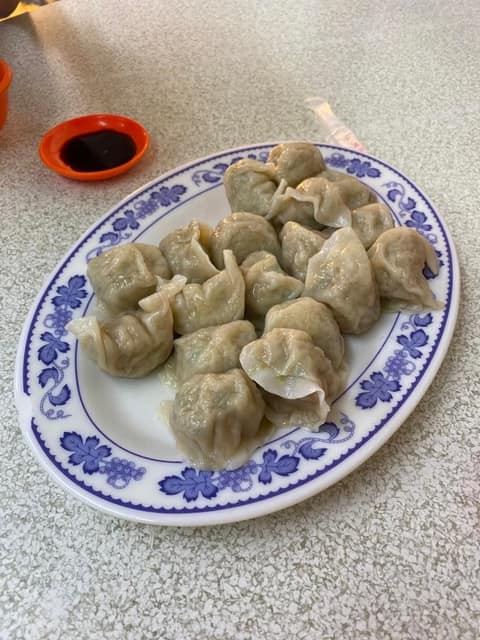
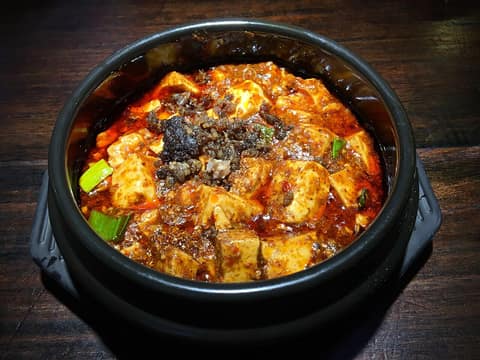
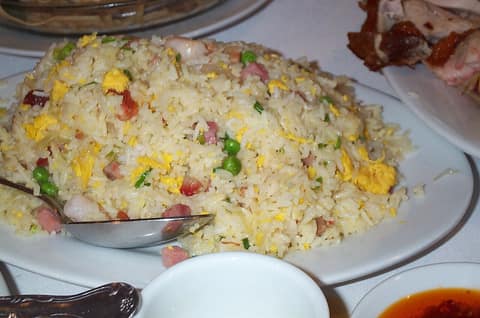
The Great Wall, the Forbidden City, pandas and dumplings, in a land that has been writing its own history for more than 3,000 years.
China stretches across East Asia, from the deserts and grasslands of the north and west to the tropical coast of the south. In the southwest the land rises to the Tibetan Plateau and the Himalayas, where Mount Everest stands on the border with Nepal. Two great rivers, the Yellow River and the Yangtze, flow east across the country to the sea, and most people live in the fertile plains and river valleys of the east.
The oldest known Chinese writing, carved on oracle bones, is more than 3,000 years old. In 221 BC the kingdoms of China were joined into one empire, and emperors of one dynasty after another ruled for more than 2,000 years, until the last emperor gave up the throne in 1912. The People's Republic of China was proclaimed in Beijing in 1949.
Questions to ask the older generation
Memories fade faster than photos. Ask these over a meal or a phone call, and write the answers down.
Which town or region of China did our family come from? Was it near Shanghai, Xi'an, Chengdu?
Who was the first in the family to leave China, when, and why?
Which dishes from China were cooked at home? Did anyone make Peking duck or Jiaozi (boiled dumplings)?
Does anyone in the family still speak Mandarin Chinese, or use a few words of it?
Were there songs, prayers, games or holidays from China that the family kept?
Are there old photos, letters or documents from China? Who has them?
If you could visit China together, where would you go first?
A short history of China
Chinese history is often told as a chain of dynasties, ruling families that rose, governed for decades or centuries and fell. Early legends speak of even older kings, but the story below starts where writing and archaeology agree, with the Shang kings and their oracle bones.
1250 BC
Shang kings write on oracle bones
From about 1250 BC, the kings of the Shang dynasty asked questions of their ancestors by heating ox bones and turtle shells until they cracked, then carved the questions and answers on them. Found near Anyang in Henan, these oracle bones are the oldest known large body of Chinese writing, and many of their characters are still in use.
221 BC
Qin Shi Huang unites China
In 221 BC the king of Qin conquered the last rival kingdom and called himself Qin Shi Huang, the First Emperor. He made one system of writing, money, weights and measures for the whole empire, joined older walls into a long northern defence and was buried near Xi'an with the Terracotta Army.
AD 618
The Tang dynasty begins
The Tang dynasty, founded in 618, is remembered as a golden age of poetry, painting and trade. Its capital Chang'an, today's Xi'an, was one of the largest cities in the world and a meeting point for merchants who came along the Silk Road.
1368
The Ming dynasty is founded
In 1368 Zhu Yuanzhang, a former peasant and monk, drove out the Mongols and founded the Ming dynasty, first with Nanjing as its capital. Most of the Great Wall that visitors see today was built under the Ming.
1644
The Qing dynasty takes Beijing
In 1644 the Manchus of the Qing dynasty, founded in the northeast in 1636, took Beijing and began to rule all of China. The Qing was the last imperial dynasty of China. Men were ordered to wear their hair in the Manchu style, with a long braid called a queue.
1912
The last emperor gives up the throne
After the revolution that began in 1911, the Republic of China was founded on 1 January 1912, and on 12 February the six-year-old emperor Puyi gave up the throne. More than 2,000 years of imperial rule came to an end.
1978
Reform and opening up begins
In December 1978, two years after the end of the Cultural Revolution, the leadership under Deng Xiaoping began reforms that let farmers and businesses sell for profit and invited foreign investment. In the decades that followed, hundreds of millions of people rose out of poverty.
2008
Beijing hosts the Olympic Games
The Summer Olympics opened in Beijing on 8 August 2008, the eighth day of the eighth month, a date chosen partly because eight is a lucky number in China. In 2022 Beijing also hosted the Winter Olympics, becoming the first city to hold both.