China has not one cuisine but many, often grouped into eight great regional traditions, among them Sichuan, Cantonese, Shandong and Jiangsu. As a rough rule, the north eats more wheat, as noodles, buns and dumplings, and the south eats more rice. A family meal is not served in courses: several dishes of meat, fish, tofu and vegetables go in the middle of the table at the same time, everyone has a bowl of rice, and people help themselves with chopsticks. In some regions soup comes near the start of the meal, in others at the end. At the New Year's Eve reunion dinner a whole fish is served and some of it is left over on purpose, because yú, fish, sounds like the word for surplus: 'may there be plenty every year'.
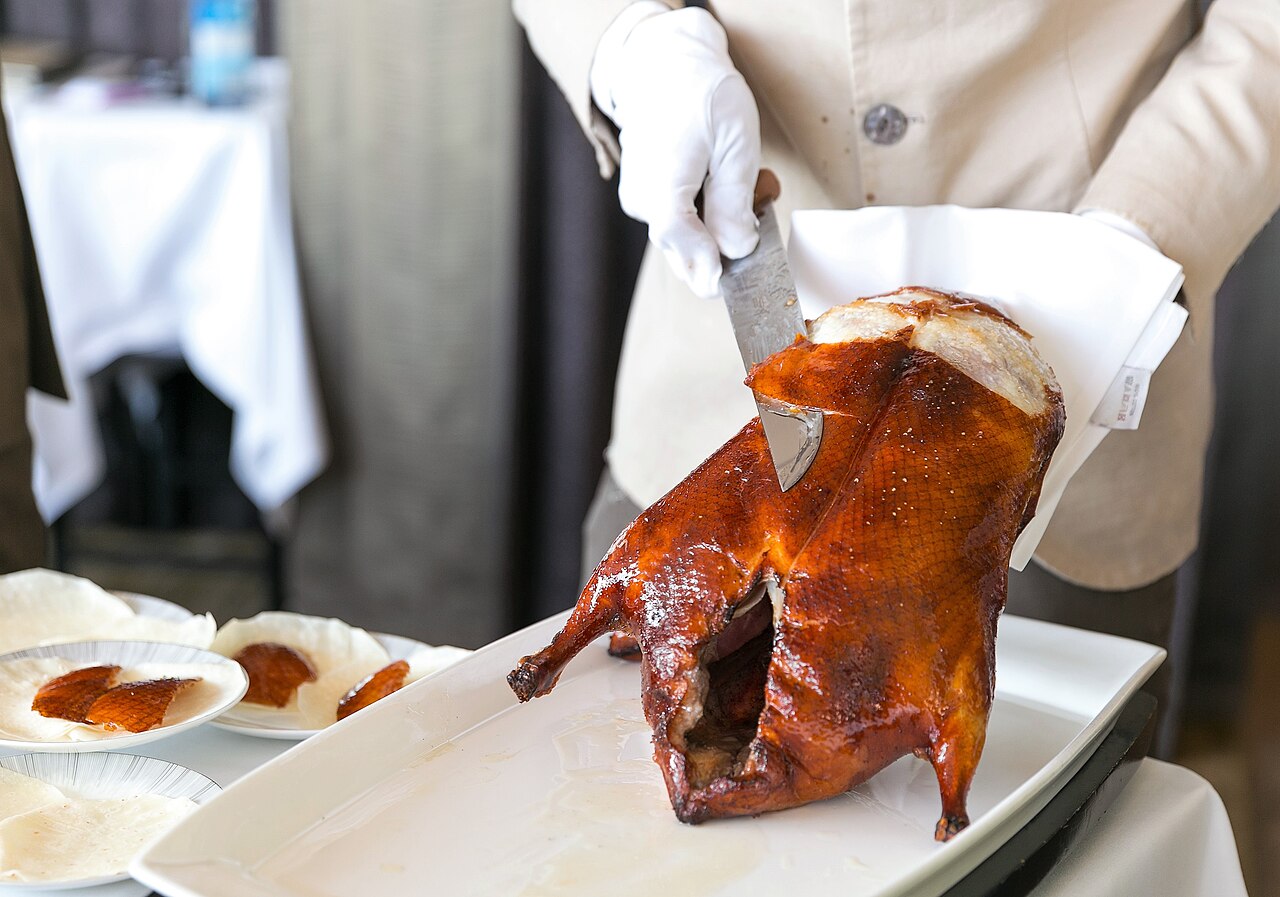
A whole duck roasted until the skin is thin and crisp, carved at the table. You wrap slices of skin and meat in thin pancakes with sweet bean sauce, spring onion and cucumber. It was a dish of the imperial court and is now served at state banquets.
Bianyifang, one of Beijing's famous duck restaurants, traces its history back to 1416.
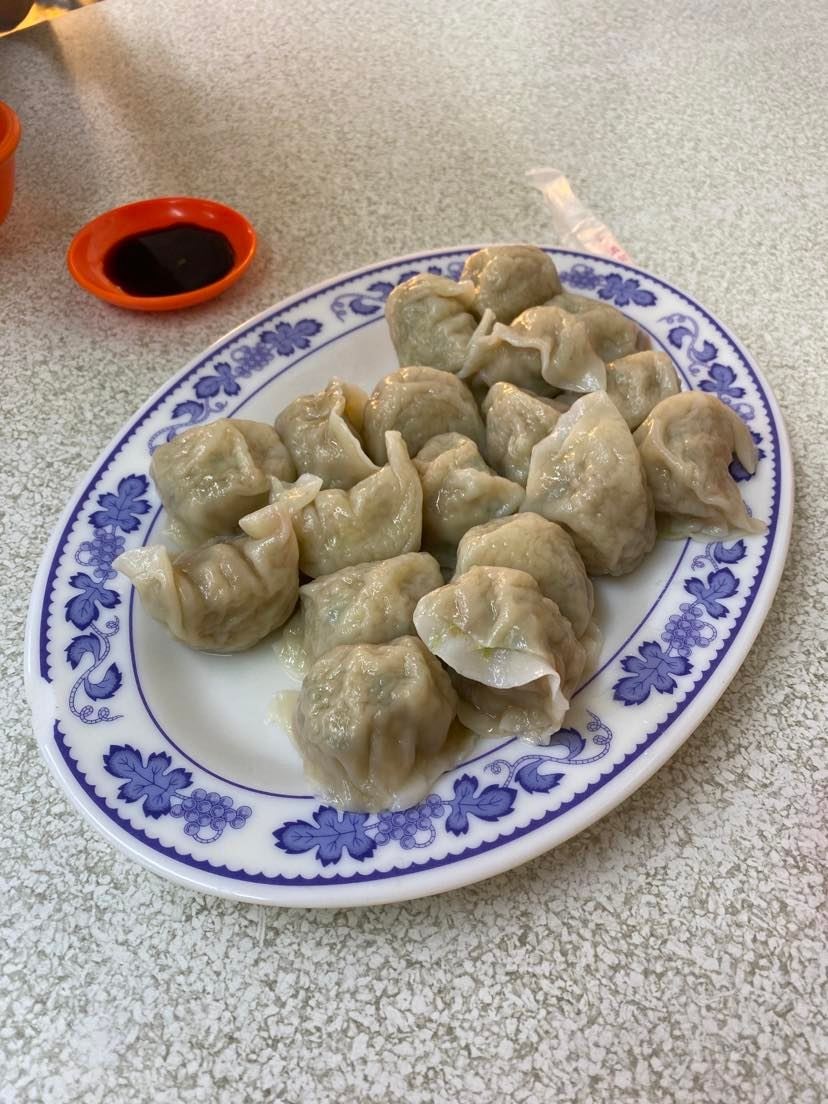
Half-moon dumplings of thin wheat dough, filled with minced pork and cabbage or other fillings, then boiled, steamed or pan-fried. In the north, families make them together on New Year's Eve, because their shape looks like the old gold and silver ingots used as money.
Some families hide a clean coin in one dumpling; whoever finds it can expect good luck in the new year. If you try this, warn everyone at the table before you eat.
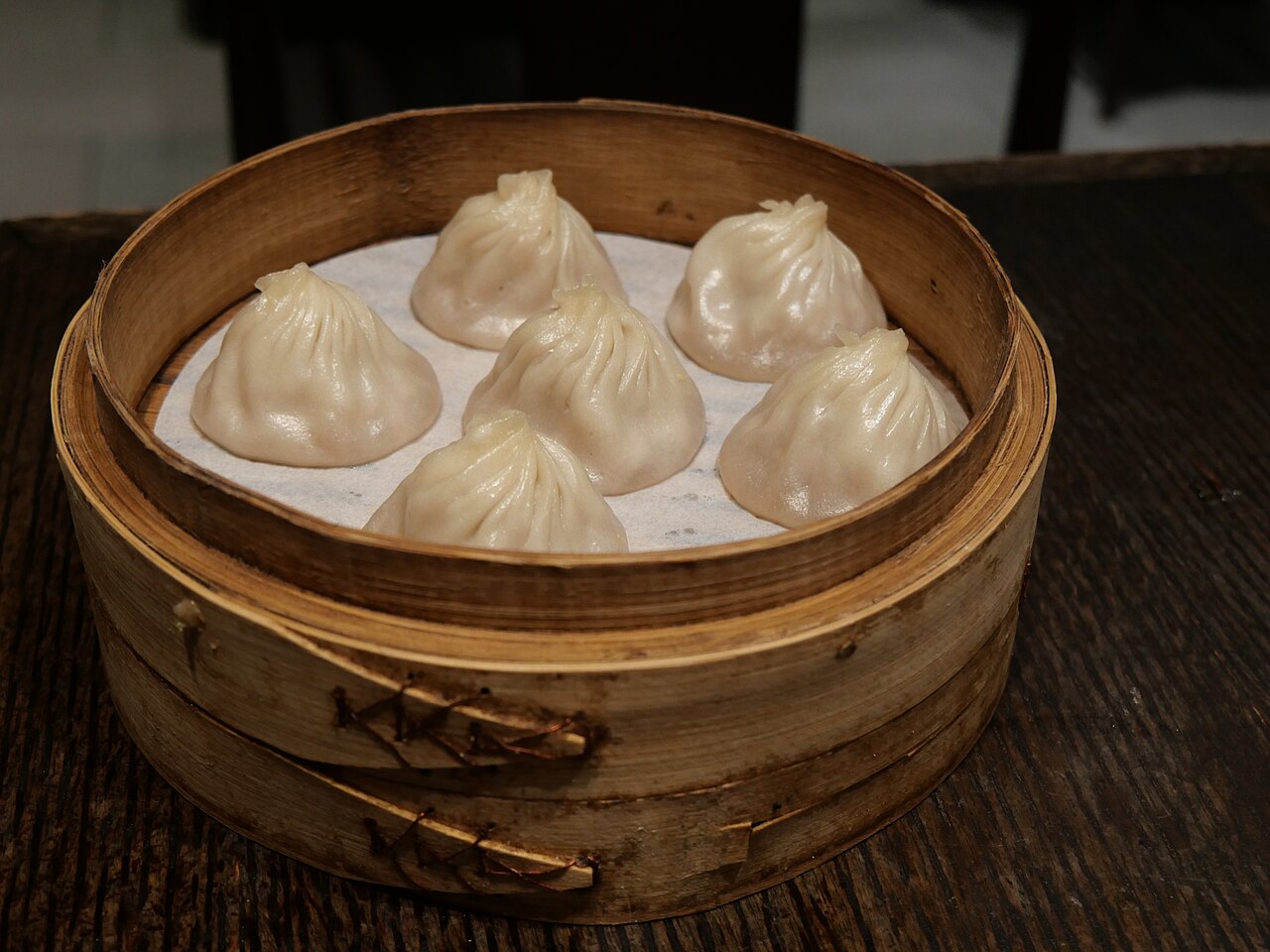
Small steamed dumplings with a thin, pleated top, filled with pork and a hot, savoury soup. The Shanghai style comes from Nanxiang, once a village near Shanghai. The soup starts as a solid jelly of meat stock, which melts when the dumplings are steamed.
To avoid burning your mouth, put the dumpling on a spoon, bite a small hole, sip the soup and then eat the rest.
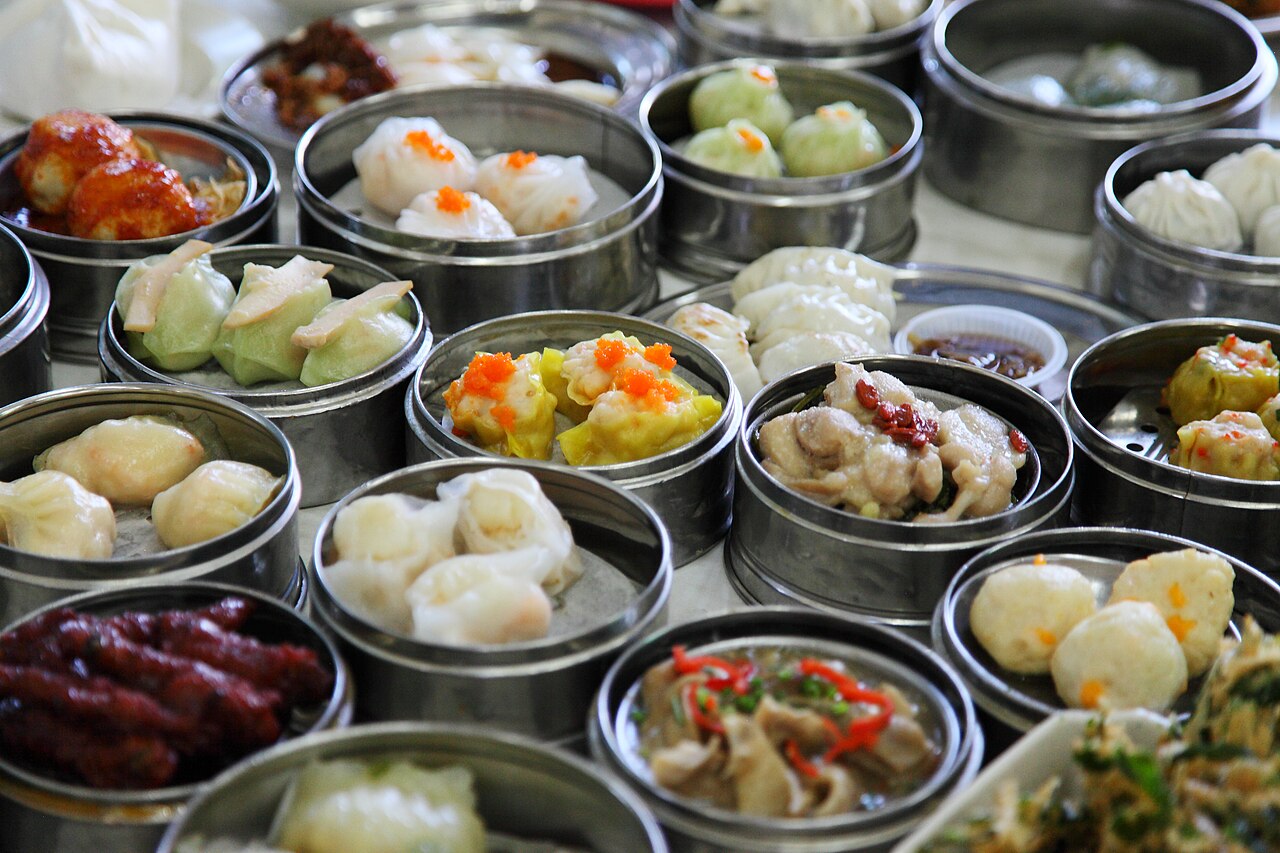
Small portions served in bamboo steamers or on little plates with tea, for breakfast or lunch: shrimp dumplings (har gow), open pork dumplings (siu mai), barbecued pork buns and rice noodle rolls. Going out for dim sum with tea is called yum cha, 'drinking tea', in Cantonese.
In Cantonese, dim sum is pronounced dim sam; the words mean something like 'touch the heart'.
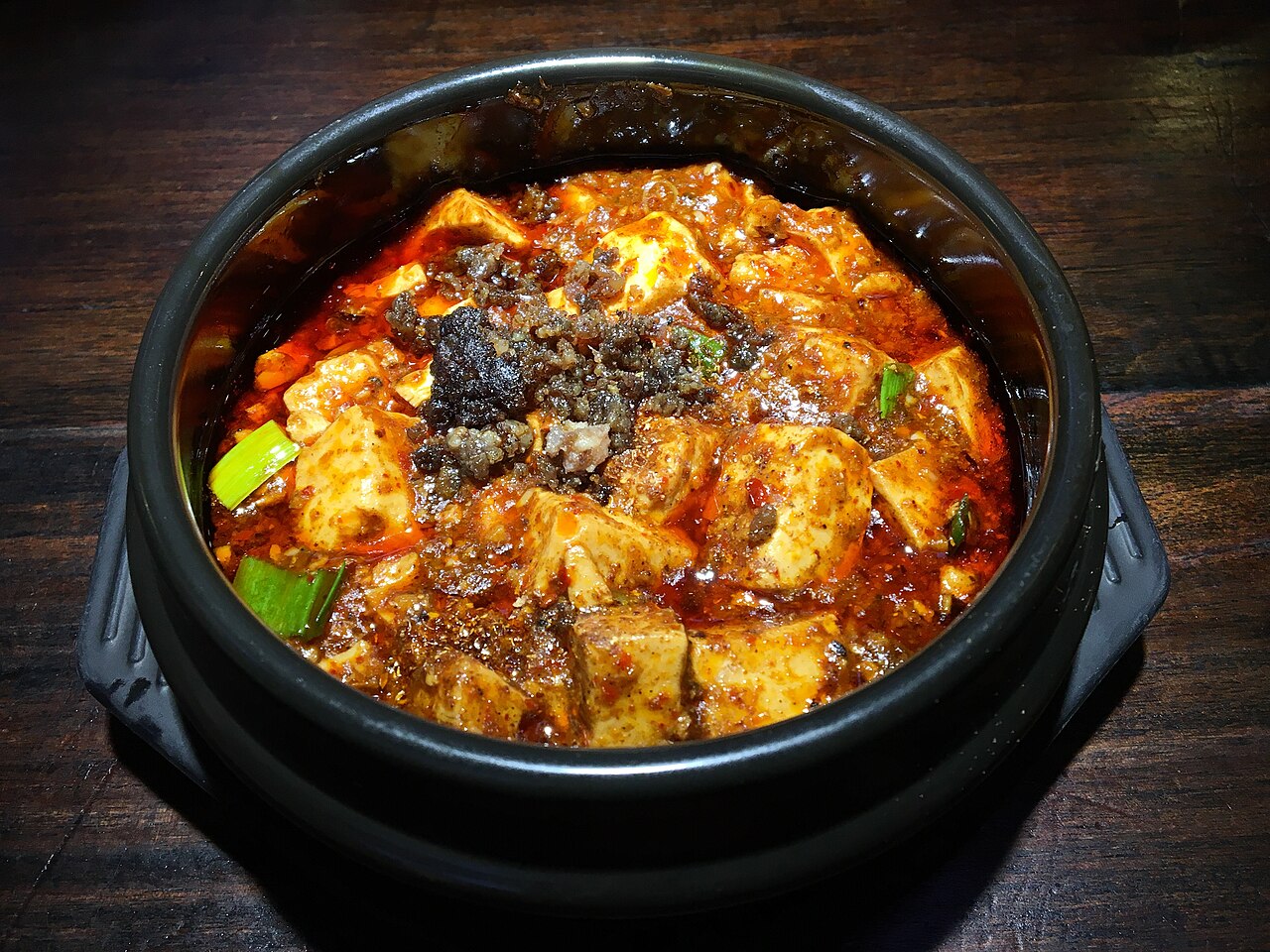
Soft tofu in a red, spicy sauce with minced beef or pork, fermented broad bean and chilli paste and Sichuan pepper, which makes the lips tingle. It comes from a small restaurant in Chengdu in the 1800s; the name means 'pockmarked old woman's tofu', after the cook, Mrs Chen.
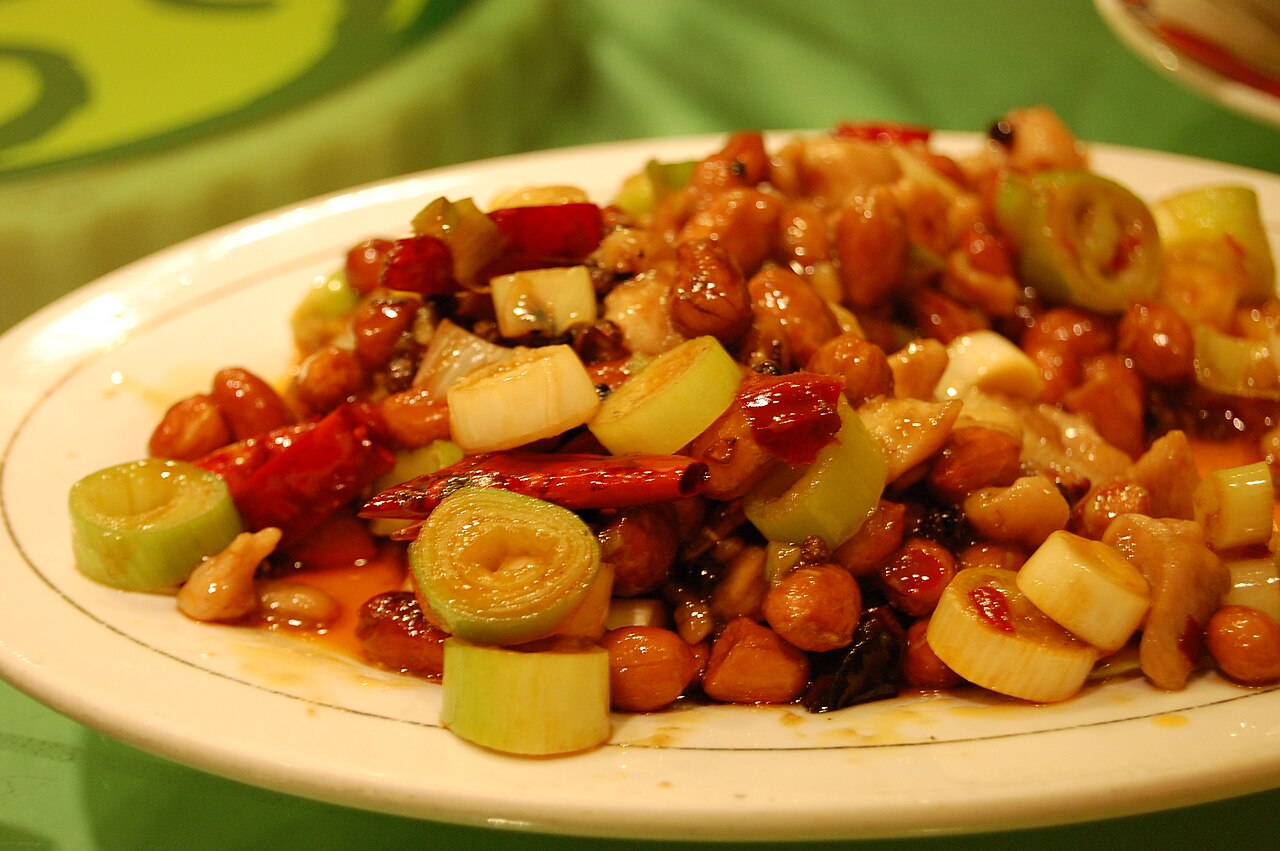
Stir-fried cubes of chicken with peanuts, dried red chillies and Sichuan pepper in a sauce that is spicy, a little sweet and a little sour. It is said to be named after Ding Baozhen, a governor of Sichuan in the 1800s, whose title was Gongbao, 'palace guardian'.
The dish contains peanuts, so people with a nut allergy should ask before ordering any Sichuan stir-fry.
Chongqing and Sichuan (spicy style), also Beijing and many other regions
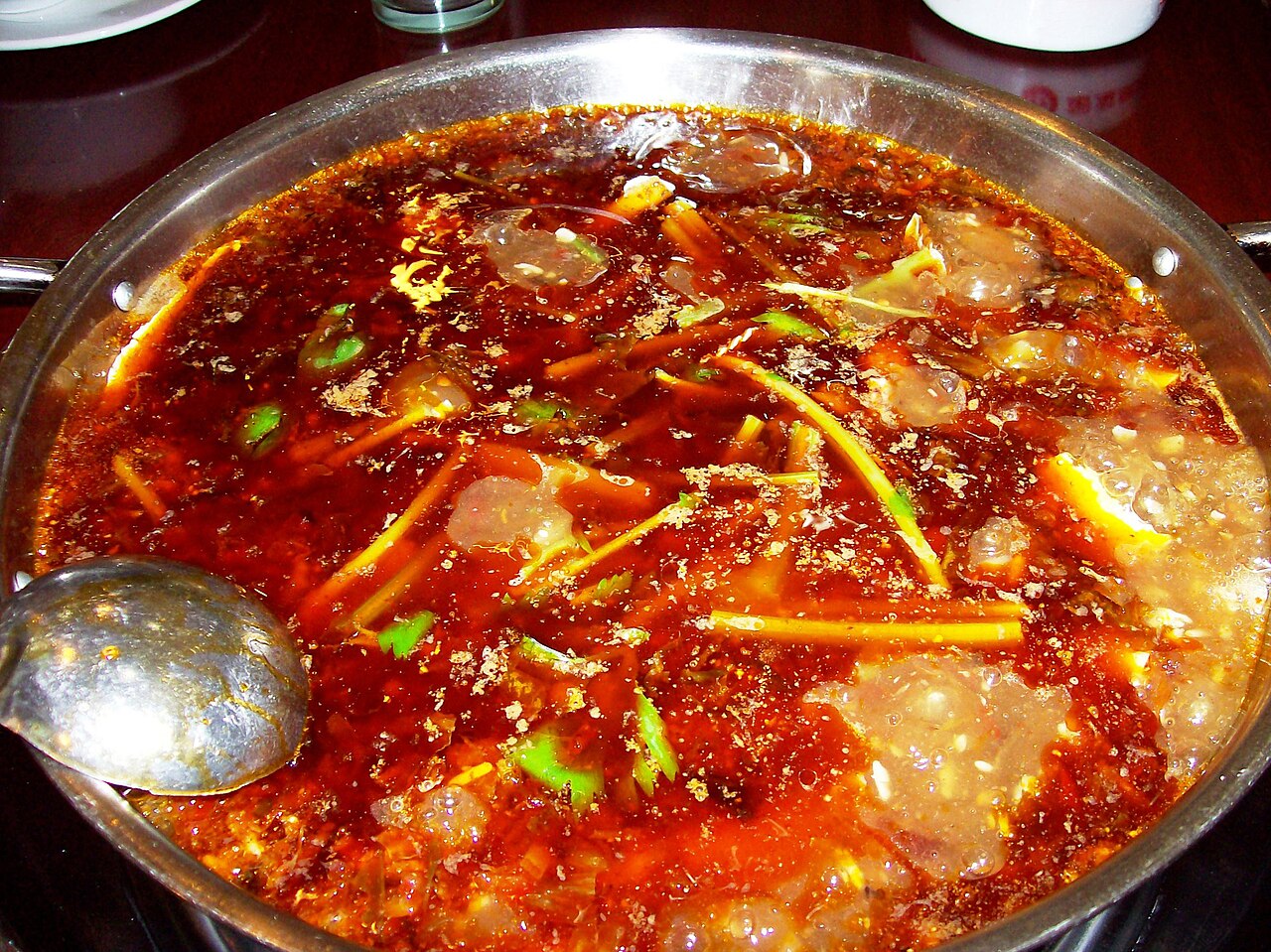
A pot of simmering broth in the middle of the table, into which everyone dips thin slices of raw meat, fish balls, tofu, mushrooms and vegetables to cook them. The Chongqing style has a fiery broth full of chillies and Sichuan pepper; Beijing's version uses a clear broth for thin slices of lamb.
Many restaurants serve a split pot, spicy on one side and mild on the other, so everyone can choose.
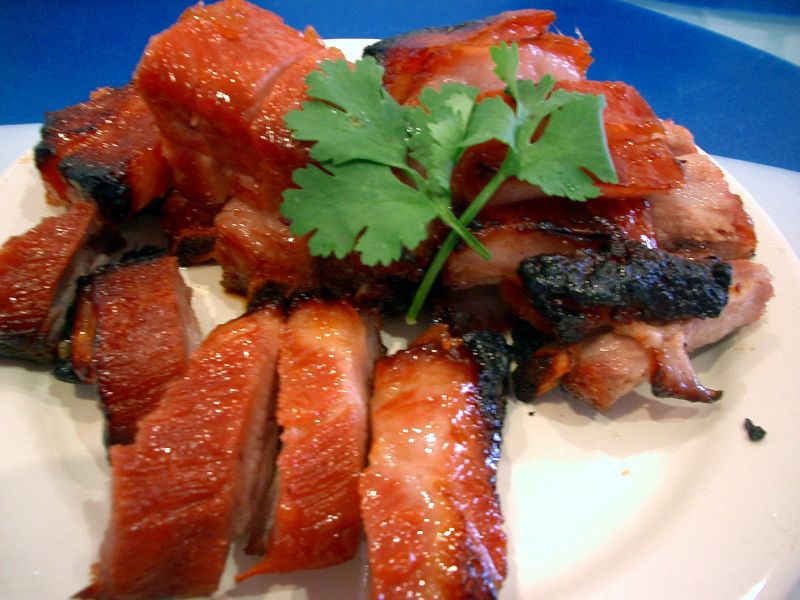
Strips of pork marinated in honey, soy sauce and five-spice and roasted until sticky and red at the edges. It hangs in the windows of Cantonese roast meat shops and is served sliced over rice or baked into buns.
The name means 'fork roast', because the meat was once roasted on long forks over a fire.
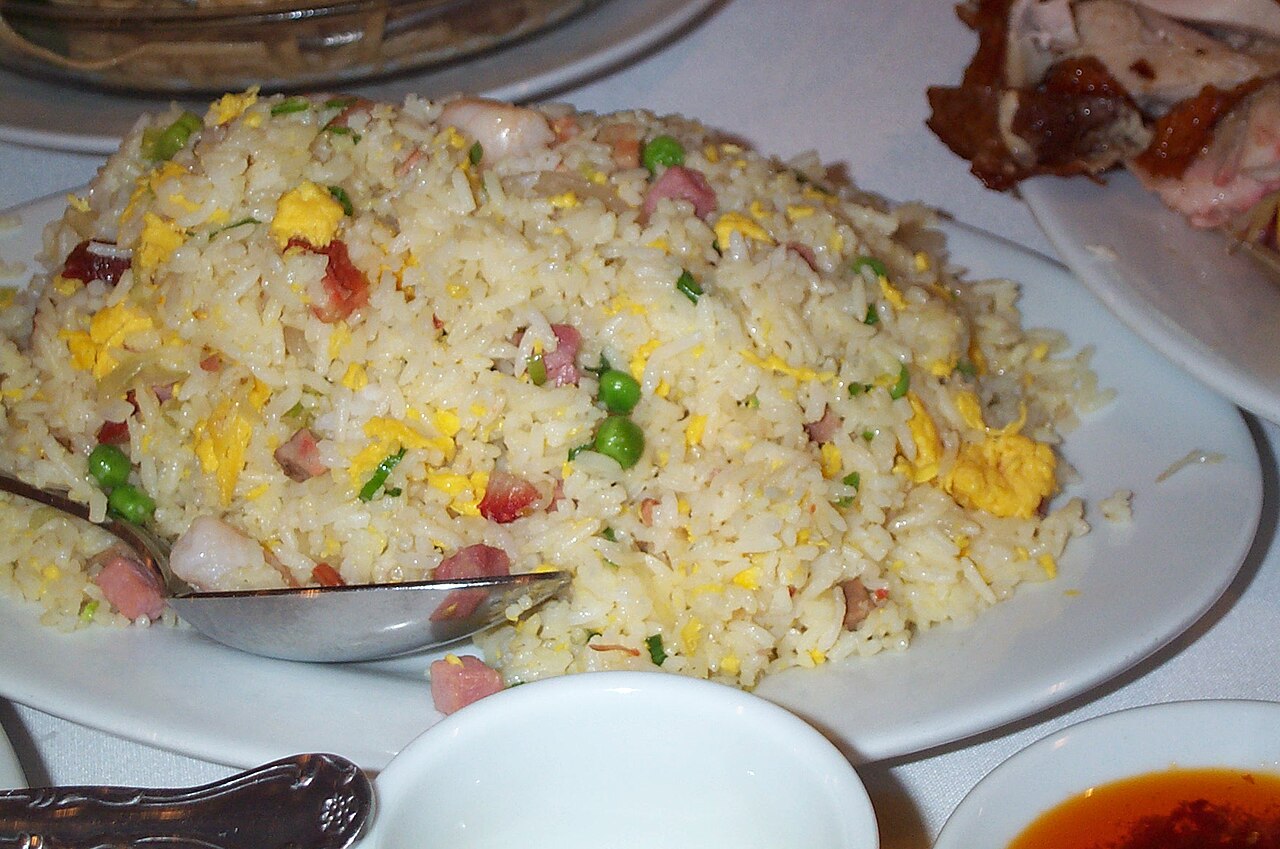
All of China; the famous version with prawns and ham is from Yangzhou
Cooked rice stir-fried with egg and spring onions, a quick home dish that uses up rice from the day before. Yangzhou fried rice, from Jiangsu, adds prawns, ham and peas.
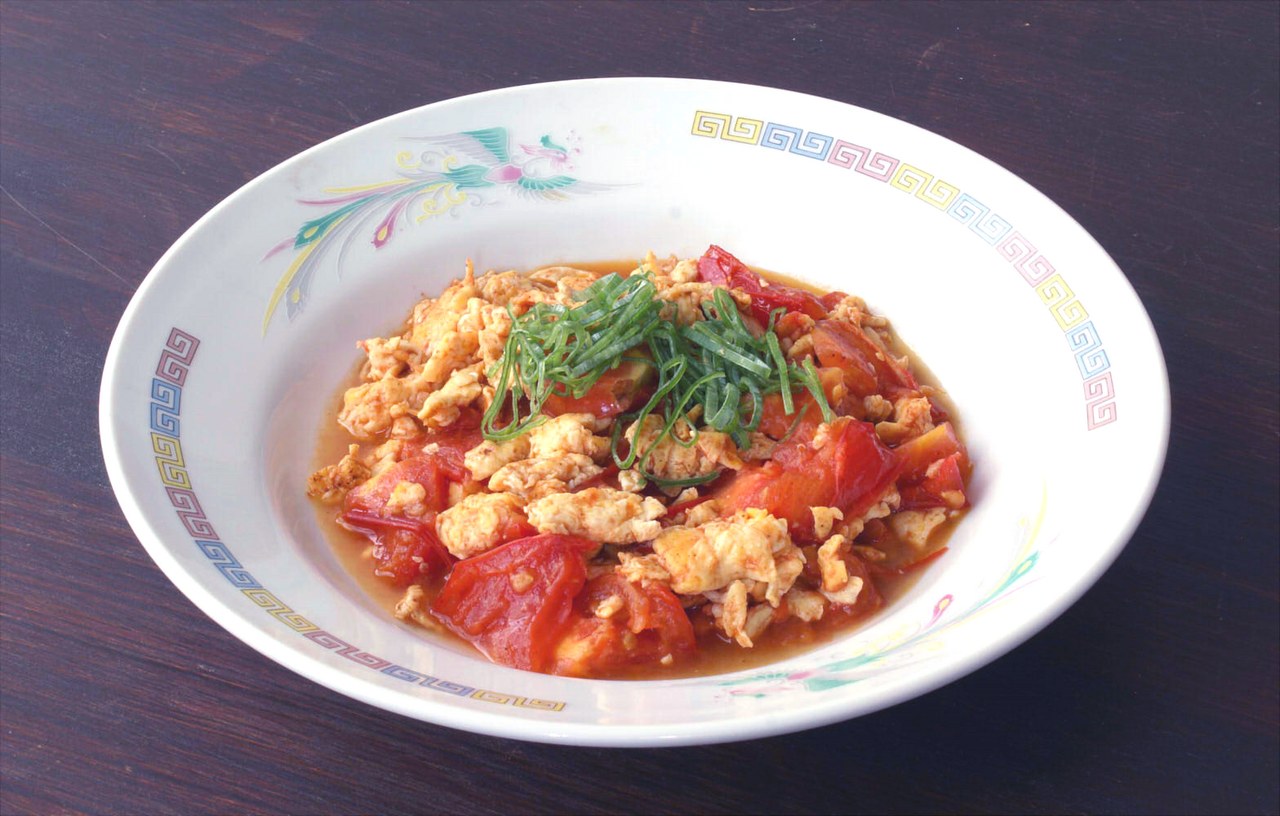
Soft scrambled eggs cooked with juicy tomatoes into a sweet and savoury sauce. It is one of the first dishes many Chinese people learn to cook and is eaten at home all over the country, spooned over rice.
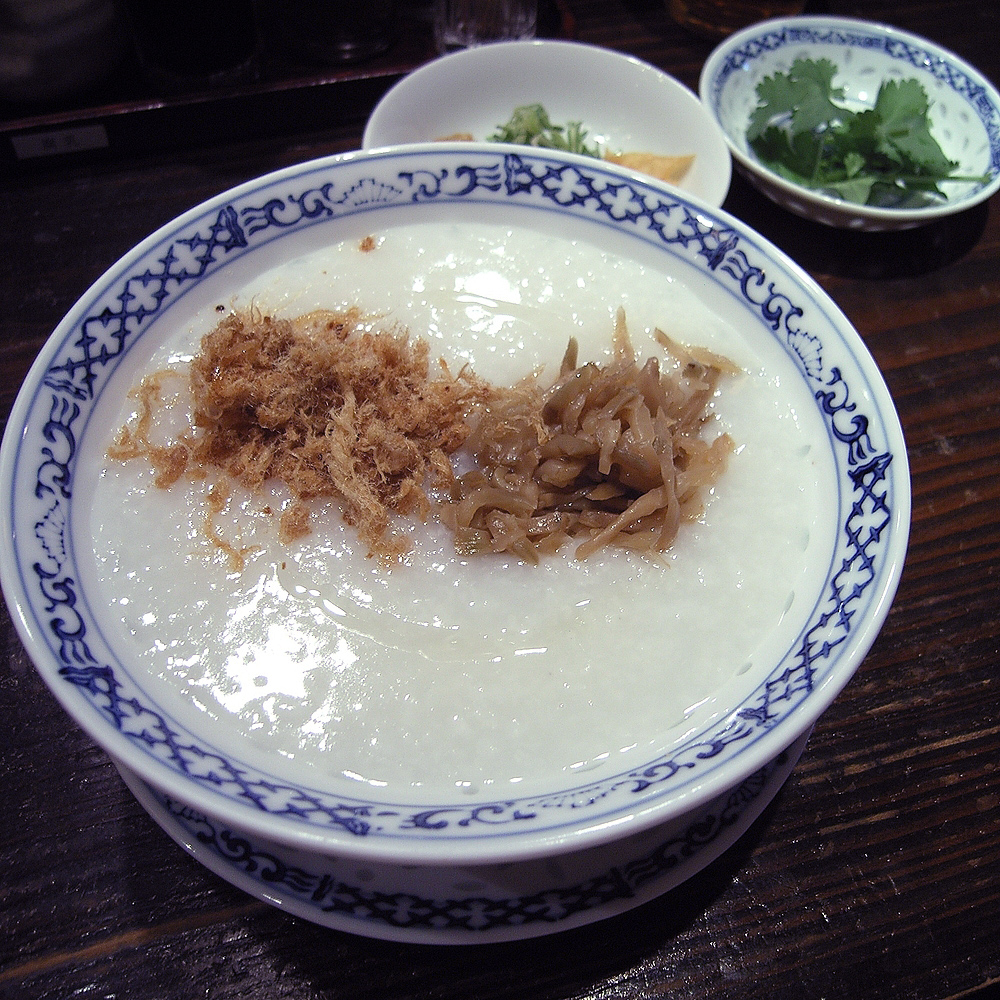
Rice simmered in plenty of water until soft and creamy, eaten for breakfast or when someone is unwell. It is topped with pickles, spring onions, a fried dough stick or pieces of fish, chicken or preserved egg.
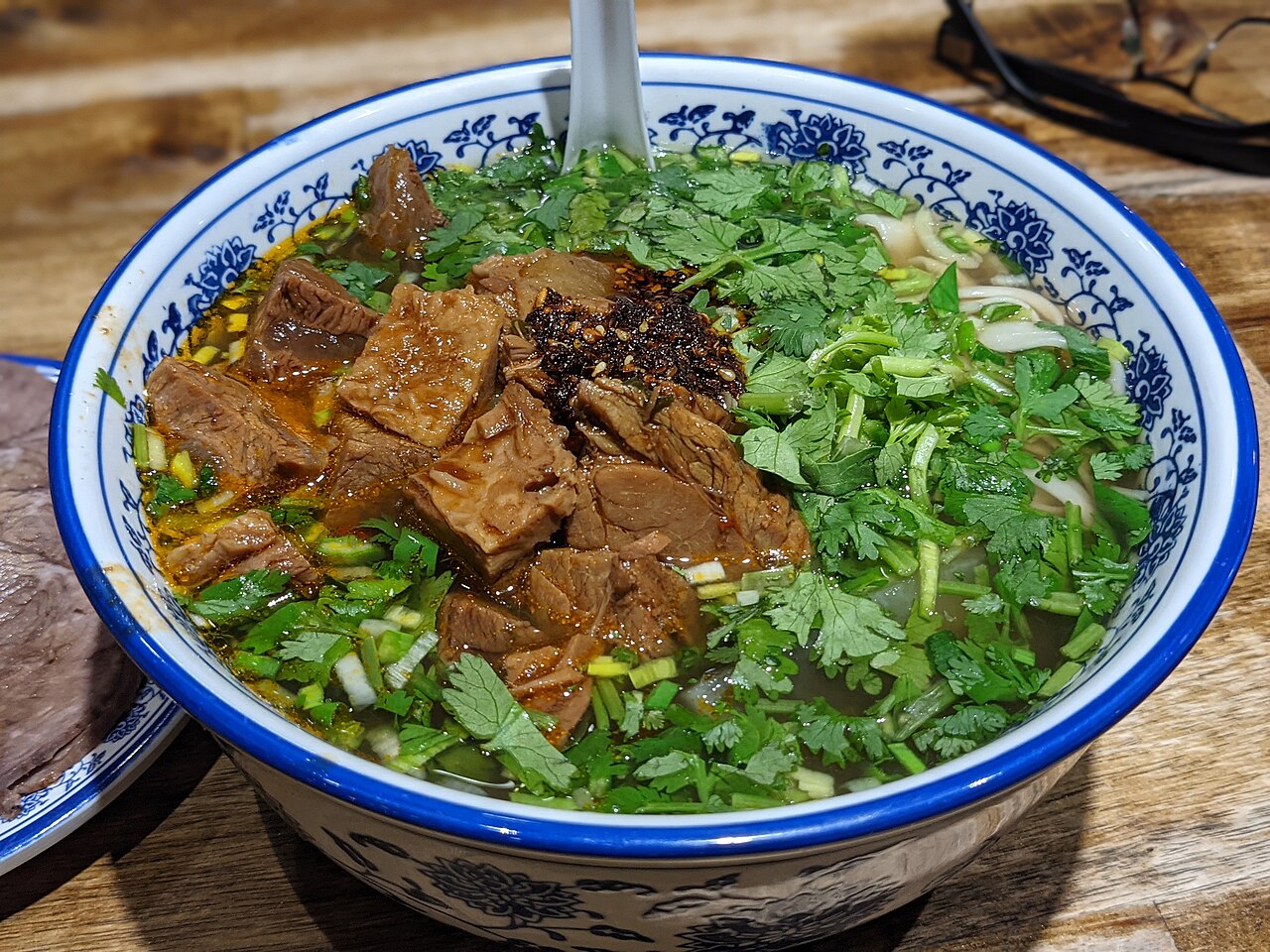
Hand-pulled wheat noodles in a clear beef broth with slices of beef, white radish, coriander and red chilli oil. The cook pulls and folds the dough in front of you until it becomes long, thin noodles in about a minute.
You can often choose the thickness of your noodles, from very fine to wide and flat.
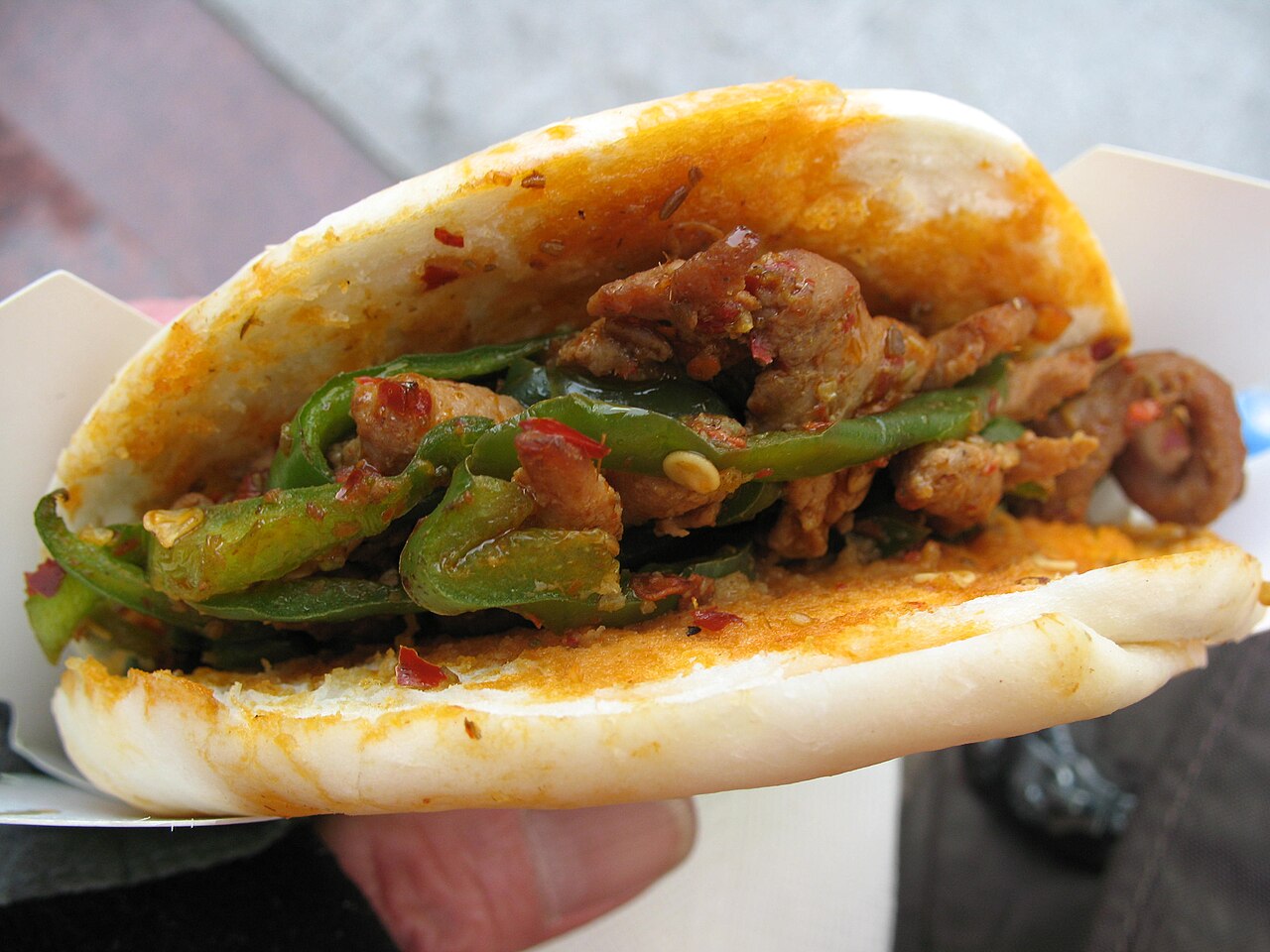
A flat bread split open and stuffed with chopped, slow-braised pork. It is the classic street snack of Xi'an and is sometimes called a Chinese hamburger. In the Muslim Quarter of Xi'an it is made with beef or lamb.
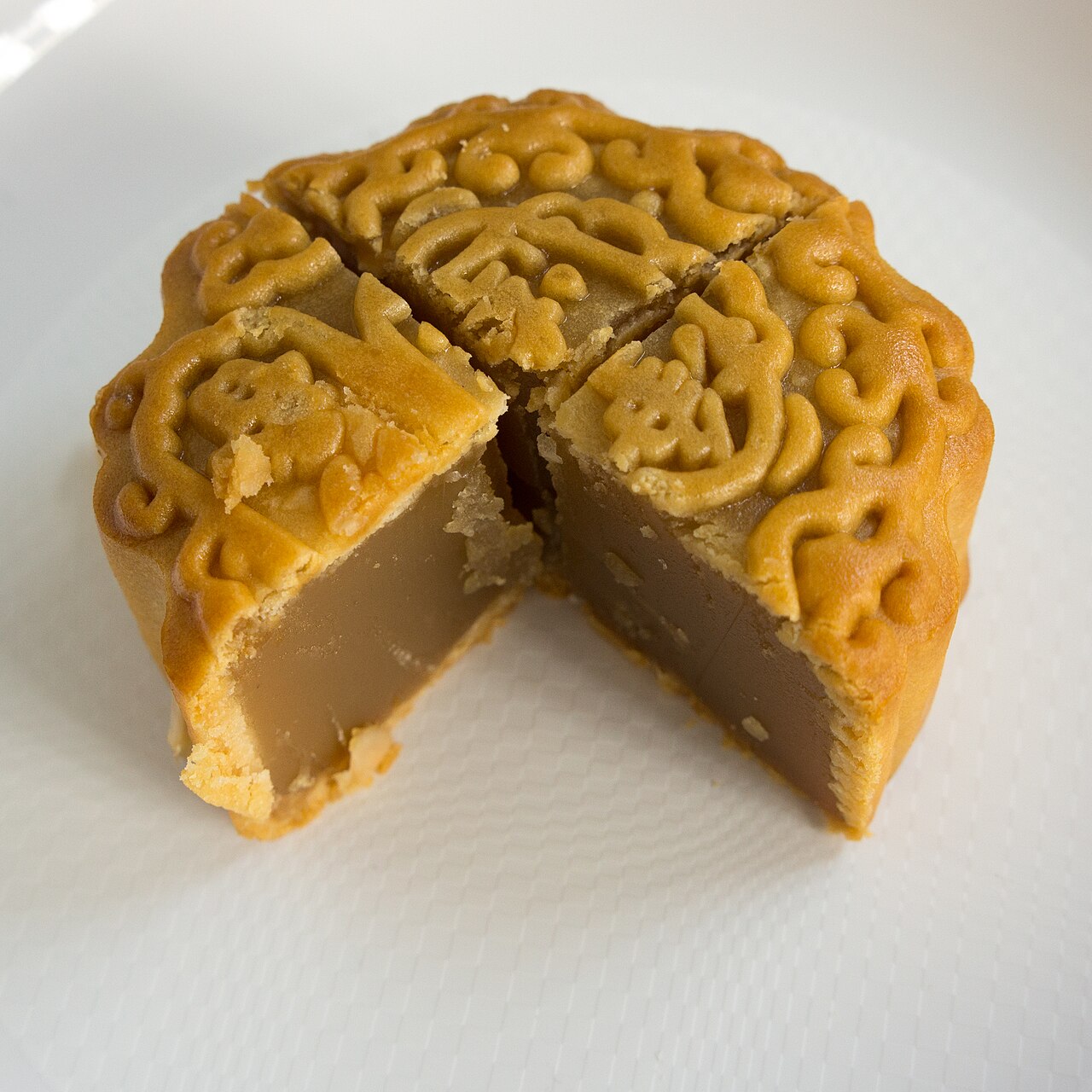
Round pastries with a thick, sweet filling of lotus seed or red bean paste, sometimes with a salted egg yolk inside to look like the full moon. They are given and shared at the Mid-Autumn Festival, when families gather to look at the moon.
Mooncakes are rich: one is usually cut into small wedges and shared.
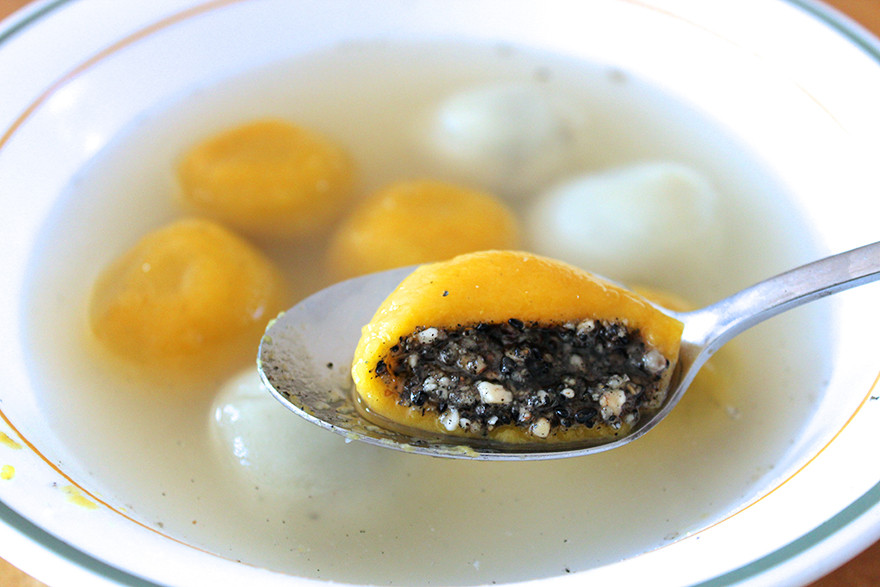
Balls of glutinous rice flour, often filled with black sesame paste, served in warm water or a light syrup. They are eaten at the Lantern Festival, on the 15th day of the New Year, because their round shape stands for a family together. They are soft and very sticky, so cut them small and eat slowly, especially for children and older people.
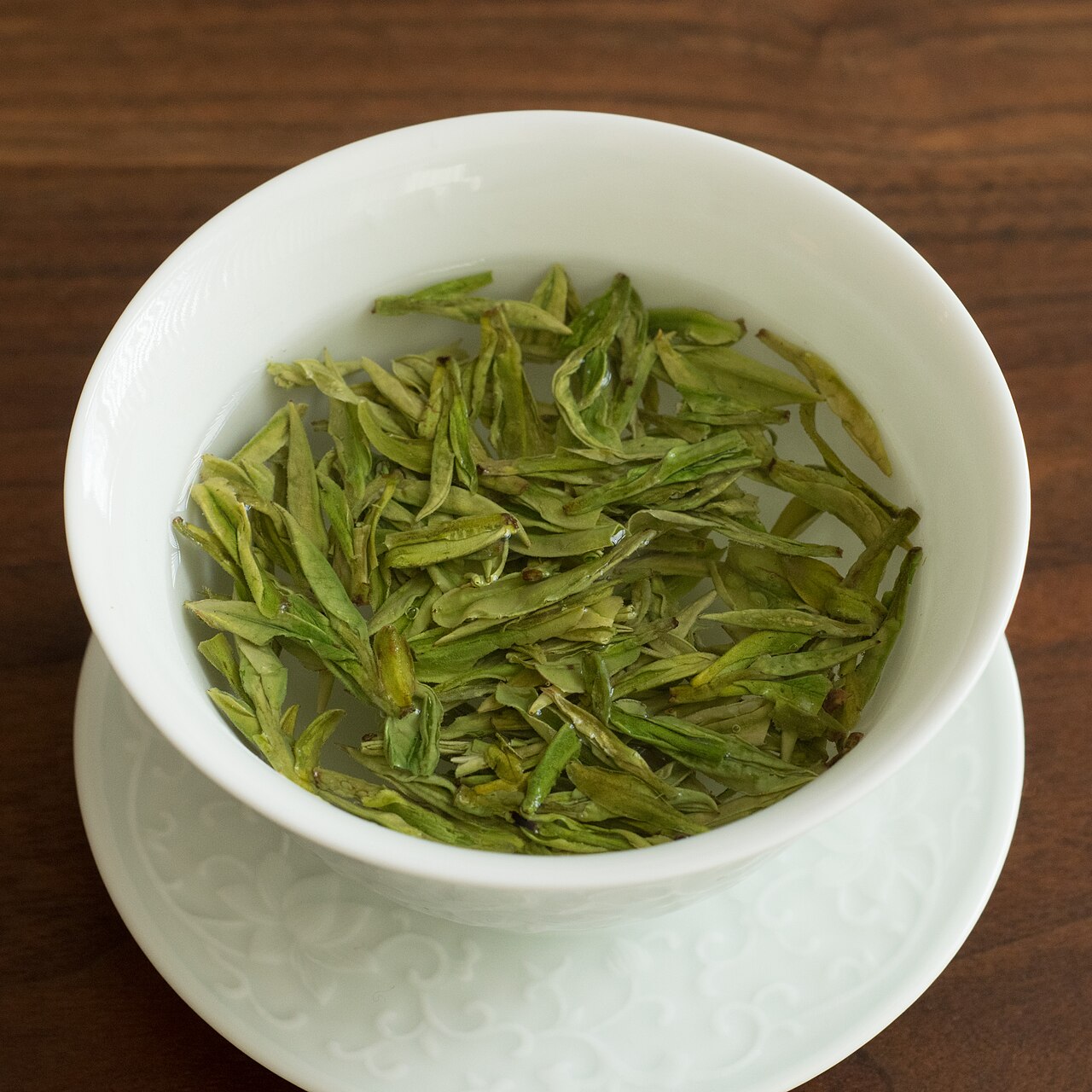
A green tea grown in the hills around West Lake in Hangzhou. The leaves are pan-roasted flat by hand, and the tea is mild, fresh and slightly nutty. Tea in China is usually drunk plain, without milk or sugar.
At the table in China
Never stand your chopsticks upright in a bowl of rice: it looks like the incense sticks placed for the dead at funerals. Lay them across your bowl or on the chopstick rest.
Dishes are shared from the middle of the table, often on a turning glass tray. Take a little at a time, and use the serving spoon or the longer serving chopsticks if there are any.
At a formal dinner, drinks are usually taken together during toasts, often started by the host. 'Gānbēi' means 'dry glass', and the host usually serves himself or herself last.
When someone refills your tea, you can thank them without interrupting the conversation by tapping the table twice with two bent fingers.
Friends and family often argue over who pays the bill, because paying shows generosity. As a guest, offer to pay, and accept graciously if your host insists.
Wait until the older people or the host start eating before you begin, and turn the glass tray slowly, never while someone is taking food from it.