Mongolian food was shaped by a hard climate and the life of herders. Meat, mostly mutton and beef but also goat, horse and camel, is eaten through the long winter, and in summer families live largely on dairy foods, often called 'white foods': clotted cream, dried curds, yoghurt and fermented mare's milk. Spices are few; salt, onion and garlic do most of the work. A visit to a ger always starts with a bowl of salty milk tea, offered with a plate of dried curds, fried dough and cream, before any meat or noodles appear. Flour arrived through trade with China and Russia and is used for dumplings, noodles and fried pastries.
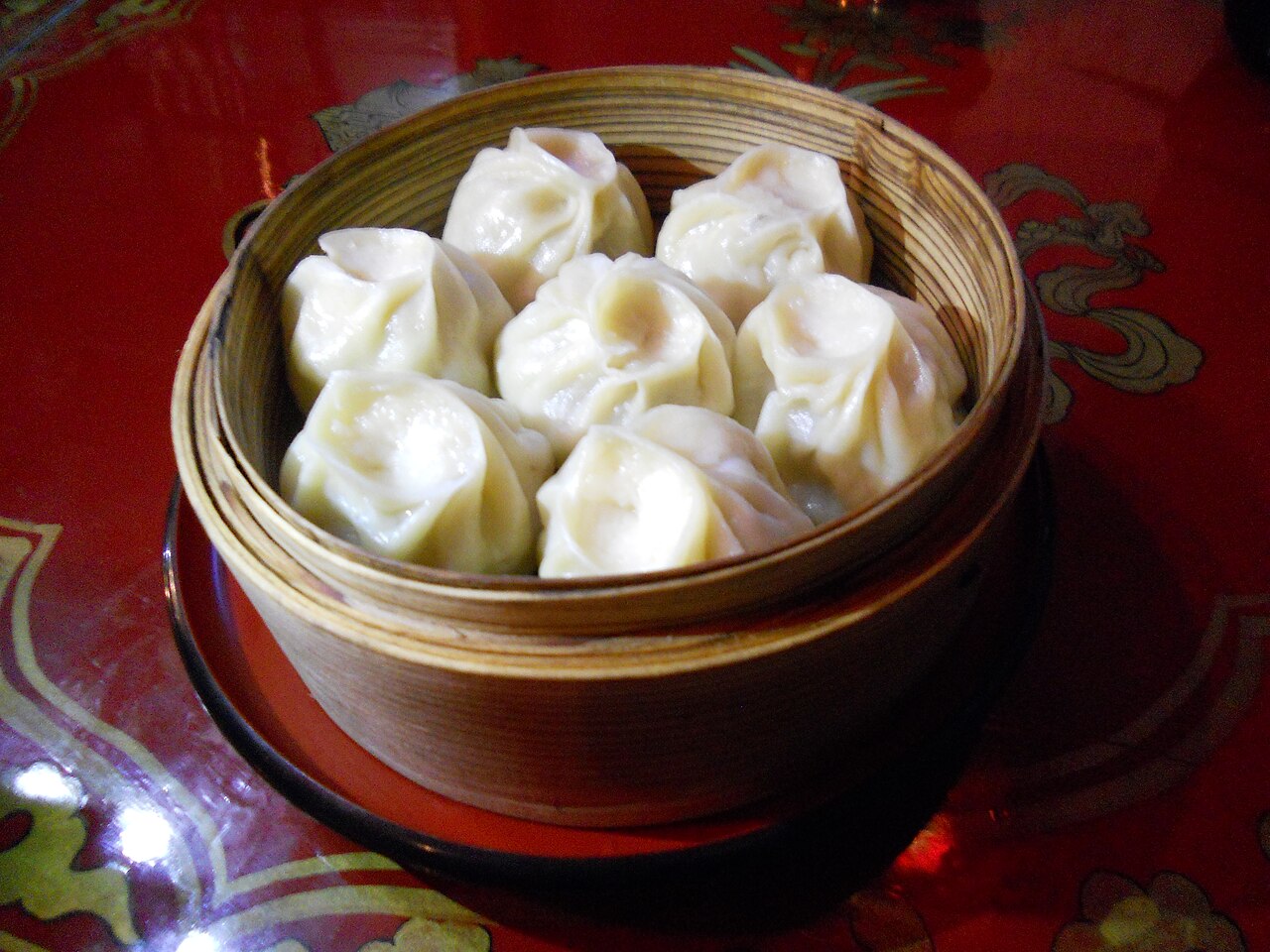
Steamed dumplings filled with minced mutton or beef, onion and garlic, pleated by hand and left with a small opening at the top. They are the traditional dish eaten at home during Tsagaan Sar, the Lunar New Year, when relatives visit one another.
In Ulaanbaatar buuz are sold all year in small, simple cafés called guanz.
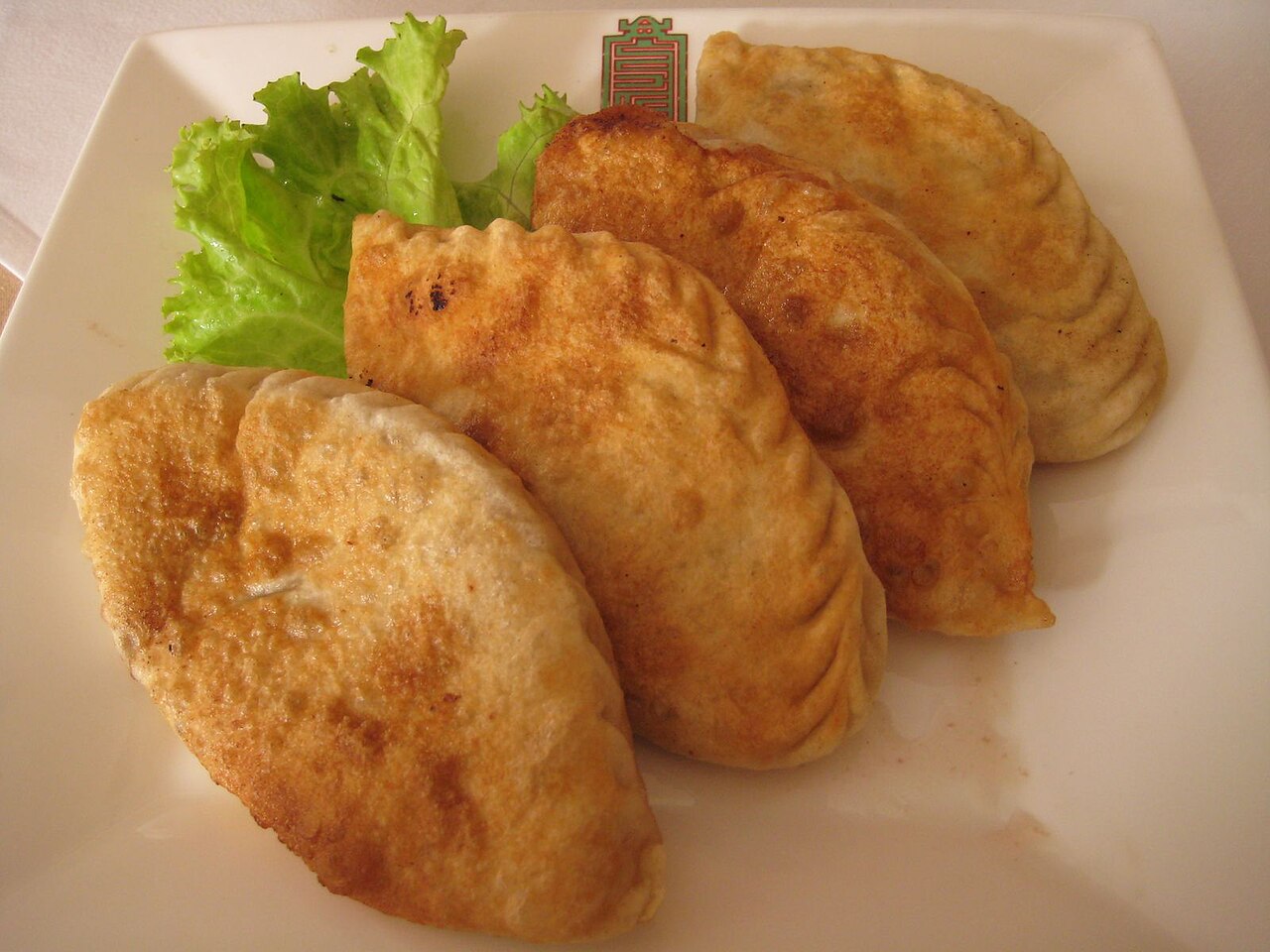
A flat pastry filled with minced mutton or beef, onion and garlic, folded into a half-moon and fried until golden. Khuushuur is the food of the Naadam festival in July, when stalls near the stadium and the race tracks fry them by the thousand.
The classic filling is just meat, onion and salt; versions with potato, carrot or cabbage exist but are less common.
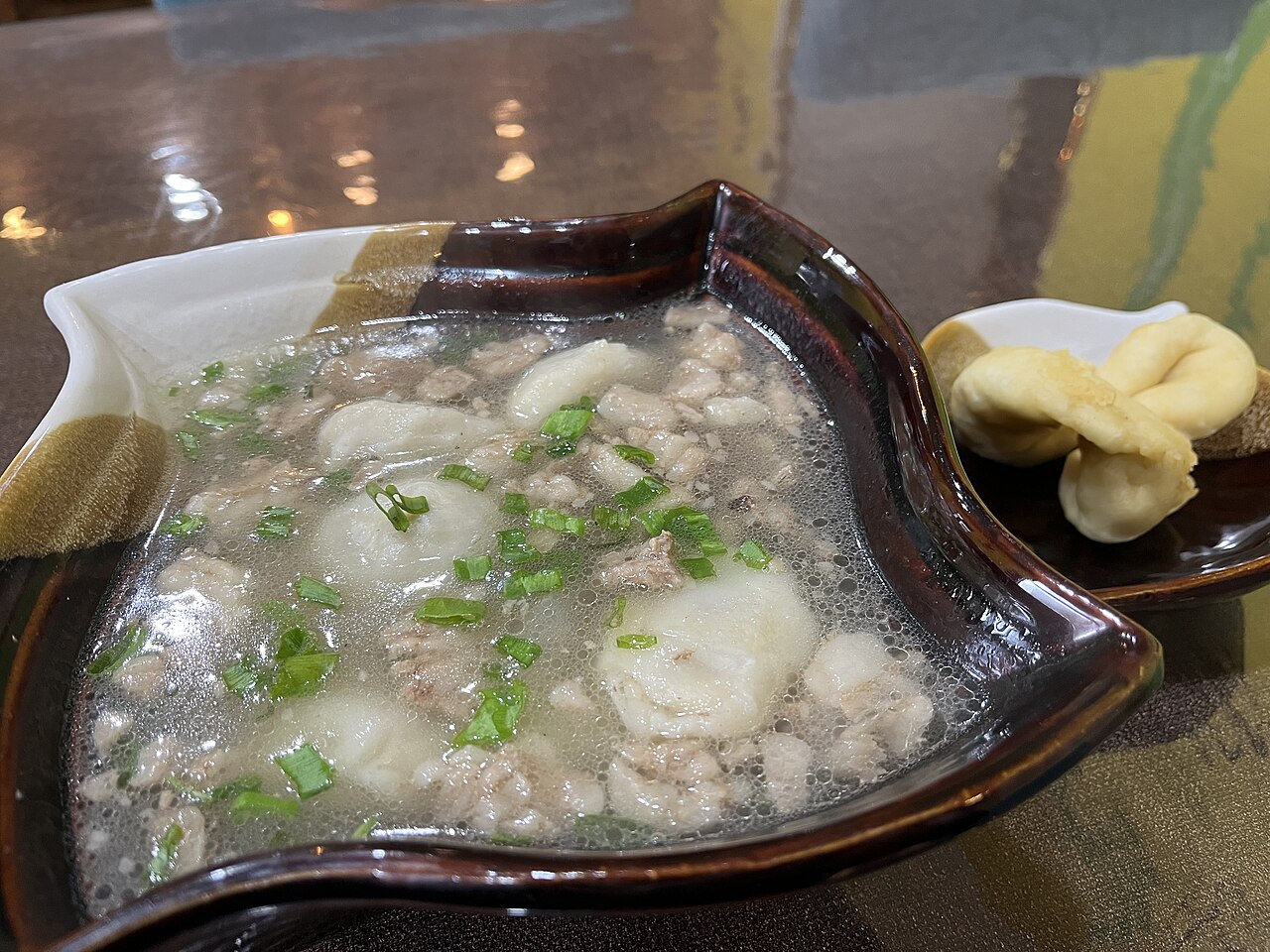
Small dumplings filled with meat, smaller than buuz. Instead of being steamed like buuz, bansh are boiled, often in a clear mutton soup, to make a warming winter meal.
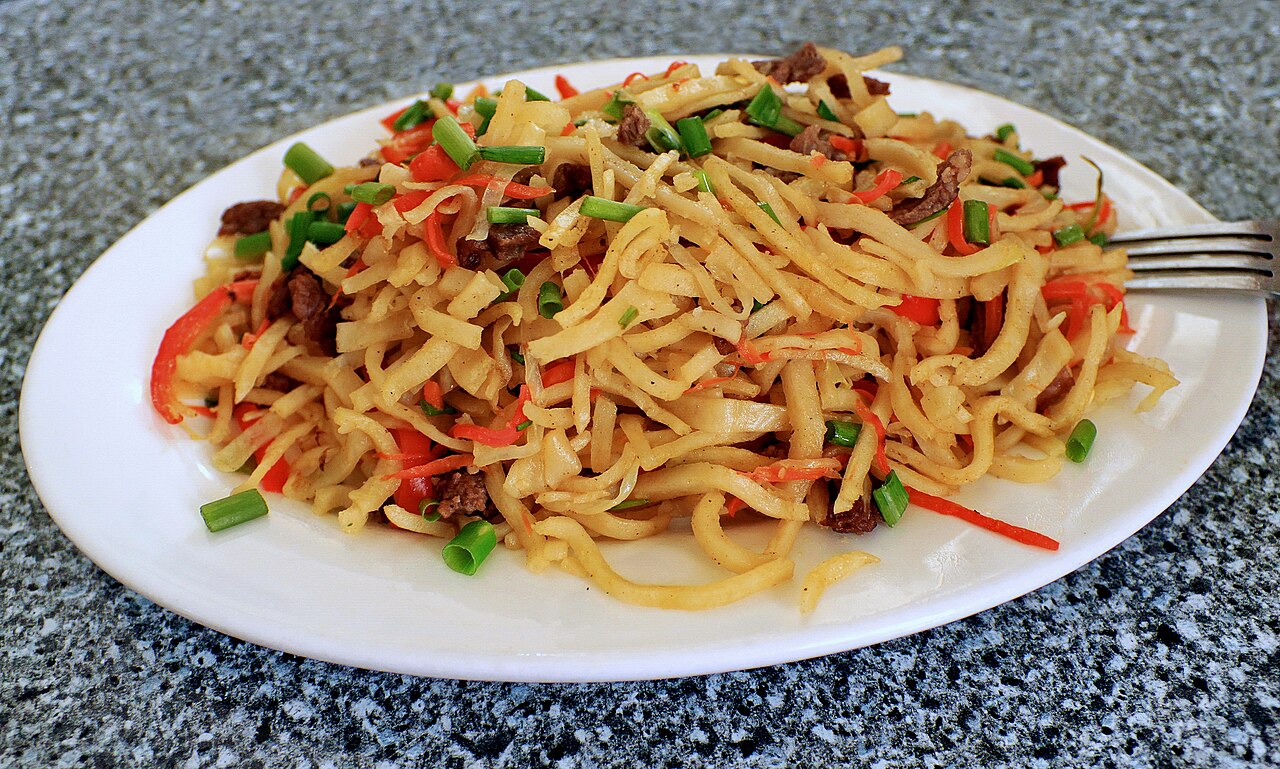
Home-made flat noodles steamed on top of fried strips of meat with onion, carrot and cabbage, then stirred together. It is one of the most common everyday meals in Mongolian homes and cafés.
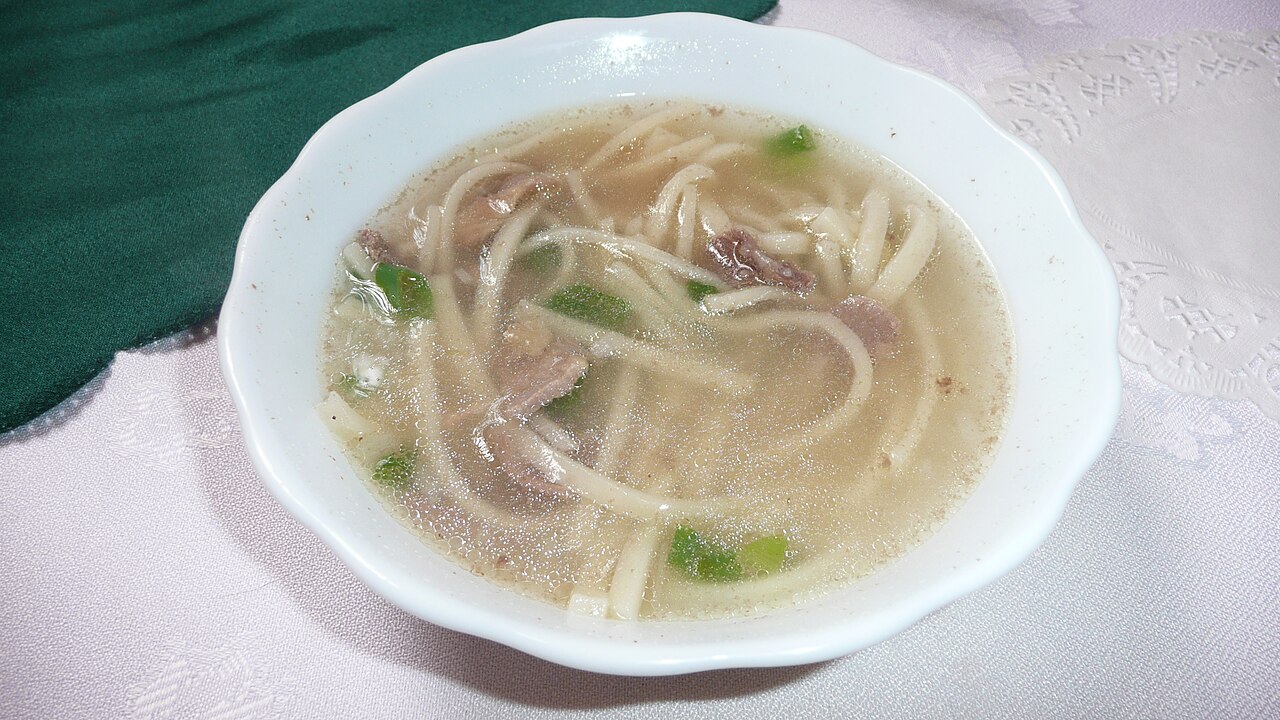
A simple, filling soup of mutton, noodles and a few vegetables such as potato, carrot and onion. The name means 'soup with flour', because the noodles are made from flour at home. It is a favourite in the cold months and a common roadside café meal.
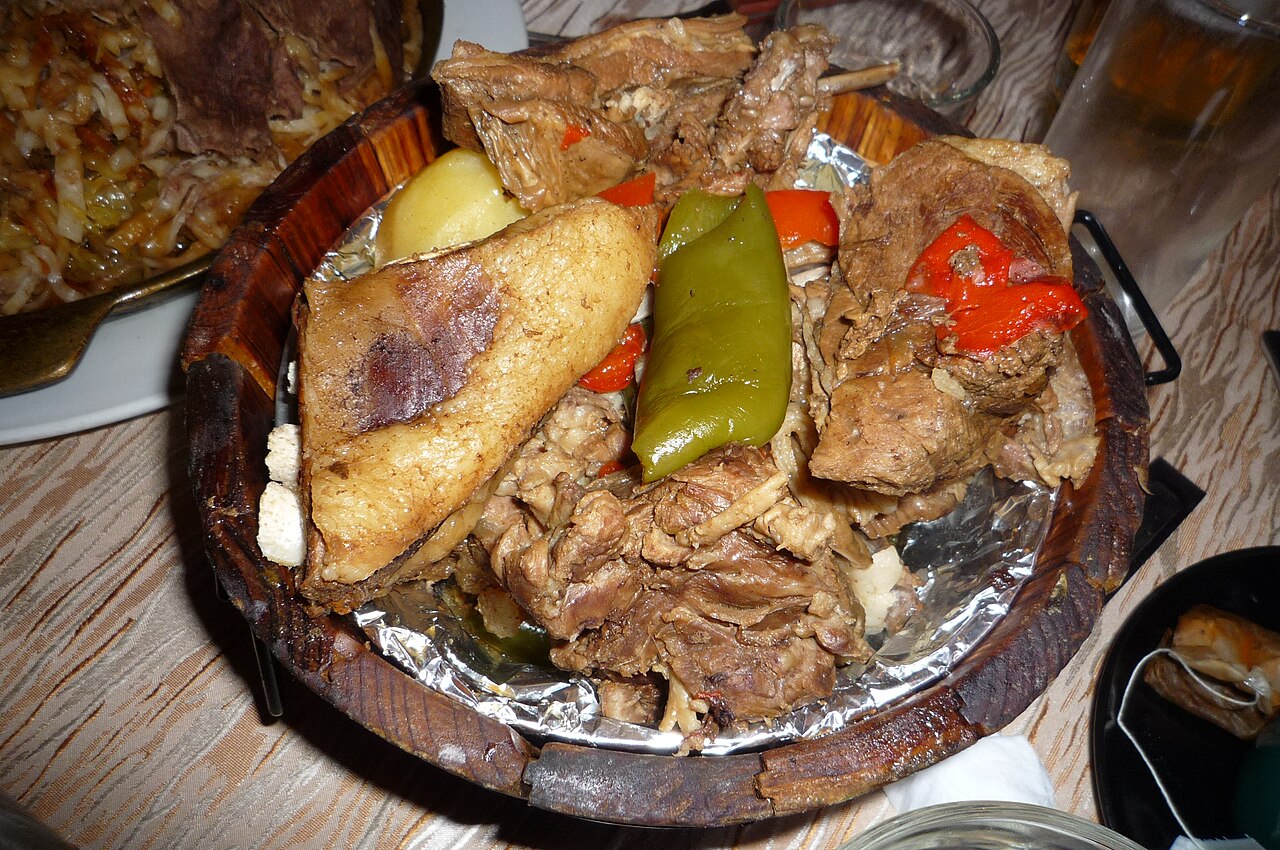
A feast dish for guests and special days. Pieces of mutton on the bone are cooked with water, vegetables and fist-sized stones heated in the fire, all sealed inside a metal milk can or pot. When the meat is ready, the hot, greasy stones are passed from hand to hand before the meal.
Khorkhog is said to date from the time of Soviet troops in Mongolia, when herders began to cook with old army water cans instead of an animal skin.
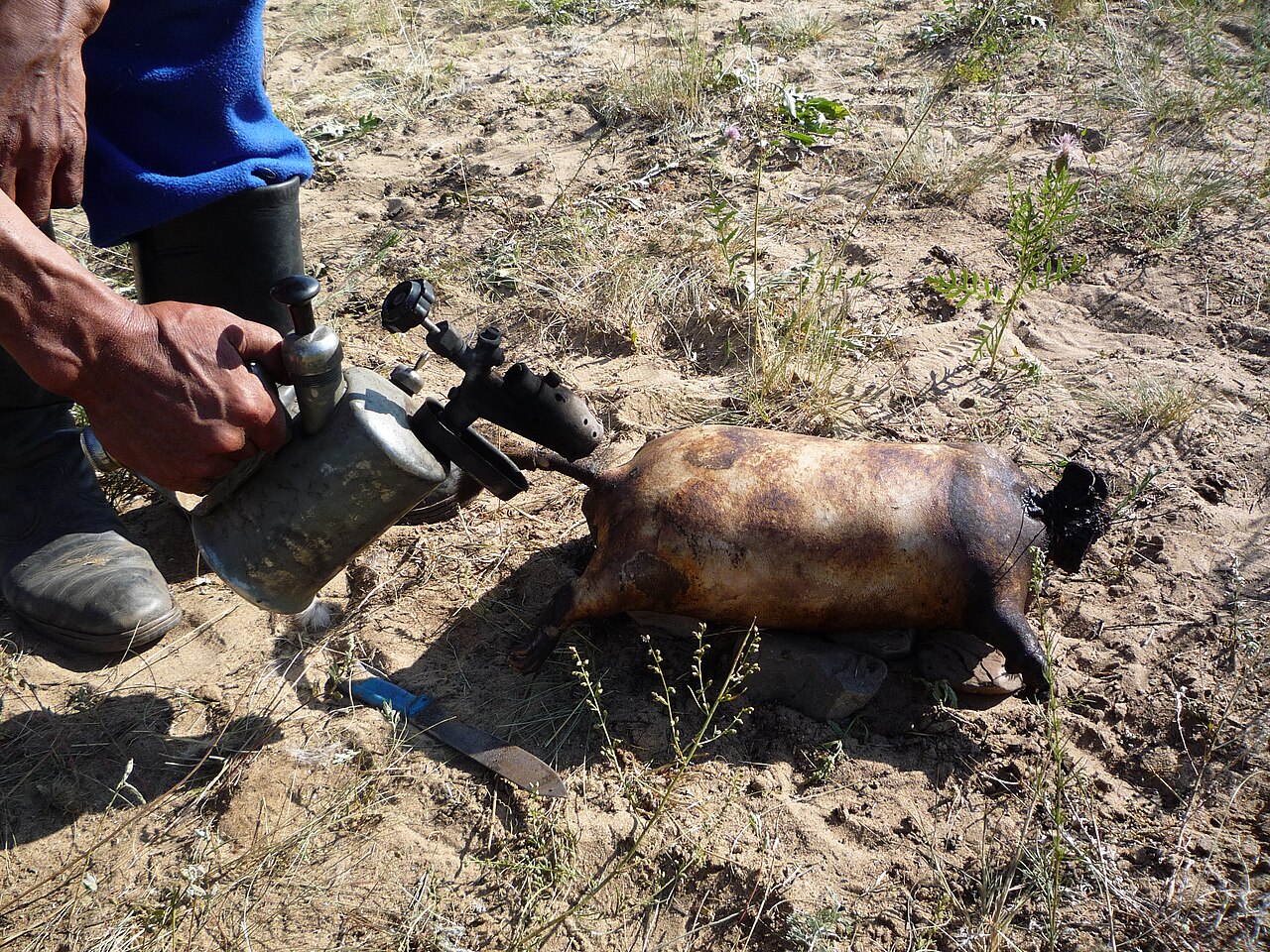
A goat or a marmot cooked from the inside: the meat is taken out through the neck, then put back into the skin with red-hot stones, and the outside is singed, today often with a blowtorch. It is prepared for special occasions and is one of the oldest ways of cooking on the steppe.
Wild marmots in Mongolia can carry plague, so visitors should never eat marmot meat.
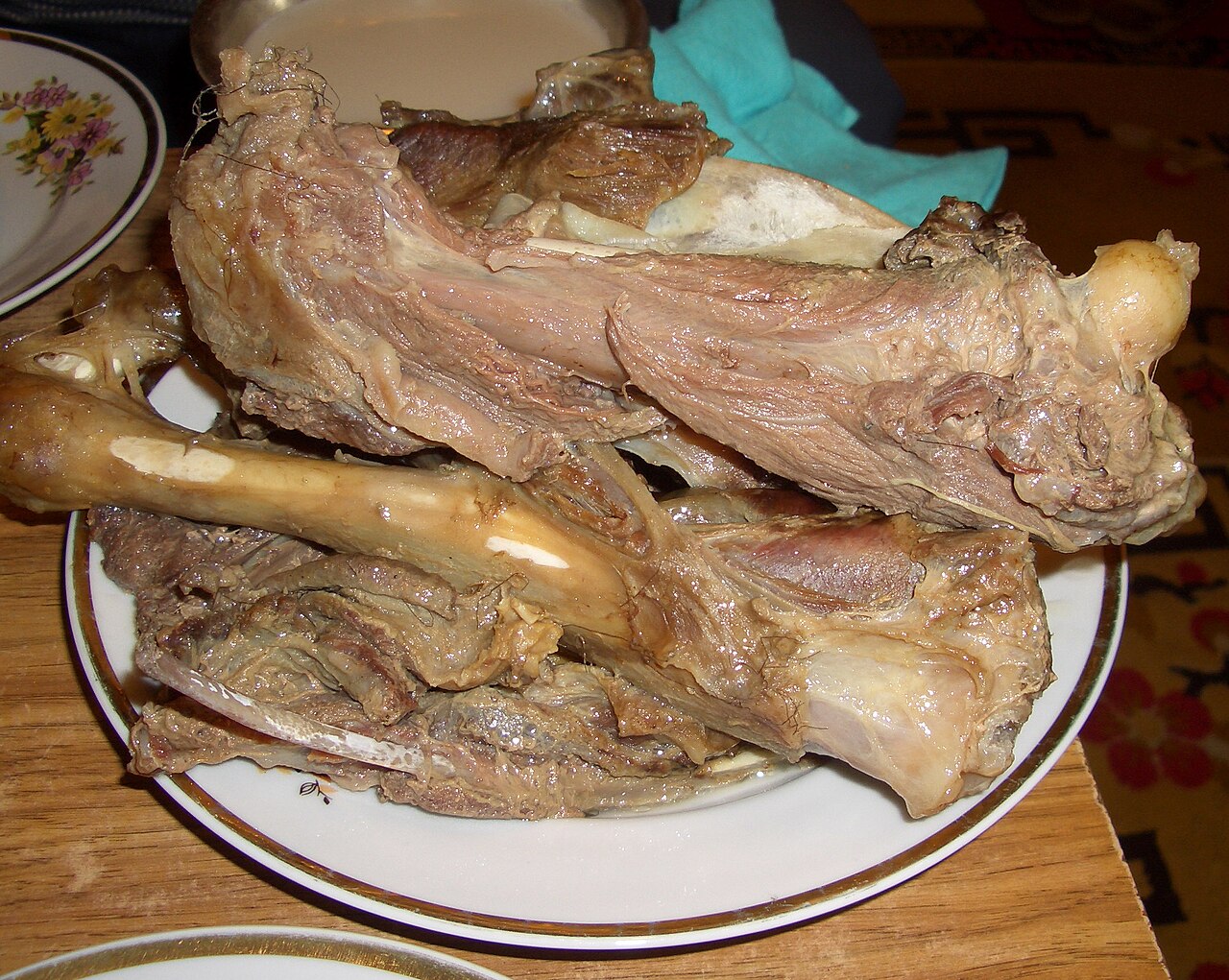
Big pieces of mutton on the bone, simply boiled in salted water and served on a platter. Each person cuts off meat with a knife, and the broth can be drunk as soup.
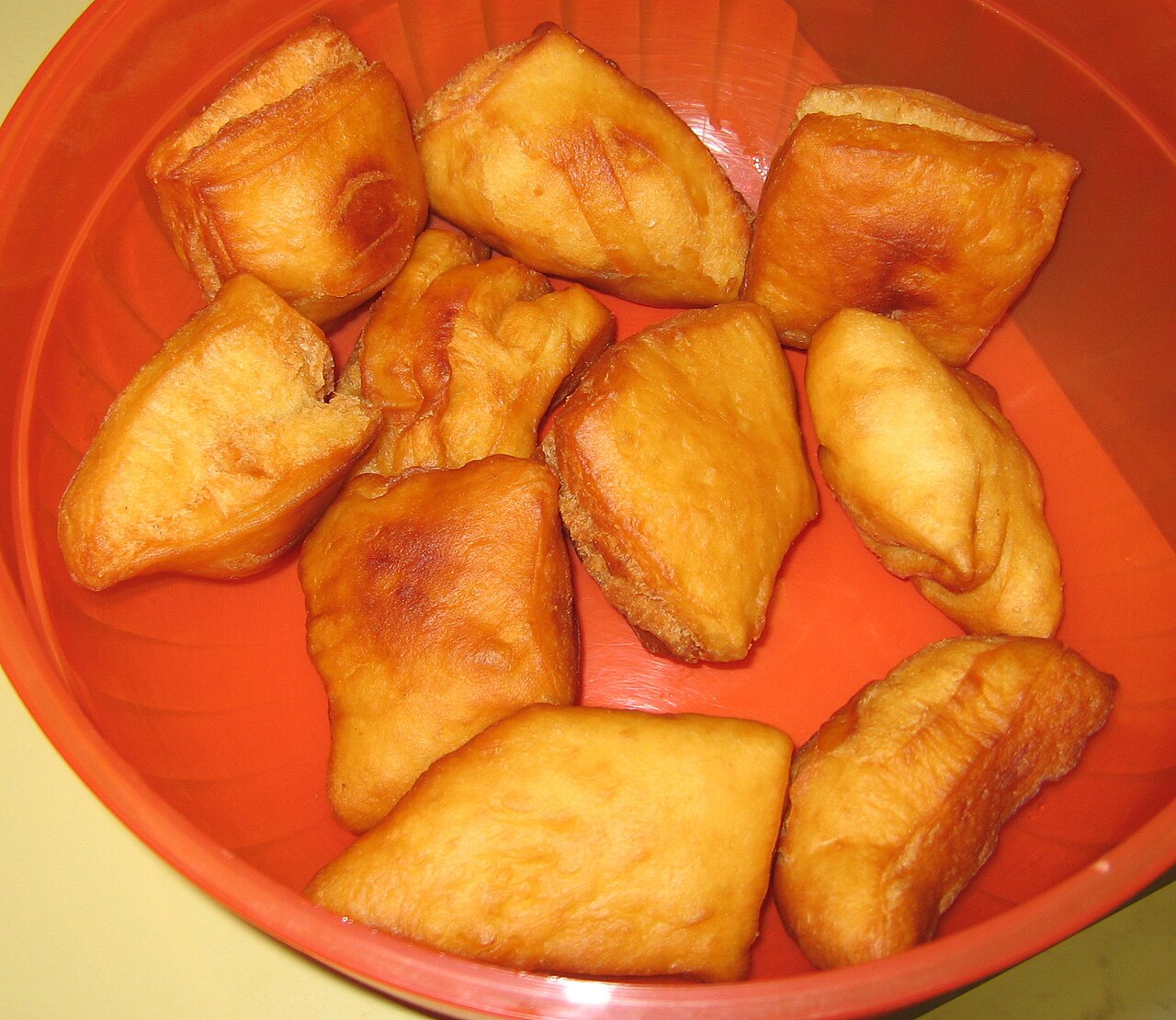
Small pieces of dough fried in fat or oil until crisp and golden. They are served with milk tea, often with clotted cream or sugar, for breakfast or as a snack.
Similar fried dough is eaten across Central Asia, where it is called baursak.
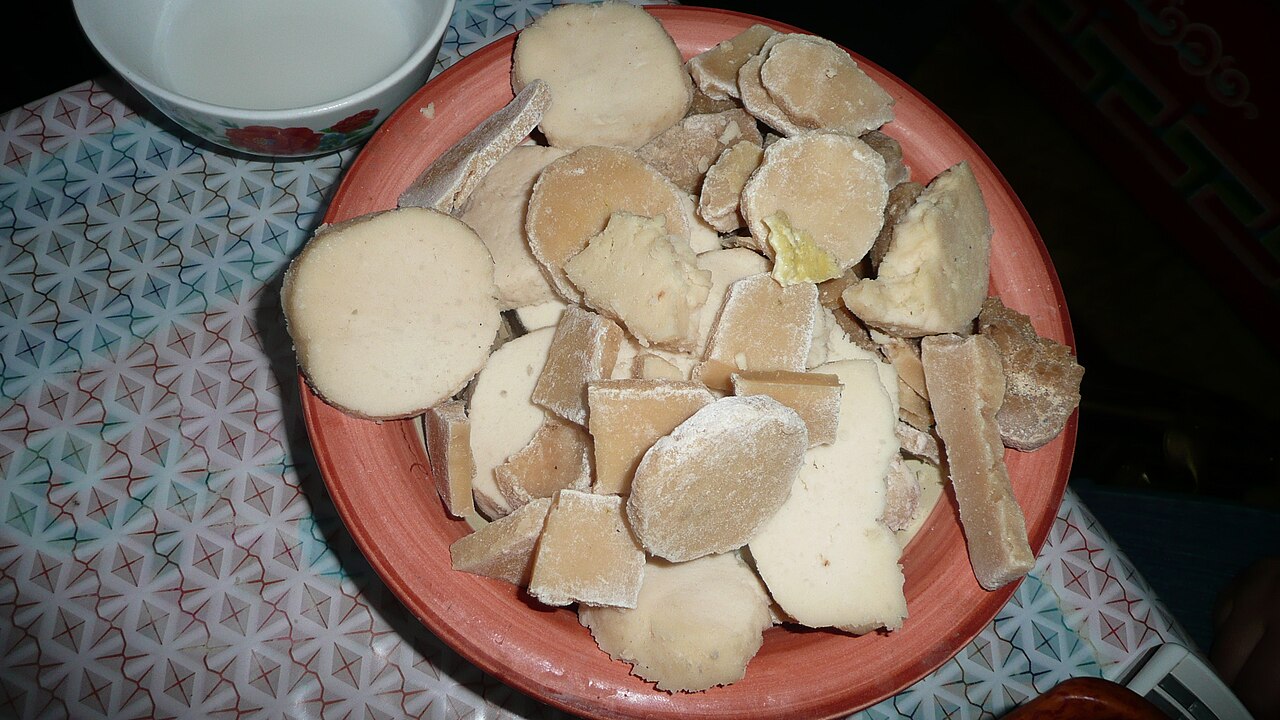
Dried curds made from the milk left after the cream has been taken off. The curds are pressed, cut into pieces and dried in the sun until they are rock hard. They keep for months and are nibbled slowly as a sour, hard snack, often with milk tea.
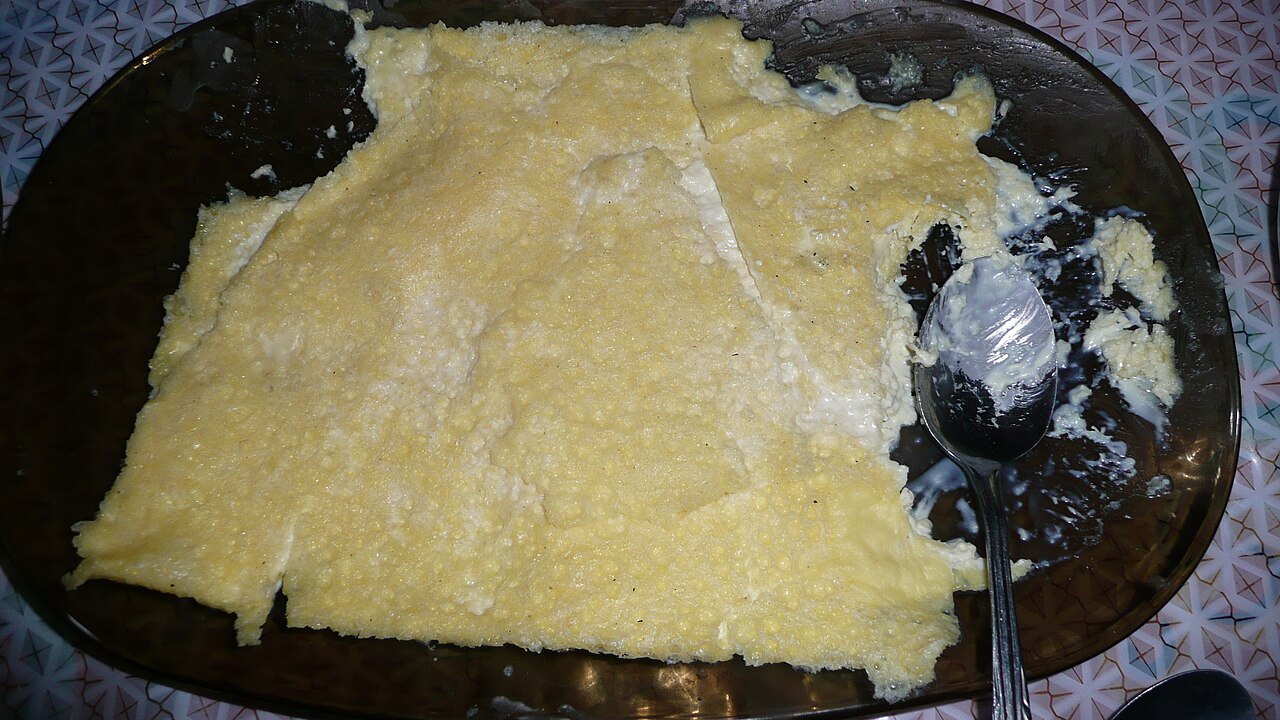
A rich clotted cream. Fresh milk is boiled slowly and left to cool, and the thick layer of cream that forms on top is lifted off. It is eaten spread on bread or boortsog, often with a little sugar, and is one of the best loved 'white foods'.
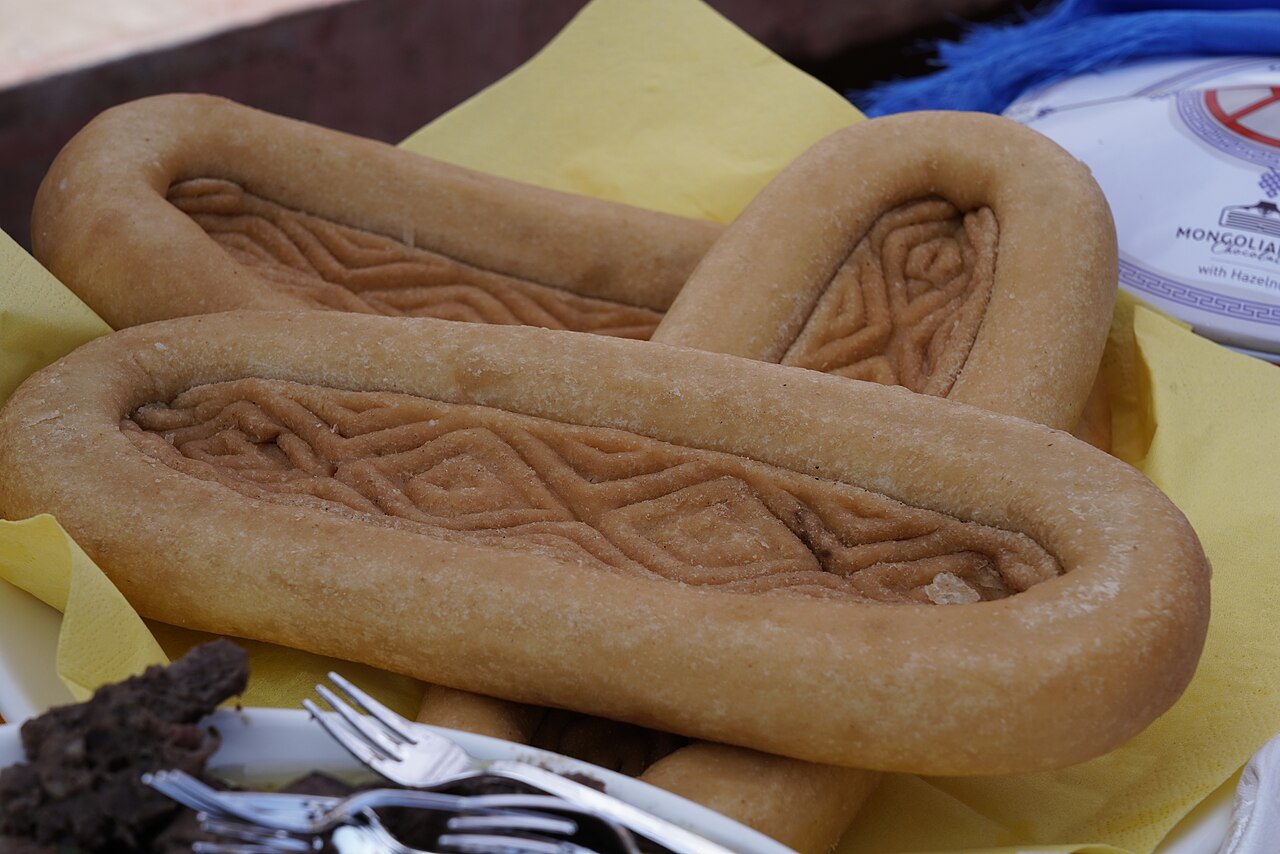
Oblong biscuits pressed with a carved pattern, stacked in a tall pile in the centre of the table for Tsagaan Sar, the Lunar New Year. The layered pile stands for Mount Sumeru, the sacred mountain at the centre of the world in Buddhist belief, and it is shared out among the guests.
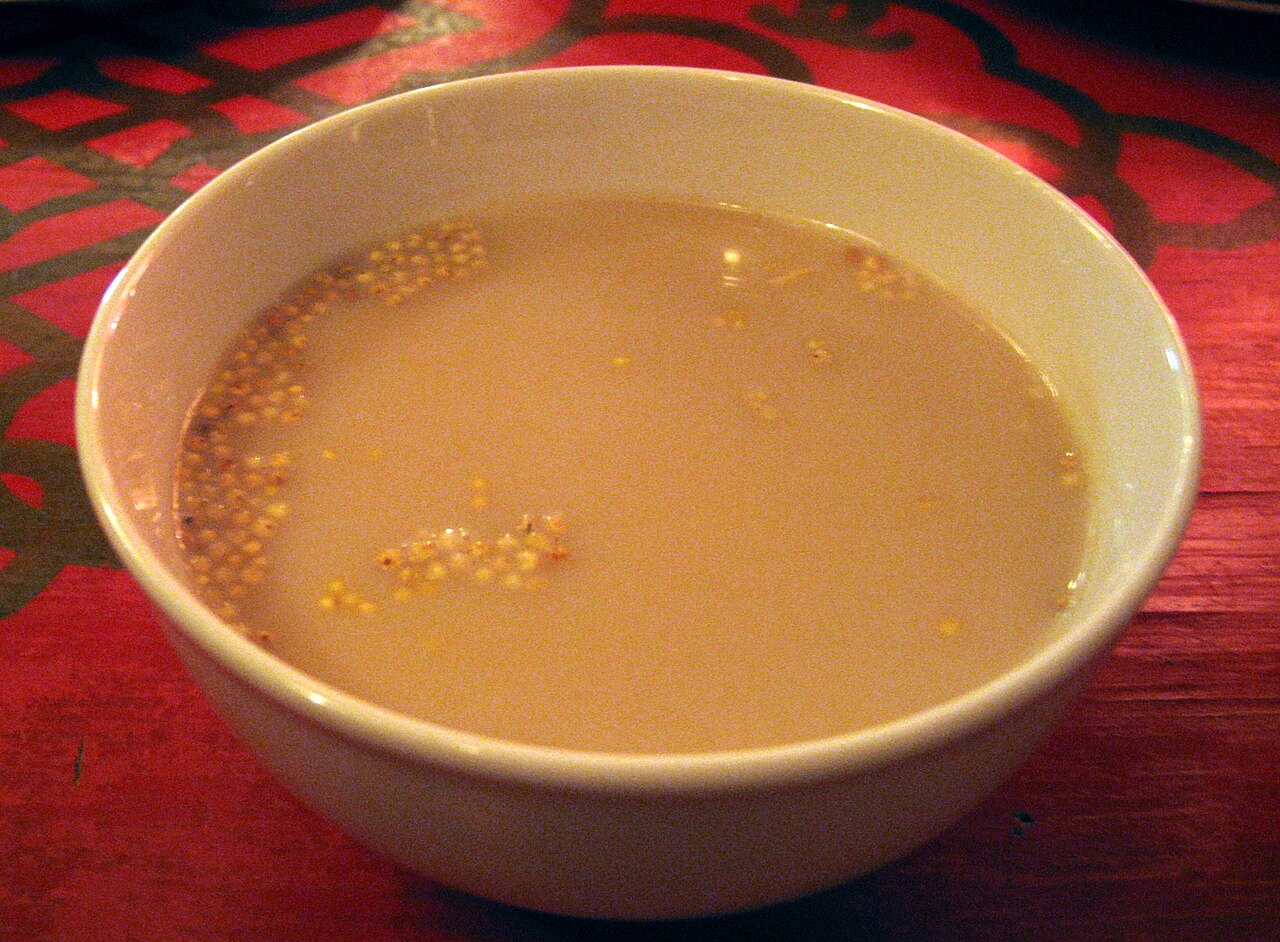
Mongolian milk tea: brick tea boiled in water with milk and a pinch of salt, sometimes with butter. It is drunk many times a day and is always offered to a guest first. It tastes more like a light soup than a sweet drink.
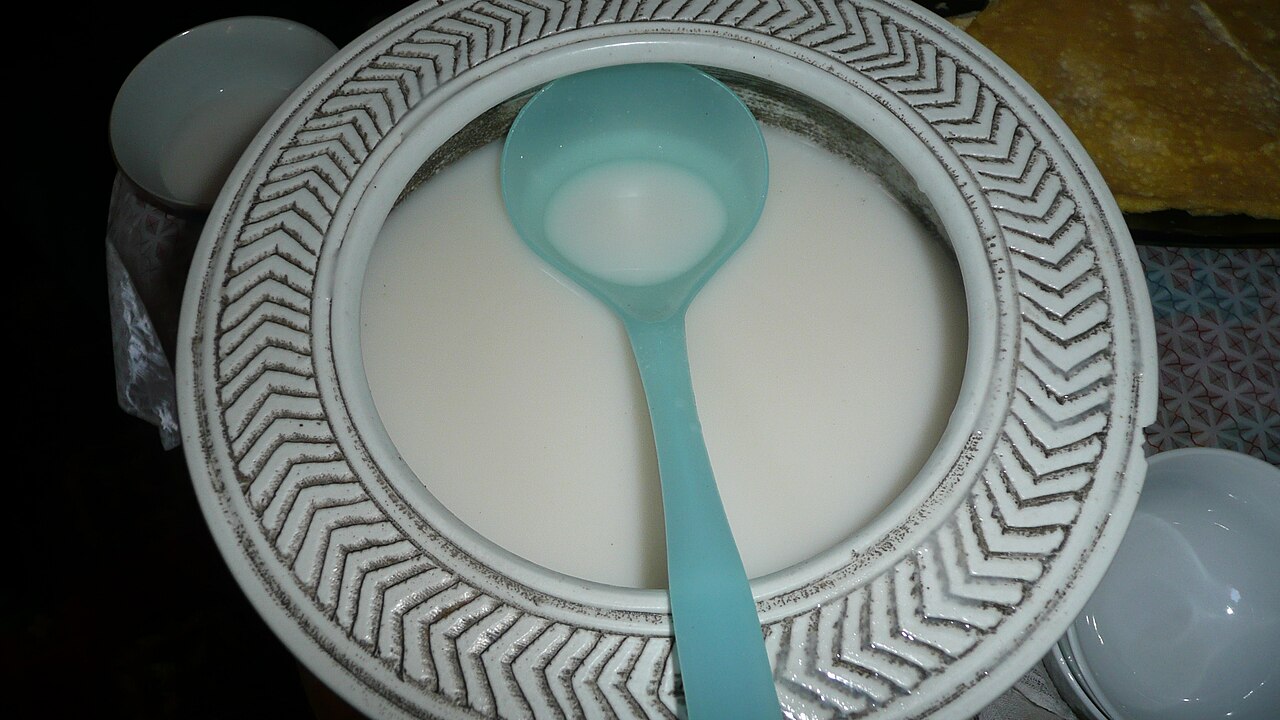
Fermented mare's milk, slightly sour and fizzy, with only a little alcohol, usually between about 0.7 and 2.5 percent. Mares are milked from mid-June to early October, and the milk is churned for hours in a large leather bag or barrel until it ferments. In summer it is often offered to visitors in a large bowl.
Airag can be distilled into a clear, stronger spirit called arkhi.
At the table in Mongolia
A guest is always offered milk tea first. Take the bowl with your right hand, or with both hands, and it is polite to support your right elbow with your left hand.
Try at least a little of everything you are offered, even a small bite or a sip. Refusing food outright is impolite.
The stove or hearth in the middle of the ger is sacred. Never throw rubbish into the fire.
Do not point the soles of your feet towards the hearth or the family altar at the back of the ger.
When khorkhog is served, the hot, greasy stones are passed round from hand to hand before the meal. Take one when it reaches you, then pass it on.
Older men may offer you a small snuff bottle. Take it with your right hand, sniff the stopper or the bottle, and hand it back with your right hand.