Thai food is famous for balancing sweet, sour, salty and spicy flavours, with fresh herbs such as lemongrass, galangal, kaffir lime leaves and holy basil. A Thai meal has no separate courses: rice comes with several dishes that everyone shares, and they are all served at the same time, soup included. Each region has its own style, from the sticky rice and salads of the northeast to the rich curries of the south.
Central Thailand, made popular in the mid-20th century
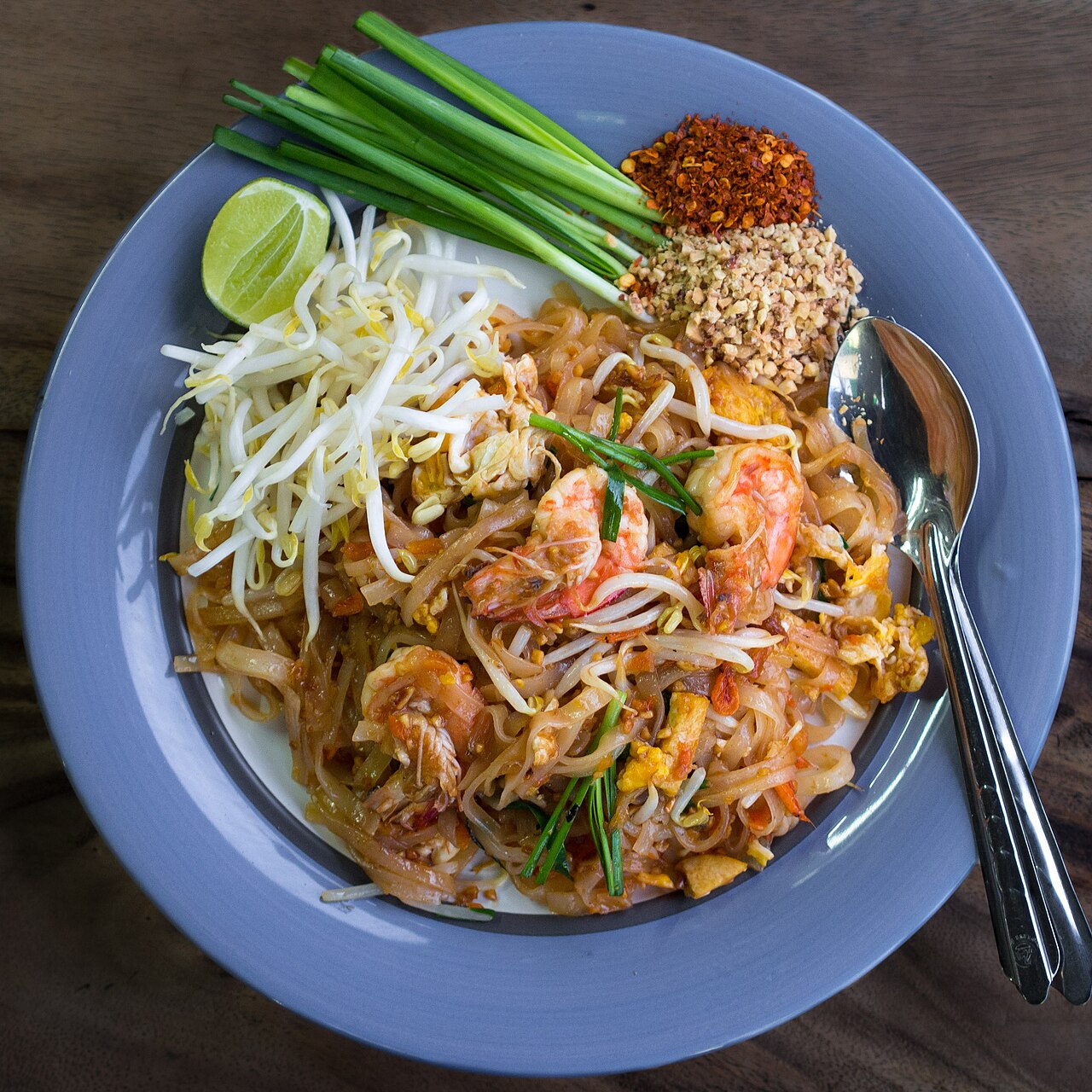
Stir-fried rice noodles with egg, tofu or prawns, bean sprouts and spring onions, seasoned with tamarind, fish sauce and a little sugar, and served with crushed peanuts and a wedge of lime.
Pad thai is younger than many people think. It was promoted around the Second World War, when the government of Prime Minister Phibunsongkhram encouraged people to eat rice noodles.
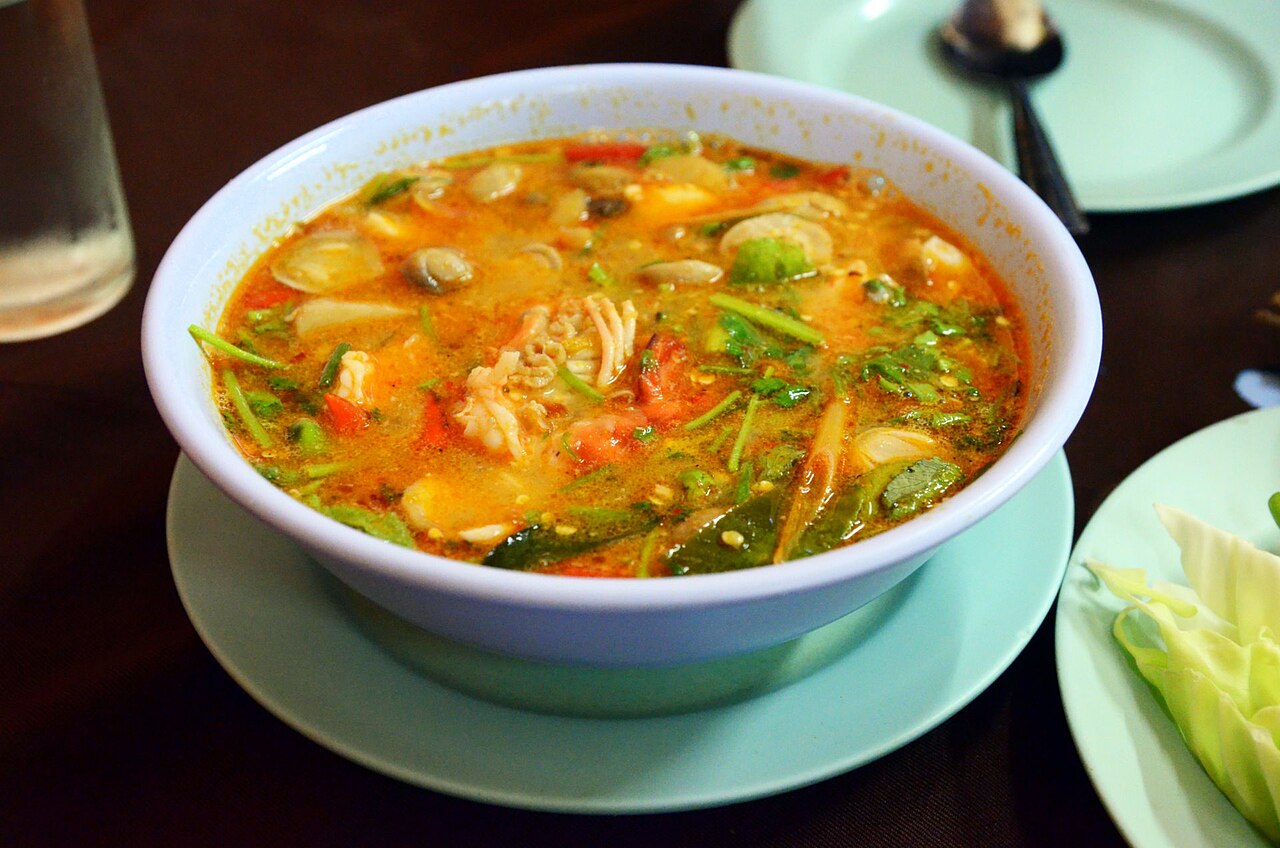
A hot and sour prawn soup flavoured with lemongrass, galangal, kaffir lime leaves, chillies, lime juice and fish sauce. It comes in a clear version, tom yum nam sai, and a creamy one, tom yum nam khon.
In 2024 UNESCO added tom yum kung to its list of the Intangible Cultural Heritage of Humanity.
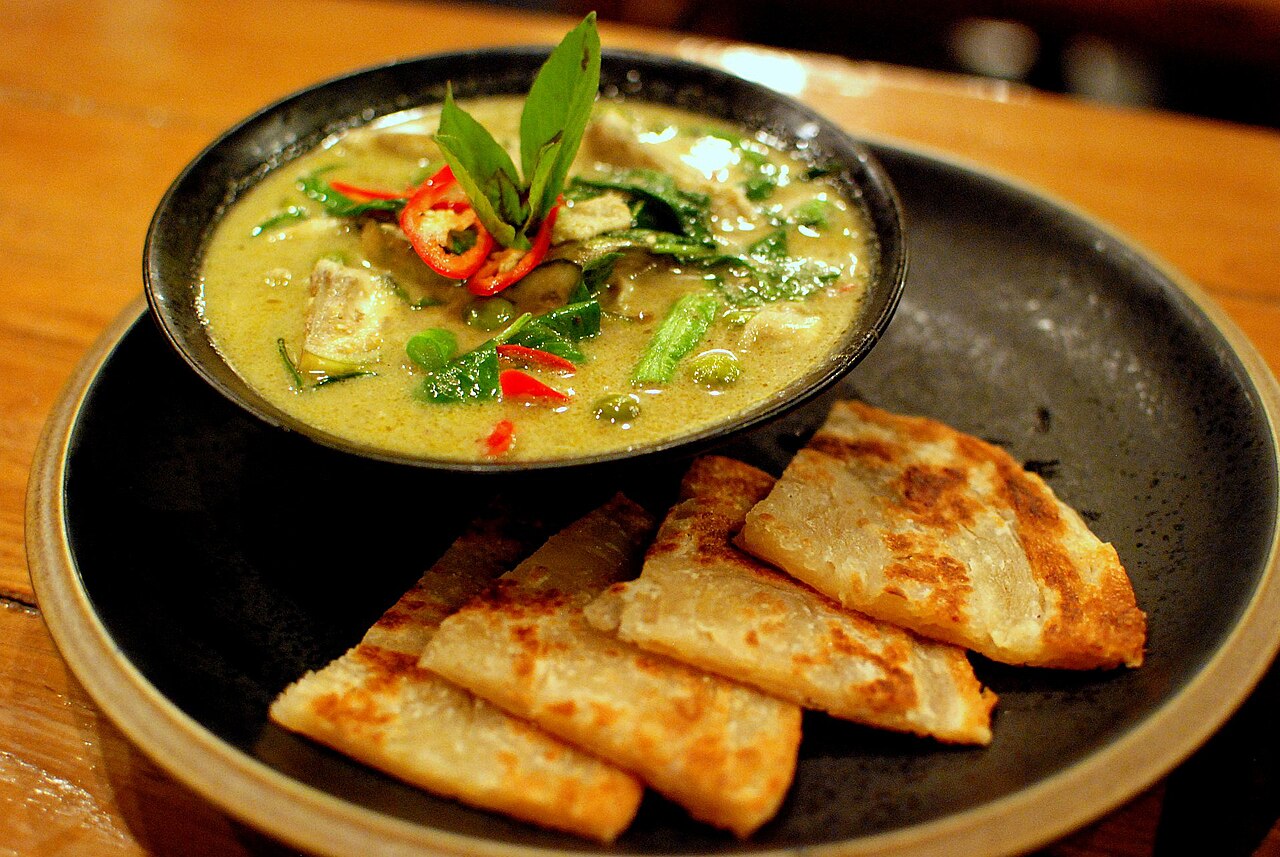
A coconut milk curry made with a paste of fresh green chillies, usually with chicken or fish balls, Thai aubergines and sweet basil. It is often hotter than red curry.
The Thai name, kaeng khiao wan, means 'sweet green curry'. The 'sweet' describes the soft green colour, not the taste.
Thai Muslim cooking, with Persian, Indian and Malay influences
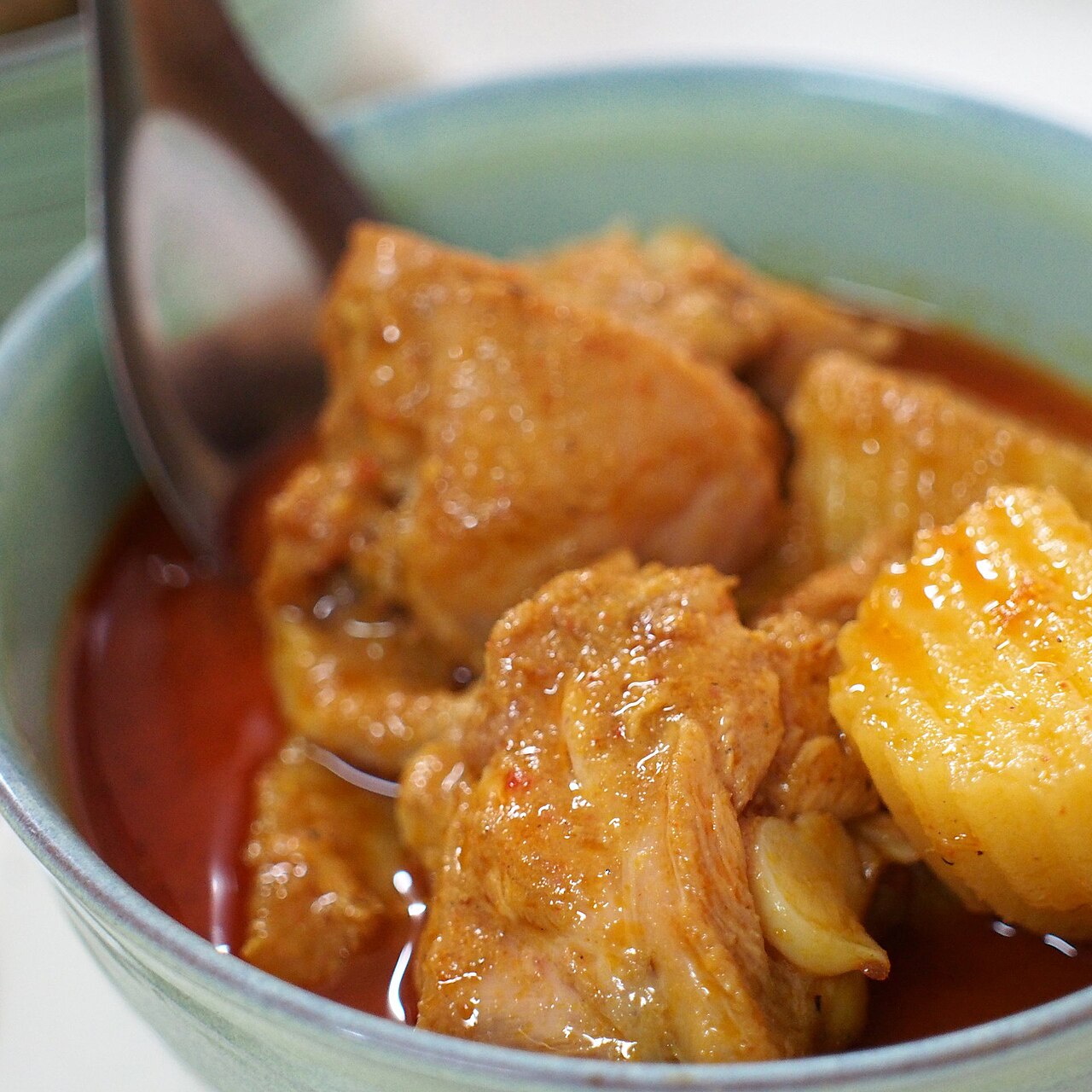
A rich, mild curry of coconut milk with warm spices such as cardamom, cinnamon and cloves, usually made with chicken or beef, potatoes, onions and peanuts.
Massaman curry is praised in a poem from the late 1700s attributed to the prince who later became King Rama II.
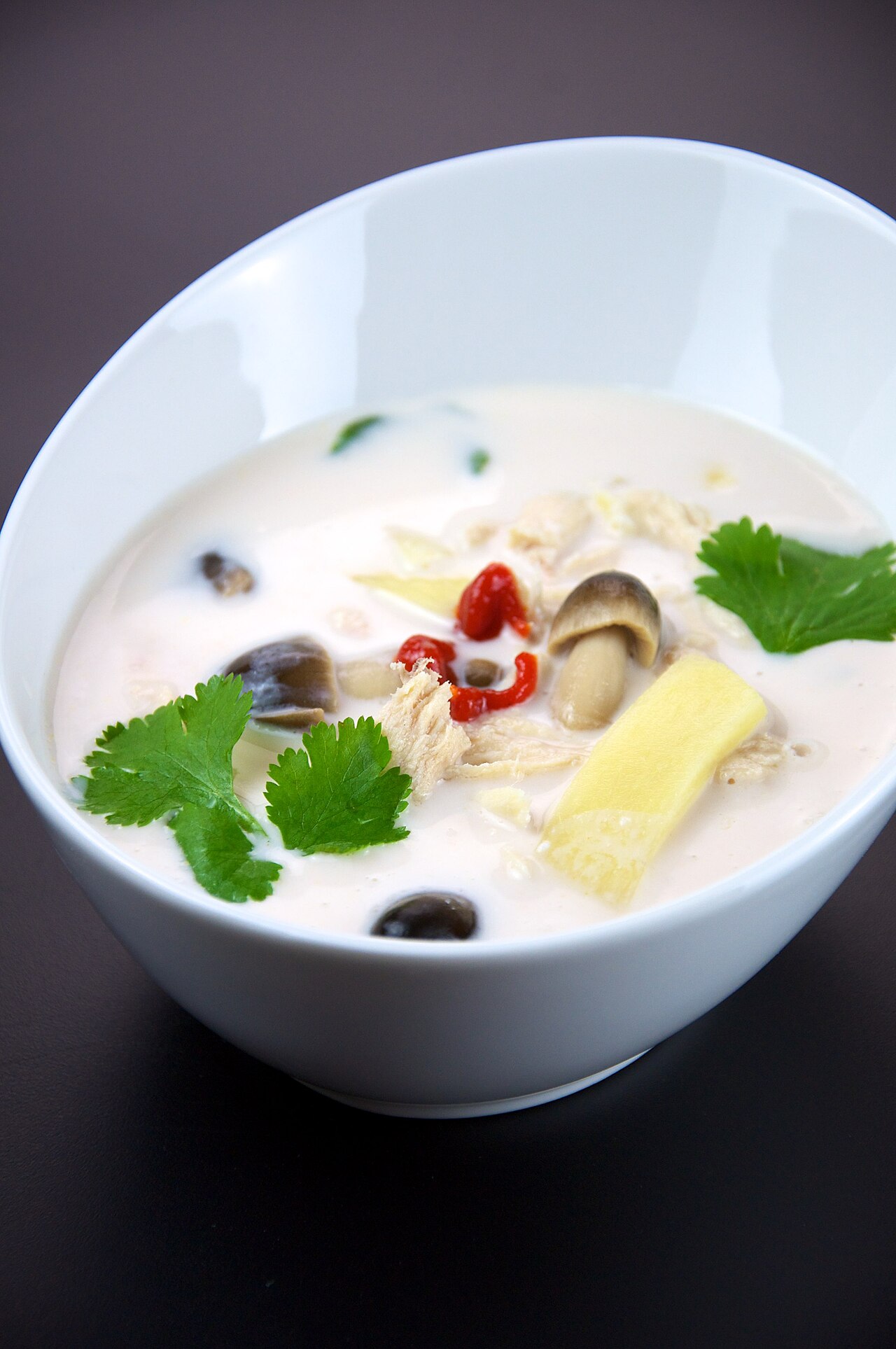
A creamy chicken soup made with coconut milk and galangal, flavoured with lemongrass, kaffir lime leaves, mushrooms, fish sauce and lime juice. It is milder and sweeter than tom yum.
The name simply means 'chicken galangal soup'. The first recorded version, from around 1890, was made with duck.
All of Thailand, first sold by Chinese immigrant cooks
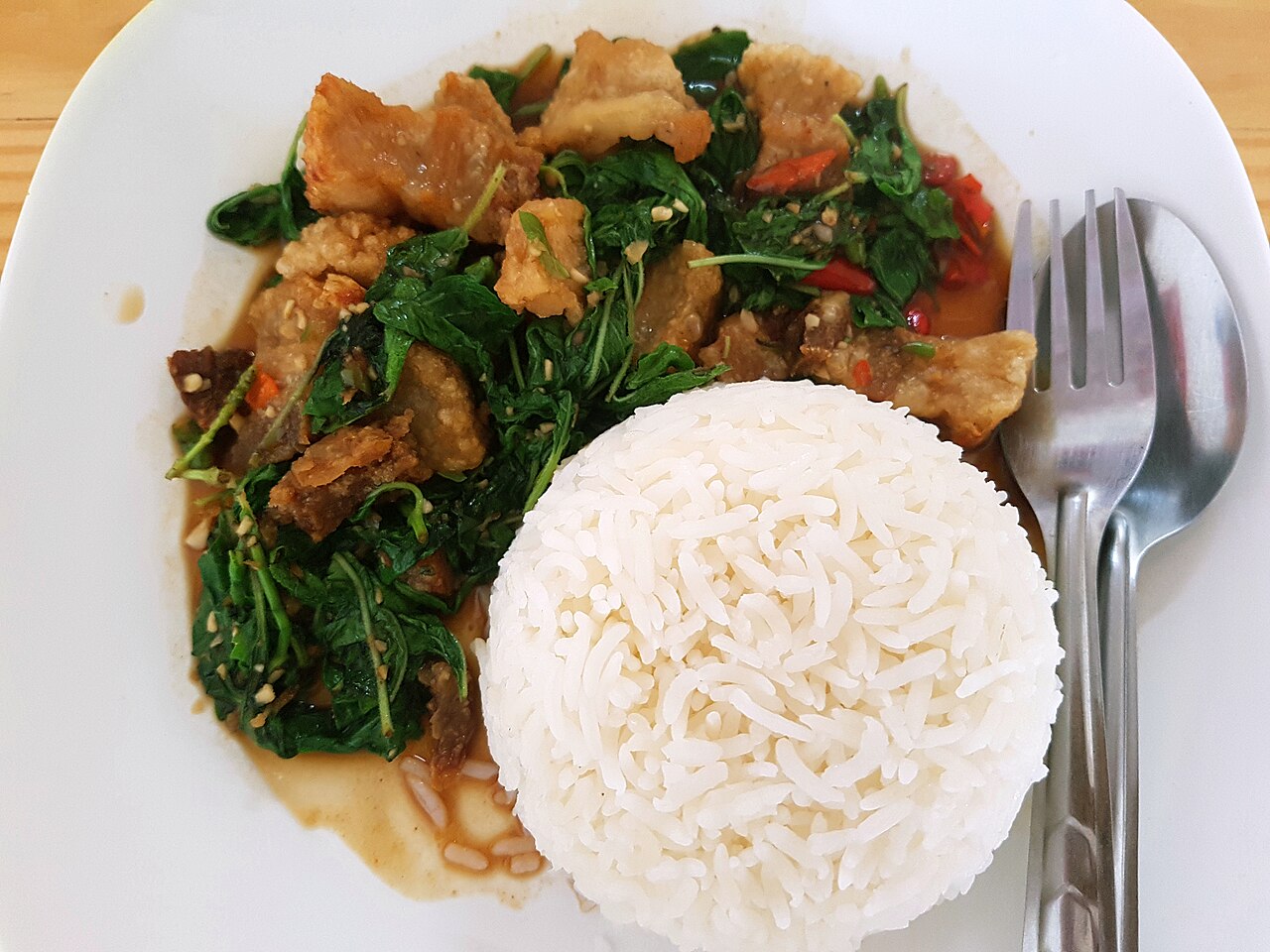
Minced pork or chicken stir-fried with garlic, chillies and holy basil, served over rice and often topped with a crispy fried egg. It is one of the most popular everyday dishes in the country.
Many Thais order it as their quick lunch. If you cannot decide what to eat in Thailand, pad kaphrao with a fried egg is a safe choice.
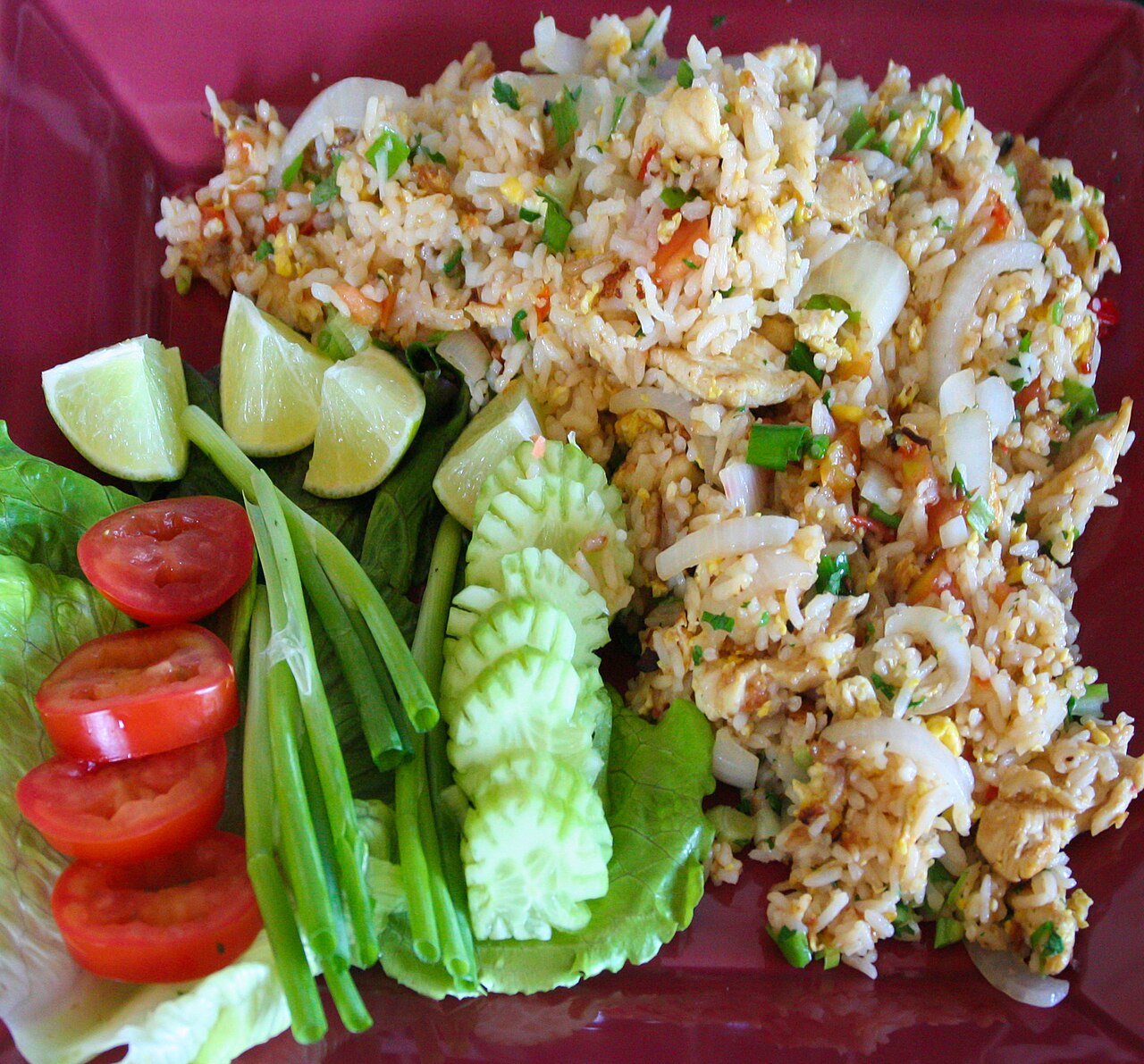
Jasmine rice fried with egg, onion, garlic and chicken, prawns, pork or crab, seasoned with fish sauce and soy sauce, and served with cucumber, lime and a small bowl of chillies in fish sauce.
Isan, the northeast, shared with neighbouring Laos
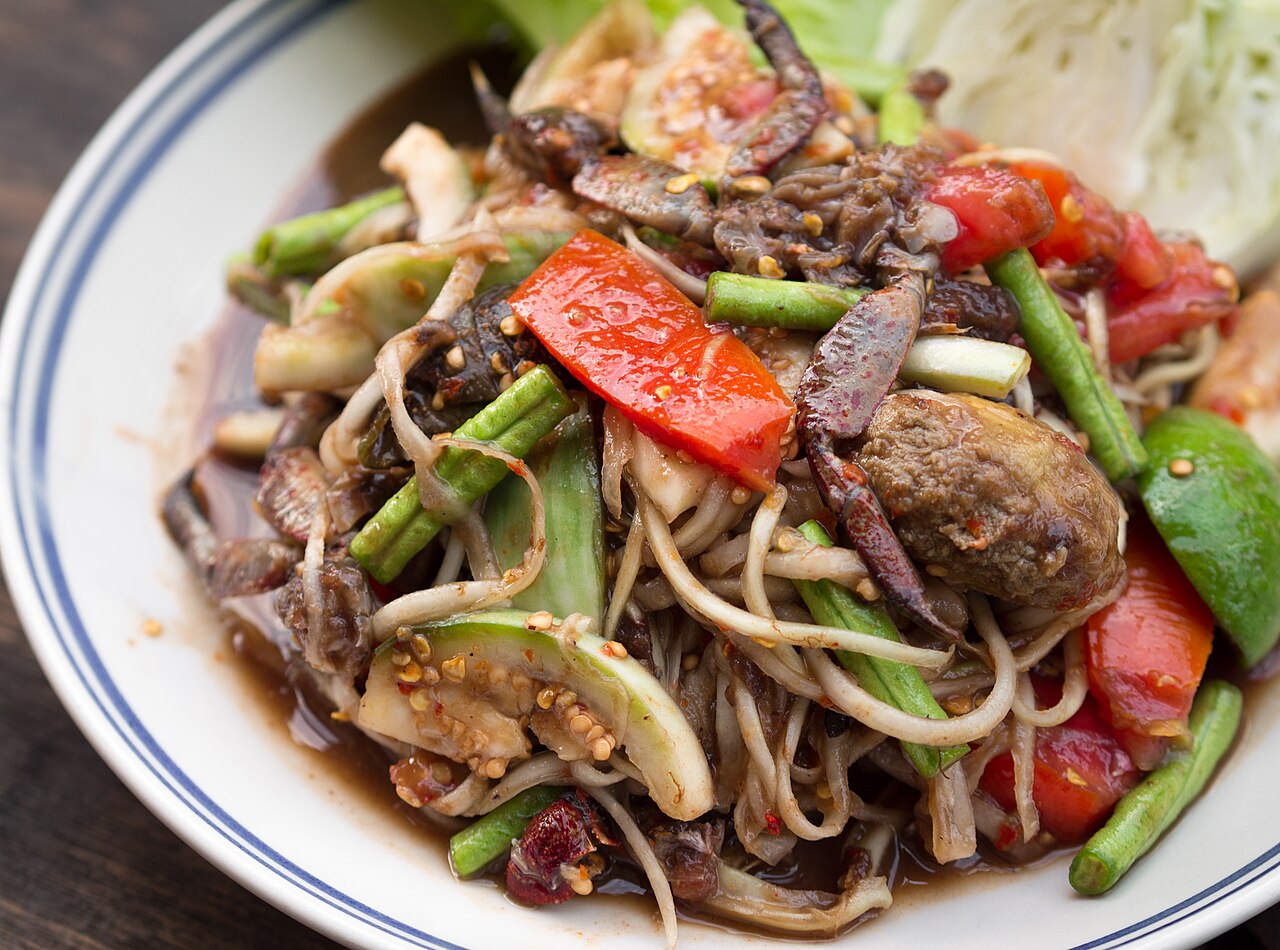
Shredded unripe papaya pounded in a mortar with chillies, garlic, lime juice, fish sauce, palm sugar, tomatoes, long beans and peanuts. It is sour, spicy, salty and sweet all at once.
Some versions include raw pickled crab or fermented fish sauce. If you are pregnant, older or have a weak immune system, ask for the simple Thai style without them.
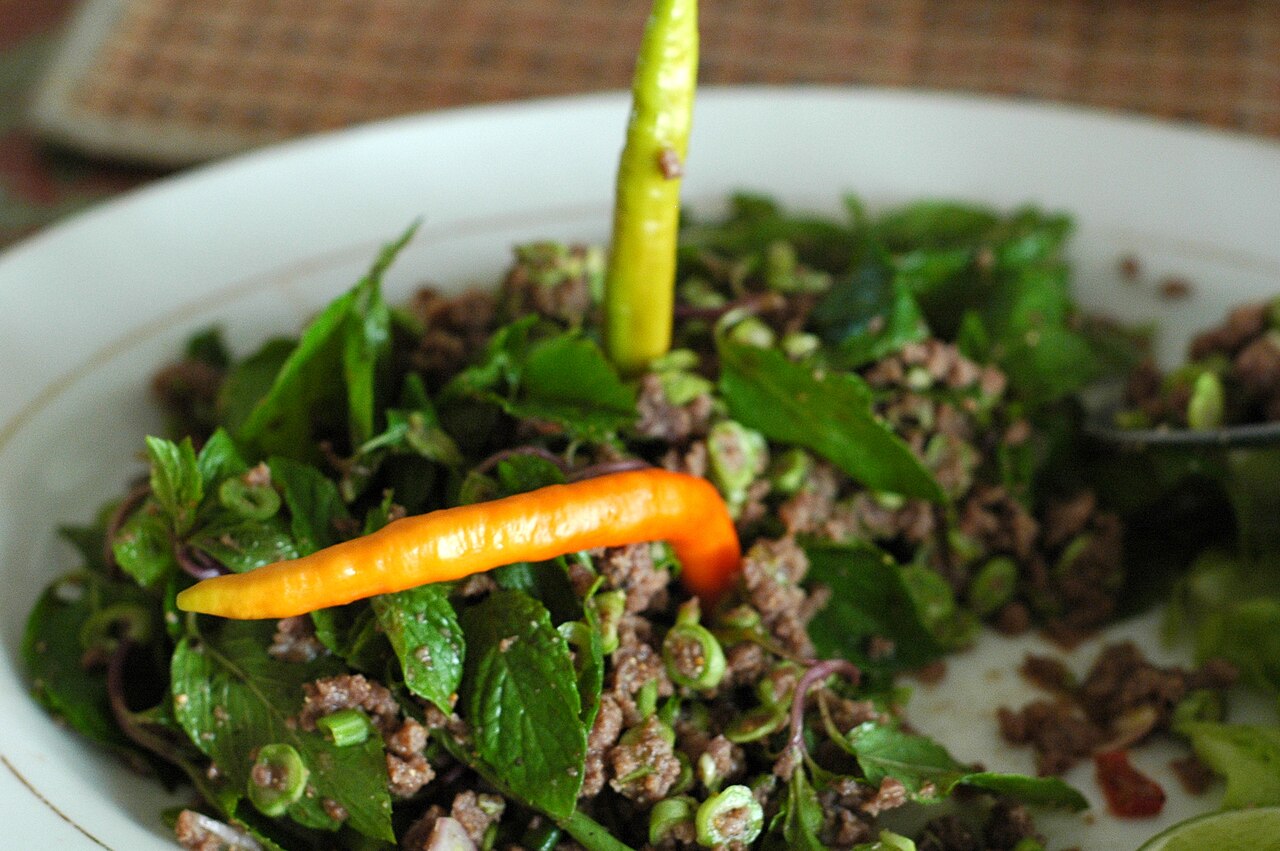
A salad of minced chicken, pork or duck, seasoned with lime juice, fish sauce, chilli, roasted ground rice and fresh mint, usually eaten with sticky rice.
Some traditional versions use raw meat. Ask for it cooked (it is on most menus), which is the safe choice.
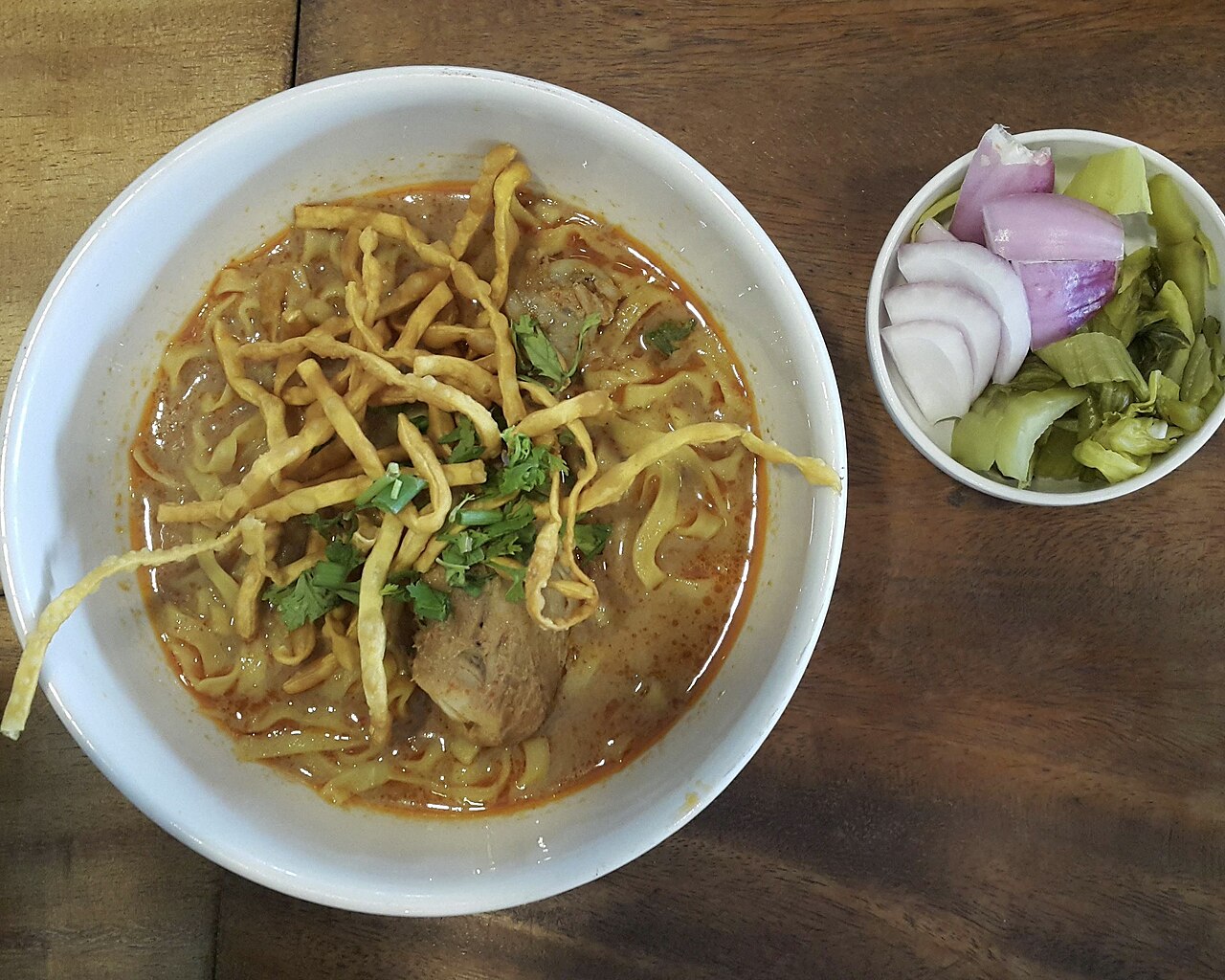
Egg noodles in a curry soup with coconut milk and chicken or beef, topped with a nest of crispy fried noodles and served with pickled mustard greens, shallots and lime.
The dish is believed to have come with Chinese Muslim traders who travelled the caravan routes through the north.
Brought by Hainanese Chinese immigrants; now found all over Thailand
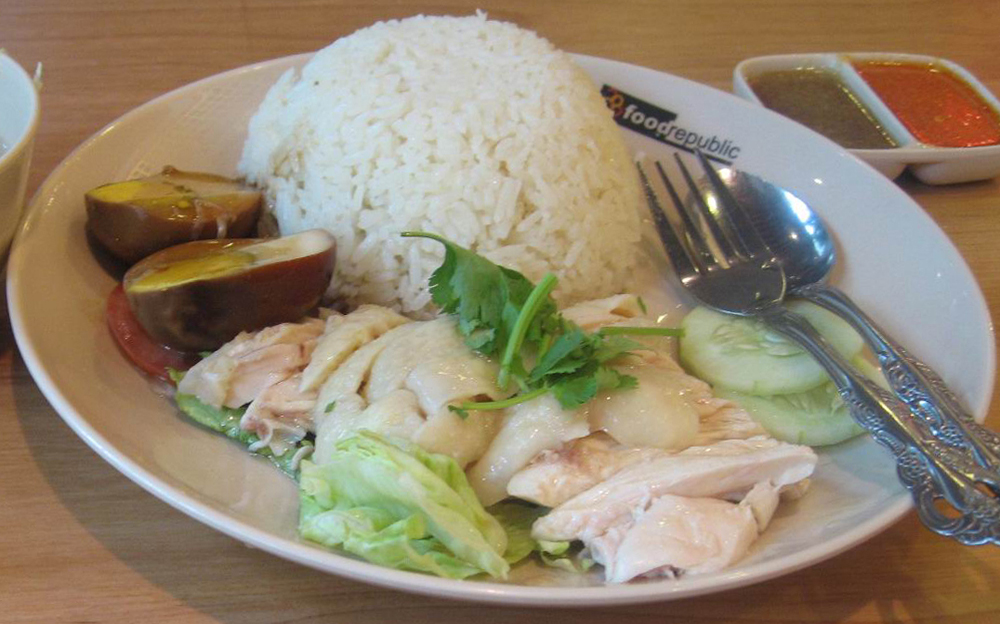
Poached chicken sliced over rice that has been cooked in the chicken's stock and fat, served with cucumber and a spicy dipping sauce. The Thai name means 'chicken fat rice'.
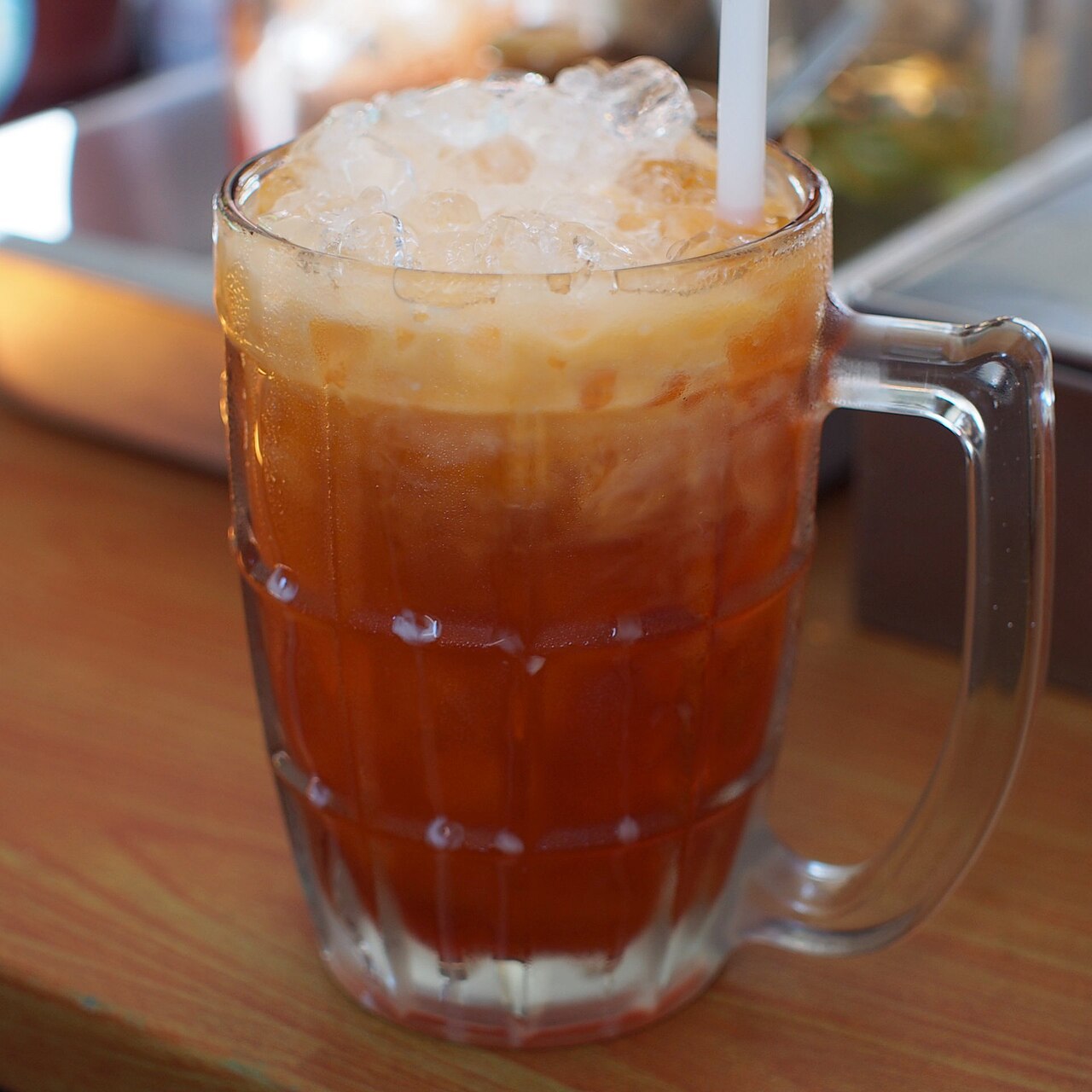
Strong black tea sweetened with sugar and condensed milk and poured over ice, often with a splash of evaporated milk on top. Its Thai name, cha yen, simply means 'cold tea'.
At the table in Thailand
Most Thais eat with a spoon in the right hand and a fork in the left, using the fork to push food onto the spoon. Knives are not generally used at the table.
Chopsticks are used mainly for noodle soups and Chinese-style dishes.
Dishes are shared by everyone at the table and eaten with rice. Thais like to mix a little of each dish with the rice on their own plate.
In the north and northeast, sticky rice is rolled into small balls with your fingers, traditionally of the right hand, and dipped into the other dishes.