A Lao meal is shared and has no courses. Everyone takes sticky rice, khao niao, from a small woven basket, rolls a little ball of it with the fingers and uses it to scoop up the other dishes: usually a soup that is sipped all through the meal, something grilled, a chilli dip called jeow, a meat or fish salad such as larb, and a big plate of fresh raw herbs and greens. Lao food is often spicy, sour or pleasantly bitter, and savoury dishes are rarely sweet. Fish sauce and padaek, a thick fermented fish sauce, give it its deep flavour. The French left behind baguettes and coffee, and noodle soups are the favourite breakfast.
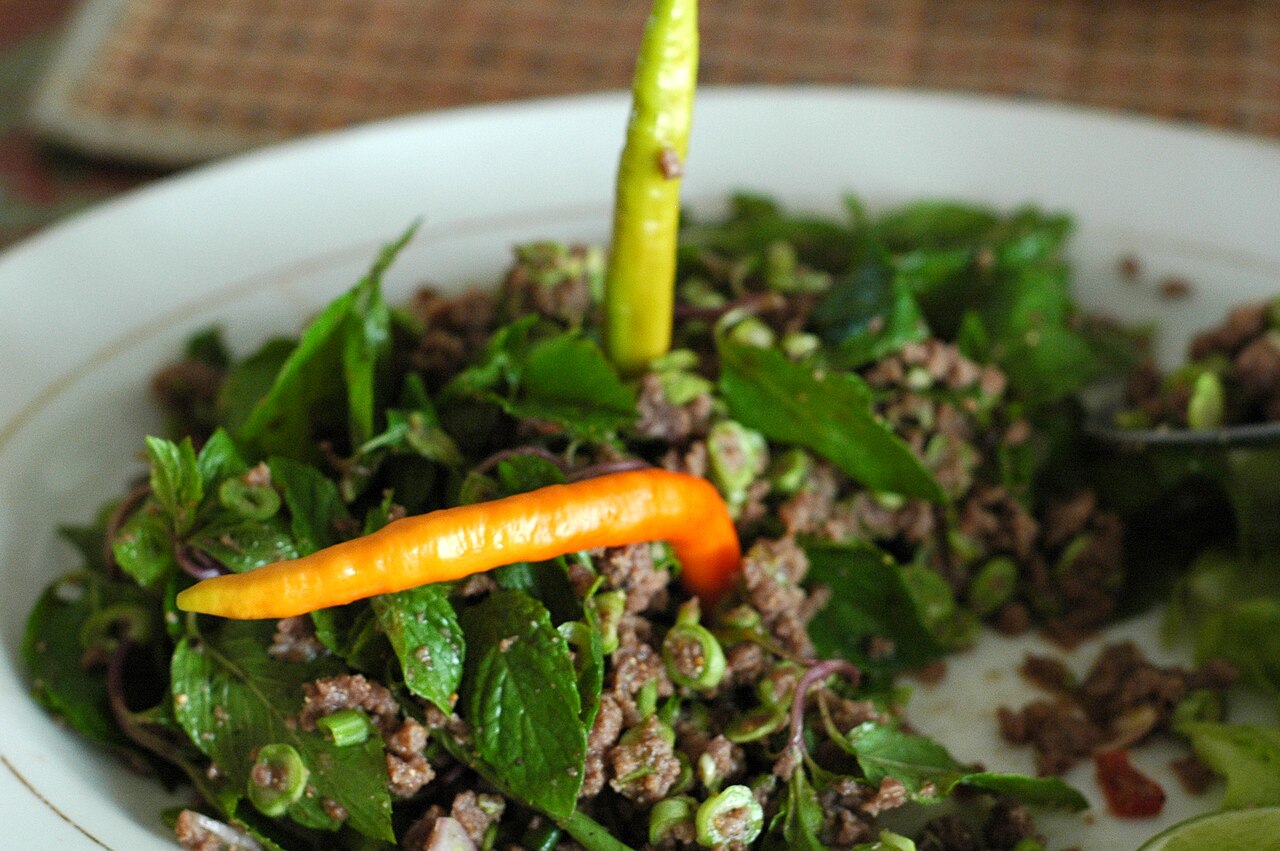
Finely chopped meat or fish, cooked or sometimes raw, mixed with lime juice, fish sauce, chilli, shallots, a lot of fresh mint and coriander, and toasted ground sticky rice, khao khua, which gives it a nutty crunch. It is served at room temperature with sticky rice and raw vegetables, and is often called the national dish of Laos.
The word larb sounds like a Lao word for luck, so larb is served at weddings and at New Year to bring good fortune.
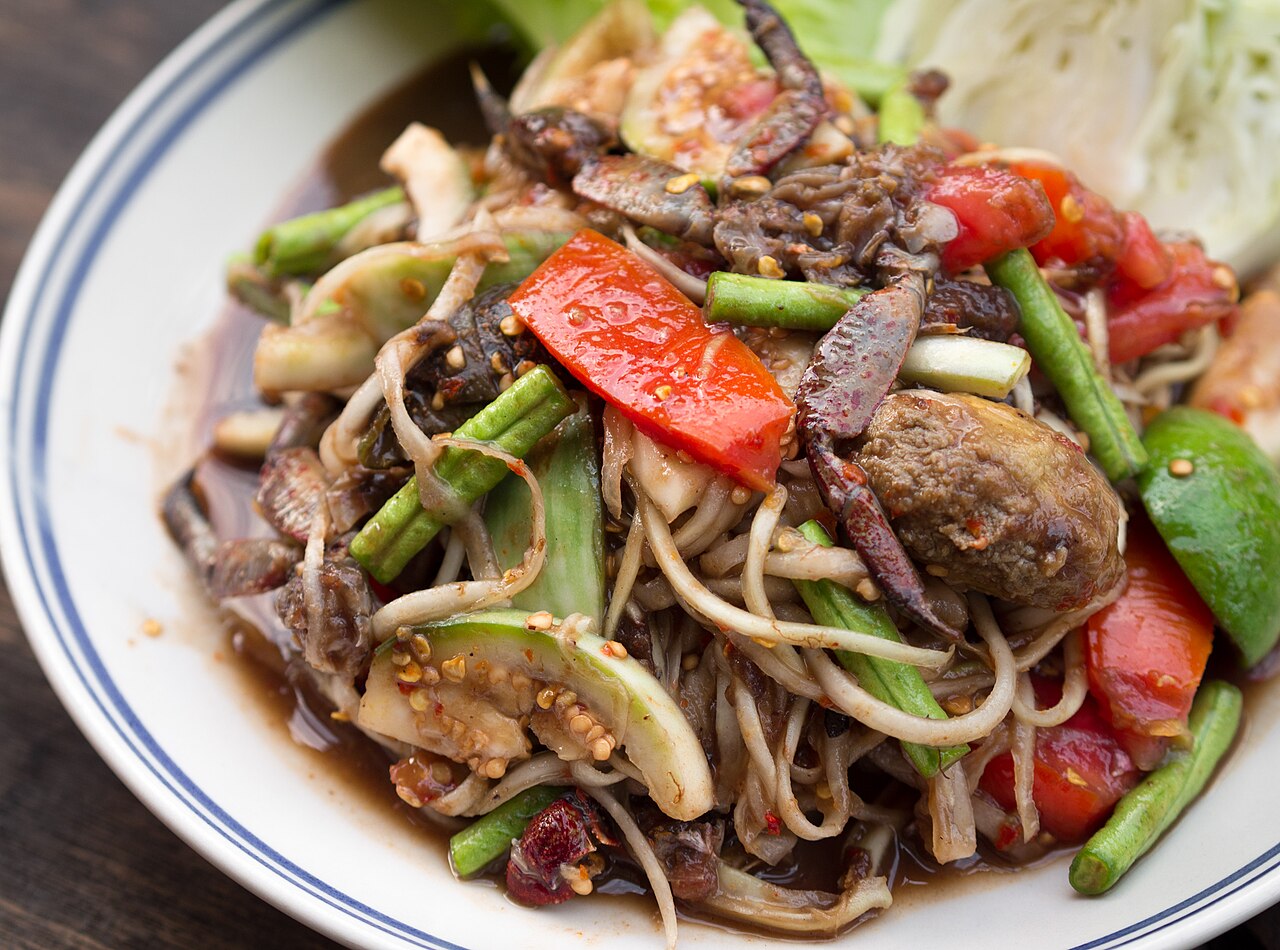
Shredded unripe green papaya pounded in a deep clay or wooden mortar with garlic, chillies, lime, tomatoes and fish sauce. The Lao version is usually sour, salty and very hot, and is often made with padaek, a pungent fermented fish sauce, and sometimes with small salted crabs.
In Thailand the same salad is called som tam. The Lao like theirs stronger and less sweet.
Laos, where it has been grown for thousands of years
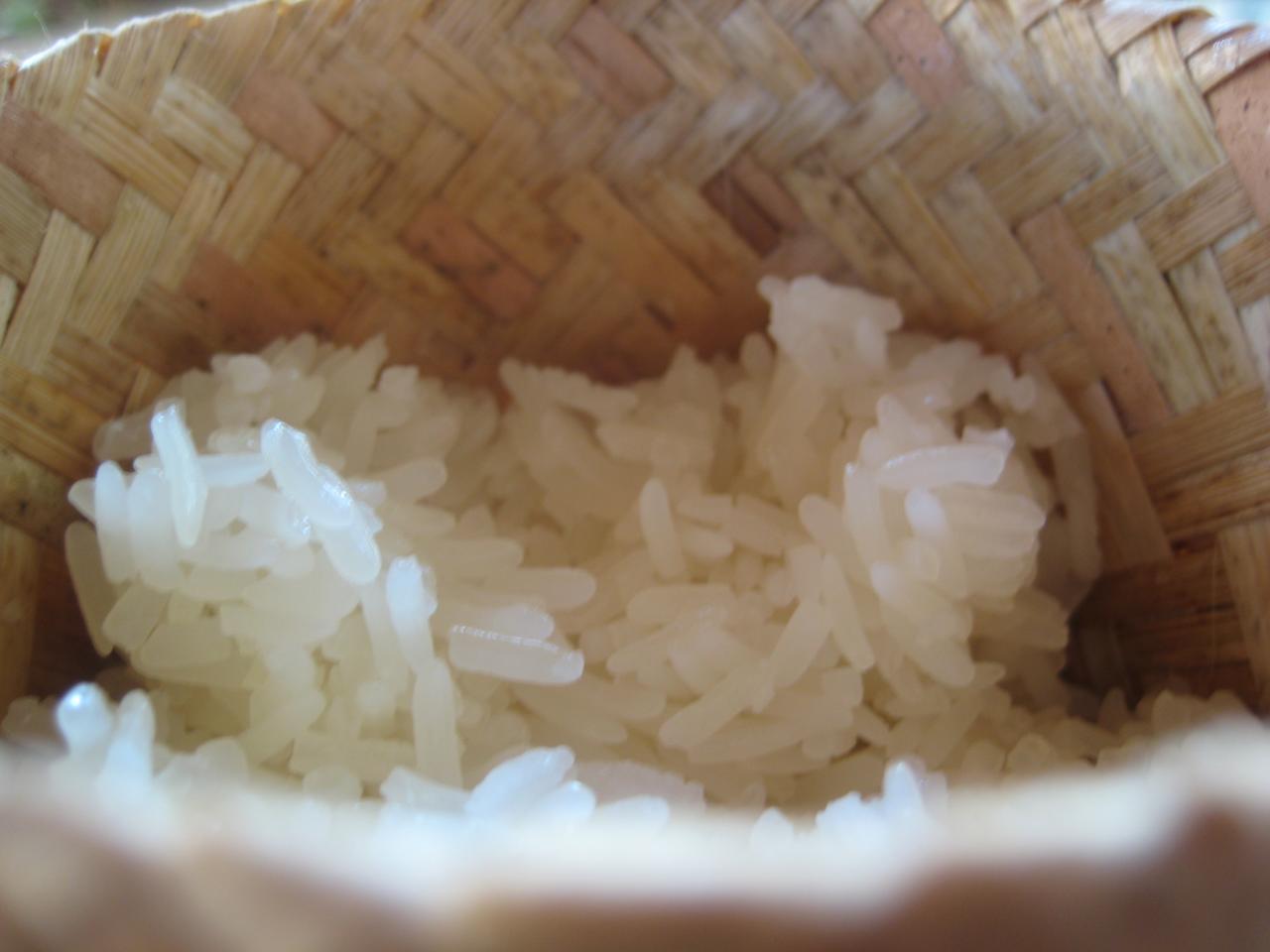
Glutinous rice, soaked for hours and then steamed in a cone-shaped bamboo basket over a pot of boiling water. It is kept warm in a small lidded basket, the tip khao, and eaten with the fingers: you pinch off a little, roll it into a ball and dip it into sauces and dishes.
Sticky rice is so central to Lao life that Lao people often call themselves luk khao niao, 'children of sticky rice'. Most of the rice grown in Laos is sticky rice.
A thick, comforting noodle soup. Chewy handmade noodles of rice flour and tapioca are cooked straight in a chicken or pork broth flavoured with galangal, lemongrass and lime leaves, so the starch makes the soup silky. It is topped with shredded chicken, fried garlic, spring onions and coriander.
The name means 'wet rice strands'. Many families make it in big batches for a crowd.
Laos, served at family celebrations and in markets
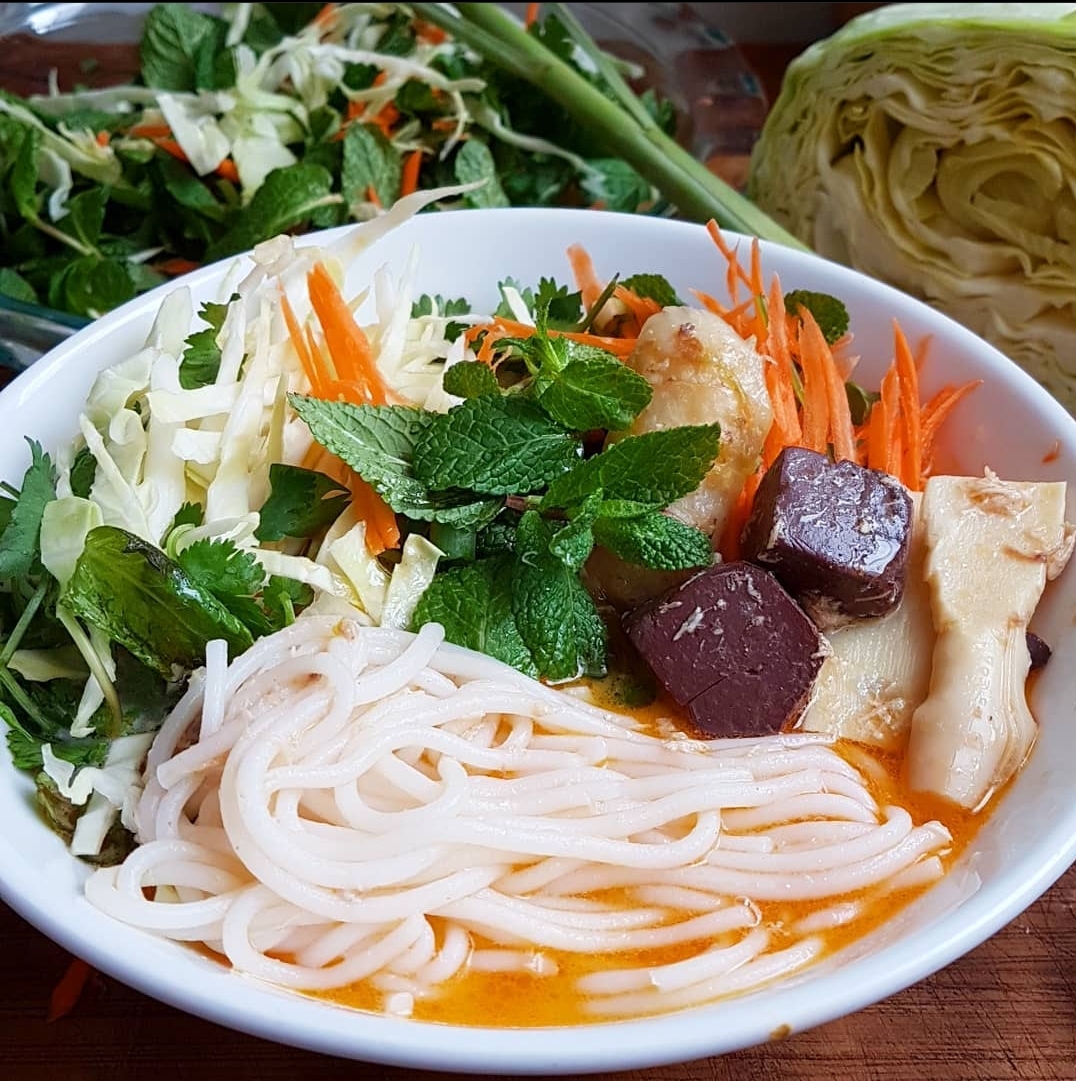
Thin fresh rice noodles in a spicy red broth of pounded chicken, fish or pork, often made rich with coconut milk and flavoured with galangal, lime leaves and chillies. Each bowl is topped with shredded cabbage, banana flower, bean sprouts and fresh herbs.
Recipes for khao poon were among those written down by Phia Sing, chef to the Lao royal court in Luang Prabang.
Northern Laos, especially Luang Prabang and Luang Namtha
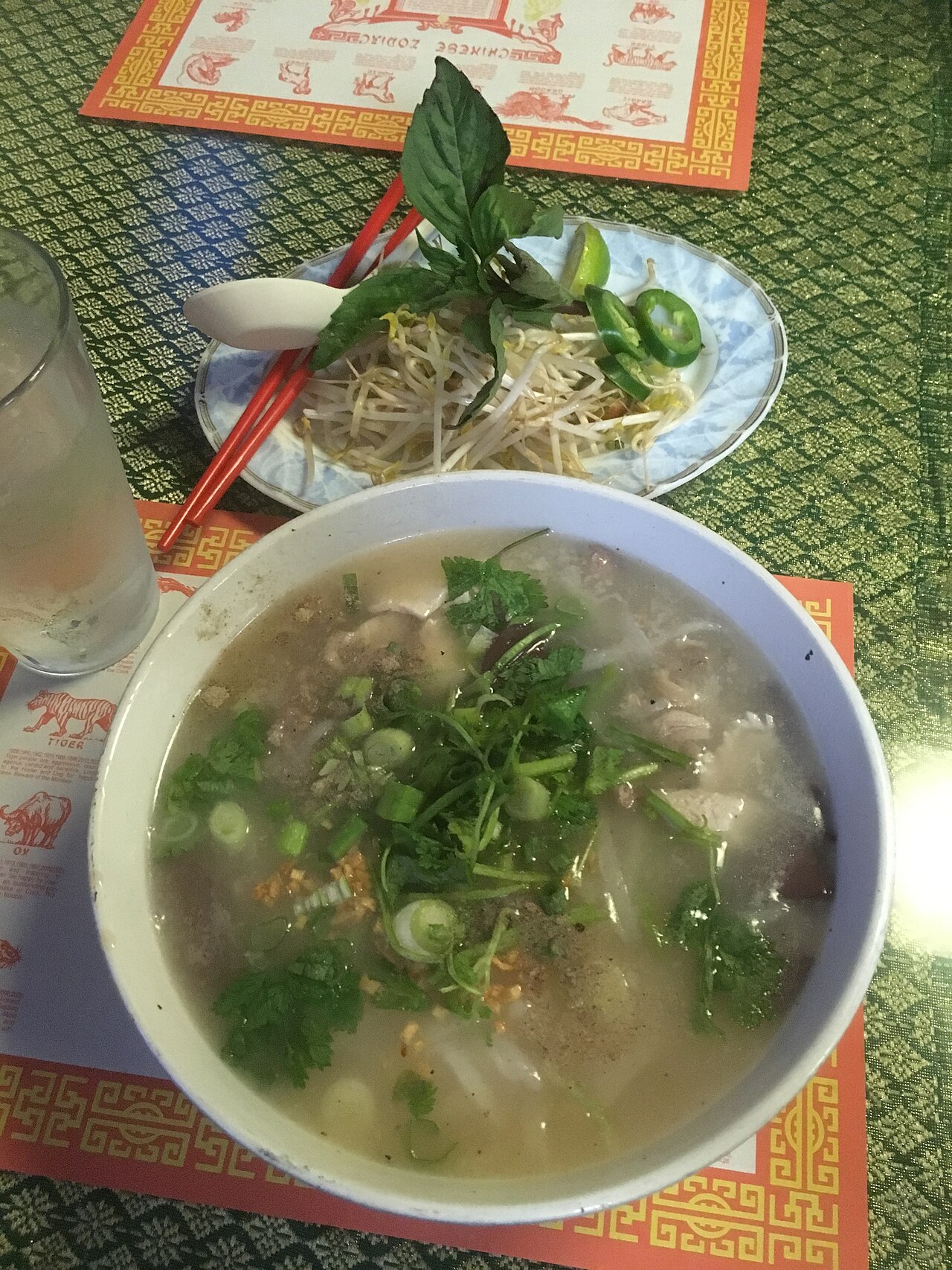
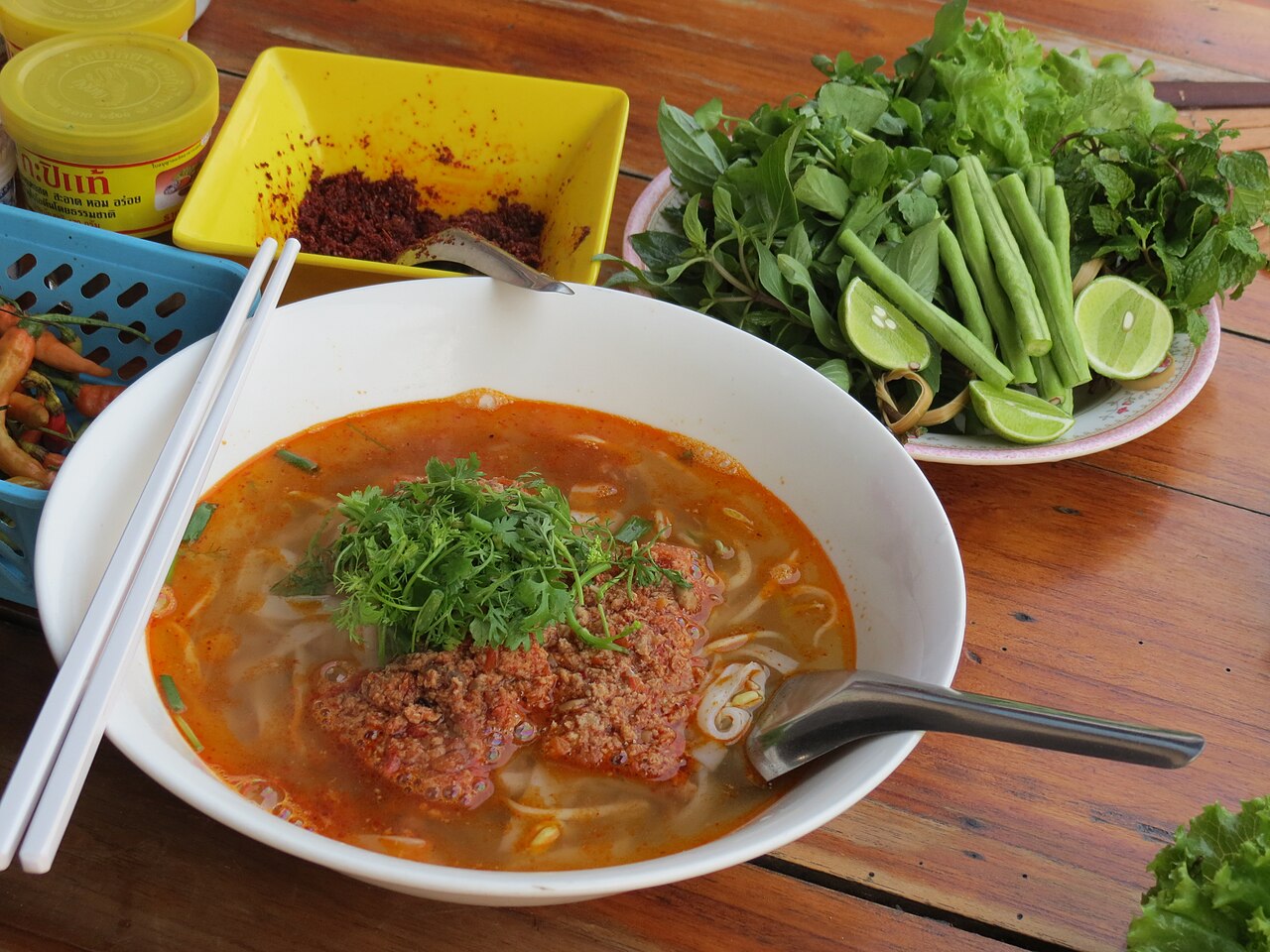
Wide, flat rice noodles in a clear pork or chicken broth, topped with a rich, spicy sauce of minced pork, tomatoes, garlic and fermented bean paste, and served with a plate of fresh herbs and greens.
Lao khao soi is quite different from the better-known khao soi of northern Thailand, which is a coconut curry soup with egg noodles.
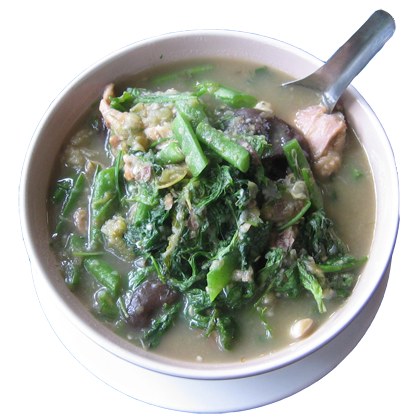
A thick, peppery stew of meat, often buffalo, beef or chicken, with eggplant, wood ear mushrooms, long beans, dill and lemongrass. A little sticky rice thickens the broth, and slices of sakhaan, a local 'chilli wood', make the tongue tingle pleasantly.
In the old royal recipe from Luang Prabang, or lam was made with deer meat.
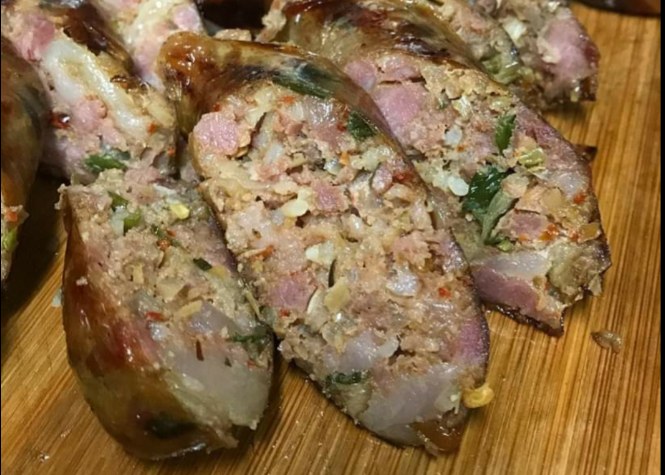
A coarse, juicy pork sausage packed with lemongrass, galangal, lime leaves, garlic, shallots and chilli, then grilled slowly over charcoal. It is eaten in slices with sticky rice and a chilli dip, or as a snack with a cold beer.
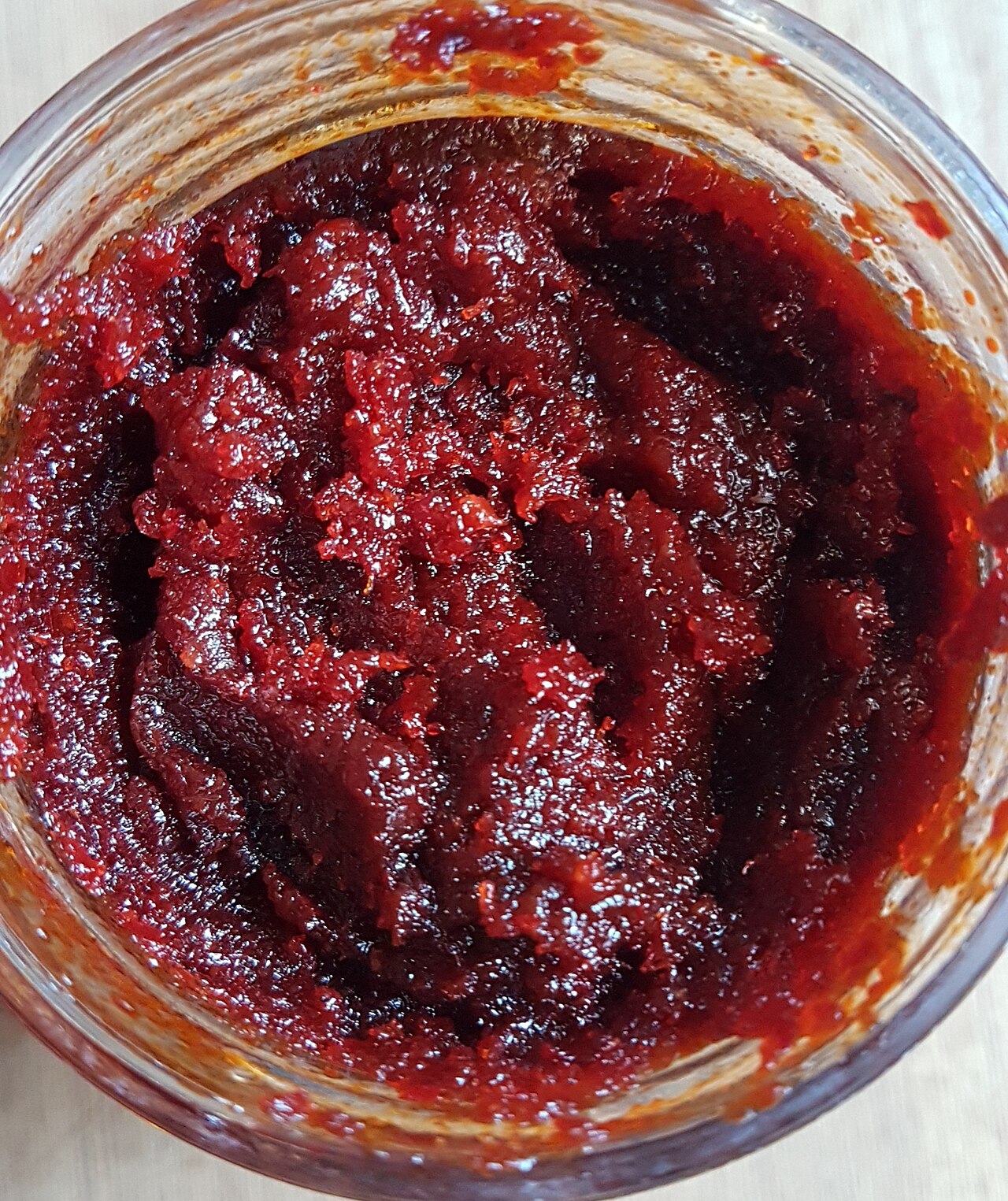
A sweet, smoky and spicy chilli paste made from roasted dried chillies, garlic, shallots, galangal and fish sauce, with thin strips of dried buffalo or pork skin for a chewy texture. It is eaten with sticky rice, raw vegetables and crispy river weed.
Jeow bong keeps for a long time without spoiling, so families make it in big jars.
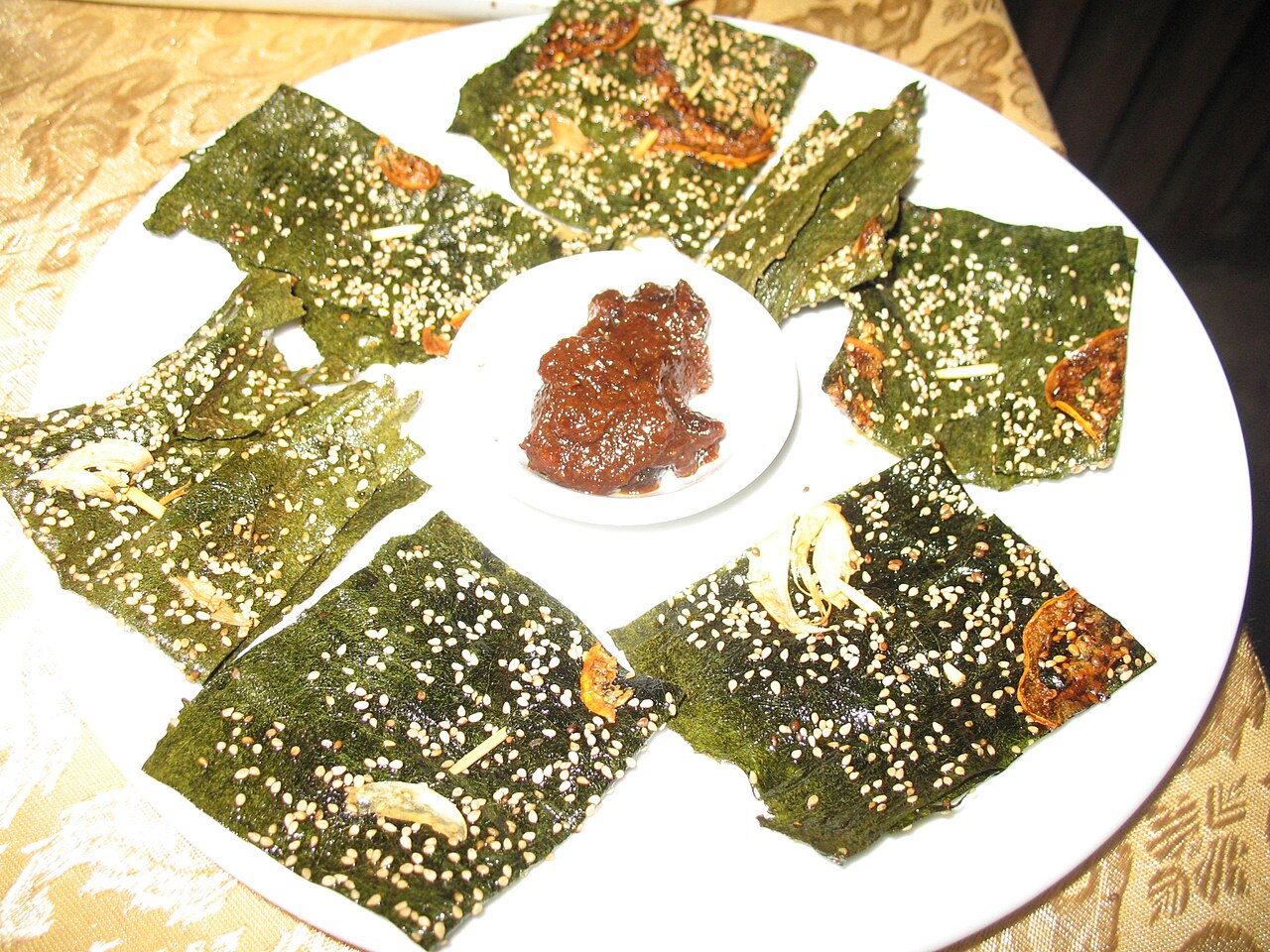
Thin green sheets of river algae, collected from rivers in northern Laos in the dry season, pressed with garlic, tomato and sesame seeds and dried in the sun. They are quickly fried until crisp and eaten like crisps, often dipped in jeow bong.
Kaipen looks and tastes a little like Japanese nori, but it comes from fresh water, not the sea.
Vientiane, said to come from the river village of Tha Deua
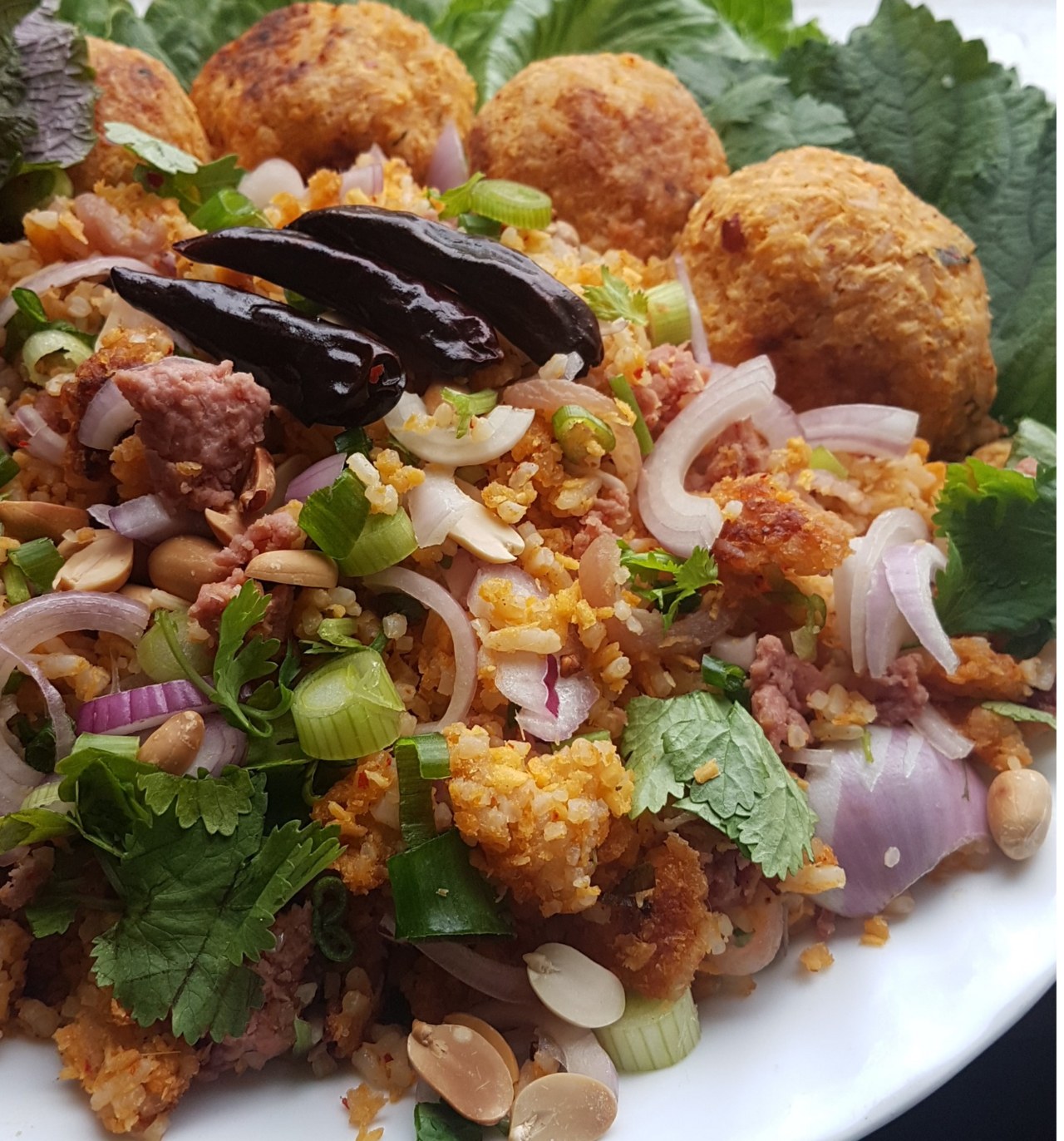
Balls of rice seasoned with red curry paste and coconut are deep-fried until crisp, then broken up and tossed with sour fermented pork sausage, peanuts, shallots, lime juice, fish sauce and herbs. It is eaten wrapped in lettuce leaves with extra herbs and dried chillies.
It is a favourite party dish, served on big trays for everyone to wrap their own.
Vientiane and the Mekong towns, from French colonial times
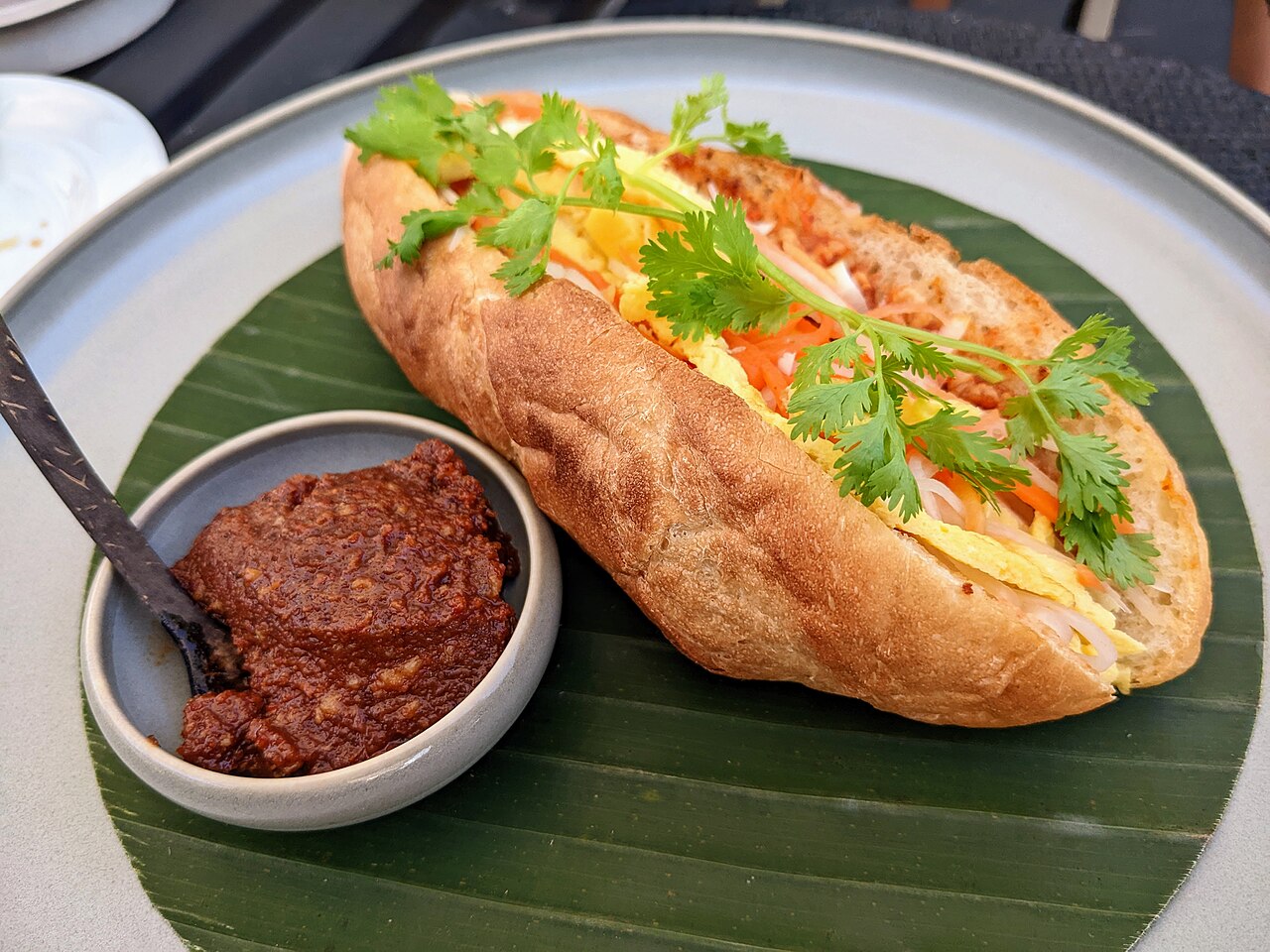
A crusty baguette filled with pork pâté, cold meats, pickled vegetables, cucumber, fresh herbs and a little chilli sauce, sold from street stalls for breakfast and lunch. The same baguettes are also eaten with a morning coffee.
In Lao, khao jee is the word for this French-style bread, and also for grilled sticky rice cakes brushed with egg.
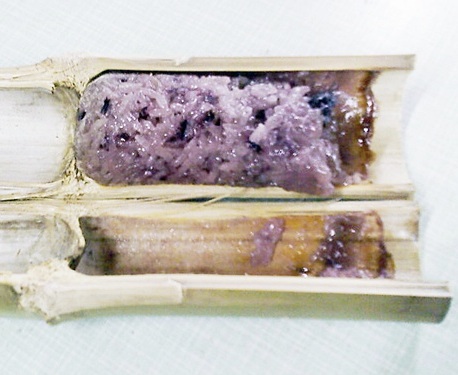
Sticky rice mixed with coconut cream, a little sugar and beans, packed into a length of bamboo and roasted slowly over a fire. You peel back the bamboo to eat the soft, sweet rice inside. It is often sold together with grilled chicken, ping kai.
Lao families have long made khao lam for festivals and as an offering to monks.
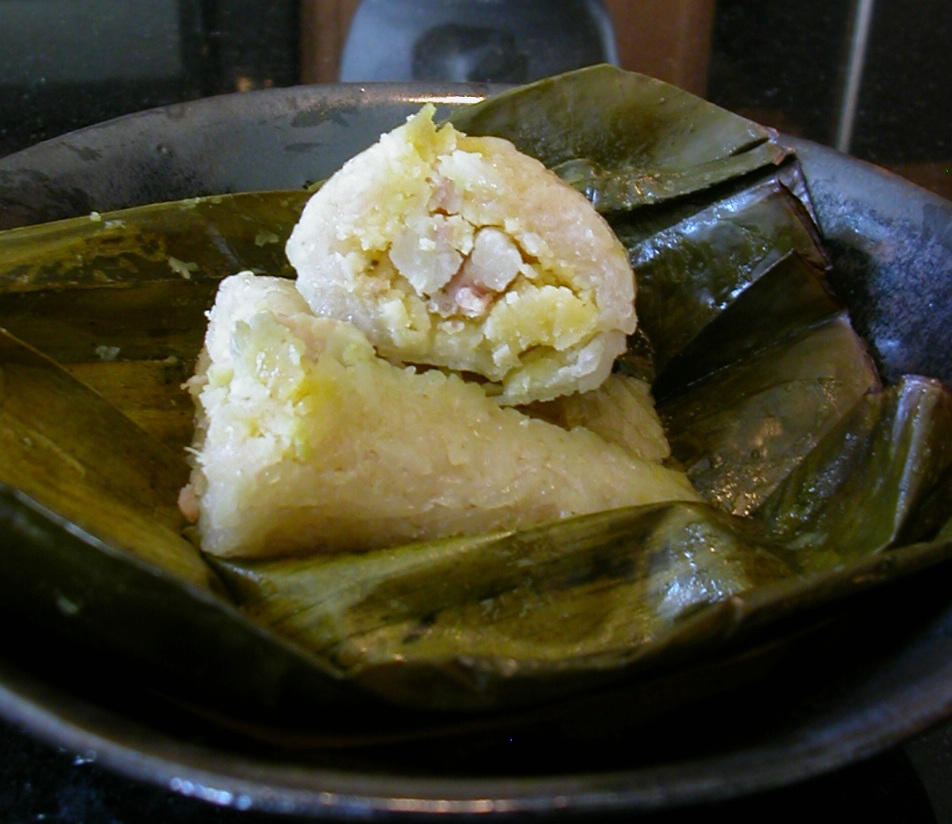
Small parcels of sticky rice cooked with coconut milk, wrapped around a piece of banana, sometimes with black beans, then folded into banana leaves and steamed. There are also savoury versions filled with pork and mung beans.
Khao tom is offered at the baci ceremony, which is held for weddings, births, journeys and the Lao New Year.
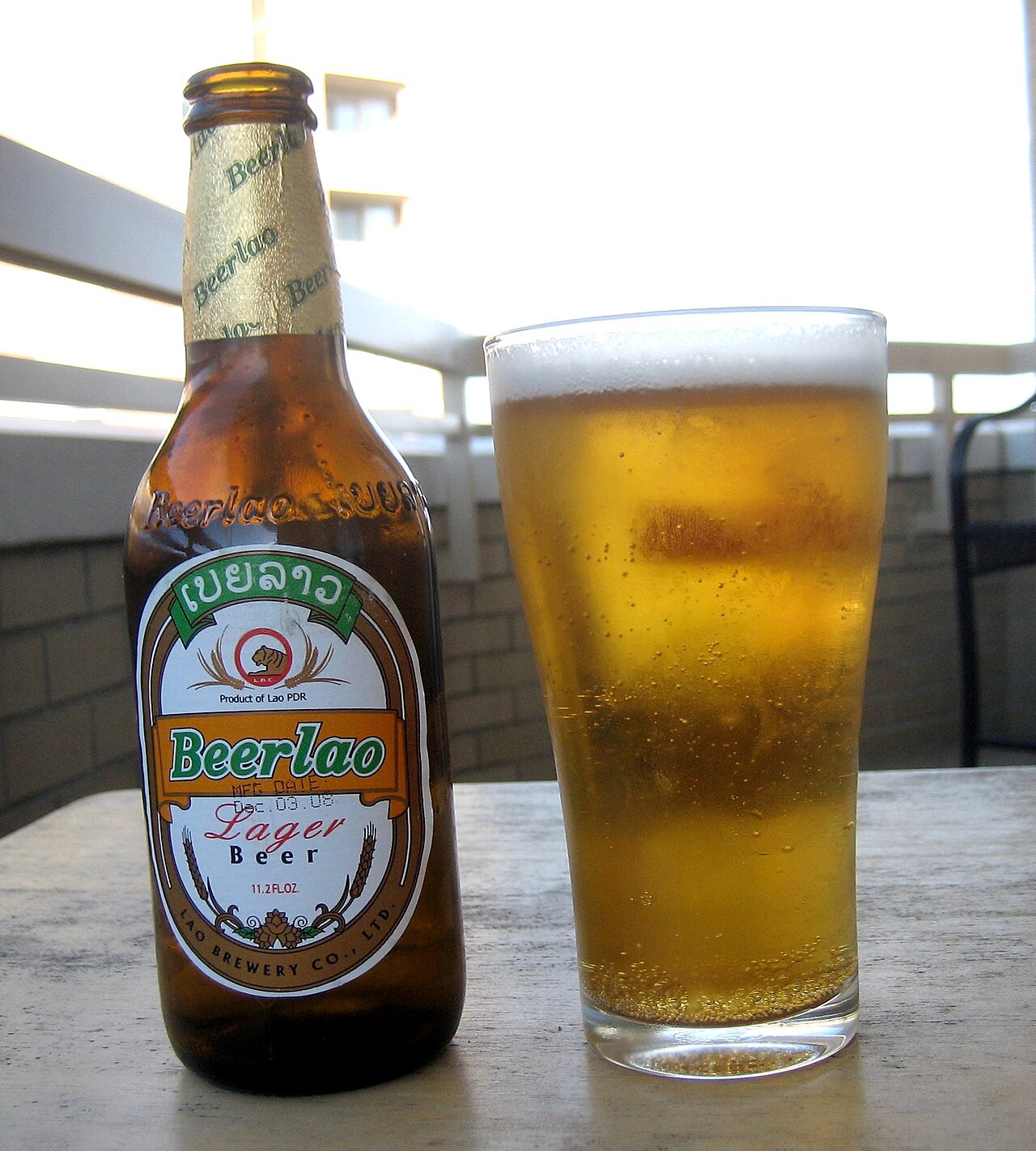
A light, crisp lager brewed with locally grown jasmine rice, sold in big 640 ml bottles with a yellow label and a tiger's head. It is found in almost every restaurant in the country and is now sold in many other countries too.
The Lao Brewery Company also makes Beerlao Dark, newer beers such as Beerlao White and Beerlao IPA, and Tiger Head, the bottled drinking water sold all over the country.
At the table in Laos
Sticky rice is eaten with the fingers of the right hand: pinch off a small piece, roll it into a ball and use it to pick up food or dip into sauces.
Dishes are placed in the middle for everyone to share, and the soup is sipped all through the meal rather than served first.
When you have finished eating, close the lid of your sticky rice basket.
A good host always cooks far more than the guests can eat. Running out of food would be embarrassing, so do not worry about leaving some.
Raw herbs and vegetables come with most meals. They cool the mouth when a dish is very hot.