A Cambodian meal is not served in courses. Rice comes with everything, and a sour soup, a salty or fried fish and some vegetables are set out together, so each person balances sour, salty, sweet and bitter by combining them. Fish from the Mekong and the Tonlé Sap is eaten two or three times a day, and prahok, a fermented fish paste, seasons many dishes. Kroeung, a fresh paste of lemongrass, galangal, garlic, shallots, turmeric and kaffir lime, gives curries and soups their scent. Compared with Thai food, Cambodian dishes usually use less chilli and sugar and more aromatic herbs, and chilli sauces are on the table for those who want heat. French rule left baguettes and coffee with condensed milk, and Chinese cooks brought noodles and stir-frying.
Across Cambodia, believed to date back to the royal kitchens of the Khmer Empire
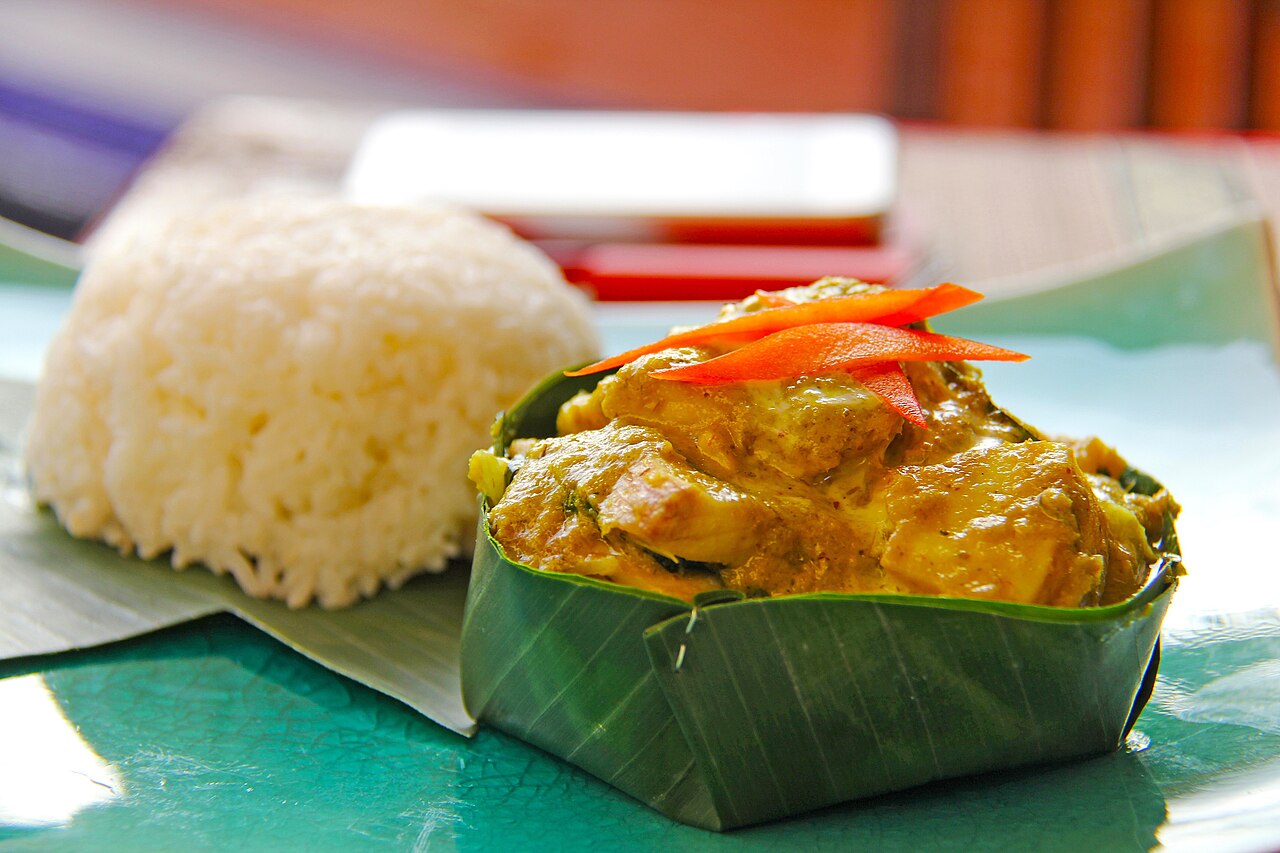
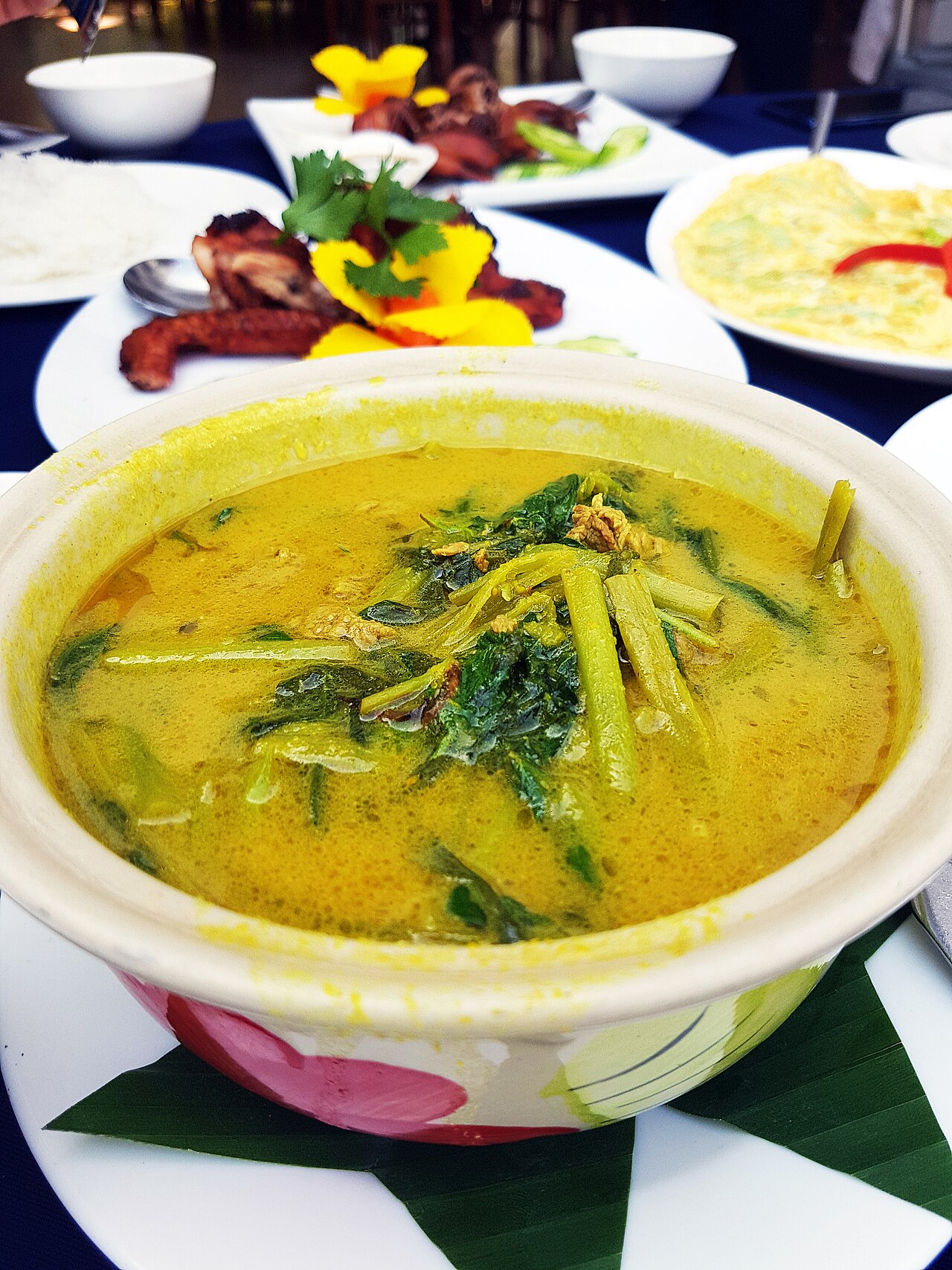
Pieces of freshwater fish in a mixture of kroeung paste, coconut milk and egg, steamed in a cup of banana leaves until it sets to a soft, mousse-like curry. It is topped with a spoon of thick coconut cream and strips of kaffir lime leaf and eaten with rice. Many see it as Cambodia's national dish.
The fish is traditionally laid on leaves of the noni tree (great morinda) inside the banana-leaf cup. Outside Cambodia, cooks often use spinach or chard instead.
All of Cambodia, with regional versions in Siem Reap and Kampot
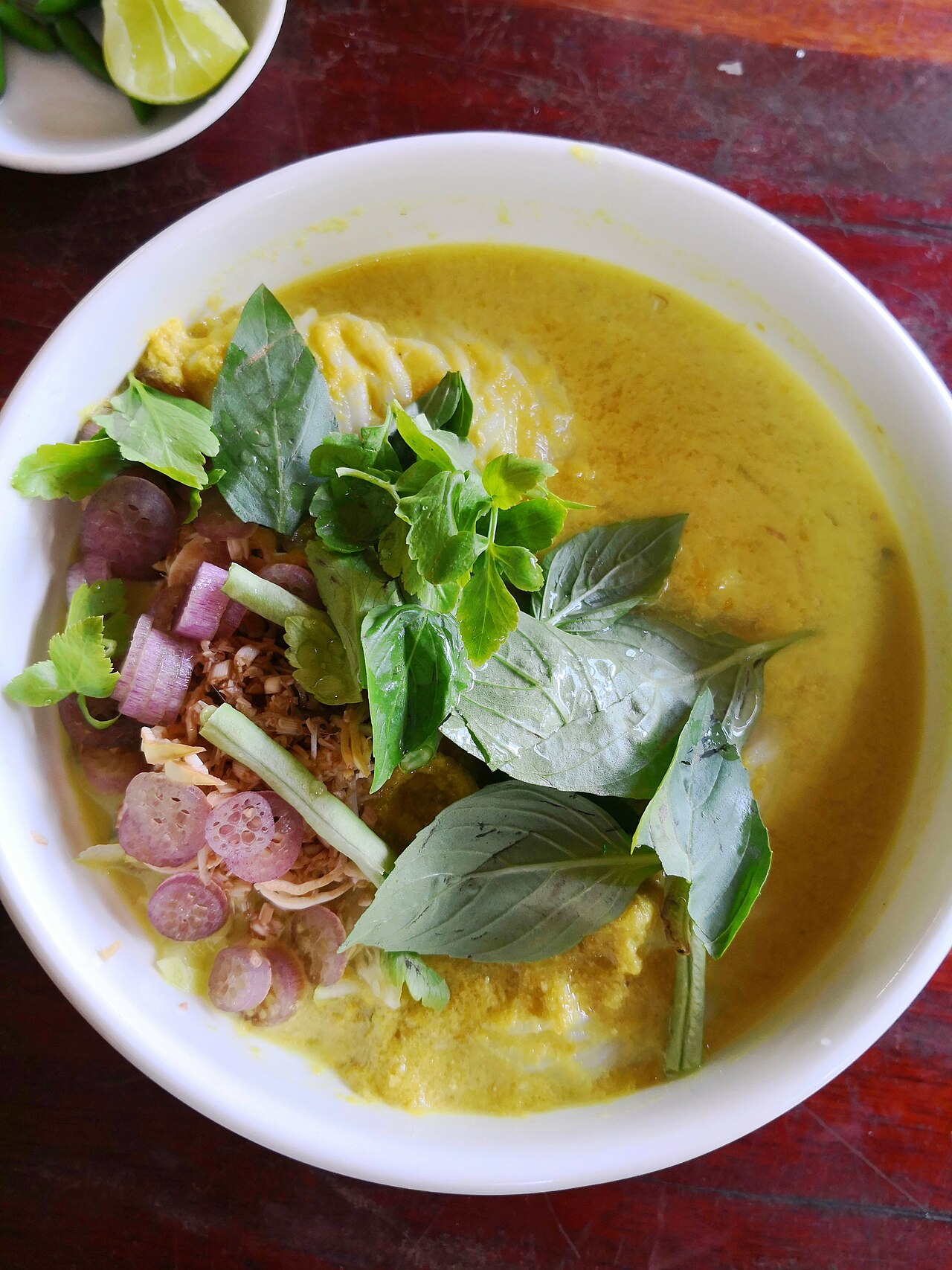
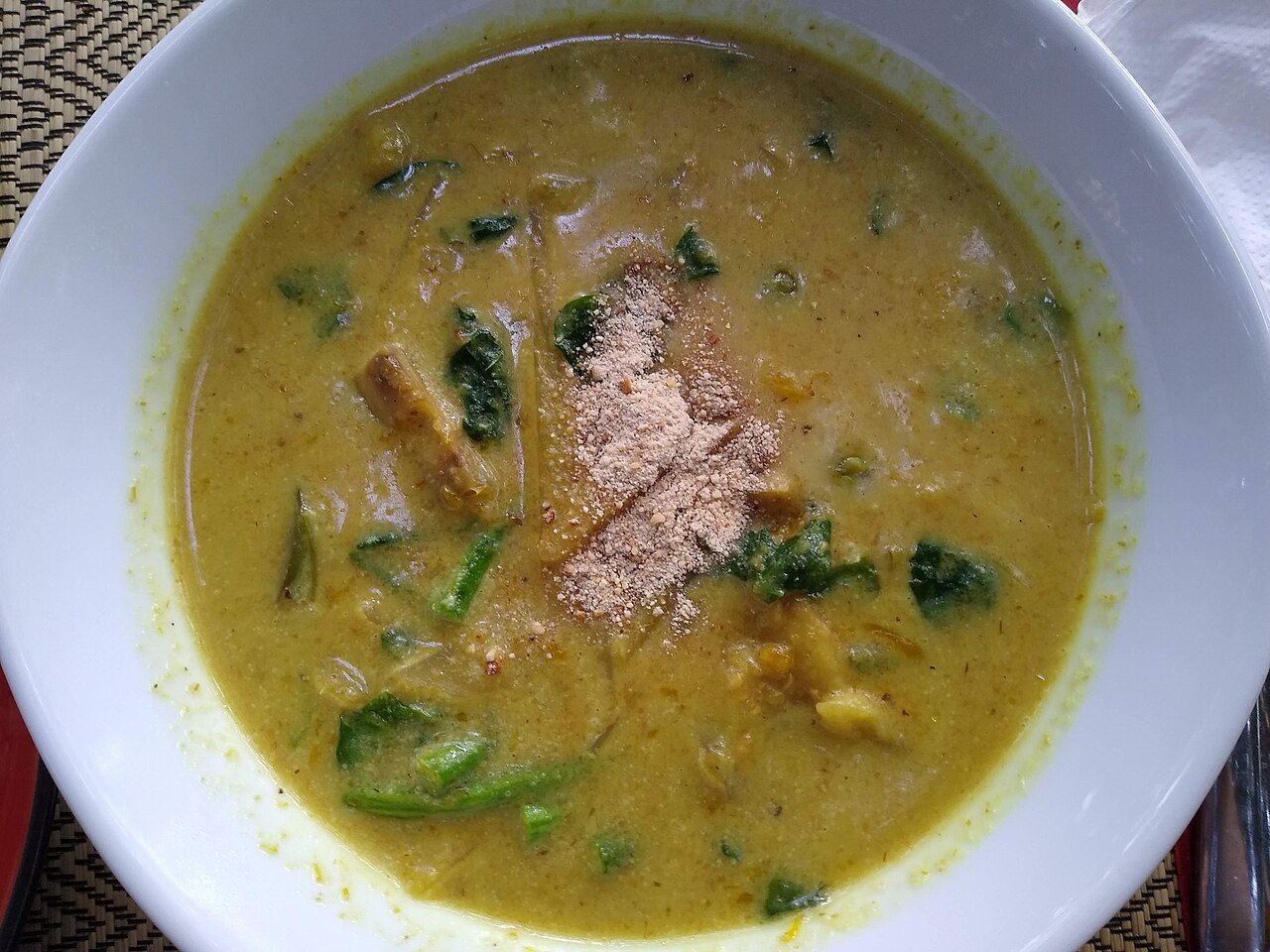
Soft, lightly fermented rice noodles, freshly made each morning, served cold with a warm green fish curry of lemongrass, turmeric, prahok and coconut milk. Diners heap fresh herbs, banana flower, cucumber and bean sprouts on top. It is the classic Cambodian breakfast, sold by women carrying baskets or at market stalls.
The noodles are made by soaking and grinding rice, pressing the dough and squeezing it through small holes straight into boiling water.
Phnom Penh and all of Cambodia, from Teochew Chinese cooking
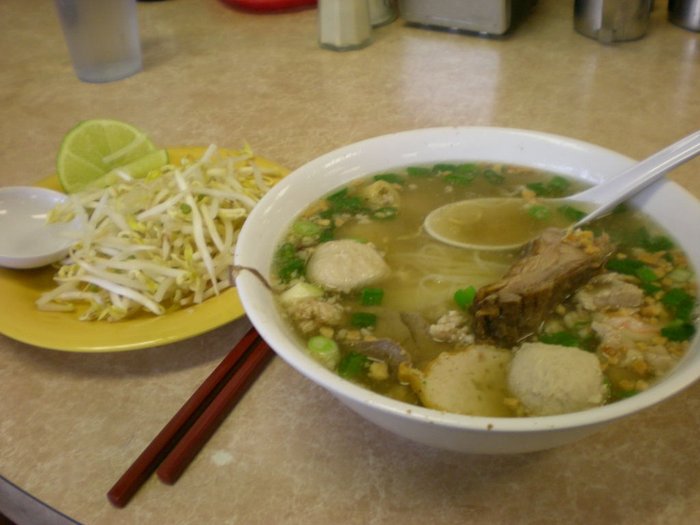
A clear pork-bone broth, sweetened a little with dried squid, poured over thin rice noodles and topped with minced pork, slices of pork, shrimp or offal. At the table each person adds lime, chilli, garlic oil, bean sprouts and herbs. It is one of the most popular breakfasts in the country.
The dish is so linked to the capital that in Vietnam it is called hủ tiếu Nam Vang, 'Phnom Penh noodle soup'.
All of Cambodia, cooked for weddings, festivals and family celebrations
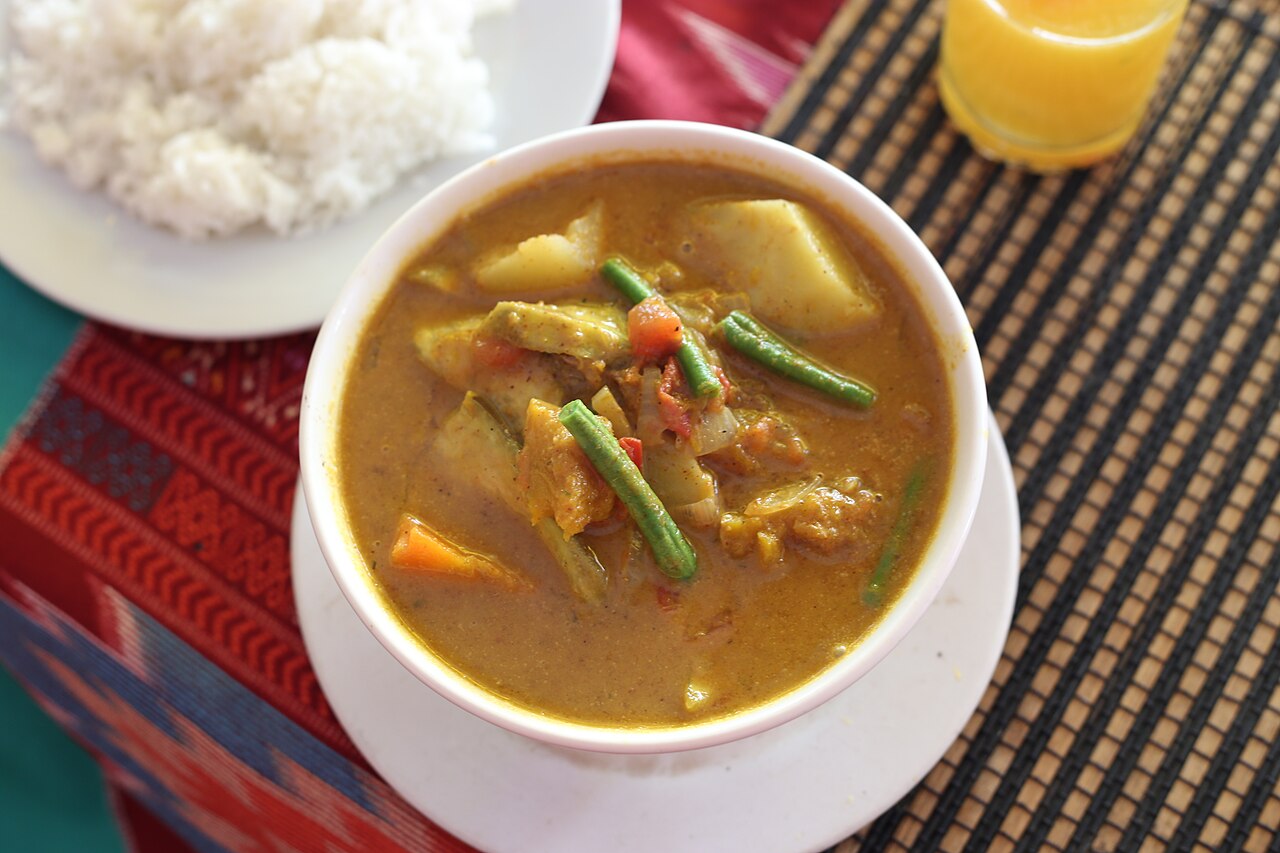
A mild, fragrant curry of chicken or beef simmered in coconut milk with red kroeung paste, lemongrass and spices, with chunks of sweet potato, potato, carrot, onion and long beans. It is eaten with rice, with fresh rice noodles, or with a crusty baguette for dipping, a habit from French times.
The Khmer word kari is believed to come from Tamil, and the sweet potato is what sets Cambodian curries apart from other Asian curries. In the countryside curries are a treat, kept for holidays because spices and fresh coconut milk take time and money.
Borrowed from Vietnam's bò lúc lắc; in Cambodia since French colonial times
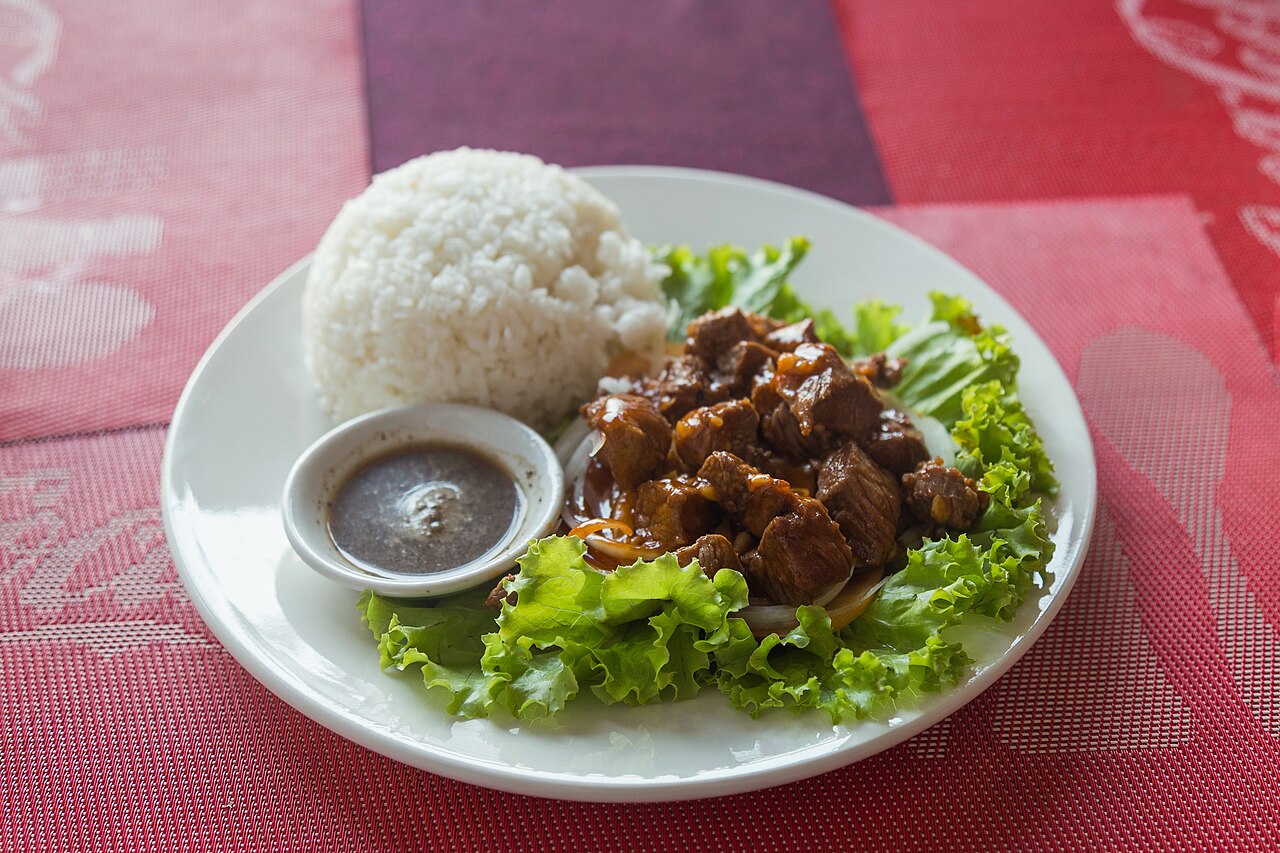
Strips of beef stir-fried in a dark, glossy sauce of oyster sauce, soy sauce and a little sugar, served on lettuce, tomato and onion with rice. The key is the dip: lime juice with salt and plenty of black pepper, ideally from Kampot. Some cafés top it with a fried egg.
The first Cambodian version used good steak seared in French butter. The everyday version today uses cheaper cuts and Chinese oyster sauce.
A thick green soup of kroeung, prahok and toasted ground rice, with catfish, pork or chicken and a great mix of vegetables and fruit: green papaya, pumpkin, eggplant, long beans, green banana and leaves. It is sometimes called Cambodian ratatouille.
The name means 'stirred soup'. A folk tale says a king named it after watching the cooks stir it without stopping.
Sour soups made tangy with tamarind and filled with fish, chicken, pork or beef and vegetables such as pineapple, tomato, water spinach and lotus stems. A light sour soup is part of almost every family meal.
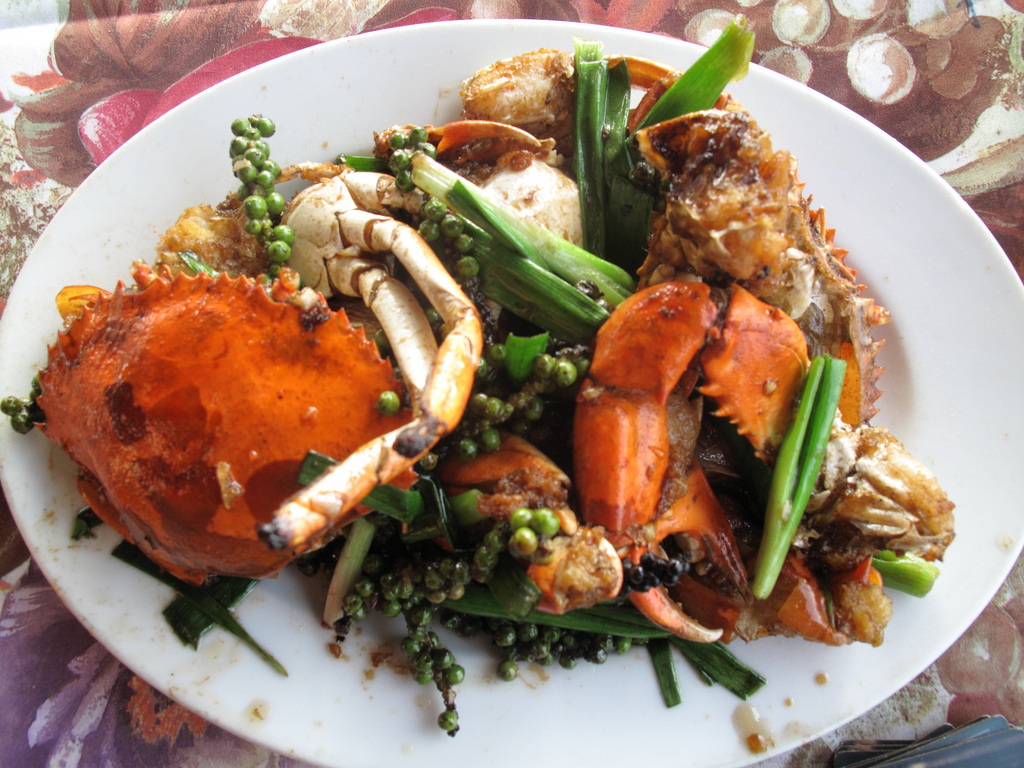
Fresh crabs from the Kep crab market, stir-fried with garlic, spring onion and whole strands of fresh green Kampot peppercorns, which are fragrant and gently hot. It is eaten with the fingers at simple seaside restaurants.
Kampot pepper has been grown in the region since at least the 13th century and has been a protected geographical indication in the European Union since 2016.
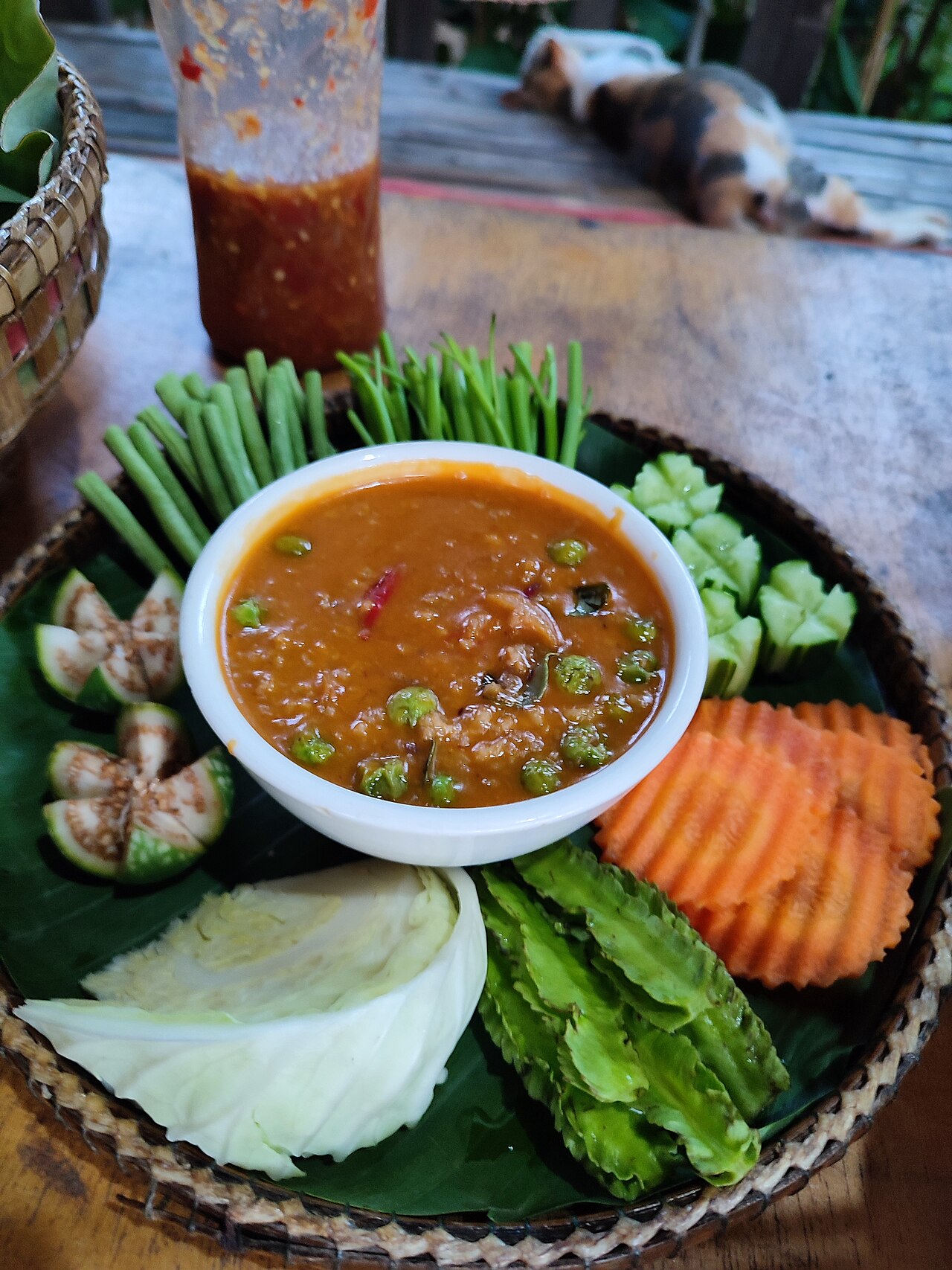
A rich dip of prahok, the fermented fish paste, simmered with minced pork, coconut milk, kroeung and tamarind. It is served with raw and blanched vegetables such as cucumber, long beans, eggplant and cabbage for dipping.
Prahok began as a way to preserve the huge catches of small fish from the Tonlé Sap. Its liquid is skimmed off and used as fish sauce.
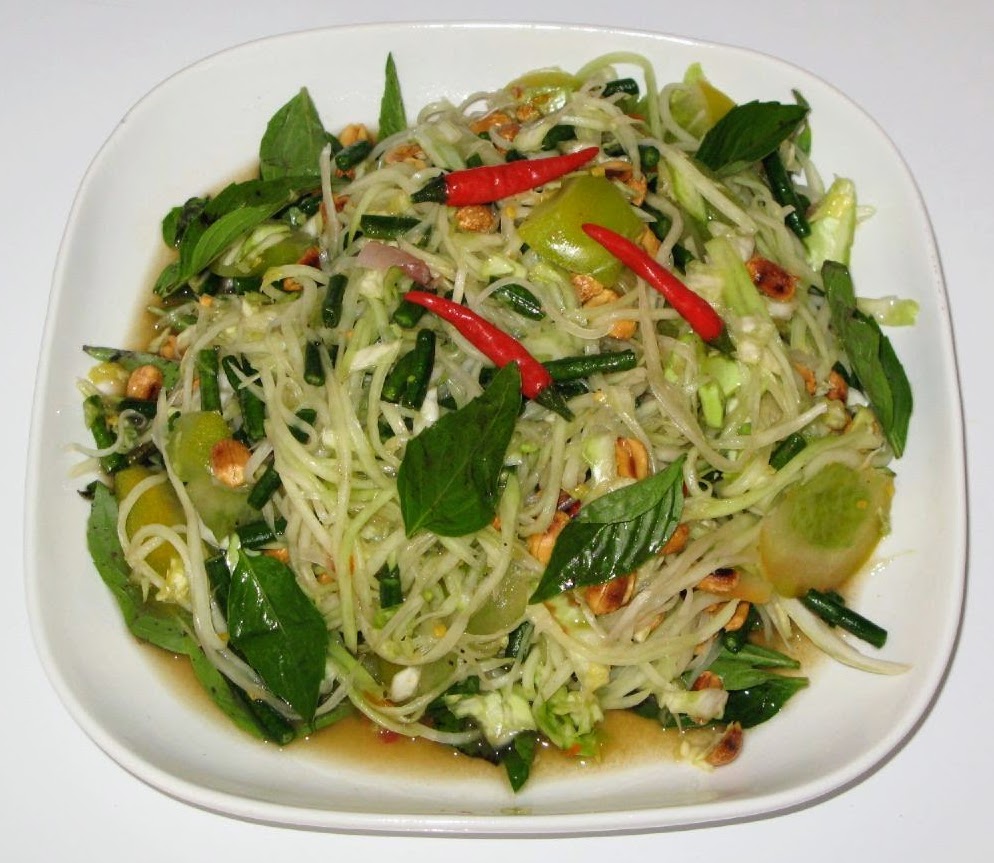
Green papaya salad, pounded in a mortar with garlic, chillies, lime juice, palm sugar, tomatoes, long beans and fish sauce or fermented fish. Many sellers add salted crab or dried shrimp. The name means 'pounded papaya'.
The Khmer word l'hong means papaya, and bok means to pound, which is exactly how the salad is made.
All of Cambodia, famous from Battambang and Kratié provinces
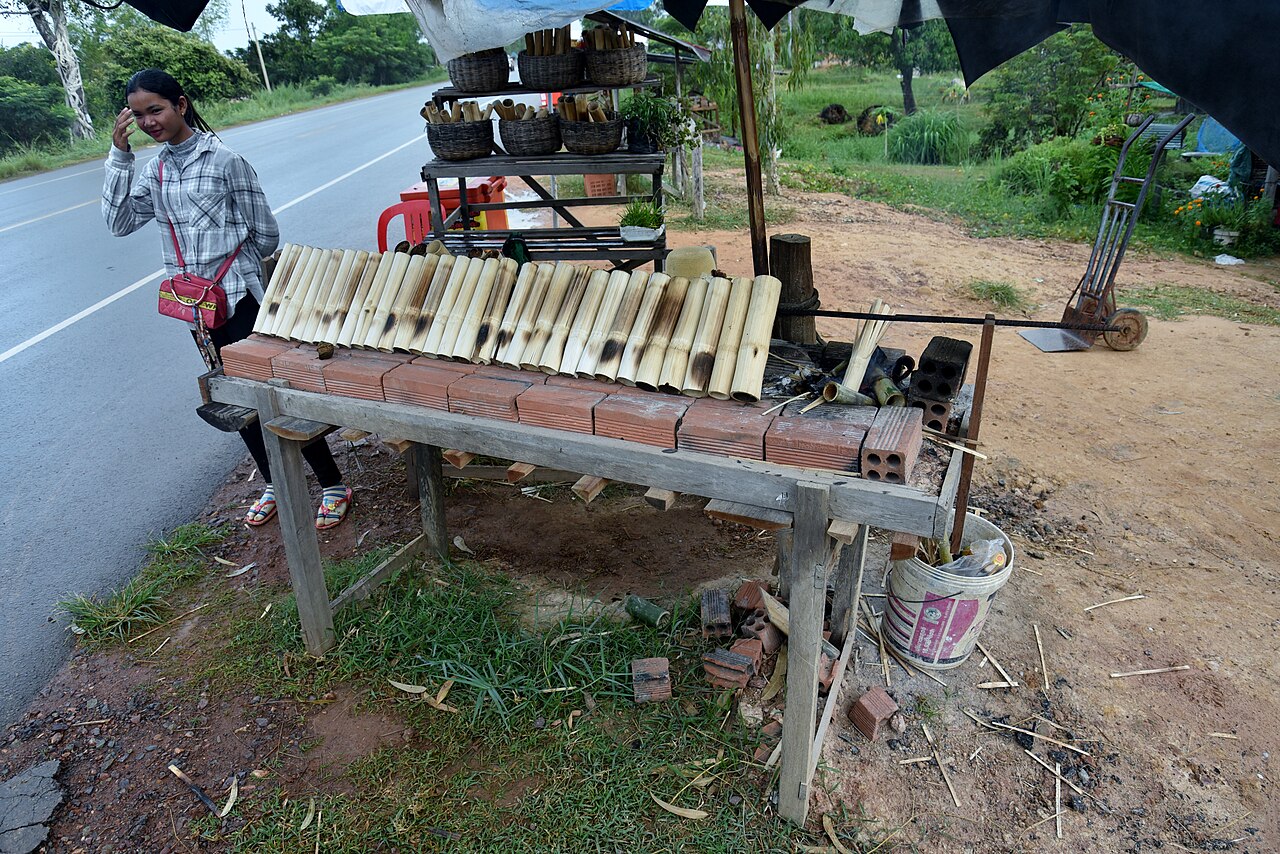
Sticky rice mixed with coconut milk, grated coconut, palm sugar and black-eyed beans, packed into bamboo tubes and roasted over a fire for about an hour and a half. You peel back the charred bamboo to eat the sweet rice inside. Sellers line the roads, especially near Battambang.
Rice has been cooked in bamboo in this region since ancient times, and in the Khmer Empire kralan is said to have served as rations for soldiers.
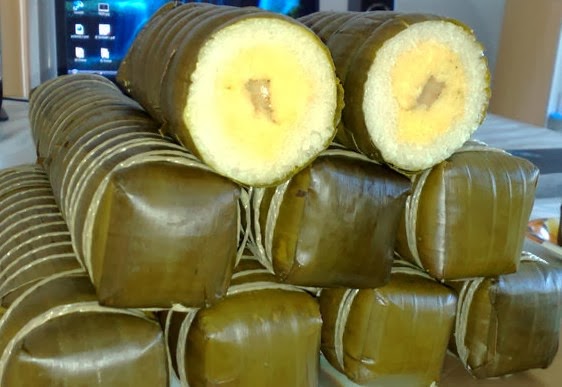
All of Cambodia, made for Khmer New Year and Pchum Ben
A cylinder of sticky rice wrapped in banana leaves and steamed, filled with banana (num ansom chek) or with mung beans and pork. It is made in large batches for the New Year in April and for Pchum Ben, the festival of the ancestors.
In April 2015 cooks in Siem Reap made a num ansom weighing about 4 tonnes, which Guinness World Records recognised as the largest sticky rice cake.
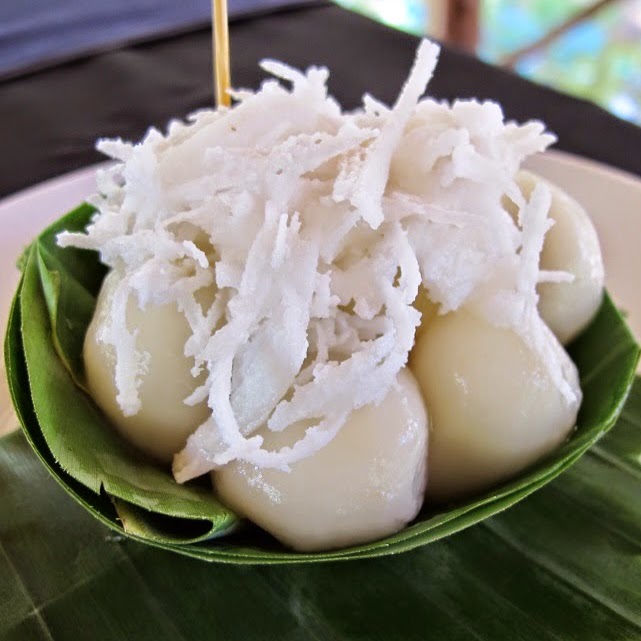
Small balls of glutinous rice dough with a piece of palm sugar hidden inside, boiled until they float and rolled in fresh grated coconut. When you bite one, the melted sugar runs out.
Soft rice cakes like these can be a choking risk for small children and older people, so cut them in half for anyone who has trouble swallowing.
All of Cambodia, sold at markets in Siem Reap and Phnom Penh
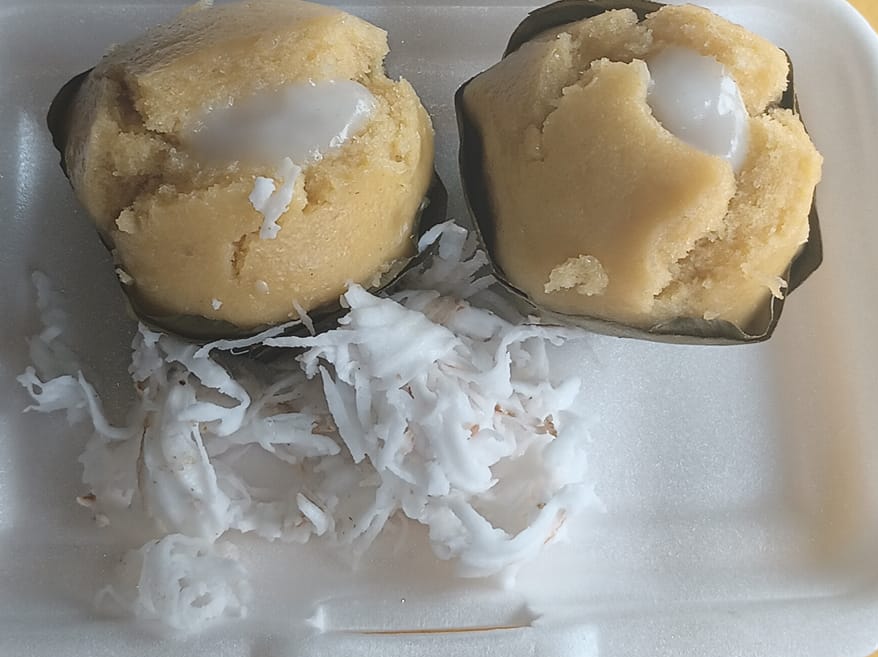
Little steamed cakes of rice flour and palm sugar, left to ferment overnight so they turn light and spongy, then served with coconut cream or grated coconut. They are sold in sets of four to six.
Palm sugar from Kampong Speu Province, used in many Cambodian sweets, is a protected geographical indication in Cambodia and the European Union.
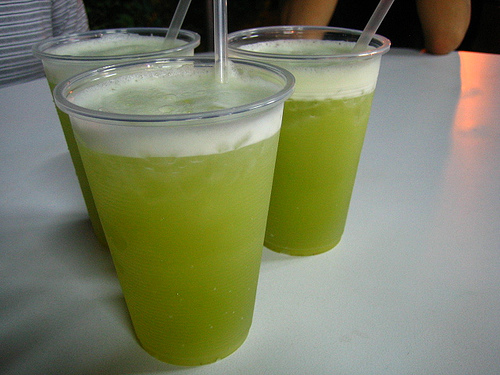
Fresh sugarcane stalks pressed through a roller machine on the spot and poured over ice, sometimes with a squeeze of kumquat or lime to balance the sweetness. It is one of the most popular street drinks on a hot afternoon.
At the table in Cambodia
All the dishes are placed on the table at the same time and shared. Everyone takes rice first and then a little from each dish.
Cambodians eat rice and soups with a spoon, held in the right hand, and use the fork only to push food onto the spoon. Chopsticks are used mainly for noodle soups.
Knives are rarely needed, because food is cut into bite-sized pieces in the kitchen.
It is polite to wait until the oldest person at the table starts eating before you begin.
Chilli, lime, fish sauce and pickles are on the table so that you can season your food to your own taste.