A Vietnamese family meal has no separate courses. Everyone has a bowl of rice, and the other dishes, usually something braised or grilled, a stir-fried vegetable and a soup, are placed in the middle to share. Fresh herbs such as mint, coriander and Thai basil come with almost everything, and nước mắm, fish sauce, is the flavour behind most dishes. Outside the home, many of the best-loved dishes are noodle soups and snacks from street stalls. The north is known for gentle, clear flavours, the centre for spicy, complex dishes from the old royal court at Huế, and the south for sweeter food and plenty of herbs.
Northern Vietnam, early 1900s, around Nam Định and Hanoi
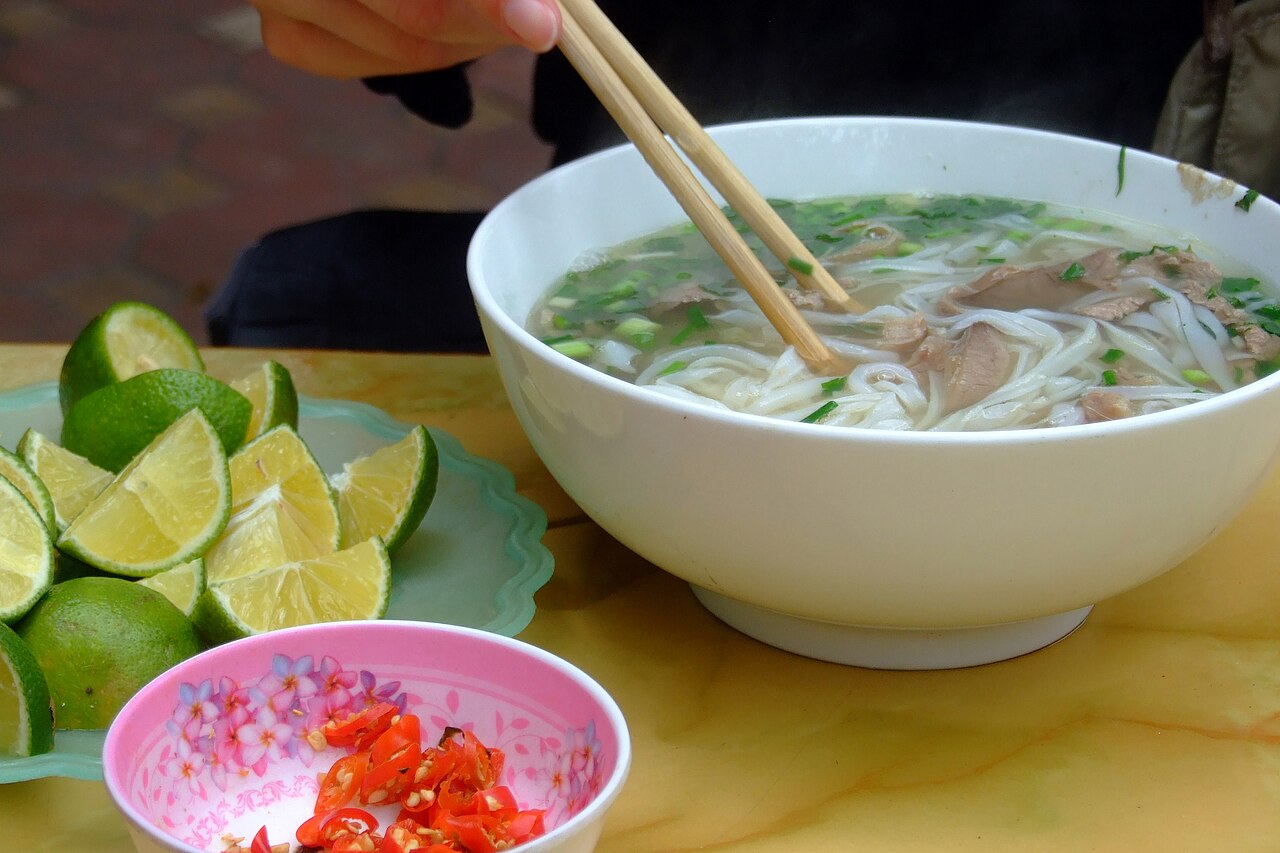
A clear, fragrant beef or chicken broth, simmered with charred onion and ginger, star anise and cinnamon, poured over flat rice noodles and thin slices of meat. Northern (Hanoi) phở has a light, savoury broth with little more than spring onions on top. Southern (Saigon) phở has a sweeter broth and comes with a plate of bean sprouts, Thai basil, lime and chillies, plus hoisin and chilli sauce on the table.
Phở was mostly a northern dish until 1954. After the country was divided, many northerners moved south and took it with them, and it quickly became popular there too.
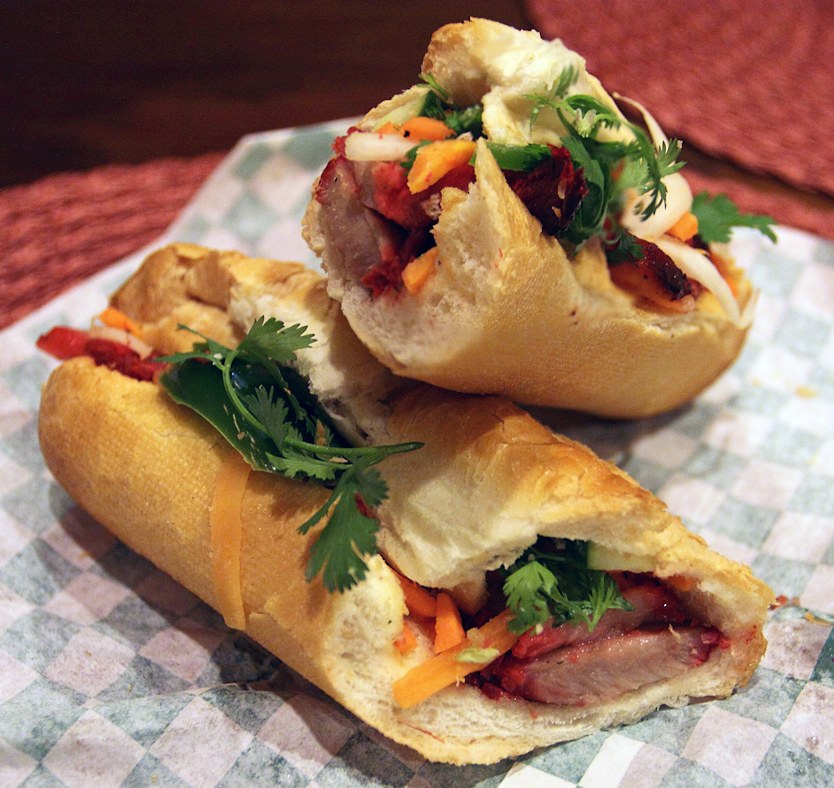
A light, crackly Vietnamese baguette split and filled with pâté, cold pork or Vietnamese sausage, pickled carrot and daikon, cucumber, fresh coriander and chillies.
The French brought the baguette to Vietnam in the 1860s. Vietnamese bakers later mixed in some rice flour, which made the bread lighter. The word bánh mì was added to the Oxford English Dictionary in 2011.
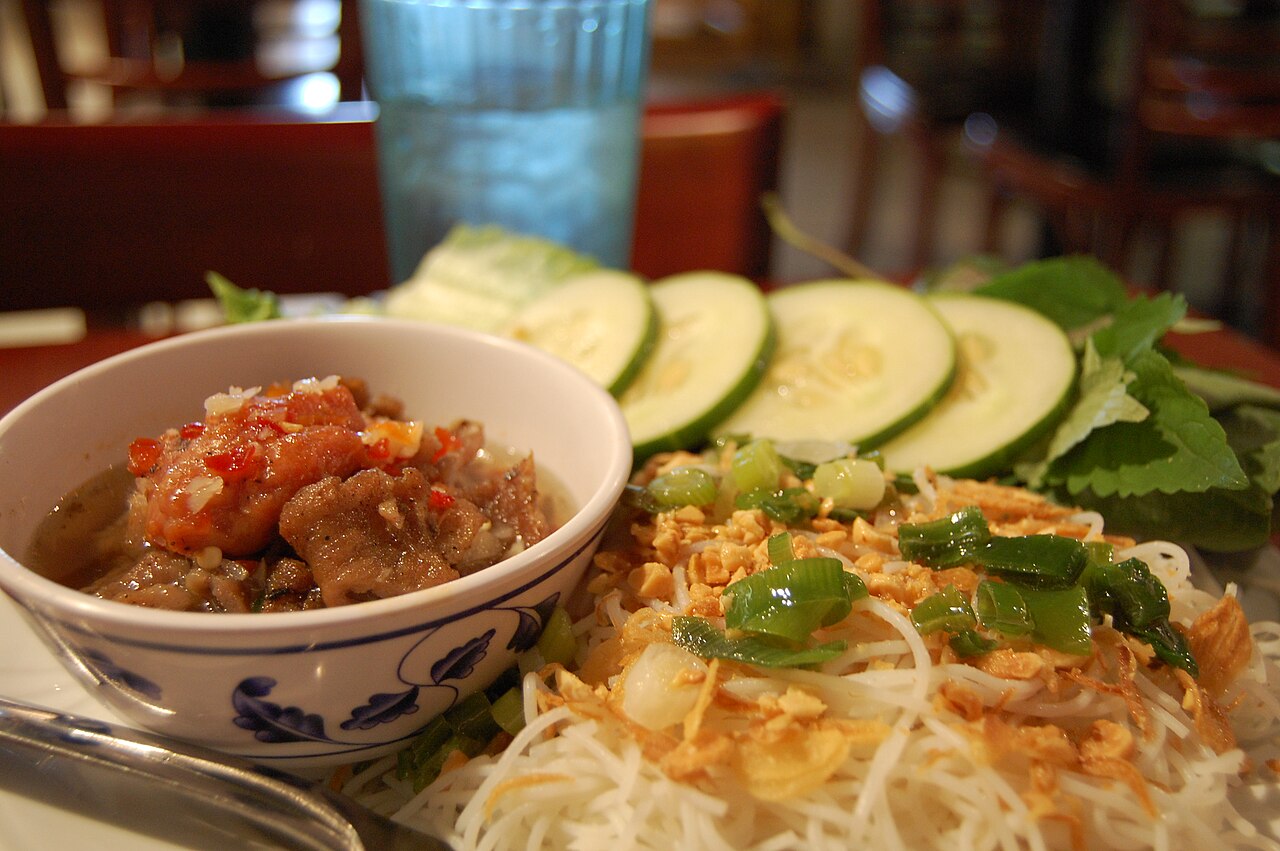
Charcoal-grilled pork patties and slices of pork belly served in a bowl of warm, sweet and sour fish sauce, with cold rice vermicelli and a big plate of herbs and lettuce on the side. You dip the noodles and herbs into the bowl as you eat.
In May 2016 US President Barack Obama and the chef Anthony Bourdain ate bún chả together at a small restaurant in Hanoi, which has been nicknamed 'Bún chả Obama' ever since.
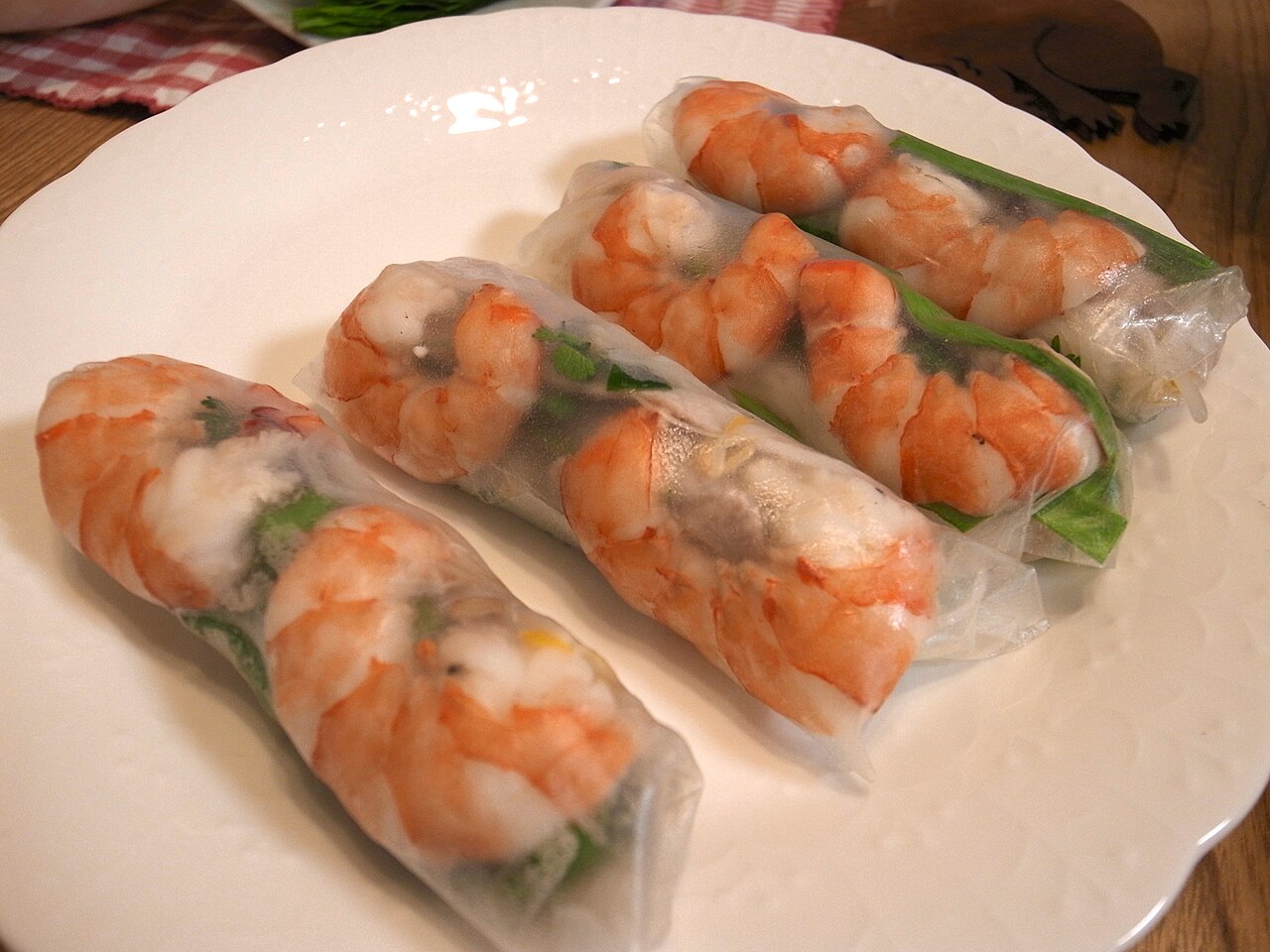
Soft, fresh rolls of moistened rice paper wrapped around cooked prawns, pork, rice vermicelli, lettuce and herbs. They are not fried, and are eaten with a peanut and hoisin sauce or a fish sauce dip.
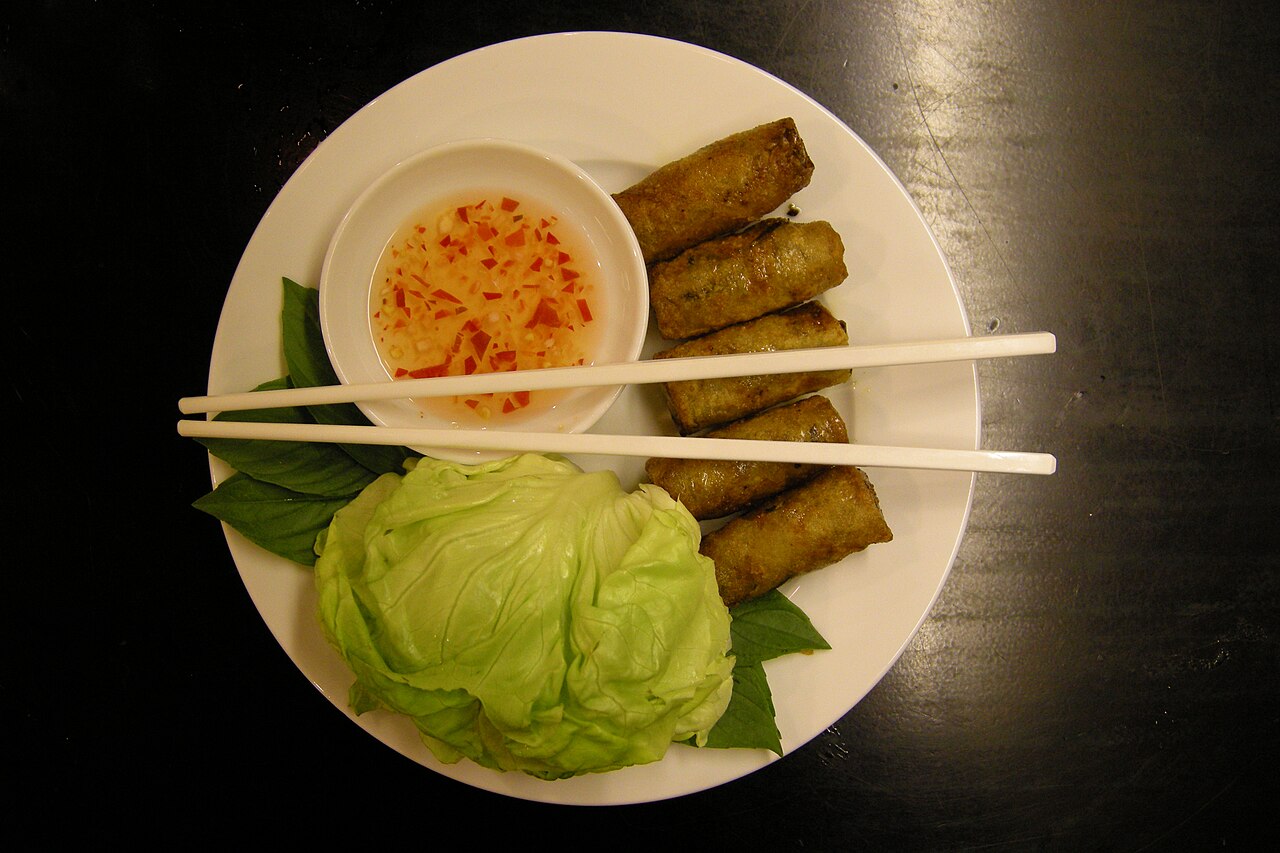
Rice paper rolls filled with seasoned minced pork, mushrooms, glass noodles, carrot and taro, deep-fried until golden and crisp. They are wrapped in lettuce with herbs and dipped in sweet and sour fish sauce.
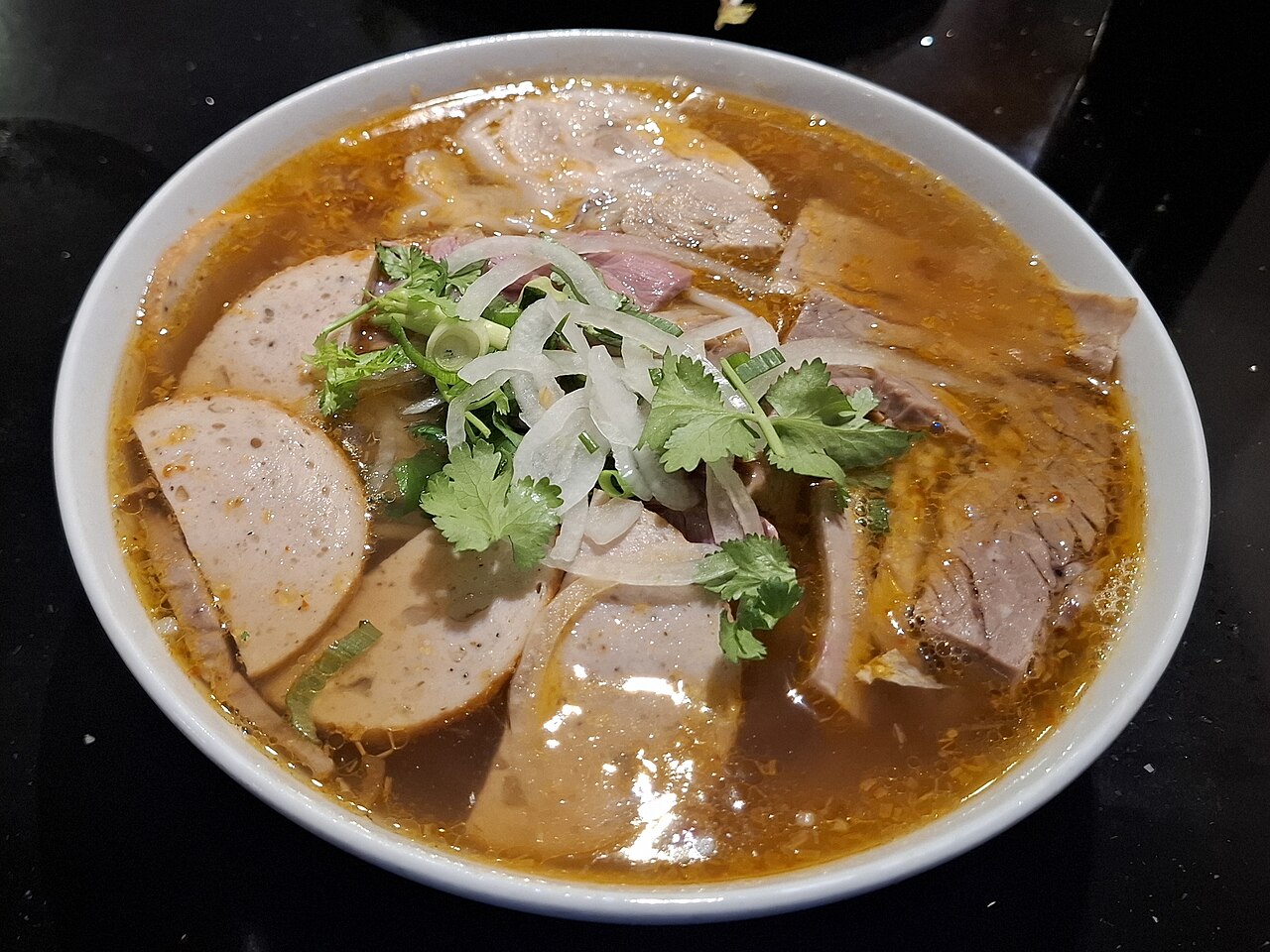
A spicy beef noodle soup flavoured with lemongrass and fermented shrimp paste, with thick, round rice noodles, beef shank, Vietnamese sausage and sometimes pork knuckle, topped with chilli oil.
Outside Huế the dish carries the city's name, to set it apart from the bún bò of Hanoi and Saigon.
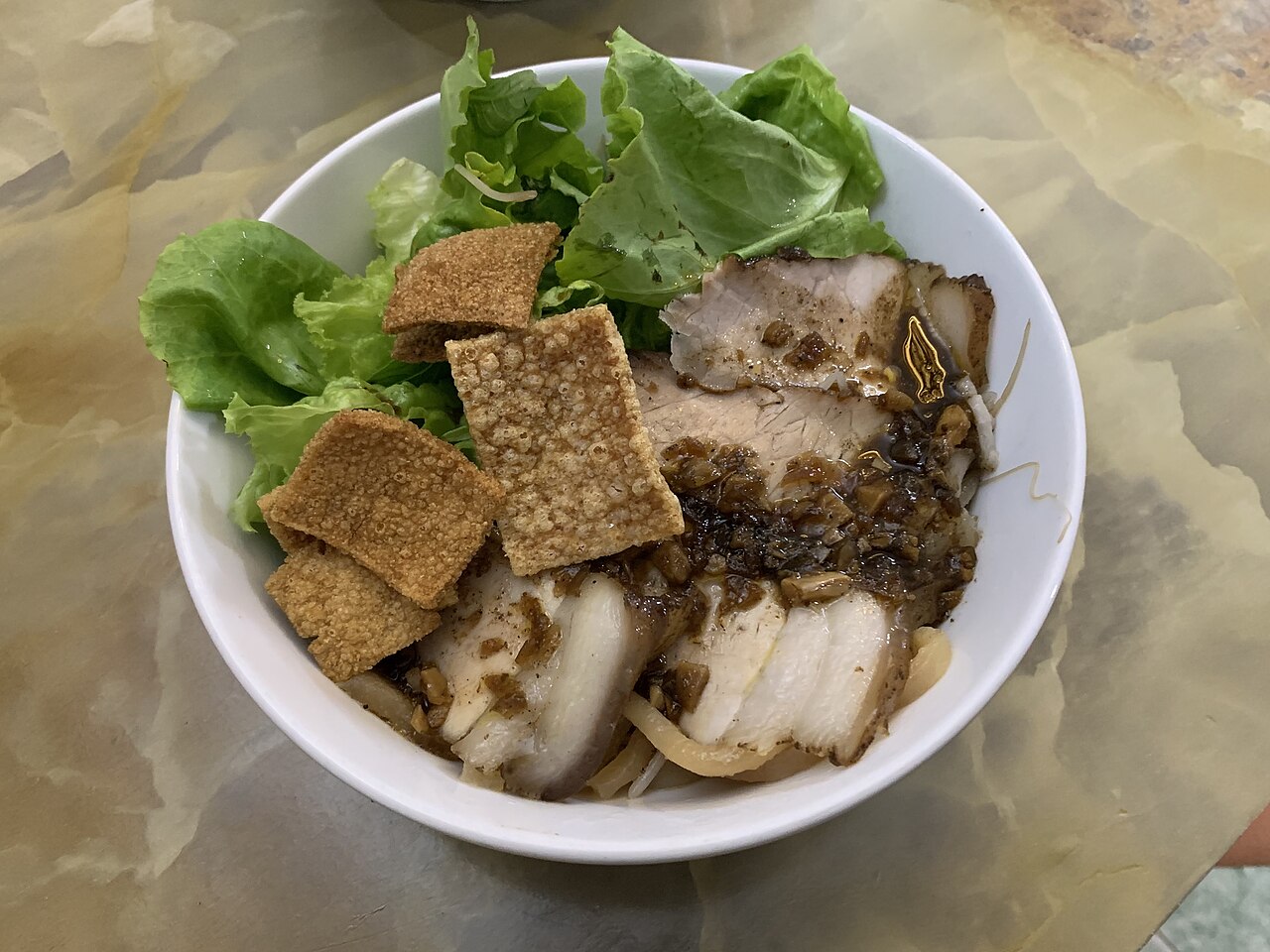
Chewy, yellowish rice noodles served with slices of marinated pork, fresh greens, bean sprouts and herbs, a little rich broth and crunchy squares of fried noodle dough on top.
Local tradition says true cao lầu noodles must be made with water from the ancient Bá Lễ well in Hội An and lye from the ashes of plants from the Cham Islands, which is why it is rarely found anywhere else.
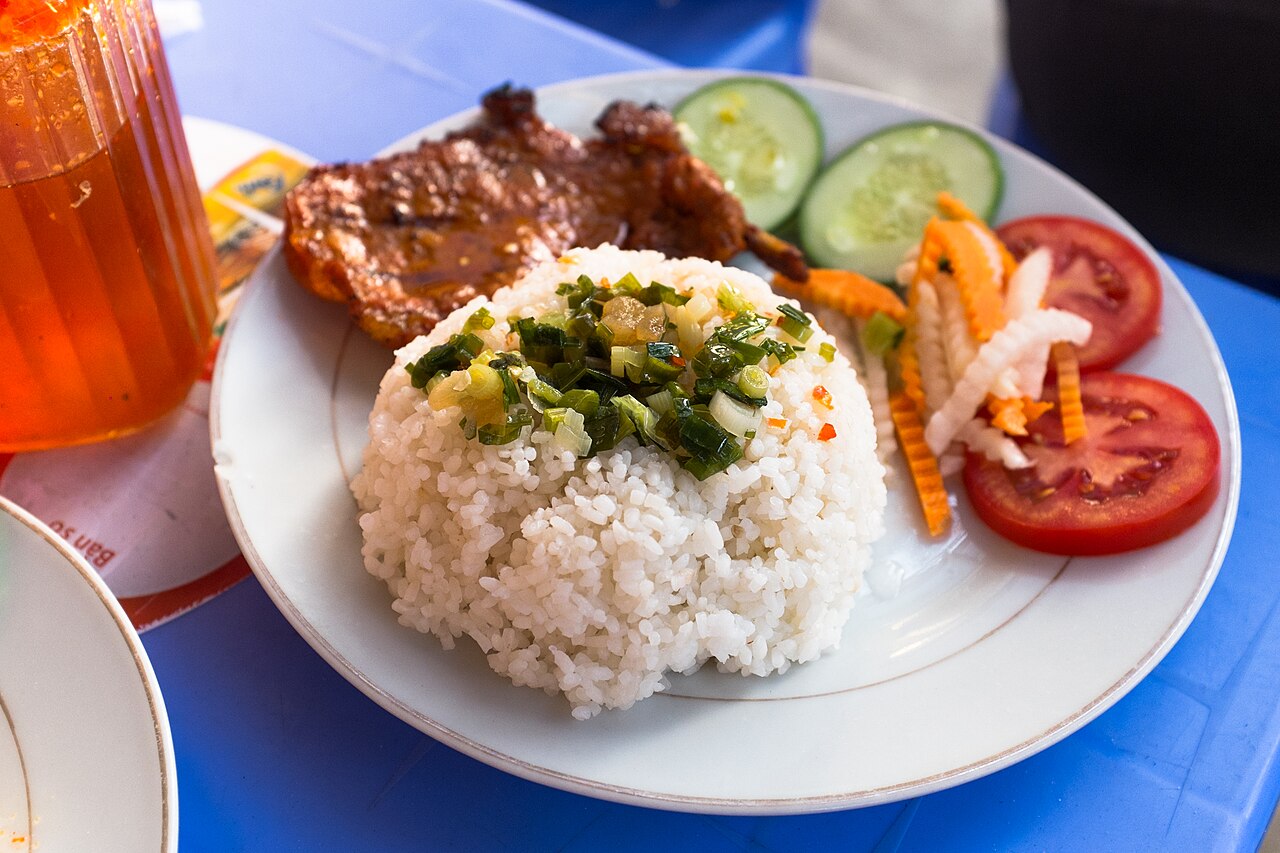
Broken rice grains served with a grilled, lemongrass-marinated pork chop, shredded pork skin, a slice of steamed egg and pork meatloaf, pickles and a small bowl of sweet fish sauce.
Broken rice was once the cheap leftover of rice milling, eaten by poor farmers in bad seasons. Today it is one of the best-loved dishes of Saigon.
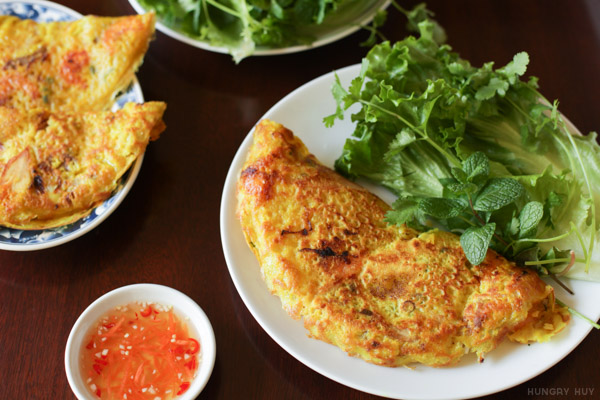
A thin, crispy yellow pancake of rice flour, water and turmeric, filled with pork, prawns and bean sprouts. Pieces are wrapped in lettuce or mustard leaves with herbs and dipped in fish sauce.
The name means 'sizzling cake', after the sound the batter makes when it hits the hot pan.
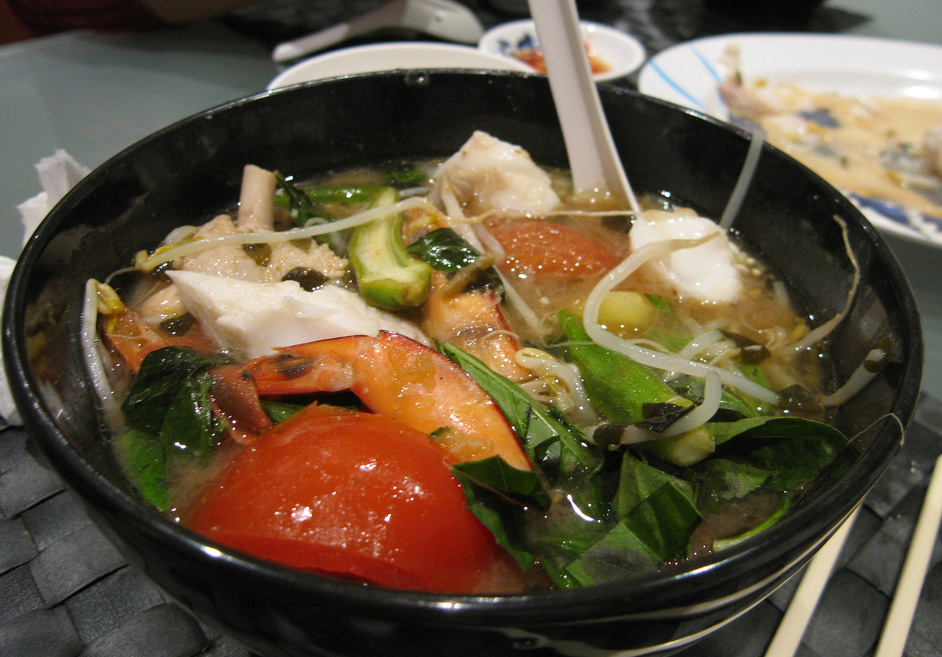
A light sweet and sour soup made with tamarind, fish, pineapple, tomatoes and bean sprouts, finished with fresh herbs and fried garlic. It is eaten with rice as part of a family meal.
Northern Vietnam; made for Tết, the Lunar New Year
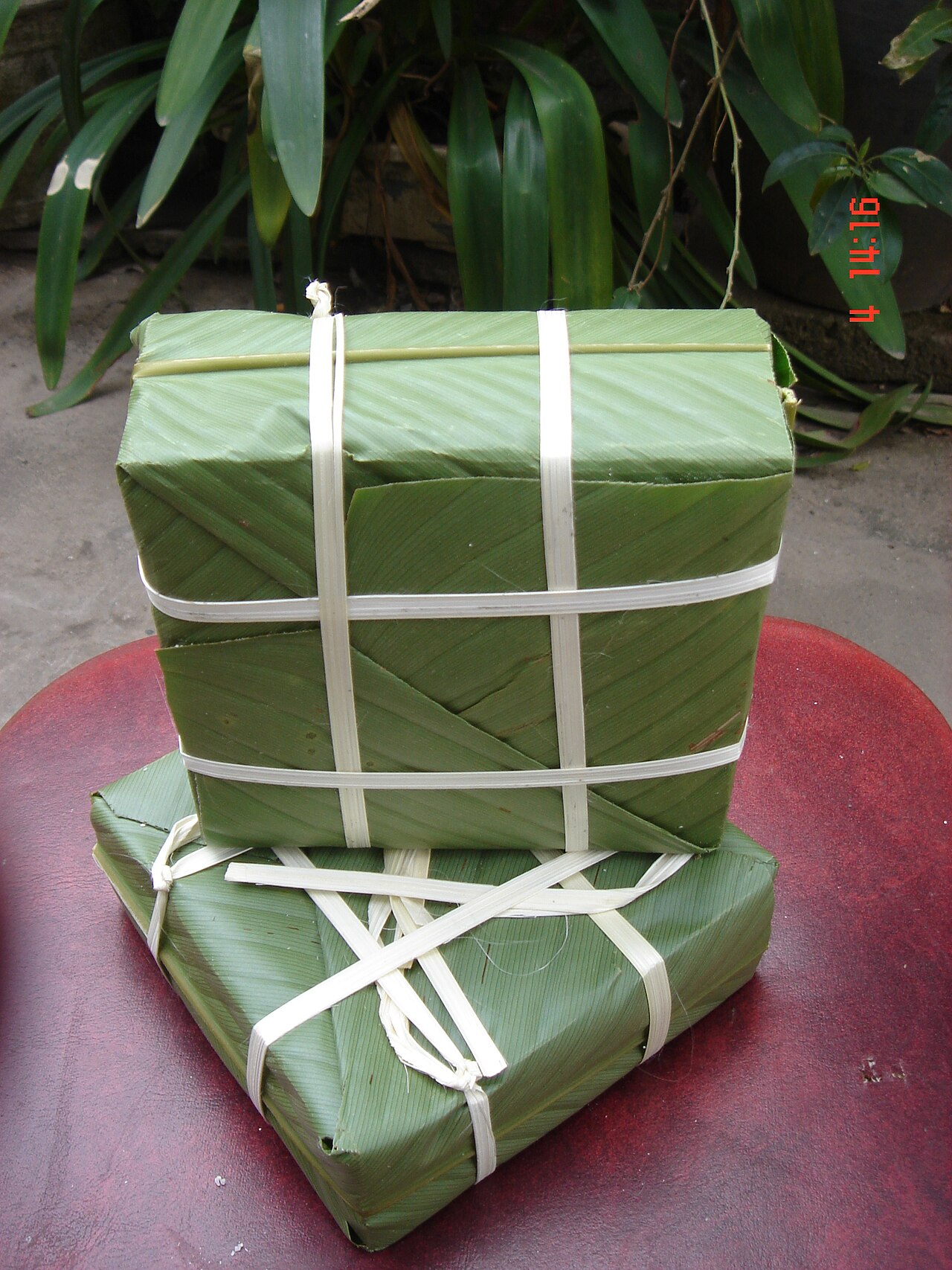
A square cake of sticky rice filled with mung beans and fatty pork, wrapped in green leaves and boiled for many hours. Families place it on the ancestors' altar at Tết and share it over the holiday.
Legend says a prince of the Hùng kings created it; its square shape stands for the earth.
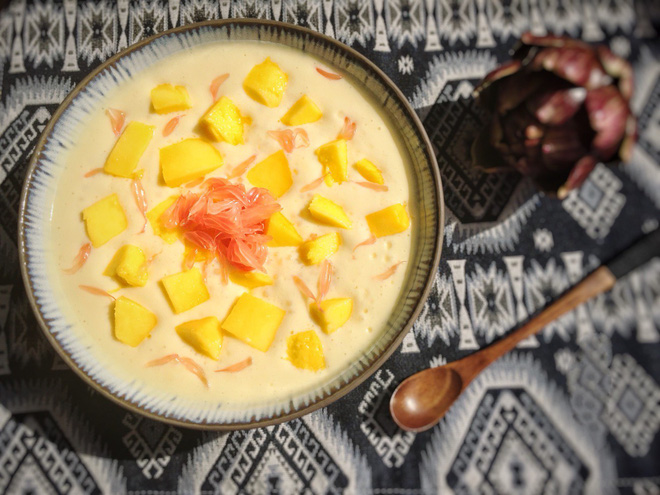
A big family of sweet soups and puddings, served hot or cold, made from beans, sticky rice, tapioca, jelly or fruit, often with coconut milk. Chè ba màu, 'three-colour chè', usually combines green mung beans, white beans and red beans.
In northern Vietnam, chè is also the word for the tea plant.
The whole coast, especially Phú Quốc island and Phan Thiết
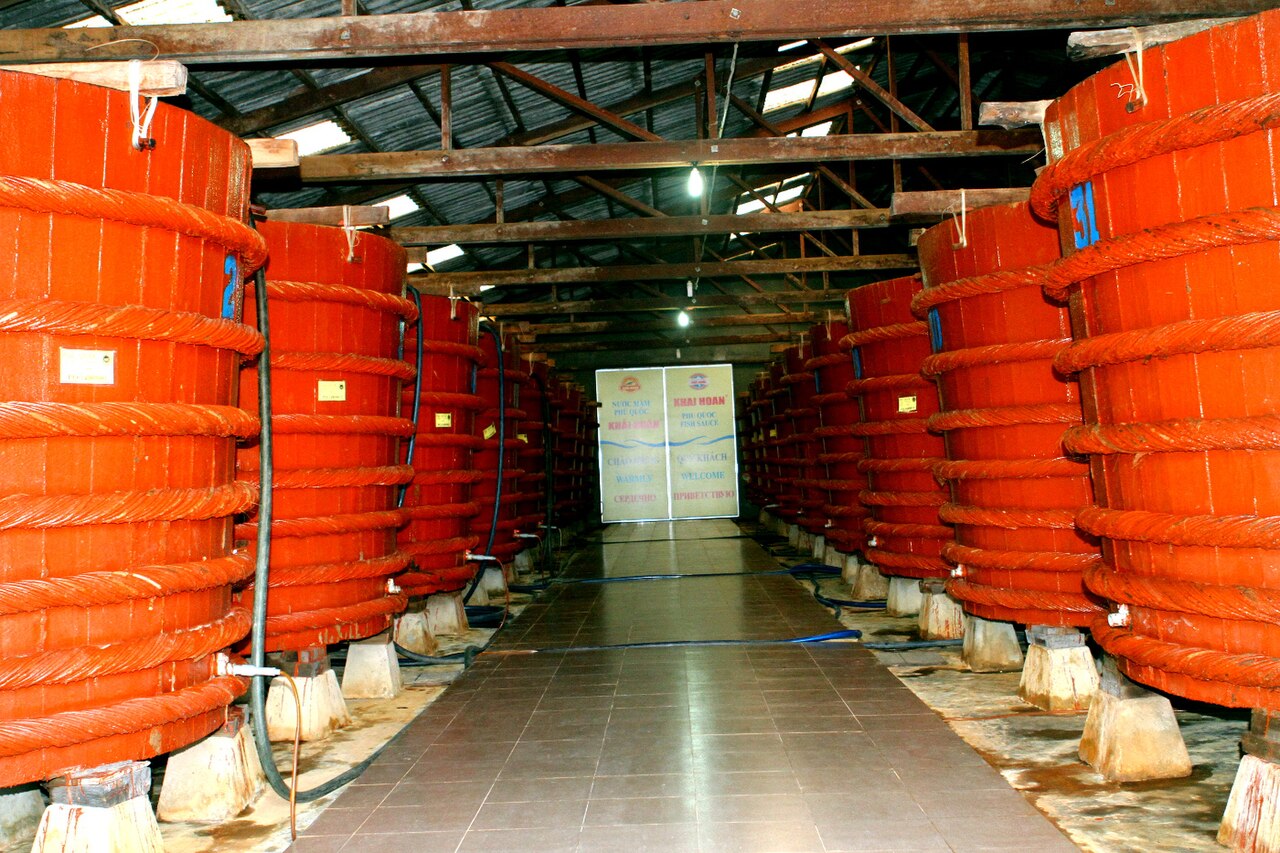
The amber sauce at the heart of Vietnamese cooking, made from anchovies and salt left to ferment for up to two years. Mixed with lime, sugar, water, garlic and chilli it becomes nước chấm, the dipping sauce served with almost every meal.
In 2012 fish sauce from Phú Quốc island received Protected Designation of Origin status in the European Union, the first food from Southeast Asia to do so.
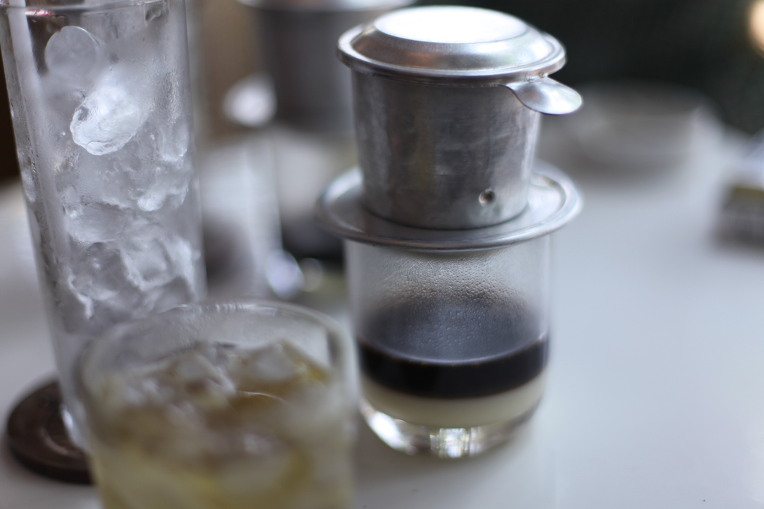
Strong, dark-roasted robusta coffee dripped slowly through a small metal filter called a phin onto sweetened condensed milk, then stirred and poured over ice.
Condensed milk was used because fresh milk was scarce and spoiled quickly in the tropical heat.
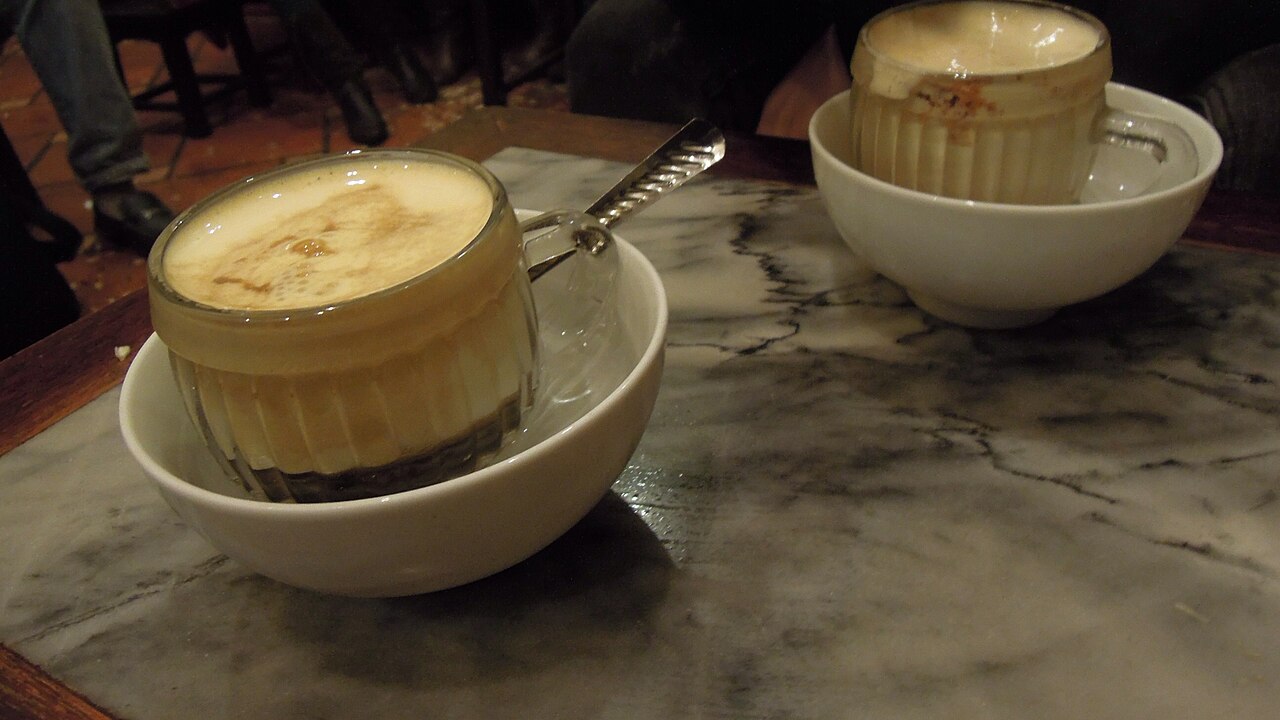
Strong black coffee topped with a thick, sweet cream of egg yolk whipped with sugar and condensed milk. It is served in a small cup, often standing in a bowl of hot water, and you eat the foam with a teaspoon before drinking the coffee underneath.
The family of Hanoi's Café Giảng says its founder, Nguyễn Giảng, created the drink in the late 1940s, when milk was scarce, using egg yolk instead.