A free large-print PDF. Choose what goes in: facts, map, history, dishes and recipes, phrases, fun facts, a quiz with or without answers. Made for clubs, care homes, libraries and family afternoons.
Vietnam stretches about 1,650 km from north to south along the eastern edge of mainland Southeast Asia, and at its narrowest it is only about 50 km wide. The Red River Delta in the north and the Mekong Delta in the south are wide, flat rice lands, joined by a long, mountainous central coast. The highest peak, Fansipan, rises in the far northwest.
For about a thousand years the north was ruled by Chinese dynasties, and after independence in the 10th century Vietnamese kingdoms slowly expanded south. France took control in the second half of the 1800s. The 20th century brought long wars, and the country was reunified in 1976, with Hanoi as its capital.
Today Vietnam is home to about 102 million people. Since economic reforms began in 1986 it has become one of the fastest-growing economies in Asia and a popular destination for visitors, who come for its bays and caves, its old towns and imperial cities, and above all its food.
CapitalHanoi
Largest cityHo Chi Minh City, still widely called Saigon
PopulationAbout 102 million
Official languageVietnamese
CurrencyVietnamese đồng (₫)
AreaAbout 331,000 km²
GovernmentSocialist republic, a one-party state led by the Communist Party of Vietnam
Highest mountainFansipan, 3,143 m (a newer survey gives 3,147 m), the highest peak in Indochina
Longest river wholly in VietnamThe Đồng Nai, about 586 km (the Mekong and the Red River are longer but begin in other countries)
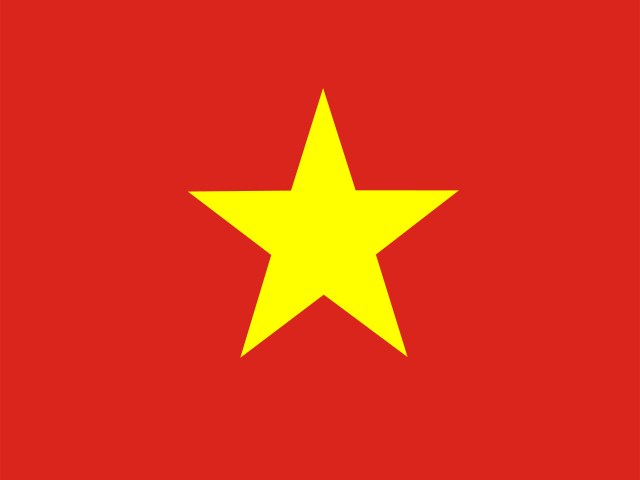
NeighboursChina, Laos and Cambodia. Across the sea: Thailand, Malaysia, Indonesia and the Philippines
Vietnamese tradition traces the nation back to the legendary Hùng kings and the Bronze Age Đông Sơn culture of the Red River Delta, famous for its great bronze drums. From 111 BC the north was ruled by Chinese dynasties for about a thousand years. After independence, Vietnamese kingdoms ruled from Thăng Long (Hanoi) and later Huế, until France took control in the 1800s. The 20th century brought independence, partition, war and, in 1976, reunification.
111 BC
The Han dynasty conquers the north
China's Han dynasty conquered the kingdom of Nanyue, which included the Red River Delta. It was the start of about a thousand years of Chinese rule over northern Vietnam, which brought Chinese writing and Confucian ideas. Buddhism arrived in the same centuries, by sea from India and overland from China.
AD 40
The Trưng sisters rise up
Two noble sisters, Trưng Trắc and Trưng Nhị, led a rebellion against Han rule in AD 40 and ruled for about three years, until a Han army led by General Ma Yuan defeated them in 43. They are still honoured as national heroines.
AD 938
The Battle of Bạch Đằng
Ngô Quyền planted iron-tipped wooden stakes in the bed of the Bạch Đằng River. When the tide fell, the Southern Han fleet was caught on the stakes and destroyed. The victory ended Chinese rule, and Ngô Quyền became king the next year.
1010
Thăng Long becomes the capital
Emperor Lý Thái Tổ moved his capital to a site on the Red River and named it Thăng Long, 'ascending dragon'. It is today's Hanoi, and the year 1010 is counted as the city's founding.
1288
The Mongol fleet is destroyed
During the third Mongol invasion, Prince Trần Hưng Đạo used the same trick as Ngô Quyền, with stakes hidden under the water of the Bạch Đằng River, and destroyed the Yuan fleet. It was the last Mongol invasion of Đại Việt.
1428
Lê Lợi drives out the Ming
After a ten-year war against the Ming Chinese occupation, Lê Lợi took the throne and founded the Lê dynasty. Legend says he returned his magic sword to a golden turtle in Hanoi's Hoàn Kiếm Lake, the 'Lake of the Returned Sword'.
1802
The Nguyễn dynasty begins
Nguyễn Ánh defeated his rivals, unified the country and became Emperor Gia Long. He made Huế the capital, and his dynasty, the last in Vietnamese history, lasted until 1945.
1858
French forces attack Da Nang
A French and Spanish fleet attacked Da Nang, then called Tourane. Over the following decades France took control of the whole country, starting with the south.
1887
French Indochina is created
France joined its territories in Vietnam and Cambodia into a union called French Indochina; Laos was added in 1899. Hanoi became its capital in 1902.
1945
Ho Chi Minh declares independence
On 2 September 1945 Ho Chi Minh read the Declaration of Independence of the Democratic Republic of Vietnam to a large crowd in what is now Ba Đình Square in Hanoi. 2 September is still Vietnam's National Day.
1954
The Battle of Điện Biên Phủ
After a siege of almost two months, the Viet Minh defeated the French garrison at Điện Biên Phủ on 7 May 1954. The Geneva Conference that followed ended French rule and temporarily divided Vietnam at the 17th parallel, with a communist North and a non-communist South. Elections to reunite the country, planned for 1956, were never held.
1965
US combat troops arrive
On 8 March 1965 about 3,500 US Marines landed near Da Nang, and the war between North and South Vietnam grew into a large international conflict. In Vietnam the war is known as the American War, or more formally the Resistance War against America.
1973
The Paris Peace Accords
On 27 January 1973 the United States, North Vietnam, South Vietnam and the Viet Cong's provisional government signed a peace agreement in Paris. US forces withdrew within two months, but the ceasefire was broken almost at once and fighting between North and South went on.
1975
The war ends with the fall of Saigon
On 30 April 1975 North Vietnamese forces entered Saigon, the capital of South Vietnam, and the war ended. Estimates of Vietnamese soldiers and civilians who died in the war range from about 970,000 to 3 million, and more than 58,000 Americans died.
1976
Vietnam is reunified
On 2 July 1976 North and South were formally joined as the Socialist Republic of Vietnam, with Hanoi as its capital. Saigon was renamed Ho Chi Minh City.
1986
The Đổi Mới reforms begin
In December 1986 the Communist Party launched Đổi Mới, 'renovation', opening the economy to private business and foreign trade. In 1995 Vietnam joined ASEAN and established diplomatic relations with the United States.
A Vietnamese family meal has no separate courses. Everyone has a bowl of rice, and the other dishes, usually something braised or grilled, a stir-fried vegetable and a soup, are placed in the middle to share. Fresh herbs such as mint, coriander and Thai basil come with almost everything, and nước mắm, fish sauce, is the flavour behind most dishes. Outside the home, many of the best-loved dishes are noodle soups and snacks from street stalls. The north is known for gentle, clear flavours, the centre for spicy, complex dishes from the old royal court at Huế, and the south for sweeter food and plenty of herbs.
Northern Vietnam, early 1900s, around Nam Định and Hanoi
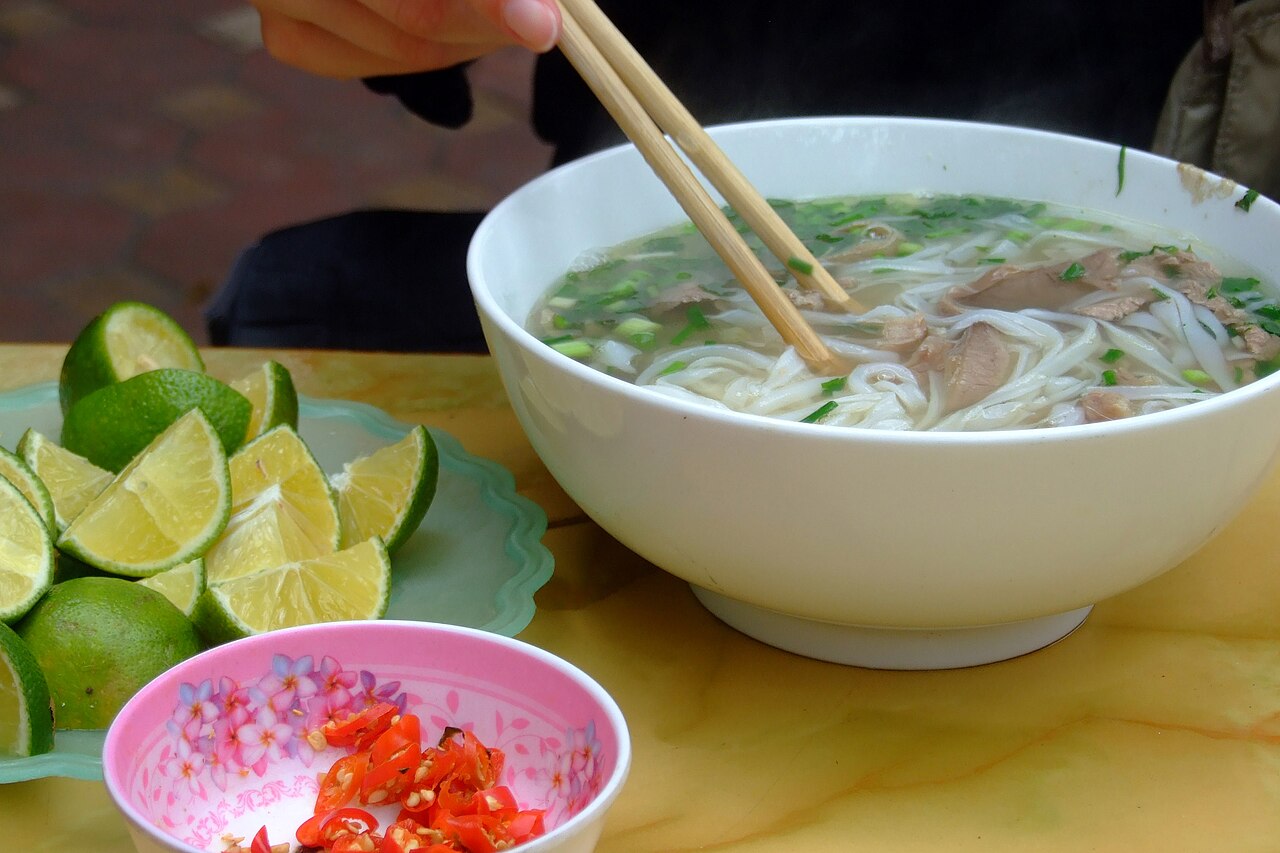
A clear, fragrant beef or chicken broth, simmered with charred onion and ginger, star anise and cinnamon, poured over flat rice noodles and thin slices of meat. Northern (Hanoi) phở has a light, savoury broth with little more than spring onions on top. Southern (Saigon) phở has a sweeter broth and comes with a plate of bean sprouts, Thai basil, lime and chillies, plus hoisin and chilli sauce on the table.
Phở was mostly a northern dish until 1954. After the country was divided, many northerners moved south and took it with them, and it quickly became popular there too.
See the recipe
Serves 4
2 h
Ingredients
1 whole chicken, about 1.5 kg, or 1.5 kg chicken legs and wings
2 onions, halved, and a 7 cm piece of ginger, halved lengthwise
3 star anise, 1 cinnamon stick, 4 cloves and 1 tablespoon coriander seeds
2.5 litres water
3 tablespoons fish sauce and 1 tablespoon sugar
400 g dried flat rice noodles (about 5 mm wide)
4 spring onions, thinly sliced, and a handful of fresh coriander
To serve: bean sprouts, Thai basil, lime wedges and sliced chillies
Method
Char the onion and ginger halves, cut side down, in a dry heavy pan for 5 to 8 minutes until blackened in places. This gives the broth its sweet, smoky taste.
Toast the star anise, cinnamon, cloves and coriander seeds in the same pan for 1 minute, until fragrant.
Put the chicken, onion, ginger and spices in a large pot with the water. Bring to the boil, skim off the foam, then simmer gently, uncovered, for 1 hour.
Lift out the chicken, let it cool a little, and pull the meat into strips. Strain the broth and season it with fish sauce and sugar. Taste and add more fish sauce if needed.
Soak the noodles in warm water for 20 minutes, then cook them in boiling water for 1 to 2 minutes and drain.
Divide the noodles and chicken between big bowls, ladle the hot broth over them and top with spring onions and coriander. Serve with bean sprouts, basil, lime and chillies on the side.
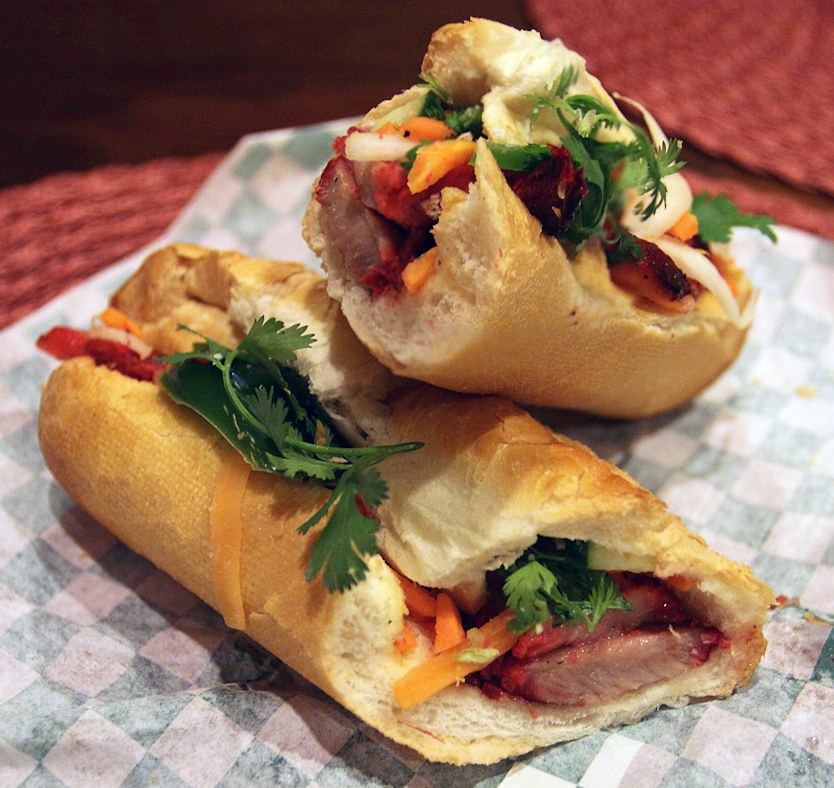
A light, crackly Vietnamese baguette split and filled with pâté, cold pork or Vietnamese sausage, pickled carrot and daikon, cucumber, fresh coriander and chillies.
The French brought the baguette to Vietnam in the 1860s. Vietnamese bakers later mixed in some rice flour, which made the bread lighter. The word bánh mì was added to the Oxford English Dictionary in 2011.
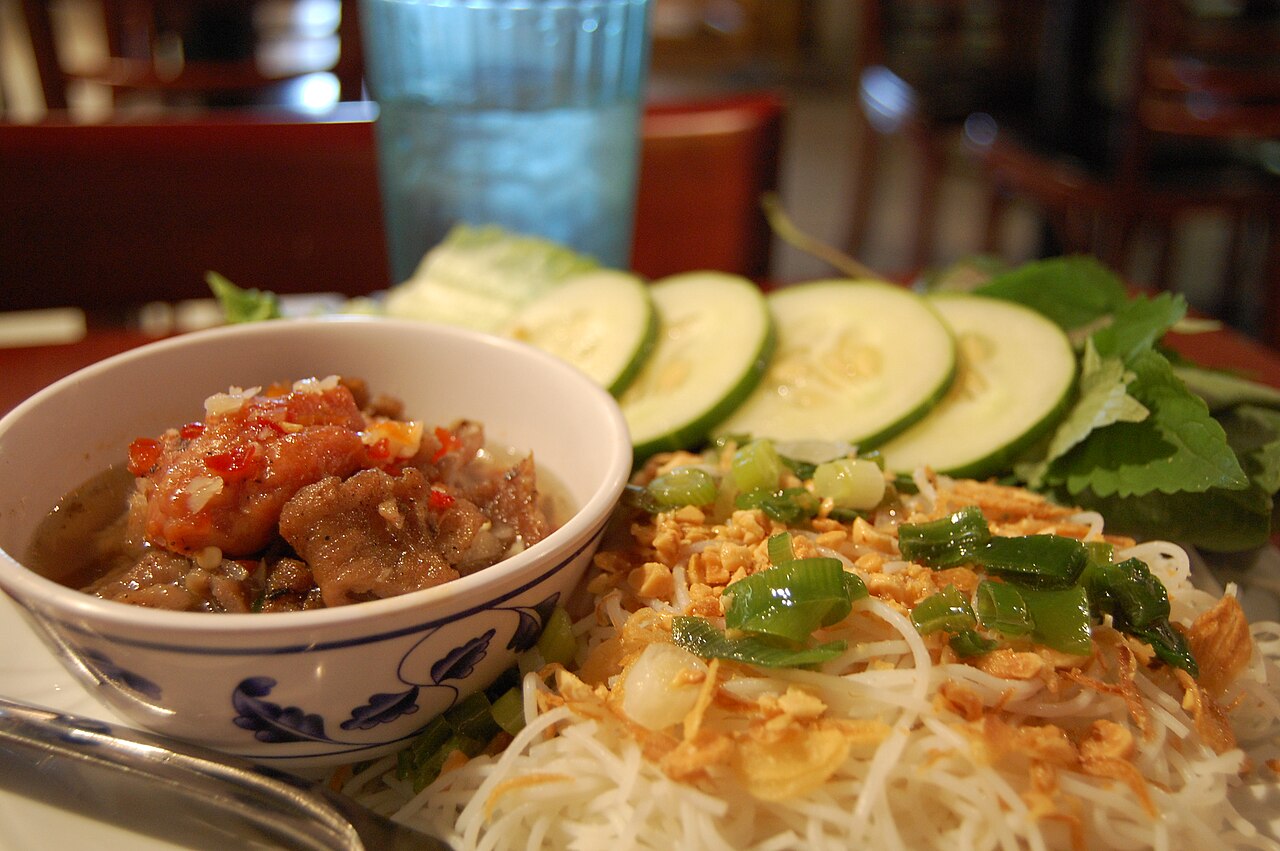
Charcoal-grilled pork patties and slices of pork belly served in a bowl of warm, sweet and sour fish sauce, with cold rice vermicelli and a big plate of herbs and lettuce on the side. You dip the noodles and herbs into the bowl as you eat.
In May 2016 US President Barack Obama and the chef Anthony Bourdain ate bún chả together at a small restaurant in Hanoi, which has been nicknamed 'Bún chả Obama' ever since.
See the recipe
Serves 4
1 h
Ingredients
500 g minced pork (not too lean)
300 g pork belly, sliced thinly
3 shallots and 3 cloves garlic, finely chopped
3 tablespoons fish sauce and 2 tablespoons sugar, for the marinade
1 tablespoon oil and plenty of black pepper
For the dipping sauce: 4 tablespoons fish sauce, 4 tablespoons sugar, 4 tablespoons lime juice or rice vinegar, 400 ml warm water, 1 clove garlic and 1 chilli, finely chopped
1 carrot and a small piece of green papaya or daikon, thinly sliced
400 g dried rice vermicelli
Lettuce, mint, coriander and Thai basil to serve
Method
Mix the shallots, garlic, fish sauce, sugar, oil and pepper. Stir half into the minced pork and half into the sliced pork belly, and leave for at least 30 minutes in the fridge.
For the sauce, stir the fish sauce, sugar, lime juice and warm water until the sugar dissolves. Add the garlic, chilli and the sliced carrot and papaya.
Cook the vermicelli in boiling water for 3 to 5 minutes (follow the packet), rinse in cold water and drain well.
Shape the minced pork into small flat patties. Grill the patties and pork belly over charcoal or under a hot grill for 4 to 5 minutes on each side, until browned and cooked through with no pink left.
Put the hot meat into bowls of the dipping sauce. Serve with the noodles and a big plate of lettuce and herbs, so everyone can dip them in.
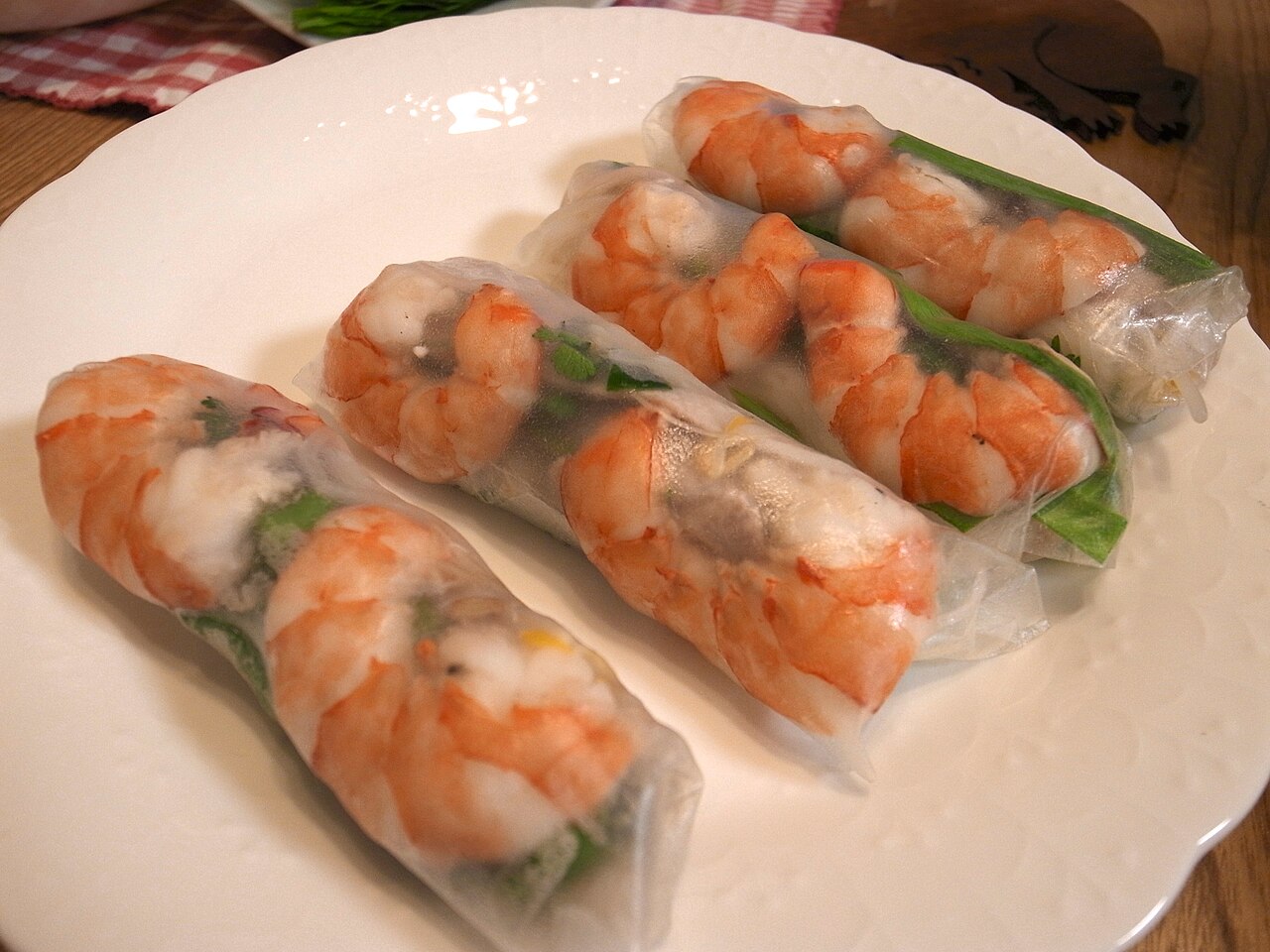
Soft, fresh rolls of moistened rice paper wrapped around cooked prawns, pork, rice vermicelli, lettuce and herbs. They are not fried, and are eaten with a peanut and hoisin sauce or a fish sauce dip.
See the recipe
Serves 4
40 min
Ingredients
12 sheets of rice paper (about 22 cm across)
12 large cooked, peeled prawns, cut in half lengthwise
200 g boiled pork belly or shoulder, thinly sliced (optional)
100 g dried rice vermicelli, cooked, rinsed in cold water and drained
1 soft lettuce, leaves separated
A large handful each of mint and coriander, and a few chives
For the sauce: 4 tablespoons hoisin sauce, 2 tablespoons smooth peanut butter, 4 tablespoons water and crushed roasted peanuts (leave out the peanuts and peanut butter for anyone with a peanut allergy)
Method
Stir the hoisin, peanut butter and water together in a small pan over low heat until smooth. Pour into small bowls and sprinkle with crushed peanuts.
Fill a wide bowl with warm water. Dip one sheet of rice paper for 2 to 3 seconds, until just soft, and lay it flat on a damp board.
Place a lettuce leaf, a little vermicelli, some herbs and a few slices of pork on the lower third of the sheet.
Fold the bottom edge over the filling, fold in the sides, lay 3 prawn halves, pink side down, just above the filling, then roll up tightly. Add a chive so it pokes out of one end.
Repeat with the rest. Serve straight away with the dipping sauce, or cover with a damp cloth for up to an hour.
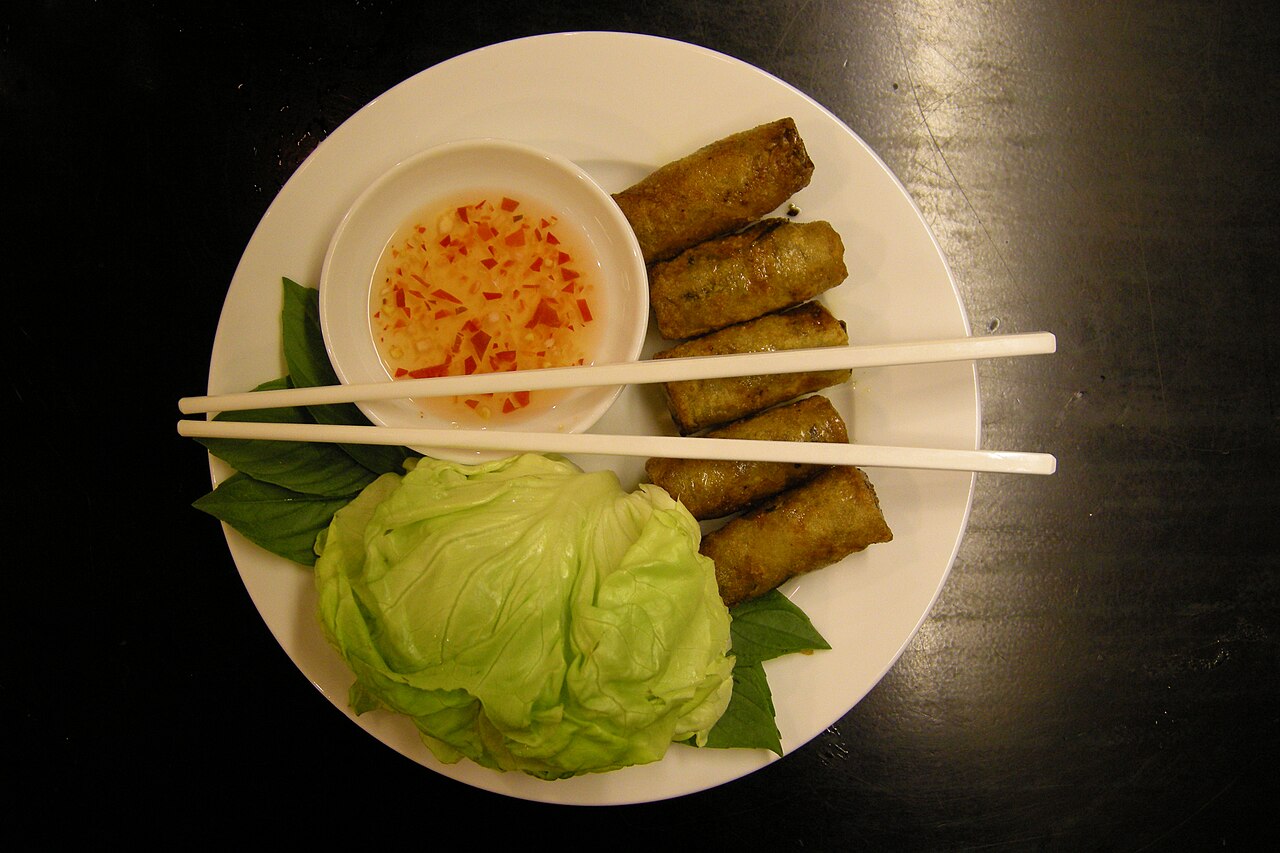
Rice paper rolls filled with seasoned minced pork, mushrooms, glass noodles, carrot and taro, deep-fried until golden and crisp. They are wrapped in lettuce with herbs and dipped in sweet and sour fish sauce.
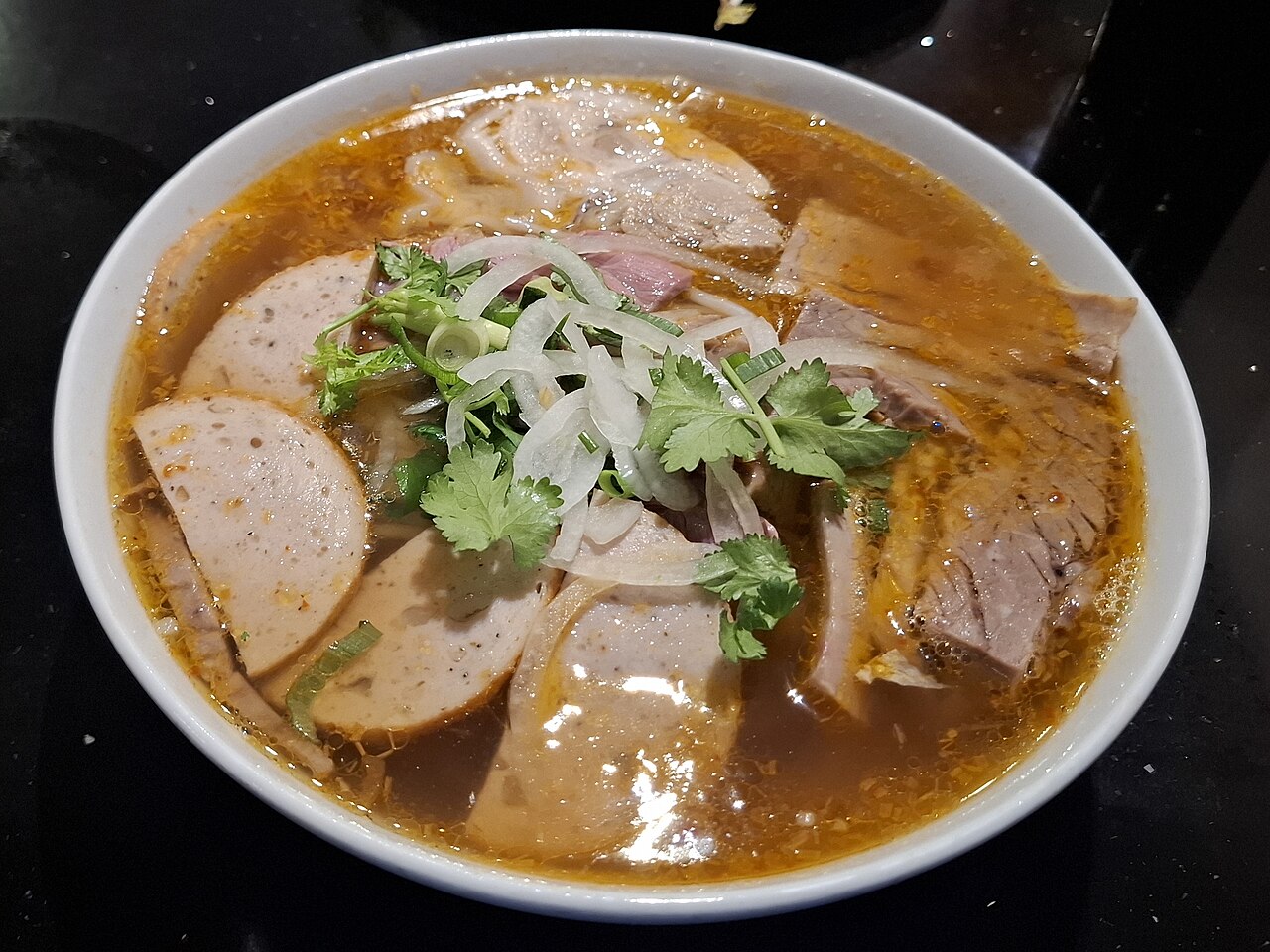
A spicy beef noodle soup flavoured with lemongrass and fermented shrimp paste, with thick, round rice noodles, beef shank, Vietnamese sausage and sometimes pork knuckle, topped with chilli oil.
Outside Huế the dish carries the city's name, to set it apart from the bún bò of Hanoi and Saigon.
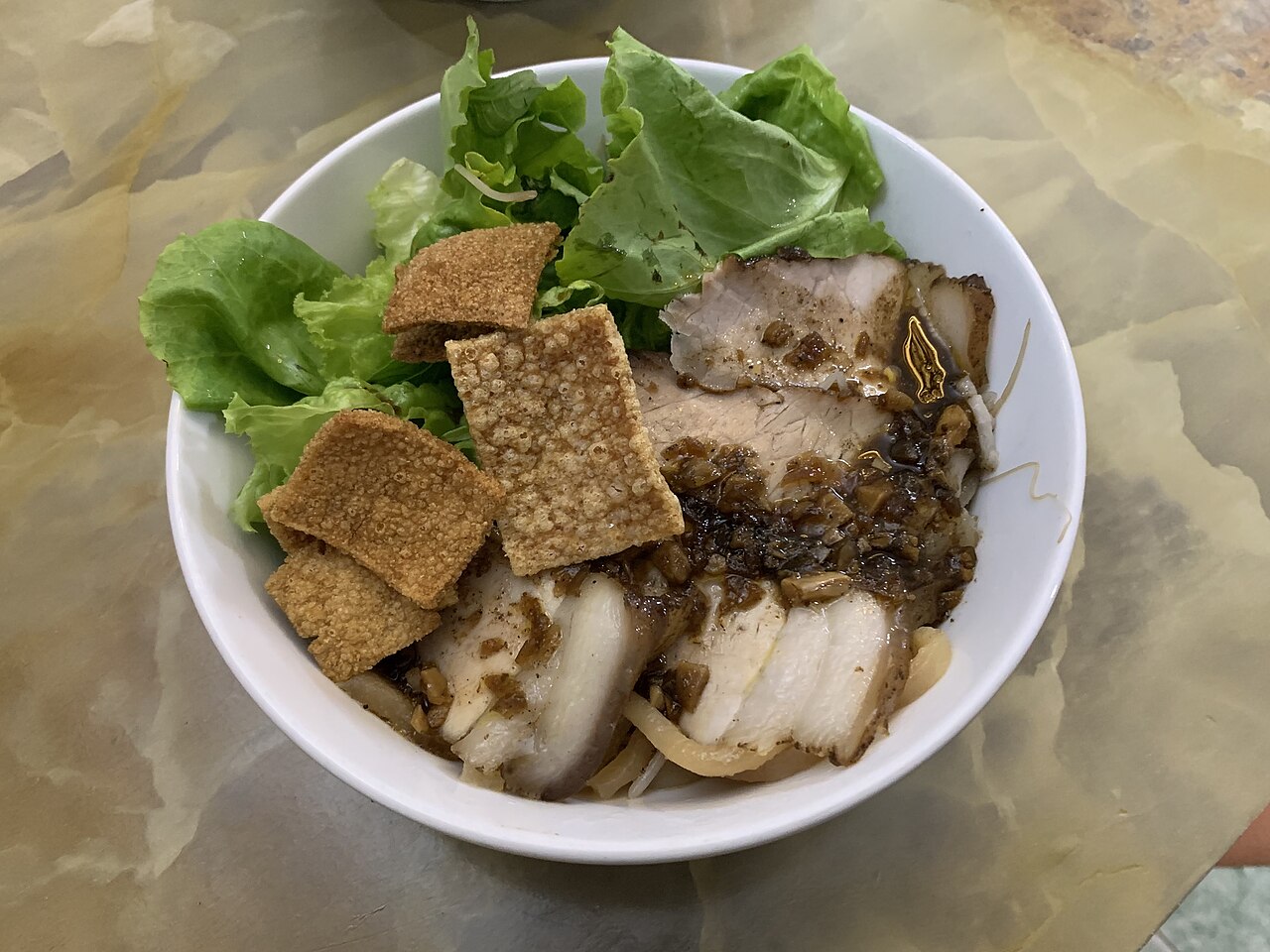
Chewy, yellowish rice noodles served with slices of marinated pork, fresh greens, bean sprouts and herbs, a little rich broth and crunchy squares of fried noodle dough on top.
Local tradition says true cao lầu noodles must be made with water from the ancient Bá Lễ well in Hội An and lye from the ashes of plants from the Cham Islands, which is why it is rarely found anywhere else.
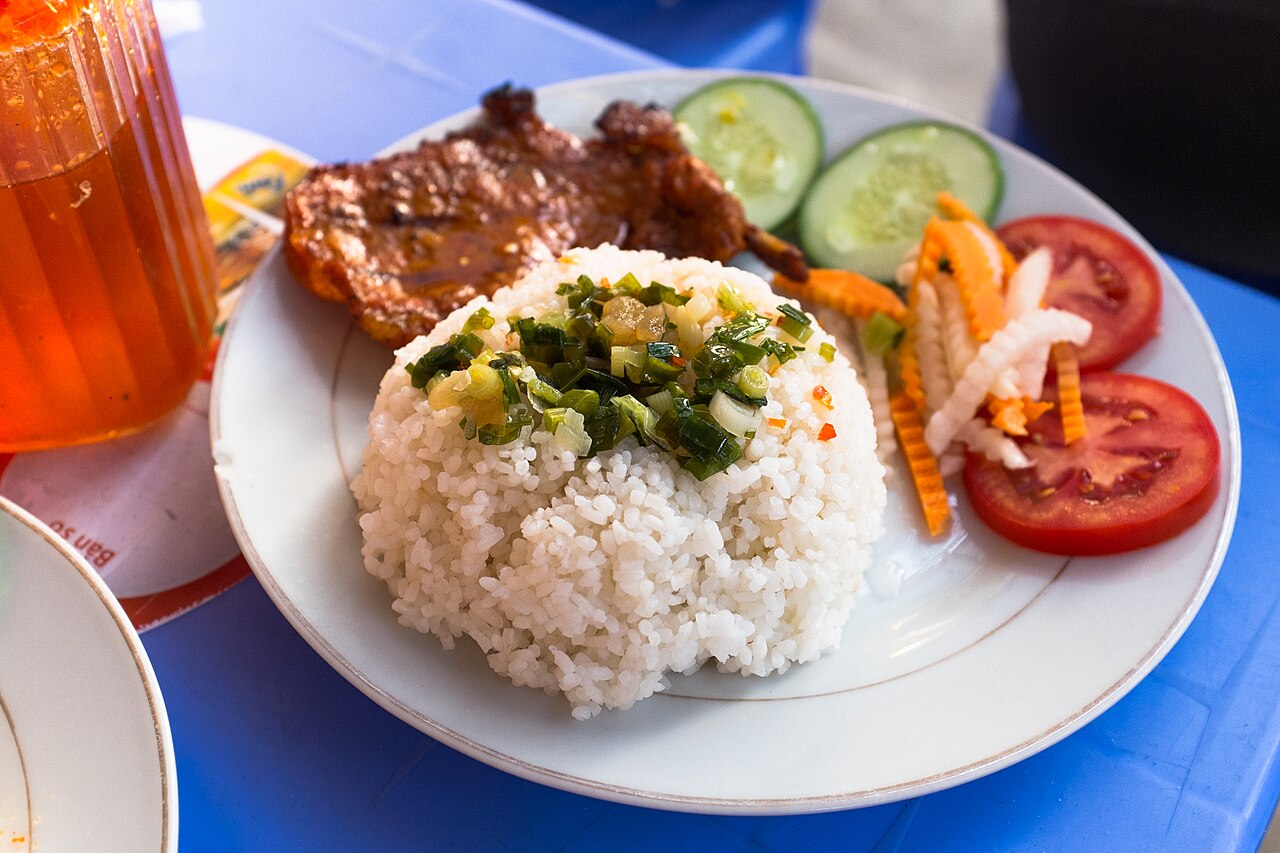
Broken rice grains served with a grilled, lemongrass-marinated pork chop, shredded pork skin, a slice of steamed egg and pork meatloaf, pickles and a small bowl of sweet fish sauce.
Broken rice was once the cheap leftover of rice milling, eaten by poor farmers in bad seasons. Today it is one of the best-loved dishes of Saigon.
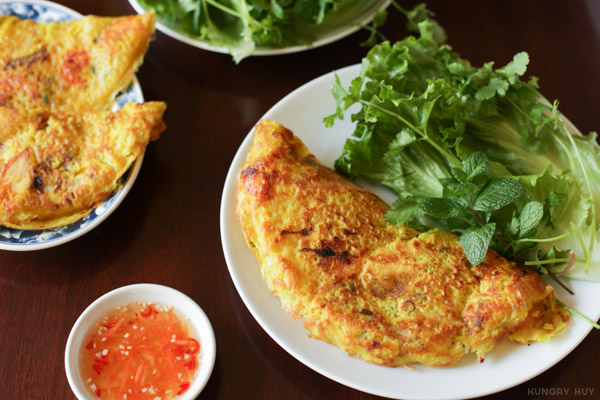
A thin, crispy yellow pancake of rice flour, water and turmeric, filled with pork, prawns and bean sprouts. Pieces are wrapped in lettuce or mustard leaves with herbs and dipped in fish sauce.
The name means 'sizzling cake', after the sound the batter makes when it hits the hot pan.
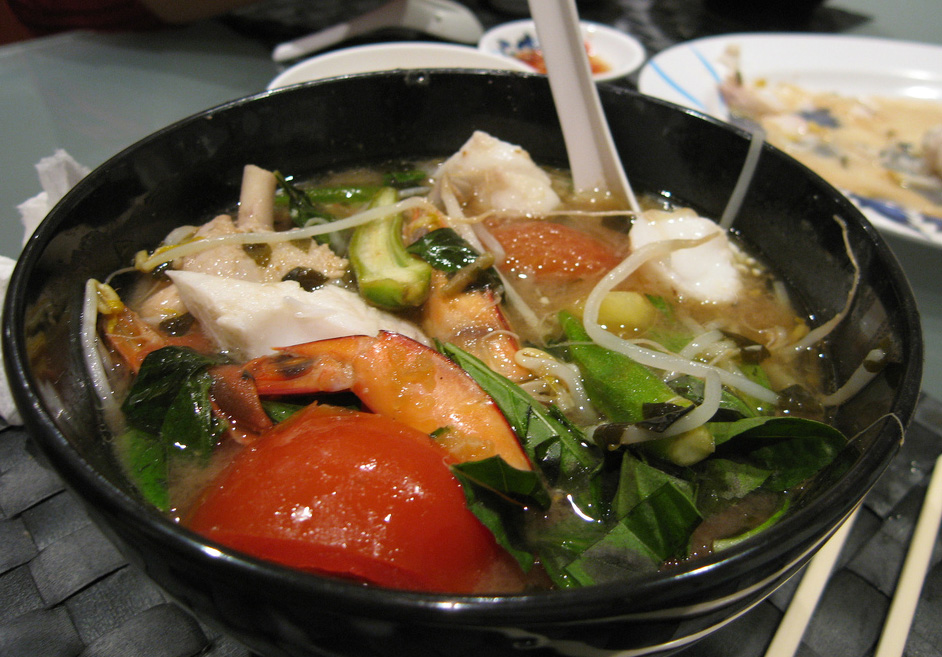
A light sweet and sour soup made with tamarind, fish, pineapple, tomatoes and bean sprouts, finished with fresh herbs and fried garlic. It is eaten with rice as part of a family meal.
Northern Vietnam; made for Tết, the Lunar New Year
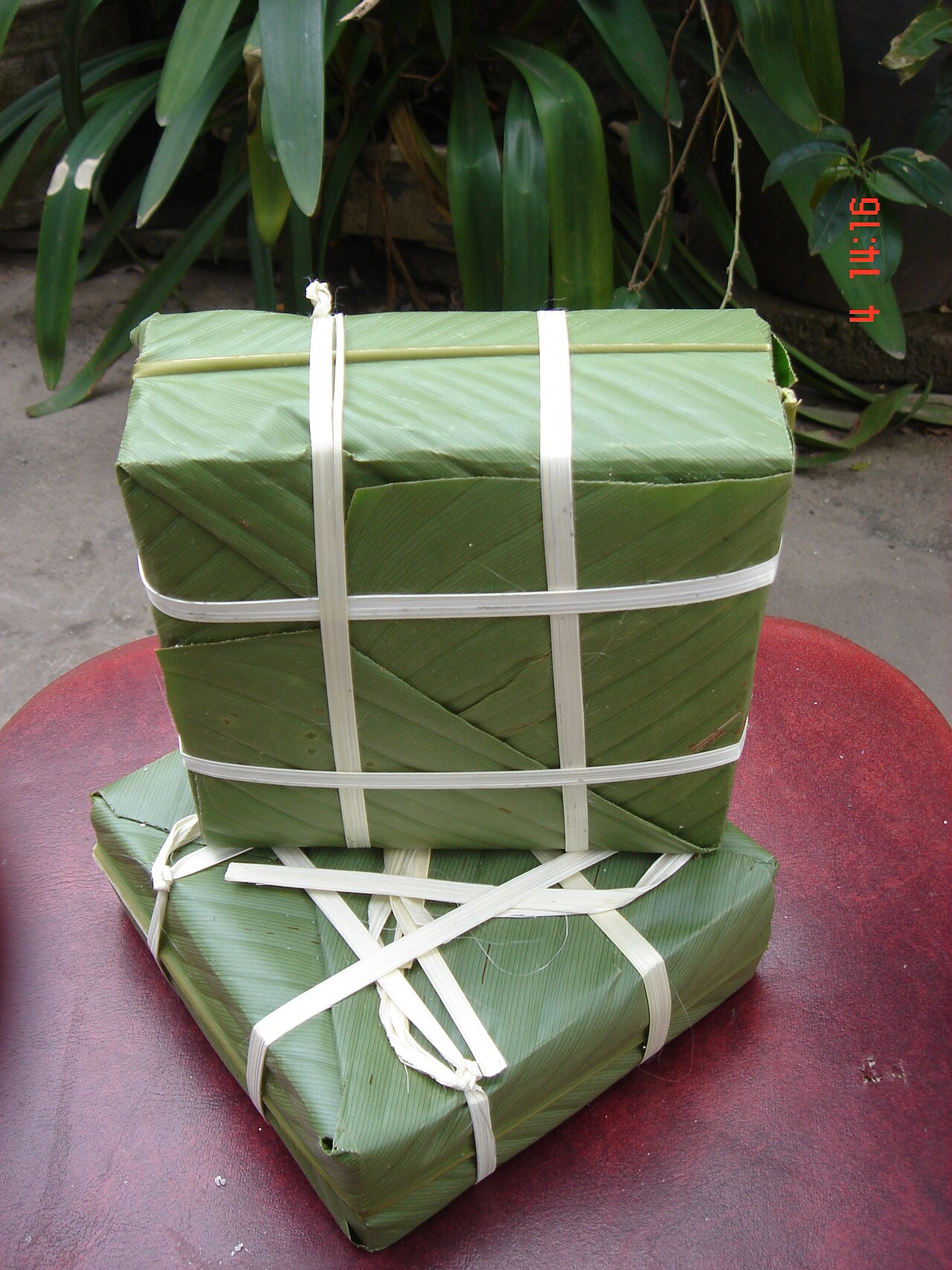
A square cake of sticky rice filled with mung beans and fatty pork, wrapped in green leaves and boiled for many hours. Families place it on the ancestors' altar at Tết and share it over the holiday.
Legend says a prince of the Hùng kings created it; its square shape stands for the earth.
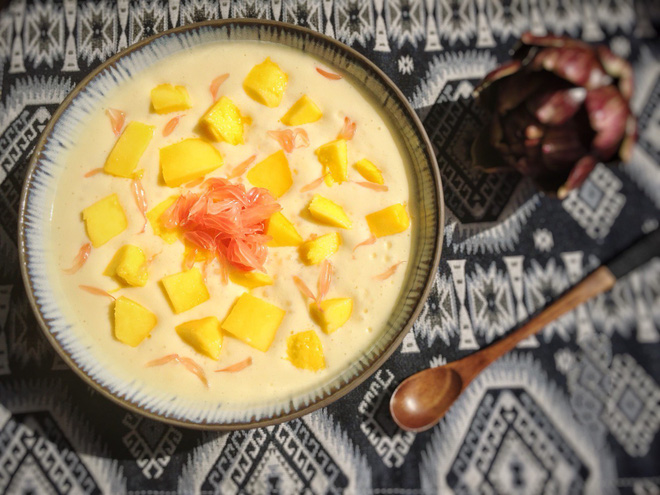
A big family of sweet soups and puddings, served hot or cold, made from beans, sticky rice, tapioca, jelly or fruit, often with coconut milk. Chè ba màu, 'three-colour chè', usually combines green mung beans, white beans and red beans.
In northern Vietnam, chè is also the word for the tea plant.
The whole coast, especially Phú Quốc island and Phan Thiết
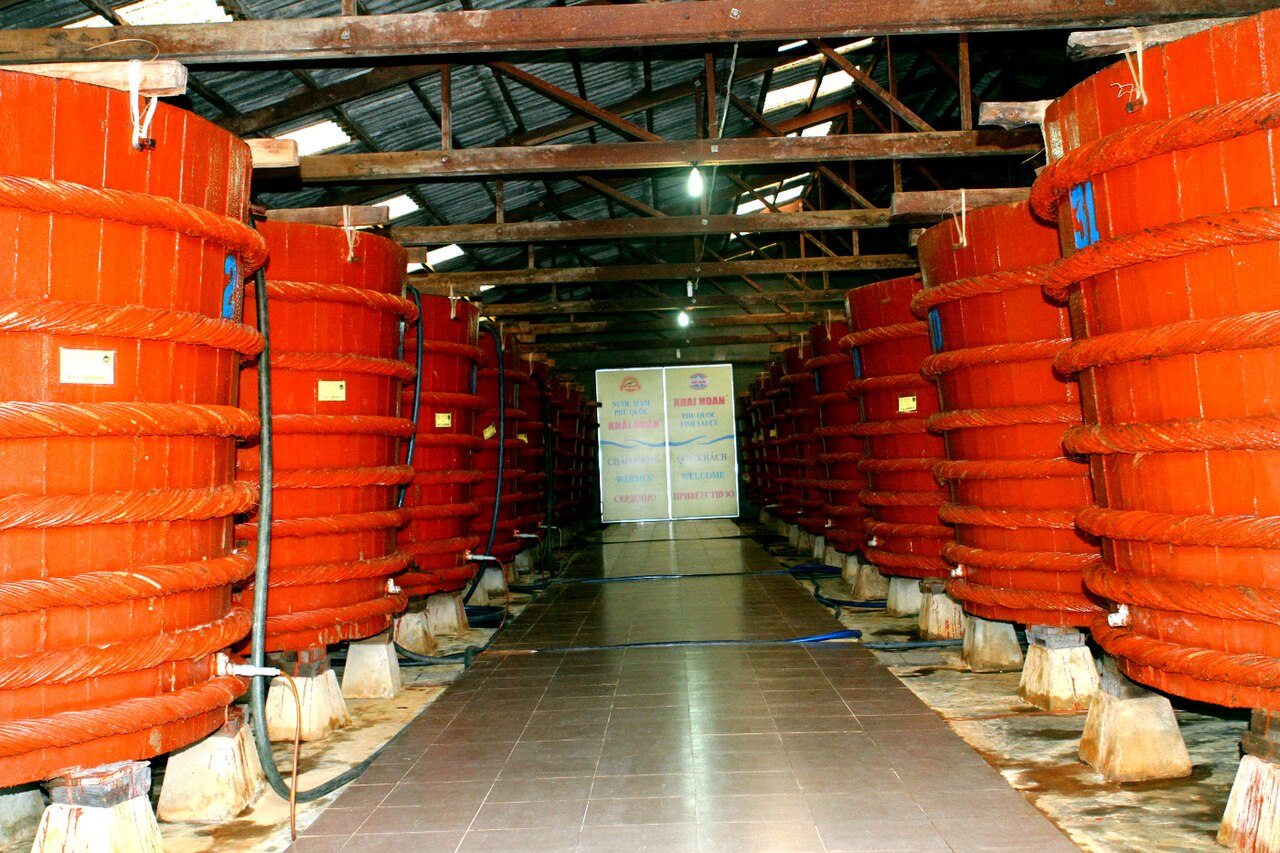
The amber sauce at the heart of Vietnamese cooking, made from anchovies and salt left to ferment for up to two years. Mixed with lime, sugar, water, garlic and chilli it becomes nước chấm, the dipping sauce served with almost every meal.
In 2012 fish sauce from Phú Quốc island received Protected Designation of Origin status in the European Union, the first food from Southeast Asia to do so.
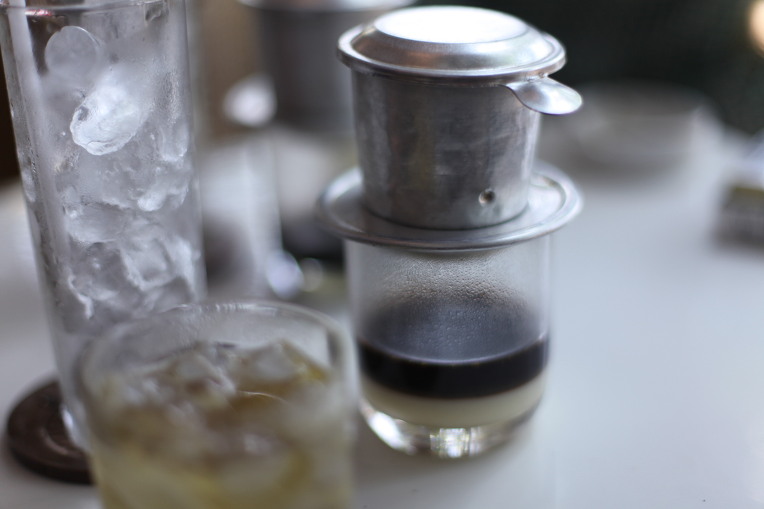
Strong, dark-roasted robusta coffee dripped slowly through a small metal filter called a phin onto sweetened condensed milk, then stirred and poured over ice.
Condensed milk was used because fresh milk was scarce and spoiled quickly in the tropical heat.
See the recipe
Serves 1
10 min
Ingredients
2 tablespoons dark-roasted ground coffee (Vietnamese robusta if you can find it)
1 to 2 tablespoons sweetened condensed milk
About 100 ml boiling water
A tall glass full of ice
Method
Put the condensed milk in the bottom of a small heatproof glass or cup.
Put the coffee in a phin filter (or use a small cafetière or pour-over filter), set it on the cup and press the coffee down lightly with the filter's insert.
Pour in a little boiling water, wait 30 seconds for the coffee to swell, then fill the filter to the top. Let it drip slowly for about 5 minutes.
Stir the coffee into the condensed milk, taste, and add more milk if you like it sweeter.
Pour it over the glass of ice, stir and drink cold.
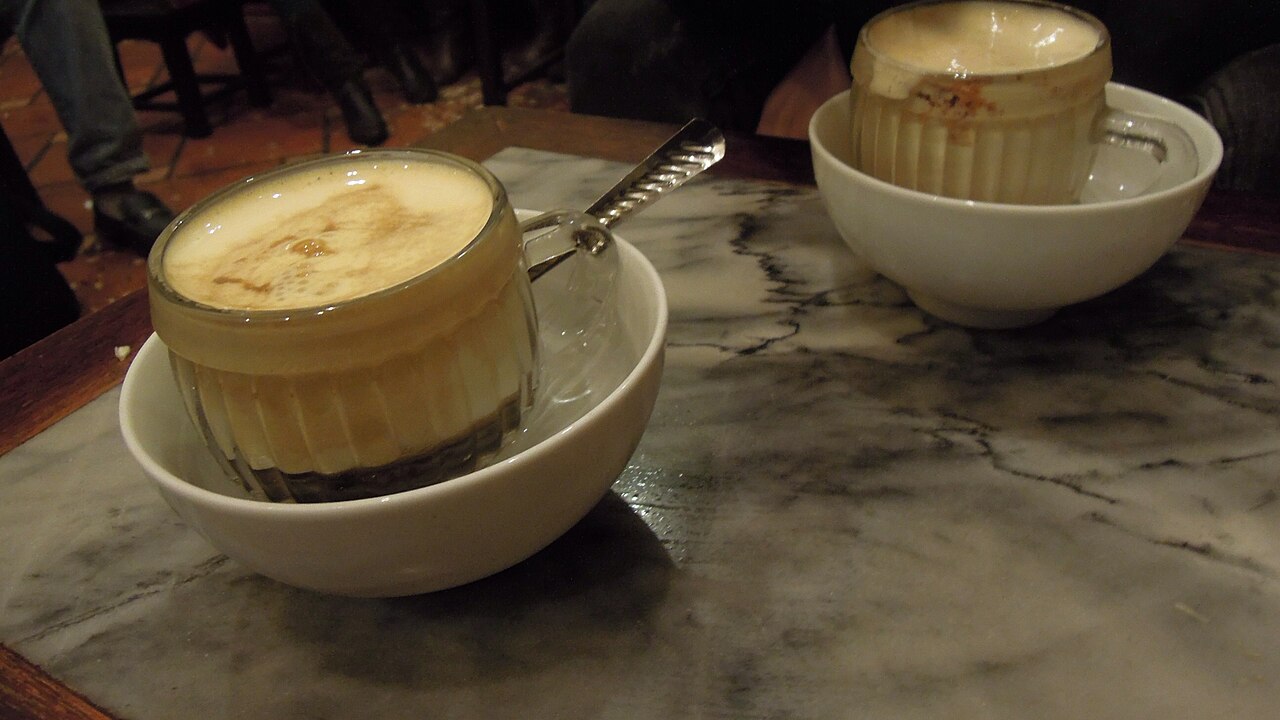
Strong black coffee topped with a thick, sweet cream of egg yolk whipped with sugar and condensed milk. It is served in a small cup, often standing in a bowl of hot water, and you eat the foam with a teaspoon before drinking the coffee underneath.
The family of Hanoi's Café Giảng says its founder, Nguyễn Giảng, created the drink in the late 1940s, when milk was scarce, using egg yolk instead.
See the recipe
Serves 2
15 min
Ingredients
2 very fresh pasteurised egg yolks (the yolks are only lightly warmed, so use pasteurised eggs, especially for pregnant women, young children, older people or anyone with a weak immune system)
2 tablespoons sweetened condensed milk
2 teaspoons sugar
200 ml very strong hot coffee (from a phin, espresso machine or cafetière)
Method
Put the yolks, condensed milk and sugar in a heatproof bowl. Set the bowl over a pan of hot water, not touching the water.
Whisk with an electric whisk for 3 to 5 minutes, until the mixture is thick, pale and fluffy, like soft whipped cream.
Stand two small cups in a bowl of hot water to keep them warm, and pour 100 ml of hot coffee into each.
Spoon the egg cream gently on top of the coffee.
Serve with a teaspoon: eat some of the cream first, then stir the rest into the coffee.
Most Vietnamese live in the two great river deltas: the Red River Delta around Hanoi in the north and the Mekong Delta south of Ho Chi Minh City. Between them, the long central coast holds the old imperial city of Huế, the port of Da Nang and the trading town of Hội An, while the cool highlands have hill towns such as Da Lat and Sa Pa. In 2025 Vietnam reorganised its local government, merging provinces and removing the district level, so some of the towns below are now officially wards of a larger province or city; everyone still uses their names.
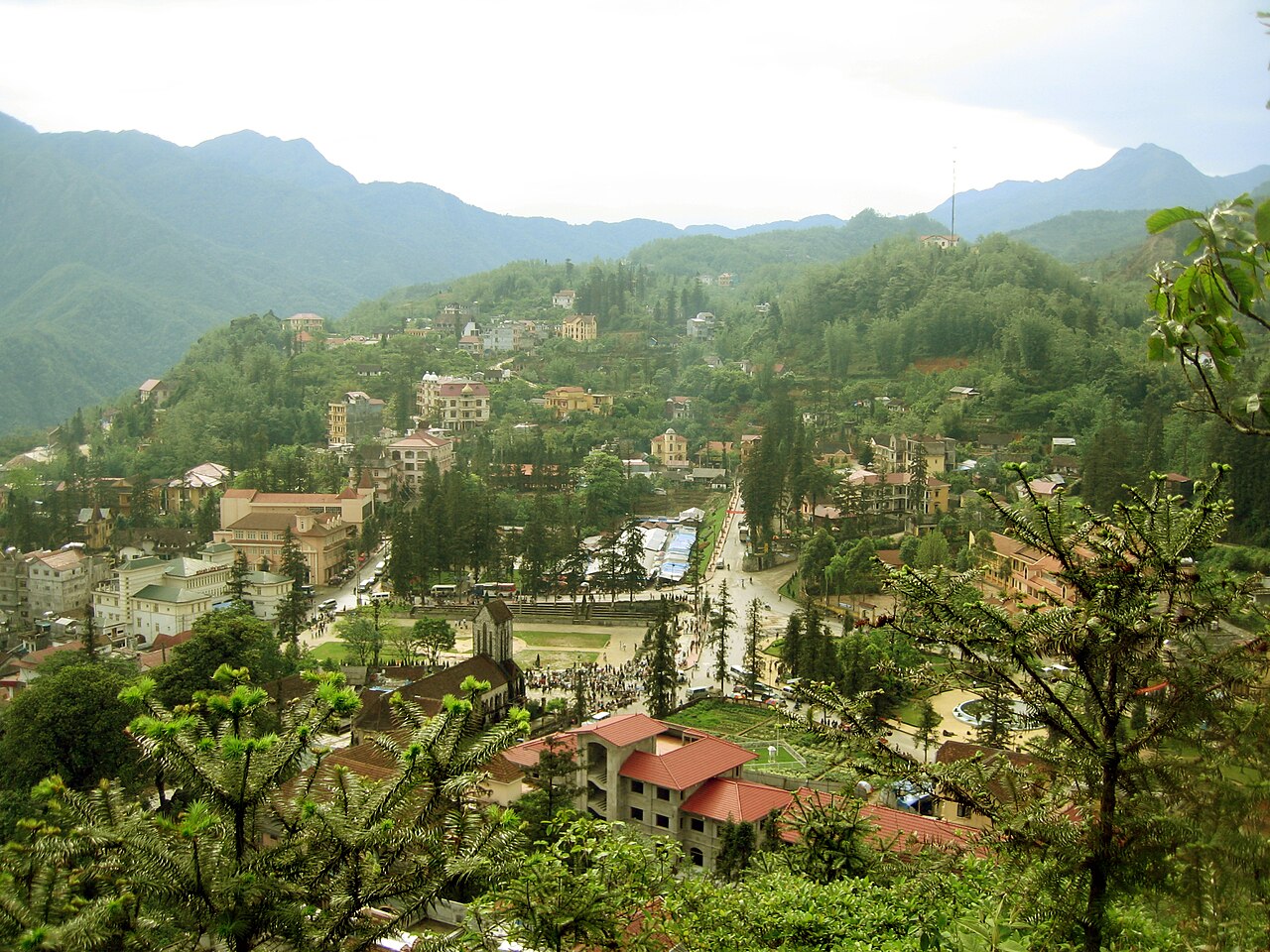
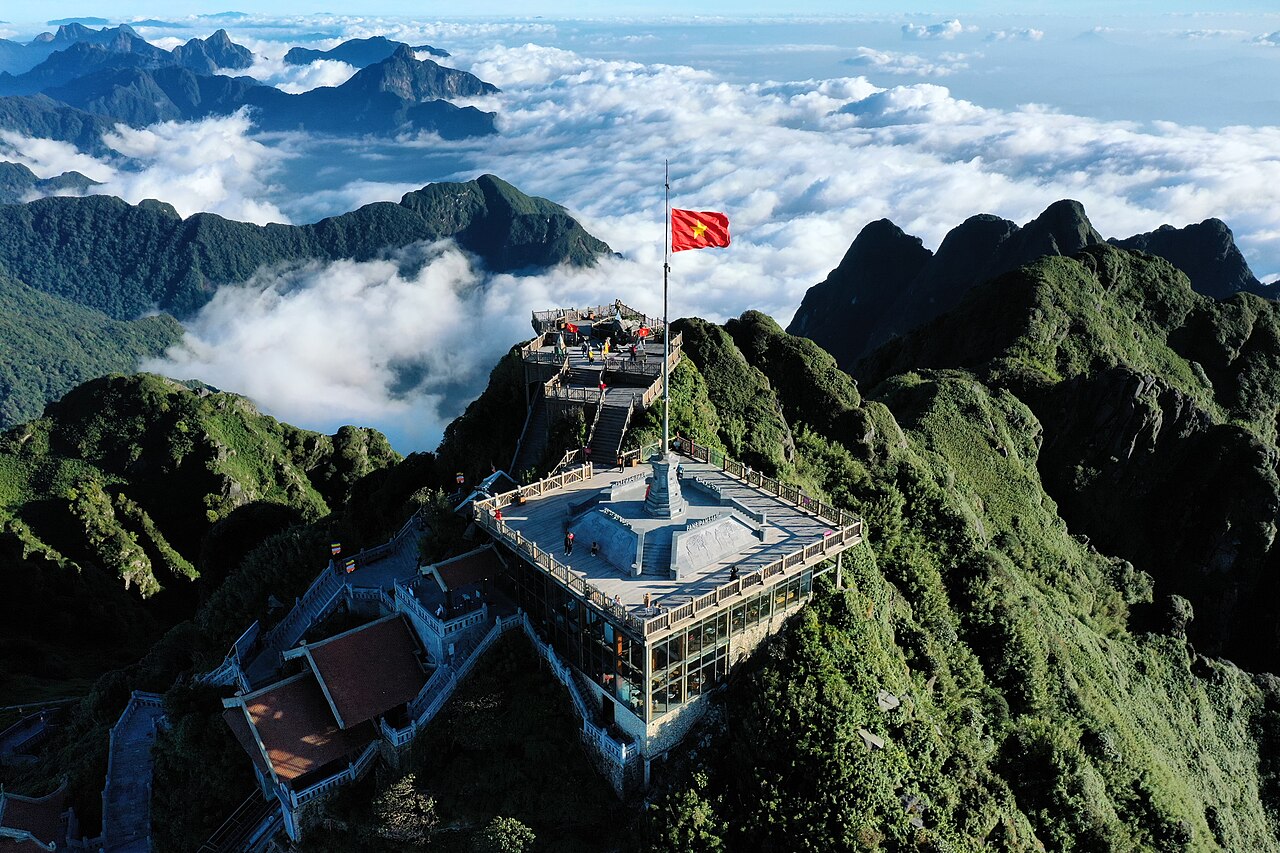
A mountain town about 1,600 m above sea level near the border with China, developed by the French as a hill station. It is the base for walks through rice terraces and villages of the Hmong, Dao and other peoples, and for trips up Fansipan.
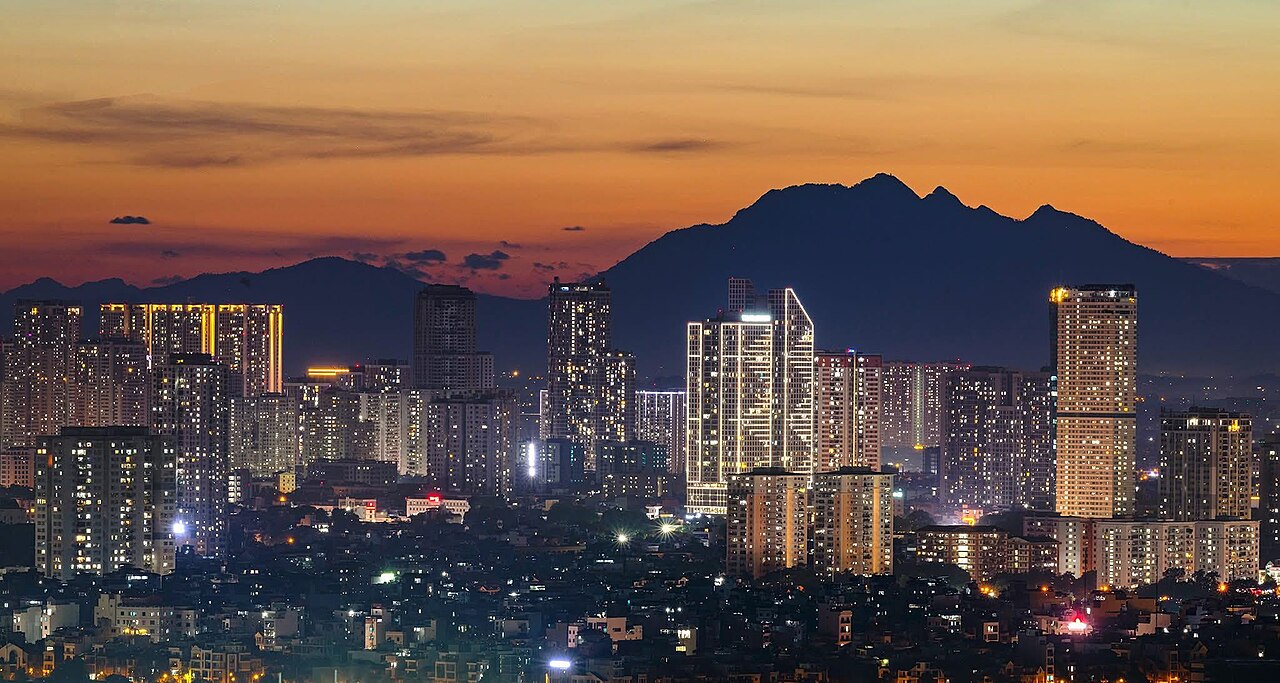
The capital, on the Red River, with about 8.8 million people. Founded as Thăng Long in 1010, it was renamed Hà Nội in 1831. Its busy Old Quarter, which keeps much of the street plan of old Hanoi, lies beside the peaceful Hoàn Kiếm Lake.
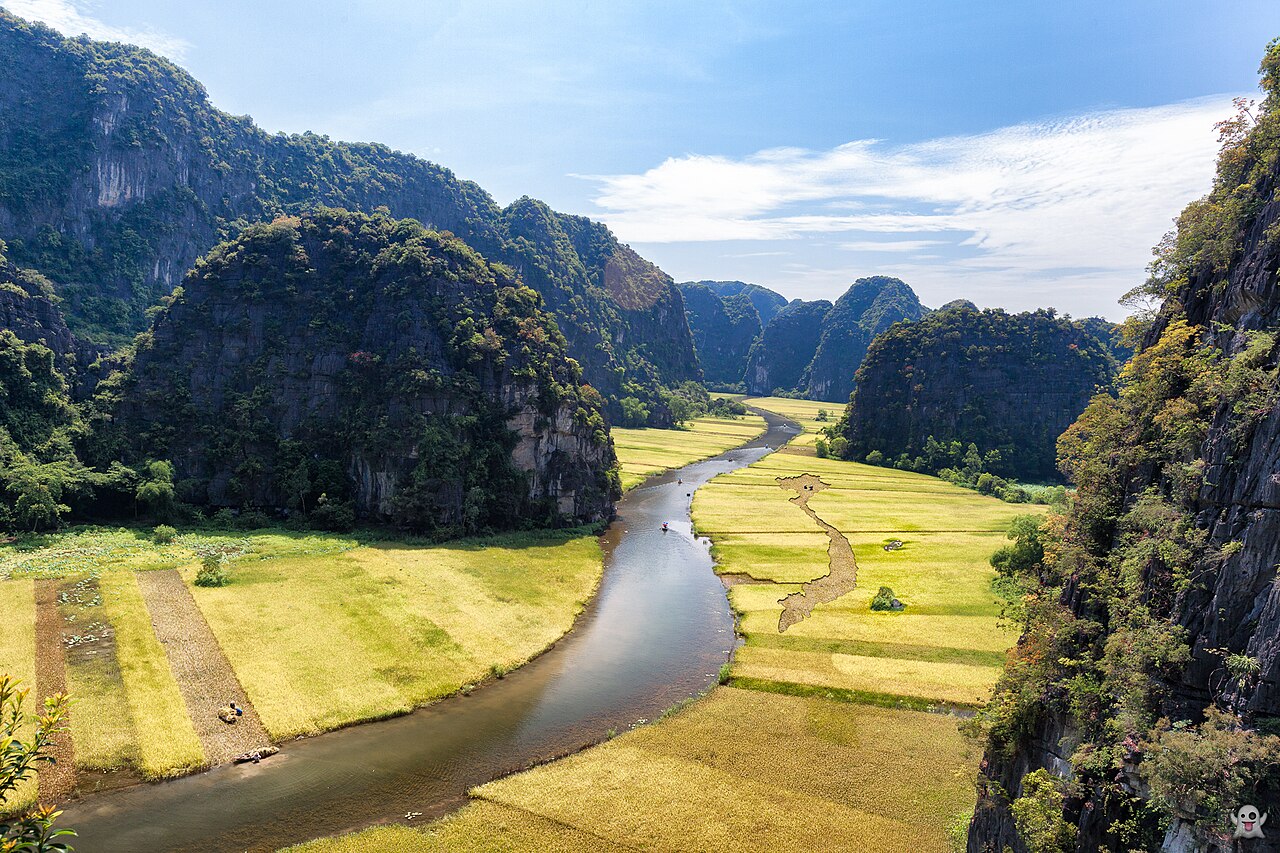
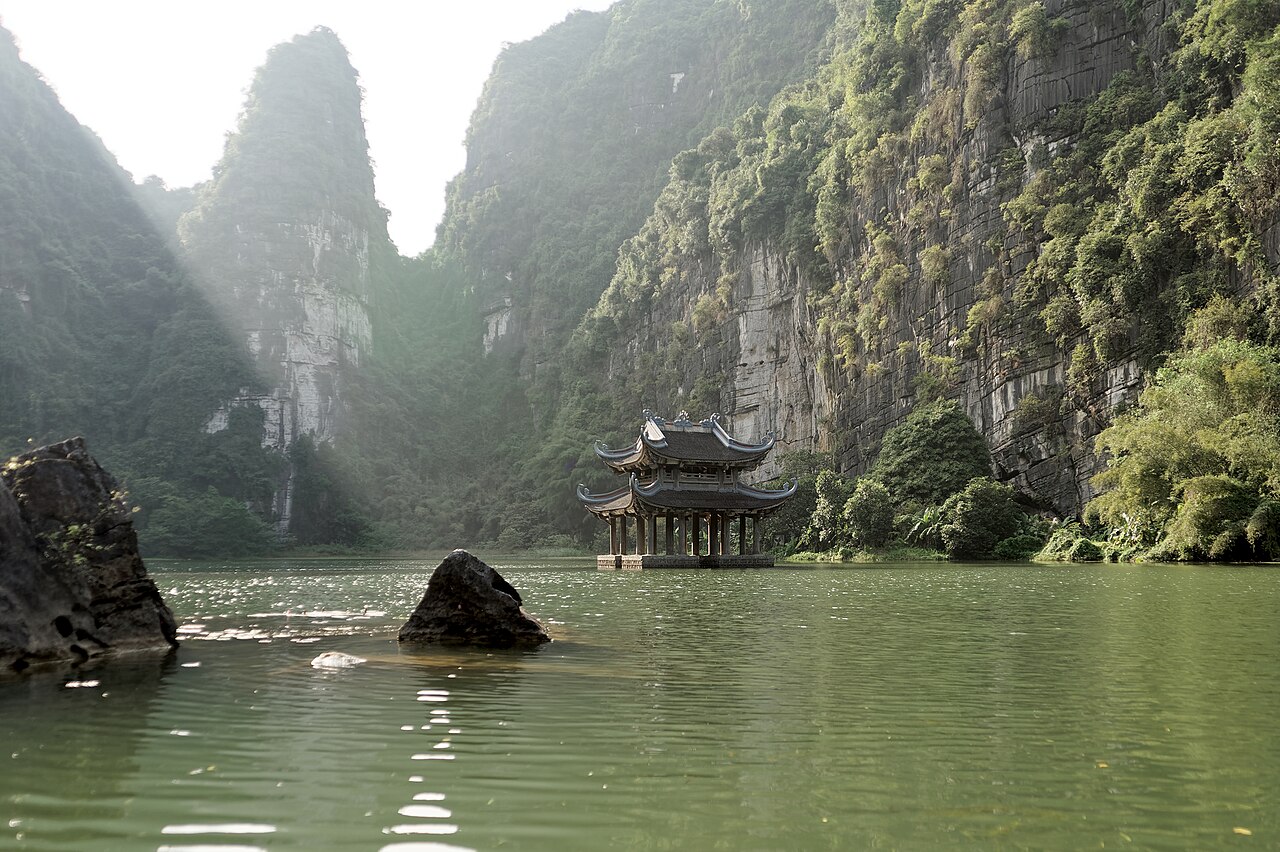
A town south of Hanoi, surrounded by rice fields and steep limestone hills. Nearby is Hoa Lư, the capital of Vietnam from 968 until the move to Thăng Long in 1010.
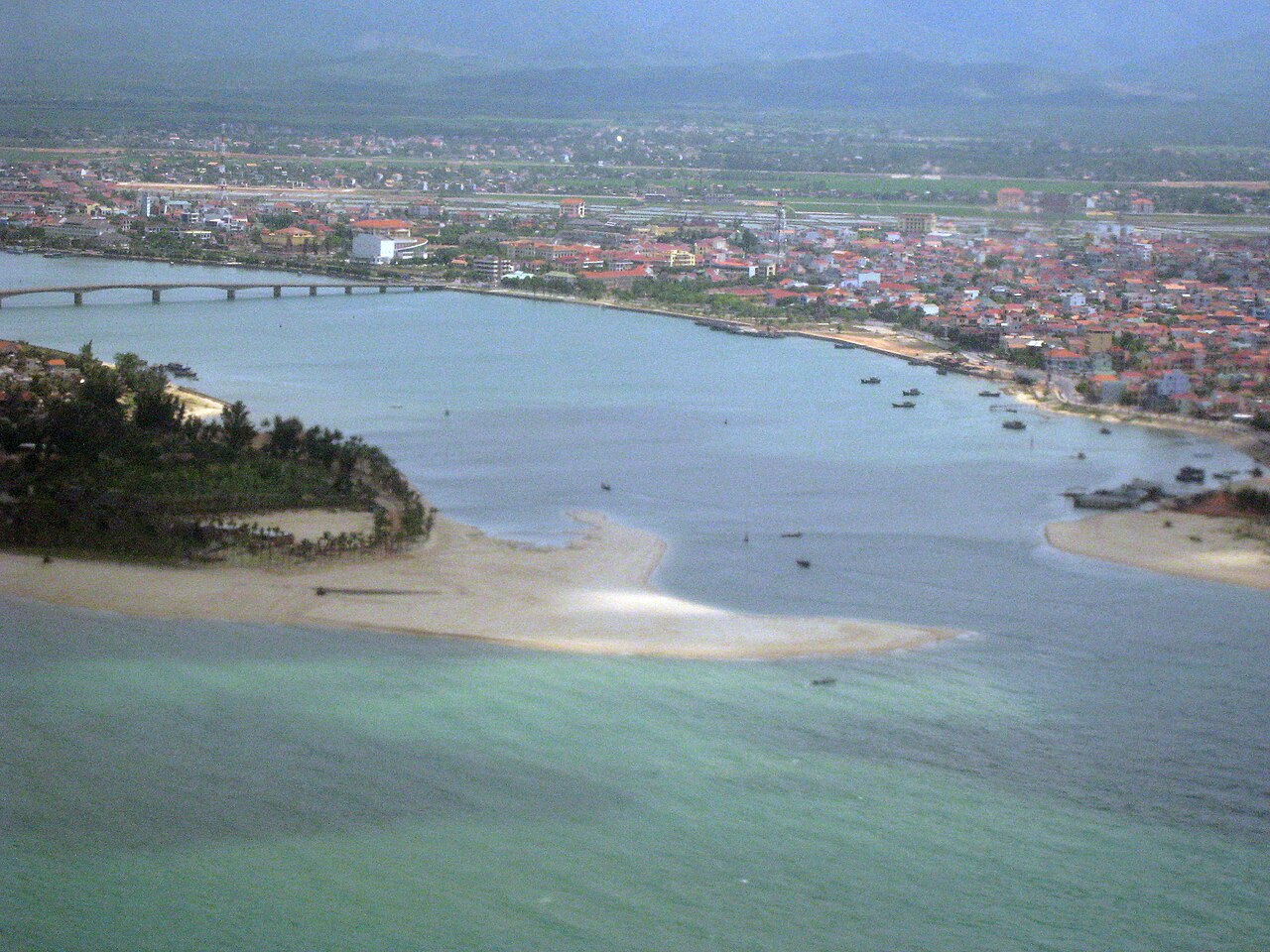
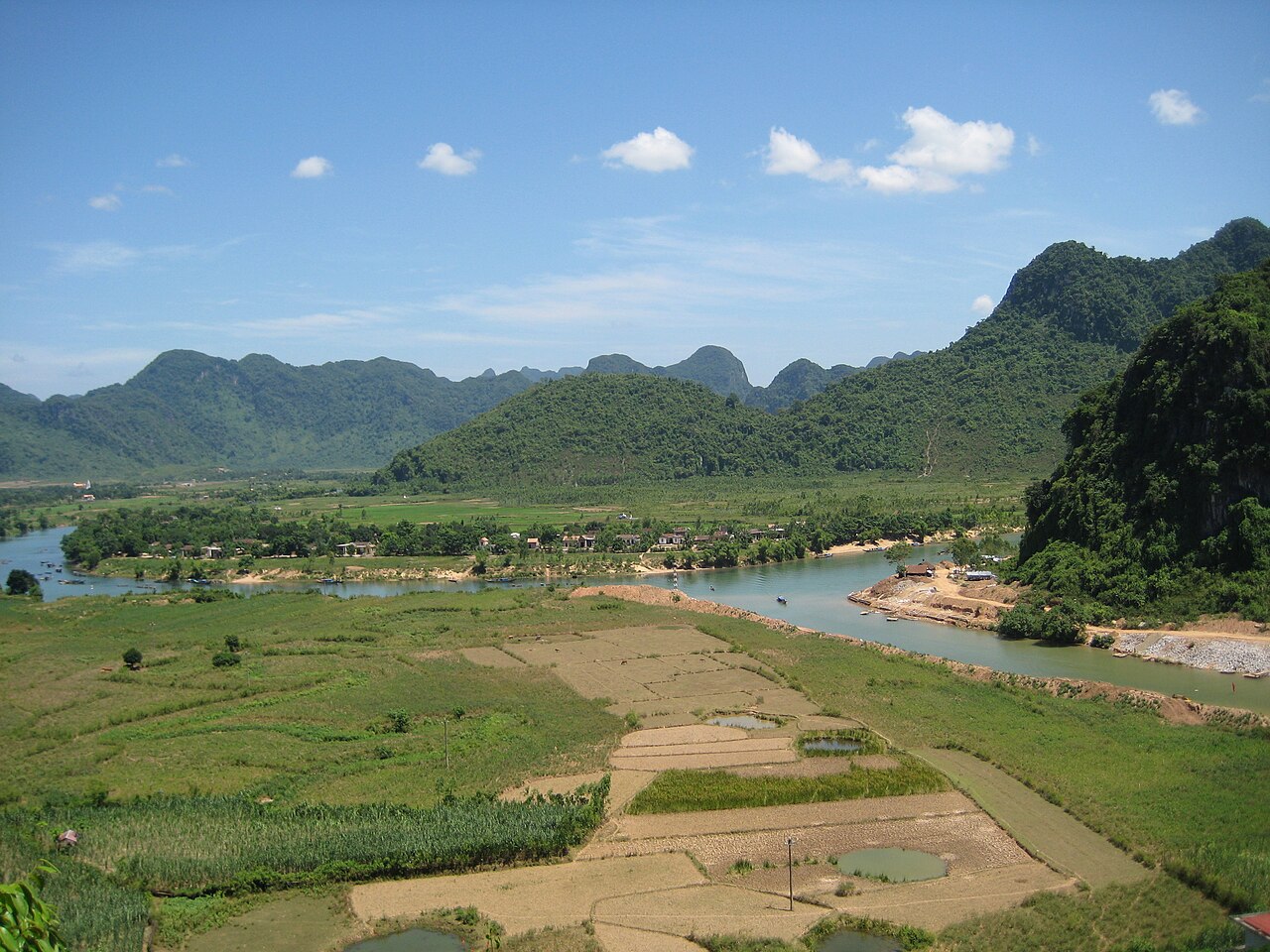
A small seaside town with an airport on the narrow central coast. It is the nearest town to Phong Nha-Kẻ Bàng National Park, about 40 km to the northwest.
The capital of Vietnam under the Nguyễn emperors from 1802 to 1945, on the Perfume River. Its walled citadel, royal tombs and pagodas make it one of the most historic cities in the country.
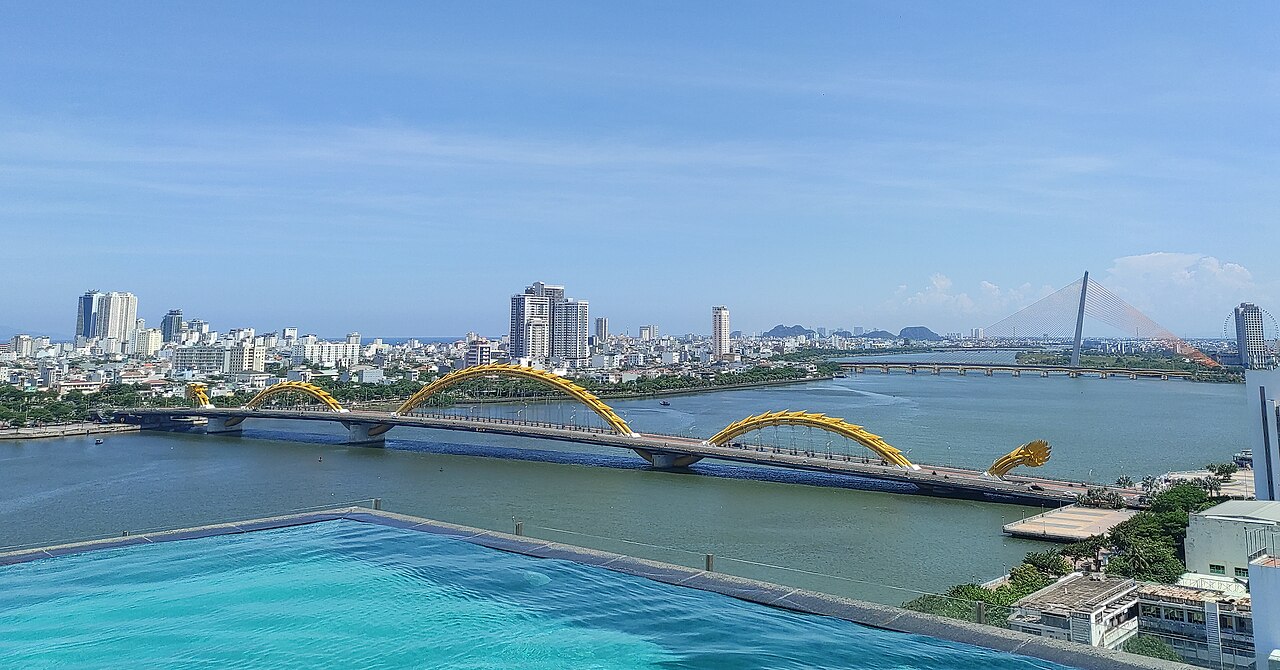
A modern port city, one of the largest in Vietnam, with long sandy beaches and mountains close by. Its airport is the main one for Hội An, and many visitors to Huế fly in here too.
Mỹ Khê beach
The Dragon Bridge over the Hàn River
The Marble Mountains
The Golden Bridge held up by giant hands in the Bà Nà Hills
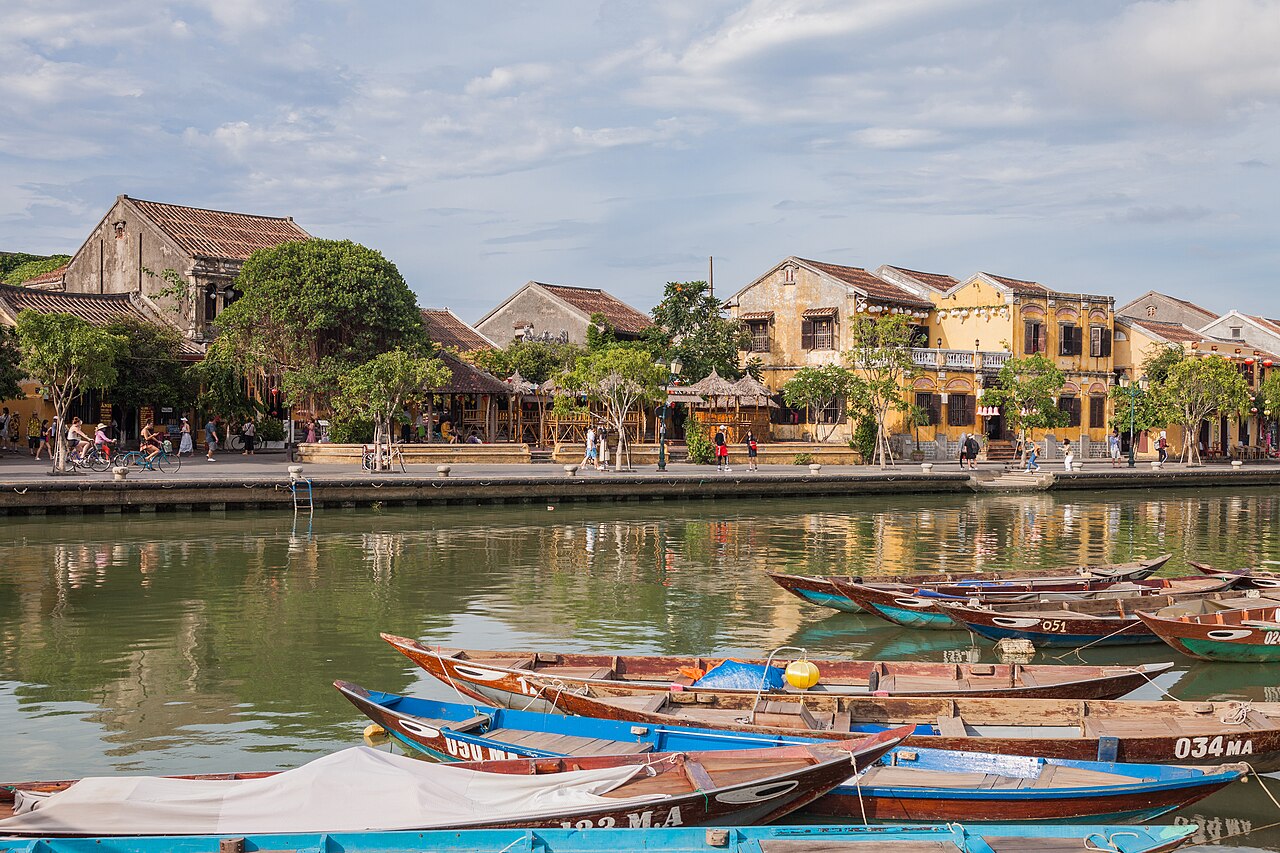
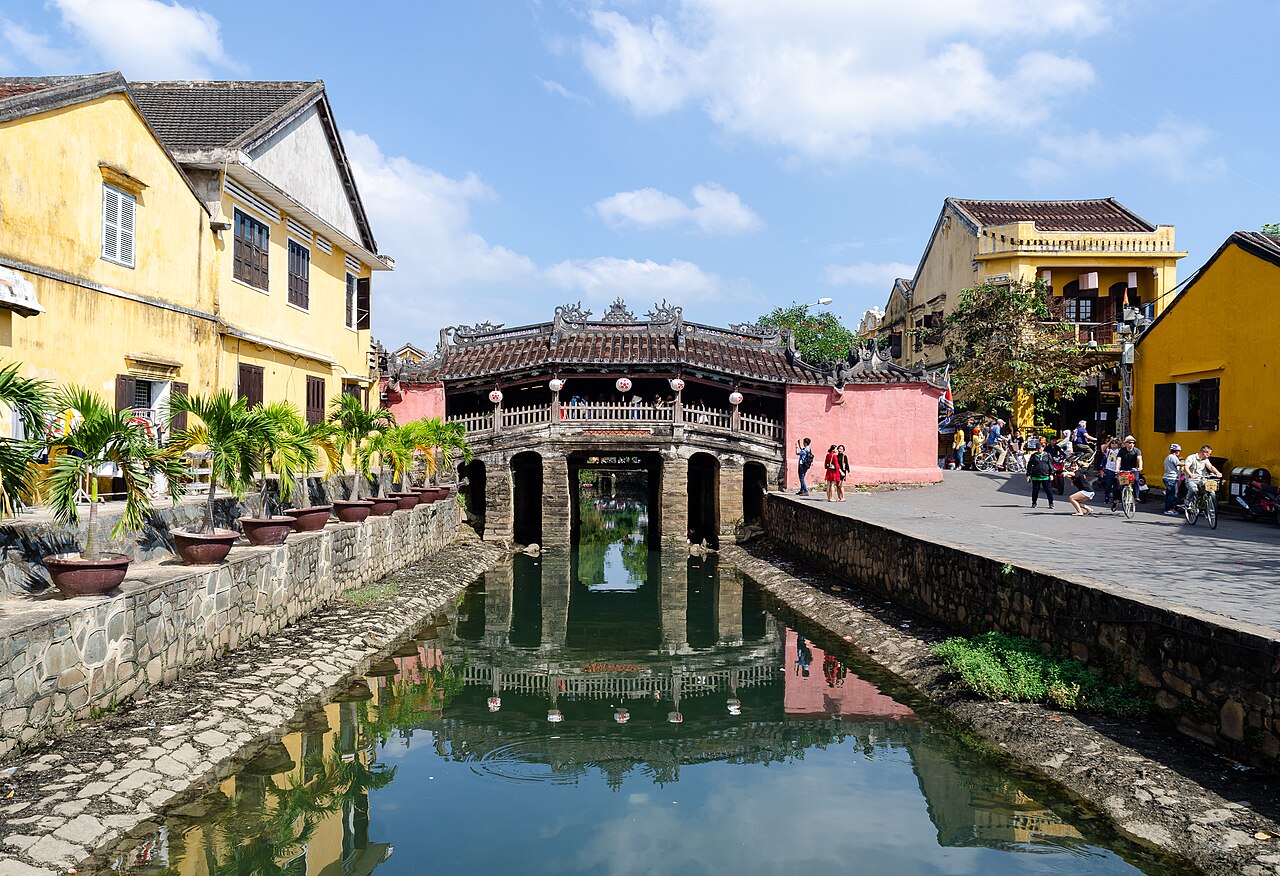
A small riverside town that was a busy international trading port from the 1400s to the 1800s. Its old town of yellow-walled merchant houses, Chinese assembly halls and a Japanese covered bridge has been a UNESCO World Heritage Site since 1999.
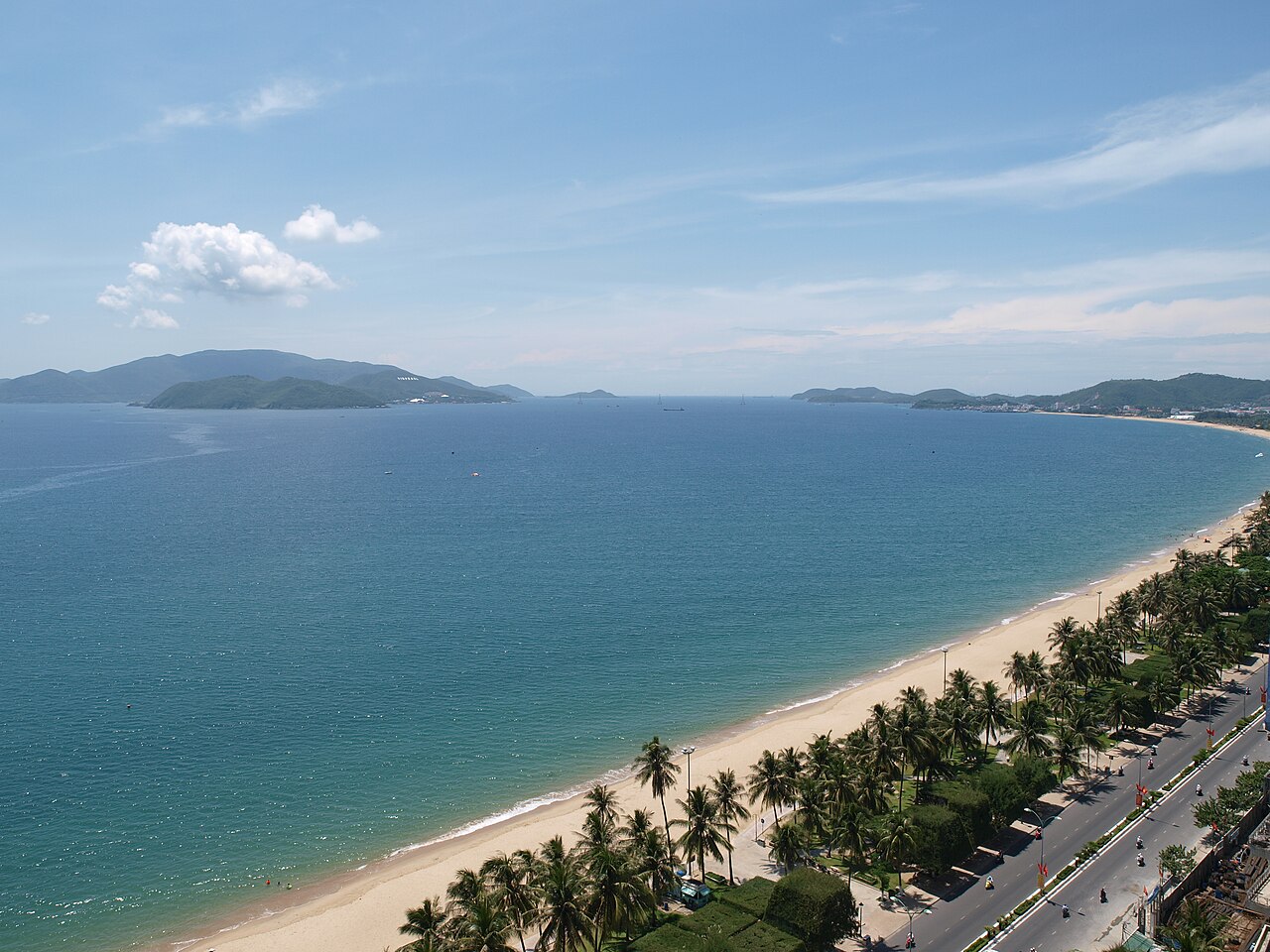
A seaside resort with a long curving beach and islands in the bay. It was once part of the kingdom of Champa, and the Cham towers of Po Nagar still stand above the river.
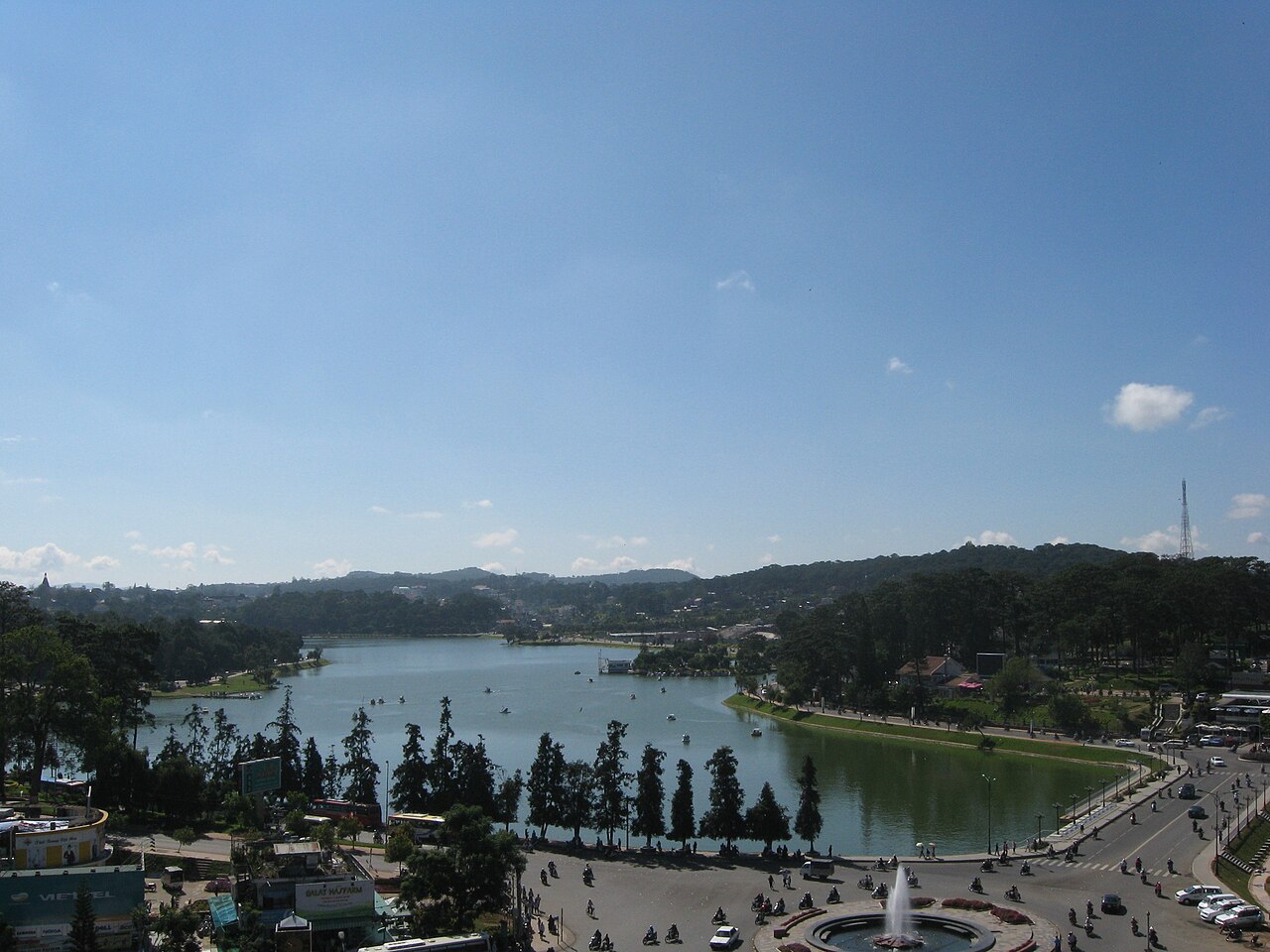
A cool hill town about 1,500 m above sea level, built as a French resort in the early 1900s. Its mild weather, pine forests and flower farms give it the nickname 'City of Eternal Spring'.
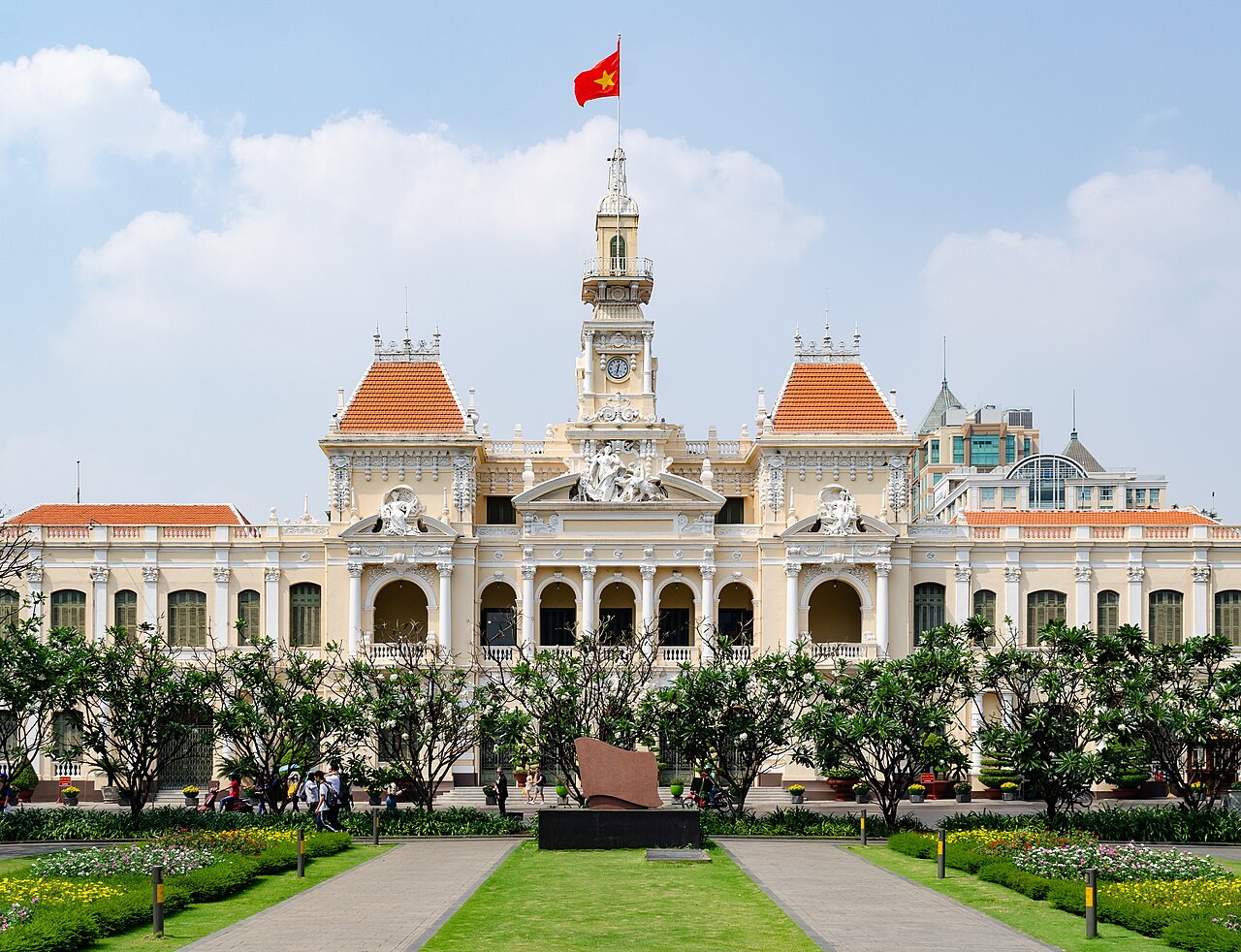
Vietnam's largest city, with more than 14 million people, on the Saigon River. It was the capital of South Vietnam until 1975 and was renamed after Ho Chi Minh in 1976, but most people still call it Saigon.
Bến Thành Market
The Independence Palace and the War Remnants Museum
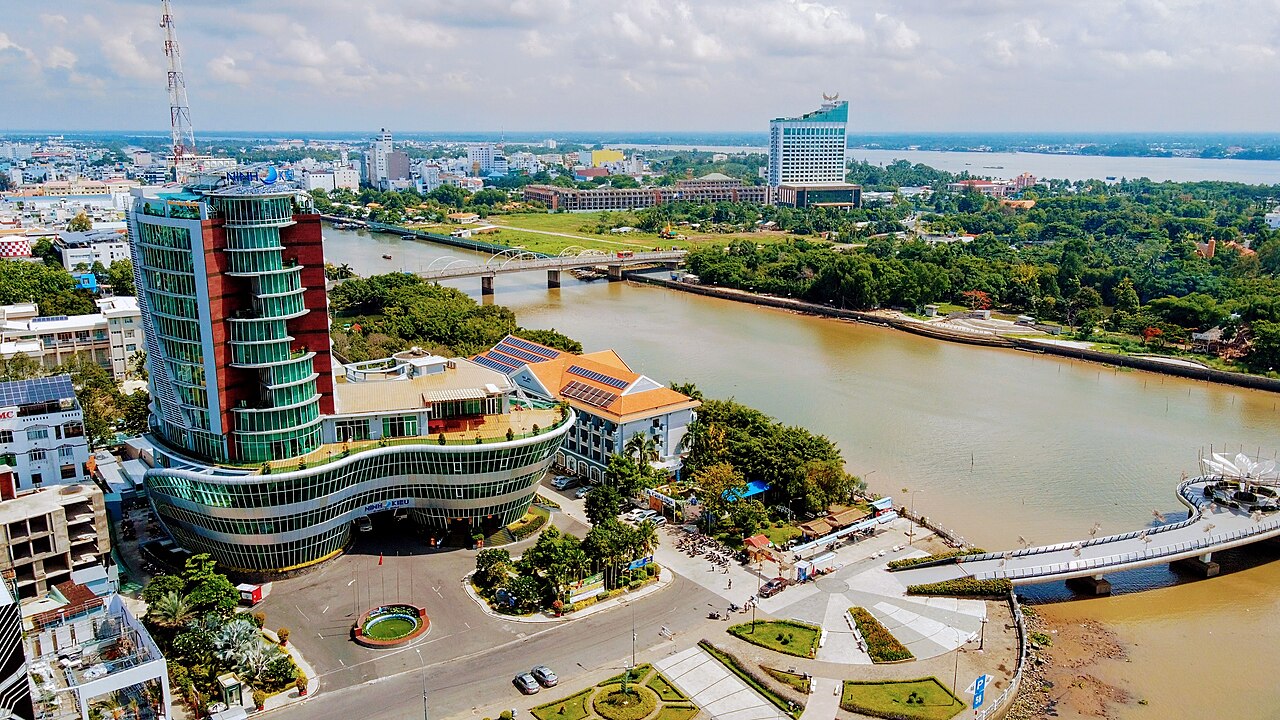
The main city of the Mekong Delta, on a branch of the Mekong River. Early in the morning, boats piled with fruit and vegetables gather on the river for the Cái Răng floating market.
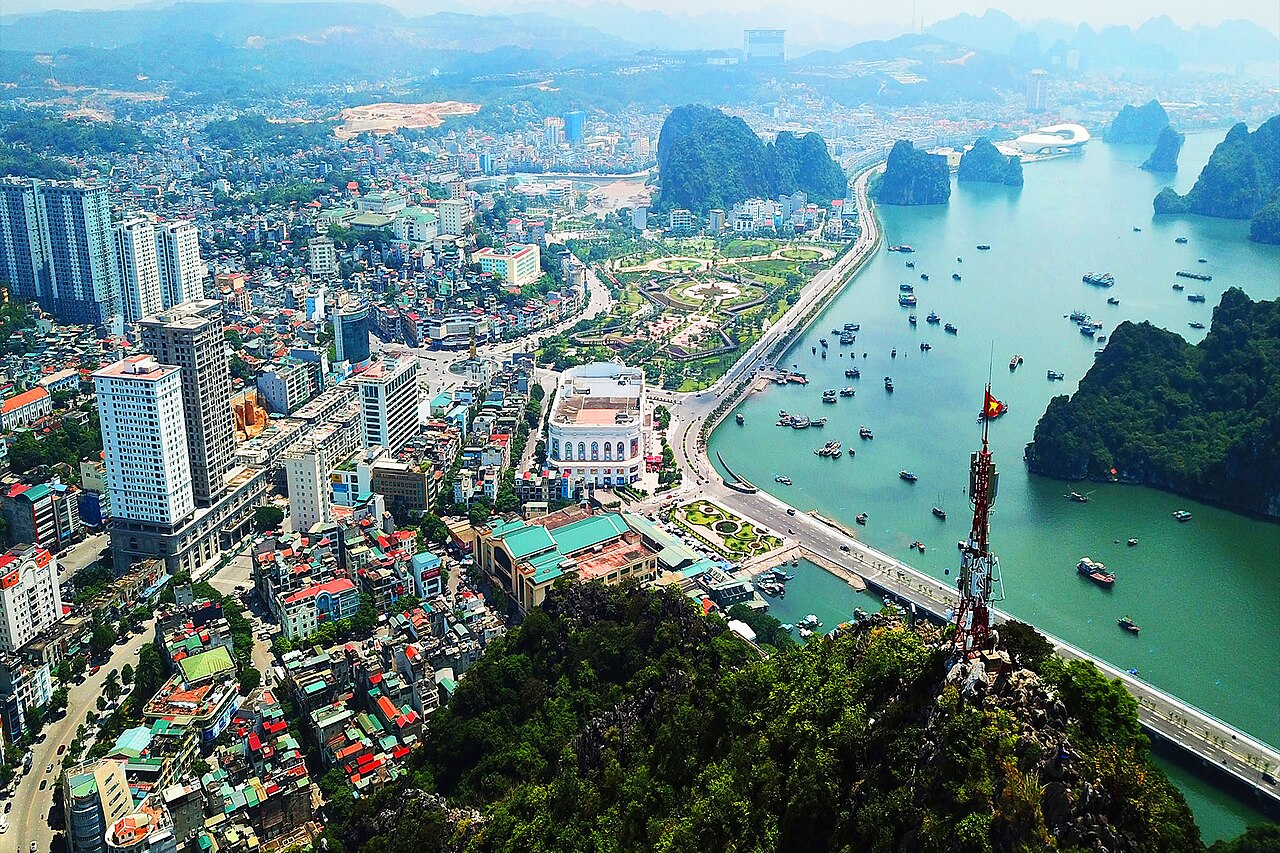
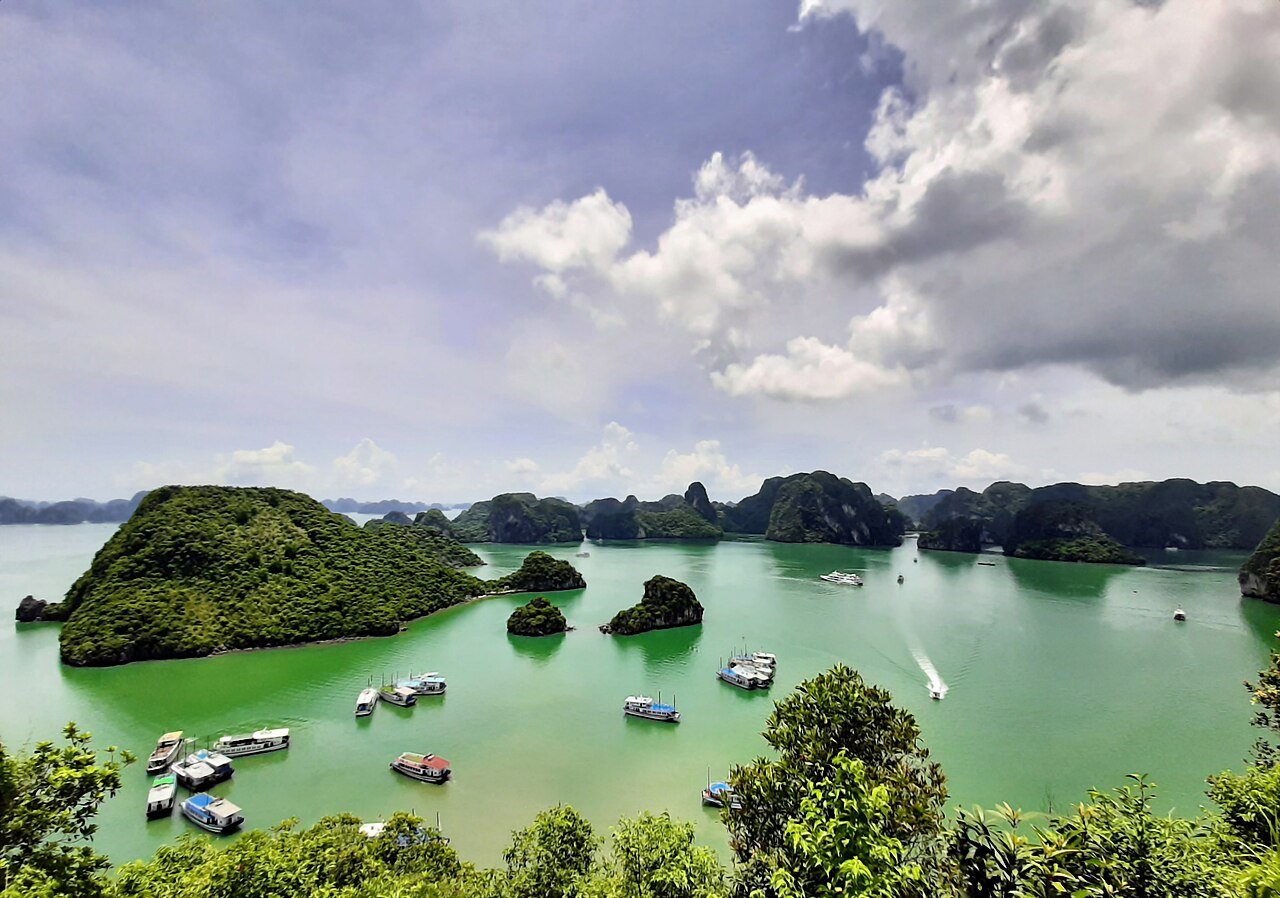
Nearly 2,000 limestone islands and islets rising from green water in the Gulf of Tonkin. The name means 'descending dragon': legend says dragons sent to protect the country spat out jewels that became the islands. It was listed by UNESCO in 1994 and extended in 2023 to include the Cát Bà archipelago.
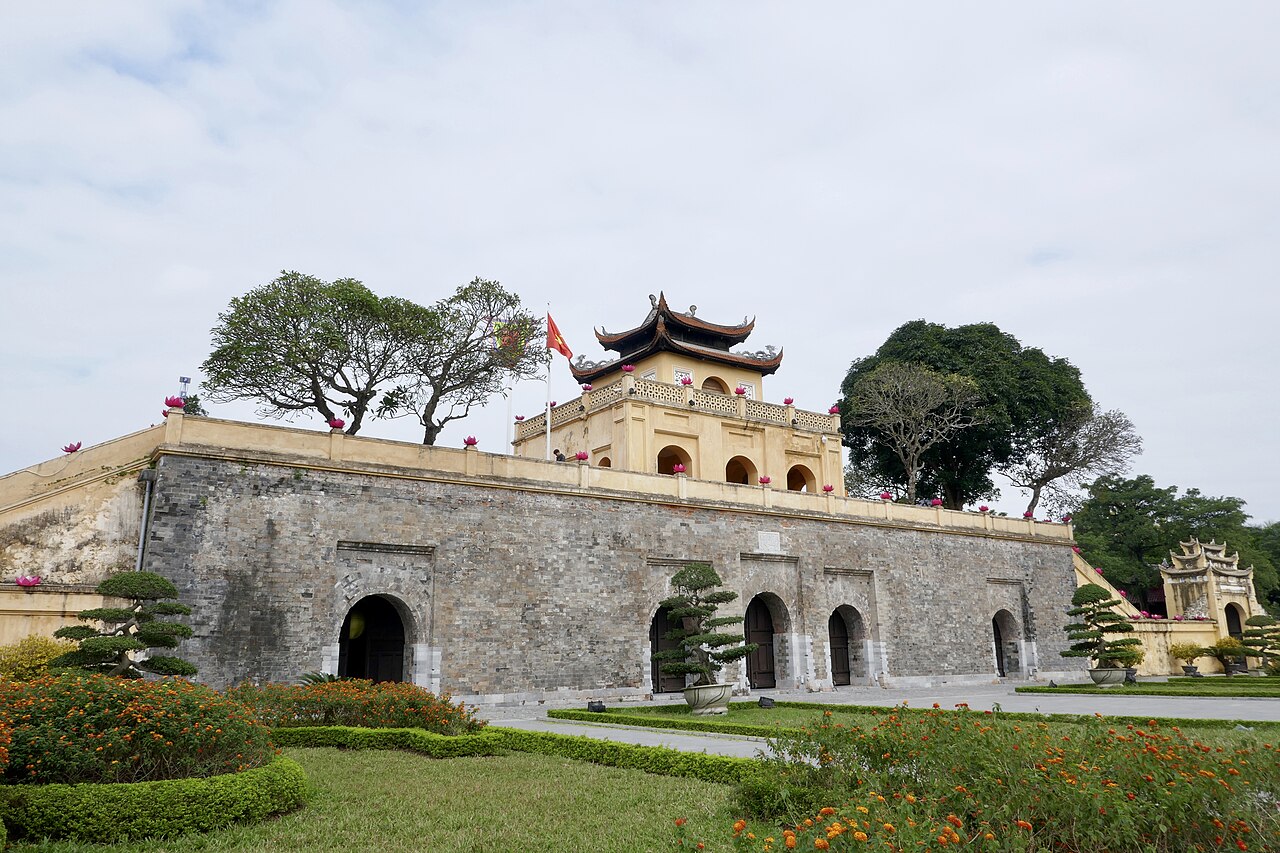
The heart of the royal capital founded by the Lý emperors in 1010, and the seat of the court for most of the next eight centuries, until the capital moved to Huế at the end of the 1700s. Excavations have uncovered palace foundations from many dynasties, and the North Gate and the Flag Tower still stand.
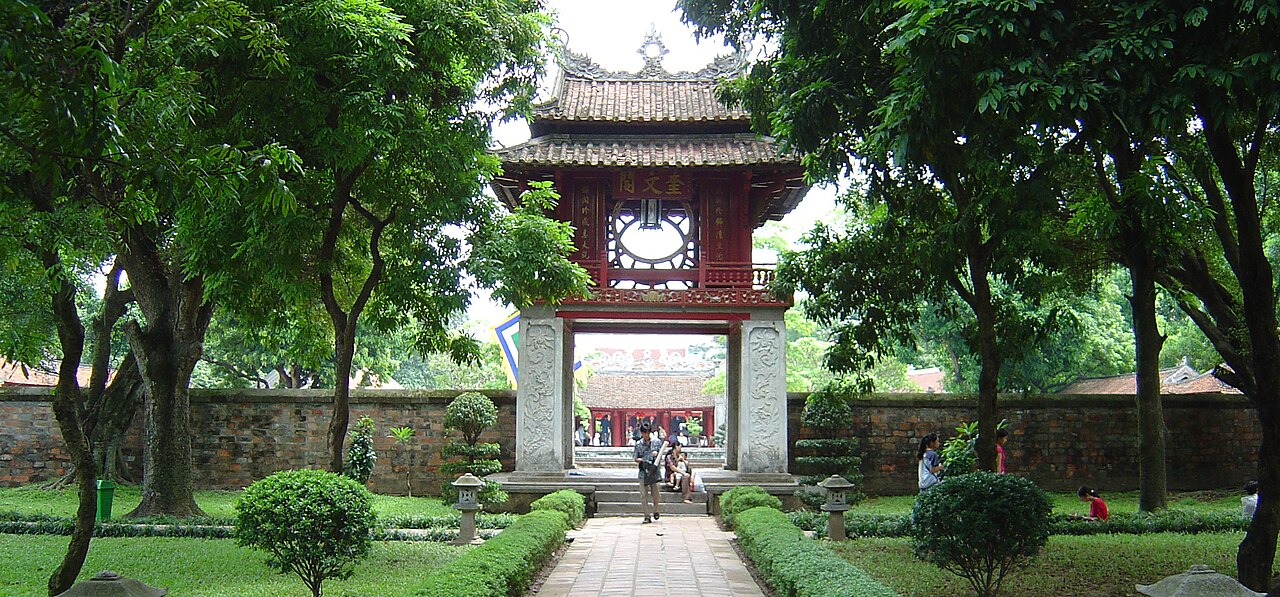
A temple dedicated to Confucius, founded in 1070. In 1076 the Imperial Academy, Vietnam's first national university, opened here. Its courtyards hold stone tablets carried on the backs of stone turtles, carved with the names of successful scholars.
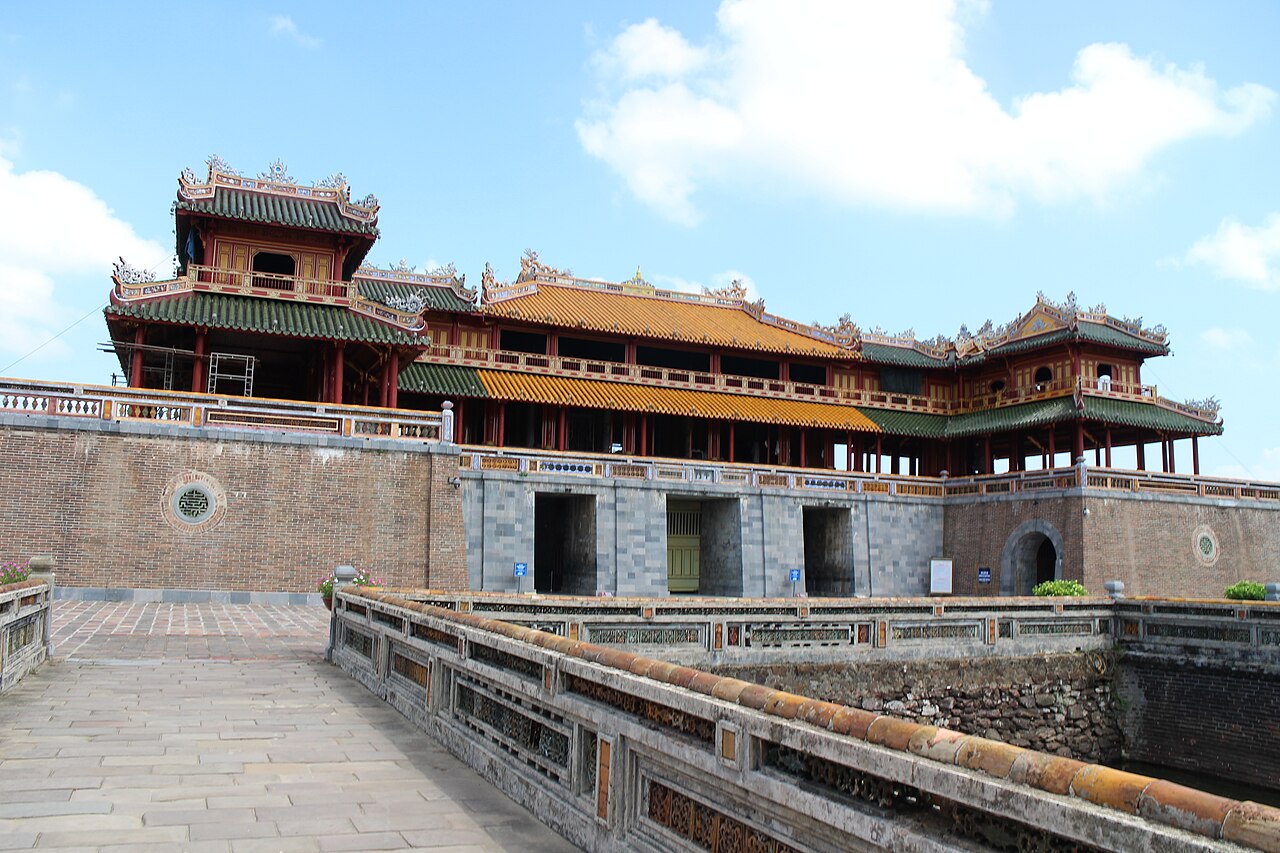
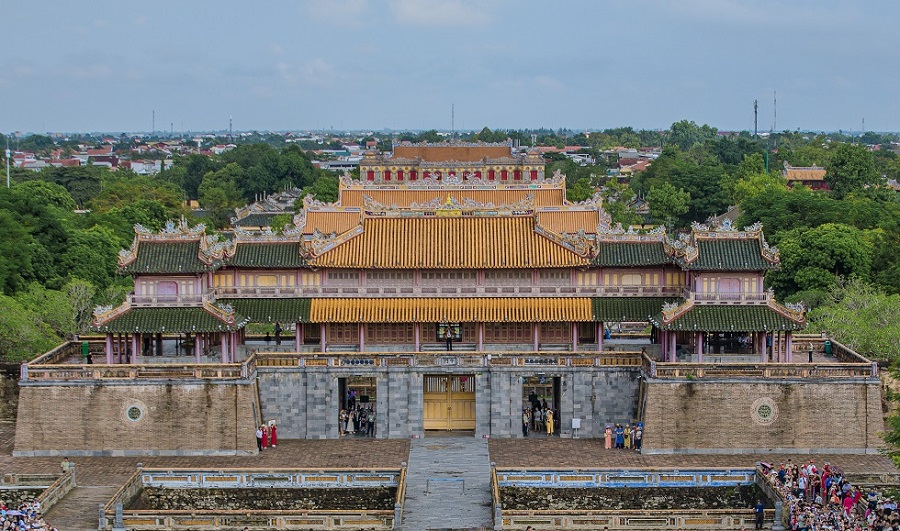
The walled citadel of the Nguyễn emperors, begun in 1804, with moats, gates, throne halls and, at its centre, the Purple Forbidden City where the emperor lived. Much of it was damaged in 1968 and is being restored. It is part of the Complex of Huế Monuments World Heritage Site.
A remarkably well-kept trading port of wooden shophouses, family chapels and assembly halls. Its symbol is the Japanese Covered Bridge, first built in the 1590s by the town's Japanese community, with a small temple on it.
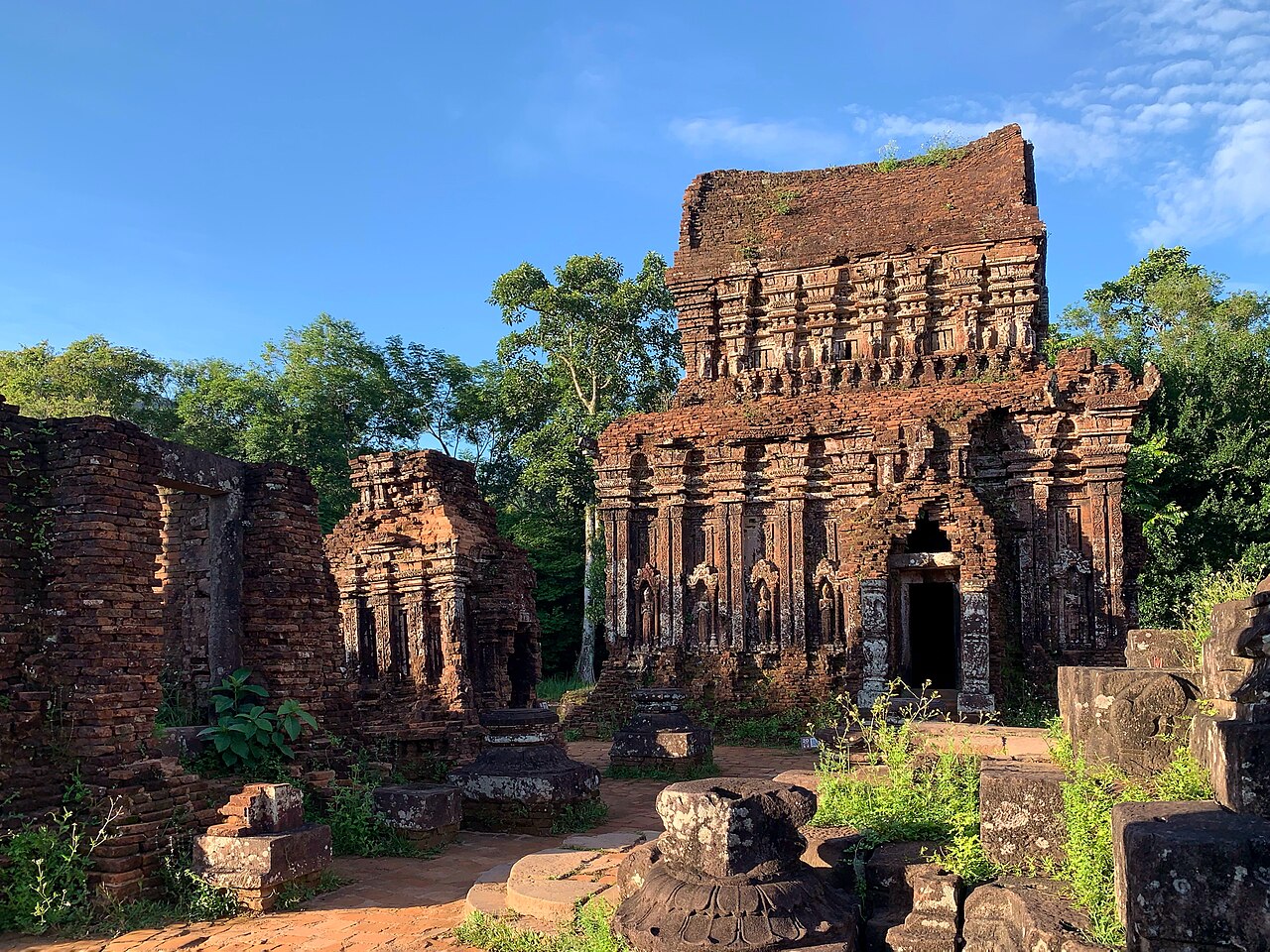
The ruins of Hindu temples built in brick by the kings of Champa between the 4th and the 13th century, in a green valley about 36 km from Hội An. Much of the site was destroyed by US bombing during a single week of the war.
A landscape of limestone peaks, rice fields and rivers that flow through caves, explored by rowing boat. It also includes the ancient capital of Hoa Lư. It is a mixed natural and cultural World Heritage Site, listed in 2014.
A huge area of forested limestone mountains full of caves and underground rivers, including Sơn Đoòng, the largest known cave passage in the world. Visitors can take a boat into Phong Nha Cave. In 2025 the World Heritage Site was extended across the border to include Hin Nam No in Laos.
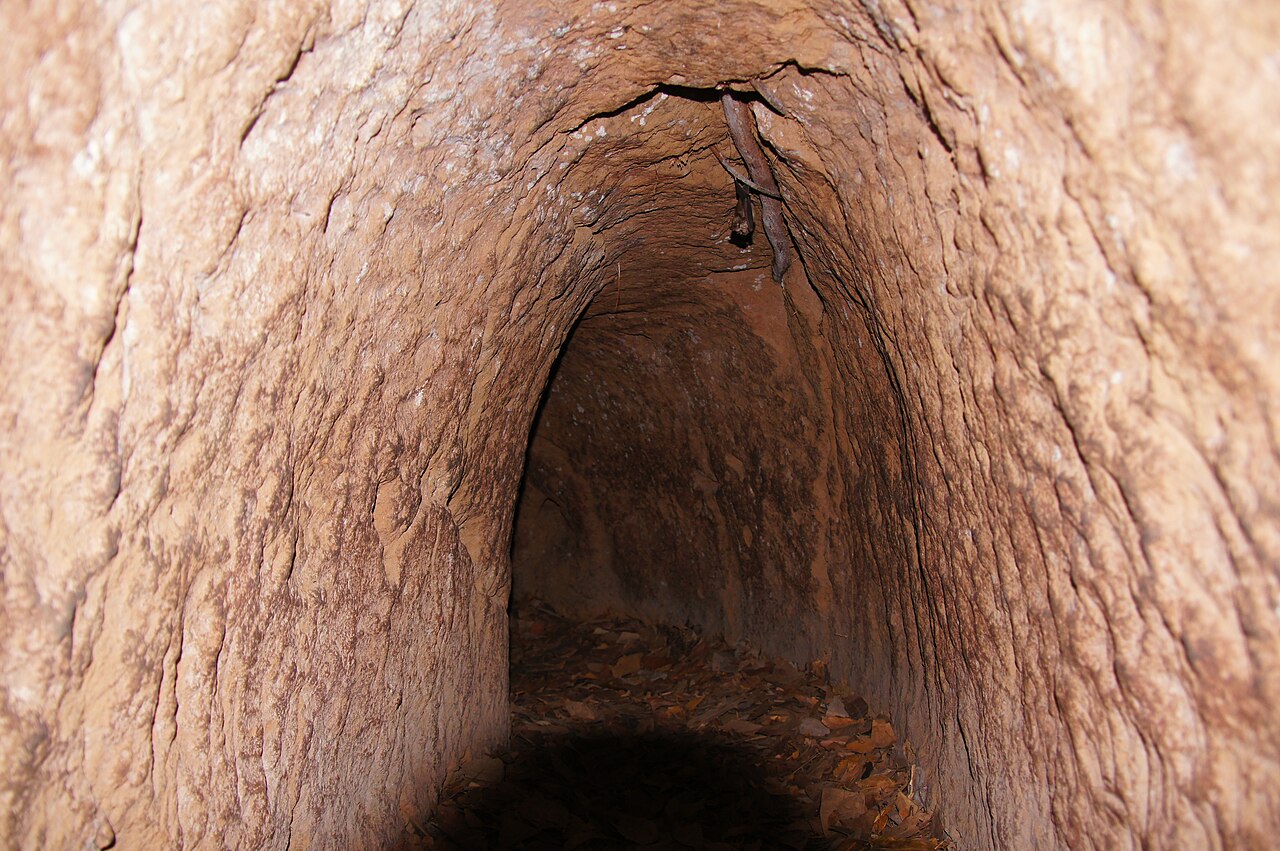
A network of about 120 km of narrow underground tunnels, used by communist fighters during the war to hide, store supplies and move unseen. Parts are now a war memorial park, where visitors can crawl through a short, widened section.
The highest mountain in Vietnam and in Indochina, about 9 km southwest of Sa Pa. The climb once took several days, but since 2016 a cable car, which holds two Guinness World Records, and a short funicular take visitors close to the summit in well under an hour.
Vietnamese is written in the Latin alphabet with extra marks. The system was developed by Portuguese and other European missionaries in the 1600s, and a dictionary by Alexandre de Rhodes, printed in Rome in 1651, helped fix the spelling.
02
Standard northern Vietnamese has six tones. Five of them are shown by accent marks over or under the vowels, and the level tone has no mark, so the same letters can mean different things.
03
By some estimates between 30 and 39 percent of Vietnamese people have the family name Nguyễn, the name of the last royal dynasty.
04
As of 2026, Vietnam is the second-largest coffee producer in the world, after Brazil, and almost all of its coffee is robusta.
05
Sơn Đoòng cave in Phong Nha-Kẻ Bàng is the largest known cave passage in the world by volume. A local man, Hồ Khanh, found its entrance in 1990, and British cavers surveyed it in 2009. It is so big that it has its own river inside, and trees grow where parts of its roof have collapsed.
06
Water puppetry began in the villages of the Red River Delta as far back as the 11th century. The puppeteers stand hidden in waist-deep water behind a screen and move the puppets across the water's surface.
07
Tết, the Lunar New Year in late January or February, is the biggest festival of the year. Families gather, clean their homes, honour their ancestors and give children lucky money in red envelopes.
08
The áo dài, a long silk tunic worn over trousers, is Vietnam's national dress. Its early form goes back to a 1744 decree by Lord Nguyễn Phúc Khoát, and the modern, close-fitting style appeared in the 1930s.
09
The saola, a shy forest animal with long straight horns, was discovered by scientists in the mountains of Vietnam in 1992. It was the first large mammal discovered in the region in 50 years.
10
Hạ Long means 'descending dragon', and the old name of Hanoi, Thăng Long, means 'ascending dragon'.
11
The Temple of Literature in Hanoi housed Vietnam's first national university, the Imperial Academy, from 1076 to 1779.
12
As of 2026, Vietnam has nine UNESCO World Heritage Sites, from Ha Long Bay and the caves of Phong Nha-Kẻ Bàng to the old towns and citadels of Hội An, Huế and Hanoi.
13
From north to south Vietnam is about 1,650 km long, but at its narrowest point it is only about 50 km wide.
Motorbikes fill the streets of Hanoi and Ho Chi Minh City. To cross, wait for a gap, then walk at a slow, steady pace without stopping, running or stepping back. Riders will steer around you. Use pedestrian crossings and traffic lights where there are any.
Count the zeros
Prices in đồng have many zeros, and 500,000 đồng is the largest banknote. Check each note carefully before you pay, and carry small notes for taxis and markets, where drivers and sellers may say they have no change.
Cover up at temples and the Mausoleum
Cover your shoulders and knees when visiting pagodas and temples. At the Ho Chi Minh Mausoleum in Hanoi, short or revealing clothes are not allowed, cameras and phones must not be used inside, and visitors walk through in silence.
Take off your shoes
It is customary to take off your shoes before entering someone's home, and often in temples and traditional guesthouses. Look for shoes left at the door.
Drink bottled or boiled water
Tap water is not safe to drink. Use bottled or filtered water, which is sold everywhere.
Tipping and bargaining
Vietnamese people do not usually tip, and it is not expected, though small tips are welcome in tourist restaurants and for guides. In markets and small shops without price tags, friendly bargaining is normal.
Plan around Tết
During Tết, the Lunar New Year in late January or February, many shops and restaurants close for several days and trains, buses and flights are full as people travel home. Book early, or avoid travelling in that week.
Emergency numbers
The official emergency numbers in Vietnam are 113 for police, 114 for fire and rescue and 115 for an ambulance. Hotel staff can help you call and explain where you are.
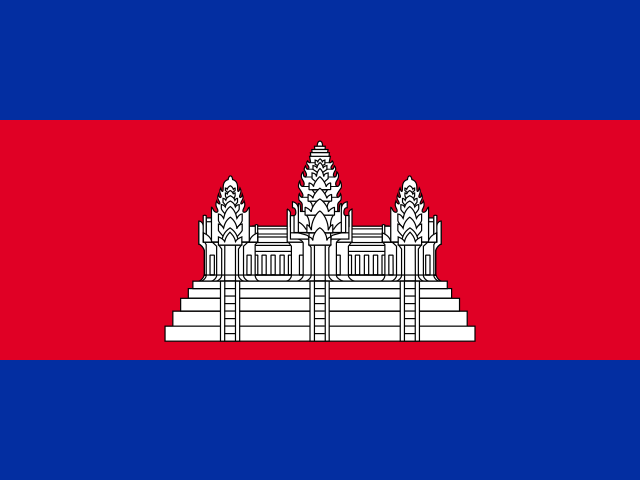 Cambodia
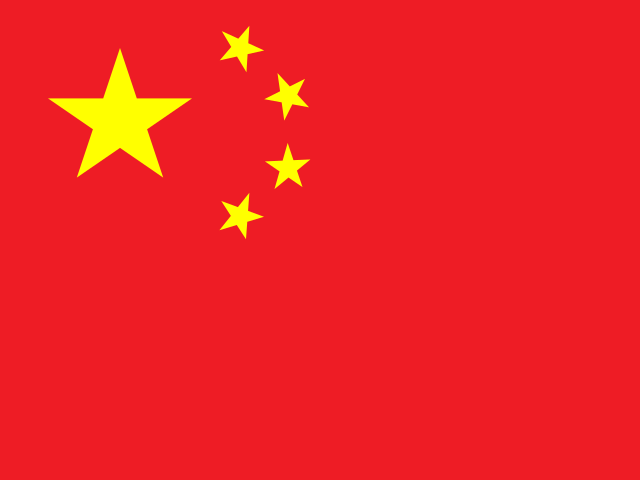 China
China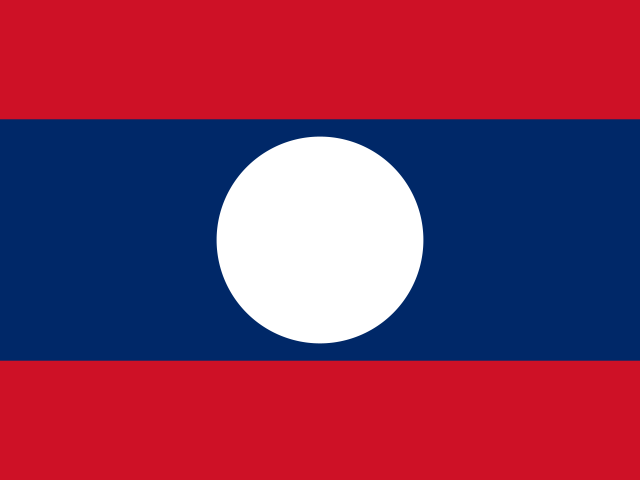 Laos
Laos