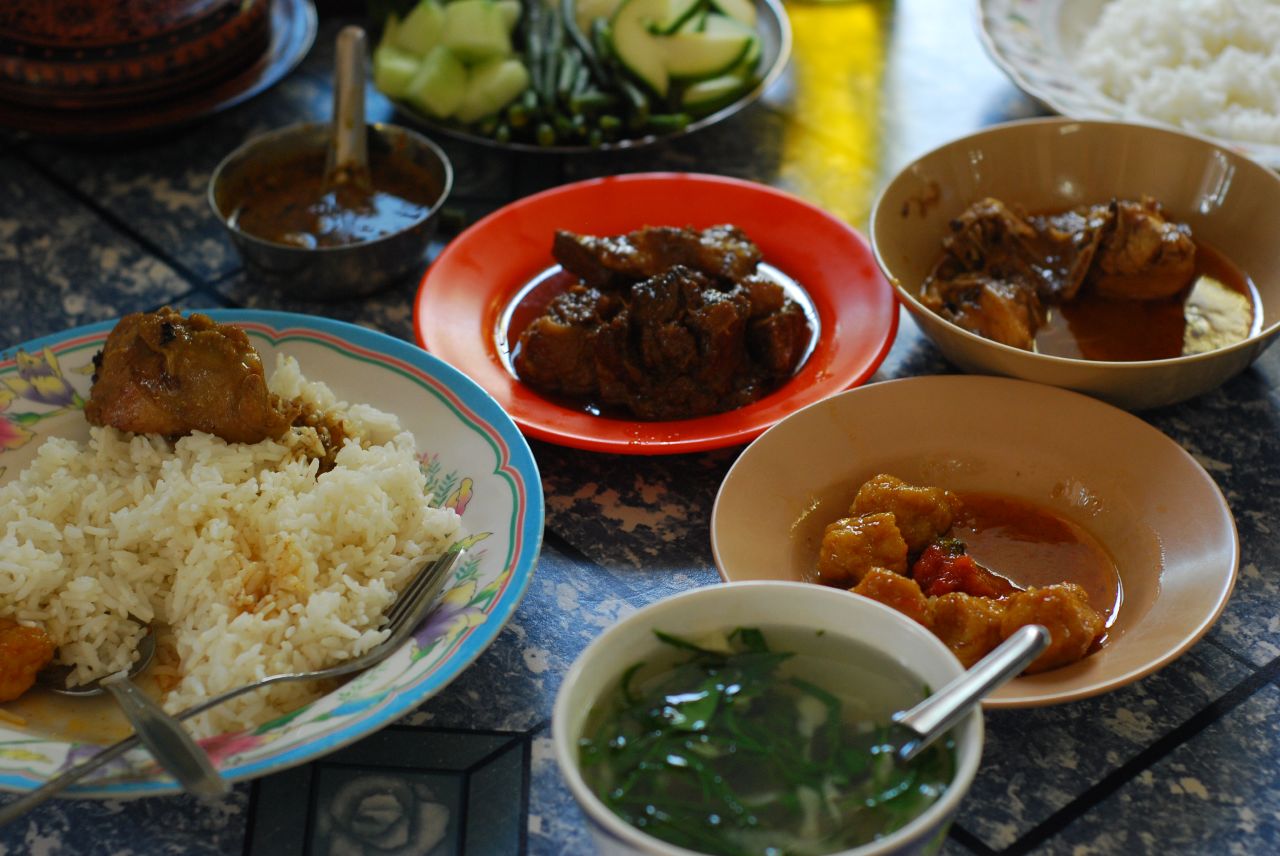
A traditional Burmese meal is served all at once and shared: steamed rice in the middle, with one or two curries, a light soup, salads, fried vegetables and a plate of fresh and blanched vegetables with a dip of fermented fish. The Burmese sum up the flavours in three words, 'sour, salty and spicy'. The meal often ends with a piece of palm sugar or a little pickled tea. Noodles are eaten mostly for breakfast or as a snack, and the tea shop, with milk tea and flaky breads, is at the heart of daily life.
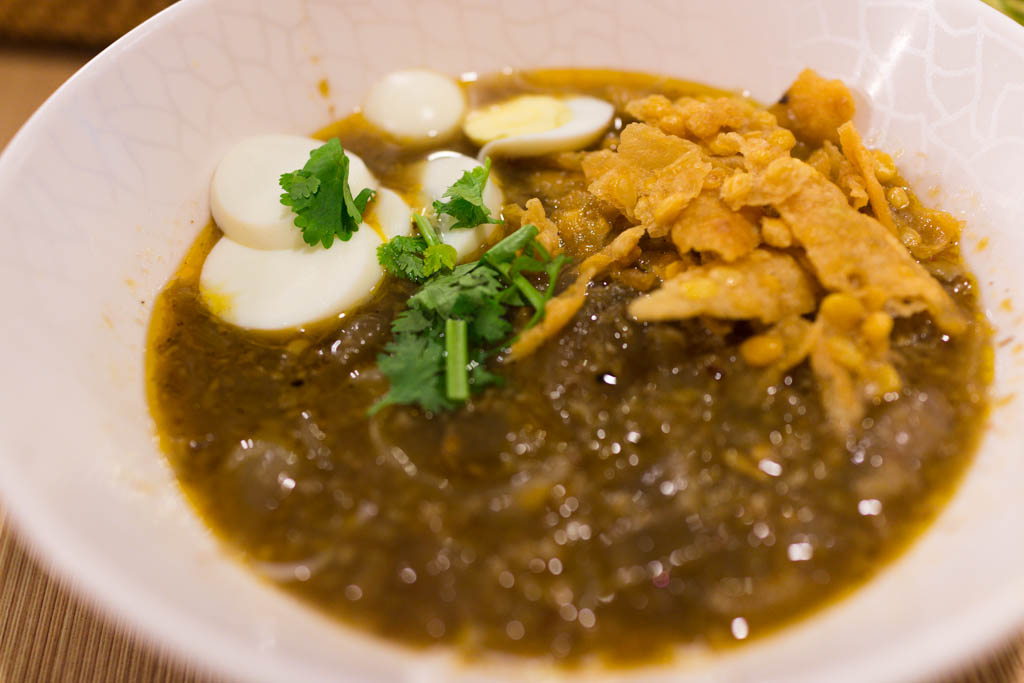
The national dish: thin rice noodles in a fish broth thickened with toasted chickpea flour or rice, flavoured with lemongrass, ginger, garlic, onion and banana stem. It is topped with boiled egg, crisp fritters, coriander and a squeeze of lime.
Mohinga is eaten with Chinese-style soup spoons, which the Burmese call mohinga zun, 'mohinga spoons'. Street sellers used to carry the pot of soup on one end of a shoulder pole and the noodles and bowls on the other.
Eaten everywhere; the tea is grown mainly in Shan State
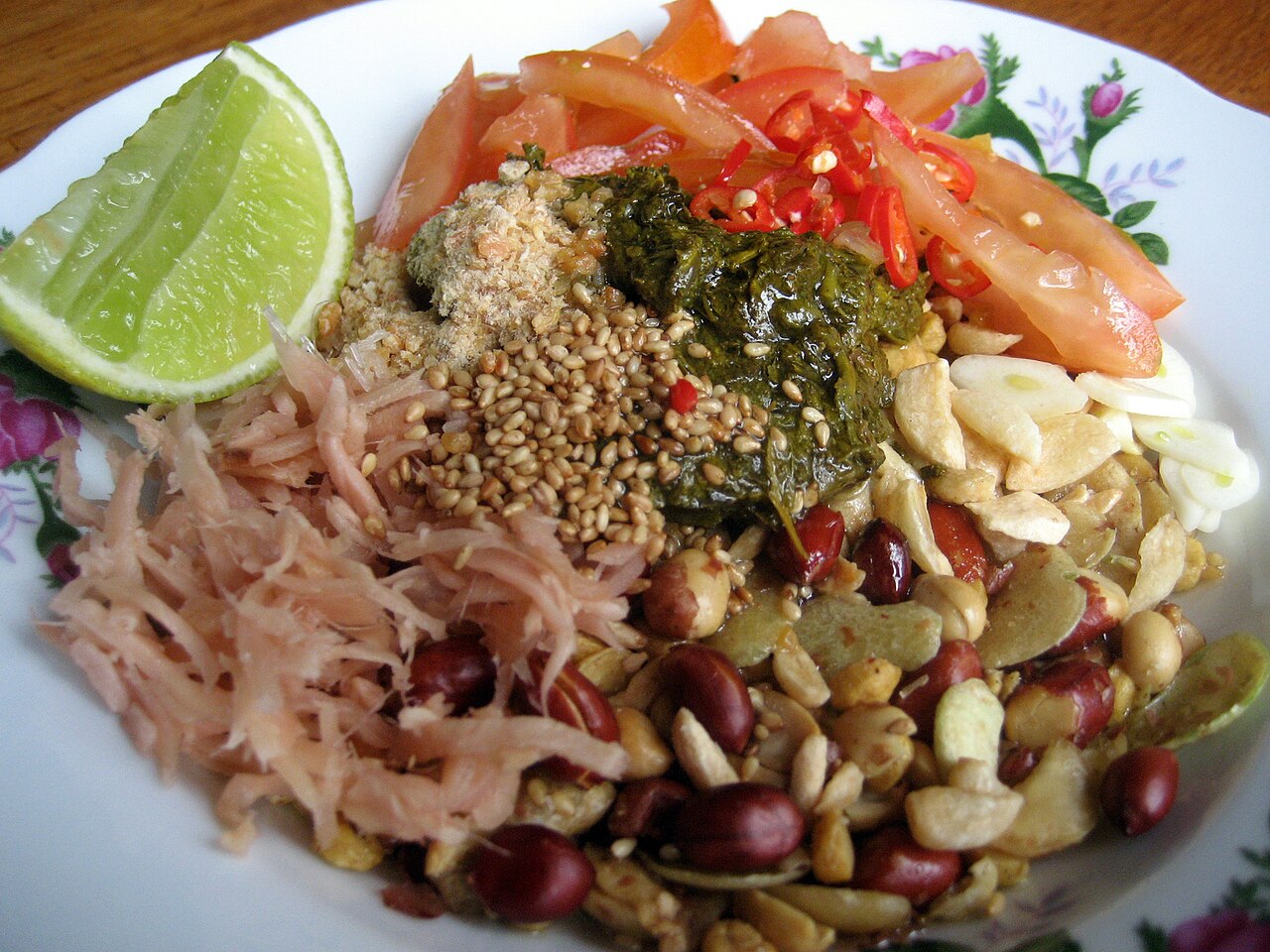
Pickled tea leaves mixed by hand with crunchy fried beans and peas, peanuts, toasted sesame, fried garlic, dried shrimp, tomato and green chilli, and dressed with peanut oil, fish sauce and lime.
Myanmar is one of very few countries where tea is eaten as well as drunk. A popular saying goes: 'Of all the fruit, the mango's the best; of all the meat, pork's the best; and of all the leaves, lahpet's the best.' Lahpet is still offered to guests as a sign of welcome.
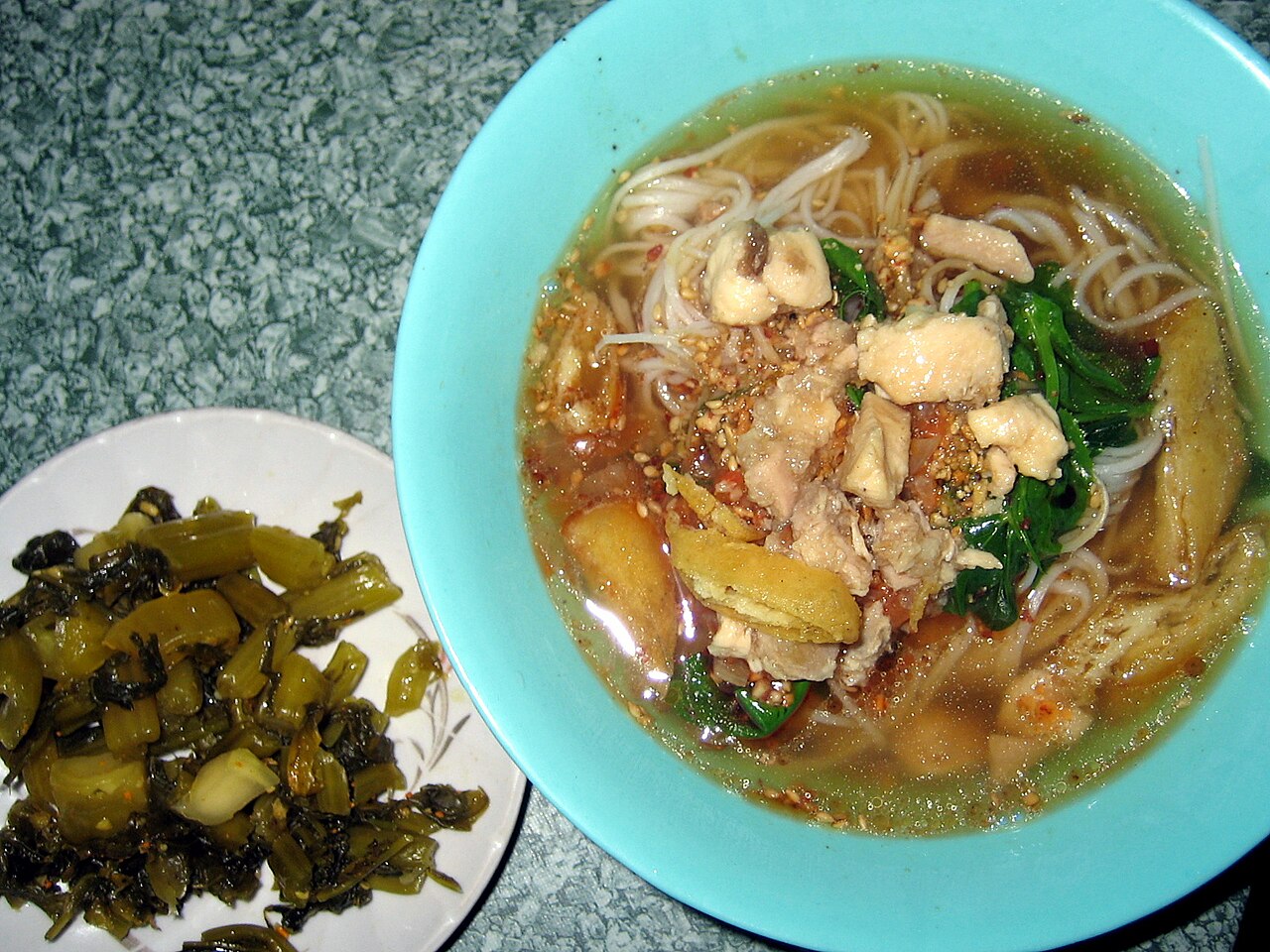
Flat or round rice noodles with chicken or minced pork cooked with tomato, garlic and onion, topped with crushed roasted peanuts and served with pickled mustard greens. It comes as a soup or as a dry noodle dish with a little broth on the side.
Central Myanmar; it is thought to come from Shwedaung, near Pyay
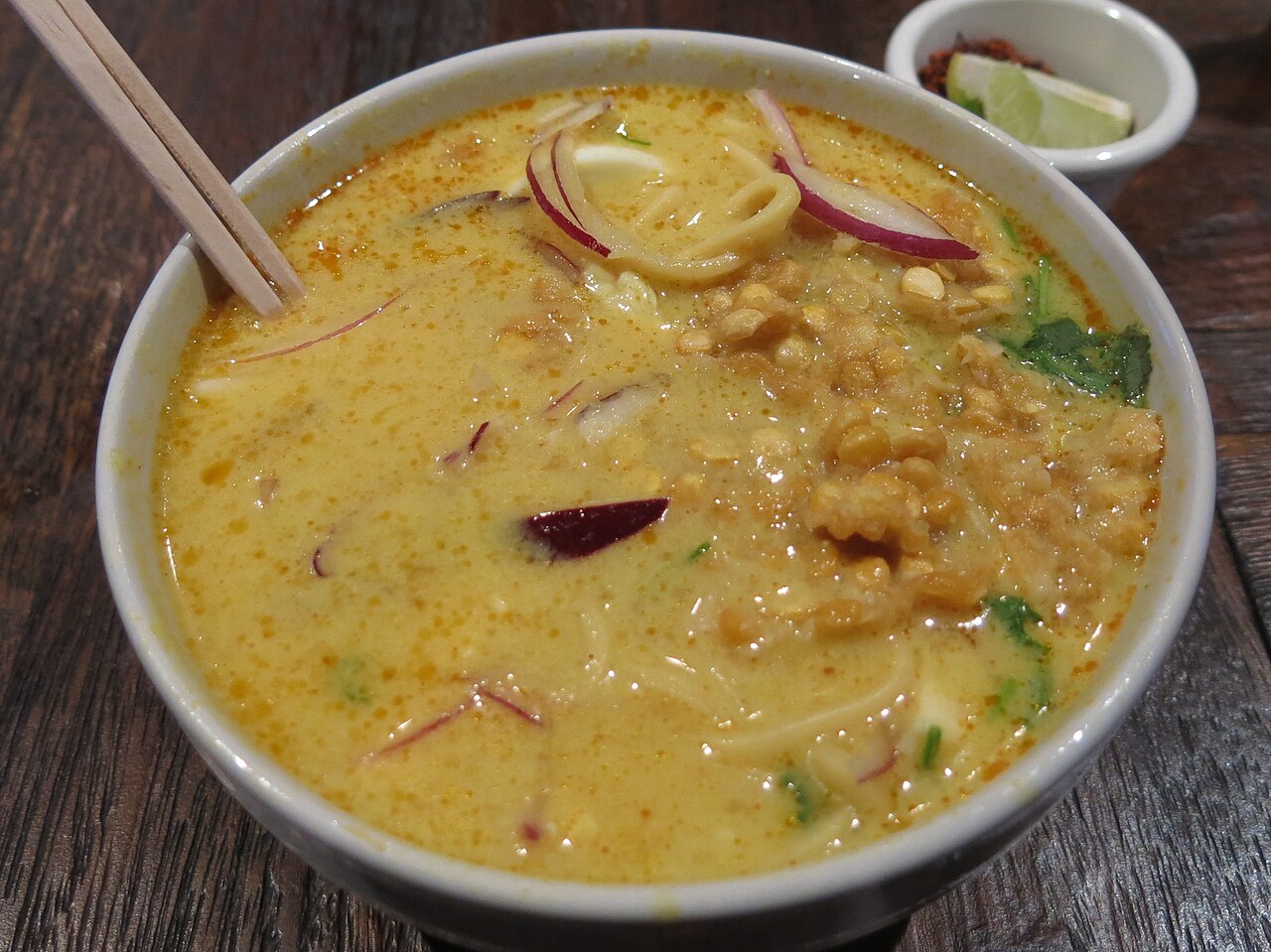
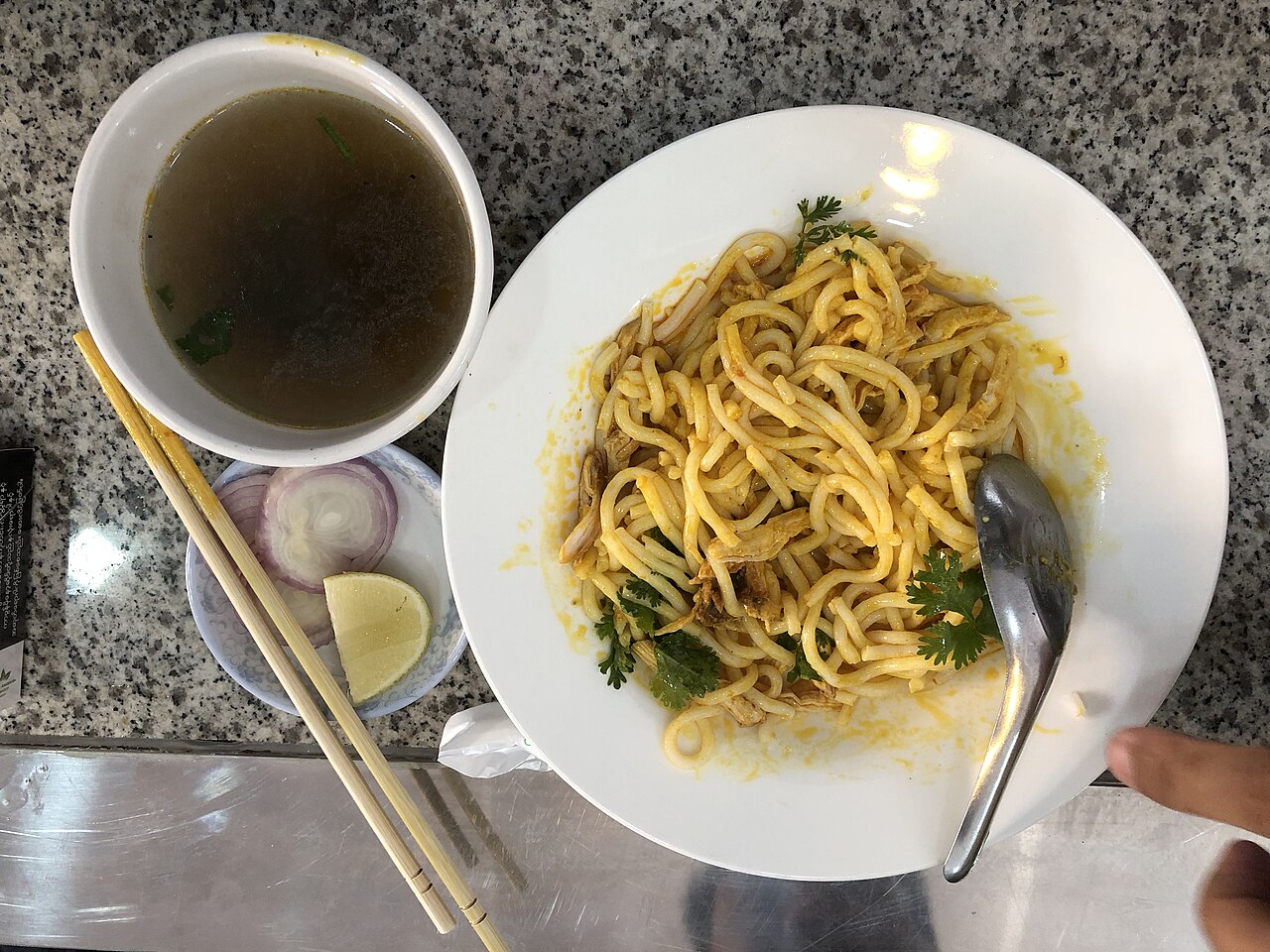
Wheat noodles in a mild curried chicken broth made with coconut milk and thickened with chickpea flour. It is served with boiled egg, raw onion, crispy fried noodles, chilli, fish sauce and lime.
Families of the Memon community who had lived in Myanmar took the dish to Pakistan, where it became a favourite in Karachi.
Thick, round rice noodles mixed with a chicken curry sauce and chilli oil, sprinkled with toasted chickpea flour and topped with onion, boiled egg, fish cake and crispy noodles. It is a favourite breakfast in Mandalay.
In Yangon the same dish is often called 'Mandalay mont di'.
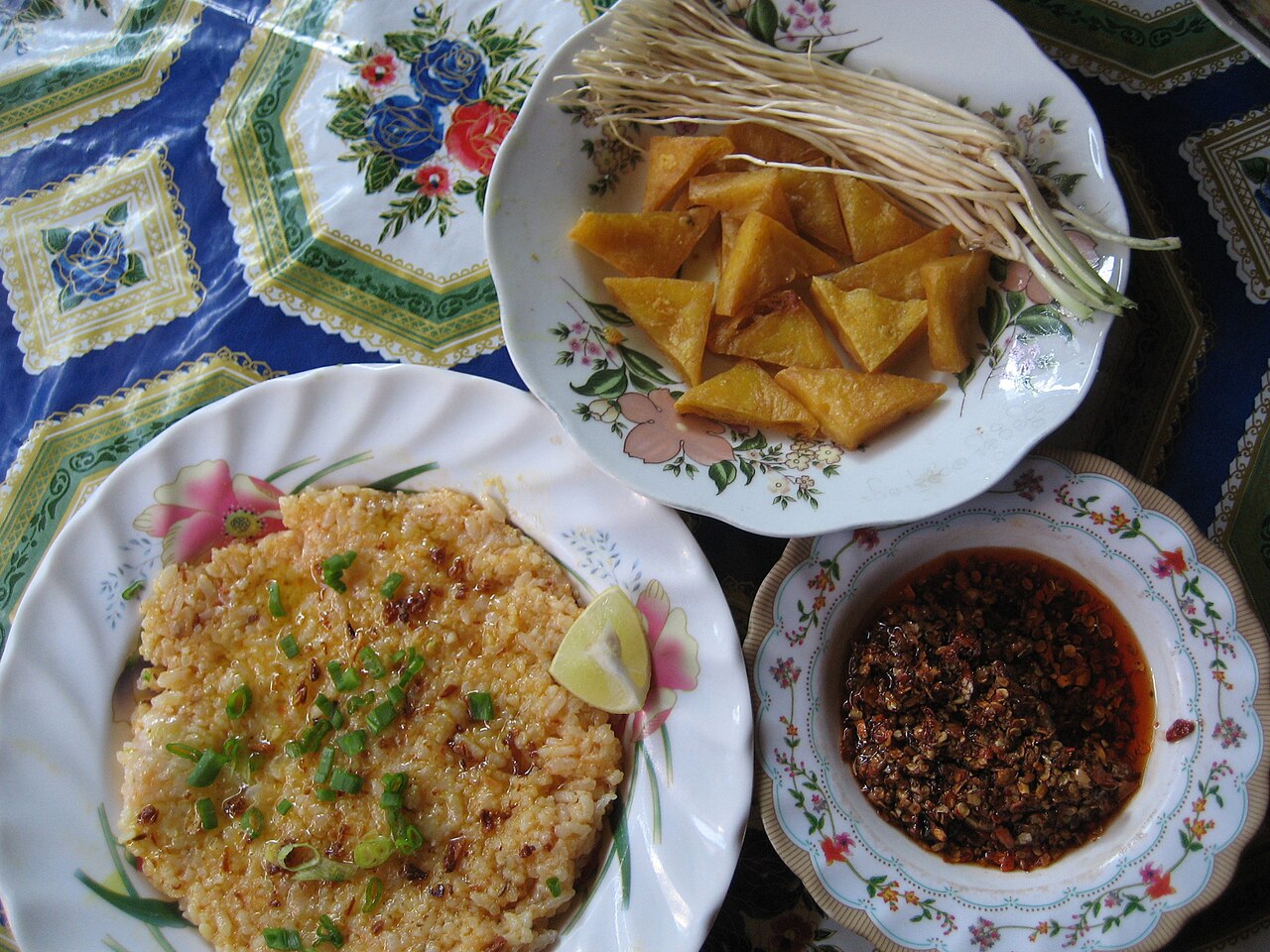
Rice kneaded with boiled fish from the lake, tomato and mashed potato, shaped into balls and topped with crispy garlic and garlic oil. It is served with roasted chilli flakes in oil.
The name means 'sour rice', because the rice used is often lightly fermented.
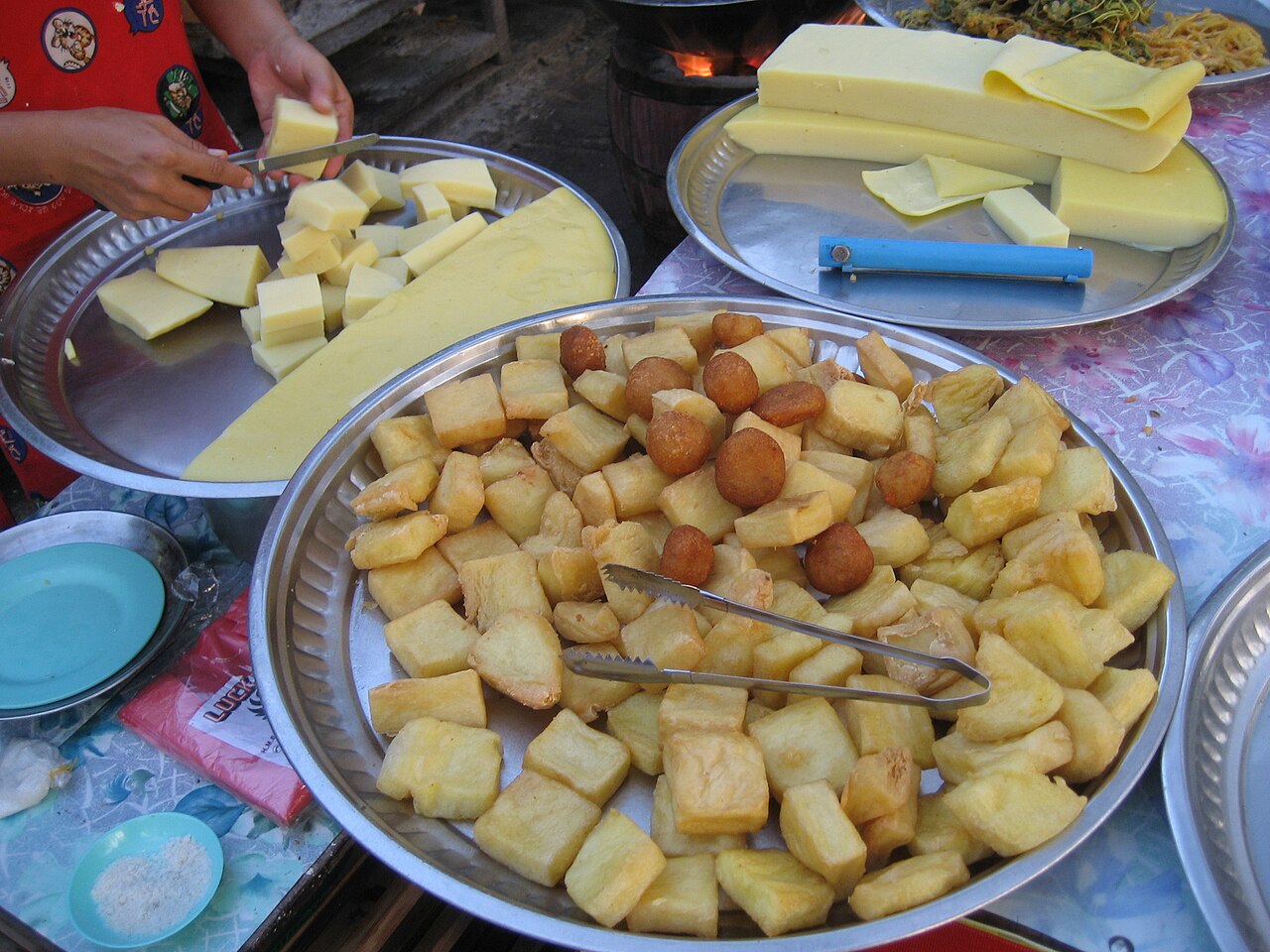
A smooth yellow 'tofu' made not from soya but from chickpea flour or yellow split peas, cooked with water, turmeric and salt until thick and then left to set. It is eaten sliced in a salad or fried into crisp fritters.
Despite its name, Burmese tofu has nothing to do with Chinese tofu, which is made from soy milk.
The most common Burmese curry: chicken, pork, fish or prawns slowly cooked with onion, garlic, ginger, turmeric and paprika until the water has boiled away and the oil rises to the top. Burmese curries are usually milder than Thai ones and seldom use coconut milk. They are eaten with rice, a sour soup and many small side dishes.
Hsibyan means 'the oil returns', after the layer of oil that separates from the sauce when the curry is ready.
The whole country, above all at the April New Year festival
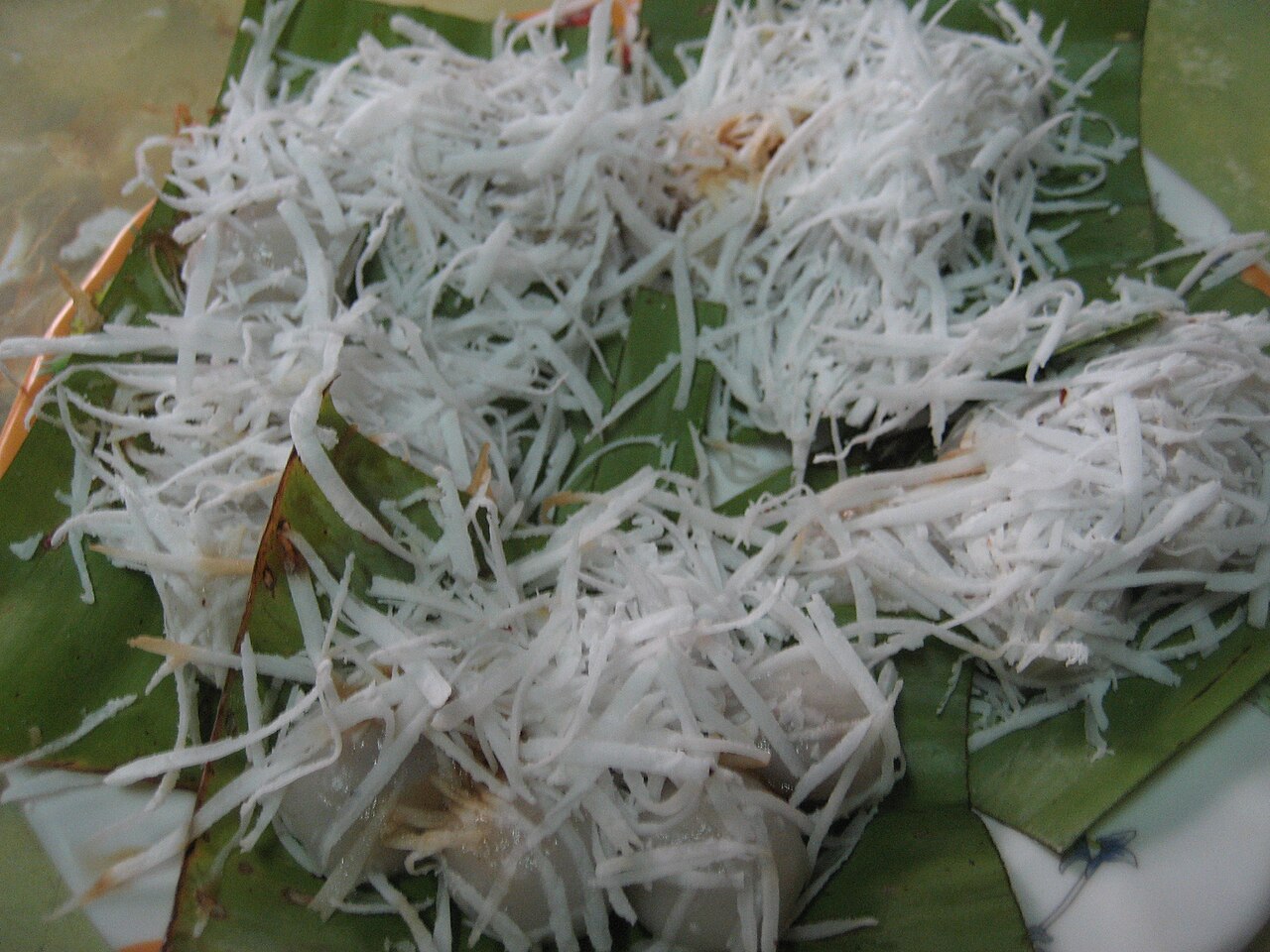
Small balls of glutinous rice dough filled with palm sugar, boiled until they float and served warm with grated coconut. They are soft and chewy, so eat them in small bites, and take care with young children and anyone who has trouble swallowing.
During Thingyan, the water festival, friends make them together and hand them out to passers-by as a good deed. A favourite prank is to hide a chilli inside one.
The whole country, for the full moon of Tabodwe (about February)
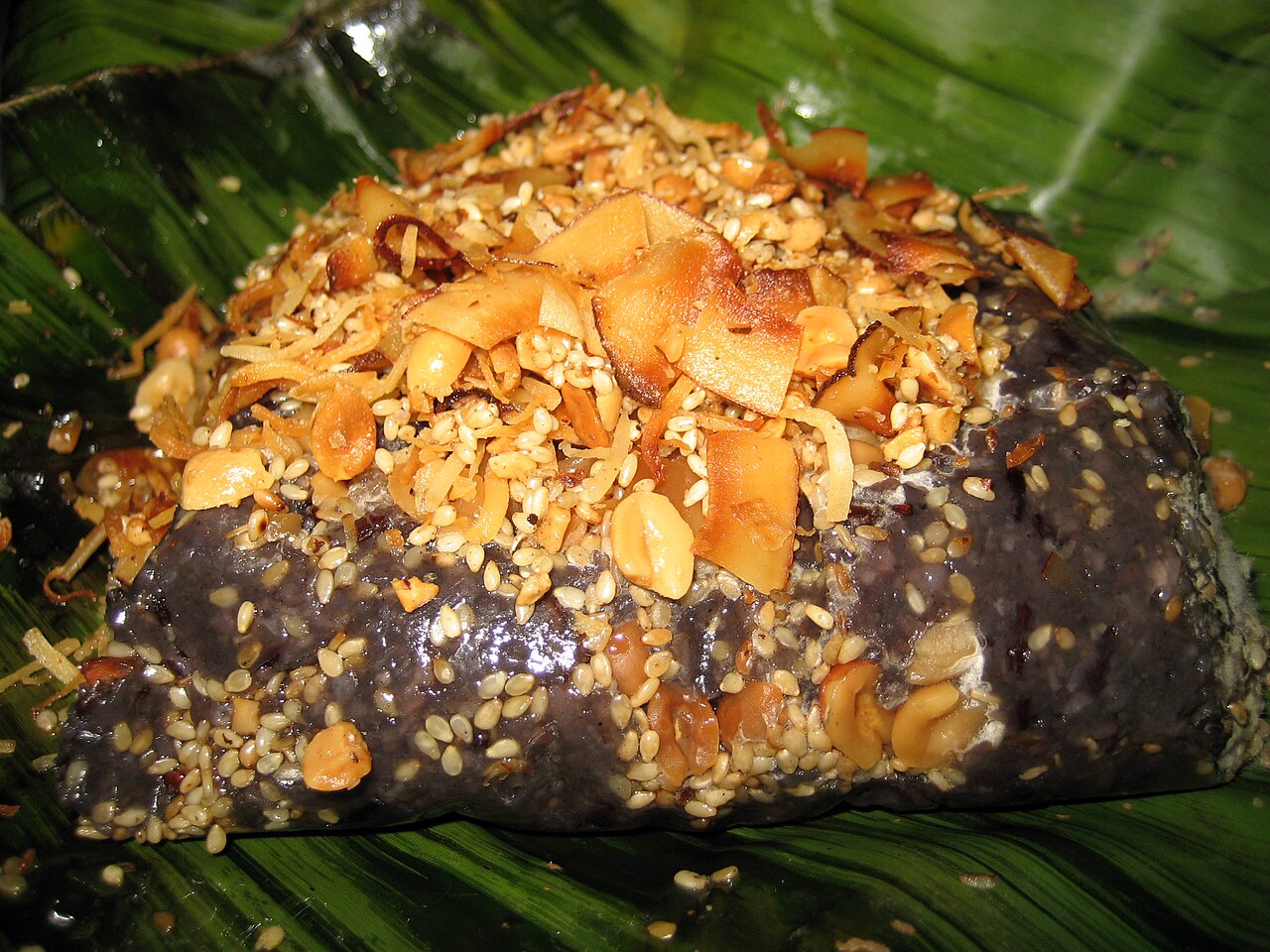
Glutinous rice cooked in a giant wok with oil and then mixed with peanuts, toasted sesame, fried ginger and coconut. It is made once a year and shared with neighbours and friends.
Mixing htamane takes a team: two people stir the heavy dough with paddle-like spatulas while a third guides them. Some pagodas, including the Shwedagon, hold htamane-making competitions.
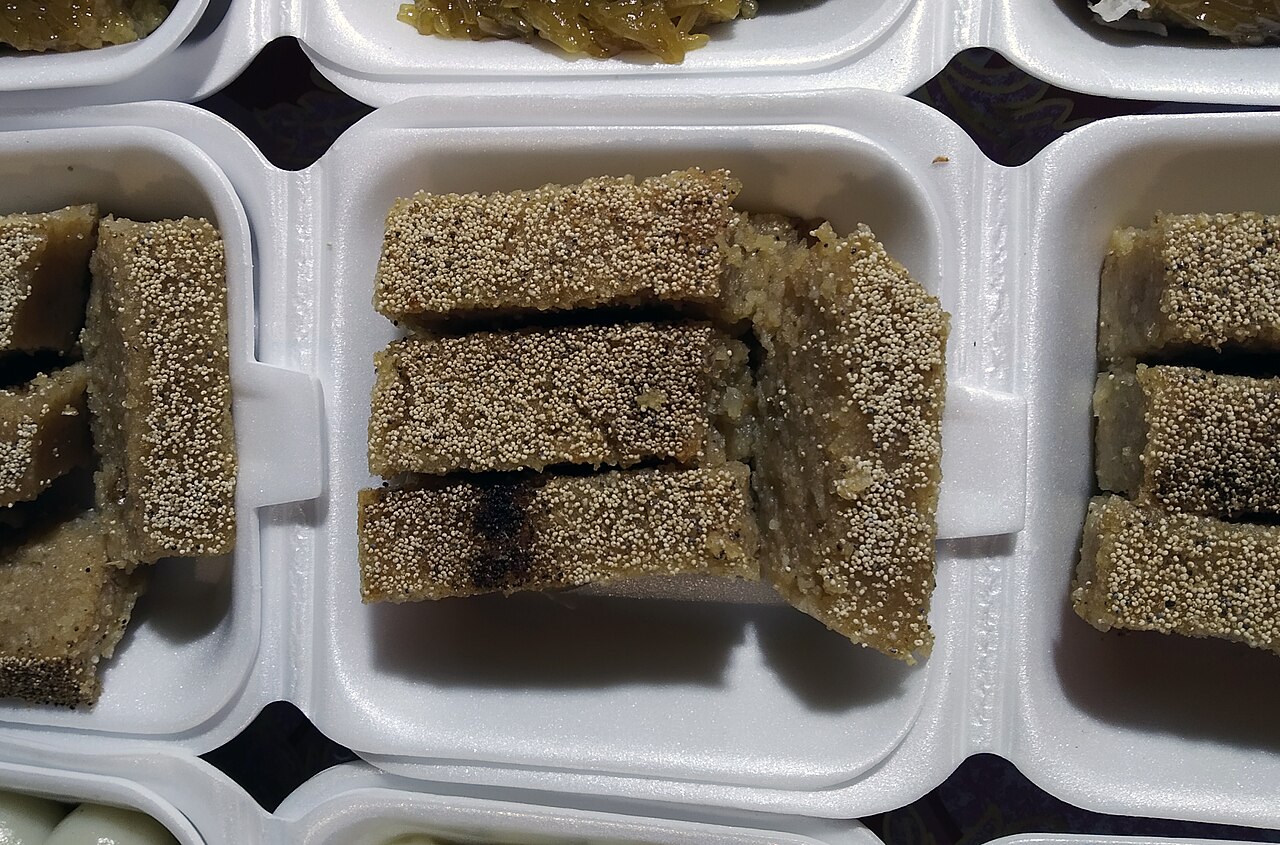
A dense, golden baked cake of semolina, coconut milk, butter and sugar, often with raisins and topped with poppy seeds. It is cut into squares or diamonds and served at donation feasts and sold as a street snack.
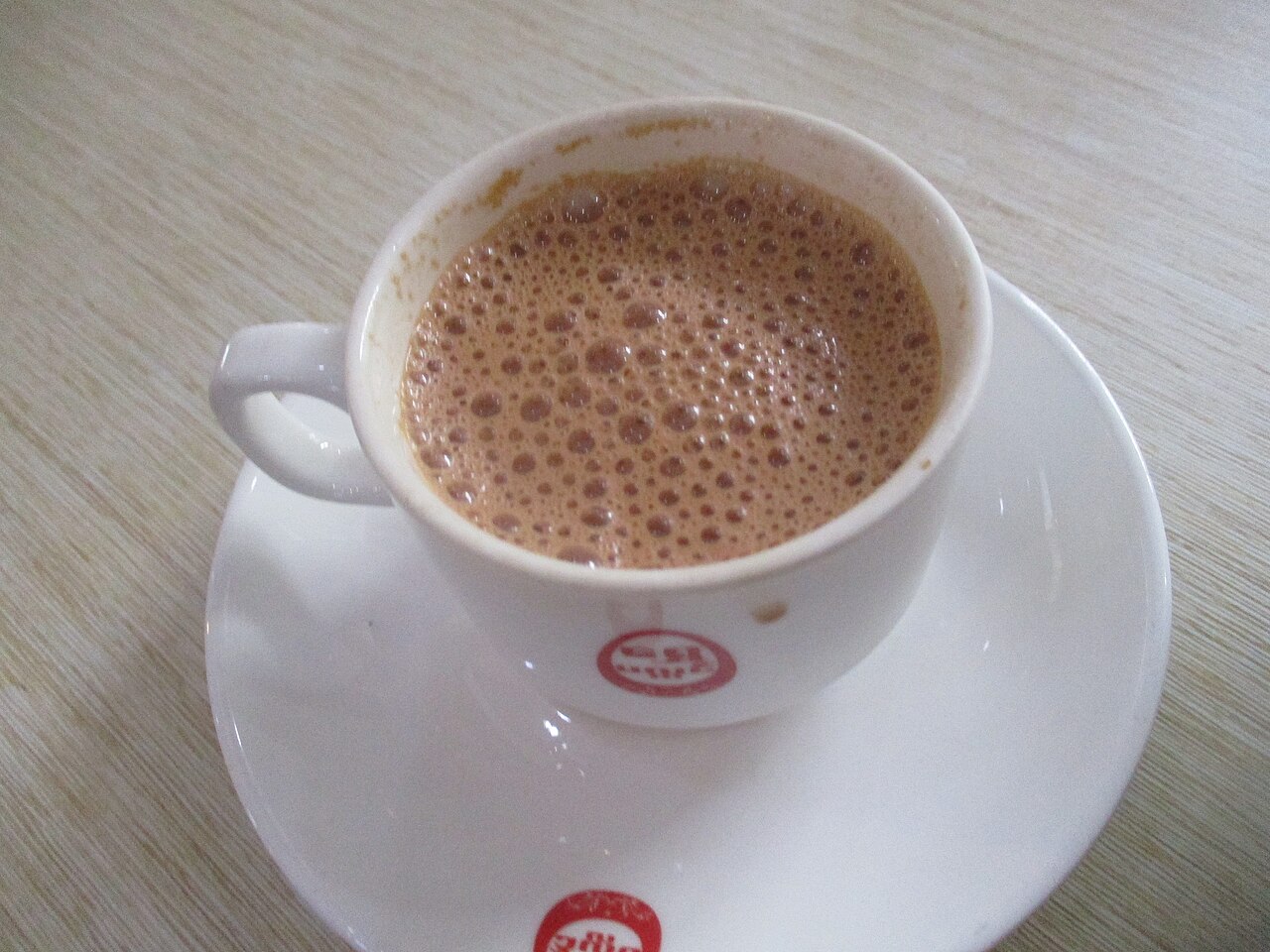
Strong black tea sweetened with condensed milk and evaporated milk. Customers often say exactly how sweet and how strong they want it. Plain green tea, on the other hand, is usually free on every table.
Tea shops were brought to Burma by the Indian community during British rule, and today they are where friends meet, read the news and eat breakfast.
The eldest people at the table are served first. At home the first scoop of rice from the pot is often set aside as a sign of respect for one's parents.
Traditionally the Burmese eat rice with the fingertips of the right hand, but a spoon and fork are common today. Chopsticks and Chinese-style spoons are used for noodles.
All the dishes arrive at the same time and are shared. Take a little of each with your rice rather than filling your plate with one dish.
Plain green tea is usually served free in restaurants and tea shops, and a light soup is often drunk during the meal instead of other drinks.
Many Buddhists do not eat beef and Muslims do not eat pork. During Buddhist Lent, roughly from July to October, some people eat only vegetarian food on certain days.