Snowy Caucasus peaks, cave towns and stone towers, a Black Sea coast, and a feast table where the wine has been made in clay jars for about 8,000 years.
Georgia is a small, mountainous country in the Caucasus, where Eastern Europe meets Western Asia. The Greater Caucasus range forms its northern edge, with peaks above 5,000 m, and the Black Sea washes its western coast. In between lie green, wet lowlands in the west, drier valleys and vineyards in the east, and high plateaus with lakes in the south. The Likhi Range divides the country into a western half, known in ancient times as Colchis, and an eastern half, known as Iberia.
People have lived here for a very long time: fossils about 1.8 million years old found at Dmanisi are among the earliest human ancestors known outside Africa, and the earliest known evidence of winemaking, from about 6000 BC, also comes from Georgia. The kingdom of Iberia adopted Christianity in the 4th century, and a united Kingdom of Georgia reached its golden age under King David IV and Queen Tamar around 1100 to 1213. Later the land was divided and fought over by larger empires, and it became part of the Russian Empire in the 19th century and of the Soviet Union in 1921. Georgia declared independence again in 1991.
Questions to ask the older generation
Memories fade faster than photos. Ask these over a meal or a phone call, and write the answers down.
Which town or region of Georgia did our family come from? Was it near Kutaisi, Batumi, Rustavi?
Who was the first in the family to leave Georgia, when, and why?
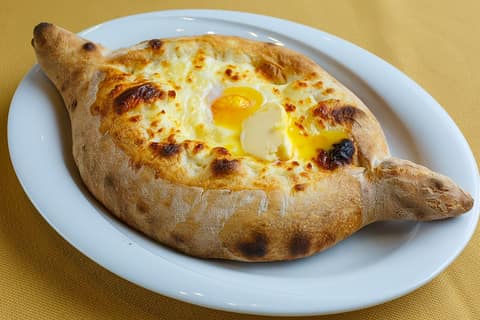
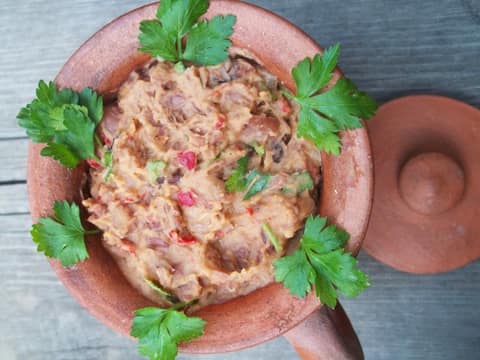
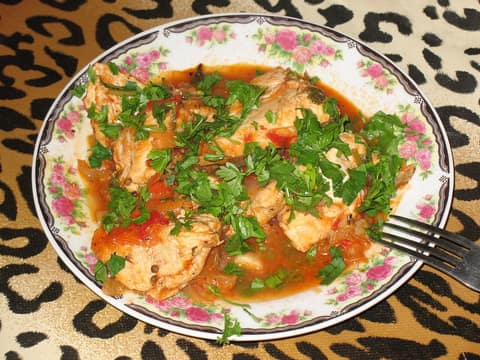
Which dishes from Georgia were cooked at home? Did anyone make Imeruli khachapuri or Adjarian khachapuri?
Does anyone in the family still speak Georgian, or use a few words of it?
Were there songs, prayers, games or holidays from Georgia that the family kept?
Are there old photos, letters or documents from Georgia? Who has them?
If you could visit Georgia together, where would you go first?
A short history of Georgia
Georgia's story runs from some of the earliest humans outside Africa and the first known winemakers, through the ancient kingdoms of Colchis and Iberia and an early conversion to Christianity, to a medieval golden age. Mongol and later Ottoman and Persian invasions split the country apart, and it was absorbed by the Russian Empire in the 19th century. A short-lived independent republic in 1918 was followed by seven decades of Soviet rule, and Georgia regained its independence in 1991.
6000 BC
The earliest known winemaking
At Neolithic villages in the Kvemo Kartli region, such as Gadachrili Gora, archaeologists have found pottery jars with chemical traces of grape wine from about 6000 BC. As of 2026 this is the earliest known evidence of winemaking anywhere, and Georgians still make wine in large clay jars called qvevri.
1008
Bagrat III unites Georgia
Bagrat III, already king of Abkhazia in the west and ruler of Kartli, inherited his father's lands and the title 'King of the Georgians' in 1008, then added Kakheti by 1010, joining most Georgian lands into a single kingdom. He is remembered as Bagrat the Unifier, and his great cathedral in Kutaisi, Bagrati, still stands.
1121
The Battle of Didgori
On 12 August 1121, at Didgori, about 40 km west of Tbilisi, David IV's army defeated a much larger Seljuk force. The next year he took Tbilisi back after centuries of Muslim rule and made it his capital.
1226
Tbilisi is sacked
The Khwarezmian ruler Jalal ad-Din captured and destroyed Tbilisi. Mongol invasions followed, and later the campaigns of Timur. By the late 15th century the united kingdom had broken into several kingdoms and principalities, fought over by the Ottoman and Persian empires.
1918
The Democratic Republic of Georgia
After the Russian Revolution, Georgia declared independence on 26 May 1918. The new democratic republic gave women the vote, and 26 May is still Independence Day.
1989
The 9 April tragedy
On 9 April 1989 Soviet troops broke up a peaceful pro-independence demonstration on Rustaveli Avenue in Tbilisi, killing 21 people. The day is now remembered as National Unity Day.
2003
The Rose Revolution
In November 2003, after disputed parliamentary elections, peaceful protesters carrying red roses entered the parliament and President Eduard Shevardnadze resigned. Wide reforms followed, including a new police force that cut everyday corruption sharply.
2023
EU candidate status
In December 2023 the European Union granted Georgia the status of a candidate for membership. In June 2024 EU leaders said the process had in effect stopped, and as of September 2026 no accession talks have begun.