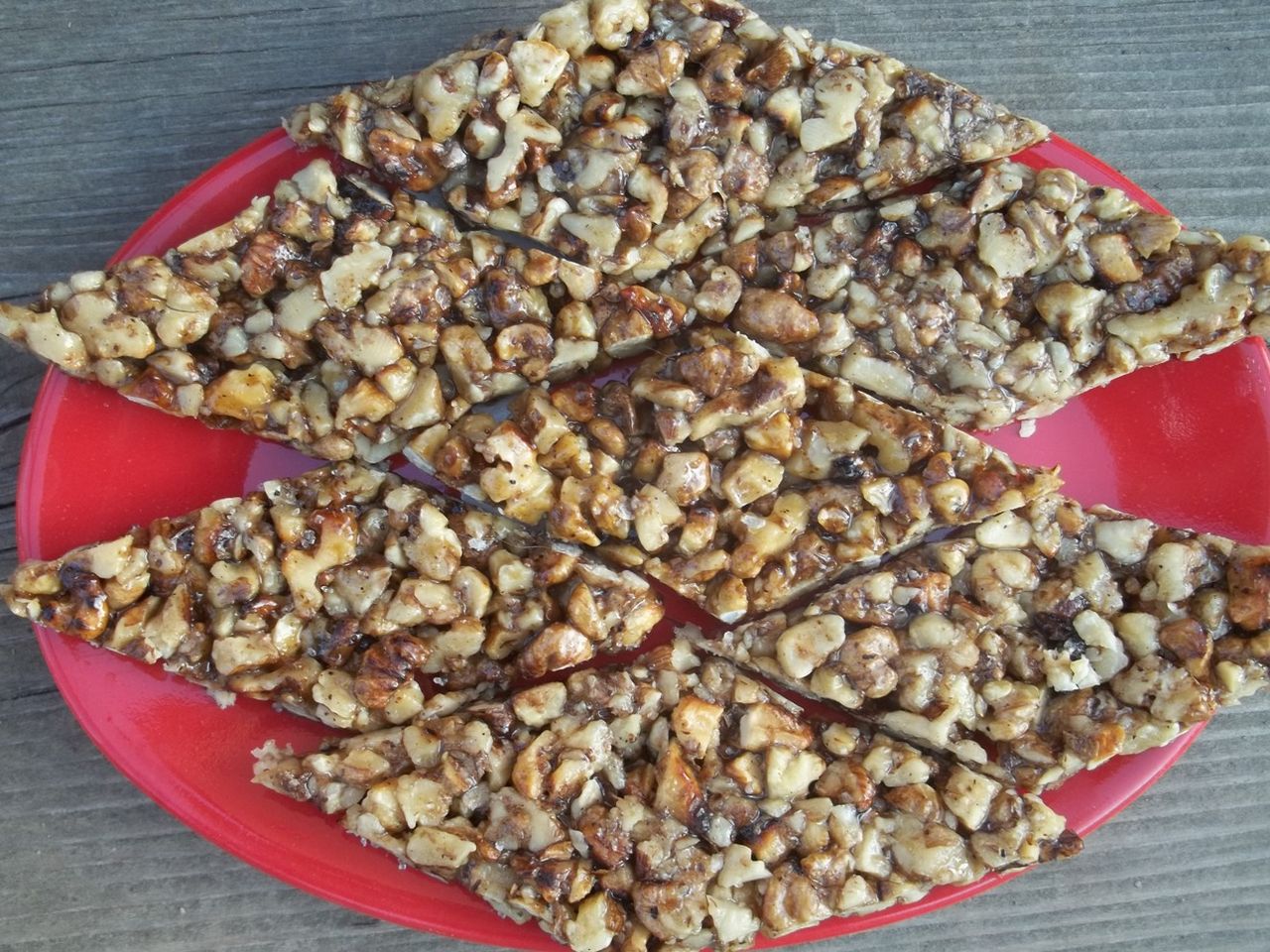
Georgian food is built on walnuts, garlic, fresh herbs such as coriander, tarragon and dill, sour plums and pomegranates, good cheese and bread, and wine. Every region has its own dishes: cheese breads from Imereti and Adjara, dumplings from the eastern mountains, walnut sauces from the west, lamb stews and grilled meat from Kakheti. The great social meal is the supra, a feast led by a toastmaster called the tamada. Cold dishes such as pkhali, aubergine rolls, cheese, fresh herbs and bread cover the table first; hot dishes such as khinkali, grilled meat, stews and cheese breads arrive later, often all at once, with wine throughout. Fruit and sweets such as churchkhela and gozinaki come at the end, especially at New Year.
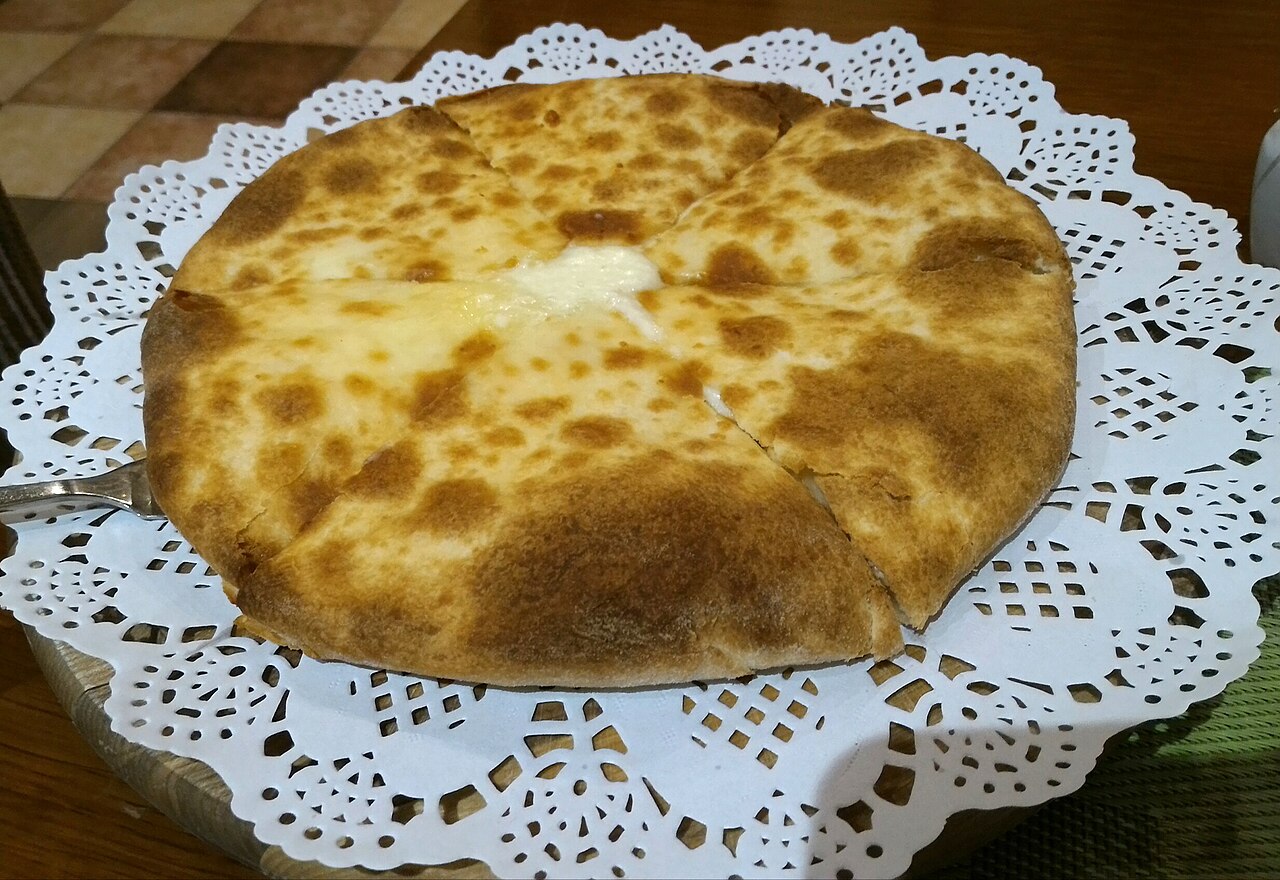
Khachapuri, cheese-filled bread, is Georgia's national dish, and the round Imeretian kind is the most common. A soft yeast dough is filled with salty white Imeretian cheese and baked until golden. It is eaten warm at almost every meal, from street stalls to feasts. The Megrelian version (megruli) has more cheese melted on top.
Economists at Tbilisi State University use a 'khachapuri index', the cost of making one khachapuri, to compare prices between Georgian cities.
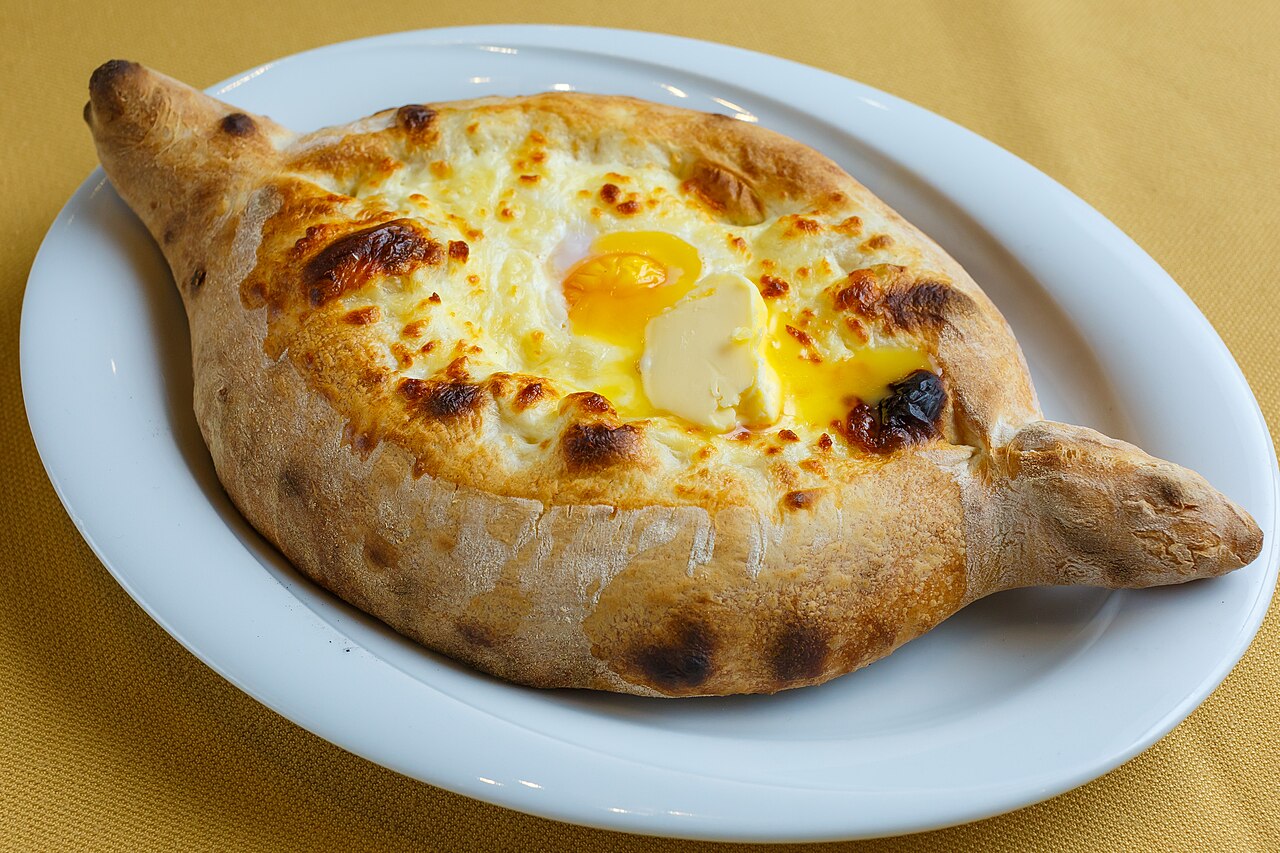
A boat-shaped khachapuri filled with melted cheese and served with a raw egg yolk and a knob of butter in the middle. You stir the yolk and butter into the hot cheese, then tear off pieces of the crust and dip them in. Some say the shape stands for a boat, the cheese for the sea and the yolk for the sun.
It is traditionally made with a mix of tangy Imeretian cheese and stretchy sulguni.
The mountains of eastern Georgia (Khevi, Pshavi, Mtiuleti, Khevsureti), now the whole country
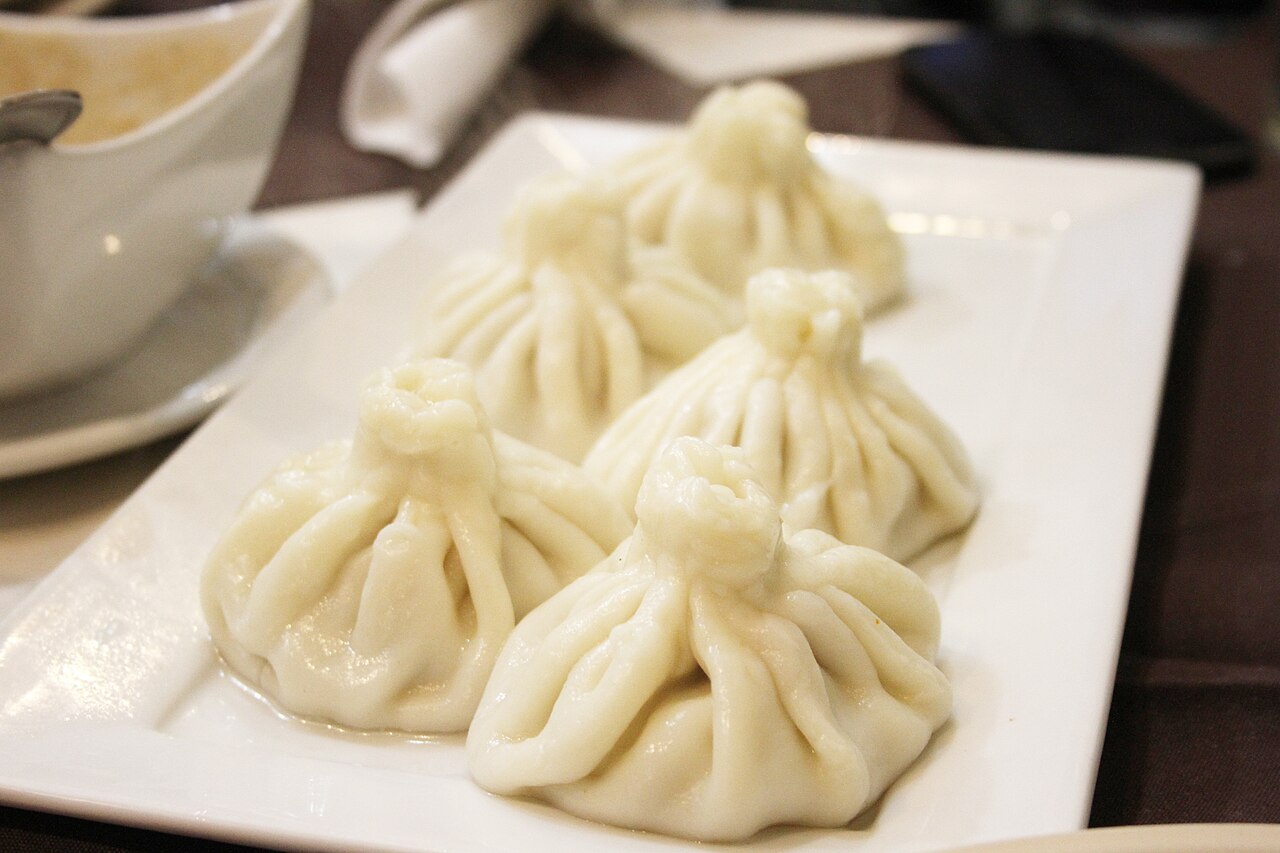
Large twisted dumplings filled with spiced minced meat, often beef and pork, with onion and herbs. Because the meat goes in raw, it releases a hot broth inside while the dumplings boil. Khinkali are eaten with the hands and ground black pepper, often by the dozen. Versions with mushrooms, potato or cheese are also common.
The thick knot of dough on top, called the kudi ('tail'), is used as a handle and left on the plate, so everyone can count how many they have eaten.
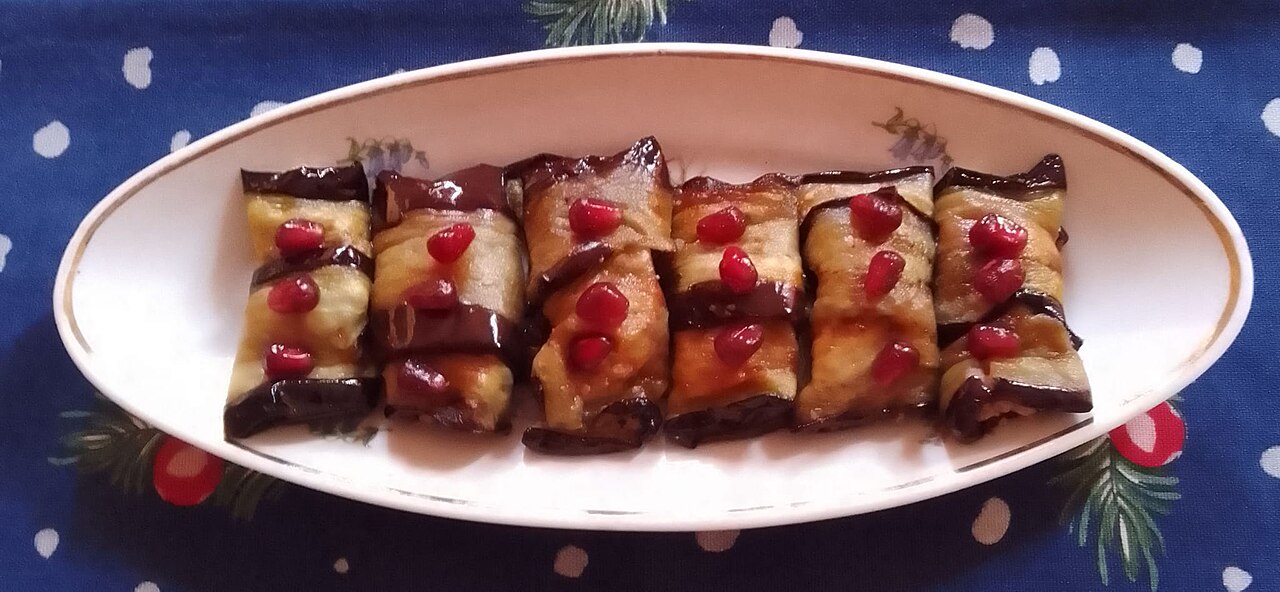
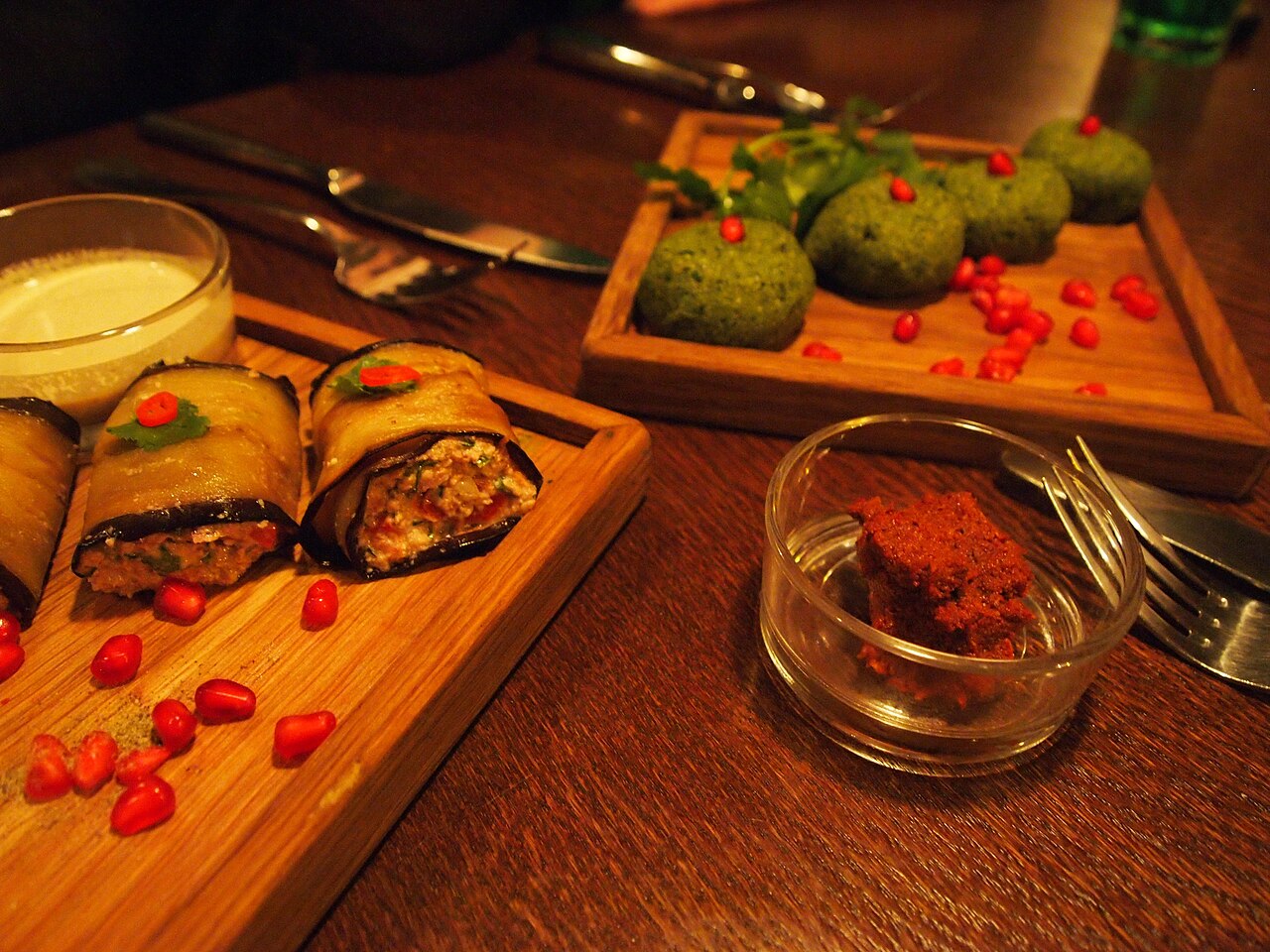
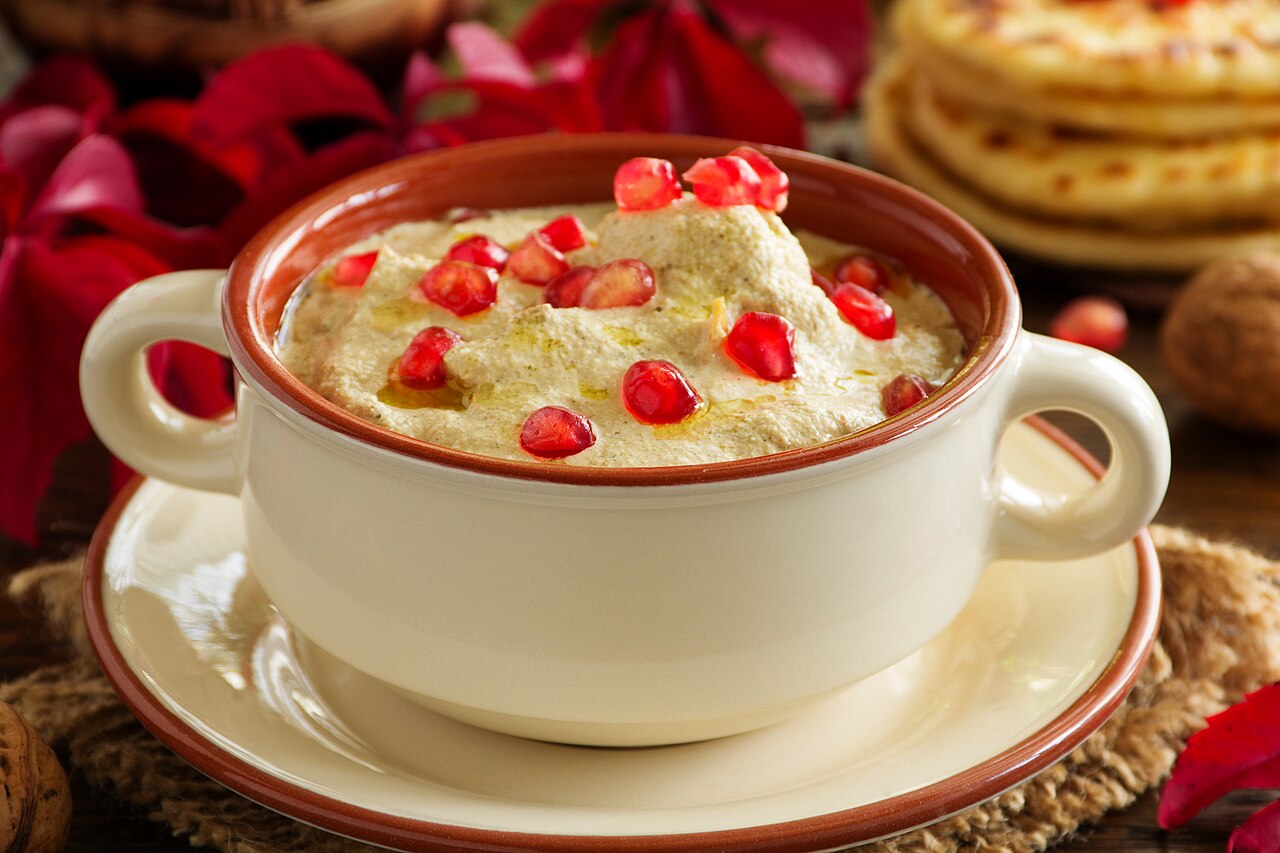
Thin slices of fried aubergine spread with a paste of ground walnuts, garlic, herbs and spices, then rolled up and topped with pomegranate seeds. It is one of the most popular cold dishes on any Georgian table.
Finely chopped cooked vegetables mixed with a paste of walnuts, garlic, vinegar and herbs, shaped into balls or patties and topped with pomegranate seeds. Restaurants usually serve three kinds together: green spinach, deep red beetroot and white bean.
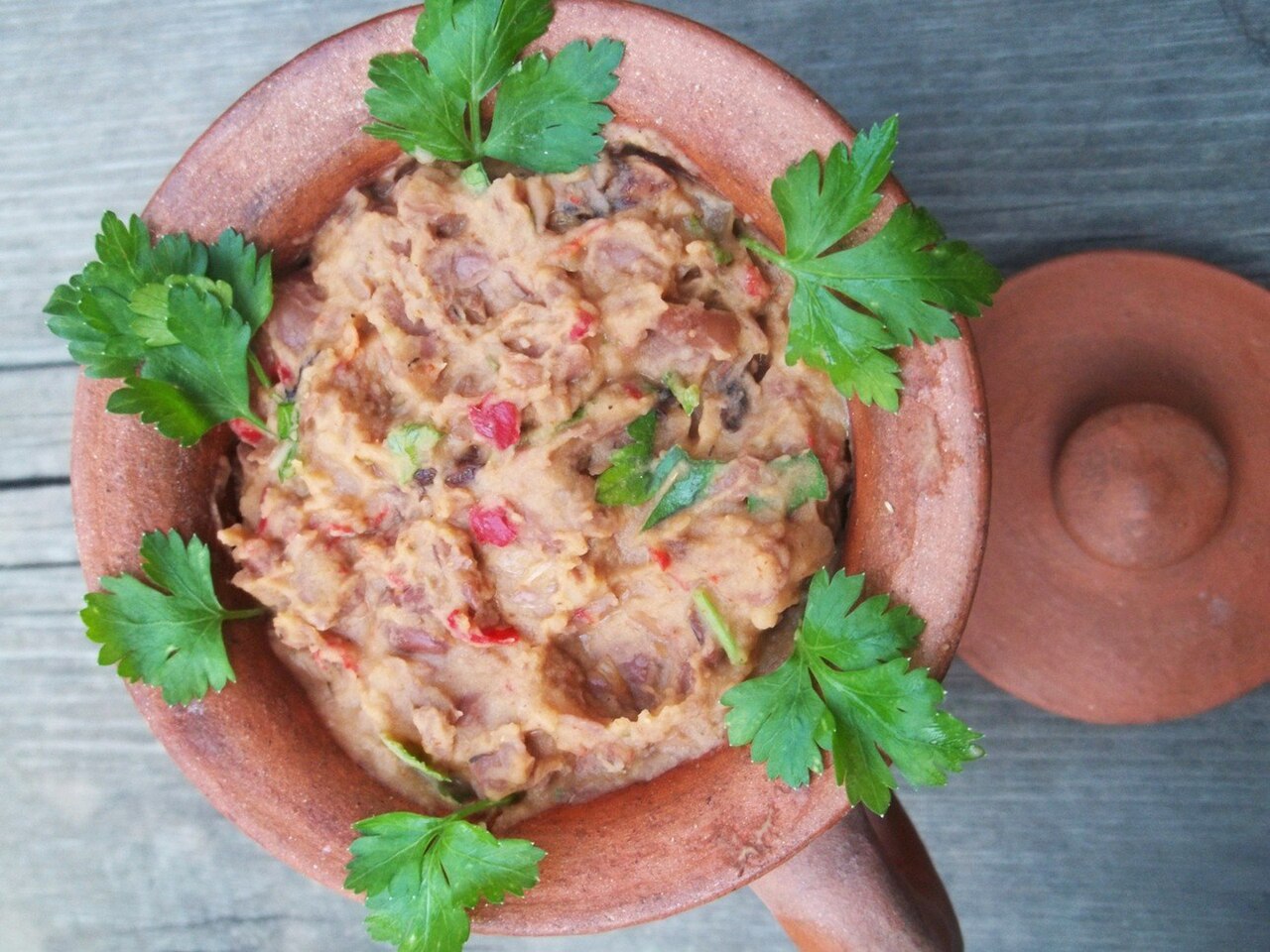
A dish of beans cooked with onion, garlic, coriander and spices, sometimes with walnuts. It is often served hot in a clay pot with mchadi cornbread and pickled vegetables. A cold version, mashed with walnuts and vinegar, is served as a starter.
The red kidney beans used today came from the Americas and reached Georgia only after 1500.
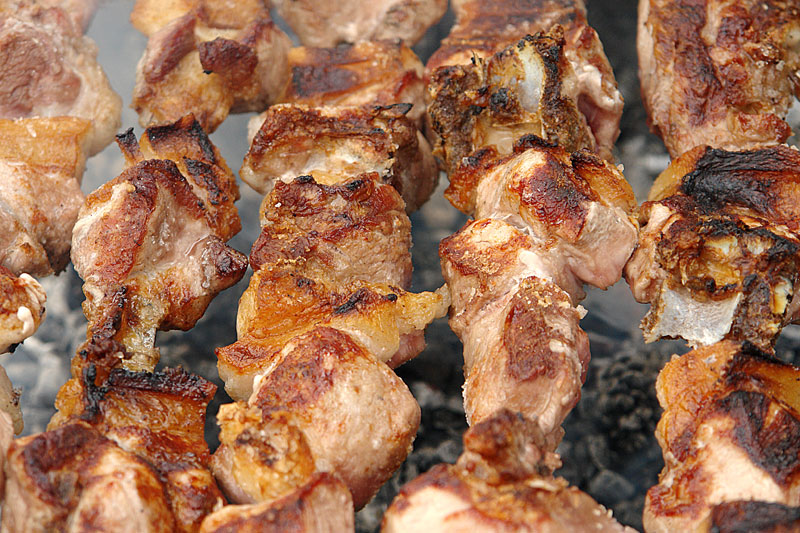
Chunks of pork, lamb or veal threaded on skewers and grilled over hot embers, the Georgian barbecue. It is served simply with raw onion rings and a sour plum sauce called tkemali, and it is a favourite at weekends and feasts outdoors.
Tkemali, made from sour cherry plums, garlic and herbs, is used in Georgia much as ketchup is used elsewhere.
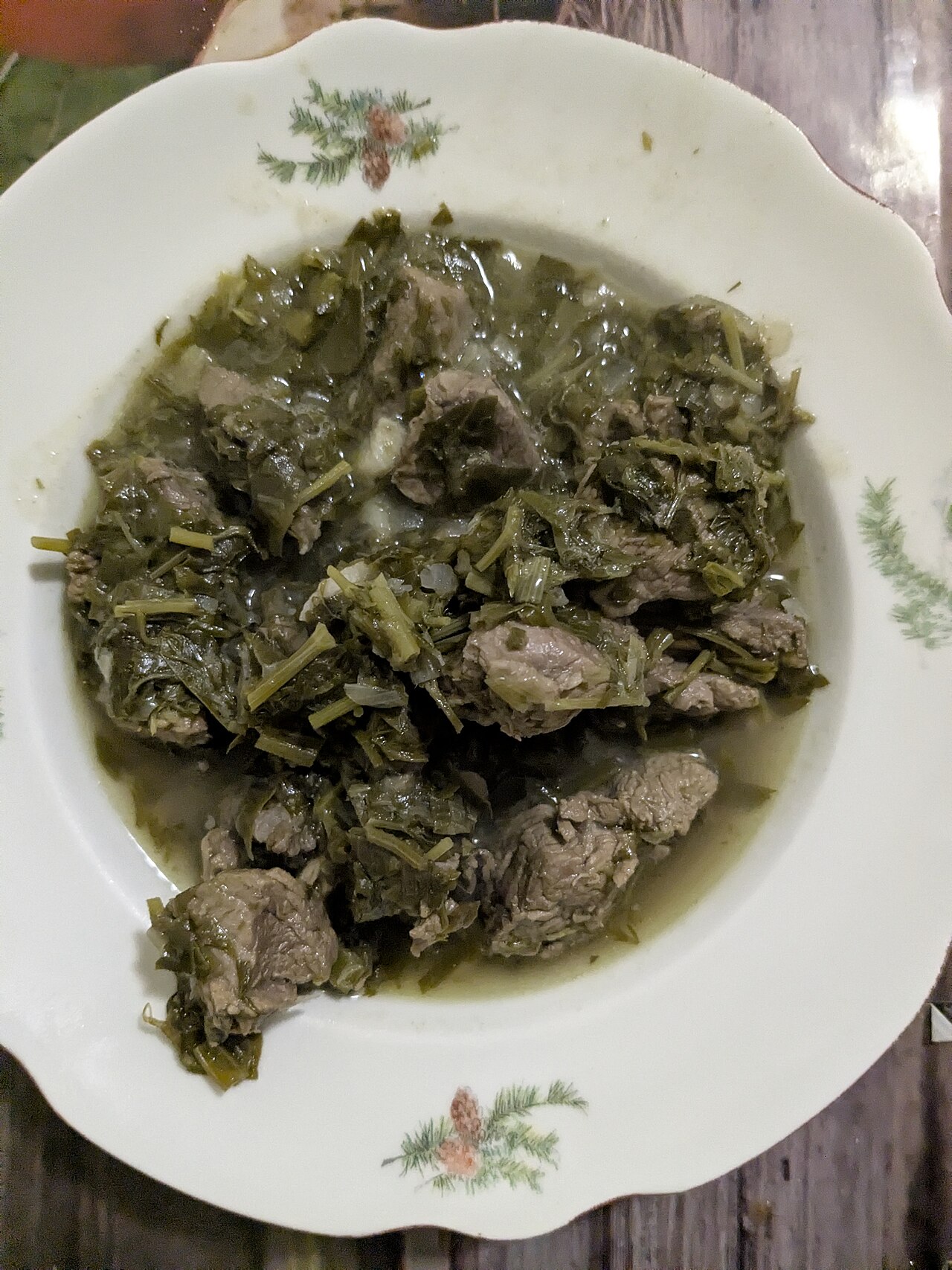
A green, tangy stew of lamb or veal cooked with dry white wine, a large amount of fresh tarragon, other herbs, garlic and sour cherry plums or tkemali sauce. It is one of the most popular dishes in Georgia, and there are also versions with beef or mushrooms.
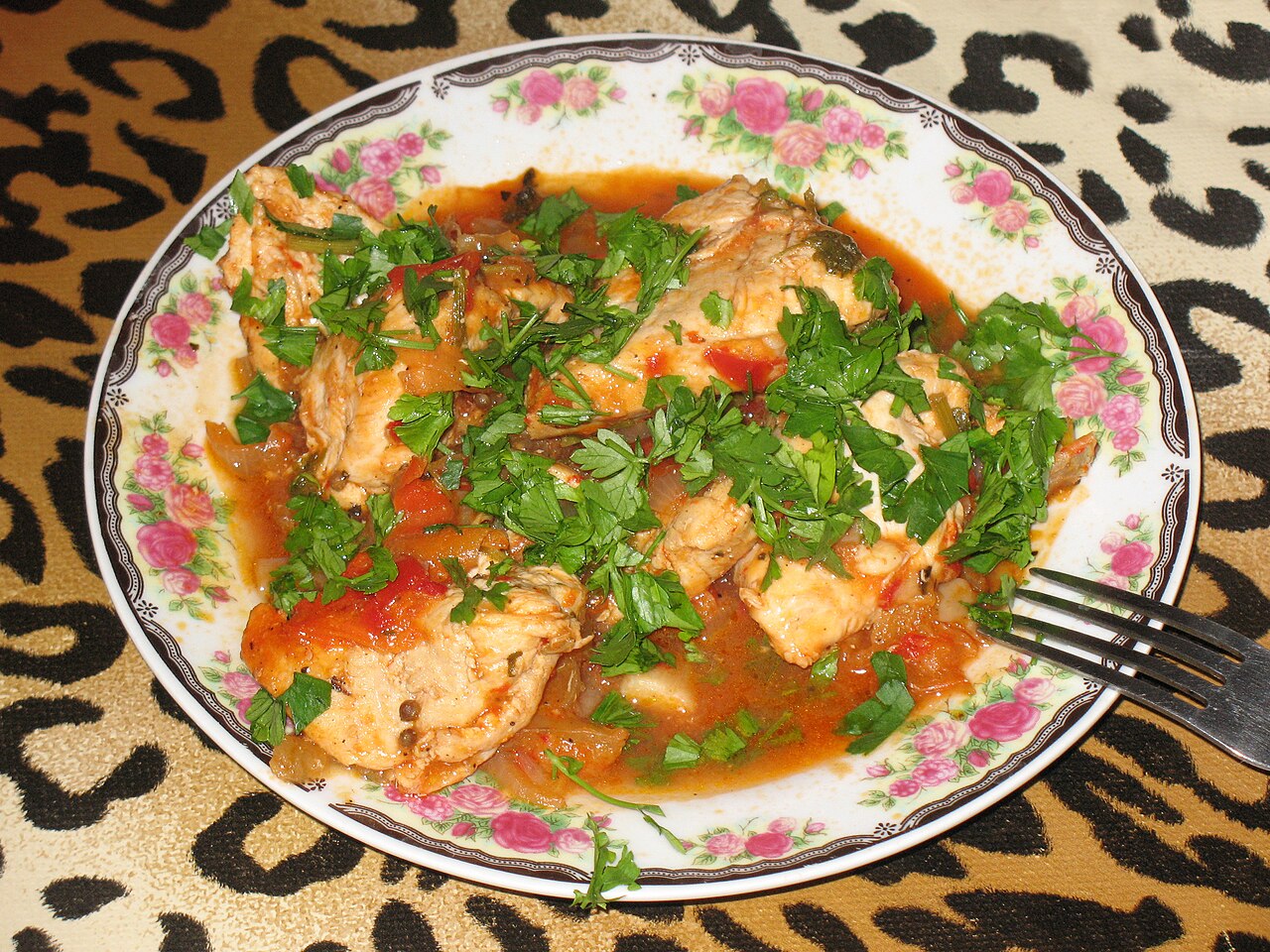
Chicken stewed with onions, tomatoes, garlic and plenty of fresh herbs. The chicken pieces are first browned in a dry pan, without oil, in their own fat.
The name comes from khokhobi, the Georgian word for pheasant, the bird it was first made with.
Boiled chicken or turkey served cold in a thick, creamy sauce of ground walnuts, garlic, fenugreek, coriander and other spices. The name means 'cold dish'. It is a staple of winter holiday feasts, above all at New Year.
The village of Shkmeri in Racha, now the whole country
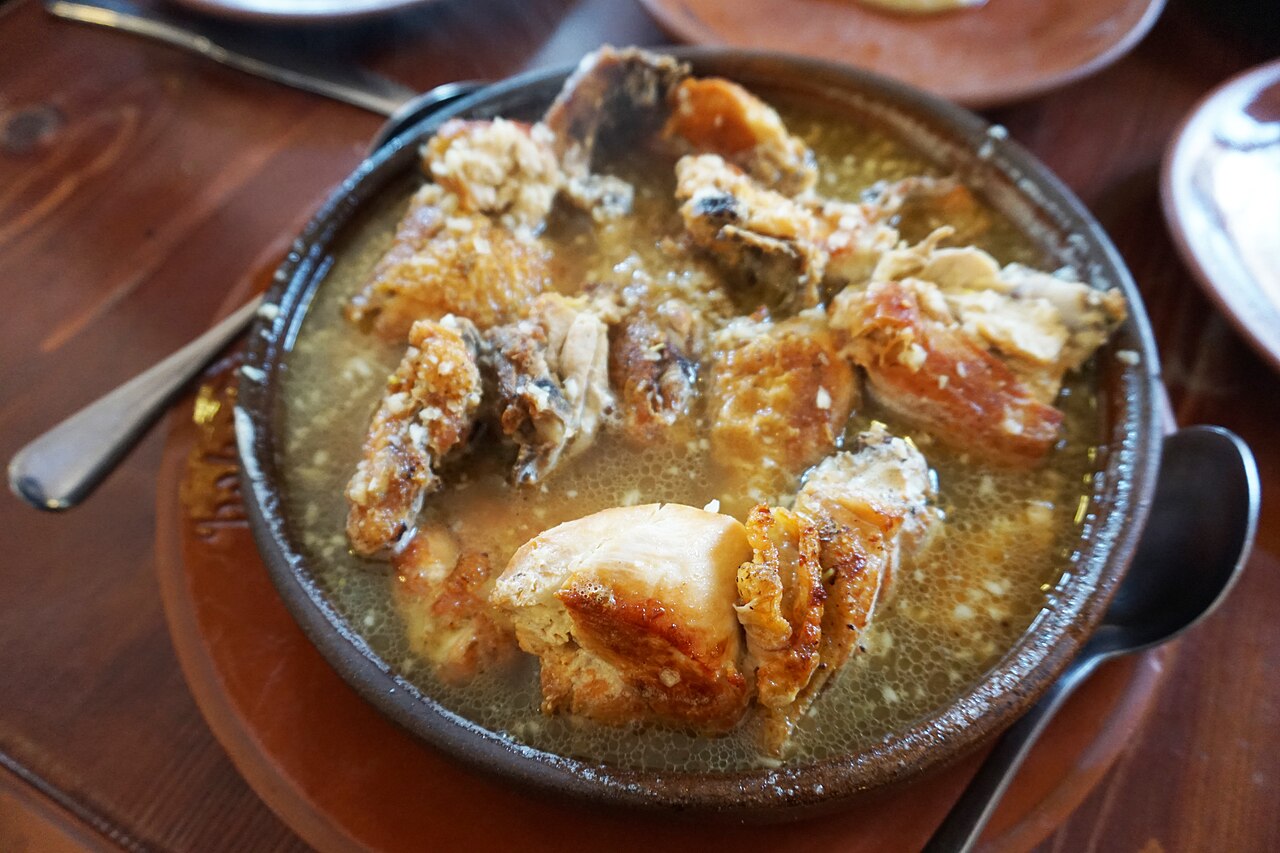
Chicken fried until crisp and then cooked for a short time in a rich sauce of garlic and milk or cream, often served bubbling in a clay dish with bread for dipping.
In 2019 the Japanese restaurant chain Matsuya began serving shkmeruli, and the dish soon became well known across Japan.
The whole country; Samegrelo has its own thicker version
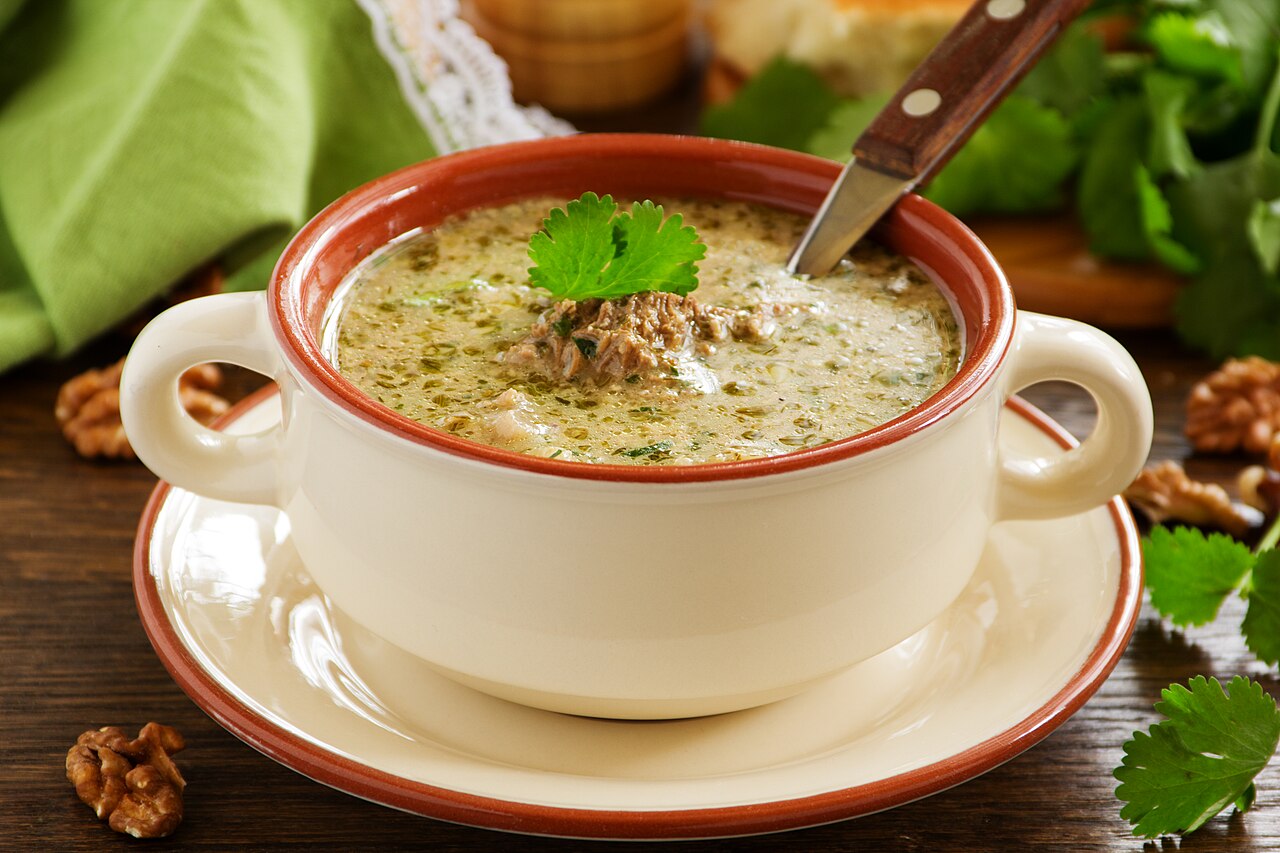
A hearty beef soup made sour with cherry plum purée and thickened with rice and chopped walnuts, flavoured with the spice mix khmeli suneli and lots of fresh coriander. In Samegrelo it is made as a thick stew without rice and served with ghomi, a cornmeal porridge.
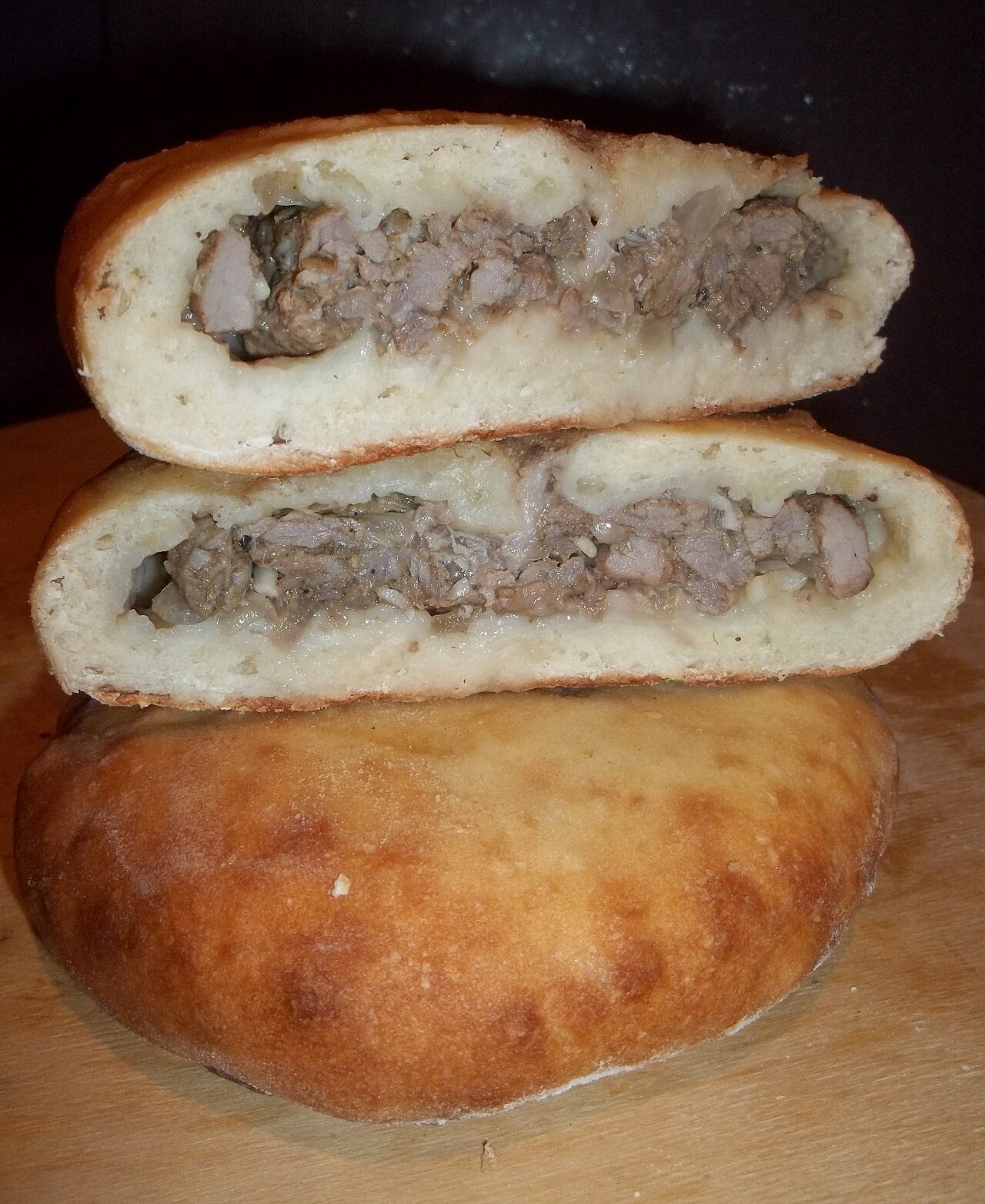
A round, filled bread from Svaneti. The yeast dough is stuffed with chopped beef, pork or lamb seasoned with onion, garlic, and Svan salt, a mix of salt and herbs, then baked. It is filling enough to be a whole meal.
Kubdari was added to Georgia's national list of intangible cultural heritage in 2015.
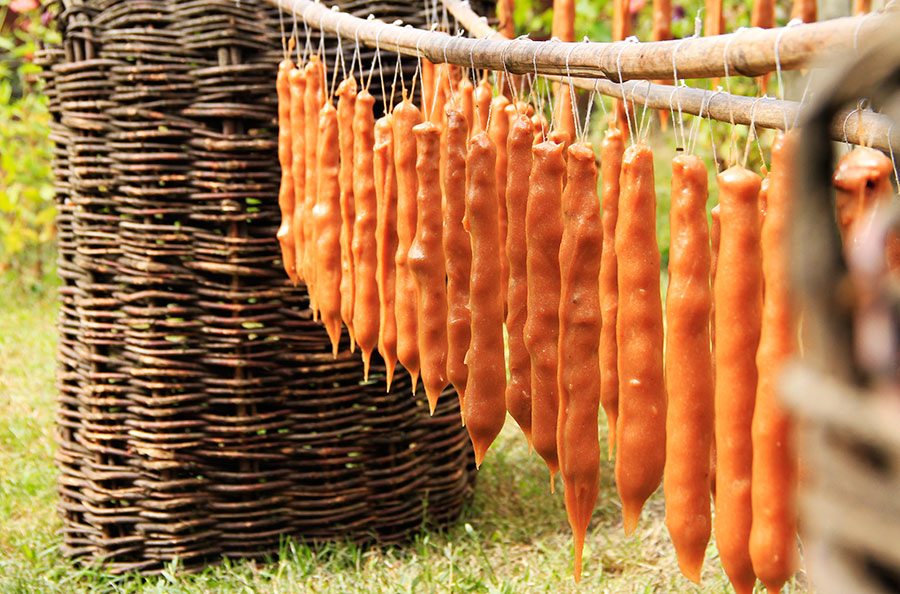
Strings of walnuts or hazelnuts dipped again and again in grape juice thickened with flour, then hung up to dry into chewy sausage-shaped sweets. You see them hanging in bunches at every market. They are a snack between meals and a treat at New Year and Christmas.
Because they are rich in energy and keep well, Georgian soldiers used to carry churchkhela with them.
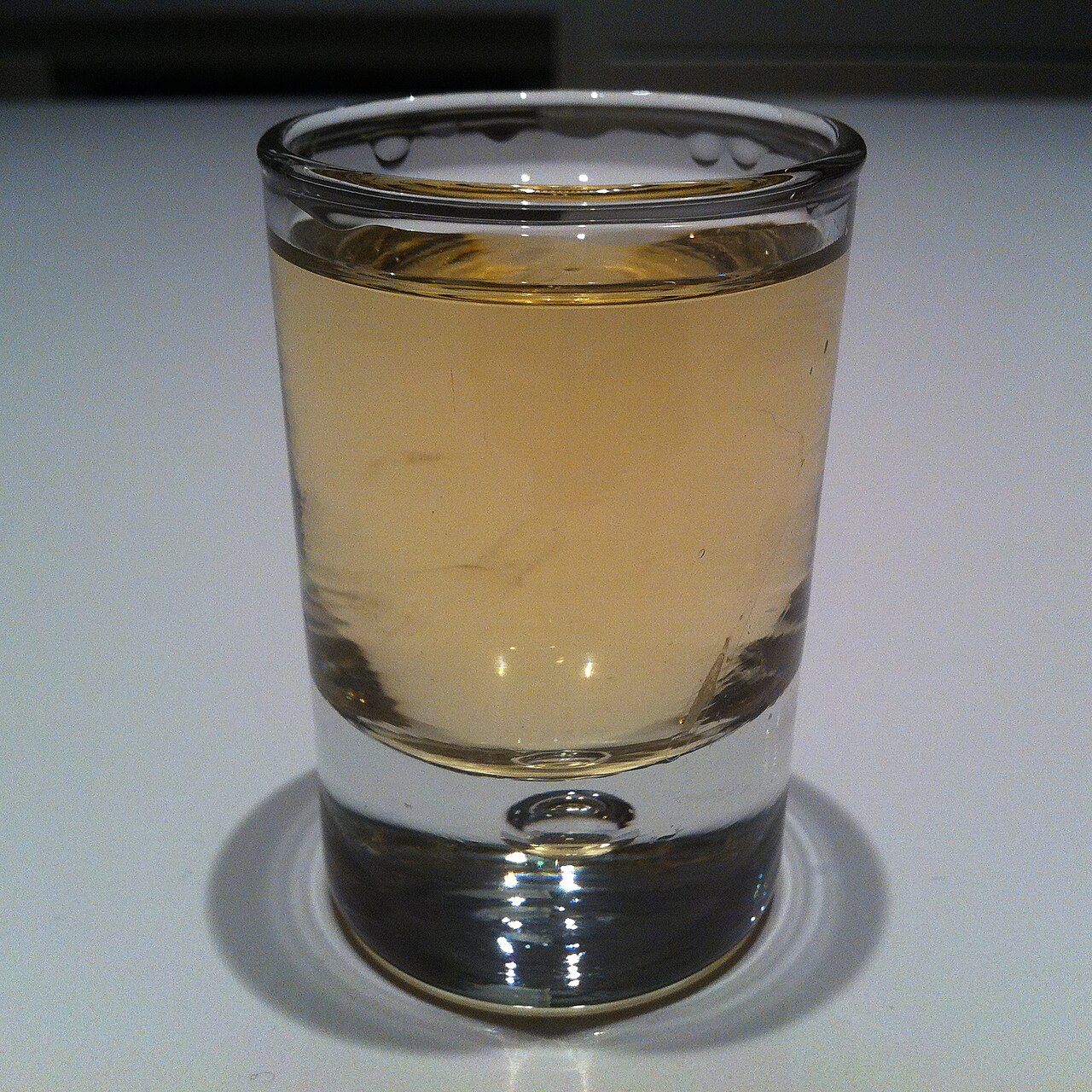
A clear, strong brandy distilled from grape pomace, the skins, seeds and stems left over after winemaking. Shop-bought chacha is usually 40 percent alcohol or more; homemade chacha is often much stronger. It is sipped in small glasses, sometimes flavoured with fruit or tarragon.
In Georgian the word chacha also means the pomace itself, the leftovers in the qvevri jar after the wine is drawn off.
At the table in Georgia
At a supra, the tamada (toastmaster) proposes each toast in turn: to peace, to the hosts, to parents, to those no longer here. Wait for the toast before you drink, and if the tamada invites you, add a few words of your own.
Eat khinkali with your hands. Hold it by the knot on top, take a small bite, sip the hot broth, then eat the rest and leave the knot on your plate.
The table is full from the start and more dishes keep coming. Take a little of many dishes rather than a lot of one, because hosts love to keep feeding their guests.
Georgians are famous for their hospitality. If you are invited, your host will usually insist on paying, and arguing about the bill can embarrass them.
Many restaurants add a service charge of about 10 percent to the bill; check before adding a tip.
Homemade wine and chacha are offered generously. It is fine to sip slowly or to politely say you have had enough.