Iranian cooking is built around rice, fresh herbs, and a gentle balance of sweet and sour from fruits such as pomegranates, barberries, plums and dried limes, with saffron for colour and scent. Breakfast is usually flatbread with white cheese, walnuts, herbs, butter, jam or honey, and sweet black tea. Lunch has traditionally been the main meal: a mound of fluffy rice (chelow or polo) with a slow-cooked stew called khoresh, a plate of fresh herbs, yoghurt, pickles and a glass of doogh. The crispy rice from the bottom of the pot, tahdig, is the prize everyone wants. Tea follows every meal, and fruit is always offered to guests.
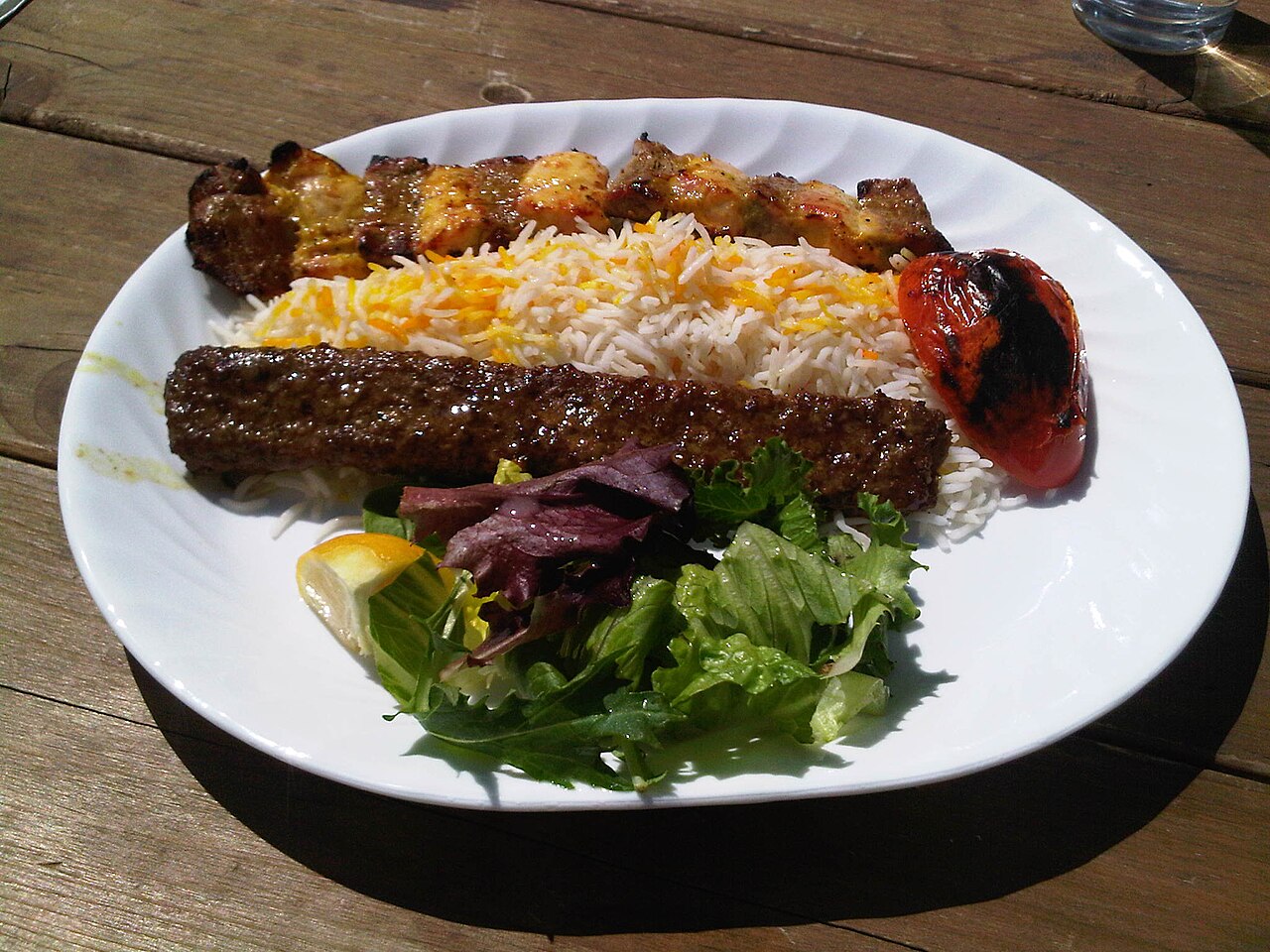
Buttery steamed rice (chelow) with a saffron top, served with kebabs: kabab koobideh, made from minced lamb and grated onion pressed onto wide flat skewers, or kabab barg, thin strips of marinated fillet. It comes with grilled tomatoes, raw onion, a pat of butter, sumac to sprinkle and a glass of doogh.
In the old bazaar restaurants of Tehran the rice arrived first, and the kebabs followed straight from the grill on their skewers, slid off onto the rice with a piece of flatbread.
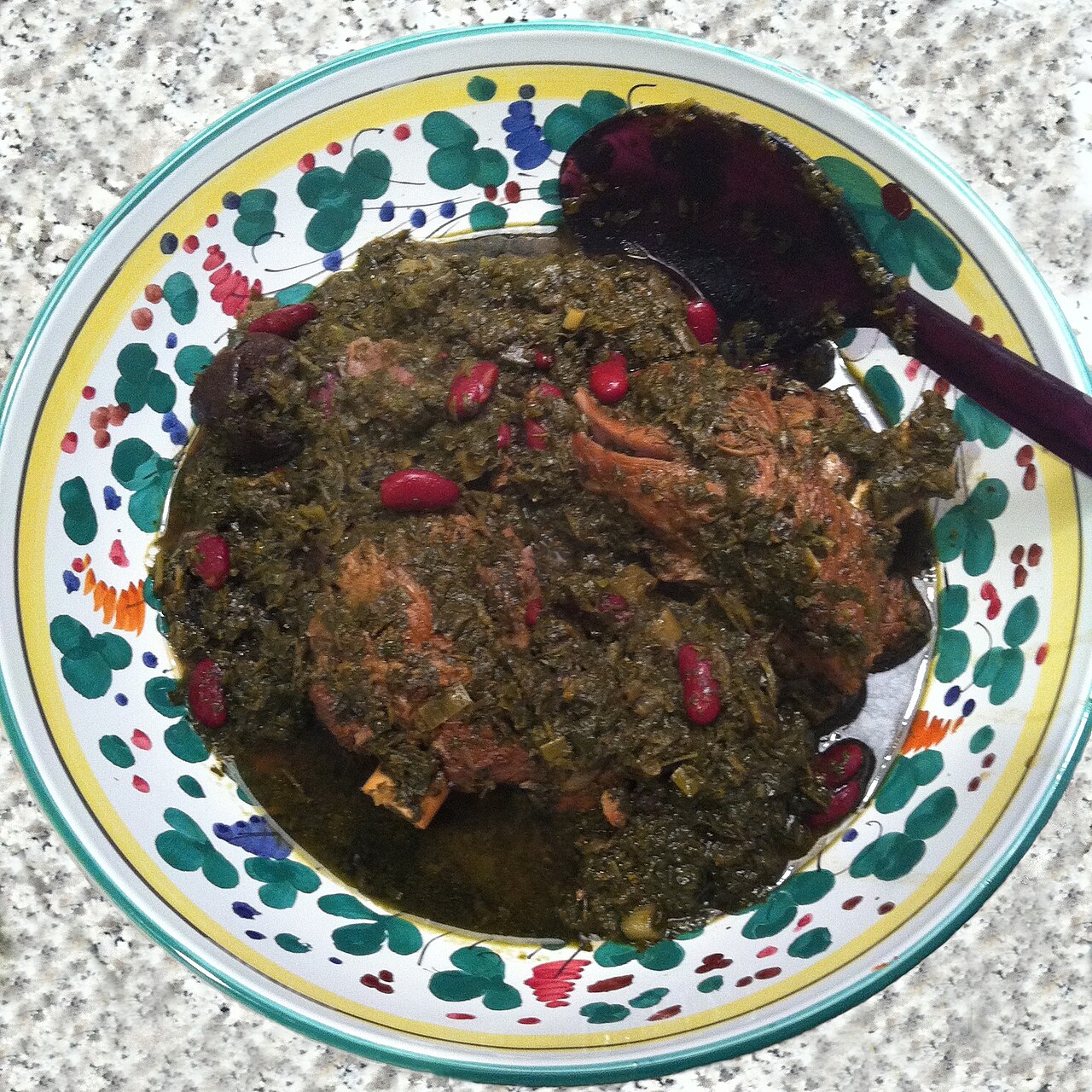
A deep green stew of lamb or beef slow-cooked with a big mountain of fried herbs (parsley, coriander, chives and fenugreek), red kidney beans and whole dried limes, which give it a sour, earthy taste. It is served over rice and is often called the national dish.
The herbs are fried slowly for a long time before they go into the pot, which turns them dark and gives the stew its deep flavour.
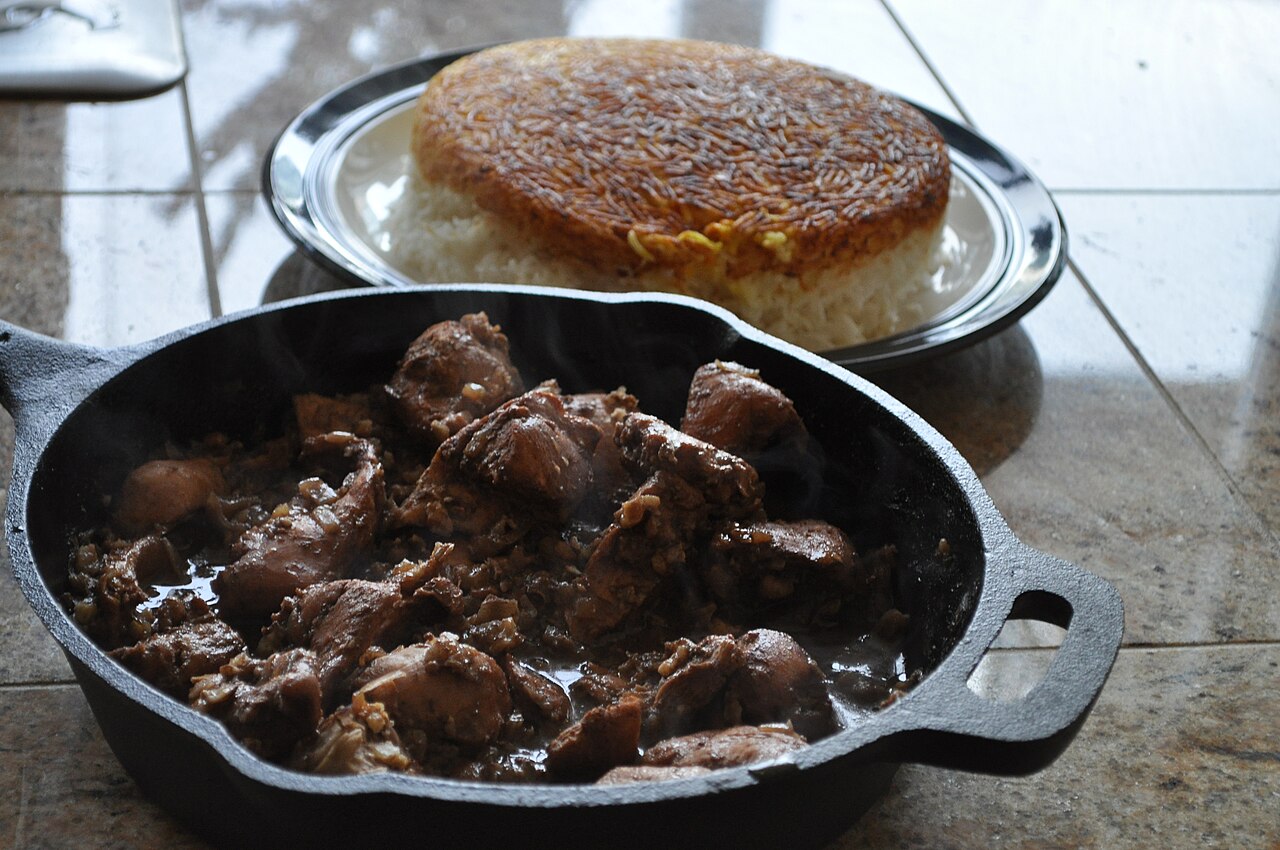
A rich, dark brown stew of chicken or duck (sometimes meatballs) cooked slowly with ground walnuts and pomegranate molasses, which make it sweet and sour at the same time. It is a dish for guests and celebrations, served with rice.
Cooks adjust the balance with a little sugar or more pomegranate molasses: some families like it sweeter, others sharper.
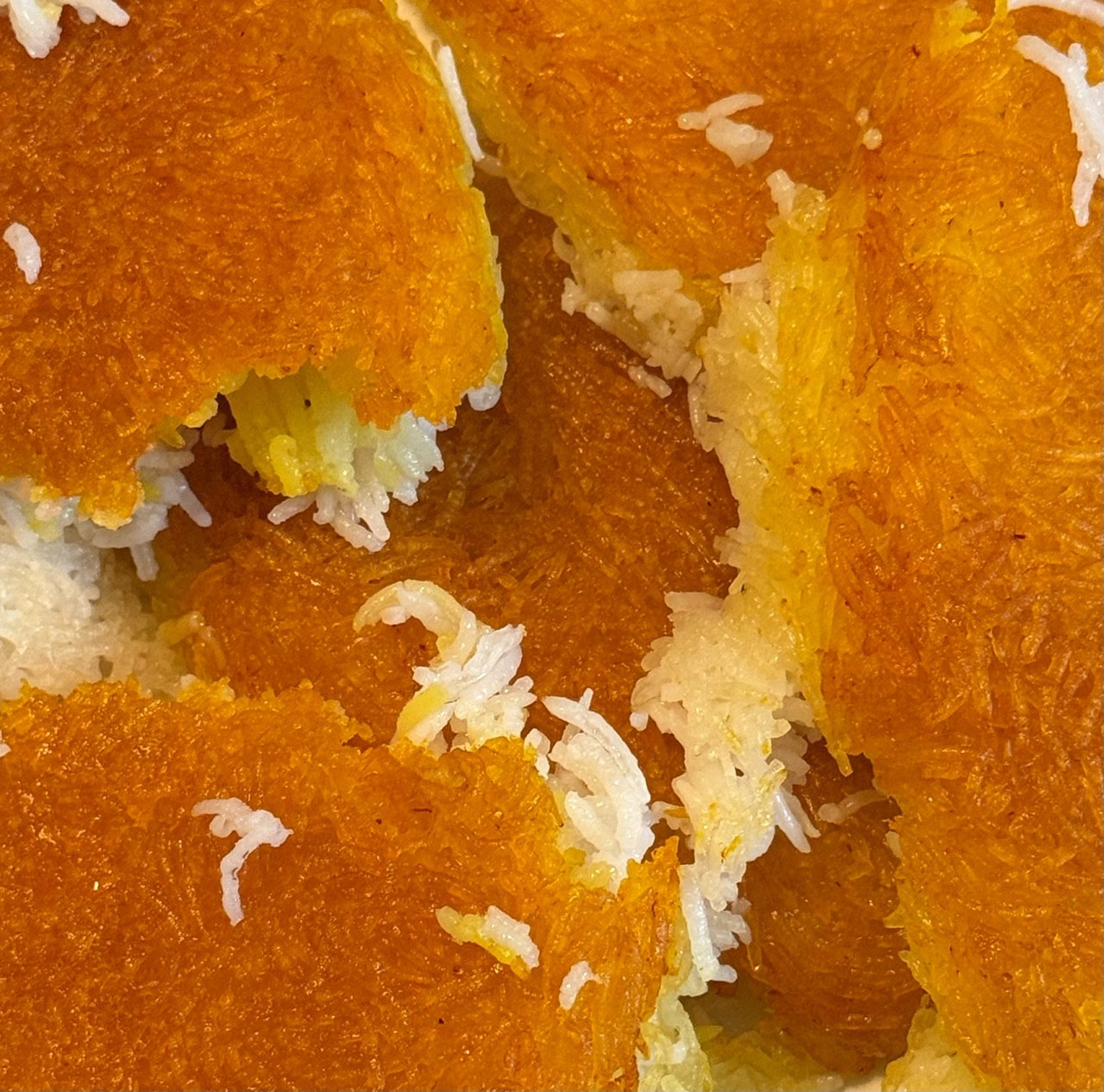
The golden, crispy crust of rice that forms at the bottom of the pot. Cooks line the pot with oil or butter and often with saffron rice, yoghurt rice, flatbread or thin potato slices, then turn the rice out so the crust sits on top. The name means 'bottom of the pot'.
At family meals there is often friendly competition for the last pieces of tahdig, and serving it well is a point of pride for the cook.
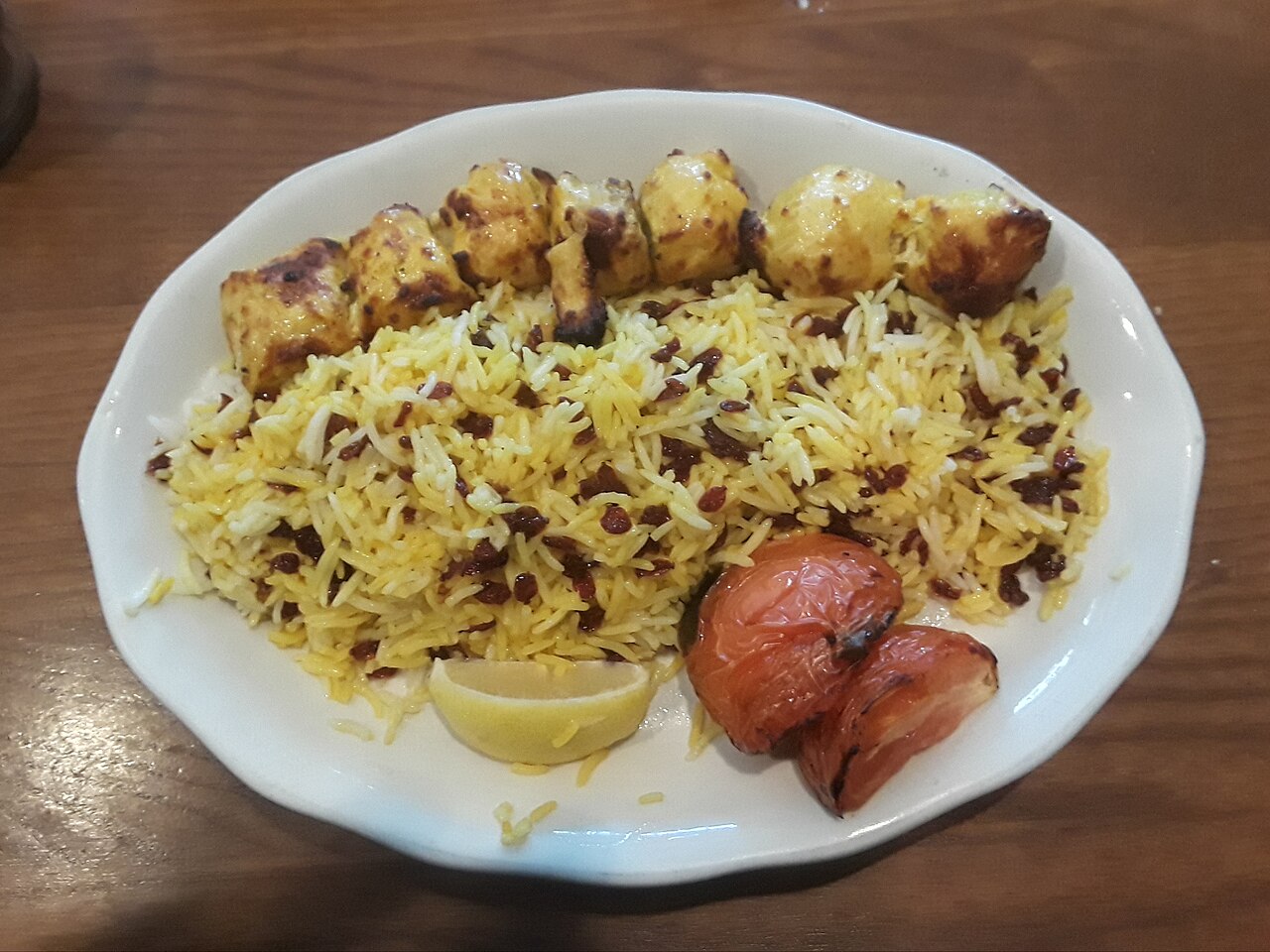
White and saffron rice scattered with tiny, tart red barberries fried in butter with a little sugar, usually served with saffron chicken. With its jewel colours it is a favourite at weddings and gatherings.
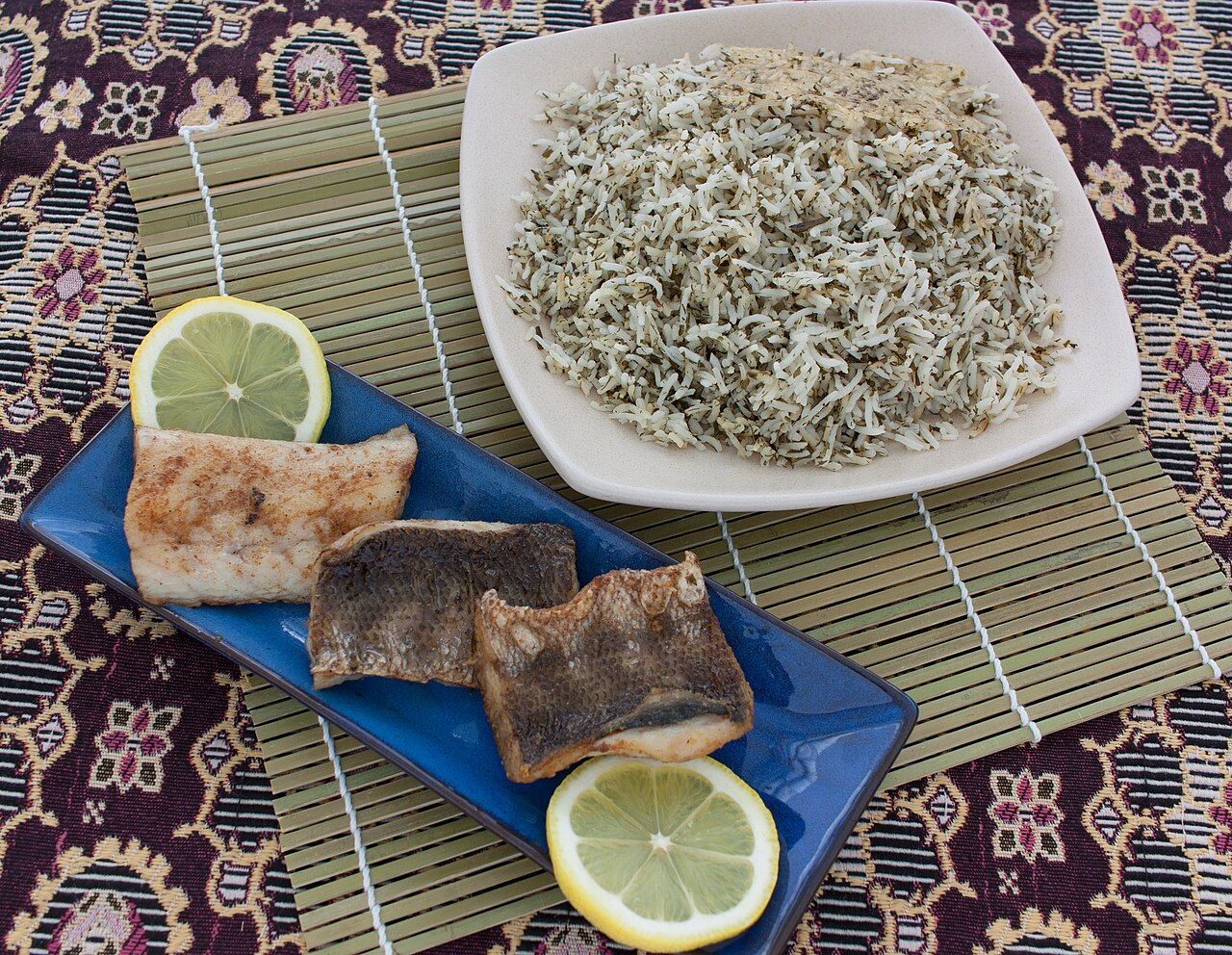
Rice steamed with lots of chopped fresh herbs, such as dill, coriander, parsley and chives, served with fried or smoked fish. It is the traditional lunch on Nowruz, the Persian New Year, when the fresh green herbs suit the start of spring.
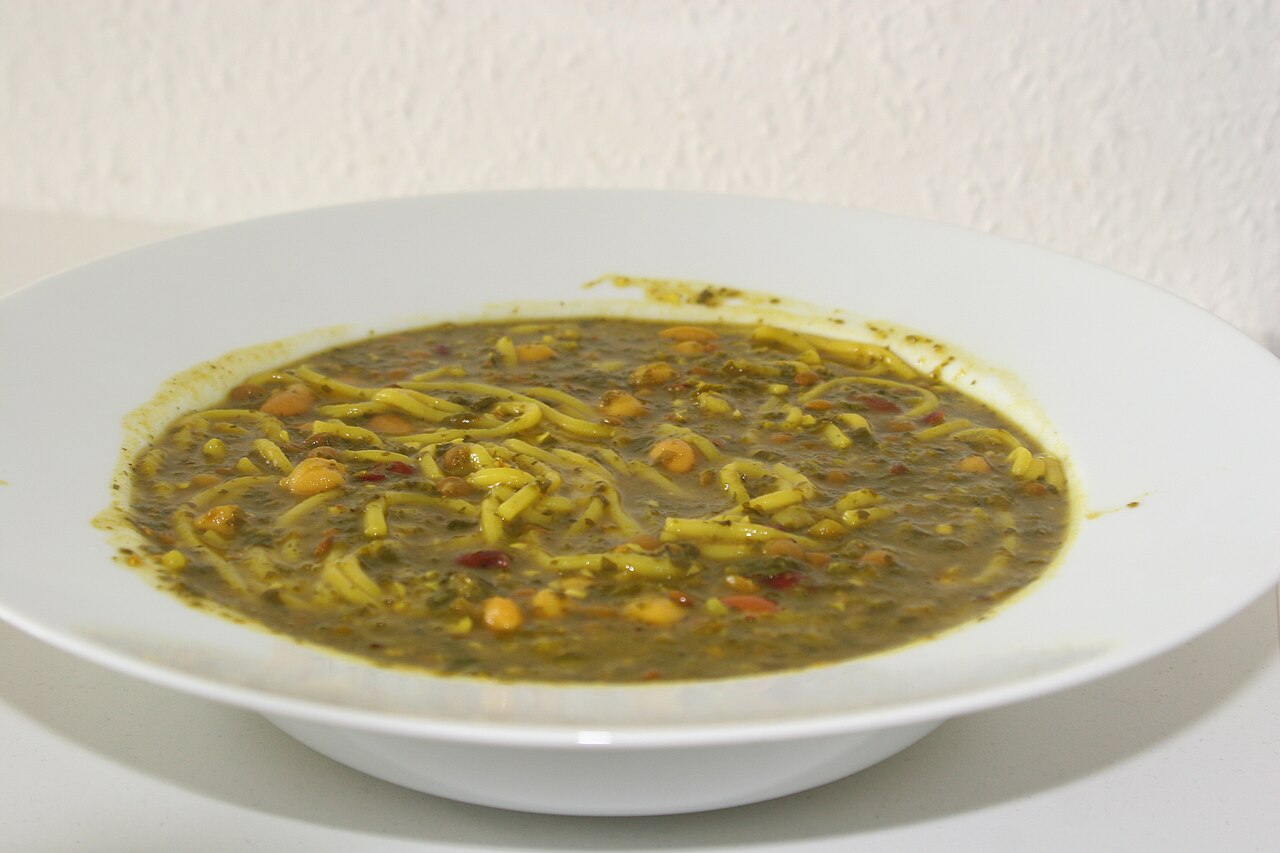
A thick soup of noodles, beans, chickpeas, lentils and plenty of herbs, topped with kashk (a tangy dried whey), fried onions, garlic and dried mint fried in oil. It is a warming winter dish and is often cooked in big pots to share.
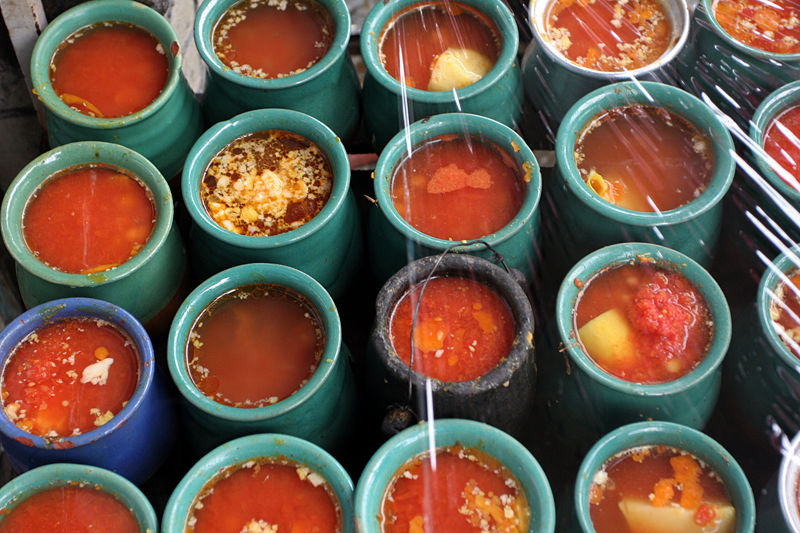
A hearty lamb stew with chickpeas, white beans, potatoes and tomato, cooked slowly in a stoneware pot called a dizi. You pour the broth over torn bread and eat it first, then mash the meat and vegetables into a paste called goosht-e koobideh and eat it with bread, herbs and pickles.
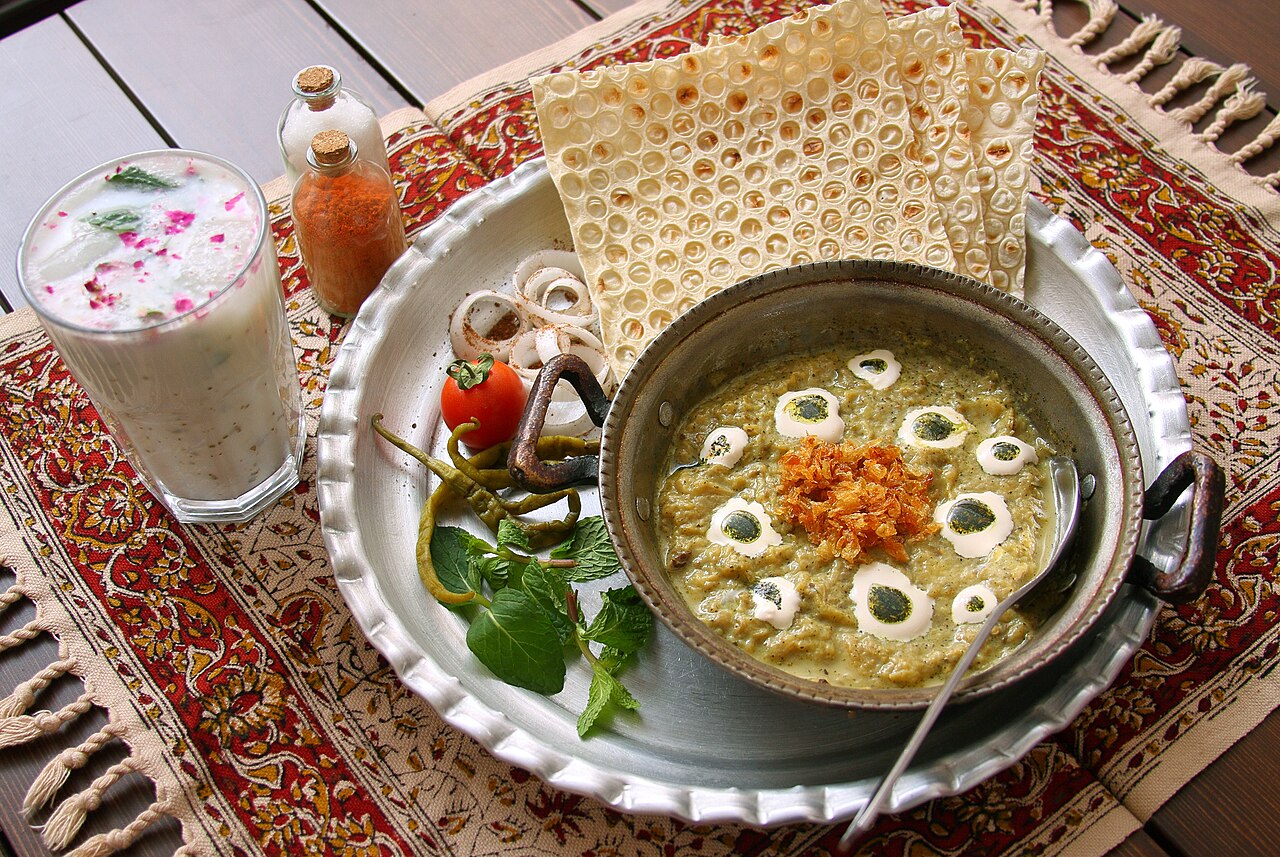
A warm dip of fried aubergine mashed with garlic, onions and kashk, a tangy dried whey, and topped with fried mint, crispy onions, walnuts and a swirl of saffron. It is eaten with flatbread.
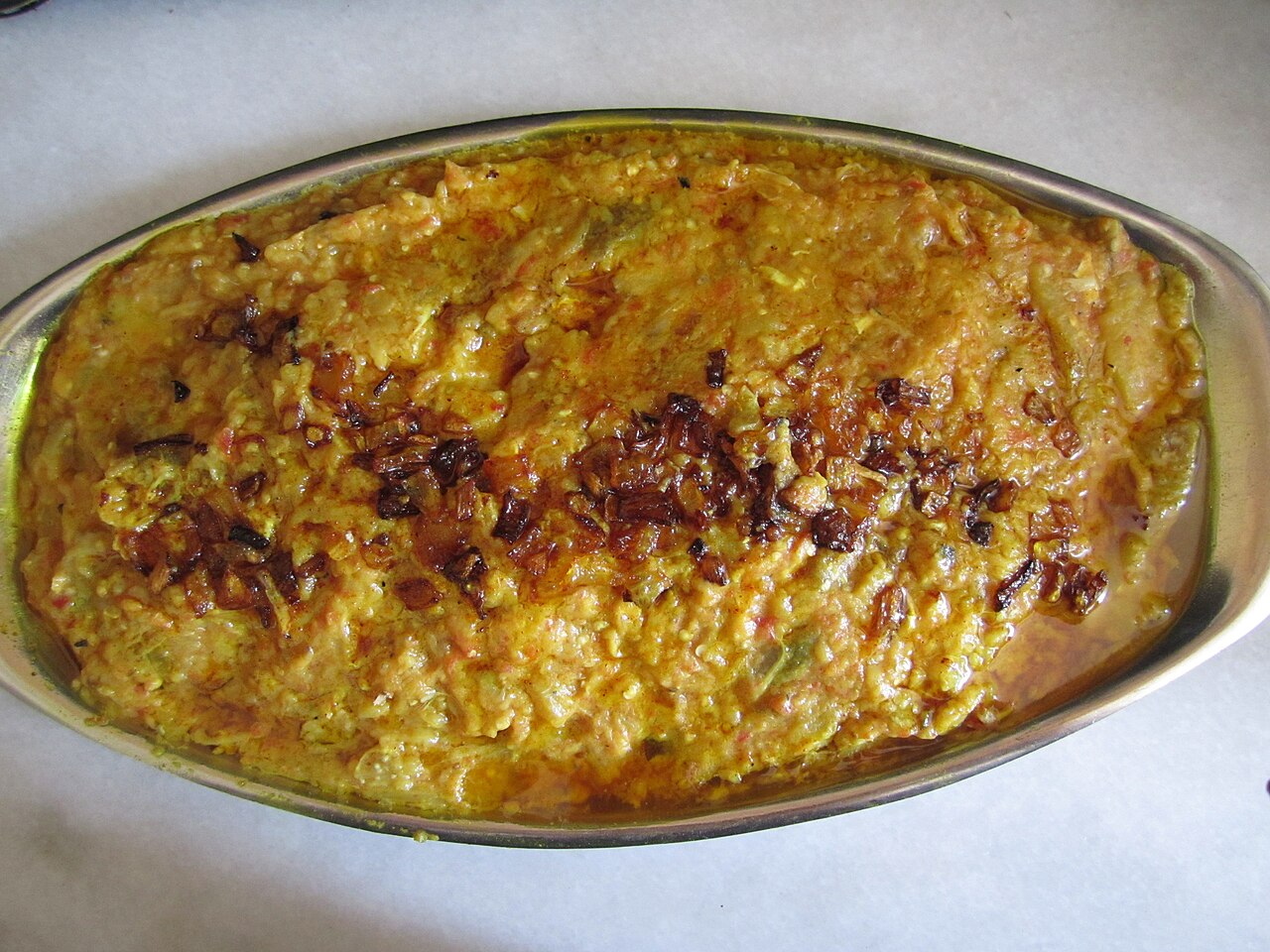
Smoky grilled aubergines chopped and cooked with lots of garlic, tomatoes and eggs until thick. It comes from Gilan in the green, rainy north and is eaten with bread or rice.
A thick, bright green herb frittata made with more herbs than egg: parsley, coriander, dill and chives, often with walnuts and barberries. It is served warm or cold, in wedges, with bread and yoghurt, and is a favourite at Nowruz.
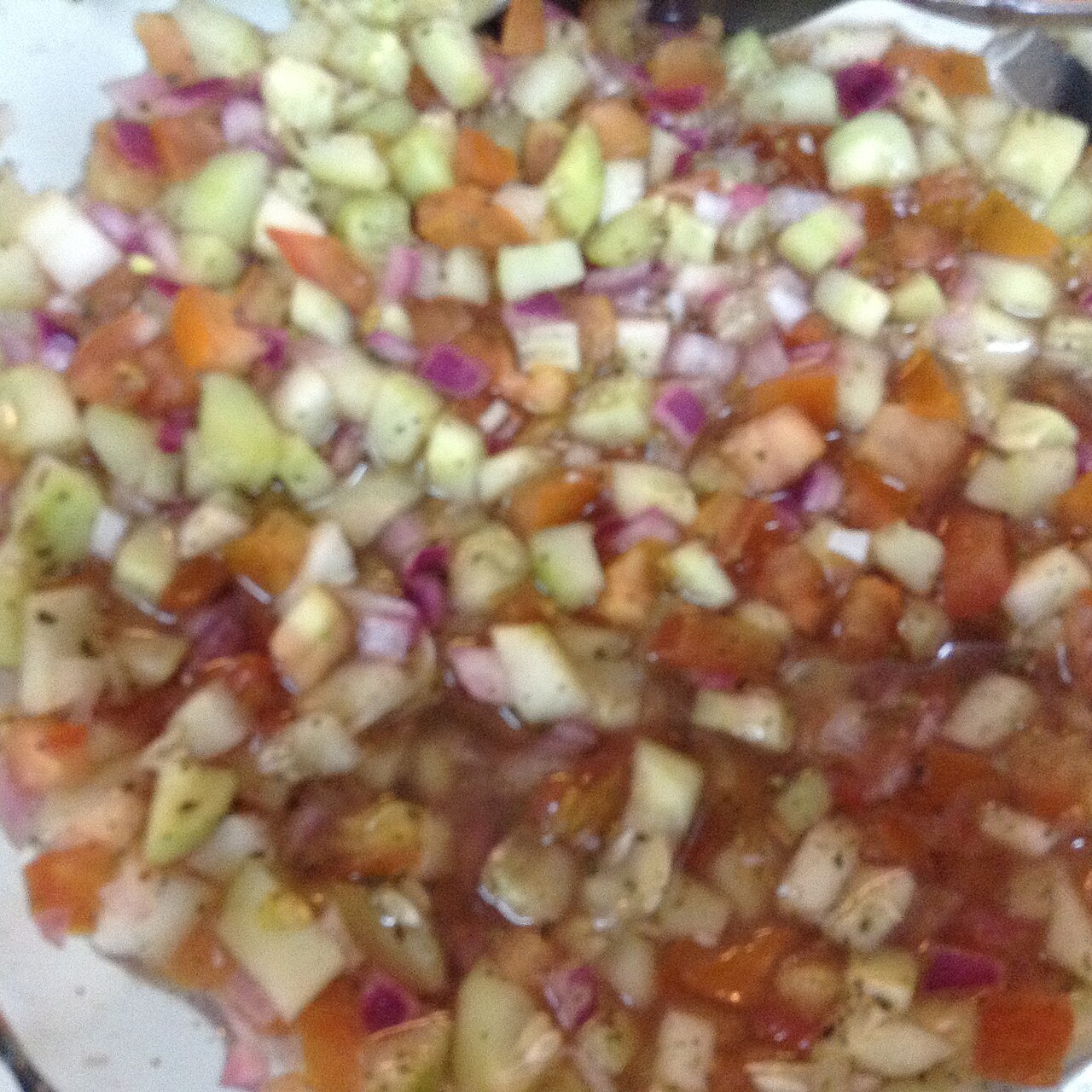
A fresh chopped salad of cucumber, tomato and onion with dried mint, dressed with lime juice or verjuice (sour grape juice) and a little oil. It is served with rice and kebabs, and some people spoon it over their rice.
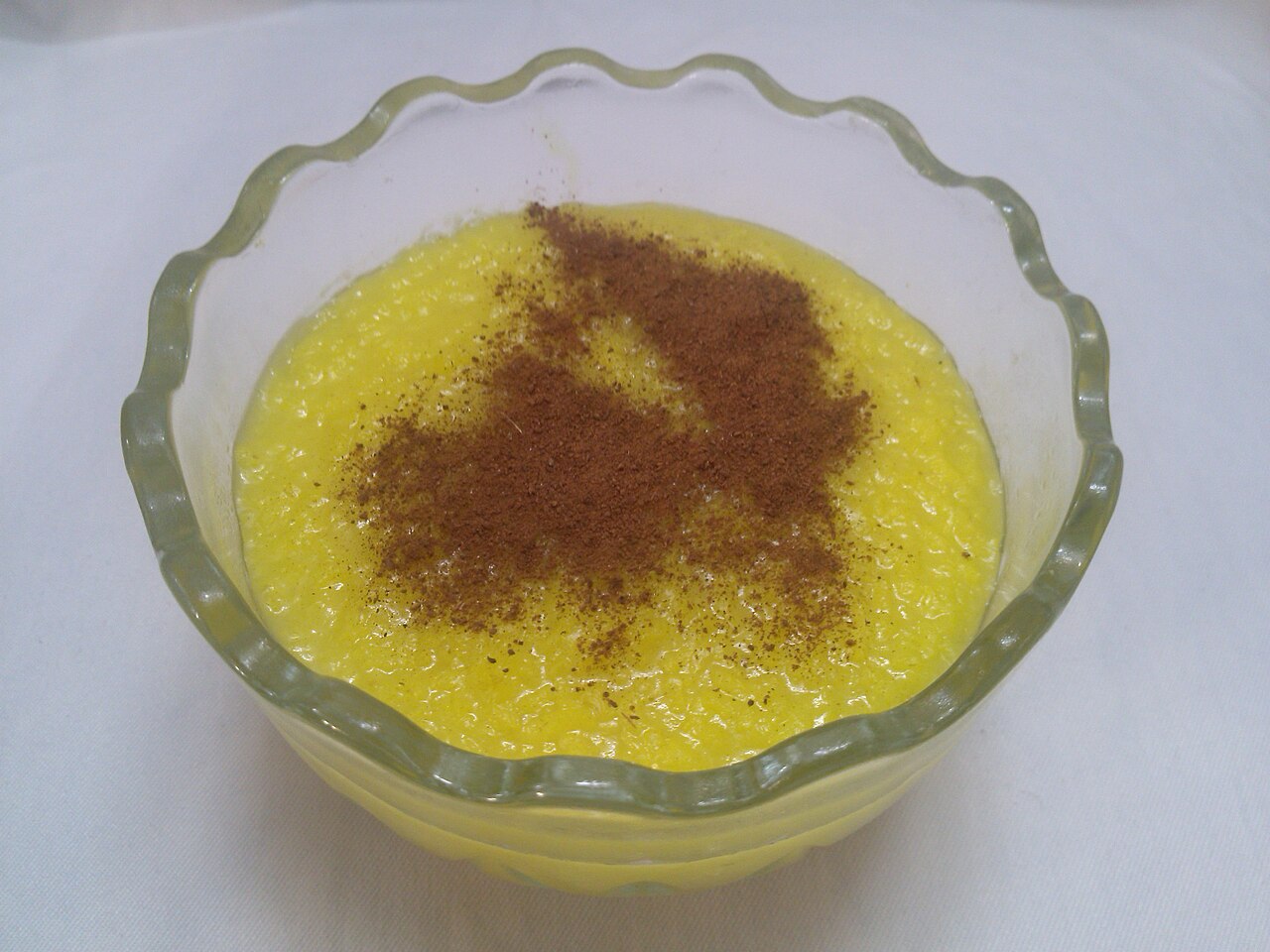
A golden saffron rice pudding scented with rosewater and cardamom, topped with cinnamon, almonds and pistachios, often in pretty patterns. It is made in huge pots for religious occasions and handed out to neighbours, and it is also eaten to break the fast in Ramadan.
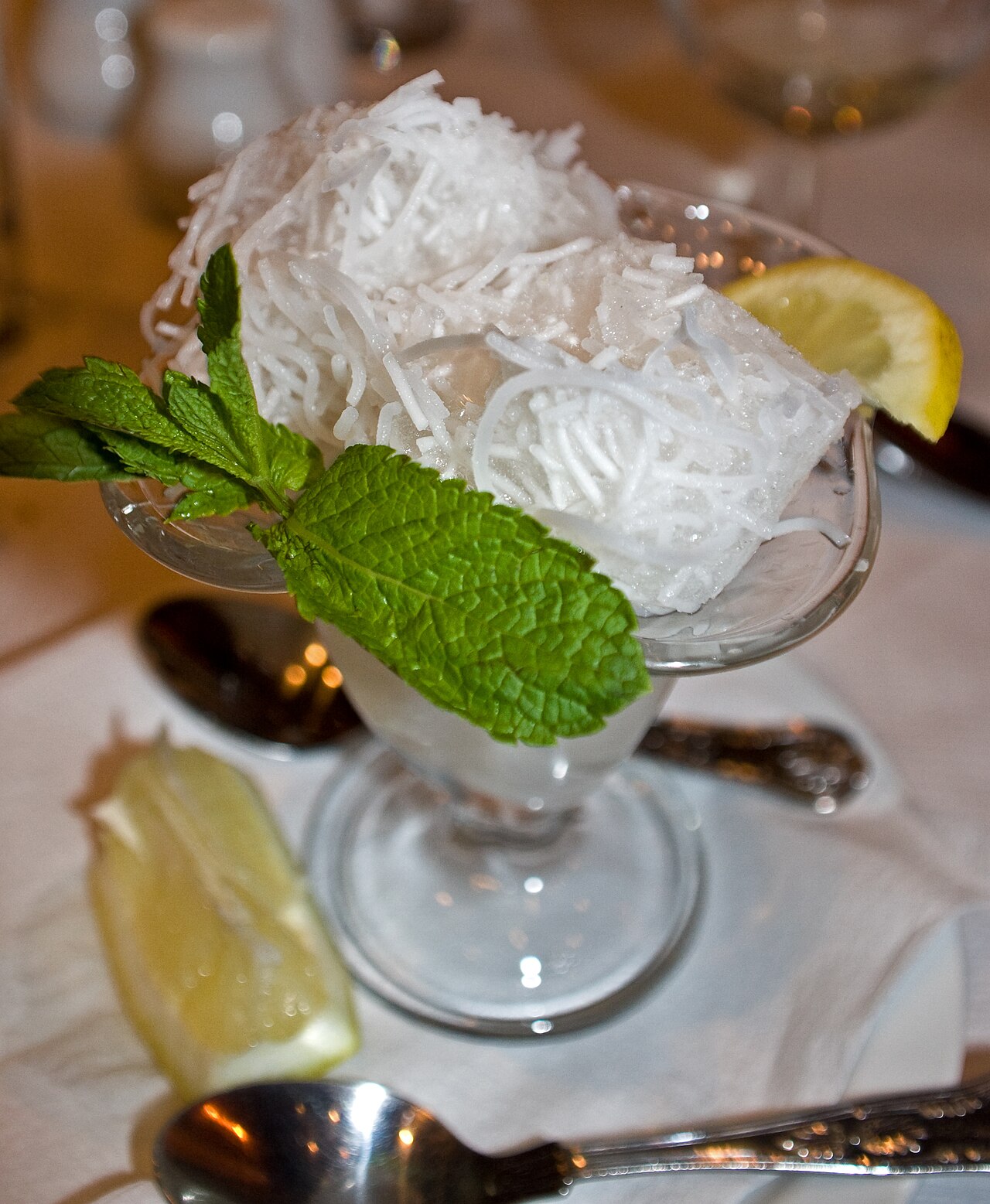
A cold dessert of thin, springy starch noodles in a half-frozen syrup of sugar and rosewater, served with a squeeze of lime juice and sometimes sour cherry syrup. Ice cream shops often serve it next to saffron ice cream.
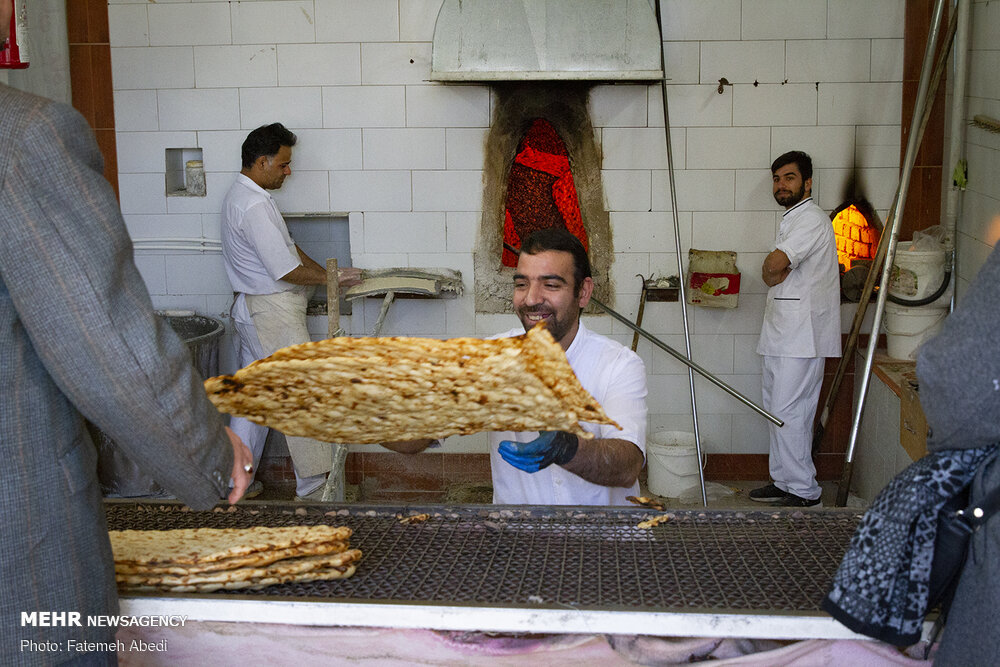
A long, bubbly wholewheat flatbread baked on a bed of small hot pebbles in a big oven, which leaves dimples in the dough. Its name means 'little stone' or pebble. People queue at the bakery to buy it hot for breakfast or to eat with abgoosht.
Before eating, people check the bread for any small stones that stuck to it in the oven.
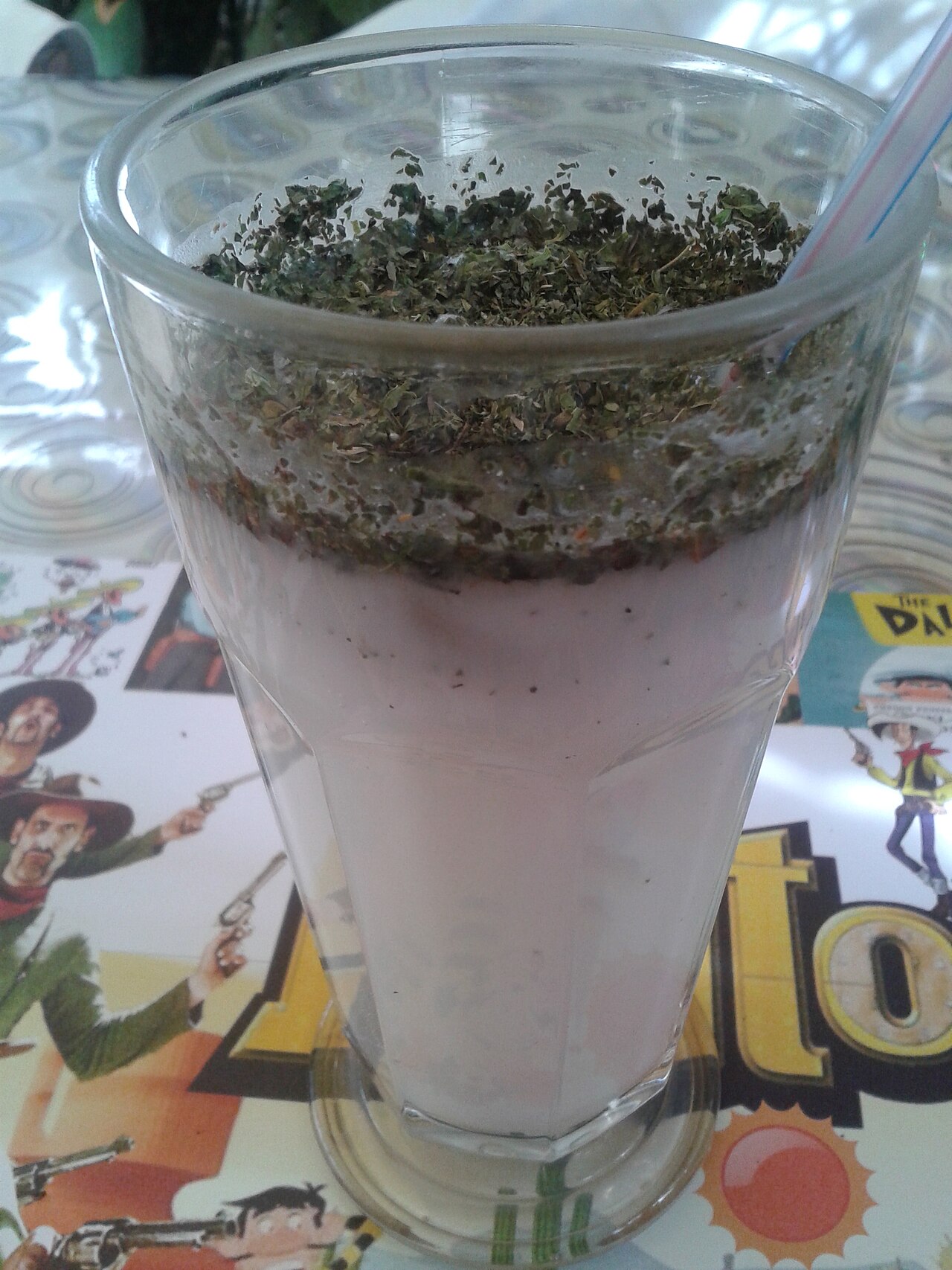
A cold, salty drink of yoghurt mixed with water, flavoured with dried mint and sometimes made fizzy. It is the classic drink with chelow kabab and helps on hot days.
At the table in Iran
Taarof, a ritual of polite offers and refusals, shapes every meal. A host will press you to take more food, and it is polite to refuse once or twice before accepting. Hosts may also refuse your offer to help; ask again if you mean it.
In many homes, especially in the countryside and at big family meals, food is served on a cloth called a sofreh spread on the floor. Take off your shoes at the door, sit cross-legged or with your legs tucked away, and never step on the sofreh.
Iranians usually eat with a spoon in the right hand and a fork in the left, using the fork to push rice onto the spoon. Knives are rarely needed.
Tea is the first thing offered to a guest and comes again after the meal. Many people hold a sugar cube in their mouth and drink the tea through it.
Before or during a meal people say 'nush-e jan', may it nourish your soul, and afterwards guests thank the cook with 'dast-e shoma dard nakone', may your hand not hurt.