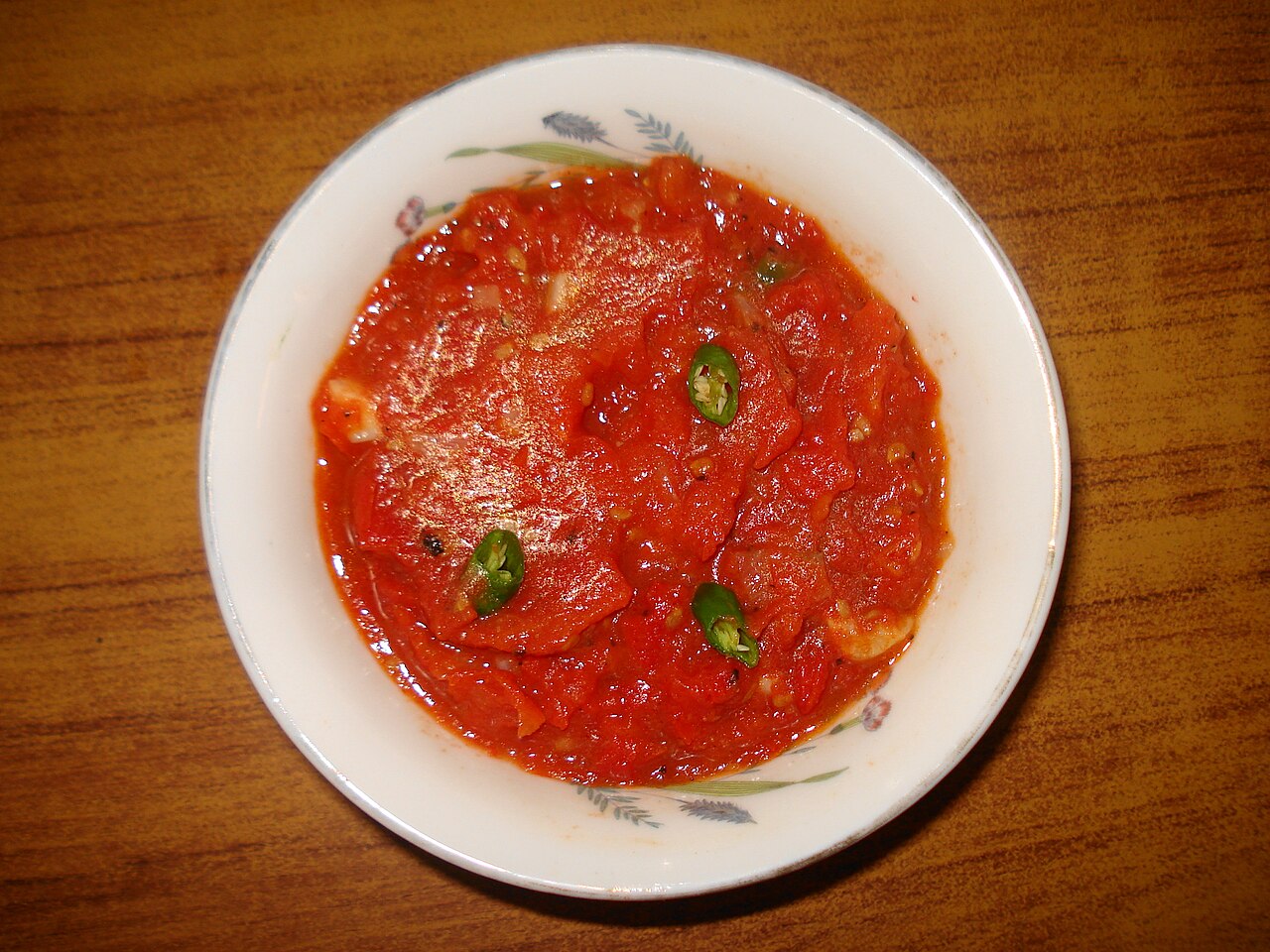
Saudi cooking is built on rice, wheat, meat, dates, ghee and warm spices such as cardamom, cinnamon, cloves, black pepper and dried black lime. A family meal usually centres on a large shared platter of spiced rice topped with chicken or lamb, with salad, a spicy tomato sauce and yoghurt drinks on the side. Guests are welcomed with small cups of Arabic coffee and dates, and every region has its own dishes: rice with milk in the Hejaz, cracked wheat and date desserts in Najd, and spiced cookies in Qassim. In January 2023 the Culinary Arts Commission named jareesh the national dish and maqshush the national dessert. Pork and alcohol are forbidden under Islamic law.
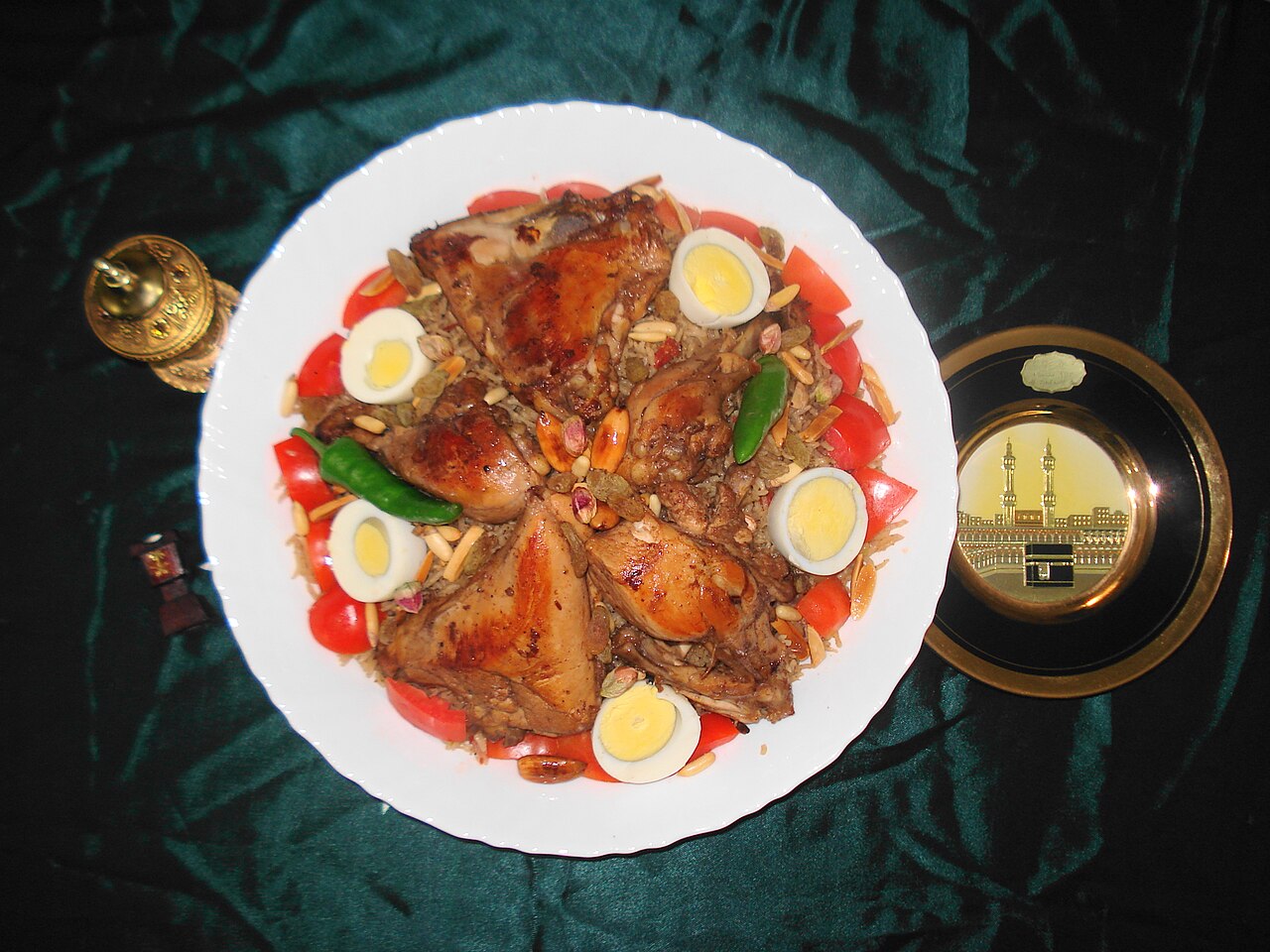
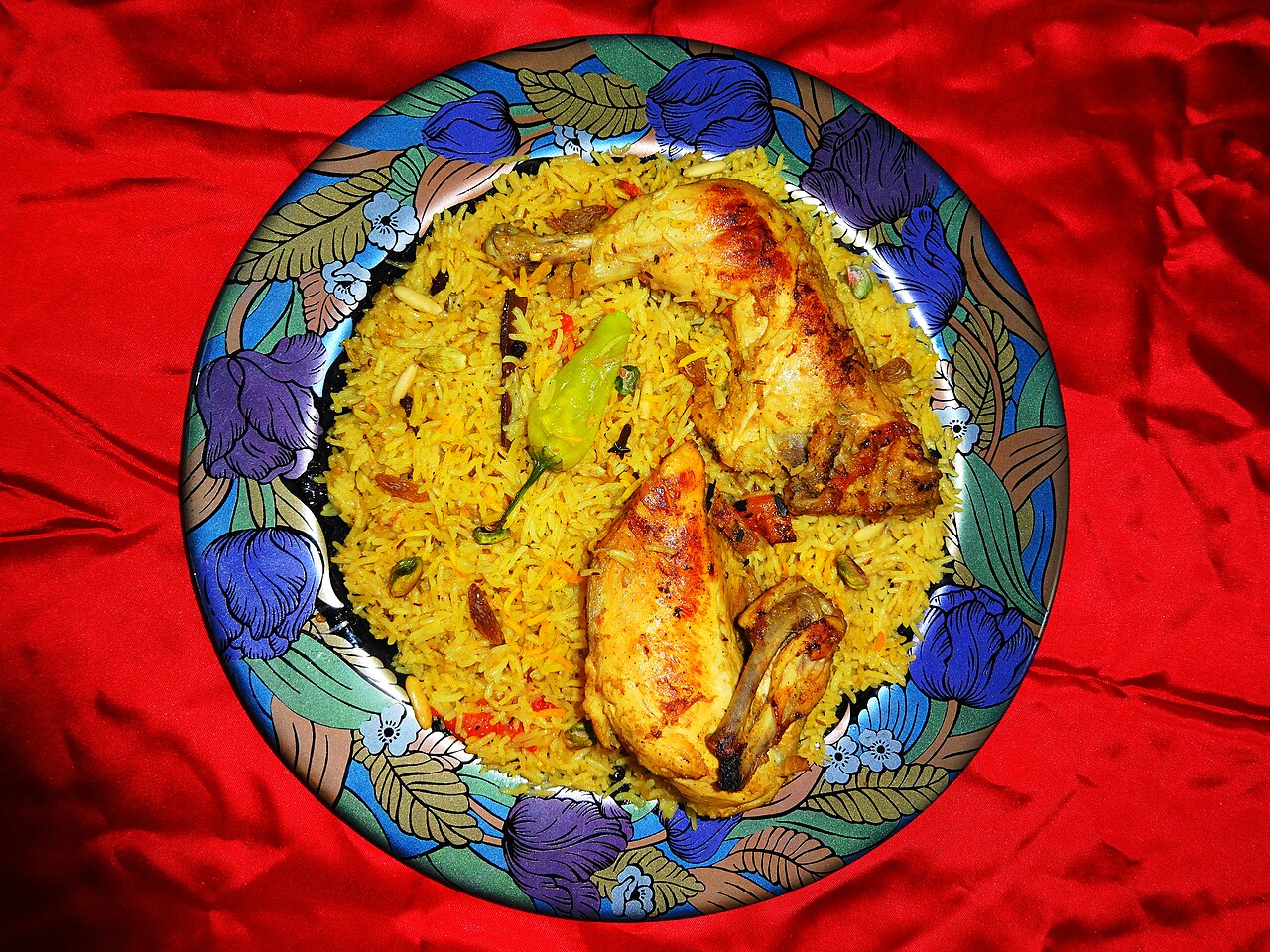
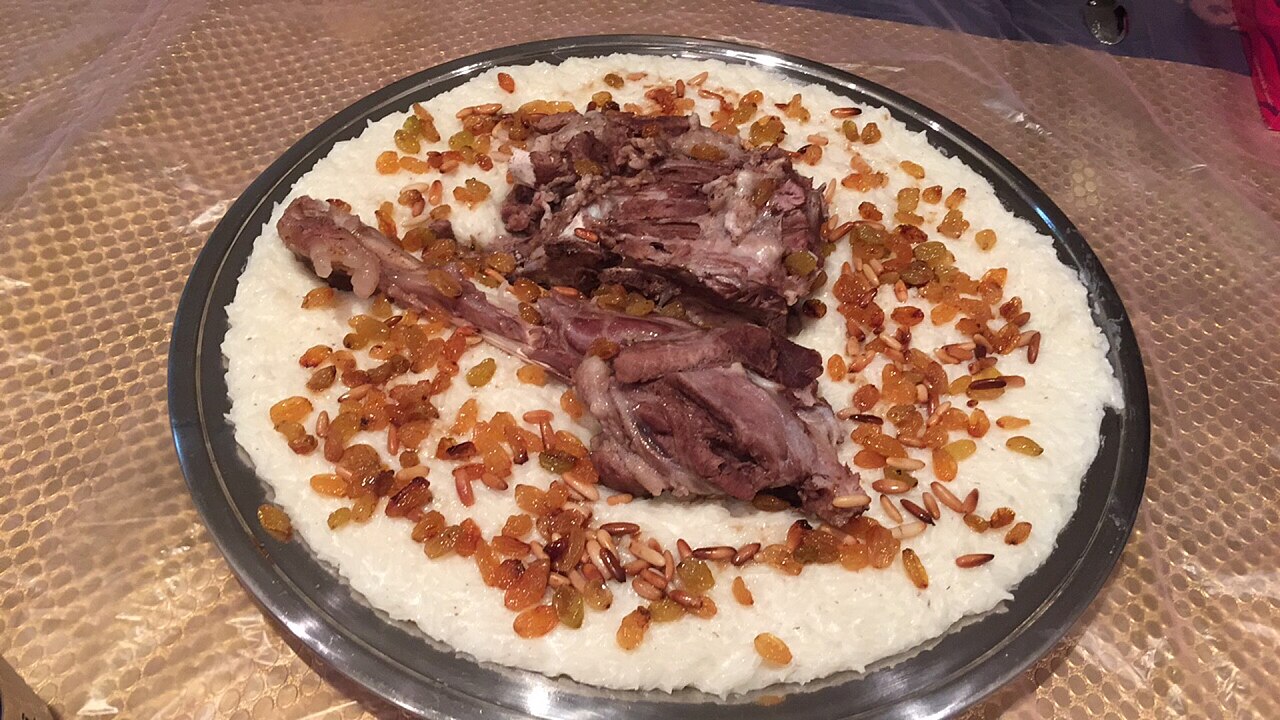
The best-known Saudi dish: long-grain rice cooked in one pot with chicken, lamb or camel, tomatoes, onions and a mix of spices such as cardamom, cloves, cinnamon, black pepper and dried black lime. It is piled on a large platter with the meat on top and often scattered with raisins and fried almonds.
The name comes from an Arabic root meaning 'to press', because everything is cooked together, 'pressed' into one pot.
Crushed wheat cooked slowly with meat or chicken, onions and spices, often with yoghurt or laban, until soft and creamy. It is served in a wide dish topped with crisp fried onions and a spoonful of ghee.
In January 2023 the Saudi Culinary Arts Commission named jareesh the national dish of Saudi Arabia.
Chicken or lamb seasoned with spices and cooked in a deep oven in the ground, called a tannour, hung above a pot of rice so that the juices drip into the rice below. The meat comes out very tender, with a light smoky taste.
The name is thought to come from the Arabic word for dew, describing the moist texture of the meat.
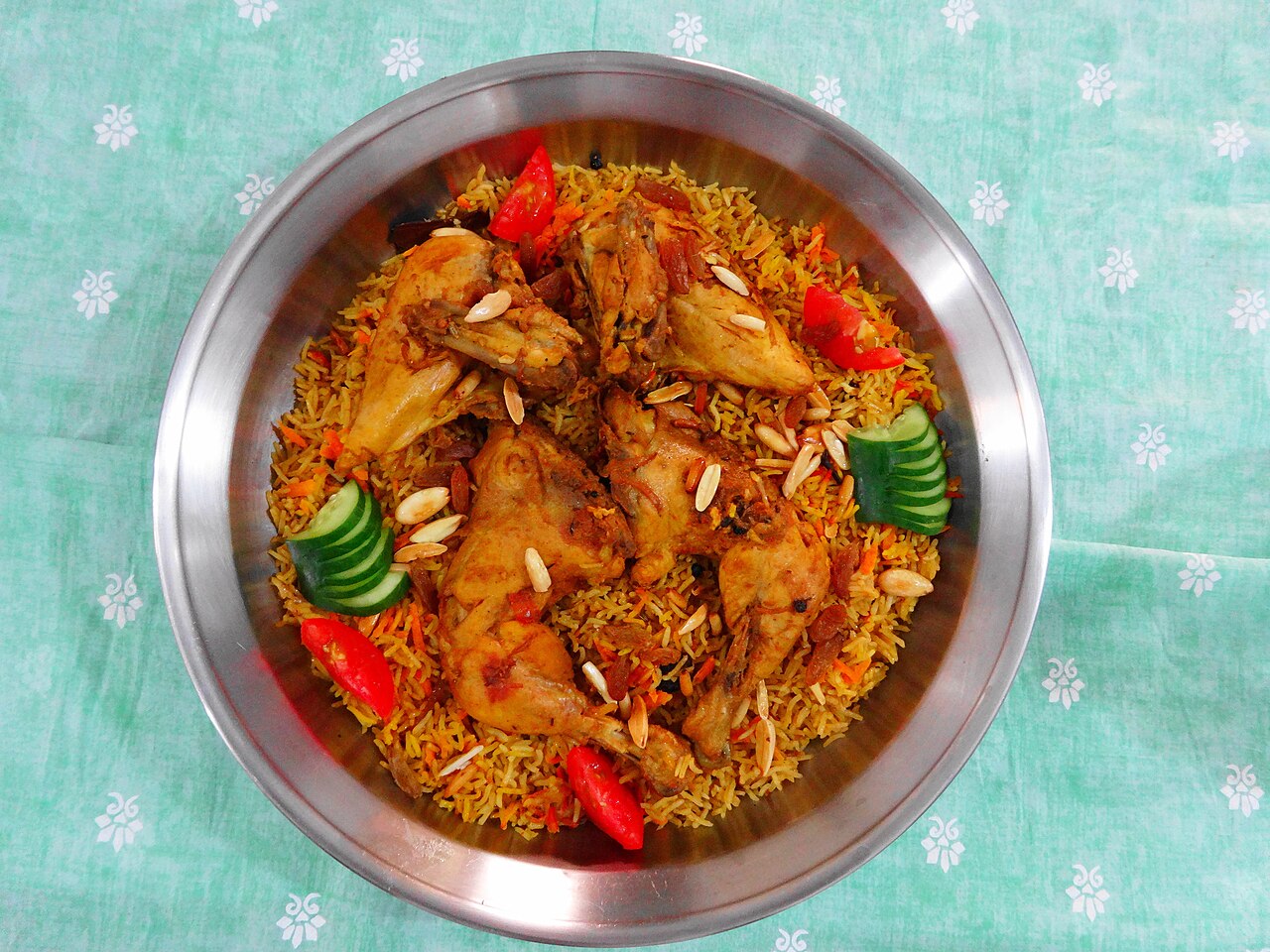
A golden rice dish cooked with meat or chicken, onions, tomato, black pepper, cumin and grated carrots. It is as widespread as kabsa, but milder and a little sweeter.
It is one of the best-liked rice dishes in the kingdom, and a favourite for family gatherings in the Hejaz.
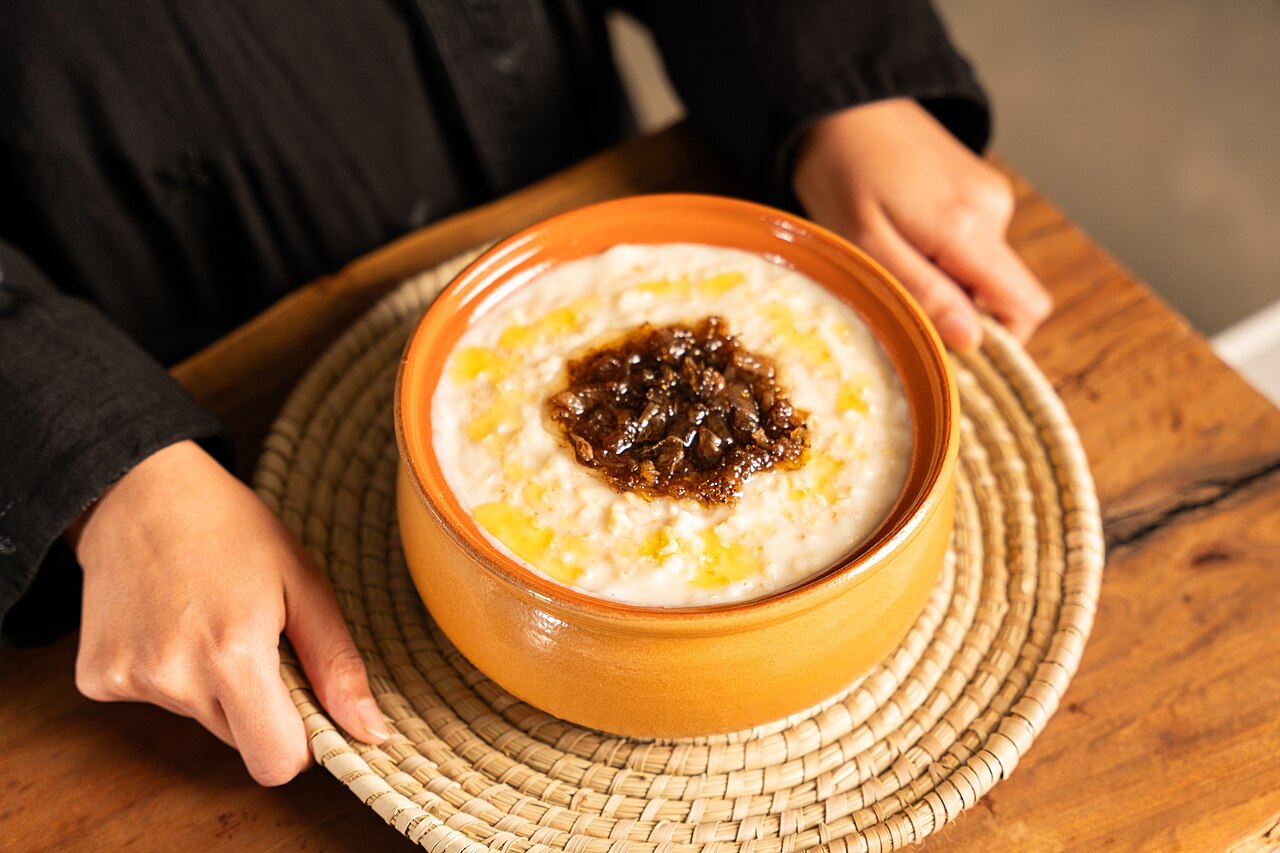
Short, creamy rice cooked slowly in chicken or lamb broth with milk, cardamom and a little mastic, then topped with the roasted meat and a pool of ghee. It is often compared to an Italian risotto.
In January 2024 saleeg was named the regional dish of the Makkah region. A cook in Taif is said to have opened the first restaurant serving it in 1936.
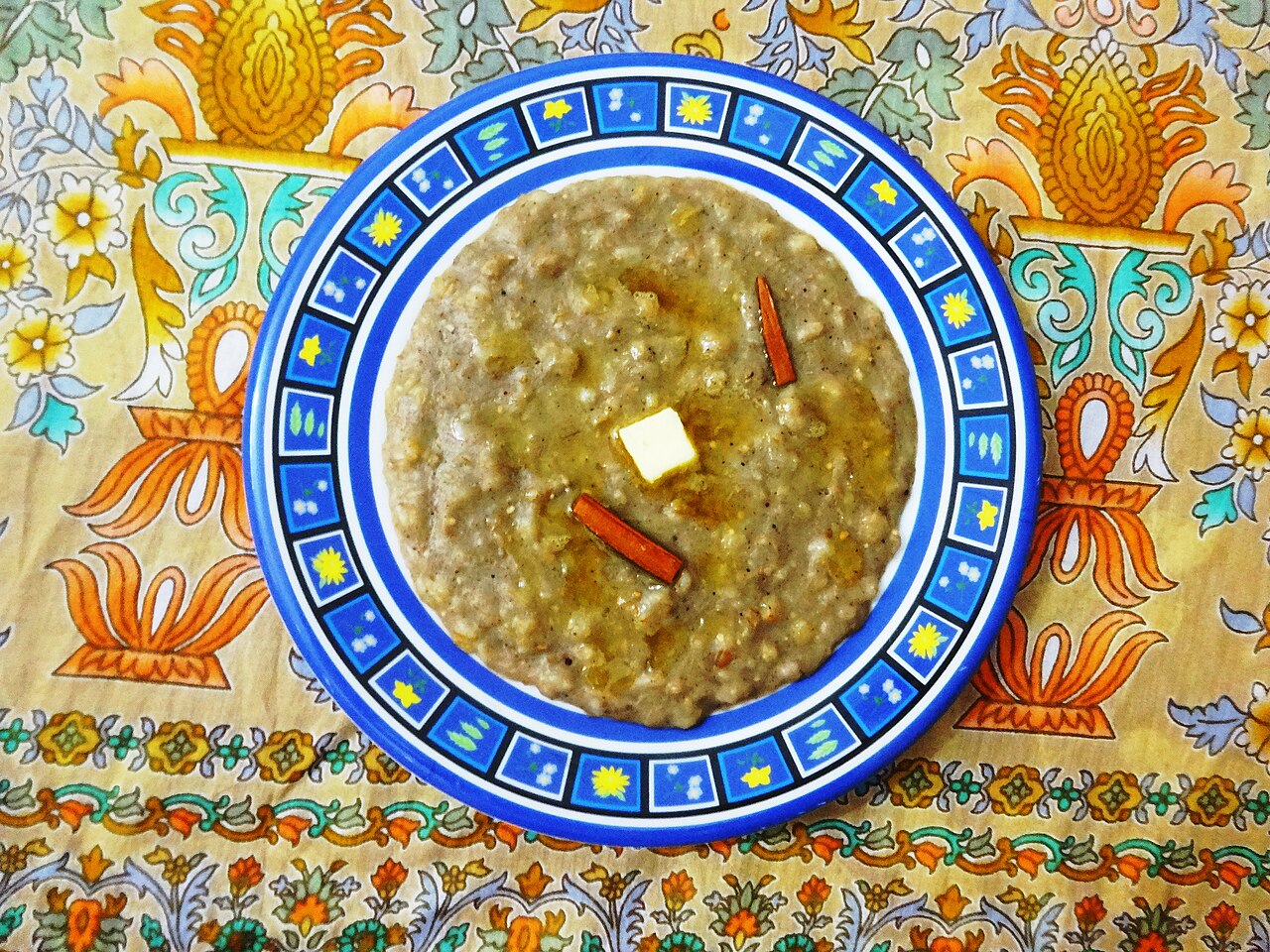
Whole wheat grains cooked for hours with meat and then beaten until smooth, like a thick savoury porridge. It is served with melted ghee, and sometimes cinnamon or sugar, on top.
In the Gulf countries harees is a favourite dish during the month of Ramadan.
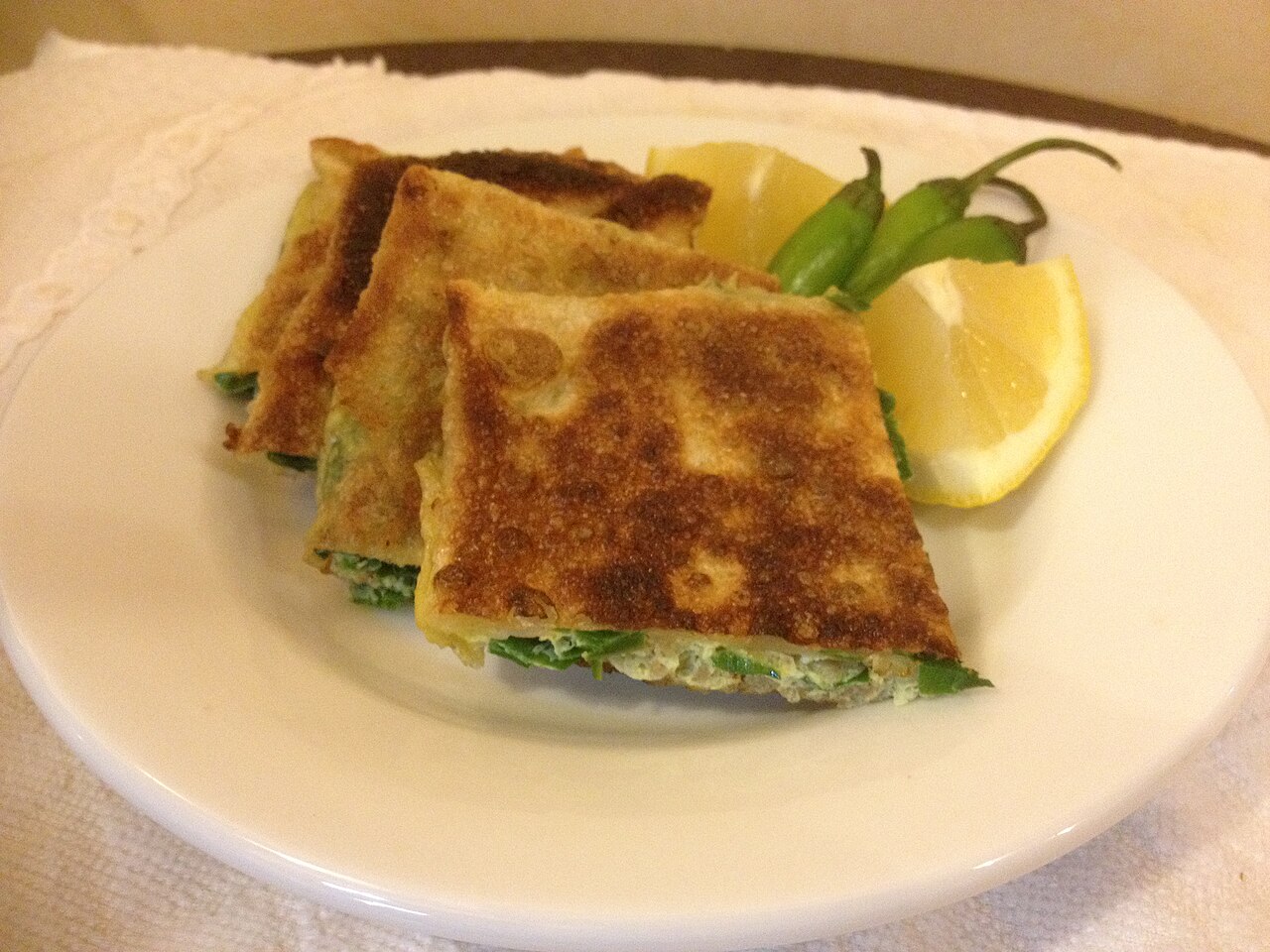
Paper-thin dough folded around minced meat, beaten egg, leeks and spring onions, then fried on a flat griddle until crisp and cut into squares. It is eaten hot with lemon and green chillies.
The name means 'folded' in Arabic. It is a favourite street snack in Mecca during Ramadan and the pilgrimage seasons.
Oases all over the country, especially Al-Ahsa, Qassim and Medina
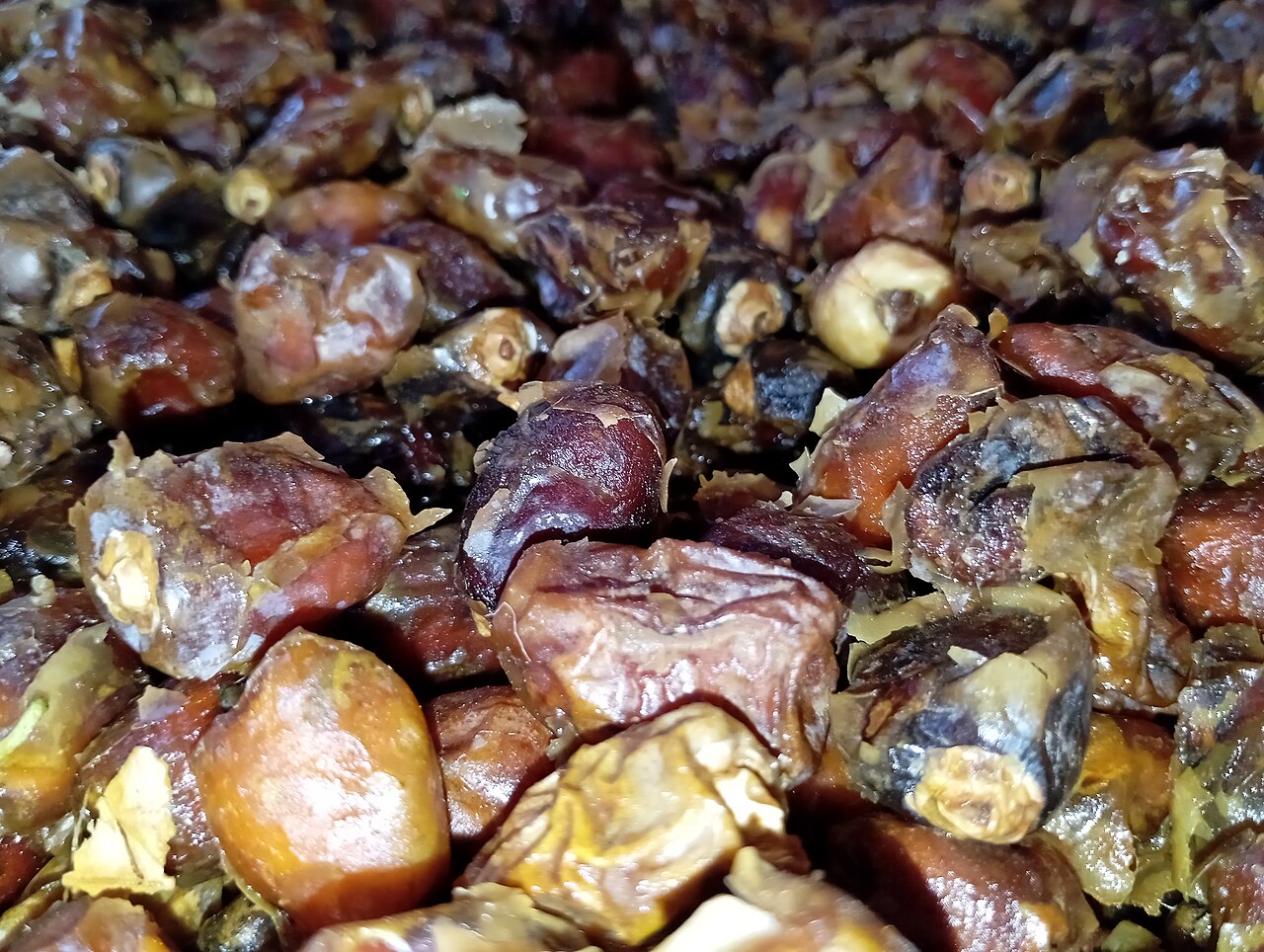
Soft, sweet fruit of the date palm, eaten every day and always offered to guests with coffee. There are hundreds of varieties, from soft and dark to golden and crunchy, and they are also made into date paste and date syrup (dibs).
Following the example of the Prophet, many Muslims break their fast in Ramadan with a few dates and water. As of 2022, Saudi Arabia was the world's second-largest producer of dates, after Egypt.
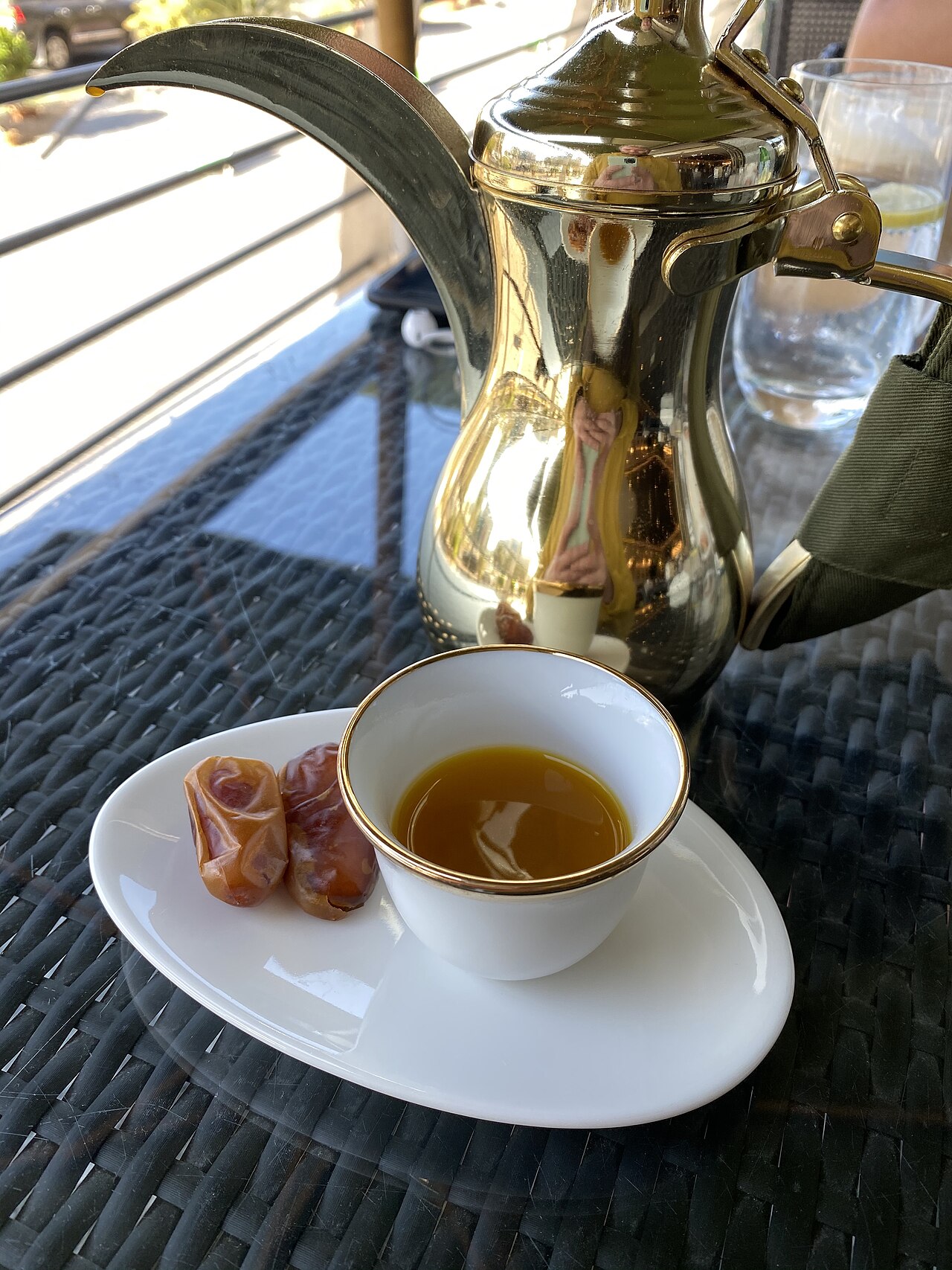
Lightly roasted coffee boiled with plenty of cardamom, sometimes with saffron or cloves, giving a pale golden, bitter and fragrant drink. It is poured from a long-spouted pot called a dallah into small cups without handles, a few sips at a time.
In 2015 UNESCO added Arabic coffee as a symbol of generosity to its list of intangible heritage, after a joint nomination by Saudi Arabia, the United Arab Emirates, Oman and Qatar. Jordan joined the listing in 2024.
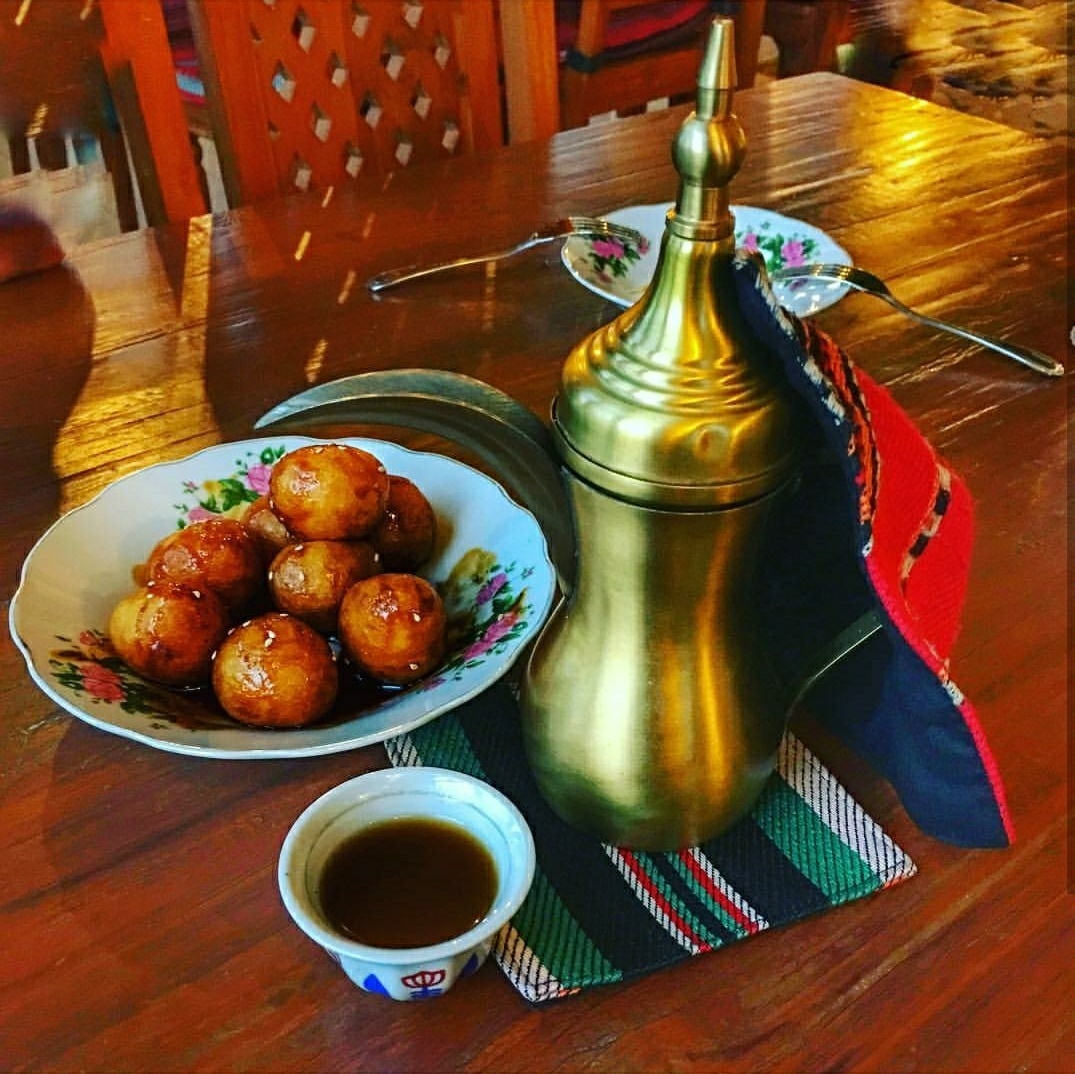
Small balls of yeast batter, deep-fried until crisp and golden outside and soft inside, then drizzled with date syrup or honey and sometimes sprinkled with sesame seeds.
Their name means 'little mouthfuls'. The same sweet was described in Arabic cookery books in Baghdad as early as the 13th century.
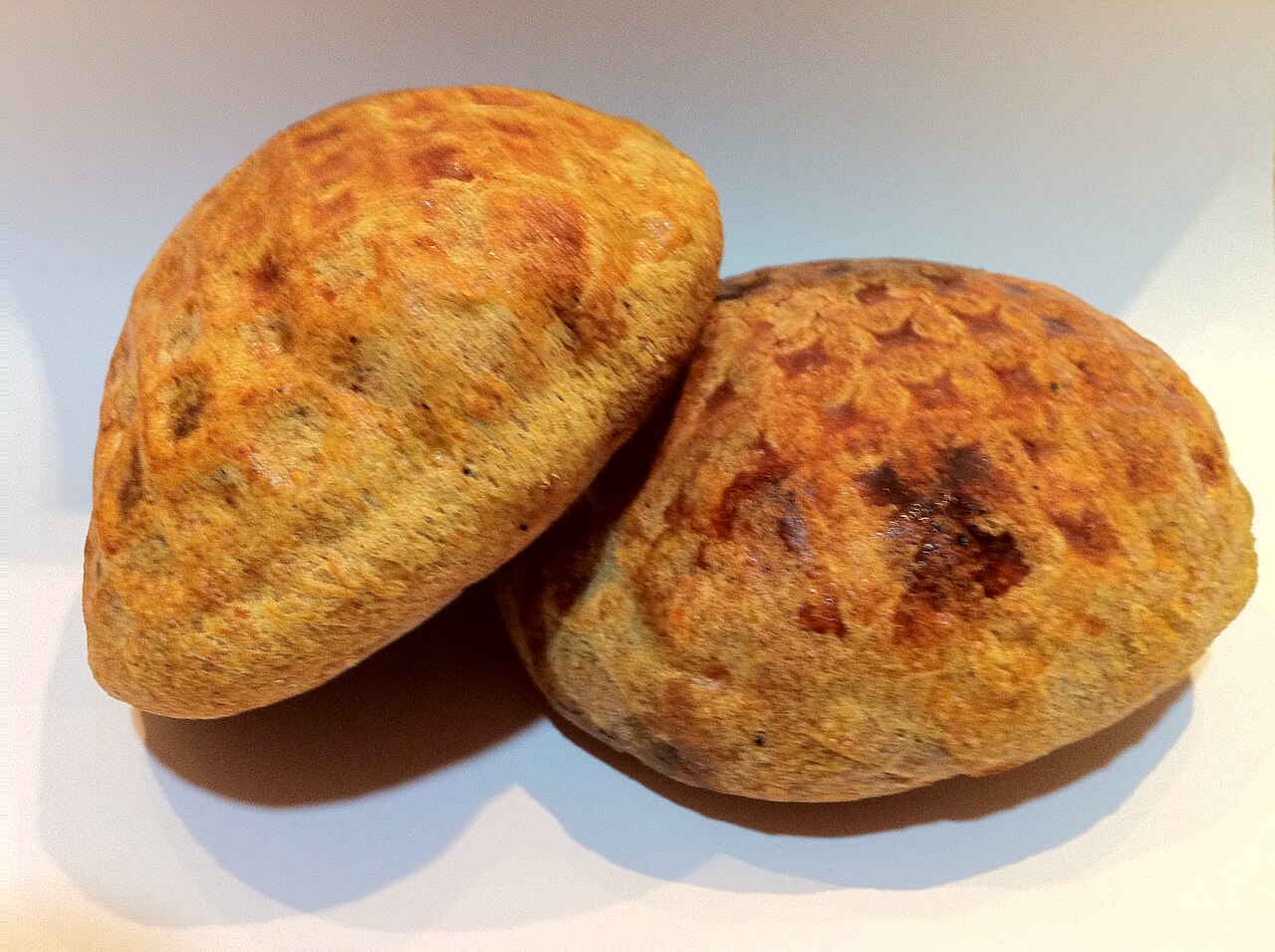
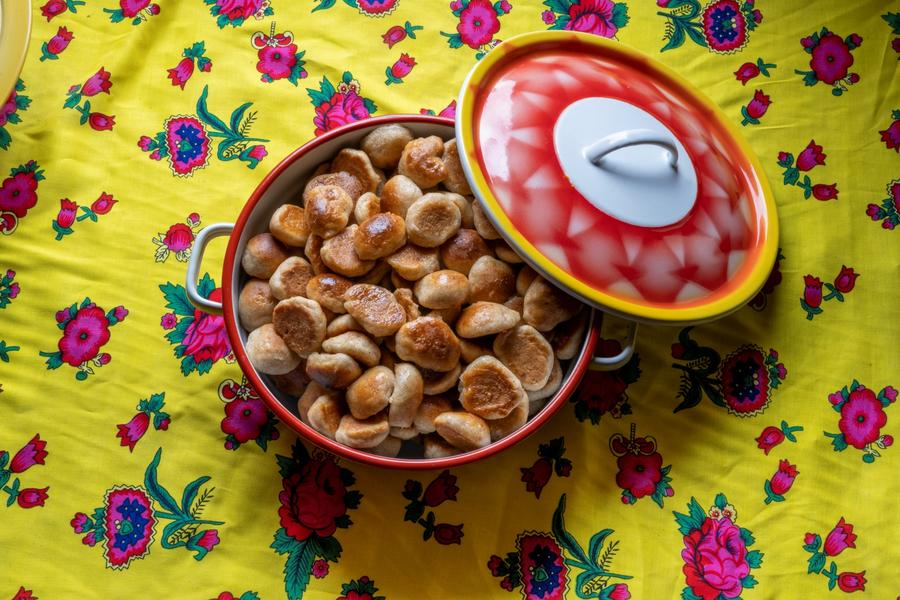
Round cookies of whole wheat flour filled or flavoured with sugar, cardamom, cinnamon, ginger, ground black lime and ghee, often pressed with a pattern on top. They keep well and are eaten with coffee or tea.
In January 2024 kleija was named the regional dish of Qassim, where kleija food festivals are held.
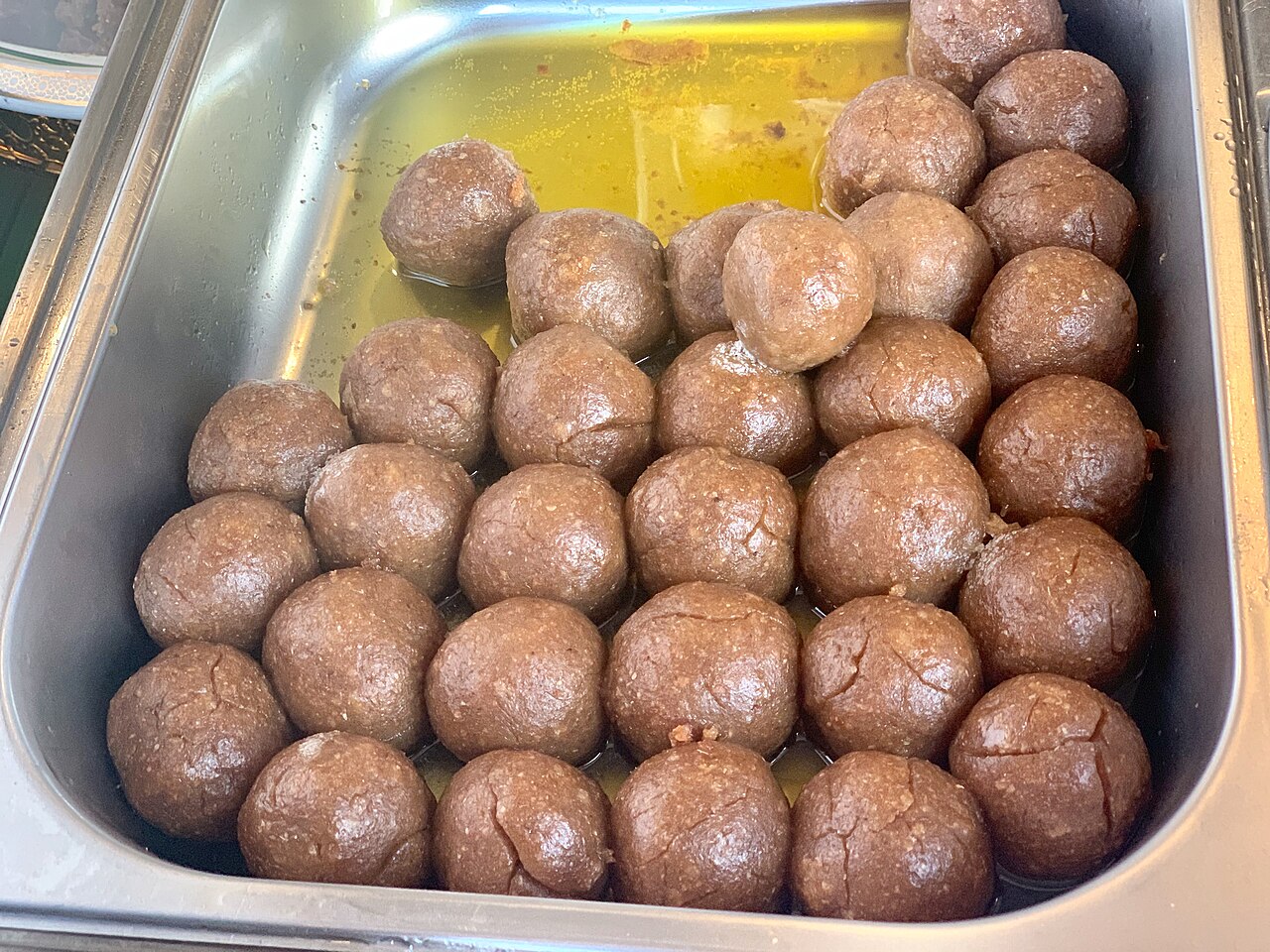
Soft dates kneaded with crumbled brown bread and warm ghee, flavoured with cardamom and saffron, and shaped into balls or pressed into a dish. It is rich, warming and often eaten for breakfast in winter.
It is traditionally made in winter, when a rich, warming dish of dates and ghee is most welcome.
At the table in Saudi Arabia
Wash your hands before and after the meal. Eat, and pass food, with your right hand.
Many families eat from a large shared platter, sitting on a carpet or cushions. Take food from the part of the dish directly in front of you.
Your host will keep offering more. It is polite to accept and to praise the food, and to leave a little on your plate when you have had enough.
Arabic coffee is poured into small cups, a little at a time. Hold the cup in your right hand; when you have had enough, gently shake the cup from side to side before handing it back.
Do not ask for alcohol or pork: both are forbidden by law.
During Ramadan, if you are invited to break the fast (iftar), it usually begins with dates, water and coffee at sunset, followed by a larger meal.