Castles on the Rhine, Christmas markets, great music and good bread, in the heart of Europe.
Germany lies in the middle of Europe, stretching from the North Sea and the Baltic Sea in the north to the Alps in the south. It has nine neighbours, more than most European countries, and with about 83 million people it has the largest population in the European Union. It is a federal country of 16 states, each with its own capital, dialects and food, from the harbour city of Hamburg to Bavarian villages under the mountains.
For most of its history, 'Germany' was not one country but hundreds of kingdoms, duchies and free cities inside the Holy Roman Empire. It became a single state only in 1871. The 20th century brought two world wars, the Nazi dictatorship and the Holocaust, and then, after 1949, four decades of division into two states: the Federal Republic of Germany (West Germany) and the German Democratic Republic (East Germany).
Questions to ask the older generation
Memories fade faster than photos. Ask these over a meal or a phone call, and write the answers down.
Which town or region of Germany did our family come from? Was it near Hamburg, Munich, Cologne?
Who was the first in the family to leave Germany, when, and why?
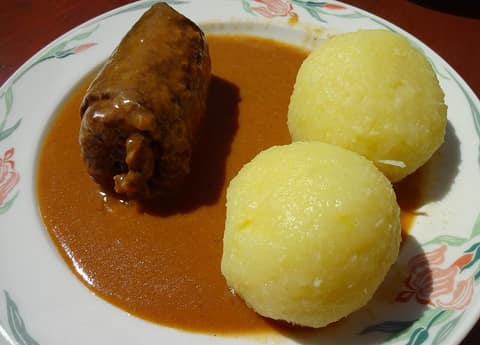
Which dishes from Germany were cooked at home? Did anyone make Currywurst or Weisswurst?
Does anyone in the family still speak German, or use a few words of it?
Were there songs, prayers, games or holidays from Germany that the family kept?
Are there old photos, letters or documents from Germany? Who has them?
If you could visit Germany together, where would you go first?
A short history of Germany
From Roman frontiers and medieval emperors to the printing press, the Reformation, two world wars, division and a peaceful reunification, Germany's story shaped the whole of Europe.
AD 9
The Battle of the Teutoburg Forest
In September of the year 9, an alliance of Germanic peoples led by Arminius destroyed three Roman legions under Varus. After a few years of revenge campaigns, Rome gave up trying to conquer the lands east of the Rhine, and the river became the empire's frontier.
AD 962
Otto I is crowned emperor
Otto I, King of Germany since 936, was crowned emperor in Rome in 962. This is seen as the formal beginning of the Holy Roman Empire, a loose union of many German and other lands that lasted for more than 800 years.
1517
Luther's Ninety-five Theses
On 31 October 1517, Martin Luther, a monk and professor in Wittenberg, sent his 95 theses against the sale of indulgences to his archbishop. They were soon printed and read all over Germany, and began the Protestant Reformation. His later translation of the Bible helped shape the German language.
1806
The Holy Roman Empire ends
After Napoleon's victories, Emperor Francis II gave up the imperial crown on 6 August 1806, and the Holy Roman Empire, which had lasted since 962, came to an end.
1933
The Nazi dictatorship begins
On 30 January 1933 Adolf Hitler was appointed chancellor. Within months the Nazis abolished democracy, banned other parties and began persecuting Jews, political opponents and many other groups.
1949
Two German states are founded
After the war, Germany was occupied by the Allies. In 1949 two states were created: the Federal Republic of Germany in the west, under the Basic Law of 23 May, with Bonn as its seat of government, and the German Democratic Republic in the east, on 7 October, with East Berlin as its capital.
1961
The Berlin Wall is built
About 3.5 million people had left East Germany for the West. On 13 August 1961 the East German government began building a wall around West Berlin to stop them. At least 140 people were killed at the Wall or died because of it in the years that followed.
1990
Germany is reunified
On 3 October 1990 the German Democratic Republic joined the Federal Republic, and Germany became one country again, with Berlin as its capital. The day is now a national holiday, the Day of German Unity.