German food is hearty and very regional: every area has its own sausages, breads and cakes. A traditional day starts with bread rolls, cheese, cold meats and jam. Lunch was long the main hot meal, while supper is often 'Abendbrot', literally 'evening bread', a cold meal of bread with cheese and cold cuts. On weekend afternoons many families still meet for 'Kaffee und Kuchen', coffee and cake.
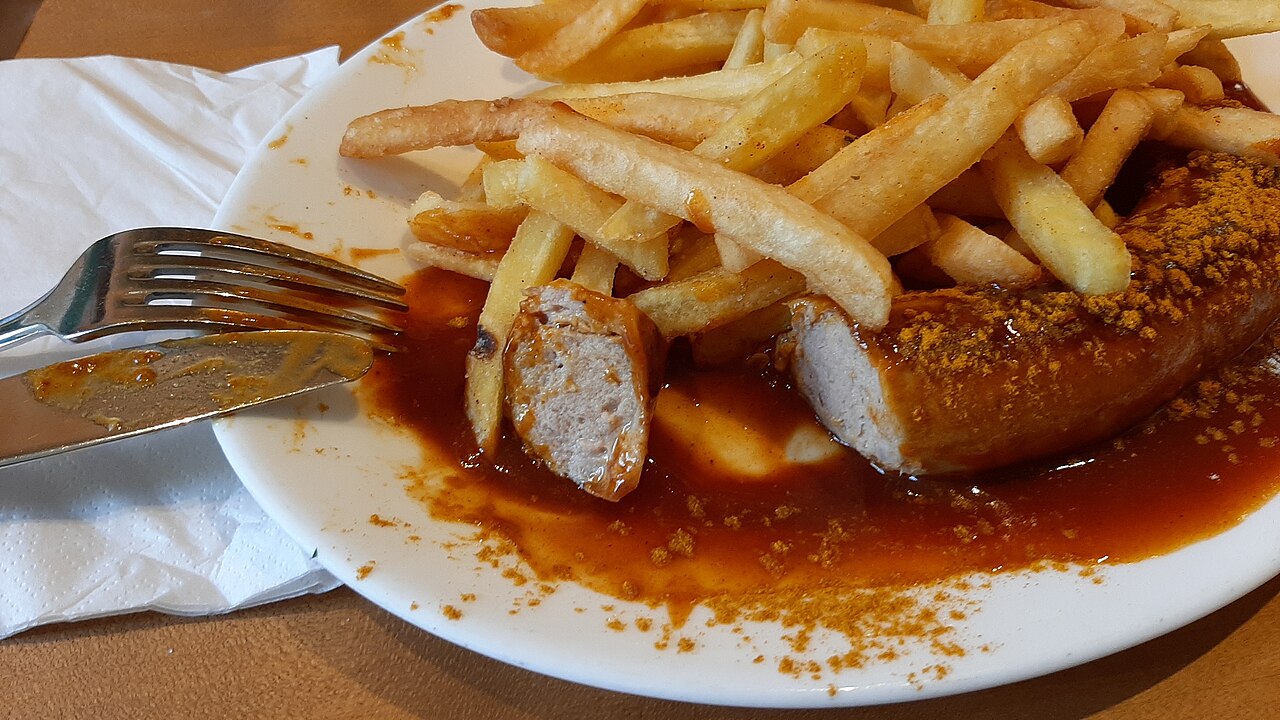
A grilled or fried pork sausage, cut into slices and covered in a warm tomato sauce spiced with curry powder, with more curry powder dusted on top. It is eaten standing at a street stall, with chips or a bread roll.
Herta Heuwer is said to have created it in 1949 at her stall in Berlin-Charlottenburg, using ketchup and curry powder she got from British soldiers.
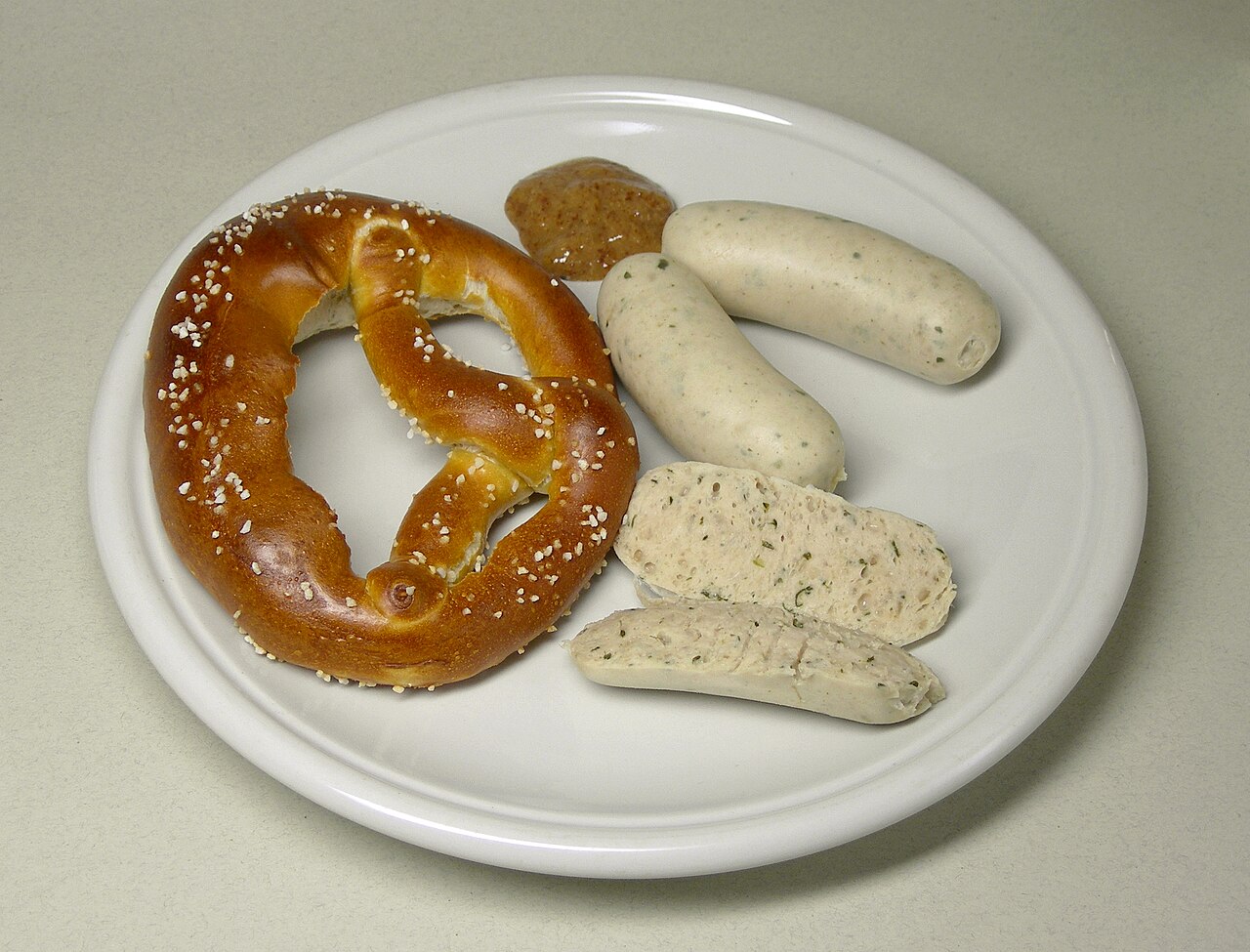
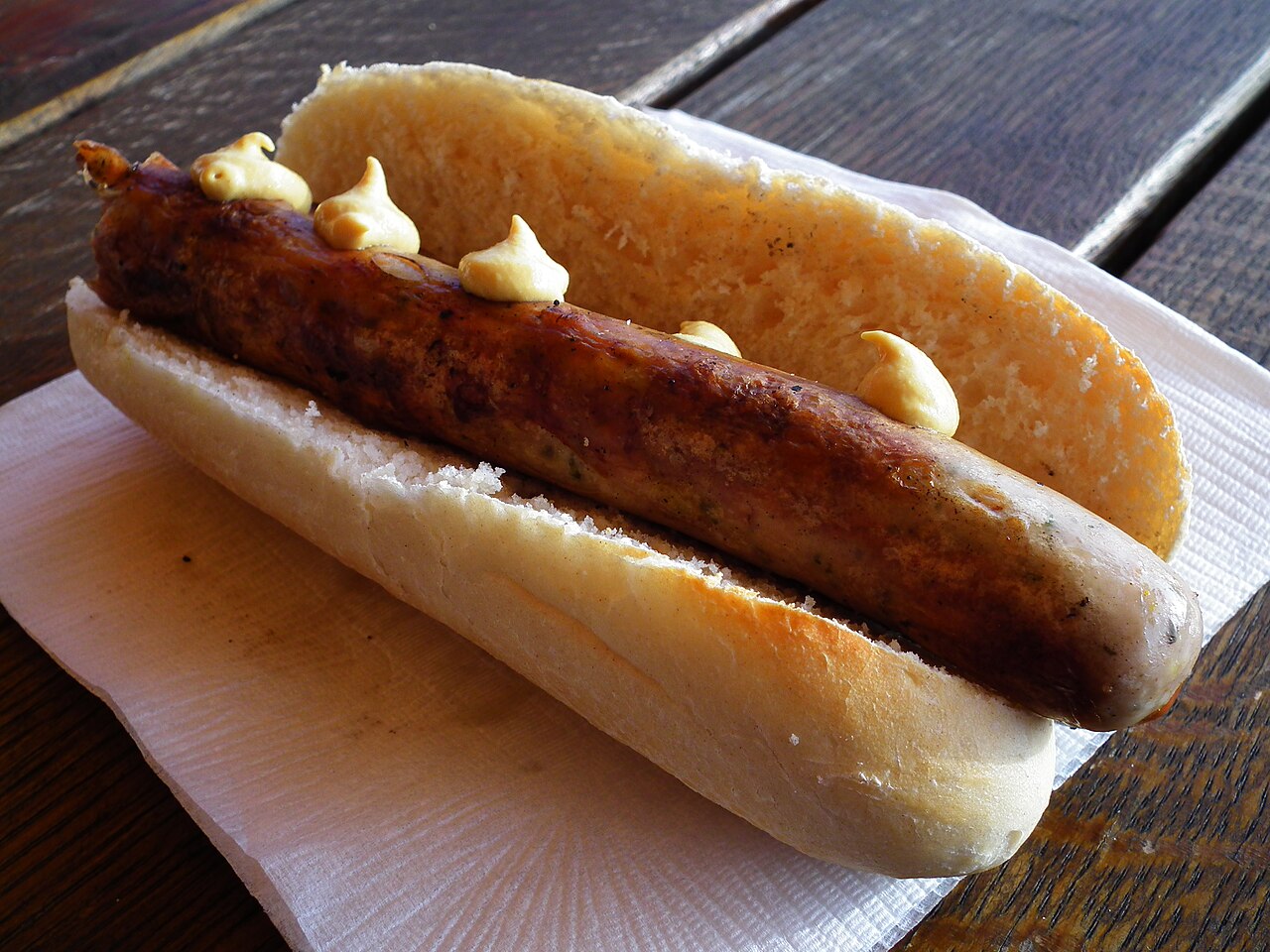
A pale sausage of minced veal and pork back fat, flavoured with parsley, lemon, onion and mace. It is heated in hot water, not boiled, and served with sweet Bavarian mustard, a soft pretzel and a wheat beer. The skin is not eaten.
Because it was made fresh each morning without preserving, an old saying goes that a Weisswurst should not hear the church bells ring noon, so it is eaten as a late breakfast.
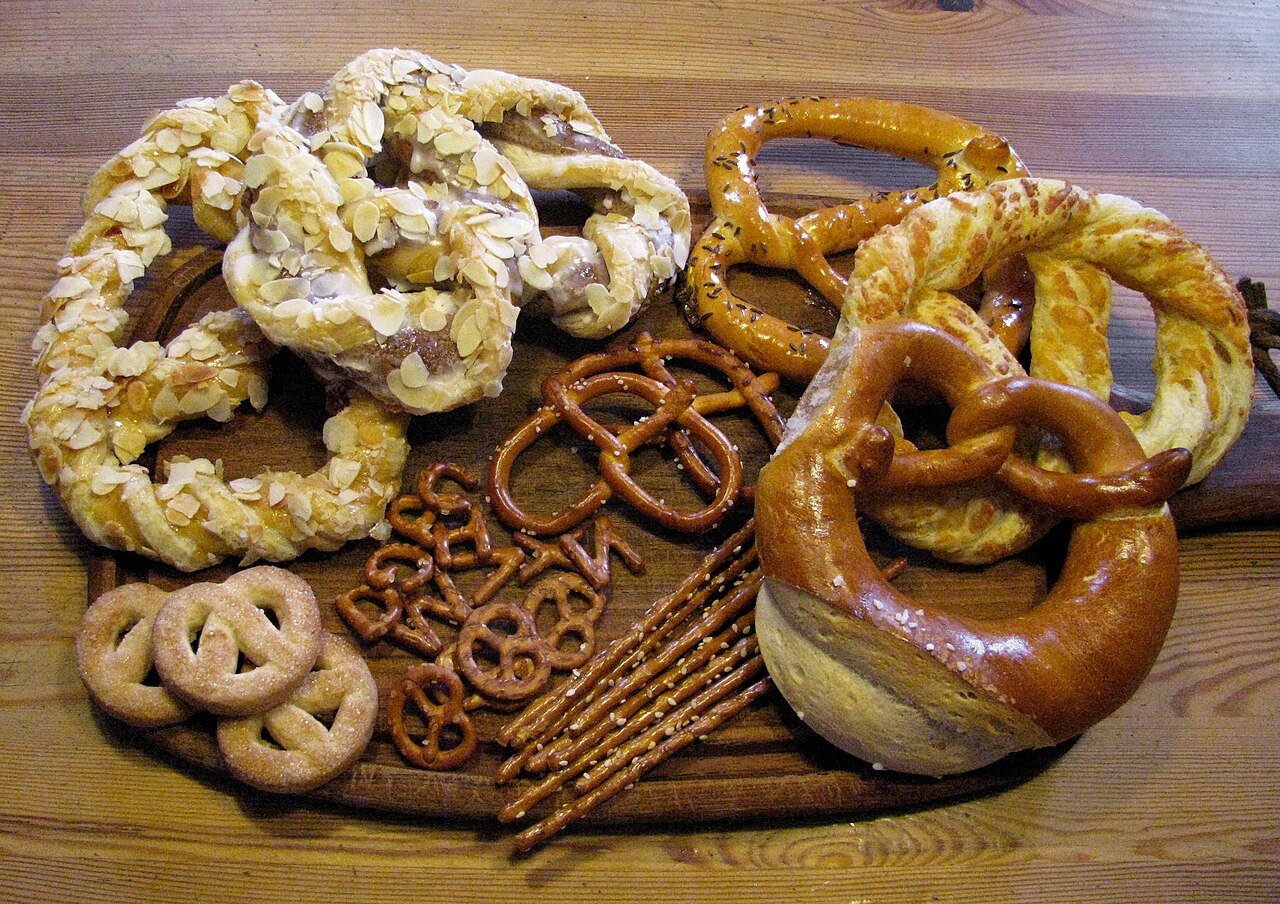
A knotted bread dipped in a lye solution before baking, which gives it a shiny brown crust and a special taste, then sprinkled with coarse salt. Bavarian pretzels have thick, soft arms; Swabian pretzels have thin, crisp arms and a thick 'belly'.
In southern Germany the pretzel has been the sign of bakers and their guilds since at least the 12th century, and you still see it hanging over bakery doors.
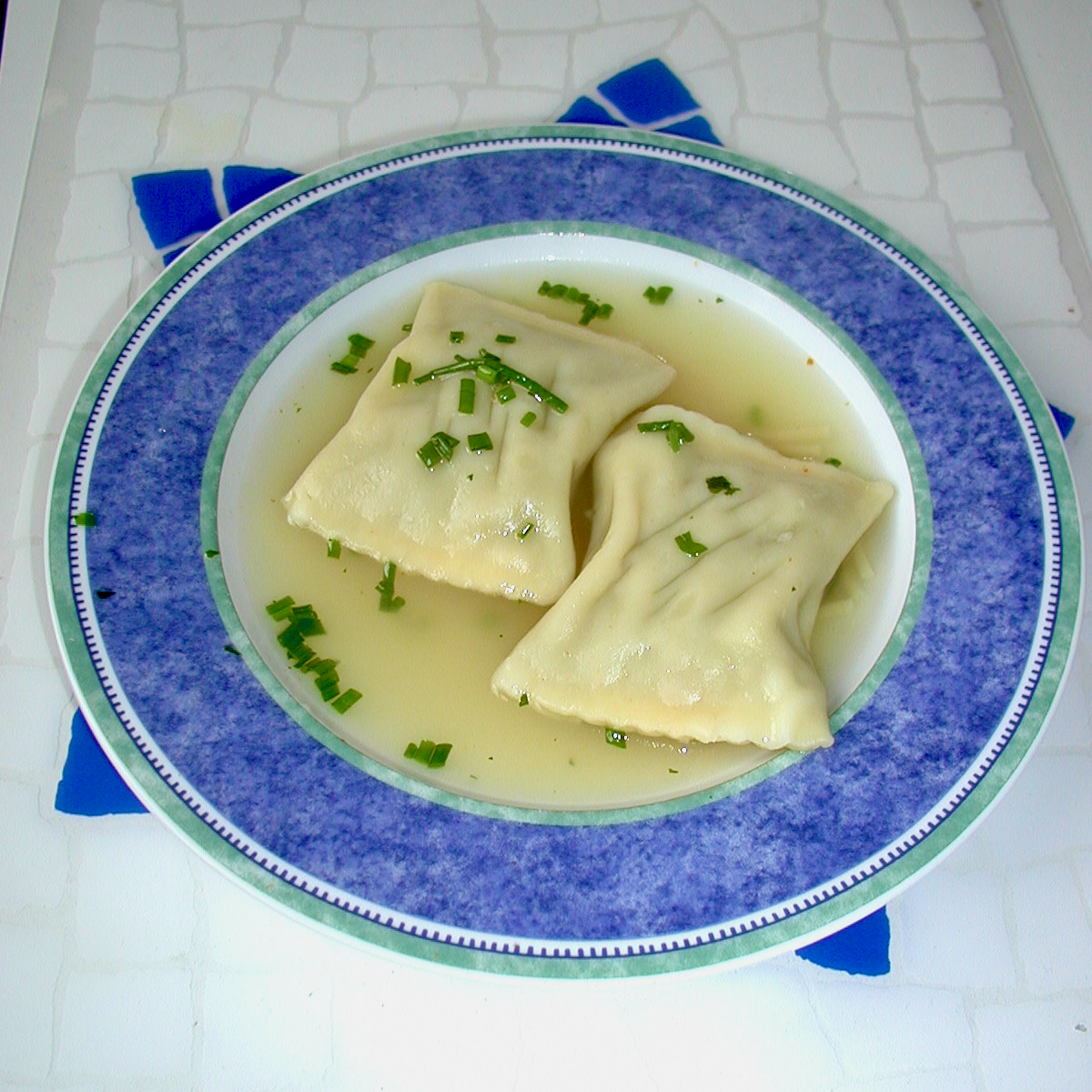
Large square pasta parcels filled with minced meat, spinach, onions and breadcrumbs, seasoned with parsley and nutmeg. They are served in broth, or sliced and fried with onions and egg.
Their Swabian nickname means 'little God-cheaters': legend says monks at Maulbronn Abbey hid meat inside pasta so that God would not see it during Lent.
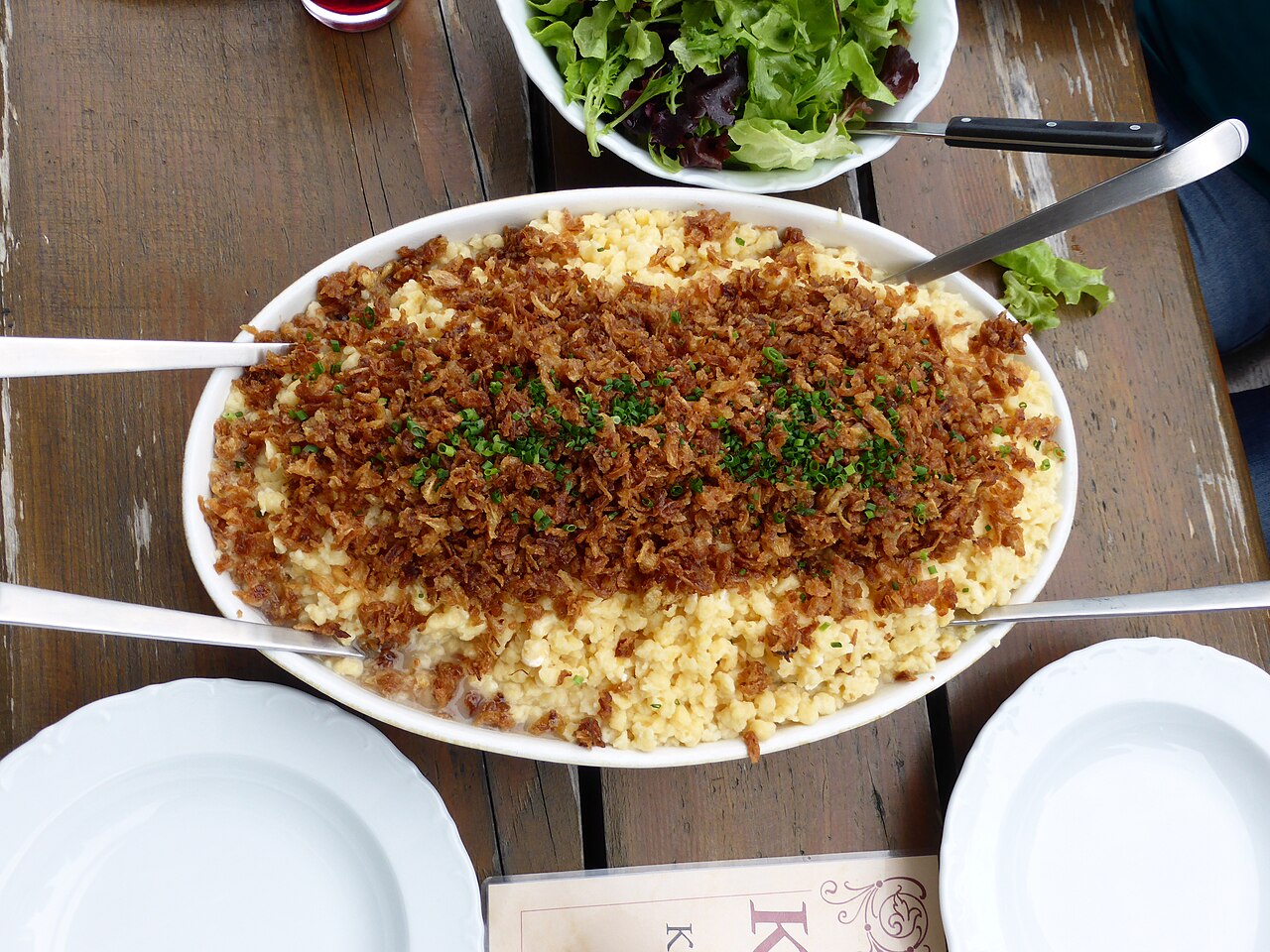
Soft egg noodles, traditionally scraped from a wooden board straight into boiling water, layered with melted Emmental cheese and topped with crisp fried onions. It is usually served with a green salad.
Since 2012 'Swabian Spätzle' has had Protected Geographical Indication status in the European Union.
All of Germany, with a well-known Rhineland version
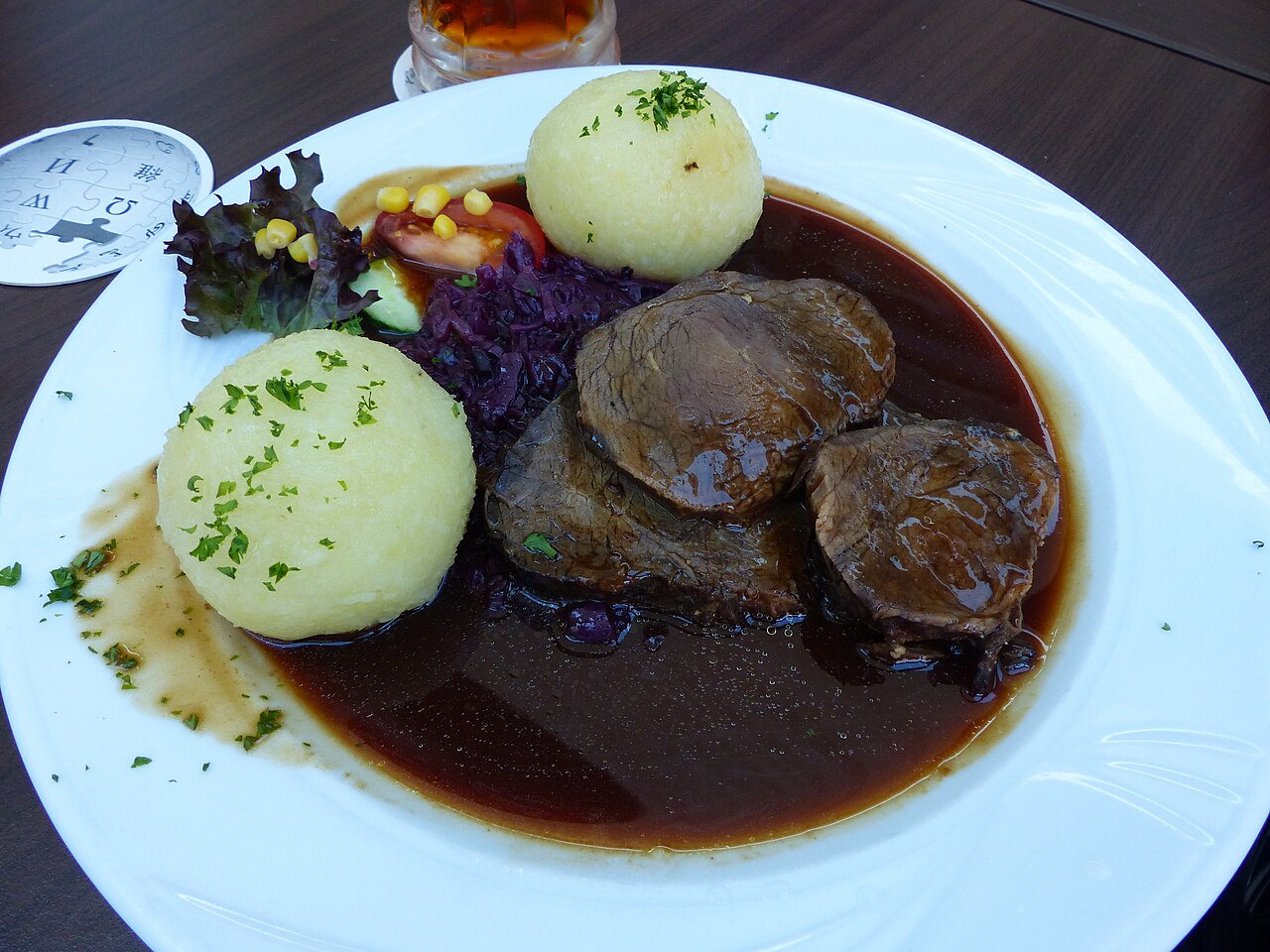
A pot roast of beef marinated for several days in vinegar or wine with onions and spices, then slowly braised. The rich, sweet-sour gravy is served with potato dumplings, red cabbage or spätzle.
The Rhineland version is sweetened with raisins and sometimes sugar beet syrup to balance the sourness.
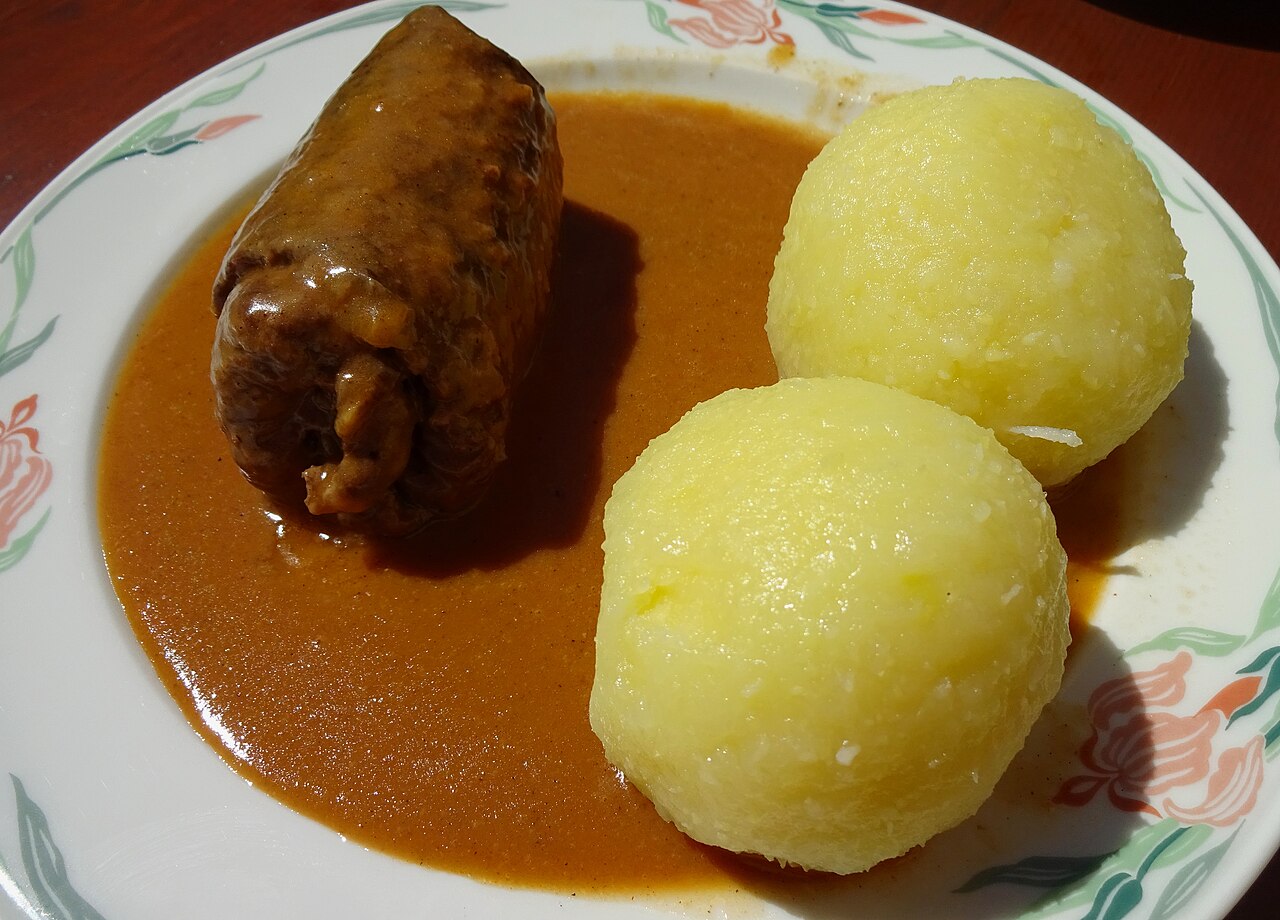
Thin slices of beef spread with mustard, rolled around bacon, onion and pickled gherkin, browned and braised until tender in a dark gravy. A classic Sunday dinner, served with potatoes or dumplings and red cabbage.
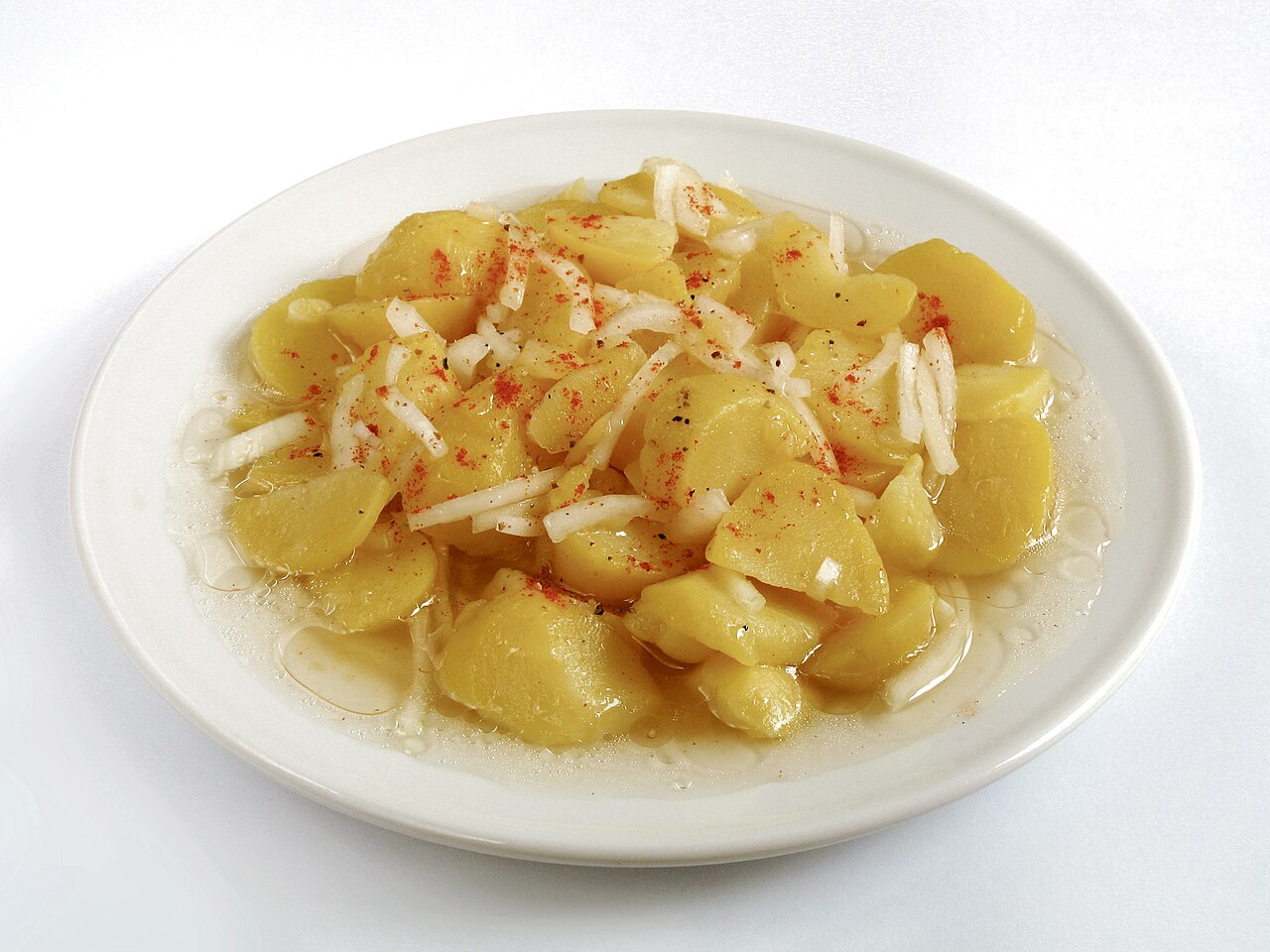
Warm sliced waxy potatoes soaked in a dressing of hot broth, vinegar, onion and oil, served warm or at room temperature. In the north, potato salad is more often made with mayonnaise, egg and pickles.
Which potato salad is 'right' is a friendly north-south argument in Germany, and many families keep their own recipe.
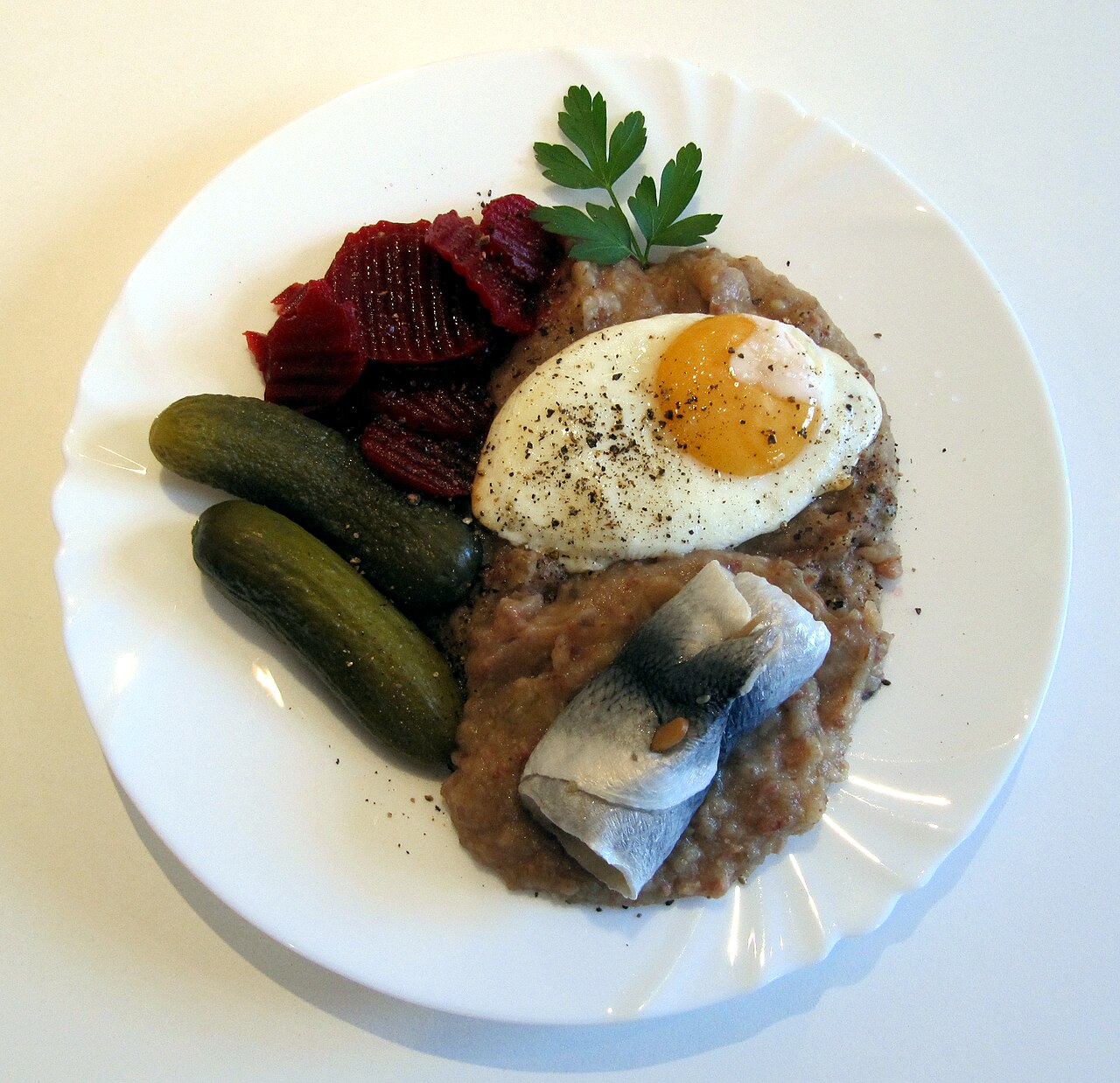
A sailors' dish of corned beef, potatoes and onions, minced and fried together, often coloured pink with beetroot. It is served with a fried egg on top, gherkins and rolled pickled herring.
It was a ship's meal in the age of sail, because potatoes and salted meat kept well at sea.
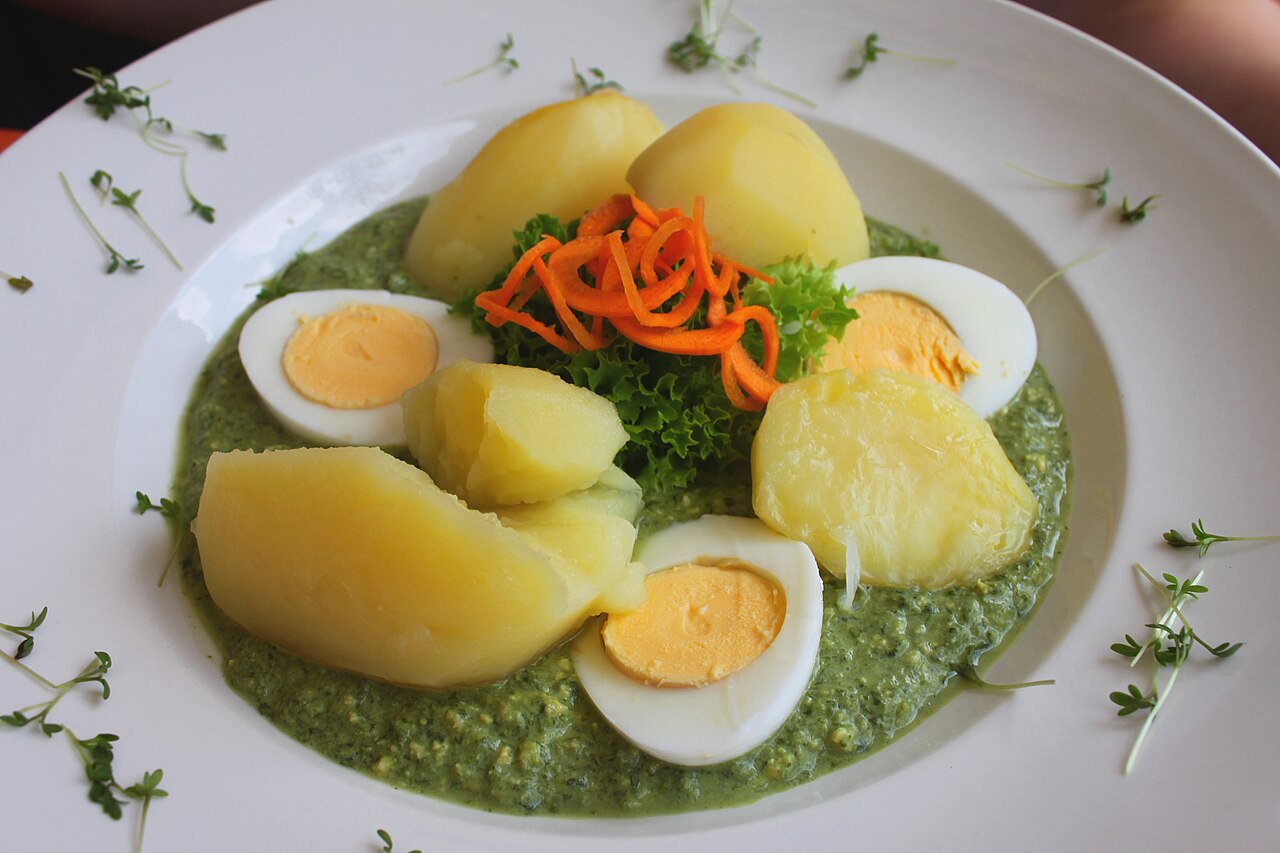
A cold sauce of seven fresh herbs, parsley, chives, chervil, borage, sorrel, garden cress and salad burnet, chopped fine and mixed with sour cream or yoghurt. It is served with halved hard-boiled eggs and boiled potatoes, often in spring.
Frankfurt has a Green Sauce Monument, seven small greenhouses in the district of Oberrad, one for each herb.
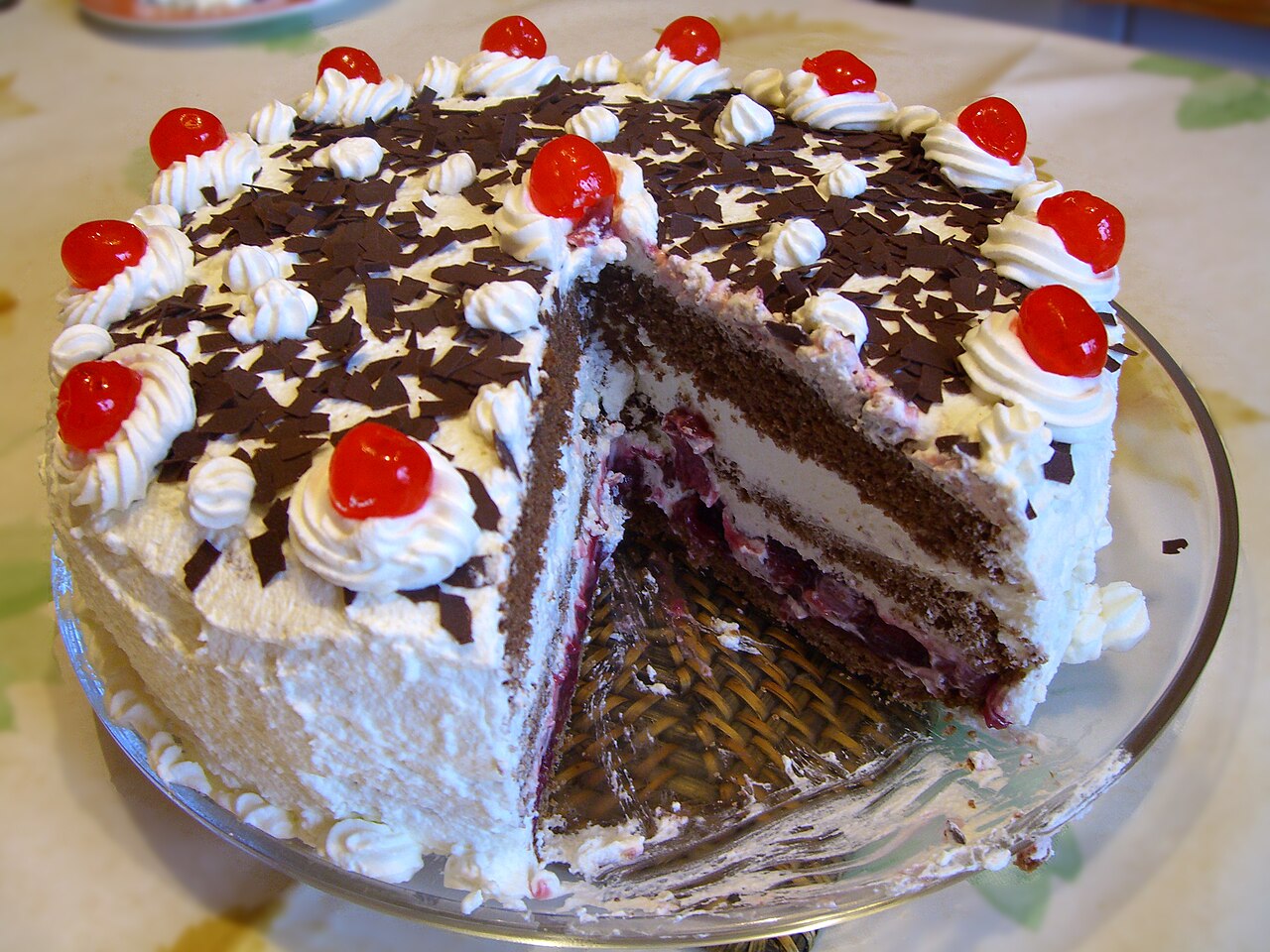
Layers of chocolate sponge soaked in Kirsch, a clear cherry brandy, filled with whipped cream and sour cherries, and decorated with more cream, cherries and chocolate shavings.
Who invented it is disputed. The name 'Schwarzwälder Kirschtorte' is first known in print from 1915.
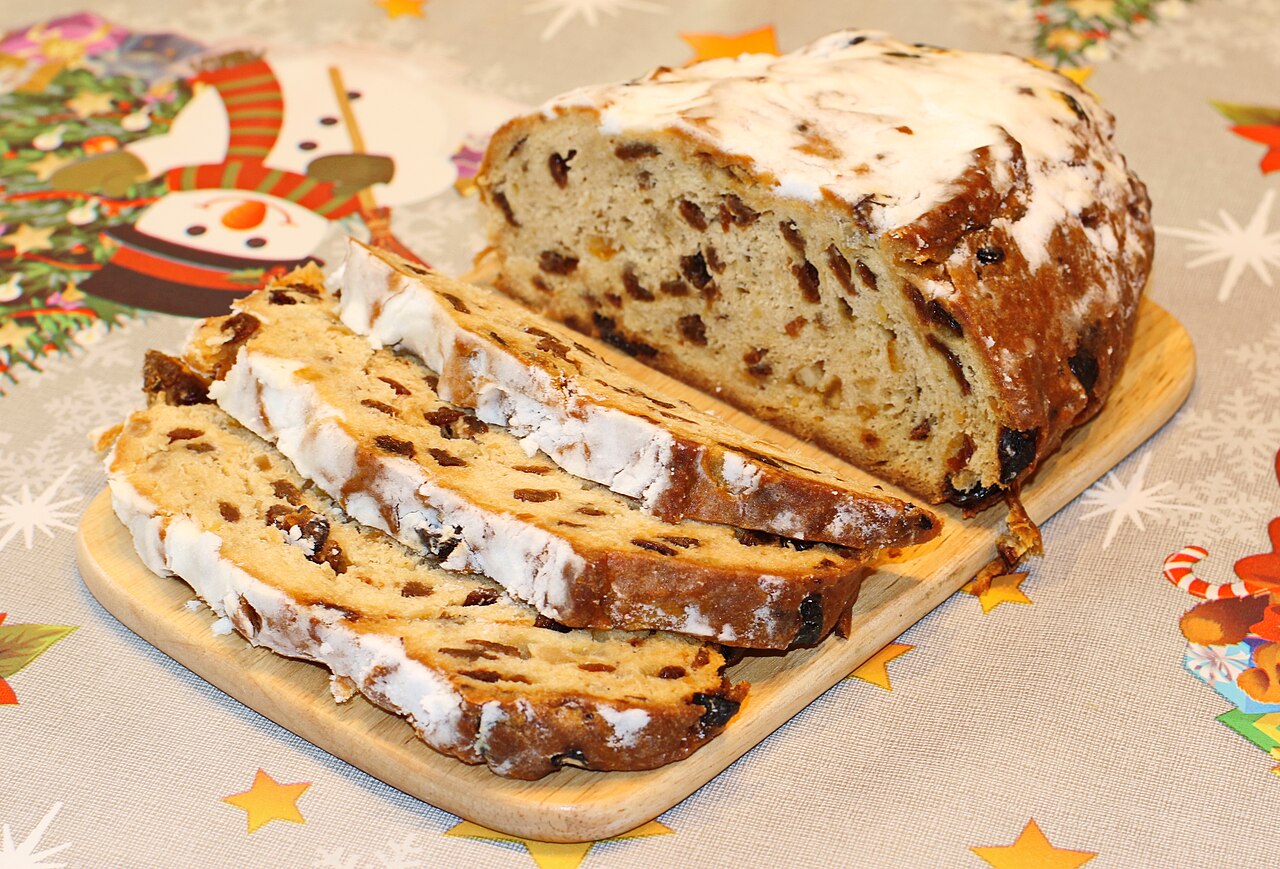
A dense, buttery Christmas bread full of raisins, candied peel and almonds, brushed with butter and covered in icing sugar. It is baked weeks before Christmas and eaten in slices through Advent.
Early stollen was plain, because butter was forbidden during the Advent fast. In 1490 a letter from Pope Innocent VIII, the 'Butter Letter', allowed it.
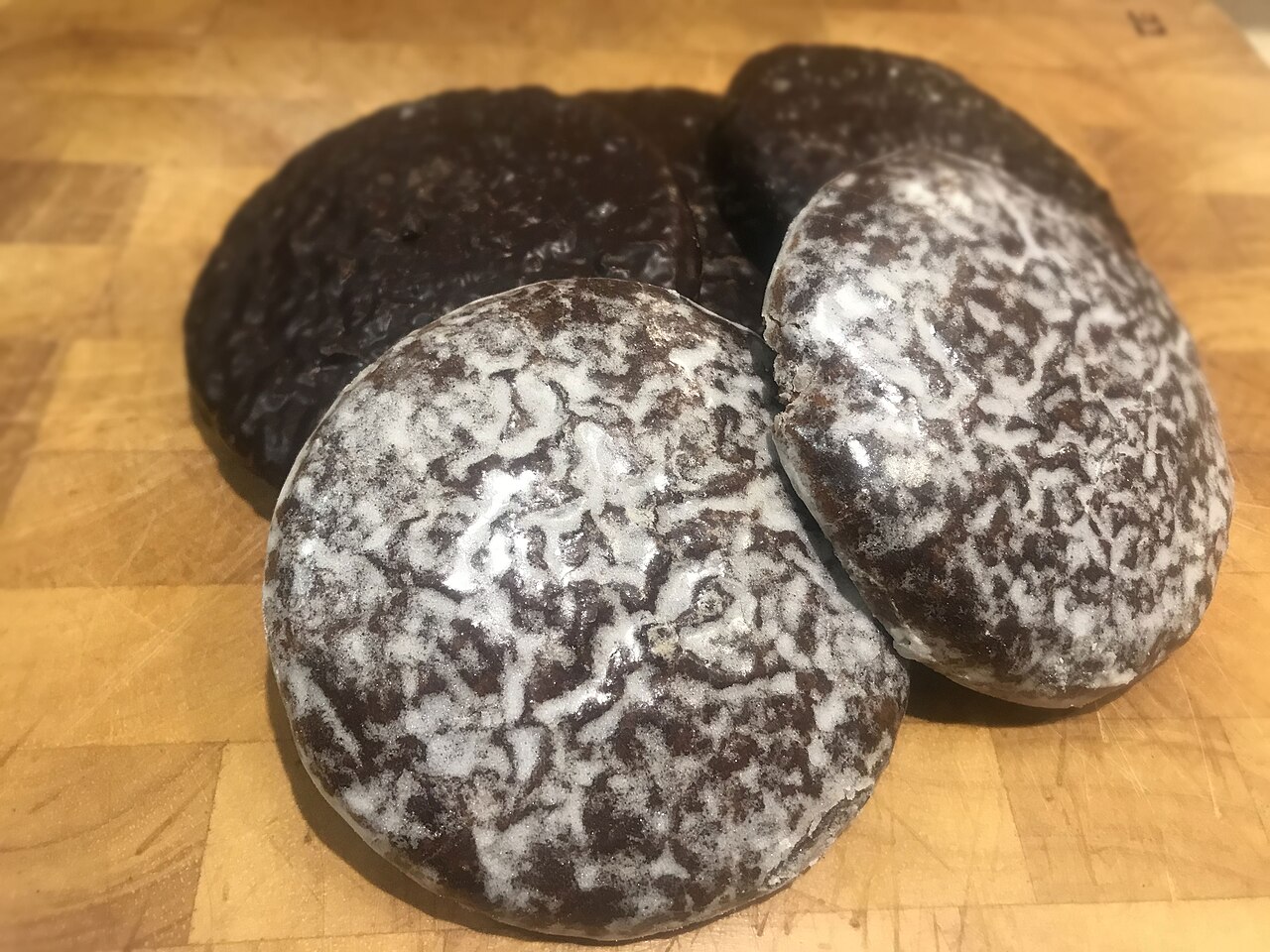
Soft, spiced gingerbread made with honey, nuts and spices such as cinnamon, cloves and ginger, often on a thin wafer base and glazed or coated in chocolate. The finest kind, Elisenlebkuchen, contains little or no flour.
Lebkuchen bakers are recorded in Nuremberg from 1395, and 'Nürnberger Lebkuchen' may only be made within the city.
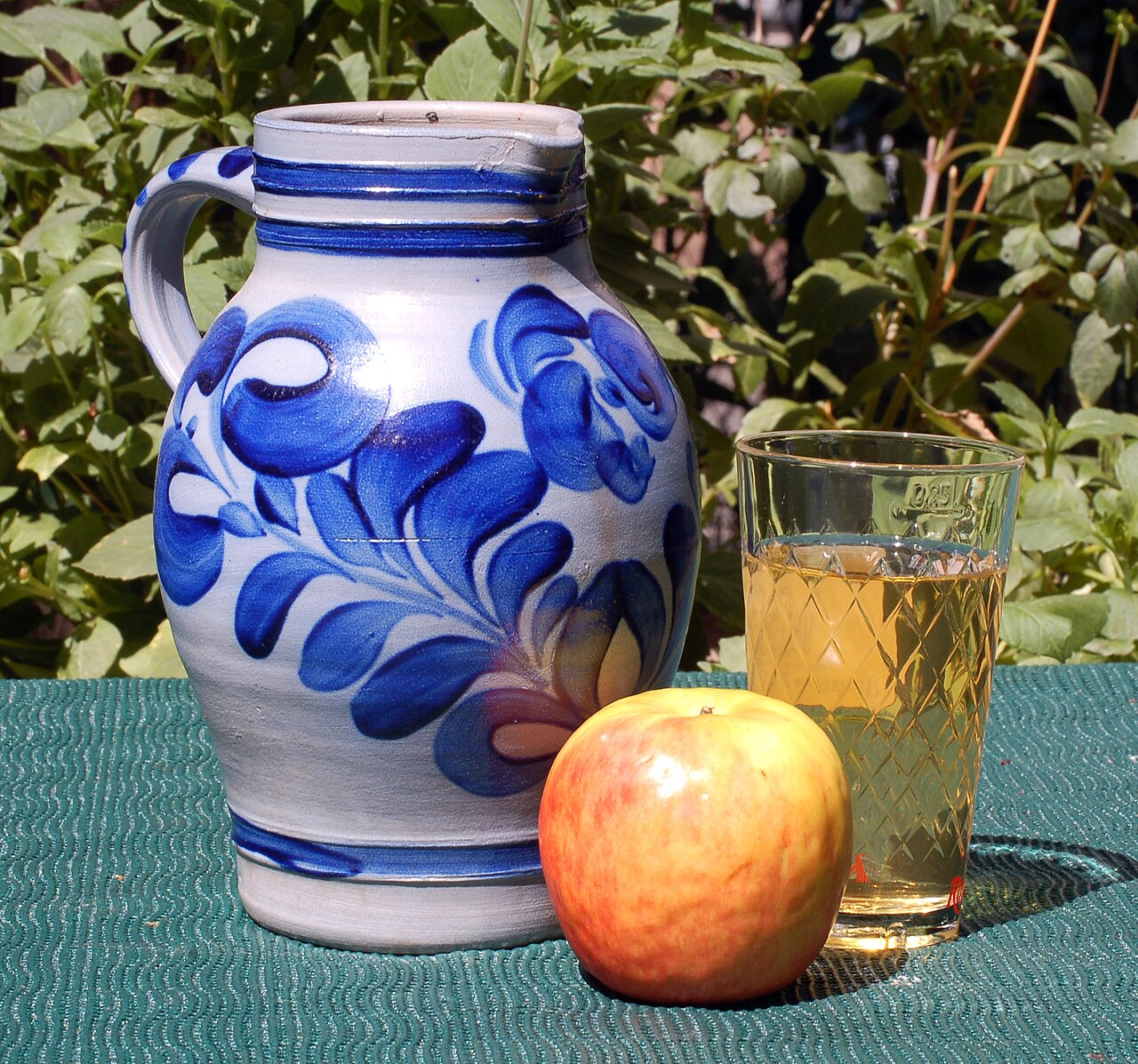
A tart, dry apple cider of about 5 to 7 percent alcohol, poured from a grey and blue stoneware jug called a Bembel into a glass with a diamond-cut pattern, the Geripptes.
In winter it is also served hot, with cinnamon, cloves and a slice of orange, like mulled wine.
At the table in Germany
Before eating, people wish each other 'Guten Appetit', enjoy your meal, and wait until everyone has been served.
When drinking together, glasses are raised with 'Prost' (for beer) or 'Zum Wohl' (often for wine).
Tipping is usually modest: round up the bill or add about 5 to 10 percent, and tell the server the total you want to pay, rather than leaving money on the table.
Supper is often a simple cold meal of bread, cheese and cold meats, called Abendbrot.
Coffee and cake in the afternoon, especially at weekends, is a cherished social custom.