Snow-capped mountains, the edge of the Sahara, ancient walled cities and a glass of sweet mint tea, just across the water from Spain.
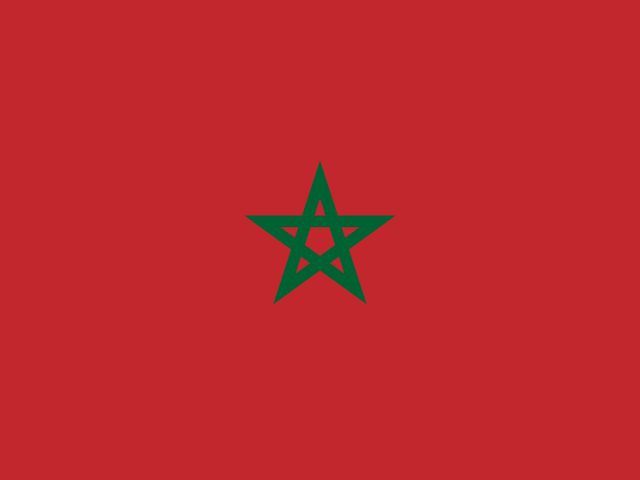
Morocco sits in the far northwest corner of Africa, where the Atlantic Ocean meets the Mediterranean Sea. At the Strait of Gibraltar, Africa and Europe are only about 14 km apart. The Atlas Mountains run across the middle of the country, rising to Toubkal, the highest peak in North Africa, and beyond them stony valleys and sand dunes lead to the edge of the Sahara.
For more than twelve centuries a series of dynasties ruled here from royal cities such as Fes, Marrakesh, Meknes and Rabat. Arab and Amazigh (Berber) traditions mix with influences from Andalusia, Africa and Europe, and since 2011 both Arabic and Tamazight, the Amazigh language, are official languages.
Questions to ask the older generation
Memories fade faster than photos. Ask these over a meal or a phone call, and write the answers down.
Which town or region of Morocco did our family come from? Was it near Casablanca, Marrakesh, Fes?
Who was the first in the family to leave Morocco, when, and why?
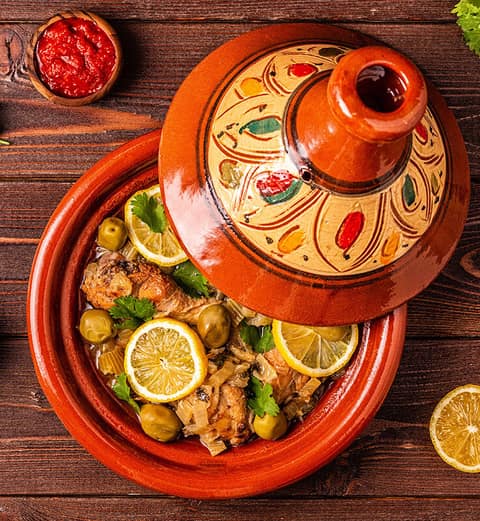
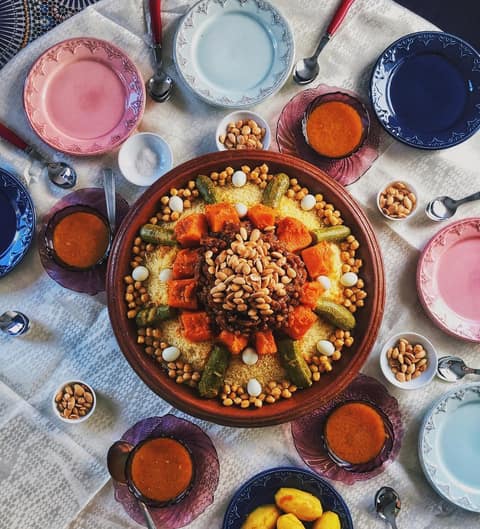
Which dishes from Morocco were cooked at home? Did anyone make Chicken tagine with preserved lemon and olives or Couscous with seven vegetables?
Does anyone in the family still use a few words from the old country?
Were there songs, prayers, games or holidays from Morocco that the family kept?
Are there old photos, letters or documents from Morocco? Who has them?
If you could visit Morocco together, where would you go first?
A short history of Morocco
Amazigh (Berber) peoples have lived in Morocco since ancient times, and Phoenician and Carthaginian traders built ports on its coast. After the Romans and the arrival of Islam, a line of Moroccan dynasties, from the Idrisids to the Alaouites who still reign today, ruled from great royal cities. In the 20th century the country was divided into French and Spanish protectorates before regaining its independence in 1956.
AD 40
Rome takes over Mauretania
The Roman emperor Caligula had Ptolemy, the last king of Mauretania, killed, and Rome took over his kingdom. A few years later Emperor Claudius made northern Morocco the province of Mauretania Tingitana, named after Tingis, today's Tangier, with Volubilis as its most important city.
AD 859
The Qarawiyyin Mosque is founded
Tradition says Fatima al-Fihri, a woman from a family that had moved from Kairouan in Tunisia, founded a mosque in Fes. Its school grew into a great centre of learning, and it is still active as the University of al-Qarawiyyin.
1147
The Almohads take Marrakesh
The Almohads, a movement from the High Atlas, captured Marrakesh and built an empire reaching from Morocco to Tunisia and into Spain. They began the Koutoubia Mosque in Marrakesh and the Hassan Tower in Rabat.
1666
The Alaouite dynasty takes Fes
Moulay al-Rashid won the surrender of Fes in June 1666 and then Marrakesh in 1668, uniting the country under the Alaouite dynasty. The Alaouites still reign in Morocco today.
1912
The Treaty of Fes
On 30 March 1912 Sultan Abd al-Hafid signed a treaty that made most of Morocco a French protectorate; later that year Spain received a zone in the north. The French moved the capital to Rabat, and Tangier later became an international zone.
1961
Hassan II becomes king
On the death of his father, Mohammed V, Hassan II came to the throne in February 1961. He reigned for 38 years, until his death in 1999, and built the great mosque in Casablanca that bears his name.
1999
Mohammed VI becomes king
Mohammed VI became king on 23 July 1999, after the death of his father, Hassan II. He is a member of the Alaouite dynasty, which has reigned since the 1600s.
2023
The Al Haouz earthquake
On the night of 8 September 2023 a magnitude 6.9 earthquake struck the High Atlas southwest of Marrakesh. It was the strongest earthquake ever recorded by instruments in Morocco, and nearly 3,000 people died, mostly in mountain villages.