Moroccan cooking mixes Amazigh, Arab, Andalusian and Jewish traditions, with spices such as cumin, cinnamon, ginger, saffron and the blend ras el hanout, and with preserved lemons, olives, dried fruit and argan oil. A family lunch often starts with several hot and cold salads, followed by a tagine, and on Fridays by a big shared dish of couscous. Round loaves of bread come with almost every meal, and sweet mint tea is served all day long.
All of Morocco; the tagine is rooted in Amazigh (Berber) cooking
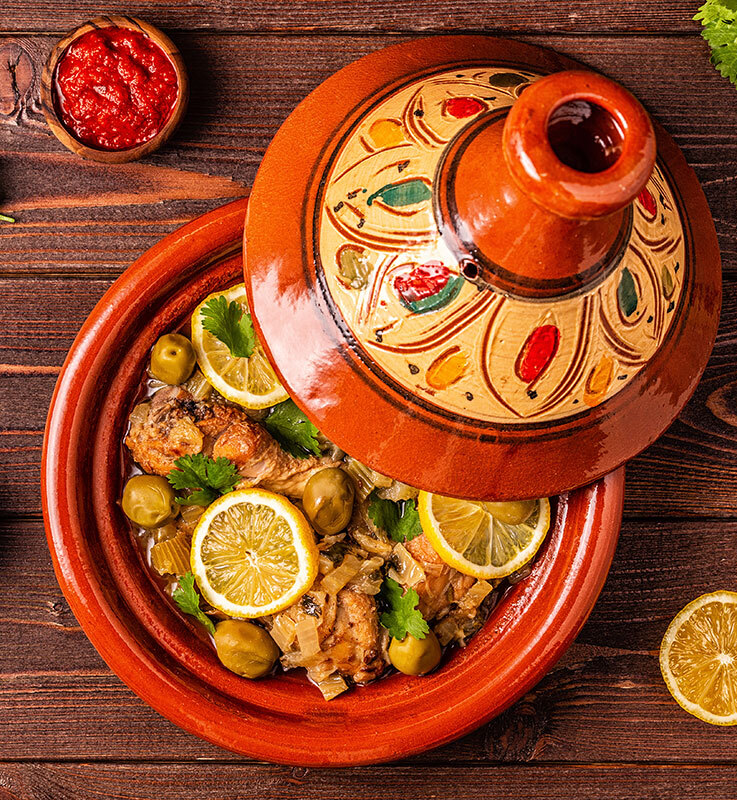
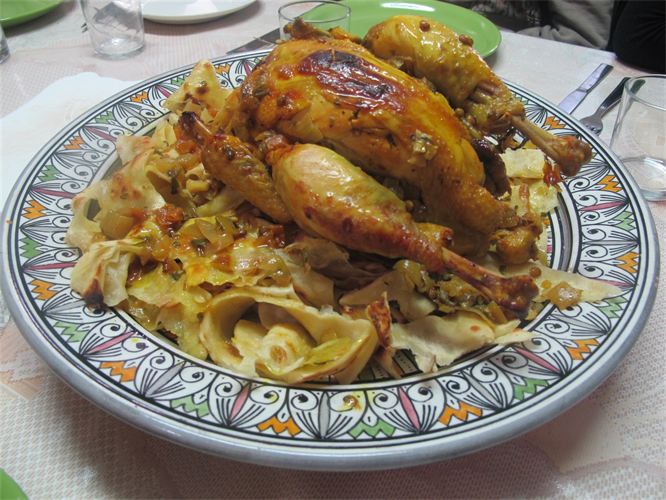
A slow-cooked stew named after the clay pot it is cooked in, a shallow dish with a tall cone-shaped lid. There are countless versions: chicken with preserved lemon and olives, lamb with prunes and almonds, or meatballs in tomato sauce with eggs.
The cone-shaped lid catches the steam and lets it drip back down, so the food cooks gently in very little water, useful in dry regions.
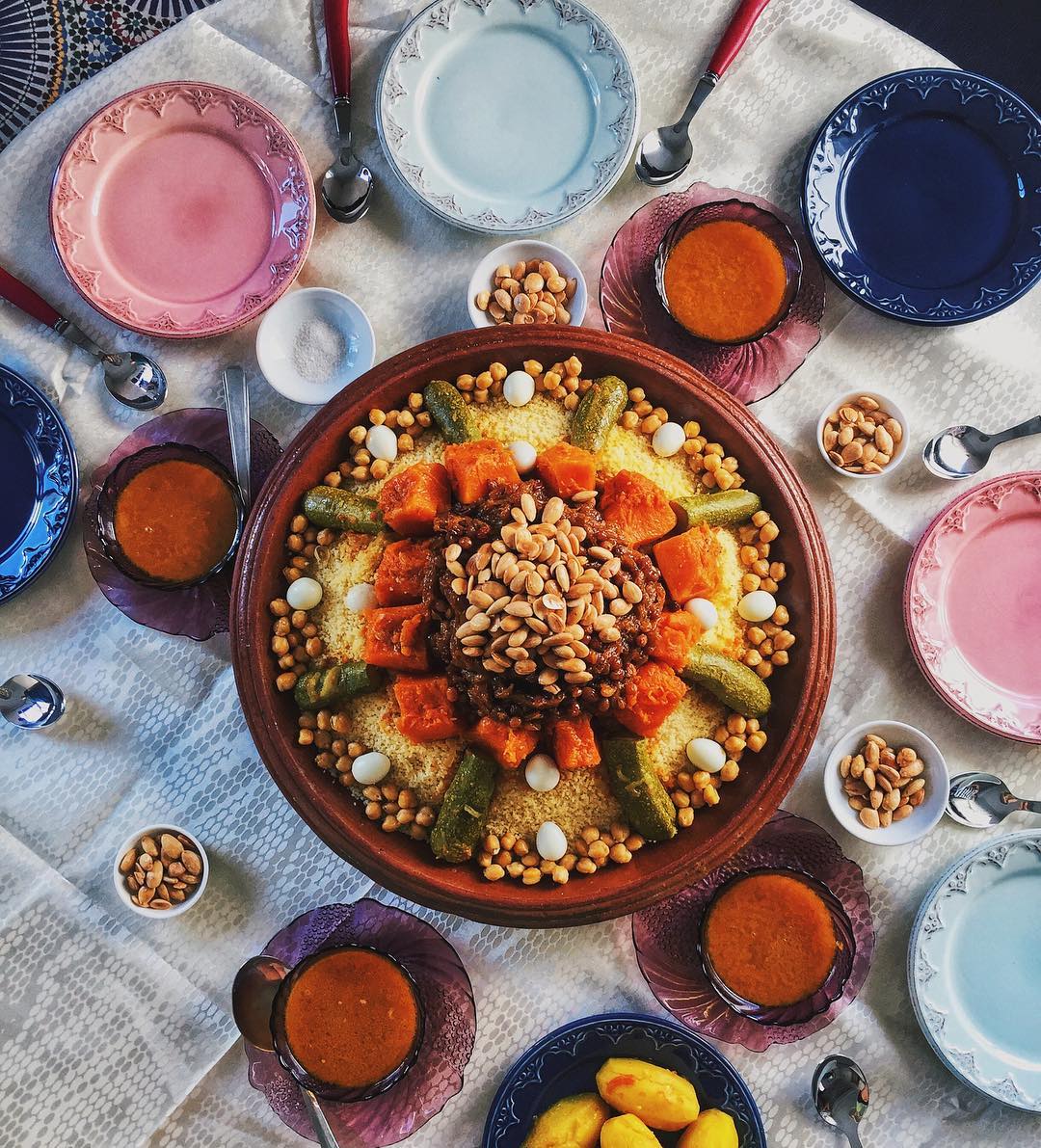
Tiny grains of steamed durum wheat semolina, piled high in a large dish and topped with meat and vegetables in a spiced broth. It is traditionally served on Fridays, when the family gathers after midday prayers.
In 2020 UNESCO added the knowledge and practices of couscous to its intangible heritage list, after a joint nomination by Morocco, Algeria, Mauritania and Tunisia.
Fes and the old cities of the north, with Andalusian roots
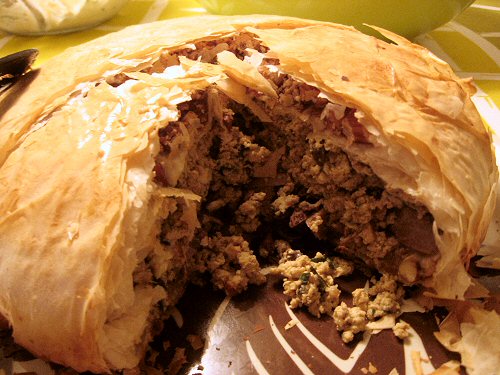
A large round pie of paper-thin warqa pastry filled with slow-cooked, shredded pigeon or chicken, eggs cooked in the spiced sauce and a layer of toasted almonds with cinnamon and sugar. It is dusted with icing sugar and cinnamon on top, both savoury and sweet at once.
A spicy seafood pastilla with fish and vermicelli, without the sugar, is a favourite at Moroccan weddings.
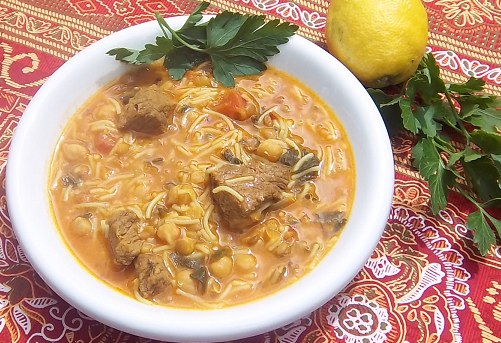
A thick soup of tomatoes, lentils, chickpeas and a little meat, flavoured with ginger, cinnamon, coriander and parsley, and thickened at the end with a mixture of flour and water.
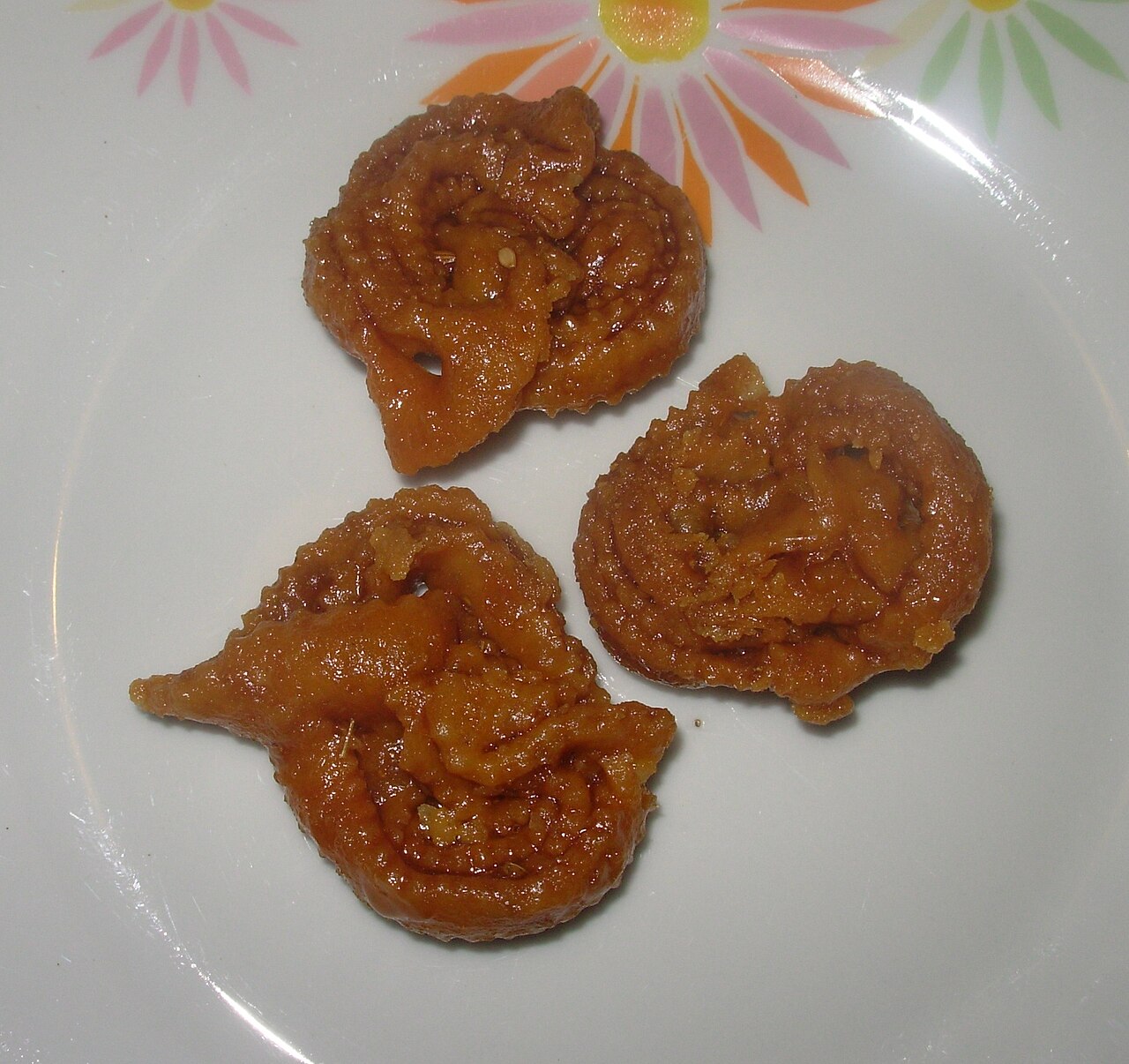
During Ramadan many families break the day's fast at sunset with a bowl of harira, dates and honey-soaked sweets such as chebakia.
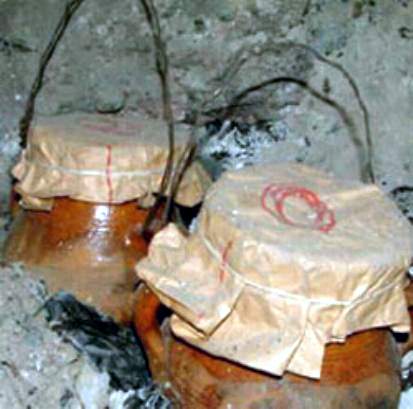
Beef or lamb with preserved lemon, garlic, cumin, saffron and olive oil, sealed in a tall clay jar and cooked slowly for many hours in the hot ashes of a hammam (public bathhouse) furnace or a hearth, until it falls apart.
Like the tagine, the dish takes its name from the clay pot it is cooked in.
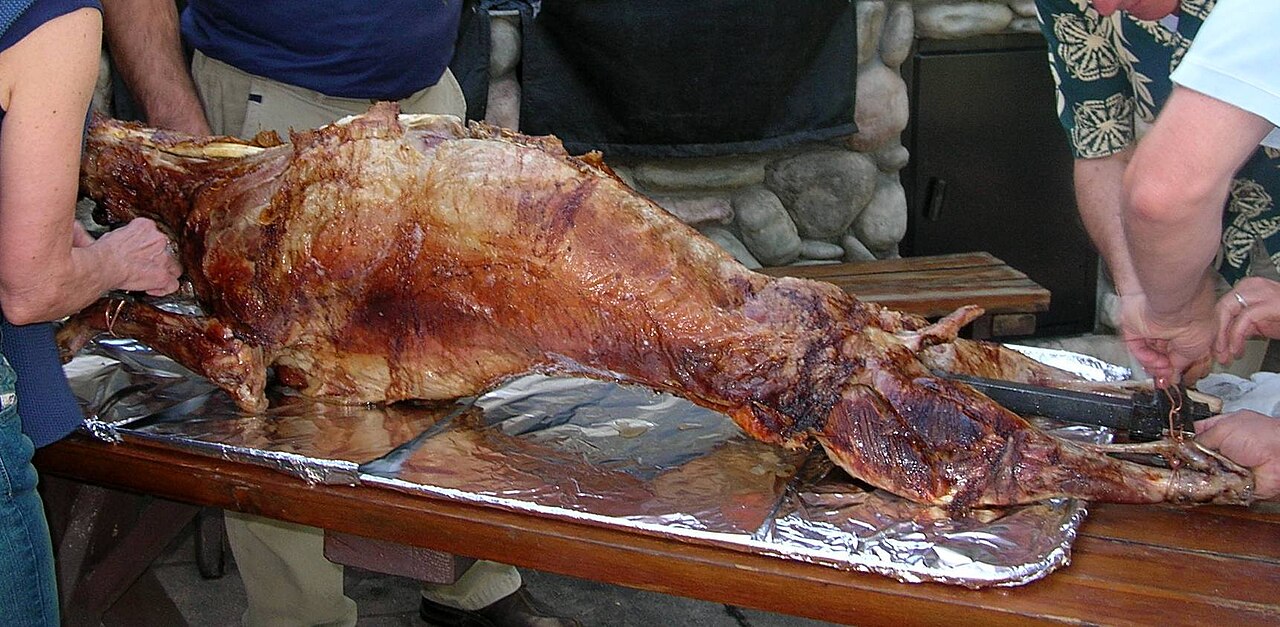
A whole lamb roasted slowly on a spit over embers, or in a pit oven in the ground, until the meat is tender enough to pull off with the fingers. It is served with cumin and salt.
Traditionally no knives or forks are used: the host pulls off pieces with the right hand and offers them to guests.
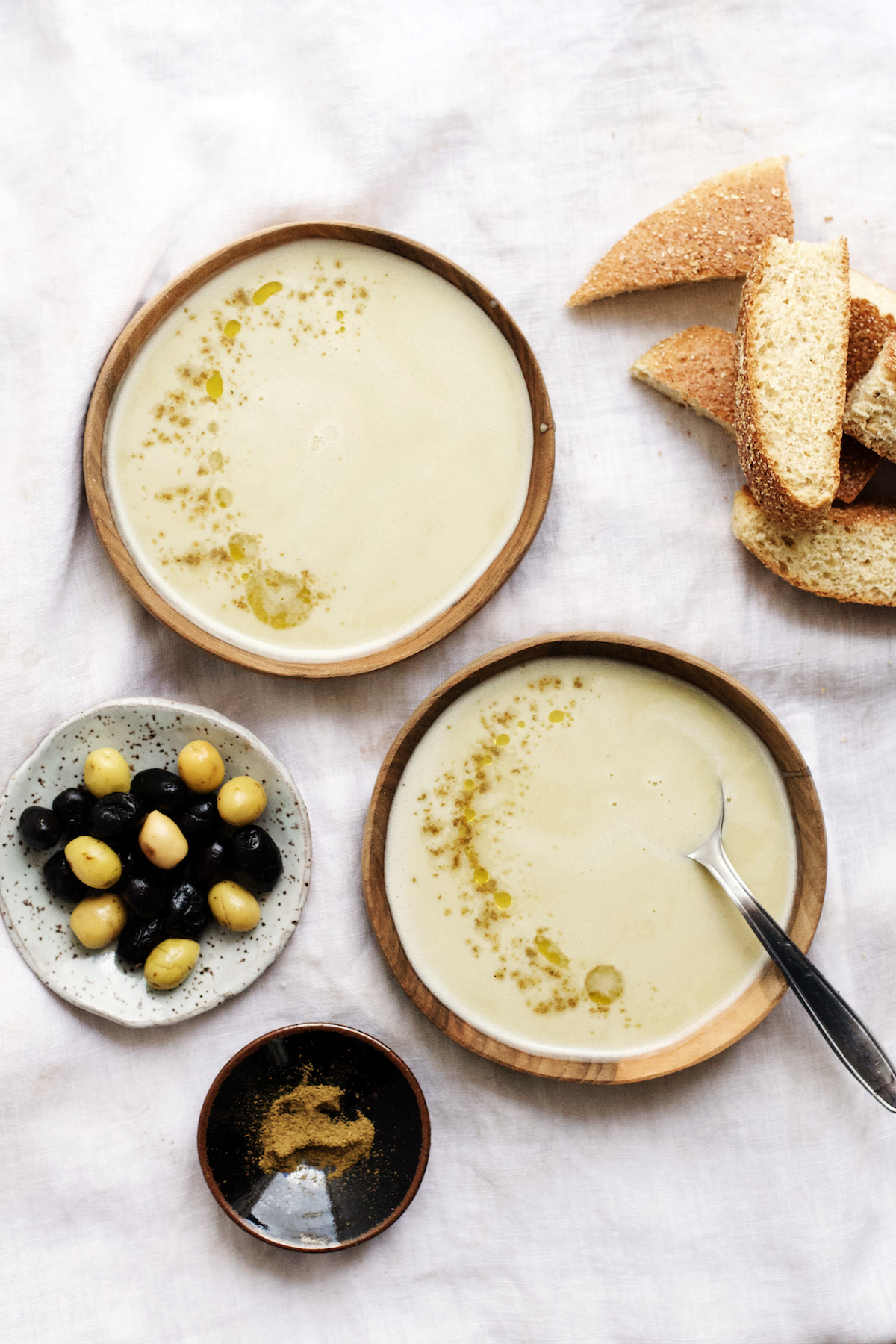
A thick, warming soup or dip of dried split broad beans cooked with garlic, then puréed and served with a generous pour of olive oil, cumin and paprika on top.
It is one of the cheapest hot meals in Morocco, sold from big pots in town squares and alleys on cold mornings.
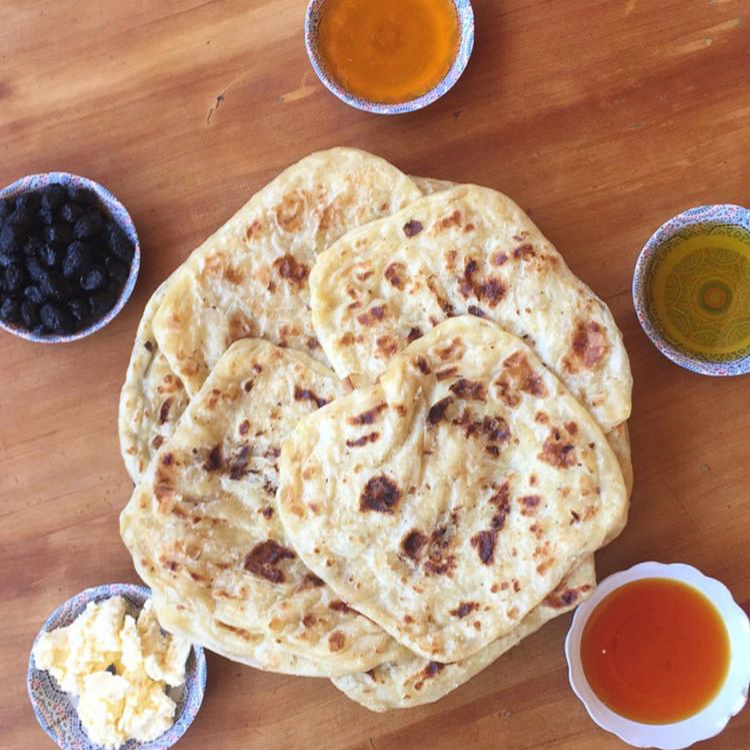
A square, flaky flatbread made by folding buttered dough many times and cooking it on a griddle. It is usually eaten for breakfast or with afternoon tea, with honey, butter or amlou.
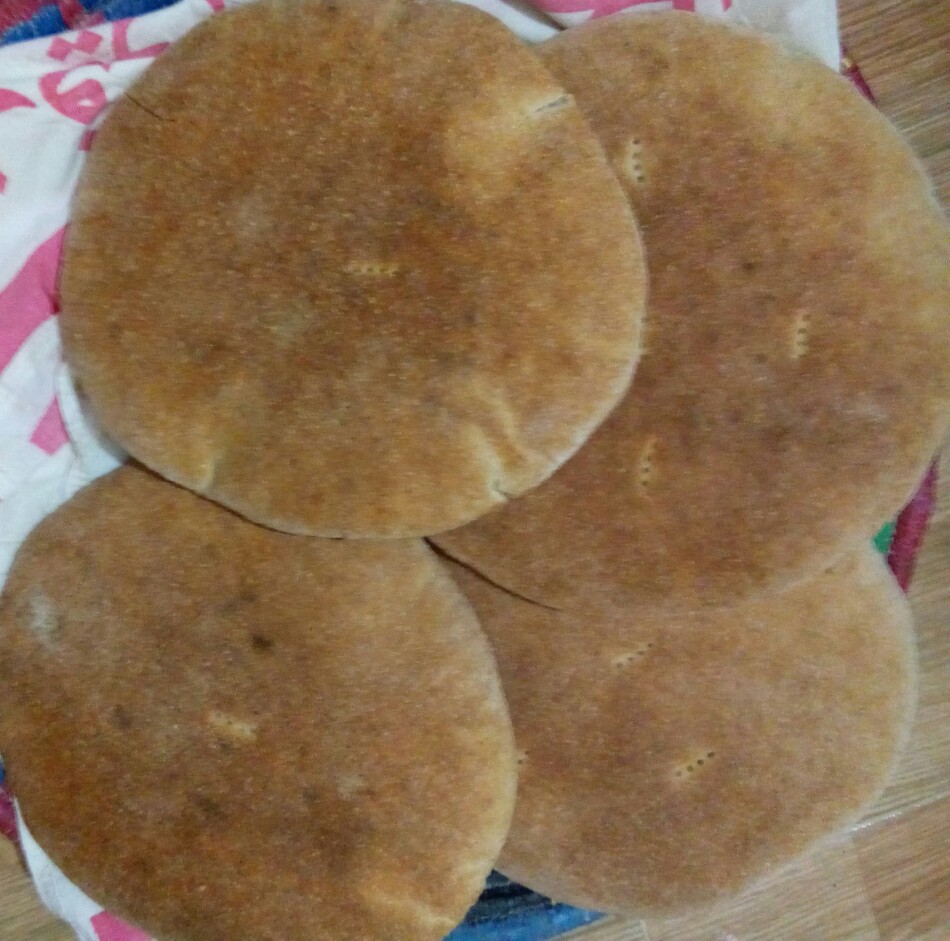
The everyday round, flat loaf, made with wheat flour and often some semolina. It is served with almost every meal and used instead of a fork to scoop up tagines and salads.
Moroccans traditionally eat with their hands, using pieces of bread to pick up food.
Strips of dough flavoured with anise and cinnamon, folded into a flower shape, deep-fried, soaked in honey with orange blossom water and sprinkled with sesame seeds.
Families make large batches just before Ramadan, and it is often eaten alongside savoury harira.
The Souss region in the southwest, from the Shilha (Amazigh) people
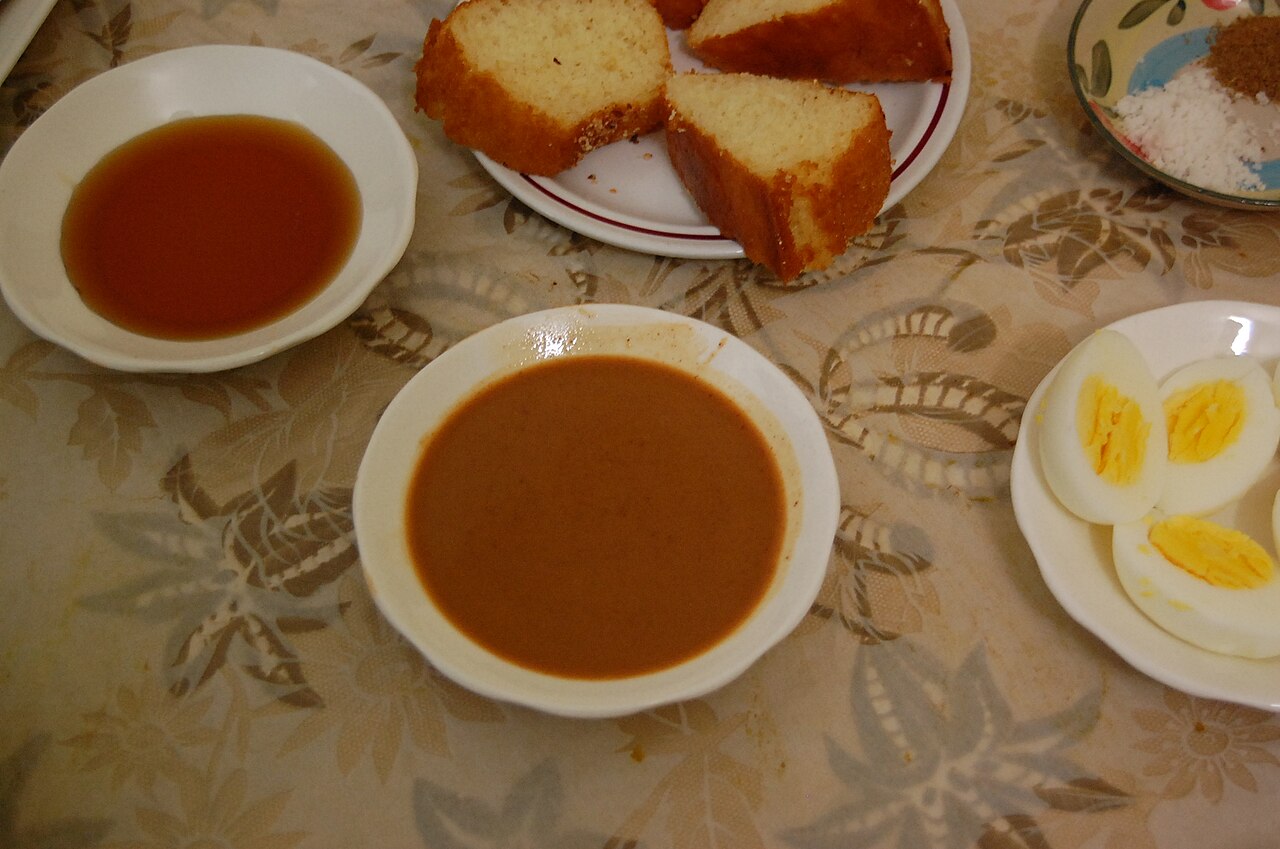
A sweet spread of toasted almonds ground with argan oil and honey, eaten at breakfast or with tea on bread, msemen or pancakes. Honey should not be given to babies under one year old.
Argan oil is pressed from the nuts of the argan tree, which grows naturally in southwestern Morocco.
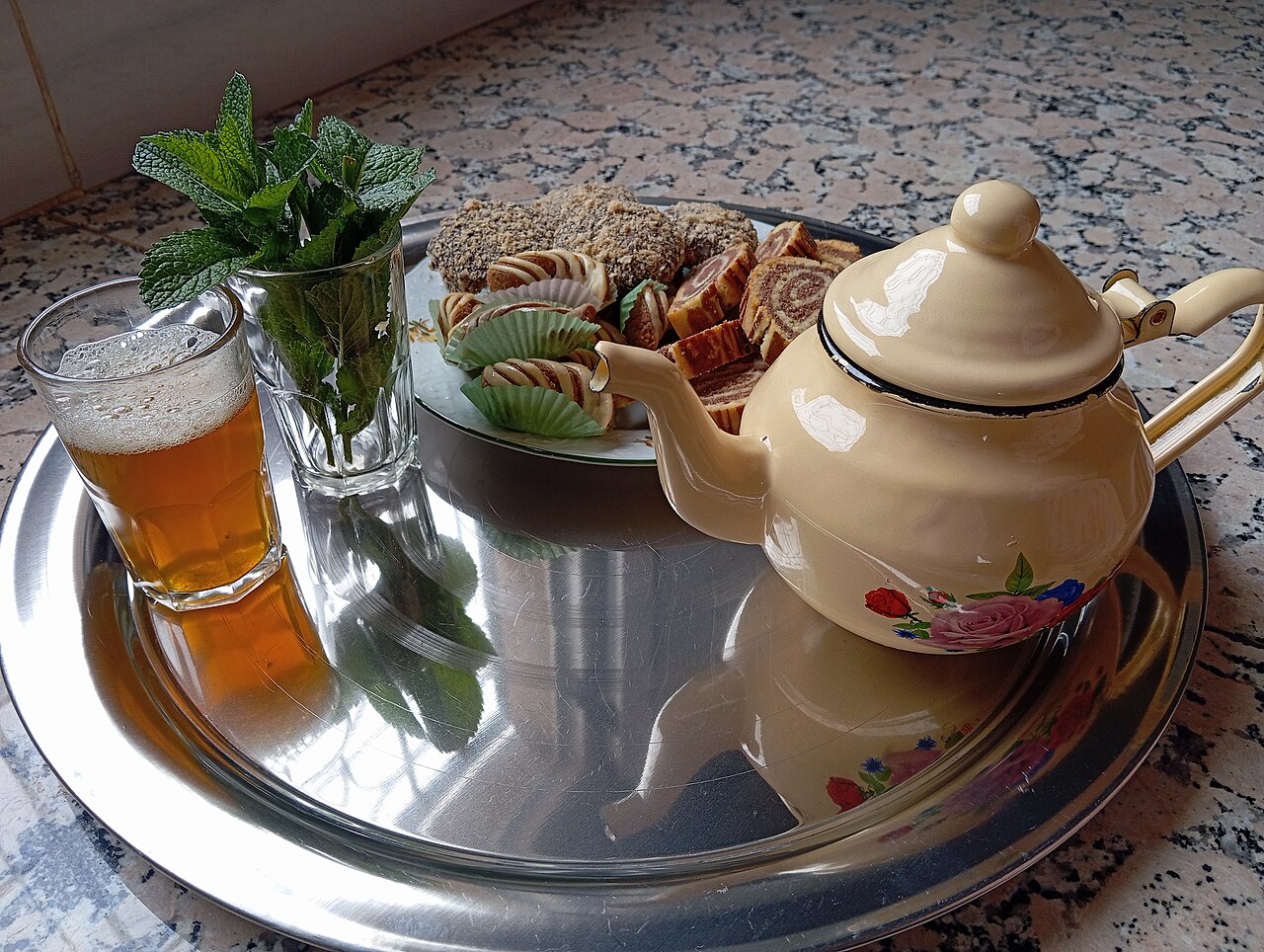
Green gunpowder tea brewed with plenty of fresh spearmint and sugar, poured from high above into small glasses so that it gets a little foam on top. It is offered to every guest as a sign of welcome.
Green tea arrived with British traders, and imports grew greatly during the Crimean War in the 1850s, when British merchants sold tea in Morocco that they could no longer sell to the Baltic.
Wash your hands before the meal and again after it. At a traditional home, the host may bring round a basin, a jug of water and a towel.
Eat with your right hand. Tear off a small piece of bread and use it, held between your thumb and first two fingers, to pick up food from the dish.
Main dishes are shared from one large plate in the middle of the table. Eat from the part of the dish directly in front of you and take a fresh piece of bread for each bite.
Couscous is often eaten with a spoon; some people skilfully roll it into small balls with the fingers of the right hand.
Your host will keep offering you more food. It is polite to accept a little more, and to say that you are full when you have had enough.
Accept a glass of mint tea when it is offered; it is a gesture of hospitality, and at least three glasses are often served.