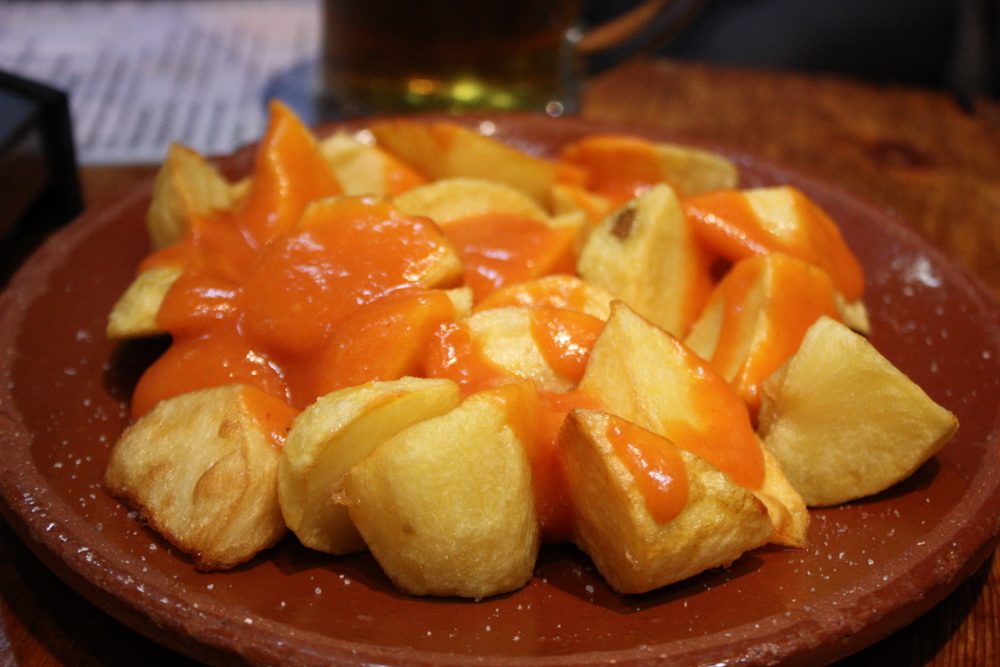
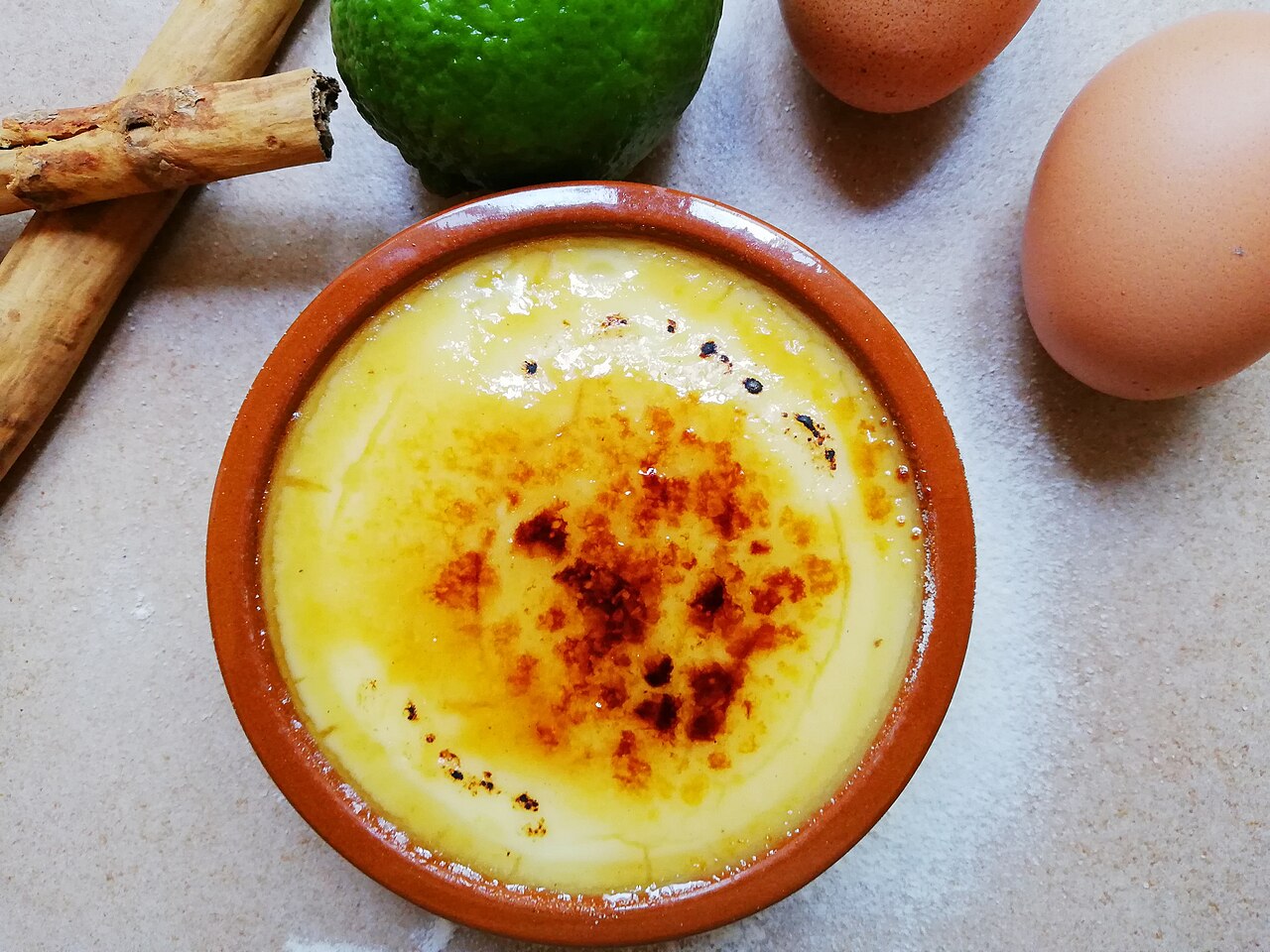
Spanish food is built on olive oil, garlic, fresh vegetables, fish and cured pork, and every region has its own specialities. Lunch, eaten around 2 pm, is the main meal of the day: a primer plato (first course, often vegetables, soup or rice), a segundo plato (meat or fish) and a postre (dessert). Dinner comes late, often after 9 pm, and between meals people meet in bars for tapas, small plates shared with a drink.
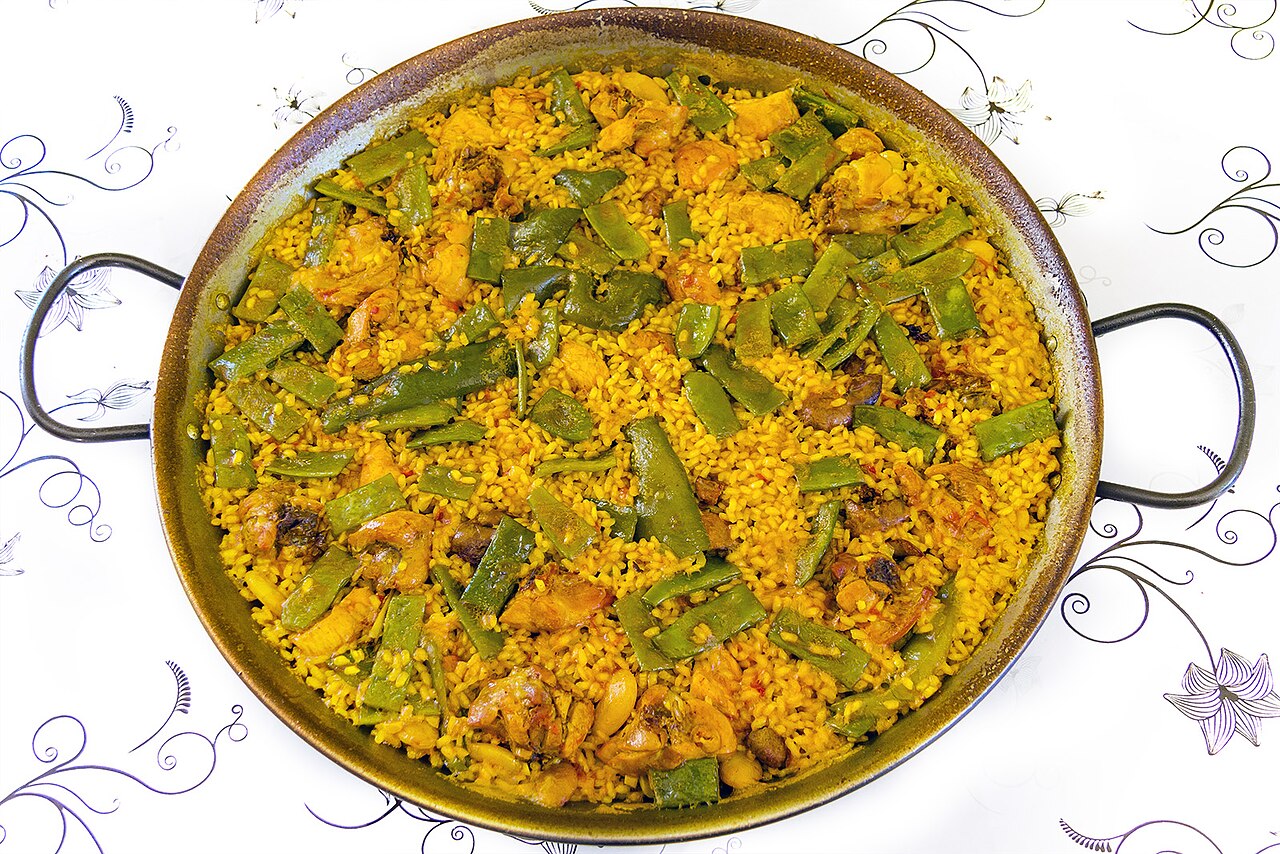
Rice cooked in a wide, shallow pan with olive oil, chicken, rabbit, green beans, large white beans and saffron. The original Valencian recipe has no seafood and no chorizo.
Paella is the Valencian word for frying pan: the dish is named after the pan it is cooked in. The slightly crispy rice stuck to the bottom, called socarrat, is the best part for many Valencians.
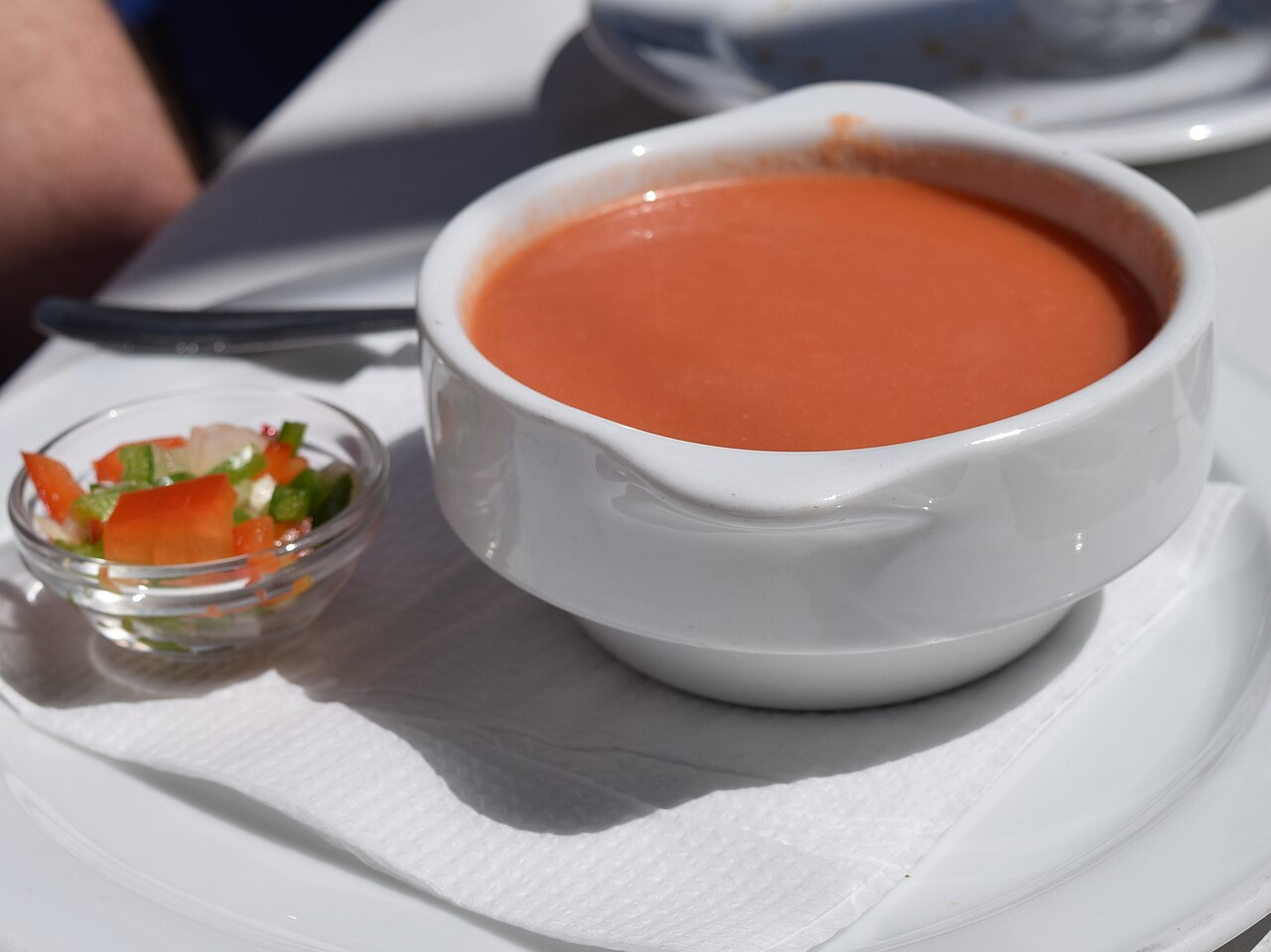
A cold, refreshing soup of raw tomatoes, pepper, cucumber, garlic, olive oil and vinegar, blended until smooth. In summer it is often drunk from a glass.
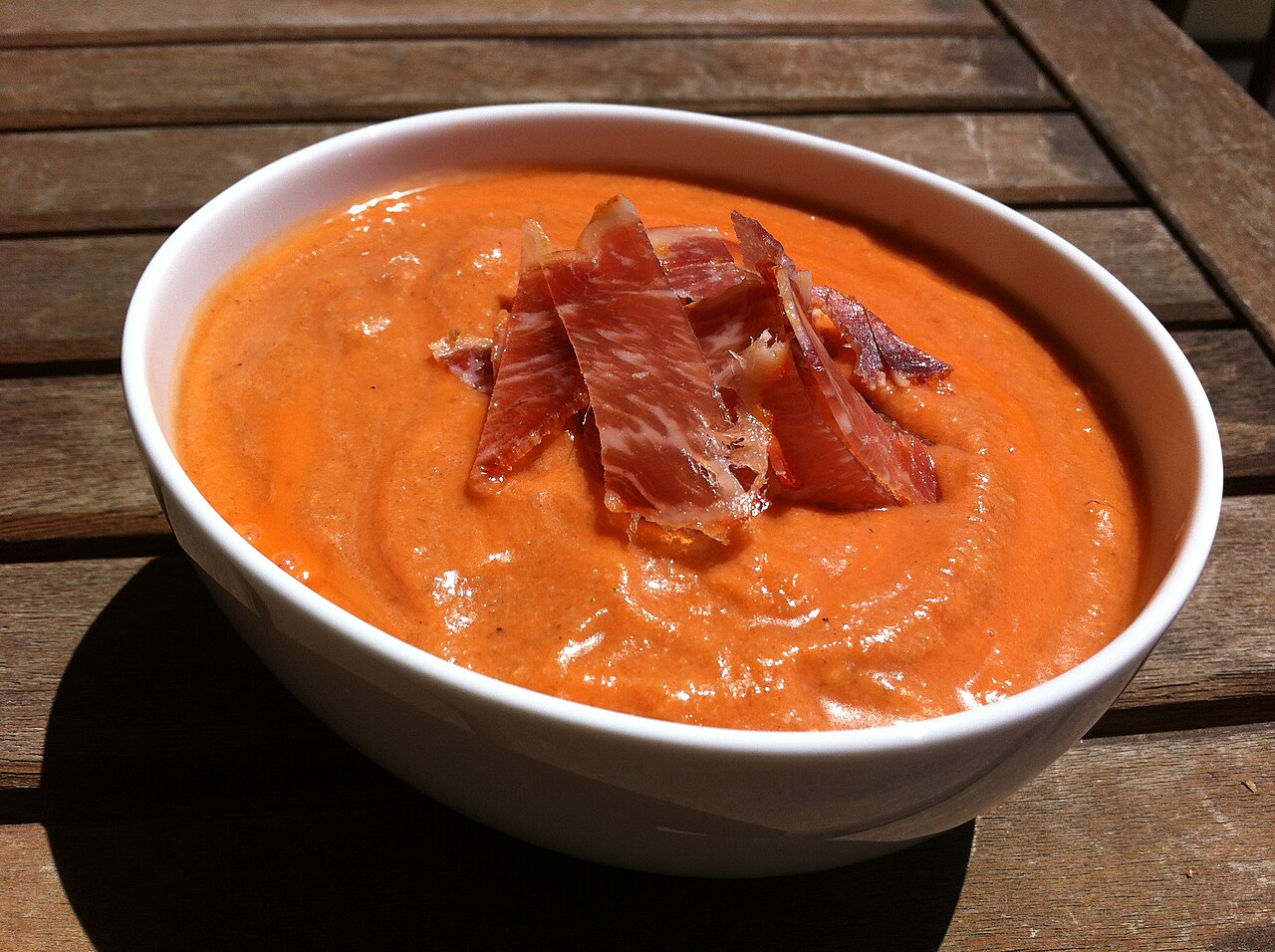
A thicker, creamier cousin of gazpacho, made mainly of tomatoes, bread, garlic and olive oil, served cold and topped with chopped hard-boiled egg and cured ham.
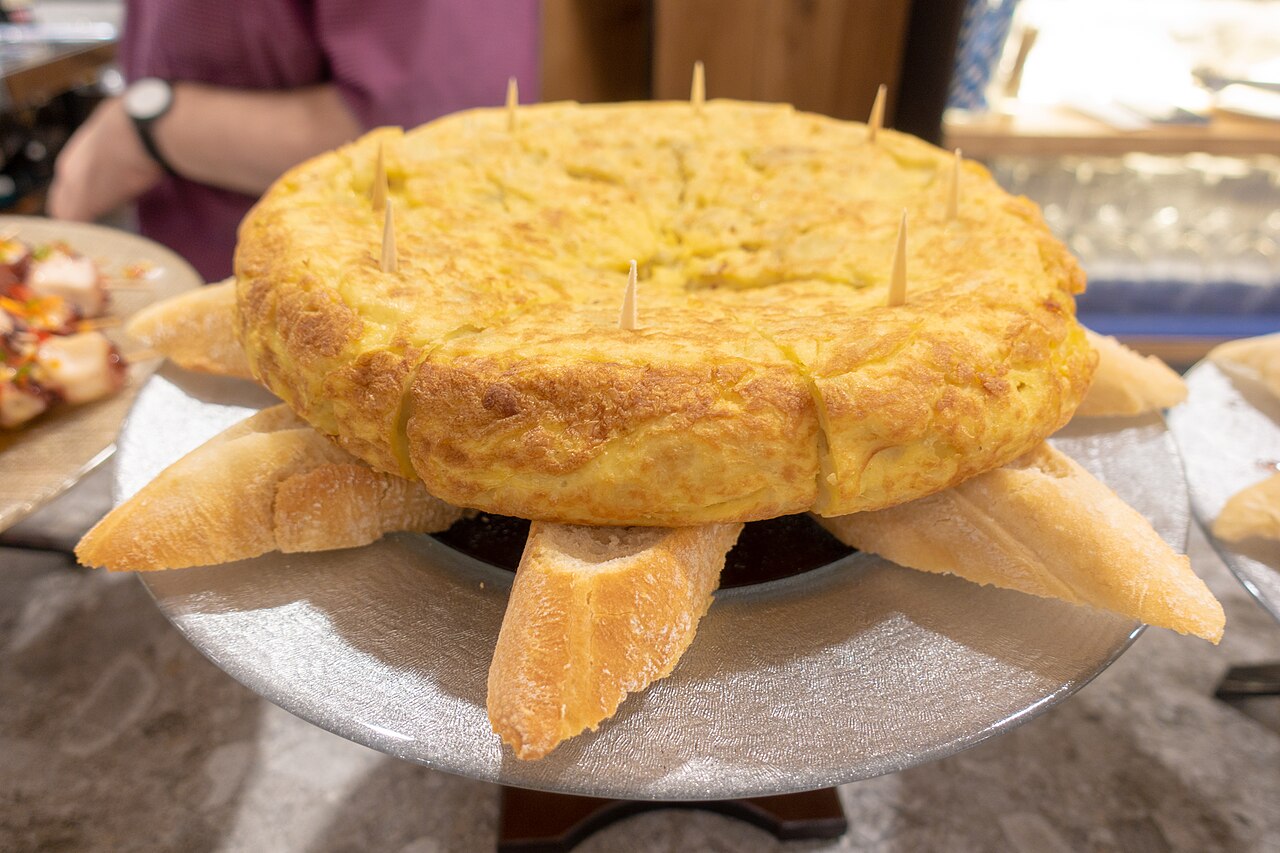
A thick, round omelette of eggs and potatoes slowly fried in olive oil, often with onion. It is eaten warm or cold, as a tapa, a sandwich filling or a light supper.
Whether a tortilla should contain onion is one of Spain's favourite food arguments.
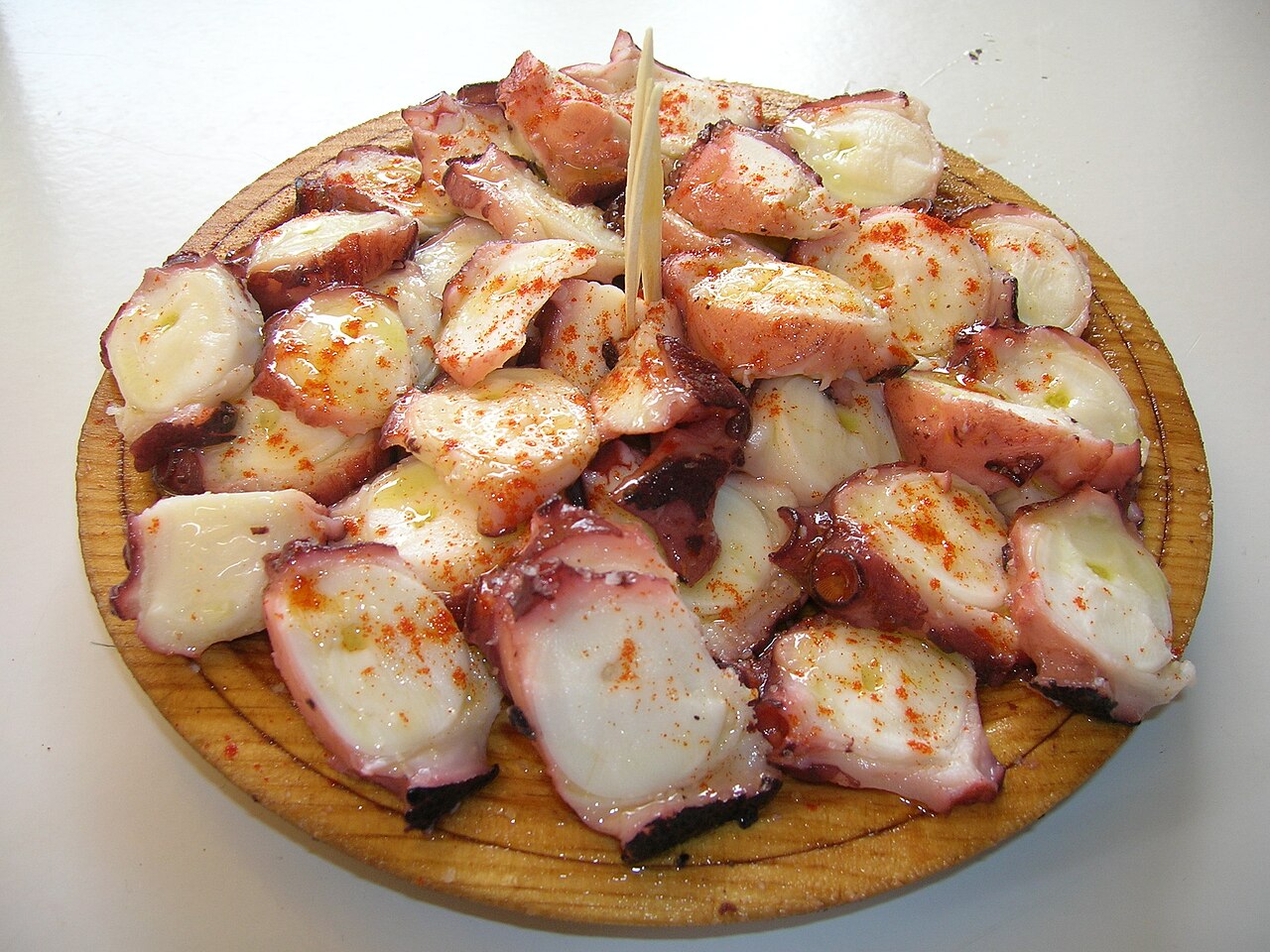
Tender boiled octopus cut into slices, sprinkled with coarse salt and paprika and drizzled with olive oil, traditionally served on a round wooden plate.
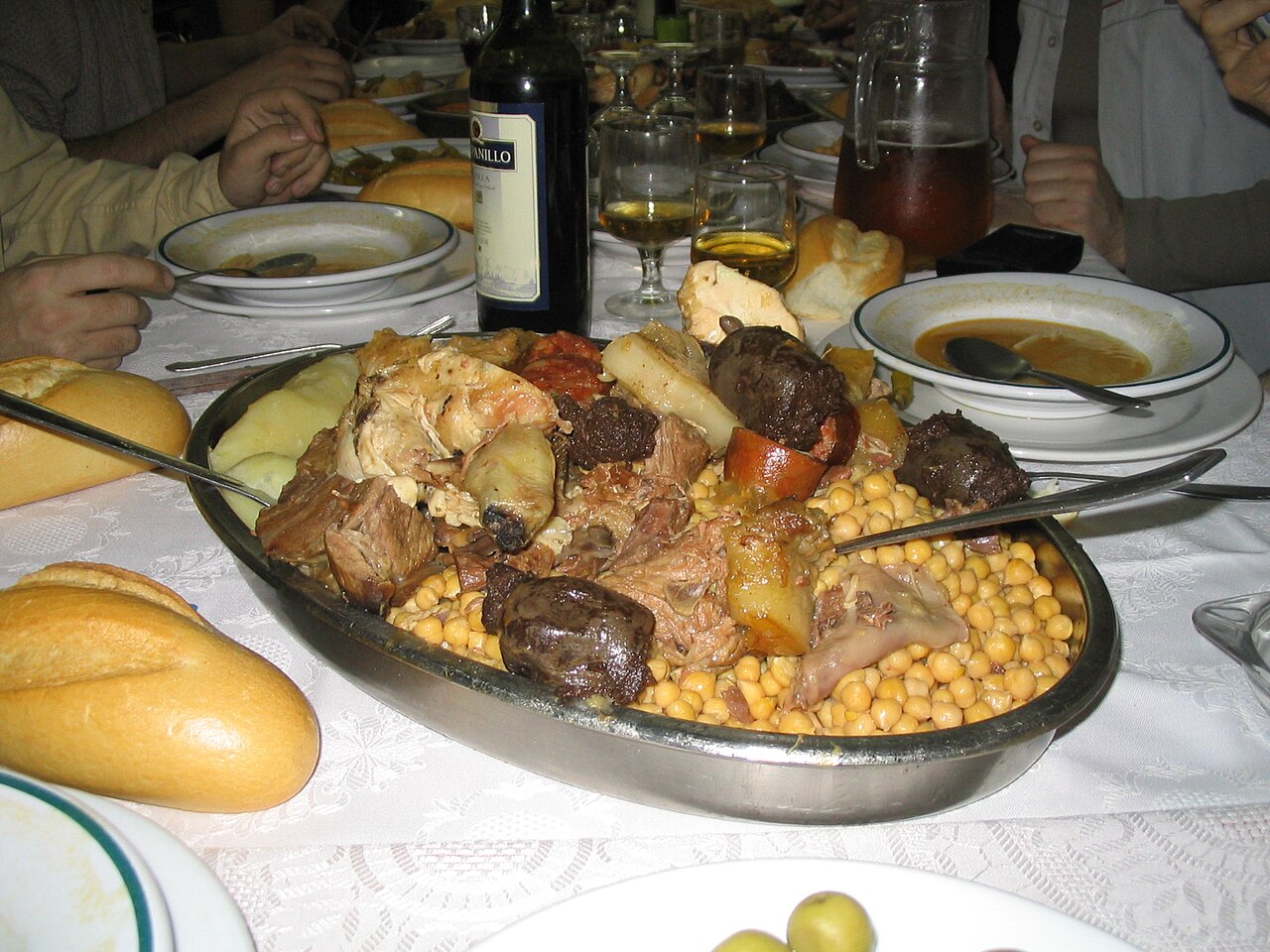
A hearty stew of chickpeas, vegetables and several kinds of meat. It is traditionally served in stages: first the broth as a noodle soup, then the chickpeas and vegetables, then the meats.
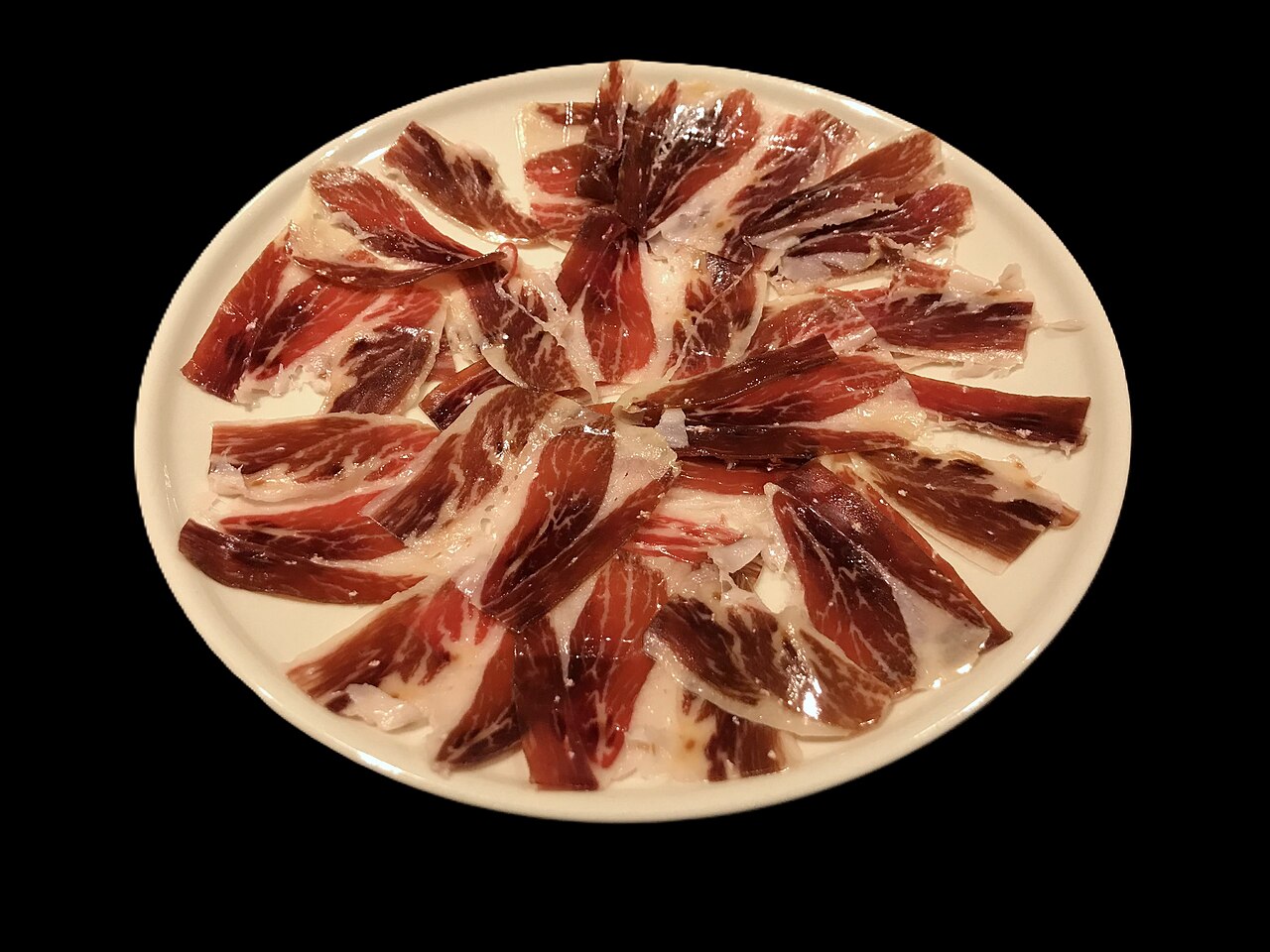
Cured ham from the black Iberian pig, sliced paper-thin by hand. The most prized kind, jamón ibérico de bellota, comes from pigs that feed on acorns in open oak woodland.
A whole leg is held in a stand called a jamonero while it is carved, and good ham carvers are respected professionals.
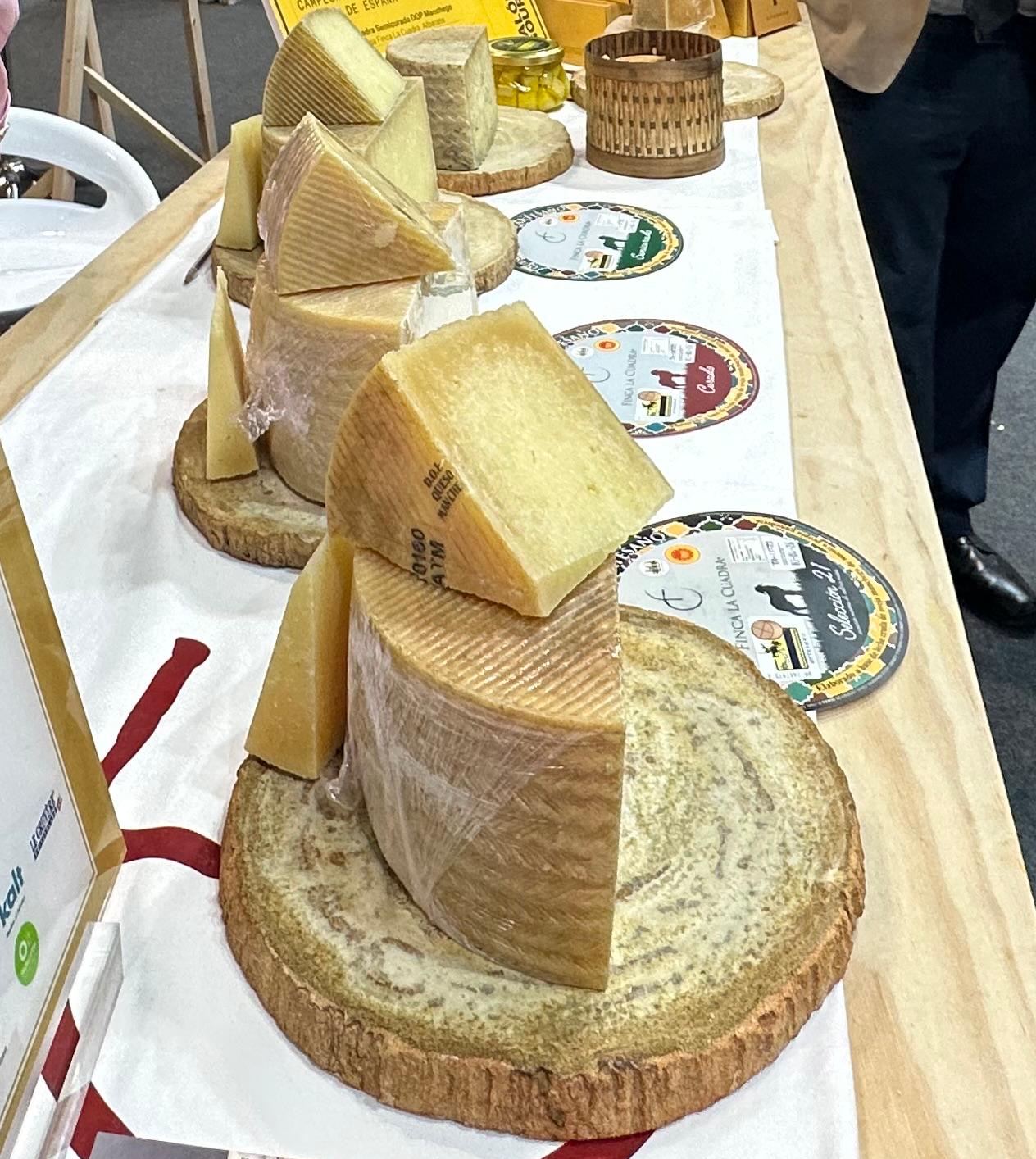
A firm cheese made from the milk of Manchega sheep, with a zigzag pattern on its rind. Only cheese from its protected area of origin in La Mancha may use the name.
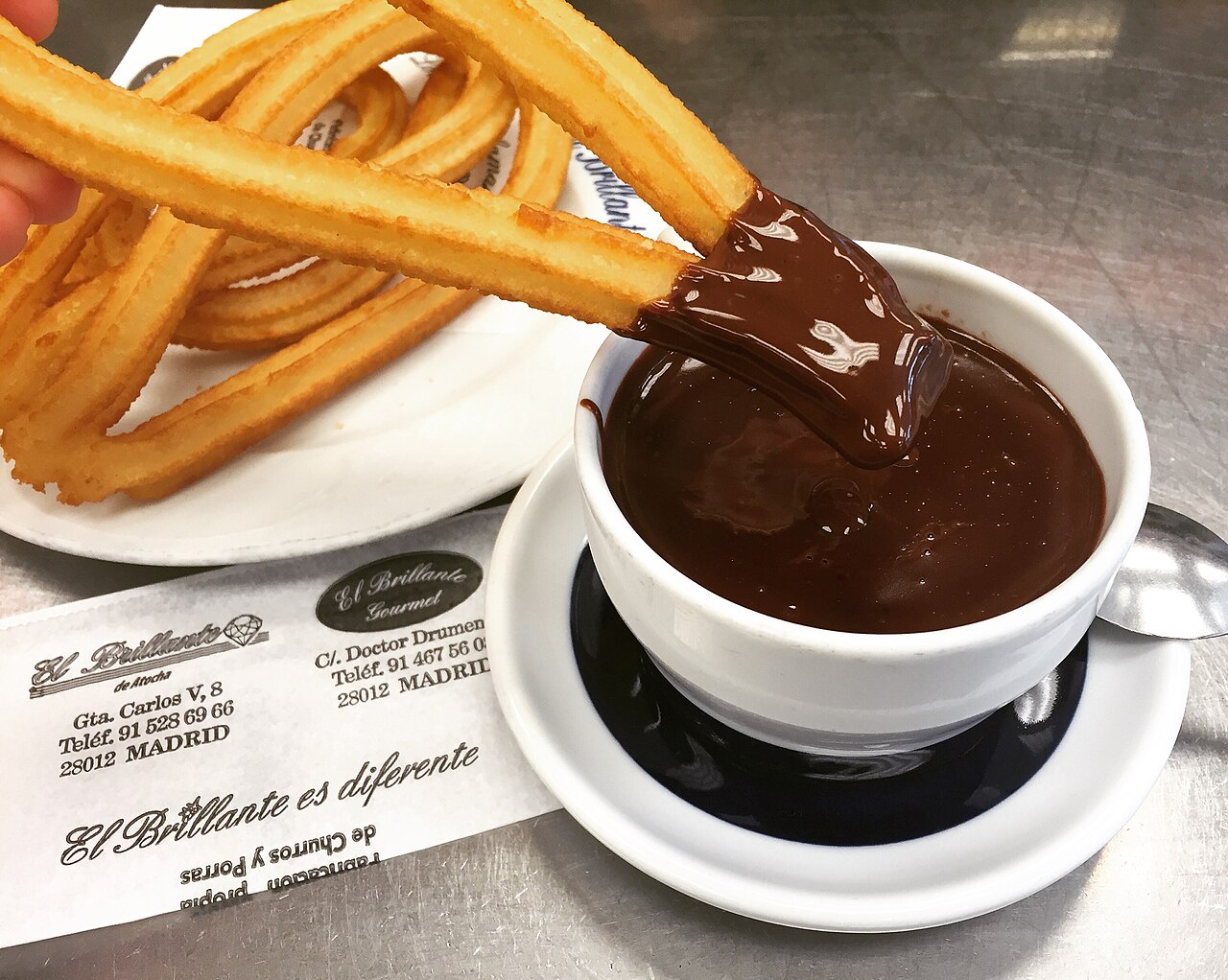
Long, ridged sticks of fried dough dipped into a cup of thick, hot chocolate. People eat them for breakfast, as an afternoon snack, or after a long night out.
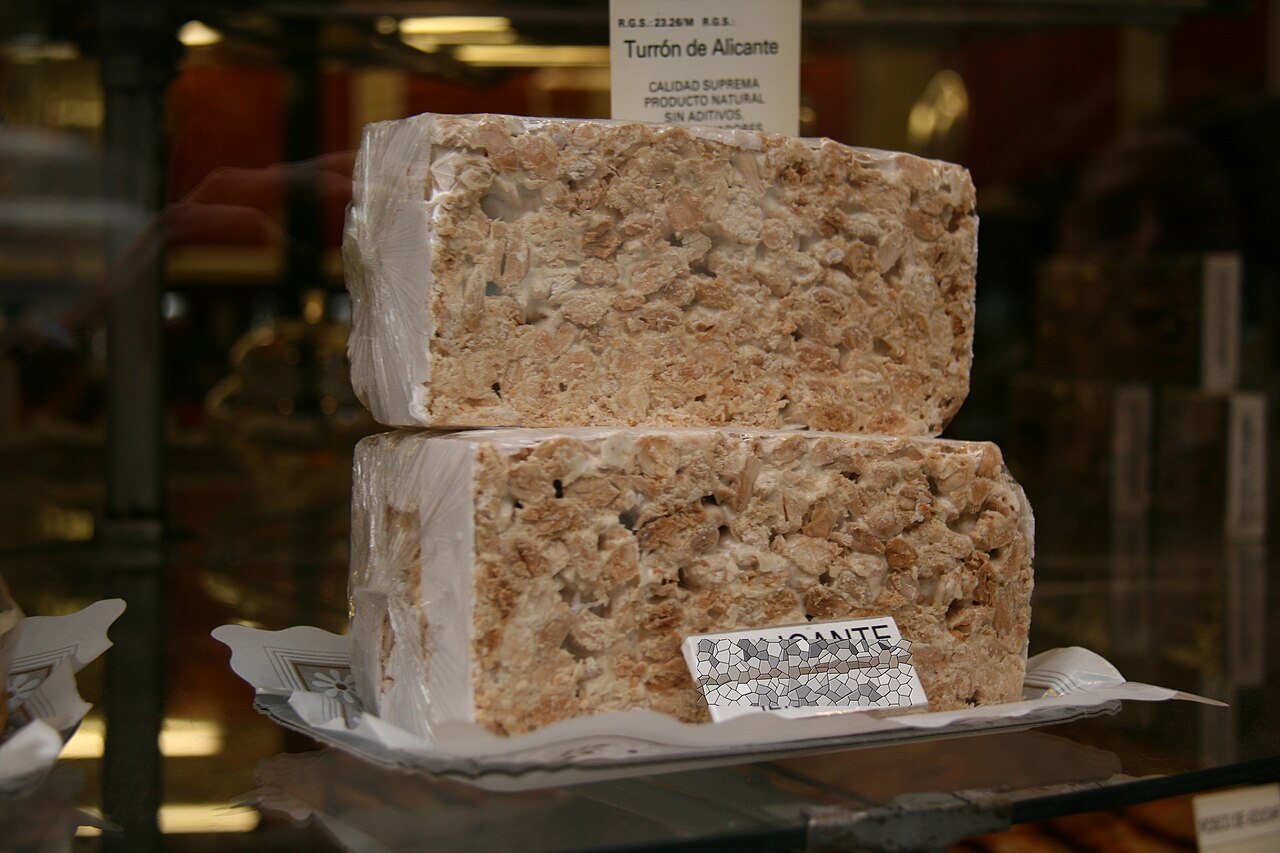
A nougat of almonds, honey, sugar and egg white, eaten all over Spain at Christmas. Turrón de Alicante is hard with whole almonds, and turrón de Jijona is soft and made with ground almonds.
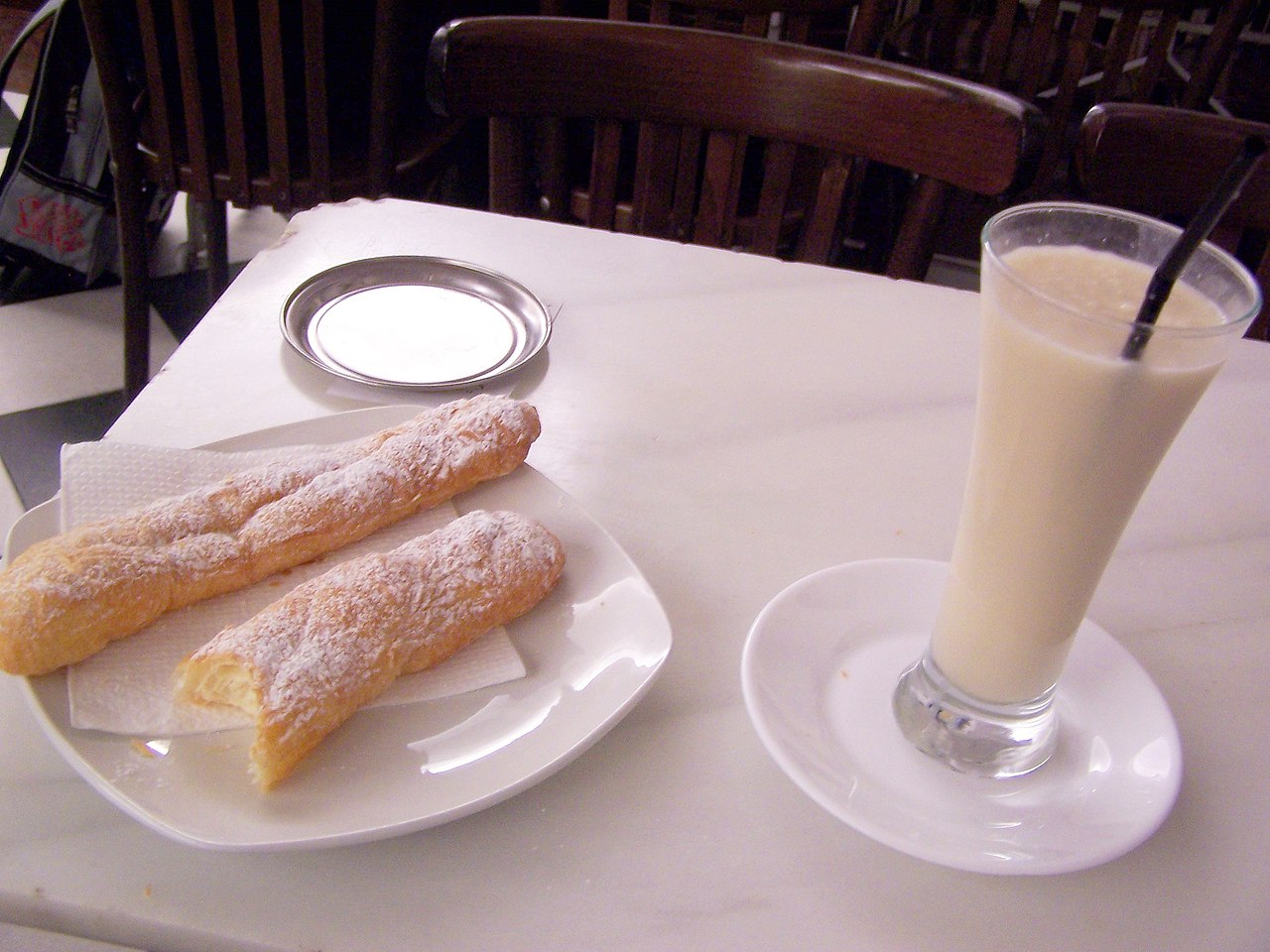
A sweet, milky-looking drink made from tiger nuts (chufas), small tubers grown near Valencia, served ice cold in summer. Valencians dip long soft buns called fartons into it.
At the table in Spain
Meals are late by northern European standards: lunch usually starts around 2 pm and dinner is often after 9 pm.
Tapas are for sharing. Order a few plates for the table and everyone picks from them.
Bread is served with most meals and is used to push food onto the fork and to mop up sauces.
Waiters do not bring the bill until you ask for it. Lingering at the table after a meal to talk is so normal that it has a name: la sobremesa.
At lunch many restaurants offer a menú del día, a fixed-price meal of a first course, a second course and dessert, often with bread and a drink.