Sunny plazas, Moorish palaces, Gaudí's dreamlike buildings and long, late dinners with friends.
Spain covers most of the Iberian Peninsula in the southwest of Europe, between the Atlantic Ocean and the Mediterranean Sea. Much of the interior is a high, dry plateau called the Meseta, with Madrid right in the middle. The country also includes the Balearic Islands in the Mediterranean, the Canary Islands off the coast of Africa, and two small cities in North Africa, Ceuta and Melilla.
For almost 800 years, from 711 to 1492, Muslim rulers held part of Spain: at first nearly all of it, and in the end only the kingdom of Granada. They left behind masterpieces such as the Alhambra in Granada and the great mosque of Córdoba. In 1492 Spain became the base for Columbus's voyages, and within a century it ruled an empire that stretched across the Americas and into Asia.
Questions to ask the older generation
Memories fade faster than photos. Ask these over a meal or a phone call, and write the answers down.
Which town or region of Spain did our family come from? Was it near Barcelona, Valencia, Seville?
Who was the first in the family to leave Spain, when, and why?
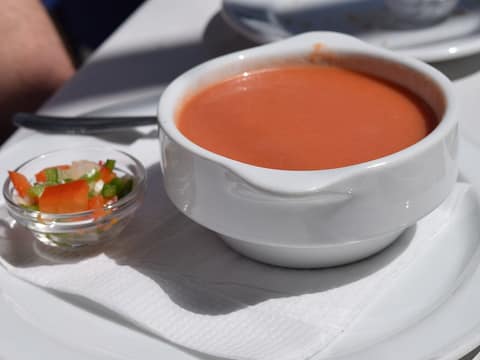
Which dishes from Spain were cooked at home? Did anyone make Paella valenciana or Gazpacho?
Does anyone in the family still speak Spanish, or use a few words of it?
Were there songs, prayers, games or holidays from Spain that the family kept?
Are there old photos, letters or documents from Spain? Who has them?
If you could visit Spain together, where would you go first?
A short history of Spain
Romans, Visigoths, Moors and Christian kings all shaped Spain. From a patchwork of kingdoms it became a world empire, lived through a civil war and a long dictatorship, and then built one of Europe's young democracies.
218 BC
Romans land in Hispania
During their war with Carthage, Roman troops landed at Empúries on the Catalan coast. Over the next two centuries Rome conquered the whole peninsula, which it called Hispania, and left behind roads, bridges, aqueducts and the Latin language.
1469
The Catholic Monarchs marry
Isabella of Castile and Ferdinand of Aragon married in secret. Their union joined Spain's two largest Christian kingdoms and laid the foundations of the Spanish state.
1522
Elcano completes the first voyage around the world
Ferdinand Magellan's expedition left Spain in 1519. Magellan was killed in the Philippines, and Juan Sebastián Elcano, a Basque sailor, brought the ship Victoria home in 1522, completing the first voyage around the world.
1588
The Spanish Armada sails against England
Philip II sent a great fleet to invade England. It was beaten off by the English navy and then wrecked by storms around Scotland and Ireland.
1898
Spain loses its last major colonies
After a short war with the United States, Spain lost Cuba, Puerto Rico, the Philippines and Guam. The defeat, called 'the Disaster' in Spain, ended its overseas empire in the Americas and Asia.
1975
Franco dies
General Franco died on 20 November 1975. Two days later Juan Carlos I was proclaimed king, and he helped lead the country's peaceful move to democracy.
1986
Spain joins the European Community
On 1 January 1986 Spain and Portugal joined the European Economic Community, which later became the European Union.
2002
The euro replaces the peseta
Euro notes and coins replaced the Spanish peseta, which had been the national currency since 1868.