Algerian cooking brings together Amazigh, Arab, Ottoman, Andalusian and French influences, with wheat and semolina at its heart. A family meal often starts with a soup such as chorba or with salads, continues with a stew (tajine) or a big shared dish of couscous, and bread comes with almost every meal. Sweet pastries with almonds, dates and honey are served with coffee or mint tea, above all during Ramadan and at weddings.
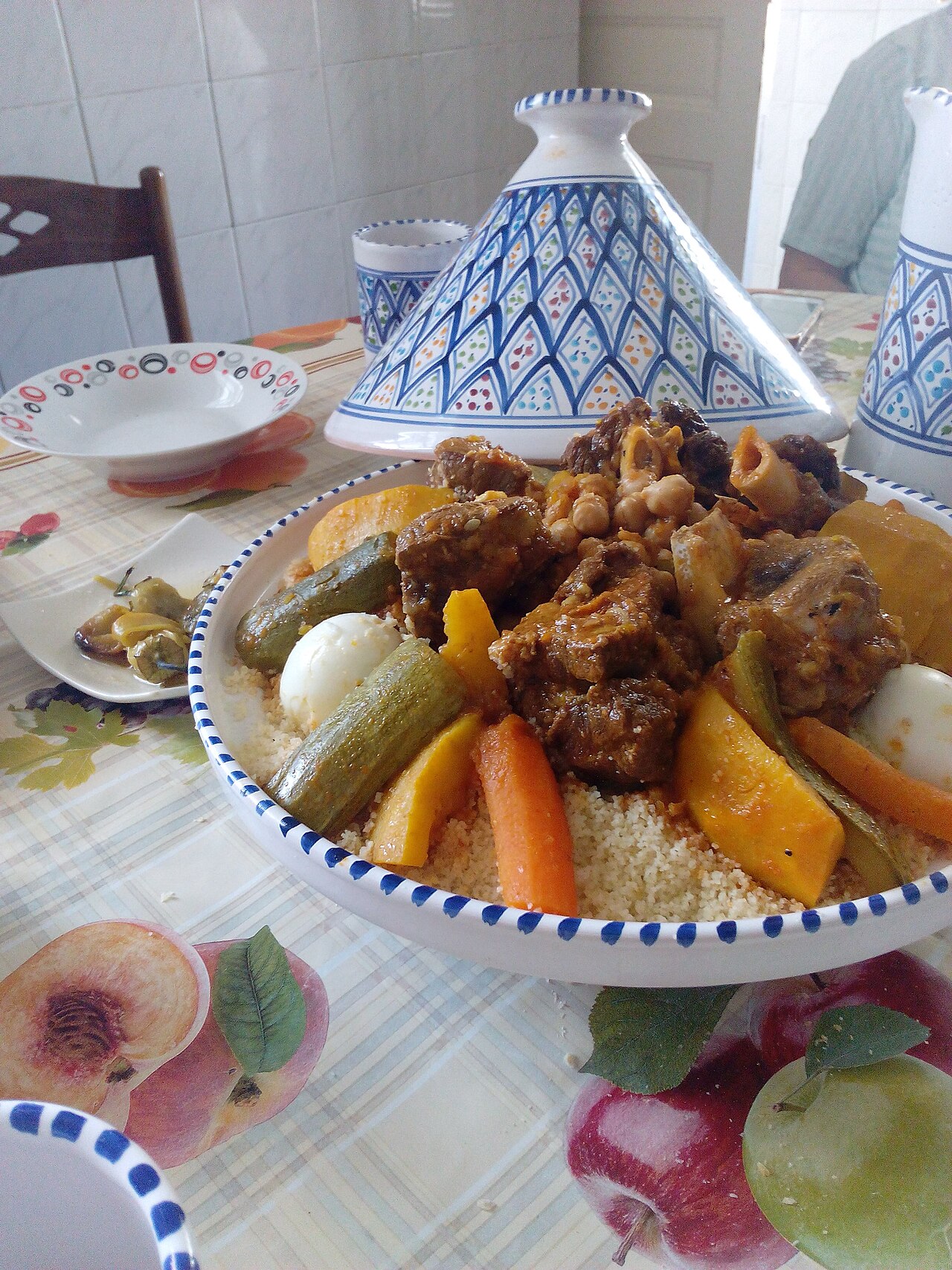
Tiny grains of semolina, steamed two or three times over a pot of stew and served in a large dish with meat, chickpeas and vegetables such as courgettes, carrots and turnips. In Algeria it comes with a red tomato sauce or a white one, and there is also masfouf, a dry version, sometimes sweet with raisins.
In December 2020 UNESCO added the knowledge and practices of couscous to its intangible heritage list, after a joint nomination by Algeria, Mauritania, Morocco and Tunisia.
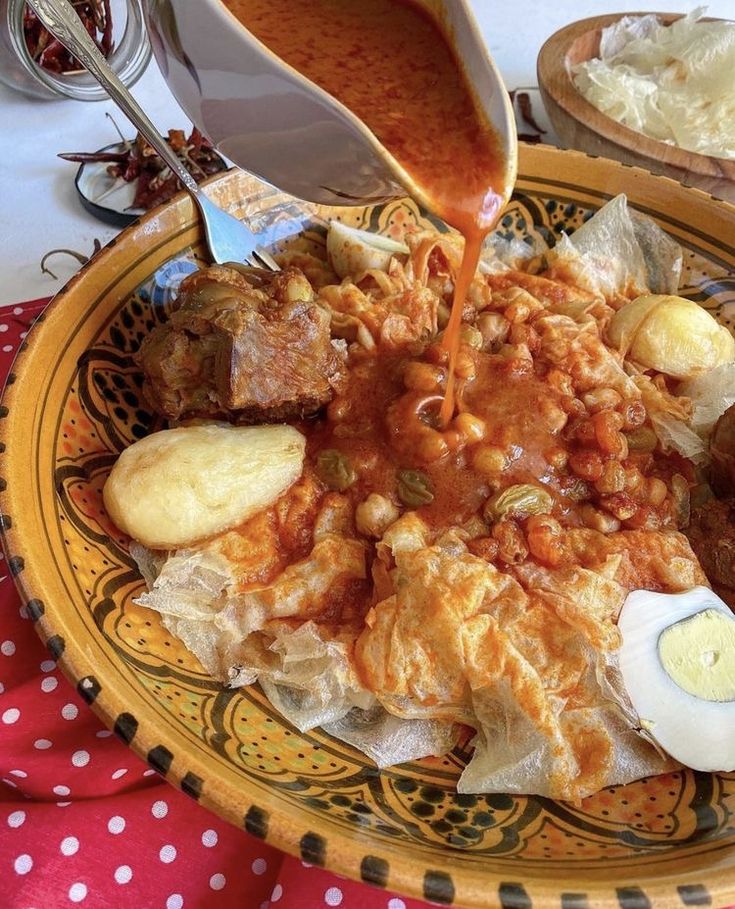
Thin rounds of semolina flatbread are torn into small pieces and soaked in marqa, a tomato stew with lamb, chickpeas and spices. The bread softens and soaks up the sauce, a filling dish for family gatherings.
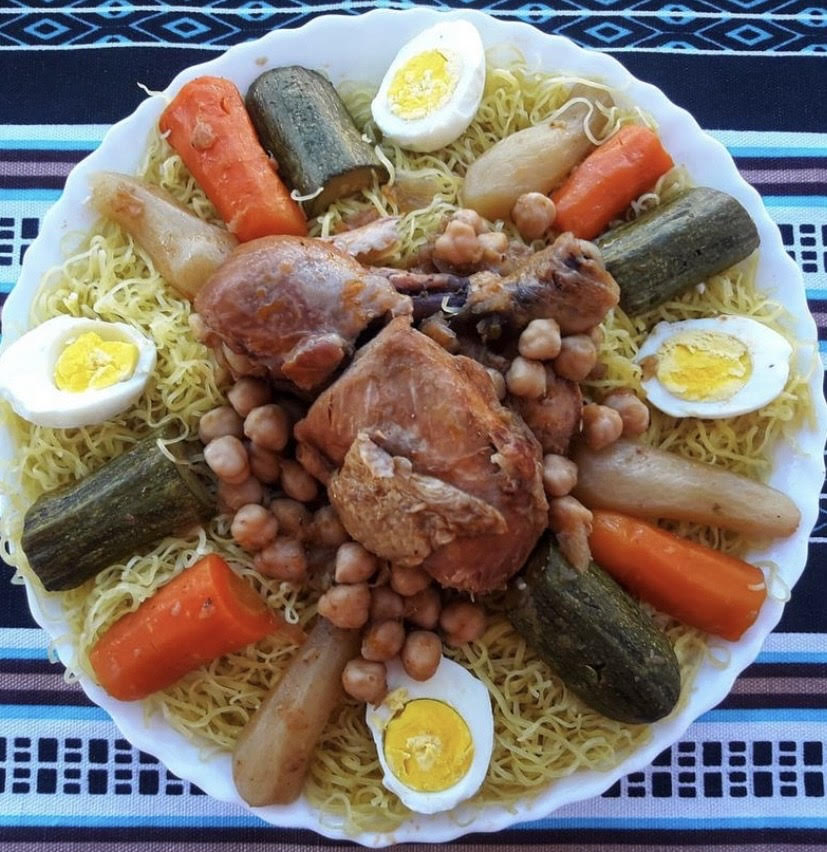
Fine, flat noodles cut by hand, steamed and served with chicken, chickpeas and turnips in a white sauce flavoured with cinnamon and white pepper. It is the signature dish of Algiers, often made for family celebrations.
The name comes from the Persian word rista, meaning 'thread'.
All of Algeria, especially the east; also eaten in Tunisia
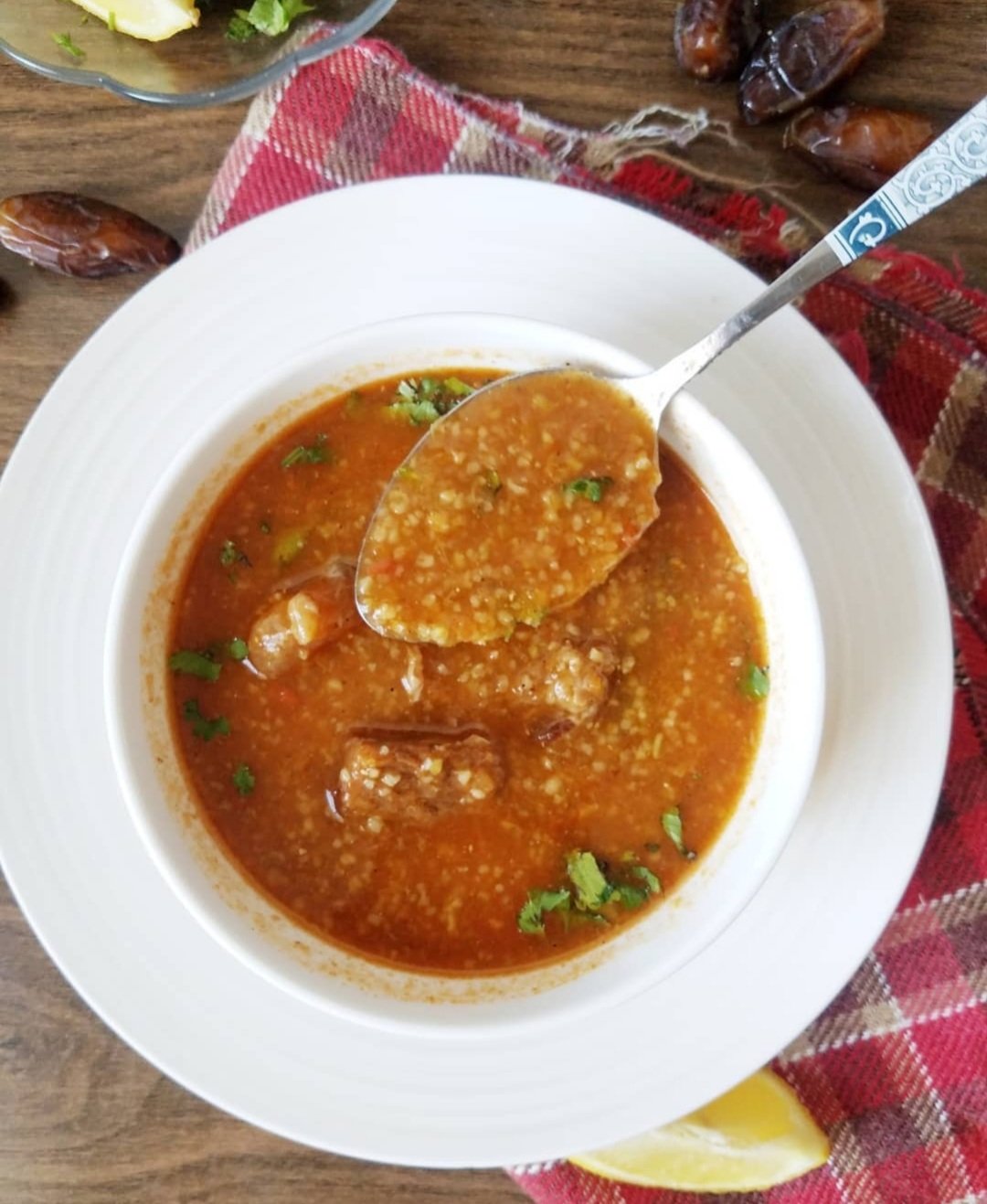
A thick soup of lamb, tomato, chickpeas and frik, wheat harvested green, roasted and cracked. It is the soup of Ramadan evenings, when families break the fast with it.
All of Algeria; the large bourek annabi comes from Annaba
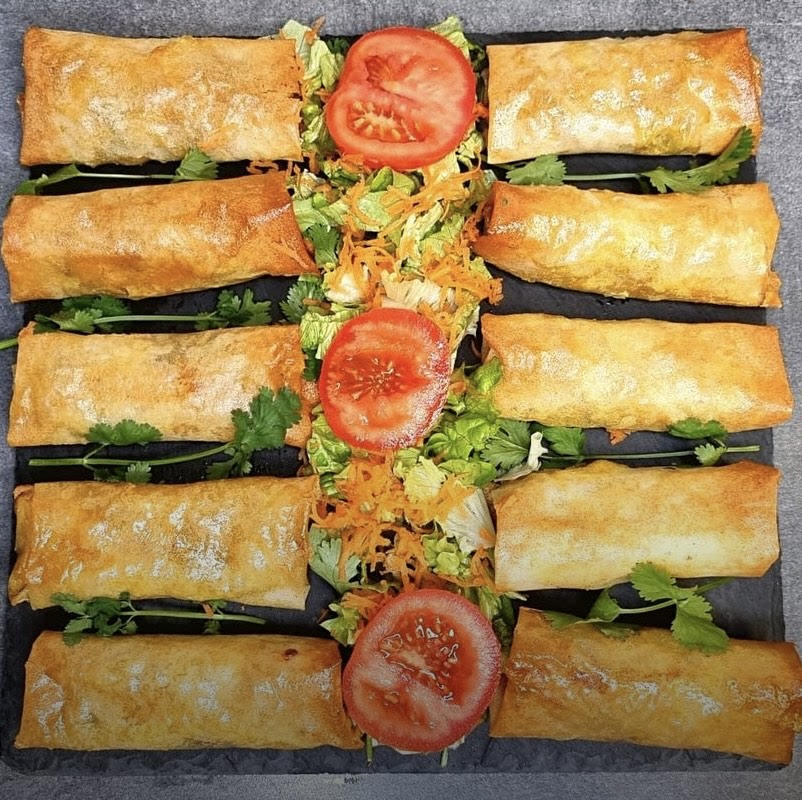
Thin pastry sheets, called dyoul, rolled or folded around minced meat, potato, cheese, egg or tuna and fried until crisp. In eastern Algeria it is called brik, and it is a fixture of the Ramadan table.
Oran and western Algeria, now sold across the country
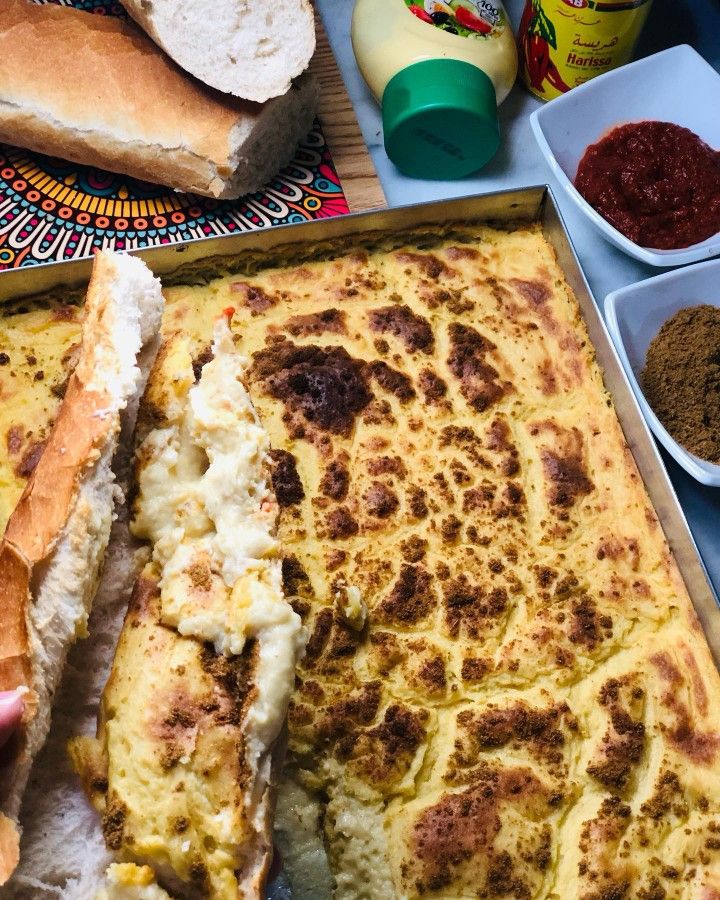
A baked chickpea-flour custard with a golden, egg-glazed top, sold hot by street vendors in squares or tucked into bread and sprinkled with cumin and harissa.
The name is usually traced to the Spanish word caliente, 'hot', from the centuries when Spain held Oran.
Southern and eastern Algeria, such as Biskra and Touggourt; now eaten everywhere
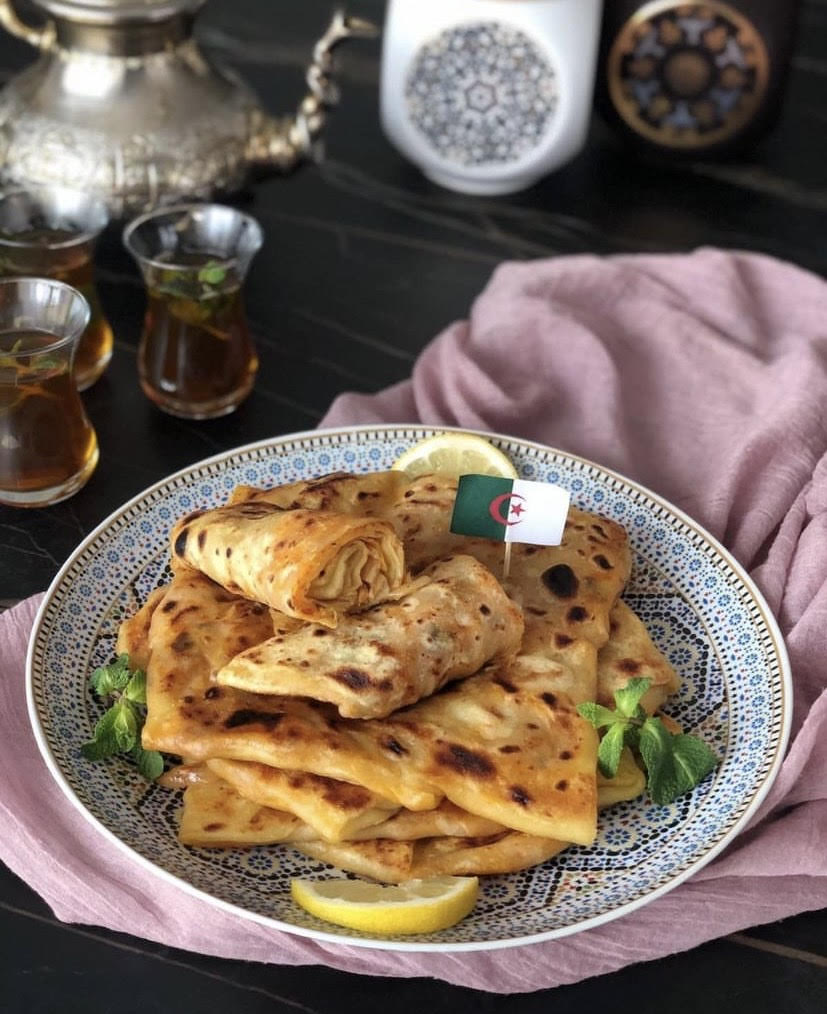
A very thin semolina dough, stretched by hand, filled with a spicy mixture of onion, tomato and pepper, folded into a square and cooked on a griddle. The name means 'veiled' or 'covered'.
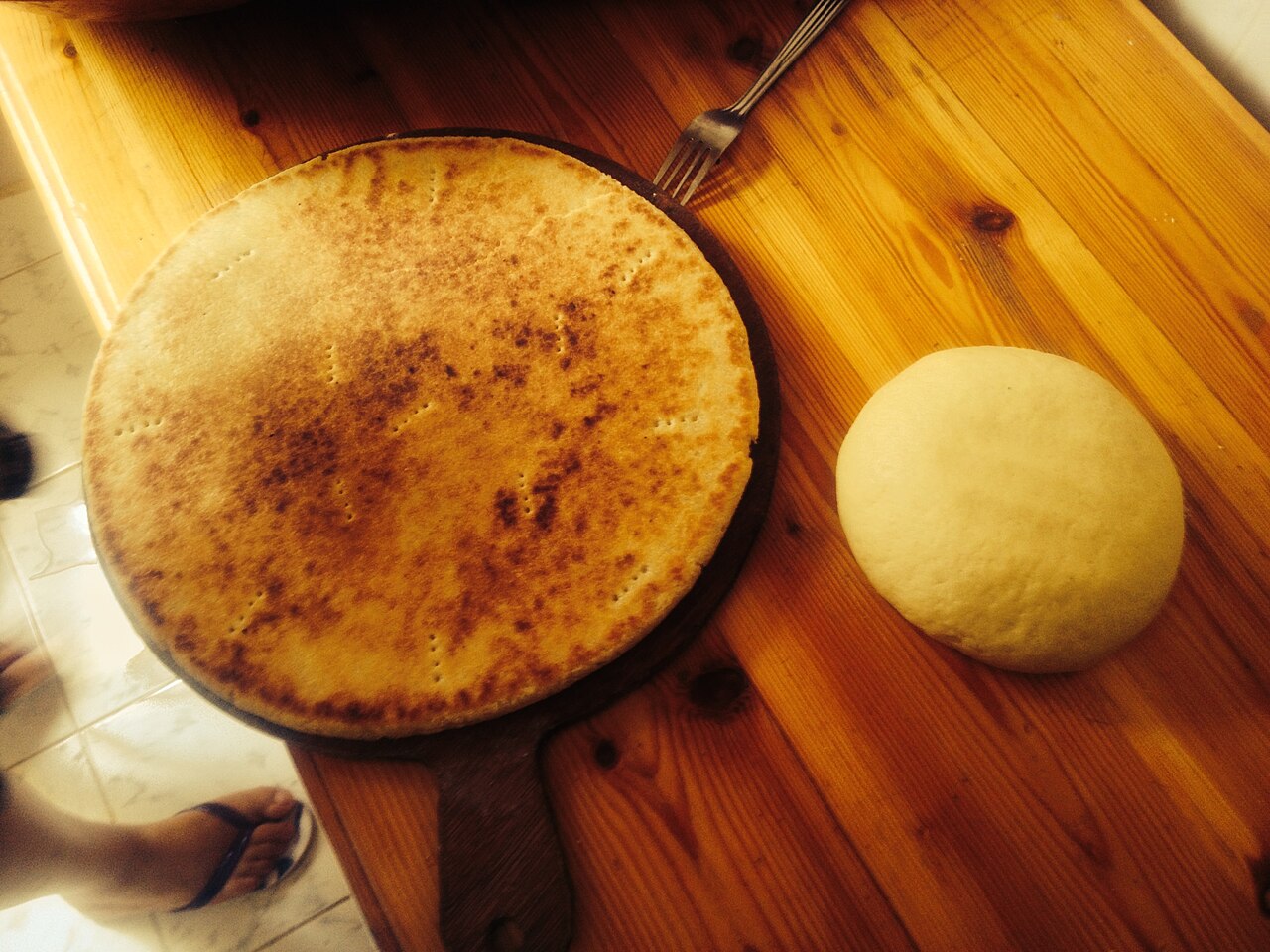
A round, flat semolina bread cooked on a clay or iron griddle. It is eaten warm or cold with almost anything, from stews to olive oil, honey or a glass of fermented milk (leben).
The name comes from an Arabic root meaning 'to break', as the bread is broken by hand to share.
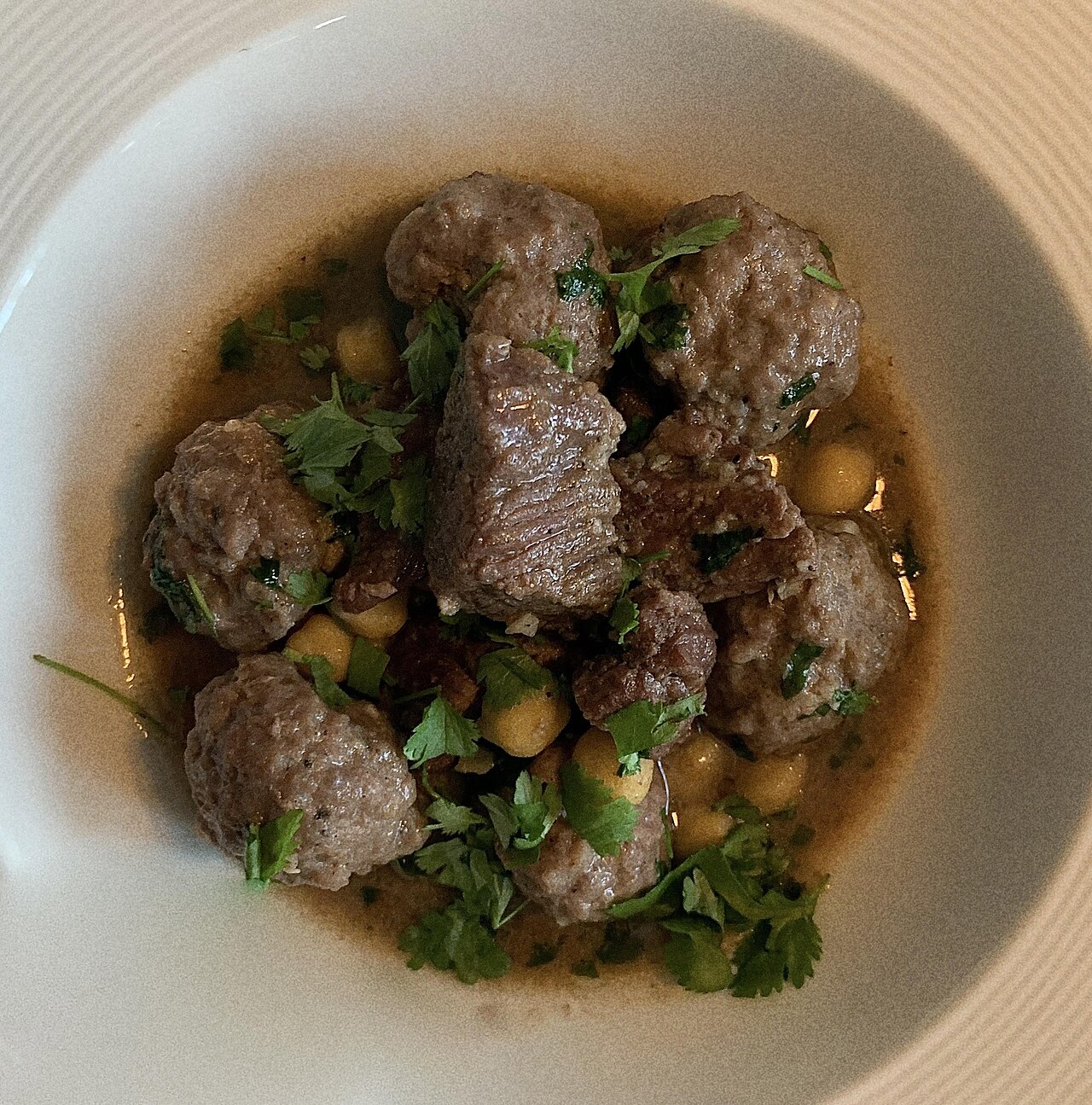
Meatballs and pieces of lamb or chicken cooked with plenty of garlic, almonds or chickpeas, in a red or a white sauce. It is a favourite for guests and weddings in Algiers, and during Ramadan.
The name means 'with garlic', and there is a lot of it in the sauce.
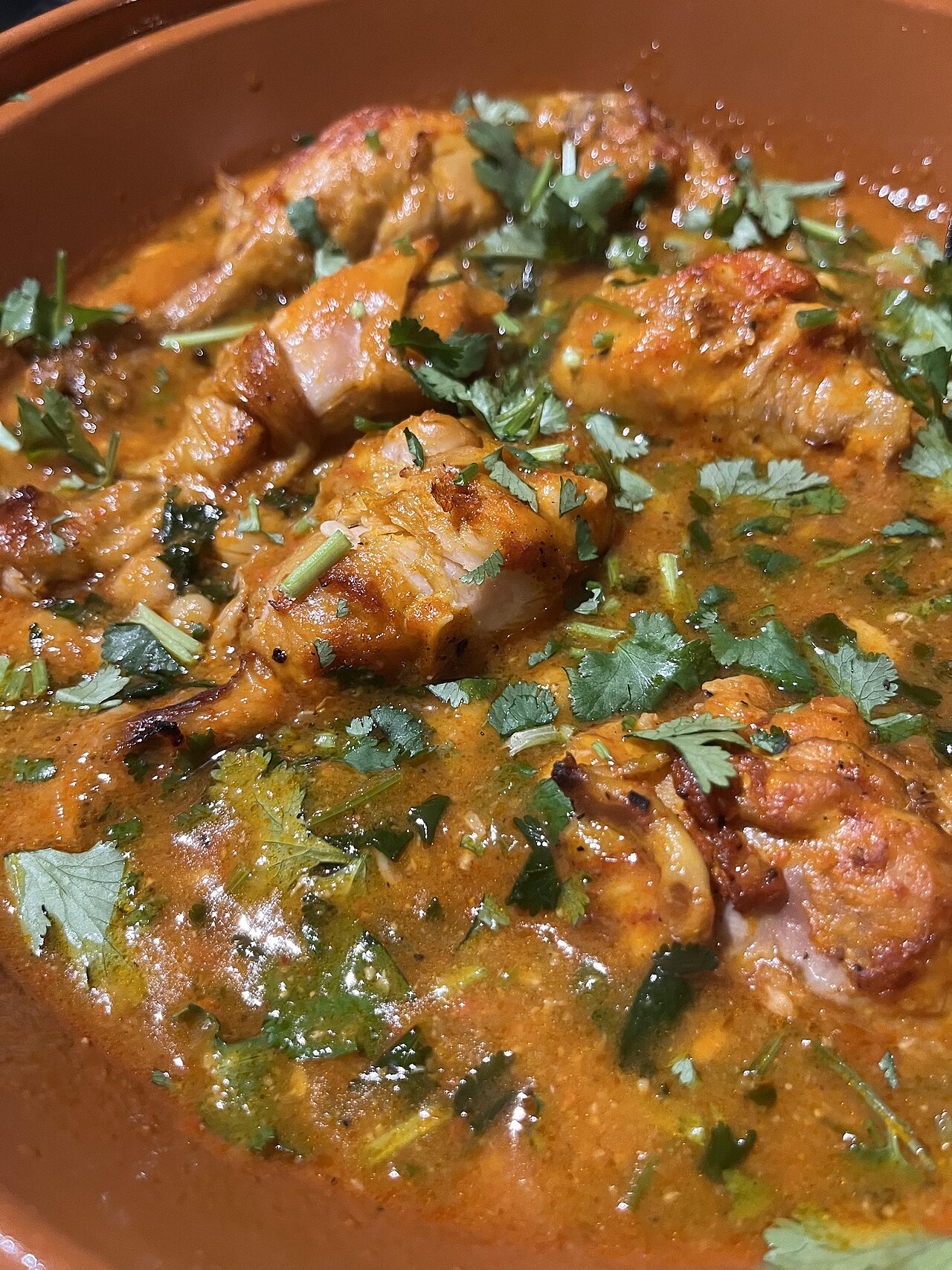
Chicken and chickpeas simmered in a red sauce with a lot of garlic, tomato paste, paprika and a little chilli. Chtitha is a whole family of red stews, made with chicken, meat, liver or even potatoes.
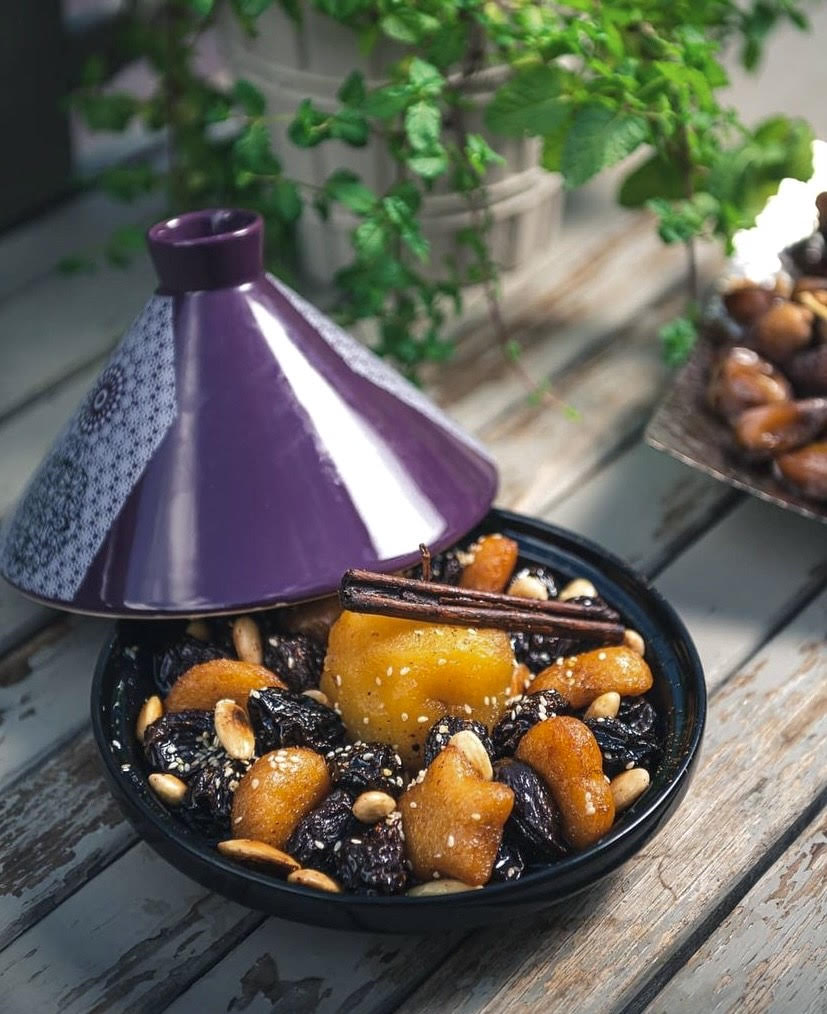
A sweet dish of lamb cooked with prunes, dried apricots, raisins and almonds in a syrup scented with cinnamon and orange blossom water. Its name means 'sweet meat', and it is made especially during Ramadan and for weddings.
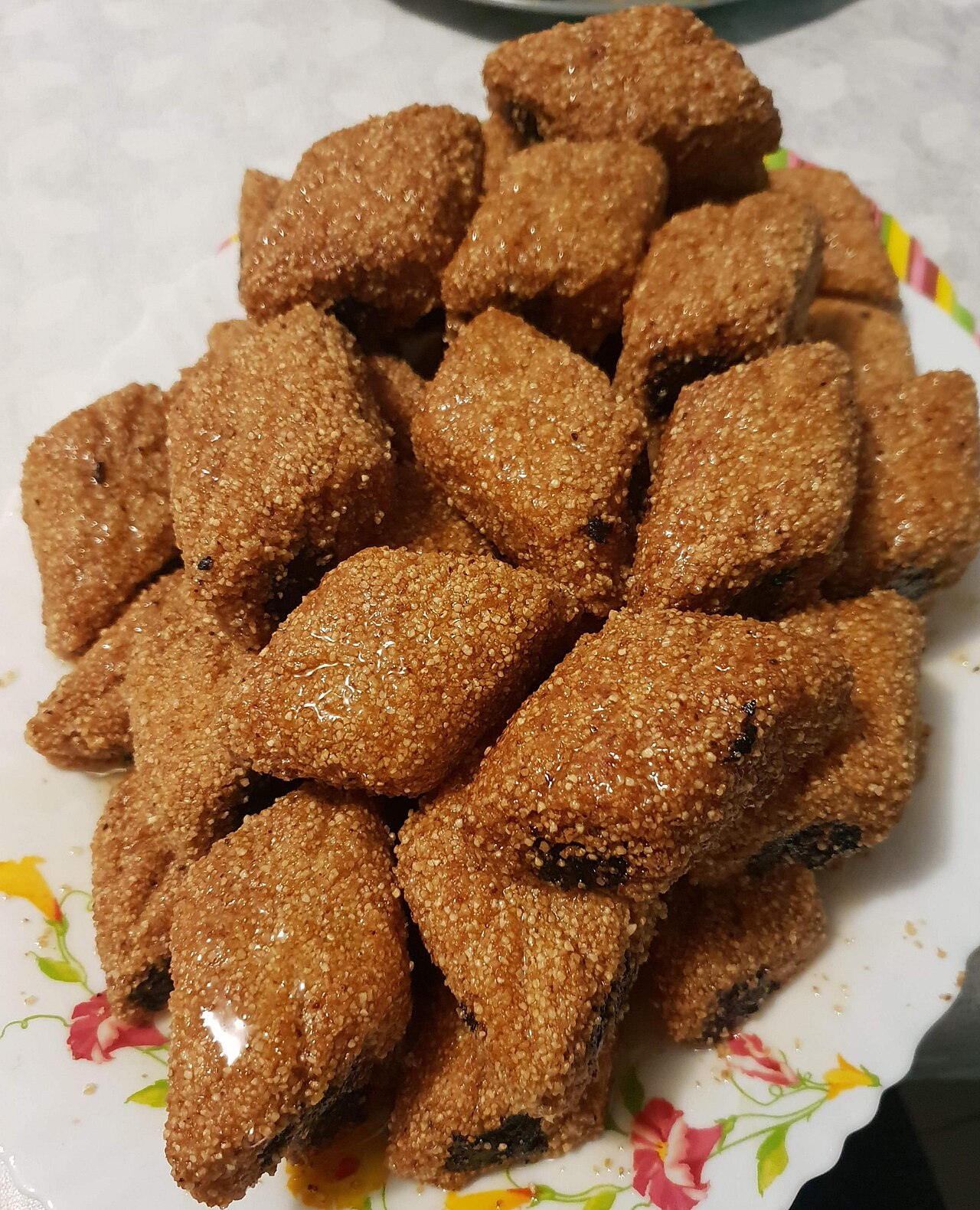
Diamond-shaped pastries of semolina filled with date paste, fried or baked and then dipped in honey or syrup. They are a classic sweet for Eid and for serving with coffee or tea.
The oldest known recipe for date-filled maqrud comes from a 13th-century Arabic cookbook.
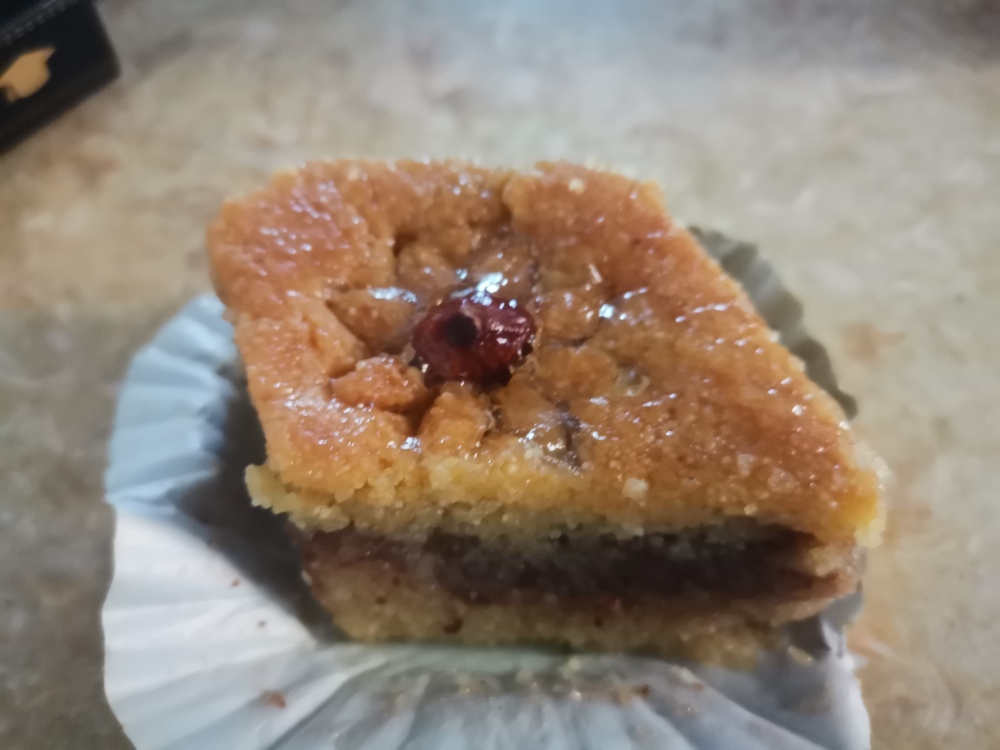
A dense semolina cake filled with ground almonds, flavoured with orange blossom and soaked in honey syrup, each piece topped with a whole almond. It is a favourite on Ramadan evenings with mint tea or coffee.
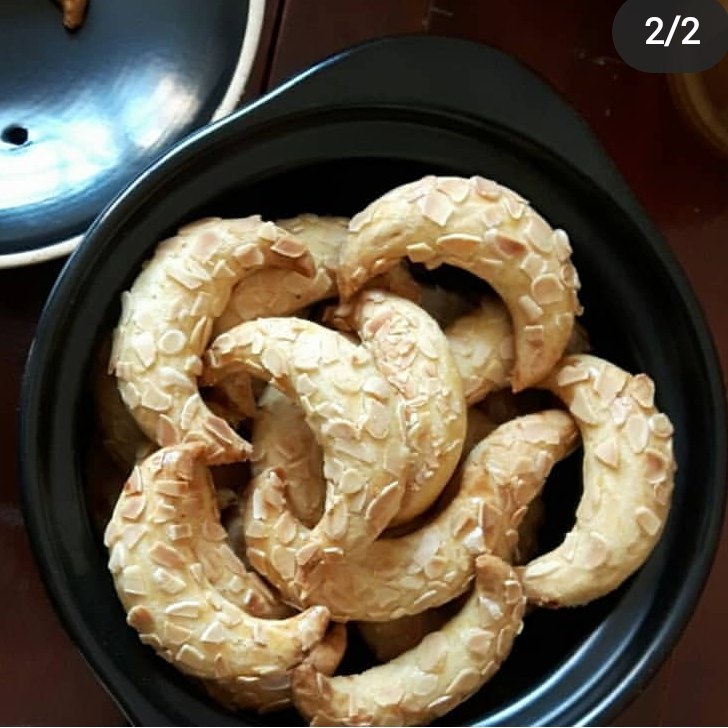
Small crescent-shaped pastries of thin, buttery dough wrapped around almond paste with cinnamon and orange blossom water. Tcharek msaker is rolled in icing sugar, while tcharek el ariane is left bare.
In Morocco, and in parts of Algeria such as Tlemcen and the east, the same pastry is called 'gazelle heels' or 'gazelle horns'.
At the table in Algeria
Eat with your right hand, and use pieces of bread to scoop up sauce and stew.
When a dish is shared, eat from the part in front of you rather than reaching across.
Guests are usually offered coffee or tea with sweets; accepting at least a little is polite.
Many people say 'bismillah' ('in the name of God') before eating; you can simply wait for your host to start.
During Ramadan the fast is often broken at sunset with dates and milk, followed by a bowl of chorba.