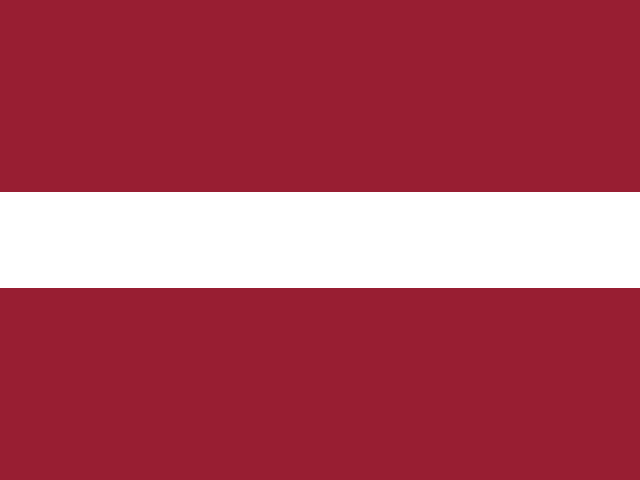
Learn Latvia before you go
10 phrases to learn
In Latvian. Capital letters show the stressed part. Tap the heart to practise a phrase later.
At the table
- Before eating, people wish each other 'Labu apetīti' (enjoy your meal).
- When glasses are raised, people say 'Priekā!' (cheers).
- Lunch is traditionally the main meal of the day, and it often starts with a soup.
- Kefir or soured milk is commonly drunk with hot meals, not just at breakfast.
- A classic simple lunch is boiled potatoes with lightly salted herring, cottage cheese, spring onions and sour cream.
- At Jāņi, the Midsummer festival on 23 and 24 June, people leave the city to eat, drink and sing through the night in the countryside.
Local tips
Euros and modest tips
Latvia has used the euro since 1 January 2014, so old prices in lats are long out of date. Tipping is modest: rounding up or leaving about 5 to 10% is enough, and it is not required. Check the bill, as a few places add a service charge.
Emergency number: 112
The common emergency number in Latvia is 112, as in the rest of the European Union. Operators answer in Latvian, English and Russian.
Headlights on all year
Drive on the right, and keep your headlights on whenever you drive, all year round. Winter tyres are compulsory from 1 December to 1 March. Watch for wild animals on forest roads, especially at night.
Ticks in the forests
Ticks are active from May to September in forests, long grass and even town parks, and they can carry tick-borne encephalitis and Lyme disease. Check yourself after walks and ask your doctor about vaccination before a summer trip.
Swim with care
Obey the flags on the beaches. Even on hot days the Baltic can bring in very cold water, and currents around piers are dangerous even when the sea looks calm.
Plan around Midsummer
Jāņi, on 23 and 24 June, are public holidays when many Latvians leave the cities for the countryside. It is a wonderful time to see bonfires and hear singing through the night, so plan travel and bookings ahead.
English is easiest with younger people
Younger Latvians usually speak good English. Many older people speak Latvian and Russian but little English, so a few Latvian words and a phrasebook help, especially in the countryside.
No drinking in the street
Drinking alcohol in public places outside bars and restaurants is frowned upon and can bring a fine. Enjoy your beer at a café table instead.
Dishes to try
- Grey peas with bacon (pelēkie zirņi ar speķi): Large grey peas, boiled until soft but still whole, then tossed with fried bacon and onion. They are served warm as a hearty dish or a snack, often with a glass of kefir or beer.
- Dark rye bread (rupjmaize): A dense, dark bread made from coarse rye flour with malt and caraway seeds, traditionally baked in a wood-fired oven. It has been the everyday staple of Latvian meals for centuries.
- Layered rye bread dessert (rupjmaizes kārtojums): A dessert like a trifle, made in a glass bowl from layers of toasted rye bread crumbs with cinnamon and sugar, berry jam and whipped cream.
- Sklandrausis (sklandrausis): A small, open, round rye pie filled with a layer of mashed potato topped with a thicker layer of sweet mashed carrot, flavoured with caraway. It is eaten with milk and honey.
- Bacon rolls (speķrauši): Small crescent-shaped buns of soft yeast dough filled with finely chopped fatty bacon and onion. They take a long time to make, so families bake them in large batches for holidays.
- Jāņi cheese (Jāņu siers): A round, fresh, mild cheese made from curds of soured and fresh milk, cooked with eggs, butter and caraway seeds, then pressed. It is sliced and eaten at the Midsummer festival.
- Cold beetroot soup (aukstā zupa): A bright pink soup served cold in spring and summer, made from kefir or soured milk with boiled beetroot, cucumber, radish, hard-boiled egg and plenty of fresh dill.
- Potato pancakes (kartupeļu pankūkas): Crisp, golden pancakes of grated raw potato fried in oil, a favourite across northern and eastern Europe. In Latvia they are often served with smoked salmon and sour cream.
Cities to see
- Riga (capital): Its Old Town, a UNESCO World Heritage Site, At least 800 Art Nouveau buildings, The Central Market in old Zeppelin hangars.
- Daugavpils: The Daugavpils Fortress, built from 1810 to 1878, A mainly Russian-speaking population, Trips to Aglona Basilica nearby.
- Liepāja: A wide sandy beach, Karosta, a former naval town and military prison, European Capital of Culture in 2027.
- Jelgava: Jelgava Palace, designed by Bartolomeo Rastrelli, The Latvia University of Life Sciences and Technologies, A major railway junction.
- Jūrmala: A 33 km white sand beach, Wooden summer houses in Art Nouveau style, Spas and summer concerts.
- Ventspils: The medieval Ventspils Castle, An ice-free port, Painted cow sculptures around town.