 Belarus
 Estonia
 Lithuania
 Russia
The first Balts arrive
Around 3000 BC the ancestors of the Latvians settled on the eastern shore of the Baltic Sea. Later they traded local amber with Rome and Byzantium for precious metals.
A free large-print PDF. Choose what goes in: facts, map, history, dishes and recipes, phrases, fun facts, a quiz with or without answers. Made for clubs, care homes, libraries and family afternoons.
Latvia lies on the eastern shore of the Baltic Sea, between Estonia to the north and Lithuania to the south, with Russia and Belarus to the east. It is a flat, green country: most of the land is less than 100 metres above sea level, more than half of it is covered by forest, and it has about 500 km of sandy coast along the open sea and the shallow Gulf of Riga.
Baltic tribes and the Finnic Livonians lived here long before German crusaders arrived around 1200 and founded Riga. For the next seven centuries the land was ruled in turn by German knights, Poland and Lithuania, Sweden and Russia. Latvia declared independence on 18 November 1918, was occupied by the Soviet Union and Nazi Germany during the Second World War, and restored its independence in 1991 after the peaceful Singing Revolution.
Today Latvia is a parliamentary republic of about 1.8 million people, about a third of whom live in Riga. It joined the European Union and NATO in 2004 and adopted the euro on 1 January 2014. Latvians have a treasure of more than a million folk song texts, and their great Song and Dance Festival has been held since 1873.
Latvia's story runs from amber traders and Baltic tribes, through German crusaders, the Hanseatic port of Riga and a duchy with colonies overseas, to independence in 1918, fifty years of occupation and a peaceful return to freedom in 1991.
Around 3000 BC the ancestors of the Latvians settled on the eastern shore of the Baltic Sea. Later they traded local amber with Rome and Byzantium for precious metals.
German crusaders led by Bishop Albert made a trading place at the mouth of the Daugava river the seat of his power. Riga became the base for the conquest of the lands that became known as Livonia.
Riga became a member of the Hanseatic League, the great trading network of northern German towns, and later Cēsis, Valmiera and other Latvian towns joined too. Riga grew rich from east to west trade.
During the Livonian War the Livonian Order was dissolved. Its last master, Gotthard Kettler, became Duke of Courland and Semigallia in western Latvia, under the protection of Poland and Lithuania.
In a war between Poland and Sweden, Riga and much of northern Latvia came under Swedish rule. Riga became one of the largest cities in the Swedish Empire, and the Swedish period is remembered for schools for peasants.
Under Duke Jacob Kettler, Courland built a large merchant fleet in Ventspils and Liepāja. In 1651 it set up a colony on an island in the Gambia River in Africa, and it also held land on the Caribbean island of Tobago.
During the Great Northern War, Russian troops took Riga, and plague killed about half of the city's people. By 1795 all of today's Latvia was part of the Russian Empire.
About 1,000 singers gathered in Riga for the first All-Latvian Song Festival, during a time of national awakening. The festival is still held, normally every five years.
On 18 November 1918, just after the end of the First World War, the People's Council proclaimed the independent Republic of Latvia in Riga.
After two years of fighting against Soviet and German forces in the War of Independence, Latvia signed a peace treaty with Soviet Russia on 11 August 1920, which recognised its independence.
In June 1940 the Soviet Union occupied Latvia, and in August it made it a Soviet republic. Nazi Germany occupied the country from 1941, and the Soviets returned in 1944. Tens of thousands of people were deported to Siberia or killed, and under Nazi rule tens of thousands of Latvia's Jews were murdered in the Holocaust.
On 23 August 1989 about two million people joined hands in a human chain about 675 km long through Estonia, Latvia and Lithuania, to call for freedom from Soviet rule.
On 4 May 1990 Latvia's newly elected parliament, the Supreme Council, adopted a declaration on the restoration of independence. In January 1991 people built barricades in Riga to protect key buildings from Soviet forces.
On 21 August 1991, as a coup attempt in Moscow failed, Latvia restored its full independence. Russian troops withdrew in 1994, apart from a radar station at Skrunda that closed in 1998.
In 2004 Latvia reached two of its main goals of the 1990s, joining both NATO and the European Union. It joined the Schengen area at the end of 2007.
On 1 January 2014 the euro replaced the lats, the Latvian currency first used between the two world wars and brought back in 1993. The same year Riga was a European Capital of Culture.
Latvian food grew out of farm life in a cool northern climate: dark rye bread, potatoes, peas, cabbage, pork, dairy and, on the coast, smoked fish. Dill is the favourite herb and caraway the favourite spice. Breakfast is usually light, and lunch, eaten between noon and three, is the main meal of the day, sometimes with a soup to start and a dessert to finish. Many dishes follow the seasons, from birch sap in spring to caraway cheese at Midsummer and grey peas at Christmas.
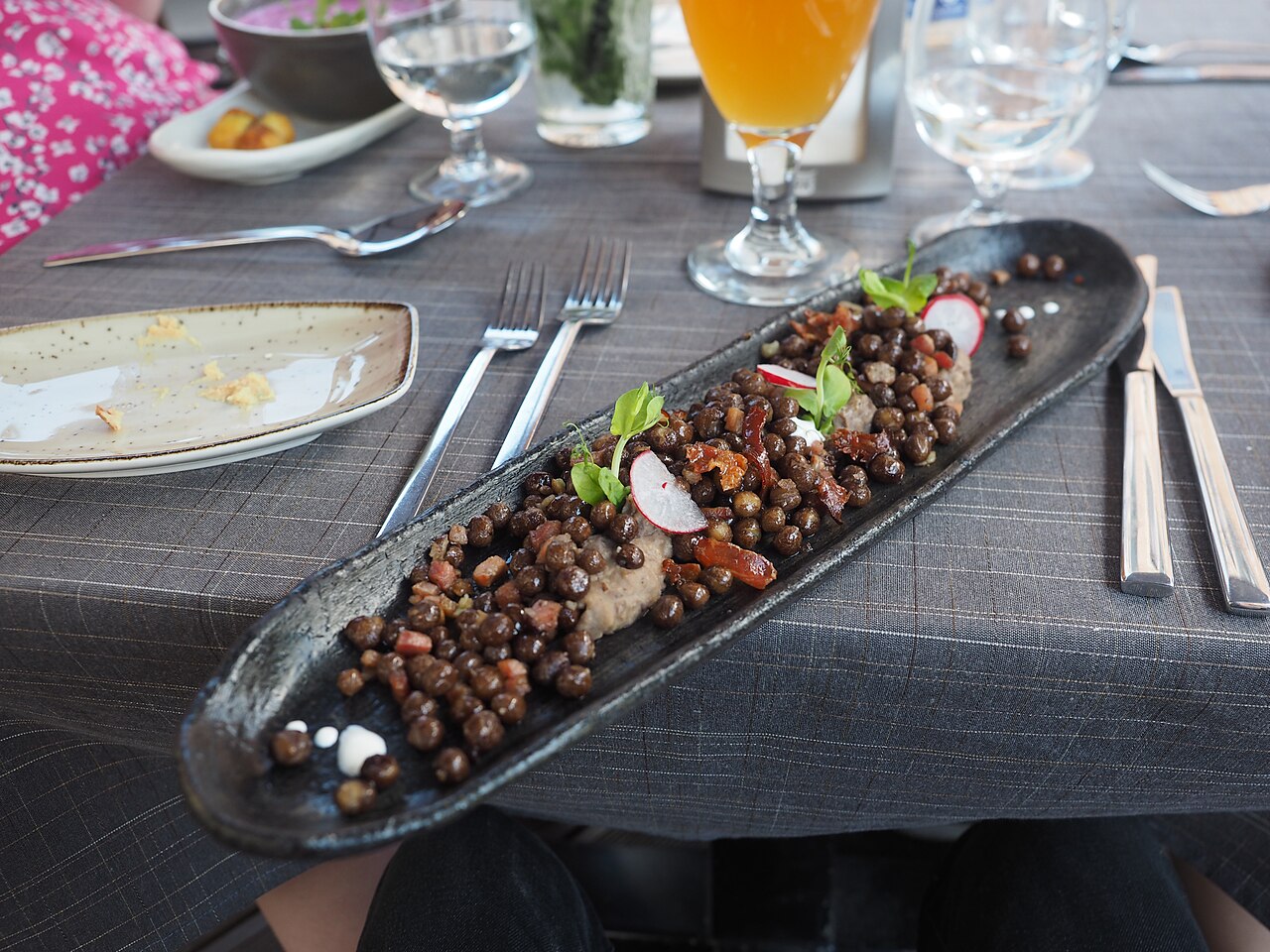
Large grey peas, boiled until soft but still whole, then tossed with fried bacon and onion. They are served warm as a hearty dish or a snack, often with a glass of kefir or beer.
Grey peas are a traditional Christmas dish, and in 2015 Latvian large grey peas were given protected status by the European Union.
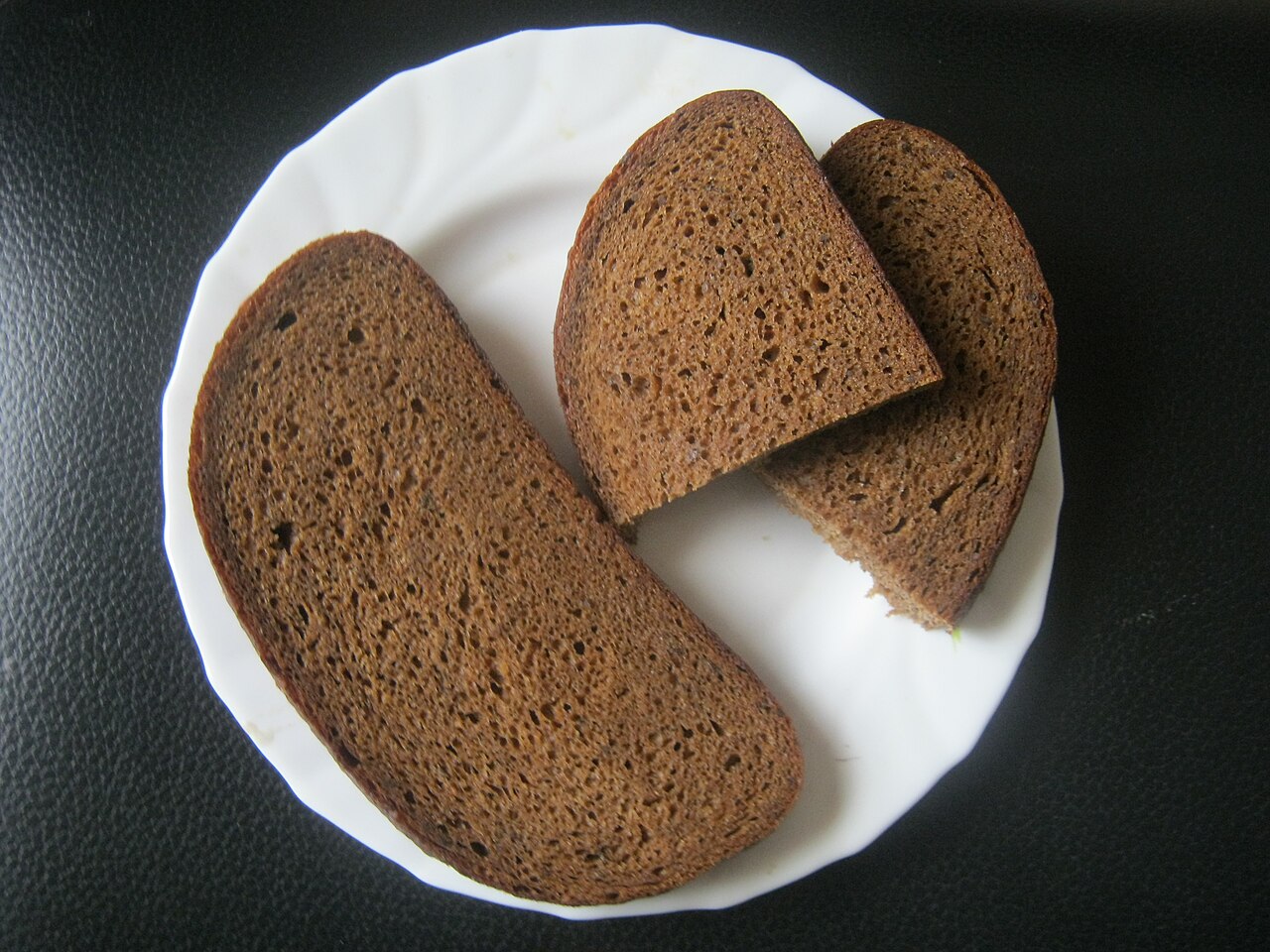
A dense, dark bread made from coarse rye flour with malt and caraway seeds, traditionally baked in a wood-fired oven. It has been the everyday staple of Latvian meals for centuries.
Latvian rye bread is part of the Latvian Culture Canon, a list of the nation's greatest cultural treasures.
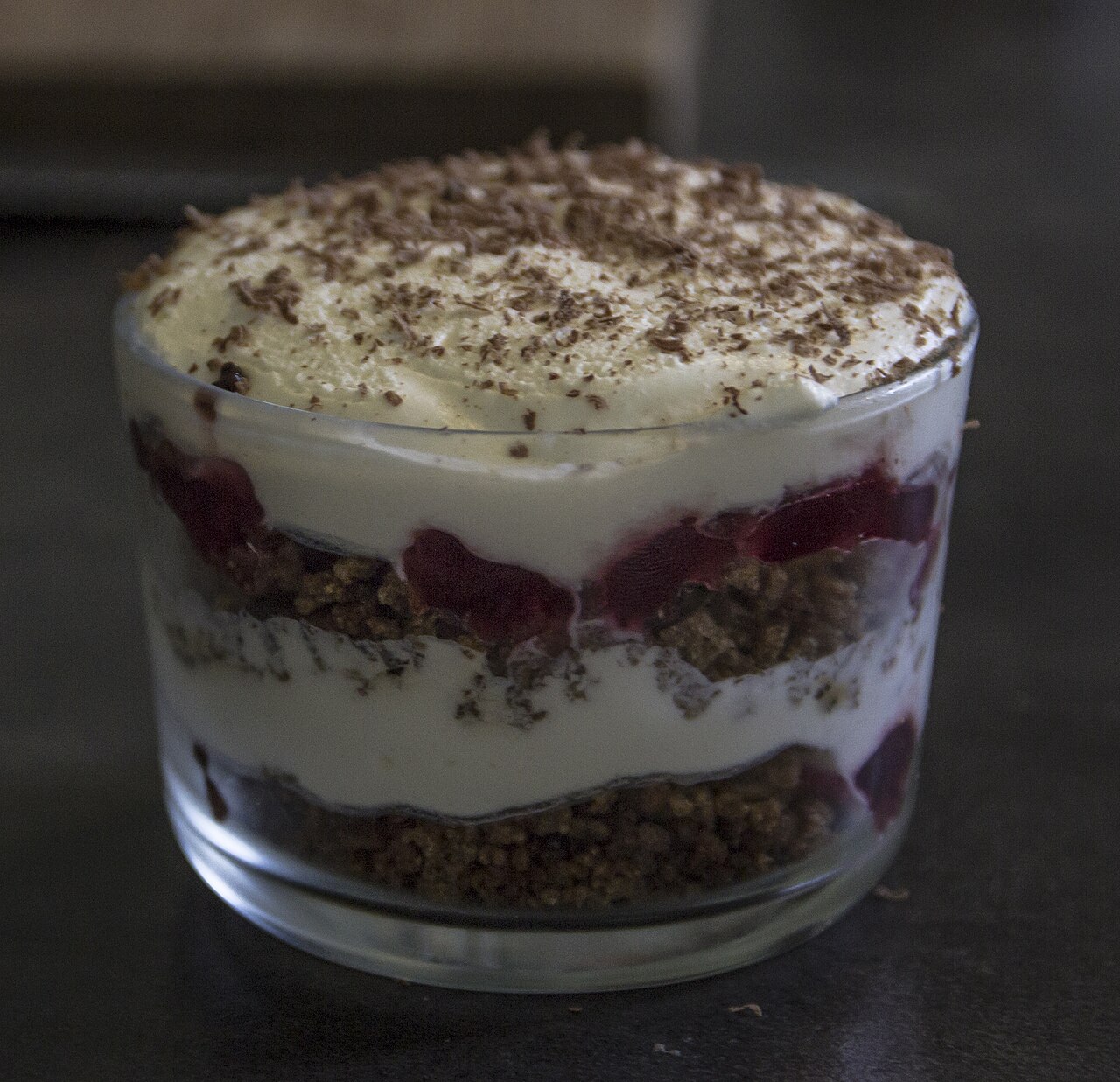
A dessert like a trifle, made in a glass bowl from layers of toasted rye bread crumbs with cinnamon and sugar, berry jam and whipped cream.
It was chosen to represent Latvia in the Café Europe project of the European Union on Europe Day 2006.
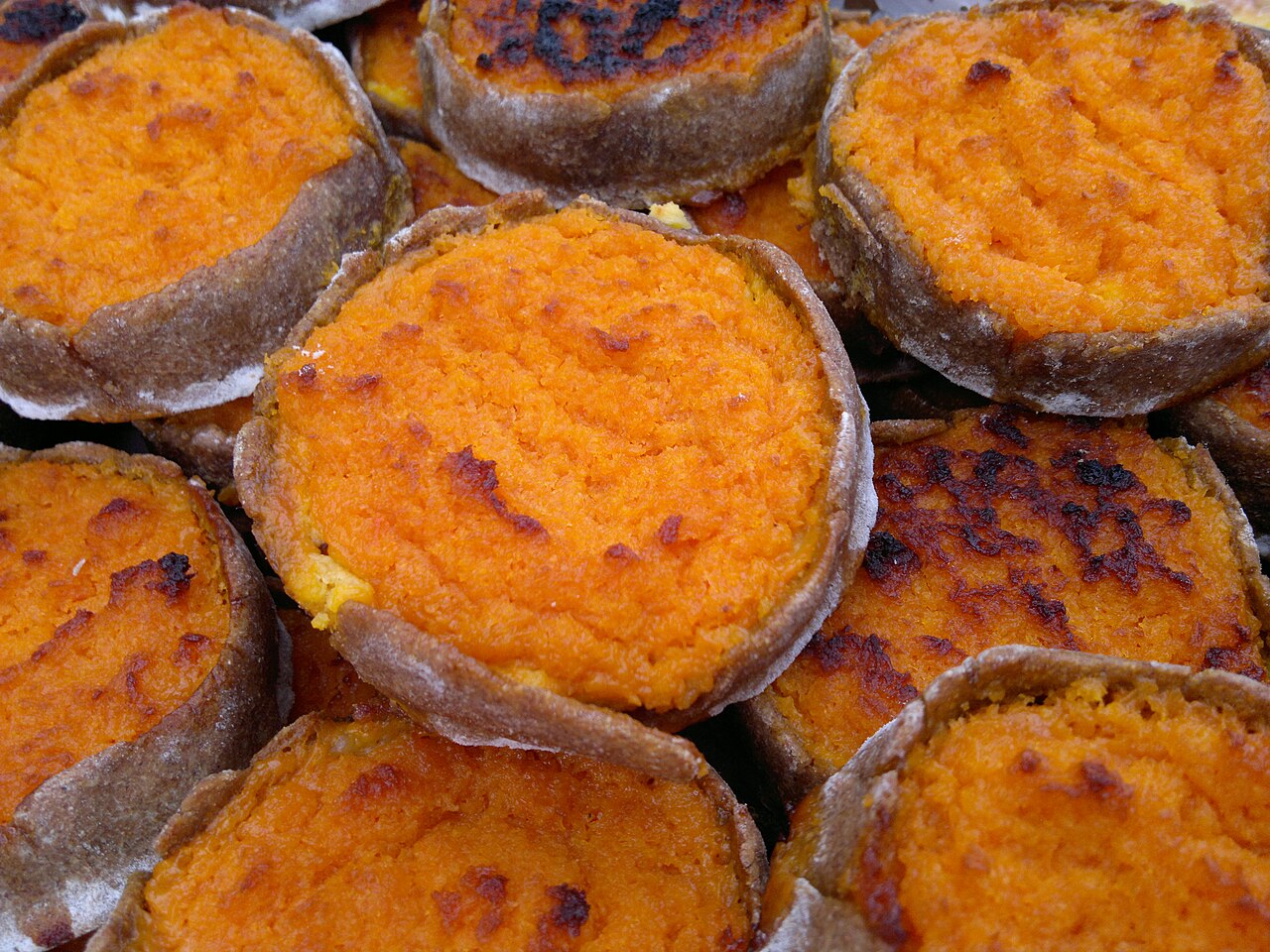
A small, open, round rye pie filled with a layer of mashed potato topped with a thicker layer of sweet mashed carrot, flavoured with caraway. It is eaten with milk and honey.
Sklandrausis comes from the Livonians, and in 2013 the European Commission gave it Traditional Speciality Guaranteed status.
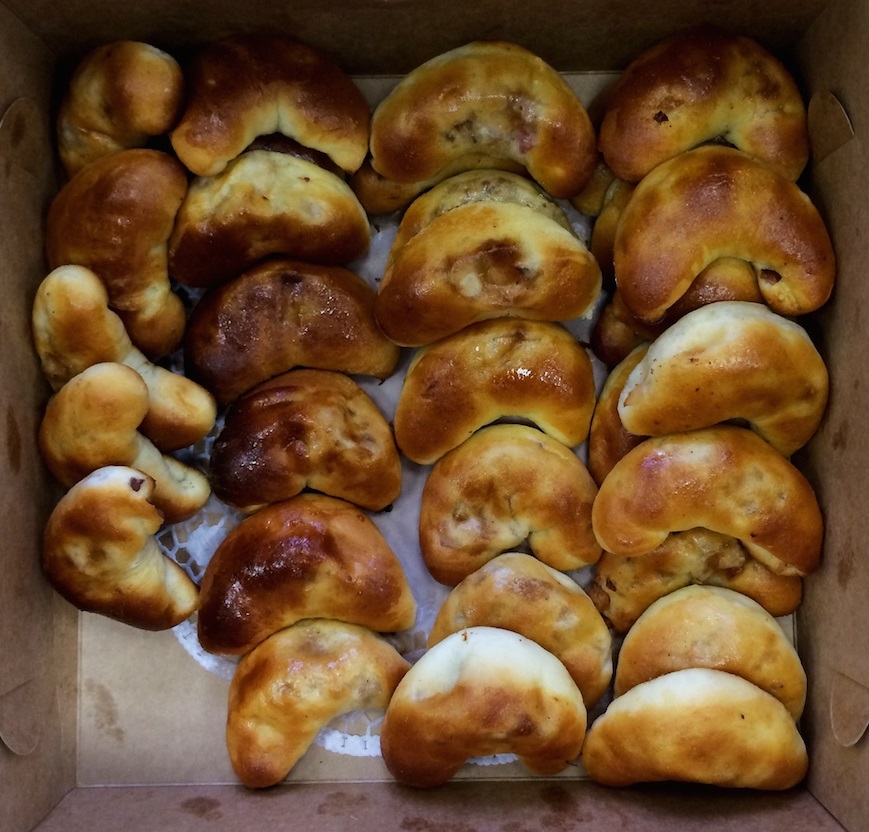
Small crescent-shaped buns of soft yeast dough filled with finely chopped fatty bacon and onion. They take a long time to make, so families bake them in large batches for holidays.
Bacon rolls are baked for both the winter holidays and the Midsummer festival, Jāņi, and the smallest ones are seen as the mark of a skilled cook.
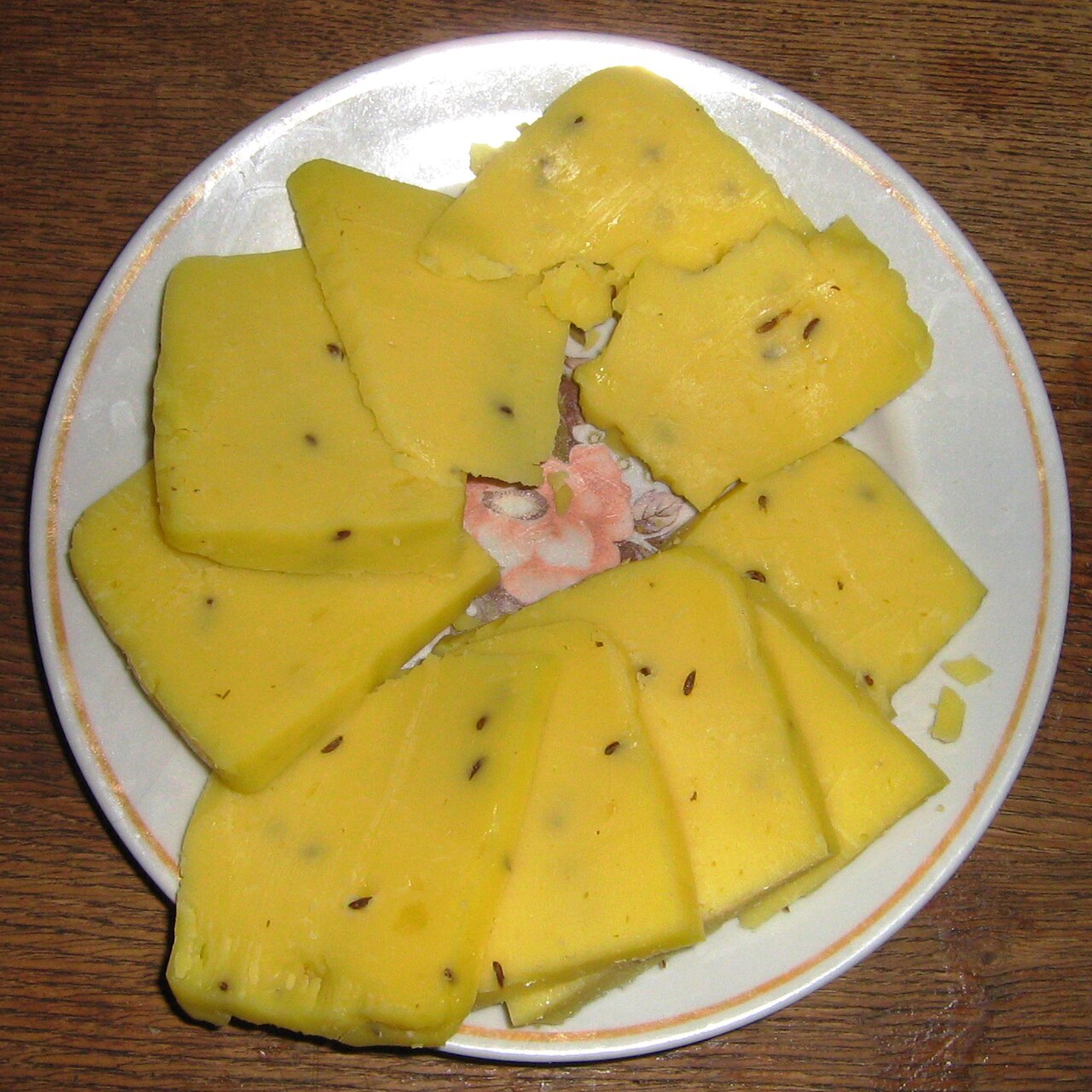
A round, fresh, mild cheese made from curds of soured and fresh milk, cooked with eggs, butter and caraway seeds, then pressed. It is sliced and eaten at the Midsummer festival.
Jāņi cheese is seen as a symbol of Latvian culture, and it was added to the EU register of Traditional Specialities Guaranteed in 2015.
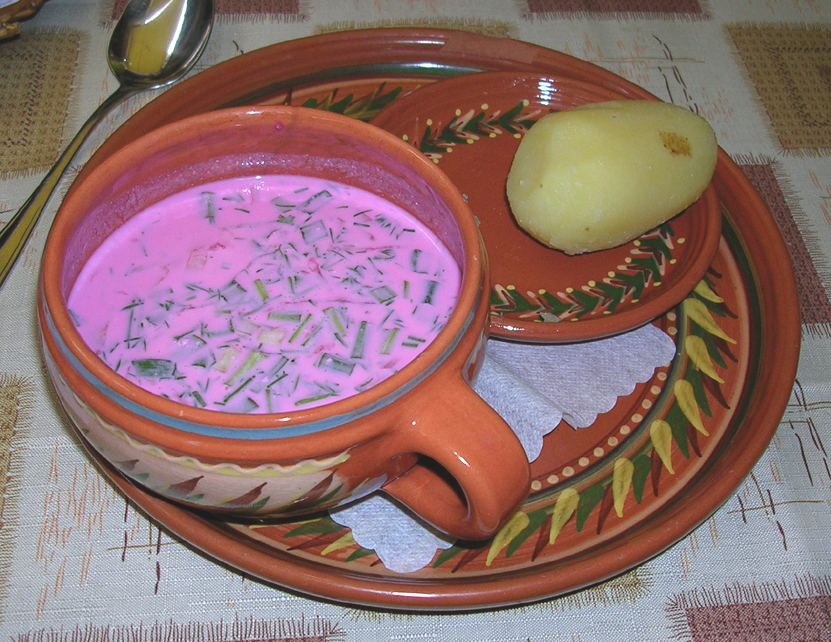
A bright pink soup served cold in spring and summer, made from kefir or soured milk with boiled beetroot, cucumber, radish, hard-boiled egg and plenty of fresh dill.
Its Latvian name, aukstā zupa, simply means 'cold soup'. Similar soups are loved in Lithuania, Poland, Belarus and Ukraine.
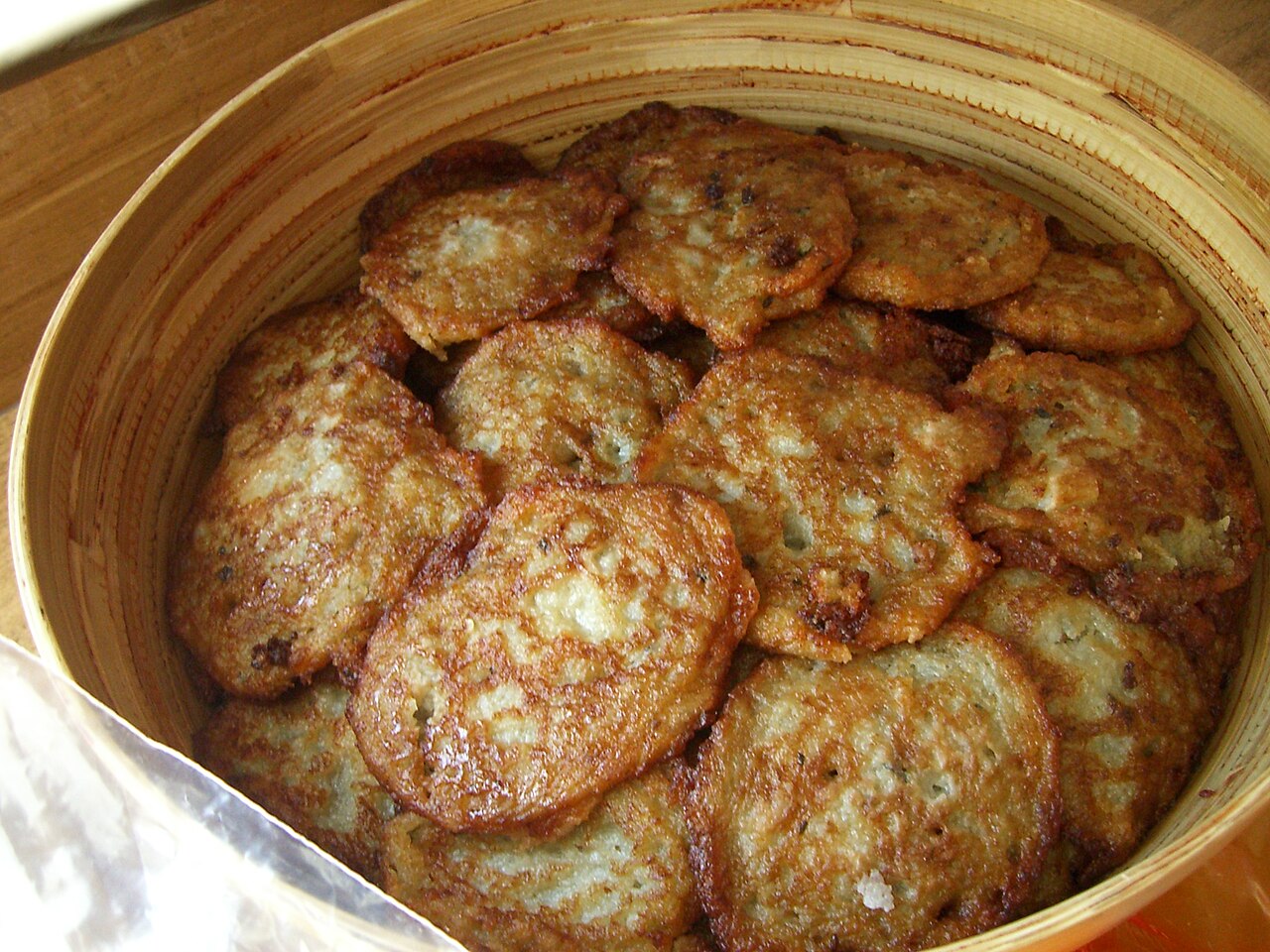
Crisp, golden pancakes of grated raw potato fried in oil, a favourite across northern and eastern Europe. In Latvia they are often served with smoked salmon and sour cream.
Potato pancakes have a different name in almost every country of the region, from draniki in Belarus to bulviniai blynai in Lithuania.
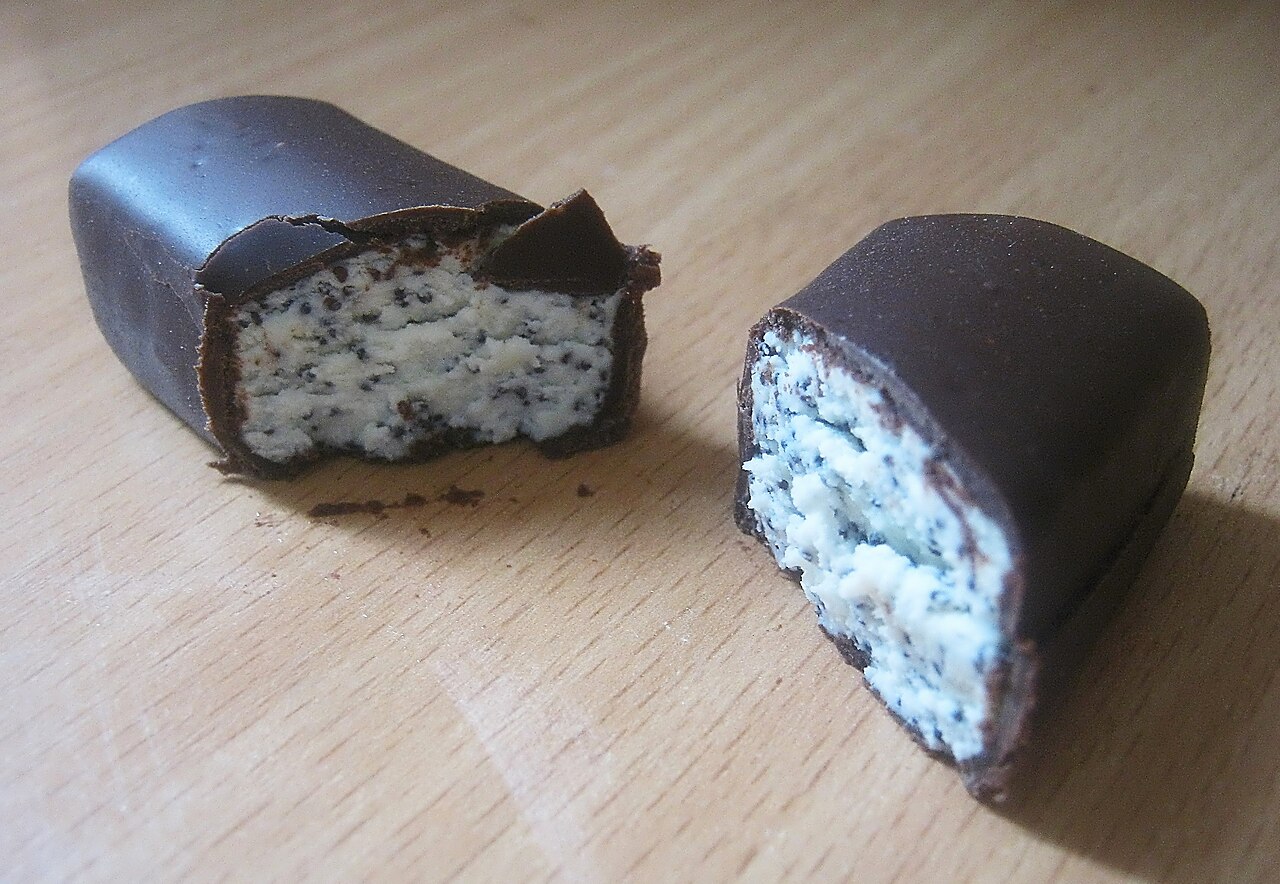
A small bar of sweetened curd cheese, sometimes filled with jam and usually coated in a chocolate glaze. Curd snacks became hugely popular in Soviet times and are still loved across the Baltic states.
In 2012 Latvian shoppers voted the Kārums curd snack their favourite product, with 20% of the votes.
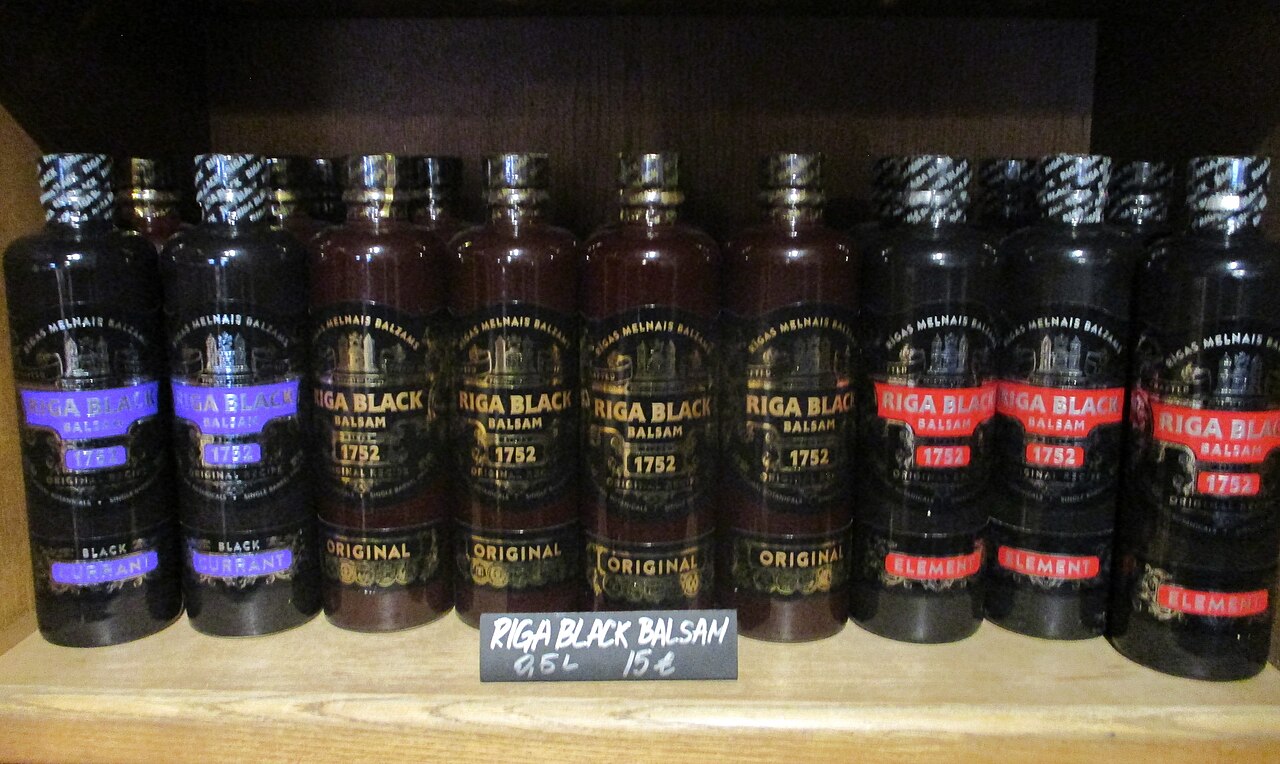
A strong, dark herbal liqueur made with 17 botanicals, from birch buds to oak bark, blended with honey and sold in a clay bottle. There are also versions with blackcurrant and cherry. It is often called Latvia's national drink.
The recipe was created in 1752 by Abraham Kunze, a pharmacist in Riga. By tradition, only the head liquor master and two apprentices know the exact recipe. Anyone who does not drink alcohol can politely say no.
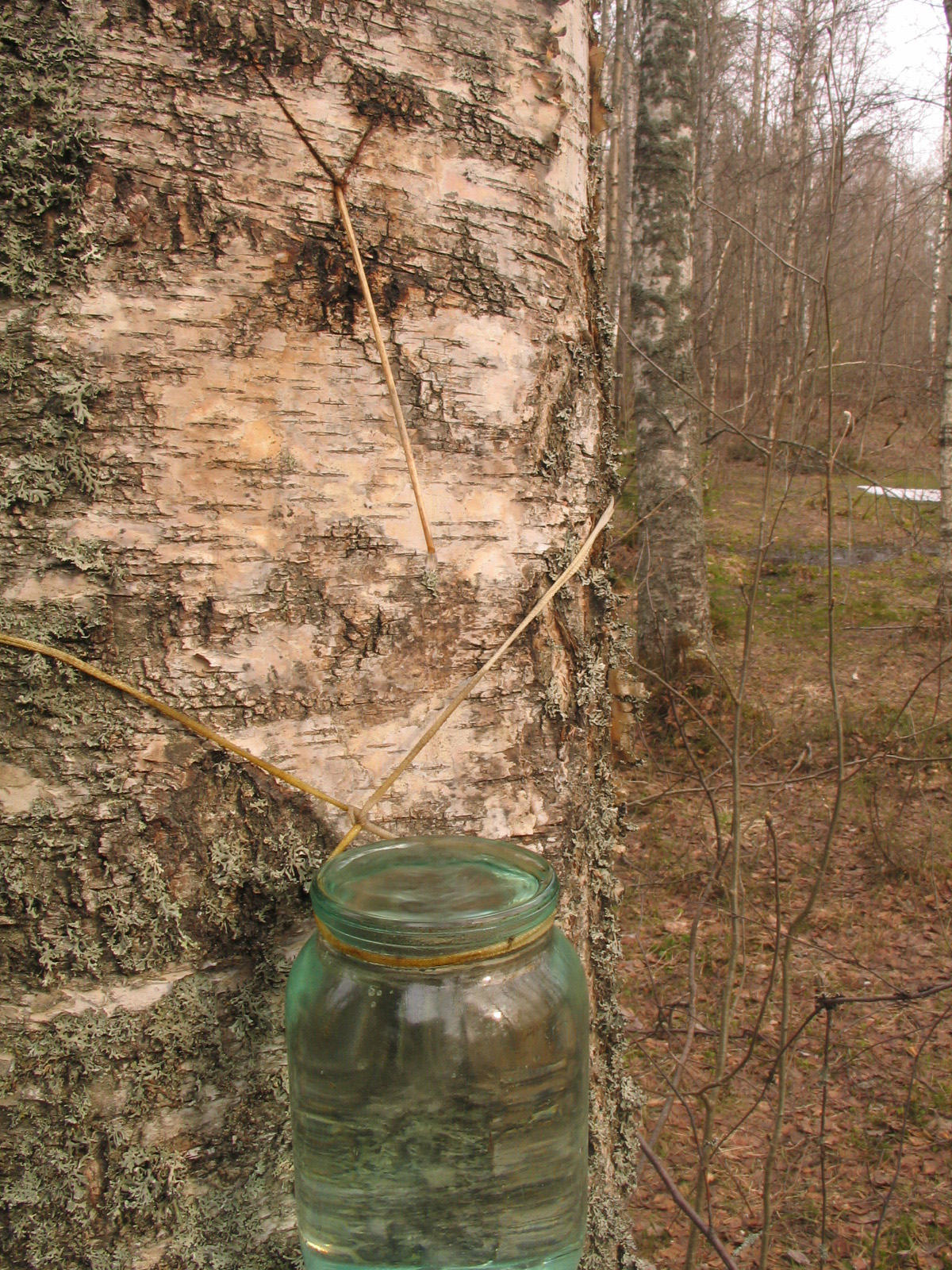
The clear, slightly sweet sap tapped from birch trees, a very popular drink in spring. It is drunk fresh or kept with raisins, lemon peel and blackcurrant twigs, and sold at markets and roadside stalls.
Today birch sap is also turned into lemonade, sparkling wine and even schnapps.
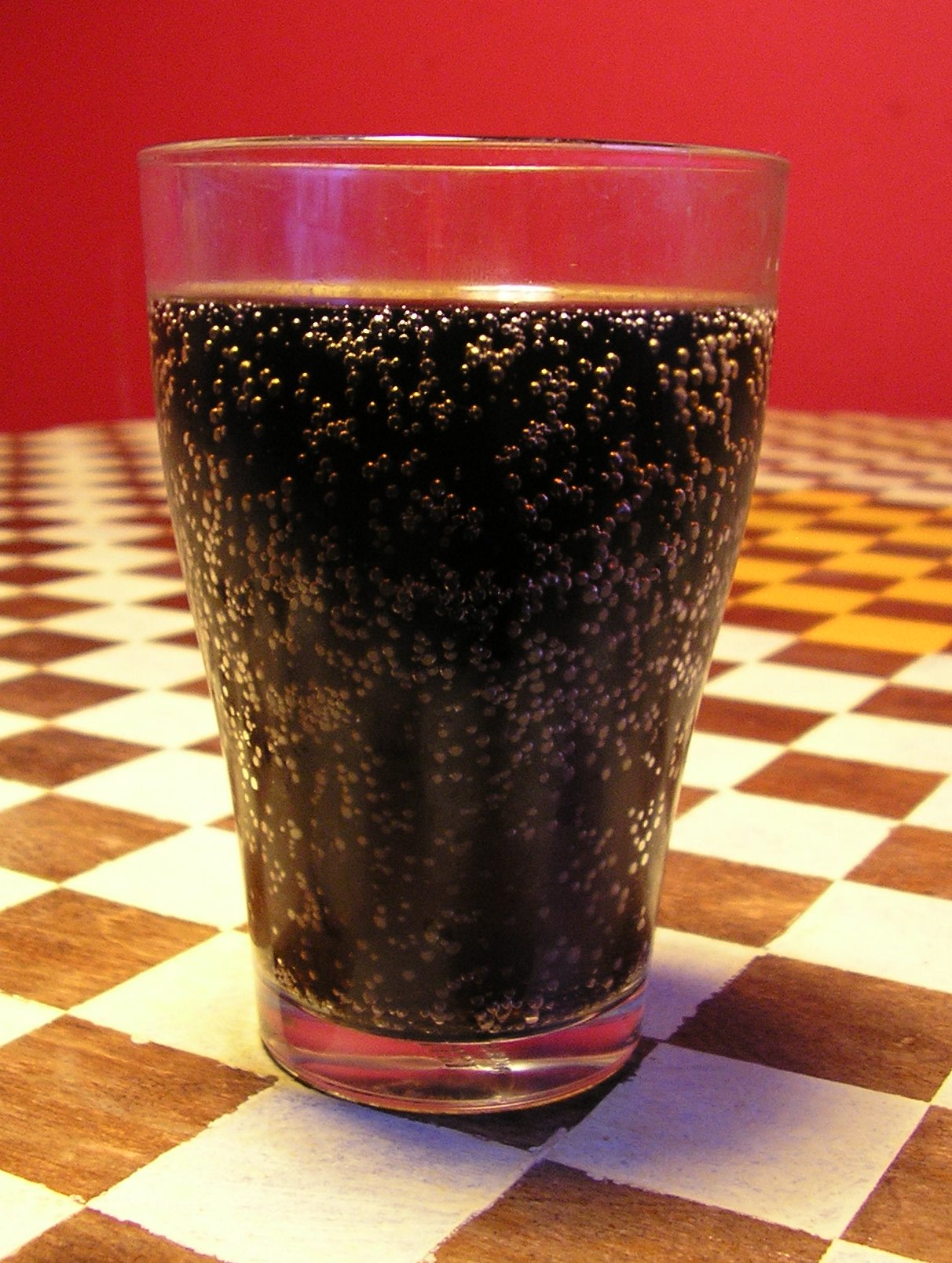
A lightly fizzy, brown soft drink traditionally brewed from fermented rye or black bread. In Soviet times it was sold on the street from big tanks on wheels.
Around 2000, Latvian kvass became so popular that it won about 30% of the soft drink market, and Coca-Cola's share fell.
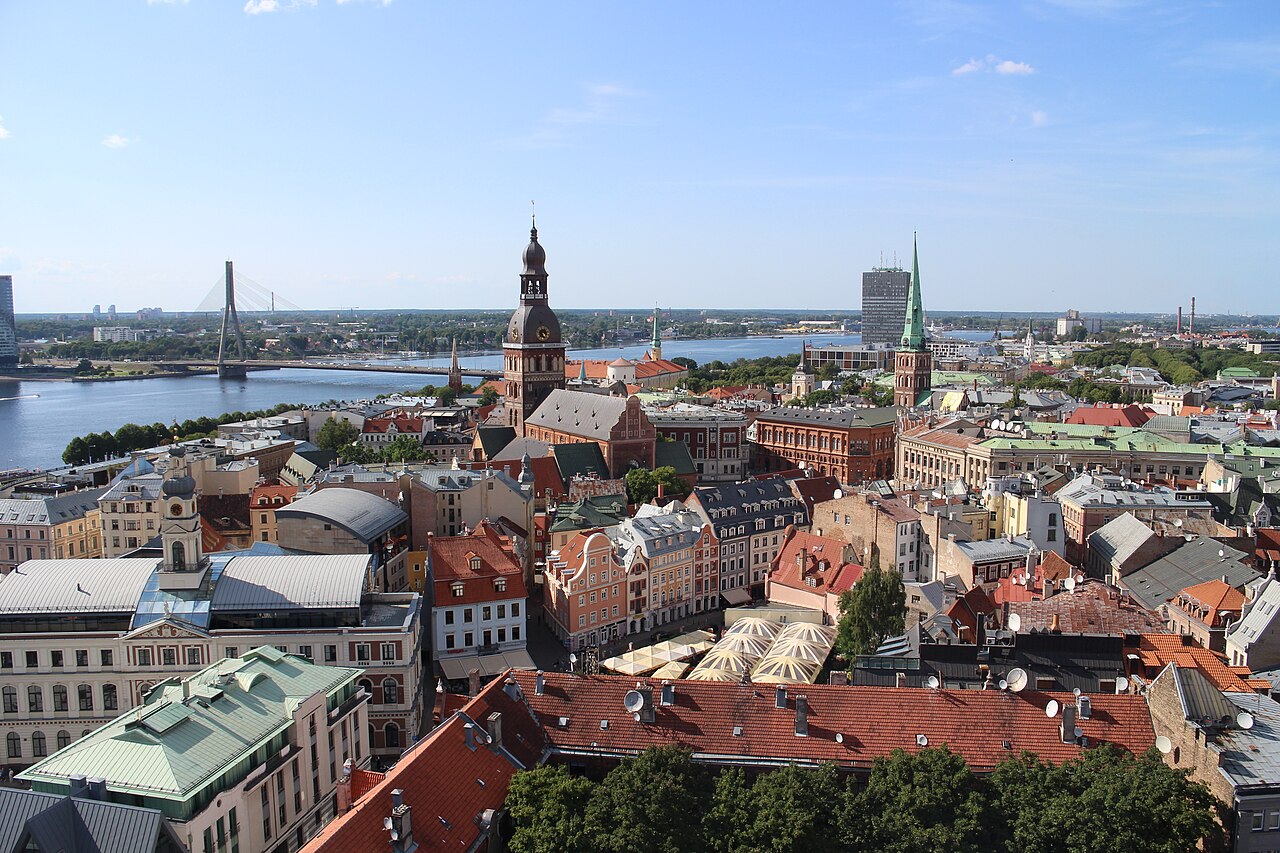
Riga is by far the largest city, home to about a third of all Latvians. The other towns are small and friendly: seaside ports in the west, castle towns along the Gauja valley, the palace town of Jelgava, and Daugavpils and Rēzekne in Latgale in the east.
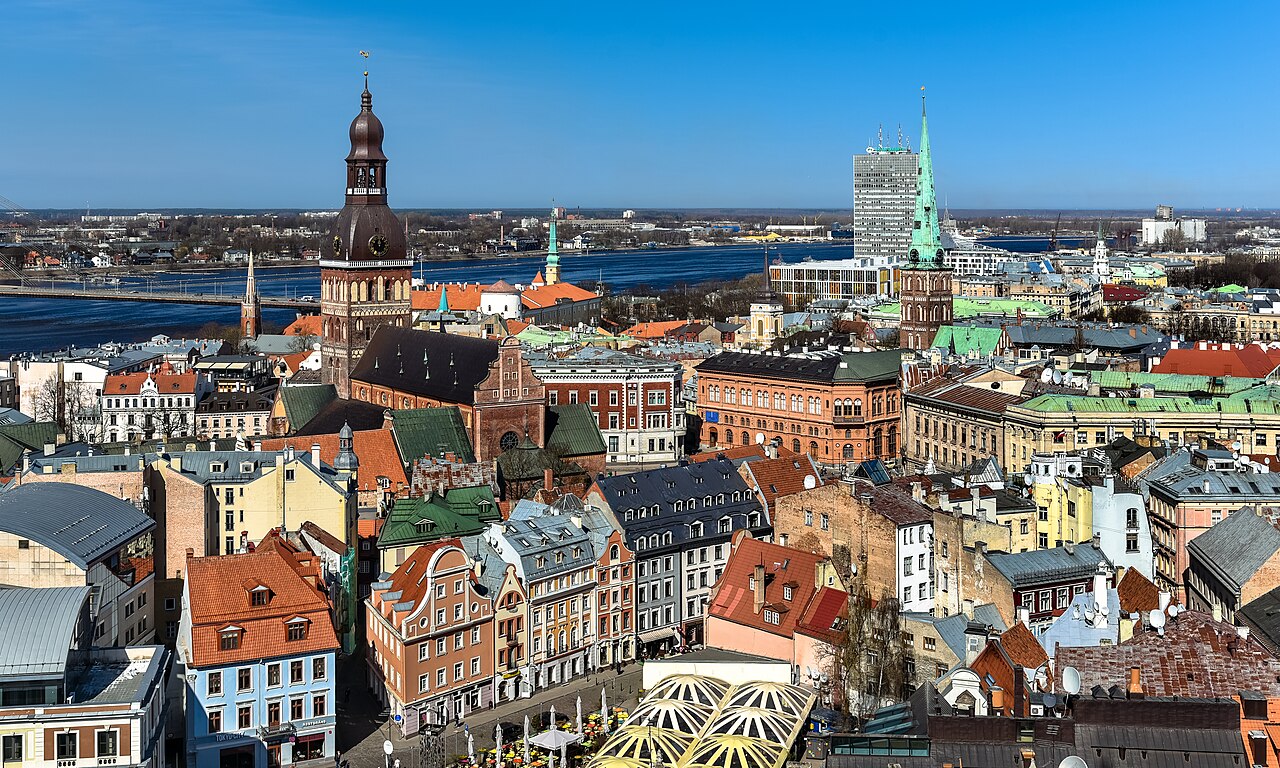
The capital and largest city of Latvia, with about 590,000 people, where the Daugava river meets the Gulf of Riga. Founded in 1201, it has a medieval Old Town and one of the world's largest collections of Art Nouveau buildings.
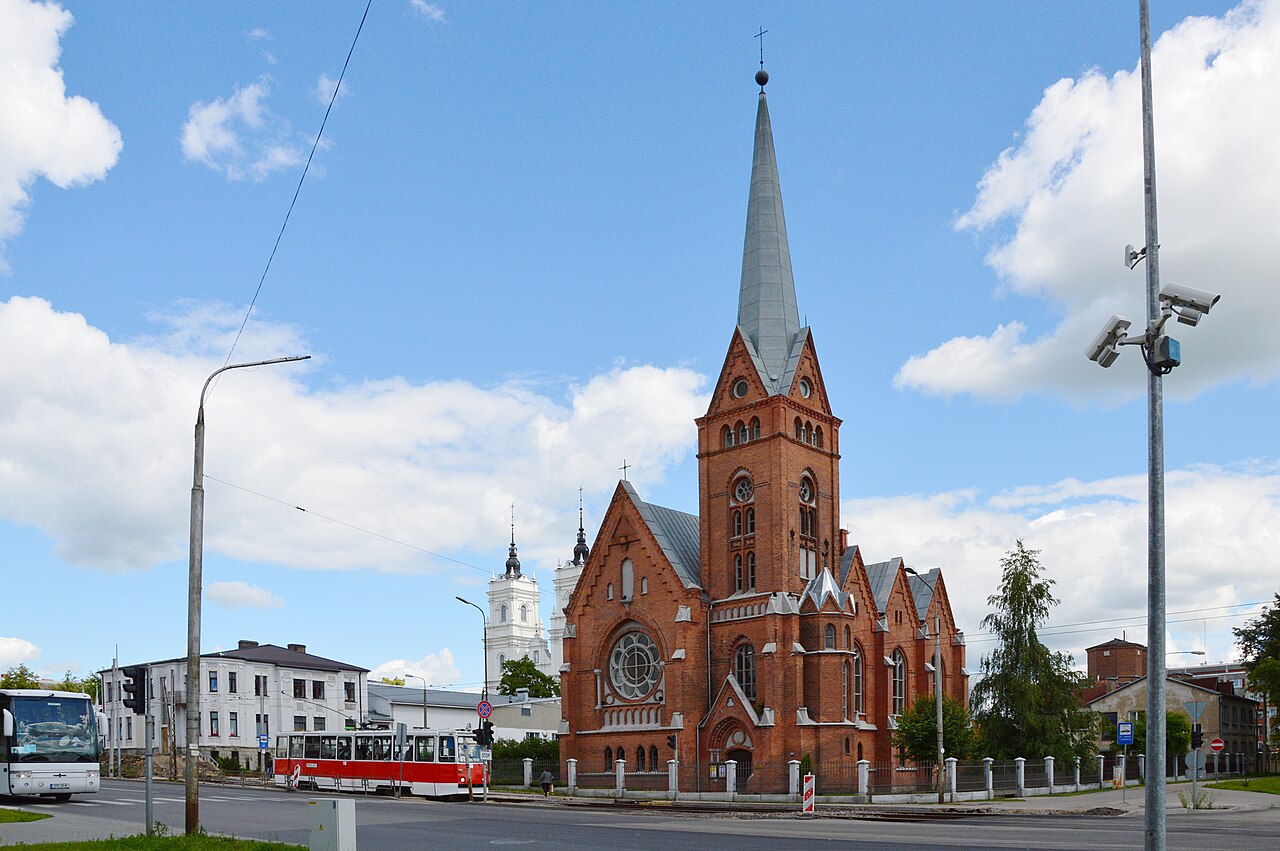
The second-largest city in Latvia, on the Daugava river in the south-east, about 230 km from Riga and close to the borders with Lithuania and Belarus. It grew as a garrison town and railway junction.
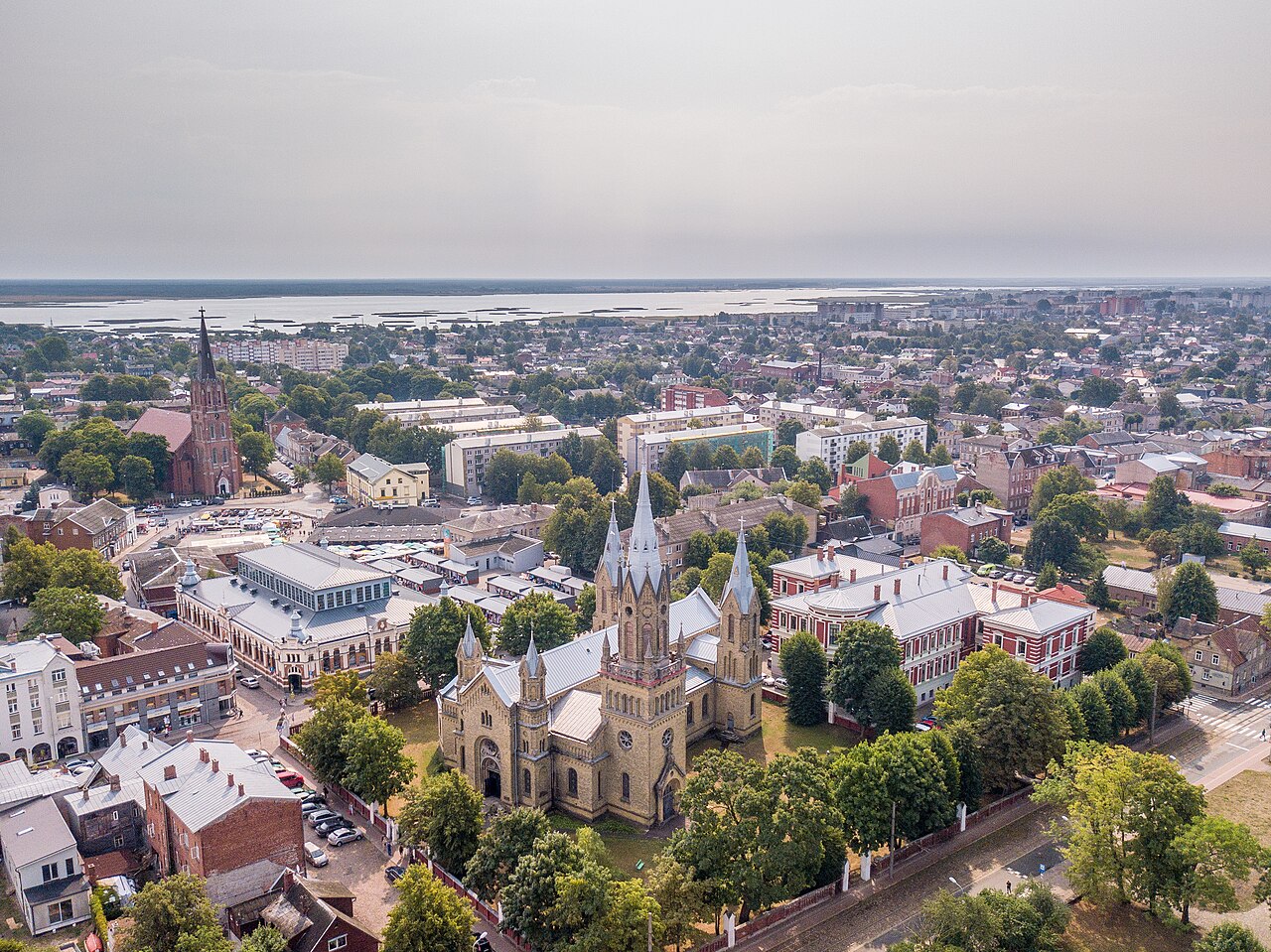
The third-largest city and the largest in Courland, an ice-free port on the open Baltic Sea. Its name comes from liepa, the Latvian word for the linden tree, and it is known as 'the city where the wind is born'.
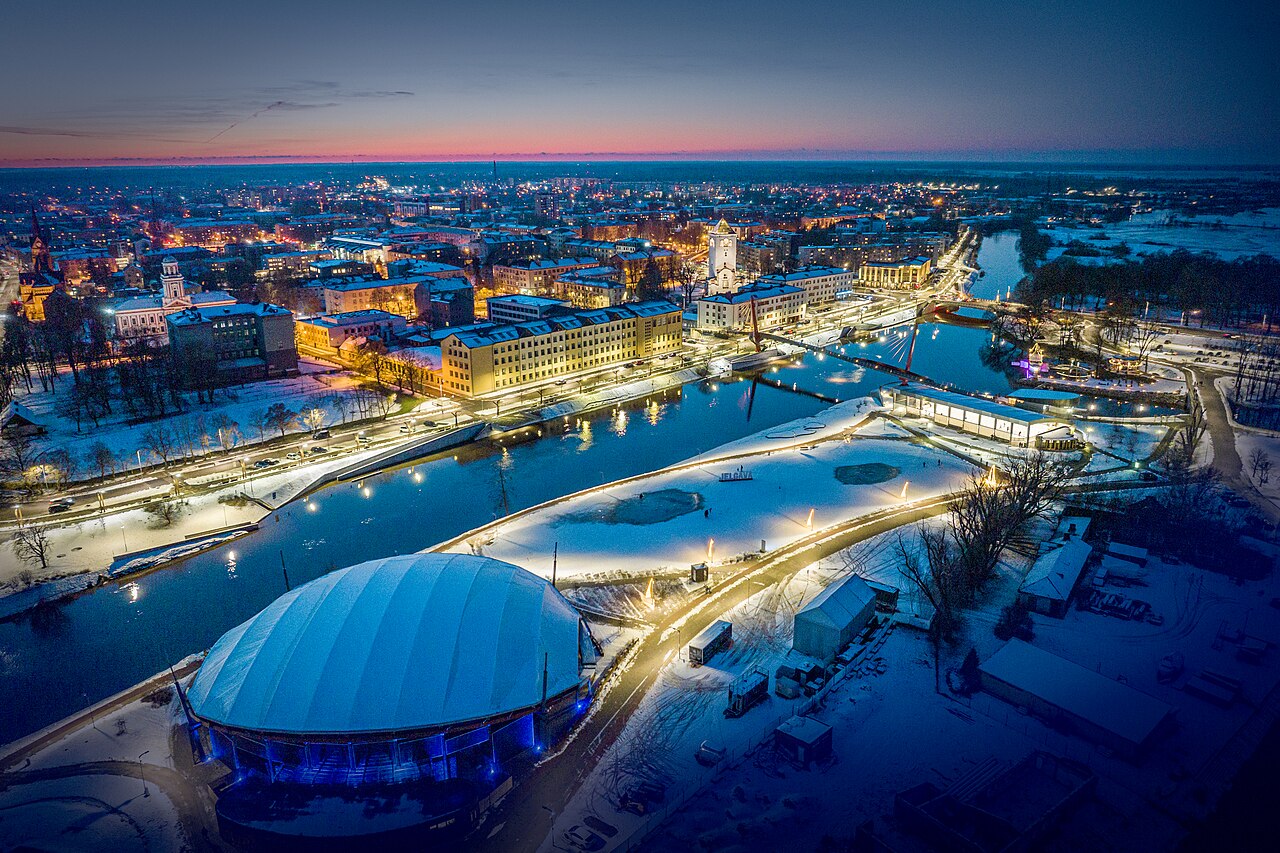
The fourth-largest city, about 40 km south-west of Riga on the Lielupe river. It was the capital of the Duchy of Courland and Semigallia, and its dukes' baroque palace now houses a university.
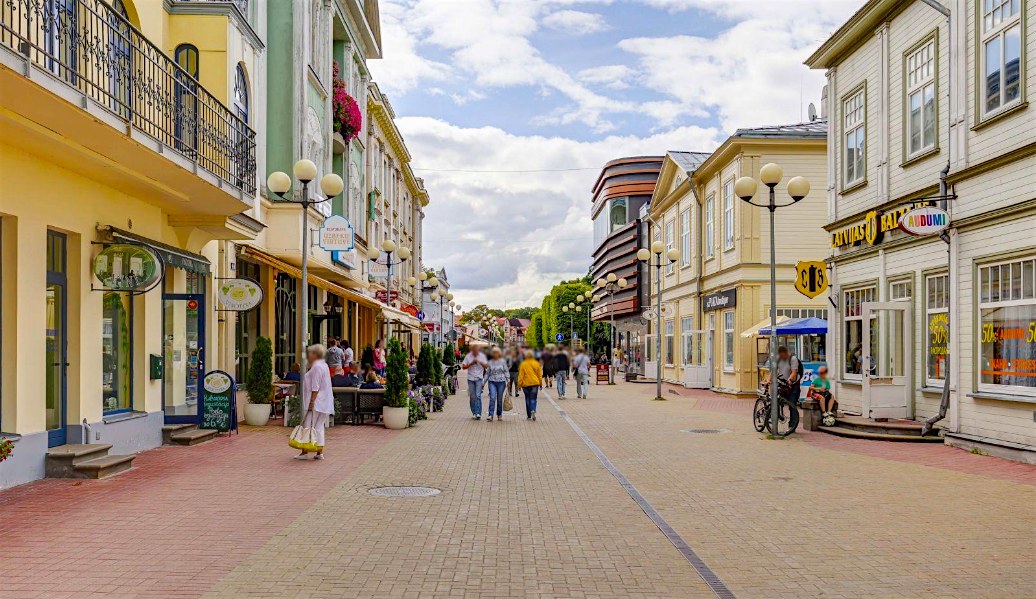
A long, narrow resort town about 25 km west of Riga, squeezed between the Gulf of Riga and the Lielupe river. Its name simply means 'seaside', and in Soviet times it was a favourite holiday spot of top party leaders.
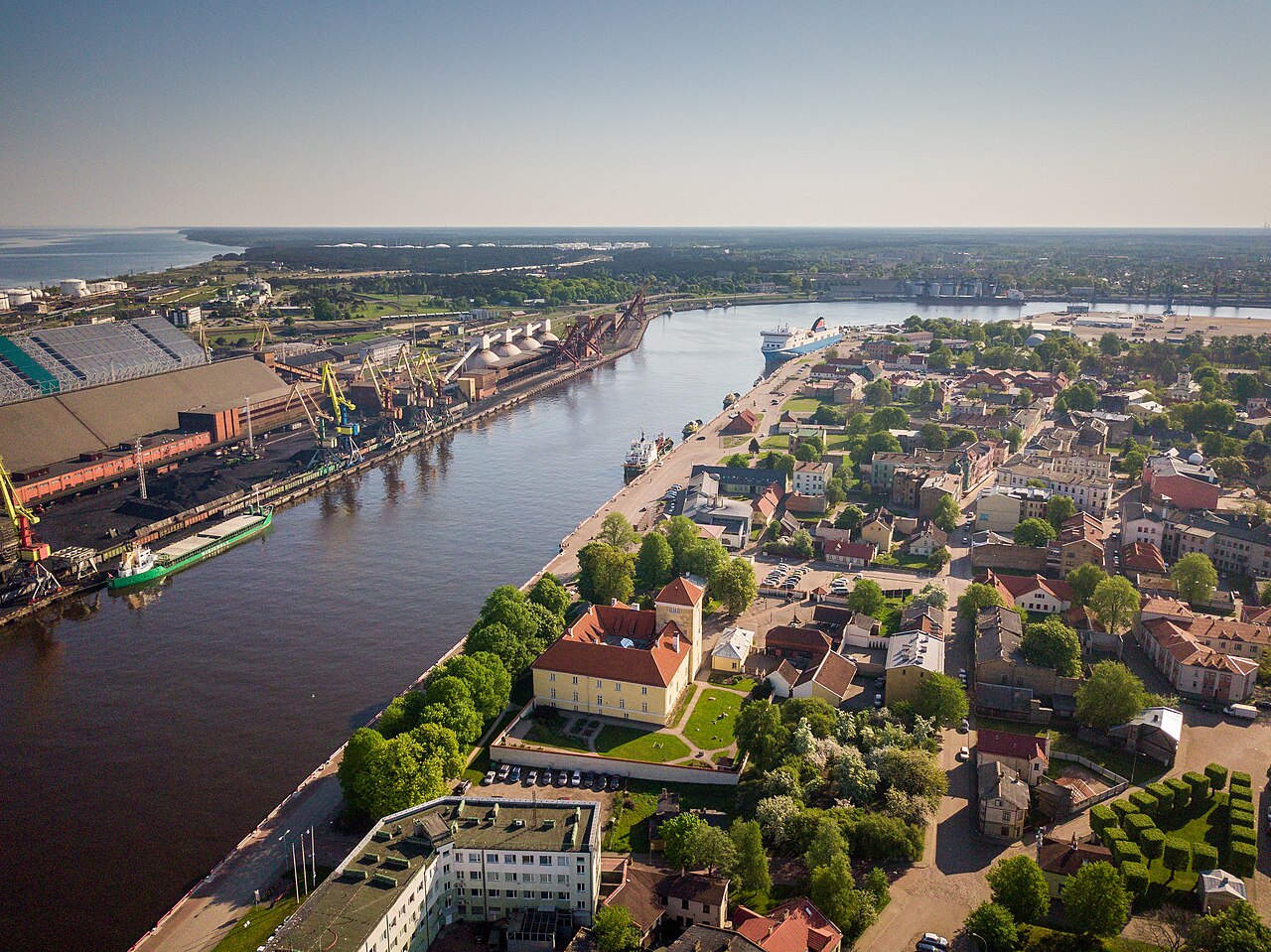
A port city where the Venta river meets the Baltic Sea. Its name means 'castle on the Venta', after the medieval castle of the Livonian Order. Duke Jacob's ships sailed from here to found colonies.
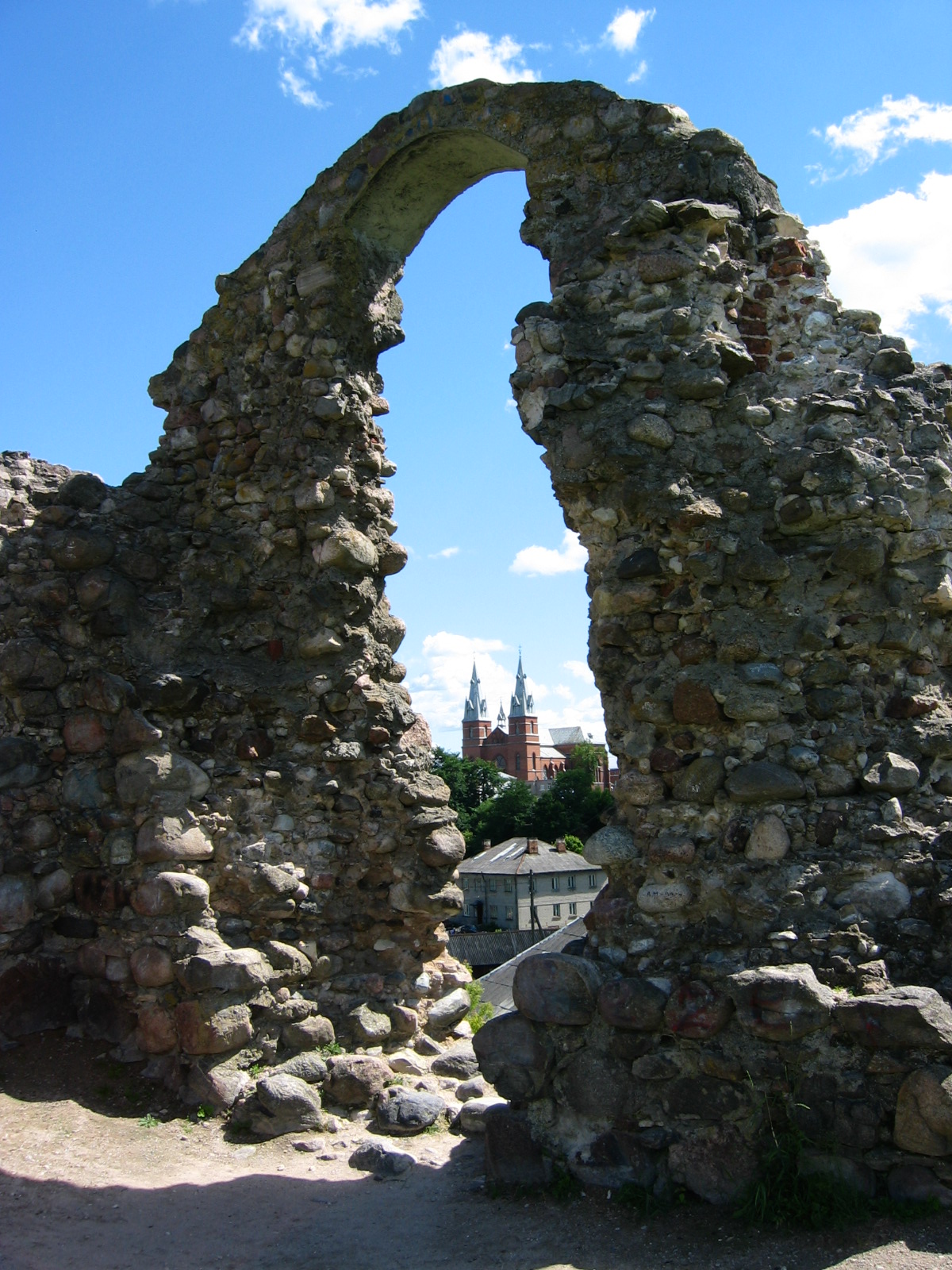
A town built on seven hills in eastern Latvia, about 240 km east of Riga. It is called 'the heart of Latgale', and in 1917 the Latgalian congress held here decided to unite Latgale with the other Latvian regions.
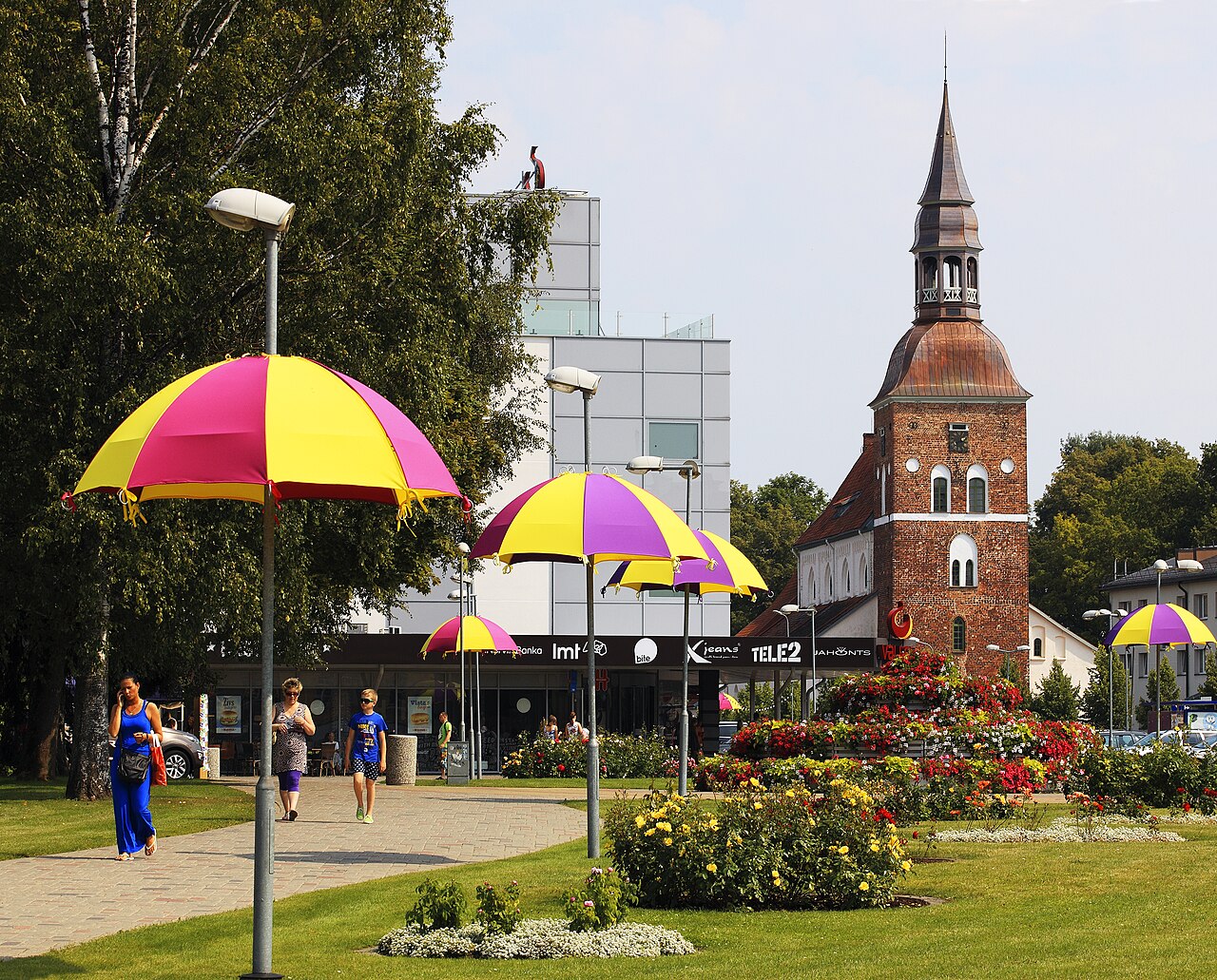
One of the oldest towns in Latvia, on both banks of the Gauja river about 107 km north-east of Riga. It was a member of the Hanseatic League.
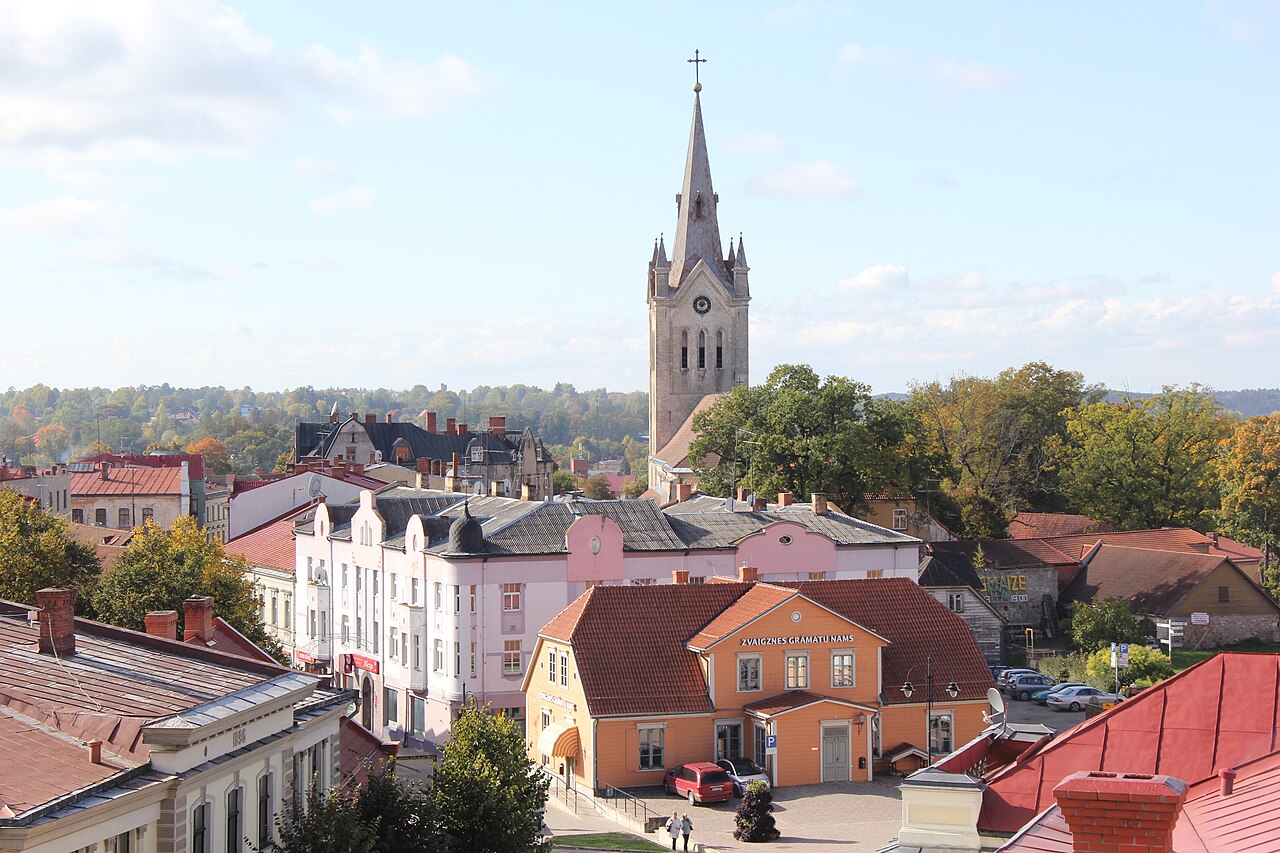
A small medieval town about 90 km north-east of Riga, on ridges above the Gauja valley. It grew up around the castle of the Livonian knights and still keeps its medieval street plan.
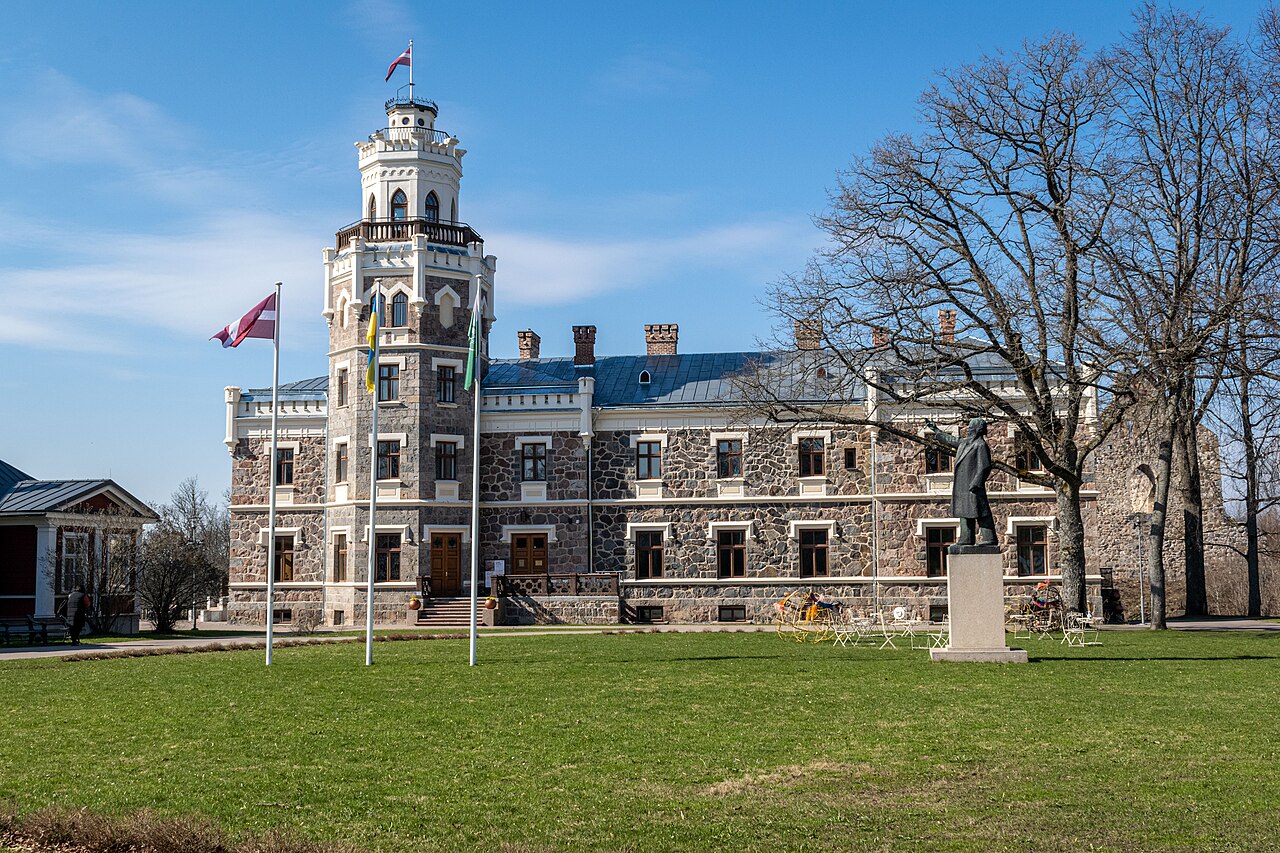
A town about 53 km from Riga on a lovely stretch of the Gauja river valley, with red sandstone cliffs and caves. It has been called 'the Switzerland of Vidzeme'.
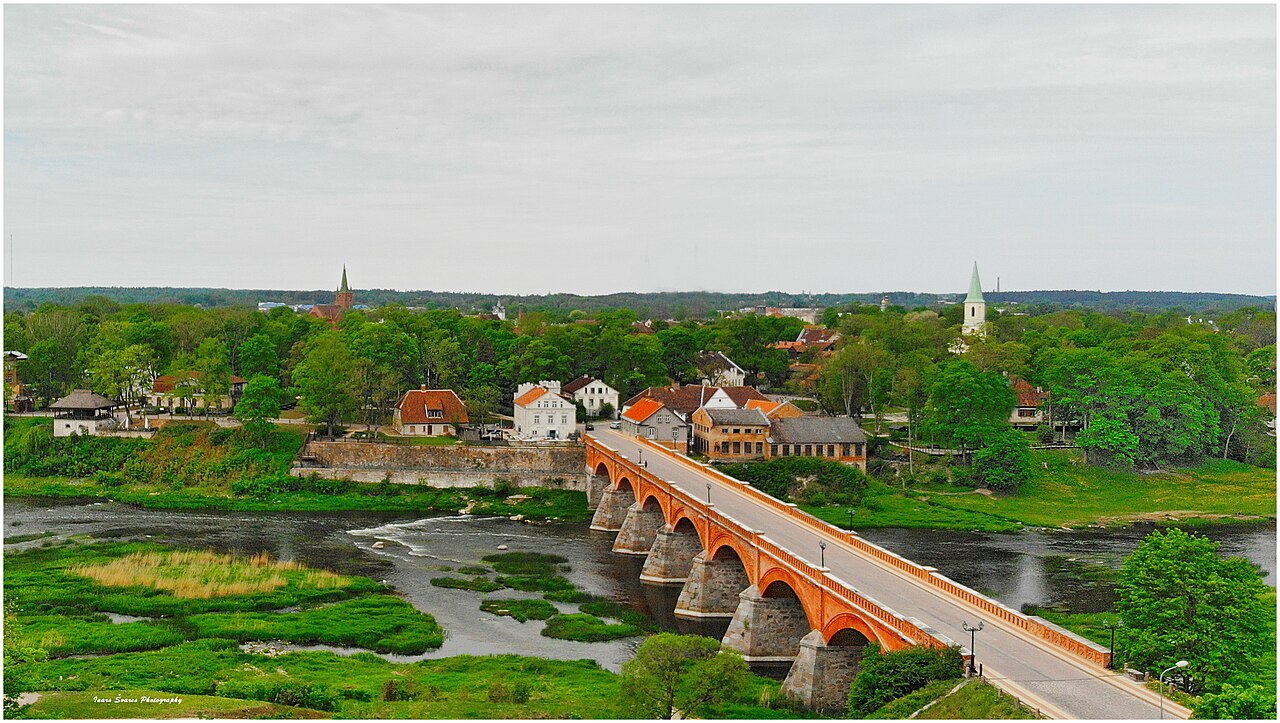
A small, picturesque town in western Latvia, first mentioned in 1242, with red-tiled roofs, wooden houses and a little river running between the houses. Its old town became a UNESCO World Heritage Site in 2023.
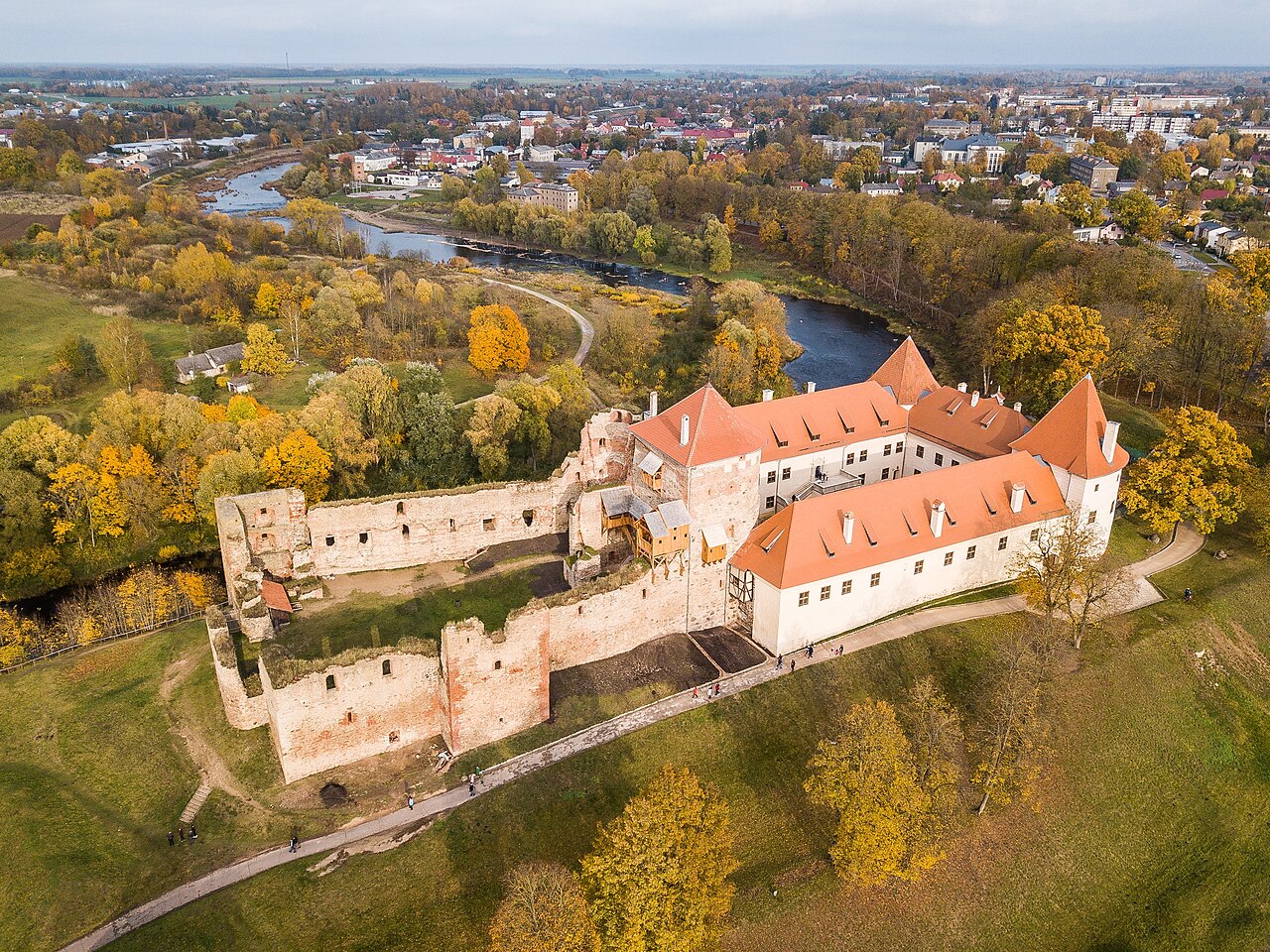
A small town in southern Latvia, about 66 km from Riga and 20 km from the Lithuanian border, where the Mūsa and Mēmele rivers meet to form the Lielupe.
Old Riga, on the east bank of the Daugava, is a maze of cobbled streets, merchants' houses, church spires and squares. Together with the Art Nouveau streets around it, it has been a UNESCO World Heritage Site since 1997. Cars are mostly kept out of the old town.
UNESCO World Heritage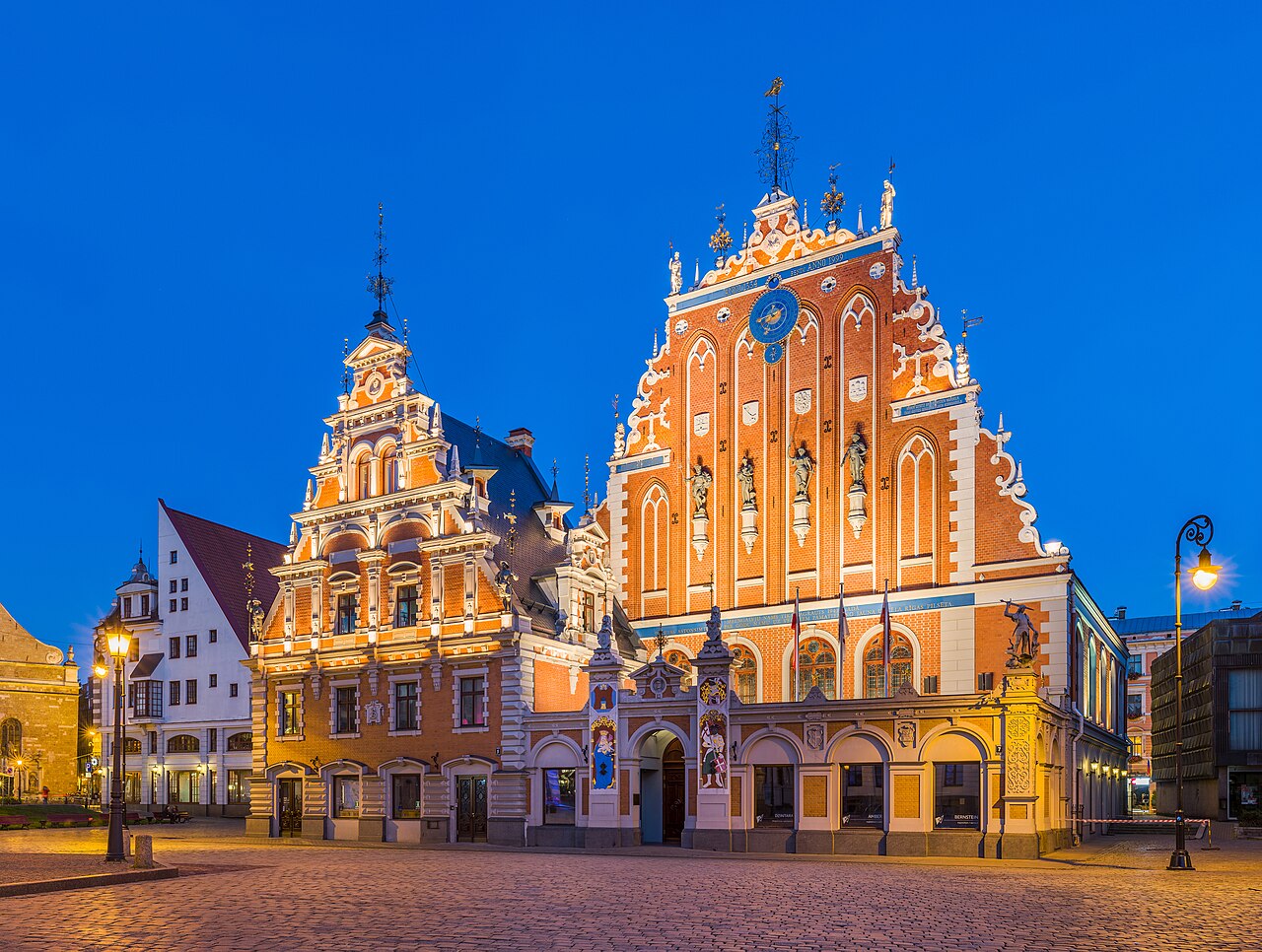
A richly decorated guild house in Old Riga, first built in 1334 for merchants and later used by the Brotherhood of Blackheads, a guild of unmarried merchants. It was destroyed in 1941, cleared by the Soviets in 1948 and rebuilt between 1996 and 2000.
UNESCO World Heritage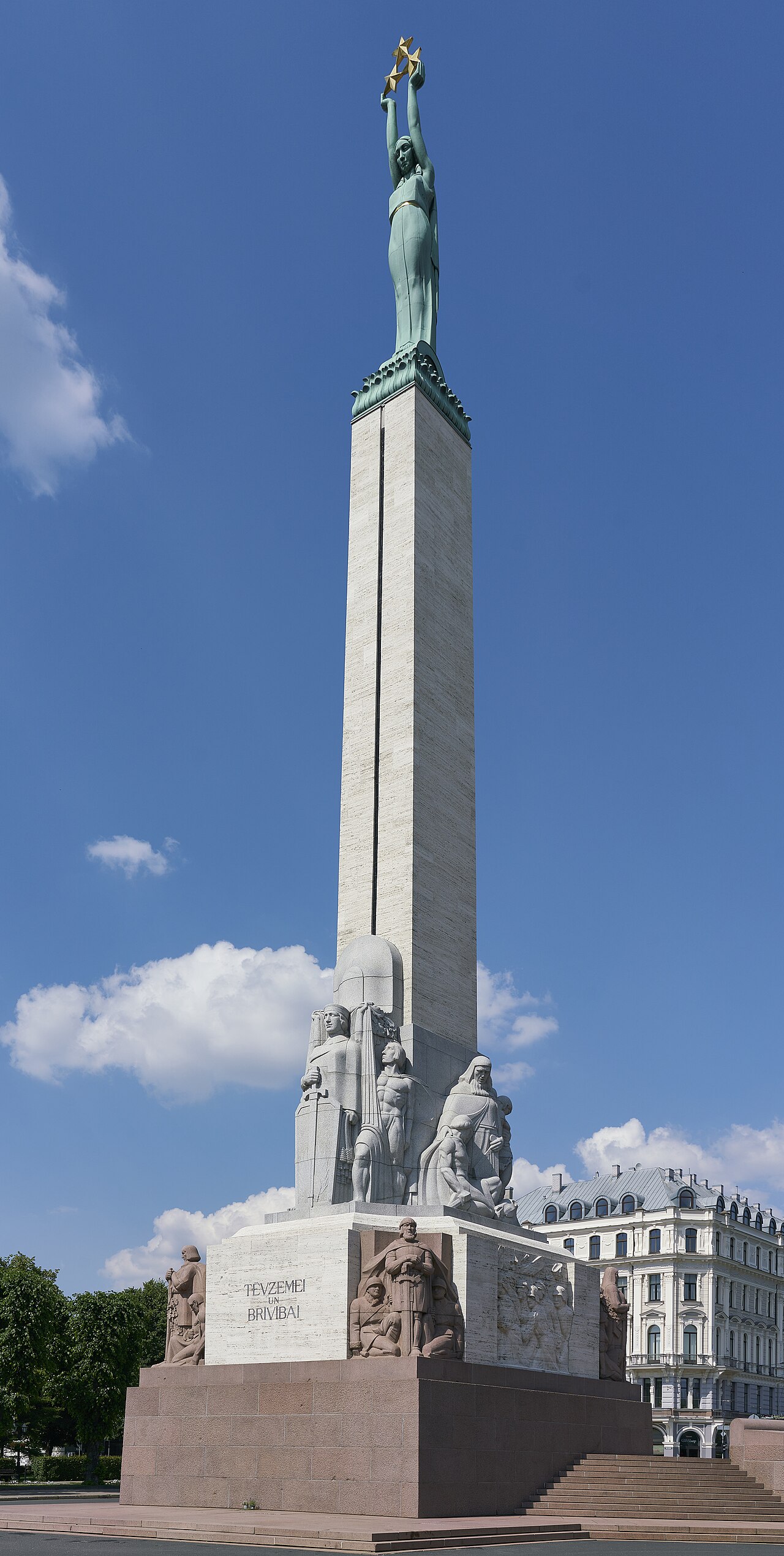
A 42-metre monument unveiled in 1935 to honour those who died in the War of Independence. On top, a copper figure of Liberty, known as Milda, holds up three gilded stars. It survived the Soviet years and became a rallying point for the independence movement.
UNESCO World Heritage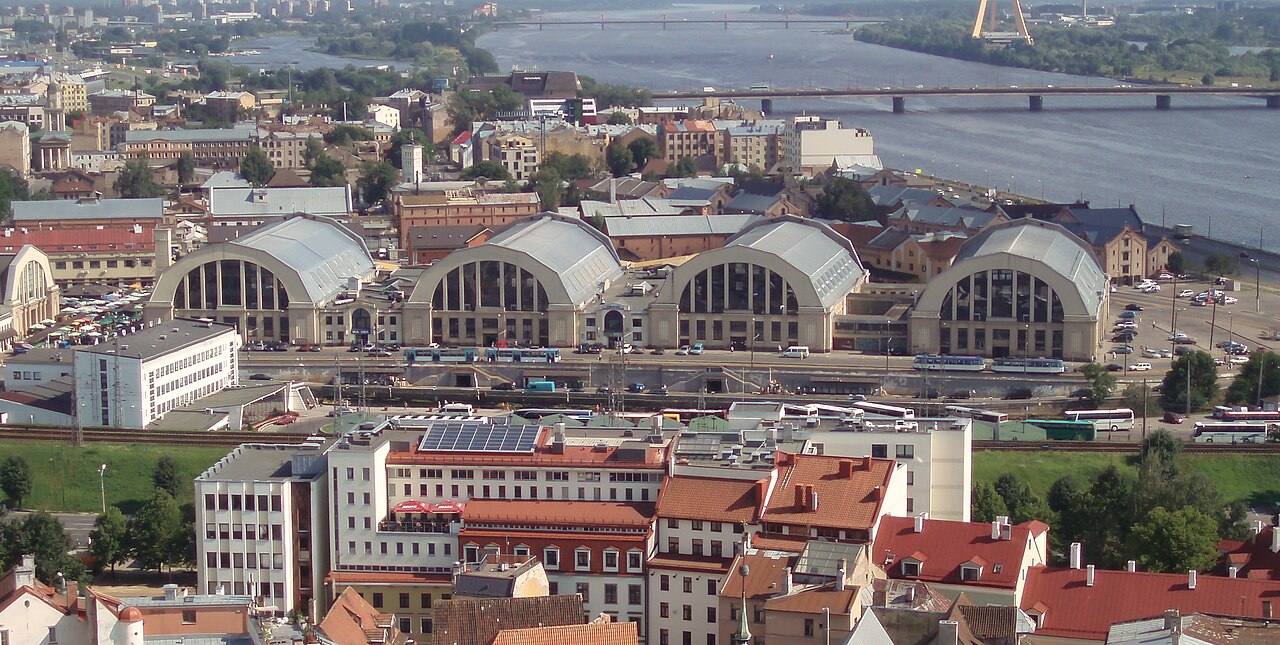
A huge food market that opened in 1930, then one of the biggest building projects in Europe. Its five great pavilions reuse roof frames from German Zeppelin hangars of the First World War, and traders also sell outdoors around them. As of September 2026 the Meat Pavilion is closed while its corroded roof supports are repaired.
UNESCO World Heritage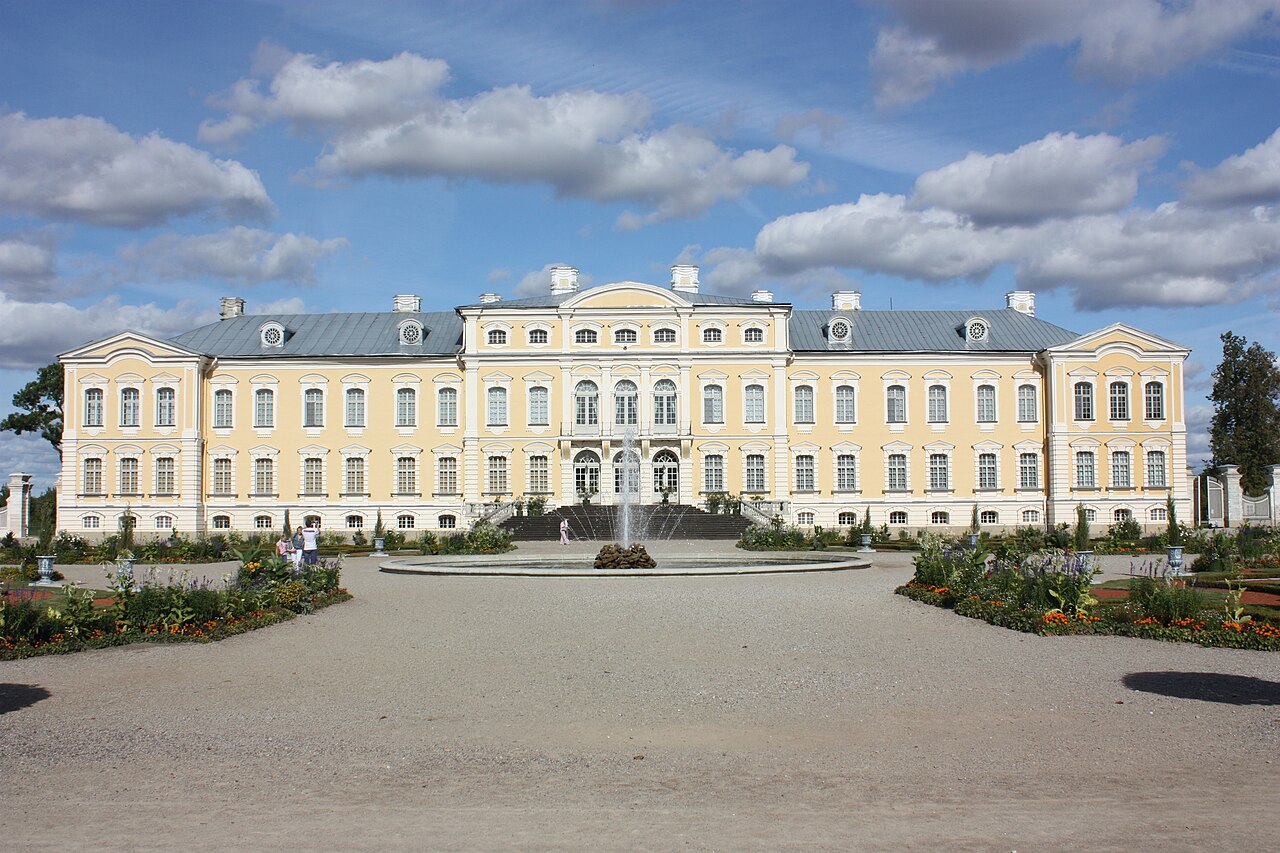
A grand baroque summer palace about 12 km west of Bauska, designed by Bartolomeo Rastrelli for Duke Ernst Johann von Biron of Courland. It was built in two stages between 1736 and 1768, and the palace and its gardens are now a museum.
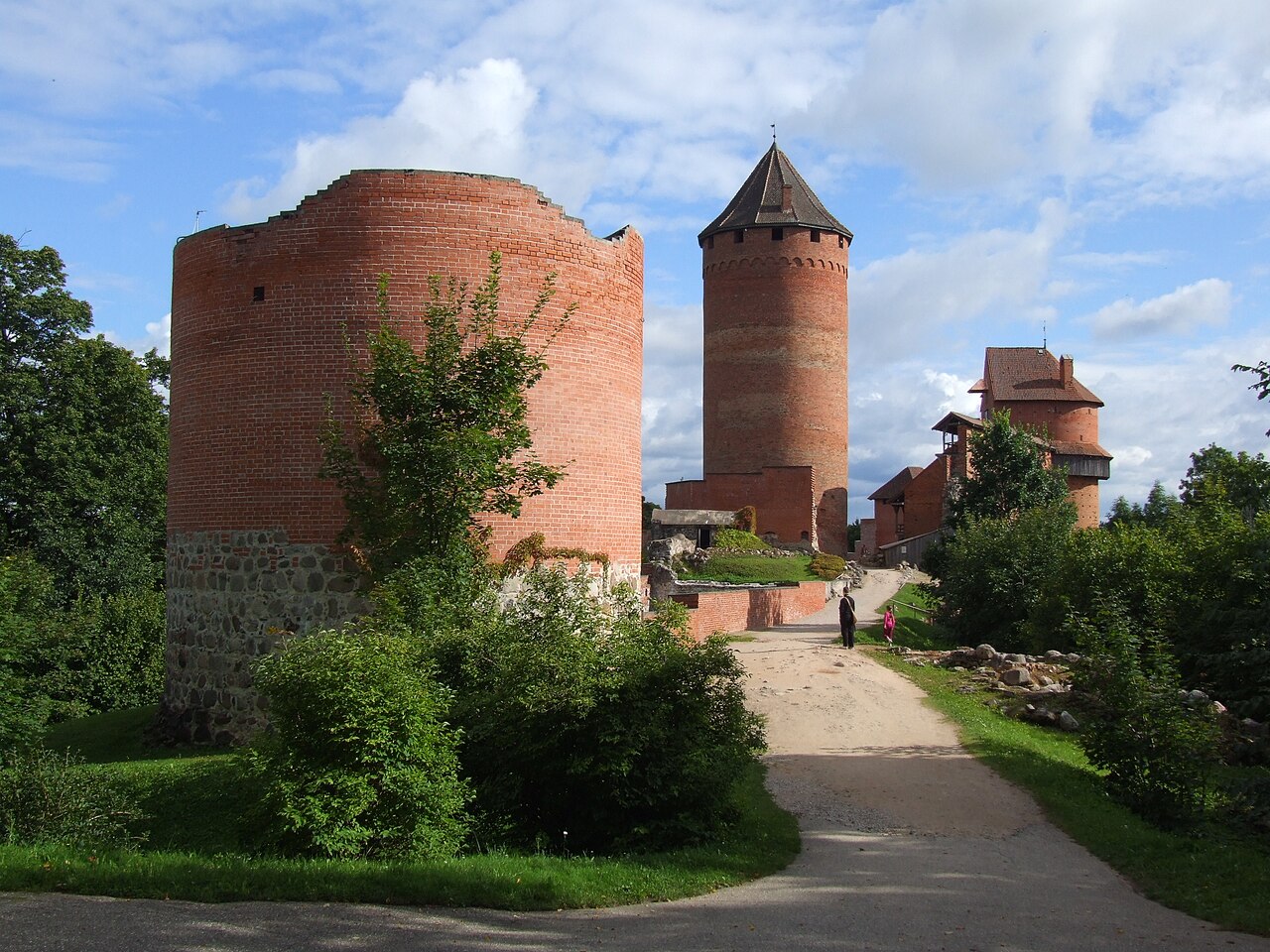
A red-brick castle on a hill above the Gauja river, across the valley from Sigulda. It was begun in 1214 by order of Bishop Albert of Riga, on the site of a wooden Livonian fort. Its tall main tower rises above the trees.
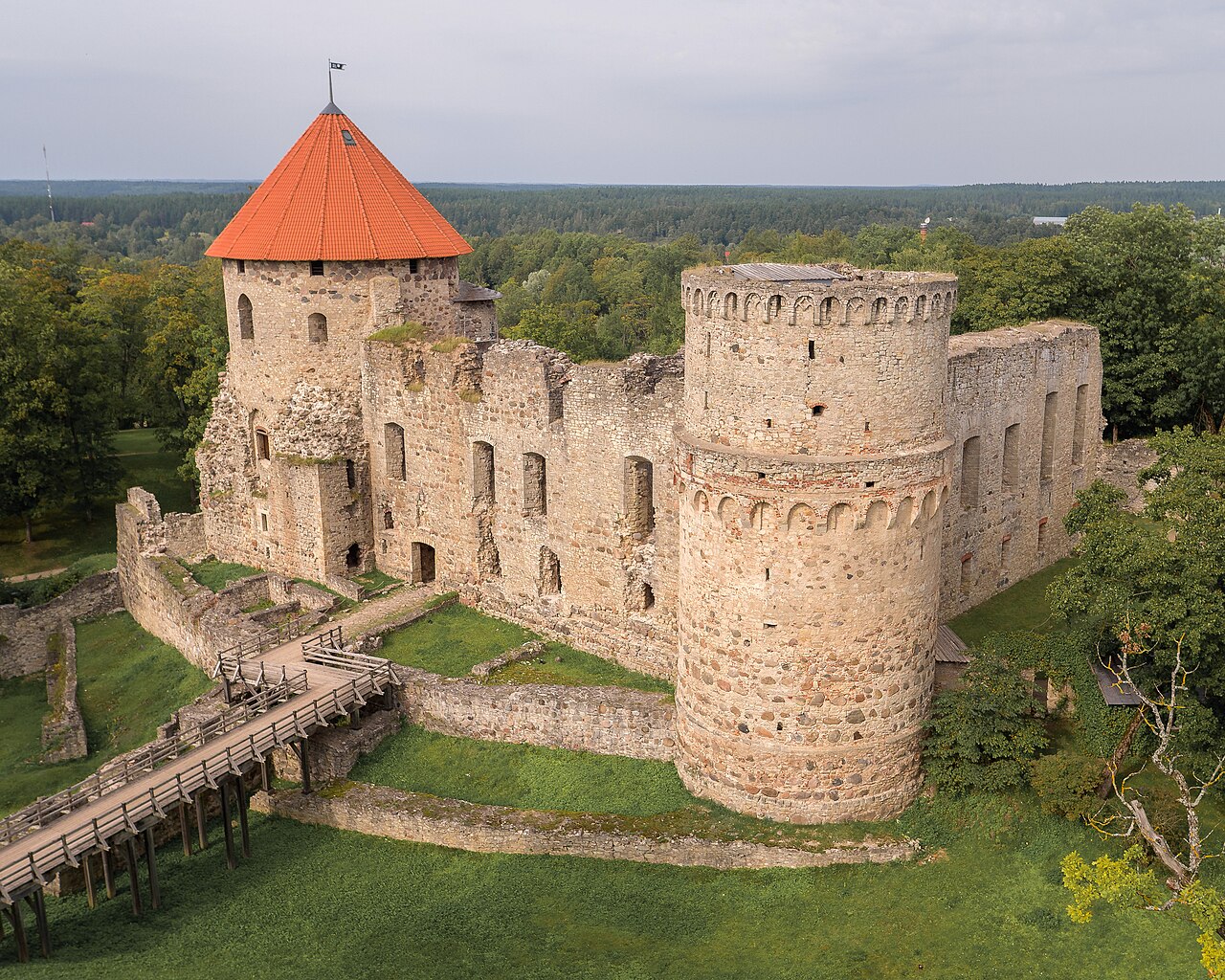
One of the best-preserved medieval castles in Latvia, begun by the Livonian knights about 800 years ago. It became the seat of the master of the Livonian Order. Visitors are given a candle lantern to explore its dim Western Tower.
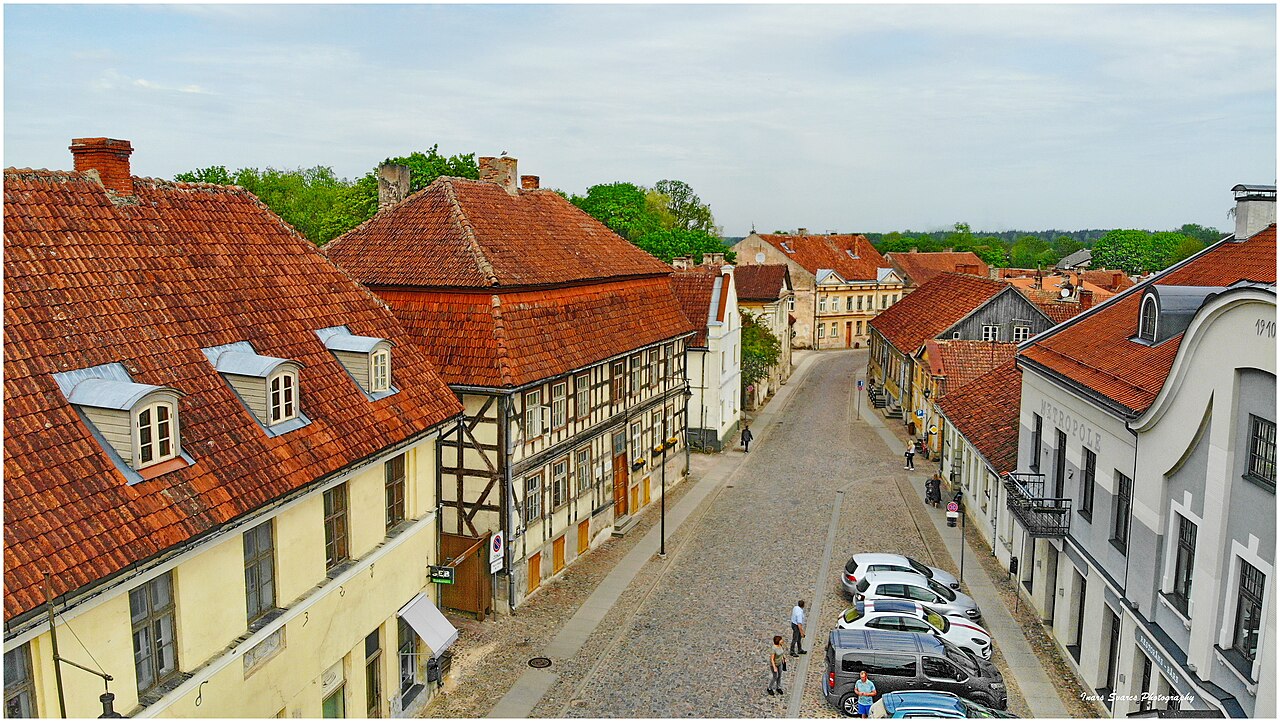
Kuldīga's old town of wooden and stone houses was added to the UNESCO World Heritage List in 2023. On its edge the Venta river drops over a low ledge about 249 metres wide, the Venta Rapid, often called the widest waterfall in Europe.
UNESCO World Heritage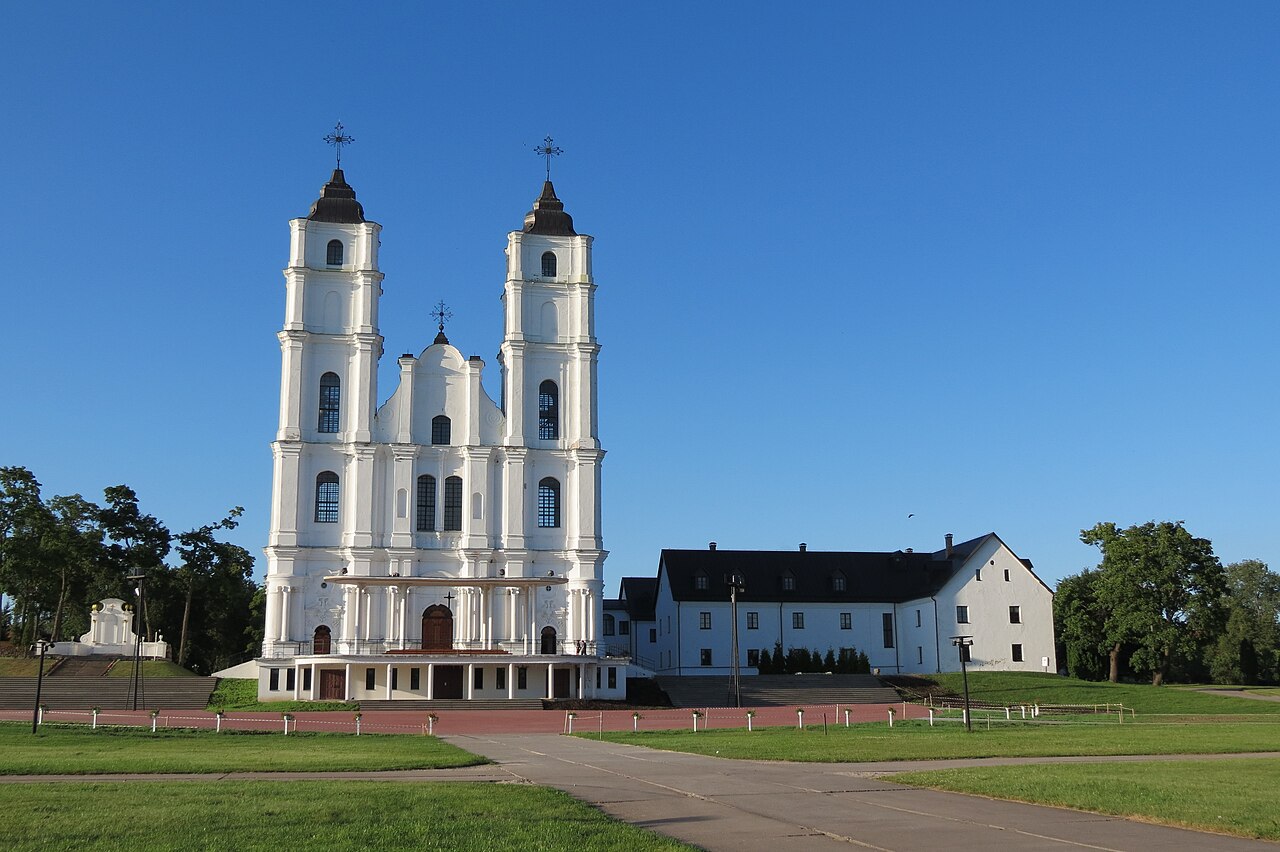
A late baroque church with two 60-metre towers in Latgale, built between 1768 and 1780. It is one of the most important Catholic centres in Latvia, and thousands of pilgrims come every year on 15 August, the feast of the Assumption. Pope John Paul II visited in 1993.
Riga's House of the Blackheads is linked to one of the earliest recorded Christmas trees: the Brotherhood of Blackheads put up a holiday tree there in 1510. Tallinn in Estonia has similar records from 1441.
Jacob Davis, the tailor credited with inventing riveted blue jeans, was born in Riga in 1831. He later went into business with Levi Strauss in San Francisco.
The tiny Minox spy camera was invented by Walter Zapp, who was born in Riga, and it was first made in Riga by the VEF factory in 1938.
In the 1600s the small Duchy of Courland, now part of western Latvia, had colonies in Africa, on the Gambia River, and in the Caribbean, on the island of Tobago.
Collectors have written down more than 1.2 million texts of Latvian folk songs, called dainas. Most are just four short lines long.
The Latvian Song and Dance Festival brings tens of thousands of amateur singers and dancers to Riga. Together with the song festivals of Estonia and Lithuania, it has been on UNESCO's list of intangible heritage since 2008.
Riga's Academy of Sciences, a 108-metre Soviet-style tower finished in 1961, is nicknamed 'Stalin's birthday cake'. It was the first skyscraper in Latvia.
In spring, salmon at the Venta Rapid in Kuldīga leap up the waterfall, so Kuldīga was once called the town where they catch salmon in the air.
Latvia's highest point, Gaiziņkalns, is only about 312 metres high. A tower was once built on it to beat Estonia's highest hill, Suur Munamägi, at 318 metres, but it was never finished and was pulled down in 2012.
Livonian, a language related to Estonian and Finnish, was once spoken on Latvia's coast. Grizelda Kristiņa, long called its last native speaker, died in 2013. Today a few families and students are bringing it back.
Latvia won the very first European basketball championship, EuroBasket, in 1935.
Vaira Vīķe-Freiberga, President of Latvia from 1999 to 2007, was the first woman to be head of state in any country of the former Soviet bloc.
In Latvian, foreign names are spelled the way they sound in Latvian, so newspapers change the spelling of names from other languages to fit Latvian sounds and endings.
Pronunciation is written the way it sounds; the capital letters show where the stress goes. Audio is coming soon.
Latvia has used the euro since 1 January 2014, so old prices in lats are long out of date. Tipping is modest: rounding up or leaving about 5 to 10% is enough, and it is not required. Check the bill, as a few places add a service charge.
The common emergency number in Latvia is 112, as in the rest of the European Union. Operators answer in Latvian, English and Russian.
Drive on the right, and keep your headlights on whenever you drive, all year round. Winter tyres are compulsory from 1 December to 1 March. Watch for wild animals on forest roads, especially at night.
Ticks are active from May to September in forests, long grass and even town parks, and they can carry tick-borne encephalitis and Lyme disease. Check yourself after walks and ask your doctor about vaccination before a summer trip.
Obey the flags on the beaches. Even on hot days the Baltic can bring in very cold water, and currents around piers are dangerous even when the sea looks calm.
Jāņi, on 23 and 24 June, are public holidays when many Latvians leave the cities for the countryside. It is a wonderful time to see bonfires and hear singing through the night, so plan travel and bookings ahead.
Younger Latvians usually speak good English. Many older people speak Latvian and Russian but little English, so a few Latvian words and a phrasebook help, especially in the countryside.
Drinking alcohol in public places outside bars and restaurants is frowned upon and can bring a fine. Enjoy your beer at a café table instead.