13 fun facts about Madagascar
- 01
Madagascar is the fourth-largest island in the world, after Greenland, New Guinea and Borneo.
- 02
The island split from Africa around 180 million years ago and from India about 90 million years ago. Cut off for so long, its wildlife evolved alone, and more than 90 percent of it is found nowhere else.
- 03
Lemurs are native only to Madagascar. In its July 2020 Red List update, the IUCN found that 103 of the 107 surviving lemur species were threatened with extinction, and 33 were Critically Endangered.
- 04
The aye-aye, a lemur with a long, thin middle finger, is the world's largest nocturnal primate. It taps on tree trunks, listens for hollows where grubs live, gnaws a hole and fishes them out with that finger.
- 05
Nearly half of all the chameleon species in the world live in Madagascar, from giants over 60 cm long to some of the smallest reptiles on Earth.
- 06
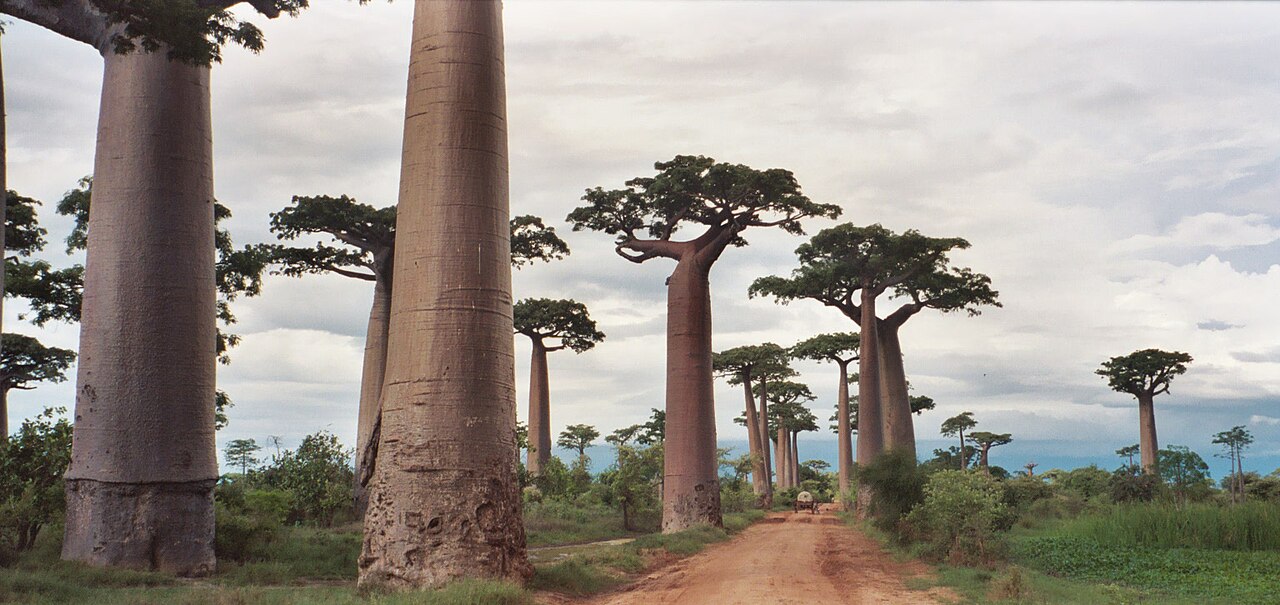
As of 2020, eight species of baobab tree were recognised, and six of them grow only in Madagascar.
- 07
In 2023 Madagascar was the world's biggest producer of vanilla, growing 42 percent of the world's raw vanilla. The vanilla orchid itself came from Mexico and was brought to the island by the French in the 1800s.
- 08
The ariary is one of only two currencies in the world that are not divided into tenths or hundredths: one ariary is five iraimbilanja. The other is the ouguiya of Mauritania. In practice the iraimbilanja is now too small to be used.
- 09
The closest relative of the Malagasy language is Ma'anyan, spoken along the Barito River in southern Borneo, about 7,300 km away across the Indian Ocean.
- 10
Antananarivo means 'City of the Thousand'. The story goes that King Andrianjaka took the hill around 1610 or 1625 and left a garrison of a thousand soldiers to guard it.
- 11
Madagascar was home to the elephant birds, huge flightless birds that are now extinct. One of them, Aepyornis maximus, may have been the largest bird that ever lived.
- 12
In the highlands some families hold a famadihana, the 'turning of the bones', every five to seven years. They take their ancestors' remains from the family tomb, wrap them in fresh cloth and dance with them to music before returning them.
- 13
The word tsingy, used for the sharp limestone forests of the west and north, means 'where one cannot walk barefoot'.
Sources (15)
- Madagascar (Wikipedia)
- Malagasy ariary (Wikipedia)
- Malagasy cuisine (Wikipedia)
- Antananarivo (Wikipedia)
- Andrianjaka (Wikipedia)
- Tsingy de Bemaraha National Park (Wikipedia)
- Lemur (Wikipedia)
- Almost a third of lemurs now Critically Endangered, IUCN Red List (IUCN, July 2020)
- Aye-aye (Wikipedia)
- Chameleon (Wikipedia)
- Adansonia (Wikipedia)
- Vanilla (Wikipedia)
- Elephant bird (Wikipedia)
- Famadihana (Wikipedia)
- Malagasy language (Wikipedia)
Fun facts from nearby countries
More about Madagascar
- The trip to MadagascarMap, story, food, phrases and a friendly quiz.
- Malagasy foodThe dishes to try, with photos and recipes.
- Madagascar triviaQuestions and answers to read aloud or print.
- Madagascar word searchCities and dishes in large print.
- Malagasy words crosswordLearn a few words while you solve it.
- Colour the flag of MadagascarPrint it or colour it in on the screen.
- Malagasy rootsA family guide: history, recipes and words for the grandchildren.
- Before you goPhrases, customs and tips for travellers.
- Printable packLarge print, with a quiz and answers.