Lemurs leaping through the rainforest, giant baobabs at sunset, rice at every meal and a language that sailed here from Borneo, on the fourth-largest island in the world.
Your trip to Madagascar
Ready for the trip?
10 questionsAbout 3 minutesNo timer
Explore Madagascar
You have explored 0 of 9 parts. Scroll on to discover the rest.
Print the Madagascar pack
A free large-print PDF. Choose what goes in: facts, map, history, dishes and recipes, phrases, fun facts, a quiz with or without answers. Made for clubs, care homes, libraries and family afternoons.
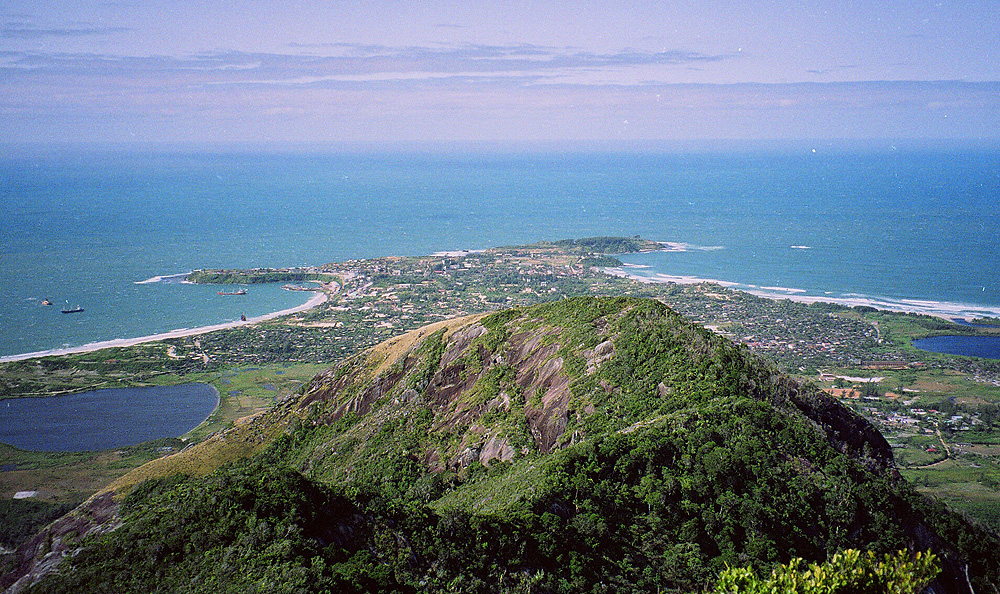
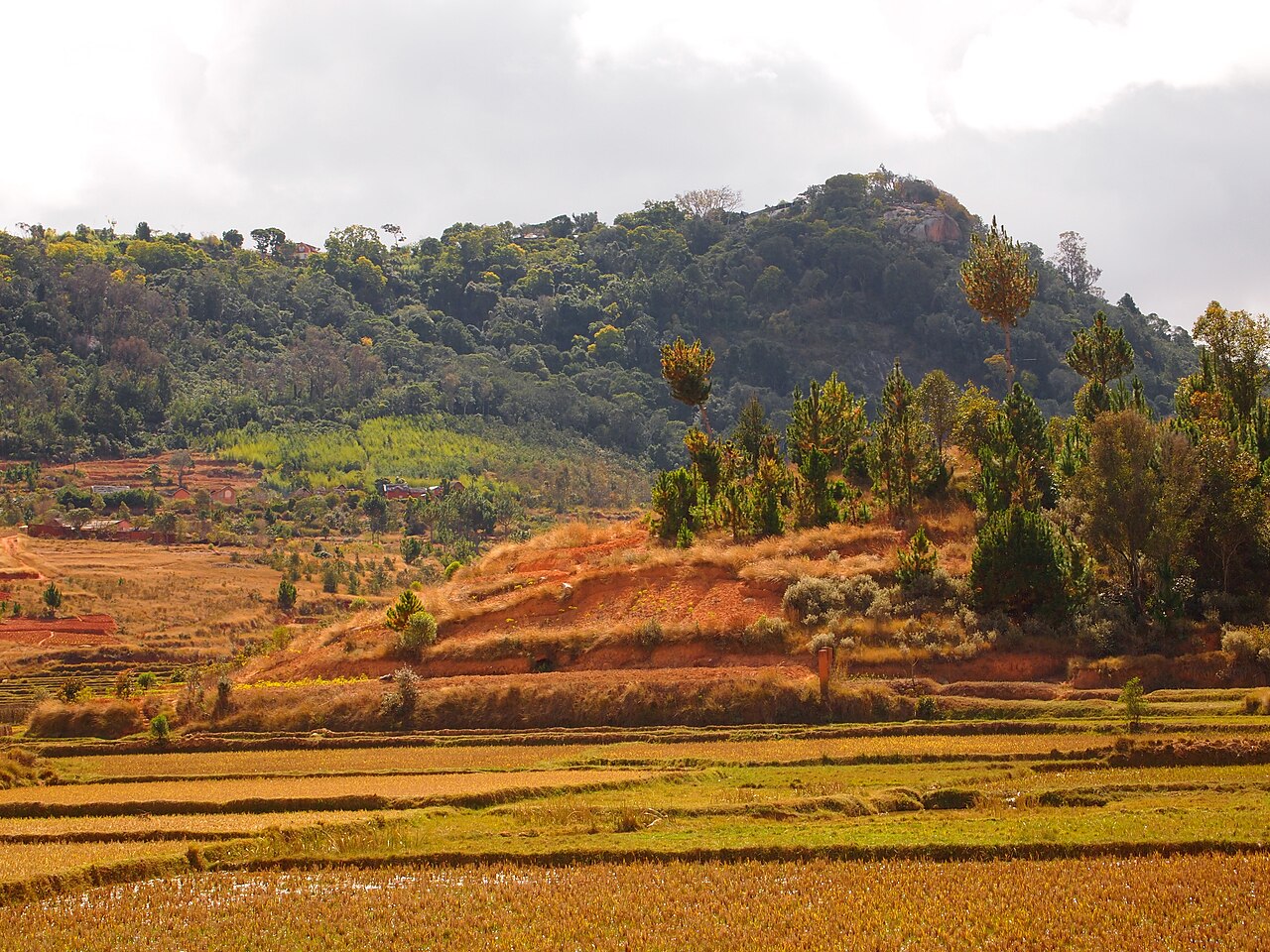
Madagascar is a huge island in the Indian Ocean, about 420 km off the coast of southeastern Africa across the Mozambique Channel. Cool green highlands with rice terraces run down its middle; the east is covered in rainforest, the west in dry forest and savanna, and the far south in spiny desert. It is the fourth-largest island in the world.
The island broke away from Africa and later from India many millions of years ago, and its plants and animals went their own way. More than 90 percent of its wildlife is found nowhere else, including all of the world's lemurs, the cat-like fossa and about half of all chameleon species. People arrived late, probably in the first millennium AD, when seafarers from Southeast Asia crossed the ocean in outrigger canoes; later settlers came from East Africa, Arabia and beyond.
In the 1800s the Merina kings and queens of the highlands united most of the island into the Kingdom of Madagascar. France conquered it in 1895 and made it a colony, and it became independent on 26 June 1960. As of 2025, about 32 million people live here. They speak Malagasy, with French widely used in towns, and almost everyone eats rice two or three times a day.
CapitalAntananarivo
PopulationAbout 25.7 million at the 2018 census; about 32.7 million as of 2025 (World Bank estimate)
Official languageMalagasy and French, as named in the 2010 constitution (suspended since October 2025)
CurrencyMalagasy ariary (MGA)
AreaAbout 587,000 km²
GovernmentRepublic. As of September 2026 it is led by a military-led transitional government, in power since October 2025, which has promised a new constitution and elections
Highest mountainMaromokotro, 2,876 m, in the Tsaratanana Massif in the north
Longest riverThe Mangoky, about 564 km
NeighboursNo land borders. Mozambique lies about 420 km away across the Mozambique Channel; the Comoros and Mayotte are to the northwest, and Réunion, Mauritius and the Seychelles are out in the Indian Ocean
Madagascar was one of the last large lands on Earth to be settled. Seafarers from Southeast Asia arrived in outrigger canoes, probably in the first millennium AD, and were joined by Bantu-speaking people from East Africa and by Arab and Swahili traders. Many small kingdoms grew up, and in the 1800s the Merina rulers of the highlands united most of the island. France conquered it at the end of the century, and Madagascar became independent again in 1960.
1500
Diogo Dias sights the island
On 10 August 1500 the Portuguese captain Diogo Dias, whose ship had been blown off course on the way to India, became the first European known to reach Madagascar. He named it the island of Saint Lawrence. Over the next two centuries English and French settlers tried to build colonies on the coast, with little success.
1810
Radama I becomes king
Radama I succeeded his father Andrianampoinimerina, who had reunited the Merina kingdom in the highlands and made Antananarivo its capital. Radama set out to bring the whole island under his rule and brought about two thirds of it under his control, creating the Kingdom of Madagascar.
1817
Britain recognises Radama as King of Madagascar
On 23 October 1817 Radama signed a treaty with Britain. In return for giving up the export of slaves, he received horses, uniforms and military help, and the British recognised him as King of Madagascar.
1818
The first school opens in Toamasina
Missionaries of the London Missionary Society opened the first European-style school at Toamasina. With Radama's support they soon moved to Antananarivo, and they helped write down the Malagasy language in the Latin alphabet, which is still used today.
1828
Ranavalona I takes the throne
Radama's widow, Queen Ranavalona I, ruled for 33 years. She fought to keep Madagascar free of British and French influence, banned Christianity and forced most foreigners to leave, and her reign is remembered as both strong and very harsh.
1869
Christianity becomes the state religion
Queen Ranavalona II, who had been taught by British missionaries, was baptised and made Protestant Christianity the religion of the state. Churches were built across the highlands, and today most Malagasy people are Christian.
1883
The first Franco-Hova War begins
France, claiming rights on the northwest coast, bombarded Mahajanga and began a war against the Kingdom of Madagascar. The peace treaty of 1885 gave France the bay of Diego-Suarez in the north, today's Antsiranana, and control over the kingdom's foreign affairs.
1895
French troops take Antananarivo
In the second war a French army marched from the coast to the capital, losing many men to malaria on the way. In September 1895 it shelled the royal palace, and Queen Ranavalona III had to accept French control.
1896
Madagascar becomes a French colony
France annexed Madagascar and in August 1896 declared it a colony. Slavery was abolished the same year. A popular rising against the French, the menalamba or 'red shawl' rebellion, spread across the island.
1897
The monarchy is abolished
On 27 February 1897 the French governor, General Gallieni, sent Queen Ranavalona III into exile, first to Réunion and later to Algeria, and the next day he abolished the monarchy. She was the last sovereign of Madagascar.
1942
The Battle of Madagascar
In May 1942, during the Second World War, British and Allied forces landed at Diego-Suarez to stop the Vichy French colony from being used by Japanese submarines. After months of fighting the Vichy forces surrendered in November 1942.
1947
The Malagasy Uprising begins
On the night of 29 March 1947 nationalists attacked French bases and plantations in the east of the island. The French army put down the rising by 1949. Estimates of the Malagasy dead range from about 11,000 to more than 100,000, and 29 March is now a national day of remembrance.
1958
The Malagasy Republic is proclaimed
On 14 October 1958 Madagascar became the Malagasy Republic, a self-governing state within the French Community. Its first constitution named Malagasy and French as the official languages.
1960
Independence from France
Madagascar became fully independent on 26 June 1960, which is now its national day, and joined the United Nations that September.
1995
Fire destroys the Rova
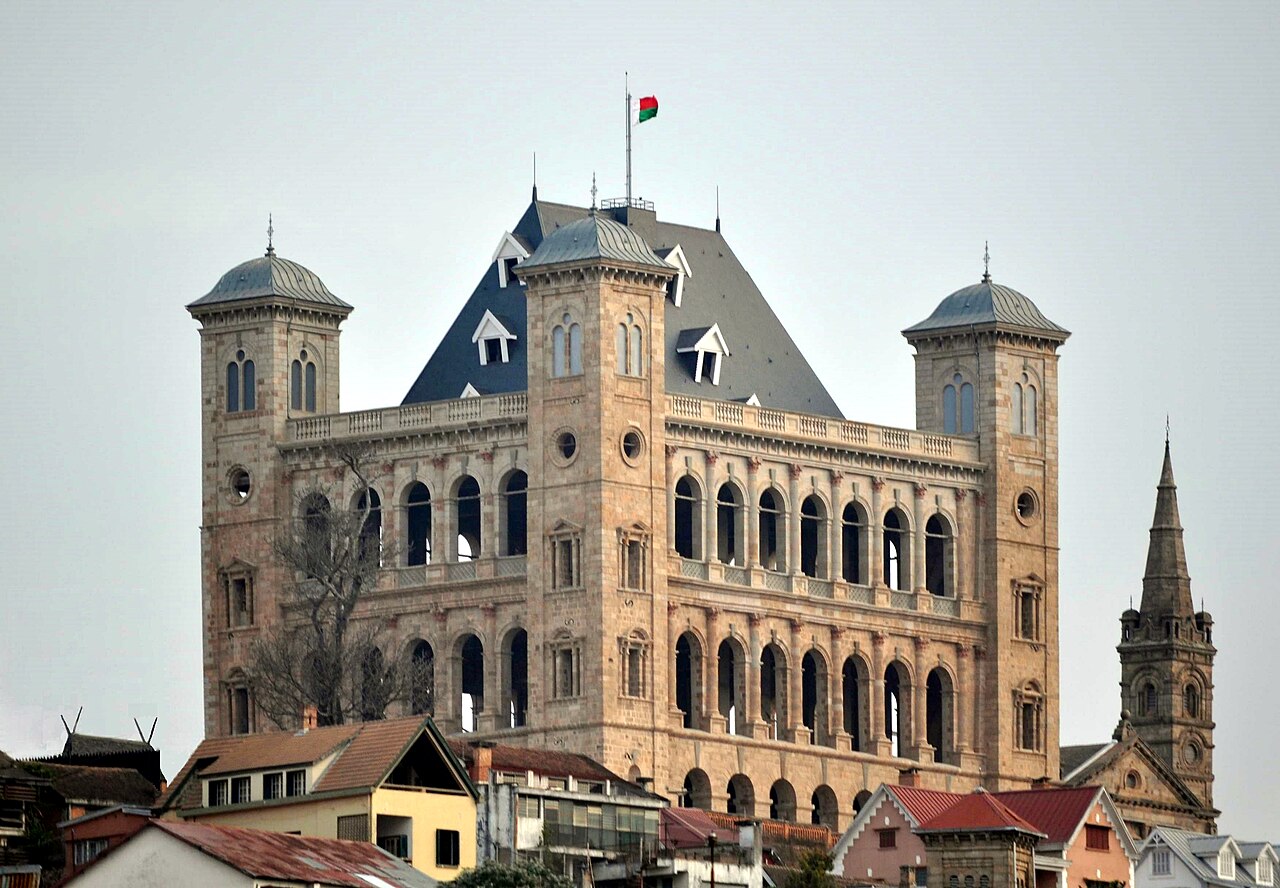
On the night of 6 November 1995 a fire destroyed or damaged every building in the Rova, the royal palace complex on the highest hill of Antananarivo, shortly before it was due to become a UNESCO World Heritage Site. Only the stone shells of the great palace and the royal chapel survived.
2010
Voters approve the Fourth Republic constitution
After a political crisis that began in 2009, voters approved a new constitution in a referendum on 14 November 2010. It began the Fourth Republic and named Malagasy and French as the official languages, dropping English, which had been added in 2007.
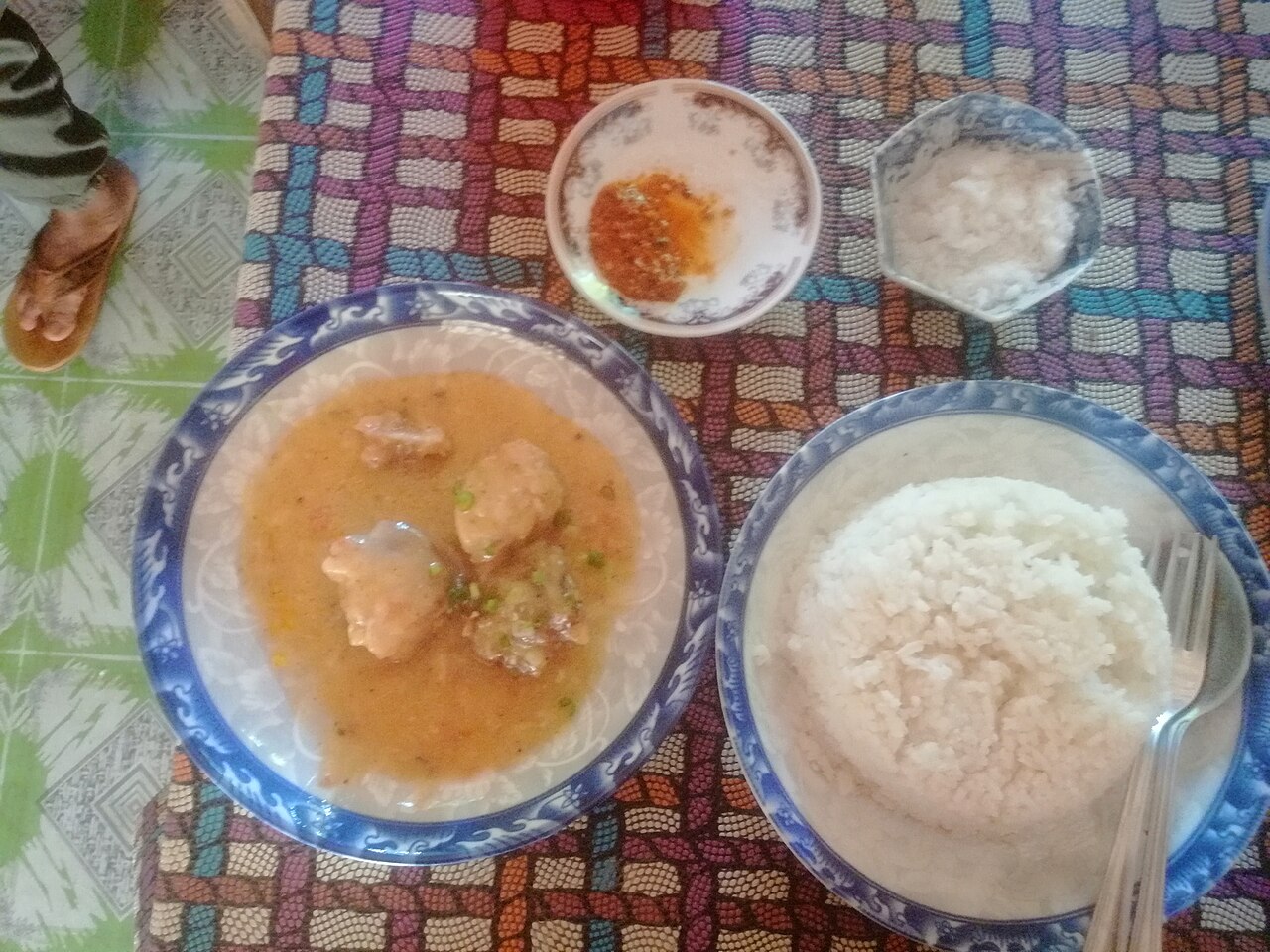
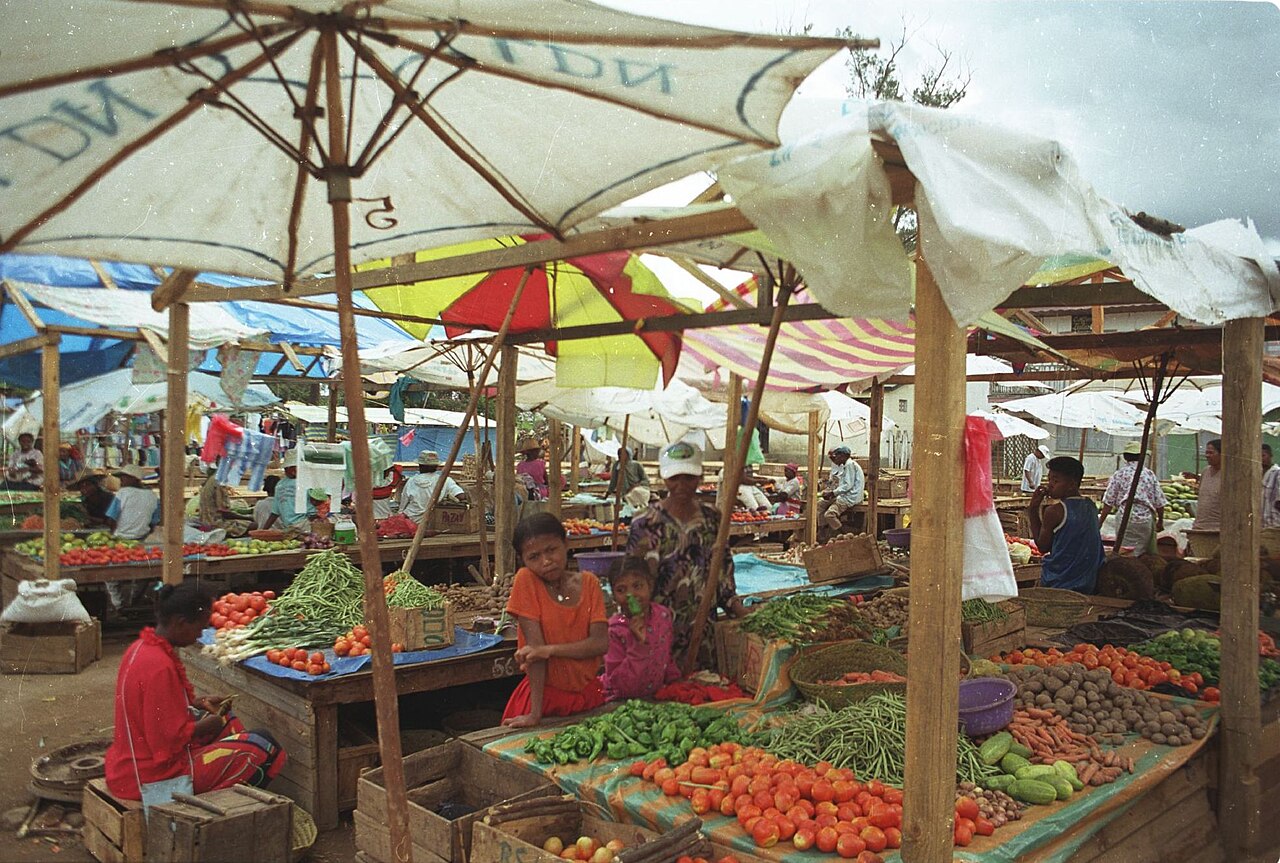
In Madagascar a meal means rice. The word for eating a meal, mihinam-bary, literally means 'to eat rice', and most families eat it two or three times a day. The rice (vary) comes with a laoka, an accompaniment of meat, fish, beans or greens in a light sauce, often with a bowl of broth and a spoonful of hot chilli paste (sakay) or pickles on the side. In the highlands the sauces are tomato-based; on the coast, coconut milk is added. Breakfast is often rice porridge or rice cakes with sweet coffee, and the drink at the table is usually ranon'apango, water boiled in the rice pot.
The central highlands, now eaten all over Madagascar
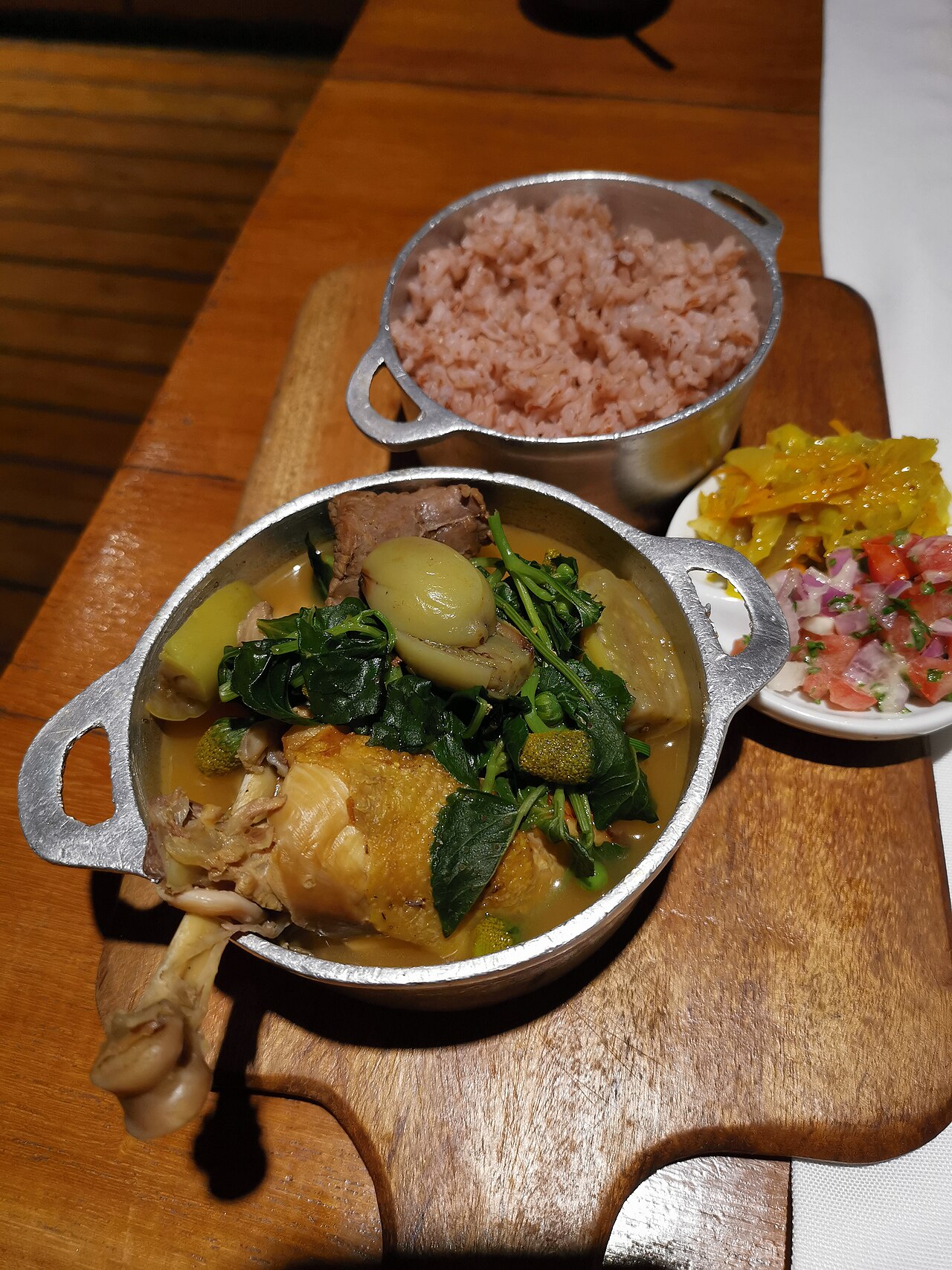
The national dish: a clear broth of zebu beef with several kinds of leafy greens, usually with tomato, onion and ginger, eaten with a big plate of rice. Its secret is brèdes mafana (paracress), whose leaves and yellow flowers make the tongue tingle and feel slightly numb.
Romazava was one of the seven favourite dishes served at the royal feasts of the Merina kings and queens in the 1800s.
See the recipe
Serves 4
1 h 30 min
Ingredients
600 g stewing beef, cut into cubes
2 tablespoons vegetable oil
1 onion, chopped
3 cloves garlic, crushed
A thumb of fresh ginger, grated
3 tomatoes, chopped
About 1.2 litres water
About 500 g mixed greens: watercress, spinach and pak choi (in Madagascar, brèdes mafana, anamamy and anatsonga)
Salt, and cooked white rice to serve
Method
Heat the oil in a large pot and brown the beef on all sides with a little salt.
Add the onion, garlic and ginger and cook for 3 minutes, then add the tomatoes and cook until they soften.
Pour in the water, cover and simmer gently for about an hour, until the beef is tender.
Wash and roughly chop the greens. Add the tougher ones first and the watercress last, and simmer for 5 to 10 minutes until just soft.
Taste for salt and serve in bowls next to plenty of rice, spooning the broth over the rice as you eat.
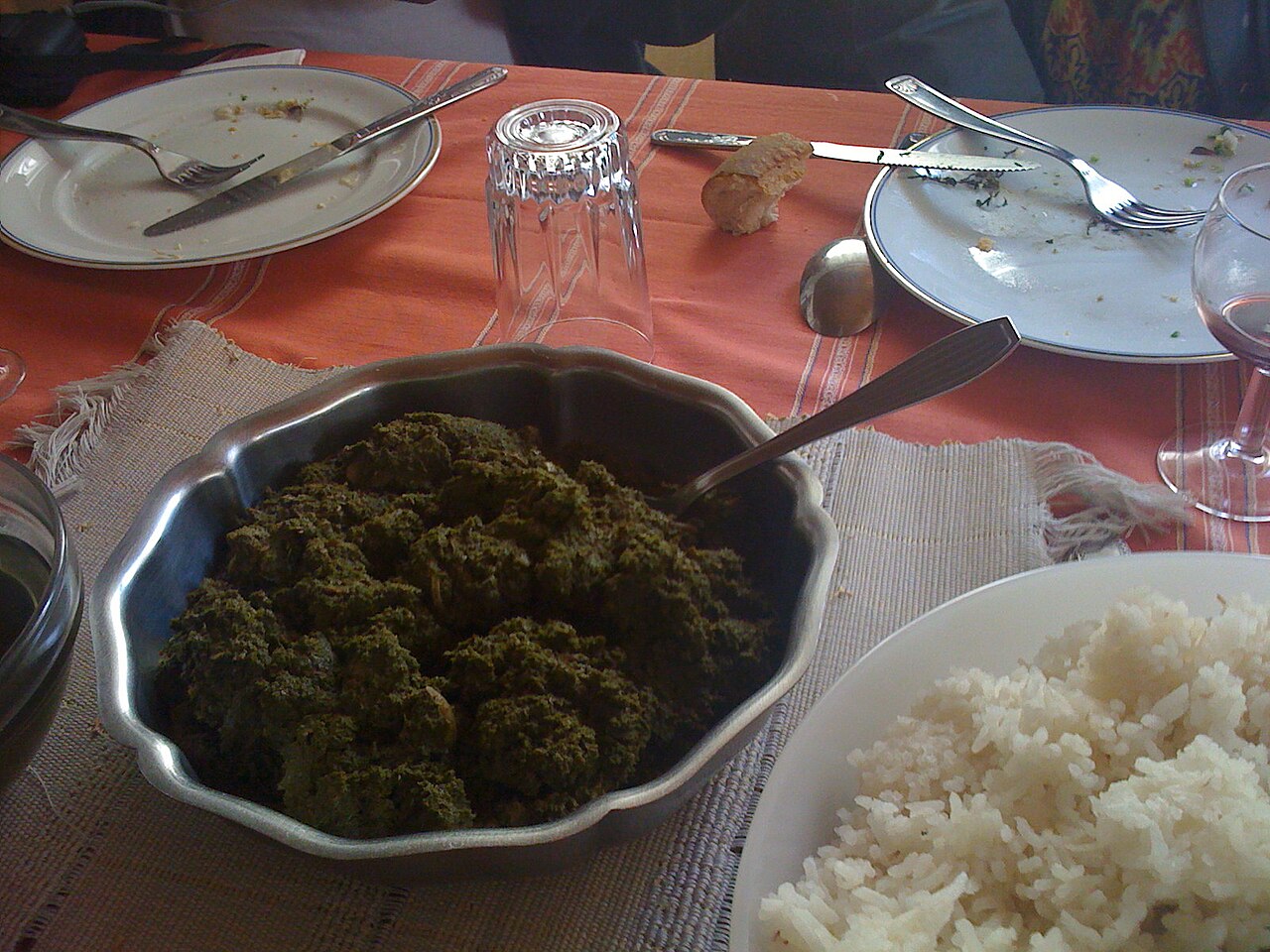
Cassava leaves pounded in a wooden mortar until they are finely crushed, then slowly cooked with garlic and fatty pork until dark green and rich. It is served with rice and is one of the best-loved family dishes in the country.
Ravitoto means 'crushed leaves'. In some coastal areas, and in the Comoros, the leaves are cooked in coconut milk instead of with pork.
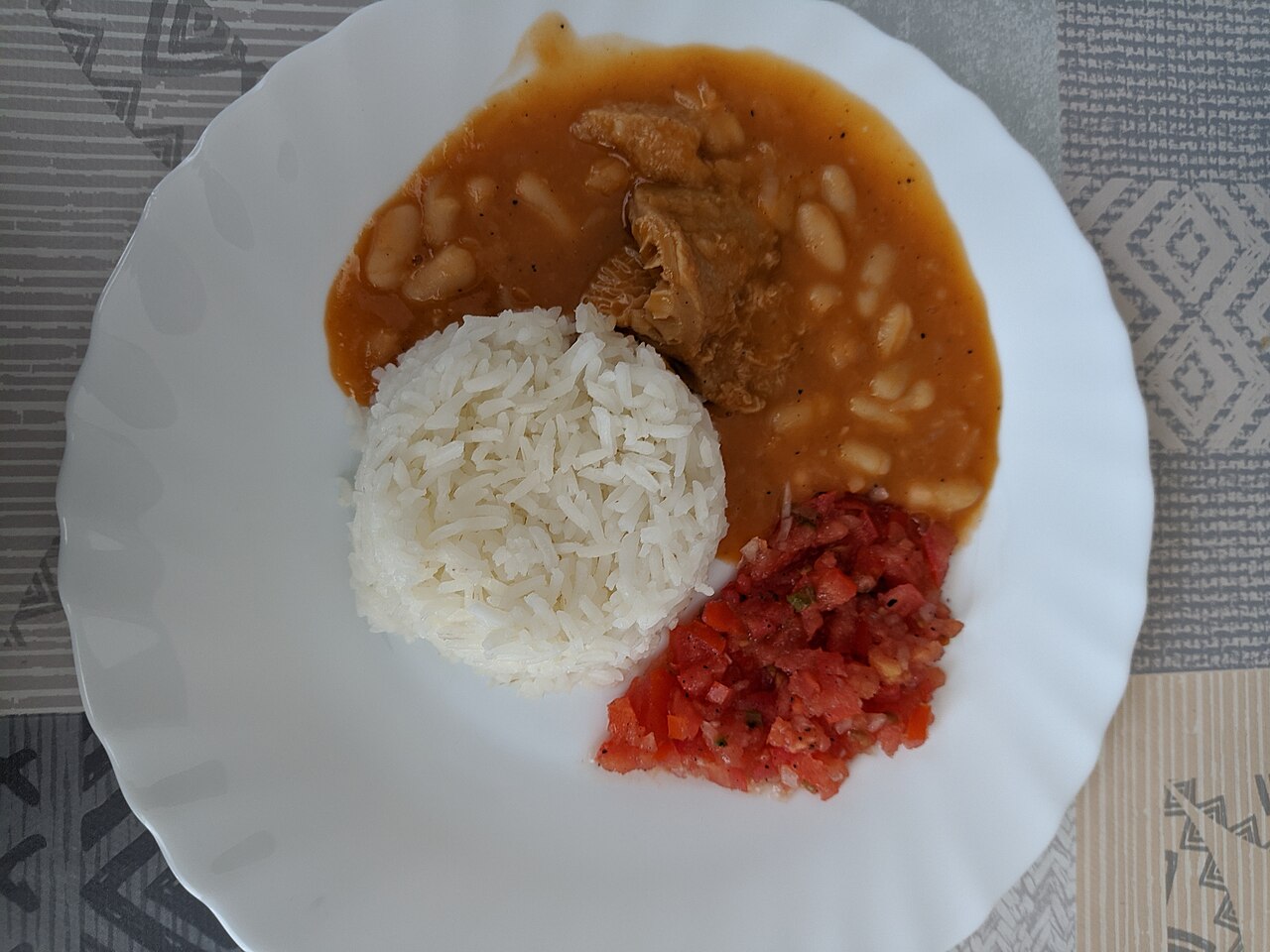
Pieces of pork simmered with white beans in a tomato, onion and garlic sauce. It is one of the most common laoka in family homes and in simple roadside eateries called hotely, always served with rice and often with a fresh tomato relish.
In Malagasy henakisoa means 'pork' and tsaramaso means 'beans'. Pork is avoided by some Malagasy peoples, such as many Sakalava, because of local taboos called fady.
See the recipe
Serves 4
1 h 20 min
Ingredients
500 g pork shoulder or belly, cut into cubes
2 x 400 g tins white beans (cannellini or haricot), drained
1 onion, chopped
3 cloves garlic, crushed
3 tomatoes, chopped, or 1 tin chopped tomatoes
1 tablespoon oil
About 400 ml water
Salt and pepper, and cooked rice to serve
Method
Brown the pork in the oil in a heavy pot over a medium heat until golden. Pour off some of the fat if there is a lot.
Add the onion and garlic and cook for 3 minutes, then add the tomatoes and cook until they break down into a sauce.
Add the water, cover and simmer for about 45 minutes, until the pork is tender.
Stir in the beans and simmer uncovered for 10 to 15 minutes, until the sauce is thick.
The coasts, especially the northwest around Mahajanga and the east
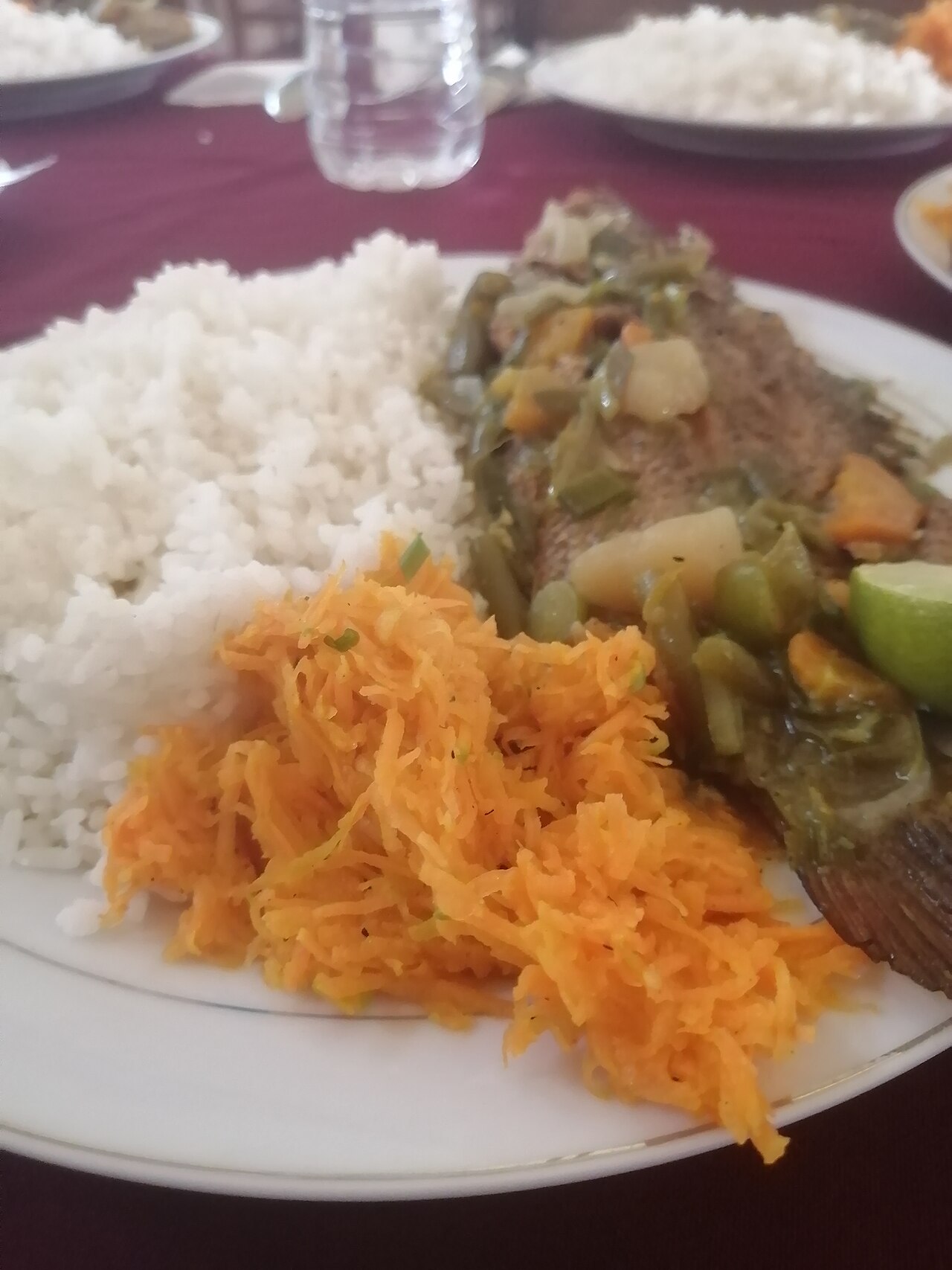
Pieces of fresh fish gently cooked in coconut milk with onion, tomato, garlic and sometimes a little ginger or curry powder, then served with rice. On the coasts, coconut takes the place of the tomato sauces of the highlands.
Coconut palms were not common on the island until plantations were planted in the 1800s; today coconut is part of almost every coastal kitchen.
See the recipe
Serves 4
35 min
Ingredients
600 g firm white fish fillets, cut into large pieces
1 onion, finely chopped
2 cloves garlic, crushed
2 tomatoes, chopped
1 teaspoon grated ginger or mild curry powder (optional)
400 ml coconut milk
1 tablespoon oil
Salt, lime juice, and cooked rice to serve
Method
Season the fish with salt and a squeeze of lime and set aside.
Cook the onion in the oil until soft, then add the garlic, ginger or curry powder and tomatoes and cook for 5 minutes.
Pour in the coconut milk and bring it to a gentle simmer; do not let it boil hard.
Lay the fish in the sauce and cook for 8 to 10 minutes, until it flakes easily.
Towns across Madagascar, from the Chinese community
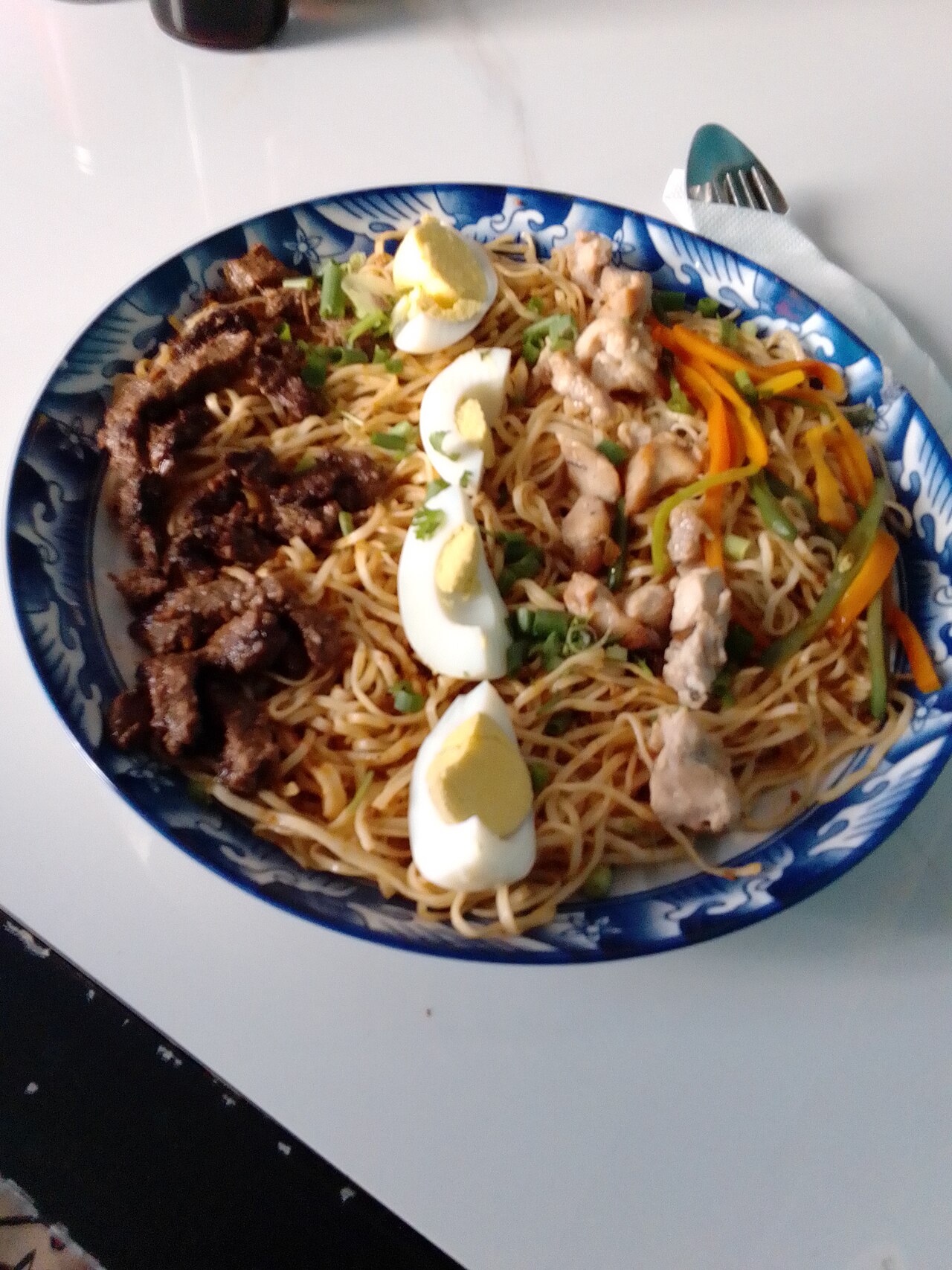
Stir-fried egg noodles with vegetables and pieces of chicken, beef or pork, often topped with a boiled egg. It is a favourite in city snack bars and cheap restaurants.
Chinese workers came to Madagascar in large numbers around 1900 to build the railway from Antananarivo to the east coast. They also brought soupe chinoise, fried rice and fried spring rolls called nems.
Towns across Madagascar, especially Toamasina and Antananarivo
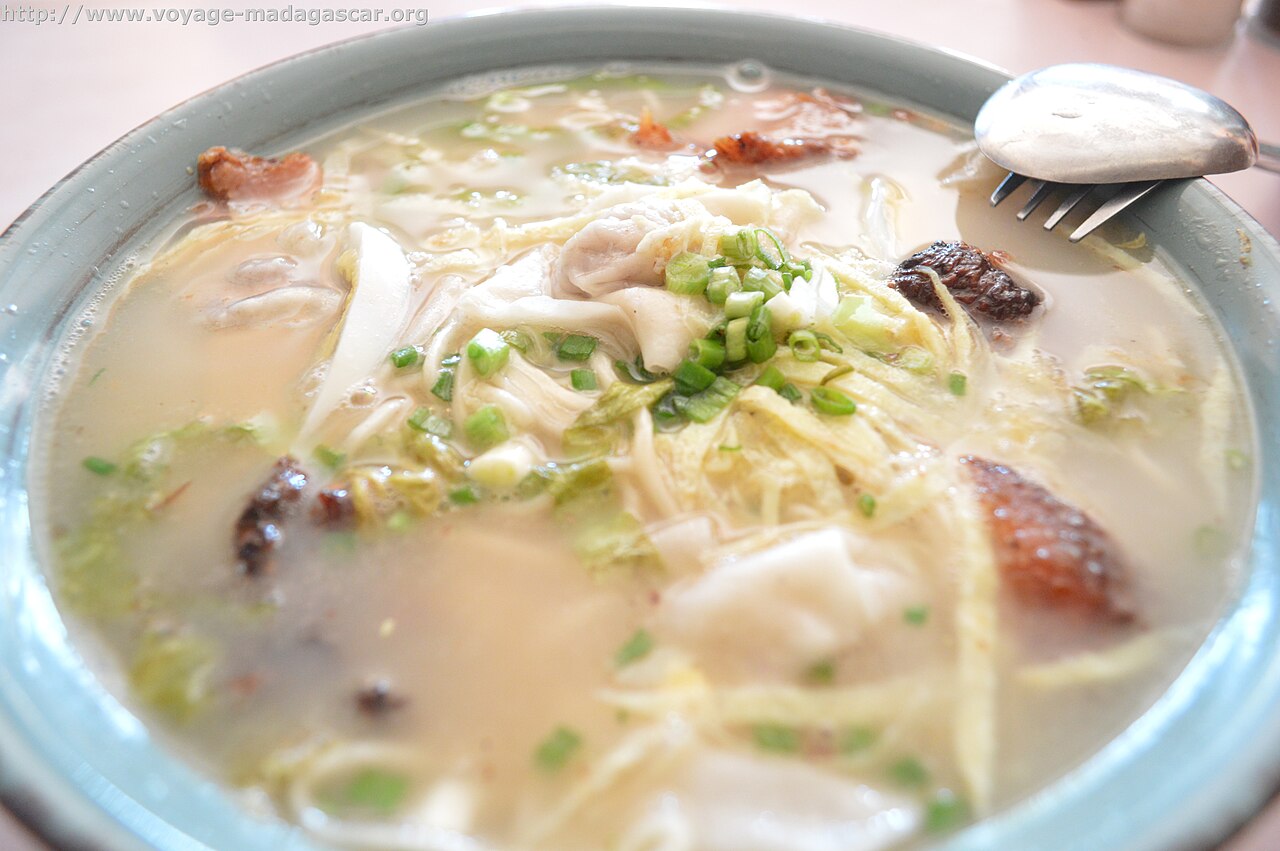
A big bowl of clear broth with noodles, pieces of meat or seafood, greens and often dumplings, seasoned with spring onion and a little chilli. It is eaten at any time of day, even at breakfast.
Its French name simply means 'Chinese soup', a sign of the Chinese families who have lived in Malagasy towns for over a century.
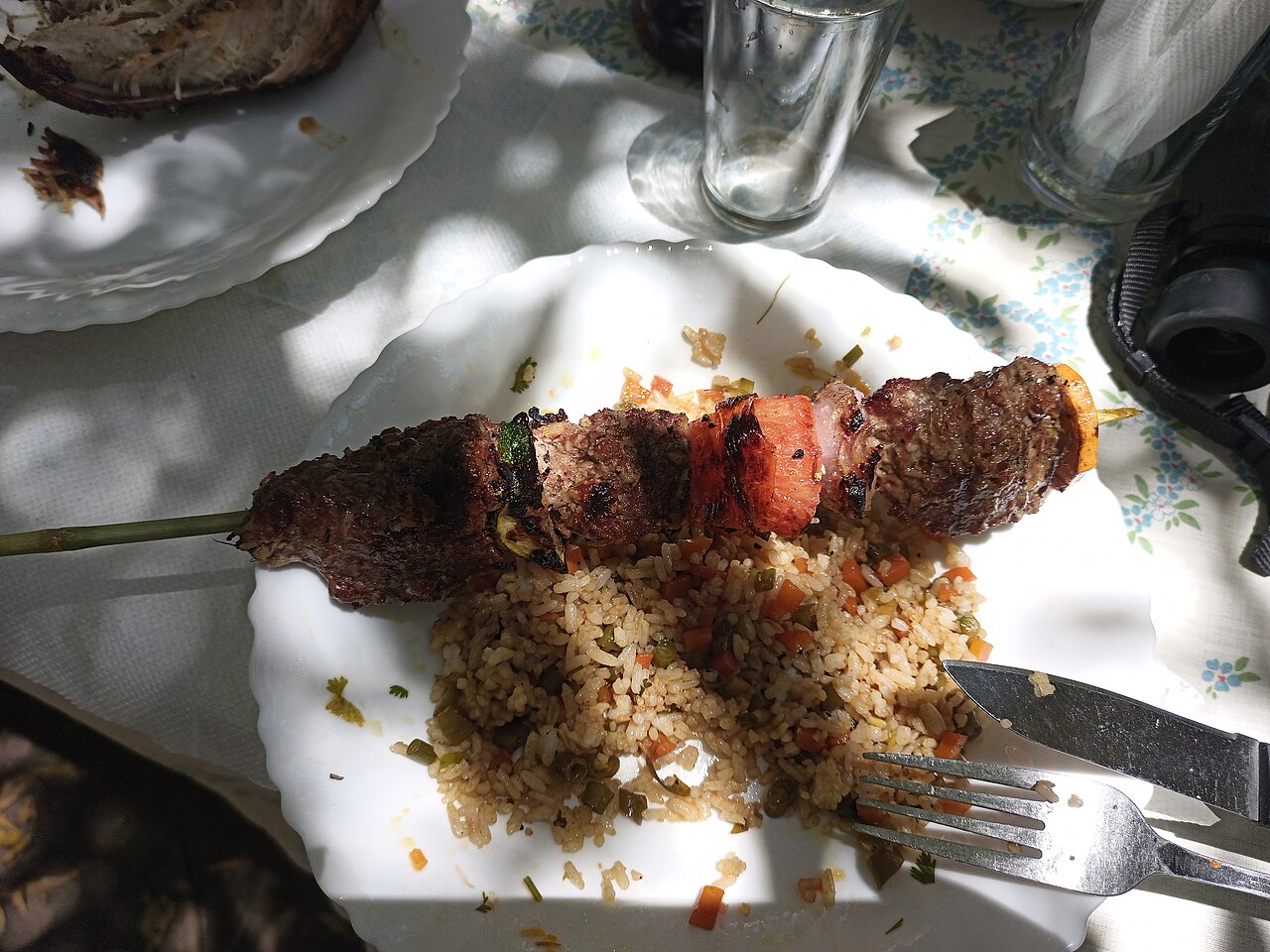
Small pieces of zebu beef on thin sticks, grilled over charcoal with a little salt and sometimes garlic. The smoke from the braziers fills the streets in the evening, and the skewers are eaten on their own or with bread or rice.
Zebu, the humped cattle, were brought from Africa around 1,000 years ago. They are a sign of wealth and are still sacrificed at important family ceremonies.
All of Madagascar; the word is said to come from the north
In the highlands, lasary is a crunchy salad of green beans, cabbage, carrot and onion in a vinegar dressing, served with rice or stuffed into a baguette. On the coast the same word is used for spicy fruit pickles.
Lasary is one of the most common baguette fillings in Madagascar, a mix of French bread and Malagasy taste.
See the recipe
Serves 4
25 min
Ingredients
200 g green beans, cut into short pieces
2 carrots, cut into thin sticks
A quarter of a white cabbage, finely shredded
1 small onion, thinly sliced
3 tablespoons white vinegar
3 tablespoons oil
Salt and pepper; a little chilli if you like
Method
Boil the green beans and carrots in salted water for 3 to 4 minutes so they stay crunchy, then cool them in cold water and drain well.
Mix them in a bowl with the cabbage and onion.
Whisk the vinegar, oil, salt, pepper and chilli together and pour over the vegetables.
Stir well and leave for at least 15 minutes before serving with rice, grilled meat or in a baguette.
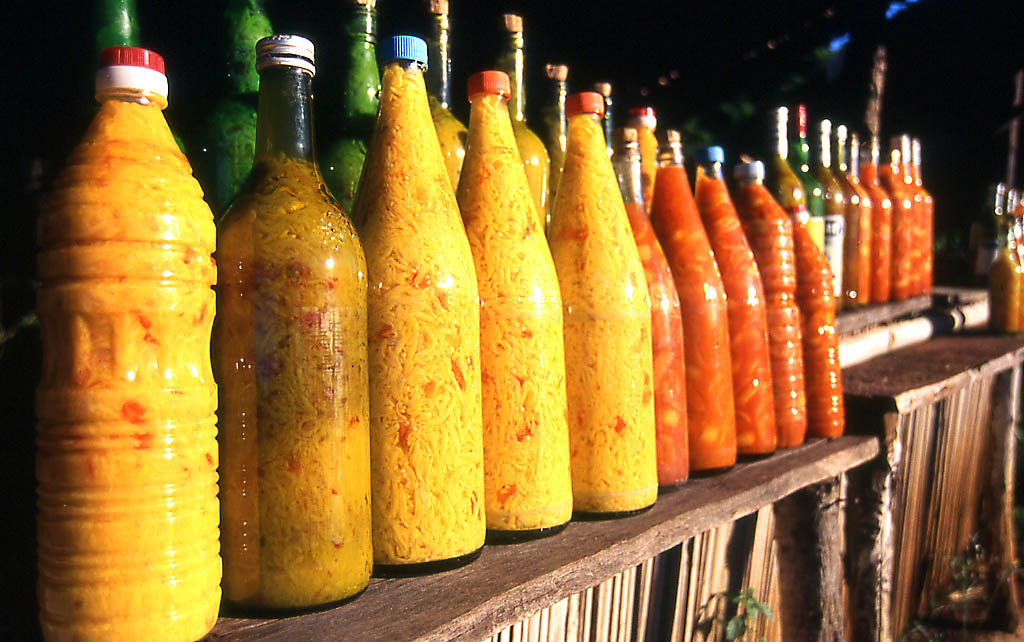
Sharp and spicy pickles of green mango, lemon or carrot with chilli, mustard seed and turmeric, eaten a spoonful at a time with rice, grilled fish or meat.
The name comes from the Indian word achar, meaning pickle. Indian traders settled on the northwest coast around Mahajanga in the 1800s.
All of Madagascar; the coconut version, mokary, on the coasts
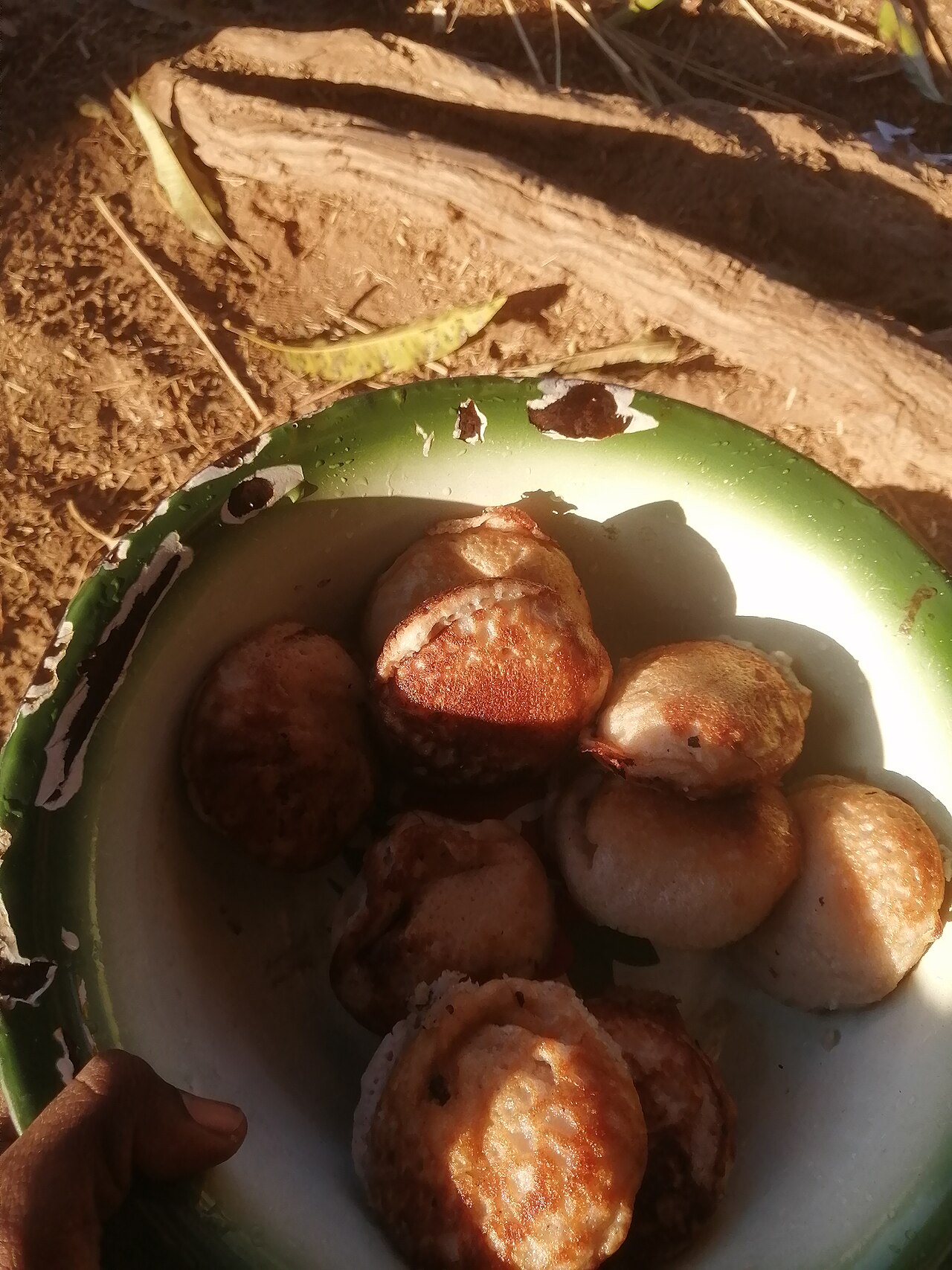
Small round rice cakes made from a lightly sweet batter of rice flour and sugar, cooked in greased moulds over charcoal. They are crisp outside and soft inside, and people buy them warm from street stalls in the early morning with a cup of coffee.
Mofo gasy means 'Malagasy bread'. On the coast the batter is made with coconut milk and the cakes are called mokary.
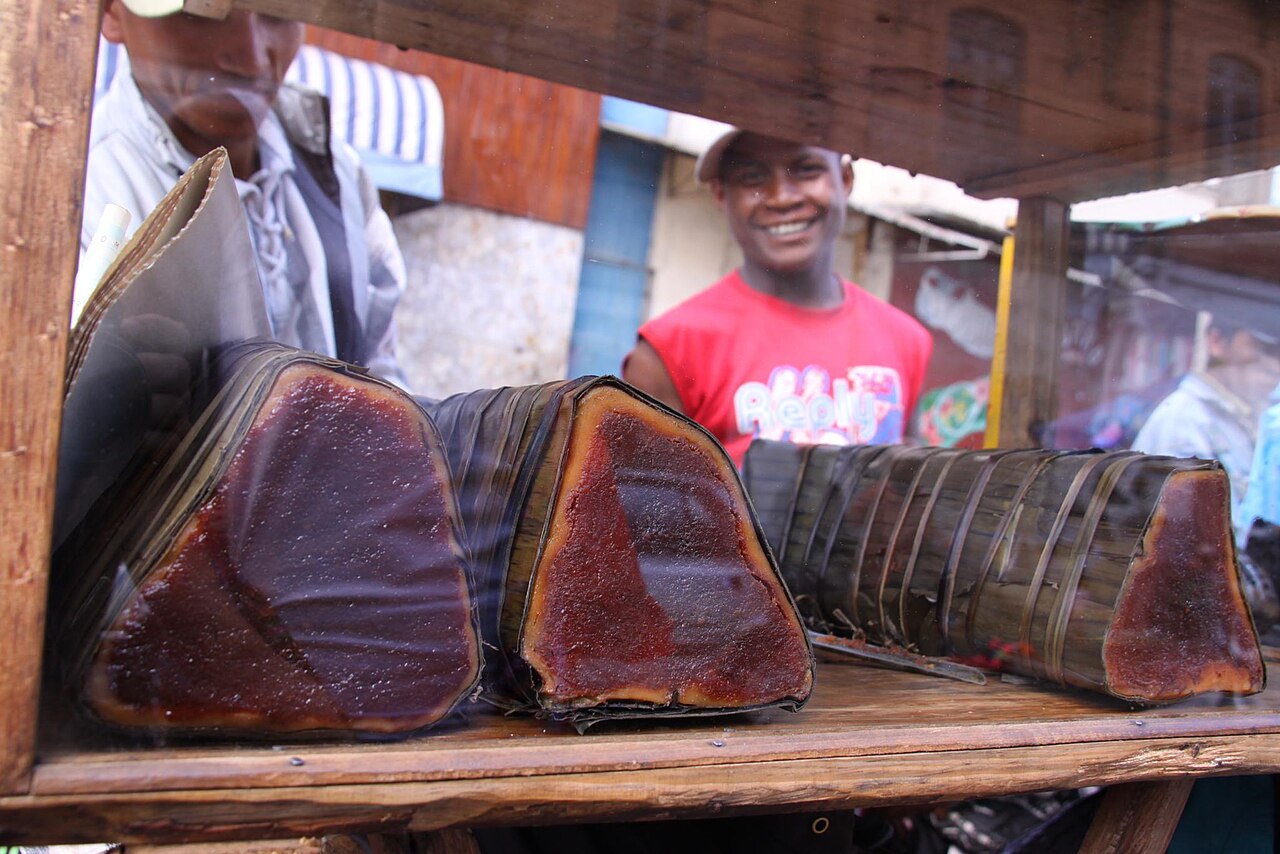
A dense sweet of ground peanuts and brown sugar wrapped in a sweet rice-flour dough, rolled into a long bundle inside banana leaves and boiled for many hours until the sugar caramelises. It is sold in thick slices at markets and by the roadside.
A quicker version, koba akondro, is made with mashed banana and is steamed in small banana-leaf parcels.
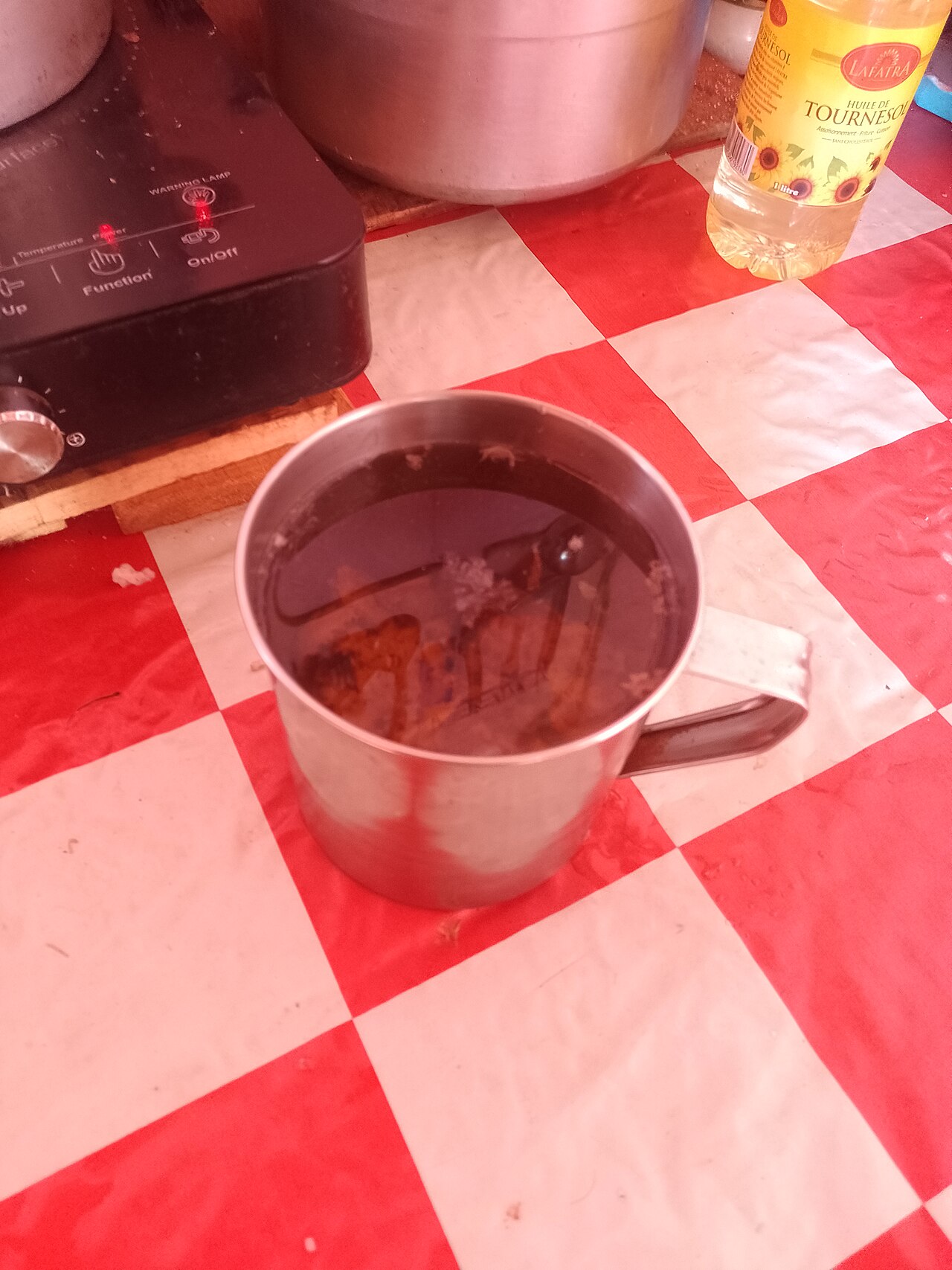
The everyday drink at a Malagasy meal. When rice is cooked, a crust sticks to the bottom of the pot; hot water is poured over it and left to steep, giving a pale brown drink with a toasted taste. Because the water has boiled, it is safer to drink than water from the tap.
It is also called ranovola, and many simple eateries serve it free with a plate of rice.
Table manners
Rice is served in a large heap with the laoka and broth beside it. Spoon a little of the laoka and broth onto your rice rather than mixing everything at once.
Wait until the eldest person at the table has started eating before you begin. In towns people usually eat with a spoon; in the countryside meals are often eaten with the right hand.
Food taboos called fady differ from place to place and family to family: some people do not eat pork, others avoid certain animals. Ask before bringing food as a gift, and never press someone to eat something they refuse.
When opening a bottle of rum, many Malagasy pour the first drops into the northeast corner of the room for the ancestors. If your hosts do this, wait before drinking.
Say 'Mazotoa homana' ('enjoy your meal') before eating and 'Misaotra' ('thank you') afterwards.
Most Malagasy people live in the cool central highlands, around Antananarivo, and along the humid east coast. The capital sits in the middle of the island on a ring of hills. Toamasina is the great port on the Indian Ocean, Mahajanga the port of the northwest, and Toliara the main town of the dry south. Distances are long and many roads are slow, so journeys that look short on the map can take a whole day.
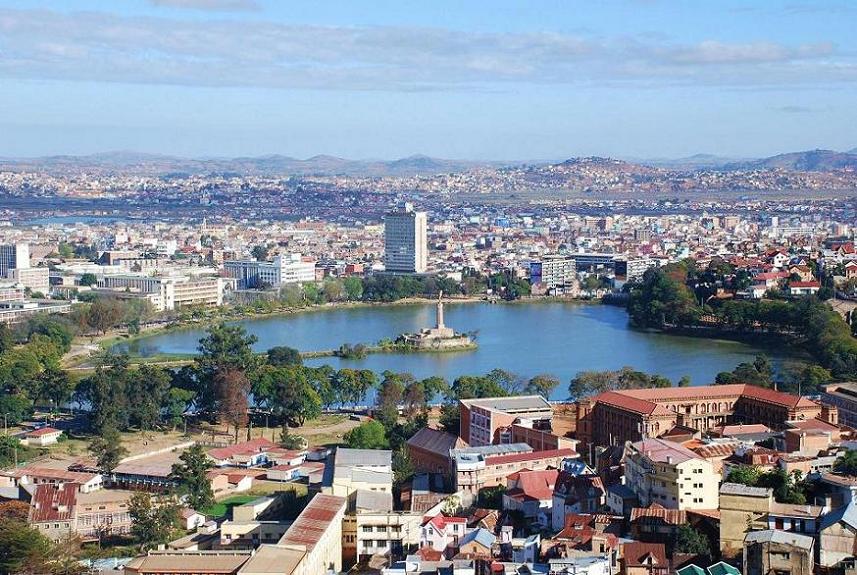
The capital and by far the largest city, with about 1.3 million people in the city itself and nearly three million in the wider area. It is built on hills about 1,280 m above sea level, and its name means 'City of the Thousand', after the thousand soldiers King Andrianjaka is said to have posted here around 1610.
The Rova, the royal palace complex on the highest hill
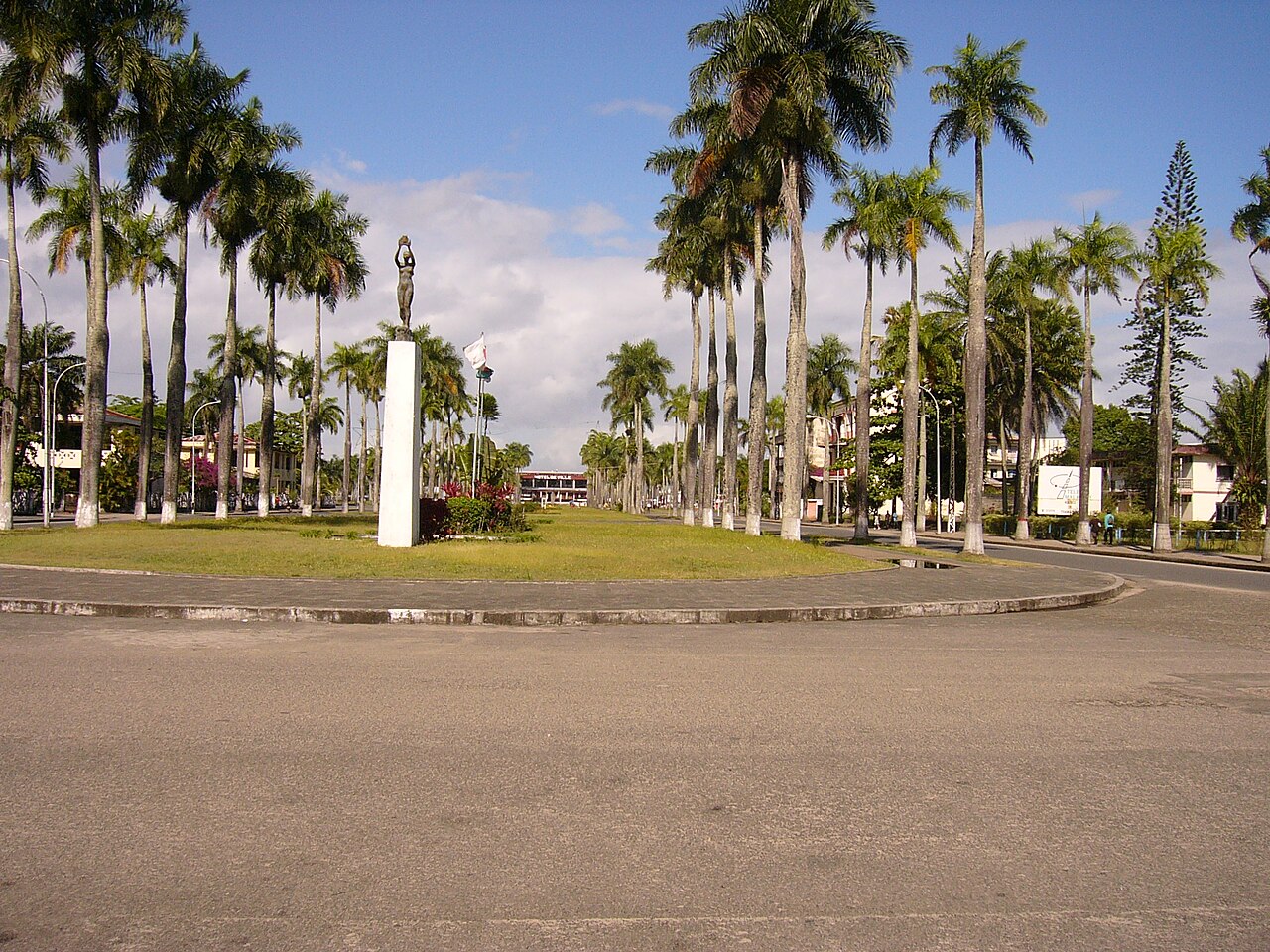
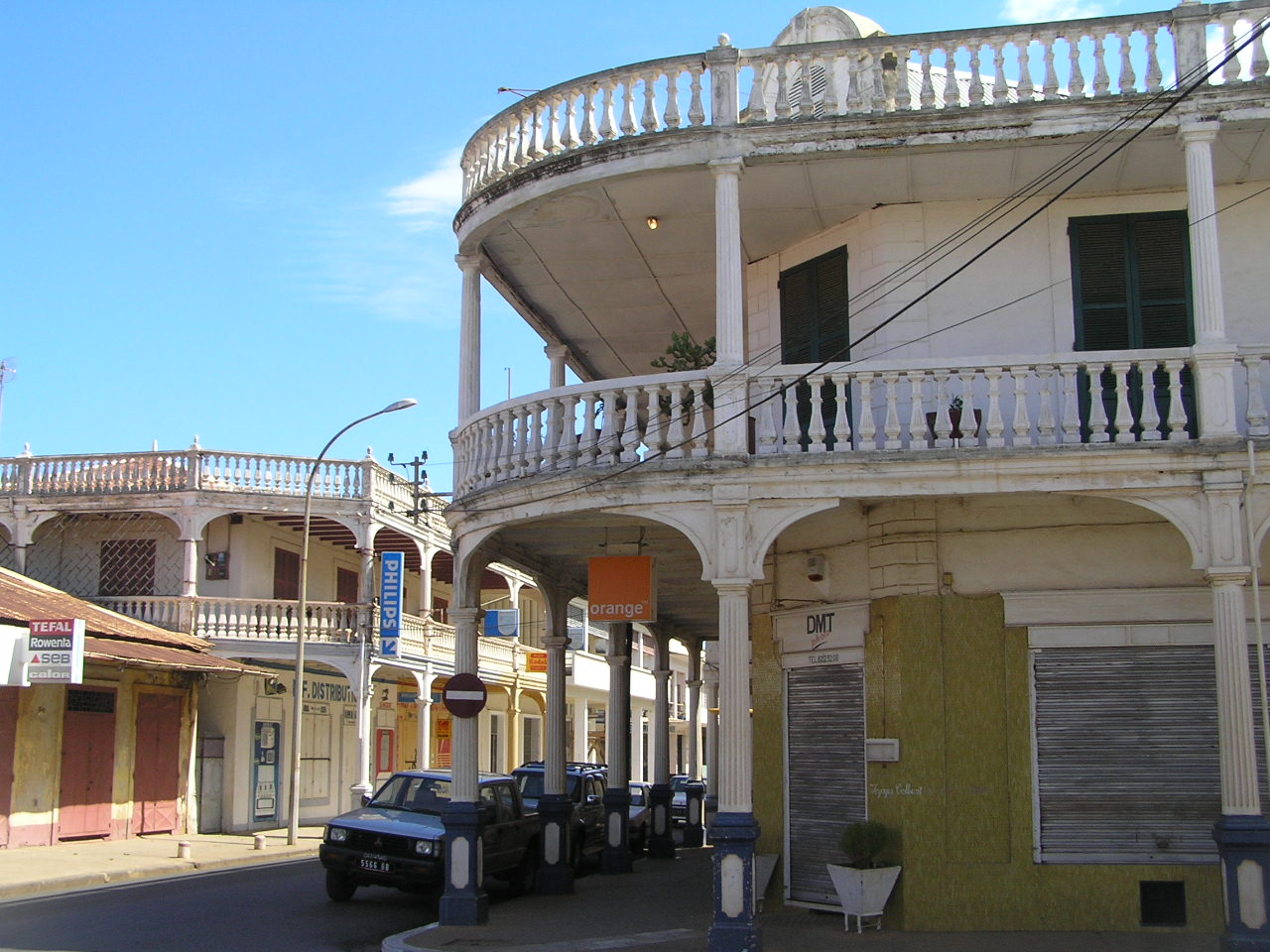
The country's main seaport, on the Indian Ocean about 215 km northeast of the capital in a straight line. It is also known by its French name, Tamatave, and its name is often explained as meaning 'salty'. Most of Madagascar's trade passes through its harbour.
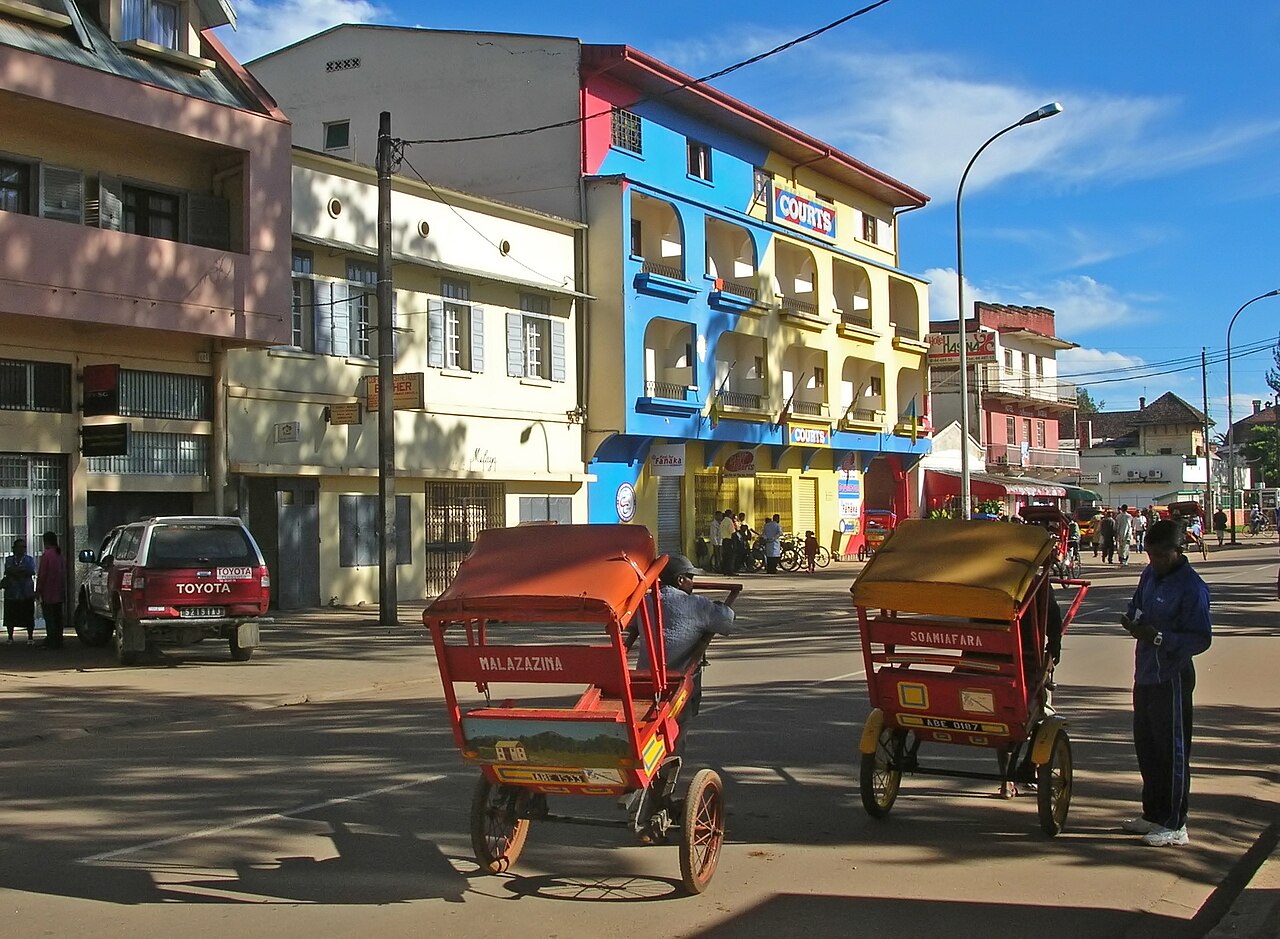
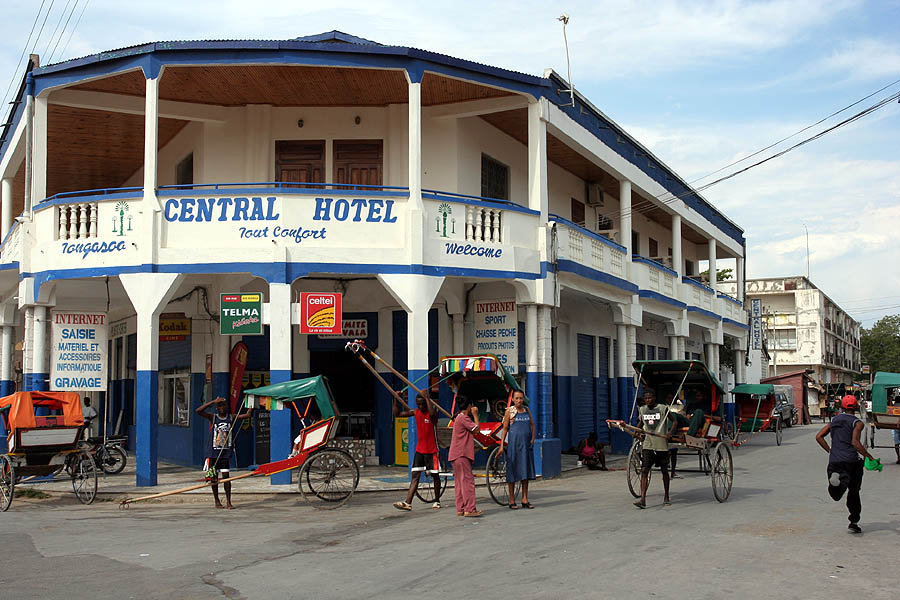
A cool highland city south of the capital, founded by Norwegian missionaries in 1872 around its hot springs. It is famous for its brightly painted pousse-pousses, the rickshaws pulled by runners, and for its industry.
Pousse-pousse rickshaws
Thermal springs
Crater lakes nearby
Workshops making toys from recycled materials and zebu horn
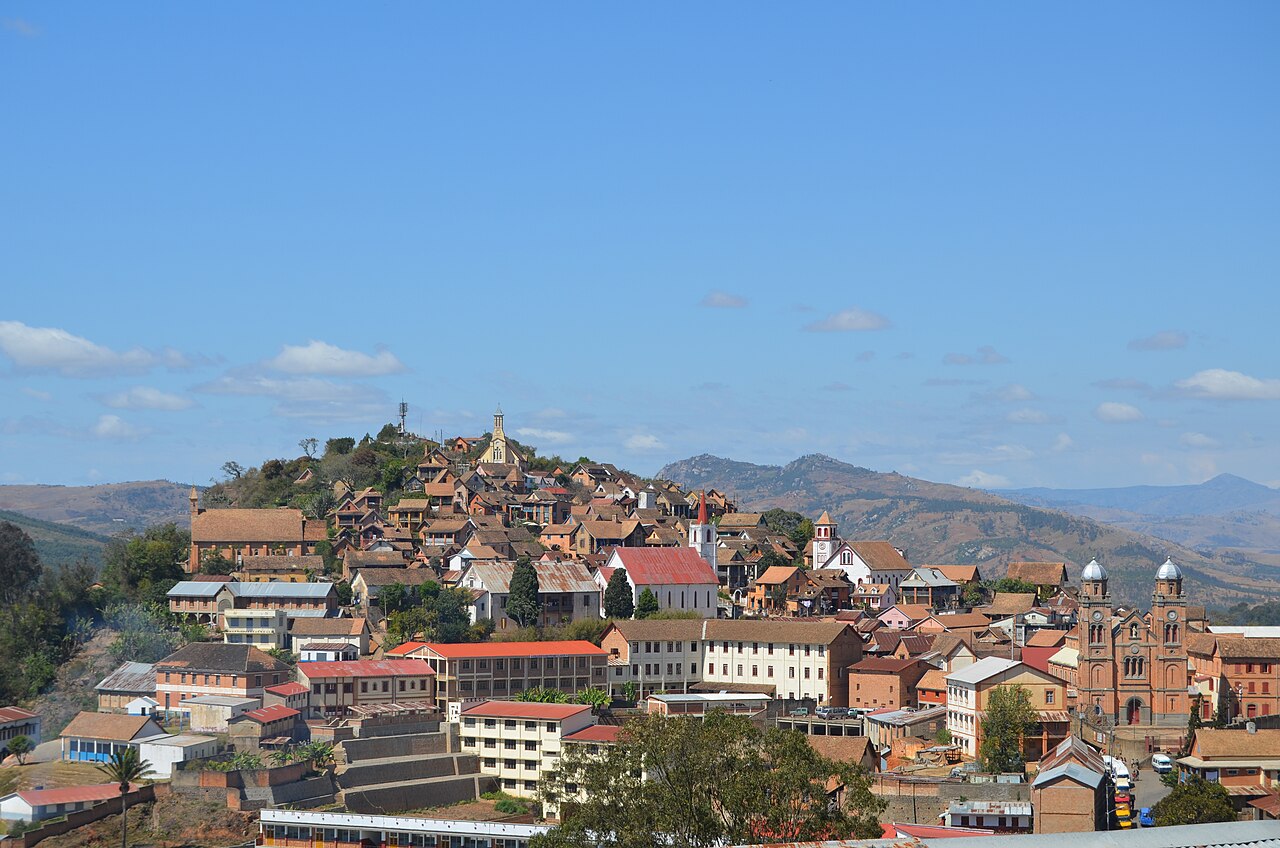
The main city of the Betsileo people, built by the Merina rulers in 1830. Its name means 'good education', and it is known for its old churches, its schools and the vineyards around it, the heart of Madagascar's small wine industry.
A hot port city at the mouth of the Betsiboka River, known in French as Majunga. For centuries it traded across the Indian Ocean with Arabia, India and East Africa, and it has large Indian and Muslim communities.
The main town of the dry southwest, close to the Tropic of Capricorn, formerly written Tuléar. A long coral reef lies offshore, and the fishing villages of the Vezo people line the coast to the north and south.
The Coton de Tulear dog breed
Coral reef and beaches at Ifaty and Anakao
Spiny forest with baobabs and succulents
The end of the RN7, the great road from the capital
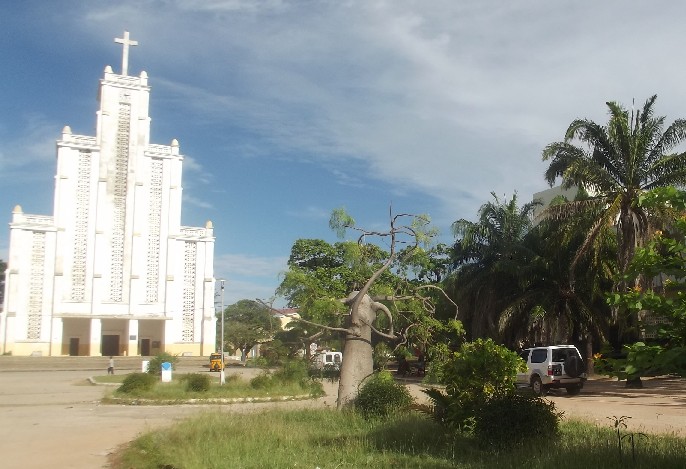
The city at the northern tip of the island, called Diego-Suarez until 1975. It stands on a huge natural bay, which France took in 1885 as a naval base.
The great bay with Nosy Lonjo, the 'Sugarloaf' island
A small, relaxed seaside town on the Mozambique Channel, in the land of the Sakalava people. Its name means 'long coast'. Most visitors come for the baobabs, and it is the starting point for the long drive north to the tsingy of Bemaraha.
A town on a green peninsula in the far southeast, also known as Fort-Dauphin. In 1643 the French East India Company built a fort here, named after the future King Louis XIV, and it became France's main base on the island, but the settlers left after about 30 years.
The main town of Nosy Be, the island off the northwest coast that is Madagascar's busiest beach resort. It is still widely known by its old French name, Hell-Ville, after a French admiral named de Hell.
A crossroads town about 115 km by road east of the capital, where the main road to Toamasina meets the road north to Lake Alaotra. The uprising of 1947 began in this area, and a memorial in the town remembers it.
A small town on the RN7 road between Fianarantsoa and Toliara and the closest town to Isalo National Park. Most people around it grow rice or raise zebu, and it is the base for walks into the sandstone canyons.
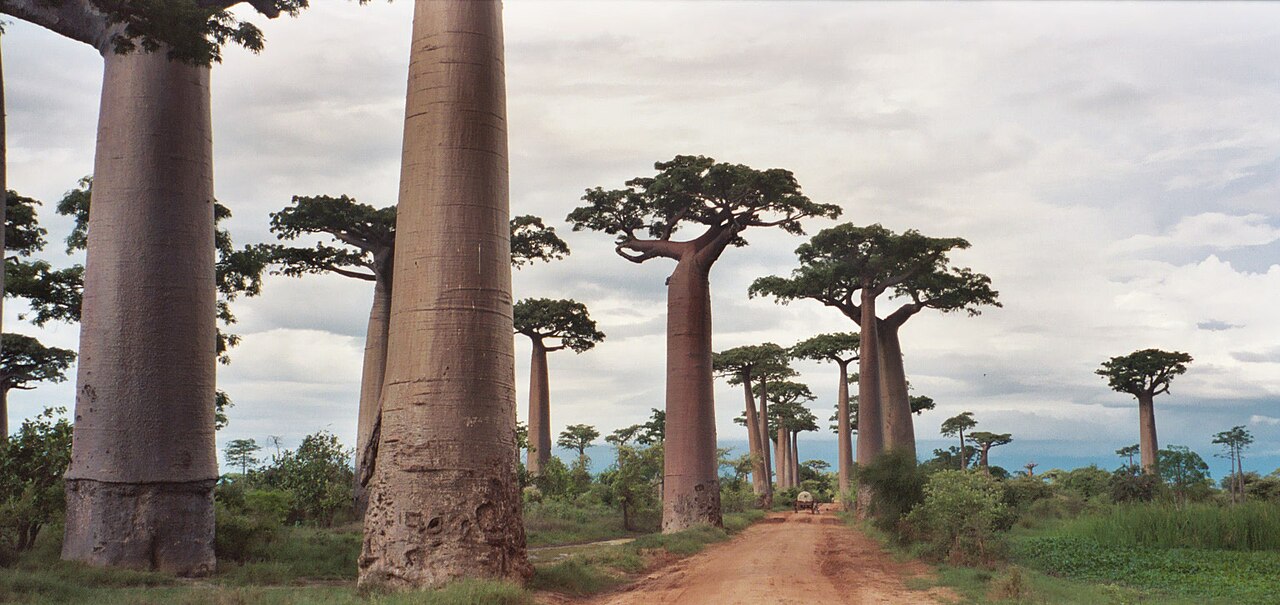
A dirt road lined with about 20 to 25 giant Grandidier's baobabs, some around 30 m tall, on the way north from Morondava. The trees once stood in thick forest that was cleared for farming, and people come at sunrise and sunset to see them glowing against the sky. The Malagasy call this baobab renala, 'mother of the forest'.
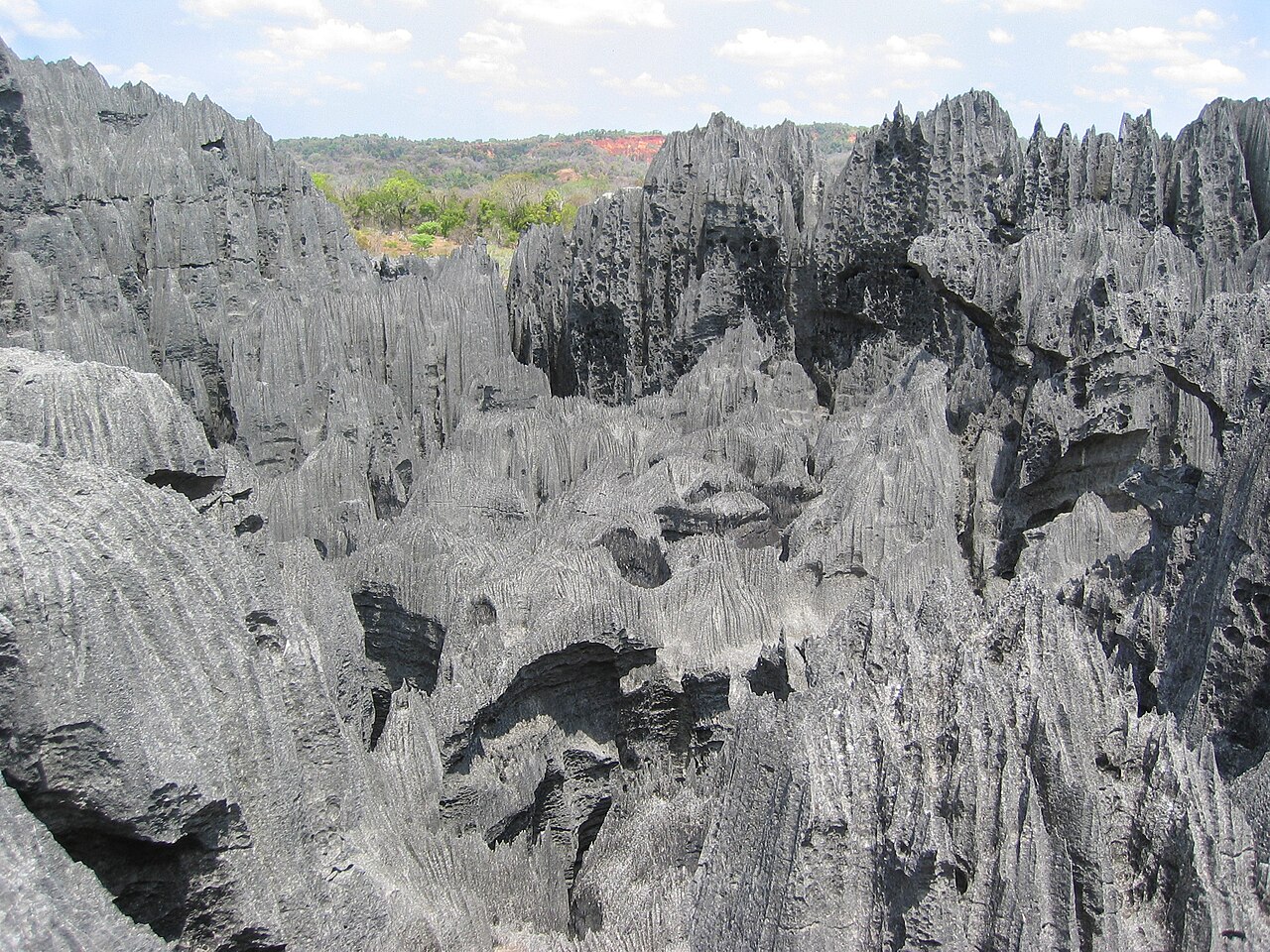
A 'forest' of razor-sharp limestone needles, cut by rain over millions of years, with canyons, caves and dry forest full of lemurs. Visitors cross it on rope bridges and ladders, with a harness and a guide. Tsingy means 'where one cannot walk barefoot'. It is a long, rough drive north from Morondava, and the road is often impassable in the rainy season. It was listed by UNESCO in 1990 and since 2023 is part of the World Heritage Site called the Andrefana Dry Forests.
A walled royal village on a sacred hill about 24 km northeast of Antananarivo, from which King Andrianampoinimerina began to reunite the Merina kingdom. It keeps wooden royal houses, tombs and old stone gates once closed with huge stone discs, and pilgrims still come to pray here. It has been a UNESCO World Heritage Site since 2001.
The palace complex of the Merina kings and queens, on the highest hill of the capital. Its largest building, the Queen's Palace or Manjakamiadana, was built for Ranavalona I in 1839 and 1840 and later encased in stone. A fire in 1995 destroyed almost everything except the stone shells of the palace and chapel. Restoration has gone on ever since, and visitors can tour the site and the royal tombs. It is not a UNESCO site; the fire struck just before it was due to be listed.
Rainforest about three hours' drive east of the capital, the easiest place to see the indri, the largest living lemur. Family groups of indri sing loud, wailing songs that carry far across the forest in the morning. Eleven kinds of lemur live in the park, along with chameleons and frogs, and a local guide is required.
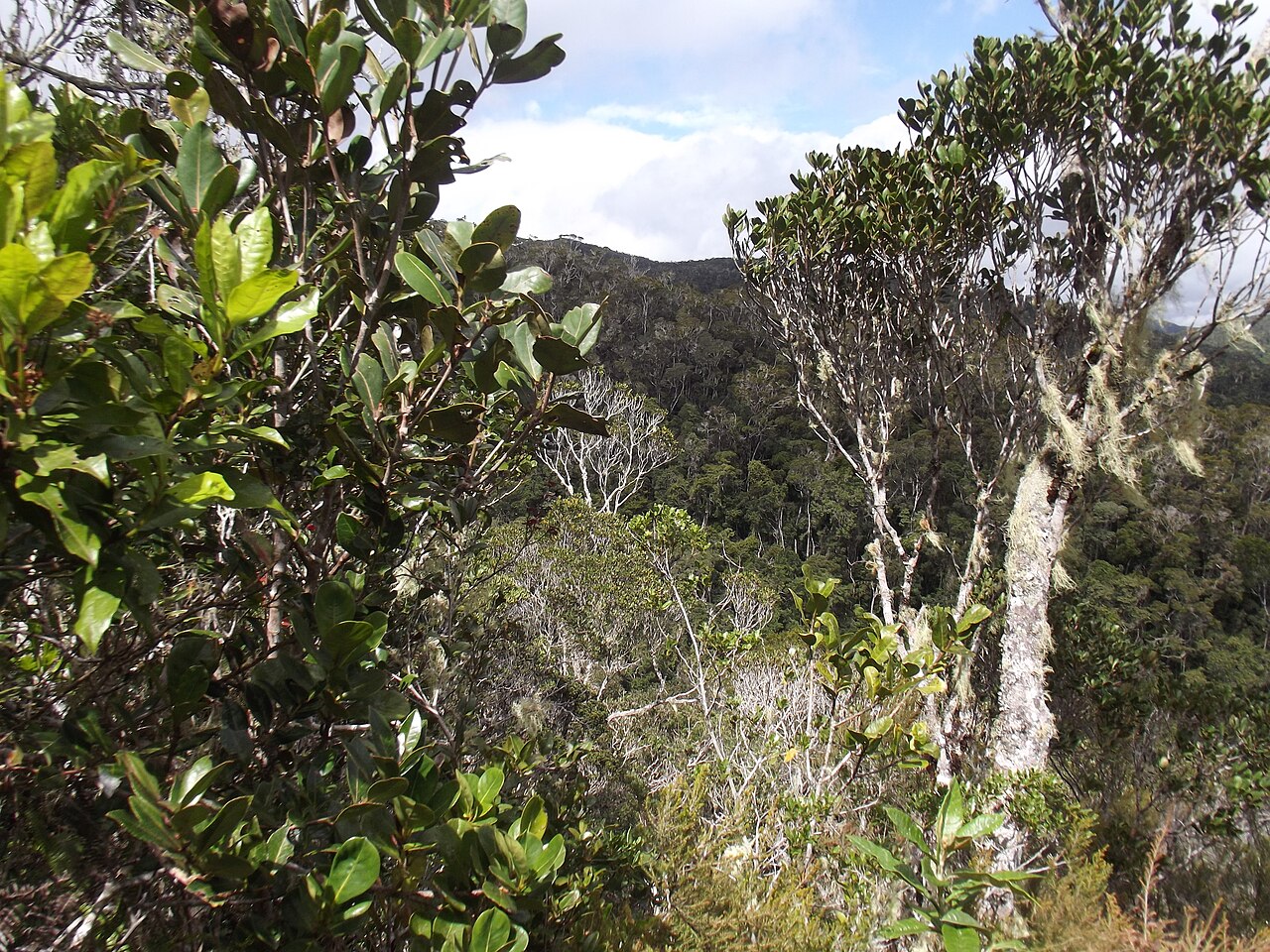
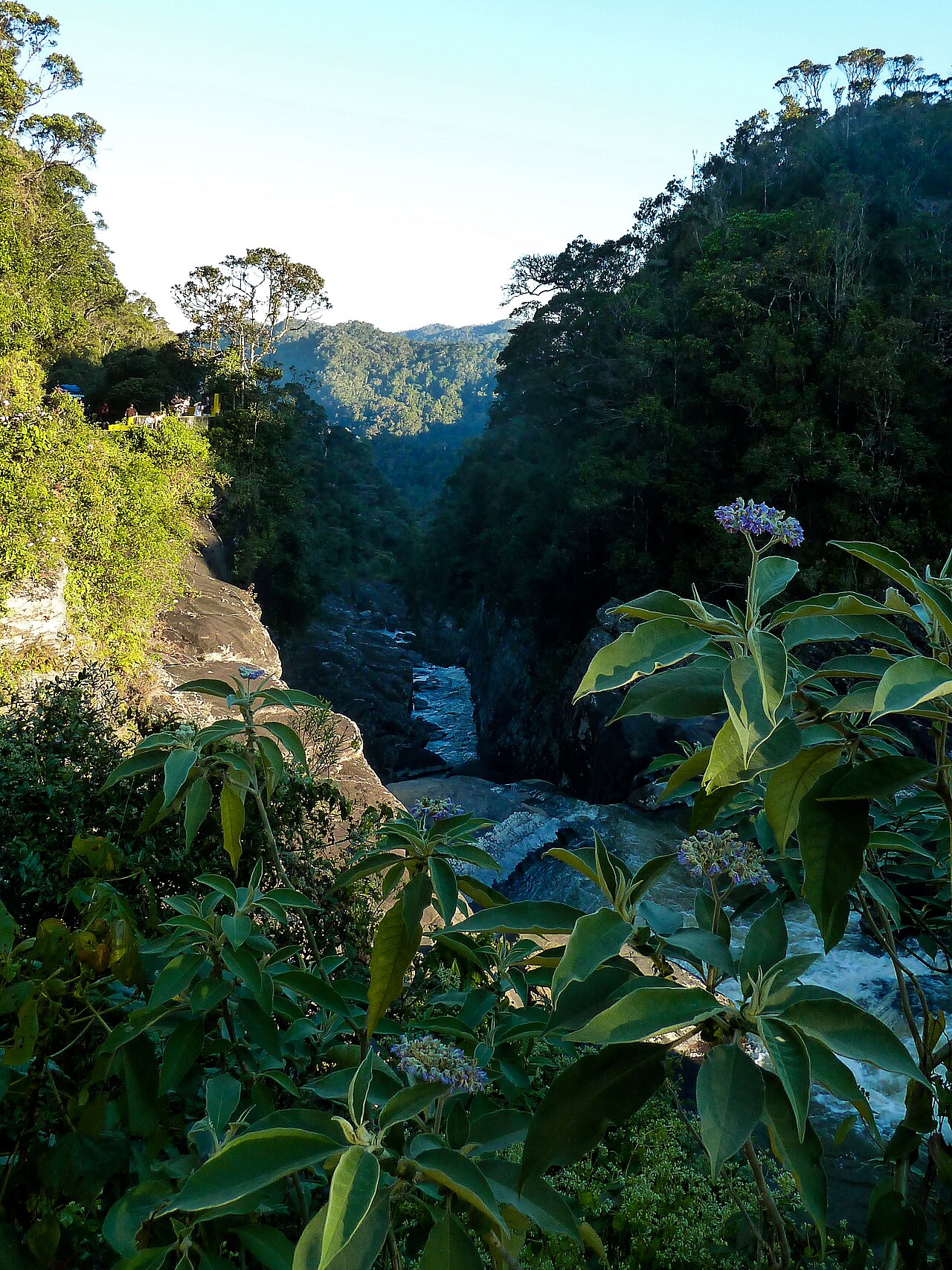
Misty rainforest on steep hills about 65 km northeast of Fianarantsoa, created in 1991 after the golden bamboo lemur was discovered here. Its name means 'hot water', after the hot springs in the nearby village. It is one of the six parks of the Rainforests of the Atsinanana, a UNESCO World Heritage Site since 2007. Illegal logging put the site on the List of World Heritage in Danger in 2010, and it was taken off that list in 2025 after protection improved.
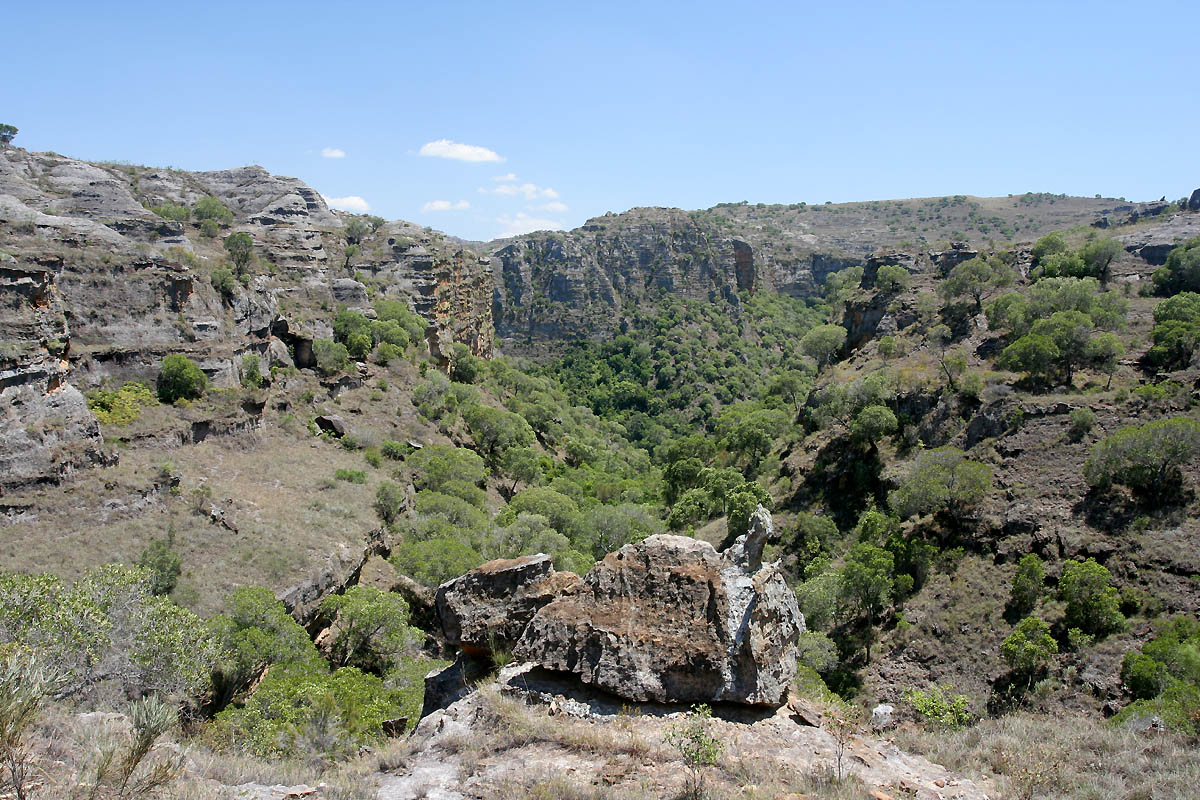
A massif of sandstone cut by wind and water into ridges, towers and canyons up to 200 m deep, with natural pools and waterfalls hidden in green gorges. Ring-tailed lemurs and sifakas live in the canyons, and the Bara people bury their dead in the cliffs. The park was created in 1962.
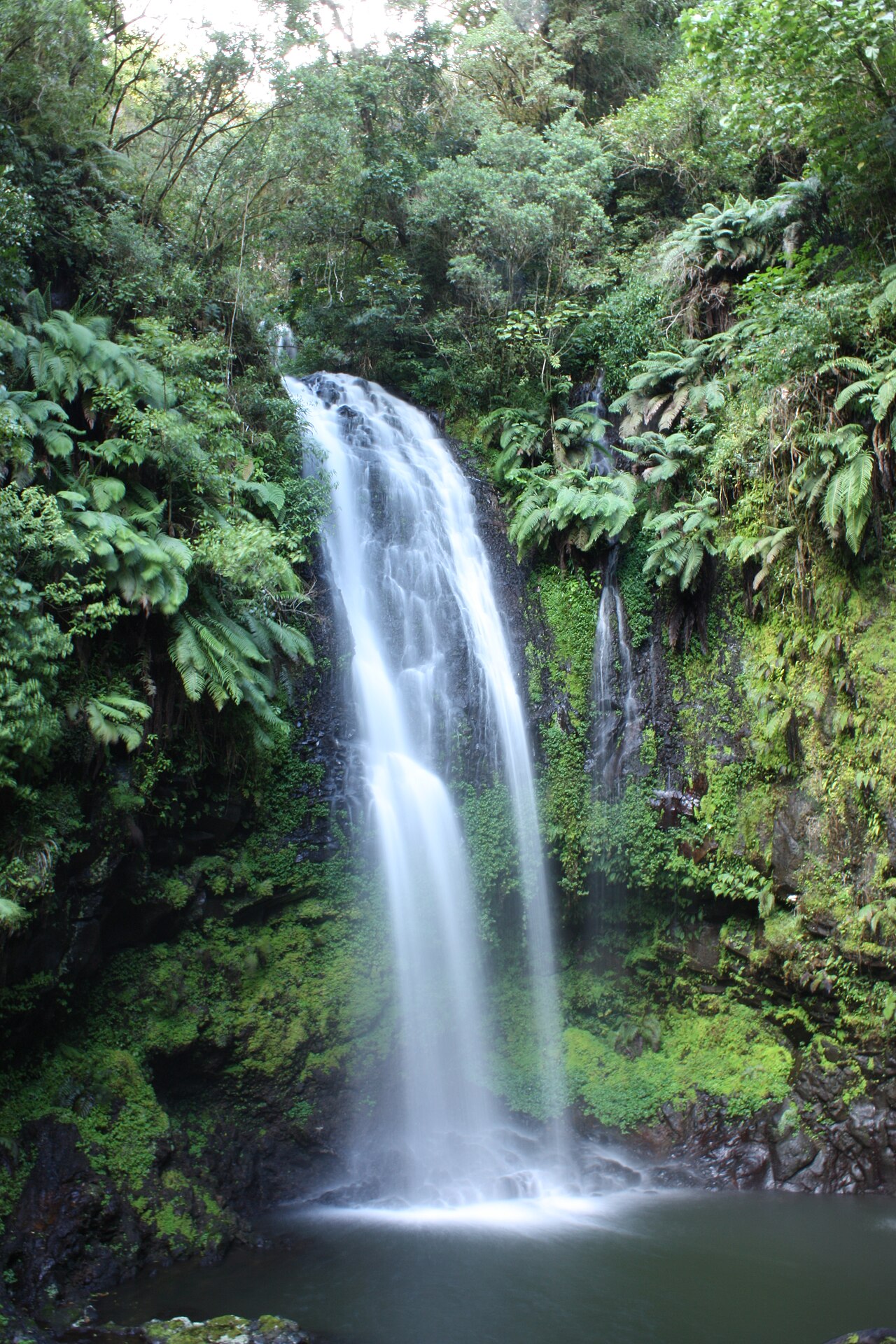
A cool, green island of rainforest on an old volcano rising above the dry north, about 45 minutes by road from Antsiranana to the village of Joffreville near the entrance. It has waterfalls, crater lakes, lemurs and some of the world's smallest chameleons. Its name, 'Amber Mountain', comes from the tree resin found there.
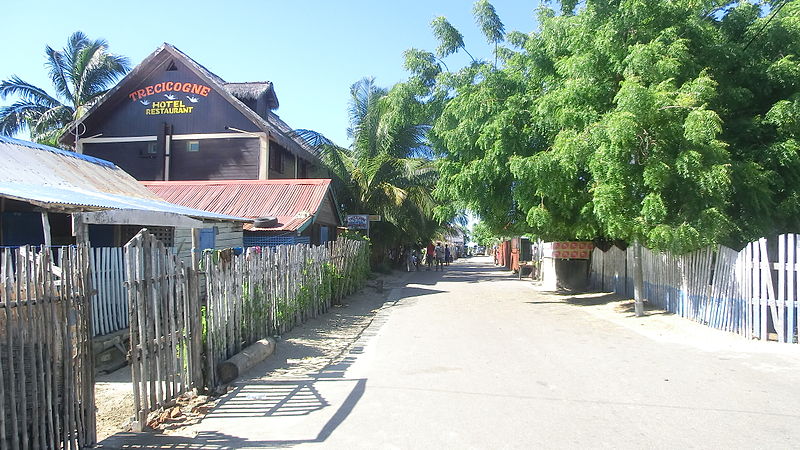
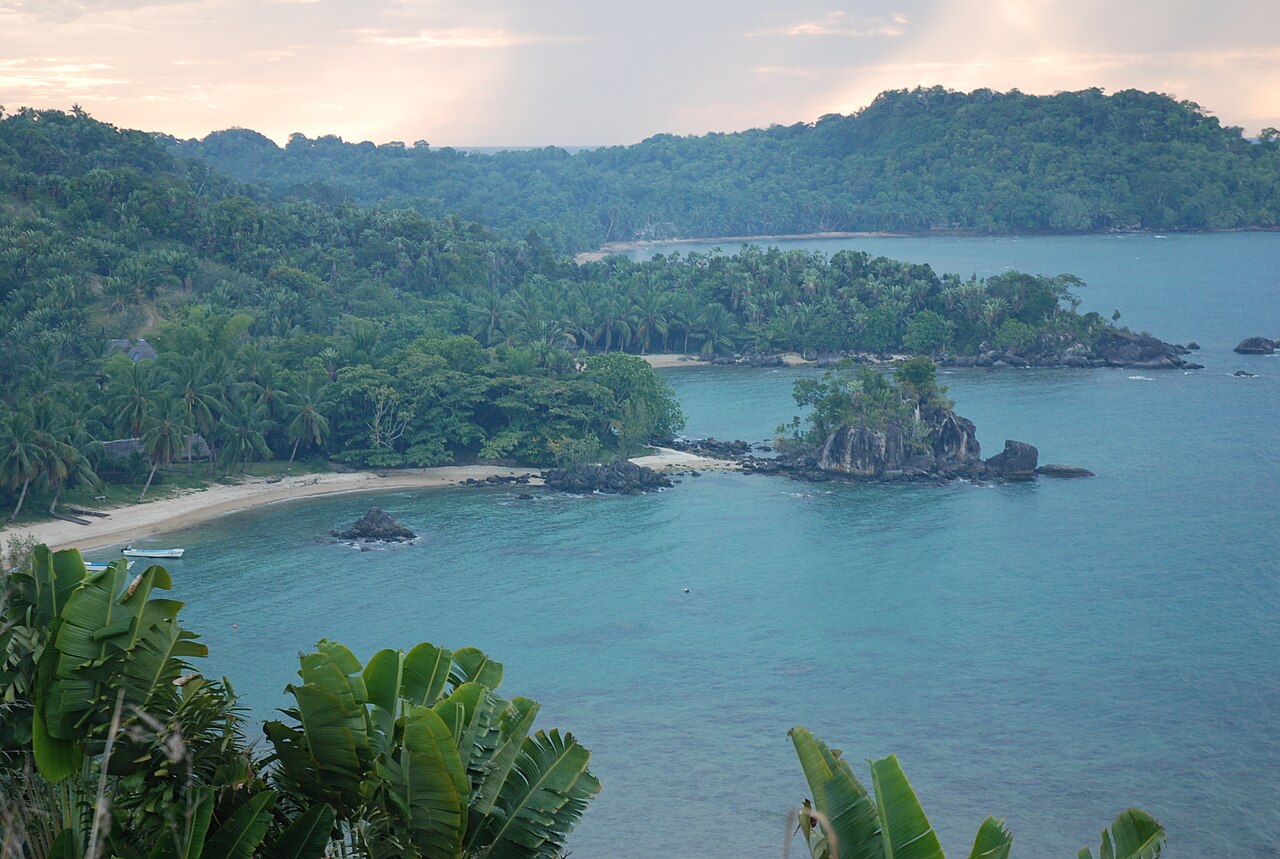
A long, narrow island off the east coast, about 60 km long and less than 10 km wide, with palm-lined beaches and quiet villages. In the late 1600s and 1700s it was a famous base for pirates, and their old cemetery can still be visited. From about July to September humpback whales come to the channel to give birth. It is reached by boat or plane; the pin marks the main town, Ambodifotatra.
Madagascar is the fourth-largest island in the world, after Greenland, New Guinea and Borneo.
02
The island split from Africa around 180 million years ago and from India about 90 million years ago. Cut off for so long, its wildlife evolved alone, and more than 90 percent of it is found nowhere else.
03
Lemurs are native only to Madagascar. In its July 2020 Red List update, the IUCN found that 103 of the 107 surviving lemur species were threatened with extinction, and 33 were Critically Endangered.
04
The aye-aye, a lemur with a long, thin middle finger, is the world's largest nocturnal primate. It taps on tree trunks, listens for hollows where grubs live, gnaws a hole and fishes them out with that finger.
05
Nearly half of all the chameleon species in the world live in Madagascar, from giants over 60 cm long to some of the smallest reptiles on Earth.
06
As of 2020, eight species of baobab tree were recognised, and six of them grow only in Madagascar.
07
In 2023 Madagascar was the world's biggest producer of vanilla, growing 42 percent of the world's raw vanilla. The vanilla orchid itself came from Mexico and was brought to the island by the French in the 1800s.
08
The ariary is one of only two currencies in the world that are not divided into tenths or hundredths: one ariary is five iraimbilanja. The other is the ouguiya of Mauritania. In practice the iraimbilanja is now too small to be used.
09
The closest relative of the Malagasy language is Ma'anyan, spoken along the Barito River in southern Borneo, about 7,300 km away across the Indian Ocean.
10
Antananarivo means 'City of the Thousand'. The story goes that King Andrianjaka took the hill around 1610 or 1625 and left a garrison of a thousand soldiers to guard it.
11
Madagascar was home to the elephant birds, huge flightless birds that are now extinct. One of them, Aepyornis maximus, may have been the largest bird that ever lived.
12
In the highlands some families hold a famadihana, the 'turning of the bones', every five to seven years. They take their ancestors' remains from the family tomb, wrap them in fresh cloth and dance with them to music before returning them.
13
The word tsingy, used for the sharp limestone forests of the west and north, means 'where one cannot walk barefoot'.
Stress usually falls on the second-to-last syllable, final vowels are barely heard, o sounds like 'oo' and tr sounds close to 'ch'. Pronunciation is written the way it sounds; the capital letters show where the stress goes. Audio is coming soon.
Greetings
salamasah-LAHMhello
velomaveh-LOOMgoodbye
Courtesy
misaotramee-SOW-tchthank you
azafadyah-zah-FAHDplease; excuse me
tompokoTOOM-pooksir or madam (a polite word added when speaking to an elder or an official)
Basics
enyENyes
tsiaTSEE-uhno
tsaraTSARgood
Food
varyVARrice
laokaLOH-kuhthe dish eaten with rice (meat, fish, beans or greens)
Tap water is not safe to drink. Use bottled or treated water, and in simple eateries you can ask for ranon'apango, the rice water, which has been boiled. Be careful with salads and fruit you cannot peel.
Protect yourself from mosquitoes
Malaria is present in much of Madagascar, especially on the coasts. Ask your doctor about tablets well before you travel, sleep under a net and use a strong insect repellent from dusk.
Allow plenty of time on the roads
Most roads are slow, many are unpaved and some become impassable in the rainy season. A day for a few hundred kilometres is normal. Most visitors hire a car with a driver, and domestic flights save days on long trips.
Choose the dry season
The rainy season runs from about November to April and can bring cyclones, especially on the east coast. The dry season, from May to October, is the easiest time to travel, and the highland mornings can be chilly.
Respect fady and ask before photographs
Local taboos (fady) differ from place to place: they can forbid a food, a colour of clothing or swimming in a certain lake. Ask your guide what applies, never photograph a tomb without permission, and always ask before photographing people.
Show respect to elders
Add 'tompoko' (TOOM-pook), meaning sir or madam, when speaking to older people or officials. In a village, it is the custom to greet the head of the village first.
Carry small notes
The ariary comes in many notes, and change is often short. Carry small notes for markets and taxis, and bring some euros as a reserve, since cash machines in towns can be out of order.
Take a guide in the parks
In national parks such as Andasibe-Mantadia a local guide is required. Do not feed or touch the lemurs, stay on the paths and keep your voice low so you can hear the animals.