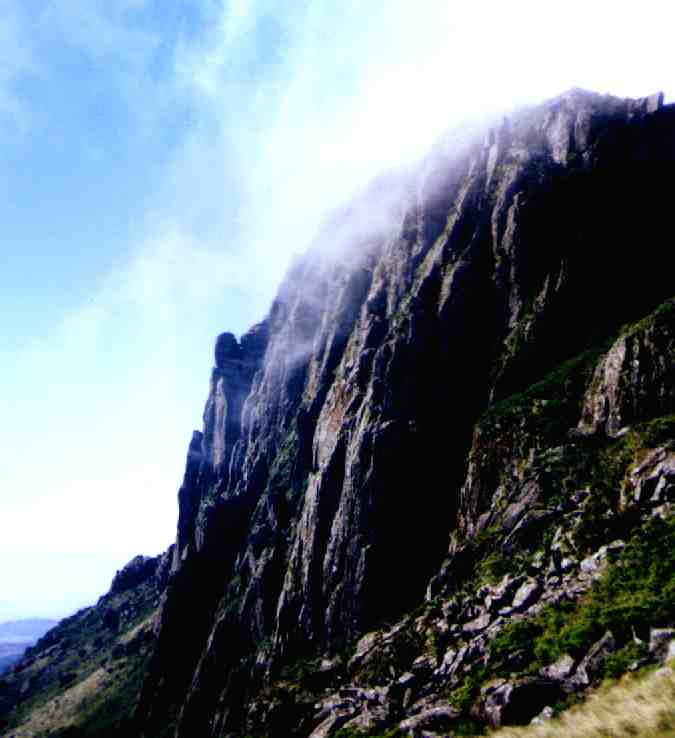
The smoke that thunders at Victoria Falls, the stone walls of Great Zimbabwe and some of Africa's finest wildlife parks, all on a high, sunny plateau between two great rivers.
Your trip to Zimbabwe
Ready for the trip?
10 questionsAbout 3 minutesNo timer
Explore Zimbabwe
You have explored 0 of 9 parts. Scroll on to discover the rest.
A free large-print PDF. Choose what goes in: facts, map, history, dishes and recipes, phrases, fun facts, a quiz with or without answers. Made for clubs, care homes, libraries and family afternoons.
Zimbabwe is a landlocked country in southern Africa, lying between the Zambezi River in the north and the Limpopo in the south. Most of it is a high plateau more than 1,000 m above sea level, which keeps the climate pleasantly mild. In the east rise the green Eastern Highlands, in the north the Zambezi flows past Lake Kariba and the wild floodplains of Mana Pools, and in the far northwest the river plunges over Victoria Falls, which Zimbabwe shares with Zambia.
The country takes its name from Great Zimbabwe, a city of dry-stone walls built by ancestors of the Shona people from the 11th century onwards. Later came the Mutapa and Rozvi states and, in the 19th century, the Ndebele kingdom around Bulawayo. From 1890 the British South Africa Company took control, and the territory became the colony of Southern Rhodesia. After a long struggle it became independent as Zimbabwe on 18 April 1980.
About 15 million people live here, most of them Shona or Ndebele. Visitors come for the falls, for safaris in Hwange and Mana Pools, for the granite hills of Matobo and for the ruins of Great Zimbabwe. At home, almost every meal is built around sadza, a stiff maize porridge eaten with the fingers, together with a stew or greens.
CapitalHarare
PopulationAbout 15 million (15,178,979 at the 2022 census, the latest; estimates for later years are higher)
Official languageSixteen under the 2013 Constitution: Chewa, Chibarwe, English, Kalanga, Koisan, Nambya, Ndau, Ndebele, Shangani, Shona, sign language, Sotho, Tonga, Tswana, Venda and Xhosa. Shona, Ndebele and English are the most widely used
CurrencyZimbabwe Gold (ZiG, code ZWG), introduced in April 2024. As of September 2026 the United States dollar is also legal tender and is used for most everyday payments
AreaAbout 390,757 km²
GovernmentRepublic of ten provinces. The President is head of state and of government, and Parliament has two chambers, the Senate and the National Assembly
Highest mountainMount Nyangani in the Eastern Highlands, 2,592 m
Longest riverThe Zambezi, about 2,574 km in total, which forms much of the northern border with Zambia on its way to the Indian Ocean
NeighboursZambia, Mozambique, South Africa and Botswana. Namibia comes within about 150 m of the northwest corner but does not touch it
Zimbabwe's story runs from San hunters and their rock paintings, through the stone city of Great Zimbabwe and the kingdoms that followed it, to the Ndebele state, ninety years of British and settler rule, a long war and independence in 1980. In recent decades the country has lived through hard economic times and several new currencies.
1300
Great Zimbabwe at its height
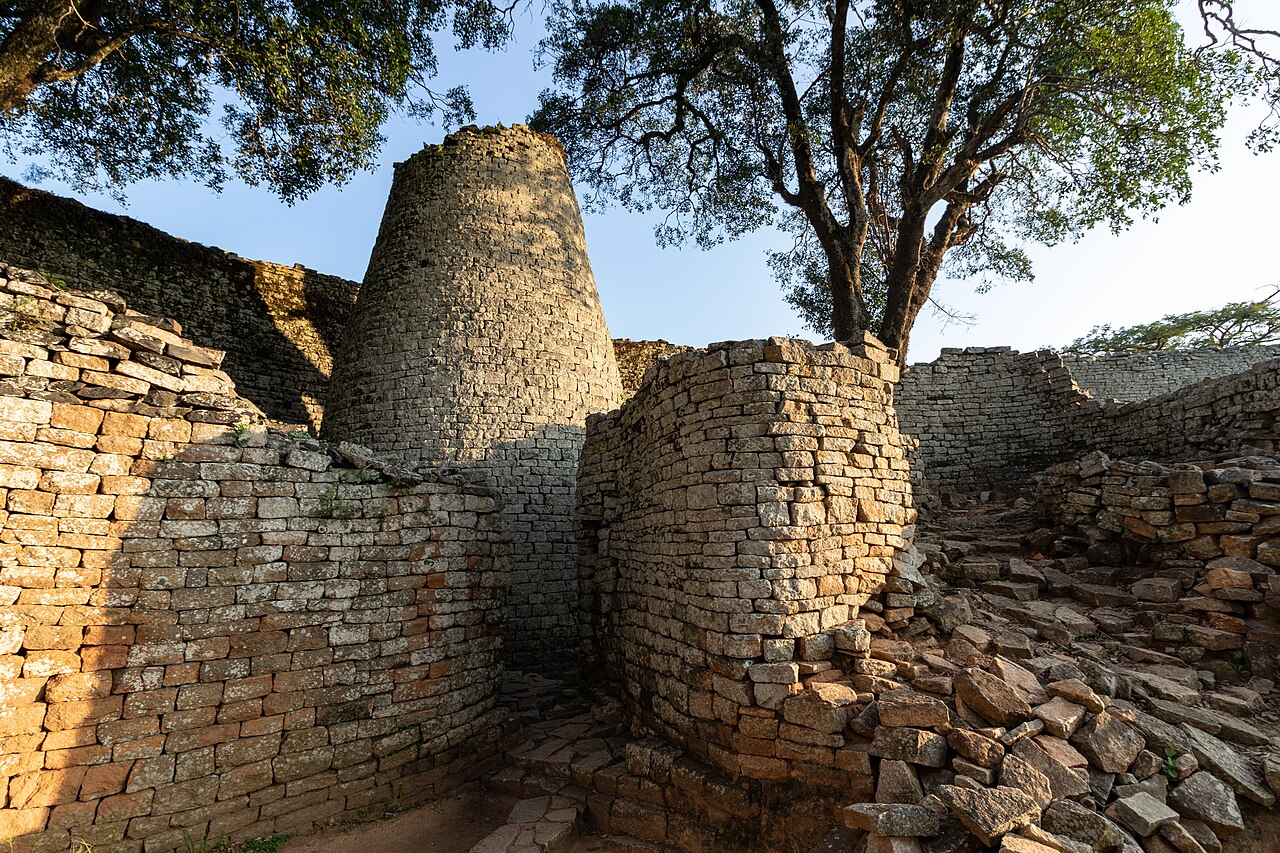
By about 1300 the stone city of Great Zimbabwe, near today's Masvingo, had become the capital of a wealthy Shona kingdom that traded gold and ivory with the Indian Ocean coast. Its Great Enclosure, with walls up to 11 m high built without mortar, dates from the 13th and 14th centuries.
1450
The Mutapa kingdom rises
From about 1450 the Kingdom of Mutapa, known to the Portuguese as Monomotapa, ruled much of northern Zimbabwe and parts of Mozambique. It grew rich on trade in gold with Arab merchants and later with the Portuguese.
1531
The name is first written down
In 1531 Vicente Pegado, captain of the Portuguese fort at Sofala, recorded that local people called the great stone buildings 'Symbaoe'. It is the first written record of the name Zimbabwe.
1683
The Rozvi defeat the Portuguese
Around 1683 the Rozvi, a Shona state that grew up in response to the Portuguese presence, defeated a Portuguese army at Maungwe. Within ten years they had driven the Portuguese traders off the Zimbabwean plateau, and they went on to rule much of the country.
1840
The Ndebele settle in the southwest
Around 1840 the Ndebele under their king Mzilikazi, who had broken away from the Zulu kingdom, settled for good in the southwest, in the land later called Matabeleland. Their capital grew into the city of Bulawayo.
1855
Livingstone sees the falls
On 16 November 1855 the Scottish missionary David Livingstone became the first European known to have seen the great waterfall on the Zambezi, which local people called Mosi-oa-Tunya, 'the smoke that thunders'. He named it Victoria Falls after Queen Victoria.
1890
The Pioneer Column founds Fort Salisbury
On 12 September 1890 the Pioneer Column of Cecil Rhodes's British South Africa Company raised its flag at Fort Salisbury, today's Harare, and began company rule over Mashonaland.
1893
The First Matabele War
In 1893 the forces of the British South Africa Company defeated the Ndebele kingdom and took Bulawayo. King Lobengula fled north and died soon afterwards.
1896
The First Chimurenga
In 1896 the Ndebele and then the Shona rose against company rule. The risings were put down by 1897, but they are remembered in Zimbabwe as the First Chimurenga, a Shona word for a war of liberation.
1905
The Victoria Falls Bridge opens
The railway bridge across the Zambezi gorge just below Victoria Falls was completed in 1905 and officially opened on 12 September. It linked today's Zimbabwe and Zambia and brought the first steady stream of visitors to the falls.
1923
Southern Rhodesia becomes a self-governing colony
After a referendum, company rule ended and in 1923 Southern Rhodesia became a self-governing British colony. Power and most of the best farmland stayed in the hands of the small white minority.
1960
The Kariba Dam opens
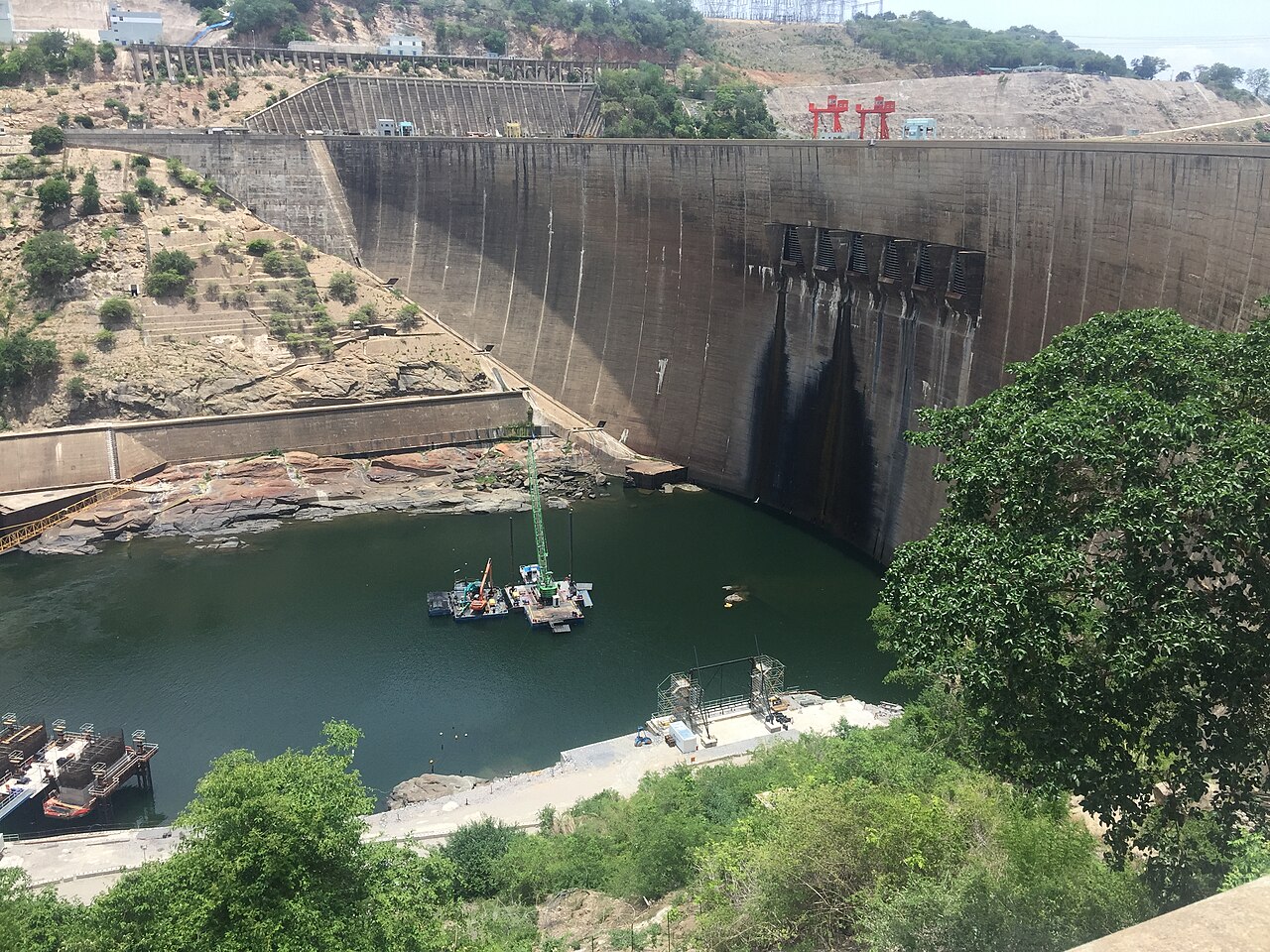
The Kariba Dam across the Zambezi, built between 1955 and 1959, was officially opened in May 1960. The lake behind it, Lake Kariba, filled up over the following years and became one of the largest artificial lakes in the world.
1965
Rhodesia declares independence
On 11 November 1965 the white minority government declared independence from Britain without its consent, to avoid majority rule. The declaration was not recognised internationally, sanctions followed, and a long guerrilla war began.
1979
The Lancaster House Agreement
Talks at Lancaster House in London ended with an agreement on 21 December 1979. The war came to an end, the country returned briefly to British rule, and elections open to all adults were held in early 1980.
1980
Independence as Zimbabwe
On 18 April 1980 the country became independent as the Republic of Zimbabwe, and 18 April is still celebrated as Independence Day. Two years later, in 1982, the capital Salisbury was renamed Harare.
2024
The ZiG currency is introduced
After the Zimbabwean dollar lost almost all its value in the hyperinflation of 2008 and again in later years, the country used the US dollar and other foreign money. In April 2024 a new currency, Zimbabwe Gold (ZiG), backed by gold and foreign reserves, was introduced alongside the US dollar.
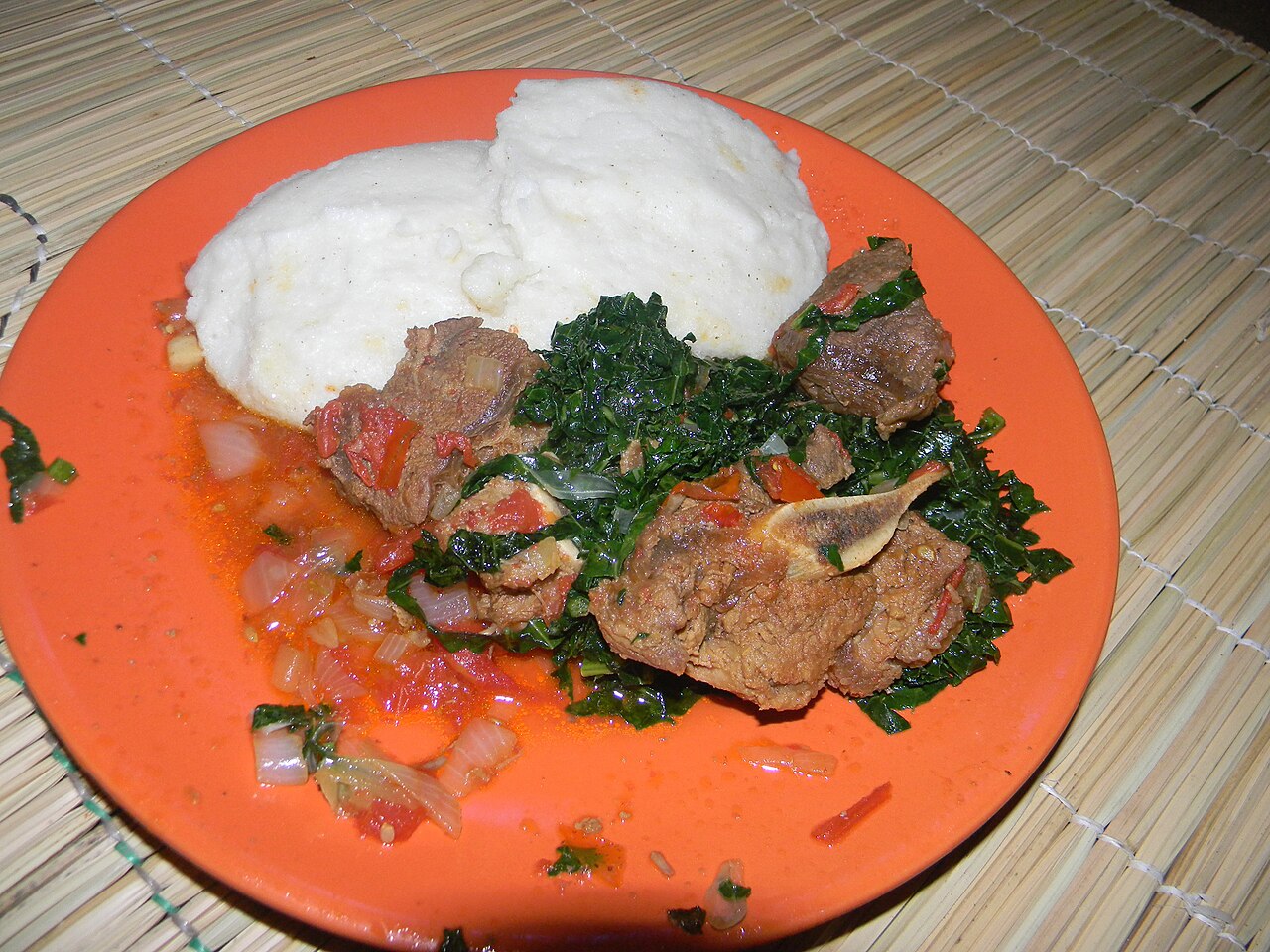
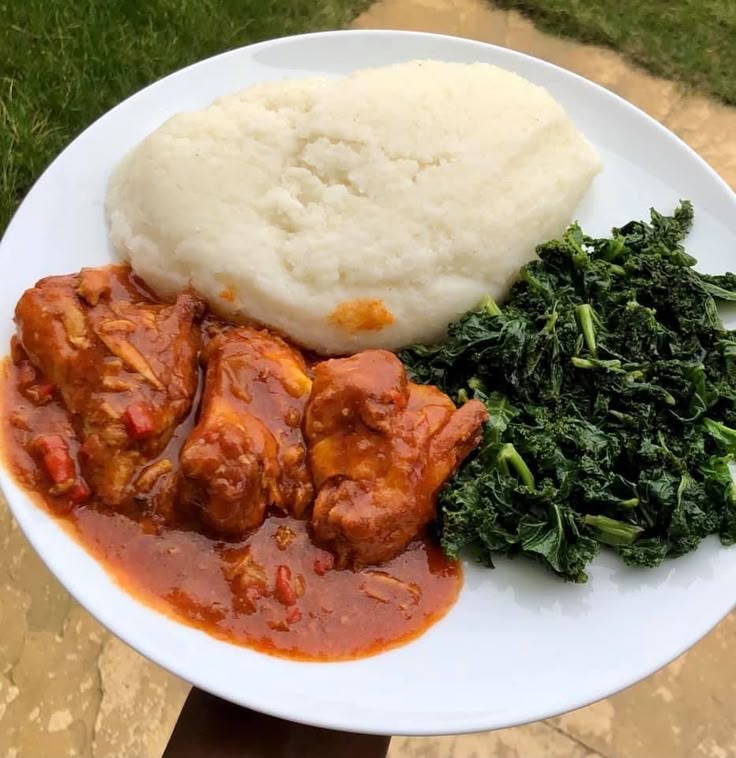
Zimbabwean cooking is simple, filling and built on maize. Breakfast is often a thin porridge, and lunch and supper are usually sadza, a stiff maize porridge, with a relish: a meat or chicken stew, greens cooked with peanut butter, beans, dried fish or mopane worms. Peanut butter, called dovi, flavours many dishes. Between meals people snack on roasted maize, boiled round nuts and wild fruit, and the British habit of morning and afternoon tea is still strong.
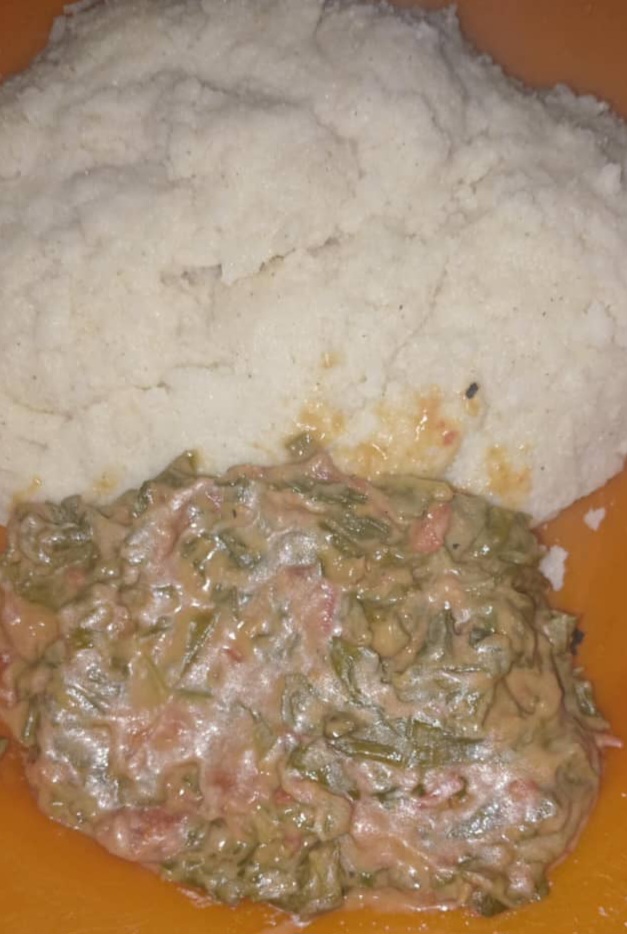
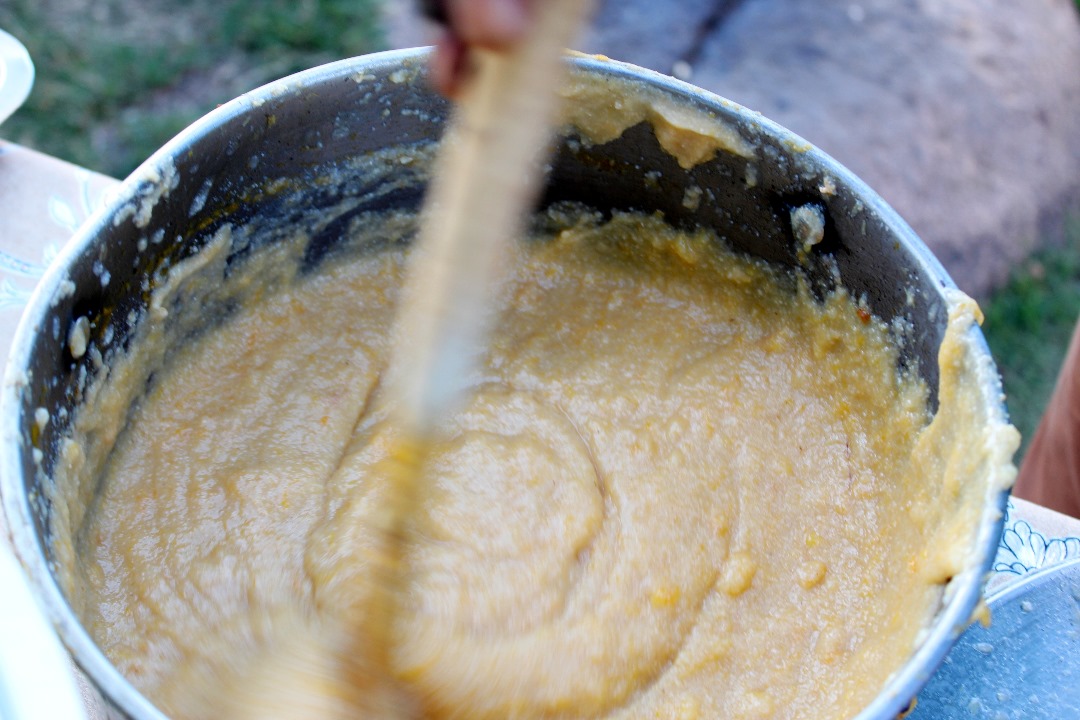
The heart of almost every meal: a stiff porridge of finely ground white maize meal cooked with water until it holds its shape. It is served in smooth mounds with a relish of stew, greens or beans. People pinch off a piece with the right hand, roll it into a ball, press a hollow into it with the thumb and use it to scoop up the relish.
Sadza can also be made from sorghum or finger millet, the grains that were eaten here before maize arrived from the Americas.
See the recipe
Serves 4
30 min
Ingredients
About 750 ml water for boiling
About 250 ml cold water
About 400 g fine white maize meal (mealie meal)
Method
Bring the 750 ml of water to the boil in a heavy pot. Mix a cup of the maize meal with the cold water to a smooth paste.
Stir the paste into the boiling water and keep stirring until it thickens into a thin porridge. Cover and let it bubble gently for about 10 minutes.
Add the rest of the maize meal a little at a time, beating hard with a strong wooden spoon, until the sadza is very thick, smooth and comes away from the sides of the pot. Take care, as the thick porridge can spit.
Cover and cook on a low heat for 5 more minutes. Shape into mounds with a wet serving spoon and serve at once with a stew or greens.
Nyama simply means 'meat' in Shona, and on the plate it usually means a stew of beef or chicken simmered with onion, tomato and a little curry powder or paprika until the sauce is thick. It is the favourite relish for sadza, especially on Sundays and at family gatherings.
At graduations, weddings and other big family occasions, a goat or a cow is often killed and cooked for all the guests.
See the recipe
Serves 4
45 min
Ingredients
1 kg chicken pieces (or stewing beef)
1 onion, chopped
3 tomatoes, chopped
1 tablespoon tomato purée
1/2 teaspoon curry powder
1/2 teaspoon paprika
2 garlic cloves
350 ml chicken stock
1 carrot, chopped
1 teaspoon flour mixed with 50 ml water
1 teaspoon salt
Method
Put the chicken in a pot with the onion, curry powder, paprika and salt.
Add the tomatoes, tomato purée, garlic and stock. Cover and bring to the boil.
Turn down the heat and simmer until the chicken is tender and the sauce has reduced, about 30 minutes (beef needs longer).
Add the carrot and the flour paste and simmer for 5 more minutes. Taste for salt and serve with sadza and greens.
Leafy greens cooked with onion, tomato and peanut butter, which melts into a creamy, nutty sauce. Spinach, rape, covo or pumpkin leaves are all used. It is one of the most common relishes for sadza, and a good way to make a meal of vegetables alone.
See the recipe
Serves 4
15 min
Ingredients
A large bunch of spinach or other leafy greens
1 small onion, chopped
2 tomatoes, chopped
3 tablespoons smooth peanut butter
3 tablespoons oil
About 50 ml water
Salt
Method
Wash the greens and cut them into fine strips.
Heat the oil in a pot, add the greens and a pinch of salt, then the onion, and fry for about 2 minutes.
Add the tomatoes and cook for 2 more minutes.
Stir in the peanut butter with a little water until the sauce is smooth. Cover and simmer on a very low heat for 3 to 5 minutes. Serve with sadza.
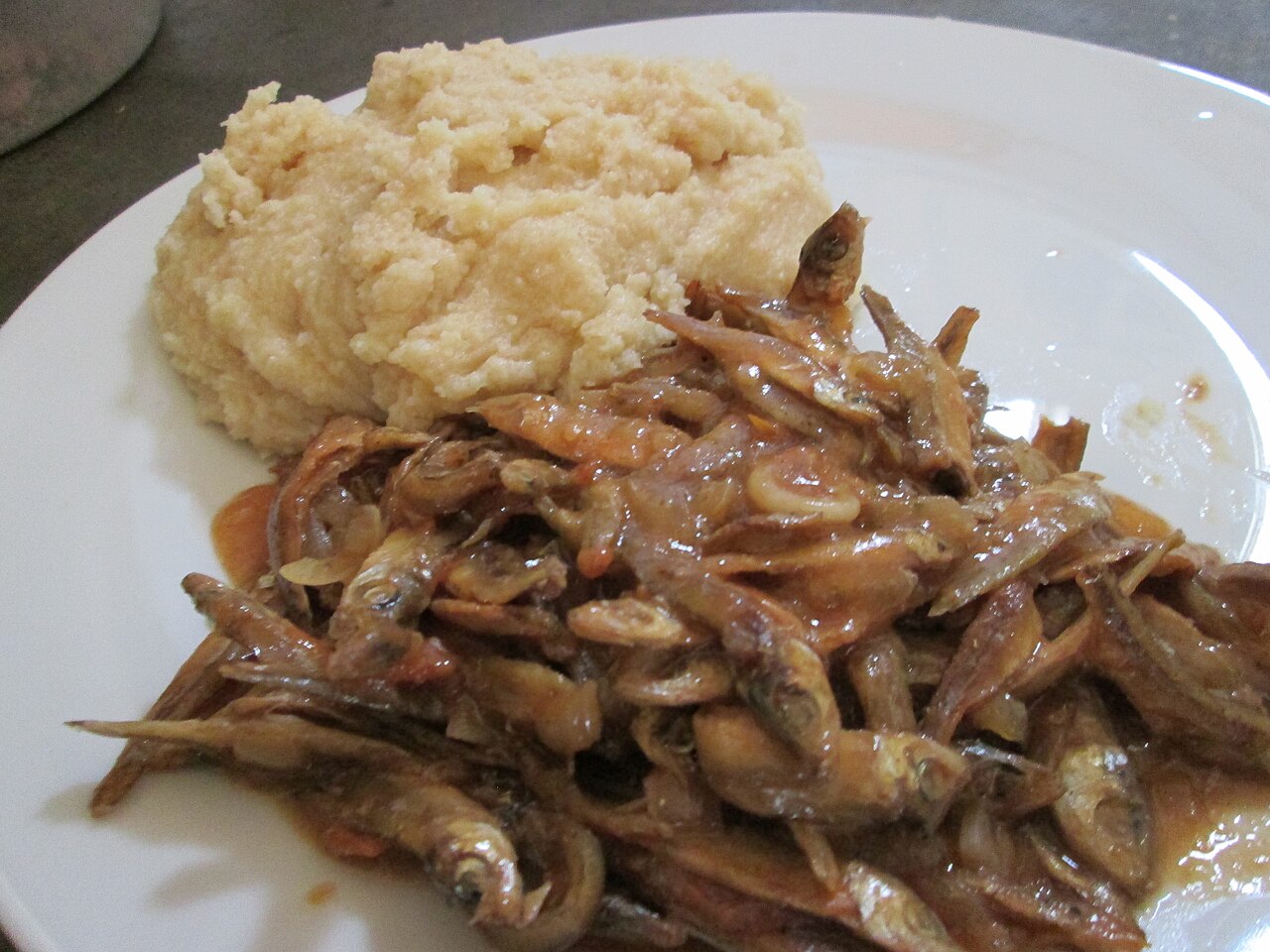
Tiny freshwater sardines, sold sun-dried and salty. At home they are soaked, then fried with onion and tomato, sometimes with ground peanuts, and eaten with sadza. Most of Zimbabwe's kapenta is caught at night on Lake Kariba from boats that lure the fish with lights.
Kapenta are not native to Lake Kariba: the fish come from Lake Tanganyika and were brought to the new lake, where they became a large fishery.
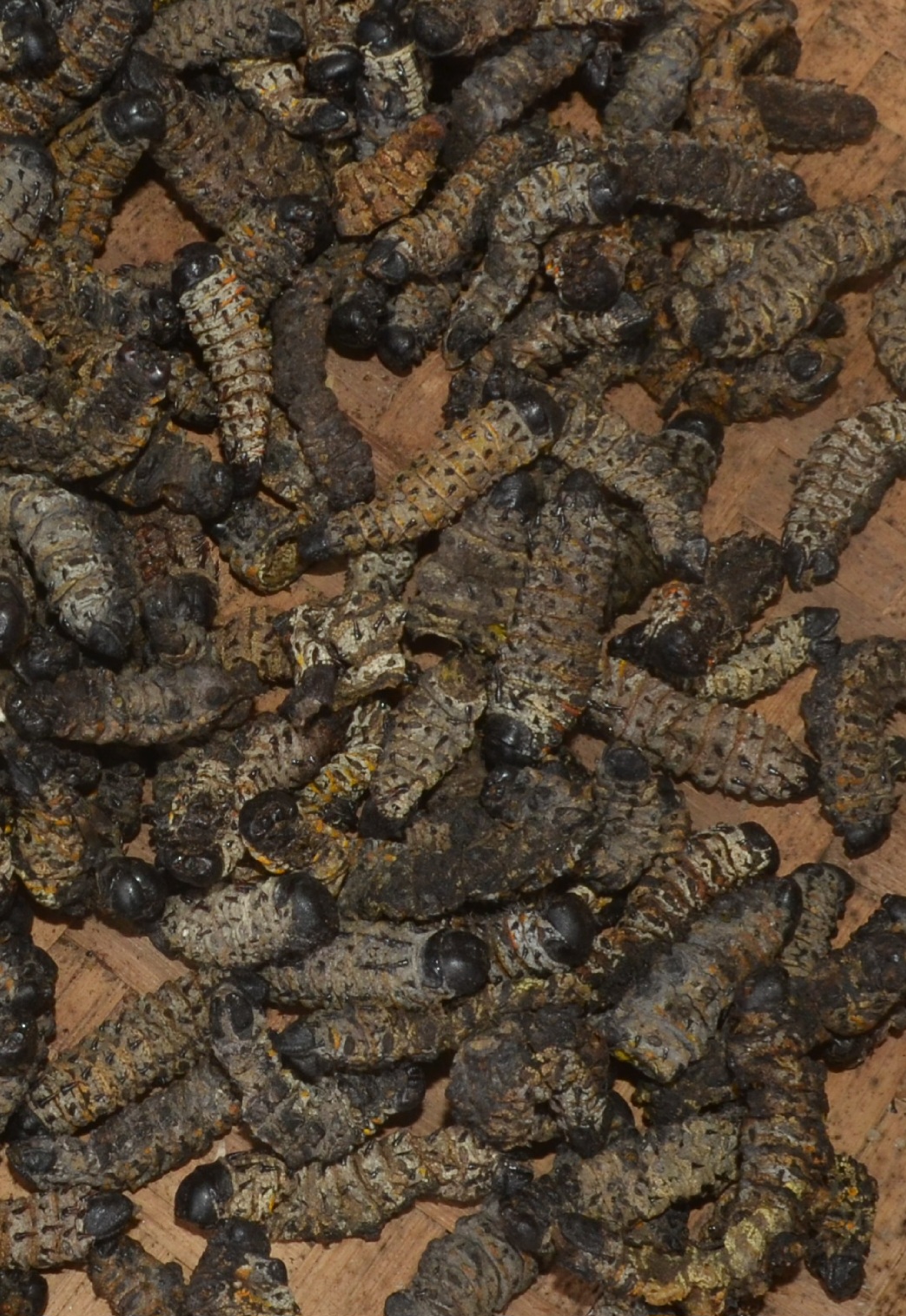
The large caterpillars of the mopane emperor moth, picked by hand from mopane trees, squeezed clean and dried in the sun. They are eaten crunchy as a snack or soaked and fried with onion, tomato and chilli and served with sadza. They are rich in protein.
About three kilograms of mopane leaves produce one kilogram of worms, far less feed than cattle need for the same weight of beef.
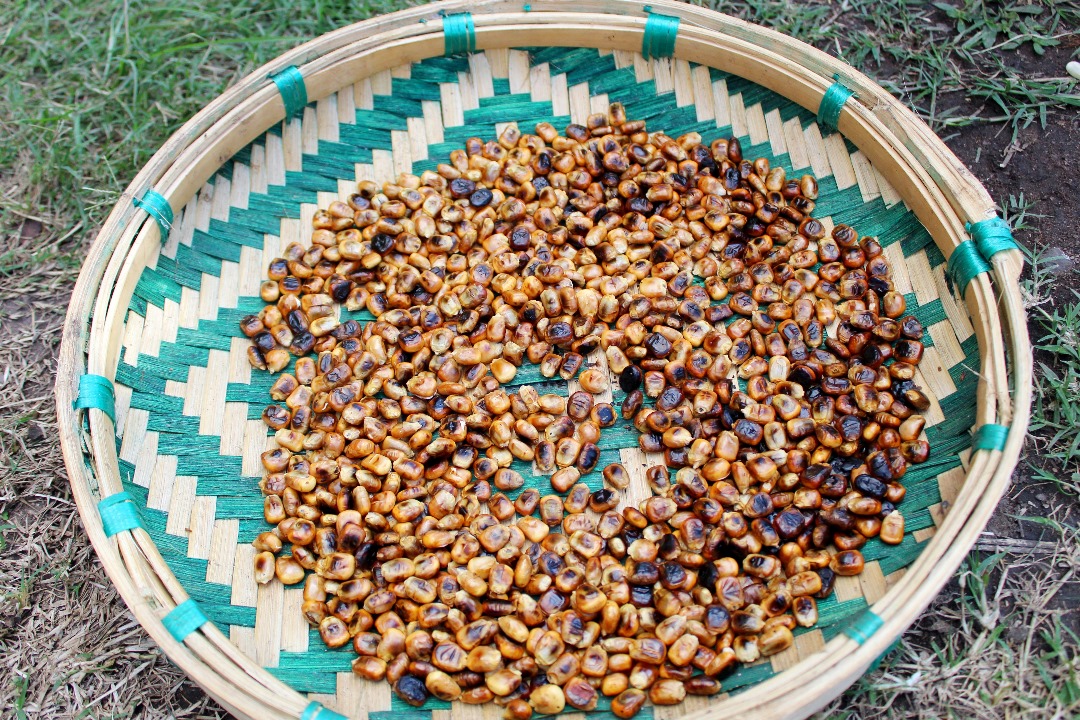
Dried maize kernels roasted in a heavy pan over the fire until golden and crunchy. They are often roasted together with peanuts, a mix called maputi anenzungu, and handed round while people sit and talk by the fire.
A special heavy-based roasting pan, the mugango, is used for maputi and for roasting salted peanuts.
Pumpkin or butternut boiled until soft and mashed, sometimes with a little maize meal, and usually with a spoonful of peanut butter. It is naturally sweet and filling.
See the recipe
Serves 4
30 min
Ingredients
2 medium butternuts or about 1 kg pumpkin
2 tablespoons brown sugar
A pinch of salt
1 tablespoon butter or margarine
60 ml milk
2 tablespoons peanut butter
Method
Peel the butternuts, remove the seeds and cut the flesh into rough chunks.
Put them in a pot with a little water, the sugar and the salt. Cover and cook for about 20 minutes, until soft.
Drain off any extra water and mash with the butter.
Mash in the milk and then the peanut butter until smooth. Serve warm.
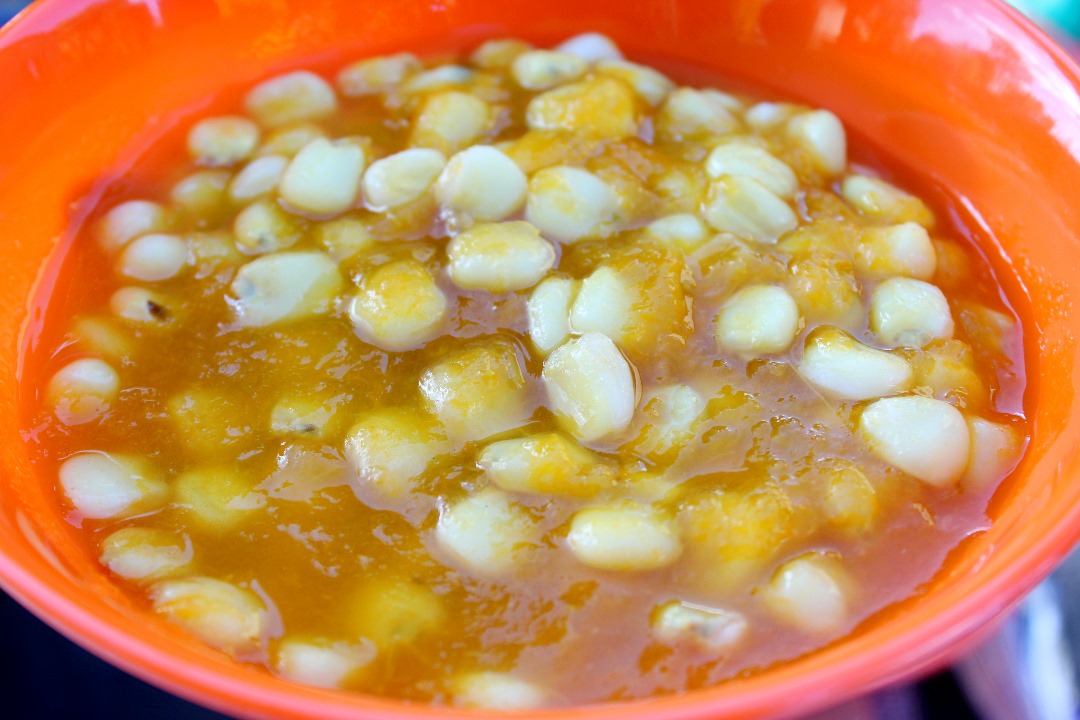
A seasonal Ndebele dish, cooked in winter after the harvest. A yellow-fleshed melon, called ijodo, is peeled, seeded and boiled, then mixed with sun-dried maize kernels that have been boiled for hours until soft, and sweetened with a little sugar.
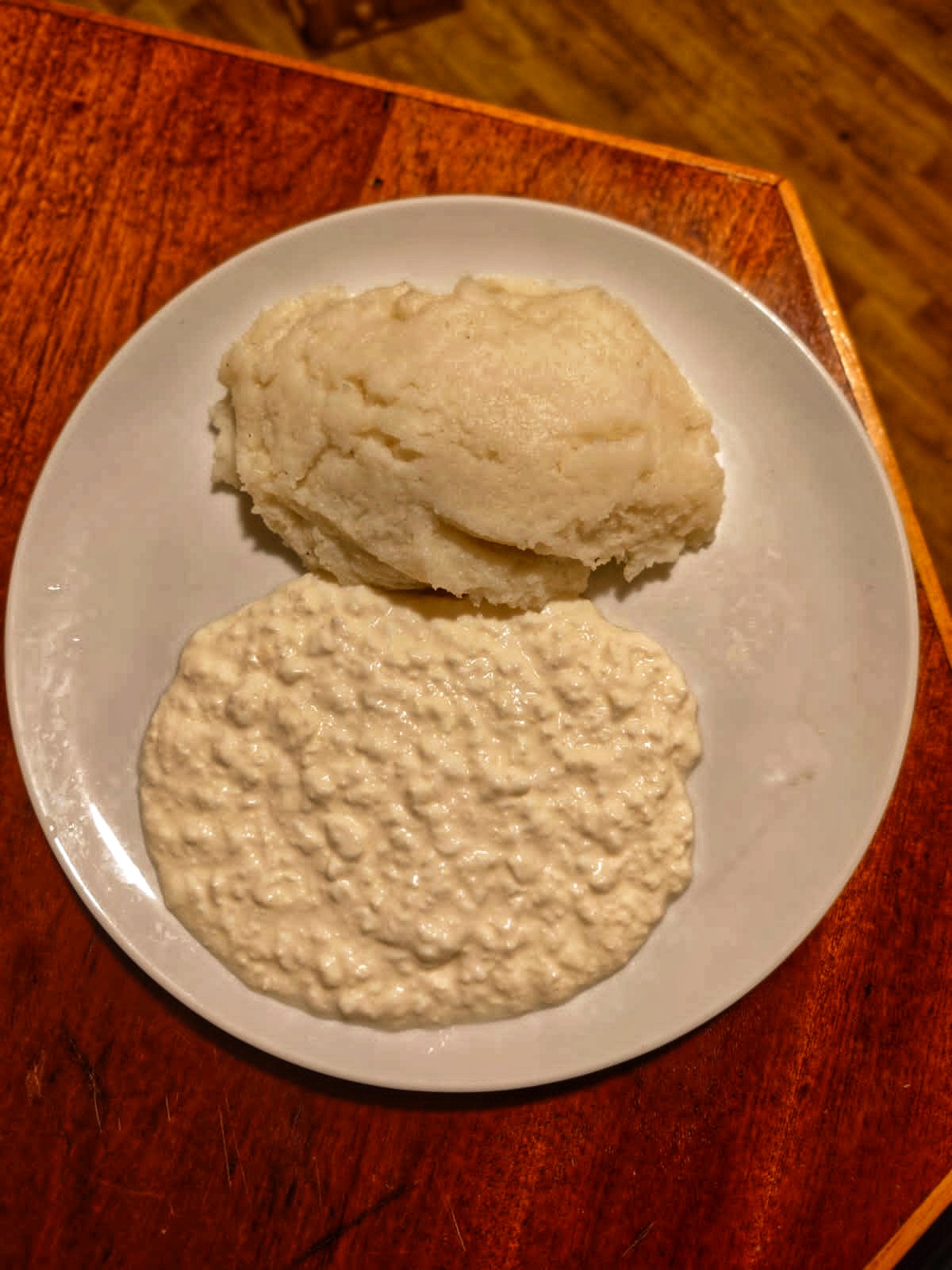
Thick soured milk, rather like a strong plain yoghurt, poured over or eaten beside a mound of sadza. Traditionally milk was left to ferment in a calabash or clay pot; today most people buy it in cartons, often simply called 'lacto'. It makes a cool, simple meal on a hot day.
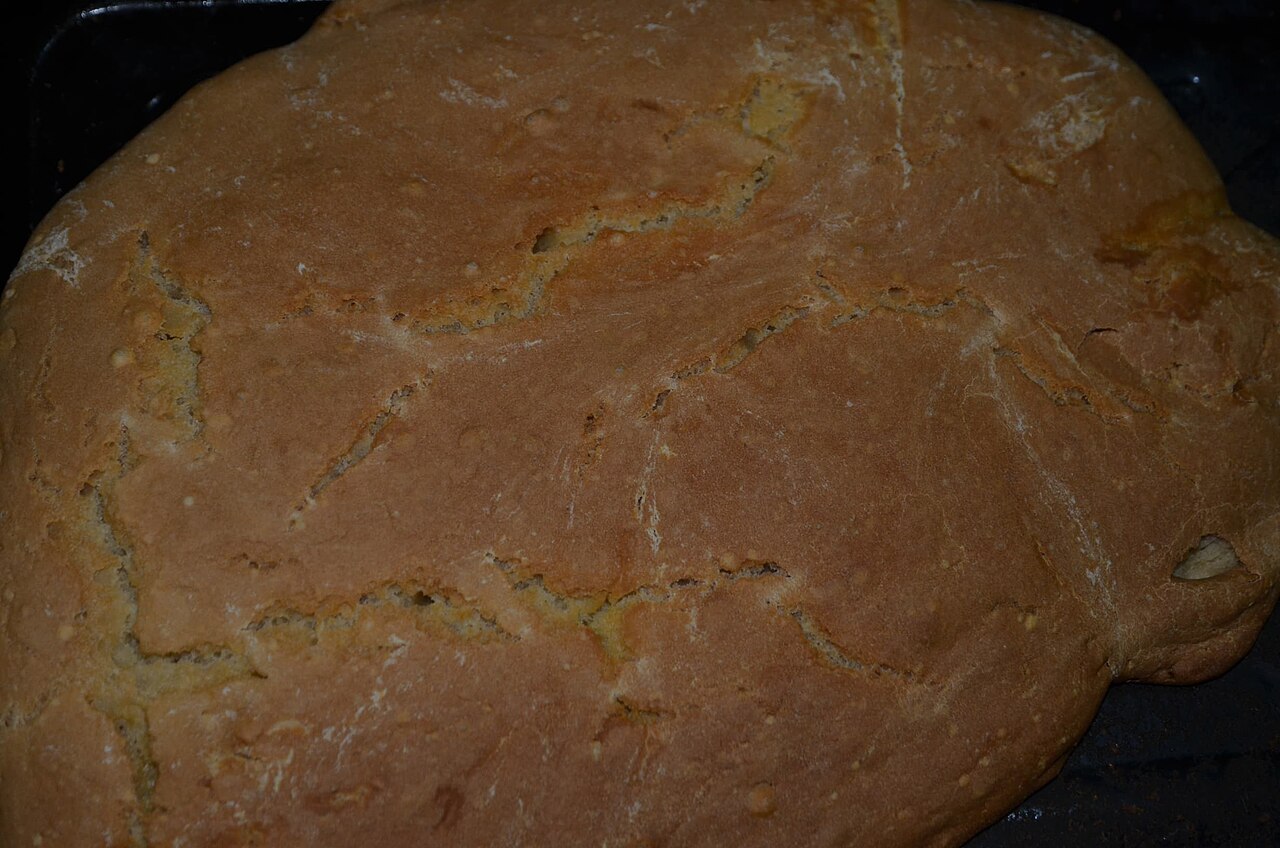
A dense, slightly sweet loaf made from maize meal and flour with sour milk. Traditionally it was baked in a three-legged iron pot over hot coals; today it is usually baked in the oven and eaten plain or with butter, jam or honey at teatime.
See the recipe
Serves 10
1 h
Ingredients
180 g fine maize meal
170 g plain flour
1 teaspoon baking powder
1/2 teaspoon bicarbonate of soda
1/2 teaspoon salt
100 g sugar
250 ml buttermilk or sour milk
90 ml vegetable oil
1 egg
Method
Heat the oven to 180°C and grease and flour a loaf tin.
Whisk the buttermilk, oil and egg together in a jug.
Sift the maize meal, flour, baking powder, bicarbonate of soda and salt into a bowl and stir in the sugar.
Pour the wet mixture into the dry ingredients and mix until smooth.
Pour into the tin and bake for about 45 minutes, until a skewer pushed into the middle comes out clean. Cool a little before slicing.
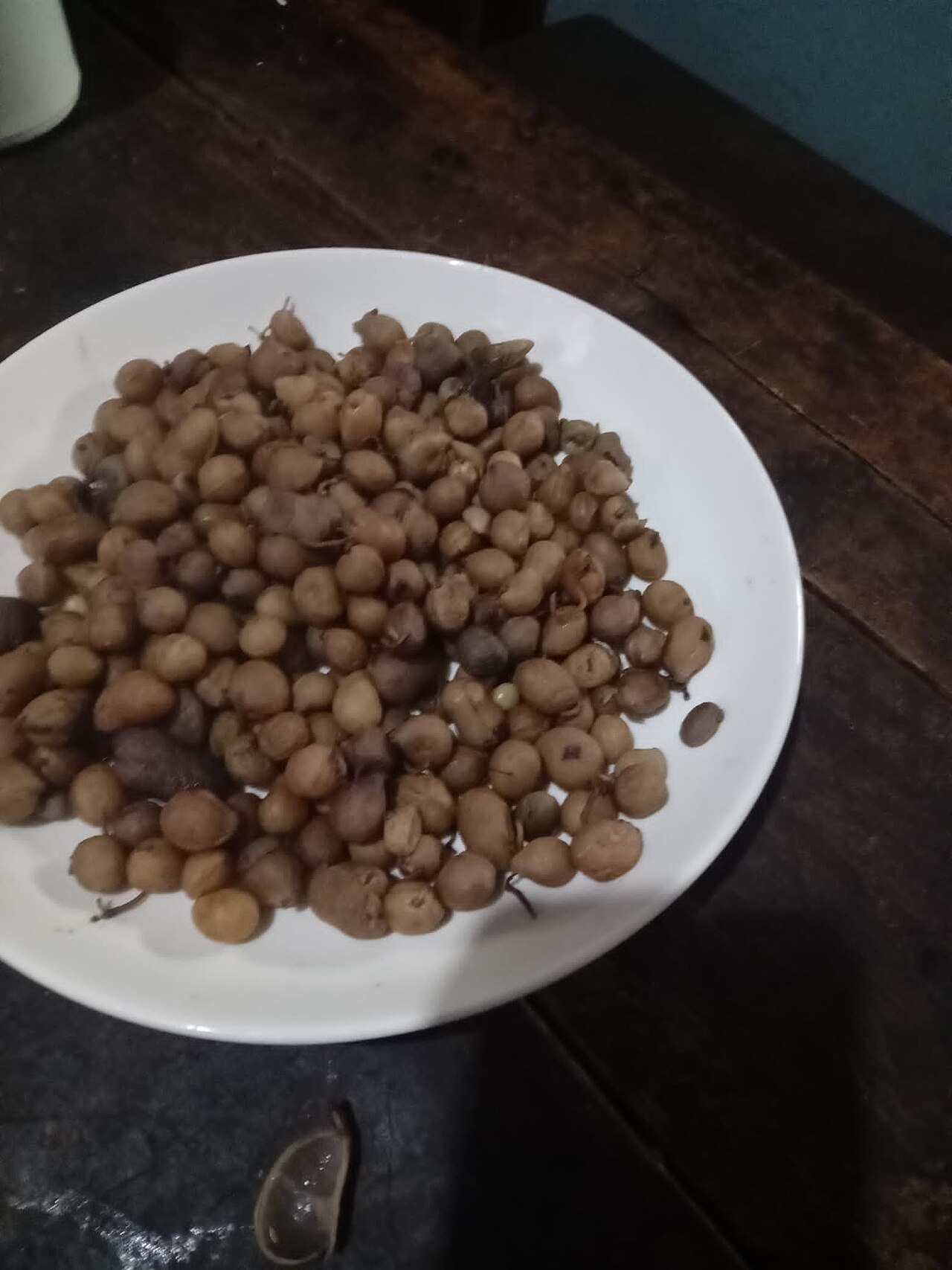
Bambara groundnuts, small hard beans that grow underground like peanuts. They are usually boiled in salted water, often in their shells, and eaten as a snack. They also go into mutakura, a hearty mix of boiled maize, peanuts, cowpeas and round nuts.
Although they are loved in Zimbabwe, round nuts originally come from West Africa.
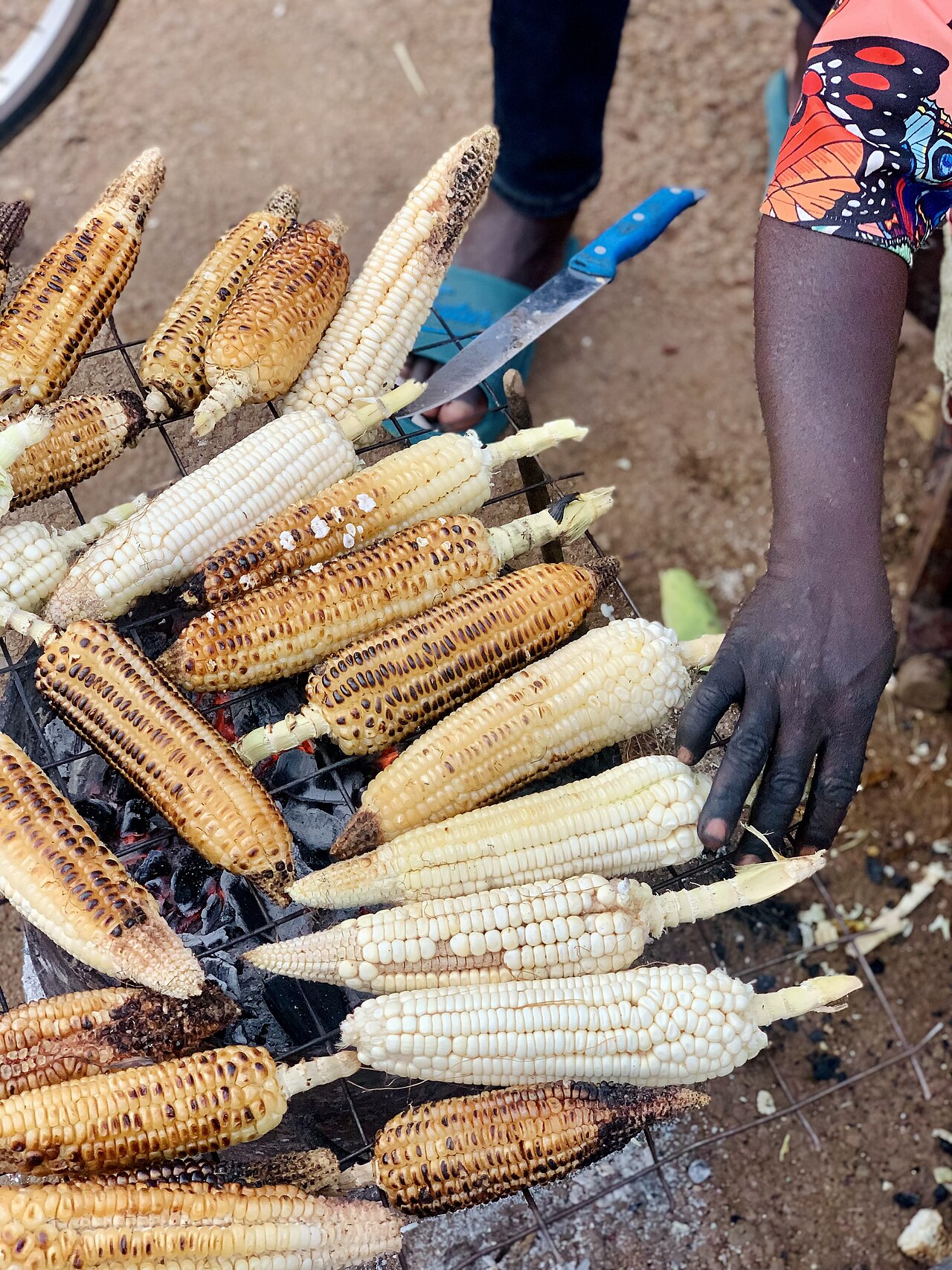
Fresh maize cobs, boiled or roasted over coals, are a favourite snack in the season when the new maize is ready after the rains, and are eaten straight from the cob.
Dried maize kernels, boiled for hours until soft, are also the base of mutakura and umxhanxa.
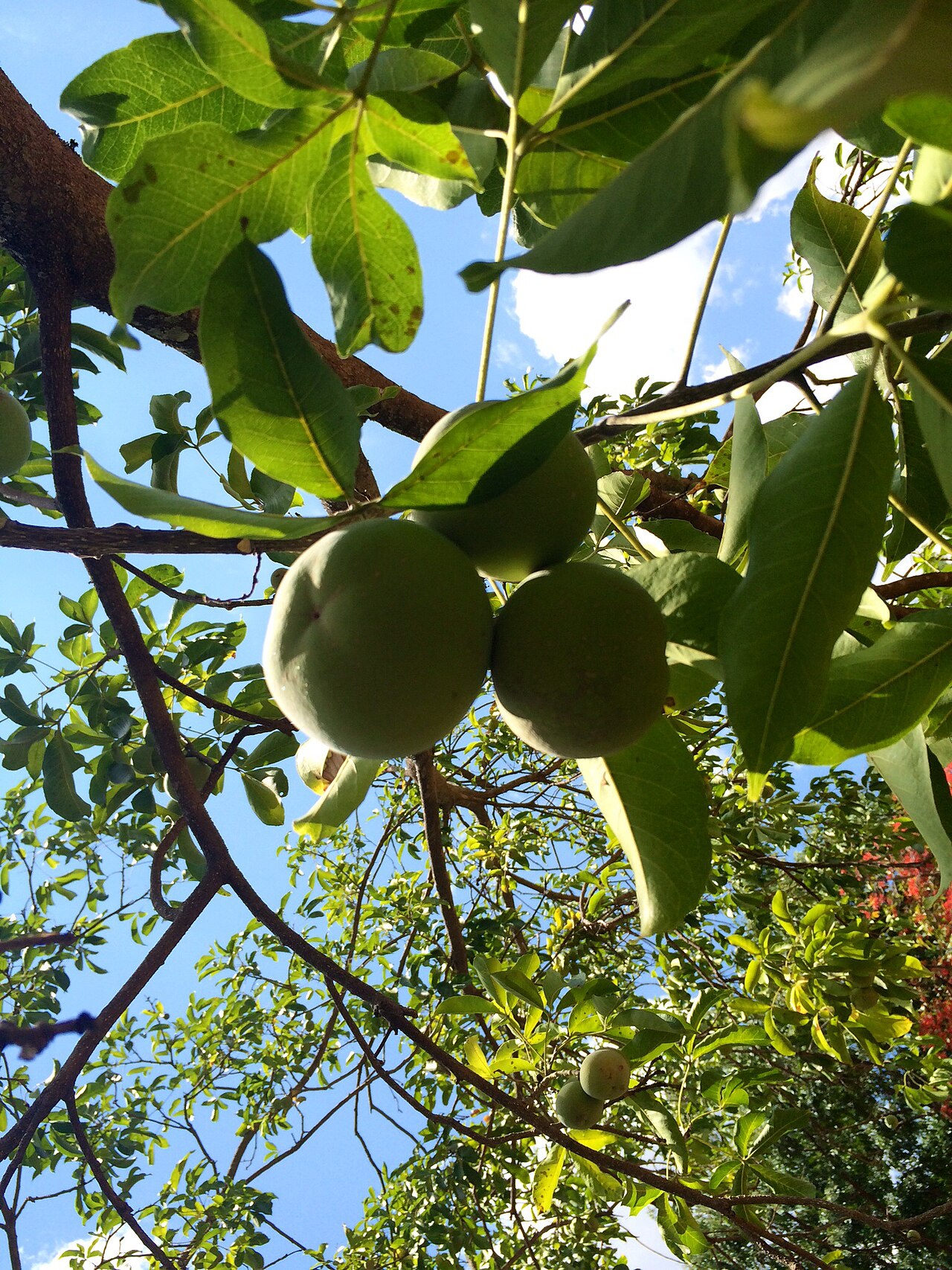
Round wild fruits 2 to 4 cm across, with a hard skin and sweet yellow flesh that tastes a little like pear. They grow on a woodland tree that is seldom planted, and in season they are piled high at markets and roadsides.
The trees are often left standing when land is cleared for fields, because the fruit is so popular.
Table manners
Before a meal a bowl of water is brought round so that everyone can wash their hands, and it is brought again afterwards.
Sadza is eaten with the right hand: roll a small ball, press a hollow into it with your thumb and use it to scoop up the relish.
The host usually serves each person individually.
Pass and receive plates and other things with both hands. Clapping twice, softly, is a polite way of saying thank you.
It is polite not to talk with food in your mouth, and to accept food and drink when they are offered.
Harare in the northeast and Bulawayo in the southwest are by far the largest cities, linked by a road and railway through the Midlands towns of Kwekwe and Gweru. Mutare and Nyanga lie in the cool Eastern Highlands, Masvingo is the gateway to Great Zimbabwe, and in the north and west the towns of Kariba, Victoria Falls and Hwange sit close to the Zambezi and the great wildlife parks.
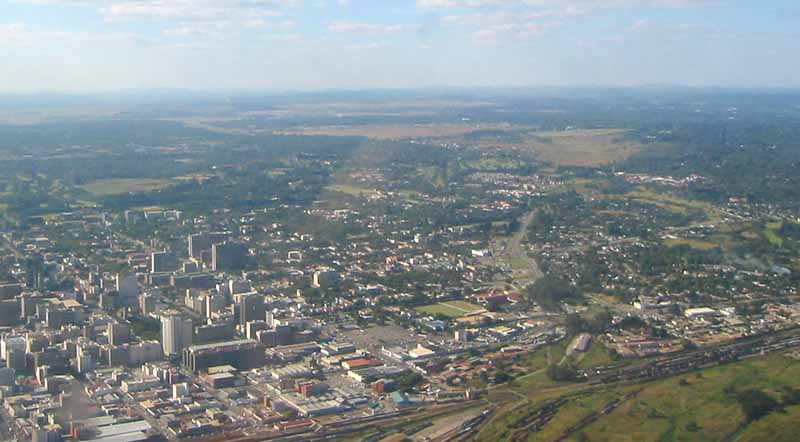
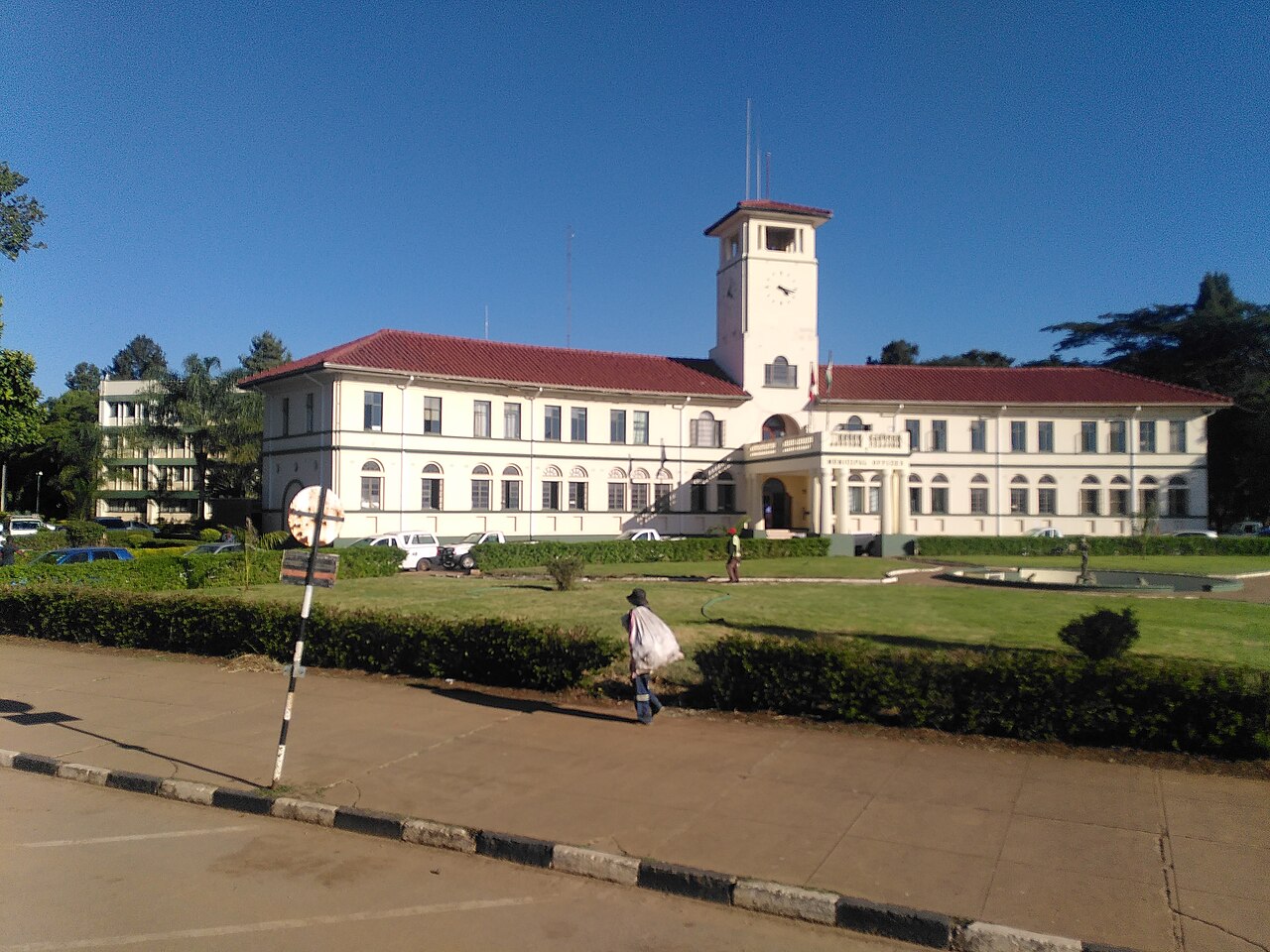
The capital and largest city, on the high plateau at about 1,480 m. It was founded in 1890 as Fort Salisbury and kept the name Salisbury until 1982. It is Zimbabwe's centre of business, government and culture, with wide streets lined with jacaranda and flame trees.
Jacaranda trees that turn the streets purple in spring
The National Gallery of Zimbabwe and its stone sculpture
Mbare, the district that was called Harari before 1982
The new Parliament building at nearby Mount Hampden, completed in 2022
Bulawayo Province, in the southwest (Matabeleland)
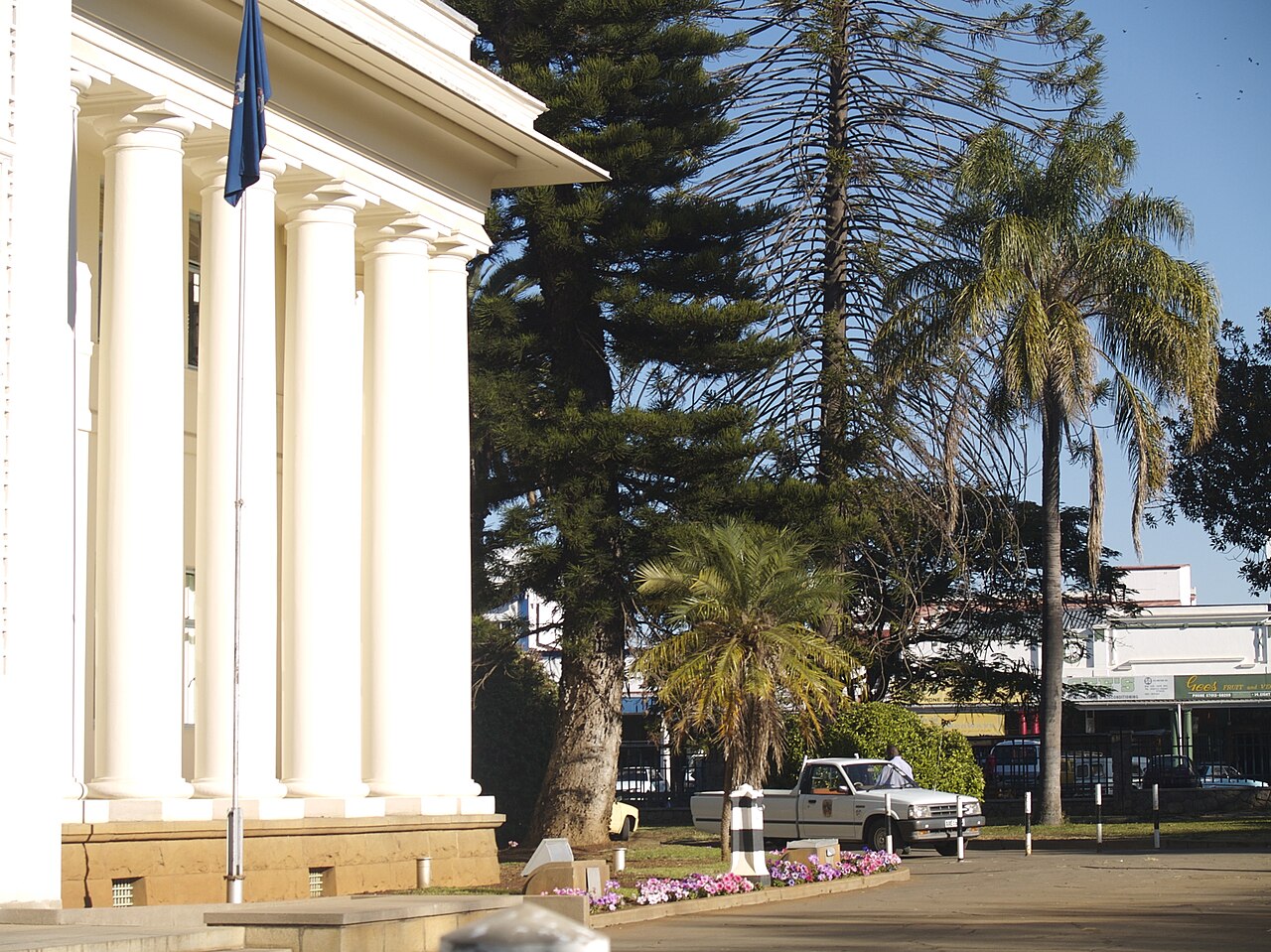
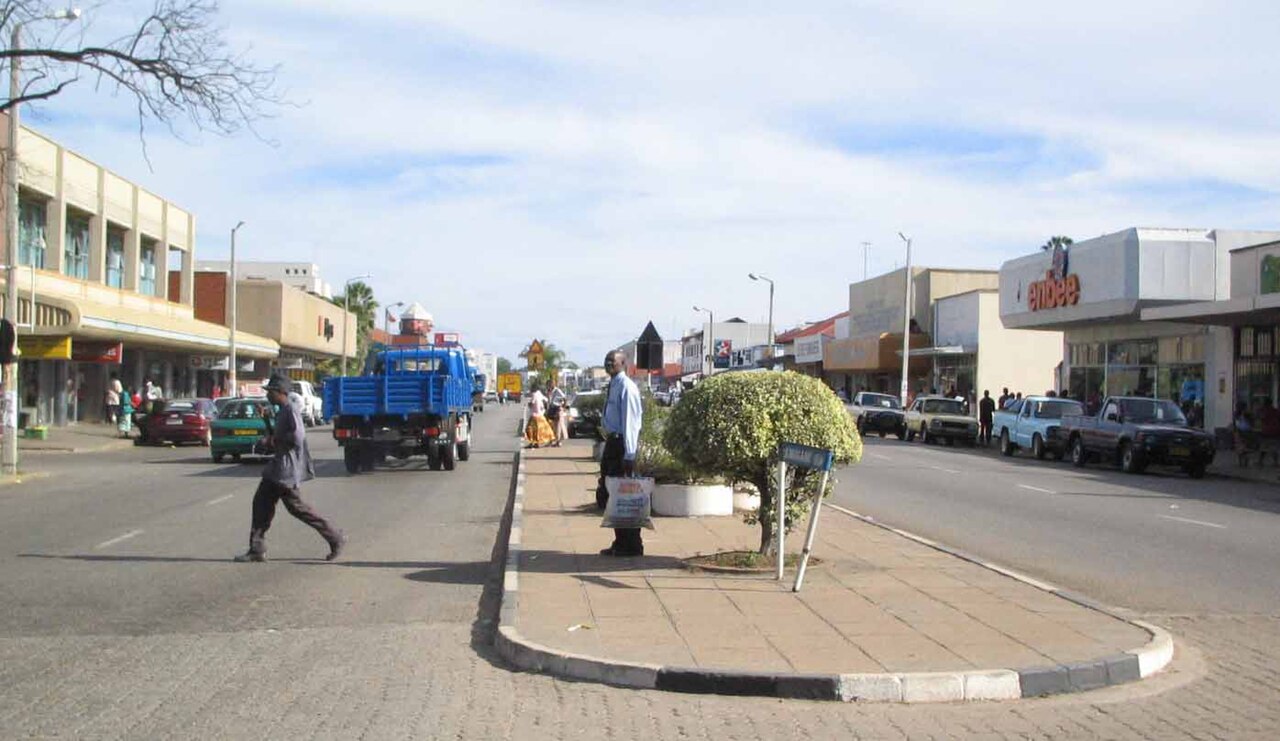
Zimbabwe's second city and the heart of Matabeleland. It grew from the royal town of the Ndebele kings Mzilikazi and Lobengula, and later became the country's industrial centre and the hub of its railways. Most people here are Ndebele.
The Natural History Museum of Zimbabwe
The headquarters of National Railways of Zimbabwe and a railway museum
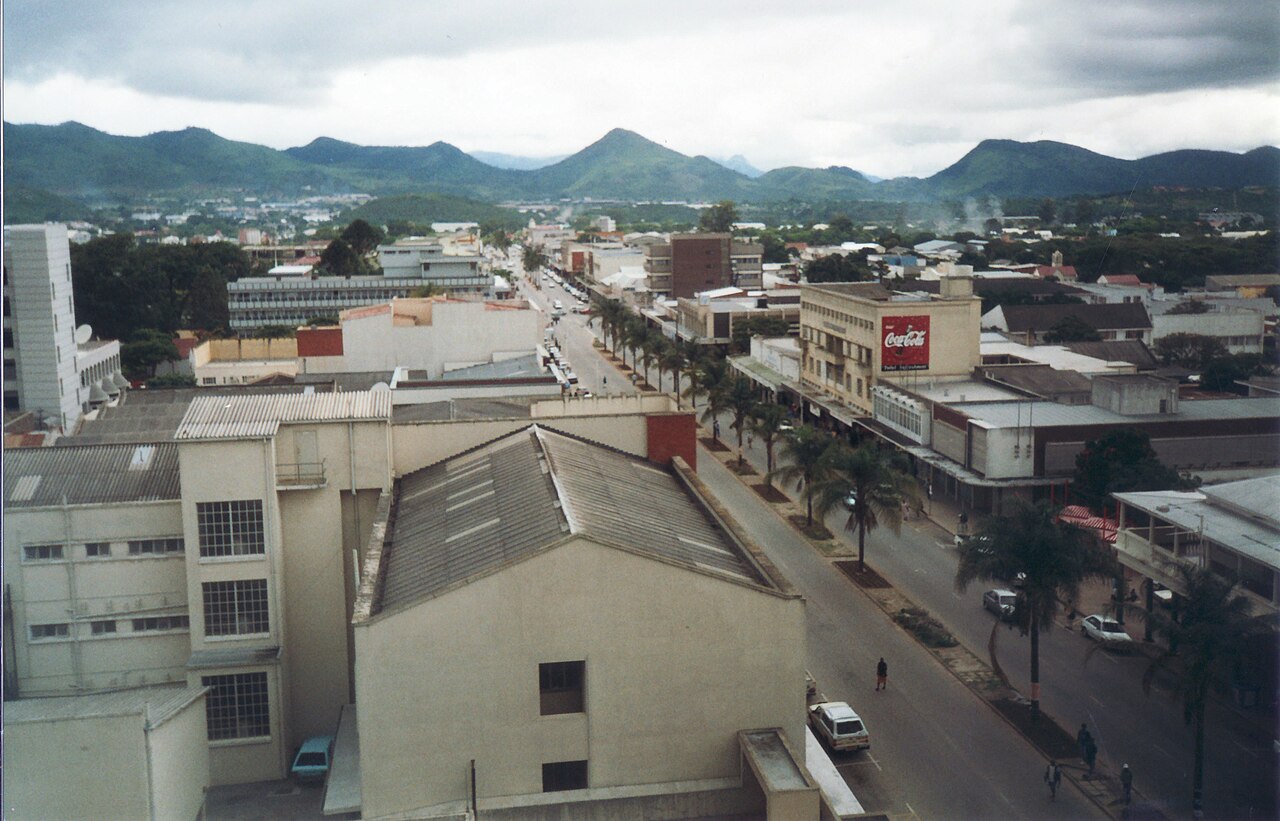
Known as Umtali until 1982, Mutare is the largest city in eastern Zimbabwe and lies in a valley close to the border with Mozambique. It is a trading centre on the road and railway to the port of Beira and the gateway to the Eastern Highlands.
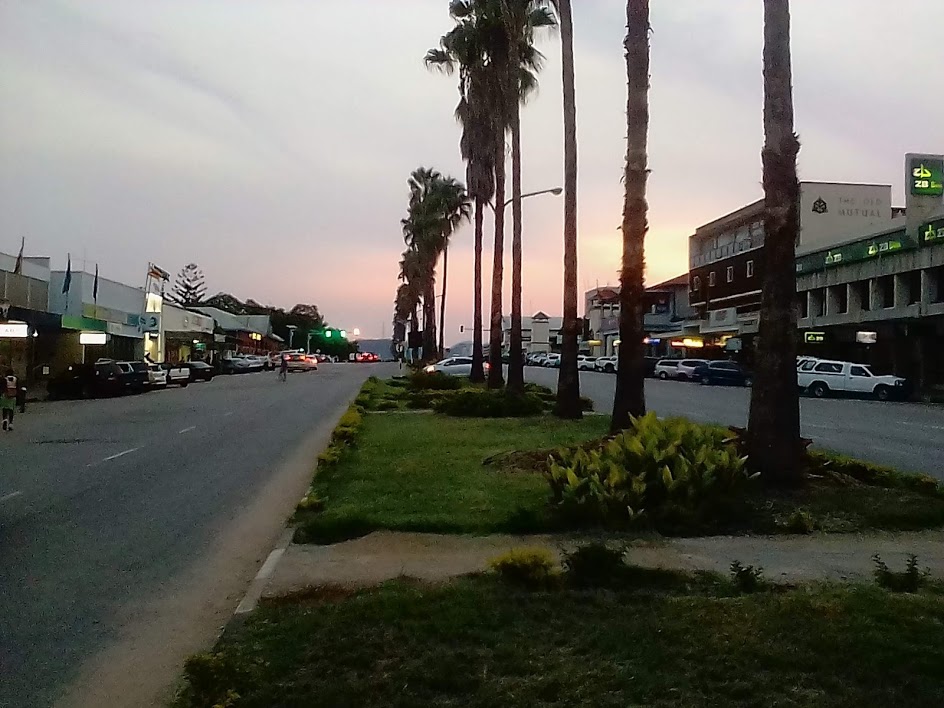
The capital of the Midlands, founded in 1894 as a military post on the high banks of the Gweru River. Once called Gwelo, it is a farming and university town on the main road and railway between Harare and Bulawayo.
A mining and industrial town founded in 1898 during a gold rush, roughly halfway between Harare and Bulawayo. Its old name, Que Que, is said to come from the croaking of the frogs in the Kwekwe River.
The oldest colonial town in Zimbabwe, which grew around a camp set up by the Pioneer Column in 1890 and was called Fort Victoria until 1982. Its Shona name means 'fort'. It is the base for visiting Great Zimbabwe, a short drive away.
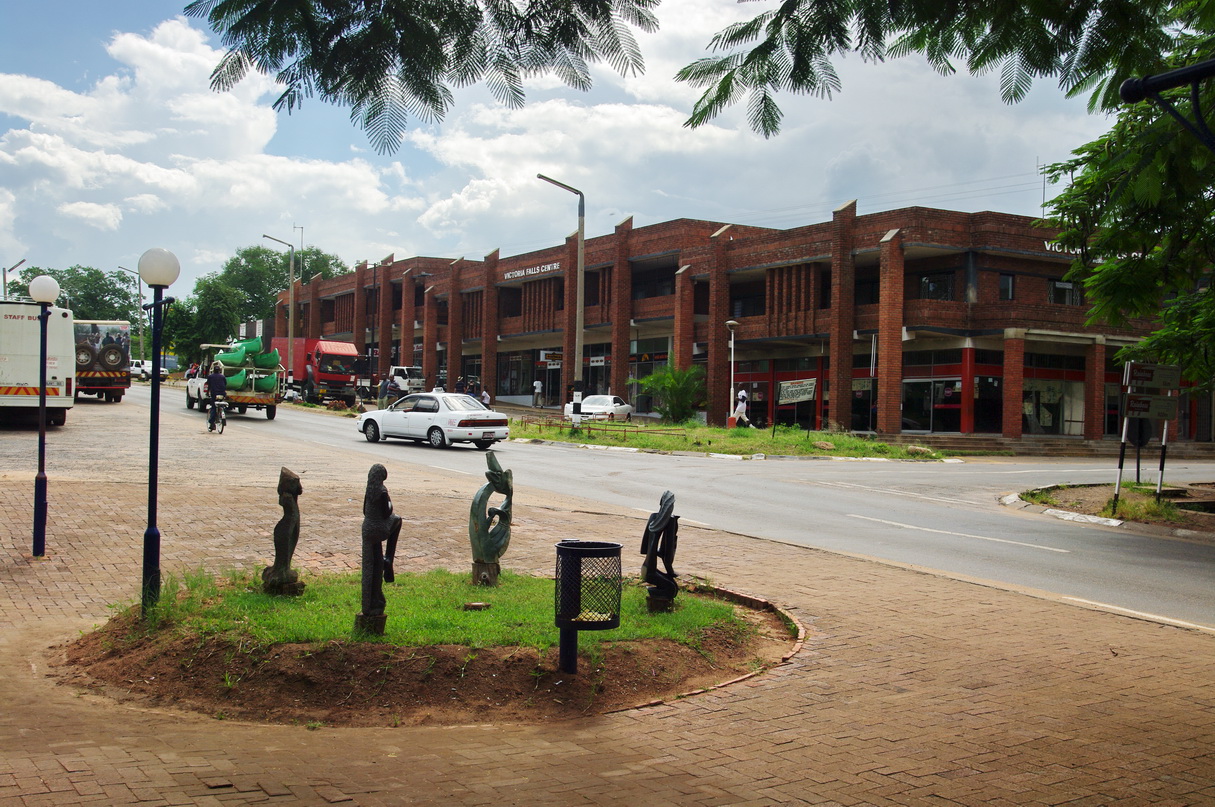
A small resort town on the southern bank of the Zambezi, right beside the falls. It began in 1901 and grew once the railway from Bulawayo arrived and the bridge over the gorge opened in 1905. Across the river lies Livingstone in Zambia.
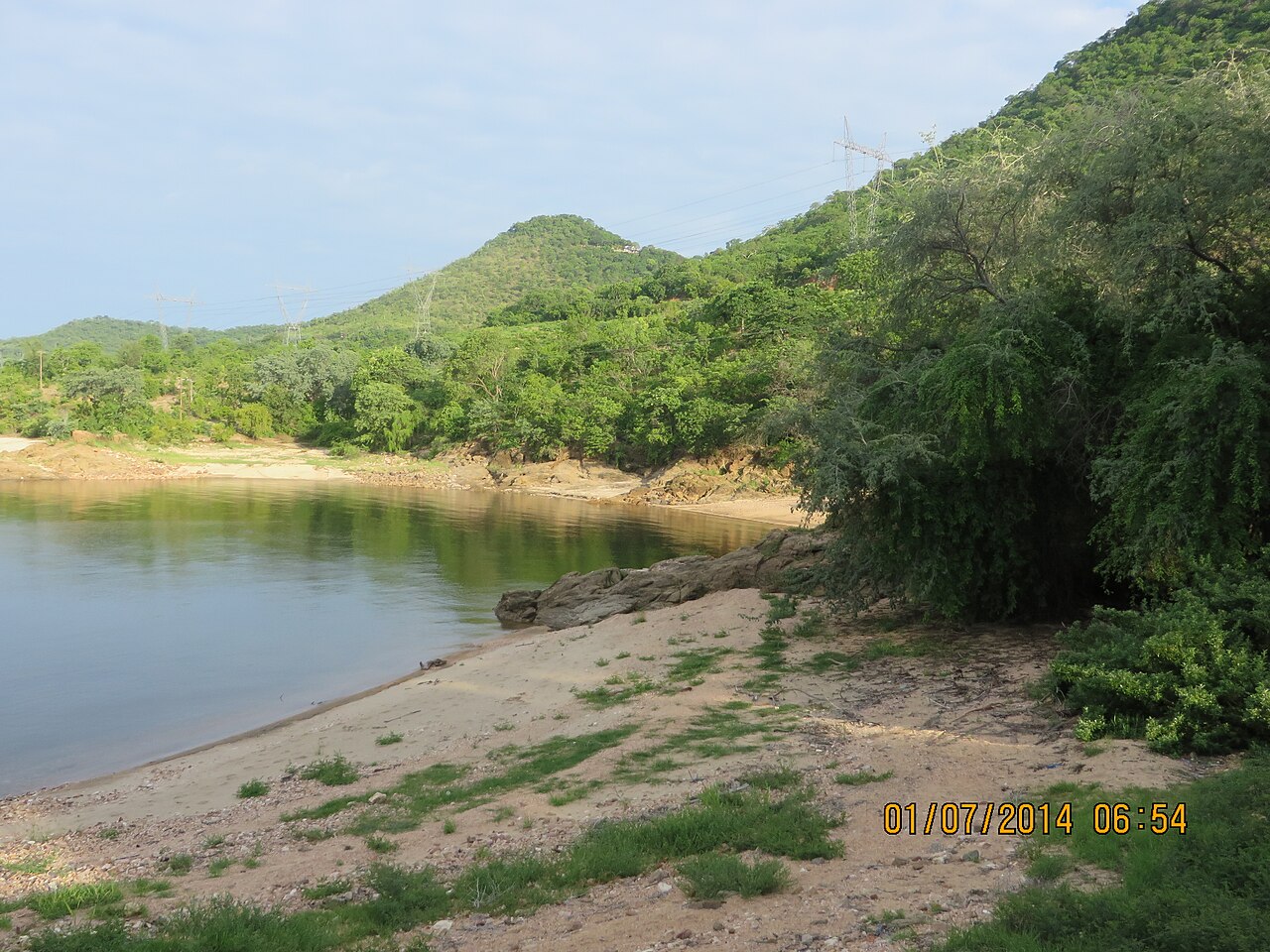
A lakeside resort town at the northeastern end of Lake Kariba, built in the 1950s for the workers who built the Kariba Dam. From Kariba Heights on the hill above the town there are wide views over the lake.
A coal-mining town, formerly called Wankie, about 100 km by road southeast of Victoria Falls. Coal was discovered here in 1895, and the country's largest coal mine and power station are nearby. It gives its name to Hwange National Park.
Hwange Colliery, the largest coal mine in Zimbabwe
A college town and provincial capital on the Manyame River, about 116 km by road northwest of Harare. It was called Sinoia until independence and lies on the main road to the Zambian border at Chirundu.
A small holiday town at about 1,680 m in the Eastern Highlands, close to the border with Mozambique and about 115 km by road north of Mutare. Fishing, golf courses, mountain walks and holiday resorts draw visitors from all over the country.
Nyanga National Park and Mount Nyangani
Mutarazi Falls, the highest waterfall in the country
Ancient stone terraces, pit structures and forts in the hills
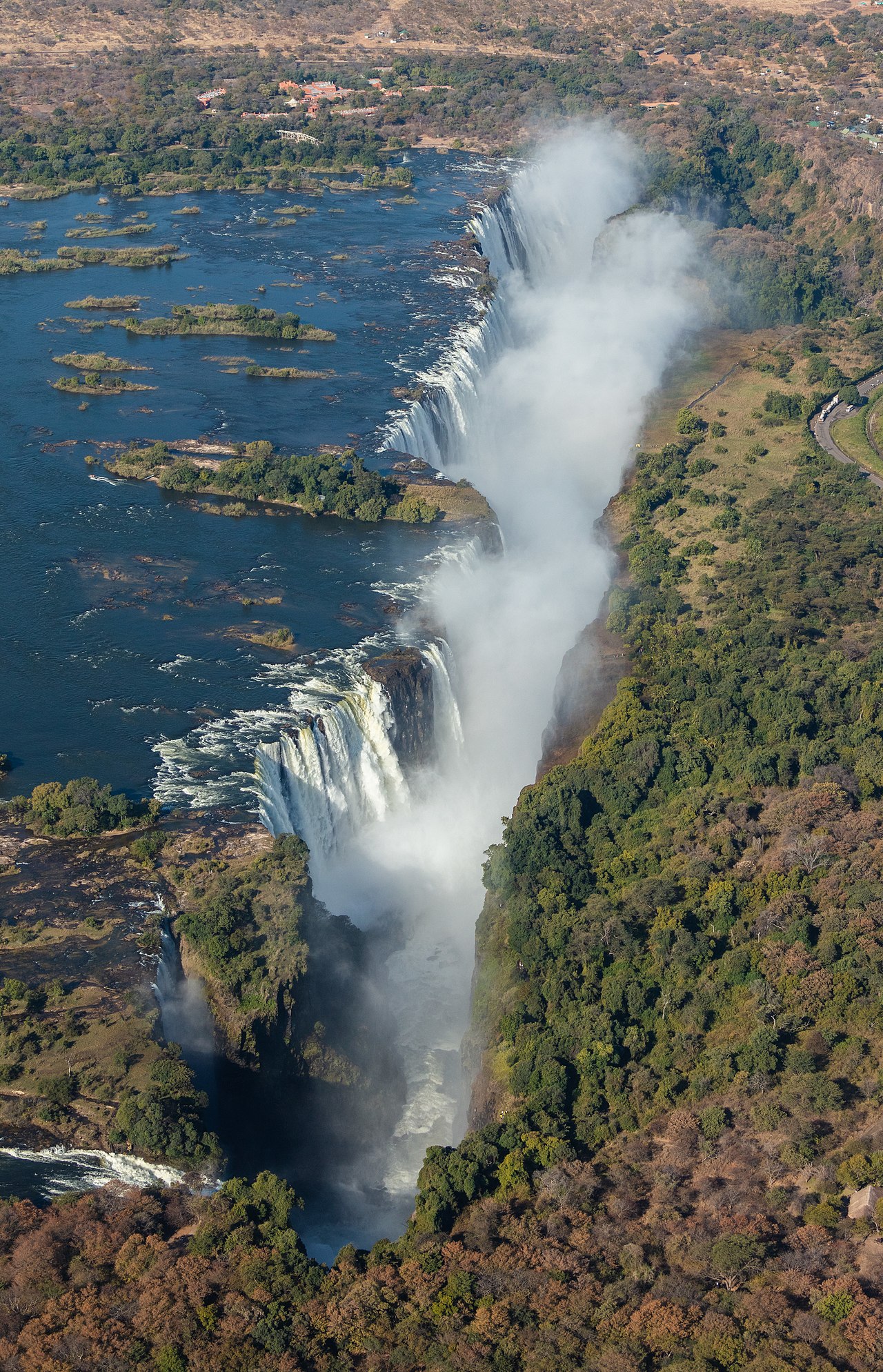
The Zambezi drops about 108 m into a narrow gorge along a front 1,708 m wide, making one of the largest sheets of falling water on Earth. The falls lie on the border between Zimbabwe and Zambia, and both countries have national parks at the site. Its local name, Mosi-oa-Tunya, means 'the smoke that thunders', after the spray that can be seen from far away.
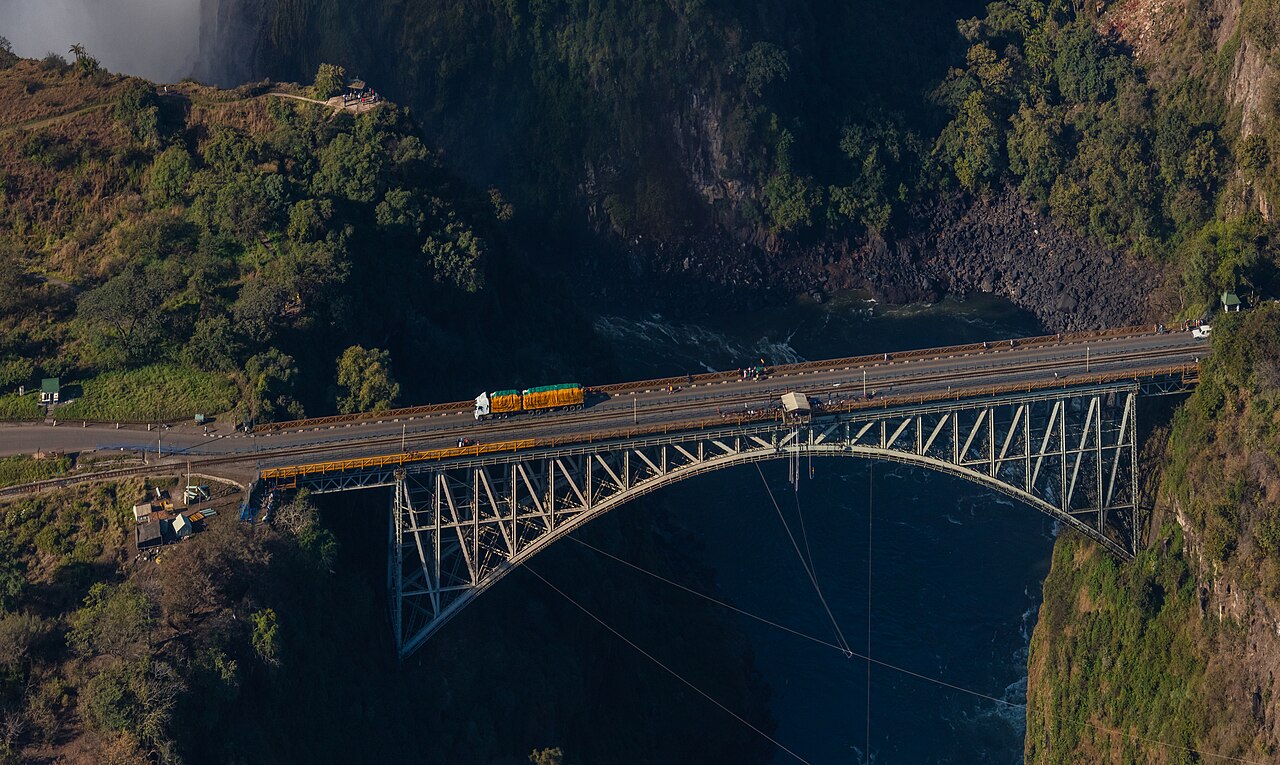
A steel arch bridge across the Second Gorge just below the falls, completed in 1905 and still carrying the railway, road and pedestrians between Zimbabwe and Zambia. It was made in England, shipped to Beira and built in 14 months; Cecil Rhodes had wanted trains to catch the spray of the falls as they crossed.
The ruins of a stone city built between the 11th and 15th centuries by ancestors of the Shona and the capital of a trading kingdom. Its Great Enclosure has curving granite walls up to 11 m high, laid without mortar, and the soapstone birds found here became the national emblem. The country is named after it.
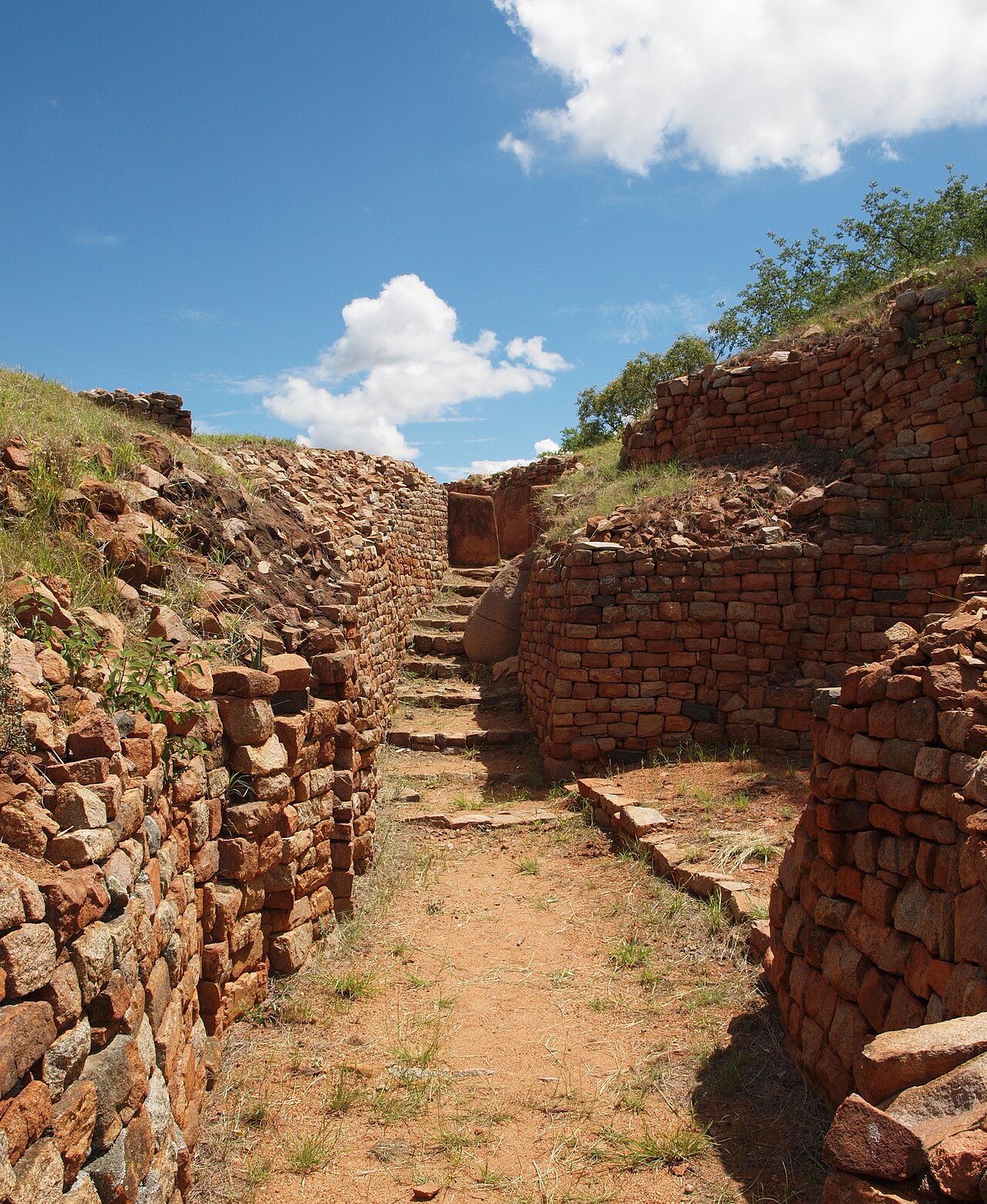
The ruins of the capital of the Torwa kingdom of Butua, about 22 km west of Bulawayo. Built after Great Zimbabwe, it is famous for its terraced platforms of dry-stone retaining walls decorated with chequered and herringbone patterns.
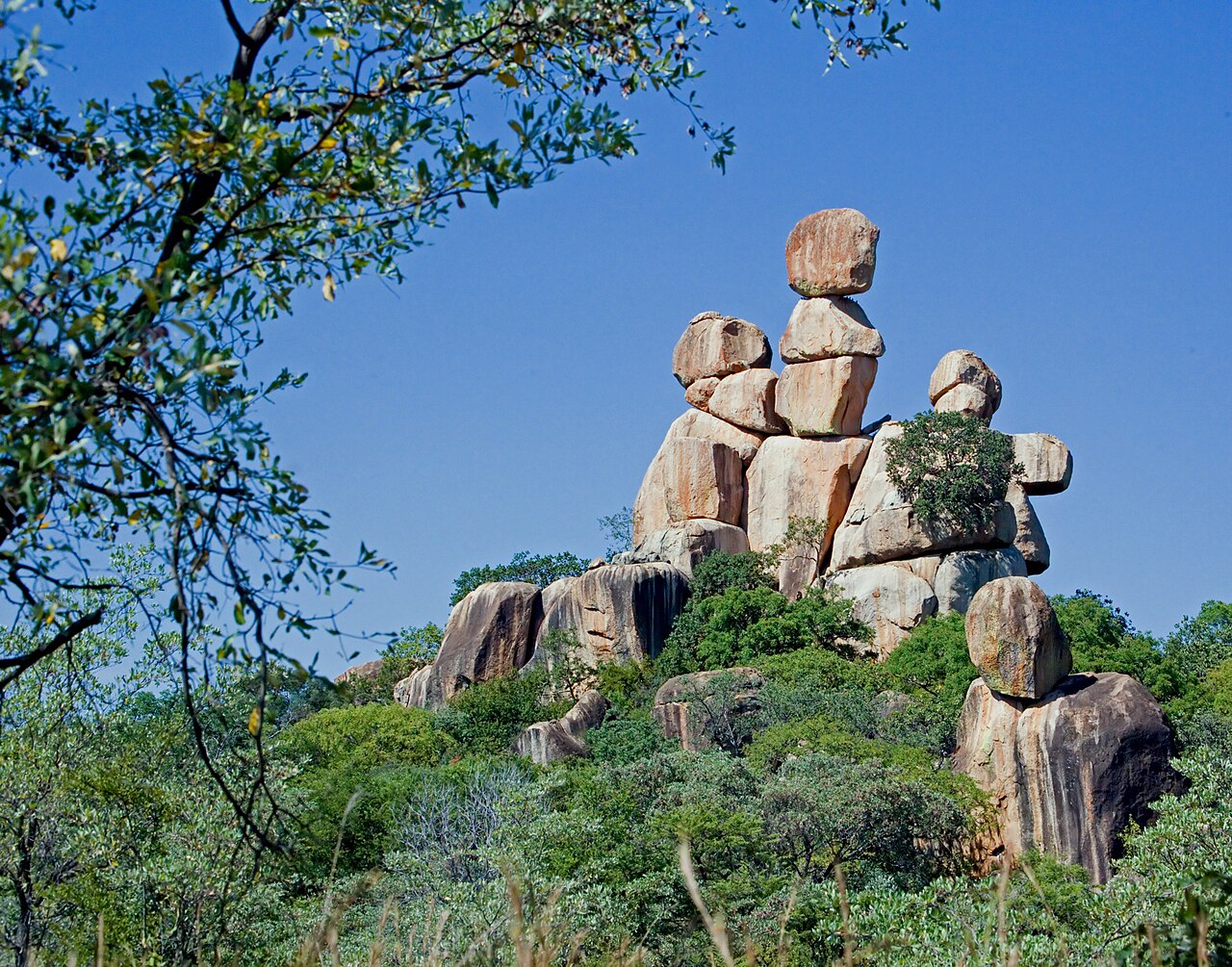
Granite domes and piles of balancing boulders about 35 km south of Bulawayo, with more than 3,000 registered rock art sites left by San hunter-gatherers. Matobo National Park, founded in 1926, is the oldest national park in Zimbabwe and is home to white rhinos. Some hills, such as Malindidzimu, 'the hill of the spirits', are held sacred.
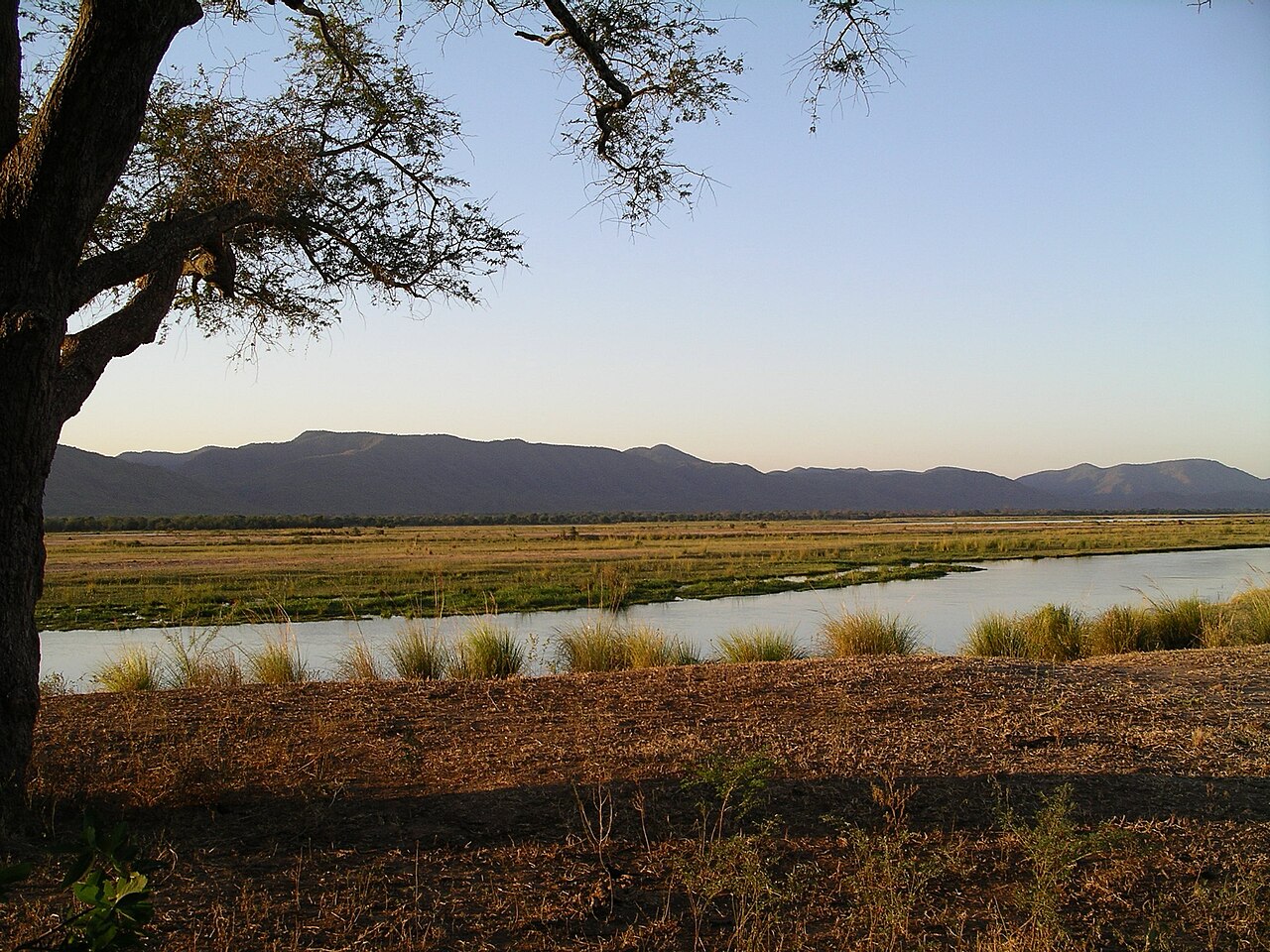
A wild stretch of the Zambezi floodplain, where old river channels have left four large permanent pools. Mana means 'four' in Shona. In the dry season elephants, buffalo, lions and wild dogs gather here, and it has the country's largest numbers of hippos and crocodiles. The park lies about 100 km downstream from Kariba along the Zambezi.
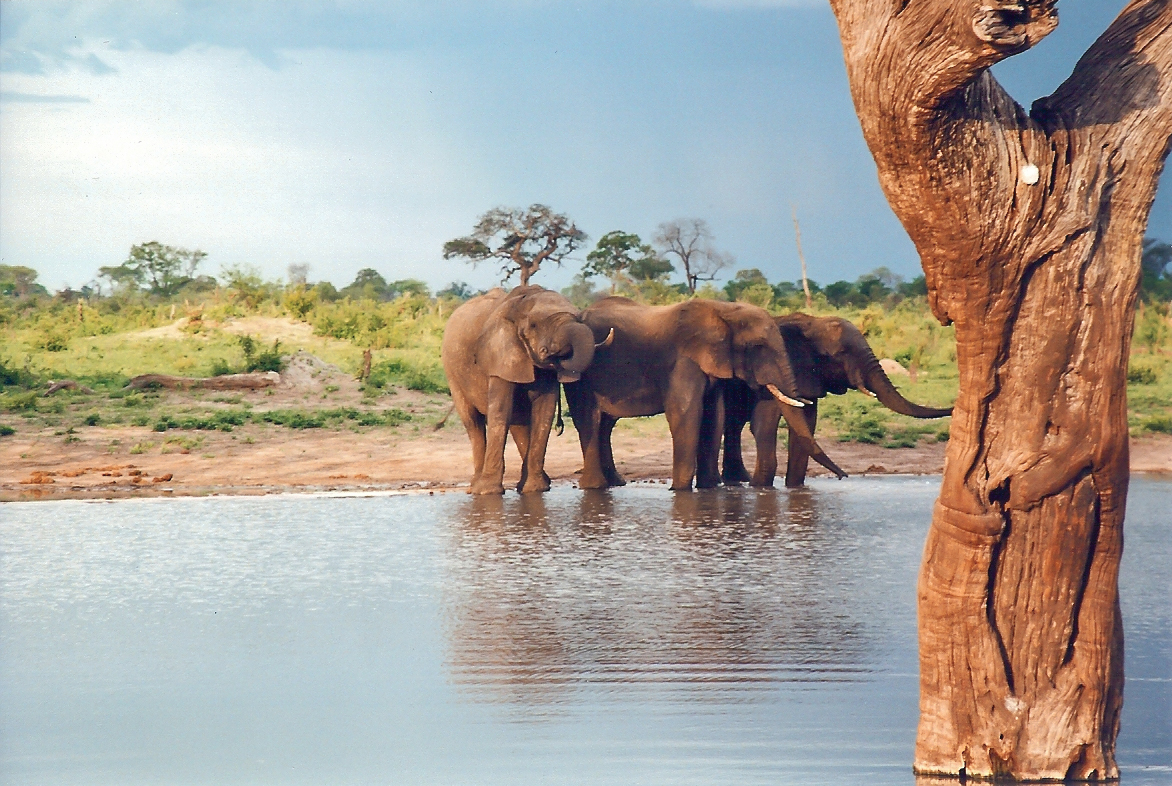
Zimbabwe's largest national park, about 14,600 km² of Kalahari sand and mopane woodland, founded in 1928. Its waterholes draw large herds of elephants in the dry season, and it has more than 100 kinds of mammals and about 400 kinds of birds.
A curved concrete arch dam, 128 m high and 579 m long, across the Kariba Gorge of the Zambezi. Opened in 1960, it holds back Lake Kariba and supplies electricity to both Zimbabwe and Zambia, each from its own power station.
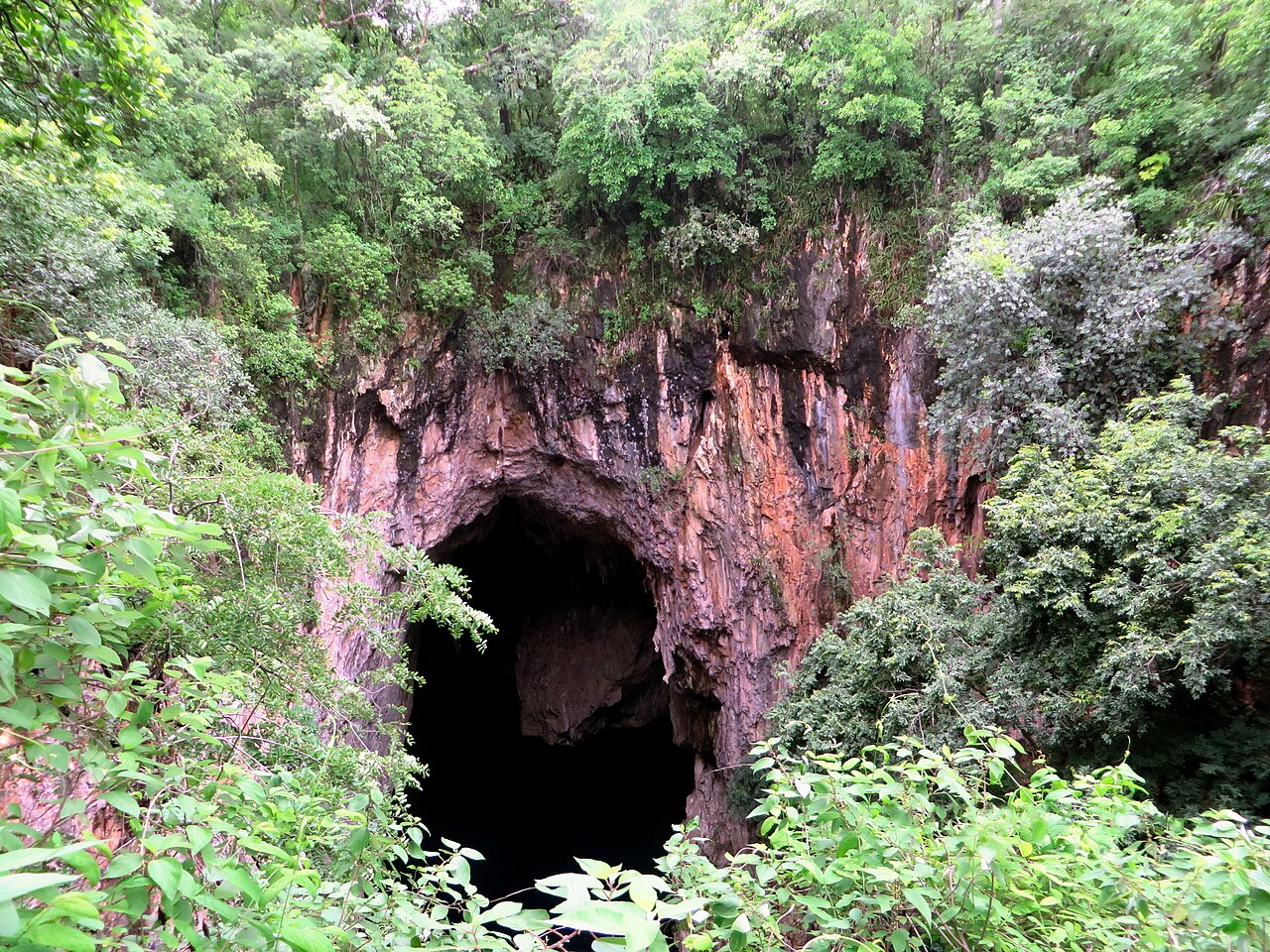
Limestone and dolomite caves about 9 km by road northwest of Chinhoyi, protected as a national park since 1955. The main cave holds the Sleeping Pool, a pool of clear cobalt-blue water known in Shona as Chirorodziva, 'the pool of the fallen', where experienced divers explore passages far below the surface.
Zimbabwe's highest mountain, 2,592 m, in the centre of Nyanga National Park about 20 km southeast of Nyanga town. Fit walkers can climb onto its broad, heathery summit plateau in one to three hours. The weather can change in minutes from sunshine to thick fog, and walkers have been lost here, so it is wise to stay on the marked paths.
The name Zimbabwe comes from the Shona name of the stone city of Great Zimbabwe. It is usually explained as dzimba dza mabwe, 'houses of stone'.
02
The bird on Zimbabwe's flag and coat of arms is copied from soapstone carvings, each about 40 cm tall, that once stood on walls and pillars at Great Zimbabwe. Nothing like them has been found anywhere else.
03
Under the 2013 Constitution Zimbabwe has sixteen official languages, including sign language, one of the highest numbers of any country.
04
The spray from Victoria Falls usually rises more than 400 m into the air and can be seen from up to 50 km away. On full-moon nights a 'moonbow' can appear in the mist.
05
As of 2026, Lake Kariba, which Zimbabwe shares with Zambia, is the largest artificial lake in the world by volume, holding about 180 cubic kilometres of water.
06
In January 2009, during the hyperinflation, the central bank issued a 100 trillion dollar banknote, one of the largest face values ever printed. A few months later the Zimbabwean dollar was abandoned.
07
Zimbabwe's northwest corner comes within about 150 m of Namibia, so four countries almost meet at a single point on the Zambezi.
08
The mbira, a 'thumb piano' of metal keys on a wooden board, is traditional to the Shona. In 2020 the art of making and playing it in Zimbabwe and Malawi was added to UNESCO's list of intangible cultural heritage.
09
Many towns changed their names after independence: Salisbury became Harare, Umtali became Mutare and Fort Victoria became Masvingo, all in 1982.
10
When Fort Victoria was renamed, it was first called Nyanda, after a nearby mountain. People protested because the word can mean 'one who has lice', and within months the name was changed to Masvingo.
11
Matobo National Park, founded in 1926, is the oldest national park in Zimbabwe, and Hwange, founded in 1928, is the largest.
12
Zimbabwe has been a full member of the International Cricket Council, playing Test matches, since 1992.
13
Mana Pools takes its name from the Shona word for 'four', after the four large pools left by the Zambezi on its floodplain.
14
Since 2022 Zimbabwe's Parliament has met in a new building at Mount Hampden, outside Harare, rather than in the city centre.
Shona is the most widely spoken language in Zimbabwe. Most words end in a vowel and every letter is pronounced; the stress usually falls on the second-to-last syllable. Pronunciation is written the way it sounds; the capital letters show where the stress goes. Audio is coming soon.
Greetings
mhoroMHOH-rohhello (to one person)
mauyamah-OO-yahwelcome
Food
sadzaSAH-dzahstiff maize porridge, the staple food
nyamaNYAH-mahmeat
hukuHOO-koochicken
mukakamoo-KAH-kahmilk
chingwaCHEEN-gwahbread
Nature
mvuraMVOO-rahwater; also rain
zuvaZOO-vahsun; also day
mwedziMWEH-dzeemoon; also month
gomoGOH-mohmountain, hill
ibweEE-bwehstone (plural mabwe)
mutiMOO-teetree; also medicine
Animals
shumbaSHOOM-bahlion
nzouNZOH-ooelephant
mombeMOHM-behcattle, a cow
Home and family
imbaEEM-bahhouse (plural dzimba)
babaBAH-bahfather
Everyday
mariMAH-reemoney
chikorochee-KOH-rohschool
bhaziBAH-zeebus
Music
mbiraMBEE-rahthumb piano, the traditional Shona instrument
In Shona and Ndebele (isiNdebele). Shona is spoken by most Zimbabweans, and Ndebele mainly in Matabeleland around Bulawayo. English is understood in towns and hotels, but a greeting in Shona or Ndebele is always welcome. In Shona, the plural form is also the polite form for an elder.
Mhoro (Shona)
MHOH-roh
Hello (to one person)
An everyday greeting to one person
Mhoroi (Shona)
mhoh-ROH-ee
Hello (to several people, or politely to an elder)
As of September 2026 Zimbabwe uses both its own currency, the ZiG, and the US dollar, and most prices are given in US dollars. Physical dollar cash is often short, cash machines may not work with foreign cards, and some businesses do not take cards, so bring enough small notes in good condition.
Drive on the left, and not at night
Traffic keeps to the left. Roads can have deep potholes, stray cattle and goats, pedestrians and vehicles without lights, so avoid driving outside the main towns after dark.
Know the emergency numbers
As of 2026 the government lists 999 for all emergencies, 995 for the police and 993 for the fire brigade. Emergency services outside the big cities are limited, so good travel insurance with medical evacuation is important.
Protect yourself against malaria
Harare and Bulawayo have very little malaria, but the risk is high below about 1,200 m from November to June, and all year in the Zambezi valley, which includes Kariba and Mana Pools. See a travel clinic before you go and use repellent in the evenings.
Choose your season at the falls
Victoria Falls carries the most water from February to May, peaking in April, when the spray is so thick you may get soaked and see less. From September to January the flow is low and up to half of the rock face can be dry.
Be careful with your camera
It is illegal to photograph government offices, airports and military sites without permission. Ask before you photograph people.
Expect power cuts
Long power cuts are common because of electricity shortages. Carry a torch and a power bank, and remember that traffic lights may not work during a cut.
Greet first, and use both hands
Always greet people before asking a question or starting business. Stand up to greet someone who comes into the room, and give and receive things with both hands.
 Botswana
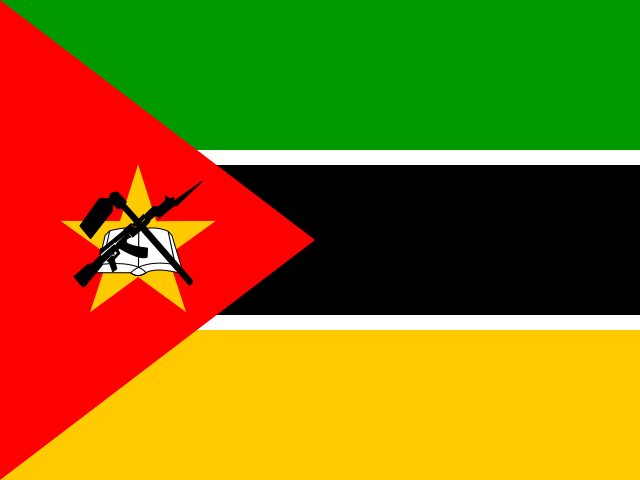 Mozambique
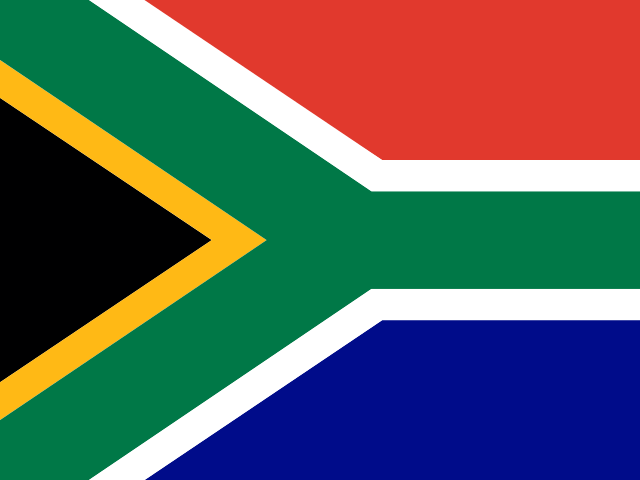 South Africa
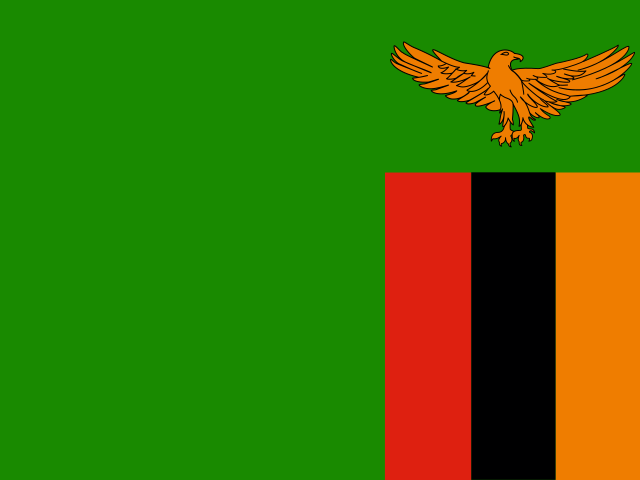 Zambia