Fairy tales, cosy candlelit evenings, bicycles everywhere and open sandwiches, in a small kingdom of islands between two seas.
Denmark is the smallest and southernmost of the Scandinavian countries. It is made up of the Jutland peninsula, which joins it to Germany, and 406 islands, of which Zealand, Funen and Bornholm are among the best known. The land is low and gently rolling, and the sea is never far away: no place in Denmark is more than 52 km from the coast. Great bridges now link the main islands with each other and with Sweden.
The Danes were among the Vikings who sailed across northern Europe, and King Cnut ruled England, Denmark and Norway in the 11th century. The Danish kingdom is one of the oldest in Europe, and its line of kings goes back to Gorm the Old in the 10th century. For centuries Denmark was a great power in the north, ruling Norway until 1814, before it lost land in a series of wars and became the small country it is today.
Questions to ask the older generation
Memories fade faster than photos. Ask these over a meal or a phone call, and write the answers down.
Which town or region of Denmark did our family come from? Was it near Aarhus, Odense, Aalborg?
Who was the first in the family to leave Denmark, when, and why?
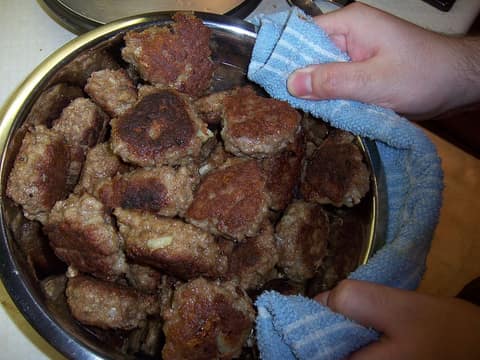
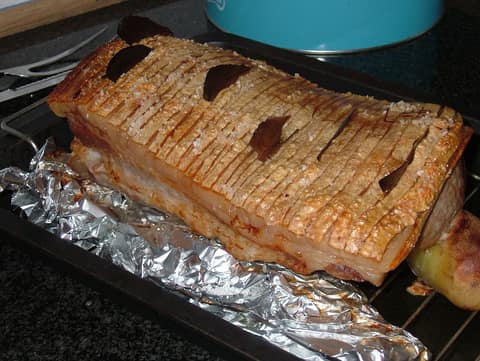
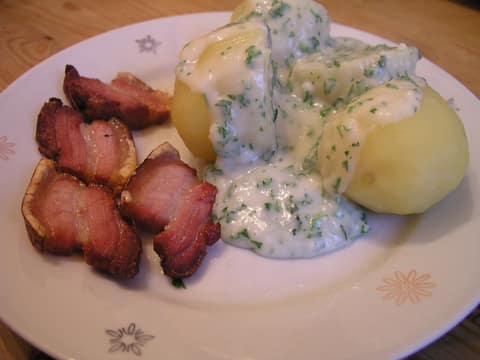
Which dishes from Denmark were cooked at home? Did anyone make Smørrebrød (open sandwiches) or Rye bread?
Does anyone in the family still speak Danish, or use a few words of it?
Were there songs, prayers, games or holidays from Denmark that the family kept?
Are there old photos, letters or documents from Denmark? Who has them?
If you could visit Denmark together, where would you go first?
A short history of Denmark
From Bronze Age burials and Viking kings to a North Sea empire, a union of three kingdoms, lost wars, wartime courage and a modern welfare state, Denmark's long story is told by one of the oldest monarchies in the world.
1370 BC
The Egtved Girl is buried
Around 1370 BC a young woman of 16 to 18 was buried in an oak coffin under a mound near Egtved in Jutland. Found in 1921, her clothes, hair and nails were so well preserved that she gives us a rare picture of life in the Nordic Bronze Age. The date comes from the tree rings of the coffin.
1016
Cnut becomes King of England
In 1016 the Danish prince Cnut, later called Cnut the Great, won the throne of England. He became King of Denmark in 1018 and claimed Norway in 1028, ruling a 'North Sea Empire' until his death in 1035.
1397
The Kalmar Union
In 1397, led by Queen Margaret I of Denmark, the kingdoms of Denmark, Norway and Sweden were joined under one monarch in the Kalmar Union. Sweden finally broke away in 1523, but Denmark and Norway stayed together for almost three more centuries.
1658
The Treaty of Roskilde
After a crushing defeat by Sweden, whose army crossed the frozen straits to the Danish islands, Denmark-Norway signed the Treaty of Roskilde in 1658 and gave up about a third of its land, including Scania in today's southern Sweden. Bornholm was returned to Denmark in 1660.
1864
The Second Schleswig War
In 1864 Prussia and Austria defeated Denmark and took the duchies of Schleswig, Holstein and Lauenburg. The Danish monarchy lost about 40 percent of its land. The loss shaped modern Denmark, and after a vote, North Schleswig returned to Denmark in 1920.
1940
The German occupation begins
Early on the morning of 9 April 1940 German troops crossed the border into neutral Denmark, and the country was occupied within hours. The occupation lasted for five years, until 5 May 1945, which Danes still remember as Liberation Day.
1973
Denmark joins the EEC
After a referendum in October 1972, Denmark joined the European Economic Community, today's European Union, on 1 January 1973, on the same day as Ireland and the United Kingdom. Greenland later left after its own vote, and the Faroe Islands never joined.
2024
Frederik X becomes king
Queen Margrethe II, who had reigned since 1972, announced in her New Year's Eve speech that she would step down. On 14 January 2024, exactly 52 years after she came to the throne, she abdicated and her son became King Frederik X.