Pyramids and pharaohs, a green ribbon of river through the desert, and a busy, friendly country that has welcomed travellers for thousands of years.
Egypt sits in the northeast corner of Africa, and through the Sinai Peninsula it reaches into Asia. Most of the country is desert, so nearly everyone lives along the narrow green valley of the Nile and in its delta, where the river fans out before it reaches the Mediterranean. The Suez Canal links the Mediterranean with the Red Sea, whose coral reefs draw divers from all over the world.
Ancient Egypt was united about 3100 BC, and for close to three thousand years it was ruled by pharaohs who built pyramids, temples and richly painted tombs. Greeks, Romans, Arabs, Ottomans, the French and the British followed. Egypt was an early centre of Christianity and became mainly Muslim in the centuries after the Arab conquest of the 600s, and Coptic Christians remain a large community today.
Questions to ask the older generation
Memories fade faster than photos. Ask these over a meal or a phone call, and write the answers down.
Which town or region of Egypt did our family come from? Was it near Alexandria, Giza, Port Said?
Who was the first in the family to leave Egypt, when, and why?
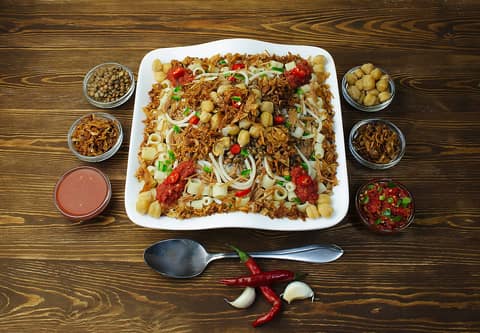
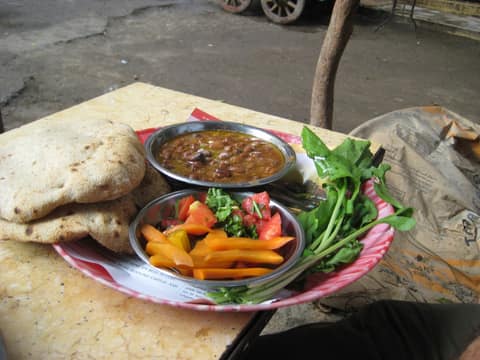
Which dishes from Egypt were cooked at home? Did anyone make Koshari or Ful medames?
Does anyone in the family still speak Egyptian Arabic, or use a few words of it?
Were there songs, prayers, games or holidays from Egypt that the family kept?
Are there old photos, letters or documents from Egypt? Who has them?
If you could visit Egypt together, where would you go first?
A short history of Egypt
Farming villages grew up along the Nile thousands of years ago, and about 3100 BC Upper and Lower Egypt were joined into one kingdom. The dates of the early pharaohs are approximate, and scholars differ by decades or more. After the pharaohs came Persian, Greek and Roman rule, then the Arab conquest, Cairo's great medieval dynasties, the Ottomans, and British control, before Egypt became independent in 1922 and a republic after the revolution of 1952.
3100 BC
Upper and Lower Egypt are united
About 3100 BC a king from the south, usually identified as Narmer and remembered in later tradition as Menes, brought the Nile Valley (Upper Egypt) and the delta (Lower Egypt) under one ruler. Pharaohs kept the title 'Lord of the Two Lands' for three thousand years.
1279 BC
Ramesses II becomes pharaoh
Ramesses II, often called Ramesses the Great, began a reign of about 66 years in around 1279 BC. He built on a huge scale, including the temples of Abu Simbel and parts of Karnak, and he is the Ozymandias of the Greek writers.
30 BC
Egypt becomes a Roman province
After Octavian, the future emperor Augustus, invaded Egypt, Cleopatra VII, the last queen of the Ptolemaic dynasty, died in August 30 BC. Egypt became a Roman province and the empire's main source of grain.
AD 969
Cairo is founded
The Fatimids, a dynasty from North Africa, conquered Egypt in 969 and founded a new royal city whose name, al-Qahira, 'the Vanquisher', became Cairo. The Al-Azhar Mosque was begun the following year.
1922
Egypt becomes independent
After a nationwide uprising in 1919, Britain, which had occupied Egypt since 1882, declared Egypt independent in February 1922. Egypt became a kingdom under Fuad I, though Britain kept troops and strong influence for decades.
1952
The 1952 revolution
On 23 July 1952 the Free Officers, led by Muhammad Naguib and Gamal Abdel Nasser, took power, and King Farouk gave up the throne. Egypt was declared a republic in June 1953, and Nasser became its leading figure.
1979
Peace treaty with Israel
President Anwar Sadat and Israeli prime minister Menachem Begin signed a peace treaty in Washington on 26 March 1979, following the Camp David Accords of 1978. Israel withdrew from the Sinai Peninsula by 1982, and the small border town of Taba was handed back in 1989 after international arbitration.
2025
The Grand Egyptian Museum opens
After more than 30 years of planning and building, the Grand Egyptian Museum near the pyramids of Giza was officially opened on 1 November 2025. It shows Tutankhamun's complete collection together for the first time.
ma'lesh (معلش)ma-LESHnever mind, don't worry; also sorry
kwayyes (كويس)KWAI-yesgood, fine
Numbers
wahid (واحد)WAH-hidone
itnein (اتنين)it-NAYNtwo
talata (تلاتة)ta-LAH-tathree
Food and drink
eish (عيش)AYSHbread
Towns and regions
Cairo, Cairo Governorate, on the Nile at the head of the delta: The Al-Azhar Mosque and Khan el-Khalili bazaar, The Egyptian Museum on Tahrir Square.
Alexandria, Alexandria Governorate, Mediterranean coast: The Citadel of Qaitbay, The Bibliotheca Alexandrina.
Giza, Giza Governorate, west bank of the Nile: The Pyramids of Giza, The Great Sphinx.
Port Said, Port Said Governorate, at the Mediterranean end of the Suez Canal: The northern entrance of the Suez Canal, Ferries between Africa and Asia.
Luxor, Luxor Governorate, Upper Egypt: Karnak and Luxor Temple, The Valley of the Kings.
Aswan, Aswan Governorate, Upper Egypt: Felucca trips on the Nile, The Aswan High Dam and Lake Nasser.
Abu Simbel, Aswan Governorate, far south, on Lake Nasser: The temples of Ramesses II and Nefertari, The sun festival in February and October.
Hurghada, Red Sea Governorate, Red Sea coast: Diving and snorkelling on coral reefs, Giftun Island.
Sharm El Sheikh, South Sinai Governorate, southern tip of the Sinai: Coral reefs and diving, Beach resorts.
Siwa, Western Desert, near the Libyan border: The Temple of the Oracle of Amun, Salt lakes and hot springs.
Saint Catherine, South Sinai Governorate, in the Sinai mountains: Saint Catherine's Monastery, Mount Sinai.