A free large-print PDF. Choose what goes in: facts, map, history, dishes and recipes, phrases, fun facts, a quiz with or without answers. Made for clubs, care homes, libraries and family afternoons.
Egypt sits in the northeast corner of Africa, and through the Sinai Peninsula it reaches into Asia. Most of the country is desert, so nearly everyone lives along the narrow green valley of the Nile and in its delta, where the river fans out before it reaches the Mediterranean. The Suez Canal links the Mediterranean with the Red Sea, whose coral reefs draw divers from all over the world.
Ancient Egypt was united about 3100 BC, and for close to three thousand years it was ruled by pharaohs who built pyramids, temples and richly painted tombs. Greeks, Romans, Arabs, Ottomans, the French and the British followed. Egypt was an early centre of Christianity and became mainly Muslim in the centuries after the Arab conquest of the 600s, and Coptic Christians remain a large community today.
About 109 million people live in Egypt, more than in any other Arab country. Cairo is the capital and by far the largest city. Since 2023 many ministries and, from 2024, the seat of government have moved to a new city about 45 km to the east, called the New Capital, but as of 2026 the constitution still names Cairo as the capital. Visitors come for the pyramids, Nile cruises between Luxor and Aswan, the Red Sea beaches and the Grand Egyptian Museum, which opened in 2025.
CapitalCairo
PopulationAbout 109 million living in Egypt (official estimate, May 2026)
Official languageArabic. Most people speak Egyptian Arabic in daily life
CurrencyEgyptian pound (EGP), divided into 100 piastres
AreaAbout 1 million km²
GovernmentRepublic with an elected president and parliament (President Abdel Fattah el-Sisi, since 2014)
Highest mountainMount Catherine in the Sinai, about 2,640 m (published heights differ slightly)
Longest riverThe Nile. With the Amazon it is one of the two longest rivers in the world; which one is longer depends on how they are measured
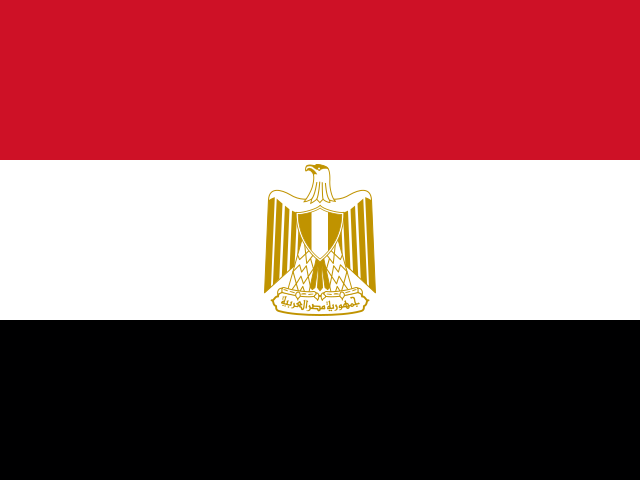
NeighboursLibya, Sudan, Israel and the Gaza Strip (Palestine). Egypt and Sudan both claim the Halaib Triangle on the Red Sea coast. Across the Gulf of Aqaba: Jordan and Saudi Arabia. Across the Mediterranean, the nearest countries are Cyprus and Greece
Farming villages grew up along the Nile thousands of years ago, and about 3100 BC Upper and Lower Egypt were joined into one kingdom. The dates of the early pharaohs are approximate, and scholars differ by decades or more. After the pharaohs came Persian, Greek and Roman rule, then the Arab conquest, Cairo's great medieval dynasties, the Ottomans, and British control, before Egypt became independent in 1922 and a republic after the revolution of 1952.
3100 BC
Upper and Lower Egypt are united
About 3100 BC a king from the south, usually identified as Narmer and remembered in later tradition as Menes, brought the Nile Valley (Upper Egypt) and the delta (Lower Egypt) under one ruler. Pharaohs kept the title 'Lord of the Two Lands' for three thousand years.
2560 BC
The Great Pyramid is built
Around 2600 to 2560 BC the Great Pyramid at Giza was raised as the tomb of the pharaoh Khufu, in about 26 years, from some 2.3 million stone blocks. At about 146 m high, it stayed the tallest structure made by people for more than 3,700 years. Dates in this era can differ by a few decades between scholars.
1279 BC
Ramesses II becomes pharaoh
Ramesses II, often called Ramesses the Great, began a reign of about 66 years in around 1279 BC. He built on a huge scale, including the temples of Abu Simbel and parts of Karnak, and he is the Ozymandias of the Greek writers.
331 BC
Alexandria is founded
Alexander the Great took Egypt from the Persians in 332 BC and founded Alexandria on the Mediterranean coast in 331 BC. After his death his general Ptolemy became king, and the Greek-speaking Ptolemies ruled Egypt from Alexandria for almost three centuries.
30 BC
Egypt becomes a Roman province
After Octavian, the future emperor Augustus, invaded Egypt, Cleopatra VII, the last queen of the Ptolemaic dynasty, died in August 30 BC. Egypt became a Roman province and the empire's main source of grain.
AD 641
Arab armies take Egypt
Arab forces led by Amr ibn al-As conquered Byzantine Egypt between 639 and 642, ending about seven centuries of Roman rule. Over the following centuries Arabic replaced Coptic as the everyday language and most Egyptians became Muslim.
AD 969
Cairo is founded
The Fatimids, a dynasty from North Africa, conquered Egypt in 969 and founded a new royal city whose name, al-Qahira, 'the Vanquisher', became Cairo. The Al-Azhar Mosque was begun the following year.
1798
Napoleon invades Egypt
Napoleon Bonaparte landed with a French army in 1798 and defeated the Mamluks at the Battle of the Pyramids. The French stayed only until 1801, but the scholars who came with the army studied the country, and in 1799 French soldiers found the Rosetta Stone.
1869
The Suez Canal opens
After ten years of work, the Suez Canal opened on 17 November 1869, linking the Mediterranean to the Red Sea without locks. Ships between Europe and Asia no longer had to sail around Africa.
1922
Egypt becomes independent
After a nationwide uprising in 1919, Britain, which had occupied Egypt since 1882, declared Egypt independent in February 1922. Egypt became a kingdom under Fuad I, though Britain kept troops and strong influence for decades.
1922
Tutankhamun's tomb is found
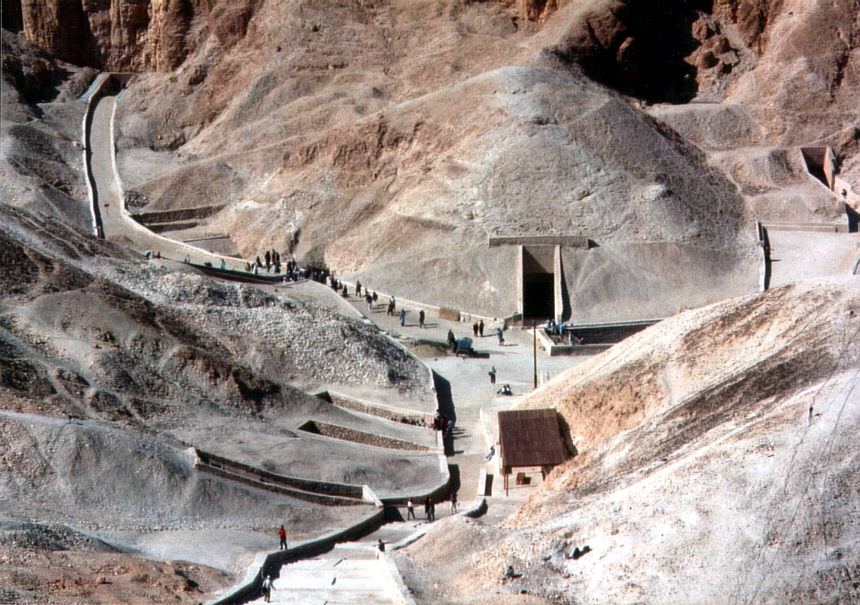
On 4 November 1922 Howard Carter's team found the first step of the tomb of the young pharaoh Tutankhamun in the Valley of the Kings. Almost untouched for more than 3,000 years, it held over 5,000 objects, including the famous gold mask.
1952
The 1952 revolution
On 23 July 1952 the Free Officers, led by Muhammad Naguib and Gamal Abdel Nasser, took power, and King Farouk gave up the throne. Egypt was declared a republic in June 1953, and Nasser became its leading figure.
1956
The Suez Crisis
On 26 July 1956 President Nasser nationalised the Suez Canal. Britain, France and Israel invaded, but under strong pressure from the United States, the Soviet Union and the United Nations they withdrew, and the canal stayed in Egyptian hands.
1979
Peace treaty with Israel
President Anwar Sadat and Israeli prime minister Menachem Begin signed a peace treaty in Washington on 26 March 1979, following the Camp David Accords of 1978. Israel withdrew from the Sinai Peninsula by 1982, and the small border town of Taba was handed back in 1989 after international arbitration.
2011
The 2011 revolution
Mass protests began on 25 January 2011, with Cairo's Tahrir Square at their heart. After 18 days President Hosni Mubarak, in power since 1981, resigned on 11 February. Years of political upheaval followed.
2025
The Grand Egyptian Museum opens
After more than 30 years of planning and building, the Grand Egyptian Museum near the pyramids of Giza was officially opened on 1 November 2025. It shows Tutankhamun's complete collection together for the first time.
Egyptian cooking grew out of the farms of the Nile Valley and Delta: beans, lentils, rice, vegetables, bread and plenty of garlic and onions. A meal usually starts with salads, dips and cheese served with bread, followed by the main dishes. Lunch is the main meal of the day, often eaten in the afternoon, and dinner tends to be late and lighter. Round loaves of eish baladi come with almost everything and serve as a spoon, and a glass of tea is offered to every visitor.
All of Egypt, a street food from Cairo to Alexandria
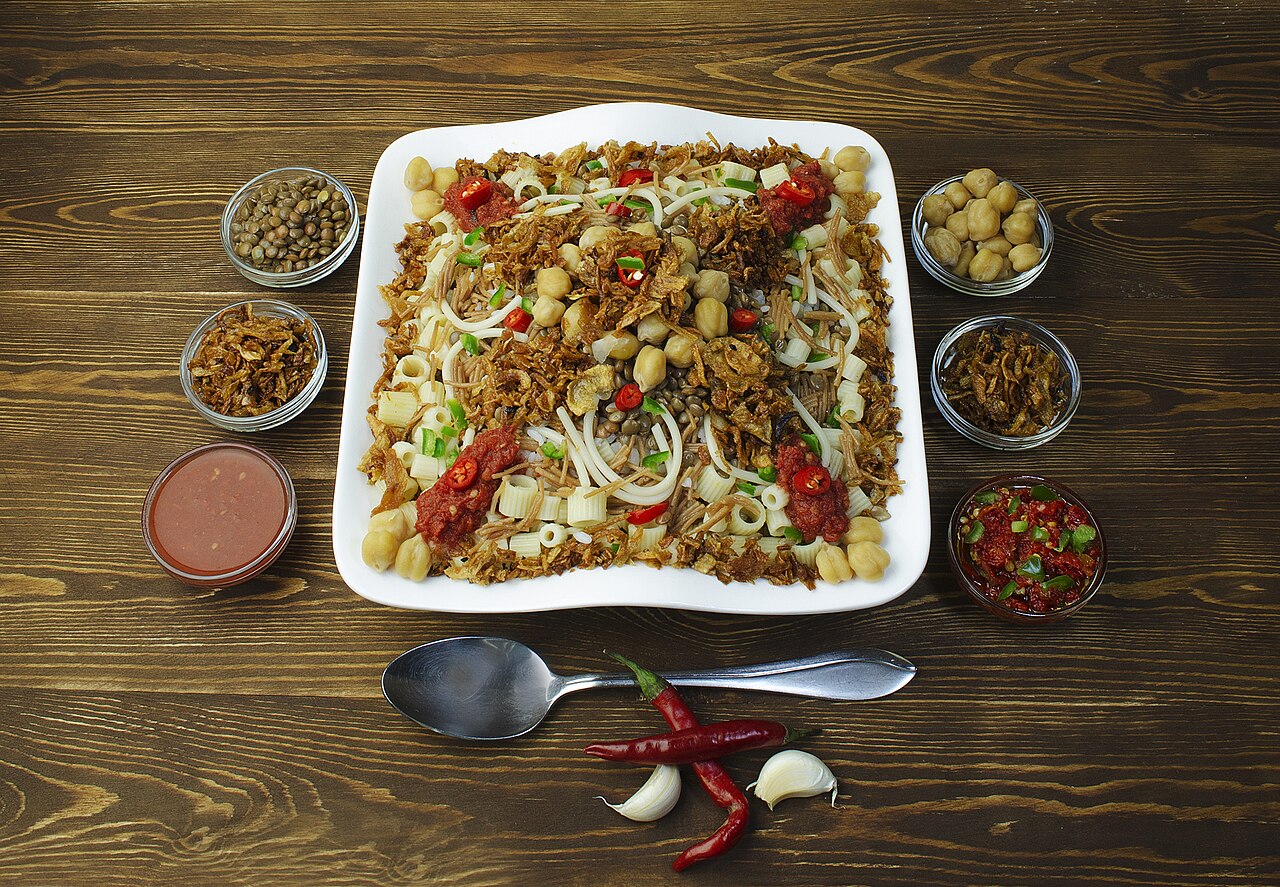
Often called Egypt's national dish: rice, small macaroni and brown lentils, topped with chickpeas, a garlicky tomato sauce and a heap of crispy fried onions. Everyone adds garlic vinegar and hot sauce to taste. Some restaurants sell nothing else.
In 2025 UNESCO added koshari to its list of the intangible cultural heritage of humanity, the first Egyptian dish to be included.
See the recipe
Serves 4
1 h 15 min
Ingredients
200 g brown lentils, rinsed
200 g rice, rinsed
50 g vermicelli, broken into short pieces
200 g small macaroni
1 tin (400 g) chickpeas, drained
3 large onions, thinly sliced
Vegetable oil for frying
For the tomato sauce: 2 tablespoons oil, 4 cloves garlic crushed, 400 g passata or chopped tomatoes, 1 teaspoon ground cumin, a pinch of chilli flakes, 2 tablespoons white vinegar and salt
For the garlic vinegar (da'a): 4 cloves garlic crushed, 4 tablespoons white vinegar, 4 tablespoons water, ½ teaspoon ground cumin and a pinch of salt
Method
Simmer the lentils in plenty of water for 20 to 25 minutes, until tender but still whole, then drain.
Fry the onions in about 1 cm of oil over a medium heat, stirring often, for 20 to 25 minutes, until deep brown and crisp. Lift them onto kitchen paper and keep 2 tablespoons of the oil.
In a pan, fry the vermicelli in the onion oil until golden, stir in the rice, add 400 ml water and a little salt, cover and cook on a low heat for 15 minutes. Gently mix in the lentils.
Boil the macaroni in salted water until just tender and drain.
For the sauce, fry the garlic in the oil for a minute, add the tomatoes, cumin, chilli and salt and simmer for 15 minutes, then stir in the vinegar. Mix the garlic vinegar ingredients in a small jug.
Pile the rice and lentils on each plate, then the macaroni, the chickpeas, a ladle of tomato sauce and a handful of crispy onions. Everyone adds garlic vinegar and extra chilli at the table.
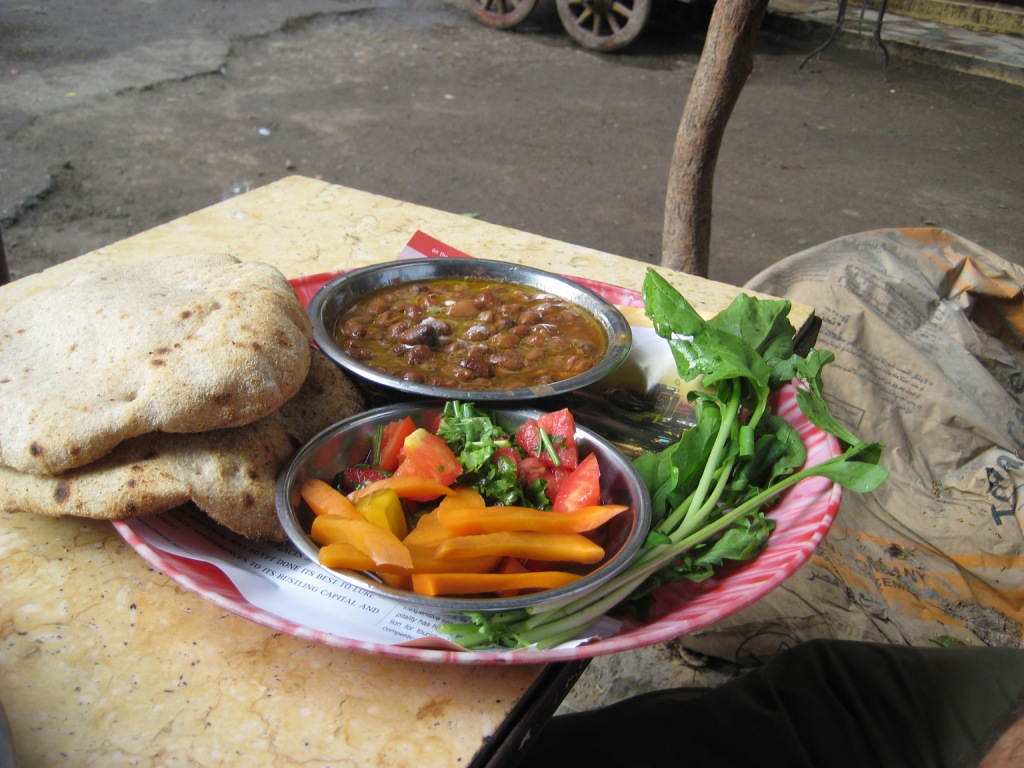
Small brown fava beans cooked slowly until very soft, then mashed with olive oil, cumin, garlic and lemon. It is eaten at breakfast with bread, pickles and salad, and traditionally cooked in and served from a large metal pot. It is often called one of Egypt's national dishes.
In medieval Cairo, beans were left to simmer all night in huge pots over the embers of the fires that heated the public baths, ready for the city's breakfast.
See the recipe
Serves 4
20 min
Ingredients
2 tins (about 400 g each) ful medames or fava beans, with their liquid
2 cloves garlic, crushed
1 teaspoon ground cumin
Juice of 1 lemon
3 tablespoons olive oil
Salt
To serve: chopped parsley, chopped tomato, sliced spring onion, chilli, pickles and warm flatbread
Method
Tip the beans and their liquid into a pan and simmer for about 10 minutes, adding a splash of water if they look dry.
Mash them roughly with a fork or potato masher, leaving some beans whole.
Stir in the garlic, cumin, lemon juice and salt to taste.
Spoon into a bowl, pour over the olive oil and top with parsley and tomato. Serve with bread for scooping, spring onion, chilli and pickles. Important: people with G6PD deficiency (favism) must not eat fava beans.
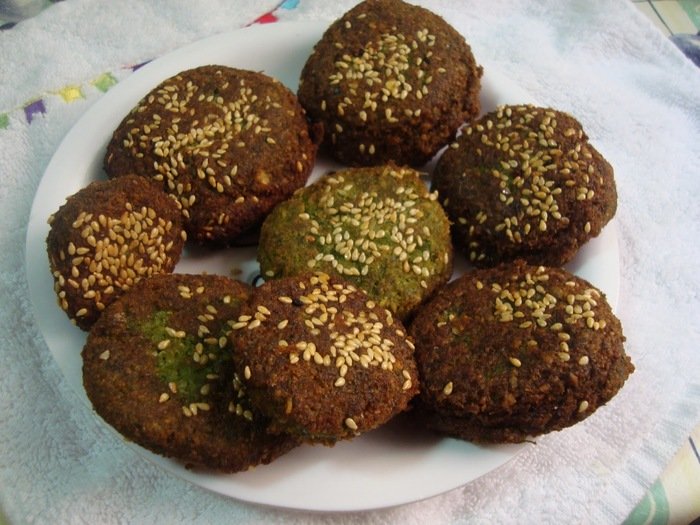
Egypt's falafel, made from dried fava beans rather than chickpeas, with lots of parsley, coriander and dill, so it is bright green inside. The fritters are fried until crisp and tucked into bread with tahini sauce, tomatoes and rocket.
Its name means something like 'a little piece of food' or 'a small tasty thing'.
See the recipe
Serves 4
45 min
Ingredients
250 g dried split fava beans (skinless), soaked in plenty of cold water for 12 to 24 hours
1 small onion, roughly chopped
4 cloves garlic
A large bunch of parsley, a bunch of coriander and a few sprigs of dill
1 teaspoon ground cumin
1 teaspoon ground coriander
1 teaspoon salt
½ teaspoon bicarbonate of soda
2 tablespoons sesame seeds
Vegetable oil for deep frying
To serve: flatbread, tahini sauce, sliced tomato and rocket
Method
Drain the soaked beans very well and pat them dry. Do not cook them first.
Blend the beans, onion, garlic and herbs in a food processor to a coarse green paste, not a smooth purée. Stir in the cumin, ground coriander and salt and leave for 30 minutes.
Just before frying, mix in the bicarbonate of soda. With wet hands, shape small flat patties and press sesame seeds onto one side.
Heat the oil in a deep, heavy pan to about 175°C, no more than one third full, and fry a few patties at a time for 3 to 4 minutes, until deep brown outside and cooked right through. Drain on kitchen paper.
Serve hot in bread with tahini sauce, tomato and rocket. People with G6PD deficiency (favism) must not eat fava beans.
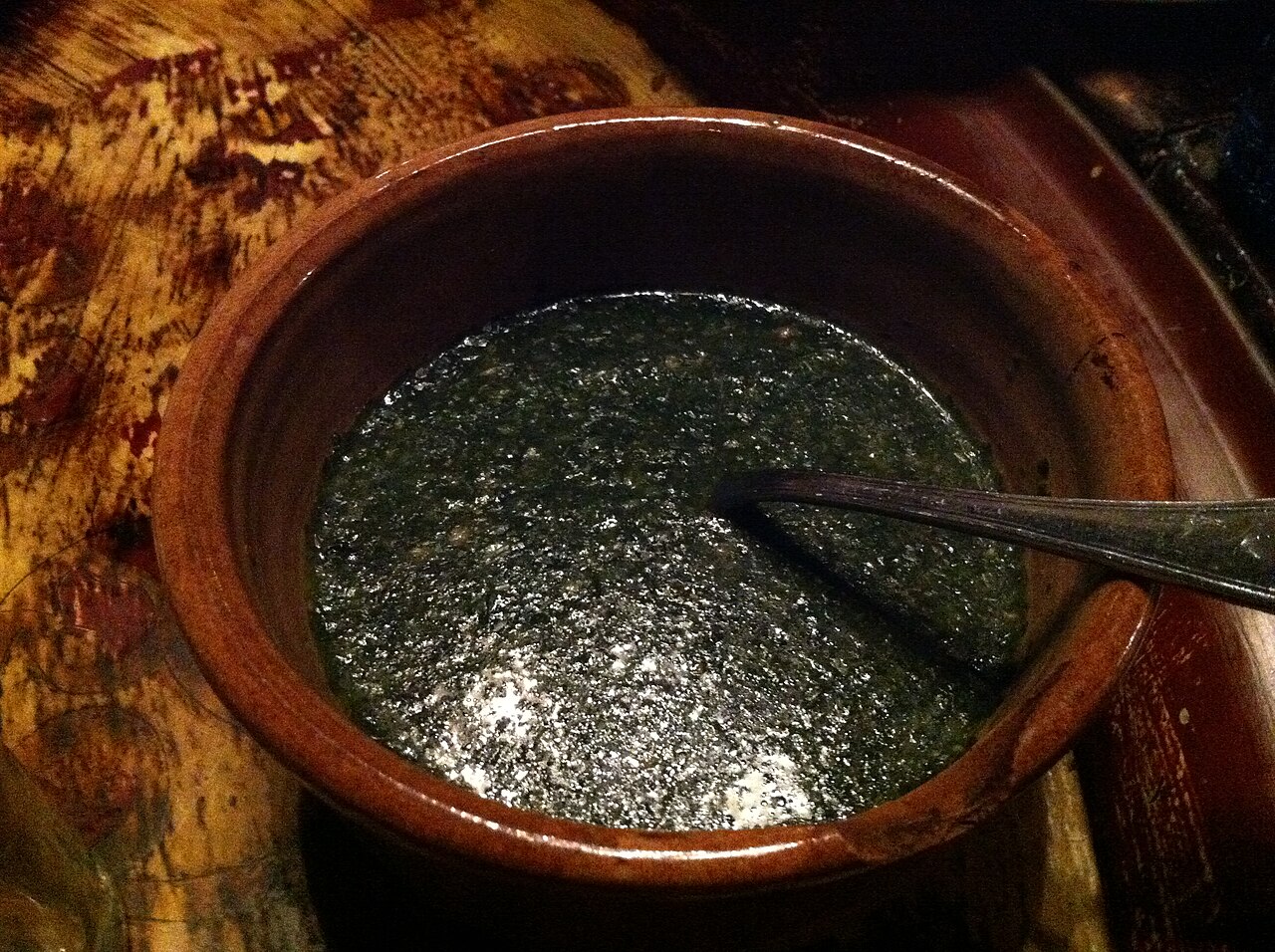
A thick green soup made from finely chopped jute leaves cooked in chicken or rabbit stock, finished with garlic fried with ground coriander. It has a silky, slightly slippery texture, a little like okra, and is served with rice and chicken or bread.
In 1005 the Fatimid caliph al-Hakim banned his subjects from eating molokhia.
See the recipe
Serves 4
30 min
Ingredients
400 g frozen minced molokhia (jute leaves), from Middle Eastern or Asian food shops
1 litre chicken stock
6 cloves garlic, crushed
2 teaspoons ground coriander
2 tablespoons ghee or butter
Salt and black pepper
To serve: cooked rice, cooked chicken pieces and lemon wedges
Method
Bring the stock to a simmer in a large pan and season it with salt and pepper.
Add the frozen molokhia and stir until it has melted into the stock. Heat until it just simmers, but do not let it boil hard, or the leaves can sink and separate.
In a small frying pan, fry the garlic and ground coriander in the ghee, stirring, until golden and fragrant. Take care not to let the garlic burn.
Stir the hot garlic straight into the soup. It will sizzle loudly.
Serve at once in bowls, with rice, chicken and a squeeze of lemon.
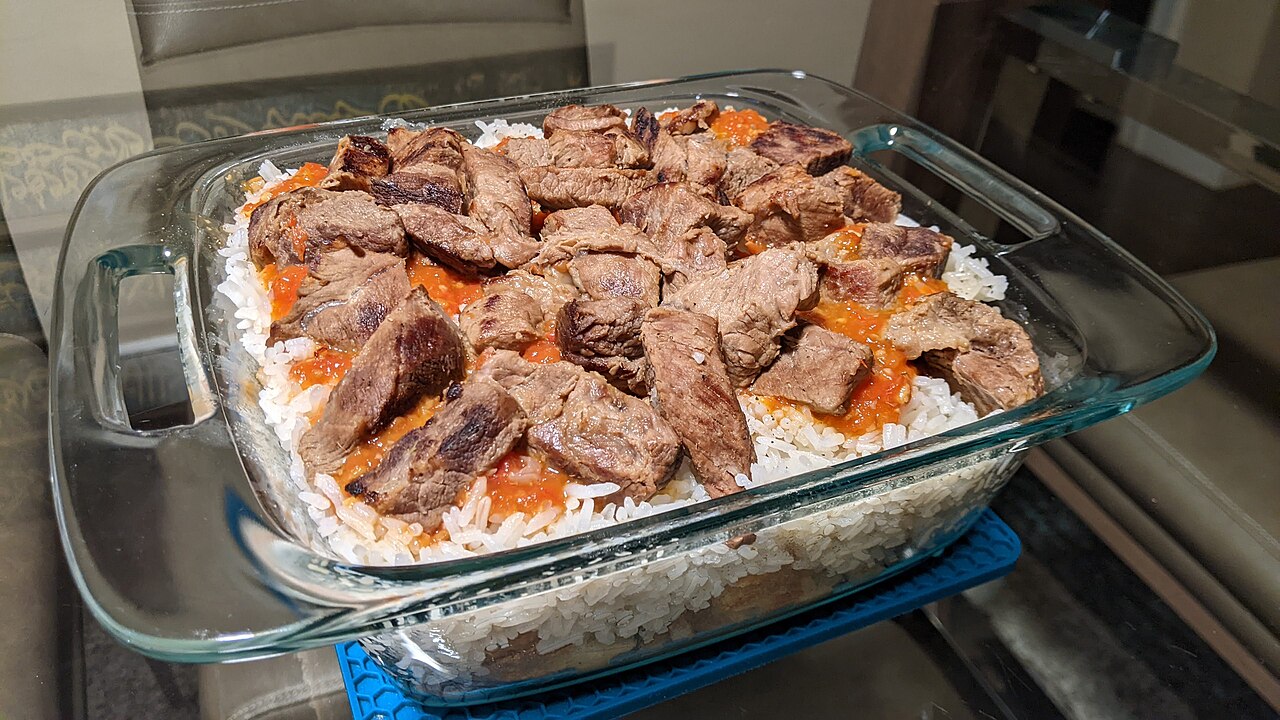
Layers of crisp toasted bread and rice soaked in meat broth, topped with a garlic, vinegar and tomato sauce and pieces of boiled lamb or beef. It is made for special days: Eid al-Fitr, Eid al-Adha, a first pregnancy, and for Coptic Christians, Christmas.
Its name comes from an Arabic word meaning to break into pieces, after the broken bread at its base.
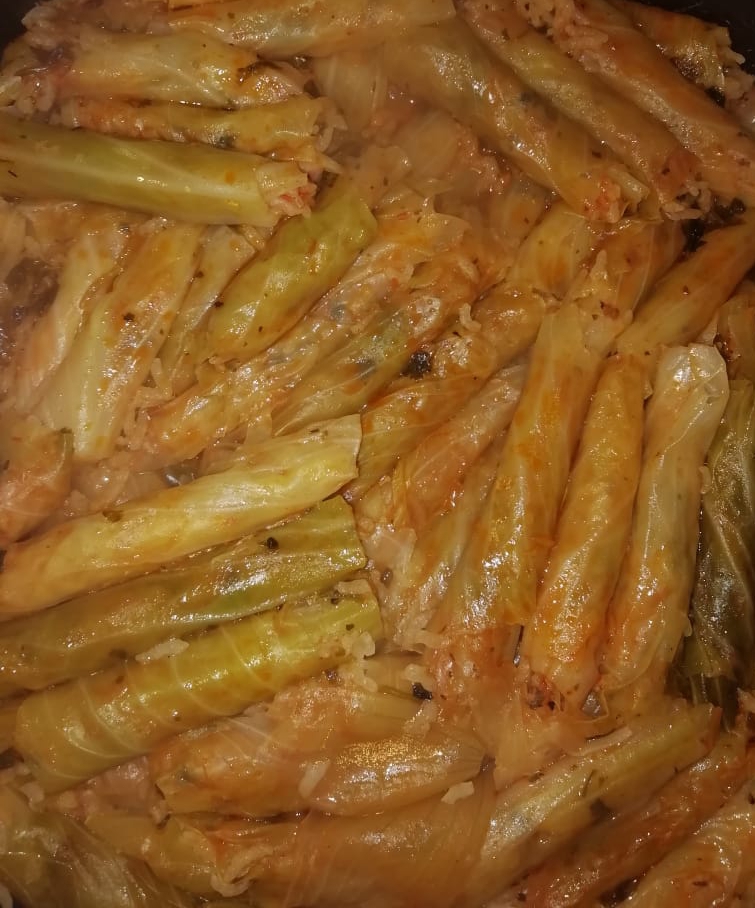
Vegetables stuffed with rice mixed with tomato, herbs and spices, then simmered slowly in broth. Courgettes, peppers, aubergines and cabbage are all used, and stuffed vine leaves are called mahshi waraq enab.
Cairo; also popular in the Nile Delta, with its own version in Alexandria
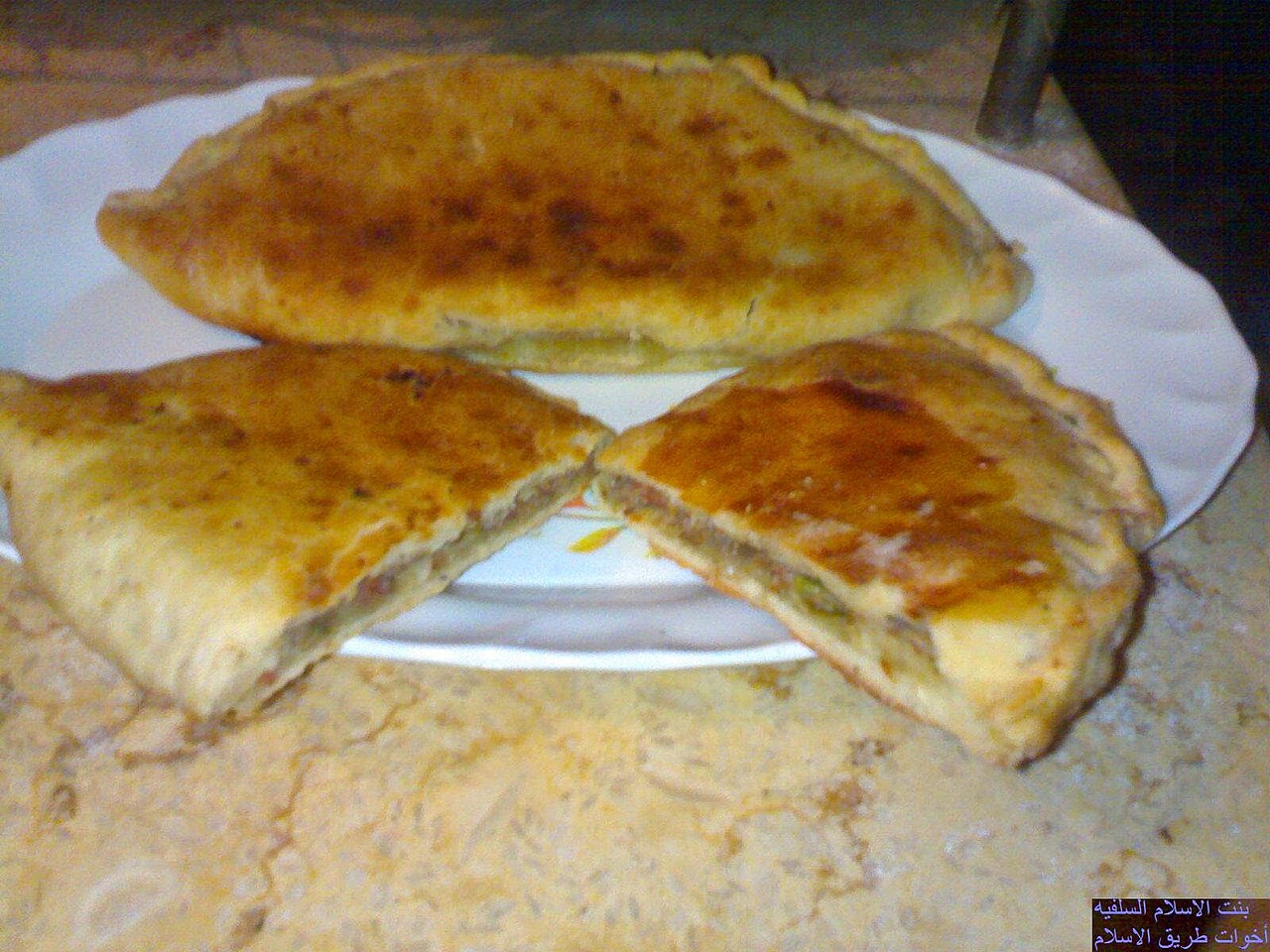
Flat Egyptian bread stuffed with minced meat spiced with onions, pepper, parsley and sometimes chilli, then baked until the bread is crisp and the meat juicy. In Alexandria the meat is baked between two rounds of dough instead.
One story says a Cairo butcher named Ahmed al-Hawawsh invented it in 1971, while others trace it to a 13th-century recipe.
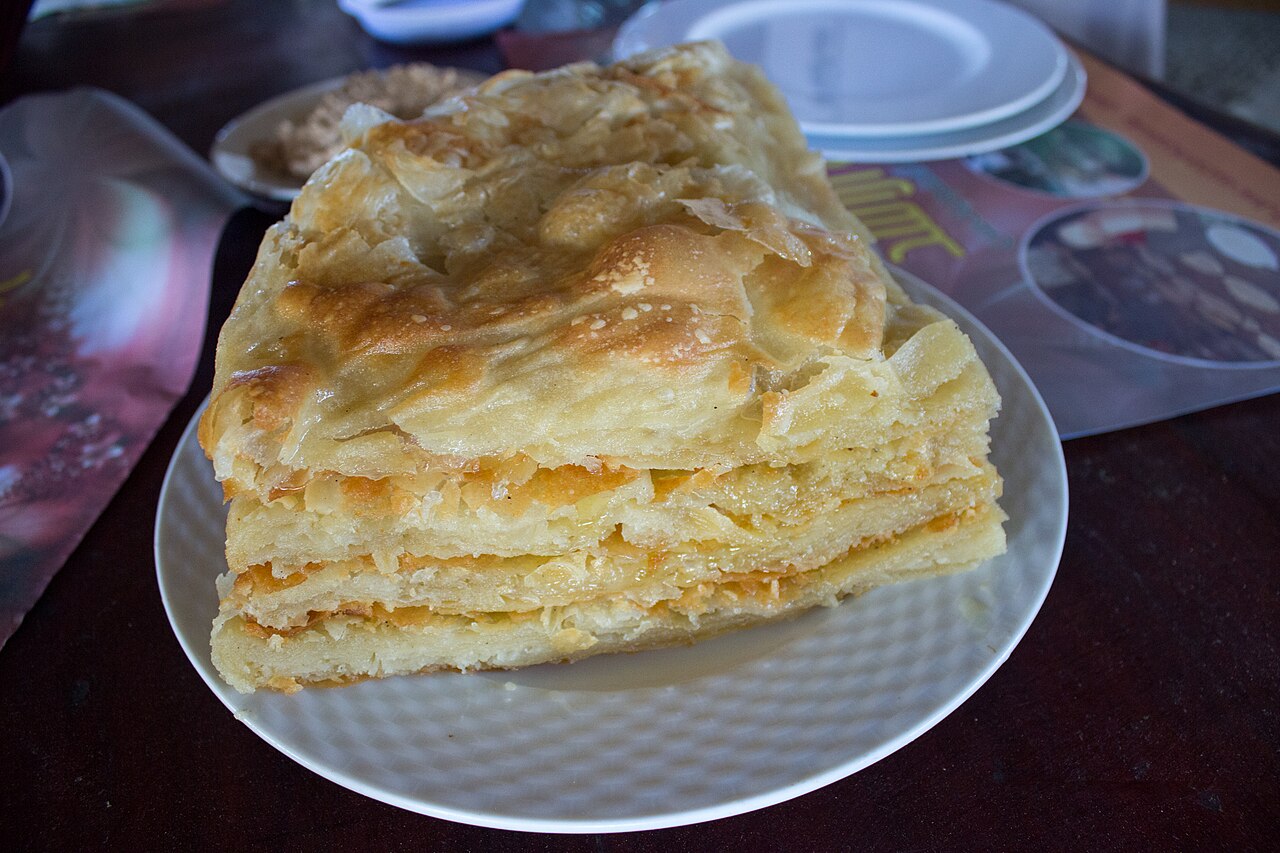
A large, flaky pastry of many paper-thin layers of dough brushed with ghee, baked until golden. It is eaten sweet with honey, molasses or jam, or savoury with cheese and olives, and is a traditional gift for guests and holidays.
Feteer was served to US President Barack Obama, together with ta'ameya, during his visit to Egypt in 2009.
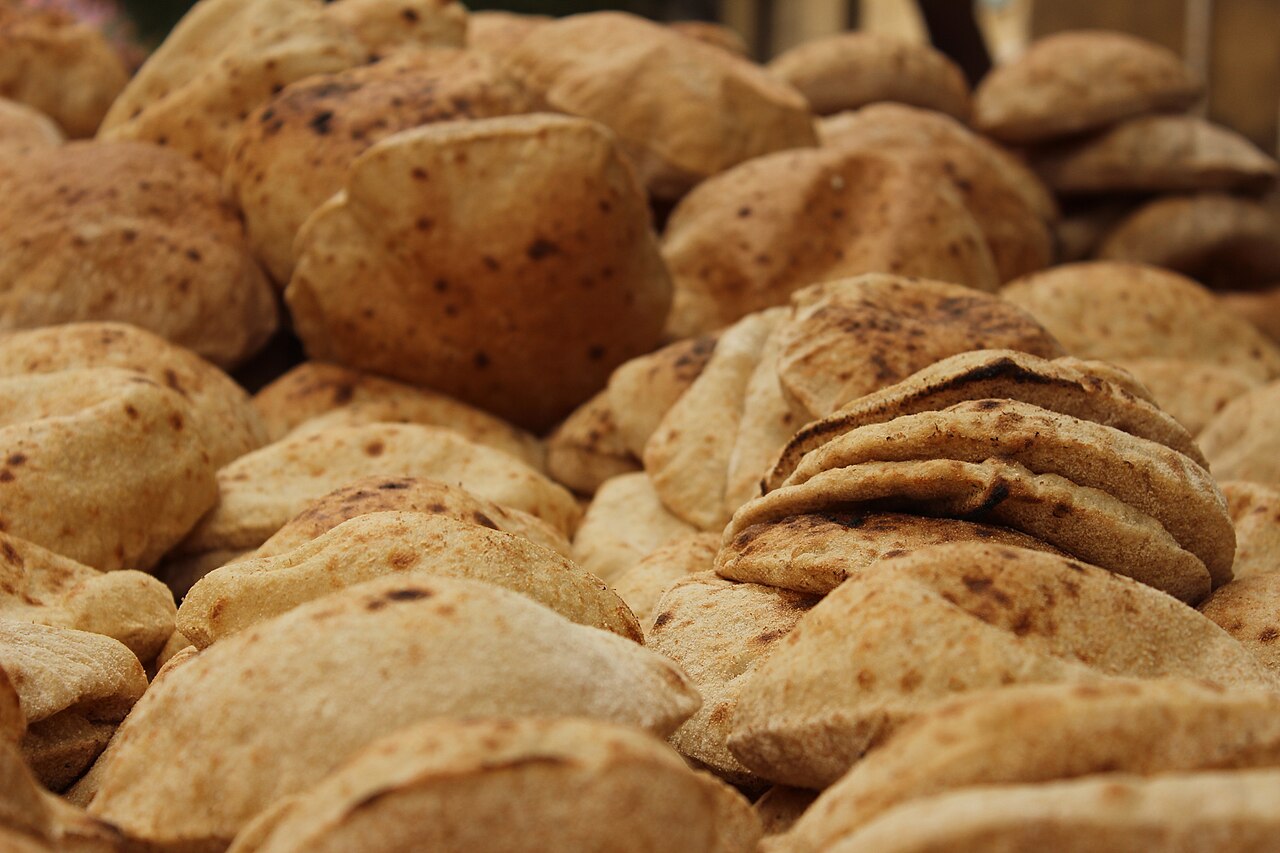
Egypt's everyday round flatbread, made with wholewheat flour and bran and baked in very hot ovens until it puffs up into a pocket. It is eaten at almost every meal, torn into pieces to scoop up beans, dips and stews.
In Egyptian Arabic the word for bread, eish, comes from an Arabic word meaning 'life'.
All of Egypt, a custom going back to ancient times
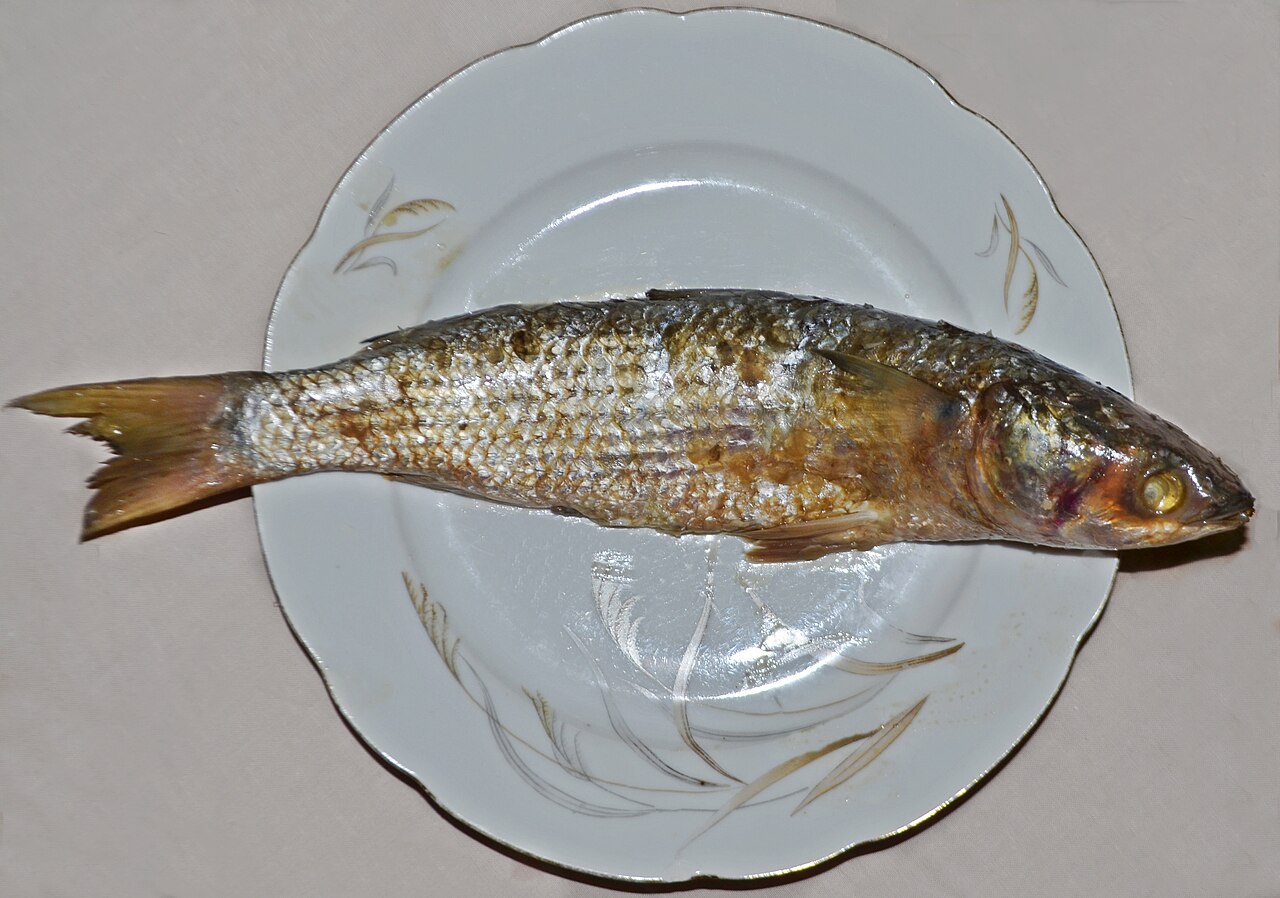
Grey mullet that has been salted, fermented and dried, with a very strong smell and taste. It is eaten above all at Sham Ennessim, the spring festival, with onions, lettuce and bread. Safety: badly prepared or old feseekh can cause botulism, a rare but very dangerous food poisoning. Never make it at home; buy only from trusted shops, check the date, and avoid it if you are pregnant or have a weak immune system.
Every spring Egypt's Ministry of Health reminds people to buy feseekh only from known, trusted sellers.
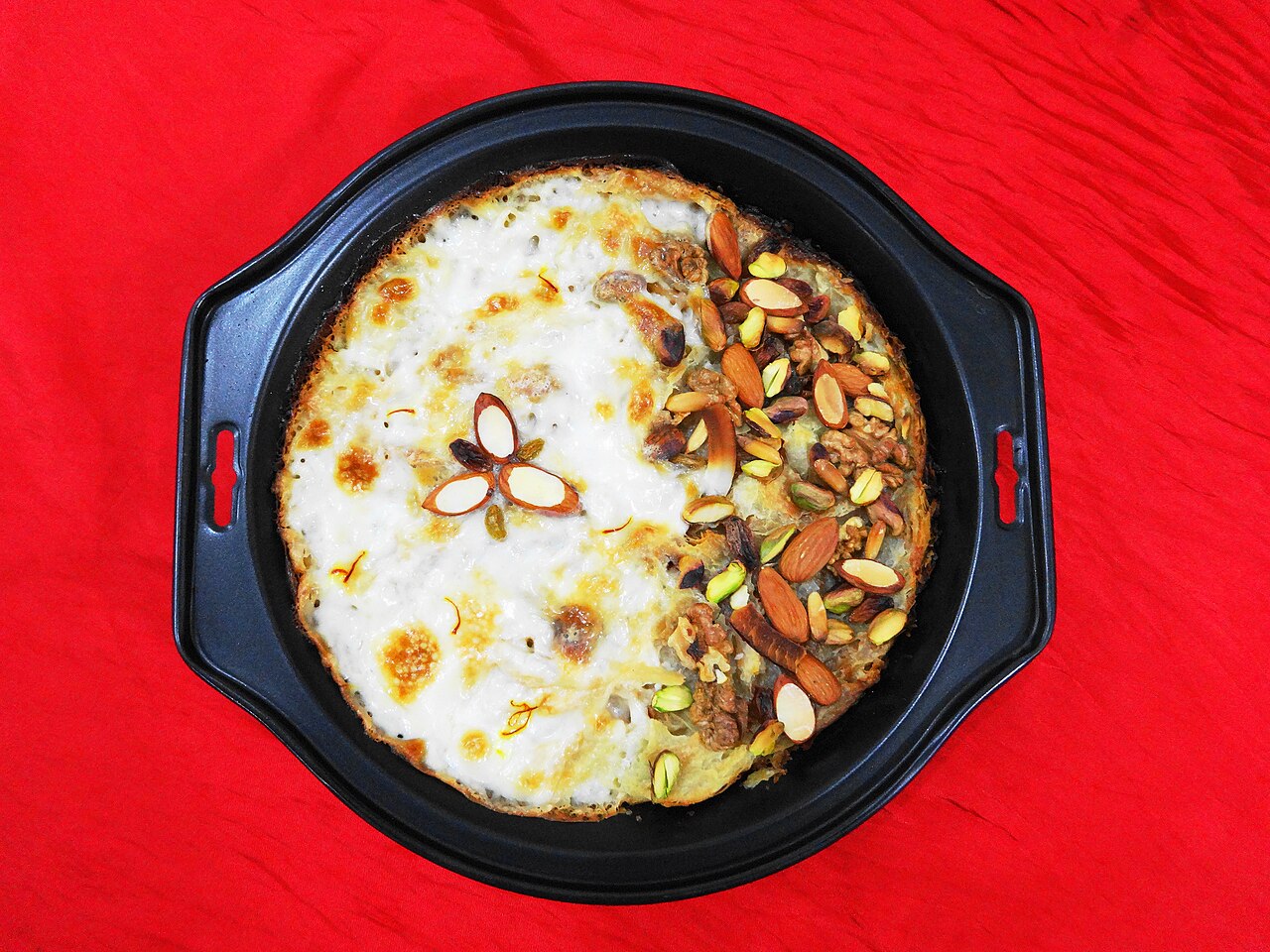
A national dessert of Egypt: pieces of pastry or bread baked in sweet hot milk with nuts, raisins and coconut until the top is golden. It is often compared to bread and butter pudding, but it is made without eggs.
Its name means 'Ali's mother'. A popular legend links it to a sultan's wife in the 1250s, but the first known written recipe dates only from the 1800s.
See the recipe
Serves 6
45 min
Ingredients
1 sheet (about 320 g) ready-rolled puff pastry
100 g mixed nuts (pistachios, almonds and hazelnuts), roughly chopped
50 g raisins
30 g desiccated coconut
1 litre whole milk
80 g sugar
½ teaspoon vanilla extract
150 ml double cream
Ground cinnamon to serve
Method
Bake the pastry as the packet says, until puffed and golden, then let it cool and break it into bite-sized pieces.
Heat the oven to 200°C (180°C fan). Scatter the pastry in an ovenproof dish with the nuts, raisins and coconut.
Warm the milk with the sugar and vanilla until it is steaming and the sugar has dissolved, then pour it over the pastry.
Spoon the cream over the top and bake for 15 to 20 minutes, until bubbling and golden. For a darker top, put it under a hot grill for 1 to 2 minutes, watching closely.
Serve warm, dusted with cinnamon. It contains nuts, so check with guests who have allergies.
All of Egypt; similar cakes are found across the Middle East and the Balkans
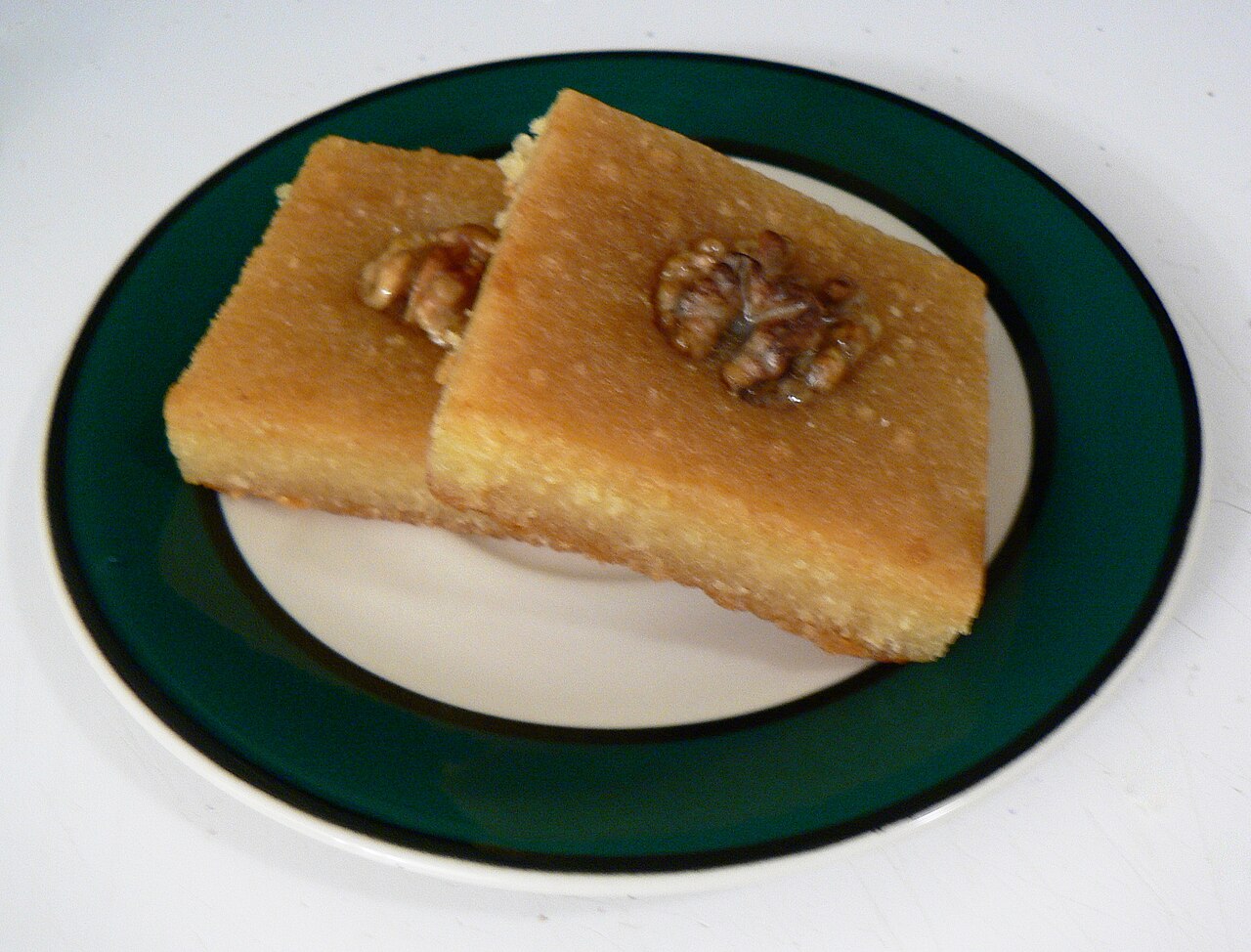
A golden semolina cake baked in a tray, soaked in sugar syrup and cut into diamonds, often with an almond on each piece. It is a favourite in Egyptian sweet shops and at home.
One popular explanation of the name is an Arabic saying meaning 'just a kiss'.
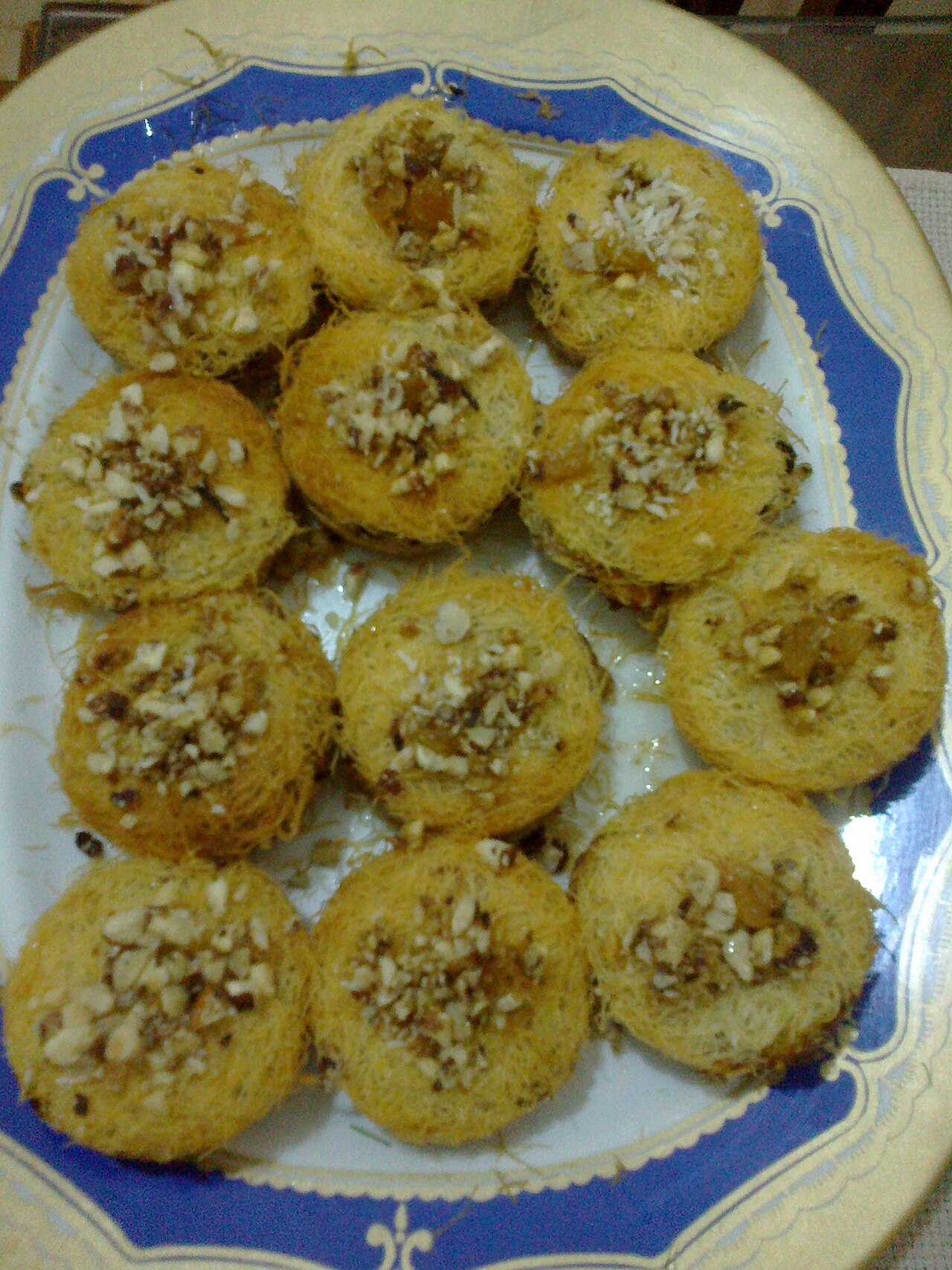
Fine strands of pastry baked with butter until crisp and golden, filled with cream, nuts or cheese and soaked in syrup. In Egypt it is one of the sweets most closely linked with Ramadan evenings, together with qatayef, small stuffed pancakes.
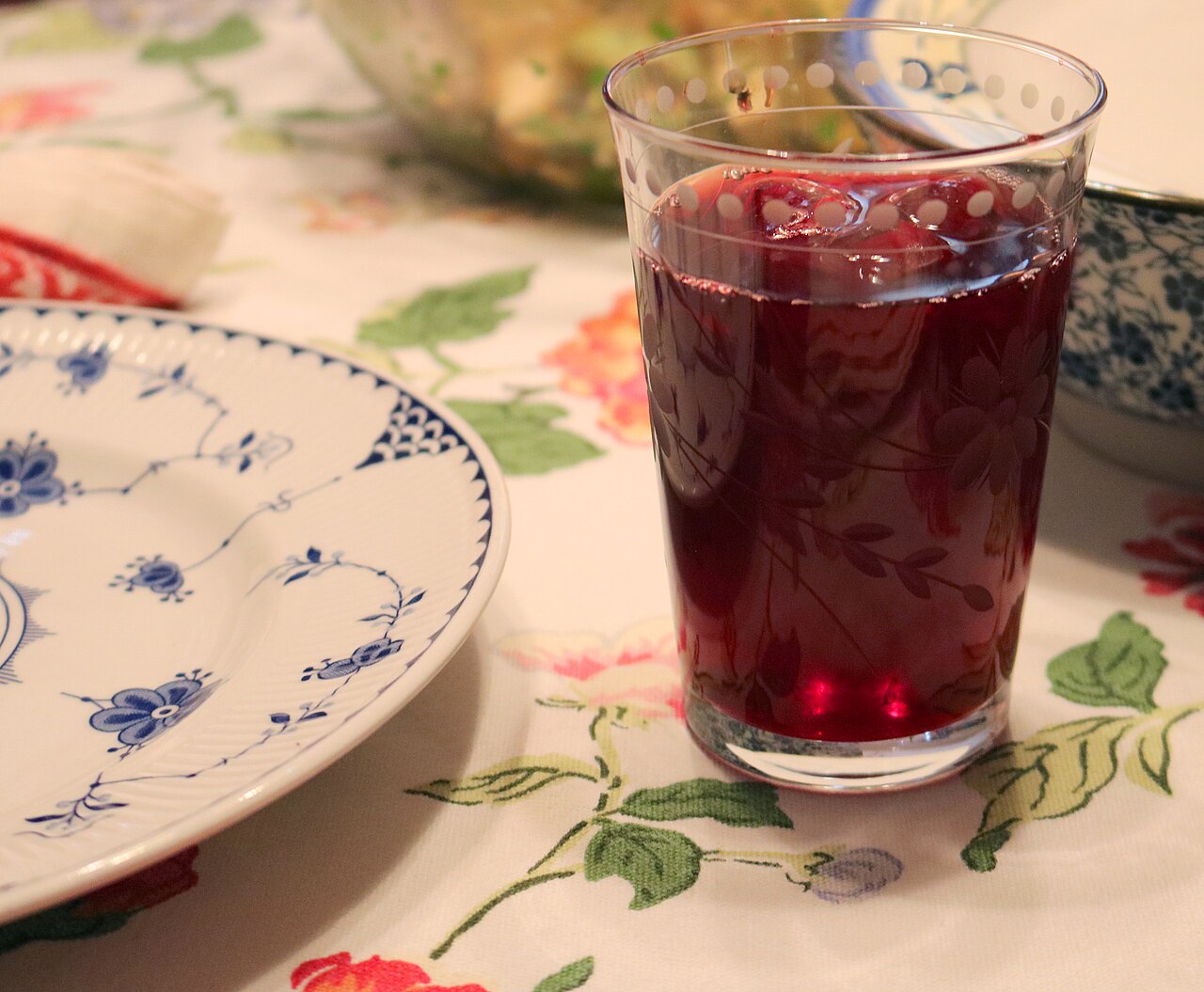
A deep red drink made from dried hibiscus flowers, served very sweet, usually ice cold in summer and hot in winter. Street sellers and cafés in Cairo sell it everywhere.
In Egypt and Sudan, weddings are traditionally toasted with a glass of karkadeh.
Table manners
Bread is used as a spoon: tear off a piece of eish baladi to scoop up beans, dips and stews from shared dishes.
Tea is offered to every visitor, at home or even in an office. Egyptians sometimes call it 'wageb', the duty, and it is polite to accept.
Lunch is the main meal, often eaten in the afternoon, and dinner is usually late and lighter. In summer, restaurants fill up after 10 pm.
Portions are generous and your host will keep offering more. Leaving a lot of food is frowned upon, so take small helpings to start.
During Ramadan, families break the fast together at sunset, and many people set up tables in the street to feed the poor and passers-by.
Almost all Egyptians live along the Nile, from Aswan in the south to the delta in the north. Greater Cairo, with Giza across the river, is one of the largest cities in the world. Alexandria and Port Said face the Mediterranean, Luxor and Aswan hold the great temples of the south, and resorts such as Hurghada and Sharm El Sheikh line the Red Sea.
Cairo Governorate, on the Nile at the head of the delta
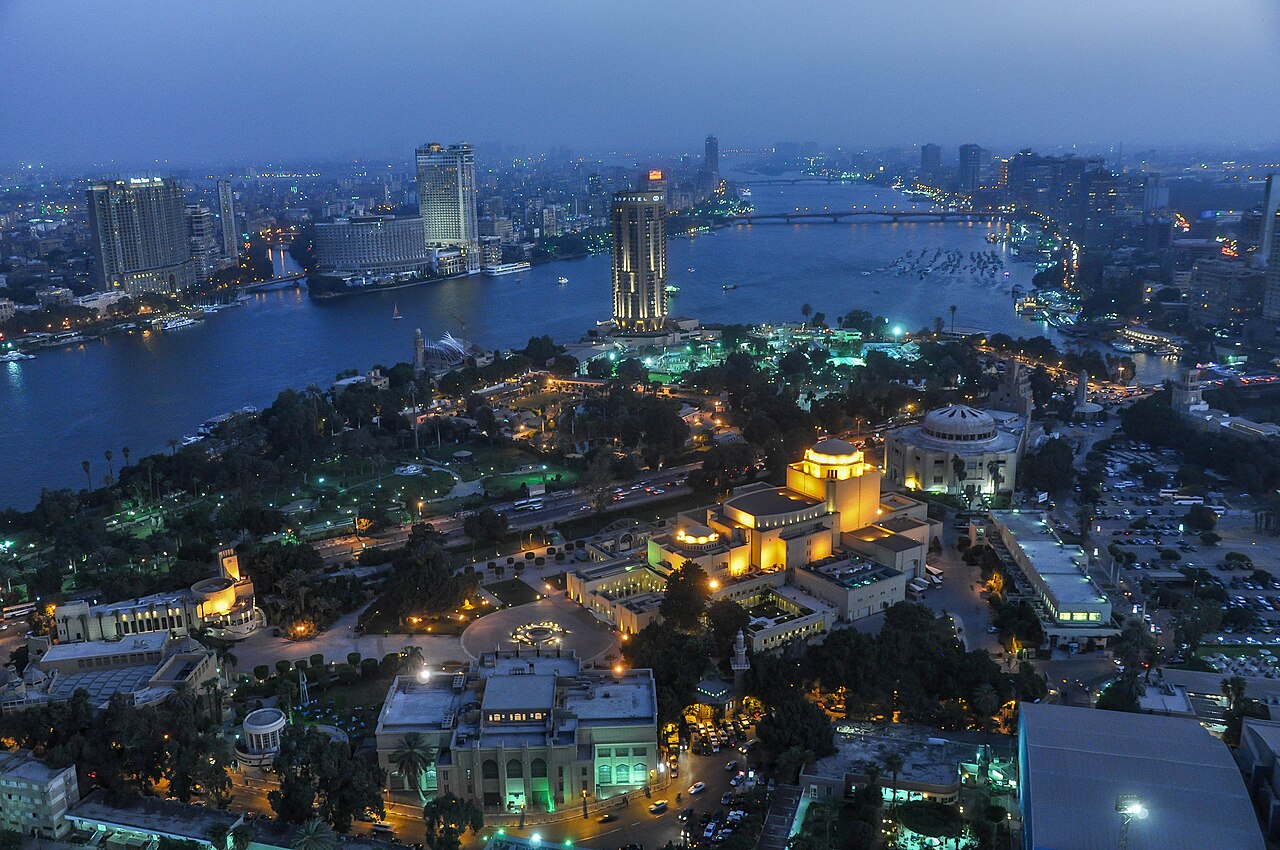
The capital, founded by the Fatimids in 969, with almost 10 million people in the city and more than 20 million in Greater Cairo, one of the largest urban areas in the world. Its old Islamic quarter, nicknamed 'the city of a thousand minarets', is a World Heritage Site. Egyptians often simply call it Masr, the same name as the country.
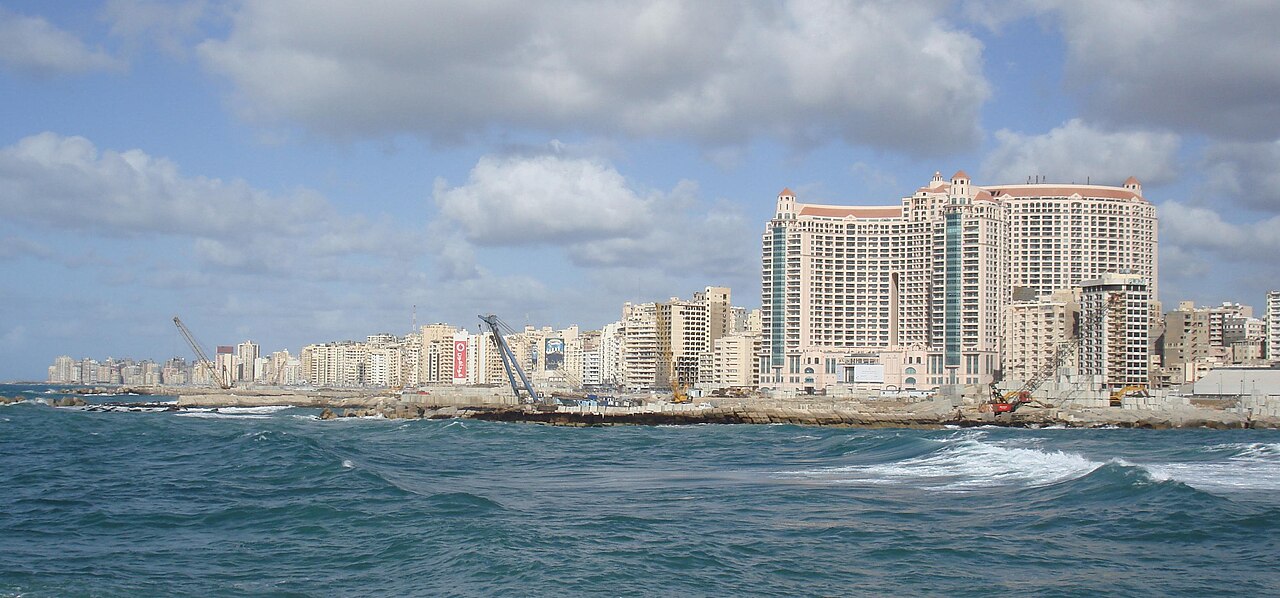
Egypt's second city and main seaport, stretching about 40 km along the Mediterranean. Founded by Alexander the Great in 331 BC, it was the capital of the Ptolemies and a great centre of learning, home to the famous ancient Library and Lighthouse. Egyptians call it the 'Bride of the Mediterranean'.
A city of about 4.5 million on the west bank of the Nile, opposite central Cairo and part of Greater Cairo. On the desert plateau at its edge stand the pyramids and the Great Sphinx, and beside them the Grand Egyptian Museum.
Port Said Governorate, at the Mediterranean end of the Suez Canal
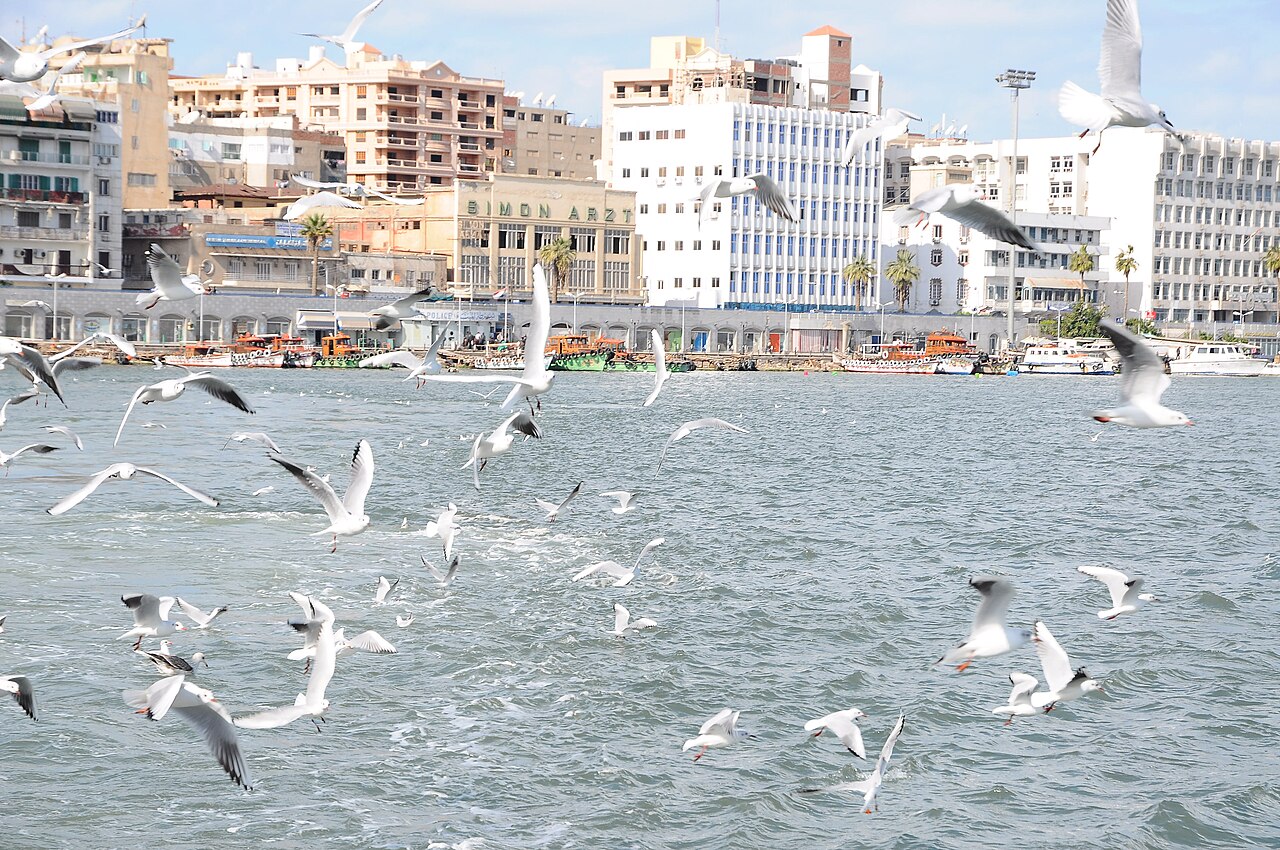
A port city founded in 1859, when work began on the Suez Canal, at the canal's northern entrance. Its old houses have grand balconies on every floor, and free ferries cross to its twin town, Port Fuad, on the Asian side of the canal.
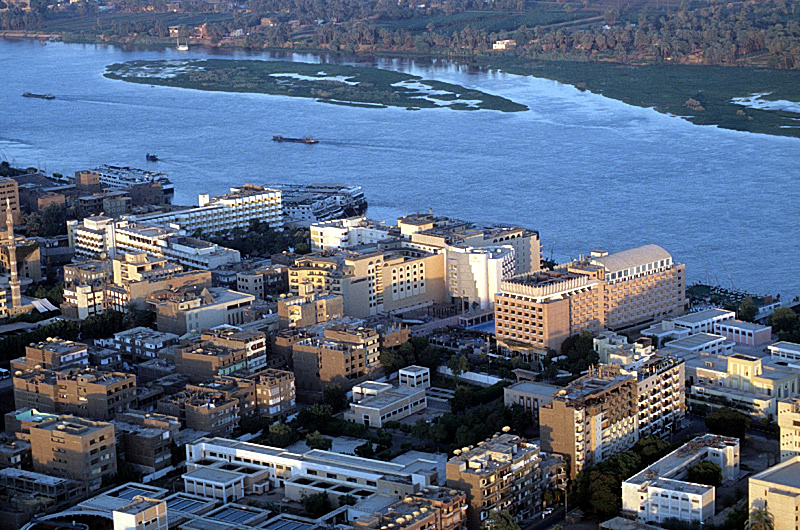
The city built on ancient Thebes, one of the capitals of the pharaohs, often called the world's greatest open-air museum. The temples of Karnak and Luxor stand in the modern city, and across the Nile lie the Valley of the Kings and the Valley of the Queens.
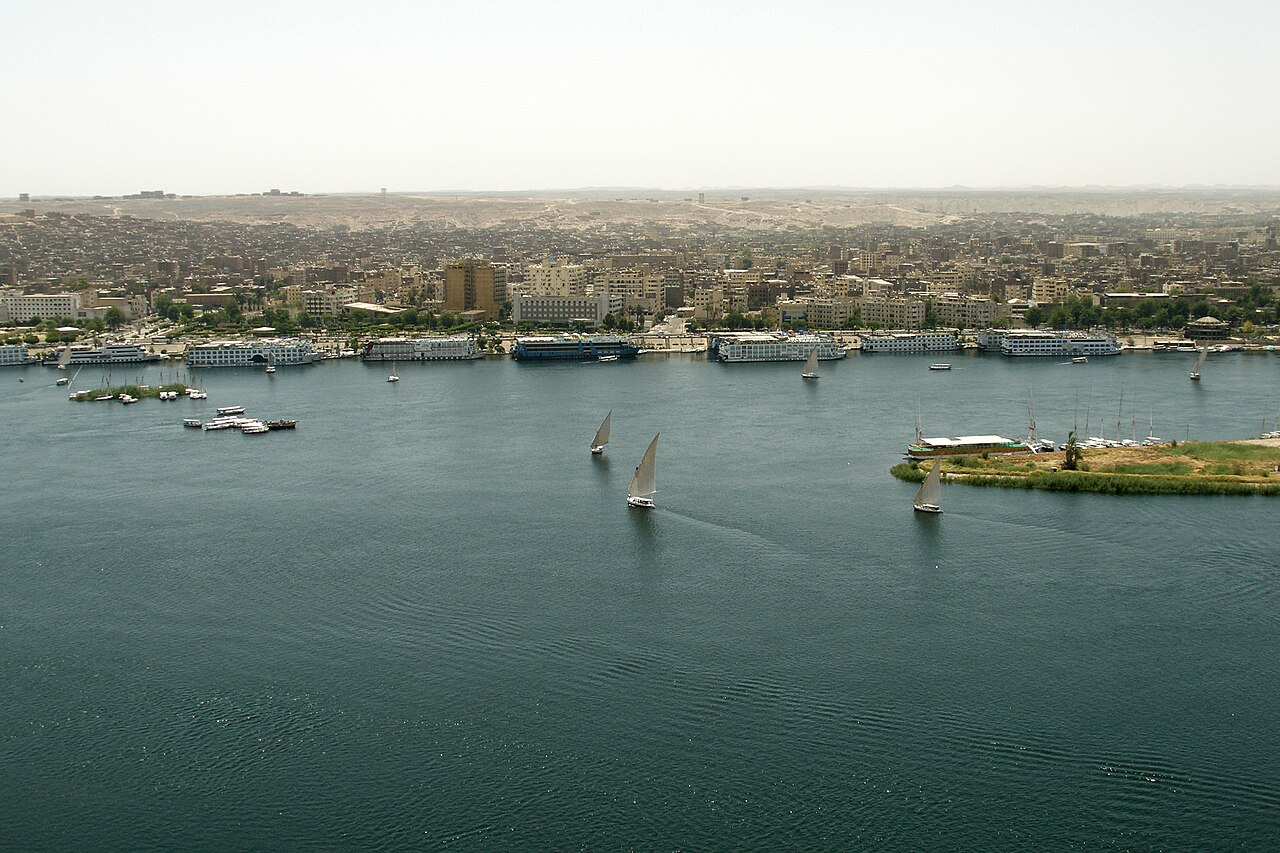
A relaxed southern city on the Nile by the First Cataract, once the southern frontier of ancient Egypt and today at the heart of Nubian culture. Its quarries supplied granite for many ancient monuments, and white-sailed feluccas glide between its islands.
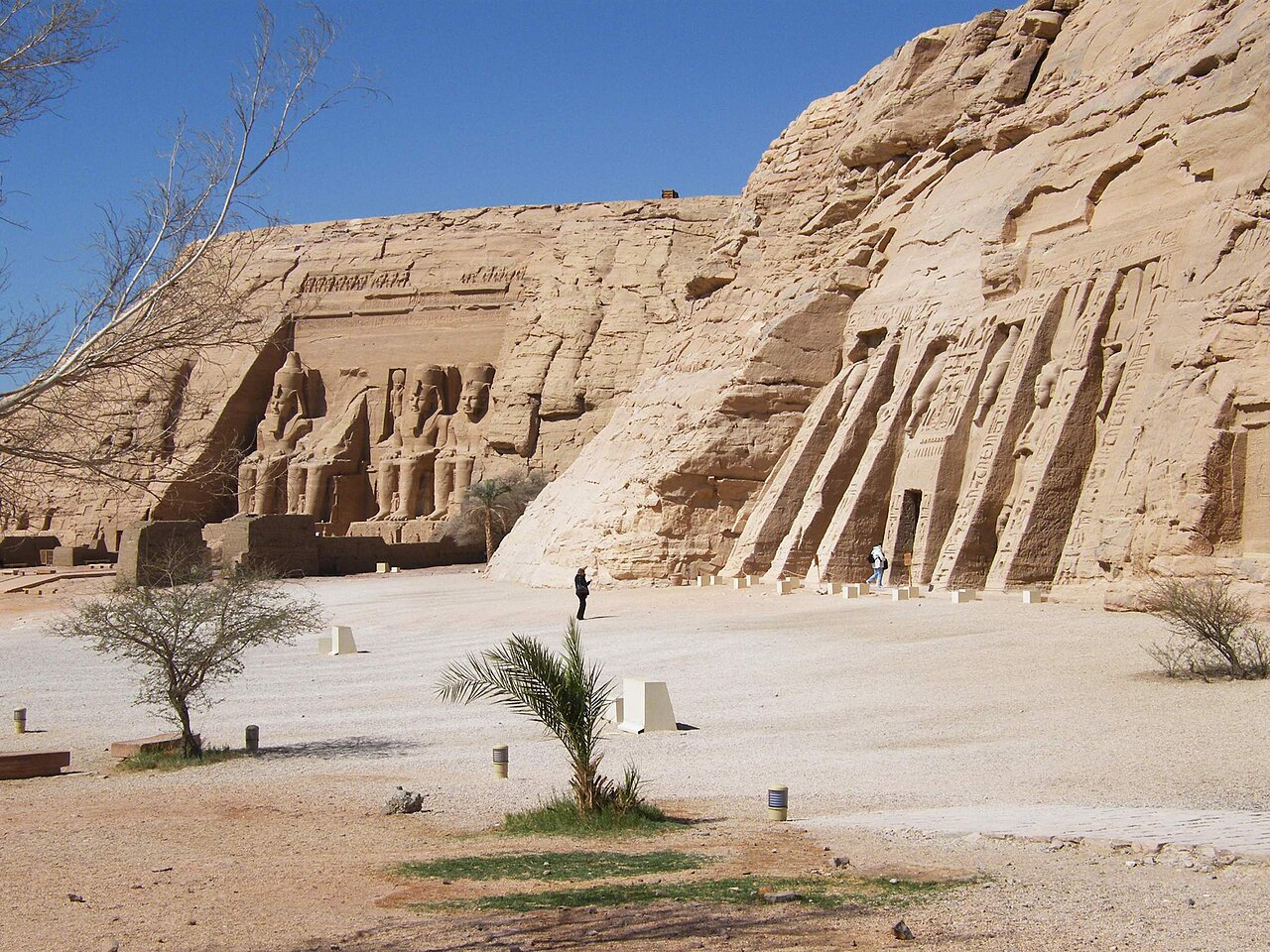
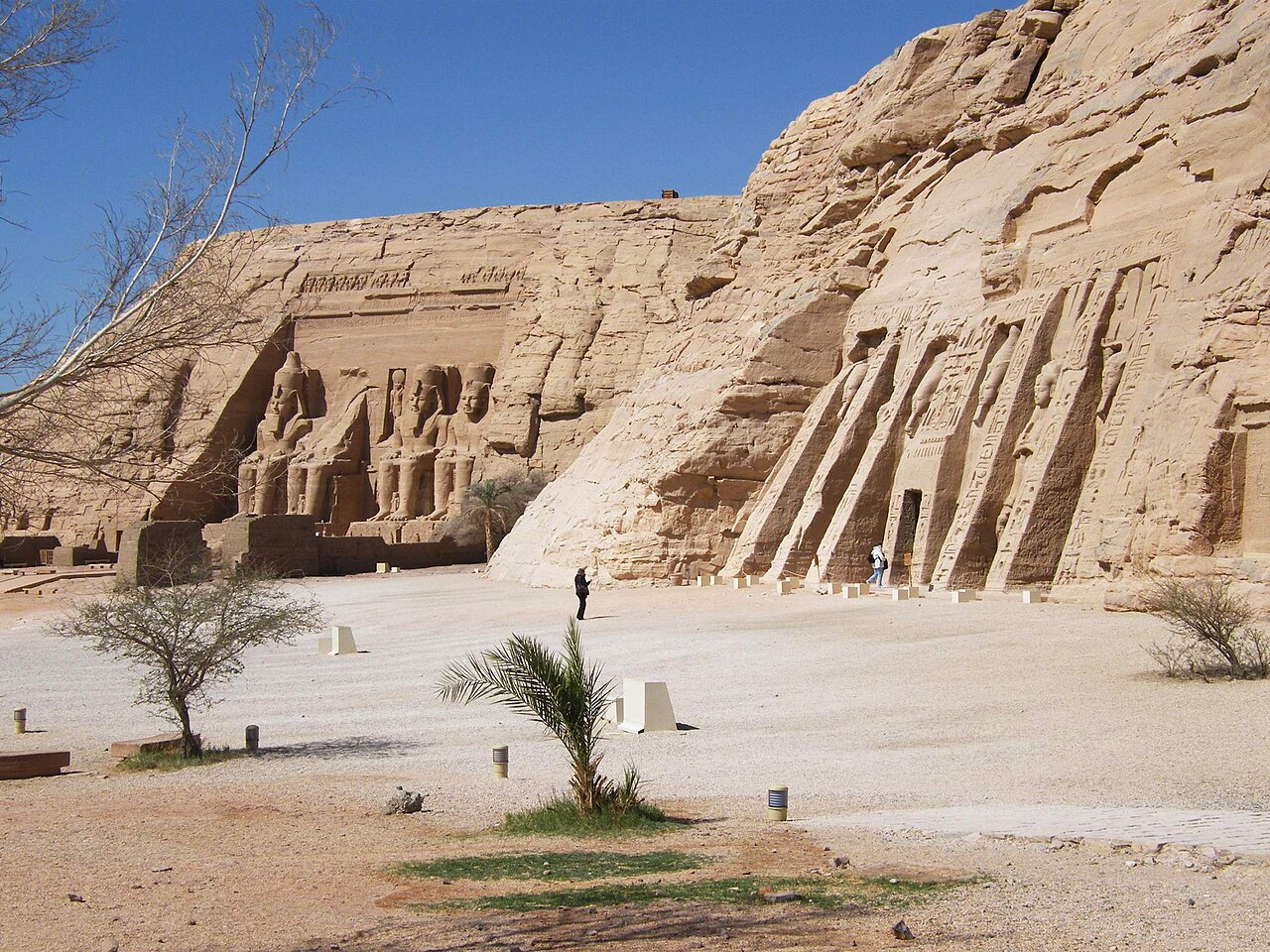
A small Nubian village on the shore of Lake Nasser, about 230 km southwest of Aswan and close to the border with Sudan. It is known around the world for the two great rock-cut temples of Ramesses II, which were moved here to escape the rising waters of the lake.
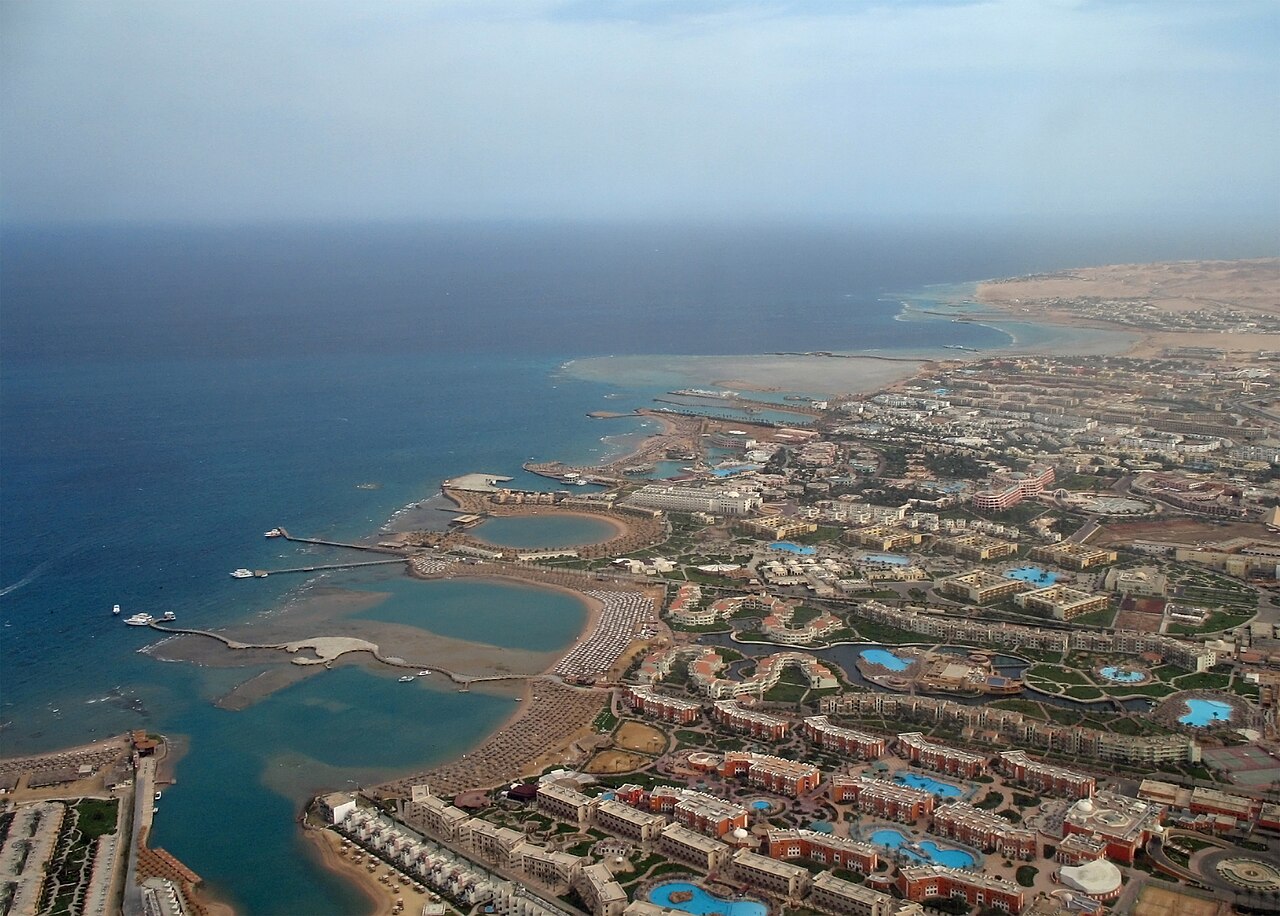
Once a small fishing village, now one of Egypt's largest resorts, stretching for about 40 km along the Red Sea. Millions of visitors come each year for the sunshine, the coral reefs and trips to the offshore islands.
South Sinai Governorate, southern tip of the Sinai
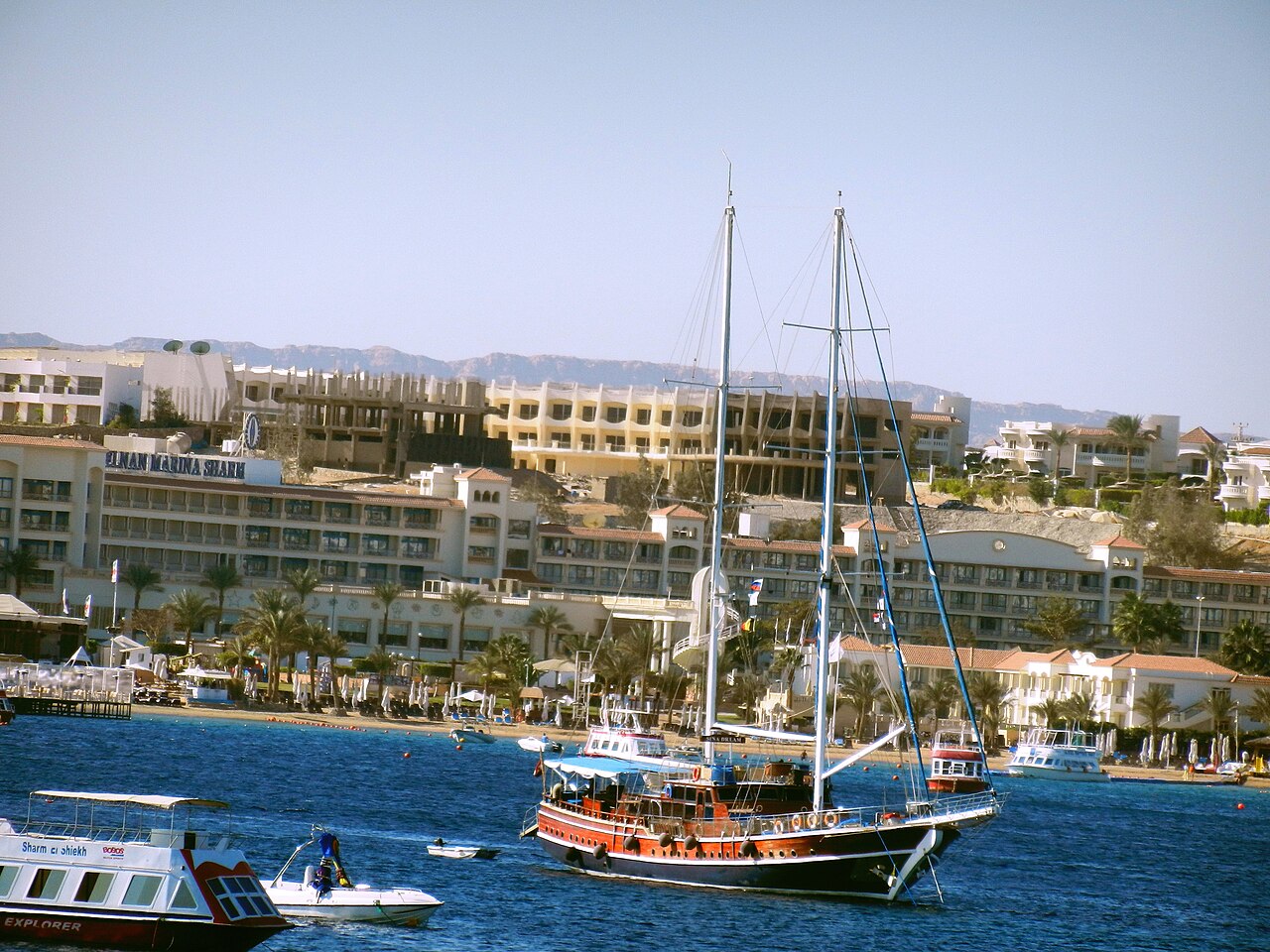
A resort city at the southern tip of the Sinai Peninsula, geographically in Asia, on the Red Sea. It grew from a fishing town and military base into a centre for diving and international meetings, and hosted the UN climate conference COP27 in 2022.
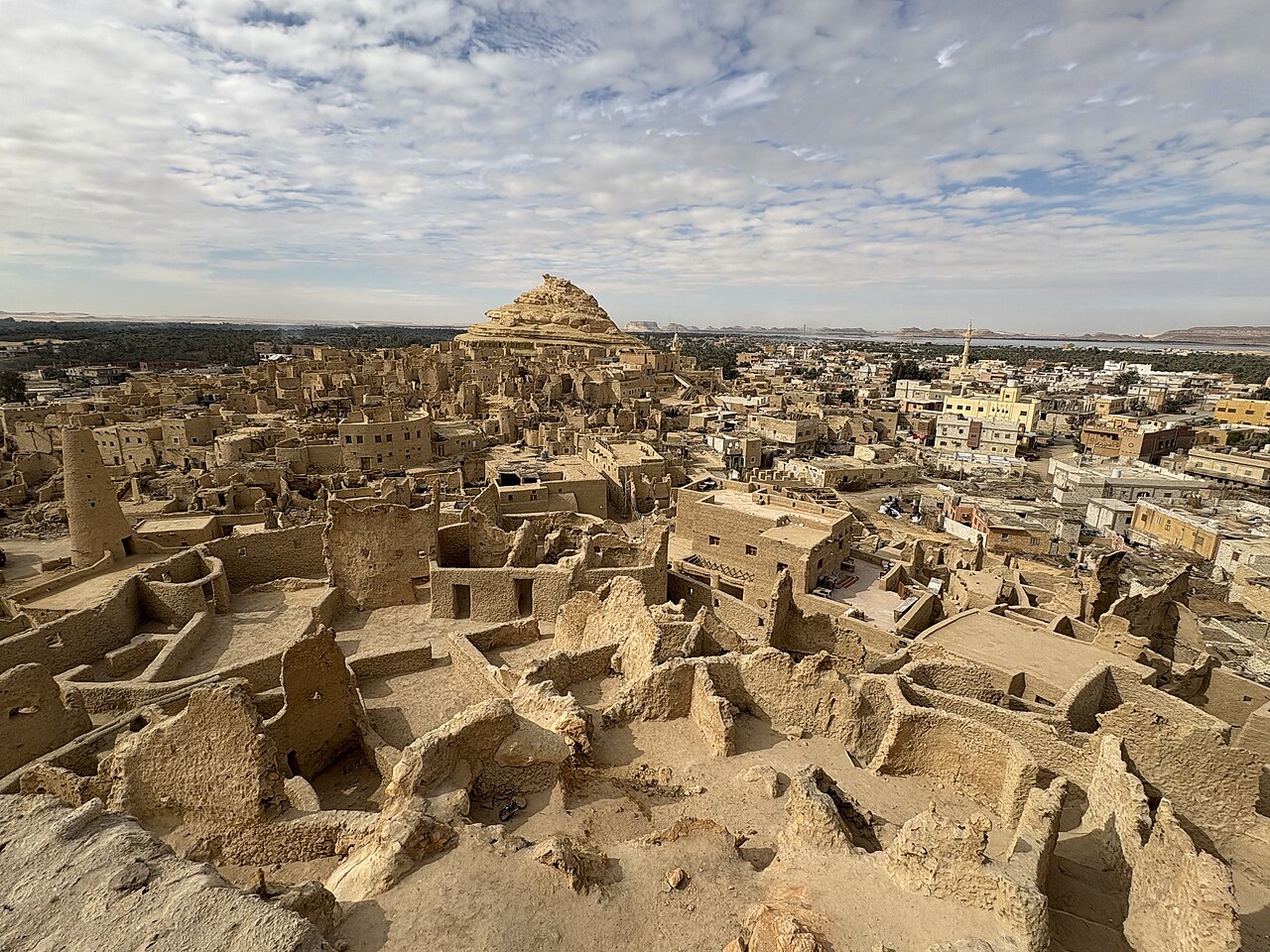
A remote oasis town in the Western Desert, about 50 km from the Libyan border, in a hollow below sea level with about 200 natural springs, date palms and olive groves. Many Siwans speak their own Berber language, and in ancient times the oasis was famous for its oracle of Amun, which Alexander the Great visited.
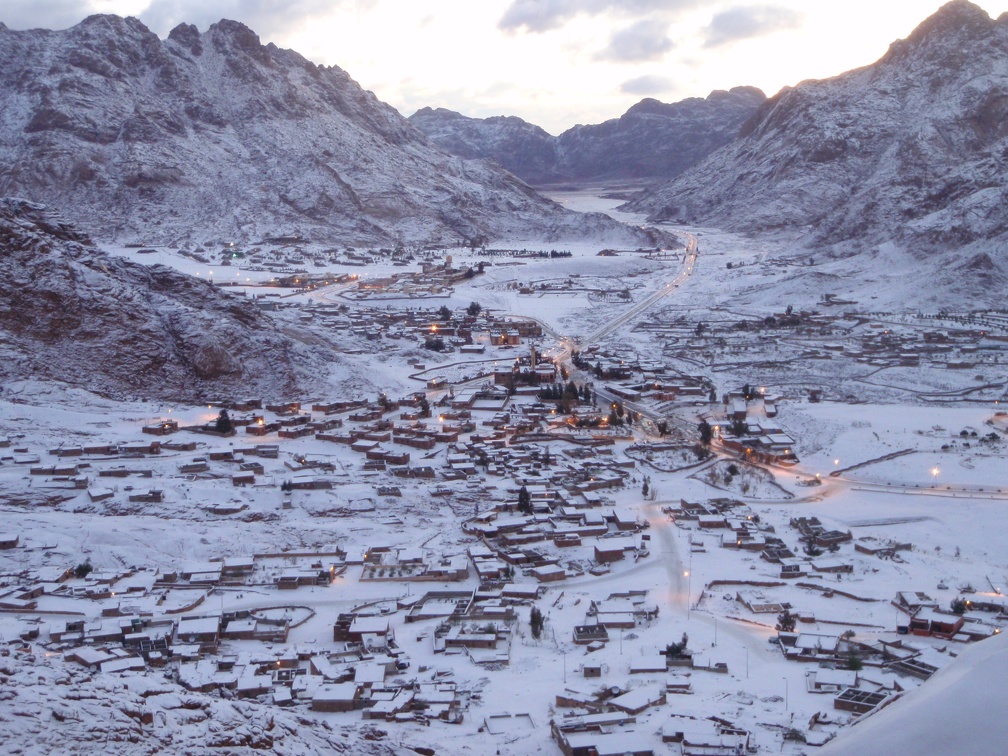
A small mountain town about 1,590 m above sea level, at the foot of Mount Sinai. It is the base for visiting Saint Catherine's Monastery and for the night walk up Mount Sinai to watch the sunrise.
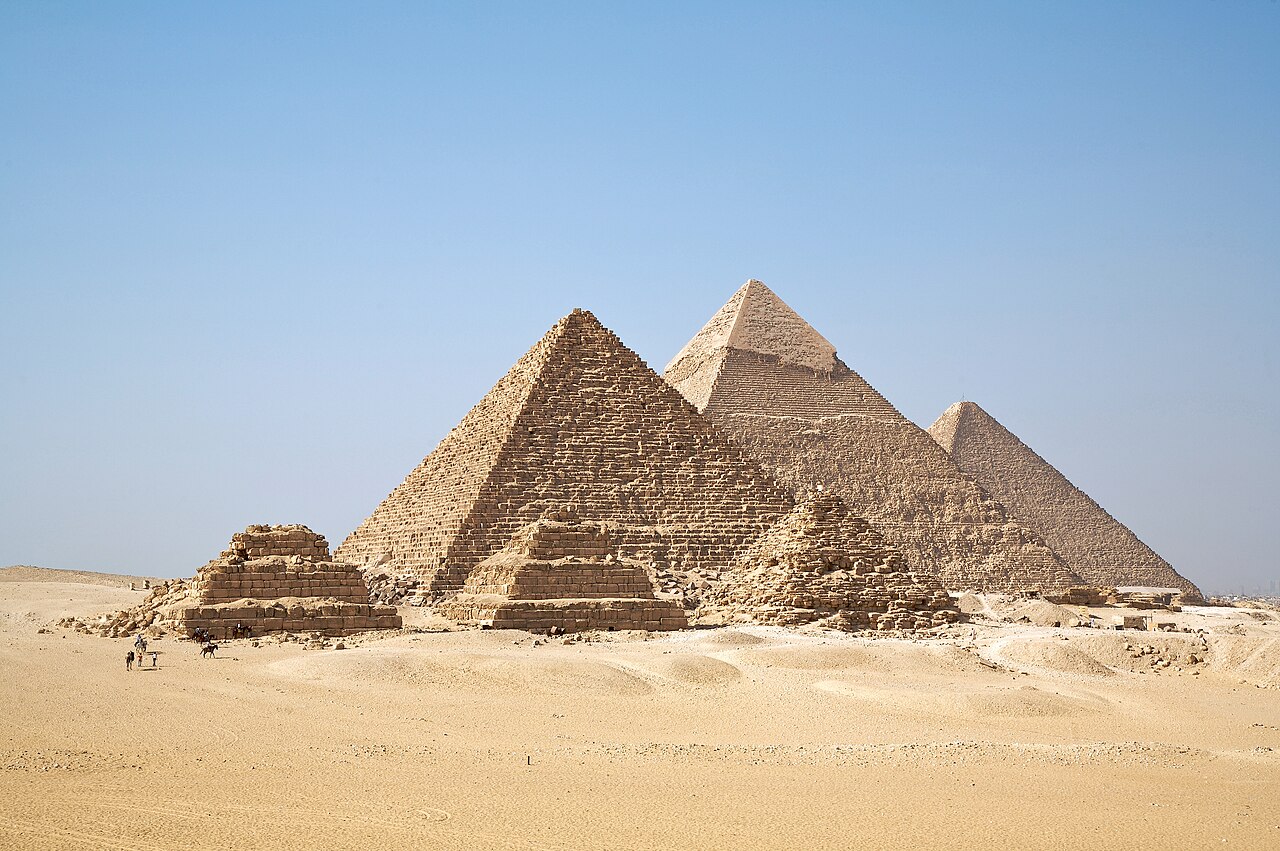
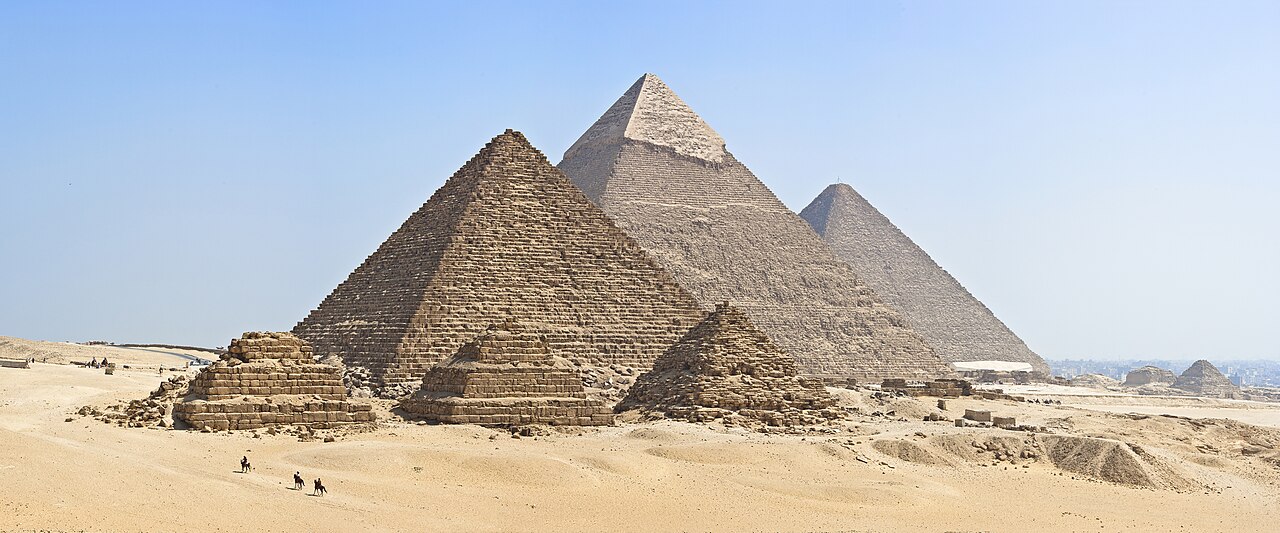
Three great pyramids built for the pharaohs Khufu, Khafre and Menkaure more than 4,500 years ago. The largest, the Great Pyramid of Khufu, is the oldest of the Seven Wonders of the Ancient World and the only one still largely standing. It is now about 138 m high, after losing its smooth outer casing.
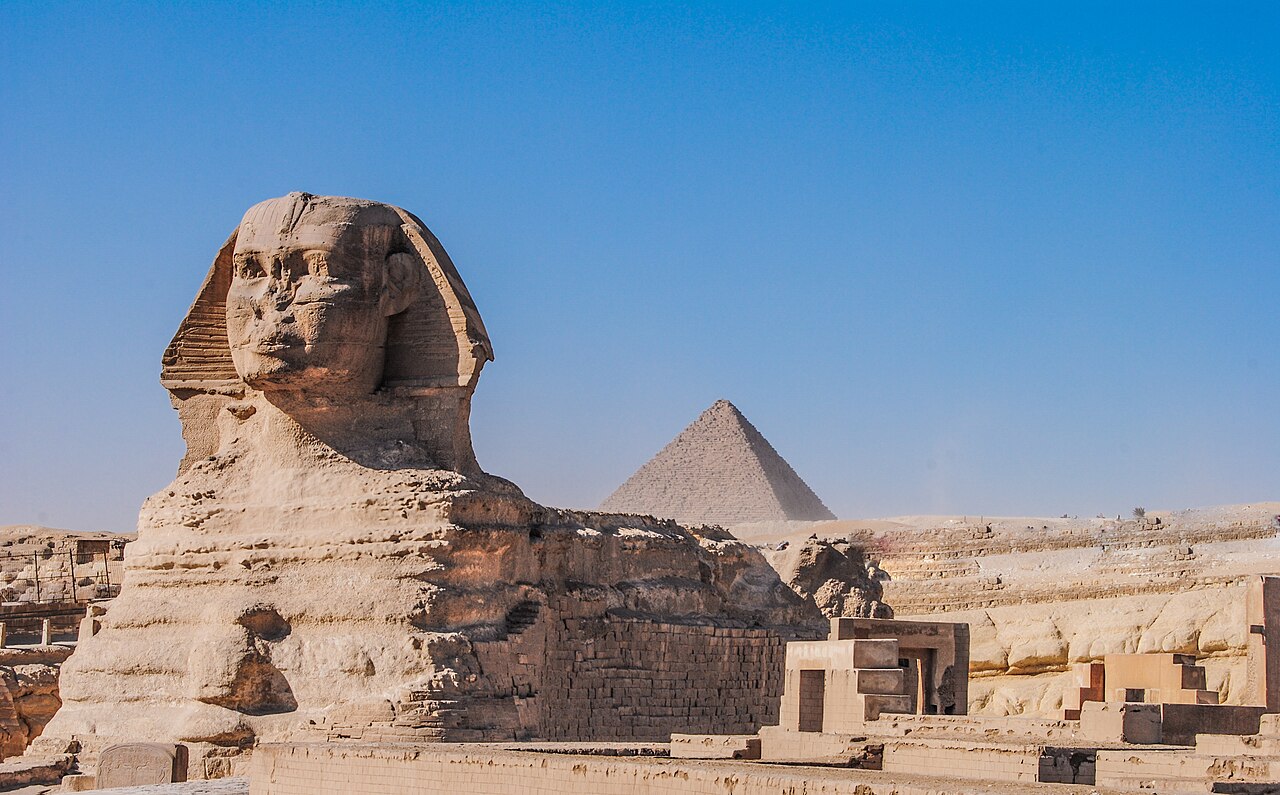
A huge resting lion with a human head, carved from the limestone bedrock of the Giza Plateau, about 73 m long and 20 m high. It is thought to date from the reign of Khufu or Khafre, and scholars still disagree about whose face it shows.
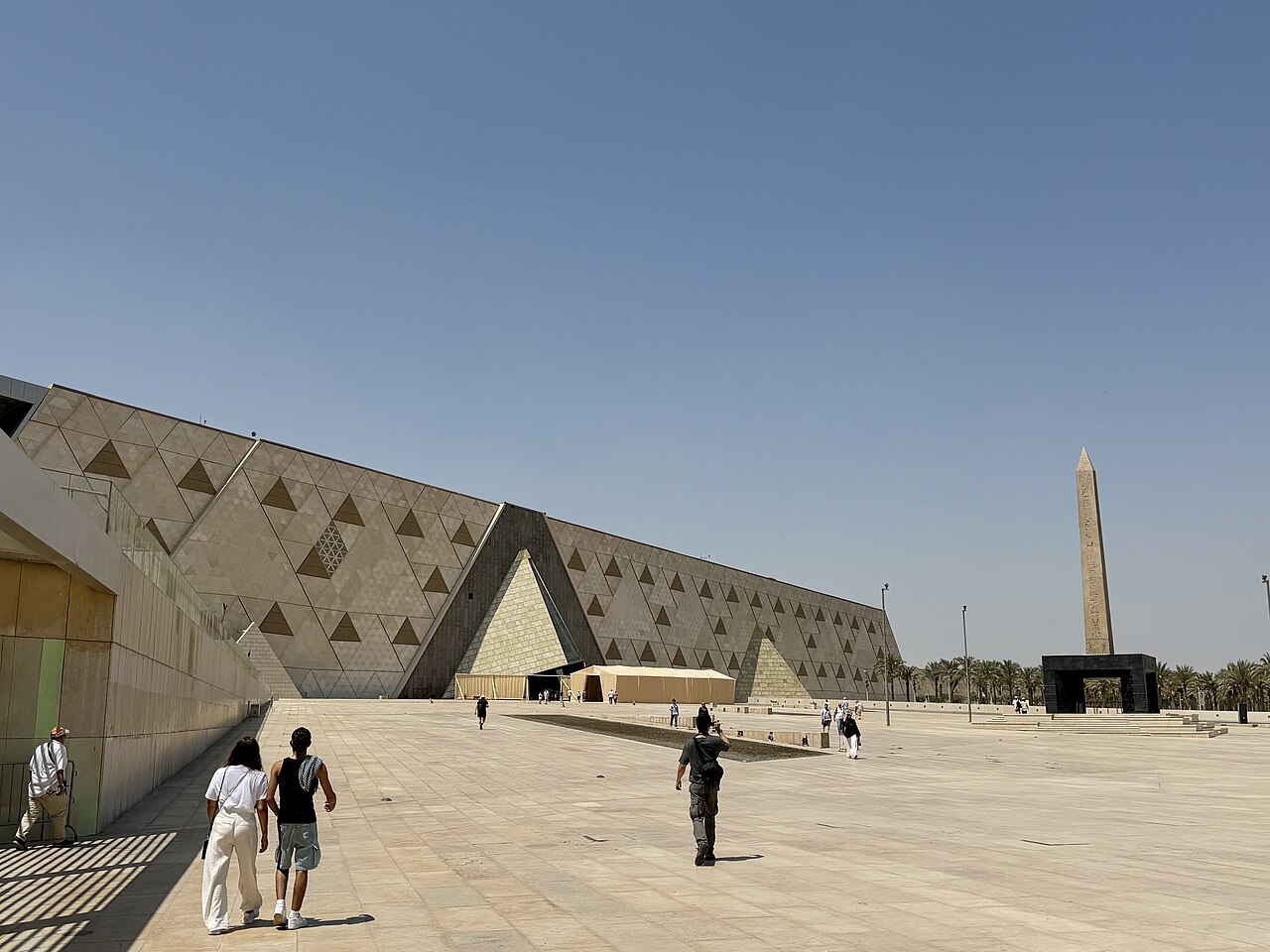
The world's largest museum devoted to a single civilisation, about 2 km from the pyramids, officially opened on 1 November 2025. It holds over 100,000 objects, including all 5,398 pieces from Tutankhamun's tomb, shown together for the first time, and a giant statue of Ramesses II in the entrance hall.
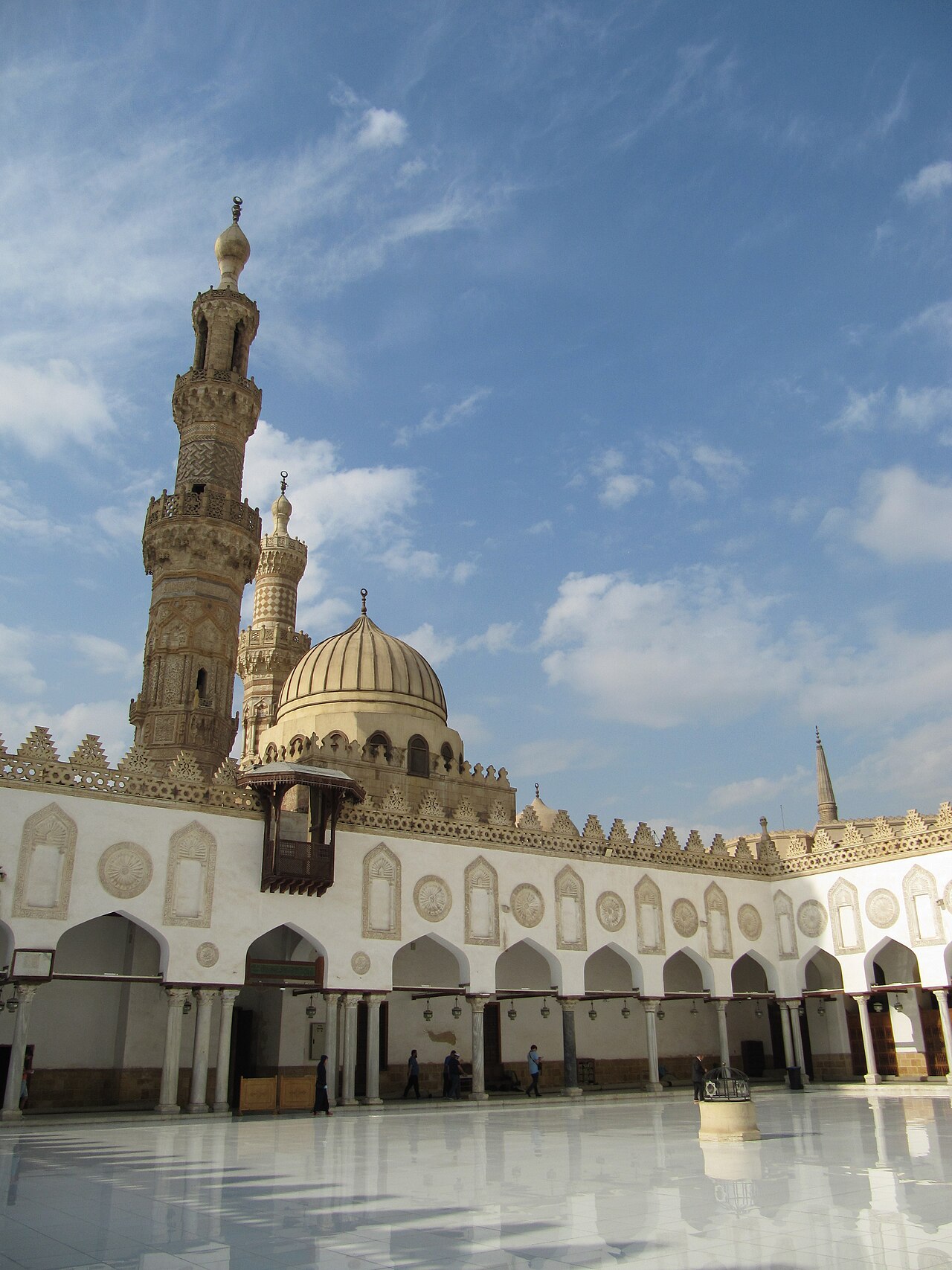
The first mosque of Fatimid Cairo, begun in 970 and dedicated in 972. Its school grew into Al-Azhar University, one of the oldest universities in the world and a leading centre of Sunni Islamic learning. The Khan el-Khalili bazaar lies a few steps away, in the heart of Historic Cairo.
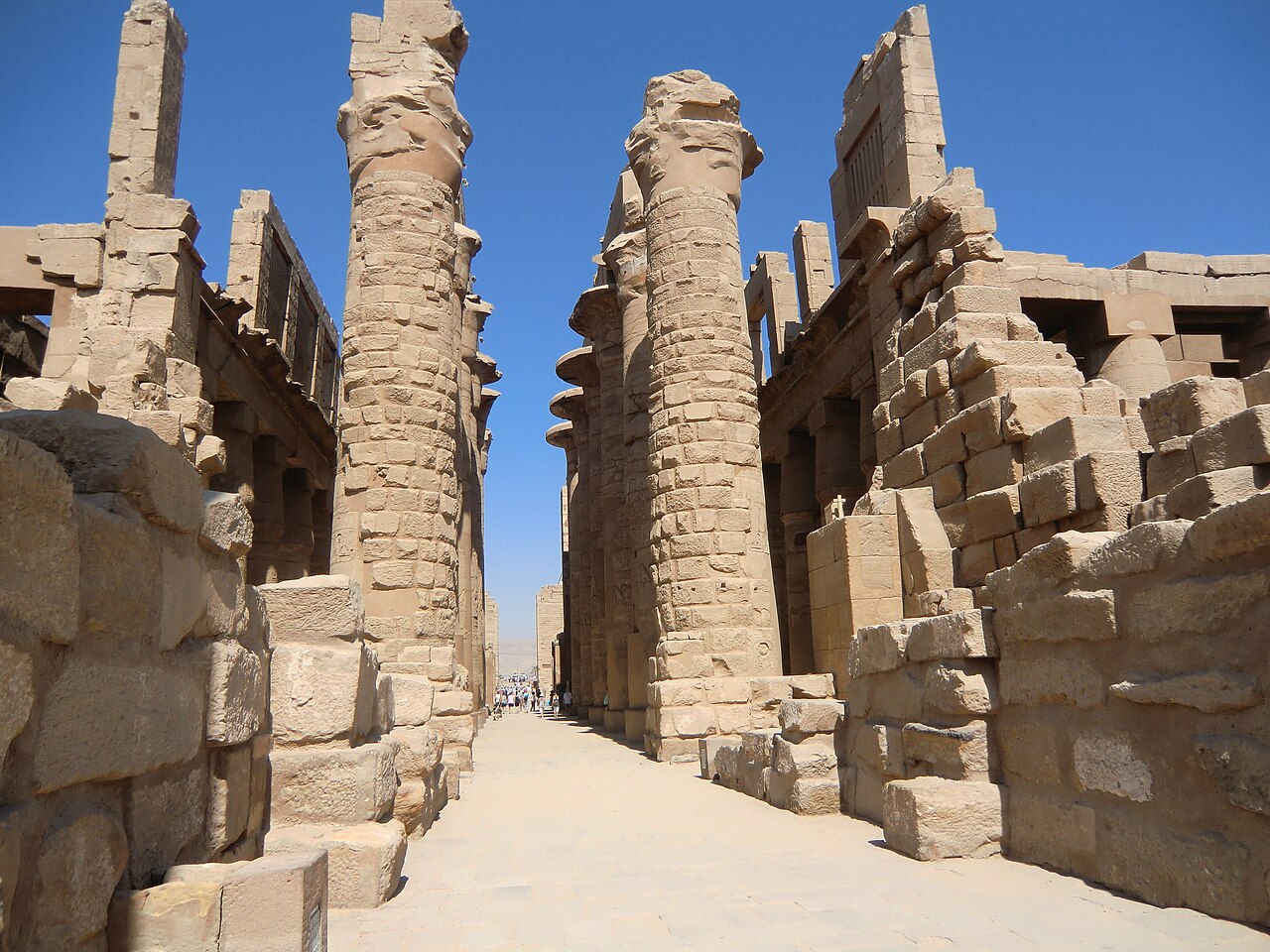
A vast complex of temples, gateways and obelisks dedicated mainly to the god Amun, built and rebuilt over some 2,000 years. Its Great Hypostyle Hall, a forest of 134 giant carved columns, covers about 5,000 m².
A desert valley on the west bank of the Nile, opposite Luxor, where pharaohs of the New Kingdom were buried in rock-cut tombs for nearly 500 years. More than 60 tombs and chambers are known, their walls painted with gods and scenes of the afterlife. Tutankhamun's tomb, KV62, is here.
Two temples cut into a cliff for Ramesses II in the 13th century BC. Four seated statues of the king, each about 20 m high, guard the Great Temple. In the 1960s both temples were cut into huge blocks and rebuilt on higher ground, finished in 1968, to save them from the waters of Lake Nasser.
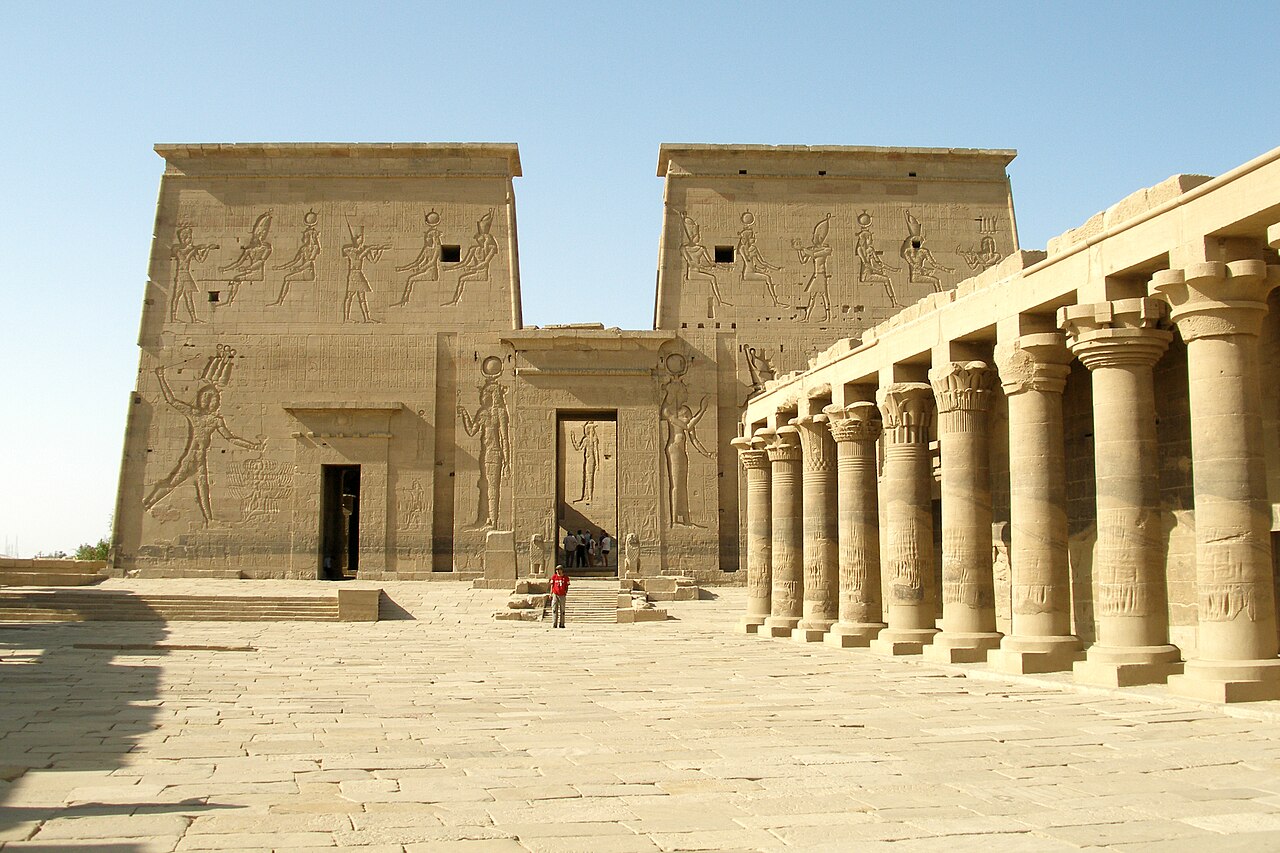
A graceful island temple of the goddess Isis, reached by boat from Aswan. When the dams threatened to drown it, its buildings were taken apart and rebuilt on the higher island of Agilkia between 1977 and 1980, in a rescue led by UNESCO.
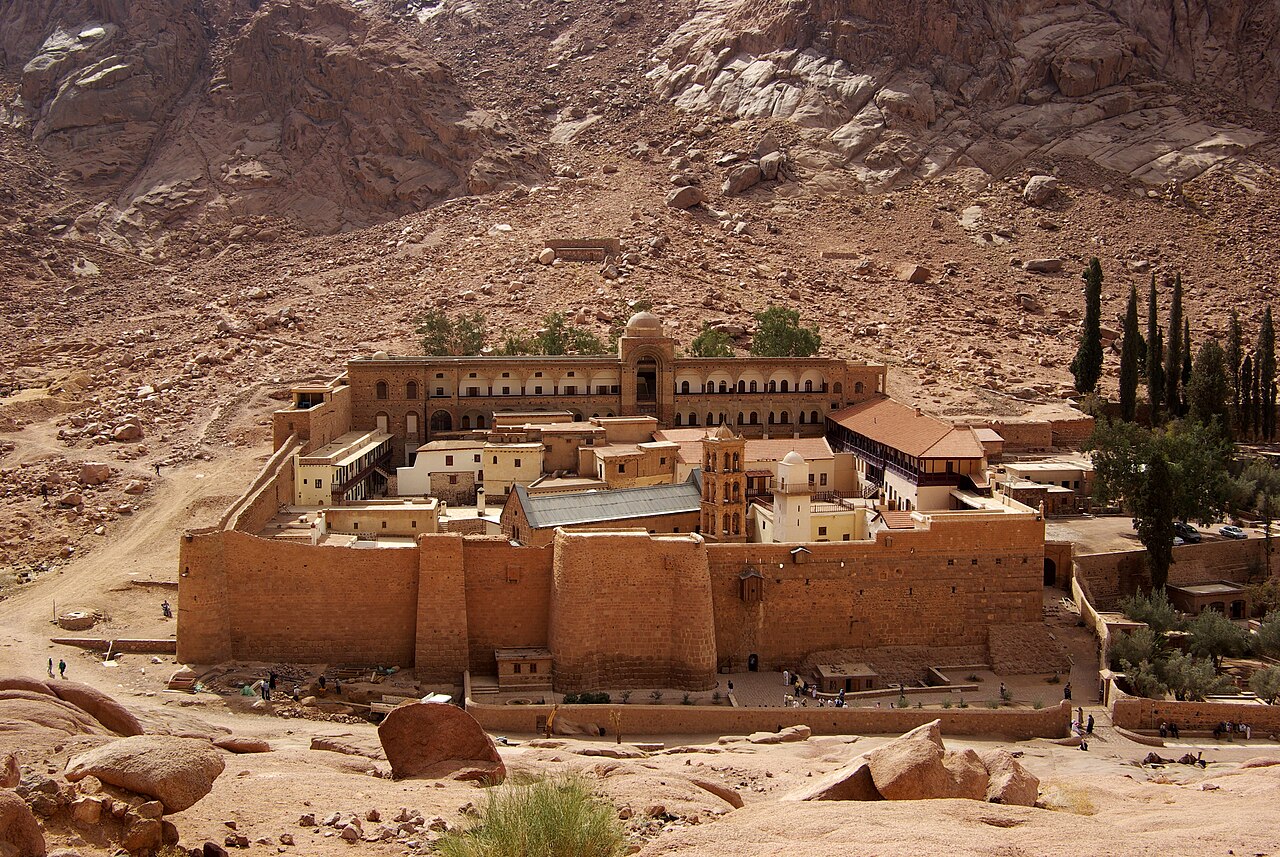
A walled Greek Orthodox monastery at the foot of Mount Sinai, built between 548 and 565 by order of the Byzantine emperor Justinian, and one of the oldest Christian monasteries still in use. It encloses what is said to be the Burning Bush of Moses, and inside its walls stands a small mosque from 1106.
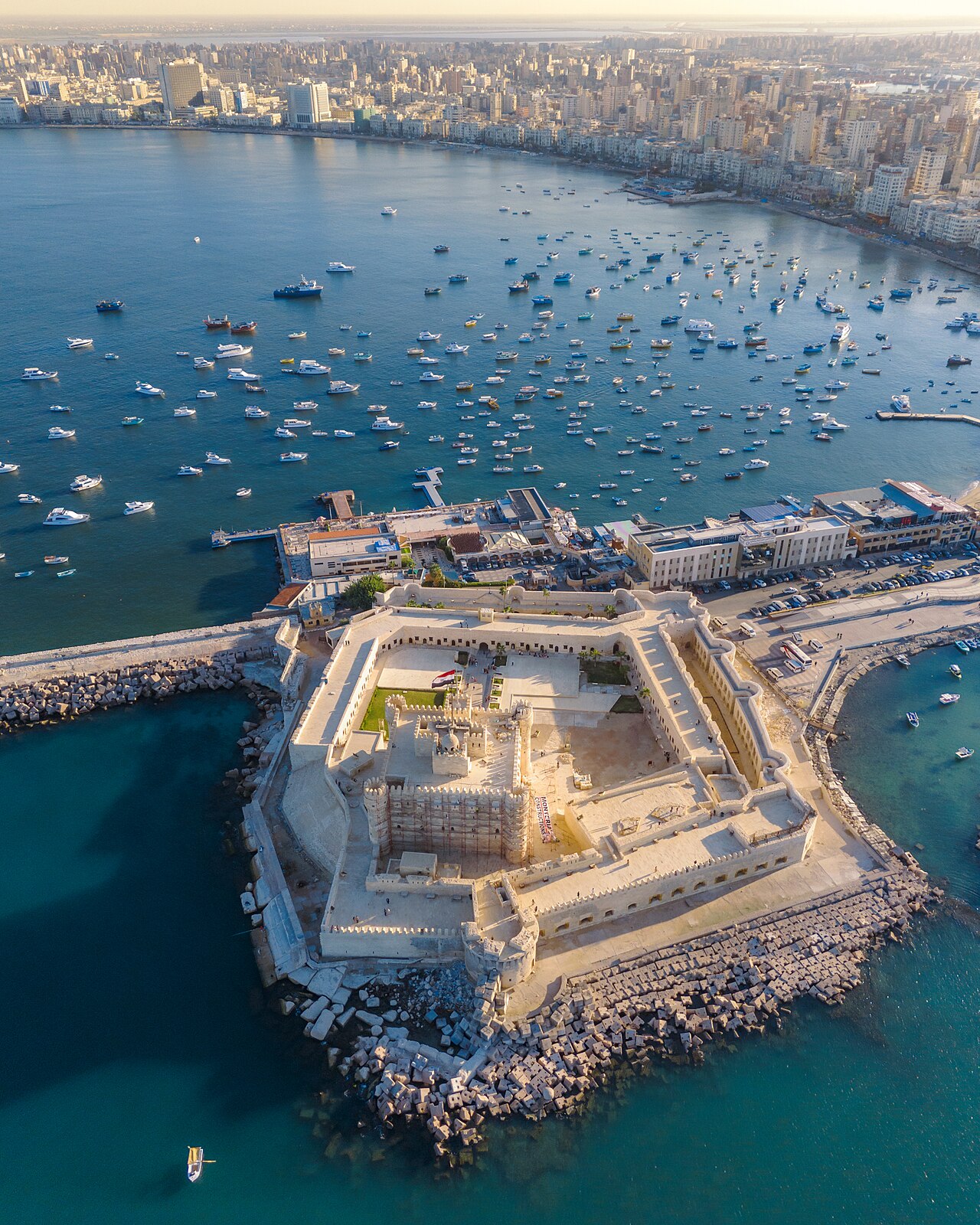
A sand-coloured fortress at the entrance of Alexandria's Eastern Harbour, built from 1477 to 1479 by the Mamluk sultan Qaitbay. It stands on the site of the ancient Lighthouse of Alexandria, one of the Seven Wonders of the Ancient World, which earthquakes had destroyed.
The Great Pyramid of Giza was the tallest structure built by people for more than 3,700 years, and it is the only one of the Seven Wonders of the Ancient World still largely standing.
02
Egypt is about 1 million km², but around 95% of Egyptians live along the Nile Valley and Delta, on about 5% of the land.
03
Egypt lies on two continents: the Sinai Peninsula, east of the Suez Canal, is part of Asia.
04
In the 1960s the temples of Abu Simbel were cut into huge blocks and rebuilt on higher ground to save them from Lake Nasser. They were placed so that, as in ancient times, the rising sun reaches the statues deep inside twice a year, around 22 February and 22 October.
05
The Rosetta Stone, found by French soldiers in 1799, carries the same decree in hieroglyphs, Demotic and Greek. It helped Jean-François Champollion unlock hieroglyphs in 1822, and it has been in the British Museum since 1802.
06
In the Western Desert, Wadi Al-Hitan, 'the valley of the whales', holds hundreds of fossils of early whales, some with small hind legs. As of 2026 it is Egypt's only natural World Heritage Site.
07
Egyptians call their country Masr, and in everyday speech often use the same name for Cairo. A proud saying calls Egypt 'Masr umm ed-dunya', the mother of the world.
08
Napoleon's soldiers did not shoot the nose off the Sphinx: that is a popular myth. Drawings from 1737, decades before Napoleon came, already show it missing. Marks on the face show it was removed on purpose with rods or chisels, and a medieval historian blamed a religious zealot in 1378.
09
As of 2026, Egypt has won the Africa Cup of Nations seven times, more than any other country.
10
In 1005 the Fatimid ruler al-Hakim banned his subjects from eating molokhia, the green soup that is now one of Egypt's favourite dishes.
11
As of 2026, Egypt has seven UNESCO World Heritage Sites, including the pyramid fields from Giza to Dahshur, ancient Thebes at Luxor, Historic Cairo and the Nubian monuments from Abu Simbel to Philae.
12
Tutankhamun's tomb held 5,398 objects. Since the Grand Egyptian Museum opened in 2025, the whole collection can be seen together in one place for the first time.
13
Sham Ennessim, a spring festival with roots in ancient Egypt, is a public holiday celebrated by Egyptians of all religions, always on the Monday after Orthodox Easter, with picnics, coloured eggs and salted fish.
Egyptians generally dress conservatively. Clothes that cover the shoulders and knees are the most comfortable choice in towns, villages, markets and religious sites; resorts on the Red Sea are more relaxed. A light scarf is handy for women, for the sun and for visiting mosques.
Take off your shoes in mosques
When you visit a mosque, take your shoes off at the door (socks are fine), cover your arms and legs, and do not walk in front of people who are praying.
Be thoughtful during Ramadan
During the holy month of Ramadan most Muslims fast from dawn to sunset. Visitors are not expected to fast, but eating, drinking or smoking in public in the daytime is seen as insensitive. Shops keep different hours, and the evenings are lively and welcoming.
Ask before taking photos
Ask people before you photograph them, and do not photograph children. Taking photos of or near military sites is illegal, and that includes the Suez Canal. Government buildings and embassies are also sensitive.
Drink alcohol only where it is served
Alcohol is sold in licensed hotels, bars and restaurants and in some tourist resorts. Drinking it anywhere else in public is illegal and can lead to arrest.
Keep small notes for baksheesh
Small tips, called baksheesh, are part of daily life for bathroom attendants, drivers and guides. Carry small notes in Egyptian pounds. You do not have to pay for help you did not ask for.
Bargain in the markets
In markets such as Khan el-Khalili prices are often not fixed. Ask the price, offer less and meet in between, patiently and with good humour. Agree on taxi fares before you set off unless the meter is running.
Check the rules before you go
As of 2026, many visitors can buy an e-visa online or a visa on arrival at the main airports, but the rules depend on your passport, so check them before you travel. Also read your government's travel advice: it may advise against all travel to some border and desert areas, such as North Sinai. Drink bottled water rather than tap water.
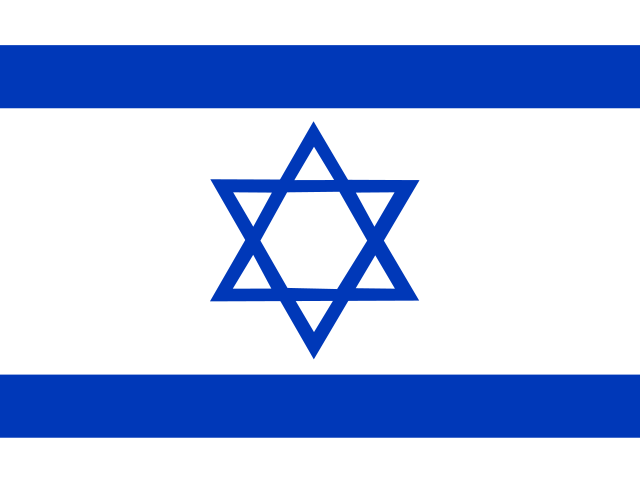 Israel
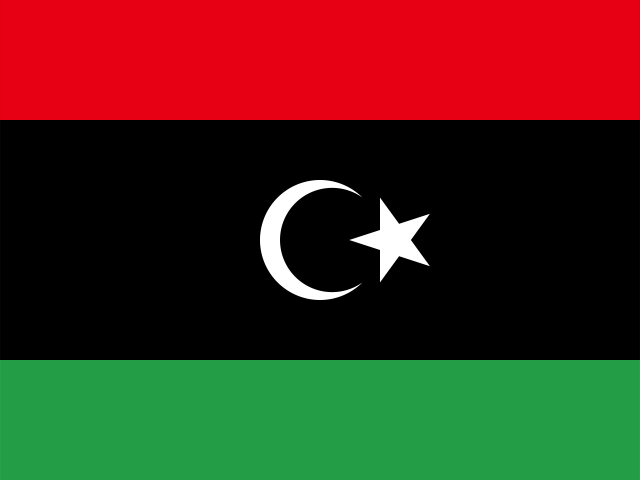 Libya
Libya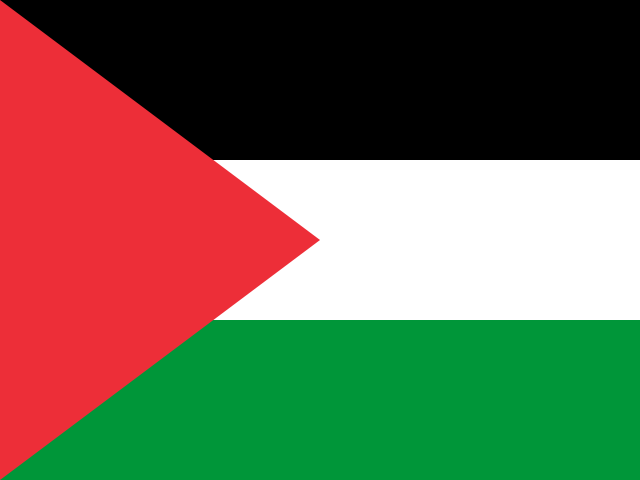 Palestine
 Sudan
Sudan