Green hills, ancient stories, music in the pubs and a famous welcome, on the western edge of Europe.
Ireland is an island in the Atlantic Ocean, west of Great Britain. The Republic of Ireland, the country we visit here, covers about five sixths of the island. The rest, in the northeast, is Northern Ireland, which is part of the United Kingdom. Ireland is famous for its green landscape, kept green by frequent soft rain, and for its wild Atlantic coast of cliffs, bays and islands.
People have lived here for at least 10,000 years. Stone Age farmers built great tombs such as Newgrange, and Irish monks kept learning alive in the early Middle Ages. Vikings founded the first towns, the Normans arrived in 1169, and for centuries Ireland was ruled from England. The Great Famine of 1845 to 1852 killed about a million people and forced more than a million to emigrate, starting a wave of emigration that lasted for generations, which is why so many people around the world have Irish roots.
Questions to ask the older generation
Memories fade faster than photos. Ask these over a meal or a phone call, and write the answers down.
Which town or region of Ireland did our family come from? Was it near Cork, Galway, Limerick?
Who was the first in the family to leave Ireland, when, and why?
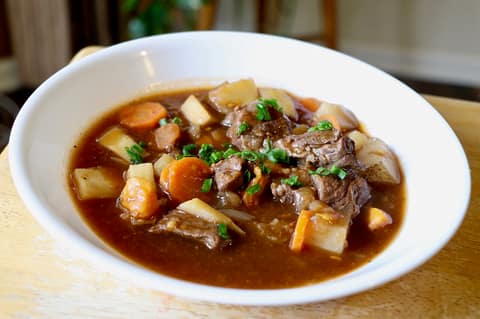
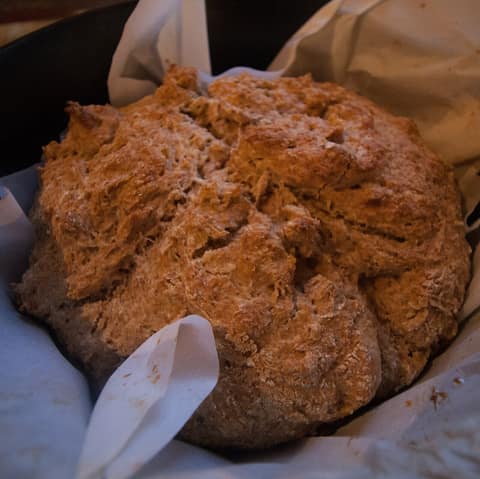
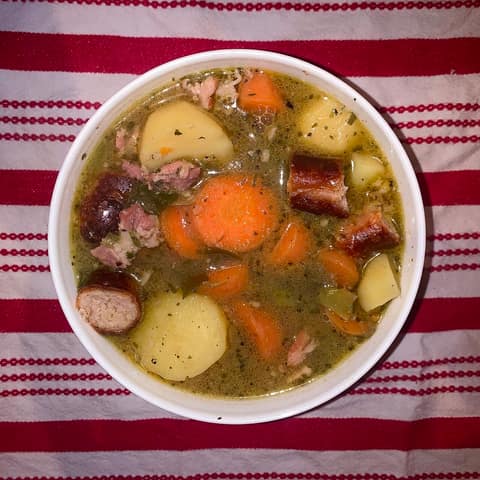
Which dishes from Ireland were cooked at home? Did anyone make Irish stew or Soda bread?
Does anyone in the family still speak Irish, or use a few words of it?
Were there songs, prayers, games or holidays from Ireland that the family kept?
Are there old photos, letters or documents from Ireland? Who has them?
If you could visit Ireland together, where would you go first?
A short history of Ireland
From Stone Age tomb builders and early Christian monks to Vikings, Normans, famine, rebellion and independence, Ireland's story is long and often hard, and its people carried it all over the world.
3100 BC
Newgrange is built
Around 3100 BC Stone Age farmers built the great passage tomb of Newgrange in the Boyne Valley. It is about 500 years older than the Great Pyramid of Giza, and on the shortest days of the year the rising sun still shines along its passage into the inner chamber.
AD 841
Vikings found Dublin
Viking raiders began attacking Irish monasteries in the 790s. Around 841 they built a fortified base beside a dark pool, in Irish 'Dubh Linn', where the Poddle stream met the River Liffey. It grew into a busy trading town, and later into Ireland's capital.
1169
The Normans arrive
In 1169 Norman knights landed in County Wexford, invited by the deposed King of Leinster, Diarmait Mac Murchada. Strongbow followed in 1170, and in 1171 King Henry II of England came himself. It was the start of more than 750 years of English, and later British, rule in Ireland.
1690
The Battle of the Boyne
On the River Boyne near Drogheda, the Protestant King William III defeated the Catholic King James II, whom he had replaced on the English throne. The victory secured Protestant rule in Ireland, and it is still remembered, very differently, by different communities.
1916
The Easter Rising
On Easter Monday, 24 April 1916, Irish republicans took over buildings in Dublin, and Patrick Pearse read the Proclamation of the Irish Republic outside the General Post Office. The rising was defeated in six days, but the execution of its leaders turned many people towards the cause of independence.
1922
The Irish Free State is founded
Under the Anglo-Irish Treaty, 26 of Ireland's 32 counties became the self-governing Irish Free State on 6 December 1922, while Northern Ireland stayed in the United Kingdom. The treaty split the independence movement, and a civil war was fought over it from June 1922 to May 1923.
1949
Ireland becomes a republic
The Republic of Ireland Act came into force on Easter Monday, 18 April 1949. It declared the state a republic and ended its last ties to the British Crown, and Ireland left the Commonwealth.
1998
The Good Friday Agreement
The Troubles, a conflict in Northern Ireland from the late 1960s, cost about 3,500 lives. On 10 April 1998, Good Friday, the British and Irish governments and most Northern Ireland parties signed a peace agreement. Voters on both sides of the border approved it in May 1998.