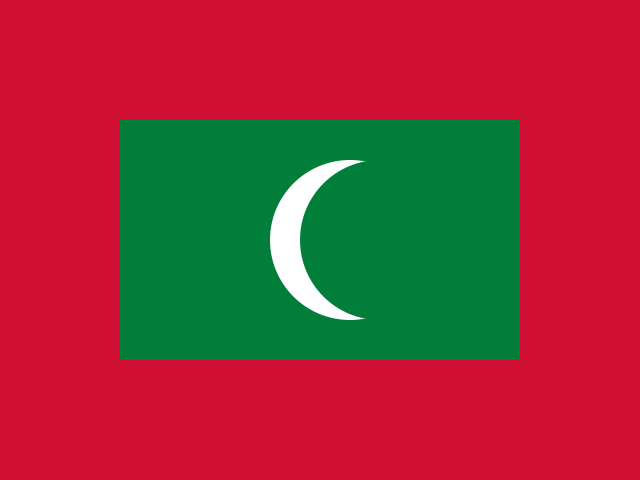
A long necklace of coral atolls strung across the equator in the Indian Ocean, where tuna is in almost every dish, the sea is turquoise and the highest natural ground is only a few metres above the waves.
The Maldives is an island country in the Indian Ocean, southwest of India and Sri Lanka. It is a chain of 26 natural atolls, rings of coral reef around shallow lagoons, that stretches for about 870 km from north to south and crosses the equator. Its roughly 1,190 coral islands add up to only about 300 km² of dry land, spread over some 90,000 km² of sea, which makes it the smallest country in Asia by area. Most islands rise less than one metre above the sea, and the Maldives is often called the lowest-lying country in the world.
People have lived here for well over 2,000 years. For centuries the islands were Buddhist, and in the 12th century the king converted to Islam, which is still the religion of the country and the heart of daily life. Sultans ruled from the island of Malé for more than 800 years. Arab, Persian and Indian traders came for cowrie shells, used as money across Asia and Africa, and for coir, the rope made from coconut husk. The Portuguese held Malé for fifteen years in the 16th century, and the British later handled the islands' defence and foreign affairs. Independence came in 1965 and the country became a republic in 1968.
Questions to ask the older generation
Memories fade faster than photos. Ask these over a meal or a phone call, and write the answers down.
Which town or region of the Maldives did our family come from? Was it near Hulhumalé, Maafushi, Naifaru?
Who was the first in the family to leave the Maldives, when, and why?
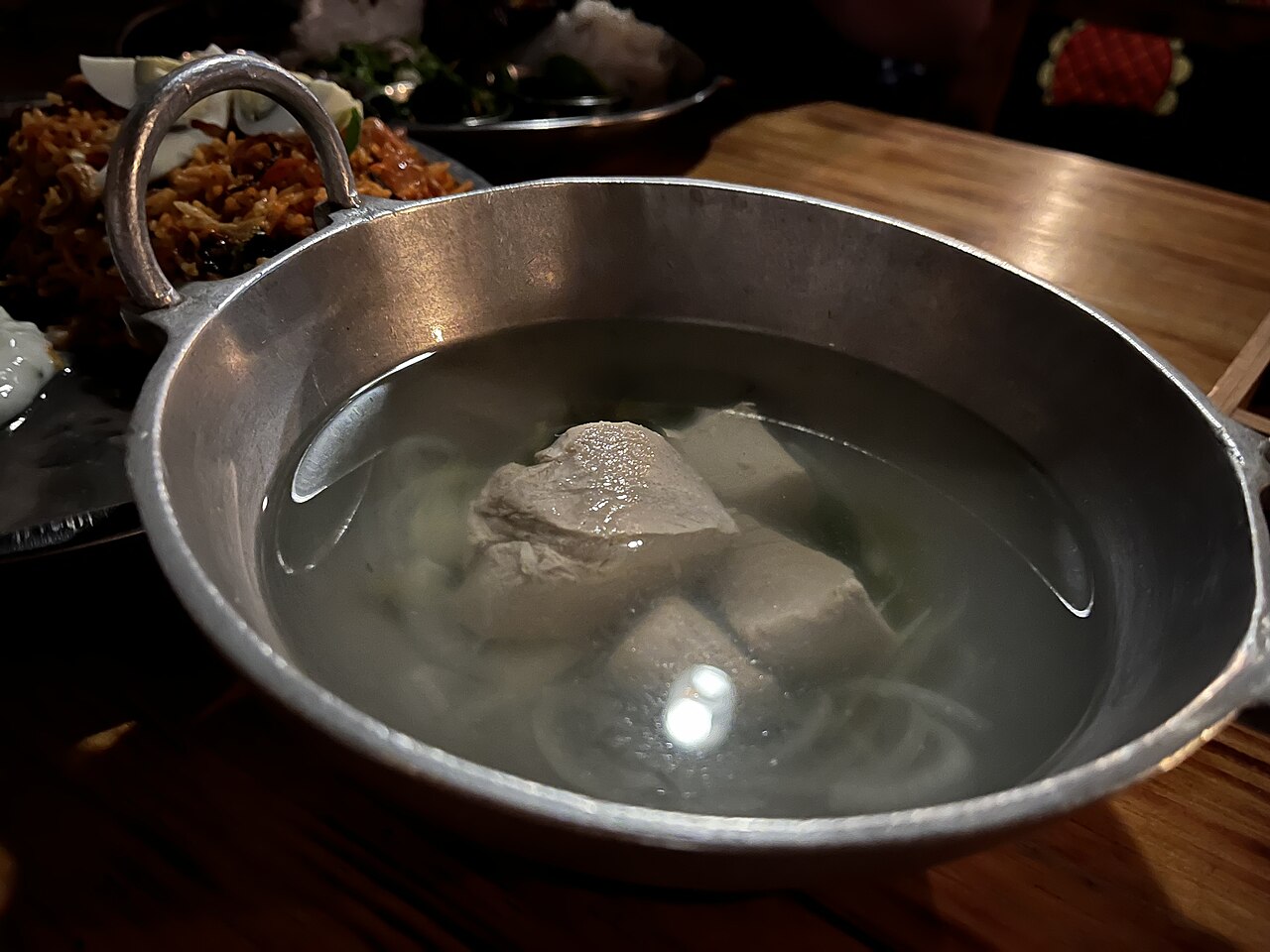
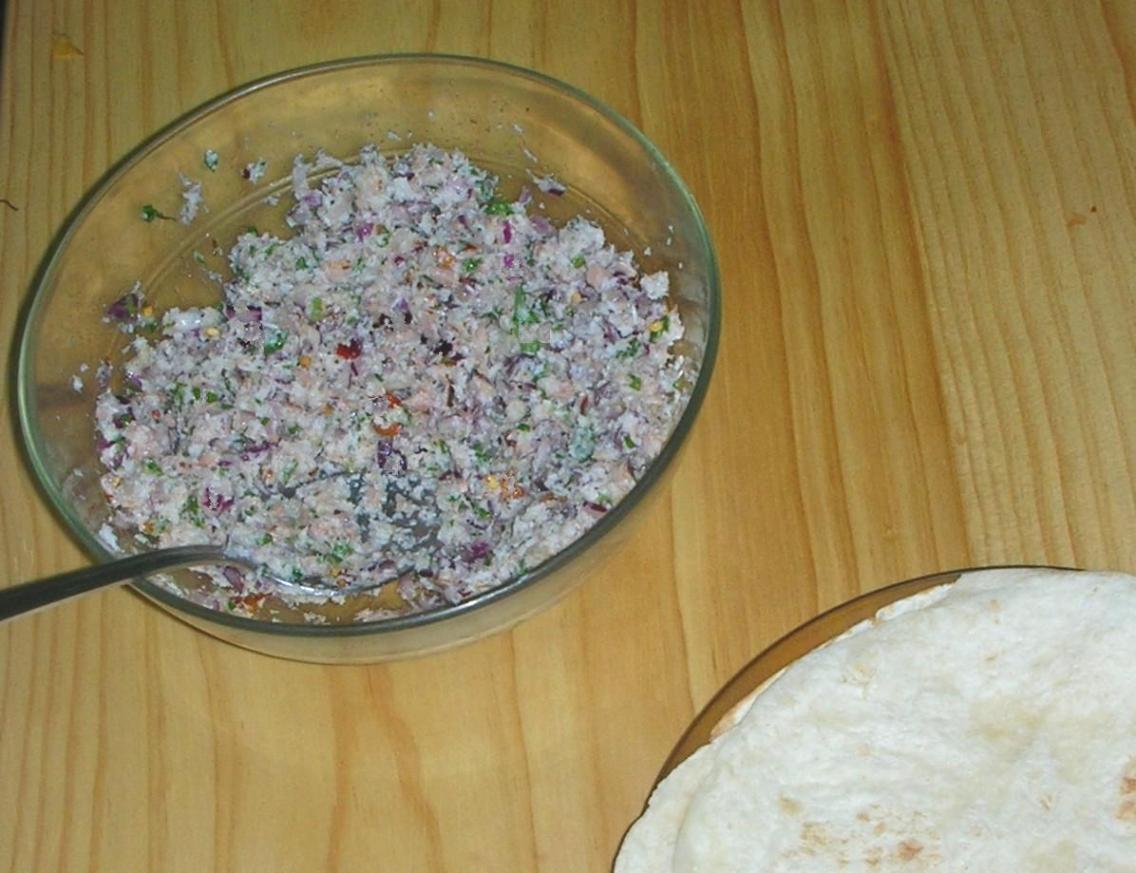
Which dishes from the Maldives were cooked at home? Did anyone make Garudhiya (tuna broth) or Mas huni (tuna and coconut breakfast)?
Does anyone in the family still speak Dhivehi, or use a few words of it?
Were there songs, prayers, games or holidays from the Maldives that the family kept?
Are there old photos, letters or documents from the Maldives? Who has them?
If you could visit the Maldives together, where would you go first?
A short history of the Maldives
The story of the Maldives runs from early settlers from South Asia and a long Buddhist age, through the arrival of Islam in the 12th century and eight centuries of sultans ruling from Malé, to short Portuguese rule, a British protectorate, independence in 1965 and a republic from 1968. In recent decades the islands have built a tourism industry from nothing, survived a coup attempt and the 2004 tsunami, and adopted a new constitution in 2008.
250 BC
Buddhism reaches the islands
Buddhism probably reached the Maldives around the 3rd century BC, in the time of the Indian emperor Ashoka, and remained the main religion for about 1,400 years. The Dhivehi language, the first scripts and many customs took shape in this period, and nearly all of the country's old ruins are Buddhist stupas and monasteries, such as the mound called the Havitta on Fuvahmulah, probably an old stupa.
1153
The king converts to Islam
Dhovemi, the last Buddhist king, converted to Islam and took the name Sultan Muhammad al-Adil. Some copper-plate grants give the later date of 1193. Maldivian tradition credits a visiting Muslim scholar, Abu al-Barakat Yusuf, whose tomb, the Medhu Ziyaaraiy, stands opposite the Friday Mosque in Malé. Six dynasties of sultans followed.
1573
Thakurufaanu drives out the Portuguese
Muhammad Thakurufaanu and his brothers, from the northern island of Utheemu, fought the Portuguese for years, landing on a different island each night. In 1573 they reached Malé and took the garrison by surprise, ending fifteen years of Portuguese rule. The victory is remembered every year as National Day, on the 1st of Rabi al-Awwal in the Islamic calendar.
1887
A British protectorate
An agreement with Britain formally made the Maldives a British protectorate. The sultan kept control of home affairs, while Britain handled defence and relations with other countries.
1953
The first republic
The sultanate was suspended and a republic was declared, but it lasted only months. A revolt in August 1953 ended it, and the sultanate was restored in 1954.
1968
The Maldives becomes a republic
After a referendum in March 1968 in which about 81 per cent voted for a republic, the monarchy was abolished and the Second Republic was declared on 11 November 1968, ending more than 800 years of sultans.
1988
A coup attempt is defeated
On 3 November 1988 armed mercenaries landed in Malé and tried to seize the government. The government asked for help, and Indian paratroopers flown in that night restored order within hours, in what India called Operation Cactus.
2008
A new constitution
A new constitution came into force on 7 August 2008, with independent commissions for the courts, elections and the fight against corruption. Later that year the country held its first presidential election with several parties competing.
assalaamu alaikumas-sa-LAA-mu a-LAI-kumhello (formal; literally 'peace be upon you')
maruhabaaMA-ru-ha-baahello (informal), and also 'welcome' or 'you're welcome'
shukuriyyaashu-ku-RIY-yaathank you
vakivelanVA-ki-ve-langoodbye
Basics
aanAANyes
noonNOONno
ma'aaf kureyma-AAF ku-RAYexcuse me, or sorry
Food
masMUSSfish
baiyBAIrice
fenFENwater
saiSAItea, and also an afternoon tea meal
lonuLO-nusalt
Towns and regions
Malé, Malé City, Kaafu Atoll: The coral-stone Friday Mosque and the golden dome of the Islamic Centre, The commercial harbour, the heart of the country's trade.
Hulhumalé, Malé City, Kaafu Atoll: Wide, planned streets and apartment blocks, A long public beach close to the airport.
Maafushi, Kaafu Atoll: More guesthouses than any other local island, Souvenir shops visited by guests from nearby resorts.
Naifaru, Lhaviyani Atoll: Being the capital and most populous island of Lhaviyani Atoll, A huge old tombstone by the Friday Mosque, said to belong to a man who fell in a battle in 1753.
Dhidhdhoo, Haa Alif Atoll: The Haa Alif Atoll Education Centre, founded in 1982, Boat trips to Utheemu, birthplace of the national hero Thakurufaanu.
Thinadhoo, Gaafu Dhaalu, Huvadhu Atoll: Its own dialect of Dhivehi, Being the main town of Huvadhu, the atoll with more islands than any other in the world.
Fuvahmulah, Gnaviyani Atoll: Thoondu, the beach of shiny white pebbles, Diving with tiger sharks.
Addu City, Addu Atoll (Seenu): The old RAF base on Gan, Diving on the wreck of the British Loyalty, a tanker scuttled in the lagoon in 1946.
Our sister site Daily Ancestor helps you read the real documents: ship passenger lists, Ellis Island arrivals, naturalization papers and census pages, with a free plan of which records exist for each ancestor.