The Ġgantija temples are built
Around 3600 BC farmers on Gozo began building the Ġgantija temples from huge limestone blocks. They are among the oldest free-standing buildings on Earth, older than the pyramids of Egypt.
Malta is a group of islands in the central Mediterranean Sea, about 80 km south of Sicily, east of Tunisia and north of Libya. Only the three largest islands, Malta, Gozo and Comino, are inhabited, and Comino has just a handful of residents. With an area of only 316 km², it is one of the smallest and most densely populated countries in the world.
Its position at the crossroads of the Mediterranean made Malta a prize for every passing power: Phoenicians, Romans, Byzantines, Arabs, Normans, the Knights of St John, the French and finally the British all ruled here. Each left something behind, from the Arabic roots of the Maltese language to Baroque churches, Sicilian-style food and driving on the left.
Memories fade faster than photos. Ask these over a meal or a phone call, and write the answers down.
People have lived on the Maltese islands for more than 7,000 years. Because of the islands' position in the middle of the Mediterranean, they were ruled by a long line of outside powers before Malta became independent in 1964.
Around 3600 BC farmers on Gozo began building the Ġgantija temples from huge limestone blocks. They are among the oldest free-standing buildings on Earth, older than the pyramids of Egypt.
According to the Acts of the Apostles, the apostle Paul was shipwrecked on the island of Melite, which tradition identifies as Malta, around AD 60. The Maltese still celebrate the shipwreck every 10 February.
Count Roger I of Sicily invaded Malta and made its Muslim rulers his vassals. The islands became part of the Norman world and, over the following centuries, Christian again.
From May to September 1565 a large Ottoman army besieged Malta. The knights and Maltese defenders, led by Grand Master Jean de Valette, held out, and the siege ended on 8 September, still marked as Victory Day.
After a Maltese uprising and a British naval blockade, the French garrison surrendered in 1800. Malta came under British protection and was confirmed as British by the Treaty of Paris in 1814.
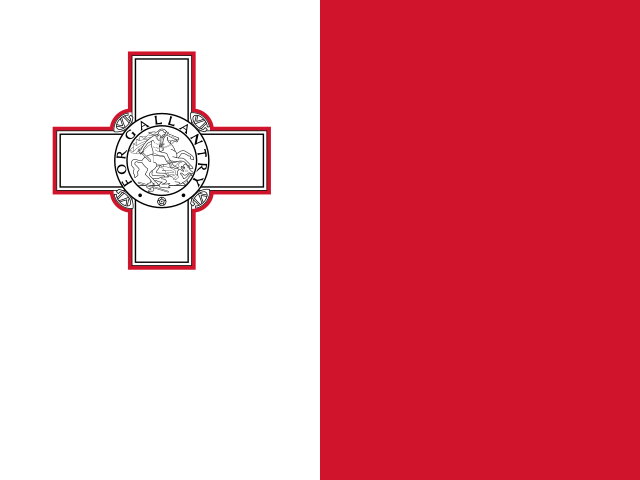
During the Second World War Malta was one of the most heavily bombed places on Earth. On 15 April 1942 King George VI awarded the George Cross to the island and its people, and the cross still appears on Malta's flag.
On 13 December 1974 Malta became a republic, and the last governor-general became its first president. The date is now Republic Day.
After a referendum in March 2003, in which 53.65% voted yes, Malta joined the European Union on 1 May 2004. The euro replaced the Maltese lira on 1 January 2008.
Cook one of the recipes, print the large-print pack about Malta, and finish with the big-screen quiz or the words crossword. Grandchildren can colour the flag.
Our sister site Daily Ancestor helps you read the real documents: ship passenger lists, Ellis Island arrivals, naturalization papers and census pages, with a free plan of which records exist for each ancestor.