The Ġgantija temples are built
Around 3600 BC farmers on Gozo began building the Ġgantija temples from huge limestone blocks. They are among the oldest free-standing buildings on Earth, older than the pyramids of Egypt.
Start the trip Skip to the quiz About five relaxed minutes.
A free large-print PDF. Choose what goes in: facts, map, history, dishes and recipes, phrases, fun facts, a quiz with or without answers. Made for clubs, care homes, libraries and family afternoons.
Malta is a group of islands in the central Mediterranean Sea, about 80 km south of Sicily, east of Tunisia and north of Libya. Only the three largest islands, Malta, Gozo and Comino, are inhabited, and Comino has just a handful of residents. With an area of only 316 km², it is one of the smallest and most densely populated countries in the world.
Its position at the crossroads of the Mediterranean made Malta a prize for every passing power: Phoenicians, Romans, Byzantines, Arabs, Normans, the Knights of St John, the French and finally the British all ruled here. Each left something behind, from the Arabic roots of the Maltese language to Baroque churches, Sicilian-style food and driving on the left.
Malta became independent in 1964 and a republic in 1974. It joined the European Union in 2004 and adopted the euro in 2008. Today it lives largely from tourism, finance and services, and visitors come for its warm climate, clear sea and an extraordinary concentration of history.
People have lived on the Maltese islands for more than 7,000 years. Because of the islands' position in the middle of the Mediterranean, they were ruled by a long line of outside powers before Malta became independent in 1964.
Around 3600 BC farmers on Gozo began building the Ġgantija temples from huge limestone blocks. They are among the oldest free-standing buildings on Earth, older than the pyramids of Egypt.
At the start of the Second Punic War, the Carthaginian garrison on Malta surrendered to the Roman consul Tiberius Sempronius Longus. The islands, called Melita by the Romans, became part of the province of Sicily.
According to the Acts of the Apostles, the apostle Paul was shipwrecked on the island of Melite, which tradition identifies as Malta, around AD 60. The Maltese still celebrate the shipwreck every 10 February.
Arab forces of the Aghlabid dynasty captured Malta from the Byzantines after a siege. Settlers who arrived later from Sicily brought the Siculo-Arabic speech that grew into the Maltese language.
Count Roger I of Sicily invaded Malta and made its Muslim rulers his vassals. The islands became part of the Norman world and, over the following centuries, Christian again.
Emperor Charles V gave Malta to the Knights Hospitaller, who had been driven out of Rhodes by the Ottomans. The rent was a single falcon a year. The knights ruled Malta until 1798.
From May to September 1565 a large Ottoman army besieged Malta. The knights and Maltese defenders, led by Grand Master Jean de Valette, held out, and the siege ended on 8 September, still marked as Victory Day.
On 28 March 1566 Jean de Valette laid the foundation stone of a new fortified city on the Sceberras peninsula, named Valletta after him. It became the capital in 1571.
On his way to Egypt, Napoleon Bonaparte captured Malta and ended the rule of the knights. Within months the Maltese rose up against the French, who had closed convents and seized church treasures.
After a Maltese uprising and a British naval blockade, the French garrison surrendered in 1800. Malta came under British protection and was confirmed as British by the Treaty of Paris in 1814.
After the Sette Giugno riots of 7 June 1919 over the price of bread, Britain granted Malta self-government in 1921, with its own elected parliament.
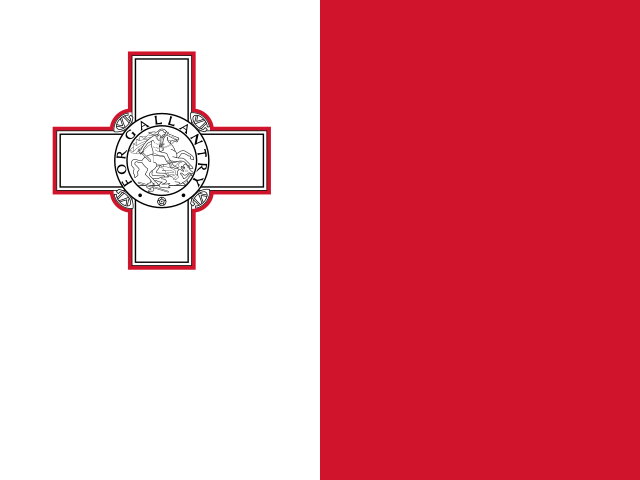
During the Second World War Malta was one of the most heavily bombed places on Earth. On 15 April 1942 King George VI awarded the George Cross to the island and its people, and the cross still appears on Malta's flag.
On 21 September 1964 Malta became an independent state within the Commonwealth, with the British queen still as head of state. The date is celebrated as Independence Day.
On 13 December 1974 Malta became a republic, and the last governor-general became its first president. The date is now Republic Day.
When the defence agreement with Britain ran out at the end of March 1979, the last British forces left Malta. The event is remembered every 31 March as Freedom Day.
After a referendum in March 2003, in which 53.65% voted yes, Malta joined the European Union on 1 May 2004. The euro replaced the Maltese lira on 1 January 2008.
Maltese food is Mediterranean country cooking shaped by Sicily, North Africa and the islands' many rulers, with a dash of British habits left over from the colonial years. Bread, olive oil, tomatoes, capers, beans, rabbit, fish and small sheep's cheeses are the basics. A meal often opens with bread, olives and bigilla, moves on to pasta or soup and then a meat or fish course, and on feast days ends with fried pastries such as imqaret.
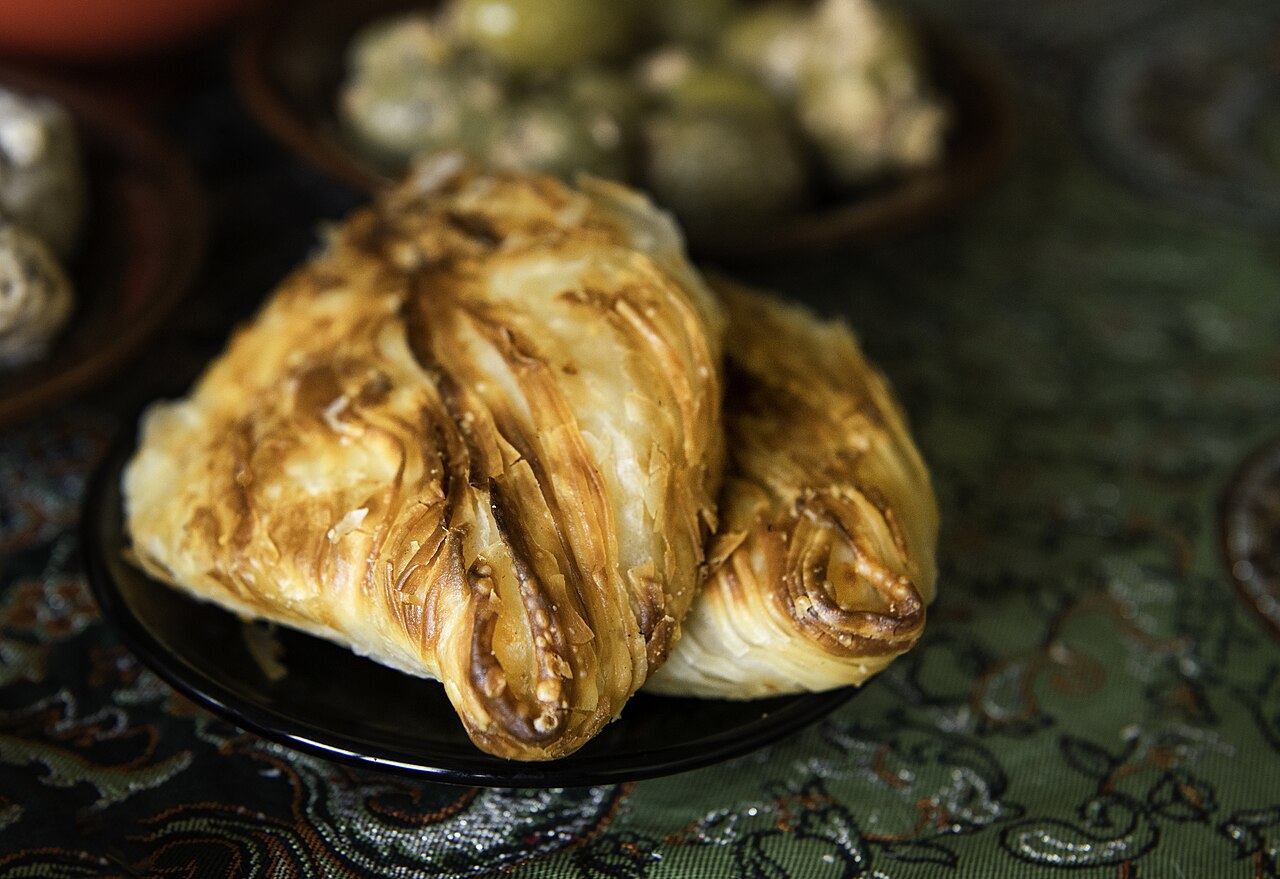
Flaky, diamond-shaped or round pastries filled with ricotta or with curried mushy peas, baked in small bakeries called pastizzeriji and sold everywhere for a quick breakfast or snack.
The two classic fillings are folded differently so you can tell them apart: ricotta pastizzi are folded down the middle, pea pastizzi down the side. To sell 'like pastizzi' is the Maltese way of saying 'like hot cakes'.
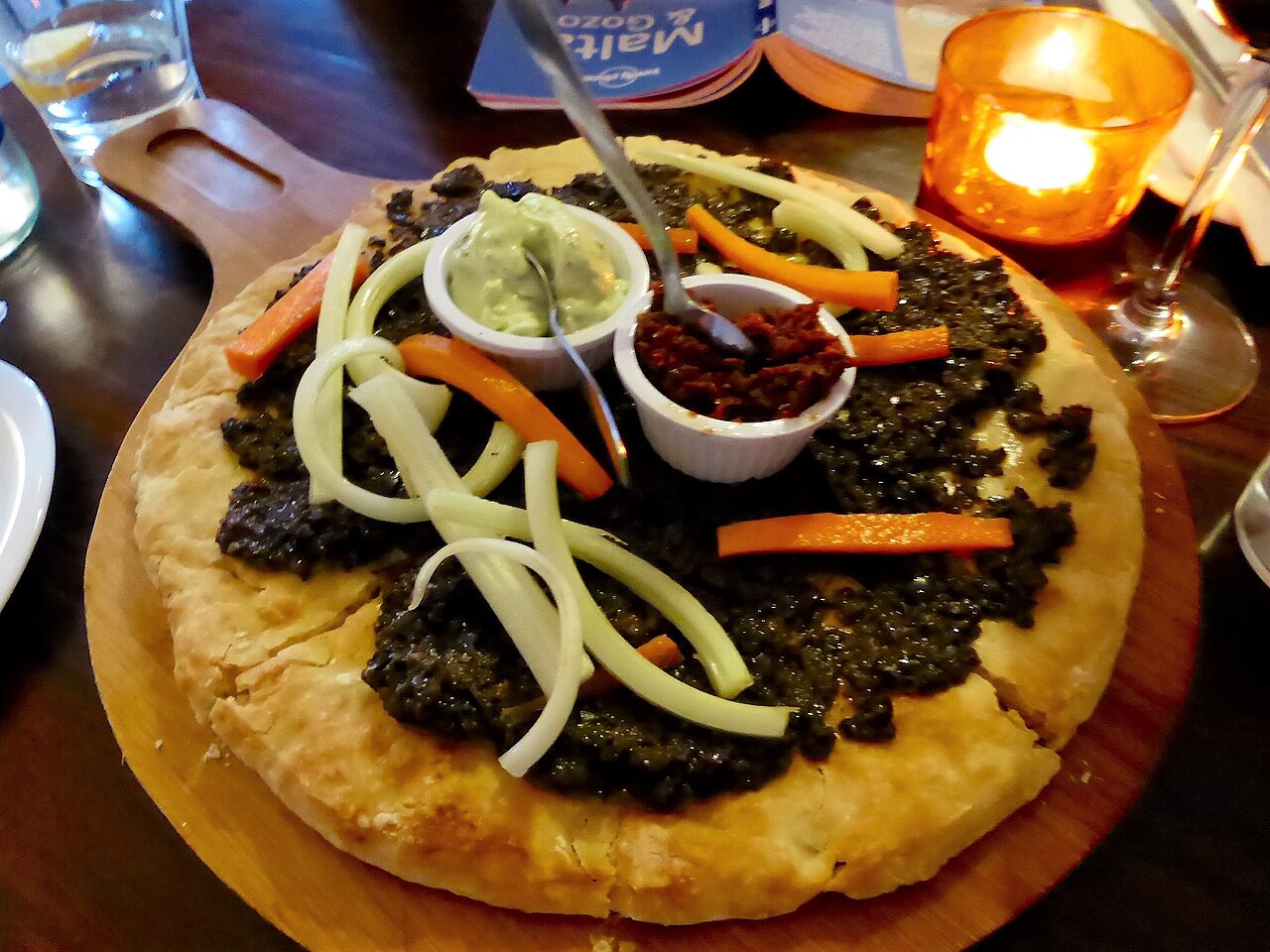
A slice of crusty Maltese sourdough bread rubbed with ripe tomato or tomato paste, drizzled with olive oil and topped with tuna, onion, capers and olives. It is the classic summer snack for the beach.
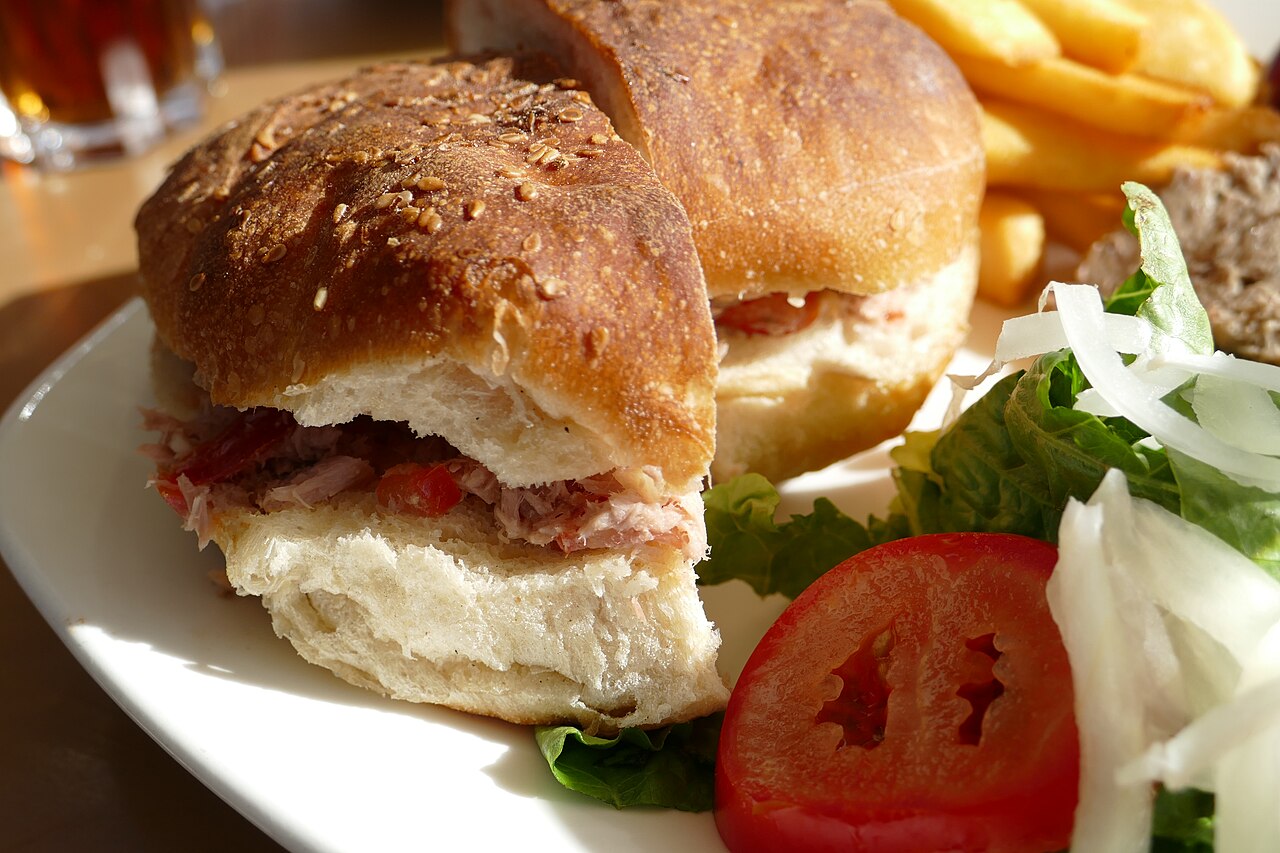
A flat, ring-shaped sourdough bread, usually filled like a sandwich with tuna, sardines, potato, tomato, onion, capers and olives. On Gozo the ftira is served open, topped with thin slices of potato, more like a pizza.
In 2020 UNESCO added the culinary art and culture of the Maltese ftira to its list of the Intangible Cultural Heritage of Humanity.
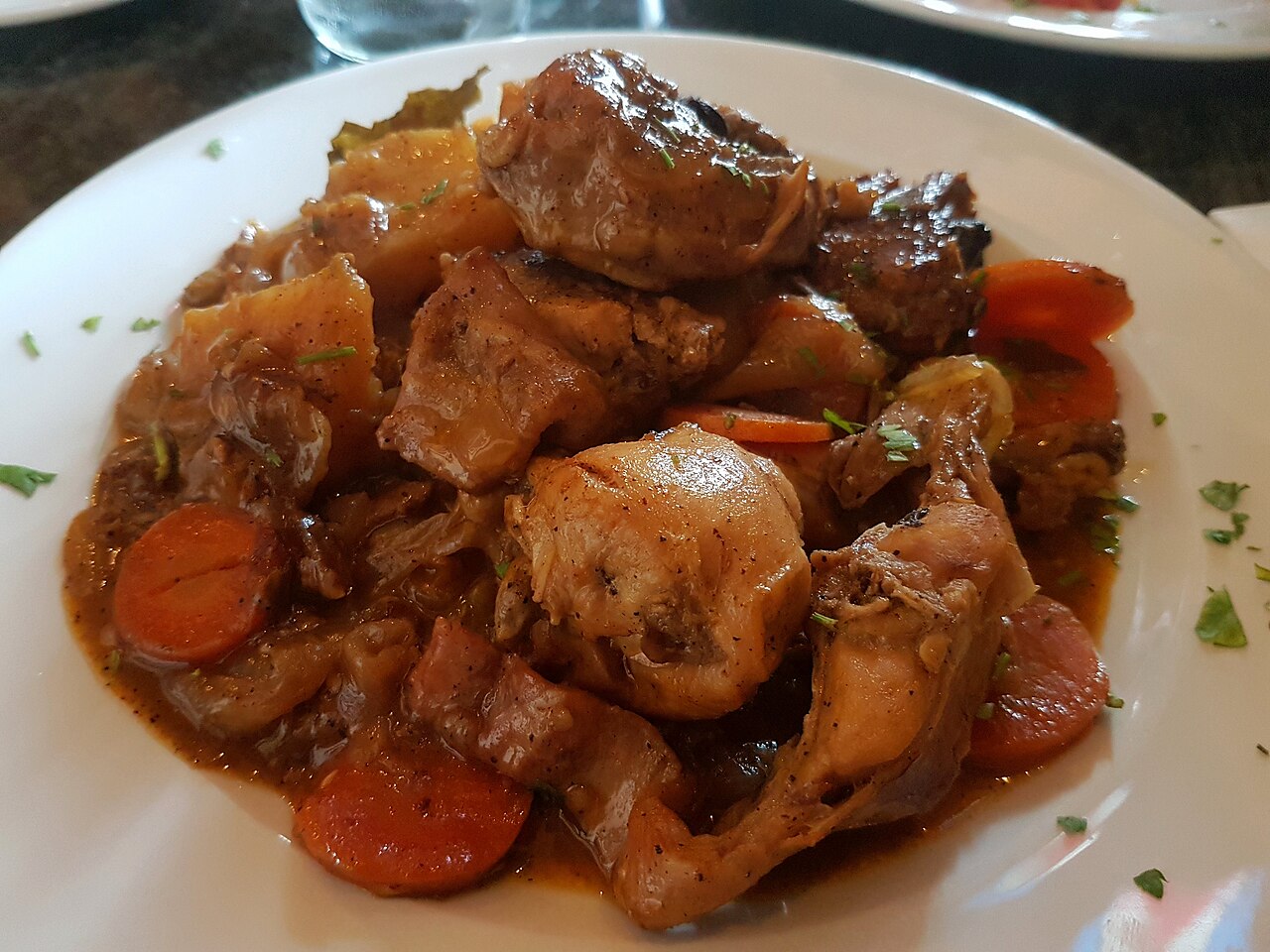
Rabbit slowly braised with red wine, tomatoes, garlic, bay leaves and cloves, with potatoes and peas. It is often called Malta's national dish, and the sauce is usually served first over spaghetti, followed by the rabbit itself.
The dish may have begun as a quiet protest against the Knights of St John, who restricted rabbit hunting. It became popular after the rules were lifted in the late 18th century.
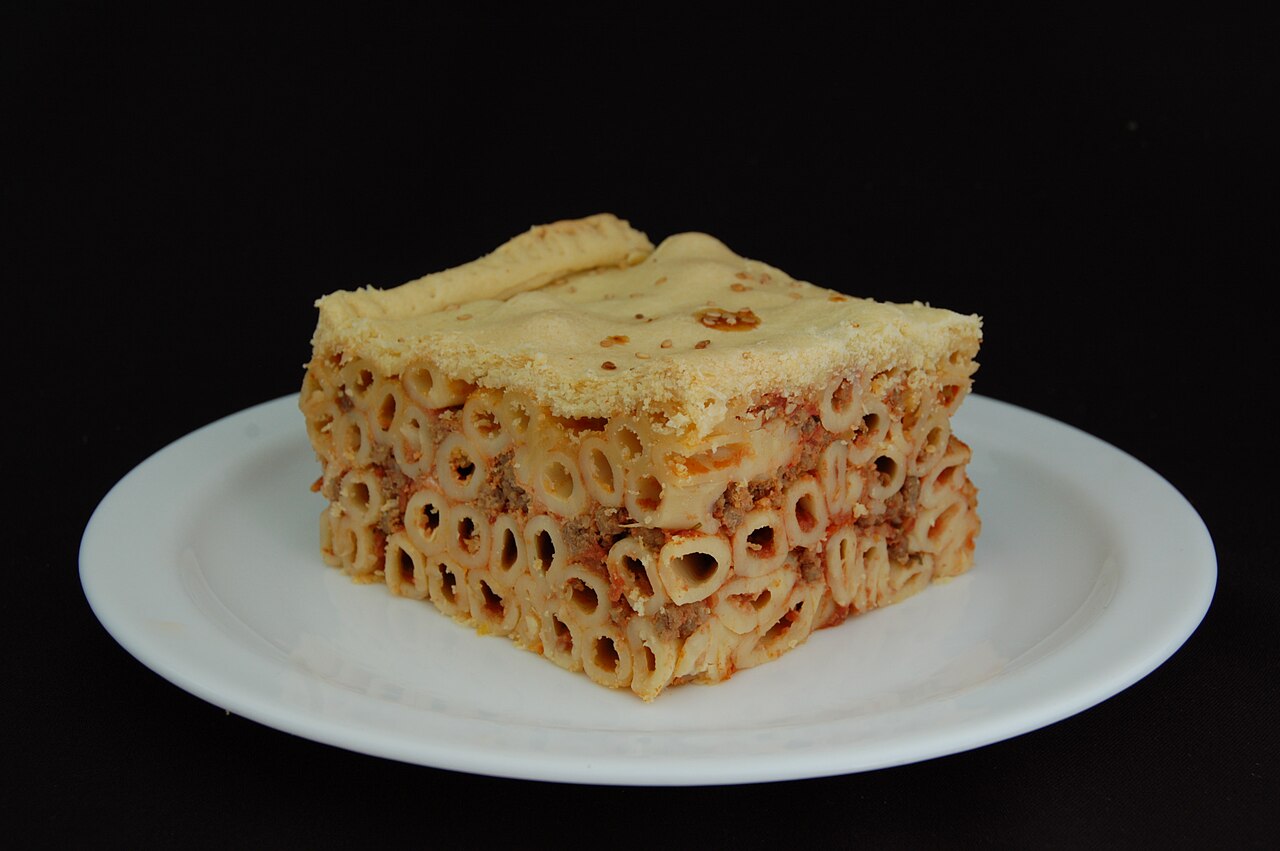
A rich baked macaroni pie: pasta tossed in a tomato and minced meat sauce, bound with egg and grated cheese, and baked inside a pastry case. A similar dish without the pastry is called imqarrun.
The name probably comes from the Italian 'timballo', a drum-shaped baked dish.
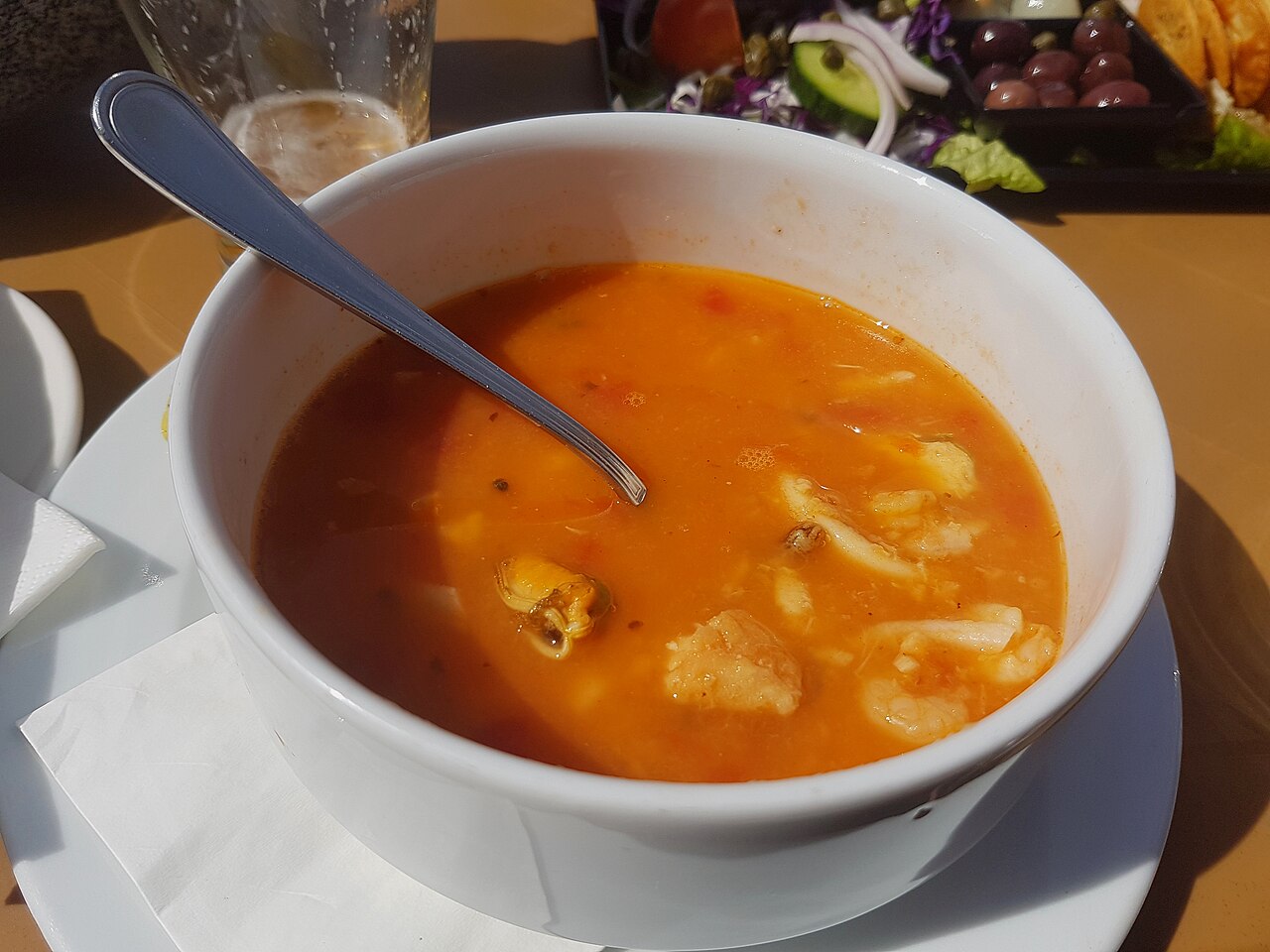
A light fish soup with plenty of garlic, tomatoes and herbs such as marjoram, often with a little rice. It is made when the catch is plentiful.
Aljotta is considered the Maltese adaptation of the French bouillabaisse, one of many tastes linked to the Knights of St John, who came from France, Italy, Spain and elsewhere.
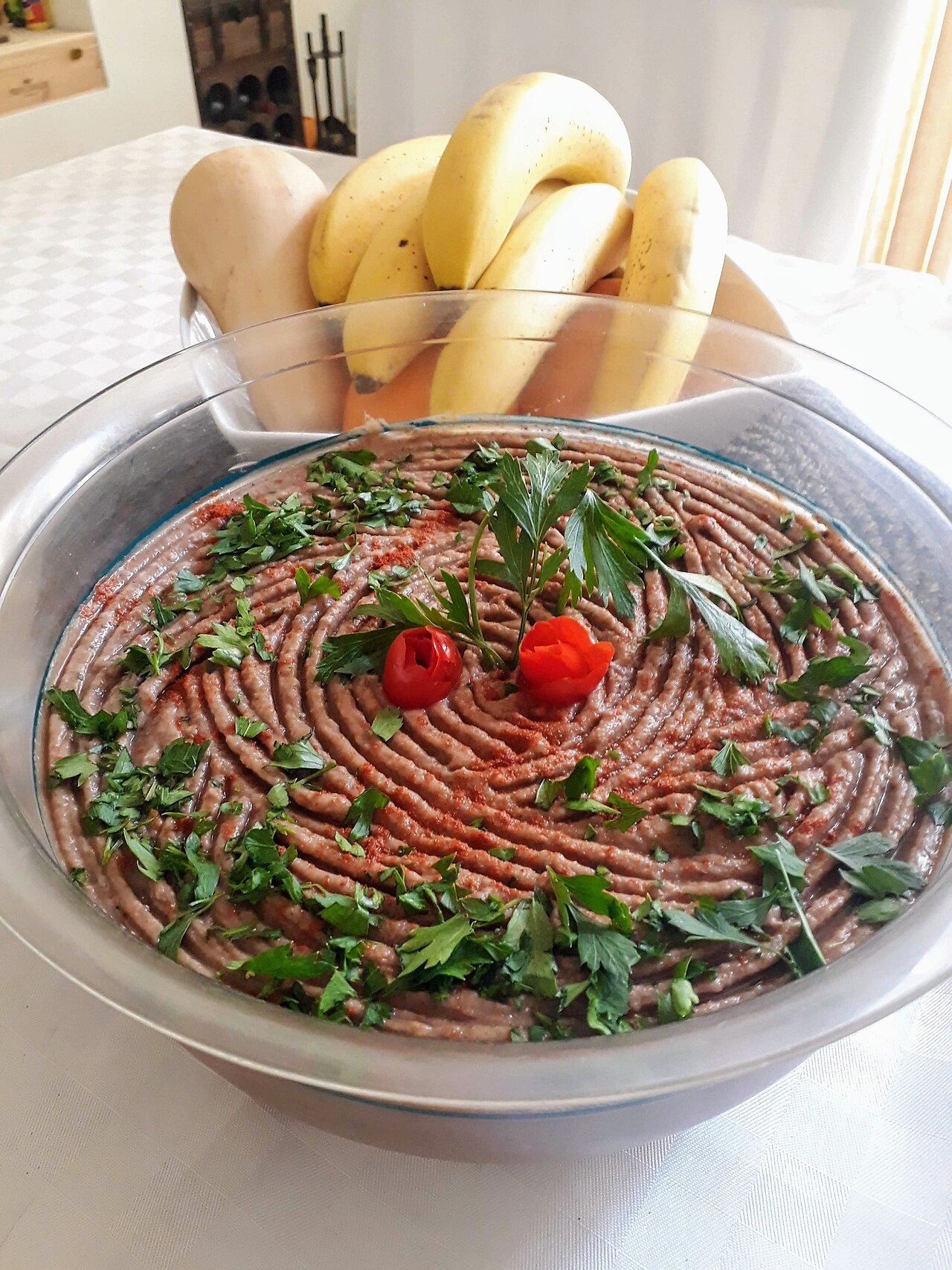
A thick dip of mashed beans with olive oil, garlic, salt and red pepper, eaten with bread or crackers. It is sold on almost every food counter in Malta. The dried beans need soaking overnight before cooking.
It is made with tic beans, small dark beans similar to broad beans, called 'ful ta' Ġirba', 'beans of Djerba', after the Tunisian island.
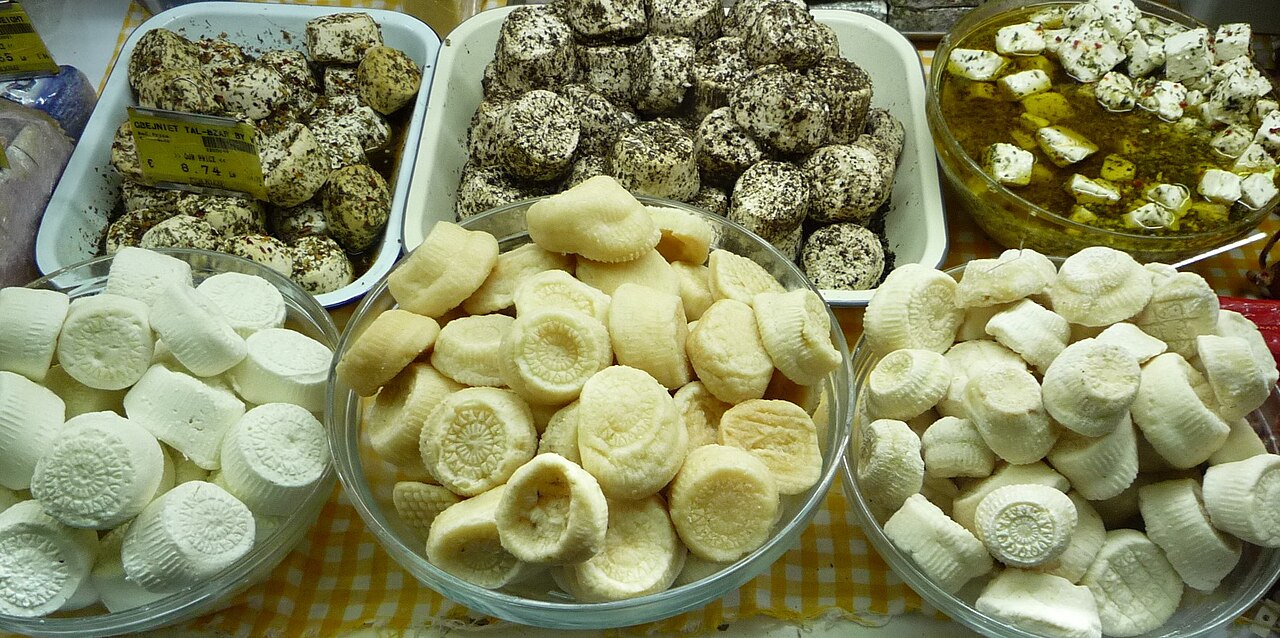
Small round sheep's milk cheeses, eaten fresh and milky, sun-dried and firm, or cured and coated in crushed black pepper. They go into soups, pasta and ravioli, on top of ħobż biż-żejt, or are fried as a starter.
'Ġbejna' is the diminutive of 'ġobna', cheese, so it means 'little cheese'. 'Ġbejna tan-nagħaġ' became, in 2025, Malta's first food product with an EU protected geographical name.
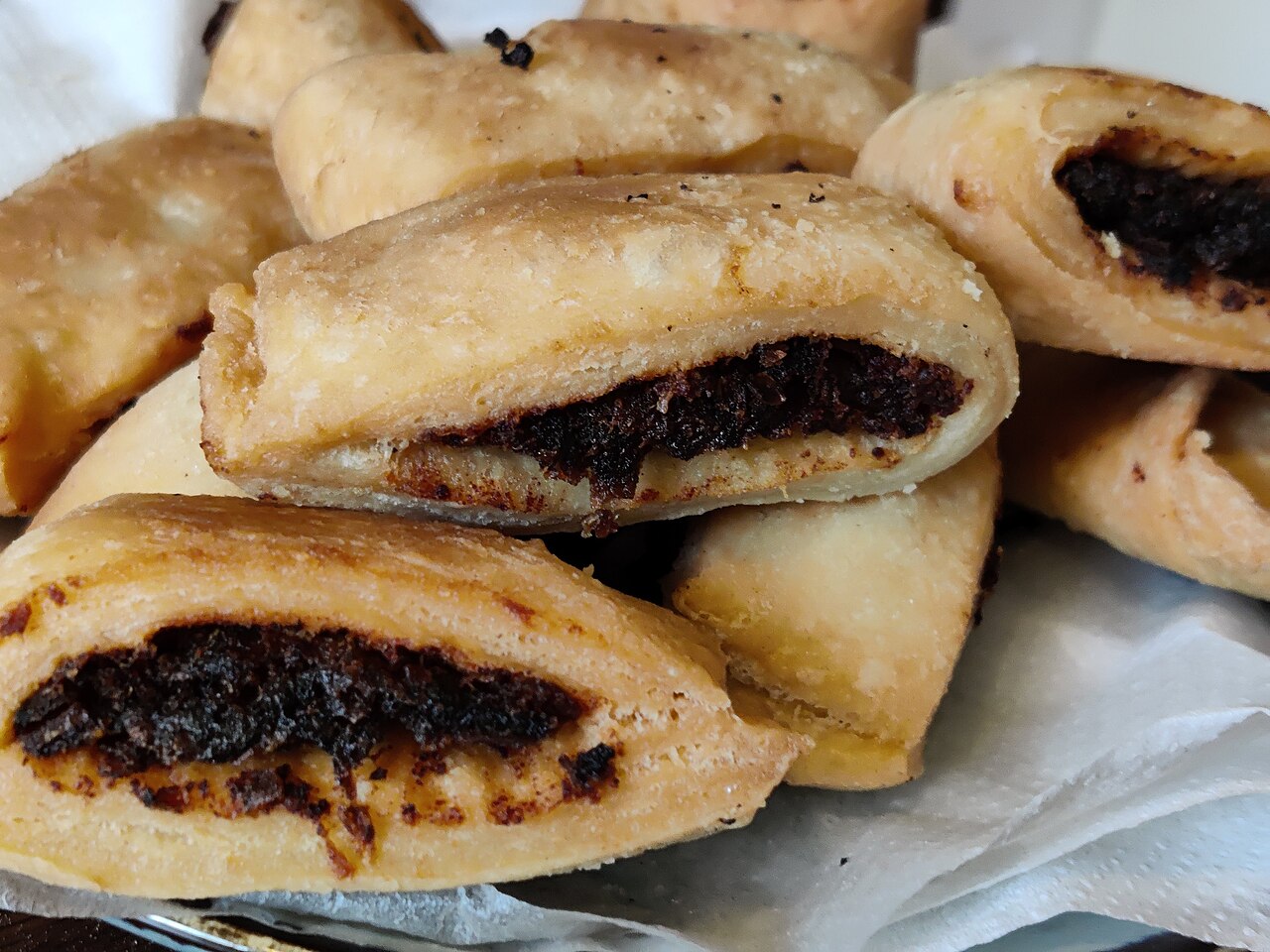
Diamond-shaped pastries filled with dates flavoured with aniseed and bay leaf, then deep-fried until golden. They are sold hot at street markets and village feasts, sometimes with ice cream.
Imqaret date back to the Arab period. A very similar sweet called makroudh is eaten across the sea in Tunisia.
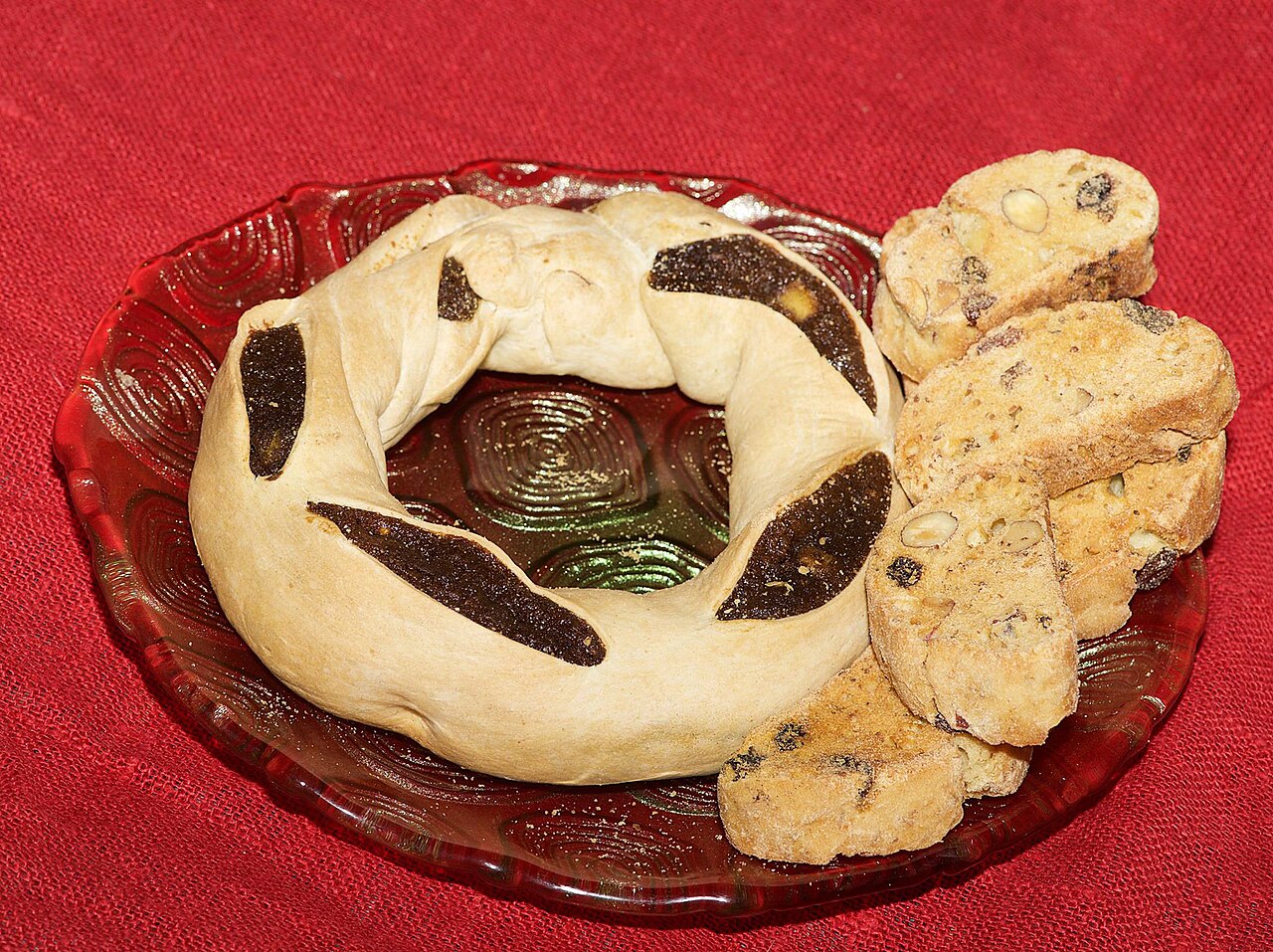
Rings of pastry with a dark, sticky filling of honey or treacle, spiced with aniseed, cinnamon and cloves. Slits along the ring let the filling ooze out.
They were once a Christmas sweet but became so popular that they are now made all year. Despite the name, 'honey rings', the filling is usually made with treacle.
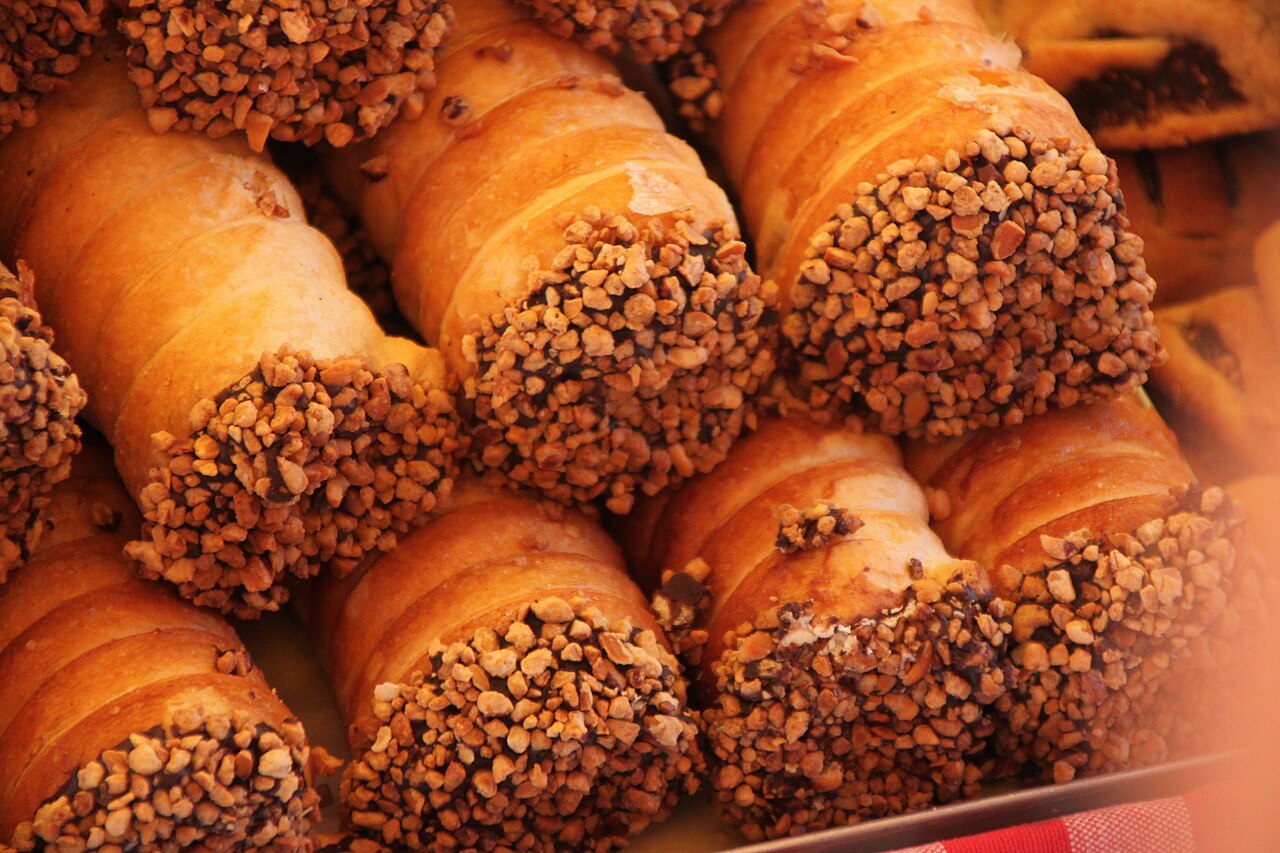
Tubes of crisp fried pastry filled with sweet ricotta, often with candied fruit or chocolate. They came to Malta from neighbouring Sicily and are one of the islands' favourite sweets.
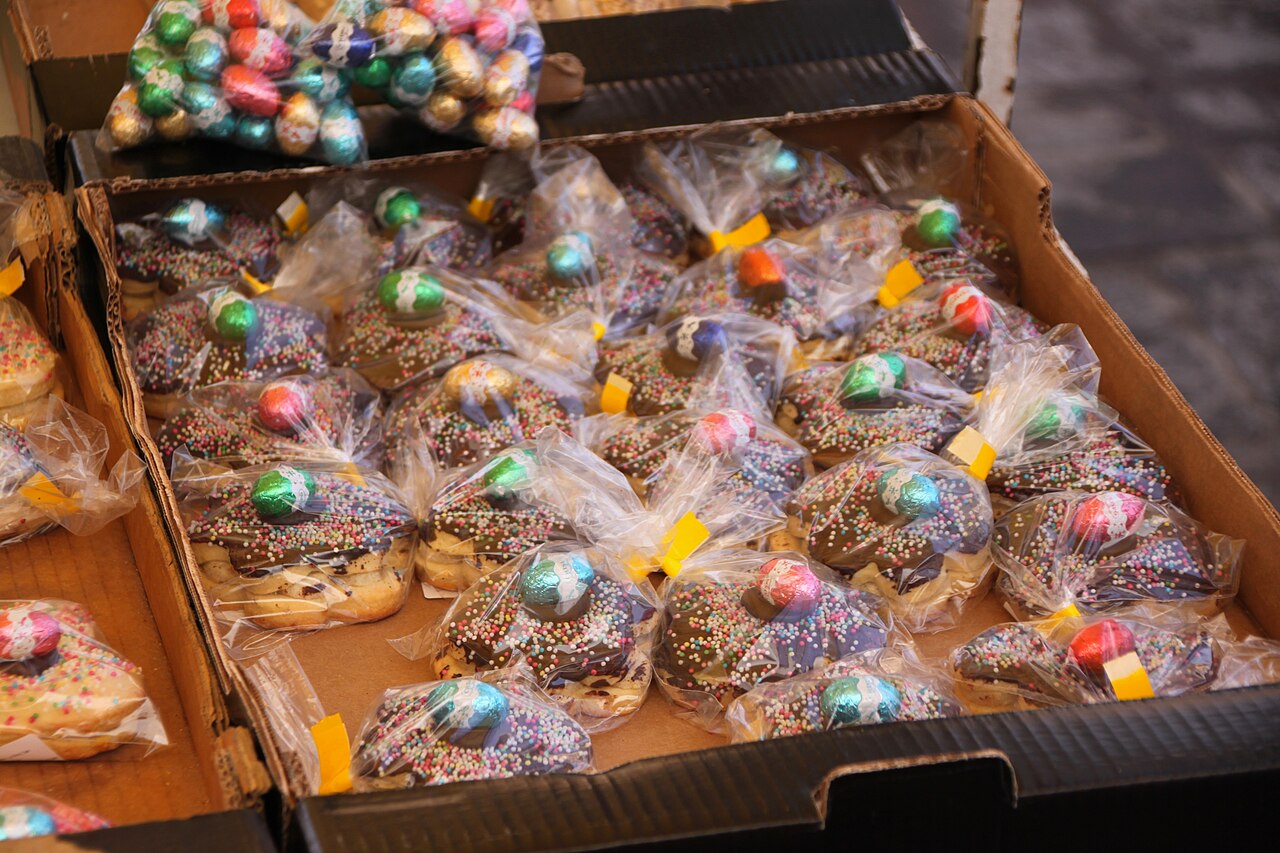
Easter biscuits of sweet pastry with an almond filling similar to marzipan, cut into shapes such as hearts, fish, stars or lambs and topped with icing or chocolate.
Figolli are baked during Holy Week and given to children and friends on Easter Sunday. In some villages a priest blesses them in the square outside the church.
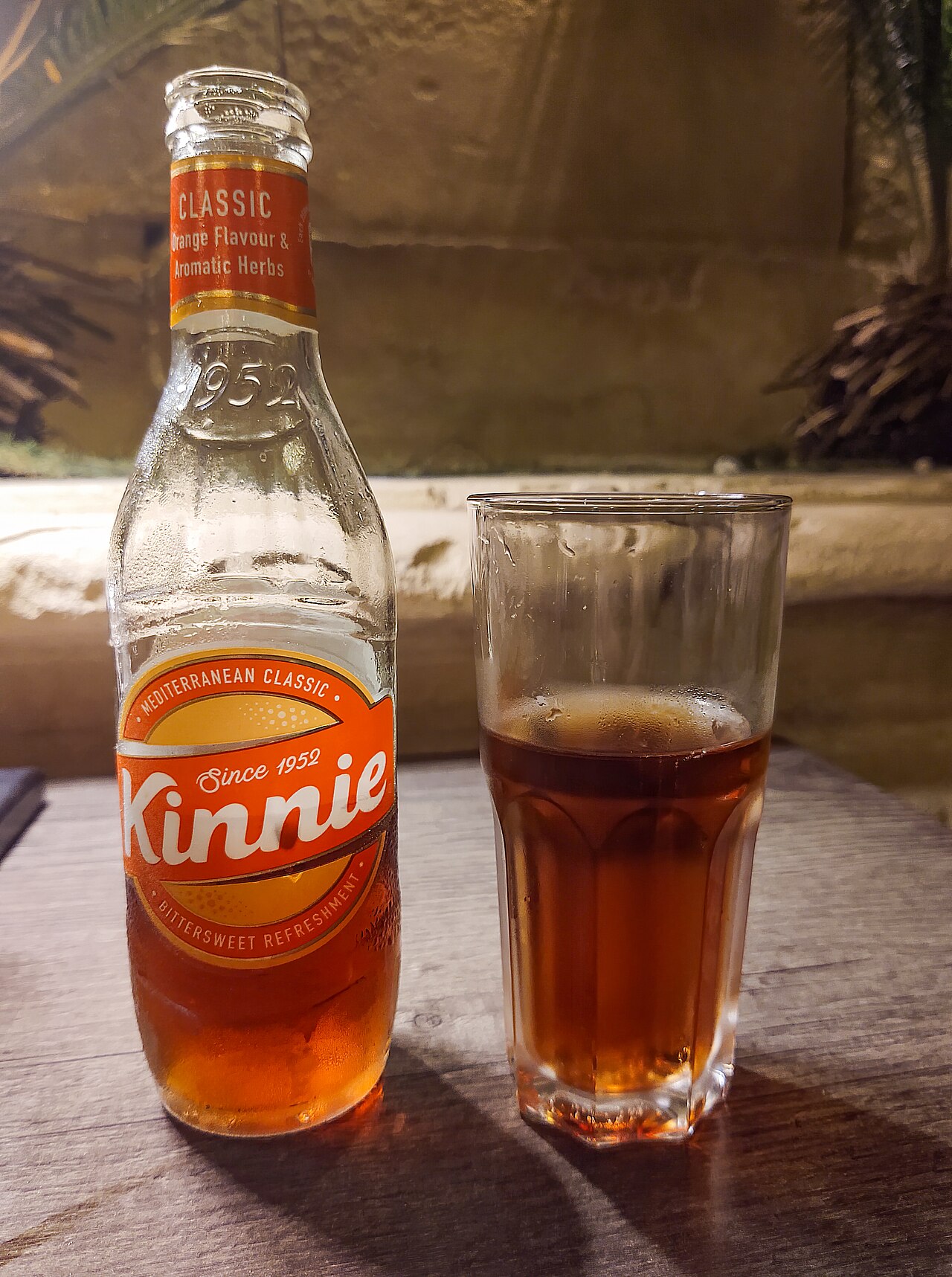
A brown, bittersweet fizzy drink made from bitter oranges and herbal extracts, including wormwood. It is often called Malta's national soft drink.
Kinnie was launched in 1952 by the Maltese brewery Simonds Farsons Cisk as a home-grown alternative to cola. Its full recipe is a secret.
Malta is so small and built-up that its towns and villages often run into each other, yet each has its own parish church, its own feast and its own character, from the knights' fortress cities around the Grand Harbour to quiet hilltop Mdina and the green island of Gozo.
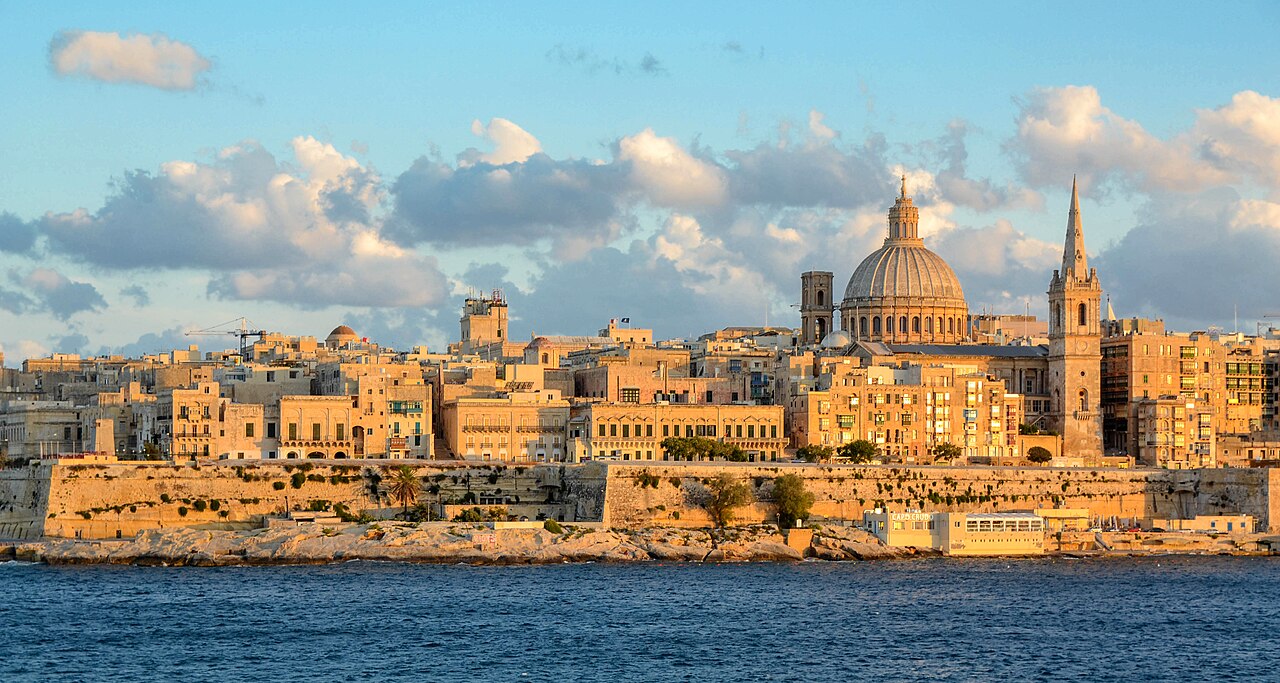
The capital, a walled city built by the Knights of St John after the Great Siege of 1565. It covers only about 0.6 km², making it the smallest capital in the European Union, and the whole city is a UNESCO World Heritage Site.
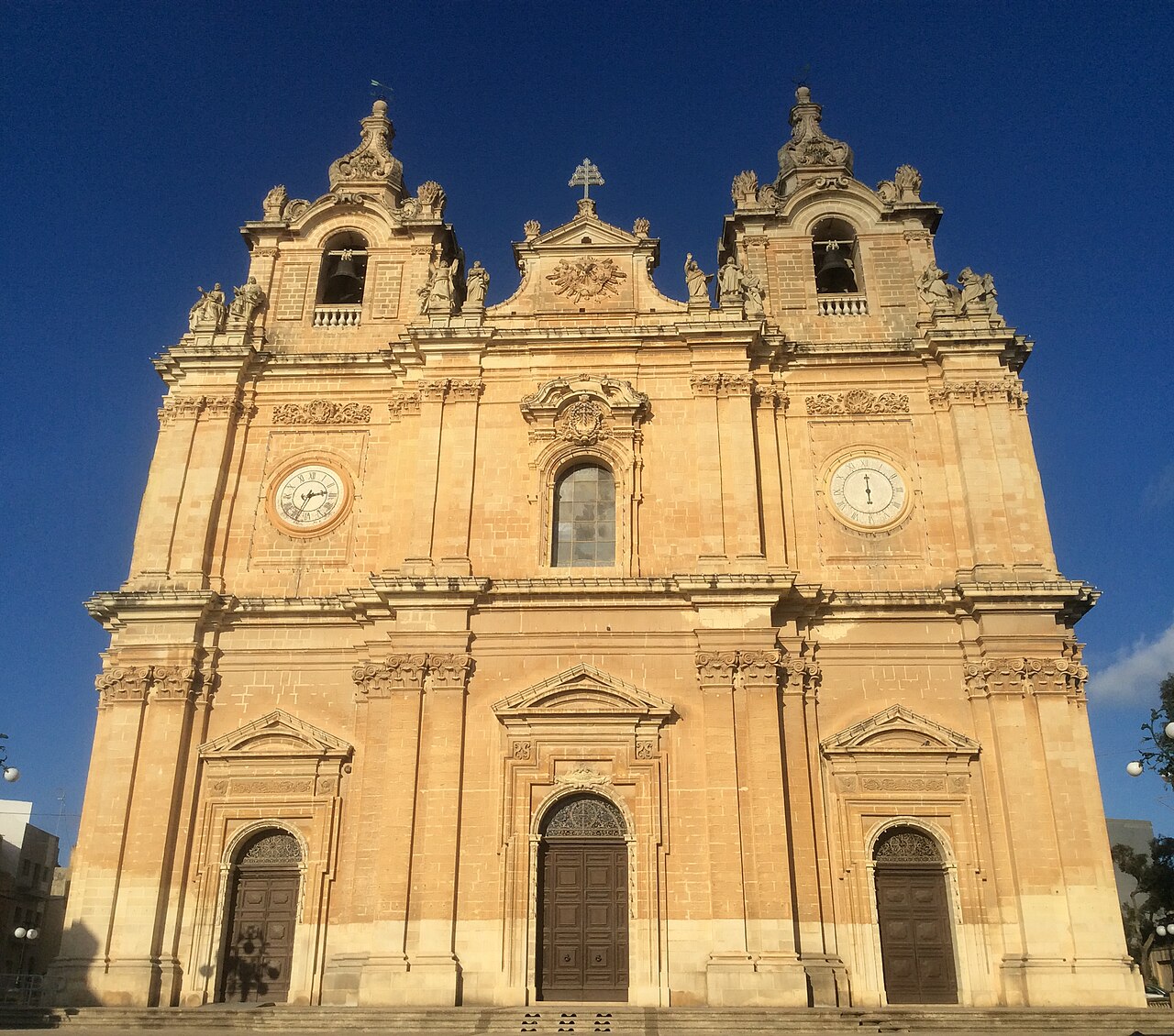
One of Malta's largest and oldest towns, a busy commercial and residential centre inland from the harbours. Its name is usually explained as 'cold well' or 'running water'.
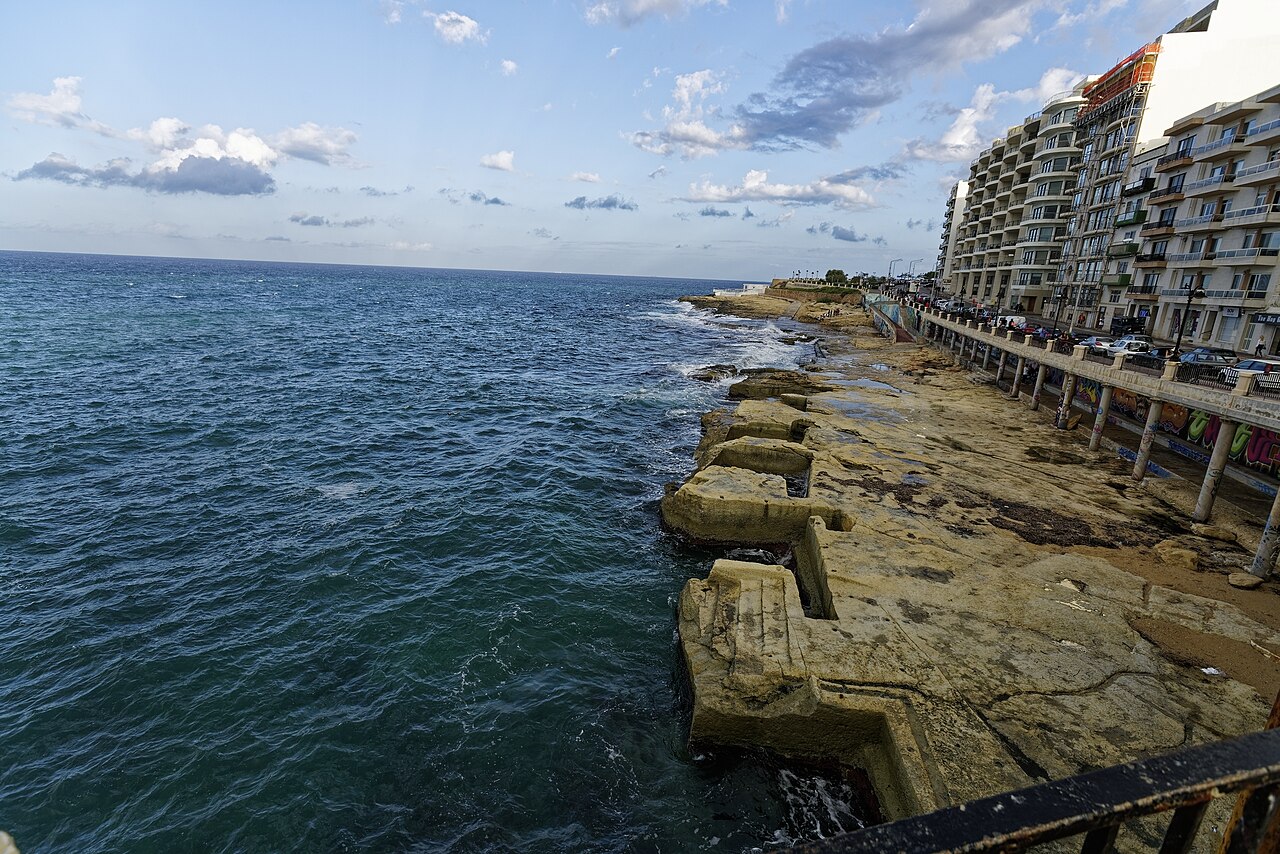
Once a quiet fishing village across the harbour from Valletta, Sliema is now a lively seaside town of hotels, shops and apartment blocks. Its name means 'peace'.
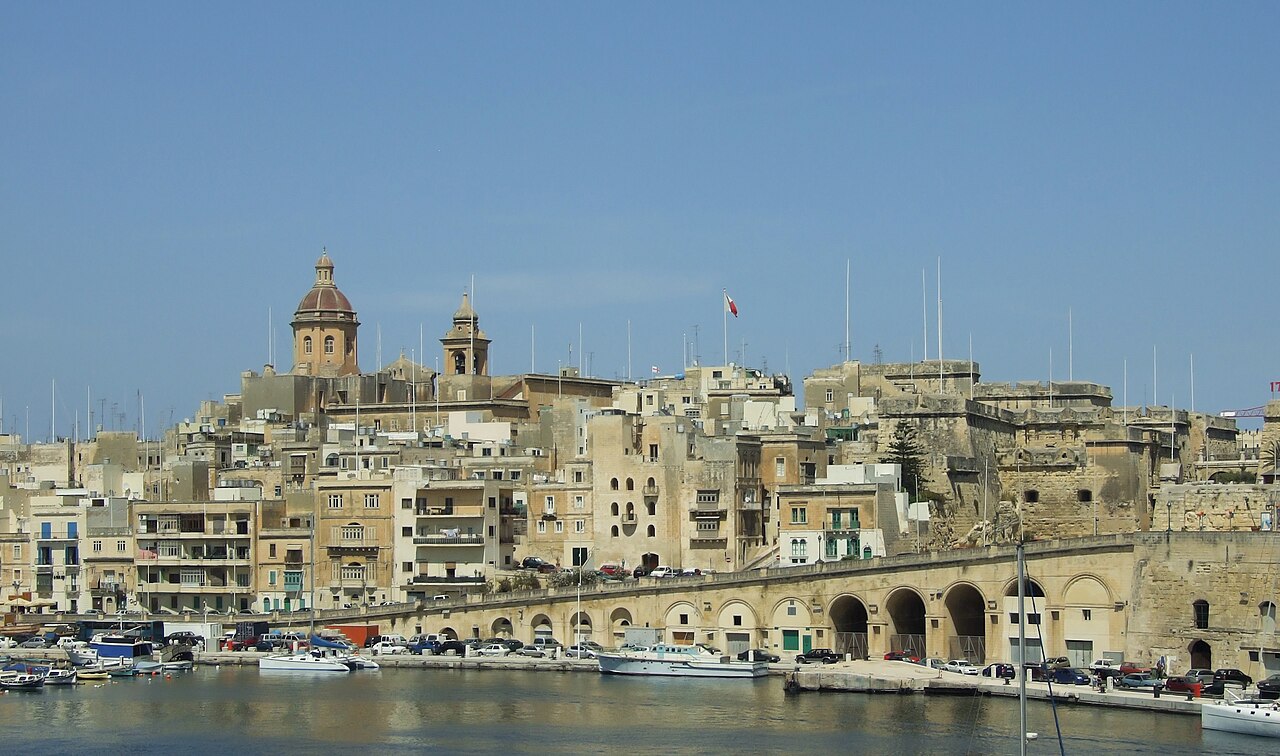
An old fortified town on the Grand Harbour, also called Vittoriosa, the 'Victorious City'. It was the knights' base and the de facto capital from 1530 to 1571, and played a central part in the Great Siege.
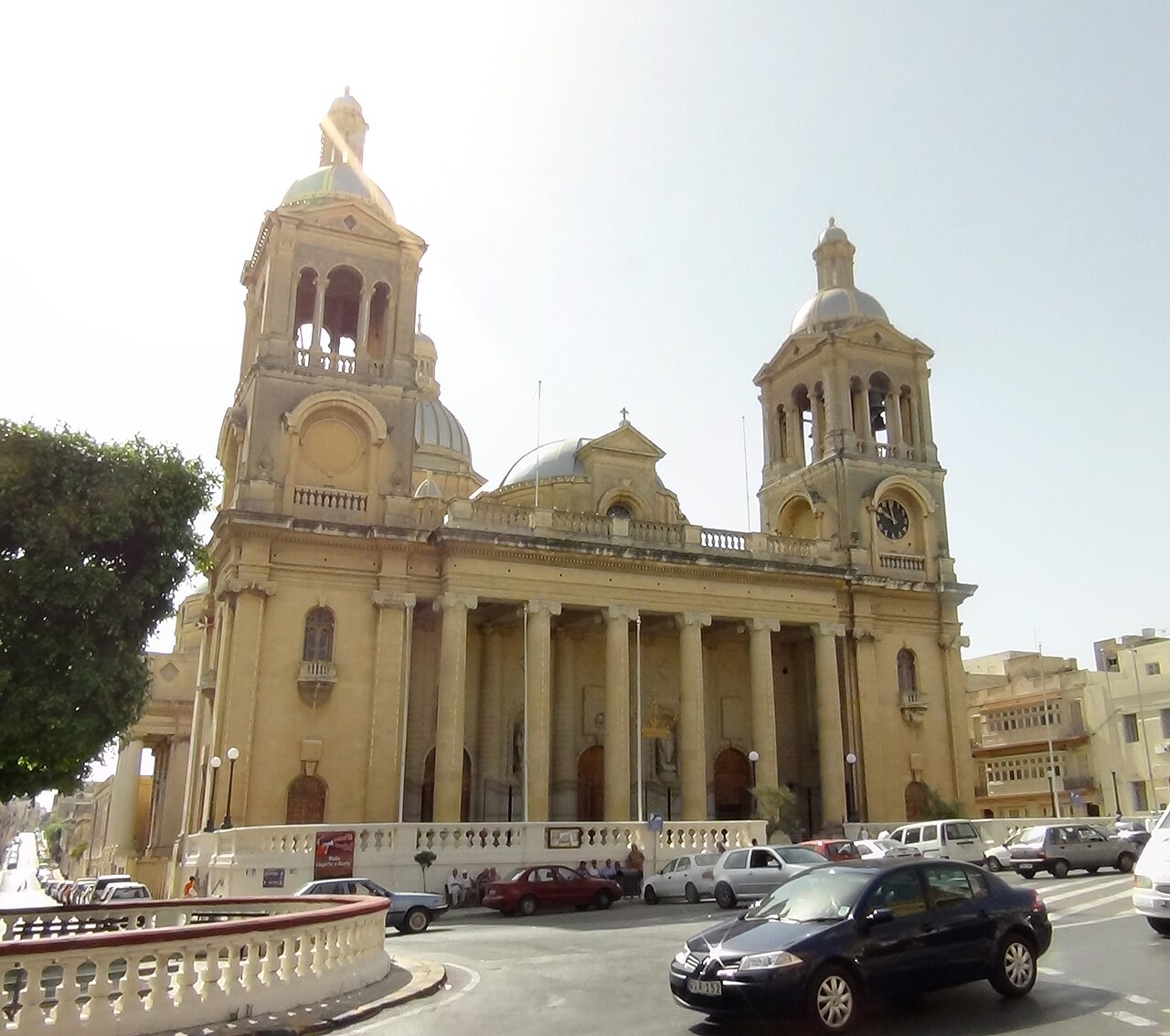
A town founded in 1626 by Grand Master Antoine de Paule, about 5 km from Valletta. Beneath its streets lies one of the world's most remarkable prehistoric sites.
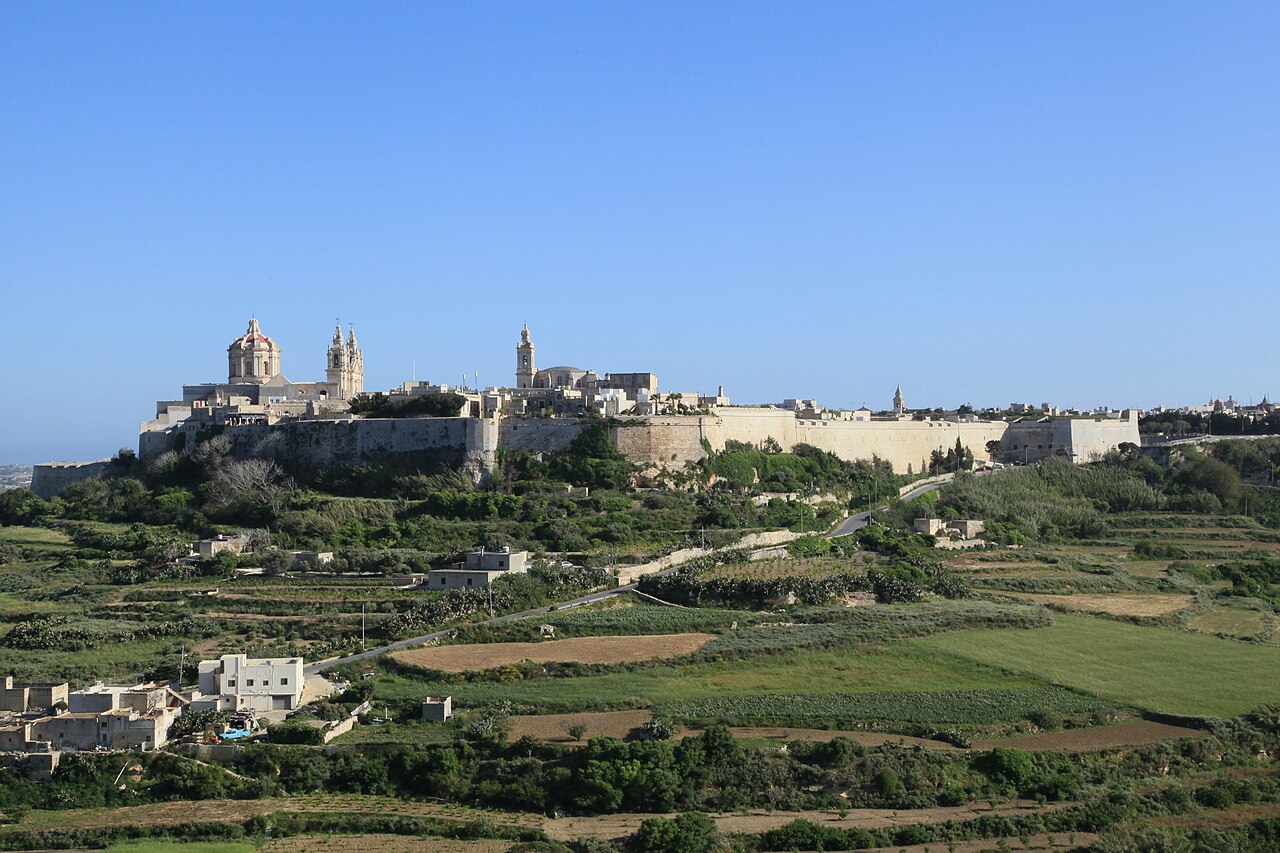
A walled hilltop city that was Malta's capital from ancient times until the knights arrived in 1530. With only a few hundred residents and quiet lanes, it is nicknamed the 'Silent City'.
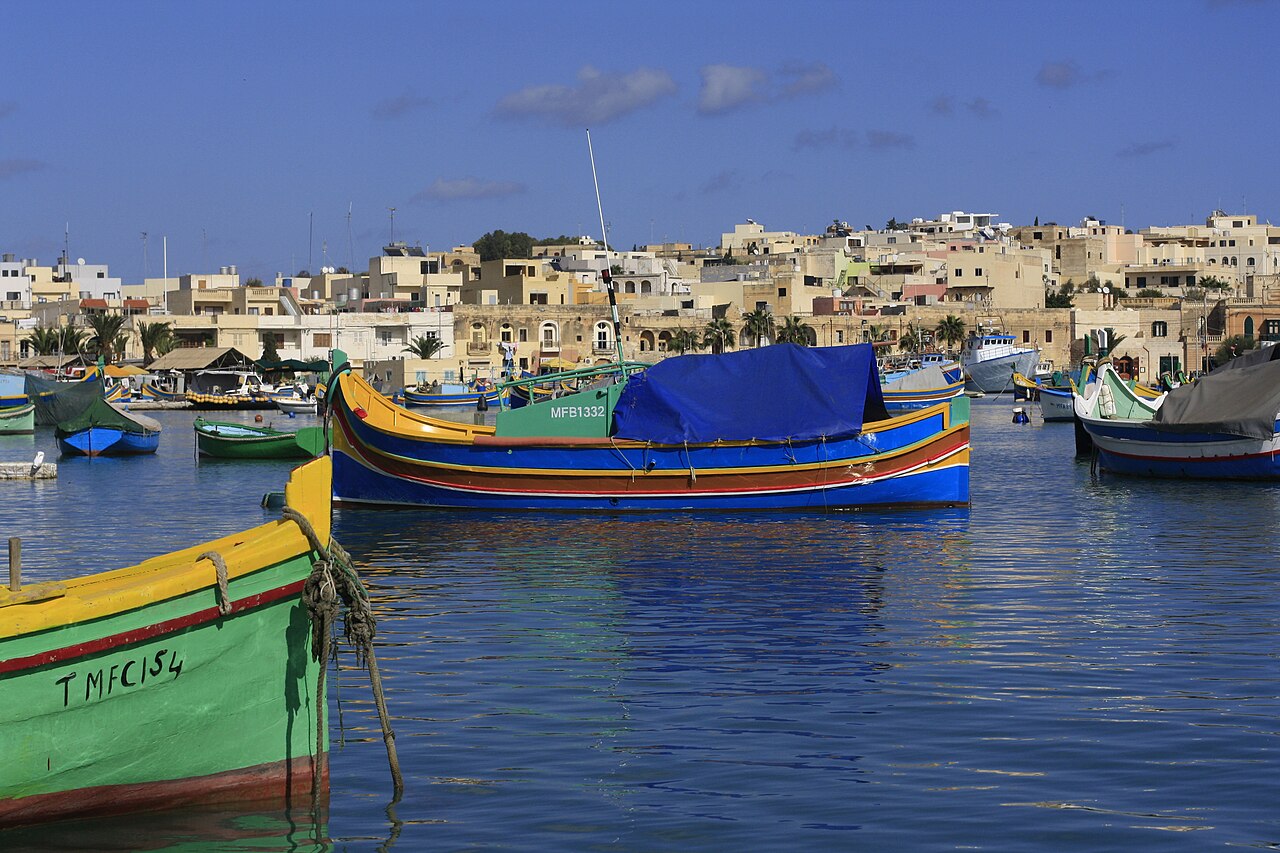
A traditional fishing village on a sheltered bay in the south-east. Its harbour is full of brightly painted luzzu fishing boats, and its name means 'south-east harbour'.
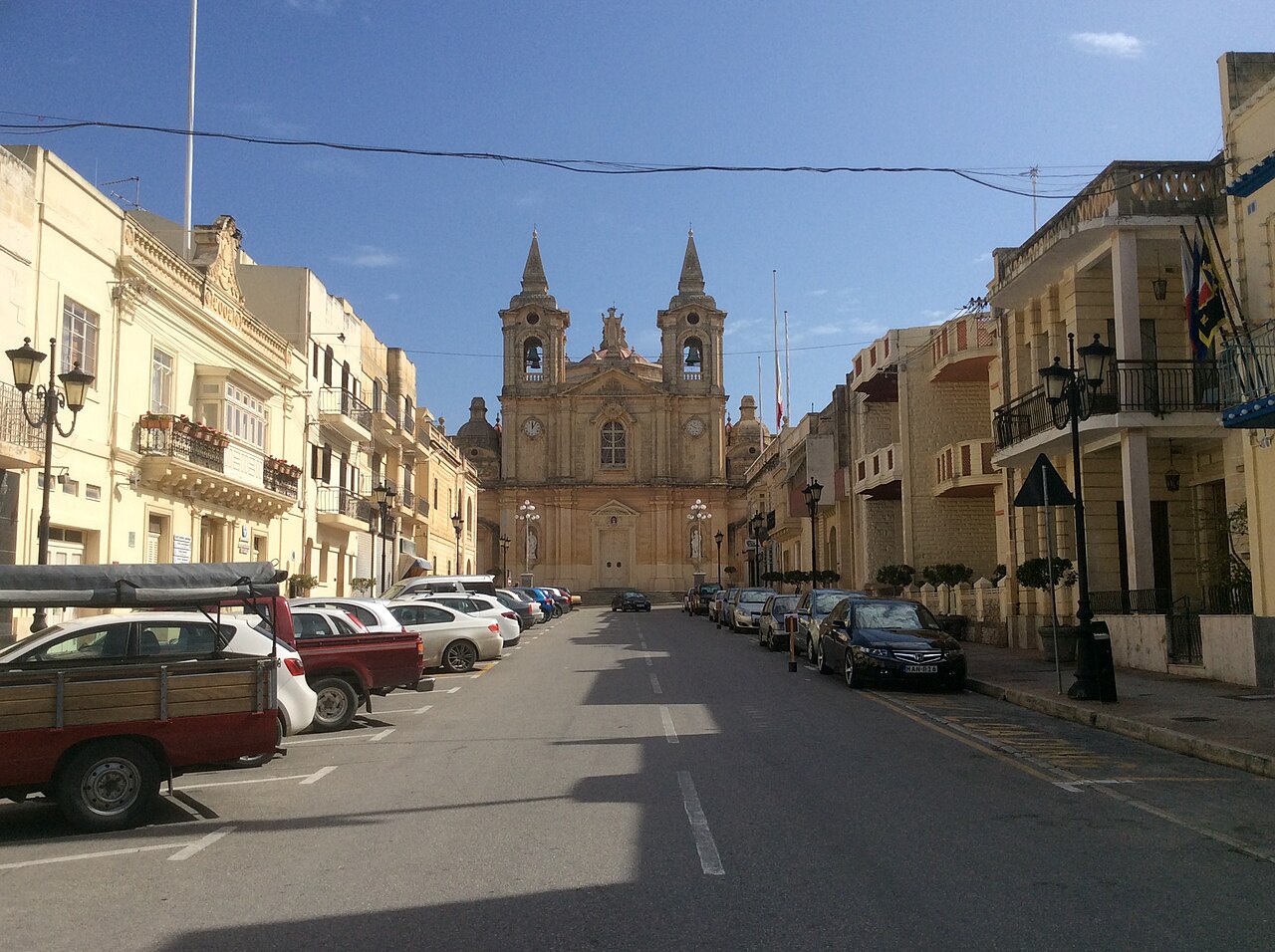
One of Malta's oldest towns, recorded as a parish in 1436, near the southern cliffs. Boats leave from the little harbour of Wied iż-Żurrieq for the Blue Grotto.
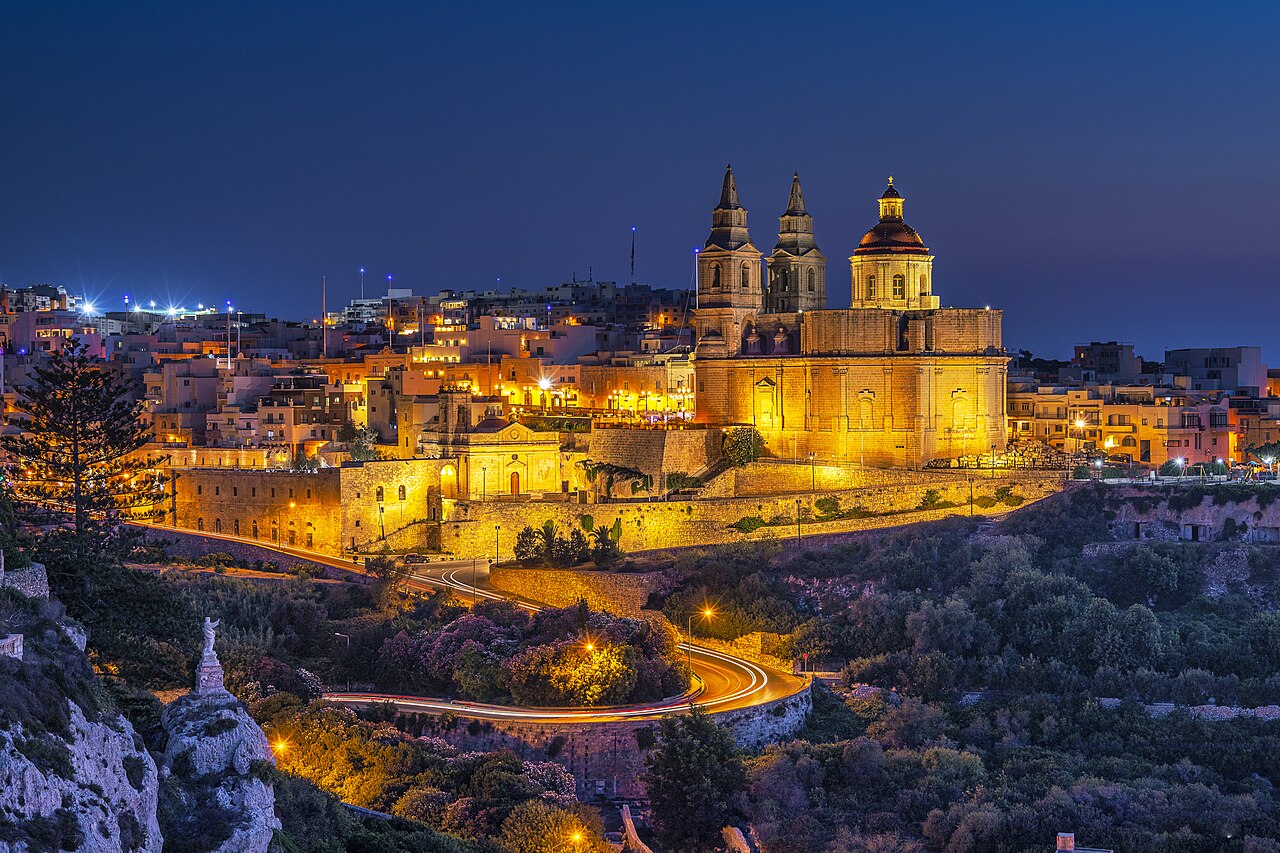
A large village on a ridge in the north of Malta, above some of the island's best sandy beaches. Its name comes from the Semitic root for salt, after old salt pans by the bay.
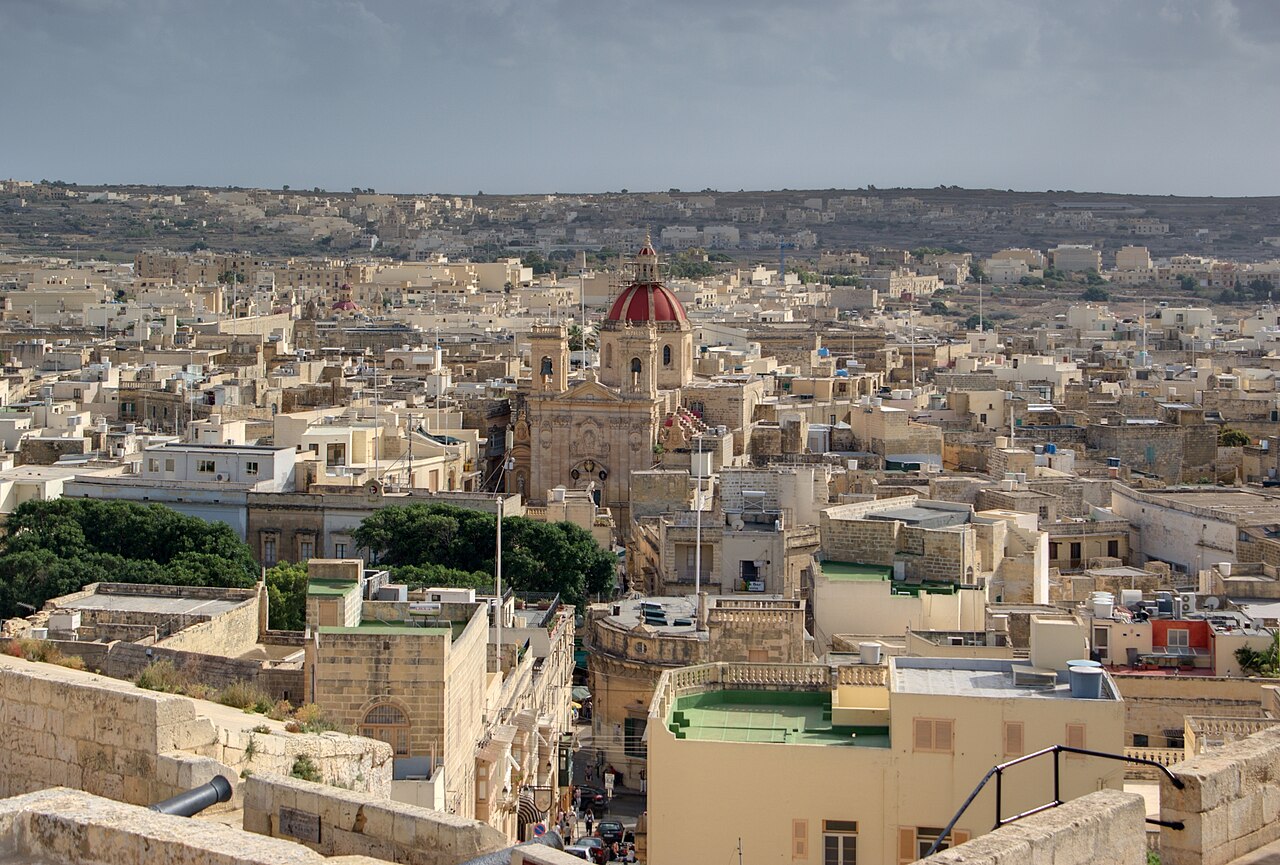
The main town of Gozo, on a hill in the middle of the island. It was renamed in 1887 for Queen Victoria's Golden Jubilee, but many Gozitans still call it by its old name, Rabat.
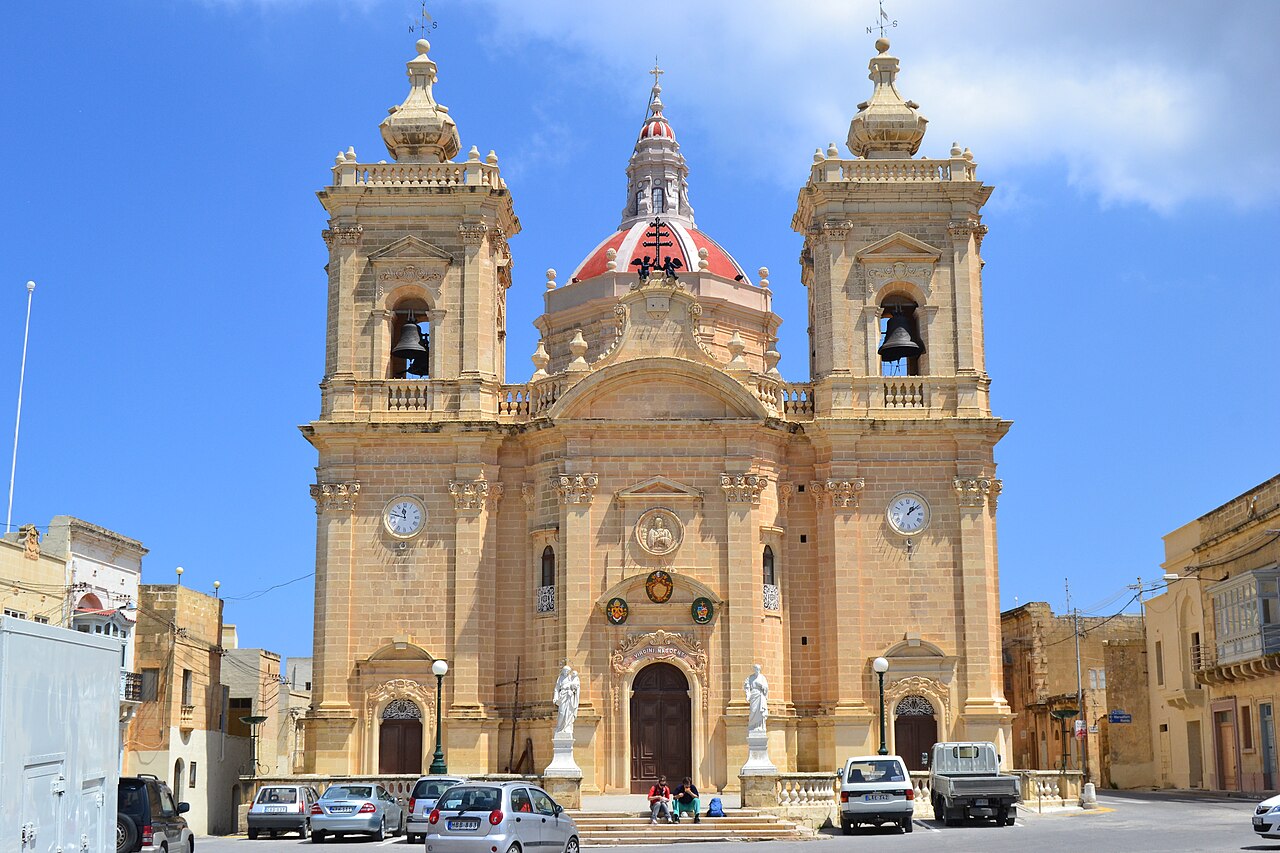
The second-largest town on Gozo, on a plateau north-east of Victoria. It is one of the earliest inhabited parts of the island.
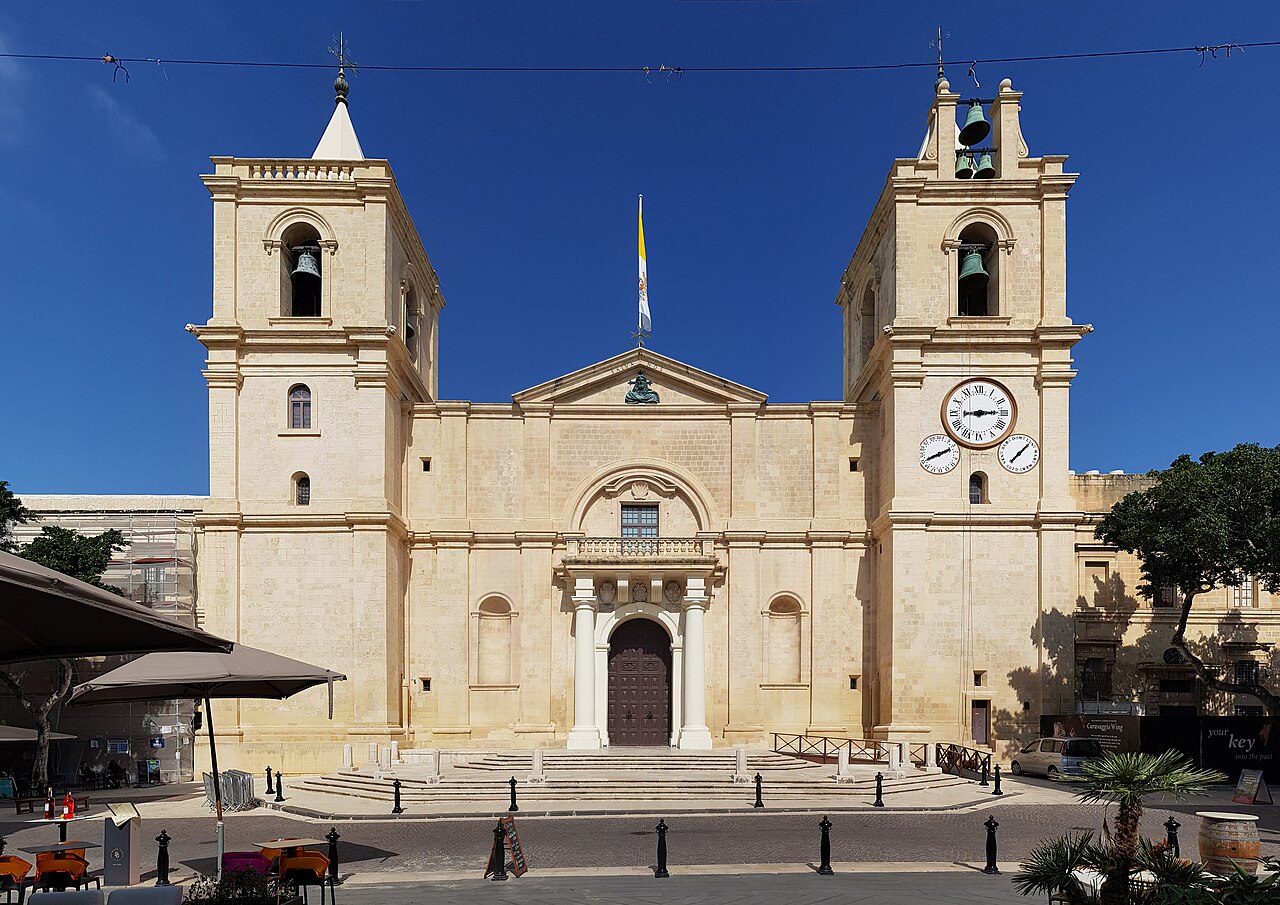
The church of the Knights of St John, built between 1573 and 1578. Its plain outside hides one of Europe's finest Baroque interiors, painted by Mattia Preti, and Caravaggio's huge 'Beheading of Saint John the Baptist', the only painting he signed.
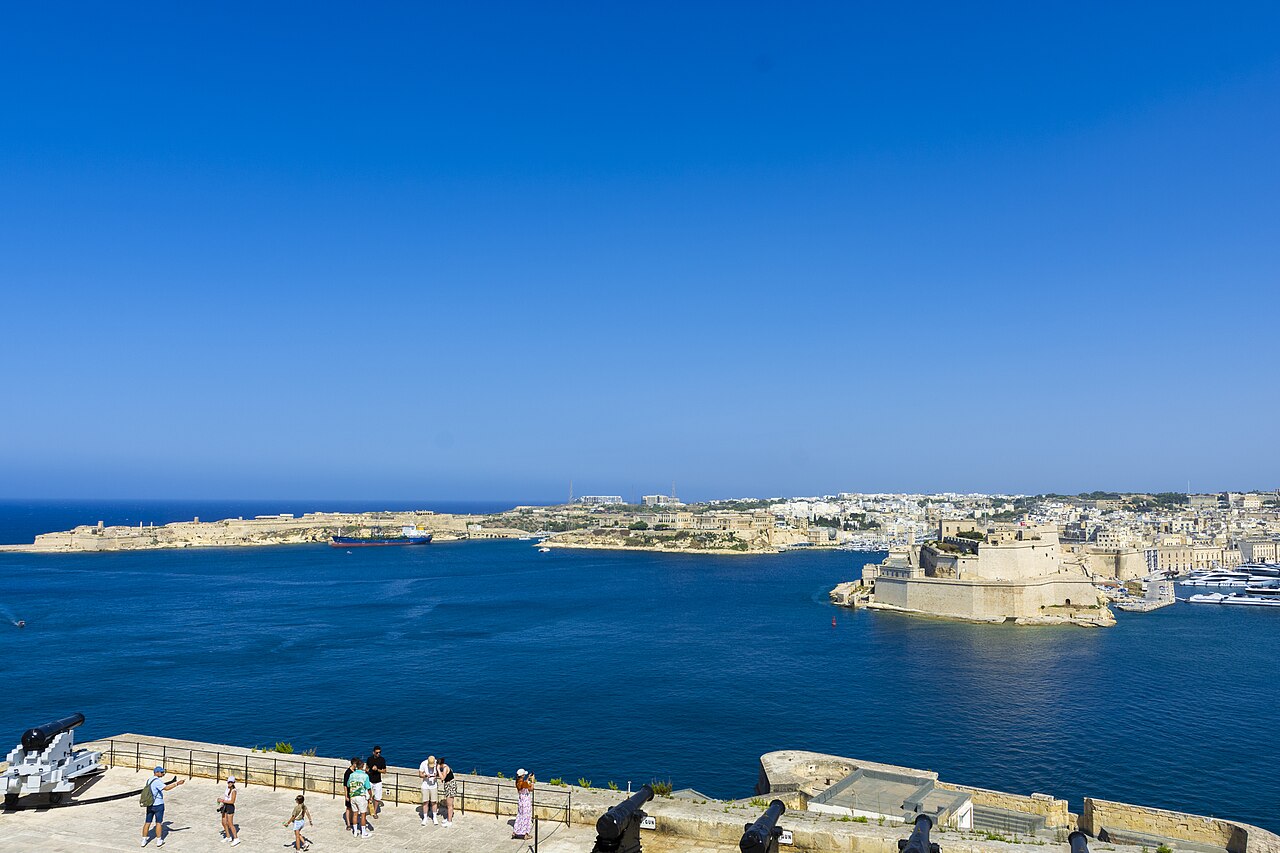
A terraced garden on the highest point of Valletta's walls, laid out on a bastion from the 1560s. It looks over the Grand Harbour and the Three Cities, and below it the guns of the Saluting Battery are usually fired every day at noon and 4 pm.
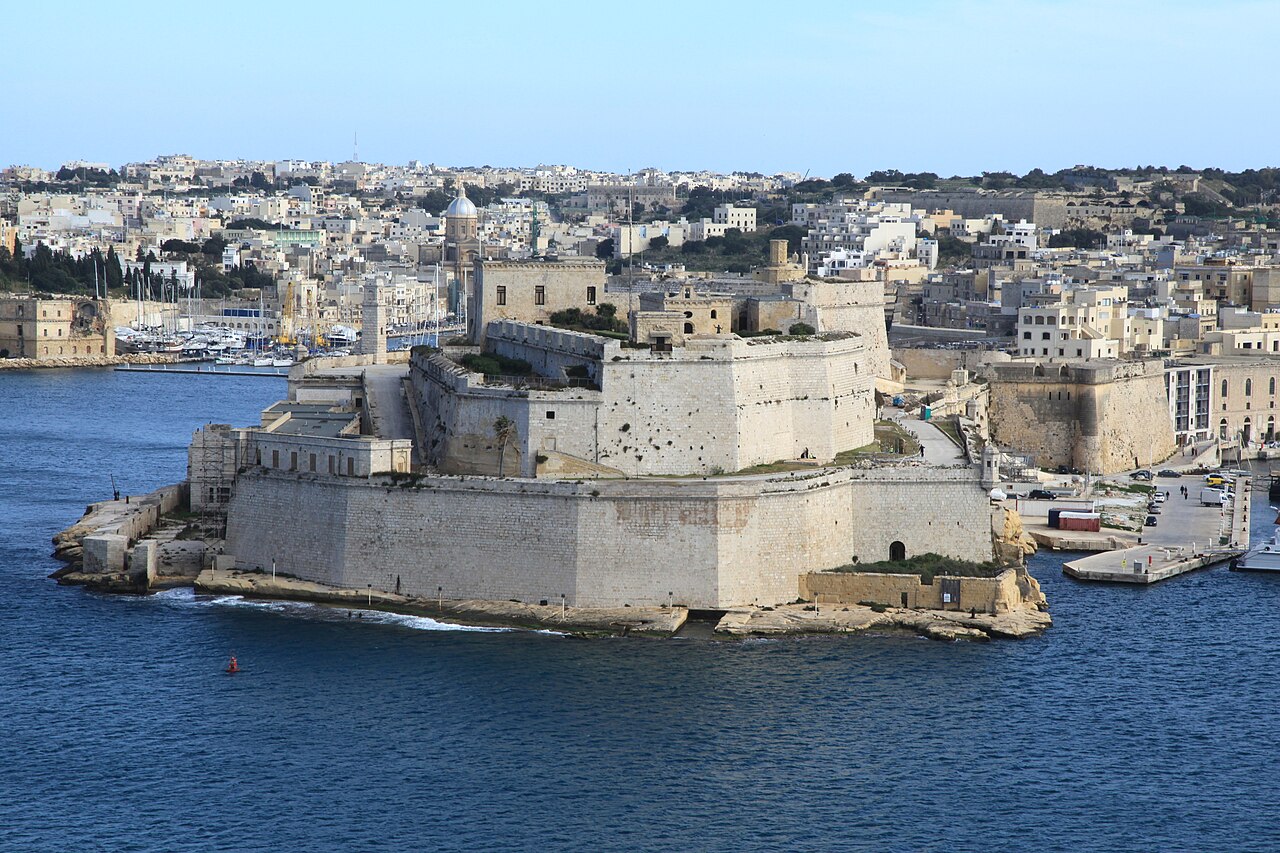
A fortress at the tip of Birgu in the middle of the Grand Harbour. A medieval 'castle by the sea' rebuilt by the knights, it was their headquarters during the Great Siege of 1565 and later a British naval base until 1979.
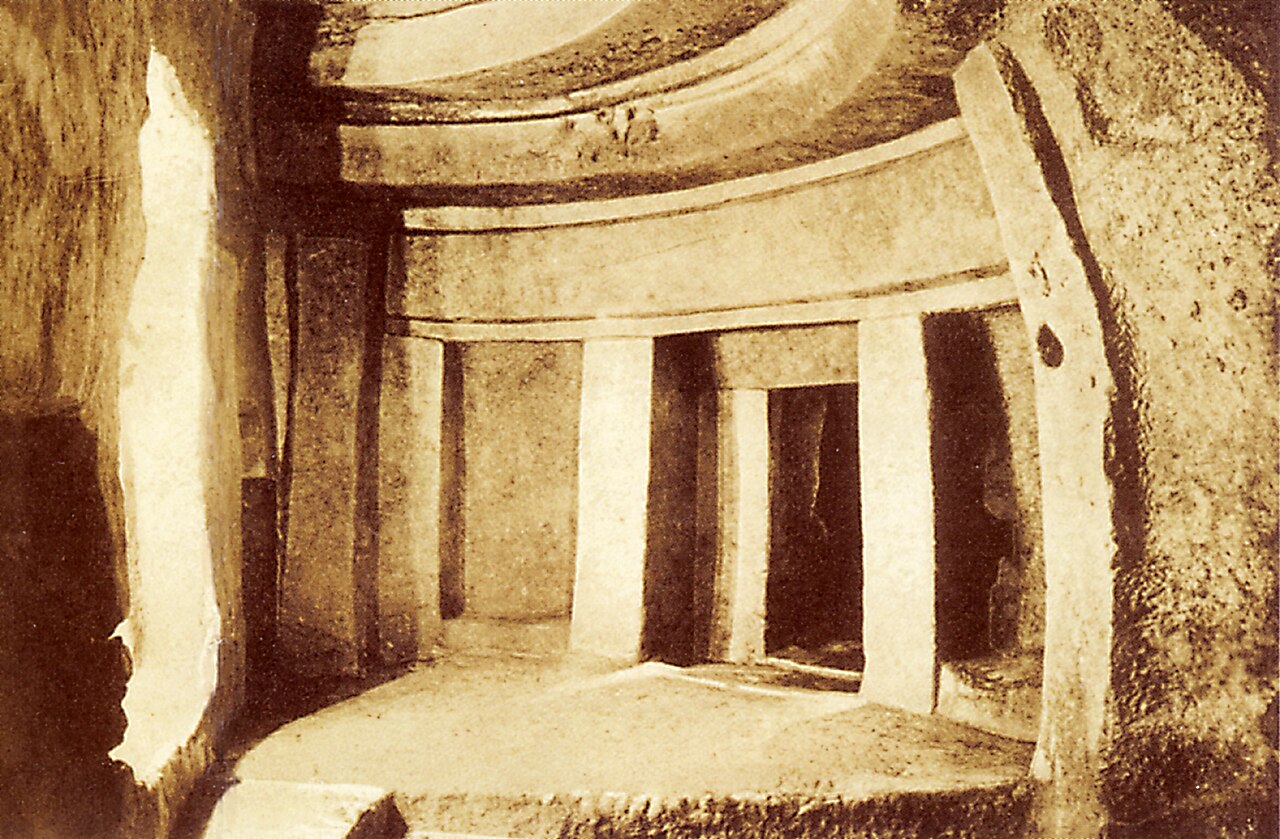
An underground complex of chambers cut into the rock in stages from about 4000 BC and used until about 2500 BC as a sanctuary and burial place. The remains of more than 7,000 people were found there. It was discovered by accident in 1902 by workers digging cisterns, and only a small number of visitors are allowed in each day.
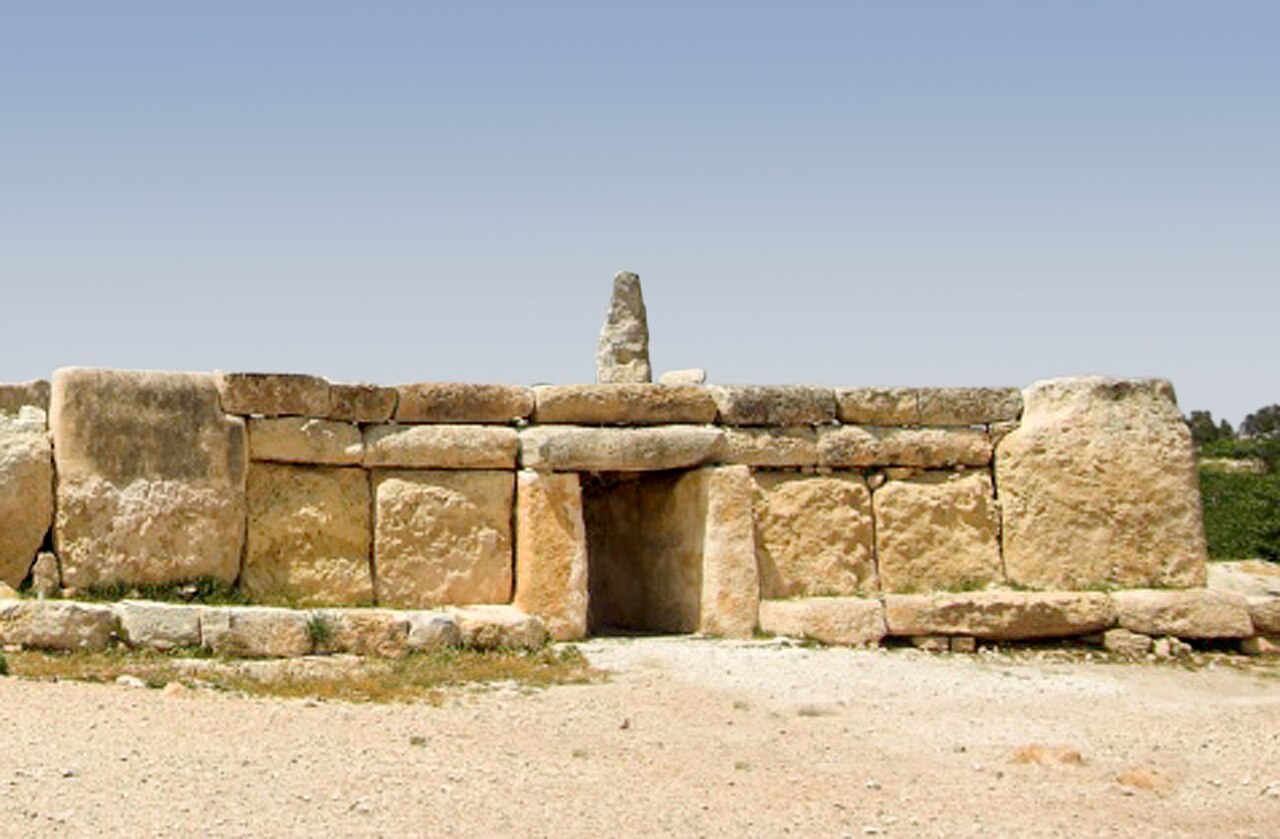
Two prehistoric temple complexes about 500 m apart on the southern cliffs, built from around 3600 BC. At the spring and autumn equinoxes, sunlight passes straight through the main doorway of Mnajdra's lower temple.
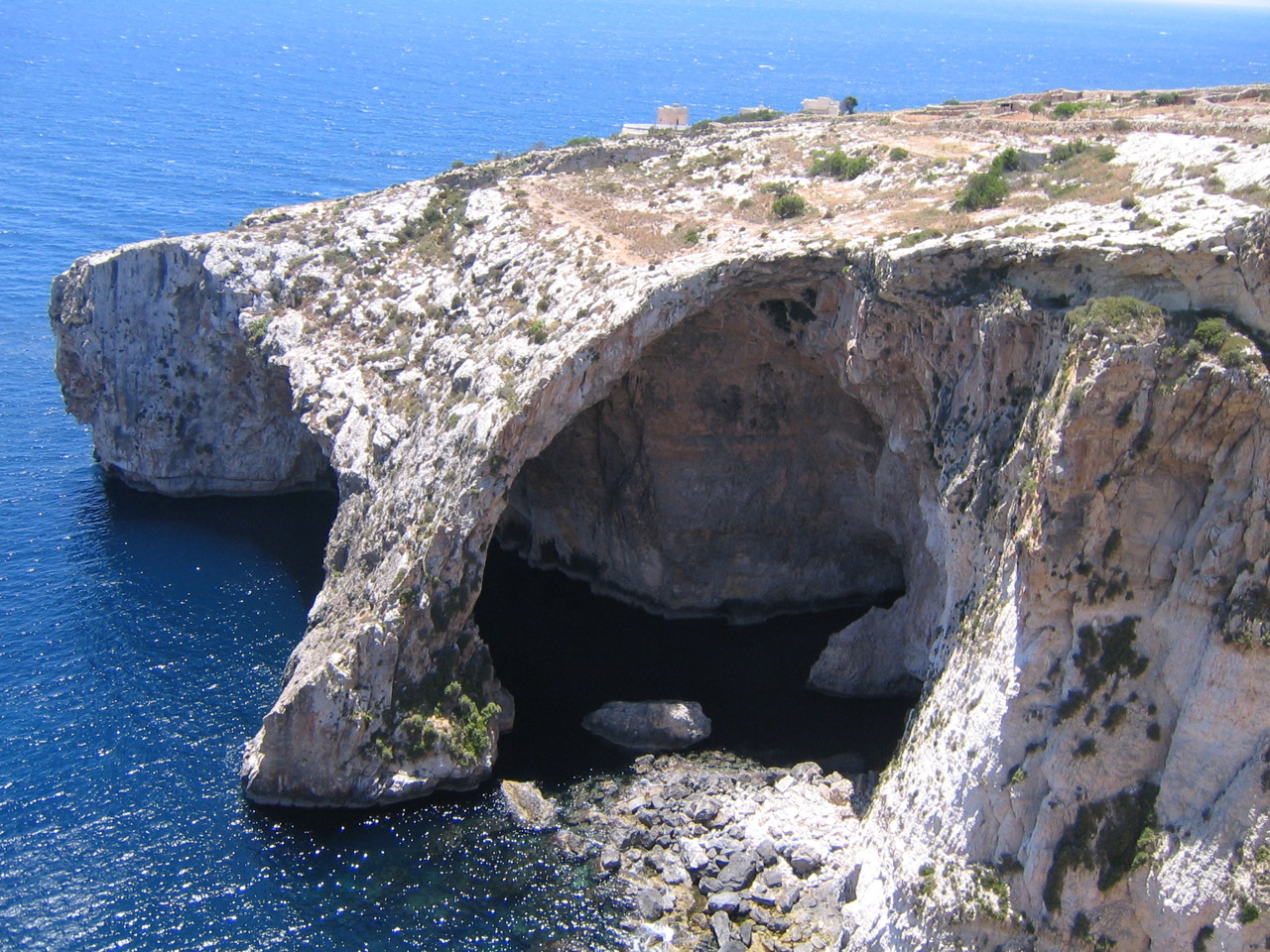
A group of sea caves and a great natural arch on Malta's south coast, where sunlight on the water paints the cave walls in shades of blue. Small boats leave from the harbour of Wied iż-Żurrieq, weather permitting.
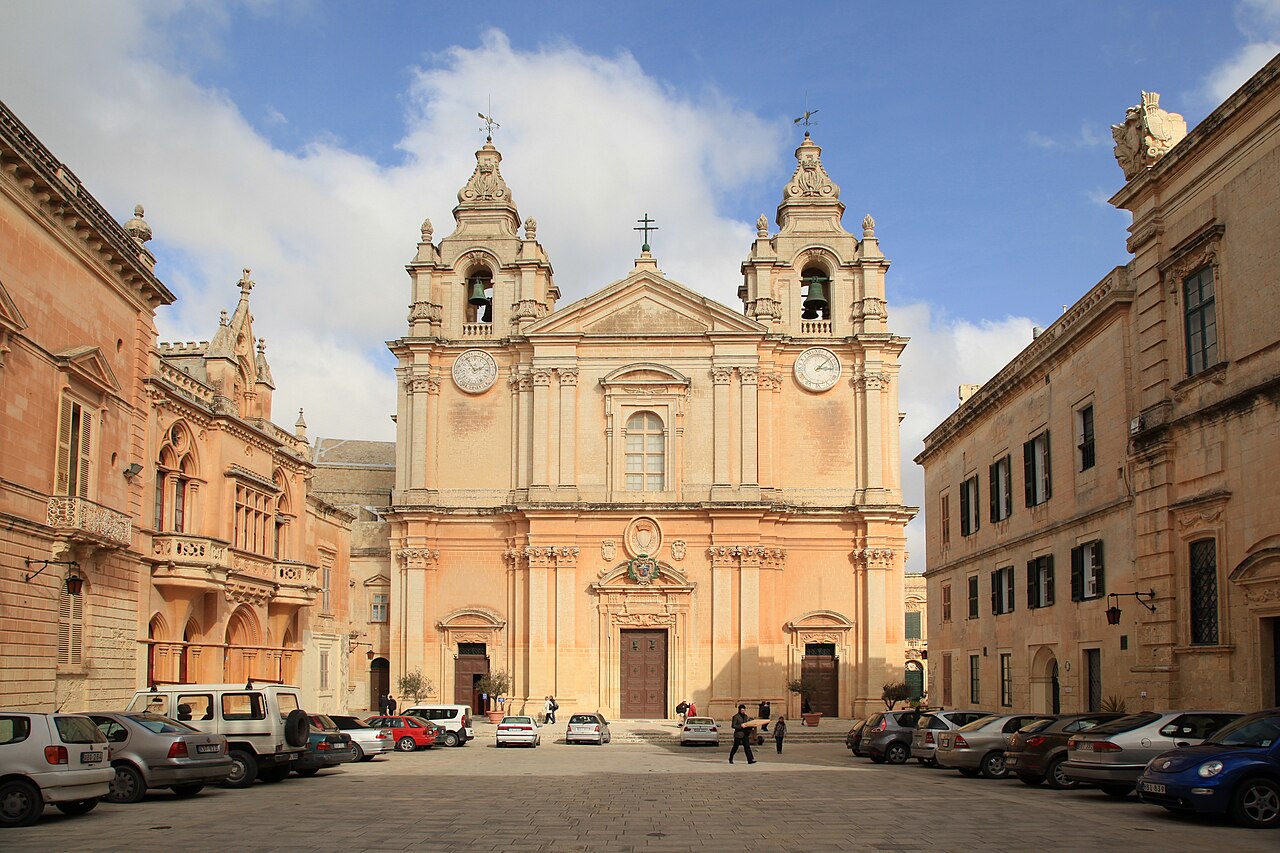
The cathedral of Malta's archbishop, rebuilt in Baroque style between 1696 and 1705 by the Maltese architect Lorenzo Gafà after an earthquake damaged the old church. Tradition says it stands where the Roman governor Publius met Saint Paul.
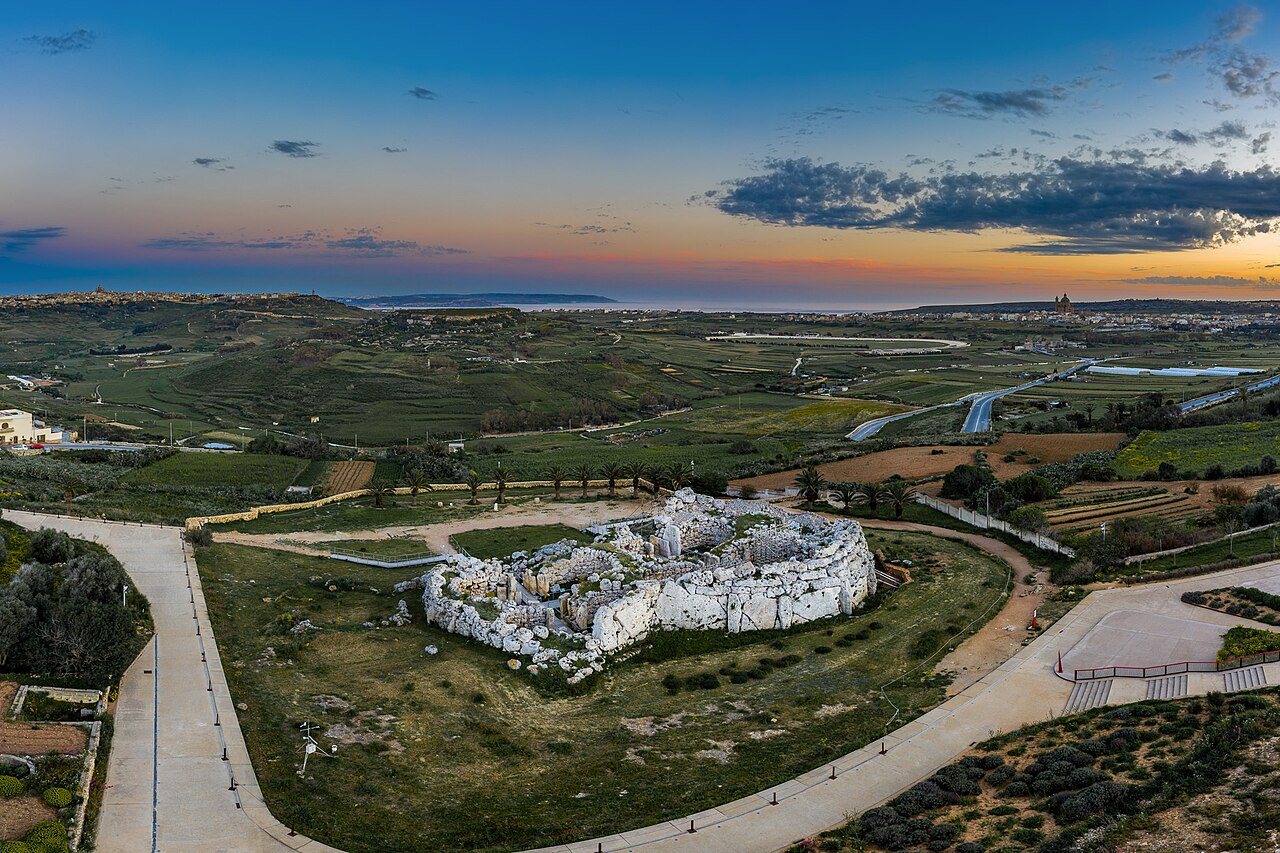
Two Neolithic temples at the edge of the Xagħra plateau on Gozo, built from around 3600 BC from huge limestone blocks. Their name means 'place of giants': local legend says a giantess built them.
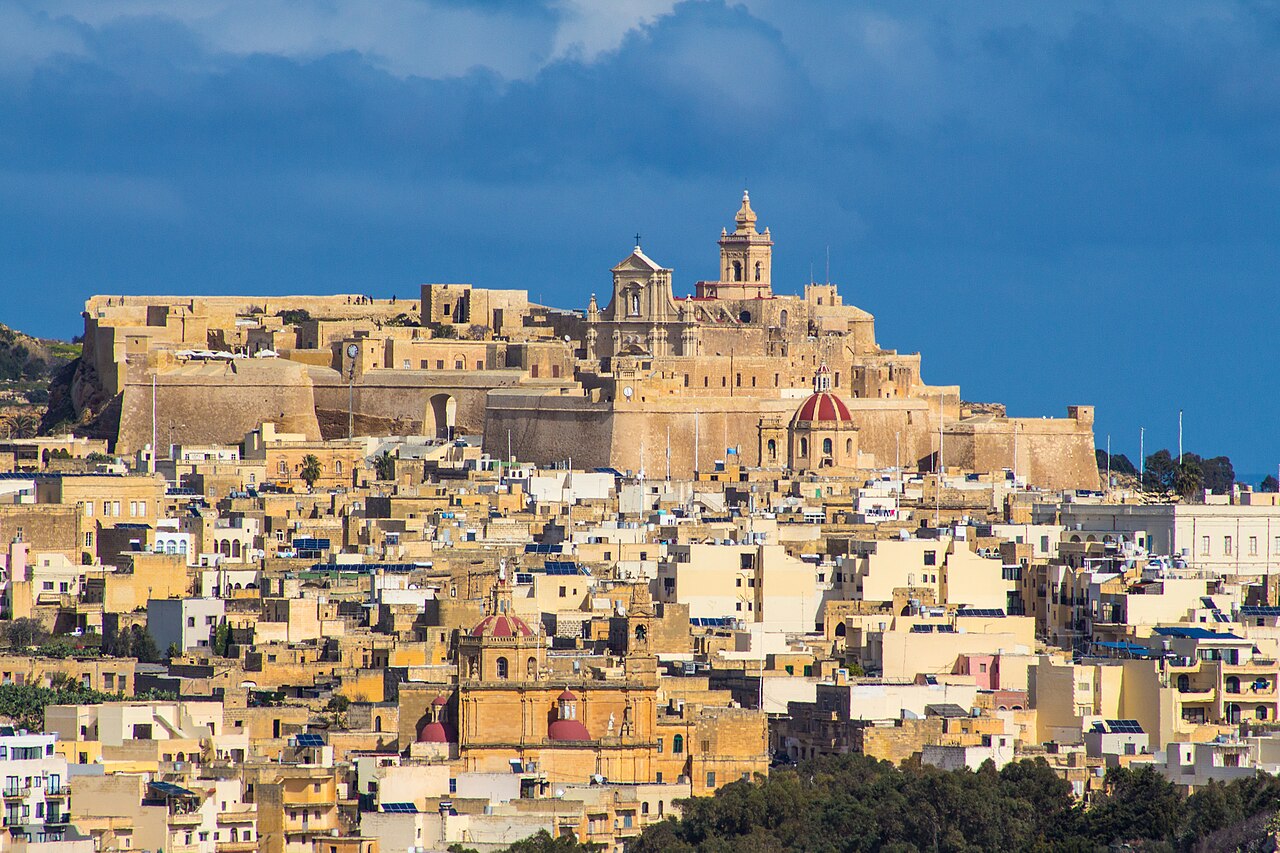
The walled citadel crowning the hill of Victoria, Gozo's refuge from raiders for centuries. Inside are the Cathedral of the Assumption, museums and old prison cells, and its walls give views over the whole island.
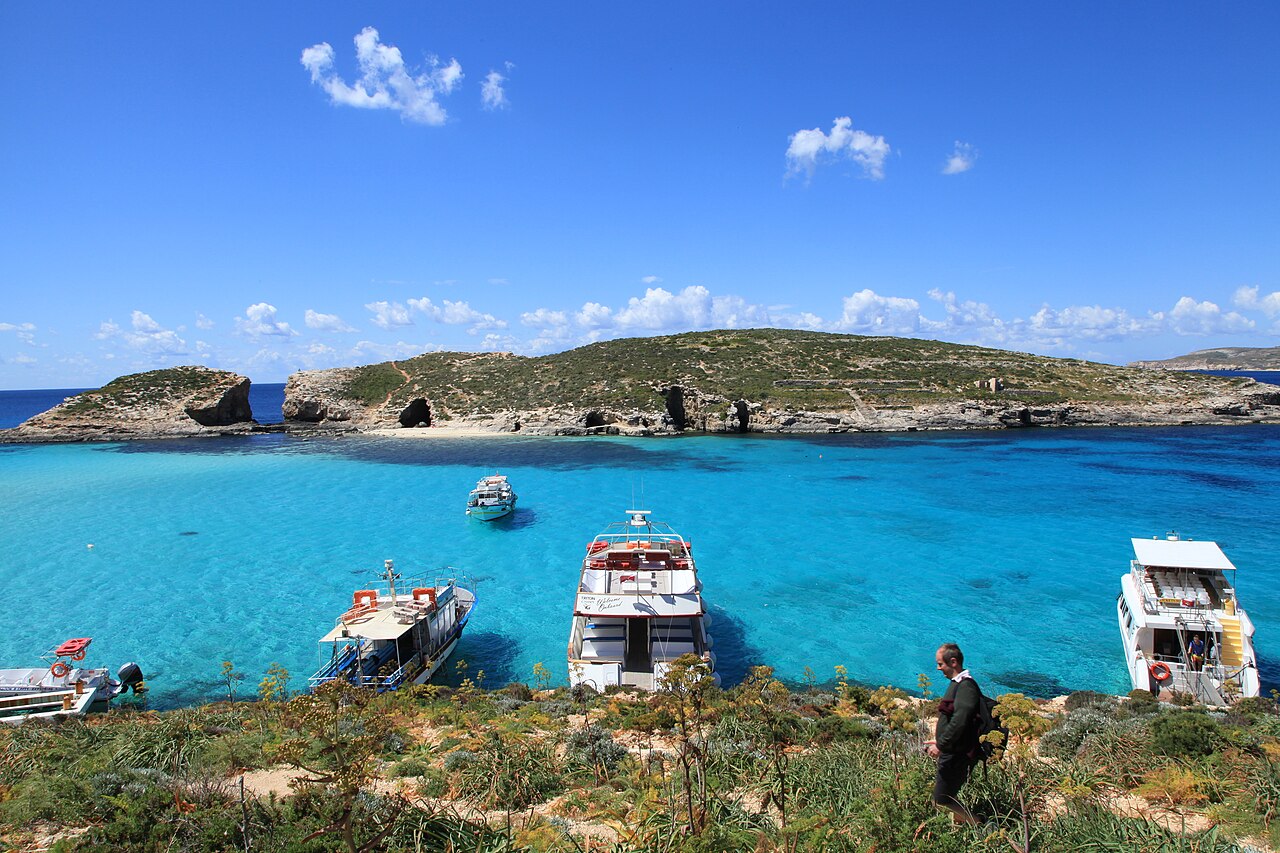
A shallow bay of clear turquoise water over white sand, between the islands of Comino and Cominotto. It is reached by boat, a short trip from Ċirkewwa near Mellieħa, and gets very crowded on summer days.
The flag of Malta carries a picture of the George Cross, awarded to the island in 1942, with the English words 'For Gallantry' on it.
As of 2026, Valletta is the smallest capital city in the European Union, covering only about 0.6 km².
Maltese is the only Semitic language that is an official language of the European Union, and it is written in the Latin alphabet, with letters such as ħ, ġ, ċ and ż.
The Ġgantija temples on Gozo, begun around 3600 BC, are older than the pyramids of Egypt.
Malta has no permanent rivers or natural lakes, and much of its drinking water comes from the sea through desalination plants.
When Emperor Charles V gave Malta to the Knights of St John in 1530, the yearly rent was one falcon.
On 9 April 1942 a German bomb pierced the dome of the Rotunda of Mosta and fell into the church during Mass, but it did not explode.
Popeye Village near Mellieħa was built as the film set for the 1980 movie 'Popeye' with Robin Williams, and is now a small theme park.
The Azure Window, a 28-metre natural stone arch on Gozo, was one of Malta's most famous sights until it collapsed into the sea in a storm on 8 March 2017.
In December 1989 the American and Soviet leaders, George H. W. Bush and Mikhail Gorbachev, met off Malta at the Malta Summit, where they spoke of an end to the Cold War.
Malta's brightly painted luzzu fishing boats usually have a pair of eyes on the bow, a custom that may go back to the ancient Phoenicians.
Bones of dwarf elephants and hippopotamuses that lived on the islands during the Ice Age have been found in the cave of Għar Dalam.
Malta has 14 public holidays a year, five of which are national days, including Victory Day on 8 September and Independence Day on 21 September.
The Maltese national anthem, 'L-Innu Malti', is written as a prayer to God. Its words are by the national poet Dun Karm Psaila.
Say ħ like a strong h, x like 'sh', ġ like 'j', ċ like 'ch', j like 'y'; għ is usually silent and q is a short catch in the throat. Pronunciation is written the way it sounds; the capital letters show where the stress goes.
Almost everyone in Malta also speaks English, but a few words of Maltese are always welcome.
Traffic in Malta drives on the left, as in Britain. Roads are narrow and busy, so many visitors use the buses, which run across Malta and Gozo.
Malta Public Transport sells Explore cards for visitors, valid for 4 or 7 days. As of 2026, a 7-day card costs 25 to 27 euros, depending on which routes it covers. Plan trips with the Tallinja app, which is more reliable than paper timetables.
On the car ferry between Ċirkewwa on Malta and Mġarr on Gozo, no ticket is needed for the trip out from Malta. You pay for the round trip at Mġarr on the way back, or buy it online in advance.
Dress respectfully when visiting churches: cover shoulders and knees, and men should take off hats. Some popular churches lend shawls to visitors.
The official emergency number for police, fire and ambulance is 112.
Crime against tourists is rare, but pickpockets work on crowded summer buses, especially between Valletta and St Julian's.
In summer almost every town and village celebrates its patron saint with a week-long festa: decorated streets, brass bands, processions and fireworks. Check local listings and go on the Saturday evening, usually the busiest night.
Bird hunting is allowed in spring and autumn, often from before sunrise. Take care when walking in the countryside in those seasons, as hunting areas are rarely marked.
10 friendly questions about what you just read. No timer, and the ones you miss come back later for review.
Want a short note when a new country is ready? Get it by email (once a day at most, you can stop any time).
One short notification at 9 tomorrow morning with the new country and puzzles, then each morning. Turn it off any time.
On an iPhone or iPad, first add World Stroll to your home screen (Share, then Add to Home Screen), then open it from there.
Memories, a dish to cook, a place you want to see. Only you can see this. It saves by itself.
Your notes are kept in My collection.