 Montenegro
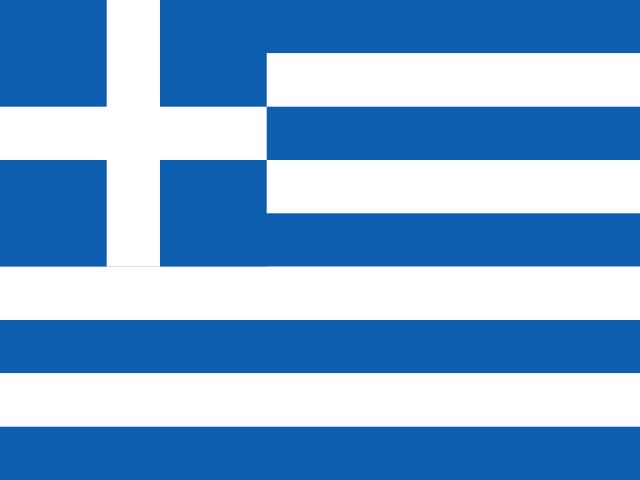 Greece
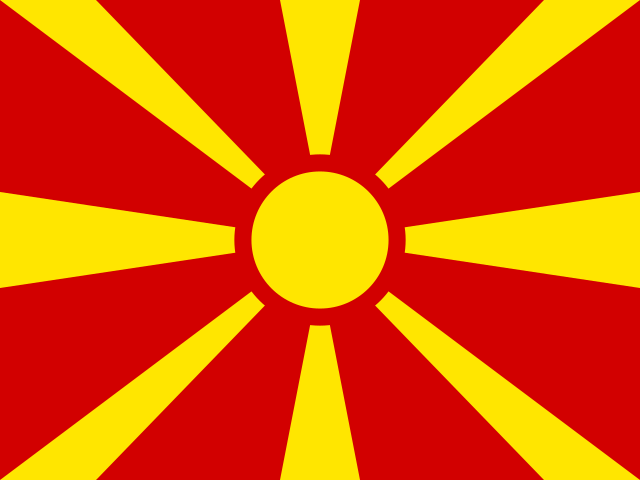 North Macedonia
Greeks found Epidamnos
Greek colonists from Corinth and Corcyra (Corfu), working with the local Illyrian Taulantii, founded the port of Epidamnos. It later became Roman Dyrrachium and is today's Durrës.
A free large-print PDF. Choose what goes in: facts, map, history, dishes and recipes, phrases, fun facts, a quiz with or without answers. Made for clubs, care homes, libraries and family afternoons.
Albania lies in the south-west of the Balkan Peninsula, facing Italy across the Adriatic and Ionian seas. It is only about 148 km wide from east to west and around 340 km long from north to south, yet it packs in the snowy Albanian Alps, deep river valleys, the great lakes of Shkodër, Ohrid and Prespa, flat coastal plains and the rocky Albanian Riviera in the south-west.
Illyrian tribes lived here in ancient times, Greek colonists founded ports such as Epidamnos, today's Durrës, and Apollonia, and the land later became part of the Roman and Byzantine empires. In the 15th century Skanderbeg led a long resistance against the Ottoman Empire, which then ruled Albania for more than four centuries. Albania declared independence in Vlorë on 28 November 1912.
The 20th century brought a king, occupation by Italy and Germany, and more than four decades of strict and isolated communist rule under Enver Hoxha. Since 1991 Albania has been a parliamentary republic. It joined NATO in 2009 and, as of September 2026, is a candidate for membership of the European Union, negotiating since 2022. At the 2023 census it had about 2.4 million people.
Albania's story runs from Illyrian kingdoms and Greek colonies on the coast, through Rome, Byzantium and the hero Skanderbeg, to four centuries of Ottoman rule, independence in 1912 and a hard road from communism to democracy.
Greek colonists from Corinth and Corcyra (Corfu), working with the local Illyrian Taulantii, founded the port of Epidamnos. It later became Roman Dyrrachium and is today's Durrës.
Gentius, the last known Illyrian king, went to war with Rome in 168 BC. He was defeated, and by 167 BC the Romans had conquered the region and divided it into three parts.
Progon of Kruja founded the Principality of Arbanon, with its centre at Krujë. It is seen as the first sketch of an Albanian state, and lasted into the 13th century.
In March 1444 Skanderbeg, who had left the Ottoman army and taken Krujë the year before, united Albanian noble families in the League of Lezhë against the Ottoman Empire.
Skanderbeg died on 17 January 1468 after about 25 years of resistance. Krujë fell to the Ottomans ten years later, and Albania remained under Ottoman rule until 1912.
On 10 June 1878 Albanian leaders met in Prizren to defend Albanian-populated lands that treaties were about to give to neighbouring states. The league later worked for Albanian self-rule.
Albanian scholars meeting in Manastir, today's Bitola in North Macedonia, agreed on a Latin alphabet for Albanian. It became the basis of the 36-letter alphabet used today.
On 28 November 1912 an assembly led by Ismail Qemali declared Albania independent from the Ottoman Empire in the port city of Vlorë, and the flag with the black eagle was raised.
On 8 February 1920 the Congress of Lushnjë proclaimed Tirana the temporary capital of Albania. Until then the small Ottoman town had played only a minor role. It has been the capital ever since.
Ahmet Zogu, who had been prime minister and then president, turned Albania into a monarchy in 1928 and took the title King Zog I.
On 7 April 1939 Mussolini's troops landed in all of Albania's ports at once. King Zog went into exile, never to return, and Italy made Albania a protectorate.
In 1944 partisan forces led by communists drove out the German army, which had replaced the Italians in 1943. Enver Hoxha led Albania from 1944 until his death in 1985.
In 1967 the regime launched a campaign against all religions, closed mosques and churches and declared Albania an atheist state. Worship was allowed again only in the early 1990s.
After student protests and the fall of communism across Eastern Europe, Albania held its first multi-party elections on 31 March 1991. The Republic of Albania was proclaimed on 29 April 1991.
Huge pyramid investment schemes, which had drawn in a large part of the population, collapsed in late 1996 and early 1997. Protests turned into armed unrest in 1997, and in April an Italian-led international force, Operation Alba, arrived to help.
Albania became a full member of NATO on 1 April 2009 and applied to join the European Union later the same month. It became an official EU candidate in 2014.
Albanian food is Mediterranean at heart, built on olive oil, fresh vegetables, herbs, yogurt, cheese and meat, with strong Ottoman and Italian touches. The north cooks with maize, beans and cabbage, the centre is known for baked dishes, and the south for olive oil, dairy and seafood. Bread is on every table, and lunch is traditionally the main meal of the day: often a slow-cooked meat and vegetable dish with a fresh salad of tomatoes, cucumbers, peppers, onions and olives, followed by fruit.
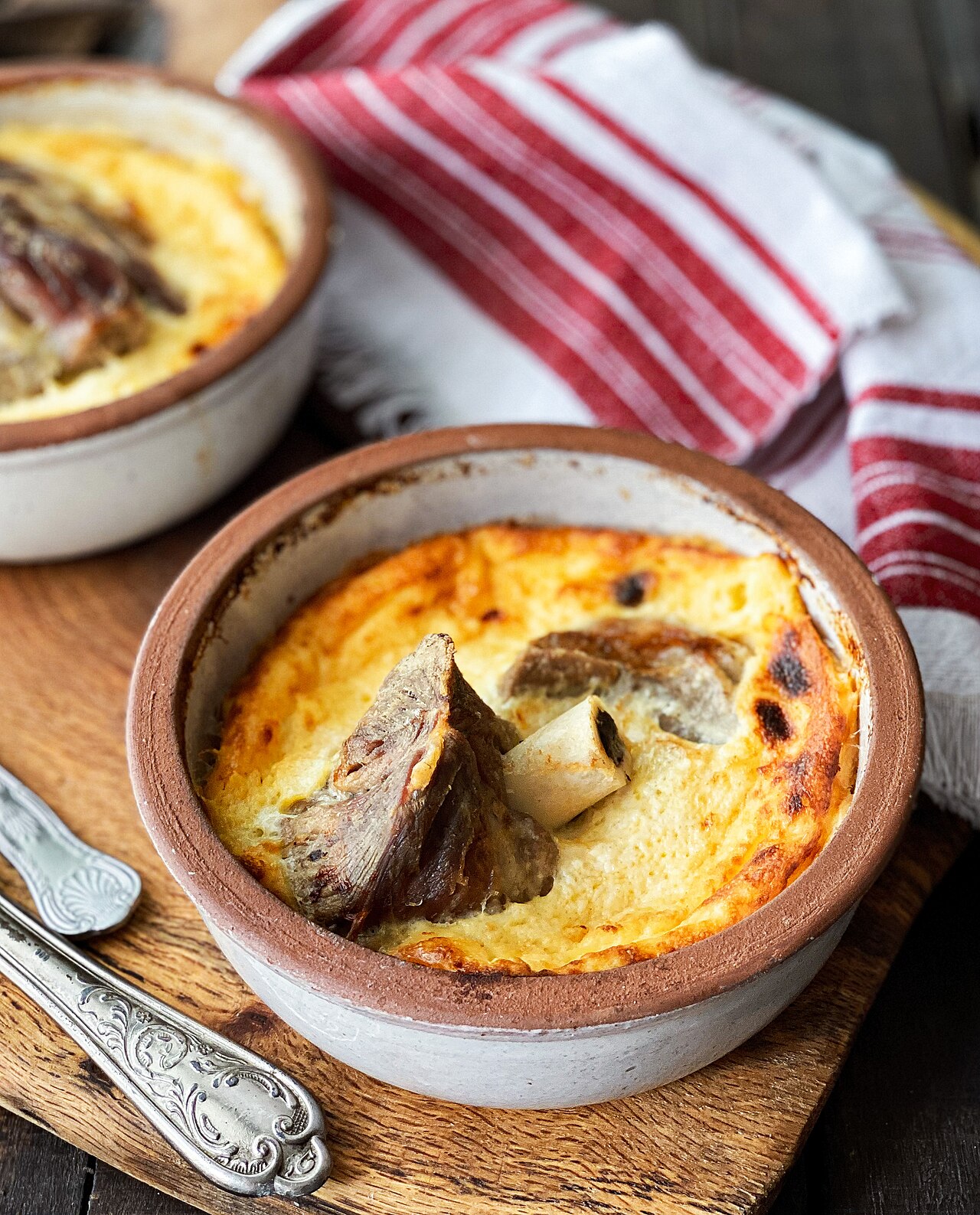
Pieces of lamb and a little rice baked under a thick layer of yogurt beaten with eggs, butter and flour, which sets into a golden, slightly tangy crust. It is seen as one of Albania's national dishes.
In Turkey, Greece and North Macedonia the dish is often called Elbasan tava, after the city it is thought to come from.
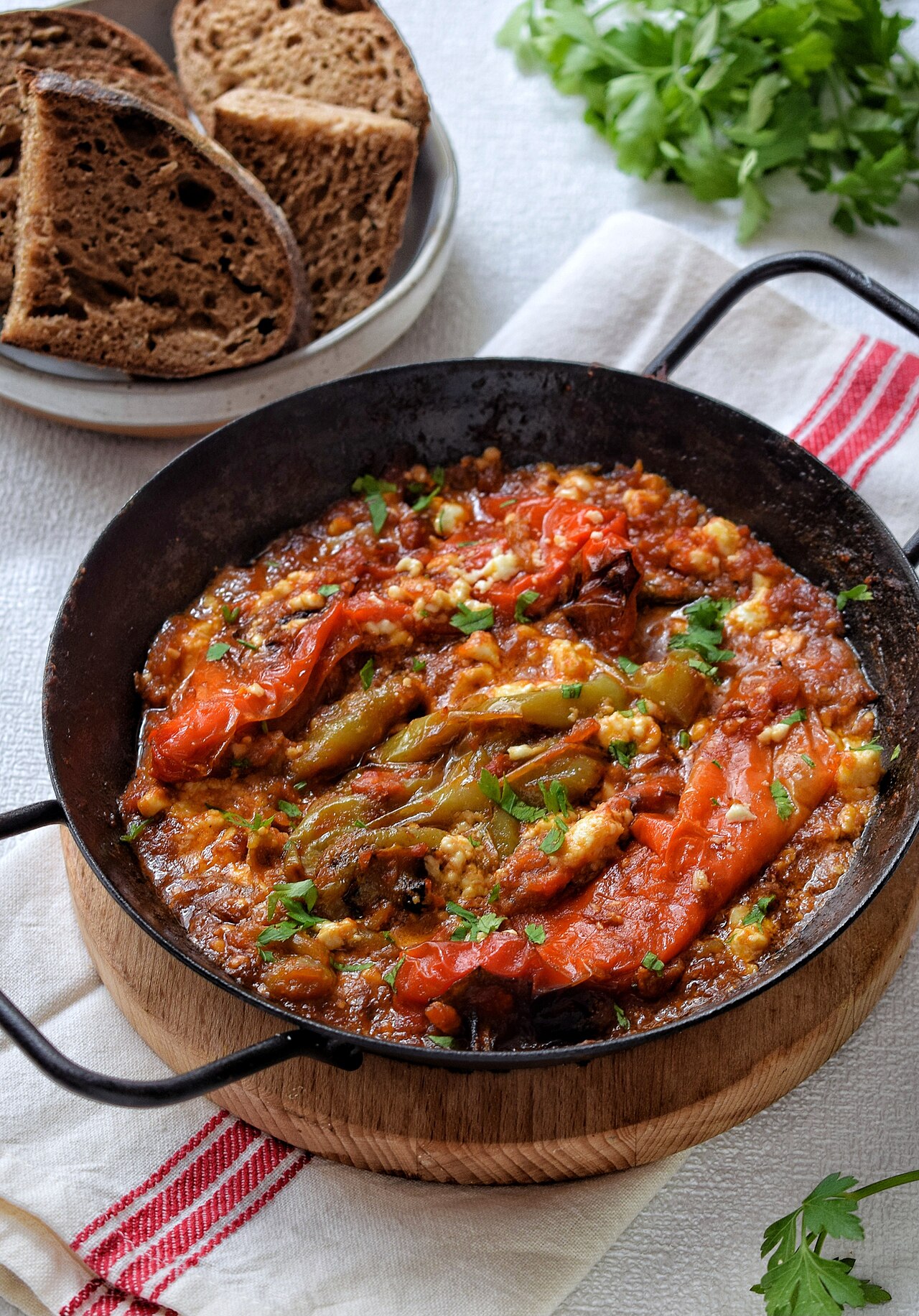
A thick, creamy bake of peppers, tomatoes, onions and garlic cooked in olive oil with gjizë, a salted Albanian curd cheese. It is eaten hot with bread, as a main dish or on the side of grilled meat.
A Tirana version is made with liver instead of cheese, and is known as fërgesë of Tirana.
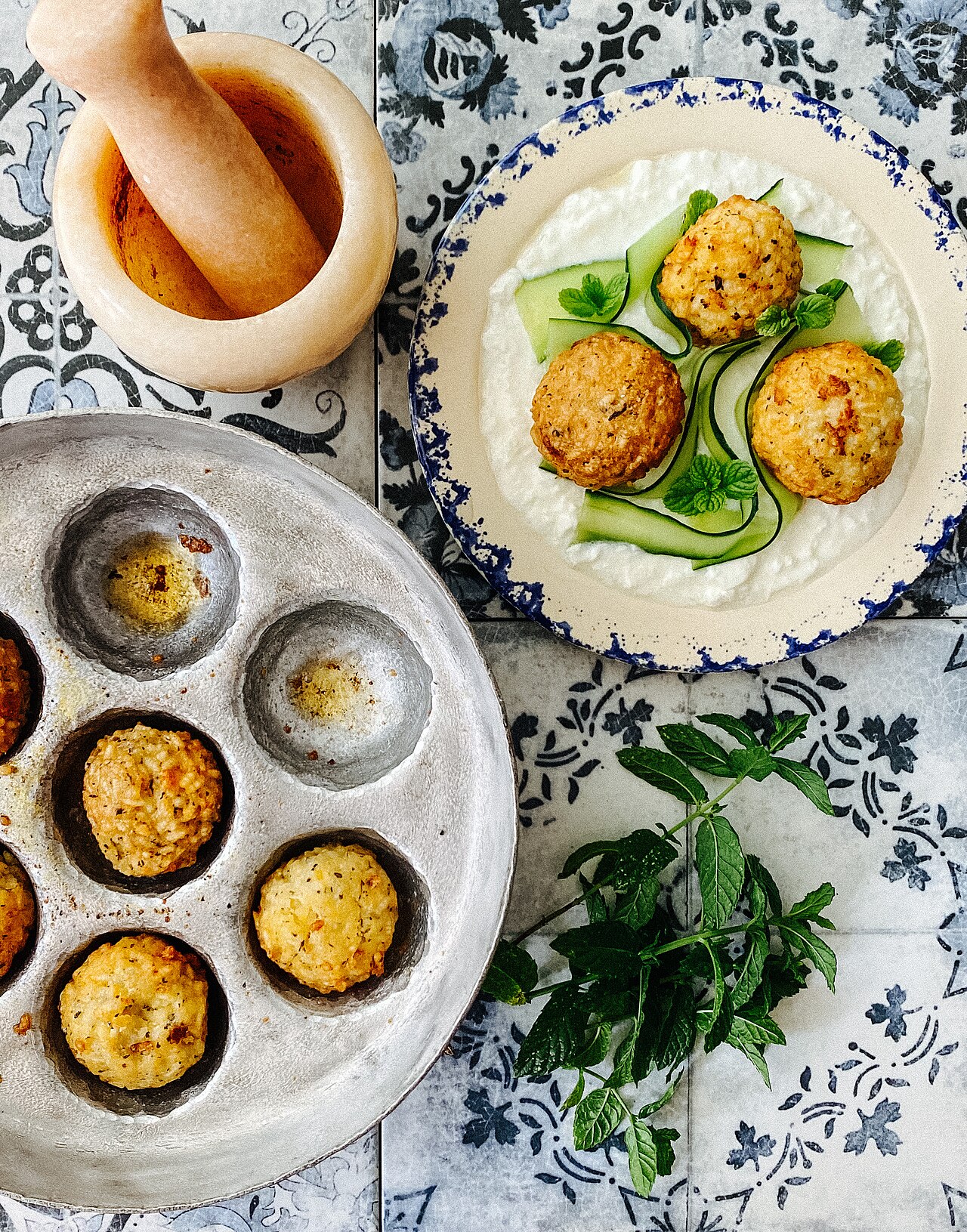
Small round patties of cooked rice, egg and dried mint, fried until golden and crisp. They are served warm with white cheese or yogurt, as a starter or light meal.
In Gjirokastër qifqi are fried in a special pan with four to seven round hollows. One story says they began as a way to use up leftover wedding pilaf.
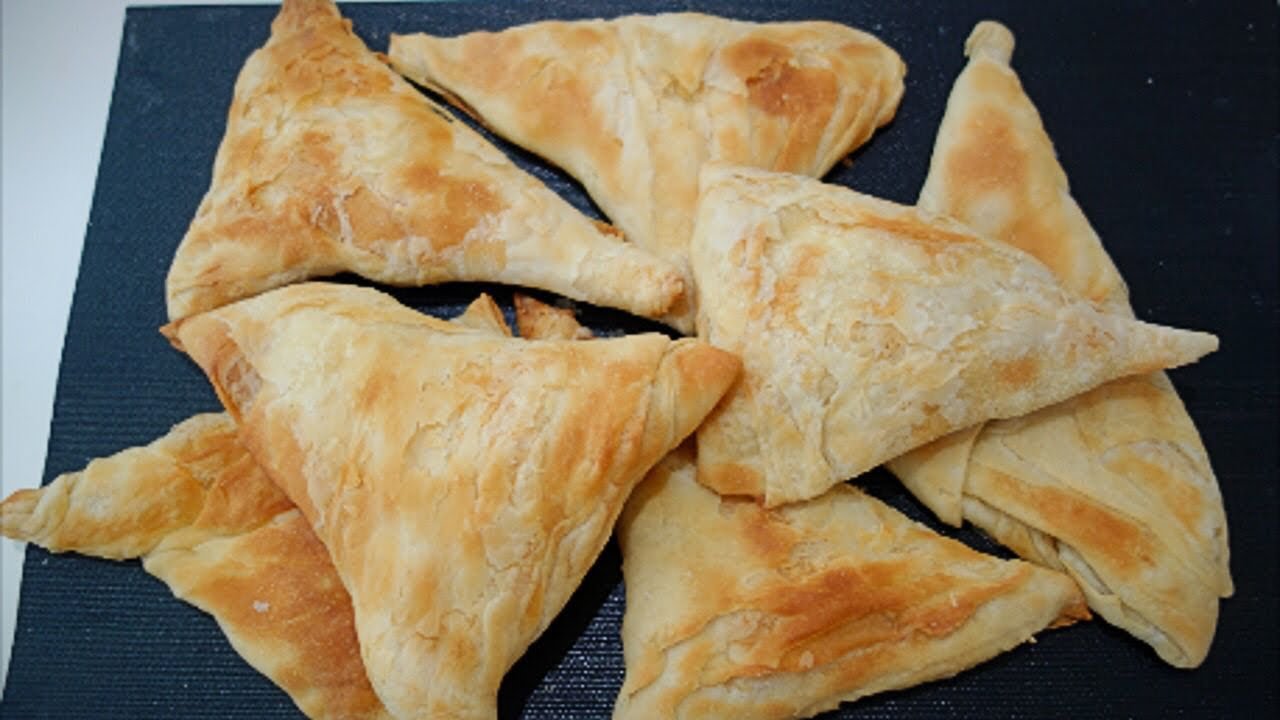
A pie of thin layers of pastry filled with spinach, cheese, meat, onion or tomato. There is the large home-made byrek baked in a round tray, and the triangle byrek sold as street food, often eaten with a glass of yogurt.
Byrek belongs to a family of pastries found from Turkey across the Balkans, known in many countries as börek or burek.
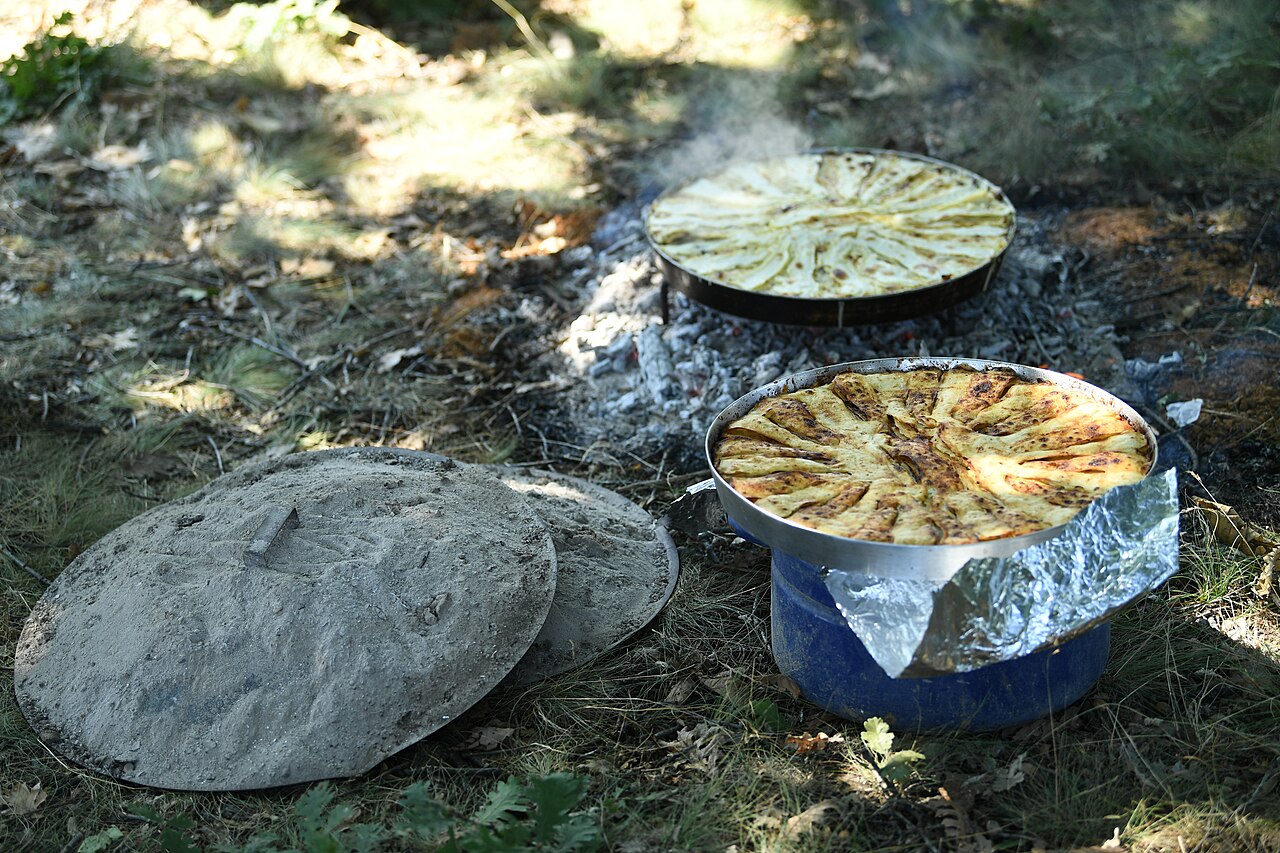
A savoury dish of many thin, crêpe-like layers of batter, each brushed with cream and baked one after another under a hot metal lid. It is served with sour cream, honey, cheese or pickles.
Making flija can take up to four hours, and the finished dish is shaped like the sun, with rays.
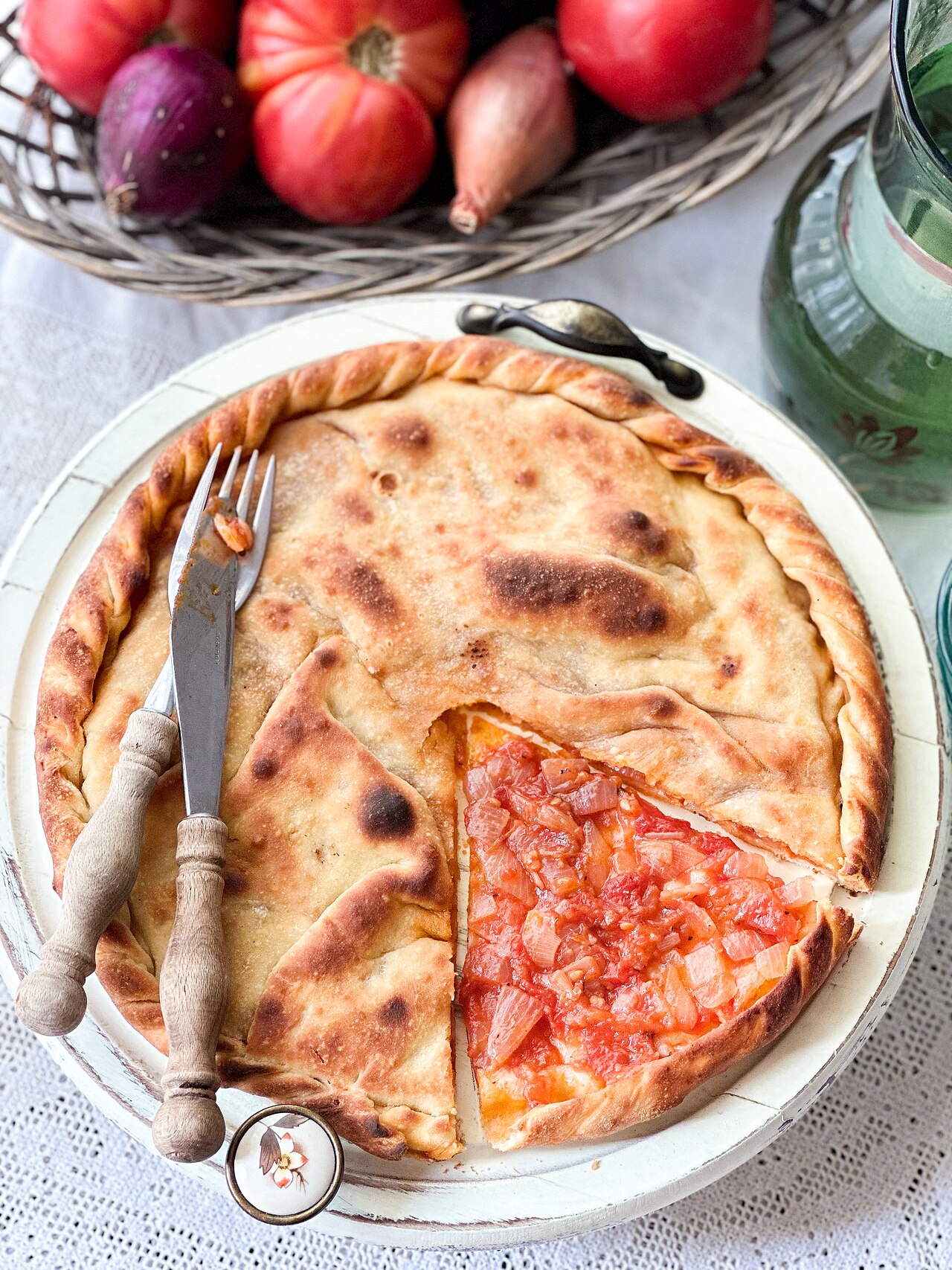
A thin-layered pie baked on embers under a metal lid, with fillings such as leek and curd cheese, tomato and onion, or greens. Korçë is especially proud of its lakror.
The name comes from the Albanian word lakër, meaning cabbage or leafy greens, probably the original filling.
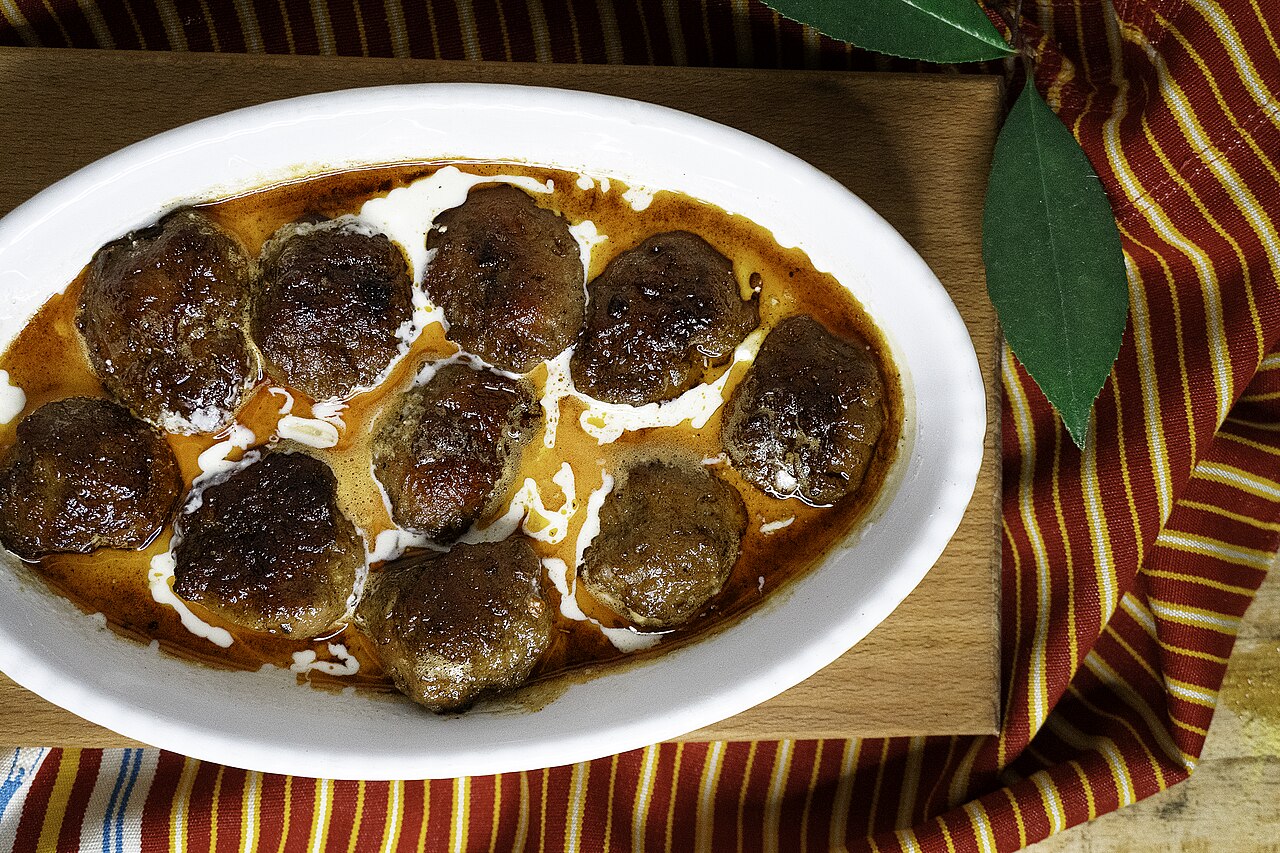
Small meatballs or patties of minced meat with herbs and spices, fried or grilled and often served with tomato sauce, beans or salad.
Albanian towns have small shops called qofteri, which serve little more than qofte and beer.
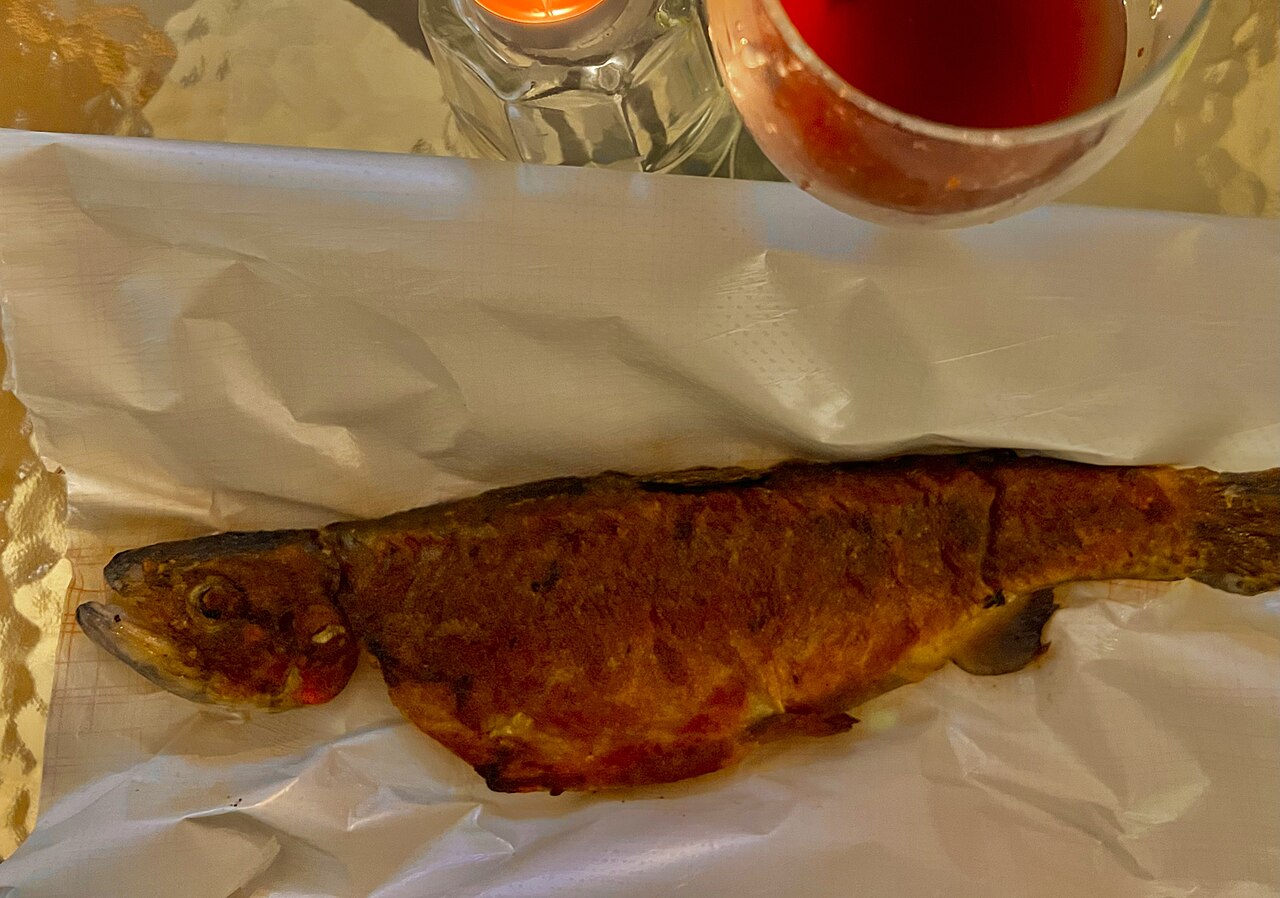
A trout native only to Lake Ohrid and the rivers that flow in and out of it. It has become rare from overfishing. Like other fresh fish in Albania, it is usually grilled or fried whole and served simply with a squeeze of lemon.
Lake Ohrid is one of the oldest lakes in the world and is home to more than 200 species found nowhere else.
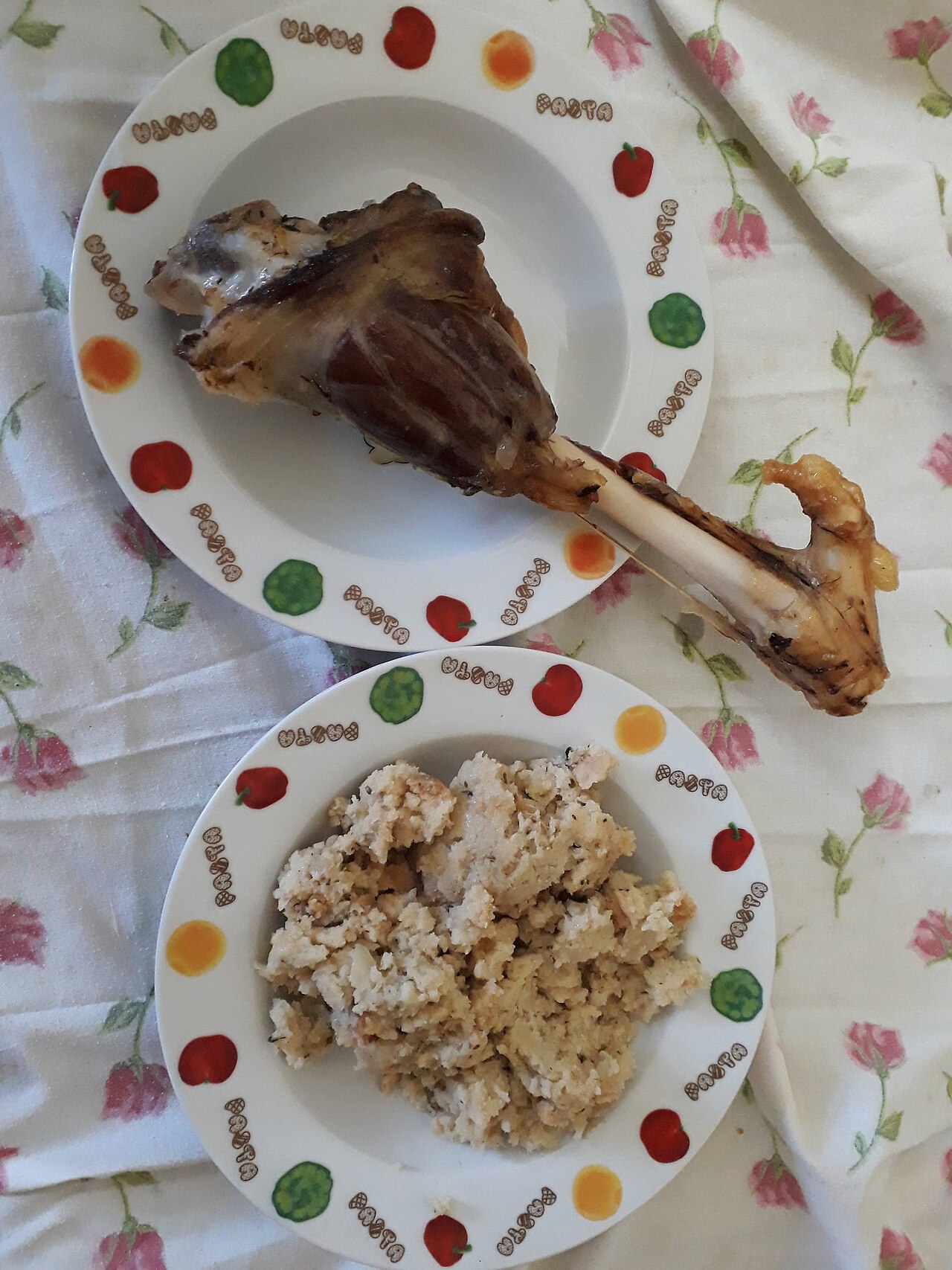
A turkey first boiled and then roasted, served with përshesh: pieces of bread baked in the turkey broth with mint and other seasonings.
It is a common New Year's dish in many Albanian families.
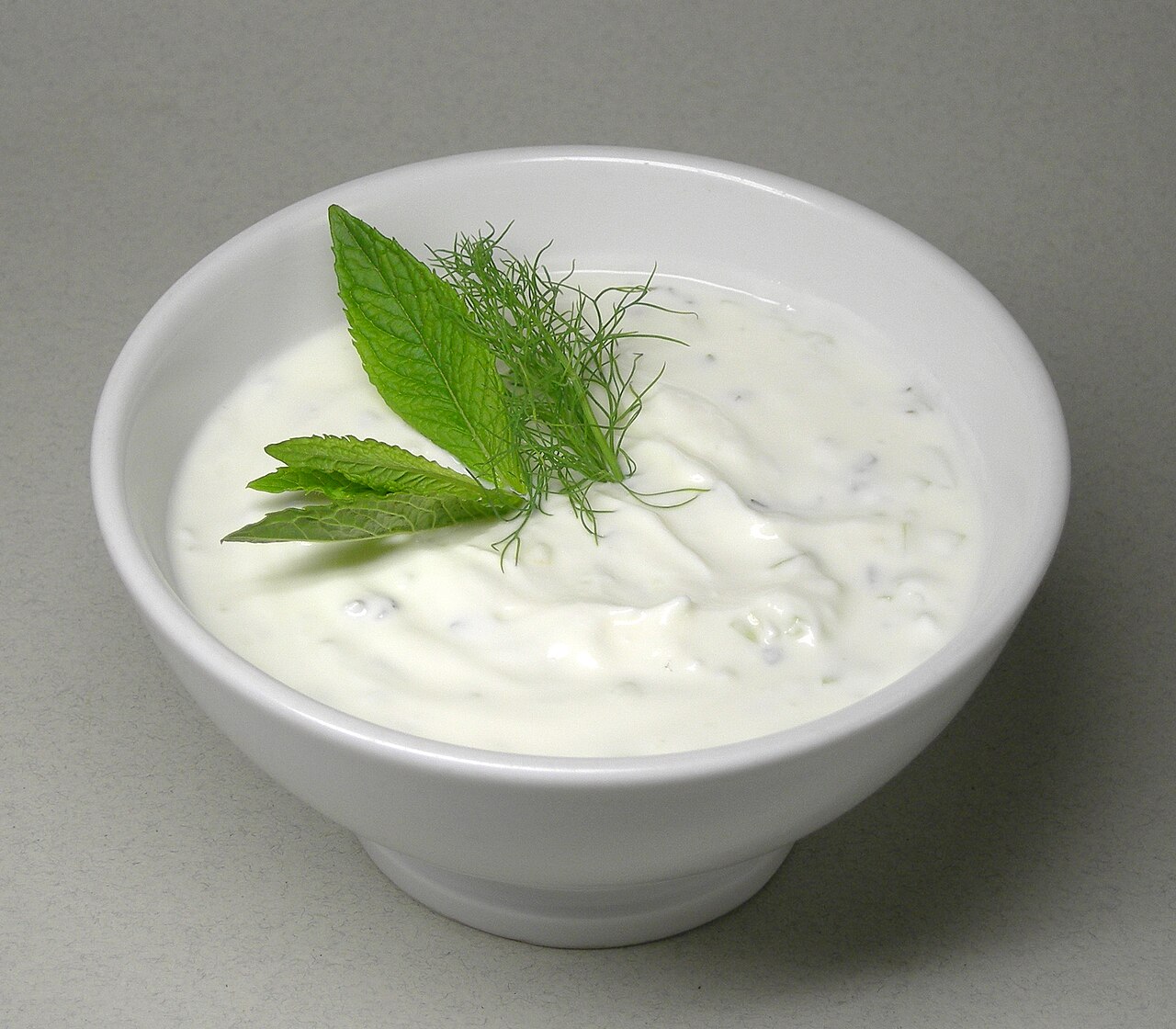
A cold mix of yogurt, cucumber, garlic, olive oil and salt, served on hot summer days with fried or grilled vegetables and seafood.
Similar yogurt and cucumber dishes are known as tzatziki in Greece and cacık in Turkey.
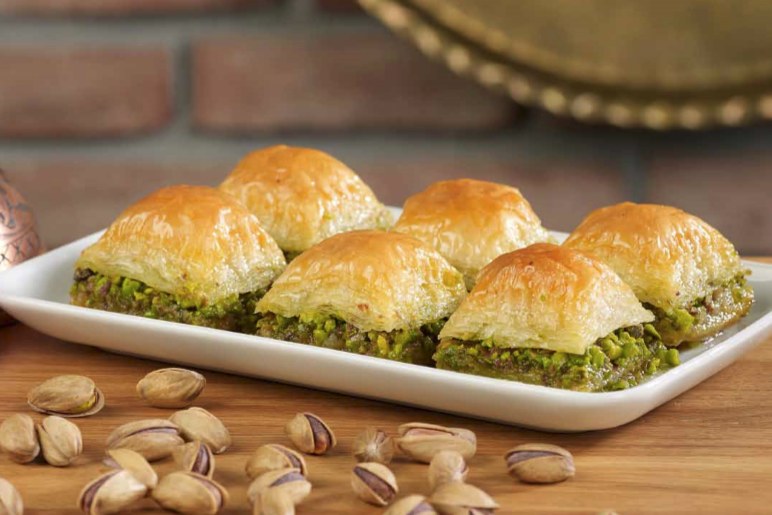
Thin layers of pastry filled with walnuts or hazelnuts, baked on large trays, cut into diamonds and soaked in syrup.
In Albania baklava is made for Muslim, Catholic and Orthodox holidays alike.
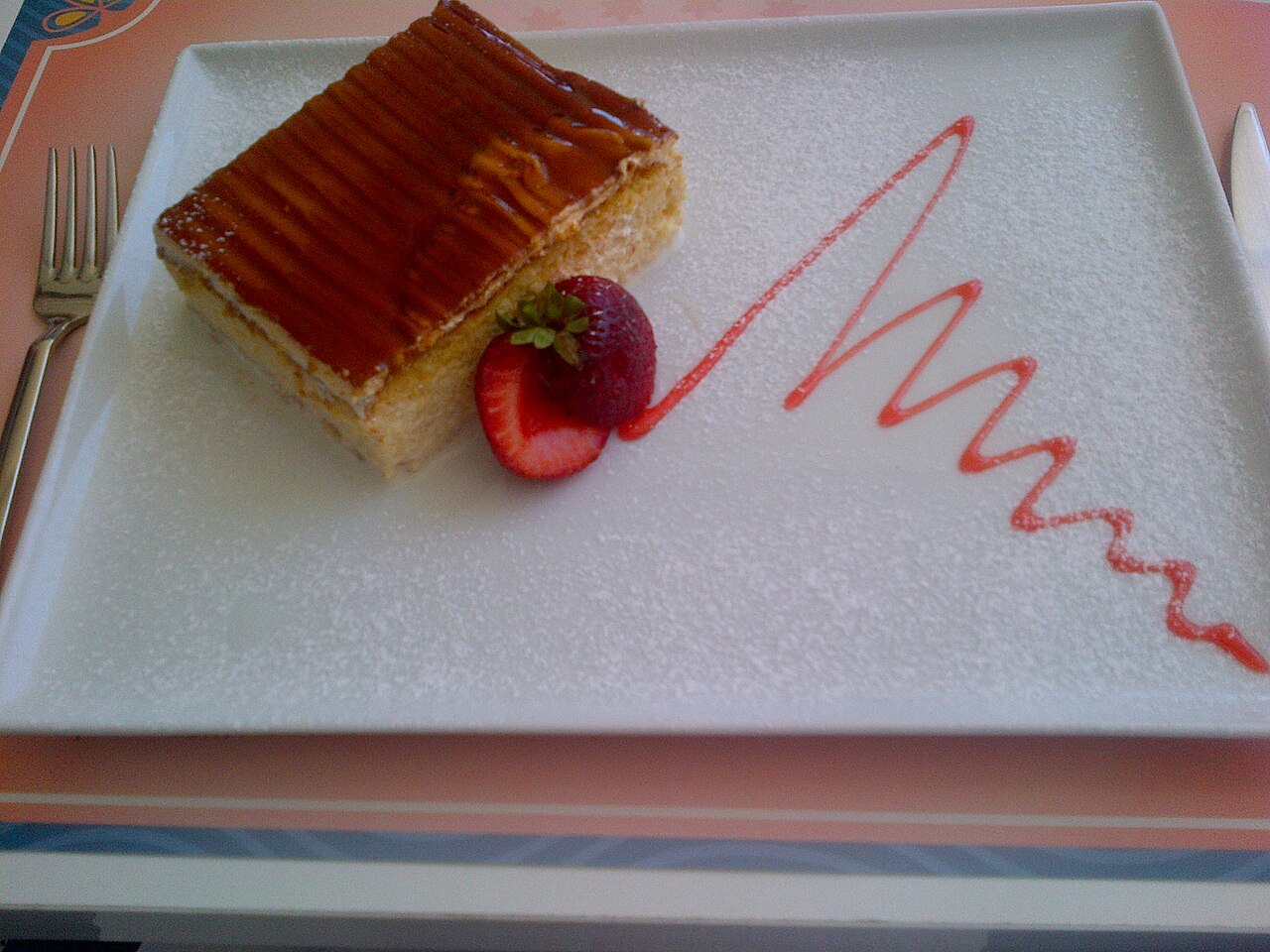
A light sponge cake soaked in a mixture of three kinds of milk and usually topped with caramel. It is soft and moist, almost like a pudding.
It is based on the Latin American tres leches cake. One popular story says Latin American soap operas, much watched in Albania, inspired local cooks to make it.
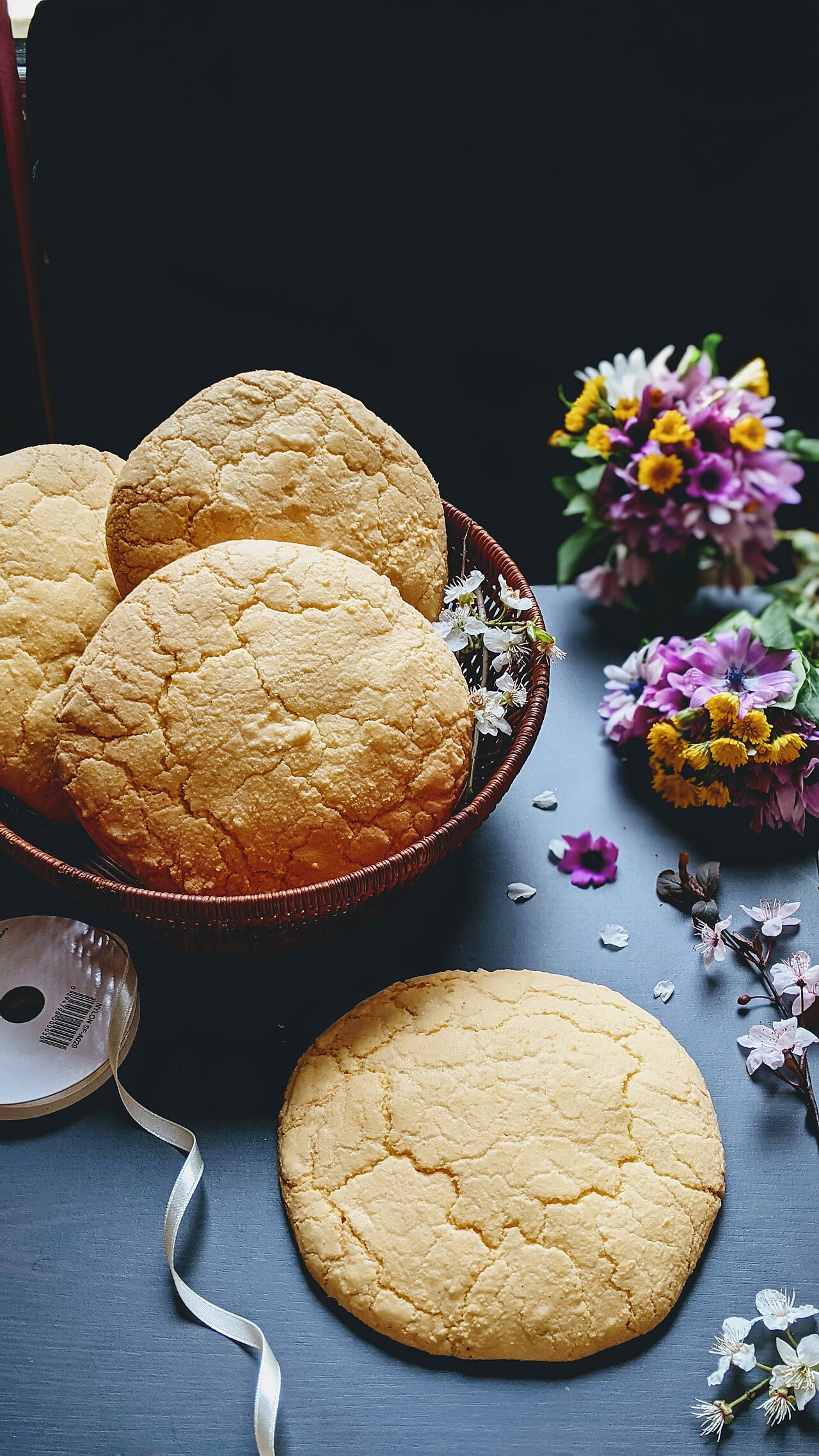
A crumbly cookie made from butter, sugar, eggs and maize flour, beaten hard in a copper bowl and baked in a wood oven.
Ballokume is the treat of Dita e Verës, Summer Day, a spring festival held every year on 14 March and celebrated above all in Elbasan.
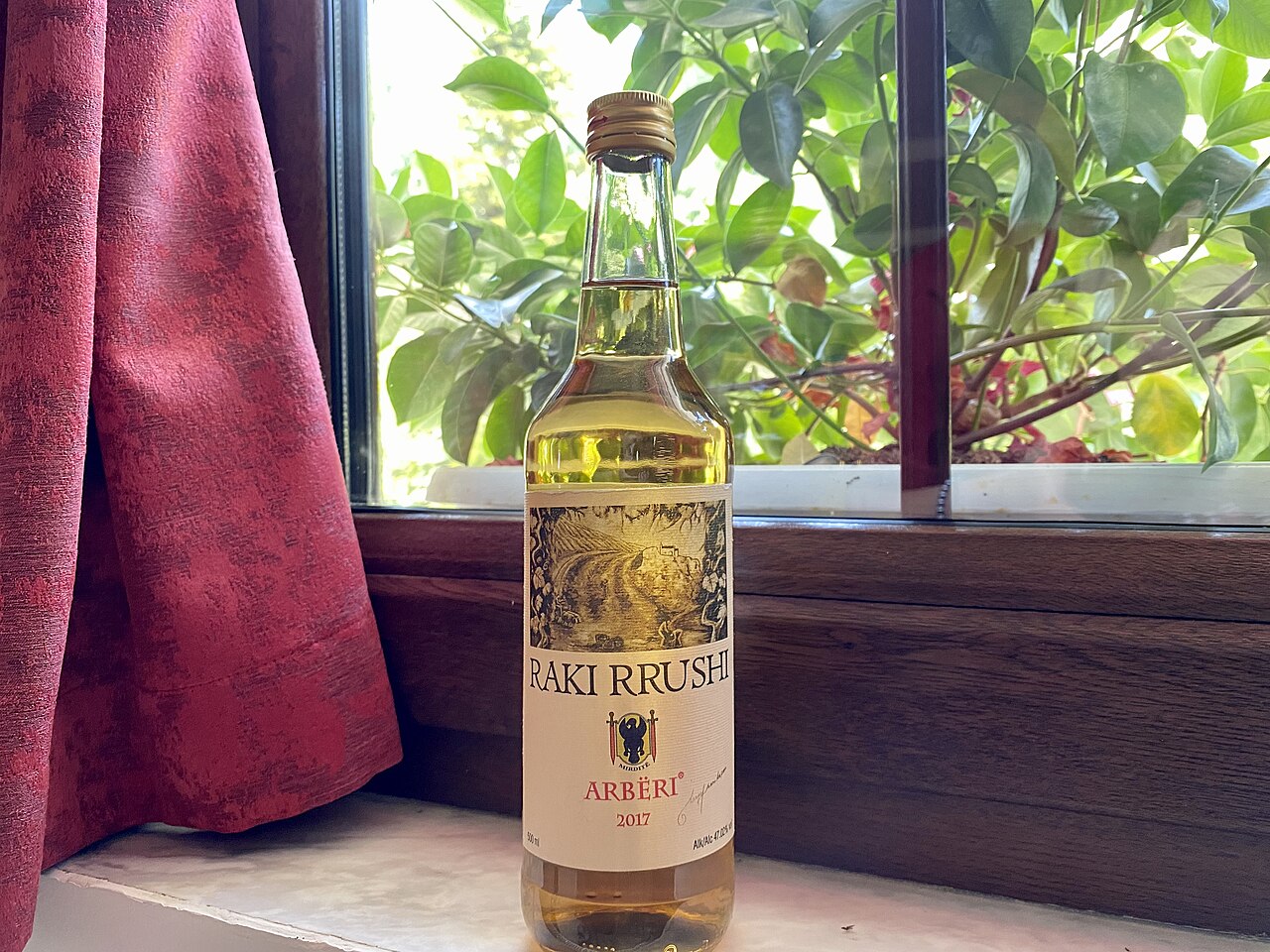
A strong clear fruit brandy, the national spirit. A common kind is raki rrushi, made from grapes, but raki is also made from plums, blackberries or mulberries, and in the south a version with oregano is popular.
Shop-bought rakia is usually about 40% alcohol, and homemade raki can be much stronger, so it is sipped slowly. Anyone who does not drink alcohol can politely say no.
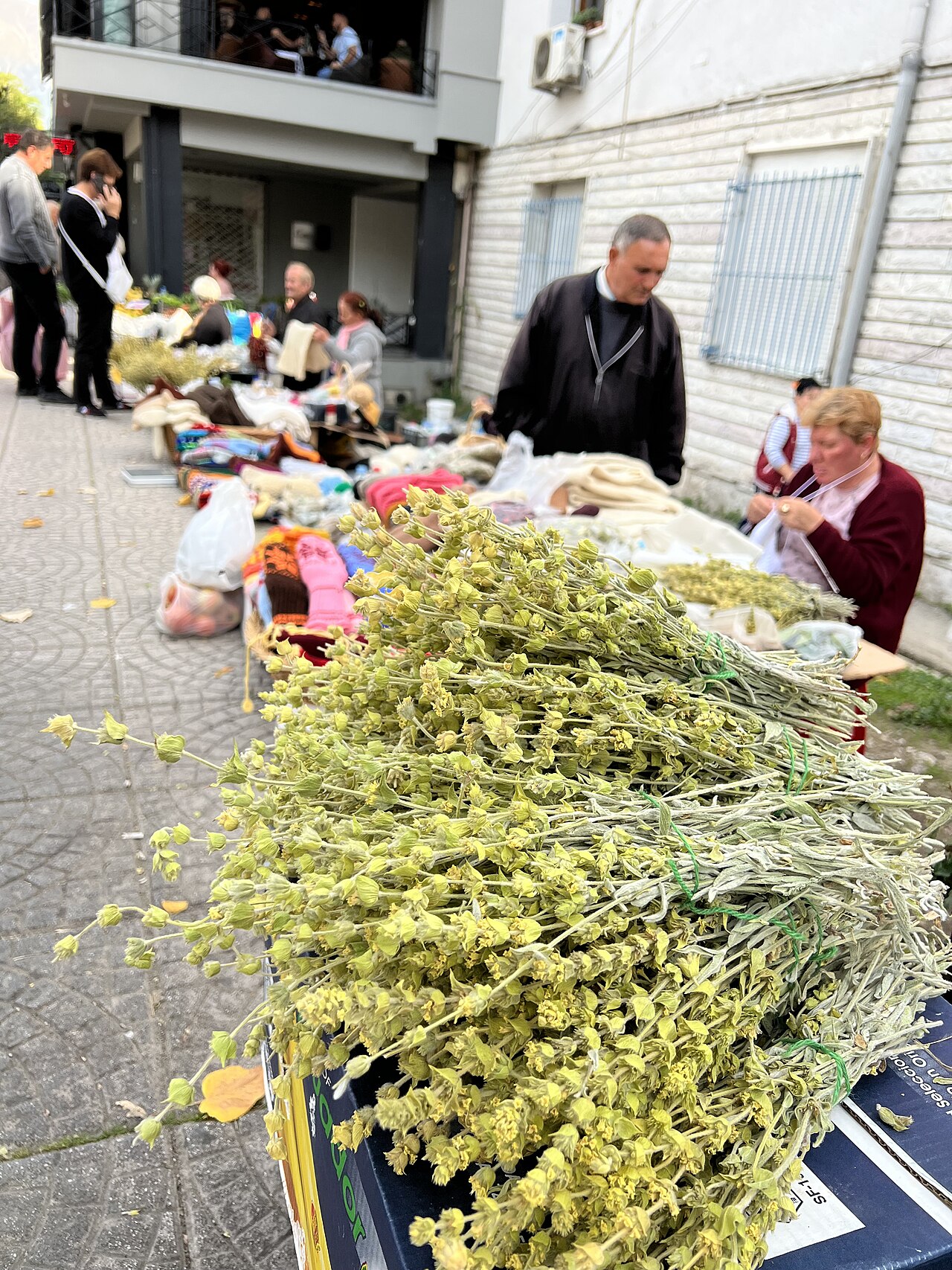
A herbal tea made from the dried flowers and stems of a mountain plant, Sideritis. It has no caffeine and is often drunk with honey and lemon.
Albania is one of the world's big producers of herbs such as sage, thyme and oregano, and bunches of mountain tea are sold in almost every market.
Albania's towns range from busy, colourful Tirana and the old ports of Durrës and Vlorë to the Ottoman stone towns of Berat and Gjirokastër, the castle town of Krujë, and Korçë and Pogradec in the south-eastern highlands by the lakes.
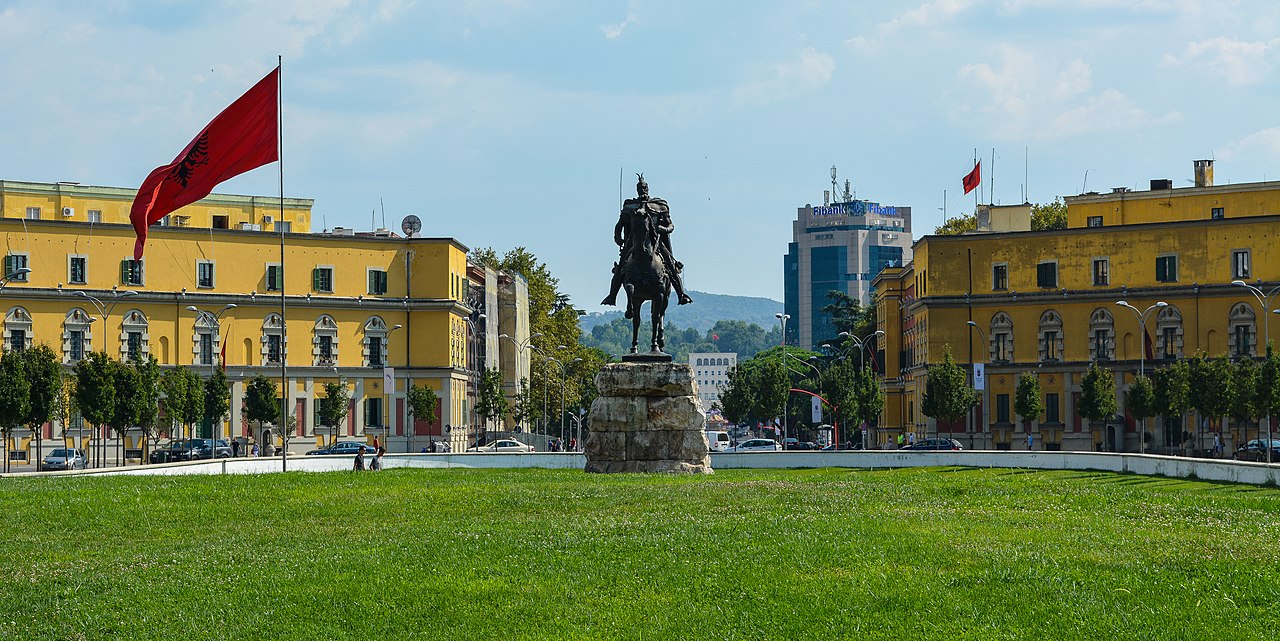
The capital and largest city, with about 600,000 people in the municipality at the 2023 census. Founded in 1614 around a mosque, bazaar and bath, it became the capital in 1920 and is now known for its lively café life, with Mount Dajti rising to the east.
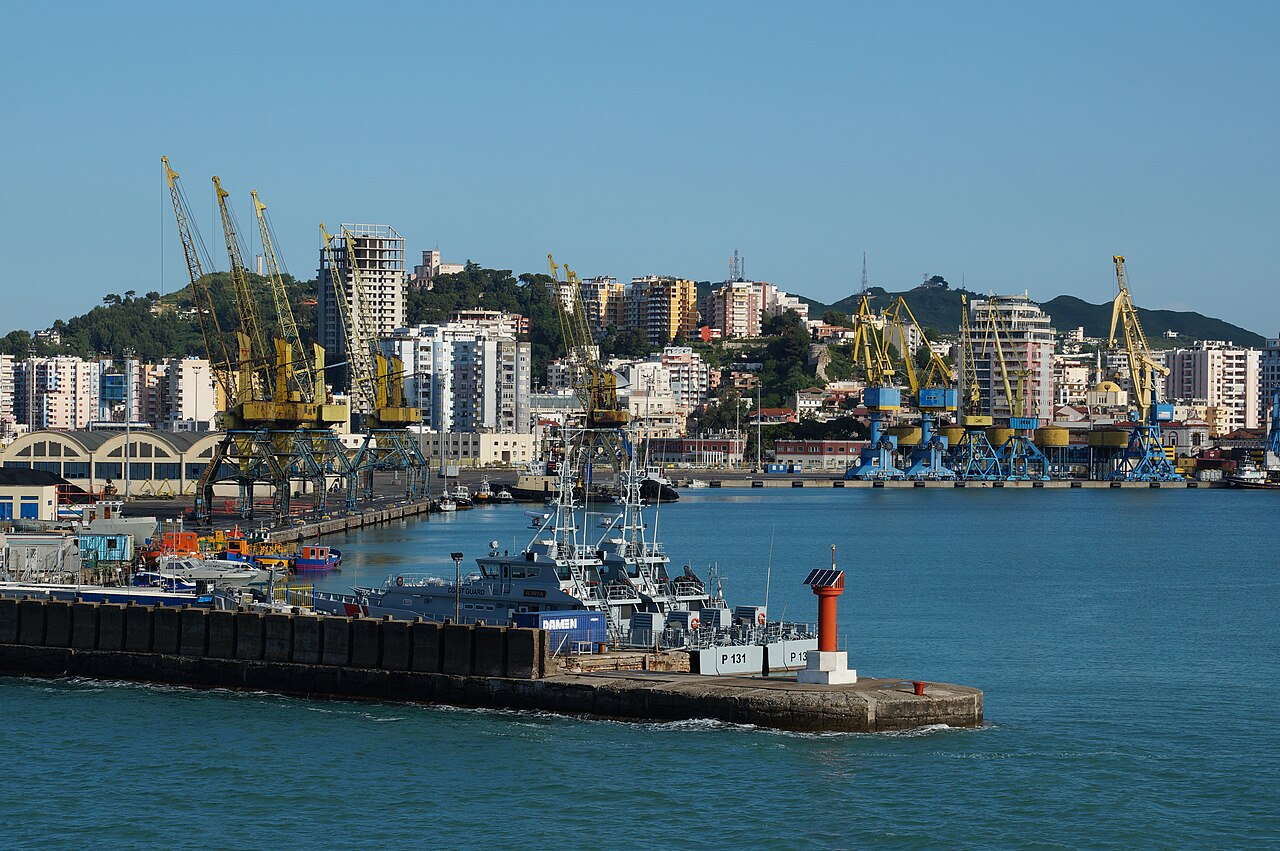
Albania's second-largest city and main port, on the Adriatic. Founded by Greek colonists as Epidamnos, it was the starting point of the Roman road Via Egnatia, which led east to Constantinople.
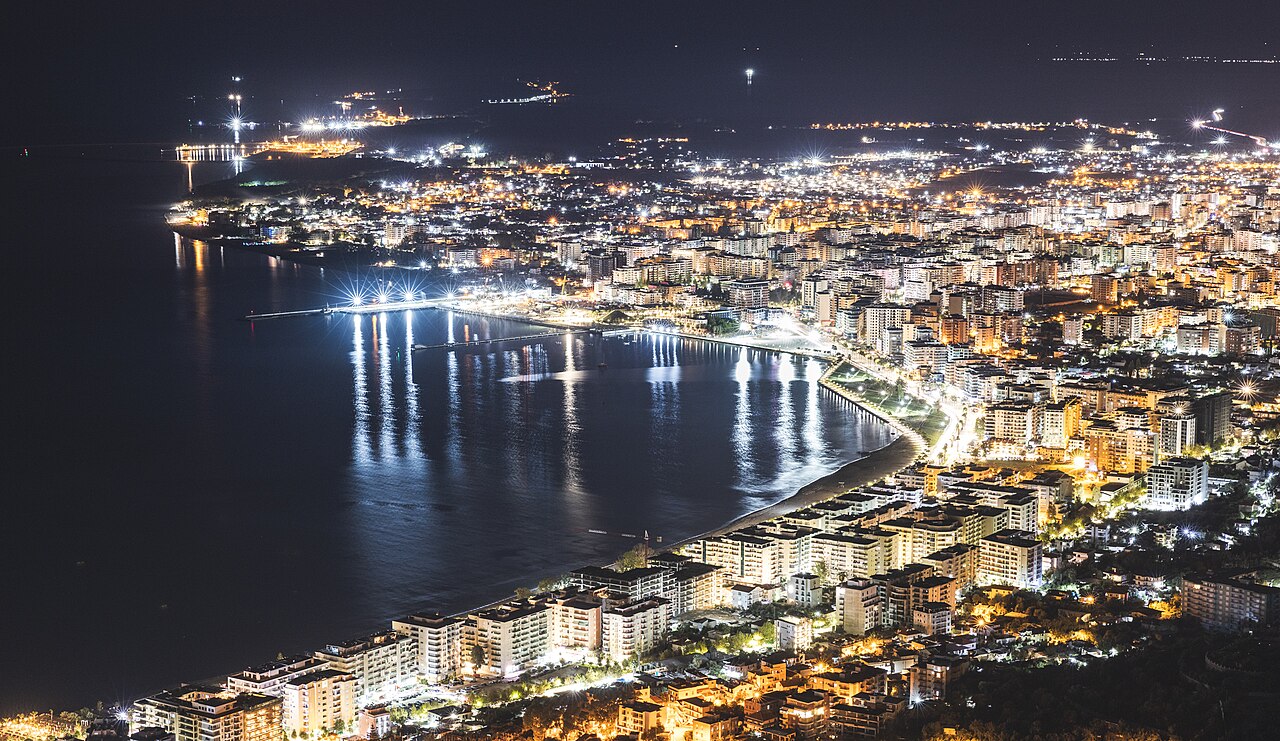
The third-largest city, on the Bay of Vlorë where the Adriatic meets the Ionian Sea. Albanian independence was declared here on 28 November 1912, and Vlorë became the first capital of the new state.
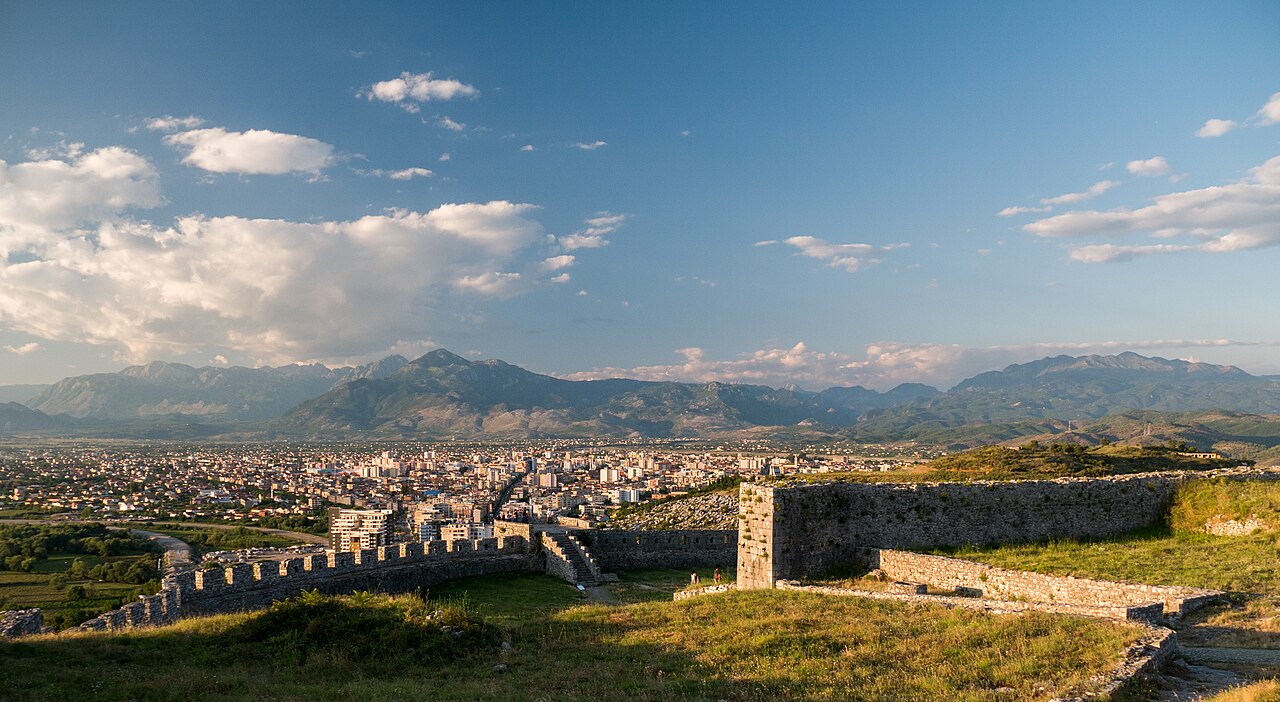
The main city of the north, between Lake Shkodër and the foothills of the Albanian Alps. It is one of the oldest towns in the country, once the capital of an Illyrian kingdom, and a centre of Albanian culture.
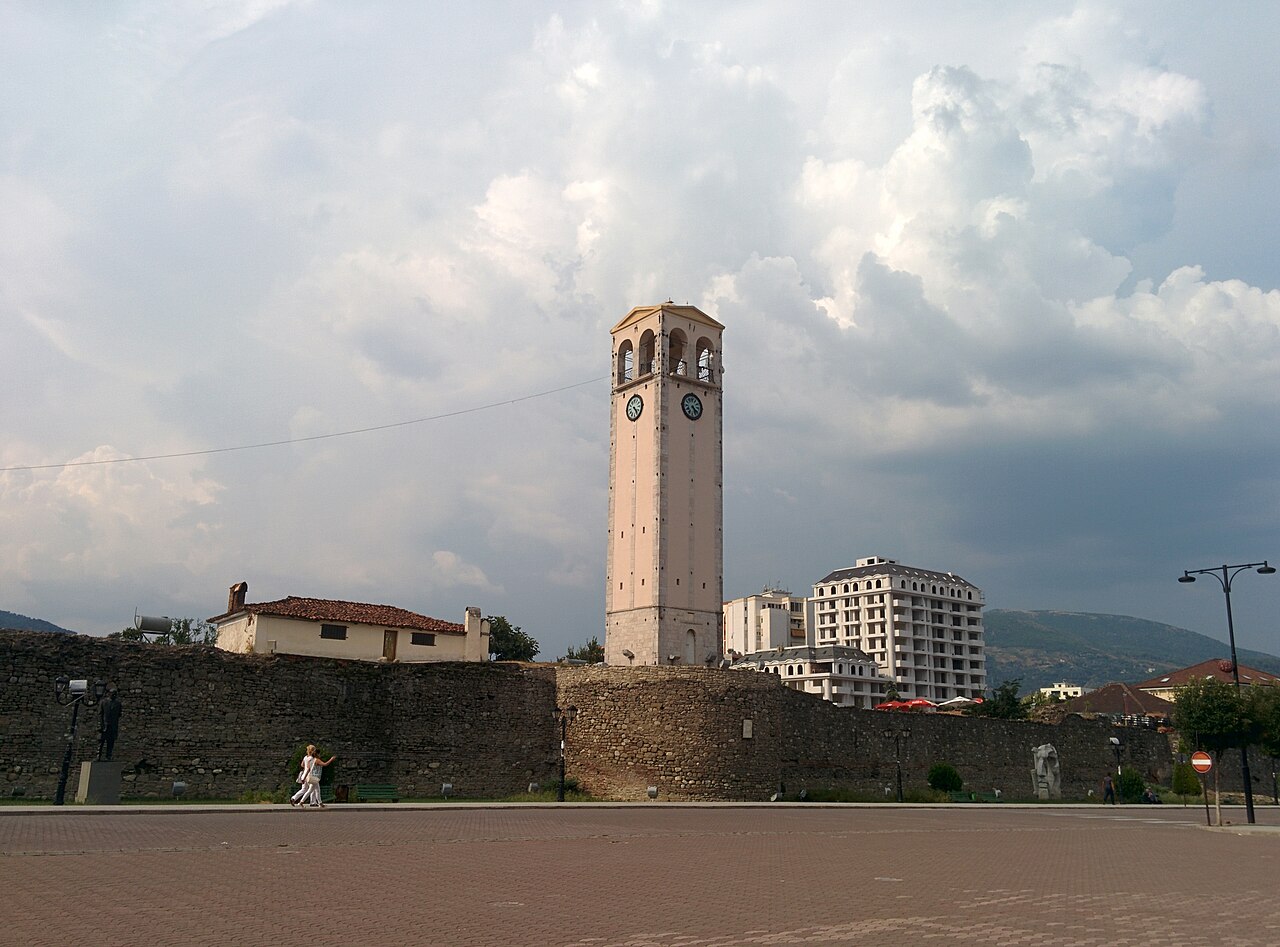
A city in central Albania on the Shkumbin river, which grew from a Roman stop on the Via Egnatia. The Ottomans built a fortress here in 1466.
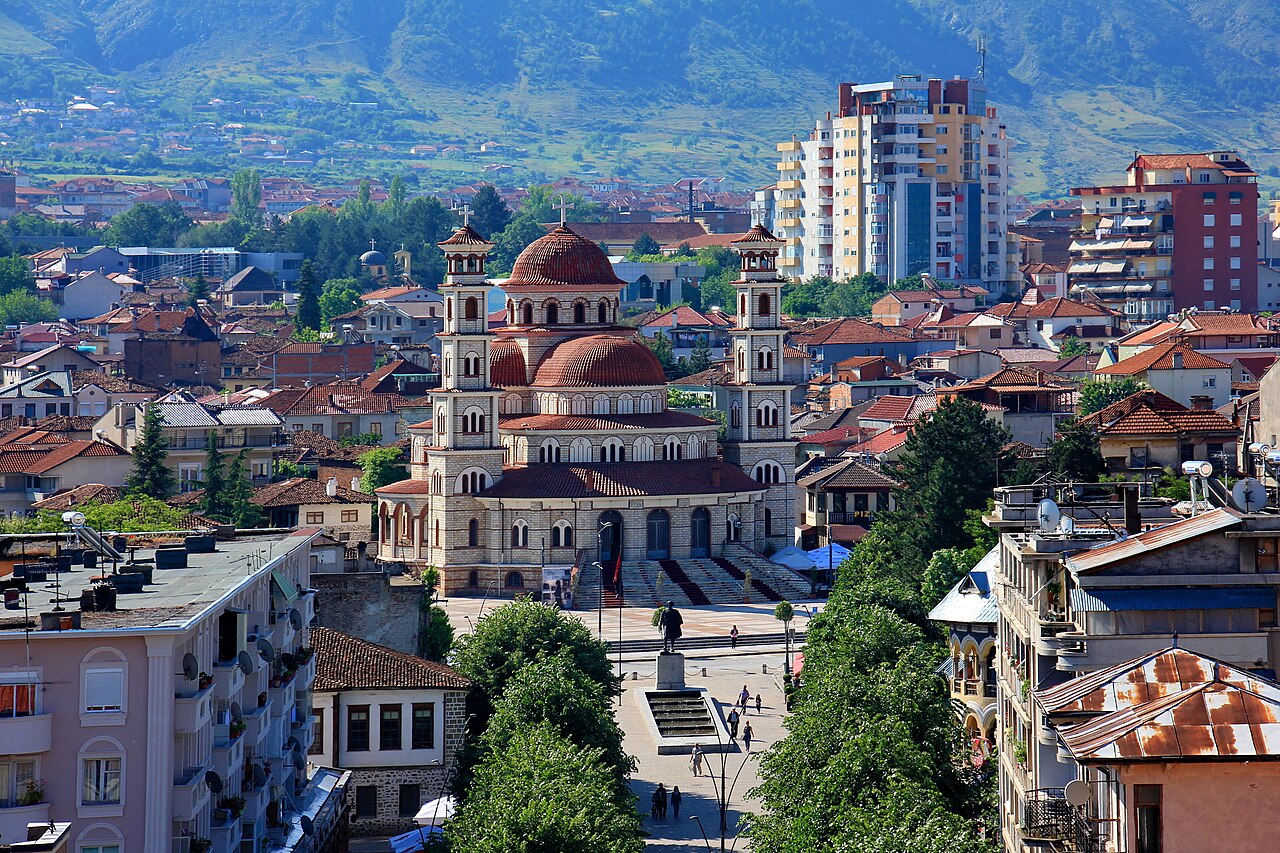
The largest city of eastern Albania, on a plateau about 850 m above sea level. One of the first Albanian-language schools opened here in 1887, and the city is known for its old bazaar and romantic serenata songs.
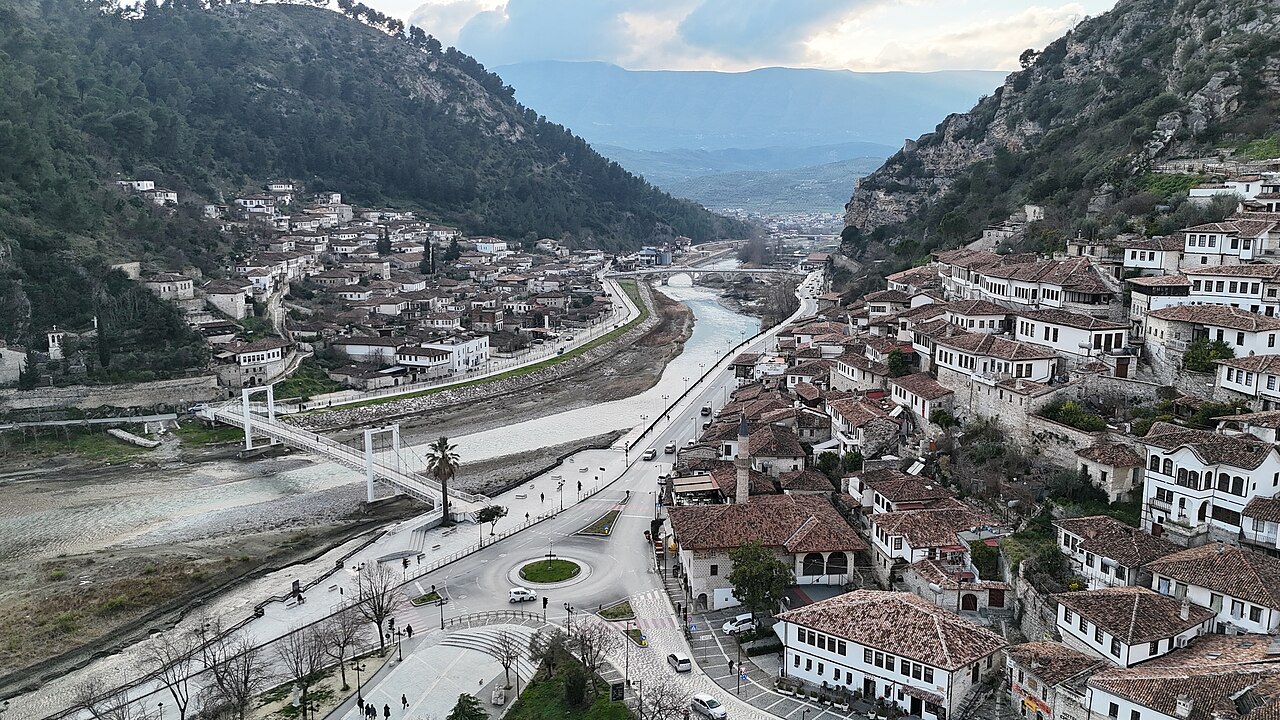
A town on the Osum river whose Ottoman houses climb the hillside, their many windows looking out over the valley. Albanians call it the town of 'one window above the other'. Its historic centre is a UNESCO World Heritage Site.
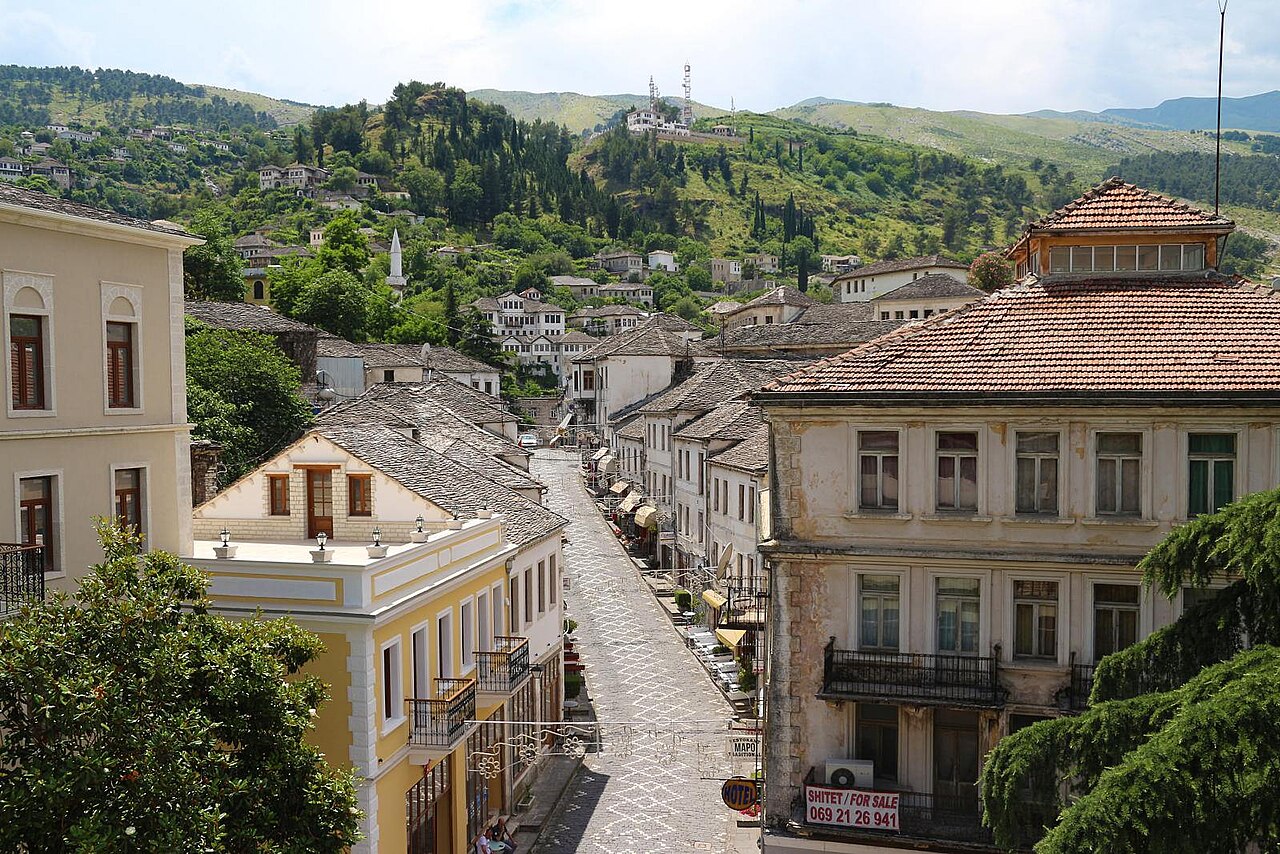
A hillside town in the Drino valley, nicknamed the 'City of Stone' because most of its old houses are roofed with flat stone slabs. It is the birthplace of the writer Ismail Kadare and of the communist leader Enver Hoxha.
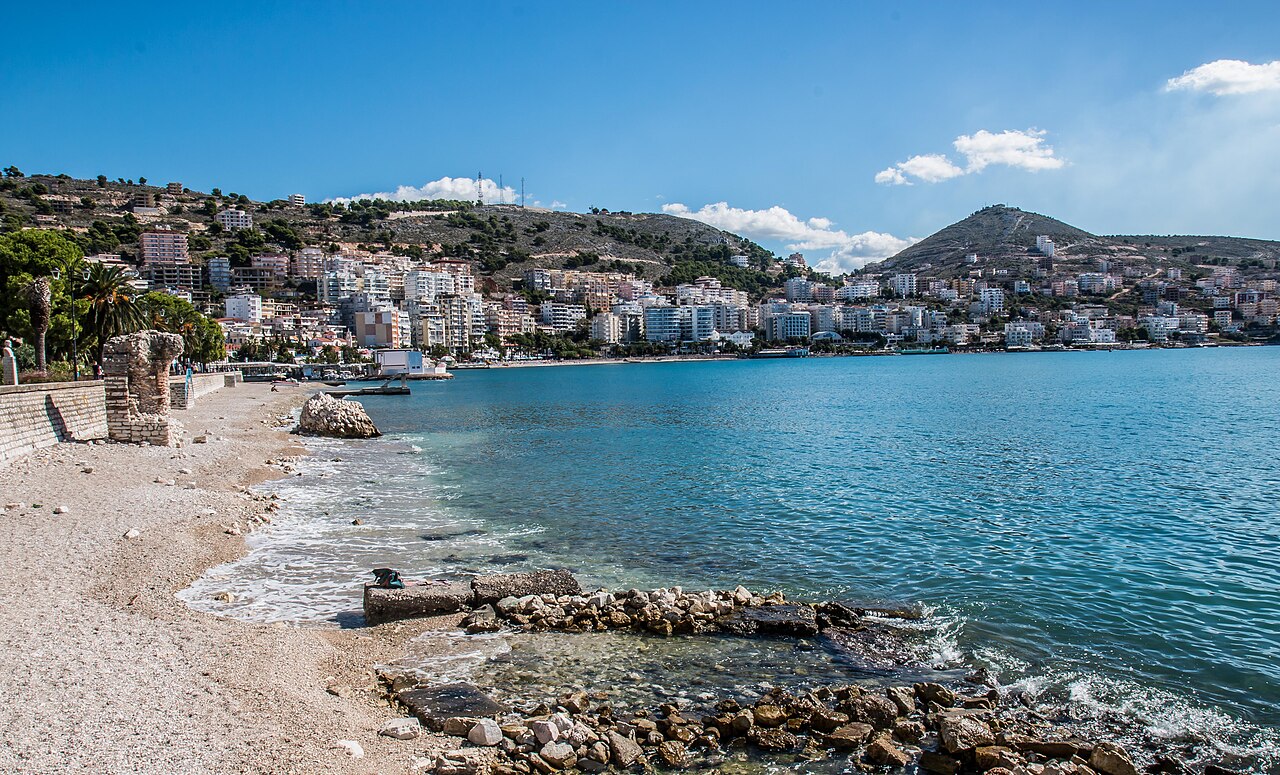
A seaside town on the Ionian coast in the far south, facing the Greek island of Corfu. It has more than 300 sunny days a year and is the base for visiting Butrint and the Blue Eye spring.
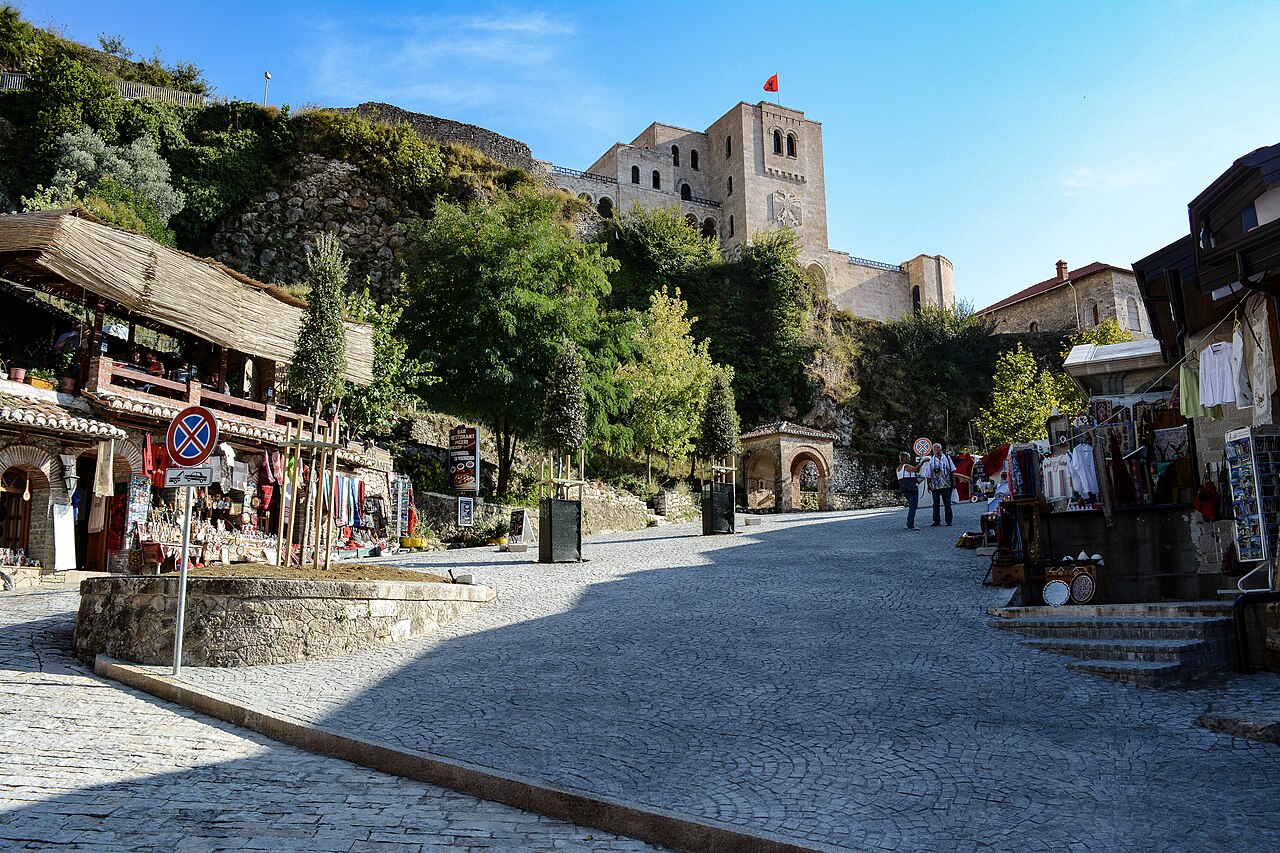
A small town on a mountainside north of Tirana. It was the centre of the medieval Principality of Arbanon and later Skanderbeg's stronghold, which withstood three Ottoman sieges.
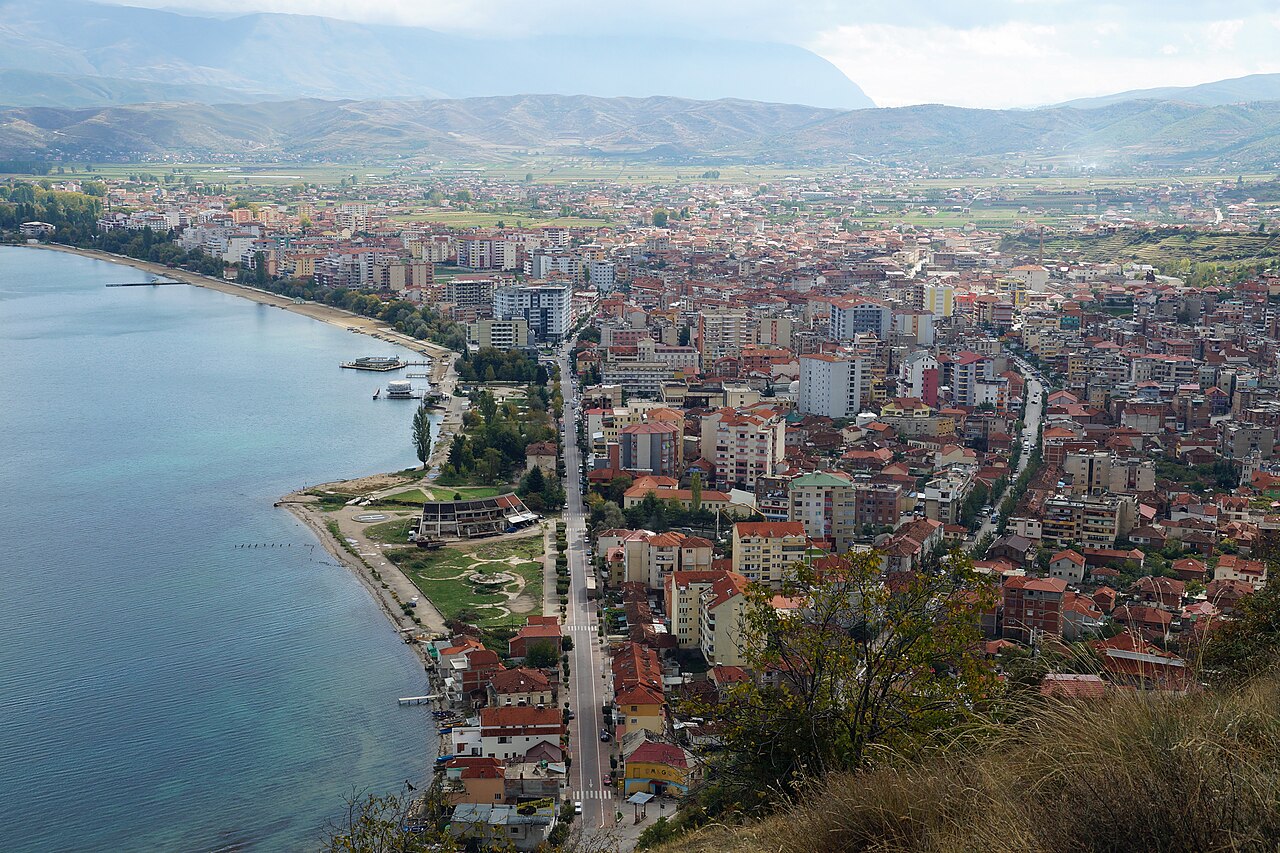
A lakeside town on the south-western shore of Lake Ohrid, near the border with North Macedonia. The town and its surroundings are part of a UNESCO World Heritage Site shared by both countries.
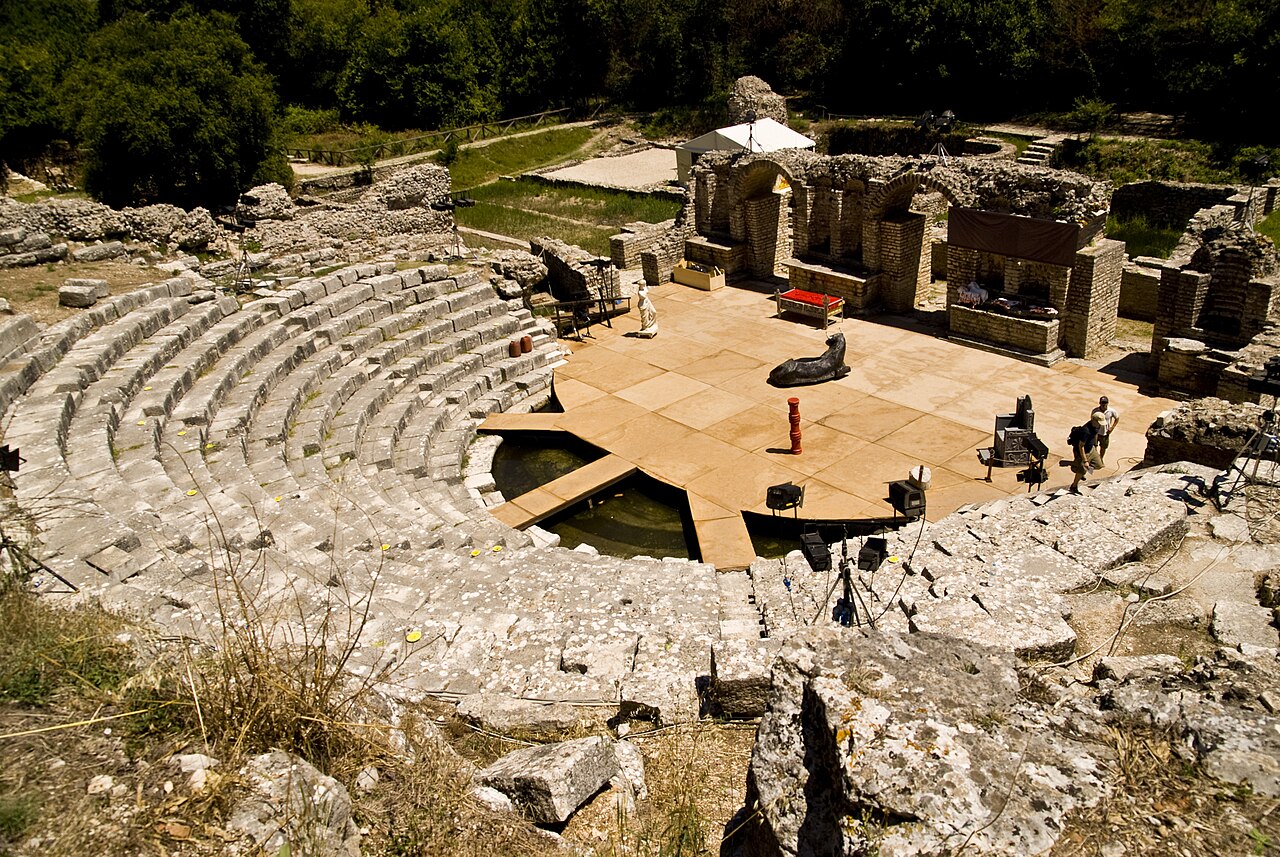
The ruins of an ancient city on a hill above the Vivari Channel, about 14 km south of Sarandë near the Greek border. Greek, Roman, Byzantine and Venetian remains stand side by side, including a Greek theatre, Roman baths and an early Christian baptistery. It has been a UNESCO World Heritage Site since 1992.
UNESCO World Heritage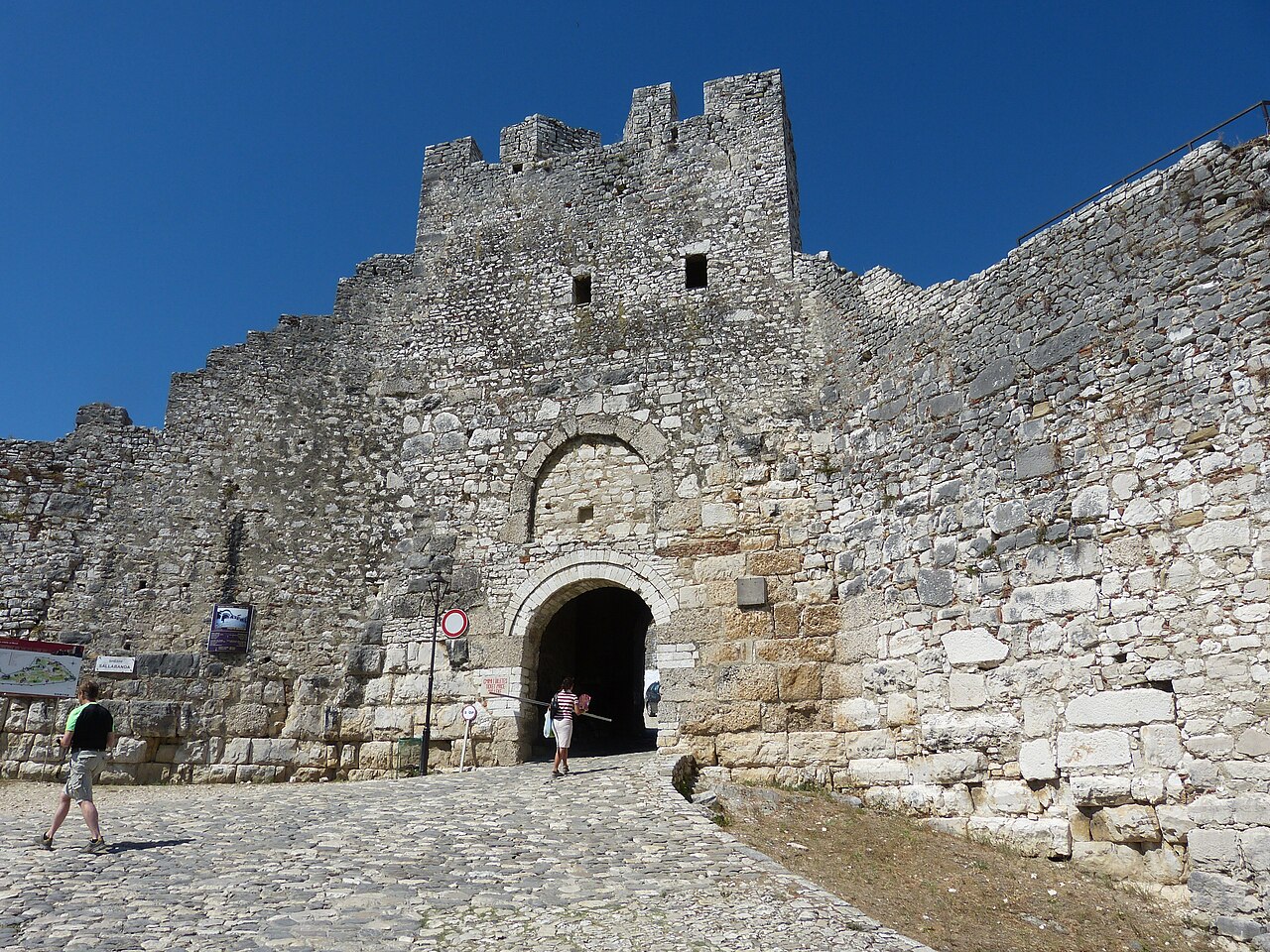
A hilltop citadel, called the Kala, built mostly in the 13th century on much older foundations. People still live inside its walls, among Byzantine churches and the remains of Ottoman mosques. It is part of the UNESCO site of Berat and Gjirokastra.
UNESCO World Heritage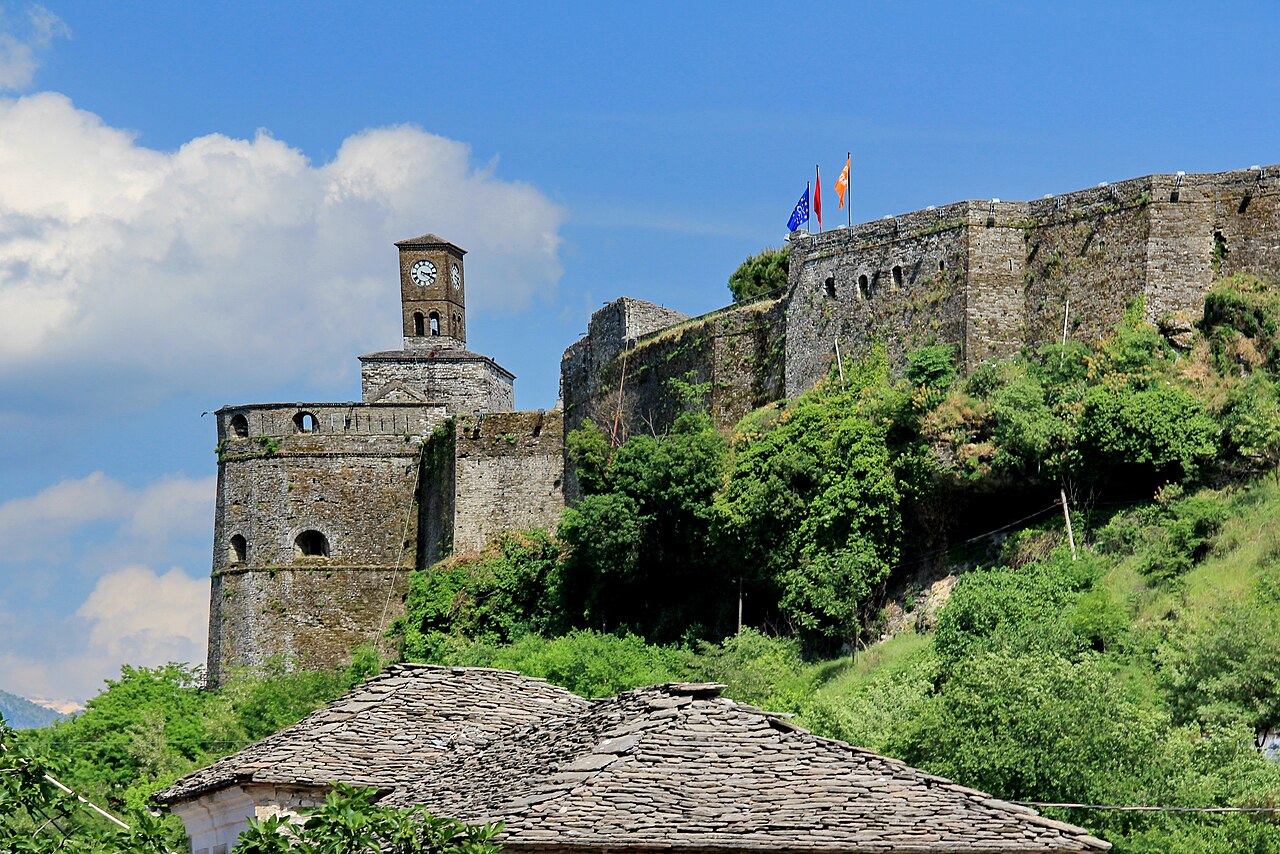
A huge fortress above the stone town of Gjirokastër, looking down the Drino valley. It holds a military museum and hosts the National Folk Festival every five years. The old town below was listed by UNESCO in 2005.
UNESCO World Heritage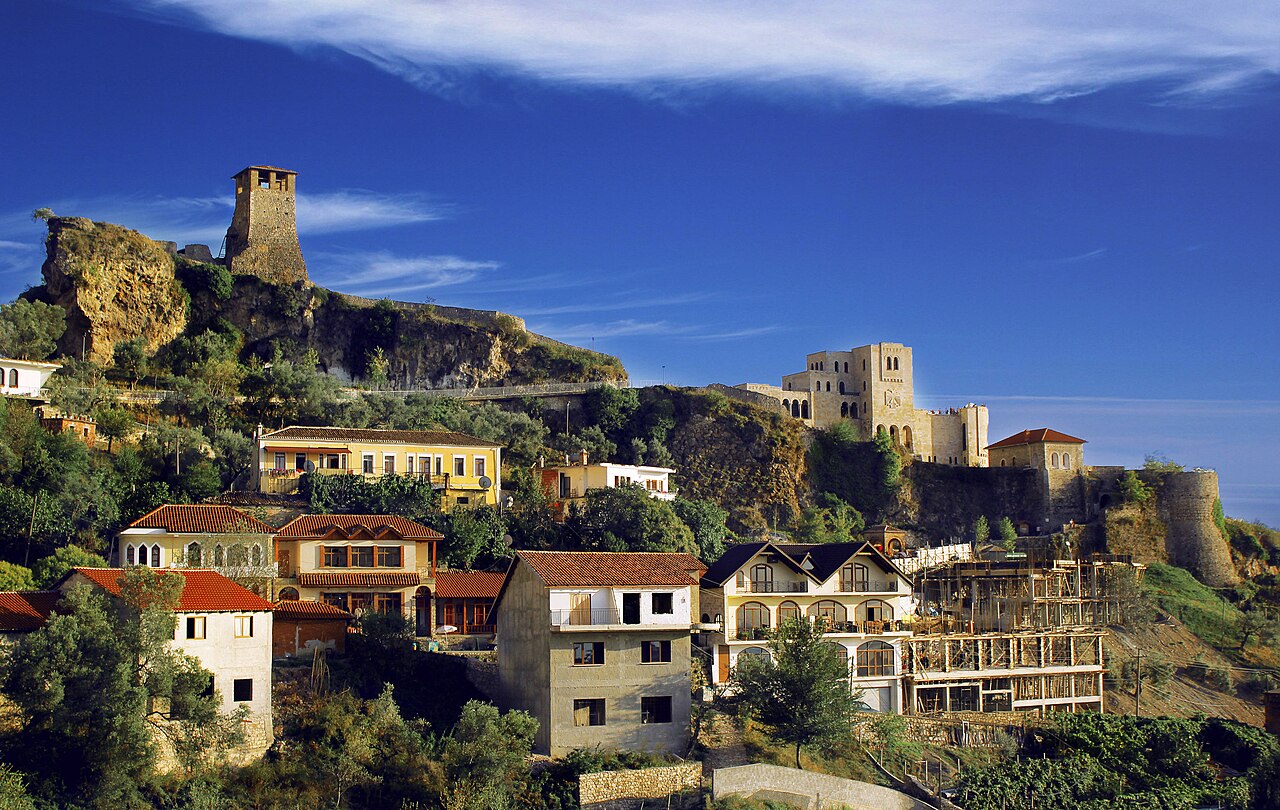
The fortress where Skanderbeg held out against three great Ottoman sieges, in 1450, 1466 and 1467. Inside its walls stands the Skanderbeg Museum, opened in 1982 in a building inspired by old Albanian stone towers.
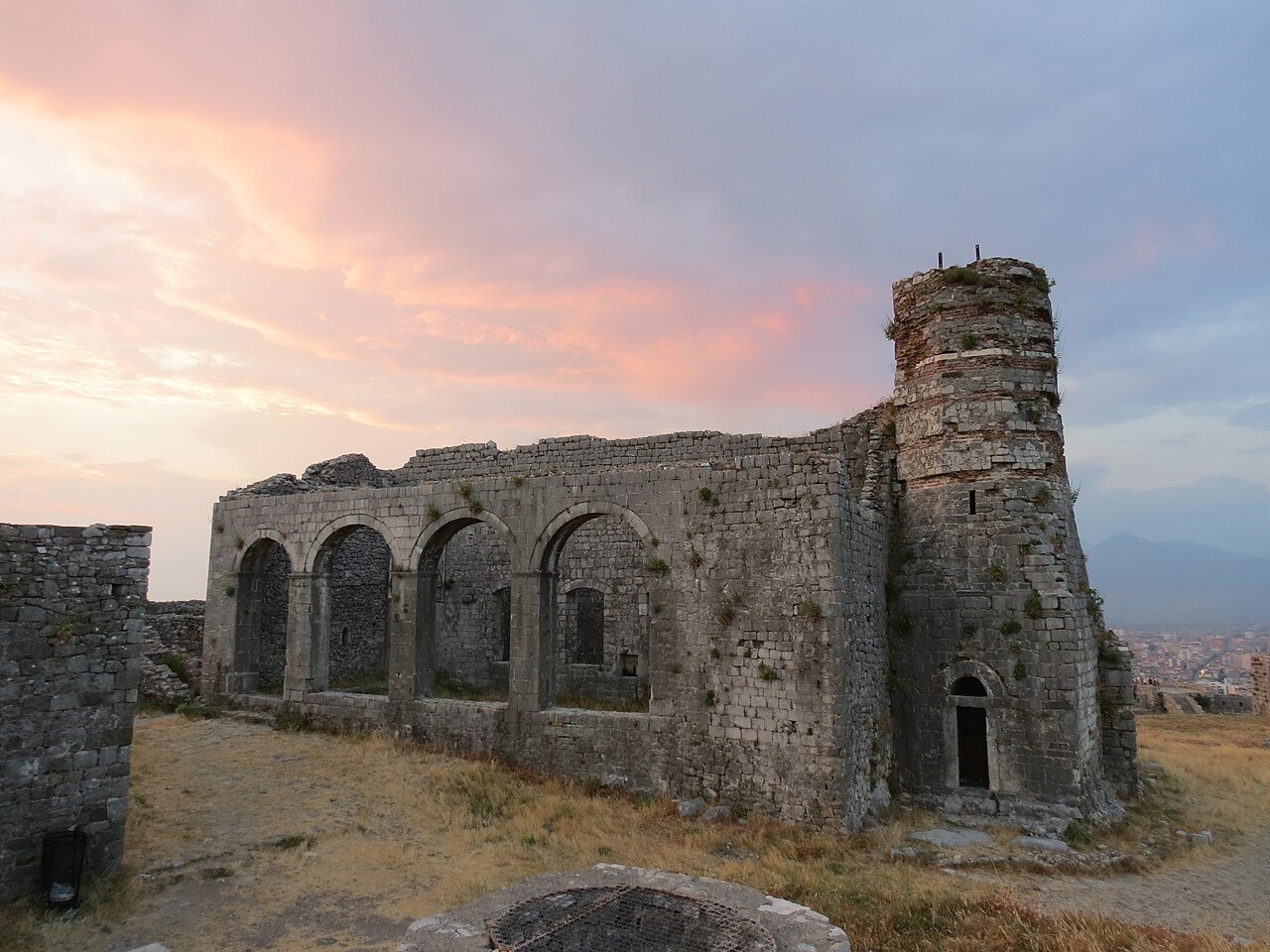
A castle on a rocky hill 130 m above sea level beside Shkodër, surrounded by the Buna and Drin rivers near the lake. A famous legend tells of three brothers whose walls fell down every night, until Rozafa, the wife of the youngest brother, was walled into the castle.
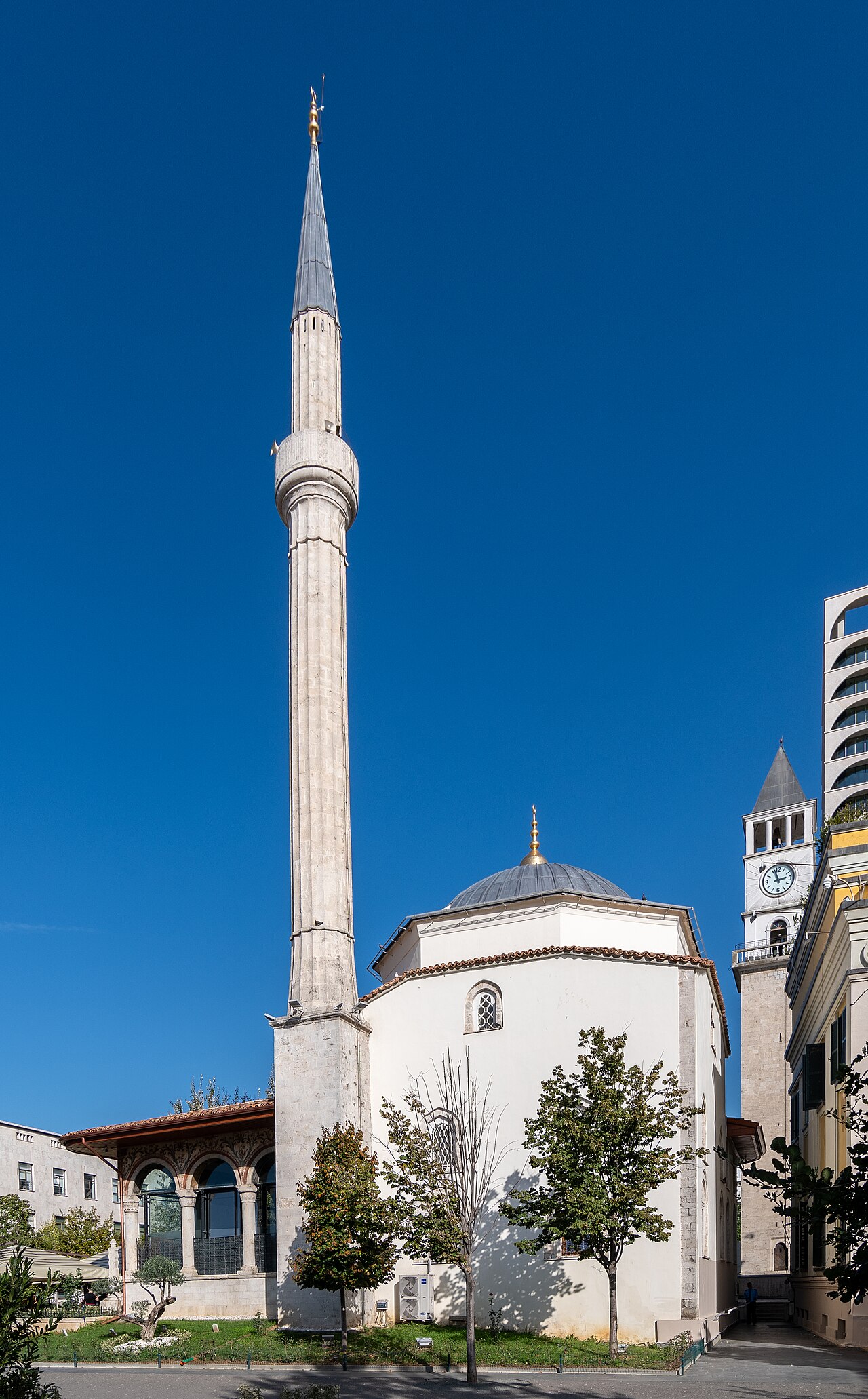
A small mosque on Skanderbeg Square, famous for the painted trees, waterfalls and bridges on its walls. Closed under communism, it reopened in 1991, when 10,000 people came to pray without official permission.
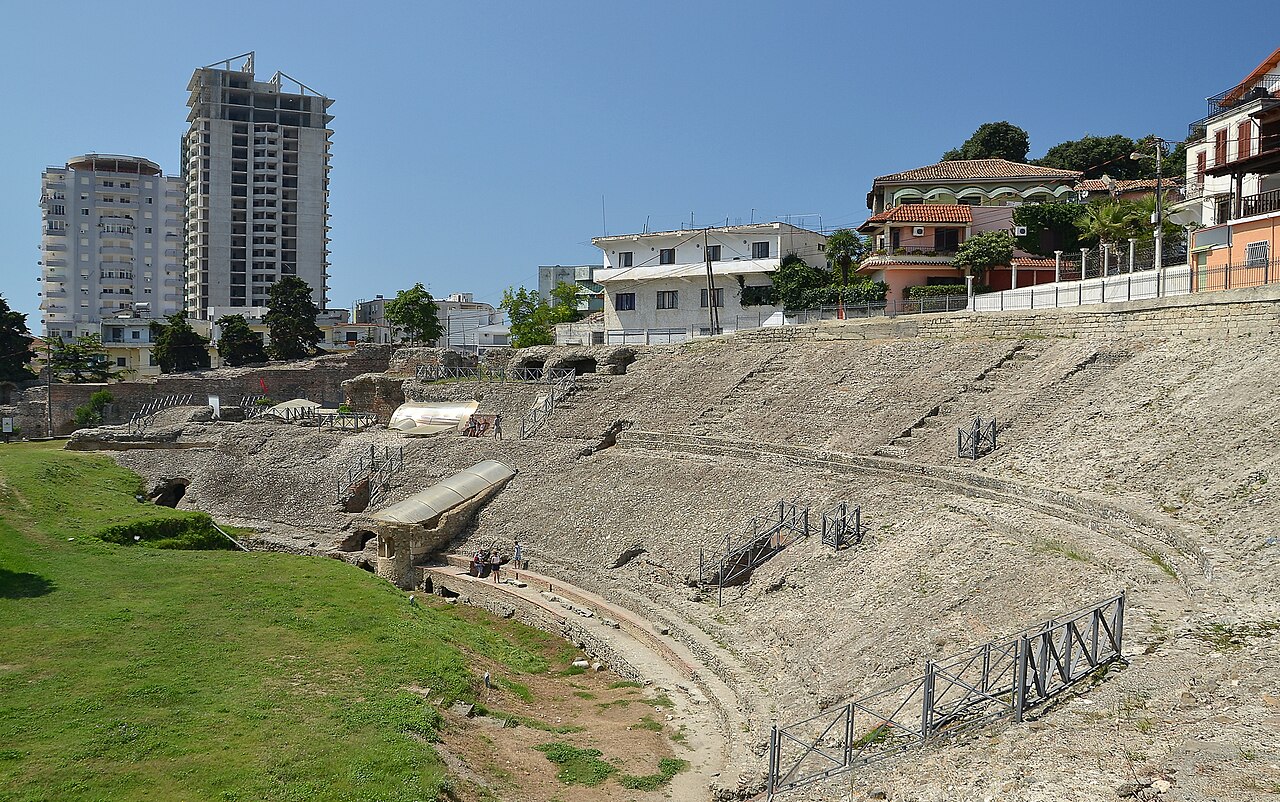
A Roman amphitheatre begun under Emperor Trajan in the 2nd century AD, which once held about 20,000 people. It is the largest Roman amphitheatre in the Balkan Peninsula, and the modern city has grown up all around it.
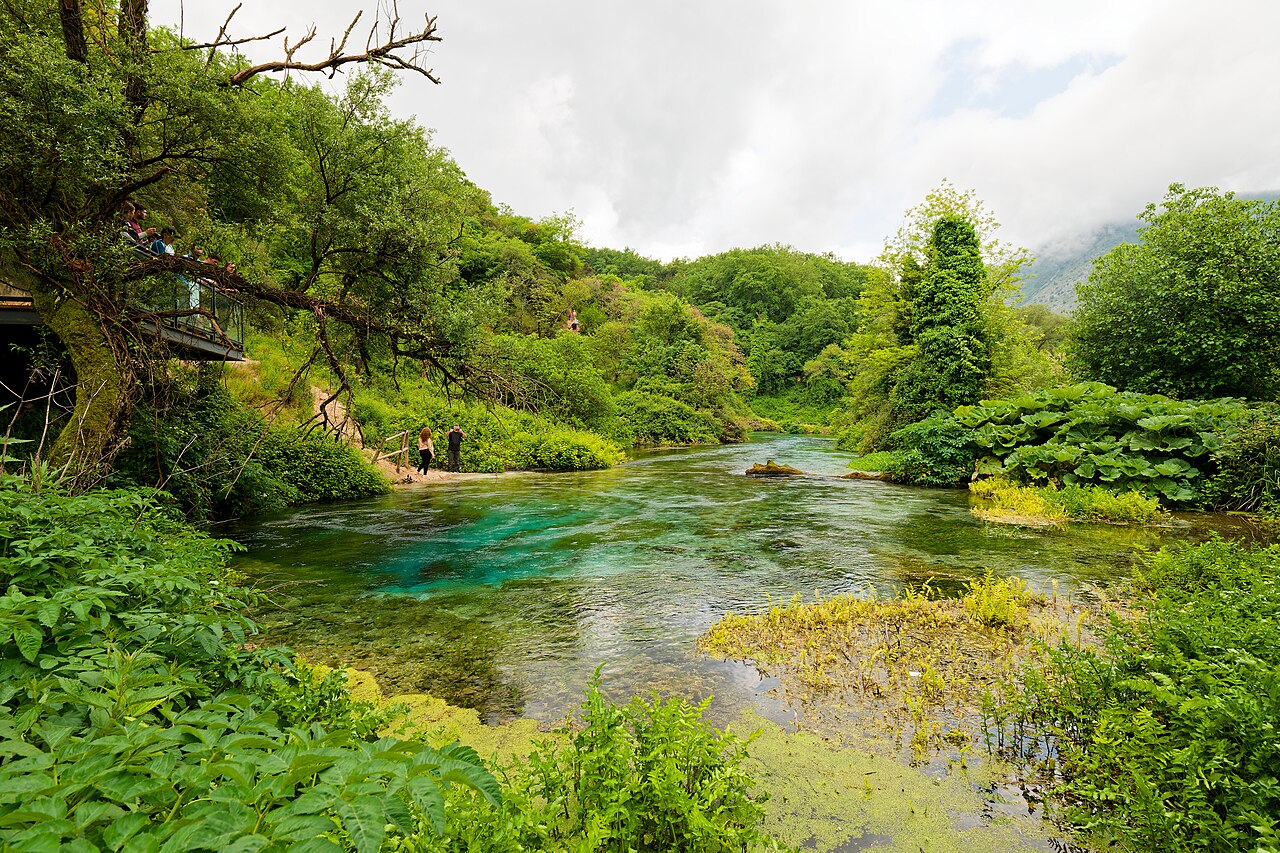
A spring of startlingly clear, deep blue water rising from a karst hole in the hills inland from Sarandë. Divers have gone down 50 metres without finding the bottom. It is the source of the Bistricë river.
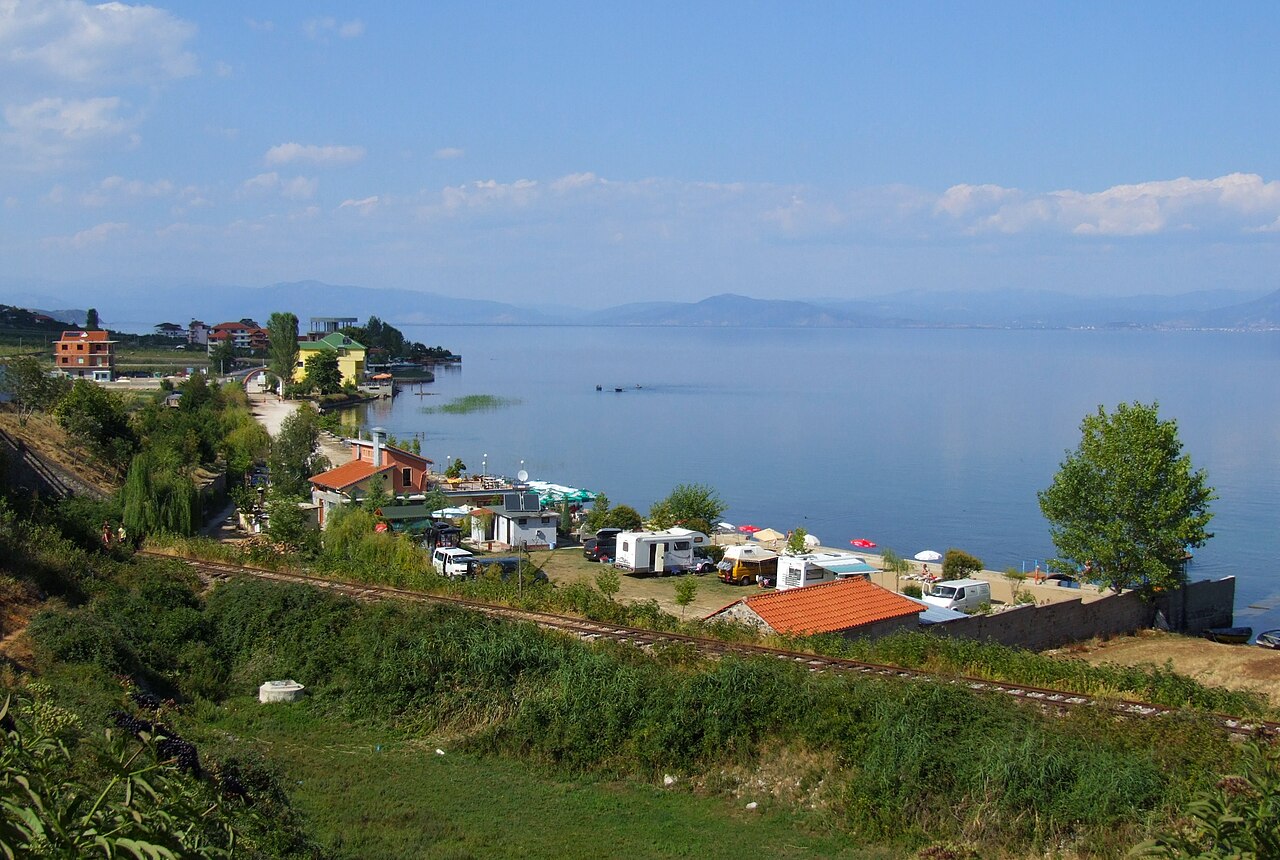
One of the oldest and deepest lakes in Europe, up to 288 m deep, shared by Albania and North Macedonia. The Albanian shore was added to the UNESCO World Heritage Site of the Ohrid region in 2019.
UNESCO World Heritage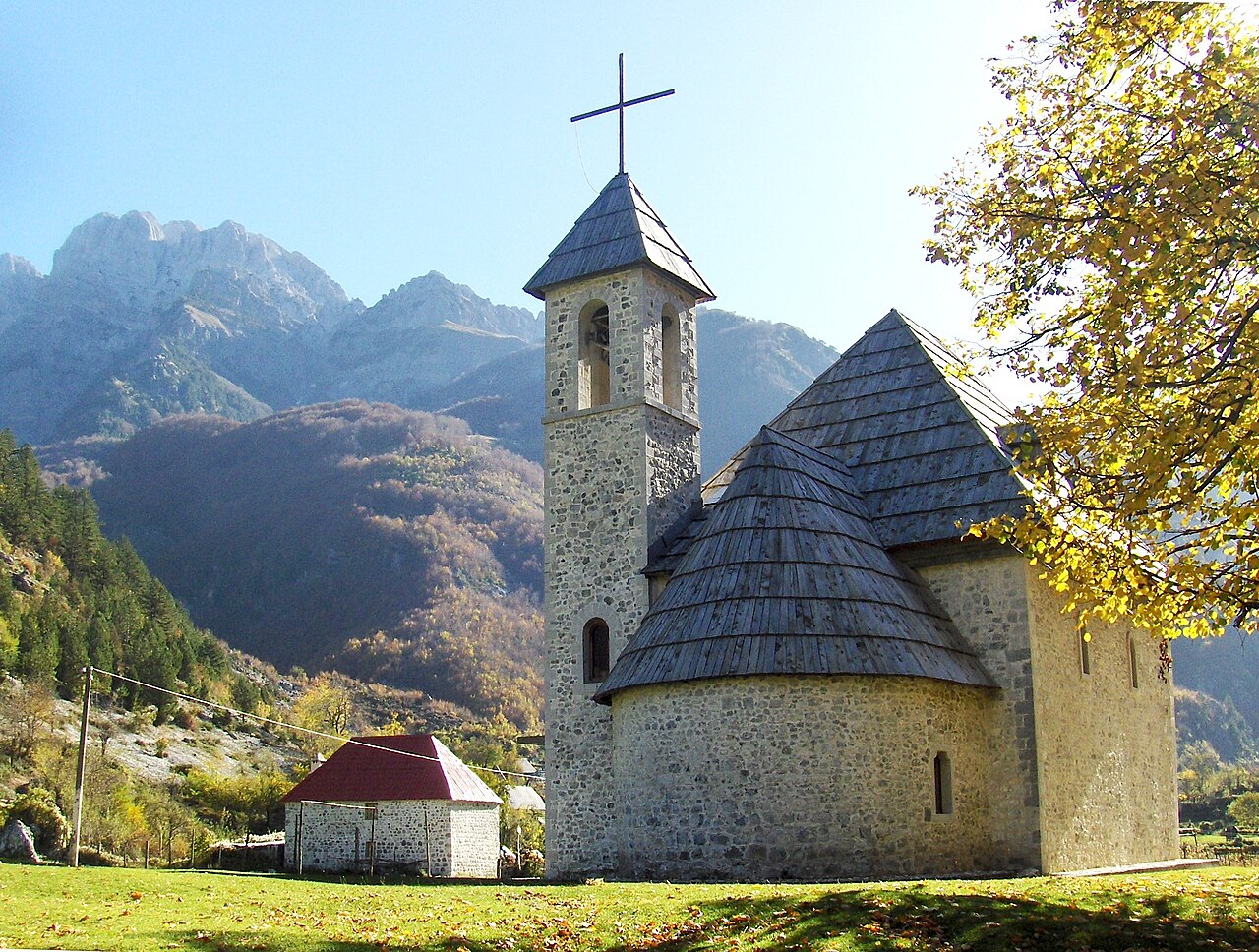
A remote village in the Albanian Alps, part of the municipality of Shkodër, at the heart of Theth National Park. It has one of the very few remaining lock-in towers, where families caught in a blood feud once sheltered.
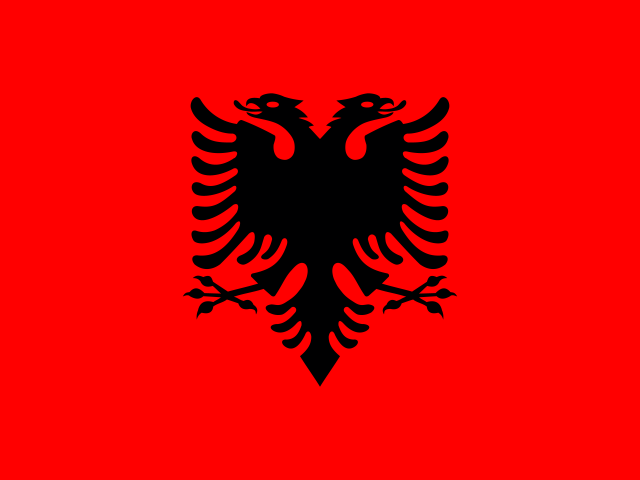
Albanians call their country Shqipëria, a name often explained as 'Land of the Eagles'. A black double-headed eagle on a red field is the country's flag, and the golden eagle is its national animal.
Albanian is an Indo-European language, but it forms a branch of its own, with no close relatives among living languages.
Under Enver Hoxha, Albania was covered with concrete bunkers built from the 1960s to the 1980s against an invasion that never came. Counts vary widely, from about 173,000 to more than 750,000, and many still stand in fields, on beaches and in towns.
Mother Teresa was born Anjezë Gonxhe Bojaxhiu in Skopje in 1910. Gonxhe means 'flower bud' in Albanian, and Tirana's international airport is named after her.
During the Second World War, Albanian families hid Jewish residents and refugees, guided in part by besa, the Albanian code of honour and keeping one's word. Albania was one of the few occupied countries in Europe with more Jews at the end of the war than at the start.
In 1967 communist Albania declared itself an atheist state and closed its mosques and churches. When Tirana's Et'hem Bey Mosque reopened in 1991, 10,000 people came to pray.
Albania loves its coffee. In 2016 it was reported to have more coffee houses per person than any other country, about 654 for every 100,000 people.
Albanian iso-polyphony, a traditional form of many-voiced folk singing over a held drone, is on UNESCO's list of the Intangible Cultural Heritage of Humanity.
The xhubleta, a bell-shaped woollen skirt worn by women in the northern mountains, was added to UNESCO's list of heritage in need of urgent safeguarding in 2022.
The lek, Albania's currency since 1926, has two stories behind its name. Officially it honours the medieval lord Lekë Dukagjini. Many say it is named after Alexander the Great, called Leka in Albanian, whose head appeared on the first 1 lek coin.
Mount Korab, 2,764 m, is the highest point of both Albania and North Macedonia, as the border runs across its summit.
In 2023 Albania made the Vjosa, one of Europe's last large wild rivers flowing freely without dams, into the Vjosa Wild River National Park.
Skanderbeg's helmet and sword are kept in the Imperial Armoury in Vienna. The Skanderbeg Museum in Krujë shows a copy of the helmet.
Pronunciation is written the way it sounds; the capital letters show where the stress goes. Audio is coming soon.
Albania uses the lek. Cards work in supermarkets and many hotels, but many cafés, small shops and stalls take cash only, so carry some notes. Many people still count in 'old lek', ten times the real price: '2,000 lek' may mean 200 lek. If unsure, ask to see the price written down.
Tipping is not a firm custom in Albania. In restaurants in Tirana, rounding up the bill is a kind gesture, but large tips are not expected.
In parts of southern Albania, a shake of the head can mean yes and a nod can mean no. To avoid mix-ups, listen for the words: po means yes and jo means no.
As of 2026, passenger trains are largely suspended, so buses and furgons (minibuses) are the way to travel between towns. Southbound buses to places like Gjirokastër and Sarandë often leave early in the morning.
Albania drives on the right. The UK government warns that driving can be aggressive and erratic and that rural roads are often poor and unlit. Pedestrians, horses or donkeys may also be on the road. If you have any accident, wait at the scene for the police.
Call 112 for the police and in any emergency. For an ambulance call 127, and for the fire service 128.
Albania is a very mixed country of Muslims, Orthodox and Catholic Christians and people of no religion. At Tirana's Et'hem Bey Mosque, for example, visitors are shown around daily outside prayer times and must take off their shoes before entering the inner room.
Stay on marked paths when hiking: a few remote areas near the northern border with Kosovo may still have old landmines. Wildfires are common from April to October, so never light fires outside marked places. Drink bottled water rather than tap water.