 Albania
 Bosnia and Herzegovina
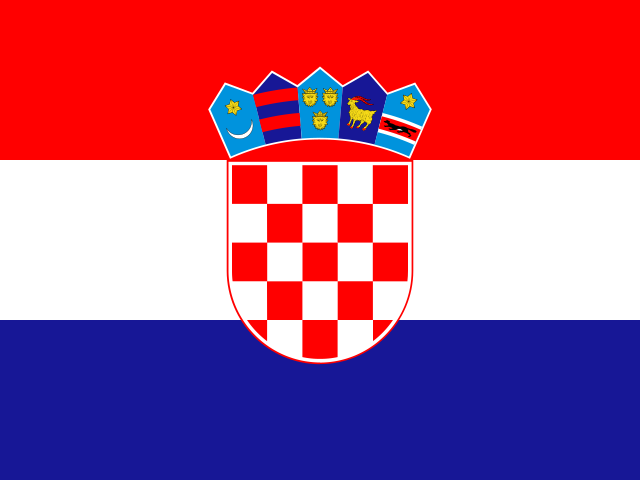 Croatia
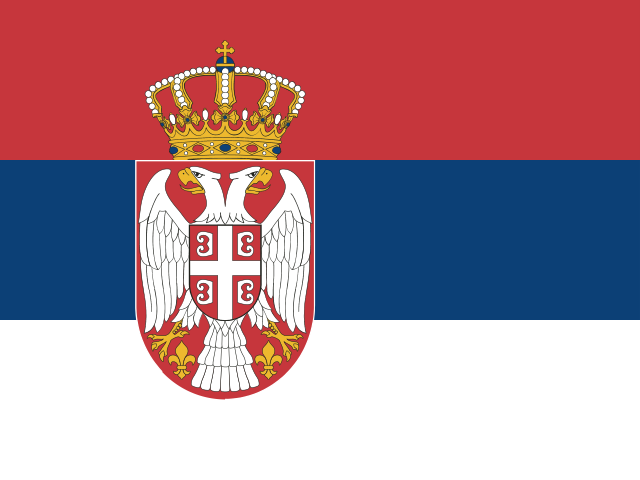 Serbia
Duklja breaks free
Stefan Vojislav, a local ruler, led a revolt and won a great victory over a Byzantine army near Bar. His state, Duklja, covered much of the south of today's Montenegro.
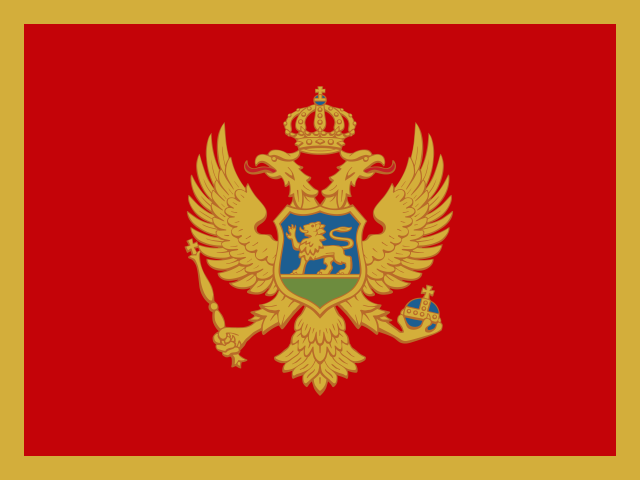
A free large-print PDF. Choose what goes in: facts, map, history, dishes and recipes, phrases, fun facts, a quiz with or without answers. Made for clubs, care homes, libraries and family afternoons.
Montenegro lies on the Balkan Peninsula in Southeast Europe, between the Adriatic Sea and the high Dinaric mountains. Its name, and the local name Crna Gora, both mean 'Black Mountain', after the dark forests of Mount Lovćen. In a short drive you can go from palm-lined beaches and the fjord-like Bay of Kotor to limestone plateaus, glacial lakes and one of the deepest river canyons in Europe.
The land was part of the Roman world, then home to the medieval states of Duklja and Zeta. Venice ruled much of the coast for centuries, while the mountain clans kept a hard-won freedom from the Ottomans under prince-bishops from Cetinje. Montenegro's independence was recognised at the Congress of Berlin in 1878, it became a kingdom in 1910, and after the First World War it was part of Yugoslavia.
Today Montenegro is a parliamentary republic of about 620,000 people. It became independent again after a referendum in 2006 and joined NATO in 2017. Podgorica is the capital and largest city, while Cetinje is honoured as the old royal capital. As of September 2026, Montenegro is negotiating to join the European Union, as it has been since 2012, and it already uses the euro.
Montenegro's story is one of a small mountain people holding on to their freedom: from the medieval kingdom of Duklja and the Crnojević rulers of Cetinje, through centuries of prince-bishops, to a 19th-century principality, a short-lived kingdom, Yugoslavia and independence in 2006.
Stefan Vojislav, a local ruler, led a revolt and won a great victory over a Byzantine army near Bar. His state, Duklja, covered much of the south of today's Montenegro.
Pope Gregory VII recognised Mihailo, Vojislav's son, as king of Duklja. Over the next century the name Zeta gradually replaced Duklja.
Ivan Crnojević, ruler of Zeta, moved his court up into the hills to a field below Mount Lovćen that was easier to defend. There he built a court and, in 1484, a monastery. The town of Cetinje grew around them.
Monks at the Crnojević printing house in Cetinje finished printing the Oktoih, a book of Orthodox church hymns, in red and black. The press worked from 1493 to 1496 and printed five church books.
The Ottomans conquered Zeta and ended the rule of the Crnojević family. The mountain clans, however, kept much of their freedom, while Venice held the Bay of Kotor and much of the coast.
The clans chose a vladika, an Orthodox bishop, as their leader. For more than three centuries Montenegro was ruled by prince-bishops from Cetinje.
The office of prince-bishop became hereditary in the Petrović-Njegoš family from the village of Njeguši. Because bishops could not marry, it usually passed from uncle to nephew.
Prince-Bishop Petar II Petrović-Njegoš published his epic poem The Mountain Wreath, written in Cetinje the year before. It is still regarded as a masterpiece of South Slavic literature.
Montenegrin forces led by Grand Duke Mirko Petrović-Njegoš defeated an Ottoman army at Grahovac. Afterwards the border between Montenegro and the Ottoman Empire was formally marked out.
On 13 July 1878 the Congress of Berlin recognised Montenegro as an independent state. The country roughly doubled in size and gained the port of Bar. Montenegro still celebrates 13 July as Statehood Day.
Prince Nikola, who had ruled since 1860, proclaimed Montenegro a kingdom and became its first and only king.
After the First World War, with King Nikola in exile, an assembly in Podgorica voted to unite Montenegro with Serbia. Days later it became part of the new Kingdom of Serbs, Croats and Slovenes, later called Yugoslavia.
Three months after Axis forces occupied Yugoslavia, a large armed uprising broke out in Montenegro against the Italian occupation. Within days most of the countryside was freed, although the Italians later regained control.
On 15 April 1979 a powerful earthquake struck the coast. It badly damaged the old towns of Budva, Kotor, Bar and Ulcinj, and in Budva's Old Town only 8 of about 400 buildings were left unharmed.
In a referendum on 21 May 2006, 55.5% of voters chose independence from the union with Serbia, just above the 55% needed. Parliament declared independence on 3 June, and Montenegro joined the United Nations on 28 June.
On 5 June 2017 Montenegro became a member of NATO. It had begun talks to join the European Union in 2012.
Montenegrin food follows the landscape. On the coast it is Mediterranean, with olive oil, fish, seafood and a clear Italian touch. In the mountains it is hearty shepherd's food: lamb, cornmeal, potatoes, rich cheeses and kajmak, a salted cream. Turkish, Hungarian and Central European cooking have all left their mark. Bread comes with every meal, lunch usually starts with a clear soup, and a meal most often ends with a piece of seasonal fruit, while sweets are served on their own with coffee.
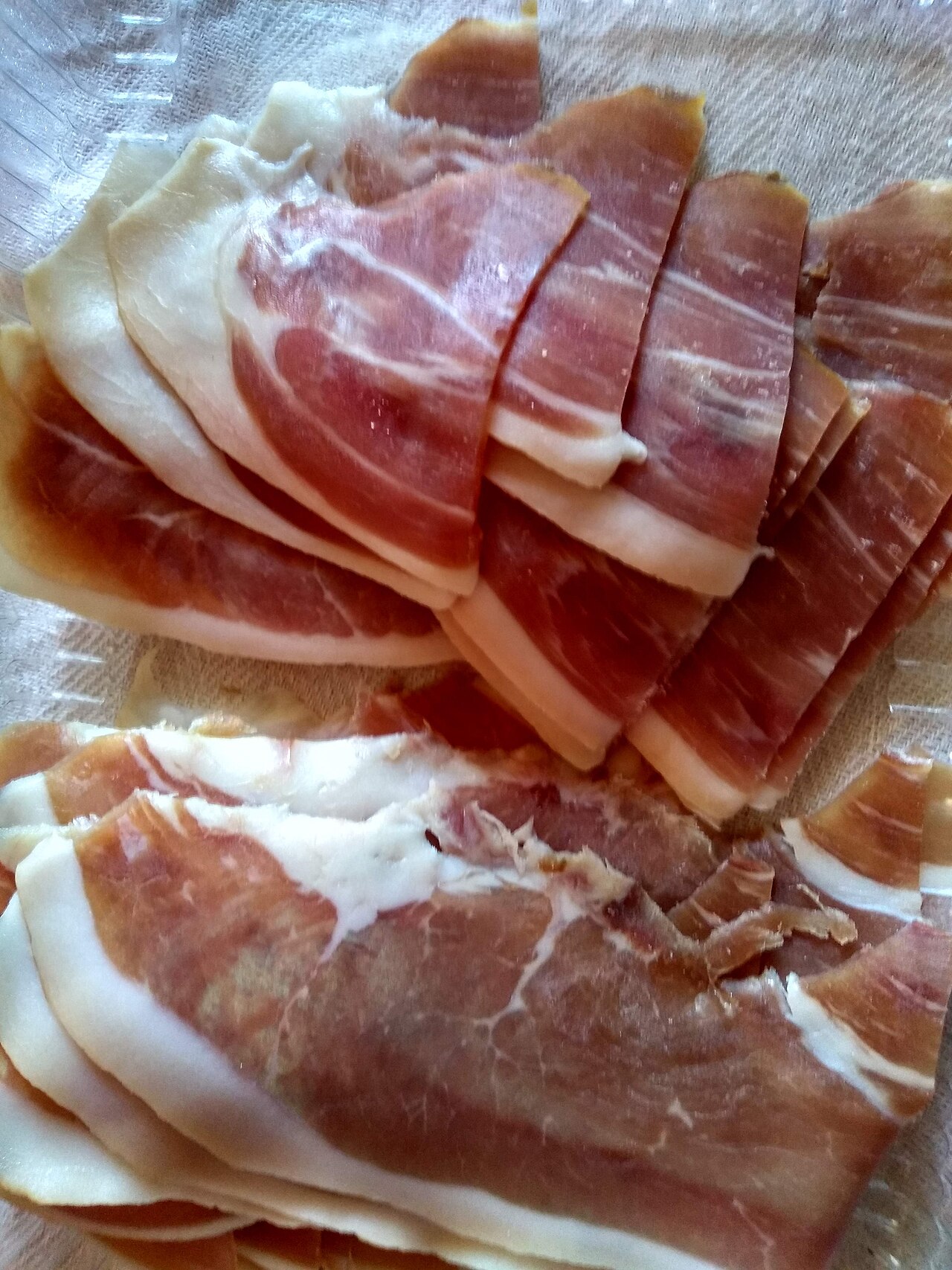
Dry-cured ham, lightly smoked over beech wood and dried in the cool mountain air. It is sliced very thin and served uncooked as a cold starter, often with Njeguši cheese.
Its makers say the flavour comes from the mix of sea air and mountain air. The whole process, from salting to maturing, takes about a year.
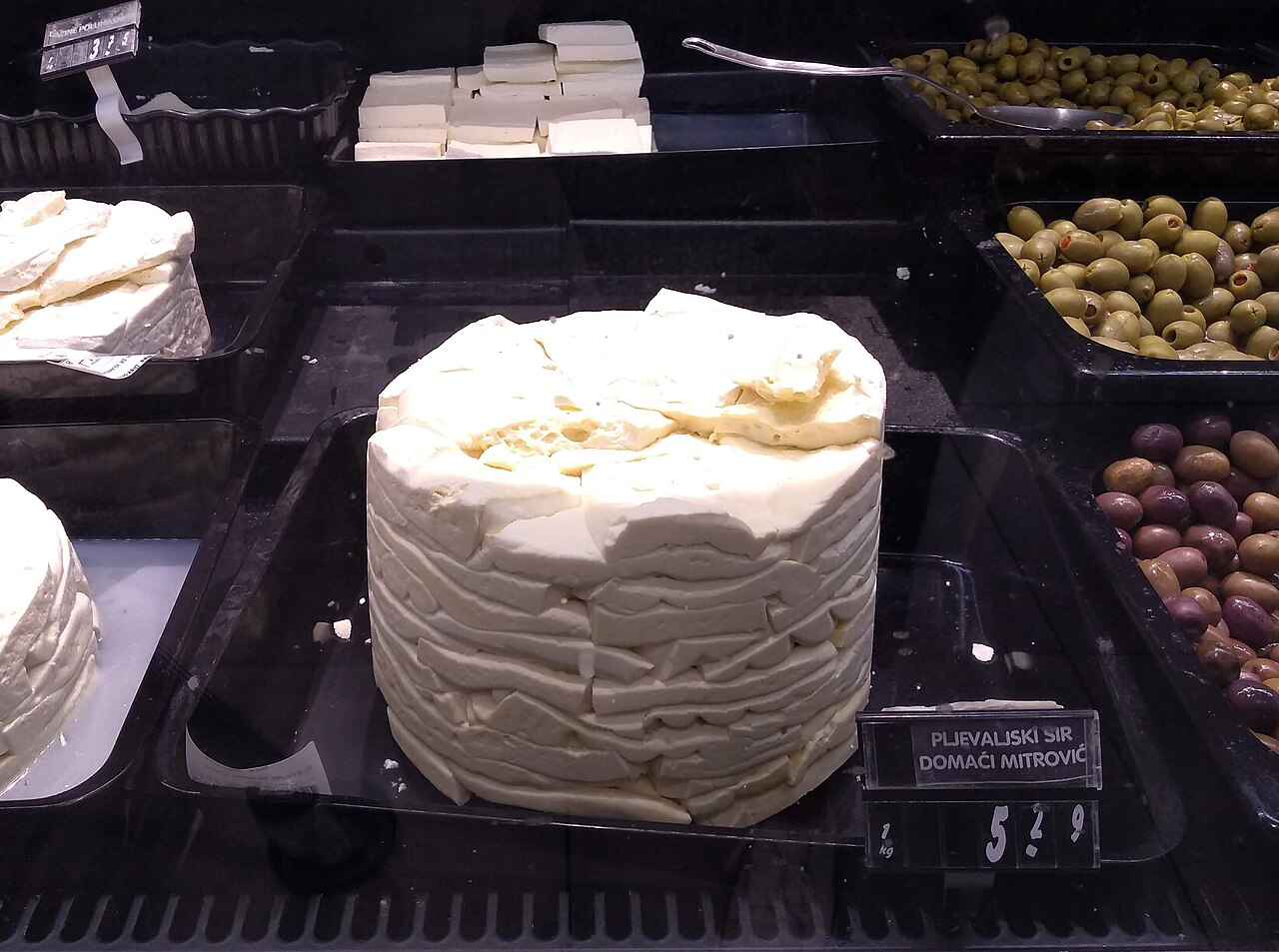
A salted, aged white cheese made from cow's milk. It is served as part of a cold starter platter.
Mountain cheeses in Montenegro come in many kinds, from Njeguši cheese kept in oil to cheese made from skimmed milk.
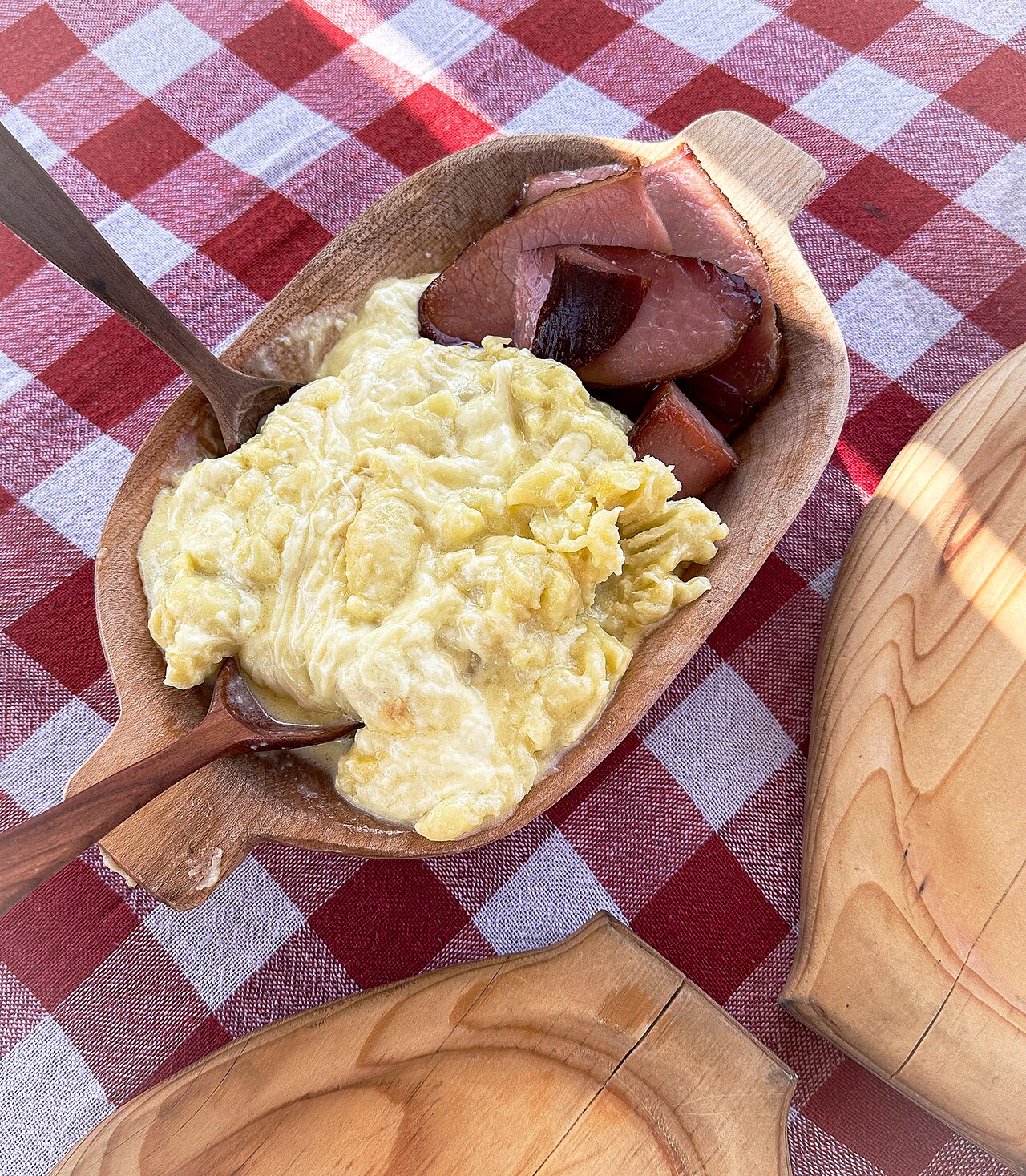
A thick, filling porridge of cornmeal and crushed potatoes, stirred with cheese and kajmak until smooth. It is traditionally eaten with a glass of cold milk, buttermilk or yoghurt.
Kačamak was once seen as poor people's food, but today it is served proudly in restaurants.
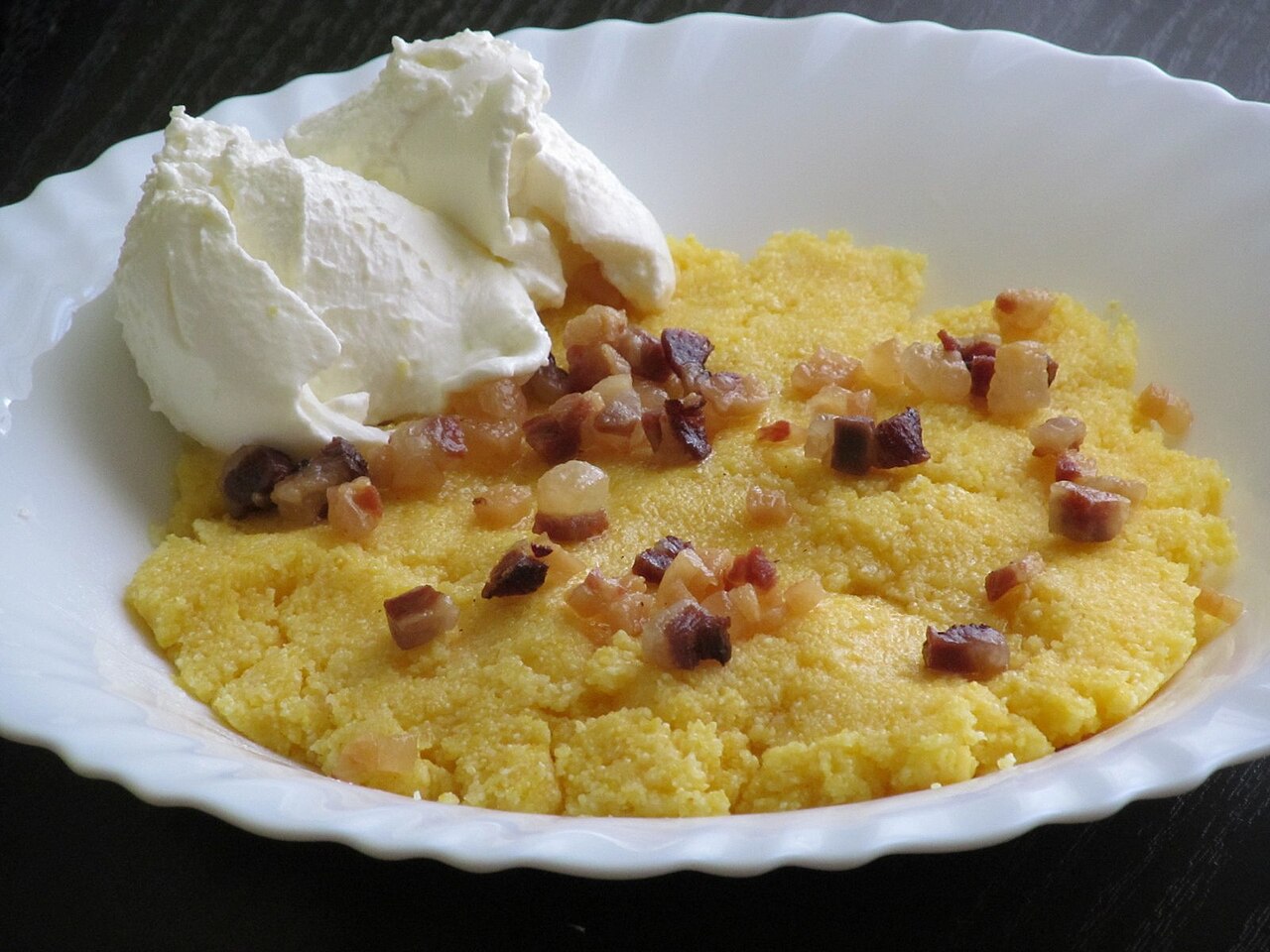
Cornmeal slowly cooked in kajmak or fresh cream until the fat rises to the top. It is very rich and is eaten for breakfast or as a hearty meal in the mountains.
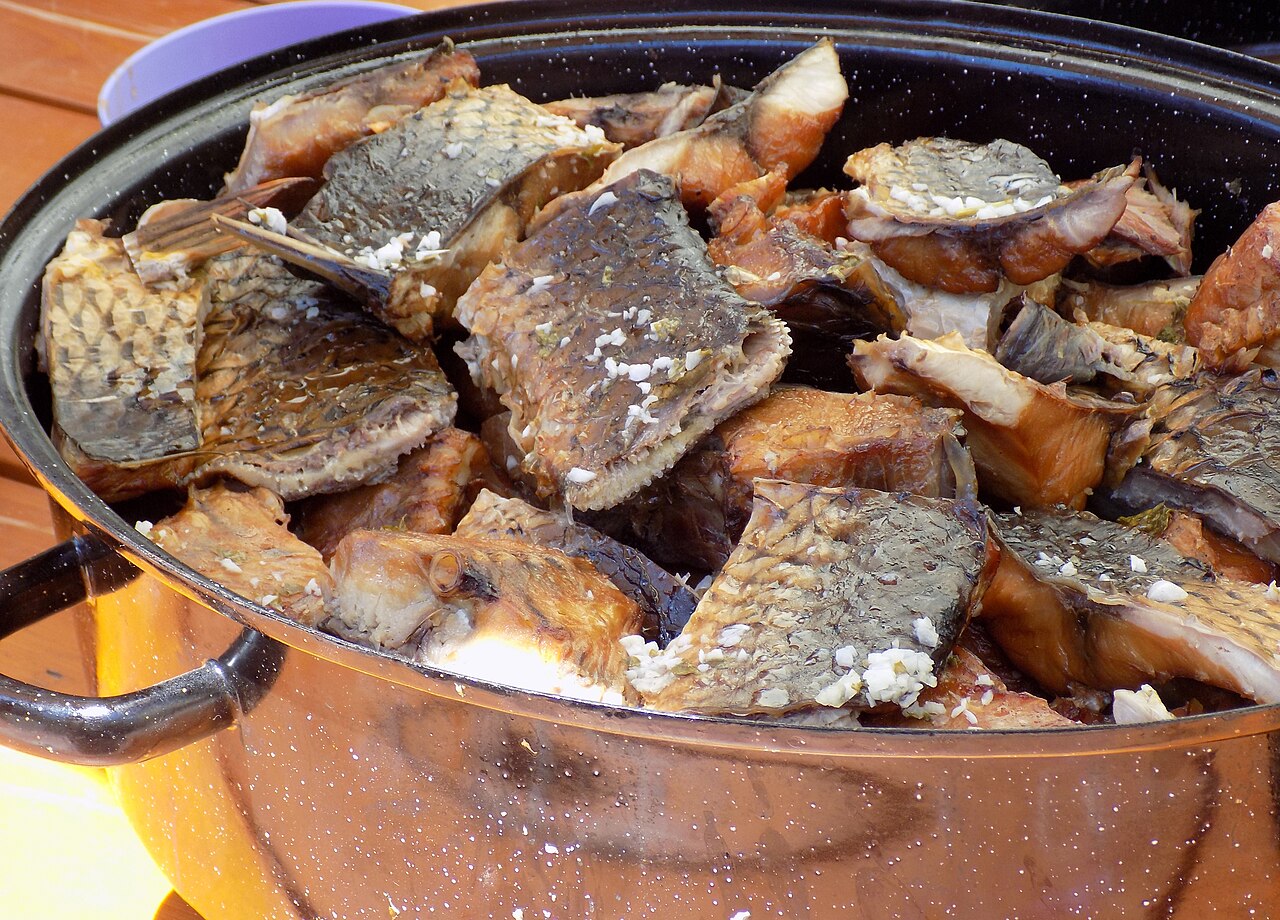
Fresh or smoked carp from Lake Skadar, a speciality of central Montenegro. Small smoked and dried fish called ukljeva (bleak) are also a lakeside speciality.
Each year the lakeside village of Virpazar holds a festival of wine and fish, and the air fills with smoke from fish frying.
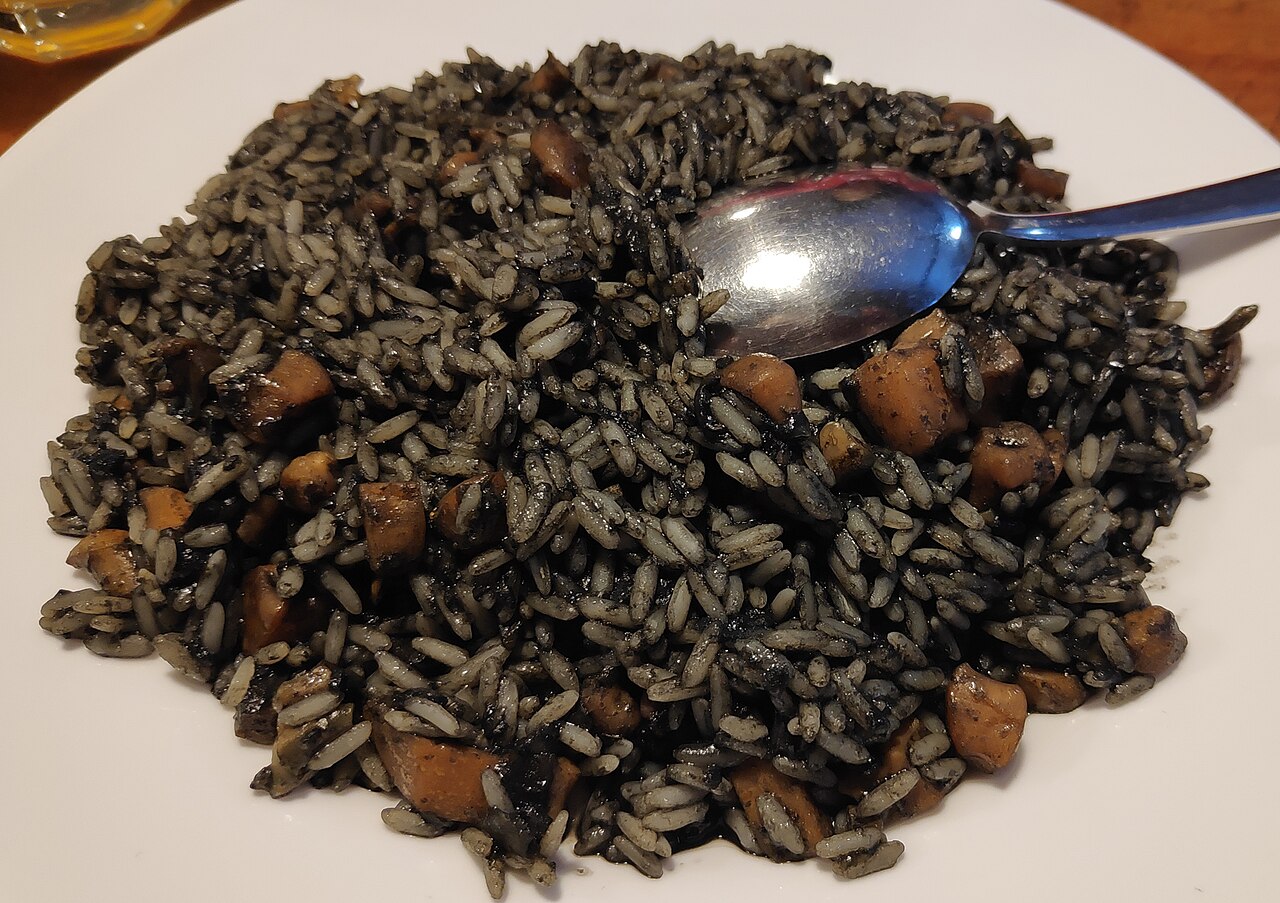
Rice cooked with cuttlefish and its ink, which turns the whole dish a glossy black. It is one of the classic seafood dishes of the coast, together with grilled squid and octopus salad.
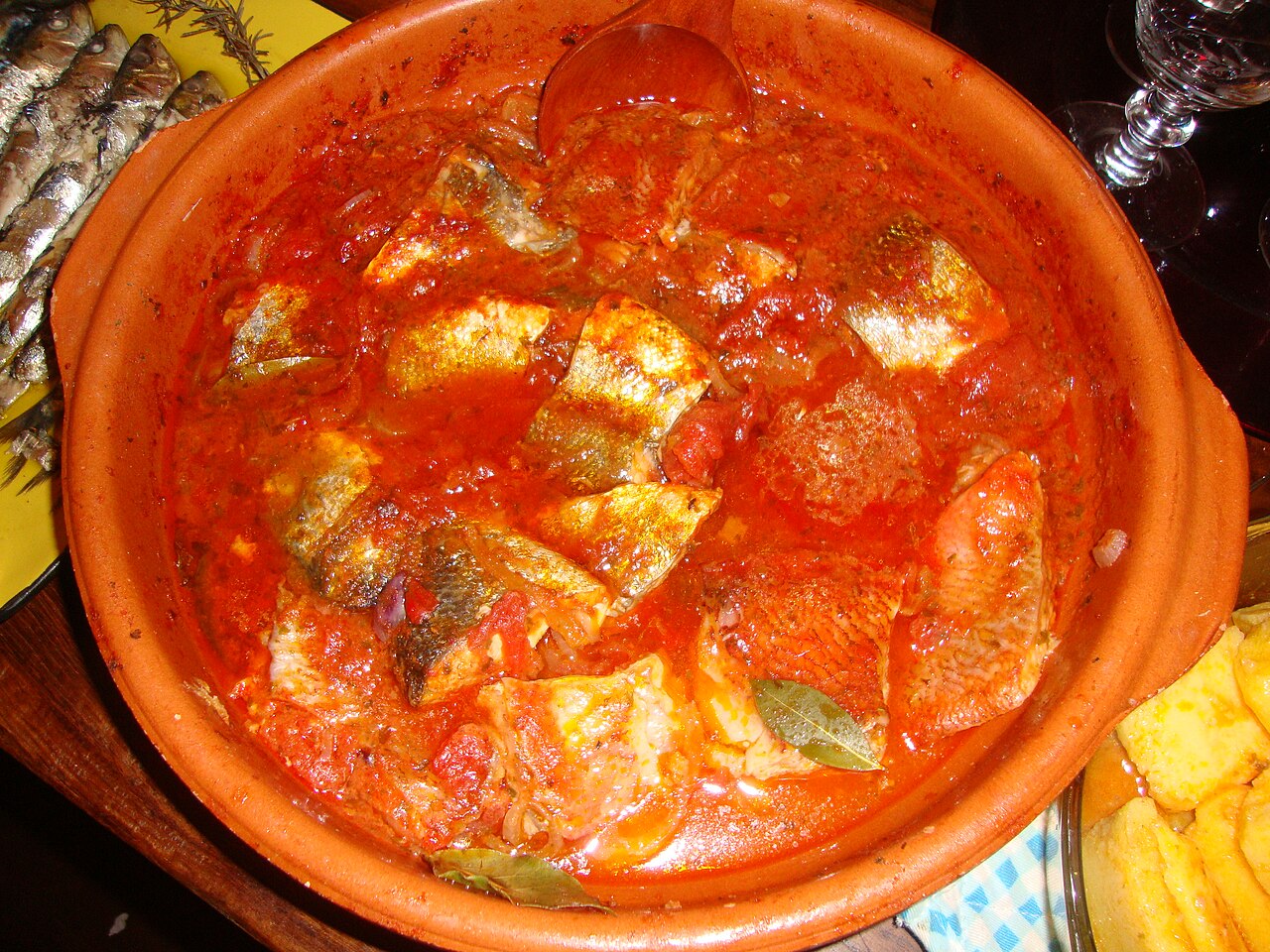
A fish stew made in one pot with several kinds of sea fish, tomato, onion and wine, often served with polenta to soak up the sauce.
The same kind of stew is cooked all around the Adriatic, called brodetto on the Italian side.
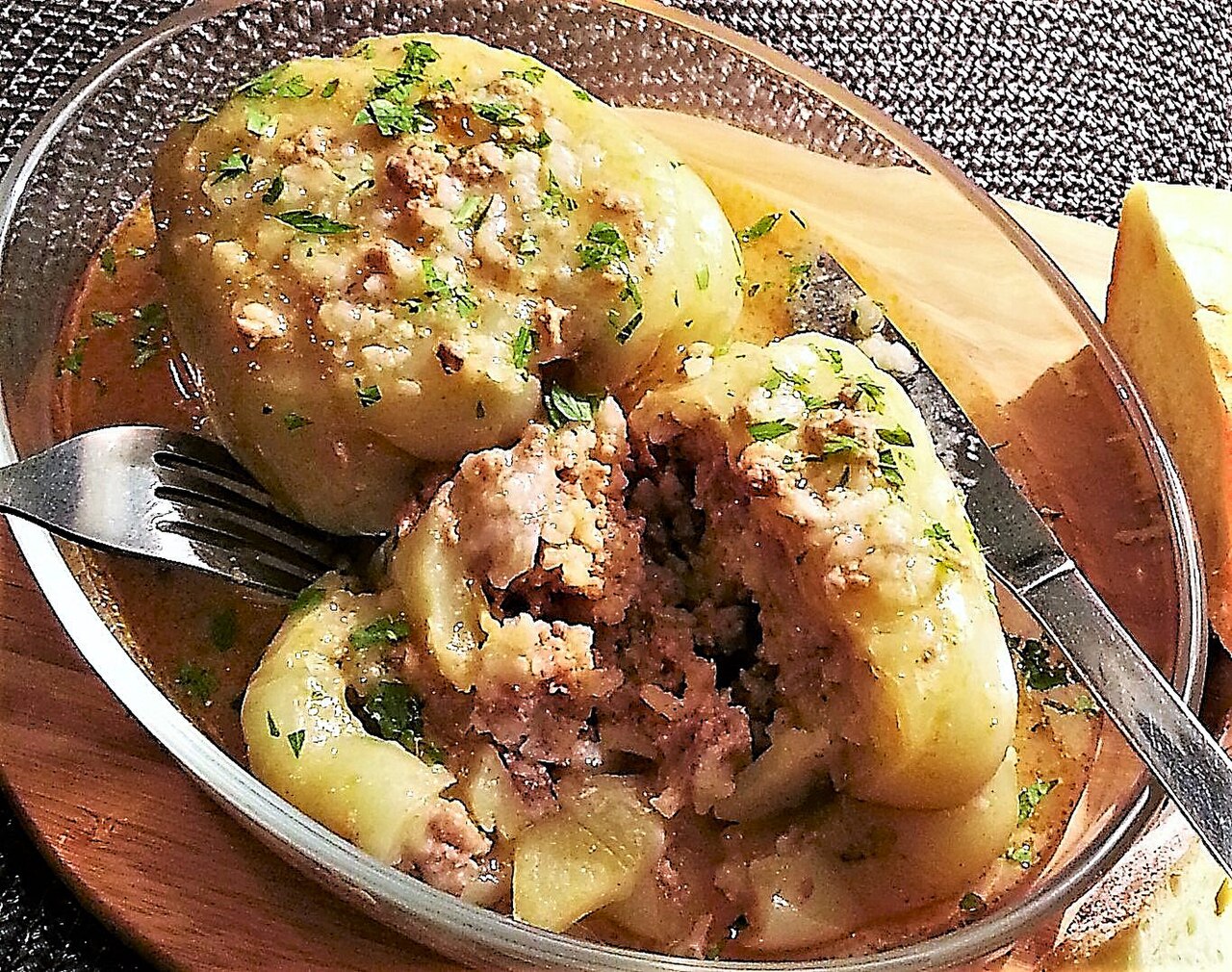
Bell peppers filled with minced meat and rice, then baked or simmered in a tomato sauce. A common home-cooked main course all over the country.
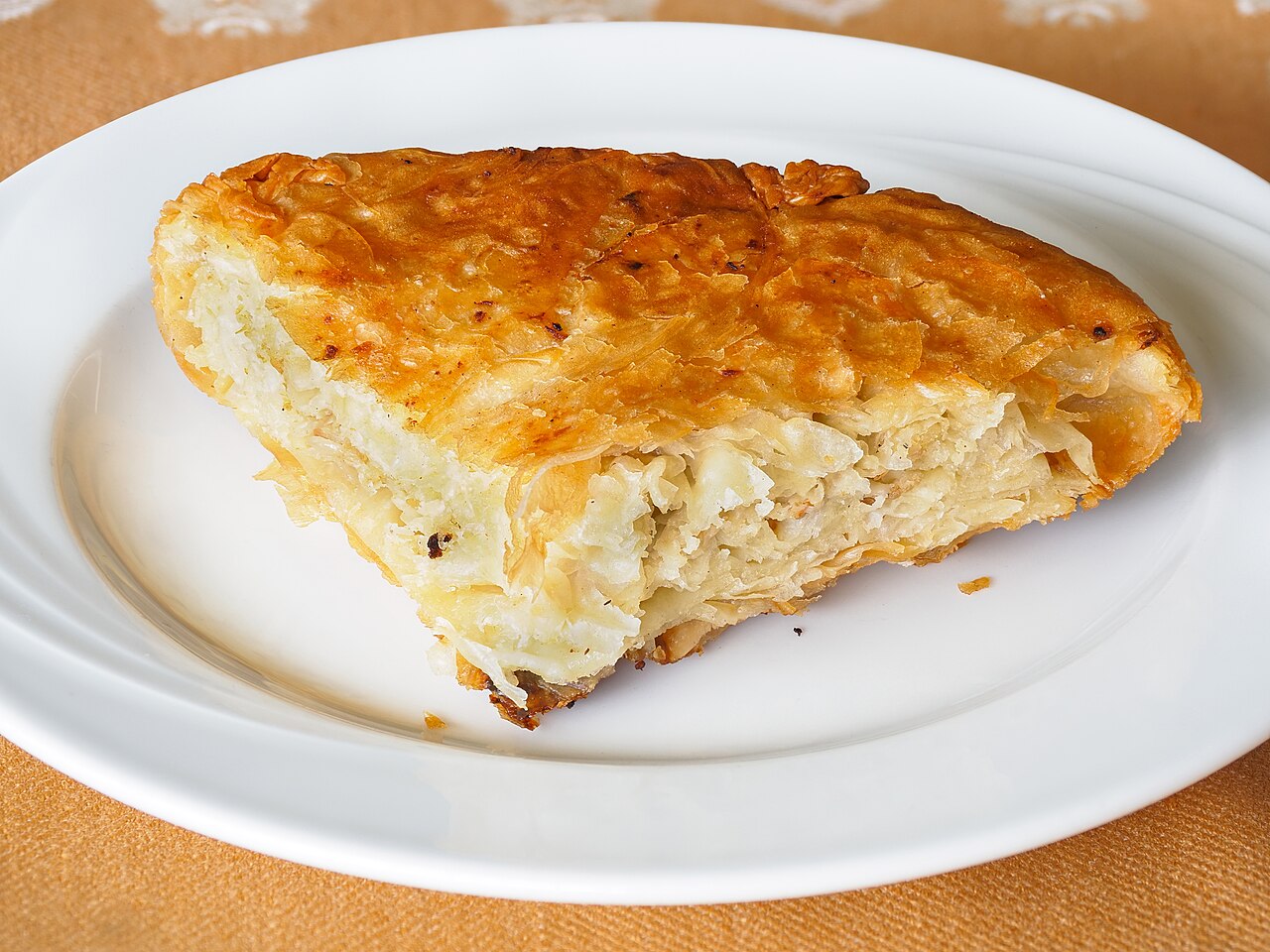
Layers of thin pastry filled with minced meat, cheese or spinach, baked in a large round pan and cut into wedges. It is the most popular fast food in the country and a favourite breakfast.
A burek baked with no filling at all is called 'prazan', which means empty.
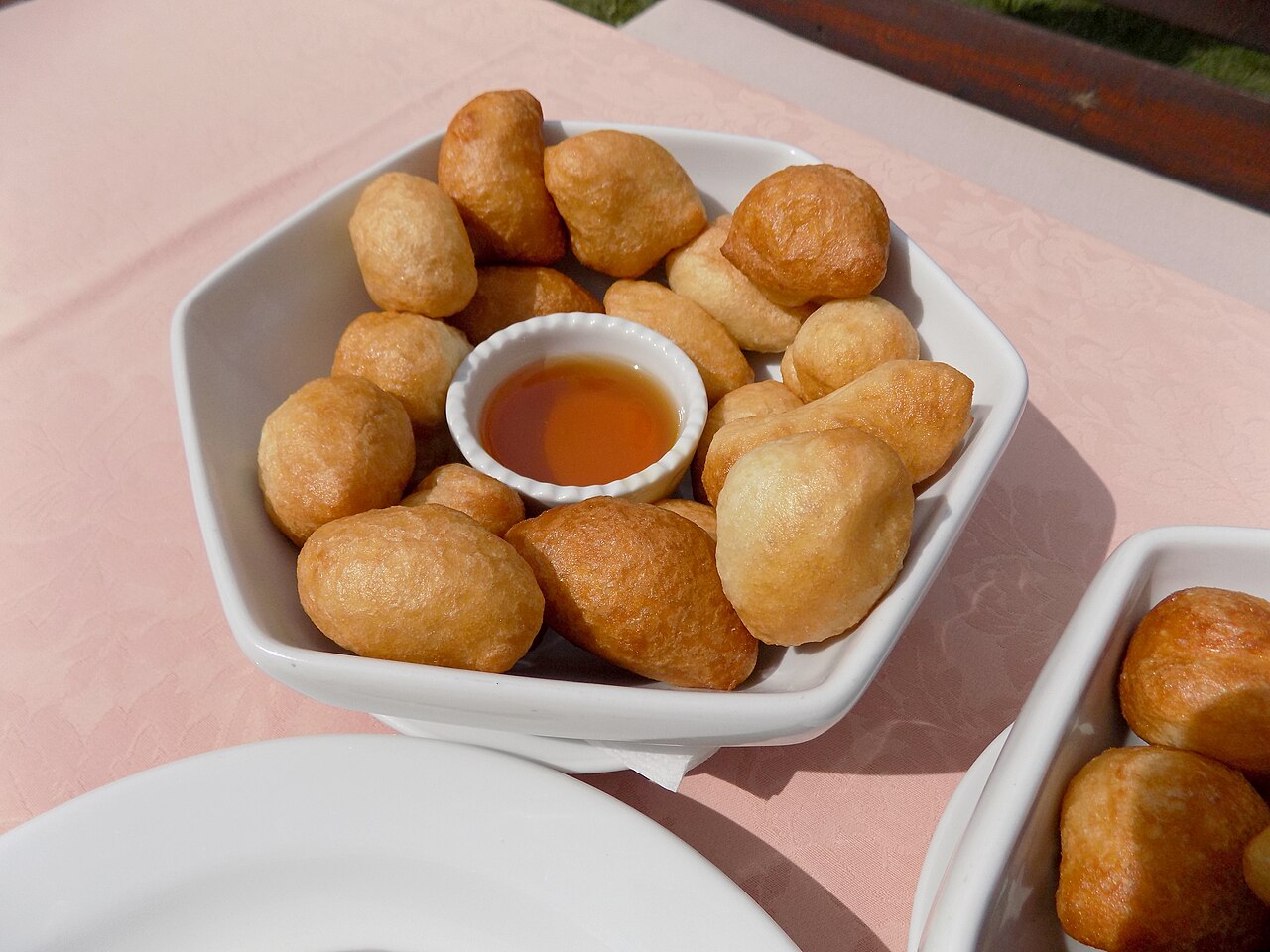
Small fritters of yeasted dough, fried until golden and puffed. They are served with honey, cheese or jam, for breakfast, with coffee, or as a treat for guests.
In Montenegro and parts of Bosnia and Herzegovina, these fritters made with yeasted dough are called priganice. Elsewhere in the region, similar fritters are called uštipci.
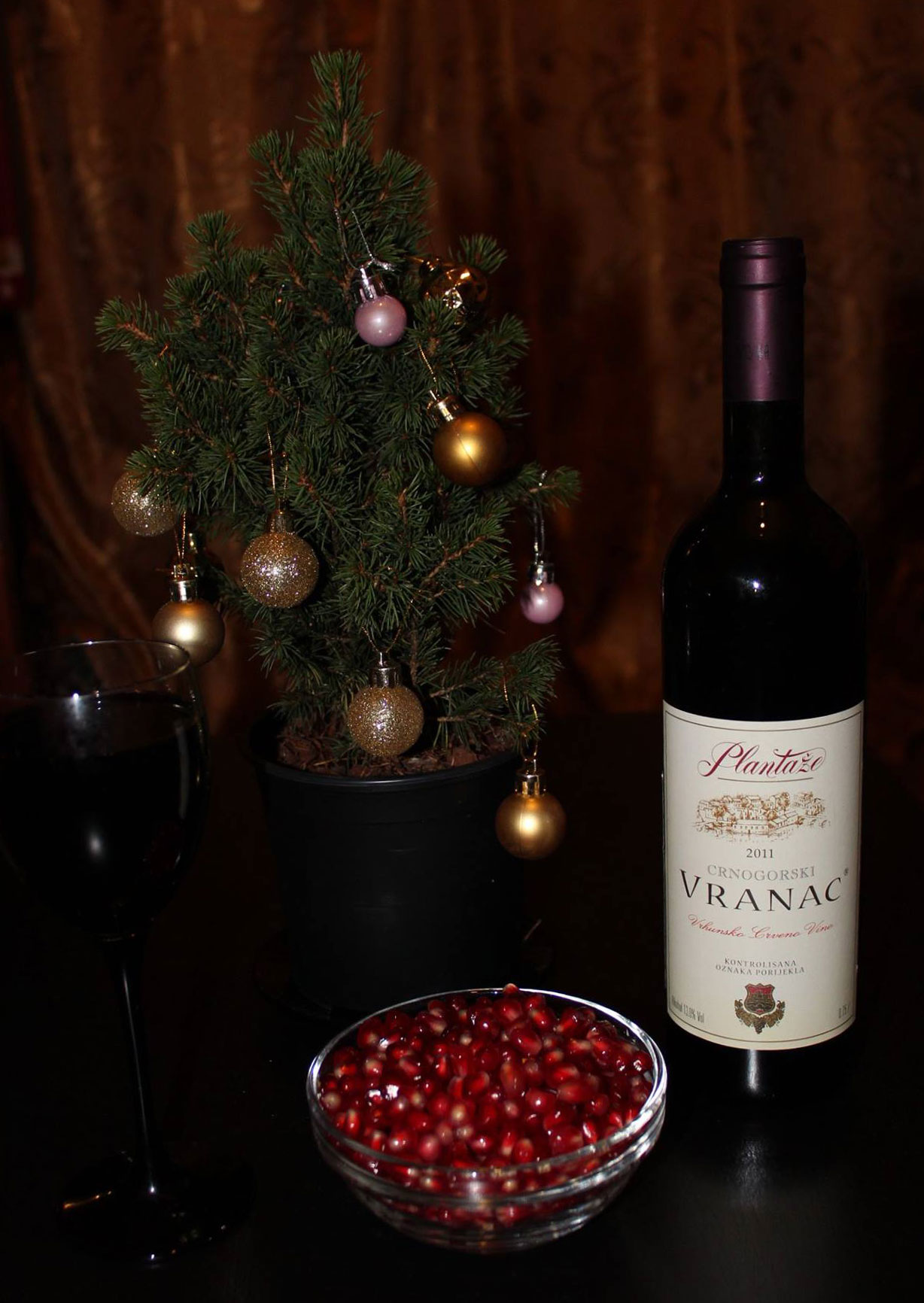
A deep red wine from Vranac, Montenegro's own grape. Vranac is the most planted grape in the country and is considered its most important.
Vranac is a cross of two old local grapes, Kratošija and Duljenga. In 2021 it grew on about half of all Montenegro's vineyards.
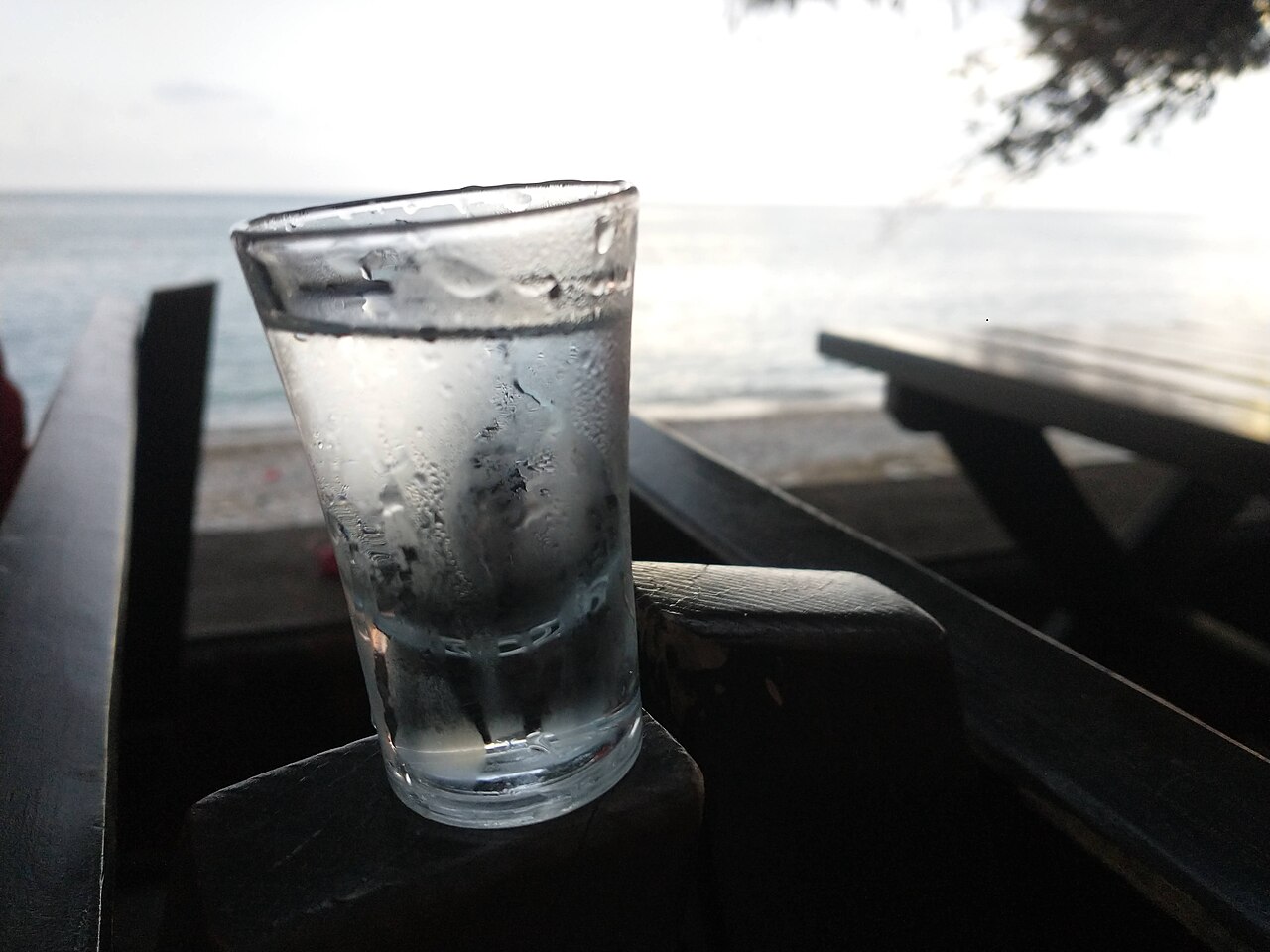
A strong clear brandy made from grapes, often homemade, and a local favourite to sip before an evening out. In the north, plum brandy (šljivovica) and apple brandy are more common.
Rakija is strong, so it is sipped slowly from a small glass. Anyone who does not drink alcohol can politely say no.
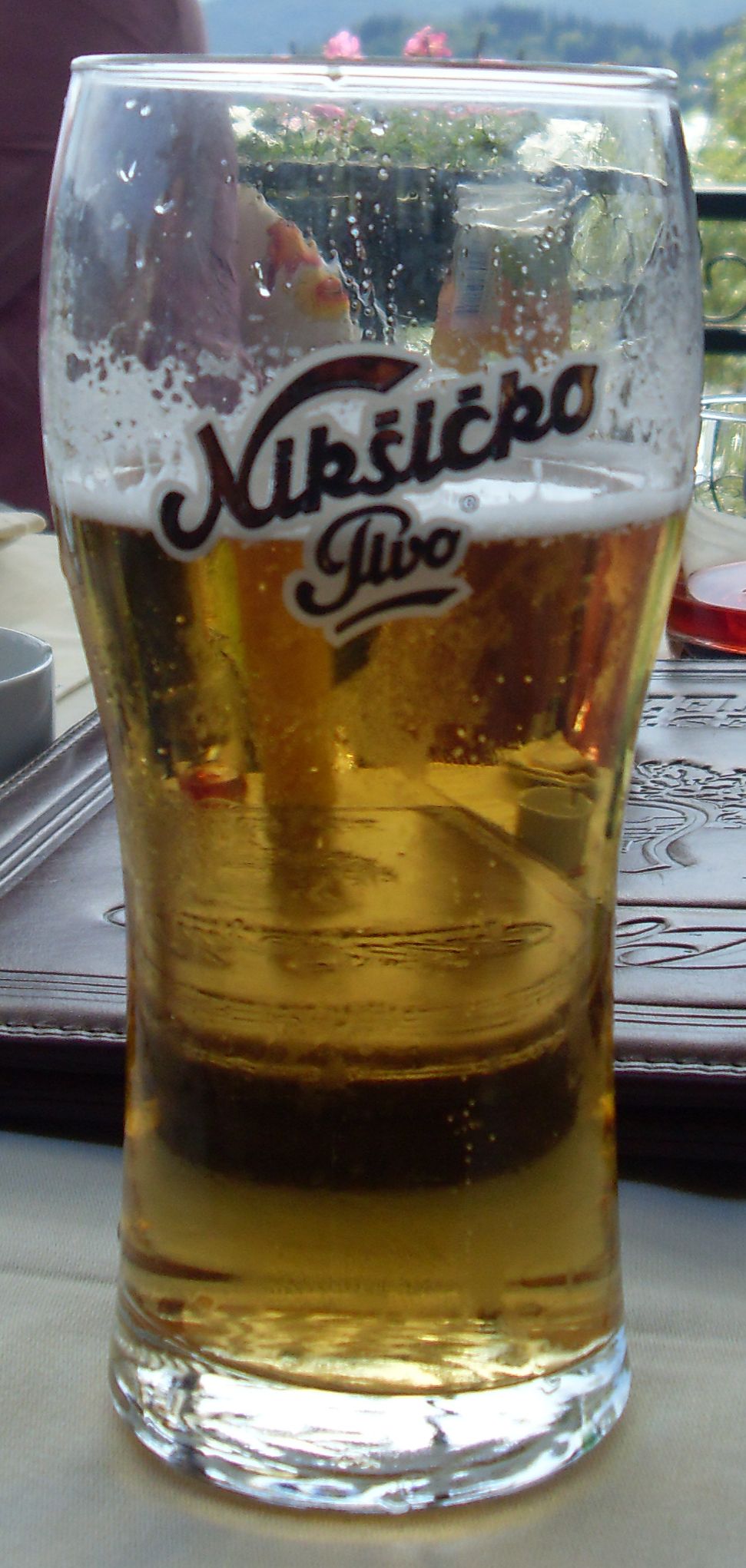
A pale lager from the Trebjesa brewery in Nikšić, by far the most popular beer in Montenegro.
Brewing in Nikšić goes back to 1896, when a brewery was opened there with the support of Prince Nikola.
Montenegro's towns are small but very different: modern Podgorica on its rivers, royal Cetinje below Mount Lovćen, stone Venetian ports around the Bay of Kotor, the beach towns of the south and mountain towns high in the north.
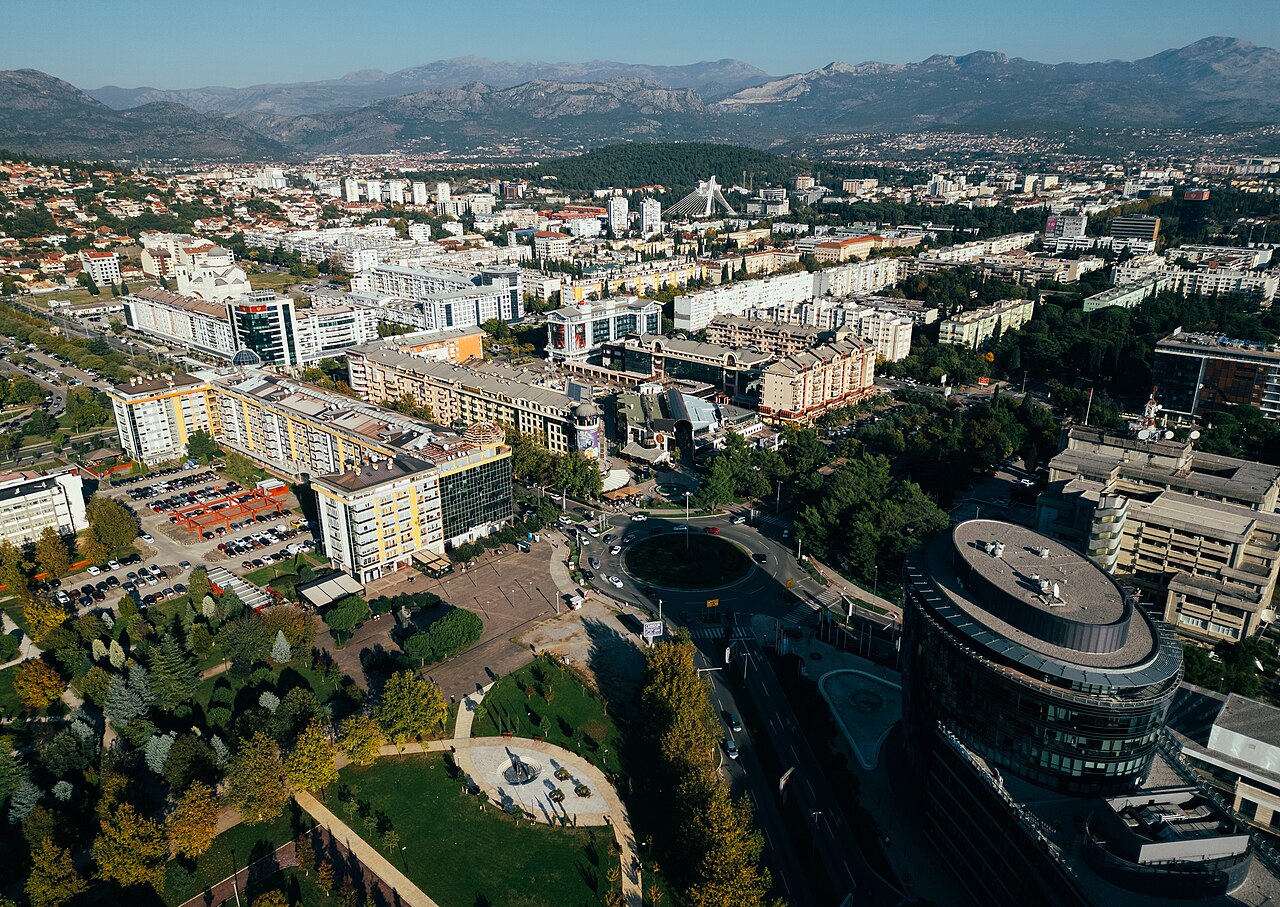
The capital and largest city, home to nearly a third of the country's people. It lies where the Ribnica flows into the Morača, on the plain north of Lake Skadar. The name means 'below the little hill'. From the Second World War until 1992 it was called Titograd.
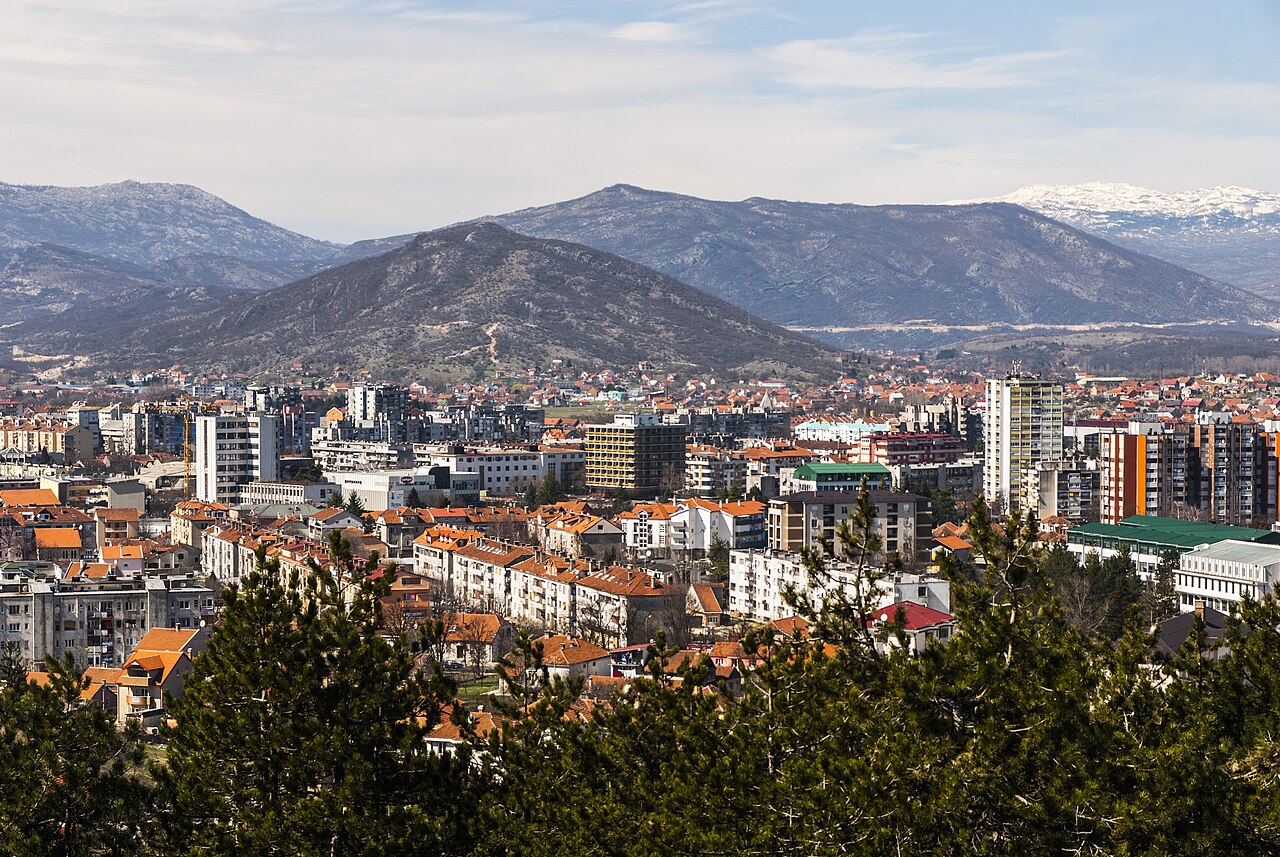
Montenegro's second-largest city, in the middle of the wide Nikšić field. Its municipality is the largest in the country by area. It is a centre of industry, education and culture.
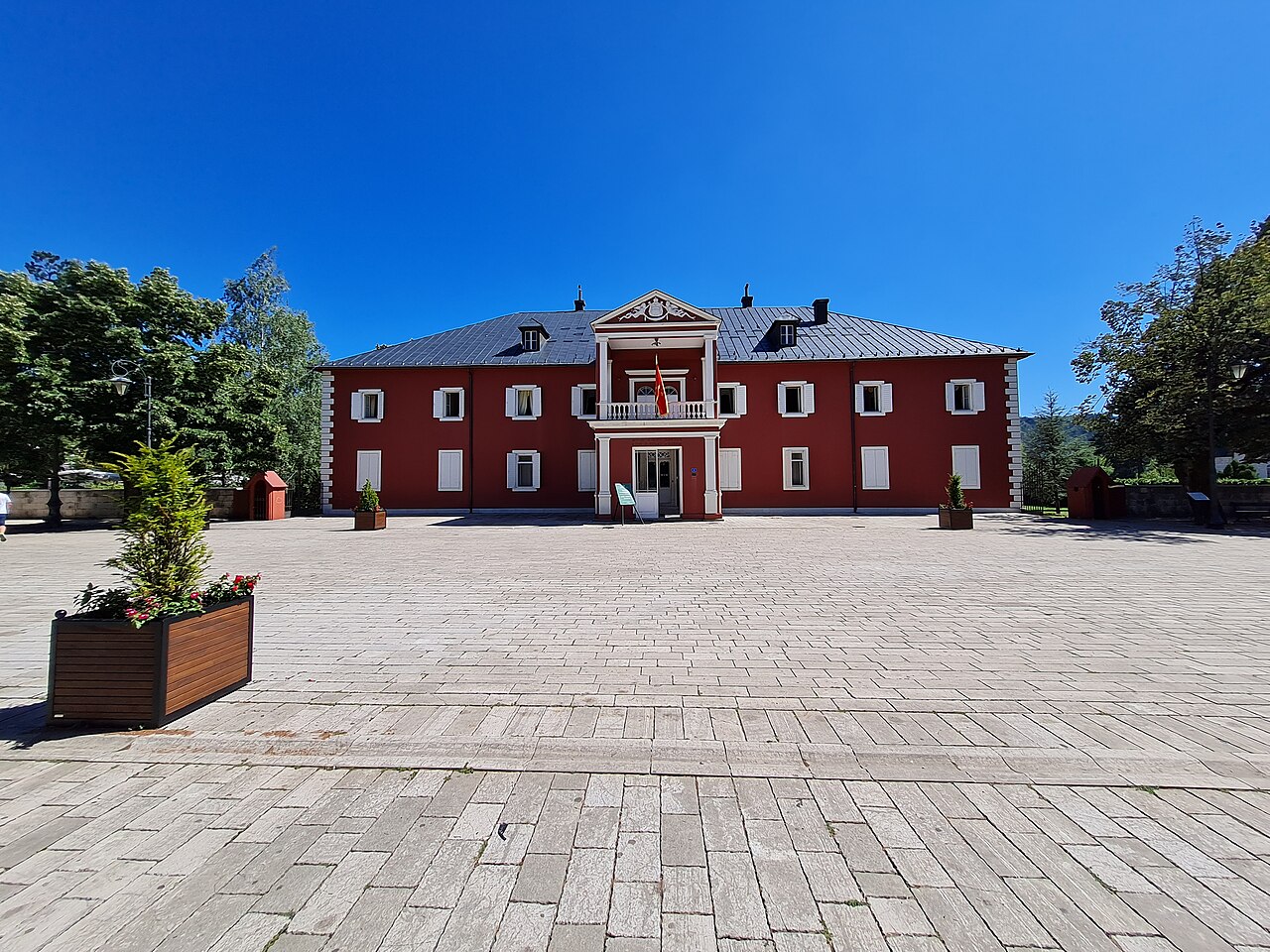
The old royal capital, founded in 1482 on a small plain below Mount Lovćen. Podgorica is the capital today, but Cetinje keeps the official residence of the president, the National Museum and the national library, and the old embassy buildings of the kingdom.
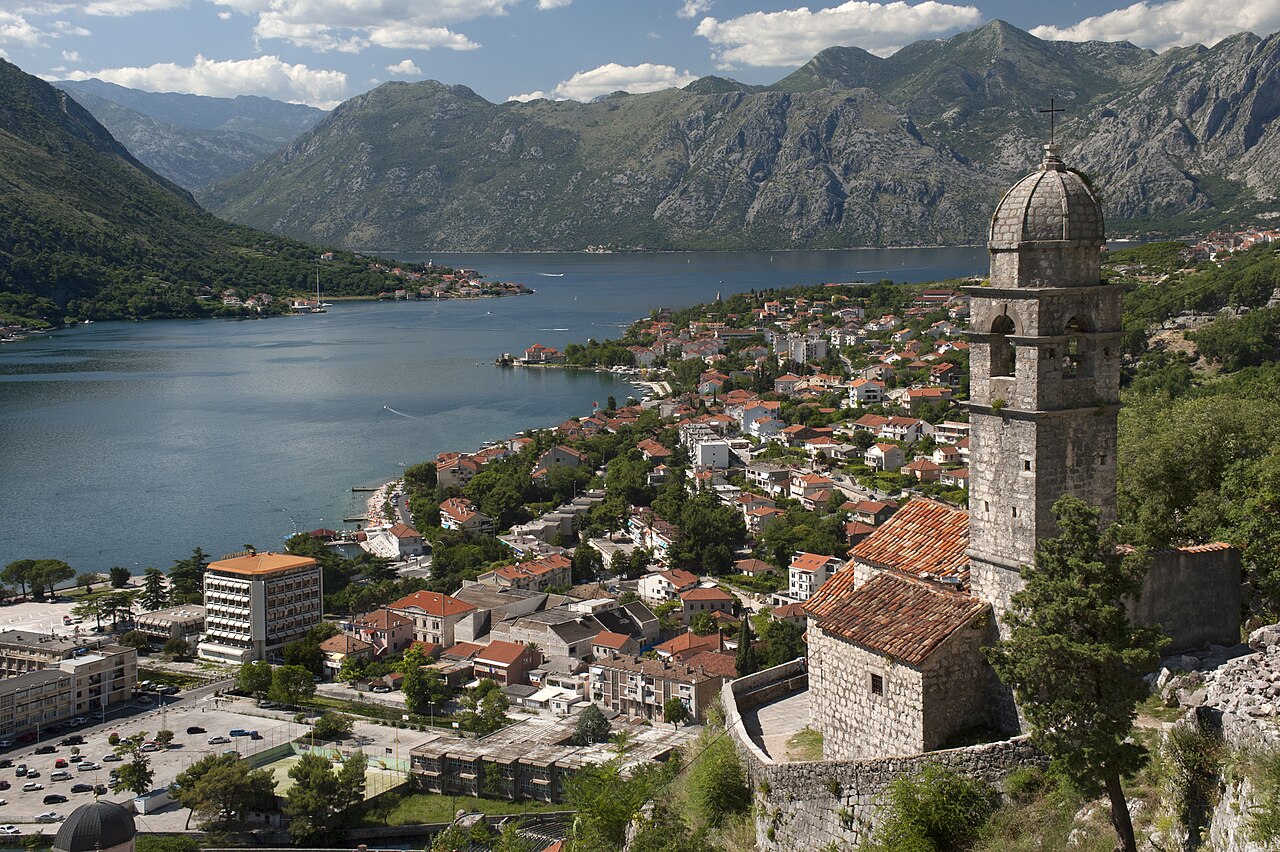
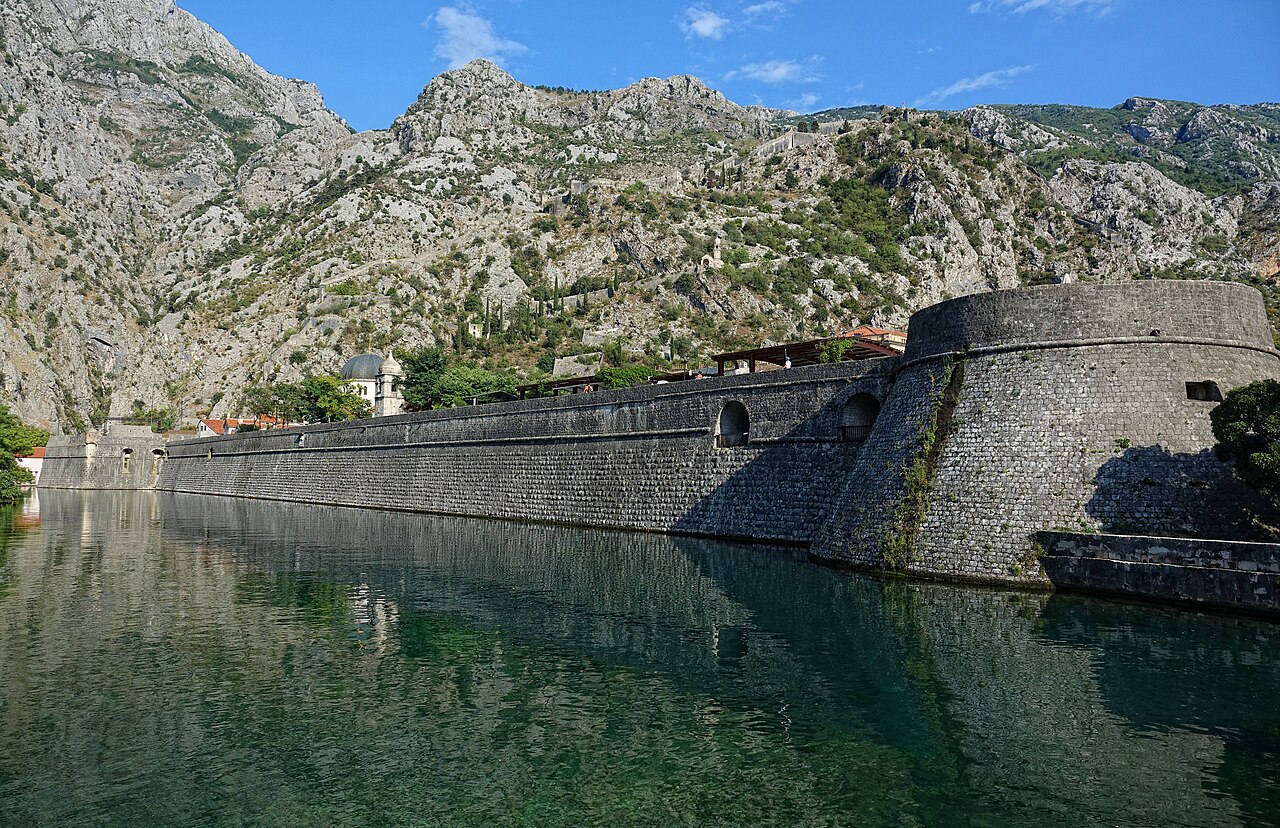
An old Mediterranean port in a hidden corner of the Bay of Kotor, surrounded by Venetian walls that climb the mountain behind it. The town and its bay are a UNESCO World Heritage Site.
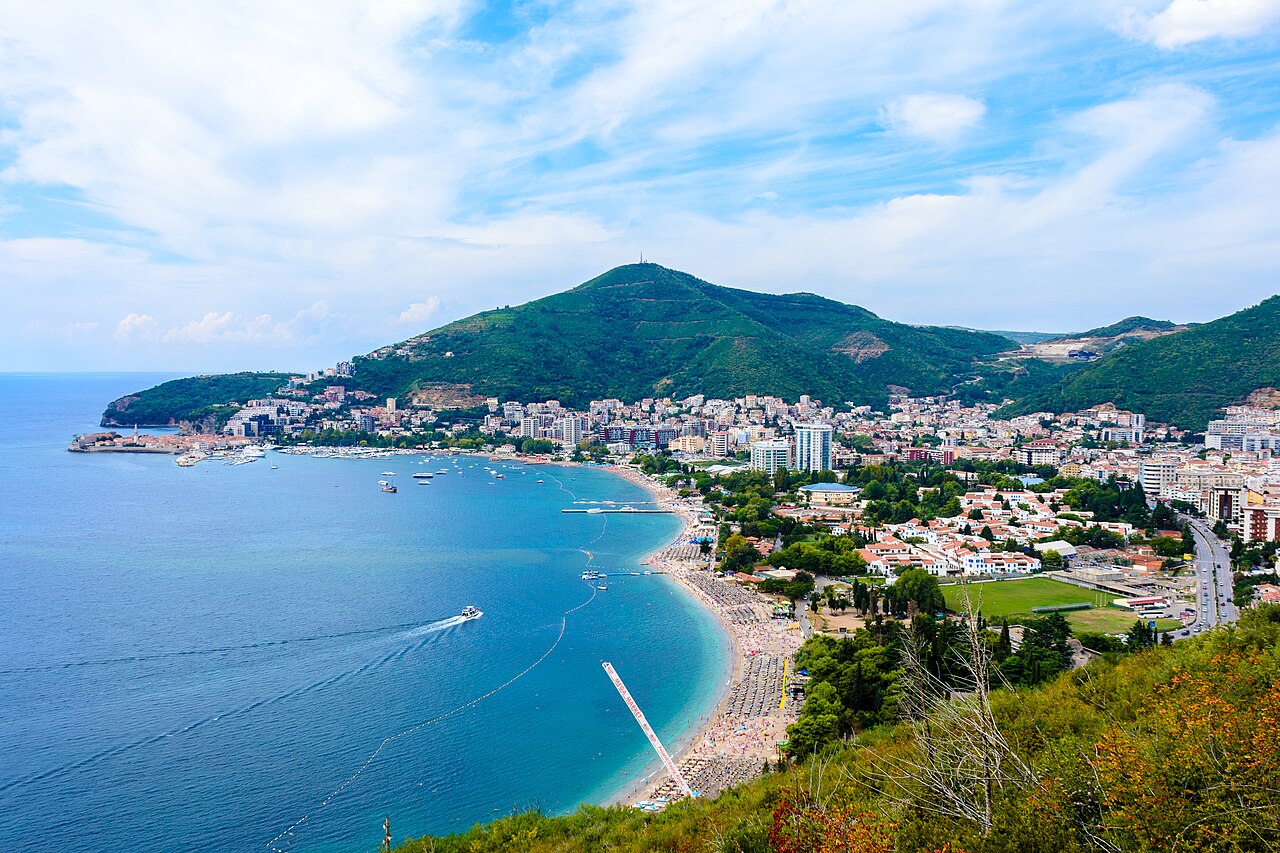
The centre of Montenegro's beach tourism, with a walled old town on a small peninsula. It is about 2,500 years old, one of the oldest settlements on the Adriatic coast.
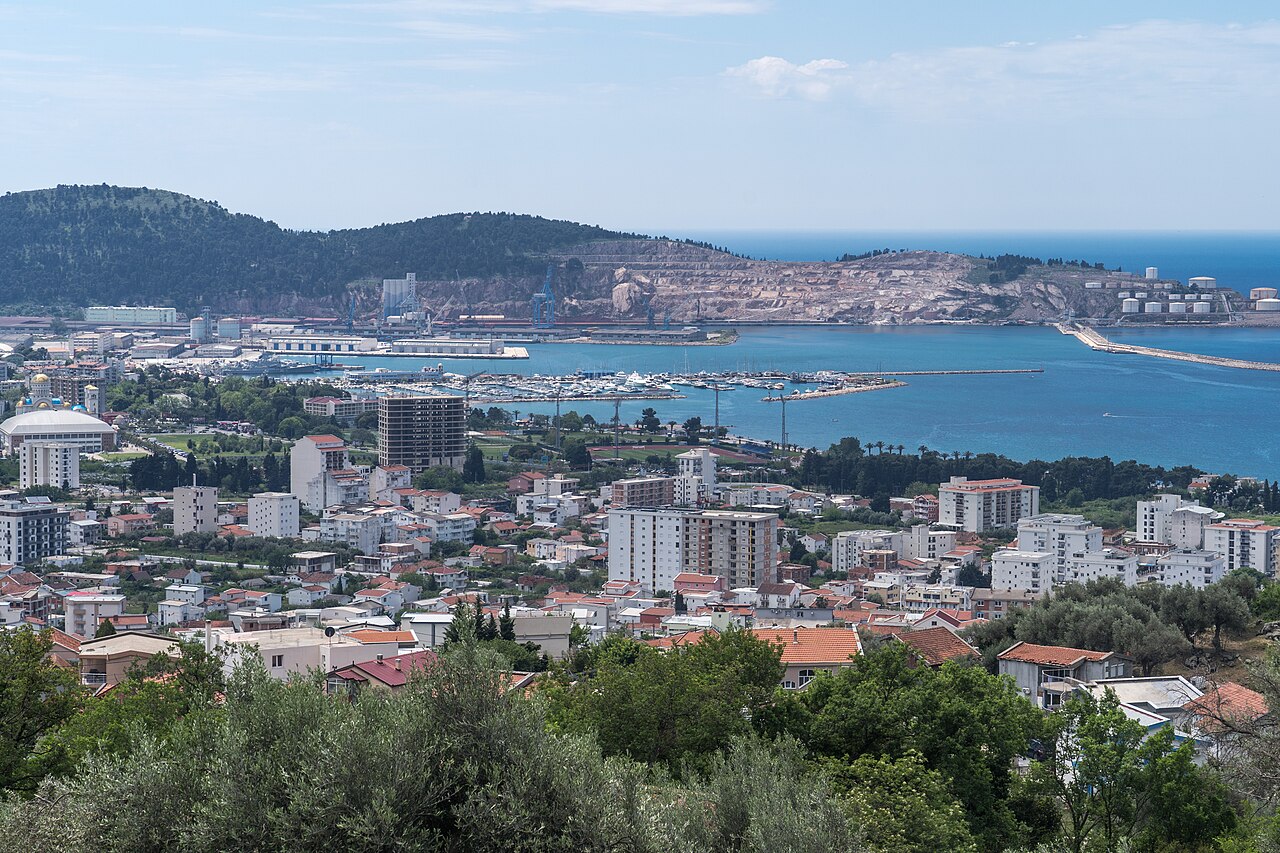
Montenegro's main seaport and the end of the railway from Belgrade. Ferries sail from here to Bari in Italy. The ruined hilltop town of Stari Bar lies a few kilometres inland.
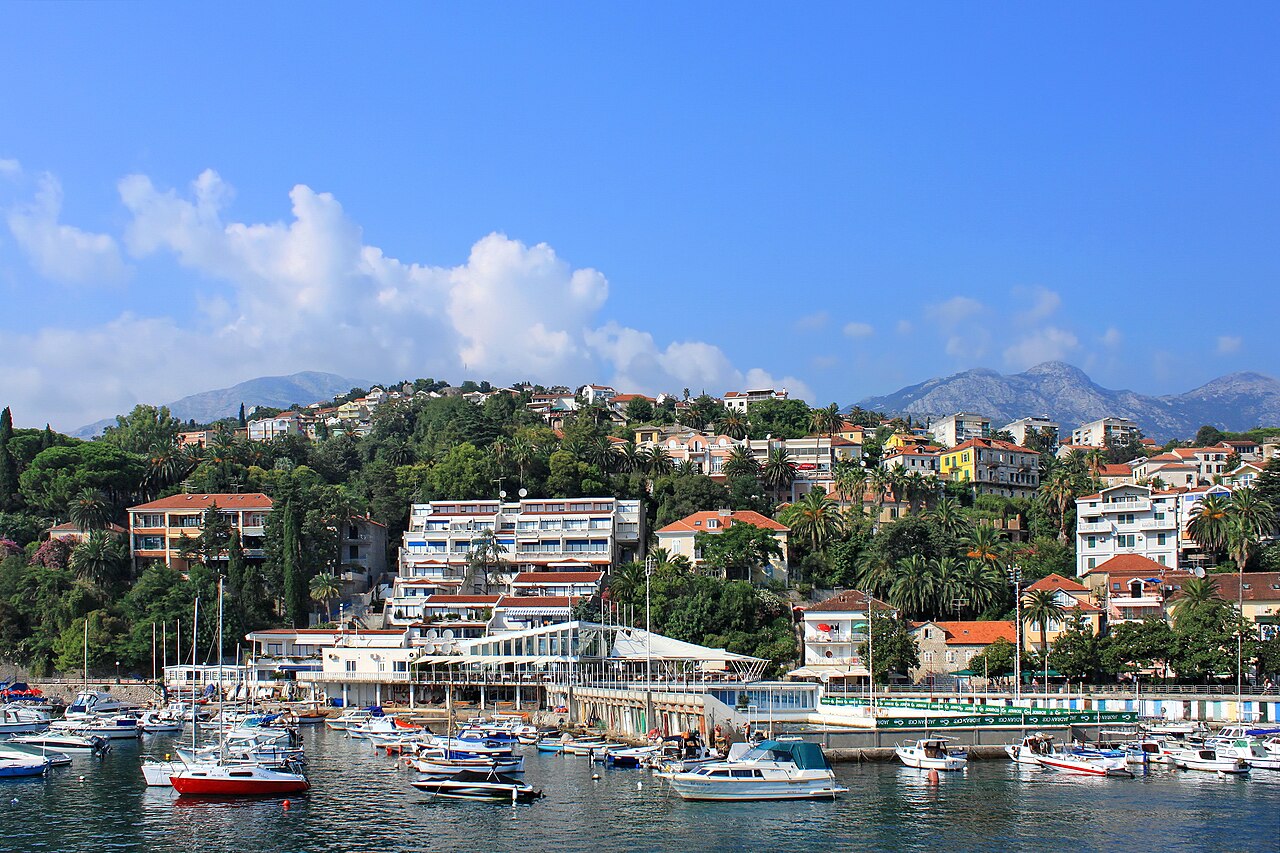
A seaside town at the western entrance to the Bay of Kotor, below Mount Orjen. It was founded as a fortress in 1382 by King Tvrtko I of Bosnia, then ruled by the Ottomans and later by Venice.
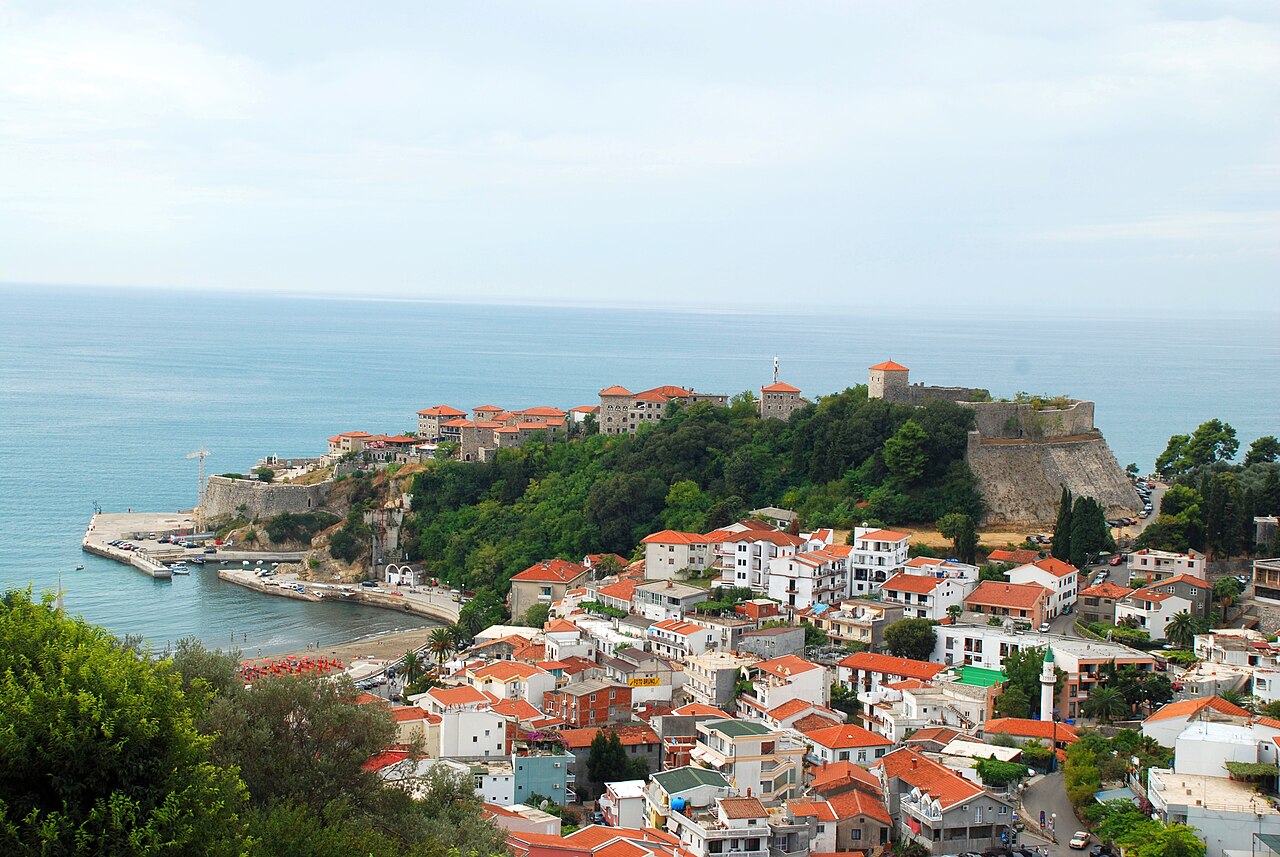
The southernmost town, near the border with Albania, and the centre of Montenegro's Albanian community. It was founded in the 5th century BC and was an Ottoman town for over 300 years, with many mosques and an old castle above the sea.
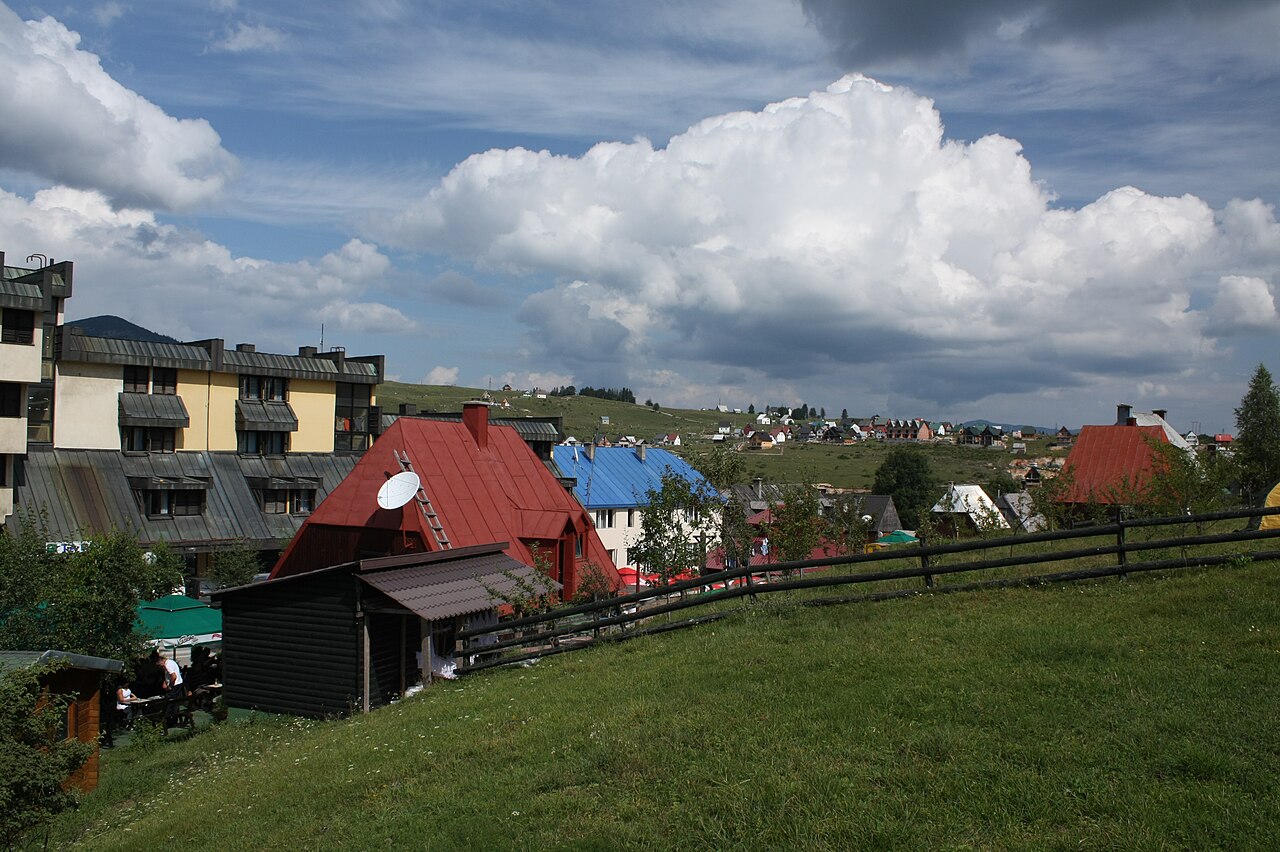
A small mountain town at 1,456 metres, in the heart of the Durmitor range. It is the starting point for hikes, the Black Lake and trips to the Tara River Canyon.
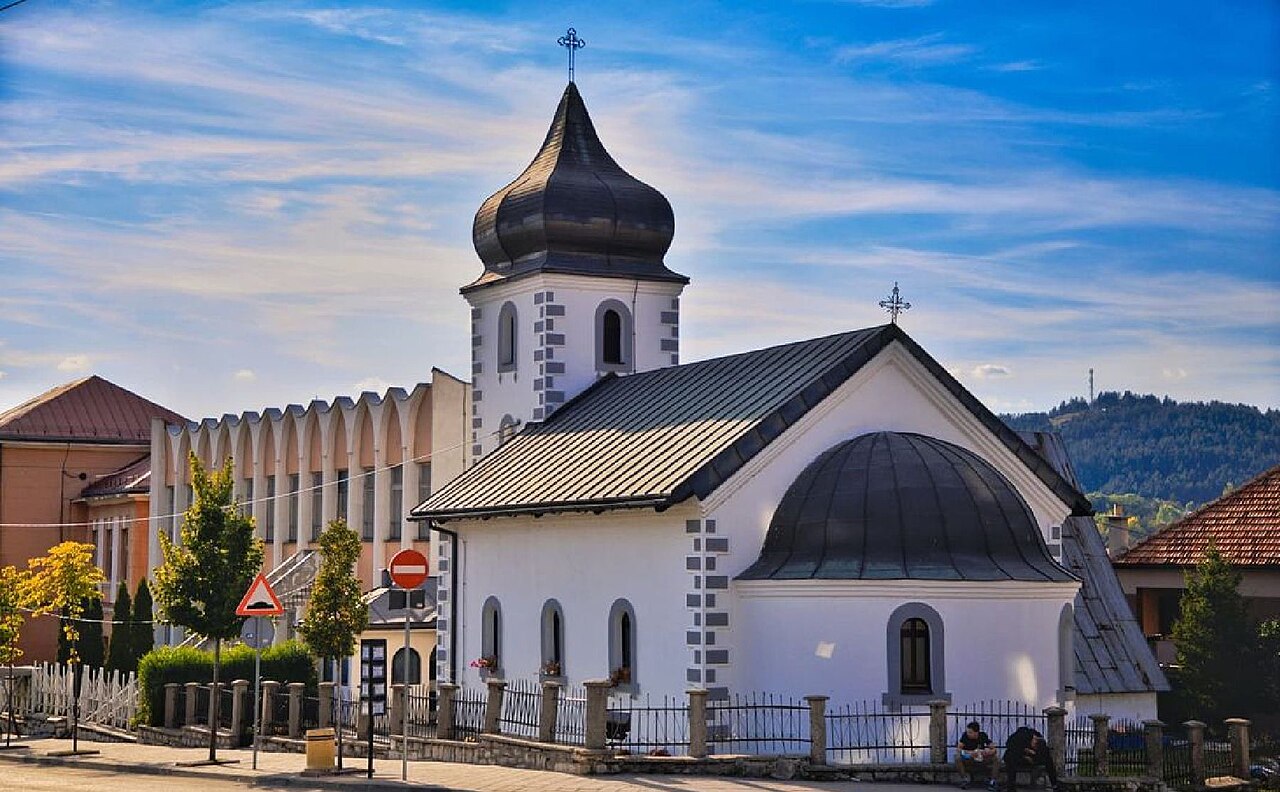
A town on the Ćehotina river in the far north, near the borders with Bosnia and Herzegovina and Serbia. In the Middle Ages it stood at a crossroads of trade routes from the coast to the interior.
A maze of stone lanes, squares and churches, including the Cathedral of Saint Tryphon, consecrated in 1166. Walls about 4.5 km long climb the steep mountain above the town. Kotor and its bay became a UNESCO World Heritage Site in 1979, and its Venetian defences were listed again in 2017.
UNESCO World Heritage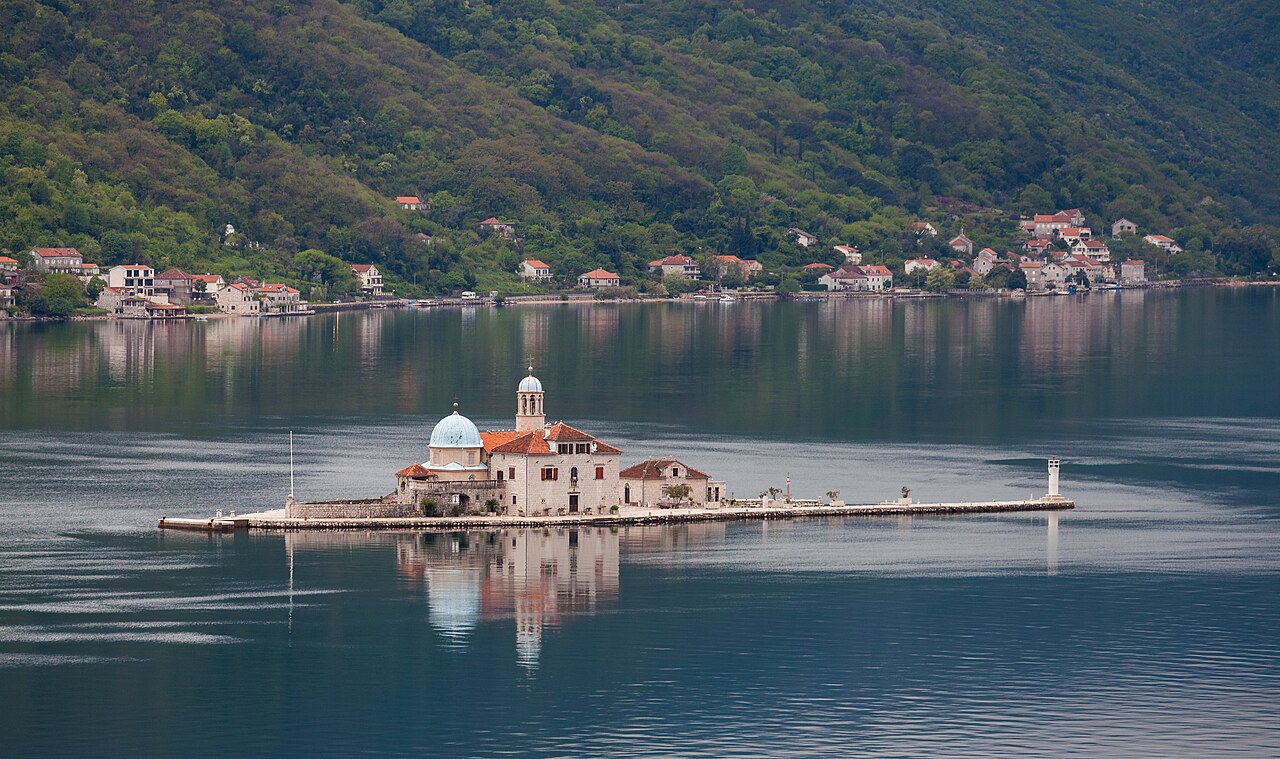
A small man-made island off the town of Perast, about 12 km by road from Kotor, with a Catholic church and a museum. Legend says sailors found an icon of the Madonna on a rock here in 1452 and began adding stones after every safe voyage. It lies within the Kotor World Heritage Site.
UNESCO World Heritage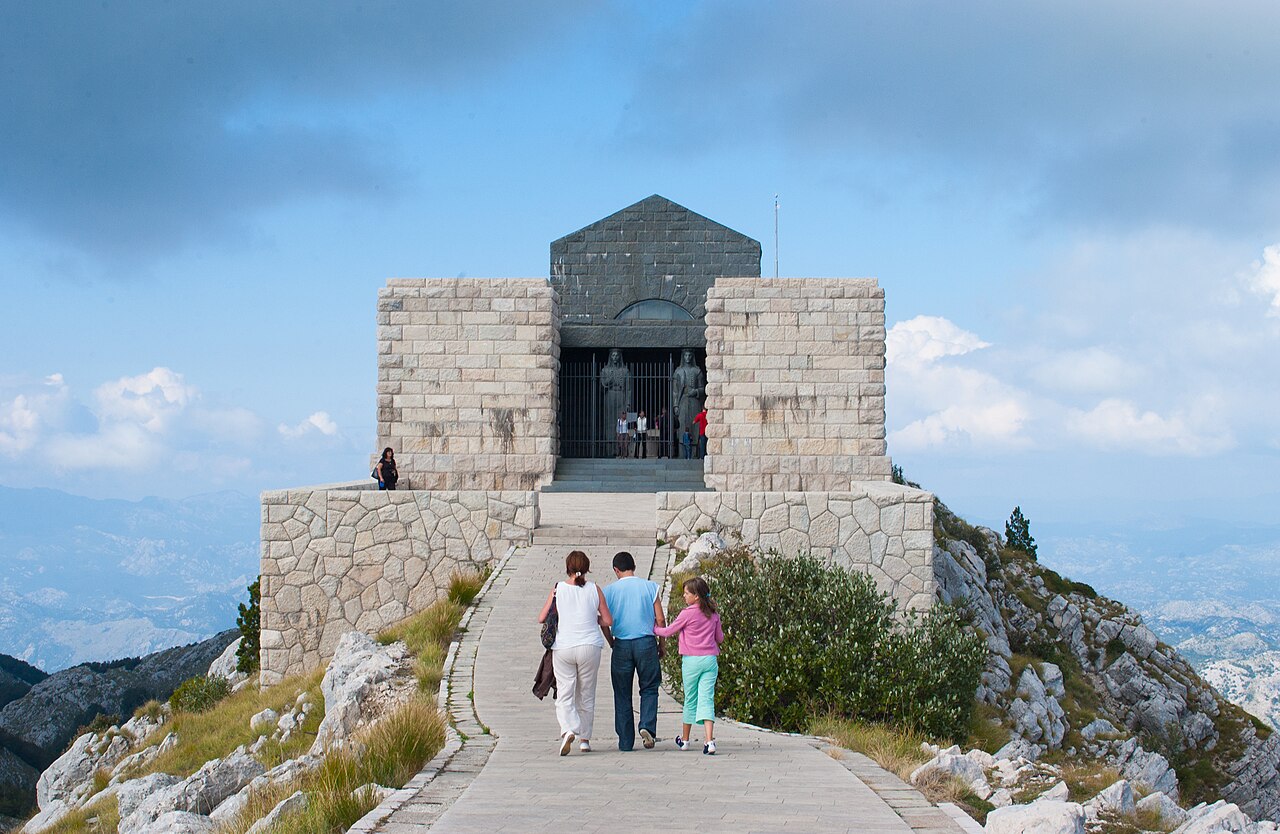
The tomb of the poet and prince-bishop Petar II Petrović-Njegoš, on the summit of Jezerski vrh in Lovćen National Park, above Cetinje. Njegoš himself chose to be buried here. The present mausoleum, designed by the sculptor Ivan Meštrović, was completed in 1974.
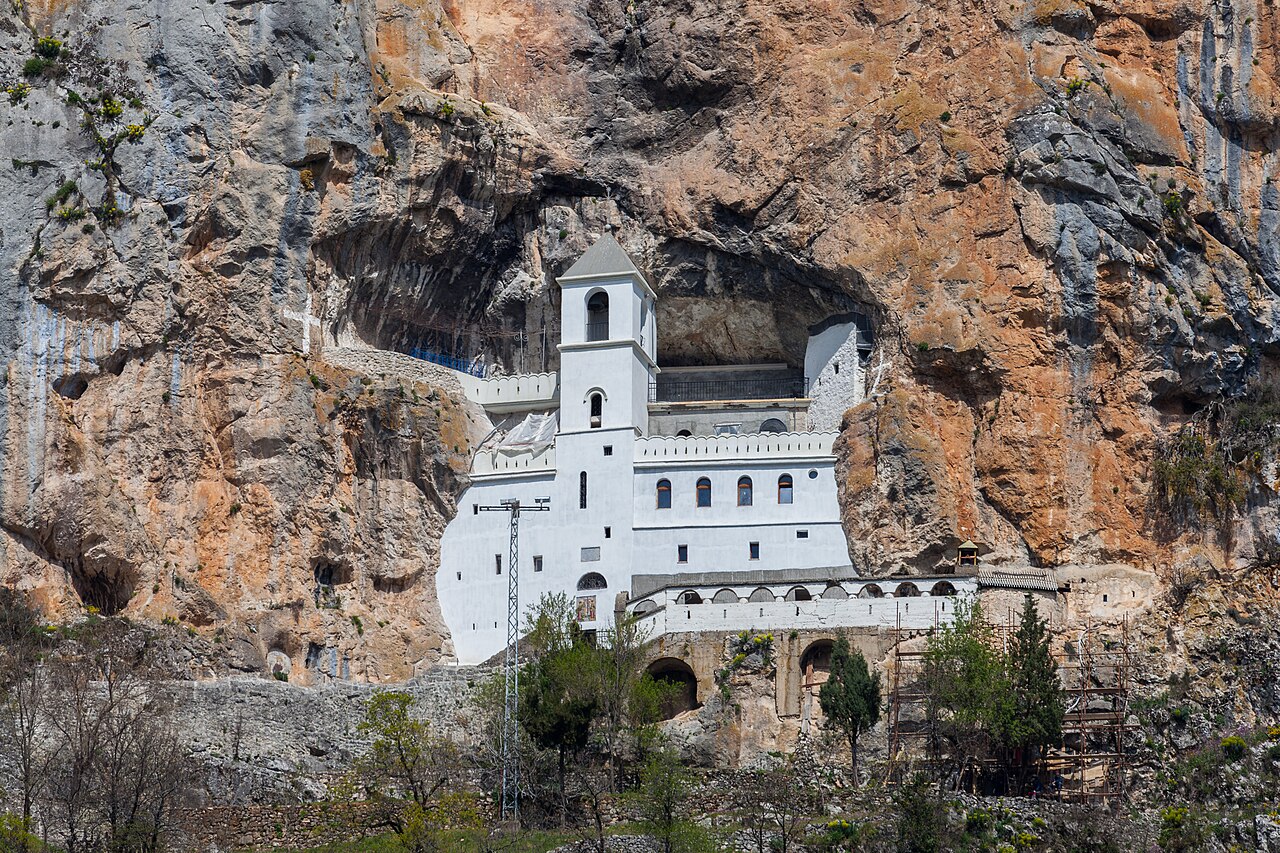
An Orthodox monastery built into an almost vertical cliff, between Nikšić and Danilovgrad. It was founded in the 17th century by Saint Basil of Ostrog, who is buried there. It is one of the most visited places of pilgrimage in the Balkans, by Orthodox, Catholic and Muslim visitors alike.
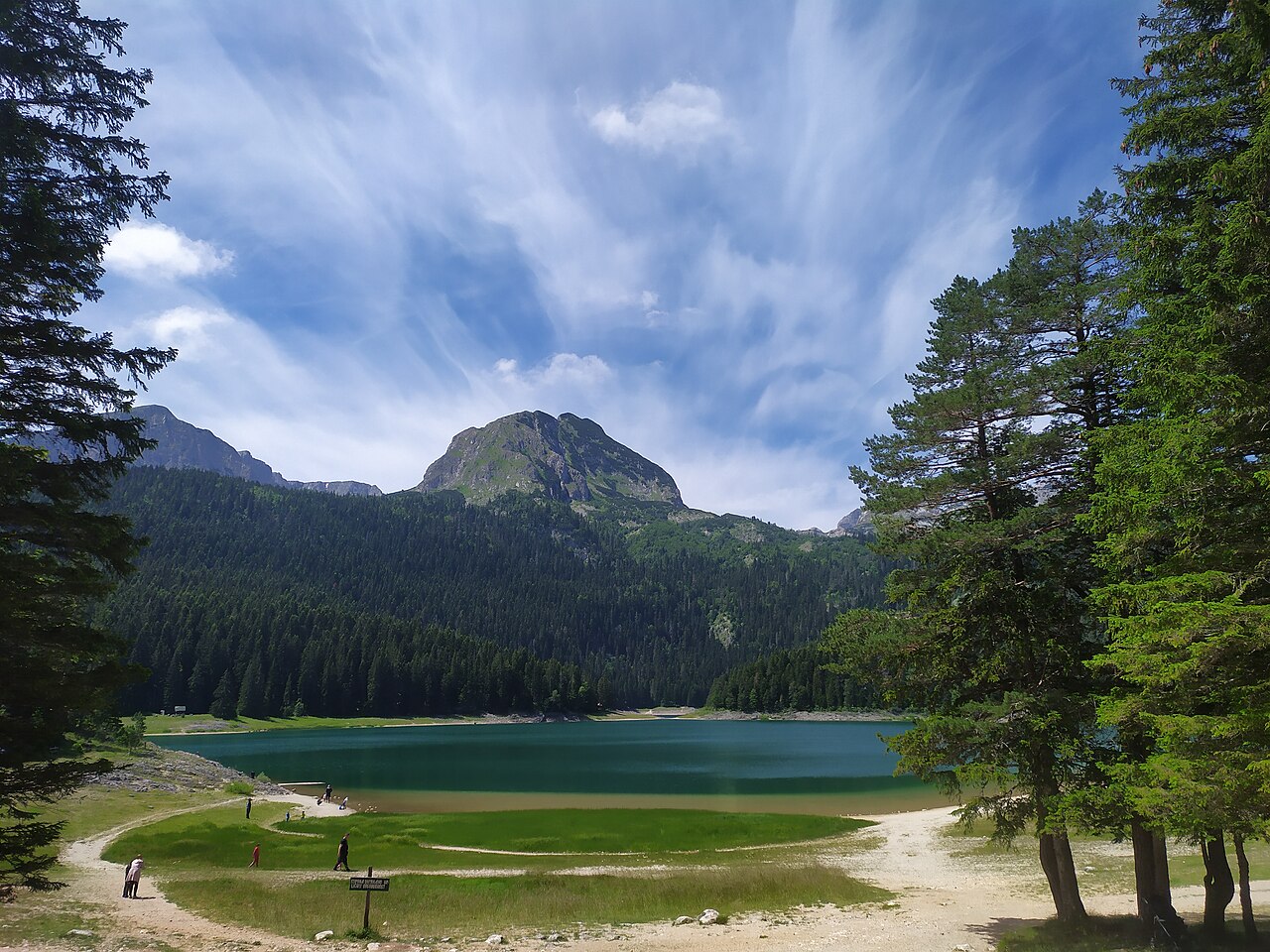
A high limestone massif with 48 peaks above 2,000 metres and 18 glacial lakes, called 'mountain eyes'. The national park was founded in 1952 and became a UNESCO World Heritage Site in 1980. It includes part of the Tara River Canyon.
UNESCO World Heritage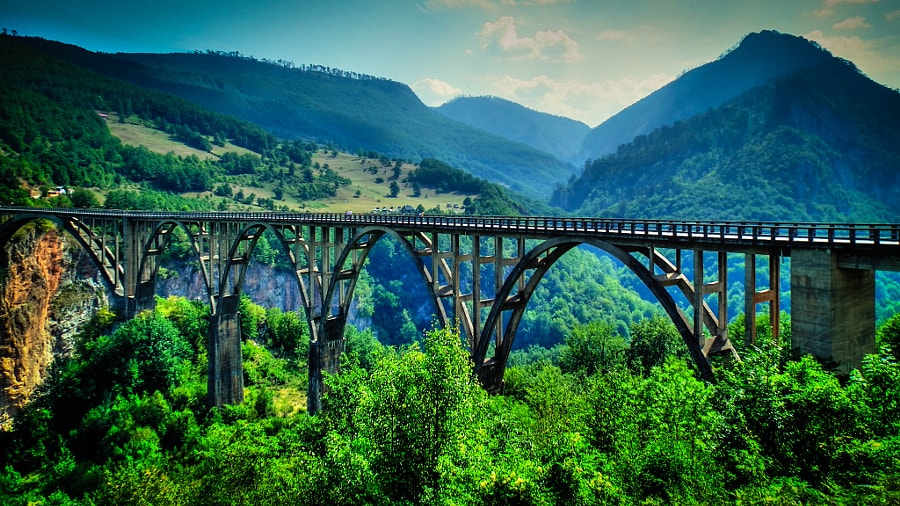
A white concrete arch bridge 365 metres long, with the road 172 metres above the Tara River. When it was finished in 1940 it was the biggest concrete arch road bridge in Europe. The canyon below is a favourite place for rafting.
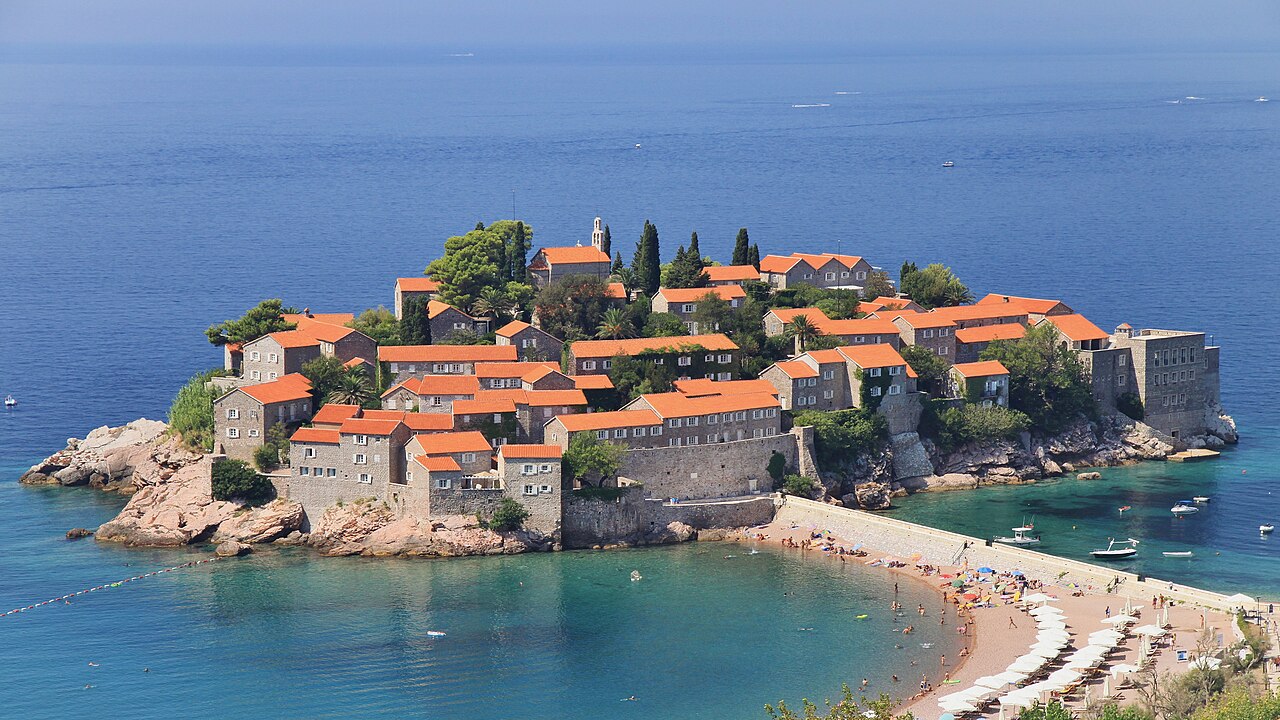
A tiny fortified island village joined to the shore by a narrow strip of sand, about 6 km south-east of Budva. In the 20th century the whole village was turned into a luxury hotel, and film stars such as Sophia Loren and Elizabeth Taylor stayed there.
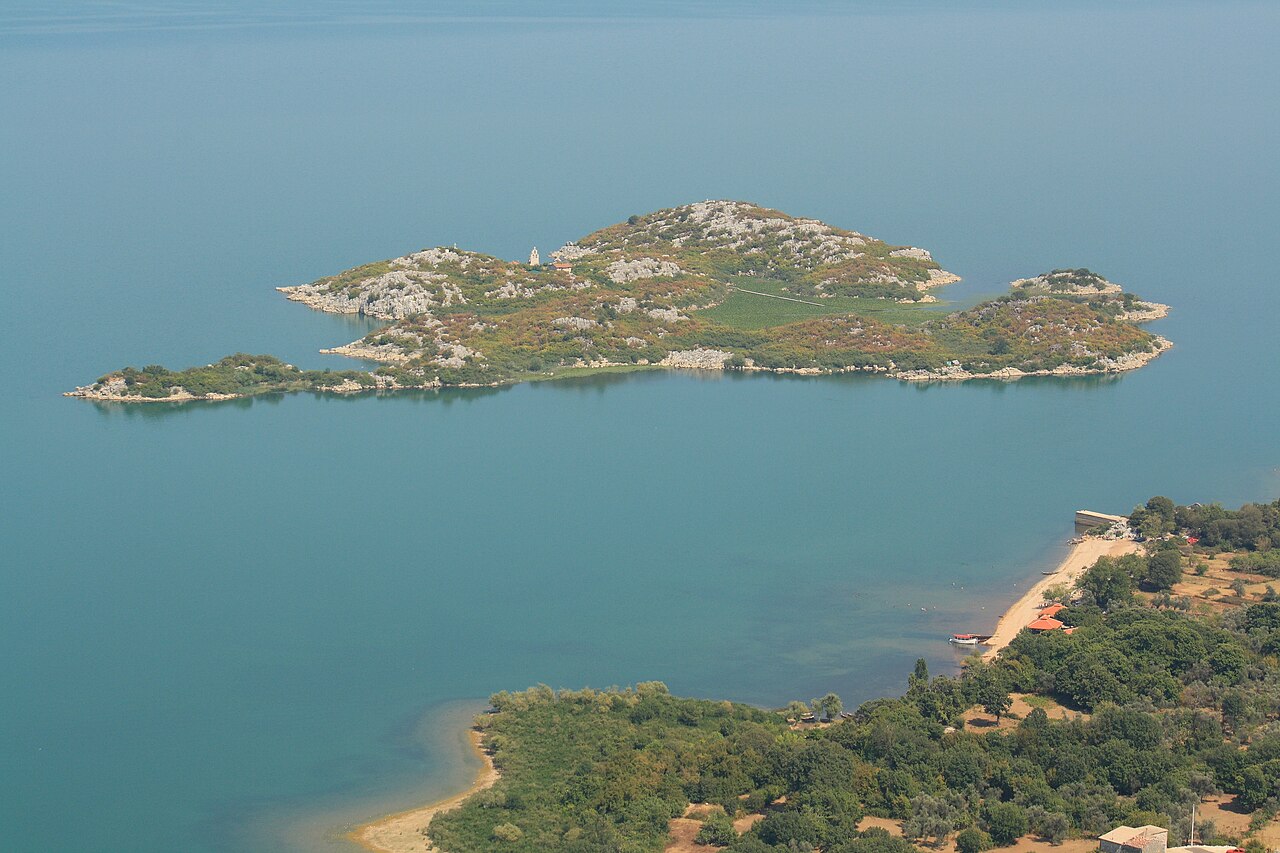
The largest lake in the Balkans, shared with Albania, with about two thirds in Montenegro. Small islands with old churches and a former fortress lie in the lake, and it is home to many birds, including the Dalmatian pelican. The Montenegrin part became a national park in 1983.
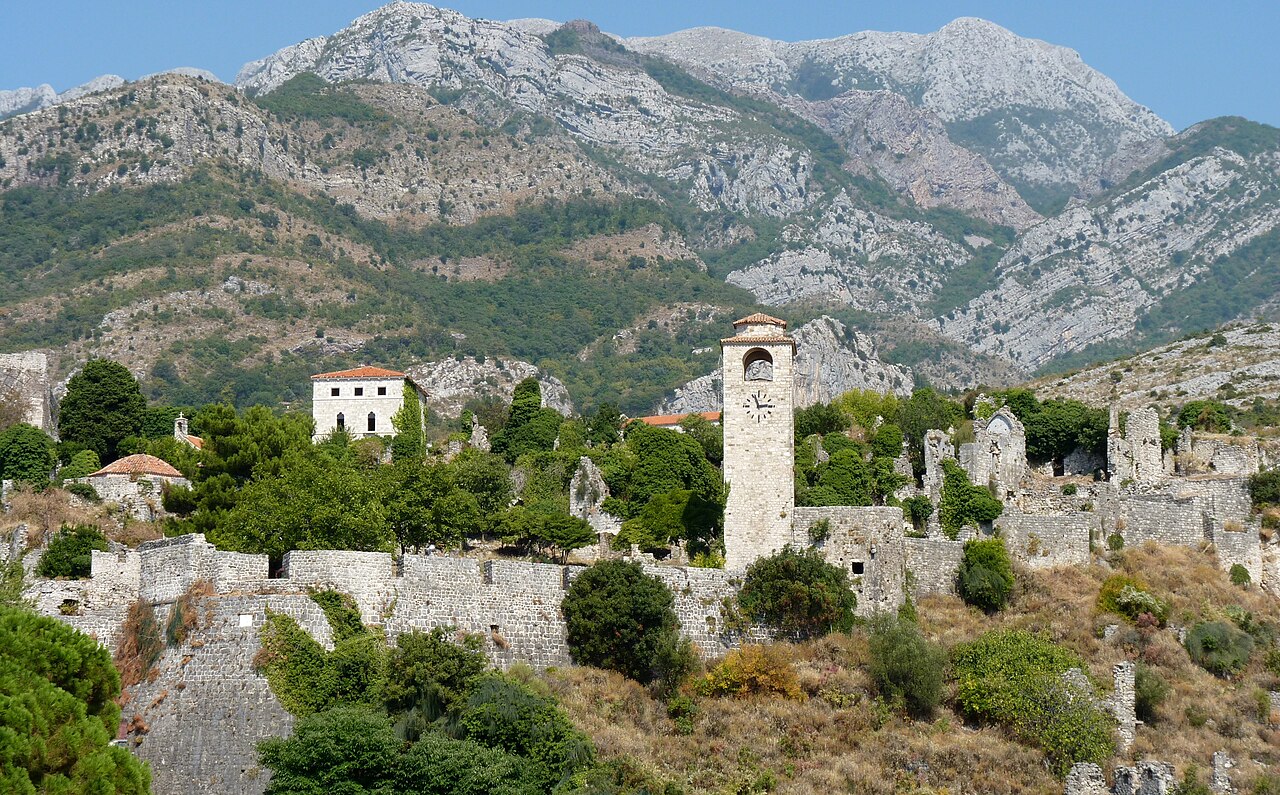
The ruins of the old town of Bar on a hilltop below Mount Rumija, about 3 km inland from the modern town. It was heavily damaged in a siege in 1877 and 1878, and after the 1979 earthquake destroyed its aqueduct, the town was abandoned for years.
Both names of the country, Montenegro and Crna Gora, mean 'Black Mountain'. They refer to Mount Lovćen, which looked black when it was covered in dense forest.
Montenegro uses the euro even though it is not a member of the European Union or the eurozone. It switched to the German mark in 1999 and simply adopted the euro in 2002.
King Nikola I married five of his daughters to princes and kings, which earned him the nickname 'the father-in-law of Europe'. His grandsons included King Alexander I of Yugoslavia and King Umberto II of Italy.
In 1494 monks in Cetinje finished printing the Oktoih, a book of church hymns printed in red and black Cyrillic letters. 108 copies of it survive.
Kotor has so many cats that they have become a symbol of the town. It has a cat museum, cat shops and a Cats' Square, and locals leave food and water out for them.
Every year at sunset on 22 July, people from Perast row out and throw stones into the sea around Our Lady of the Rocks, slowly making the man-made island bigger. The custom is called fašinada.
The Tara River Canyon is up to about 1,300 metres deep, one of the deepest river canyons in Europe.
The independence referendum of 21 May 2006 needed 55% to pass. Independence won 55.5%, and according to the electoral commission the line was crossed by only about 2,300 votes.
Water polo is the national sport. Montenegro's first Olympic medal came in 2012, a silver won by the women's handball team.
The Montenegrin alphabet has two letters that Serbian and Croatian do not: Ś and Ź. You can see one in the word 'śutra', tomorrow.
Montenegro celebrates Statehood Day on 13 July, the day in 1878 when the Congress of Berlin recognised it as the 27th independent state in the world.
The Montenegrin folk dance oro takes its name from 'orao', the eagle. Dancers move like eagles in a circle, and a performance can end with a human pyramid of dancers standing on each other's shoulders.
Medieval carved tombstones called stećci stand in graveyards near Žabljak and Plužine. Together with sites in Bosnia and Herzegovina, Croatia and Serbia, they became a UNESCO World Heritage Site in 2016.
Pronunciation is written the way it sounds; the capital letters show where the stress goes. Audio is coming soon.
As of September 2026, every visitor must be registered with the local tourist office or police within 24 hours of arrival. Hotels and most holiday lets do it for you, but in private accommodation make sure it is done, or you risk a fine.
Prices are in euros, and cards are taken in hotels, restaurants and supermarkets. Keep some cash for markets, bakeries, museums and buses. Montenegro is not in the Schengen area, so make sure your passport is stamped when you enter and leave.
You must carry a passport or photocard driving licence at all times, and the police can fine you if you do not. Keep a copy of your passport's photo page somewhere safe.
Drive on the right, and keep dipped headlights on even in daylight. Seat belts are compulsory and phones may not be used while driving. The drink-driving limit is less than half the limit in England and Wales, and fines must be paid within 8 days or before you leave.
Most roads are two-lane, curvy and mountainous. The road north through the Morača canyon can be dangerous in winter and in bad weather, when an experienced bus driver is the safer choice. Coastal roads are very busy in summer.
The general emergency number is 112, for police, ambulance and fire. The separate numbers are 122 for police, 123 for the fire brigade and 124 for an ambulance.
Hikers in Durmitor and the other mountains have got lost after leaving marked trails. Take a charged phone, tell someone your route, and remember that weather changes fast at altitude.
Buses are the easiest way to get around. Bus stations charge a small platform fee that is included when you buy at the station but not in online tickets, so allow time to pay it before your bus leaves.