A free large-print PDF. Choose what goes in: facts, map, history, dishes and recipes, phrases, fun facts, a quiz with or without answers. Made for clubs, care homes, libraries and family afternoons.
North Macedonia is a landlocked country in the middle of the Balkan peninsula. Its heart is the valley of the Vardar river, which runs from the north-west past Skopje and on to Greece and the Aegean Sea. Mountains frame the country on every side, and three large lakes lie on its southern borders: Ohrid, Prespa and Dojran. Lake Ohrid is one of the oldest and deepest lakes in Europe.
In ancient times the land was home to the Paeonians and other peoples, and its southern part was joined to the kingdom of Macedon under Philip II. Later came the Romans, the Byzantines and medieval Slavic states, then about five centuries of Ottoman rule. After the Balkan Wars of 1912 and 1913 most of the territory came under Serbia, and after the Second World War it became one of the six republics of socialist Yugoslavia. It left Yugoslavia peacefully in 1991.
After independence the country was called the Republic of Macedonia. Because neighbouring Greece objected to the name, it joined the United Nations in 1993 under the provisional reference "the former Yugoslav Republic of Macedonia". The Prespa Agreement, signed by the two countries in 2018, settled the matter, and on 12 February 2019 the name became the Republic of North Macedonia. The country joined NATO in 2020 and, as of September 2026, is a candidate to join the European Union.
About 1.8 million people live here. Most are ethnic Macedonians, about a quarter are Albanians, and there are smaller Turkish, Roma, Serb, Bosniak and Aromanian communities. Orthodox churches and Ottoman mosques stand side by side in many towns.
CapitalSkopje
PopulationAbout 1.8 million (2021 census)
Official languageMacedonian. Since 2019 Albanian is also official at state level
CurrencyMacedonian denar (MKD)
AreaAbout 25,400 km²
GovernmentParliamentary republic
Highest mountainKorab, 2,764 m, on the border with Albania
Longest riverThe Vardar, 388 km long, of which 76 km are in Greece
NeighboursSerbia, Kosovo, Albania, Greece and Bulgaria. The country is landlocked
The story of North Macedonia runs from ancient kingdoms and Roman towns, through medieval empires and a great school of Slavic letters in Ohrid, to five centuries of Ottoman rule, life in Yugoslavia and independence in 1991.
356 BC
Philip II takes the south
King Philip II of Macedon, father of Alexander the Great, added Lynkestis, Pelagonia and the southern part of Paeonia to his kingdom. Around this time he founded the city of Heraclea Lyncestis, whose ruins stand near Bitola.
AD 518
An earthquake destroys Scupi
Scupi, a Roman town founded in the late 1st century AD, was destroyed by an earthquake and abandoned. It was rebuilt under Emperor Justinian I, and today's Skopje grew from it.
AD 886
Clement's school in Ohrid
Saint Clement, a disciple of Cyril and Methodius, founded a school of learning in Ohrid. The Ohrid Literary School helped to spread the Cyrillic script among the Slavs. Clement is the patron saint of Ohrid and of North Macedonia.
1018
Byzantium retakes Ohrid
Tsar Samuel had ruled a large medieval empire from Ohrid from about 990. After years of war, the Byzantine emperor Basil II took the city in 1018 and brought the region back under Byzantine rule.
1346
Dušan crowned in Skopje
Stefan Dušan, who had made Skopje the capital of the Serbian Empire, was crowned emperor in the city. After his death the empire broke up into smaller states.
1392
Skopje becomes Ottoman
Skopje became part of the Ottoman Empire, which then ruled the region for about five centuries. The Ottomans built the Old Bazaar with its inns, mosques and baths, and the Stone Bridge was rebuilt in their time.
1903
The Ilinden Uprising
On Ilinden, St Elijah's Day, rebels rose against Ottoman rule. In the town of Kruševo they declared a republic that lasted from 3 to 13 August before the uprising was crushed. Its leaders are remembered as national heroes.
1913
The Treaty of Bucharest
After the two Balkan Wars, the region of Macedonia was divided between Greece, Serbia and Bulgaria. Most of the territory of today's North Macedonia went to Serbia.
1944
ASNOM founds a Macedonian state
On 2 August 1944, the anniversary of the Ilinden Uprising, the partisan assembly ASNOM met in secret and proclaimed a Macedonian state within Yugoslavia, with Macedonian as its official language.
1963
The Skopje earthquake
Early on 26 July 1963 a strong earthquake destroyed about 80 percent of Skopje and killed more than 1,000 people. Help came from 78 countries, and the city was rebuilt to new plans, including a centre designed by the Japanese architect Kenzo Tange.
1991
The independence referendum
On 8 September 1991 voters approved independence from Yugoslavia. The country left the federation peacefully, and 8 September is celebrated as Independence Day.
1993
Joining the United Nations
The country became a member of the United Nations. Because of the disagreement with Greece over its name, it was admitted under the provisional reference "the former Yugoslav Republic of Macedonia".
2001
The Ohrid Agreement
From February to August 2001 government forces fought ethnic Albanian insurgents in the north and west. The Ohrid Framework Agreement of 13 August ended the conflict and gave more rights to the Albanian community, including wider use of the Albanian language.
2019
The country becomes North Macedonia
Under the Prespa Agreement, signed with Greece in June 2018 beside Lake Prespa, the country's name changed to the Republic of North Macedonia. The change came into force on 12 February 2019.
2020
NATO membership
On 27 March 2020 North Macedonia became the 30th member of NATO. In July 2022 it opened accession talks with the European Union.
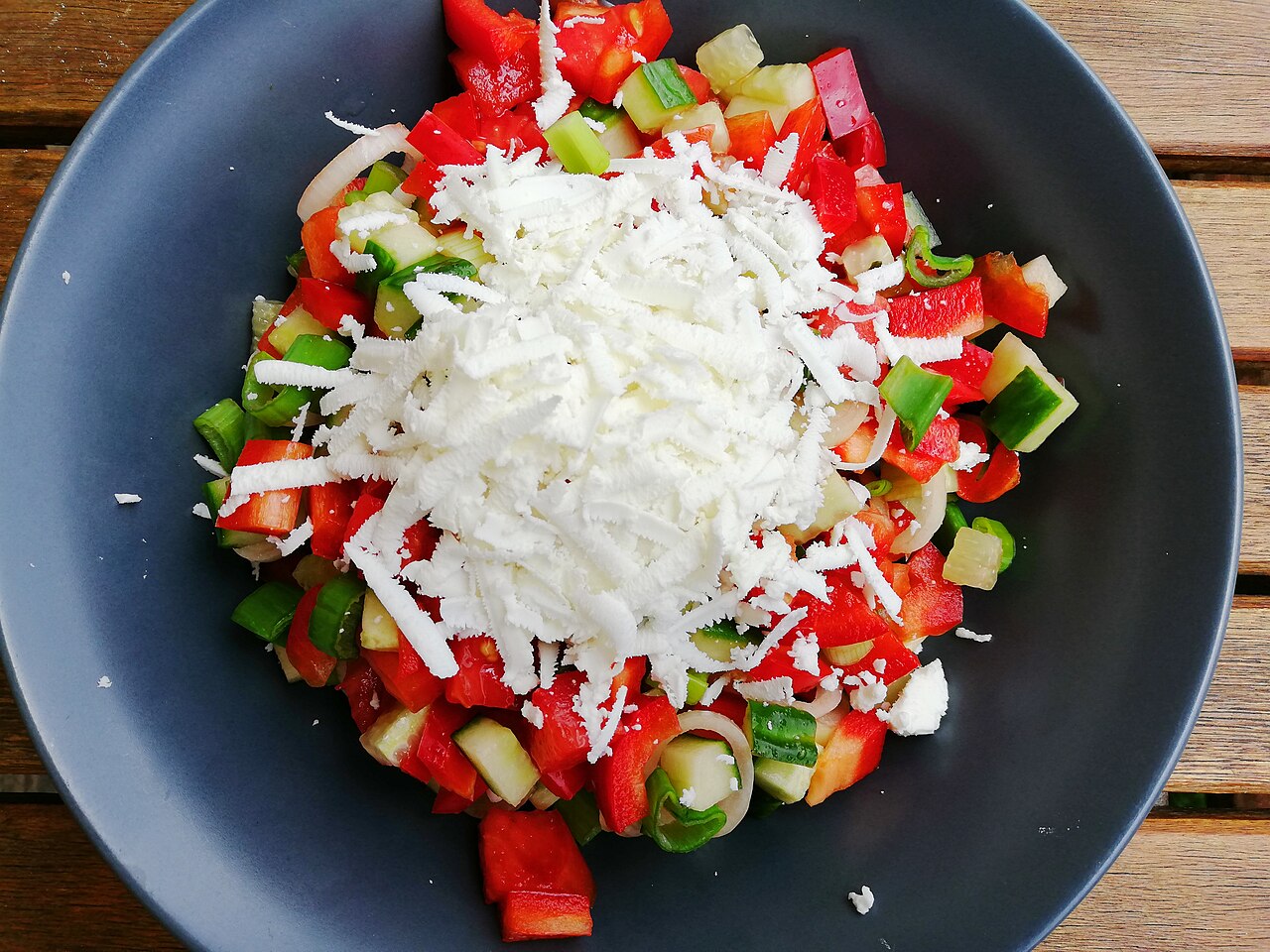
Macedonian food is Balkan food, shaped by Ottoman and Mediterranean cooking. The warm summers grow excellent peppers, tomatoes, beans, fruit and grapes, and white cheese, yogurt, wine and rakija are part of daily life. A meal often starts with a fresh salad and a small glass of rakija, then moves on to a slow-baked dish of beans, meat or vegetables in an earthenware pot, and ends with a syrupy sweet and coffee.
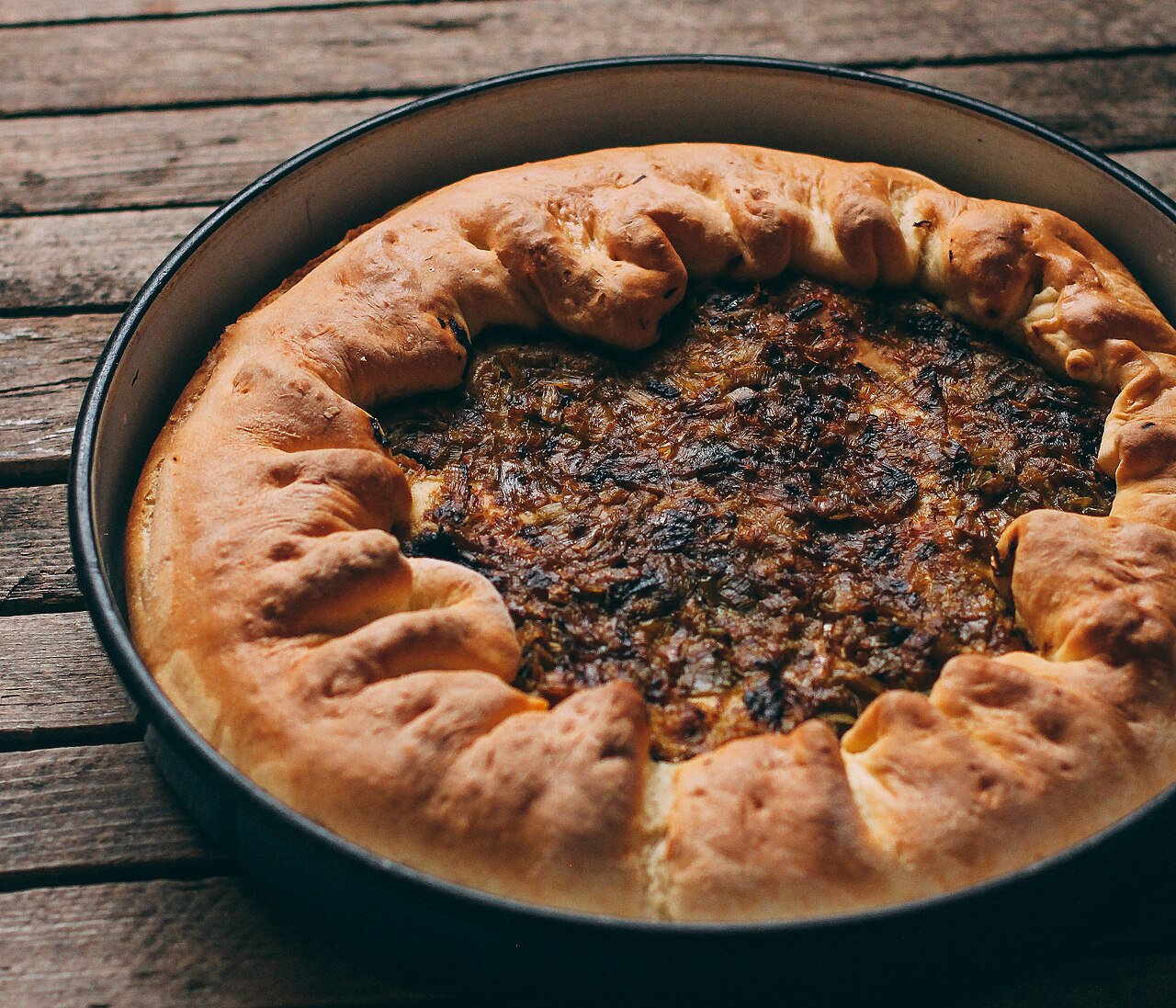
All of North Macedonia, with a well-known Tetovo-style version
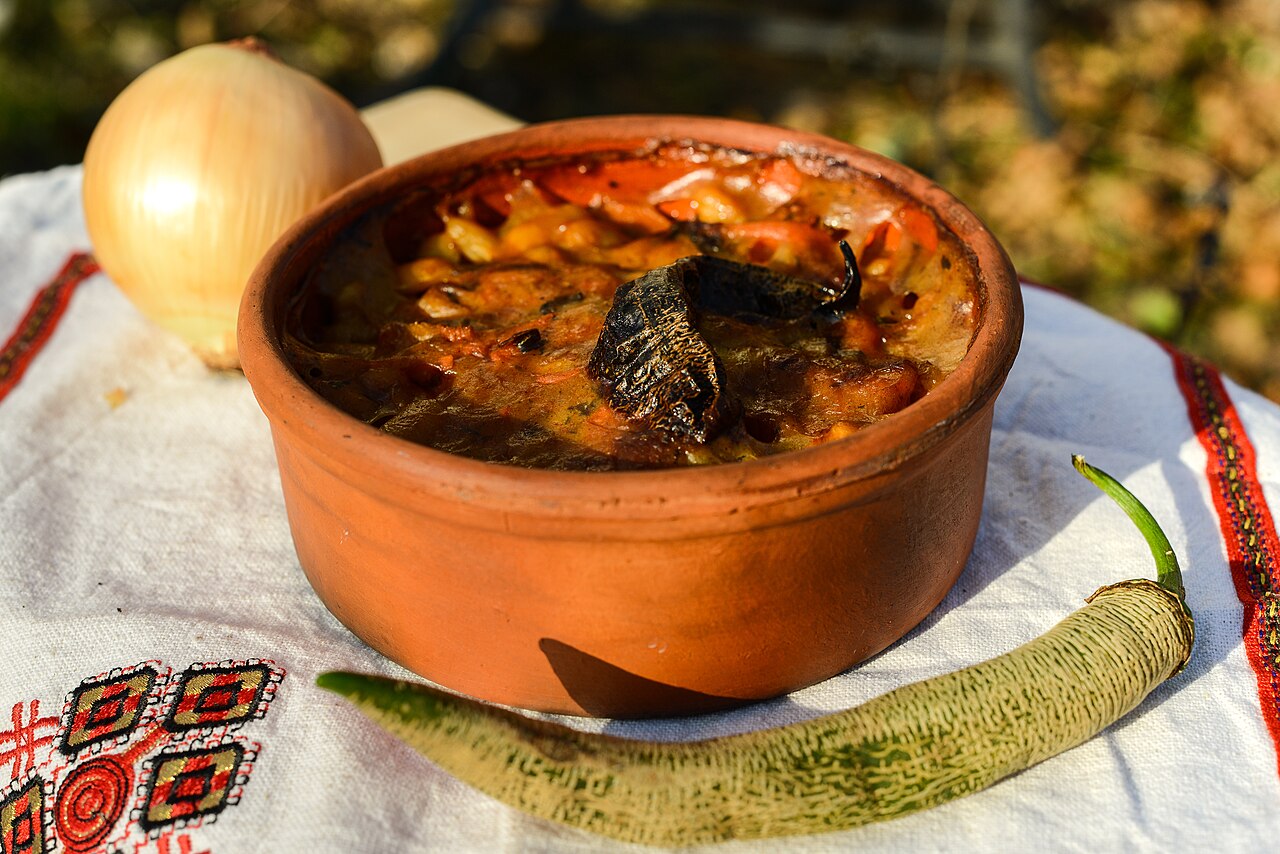
White beans cooked with onion and dried red pepper, then baked in a shallow earthenware dish until thick and slightly crusty on top. Sausage or smoked meat is often added.
Tavče gravče is considered the national dish of North Macedonia. The name means roughly "beans in a tava", the clay dish it is baked in.
See the recipe
Serves 4
3 h
Ingredients
500 g large dried white beans, such as butter beans
2 onions, one whole and one finely chopped
1 or 2 dried red peppers
1 tablespoon plain flour and 2 teaspoons sweet paprika
4 tablespoons sunflower oil
Salt, black pepper and a handful of chopped parsley
Optional: 2 smoked sausages, sliced
Method
Soak the beans in cold water overnight. Drain, cover with fresh water, bring to the boil, then drain again.
Cover the beans with fresh water, add the whole onion and the dried peppers, and simmer gently for about 1 hour, until soft but not falling apart. Remove the onion.
Heat the oil in a small pan and fry the chopped onion until soft. Stir in the flour and paprika for 30 seconds, then stir this into the beans with salt, pepper and parsley.
Heat the oven to 220°C. Pour the beans with enough cooking liquid to cover them into an earthenware or other ovenproof dish, and add the sausage if you use it.
Bake for 30 to 40 minutes, checking now and then and adding a splash of hot water if it looks dry, until thick and browned on top. Serve hot with bread.
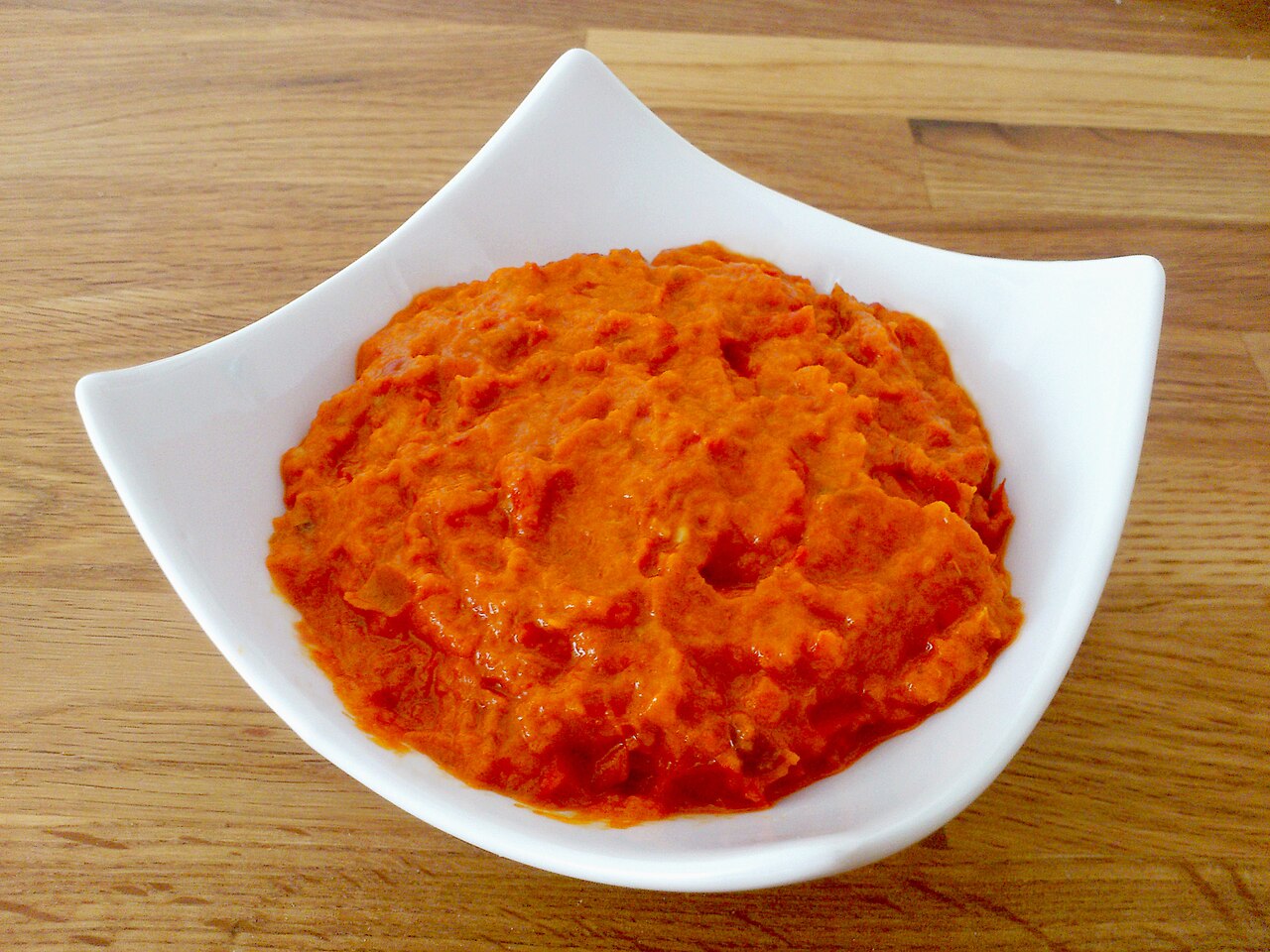
A thick relish of red peppers, roasted whole, peeled and slowly cooked with oil, sometimes with aubergine. It can be sweet or hot and is eaten on bread or next to grilled meat.
Families and neighbours often gather in autumn to roast and peel peppers together, then store the ajvar in jars for the winter. "Macedonian Ajvar" is a name protected with the World Intellectual Property Organization.
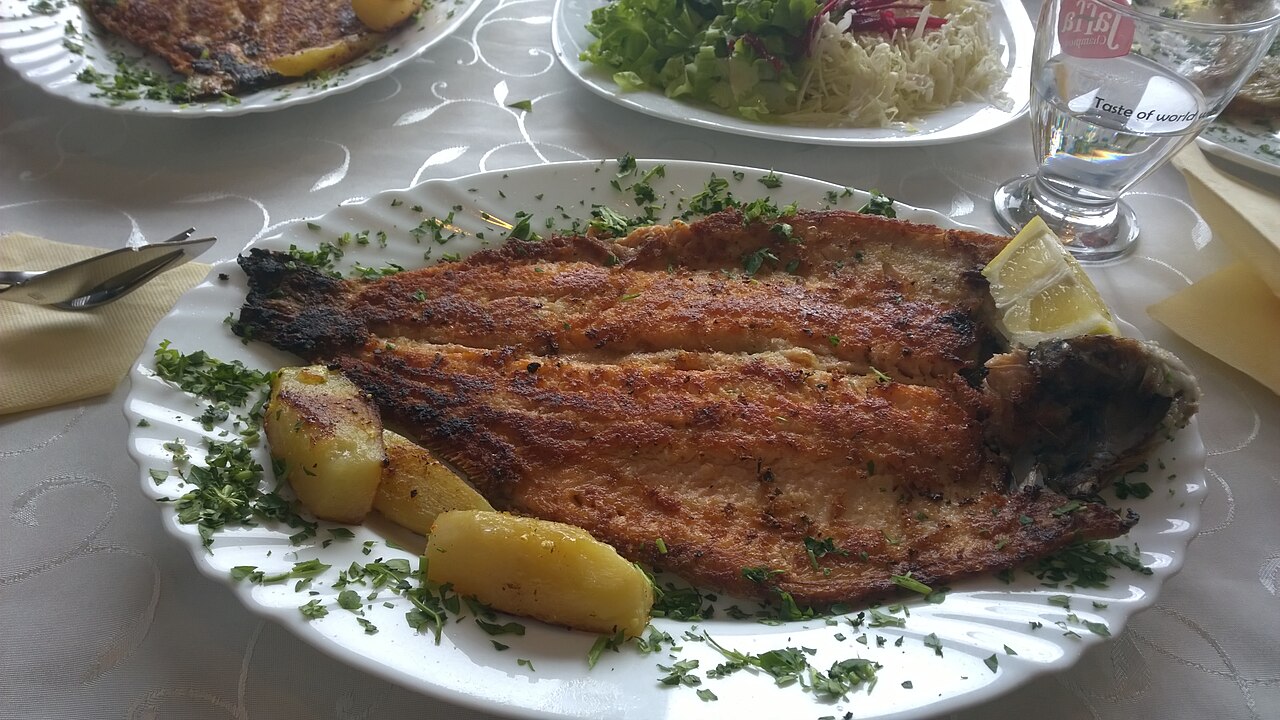
A trout found only in Lake Ohrid and the rivers around it, long a speciality of the lakeside towns. Its taste is often compared to a cross between a brown trout and a salmon.
Overfishing has made the Ohrid trout rare, and a fishing ban was in place from 2004 to 2014. The fish appears on the 2-denar coin.
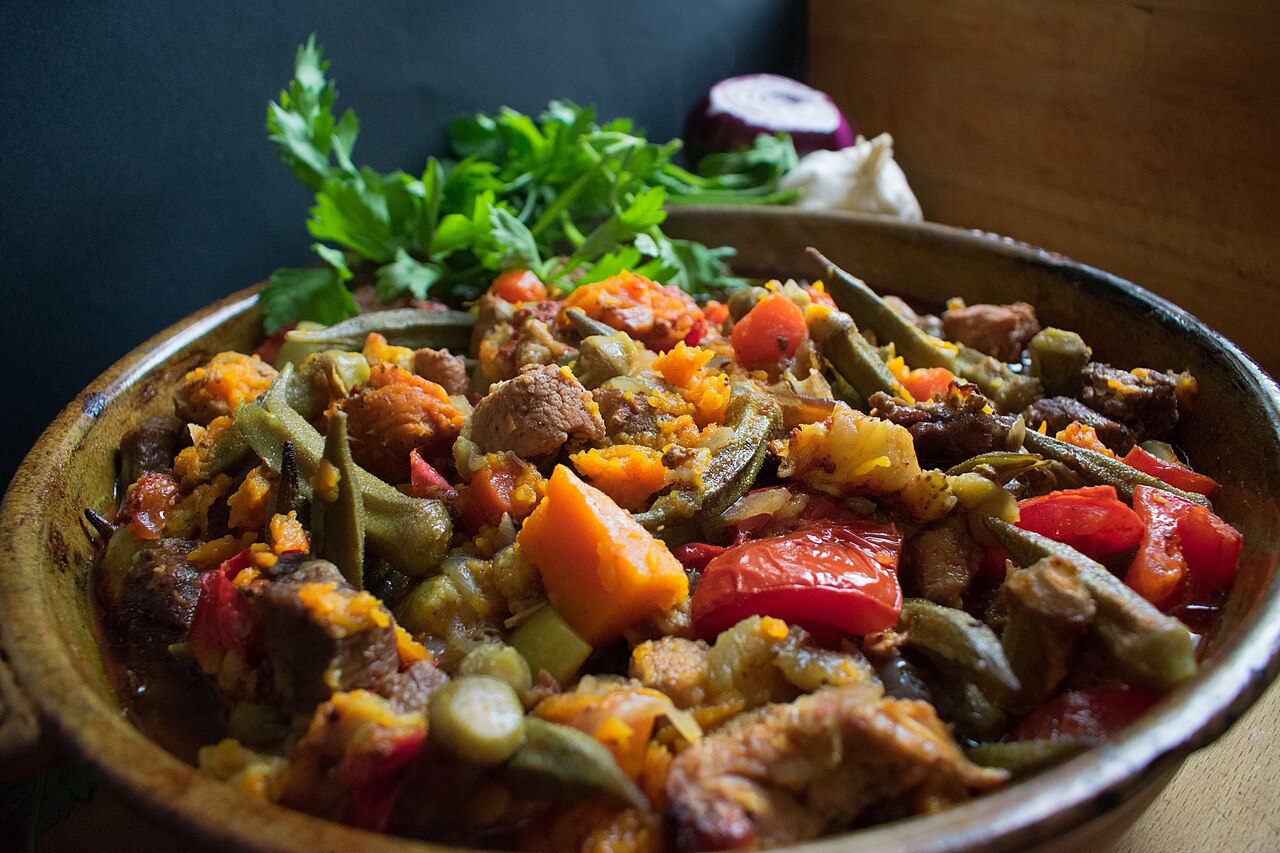
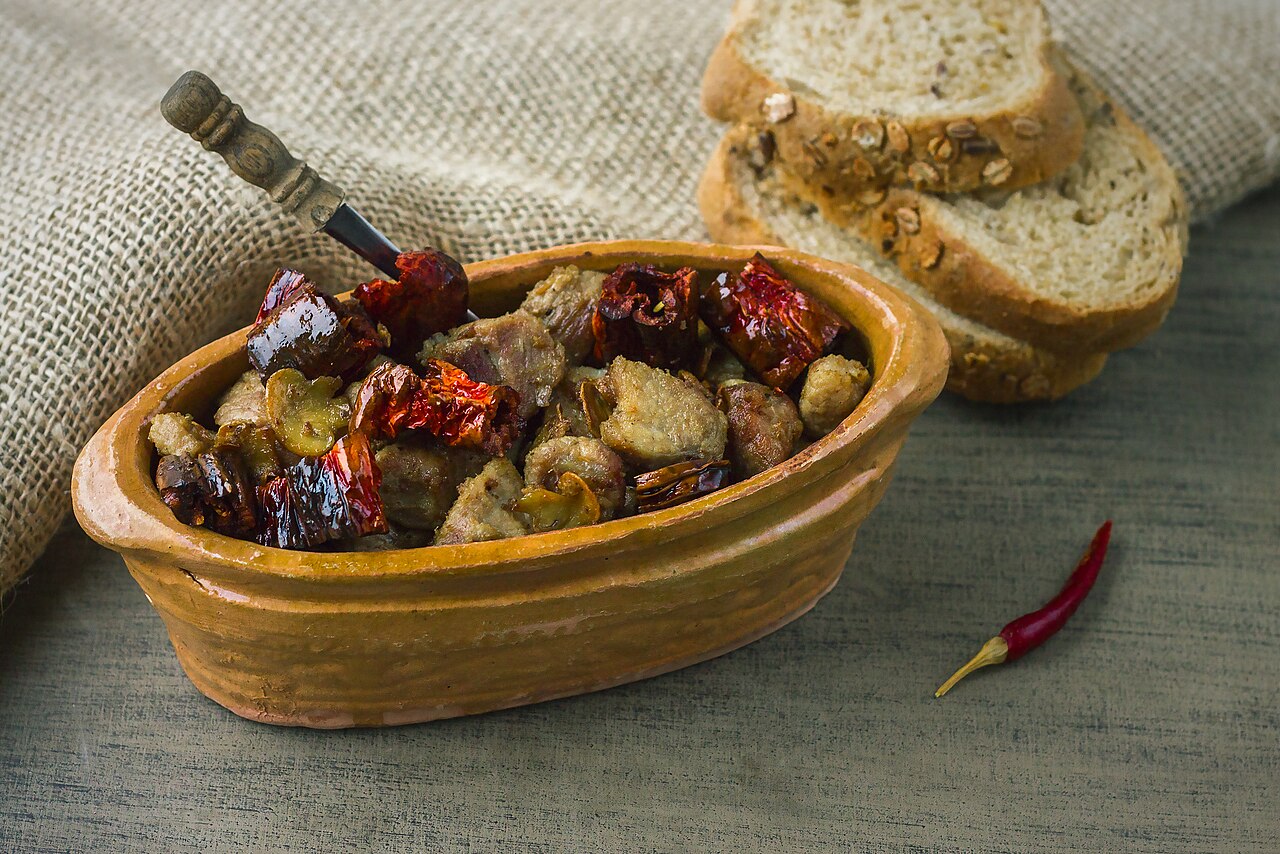
A mixed vegetable bake of potatoes, aubergine, okra, green beans, peppers and tomatoes, with or without meat, slowly cooked in a clay dish called a tava.
The name comes from the Turkish word for "variety", and similar dishes are cooked in Turkey, Greece and Albania.
See the recipe
Serves 4
2 h
Ingredients
Optional: 500 g beef, lamb or pork, cut into cubes
3 potatoes, peeled and cut in chunks
1 aubergine and 1 courgette, cut in chunks
200 g okra or green beans
2 peppers, 2 carrots and 1 onion, all sliced
3 tomatoes, chopped, and 2 garlic cloves
5 tablespoons sunflower oil, 1 teaspoon paprika, salt and pepper
Method
Heat the oven to 180°C. If you use meat, brown it in a little oil in a pan first.
Put the meat and all the vegetables in a large earthenware or ovenproof dish. Add the oil, paprika, salt and pepper and toss well.
Pour in about 250 ml of hot water, cover with a lid or foil and bake for about 1 hour.
Uncover, stir gently and bake for another 30 to 40 minutes, until the vegetables are soft and lightly browned. Serve with bread.
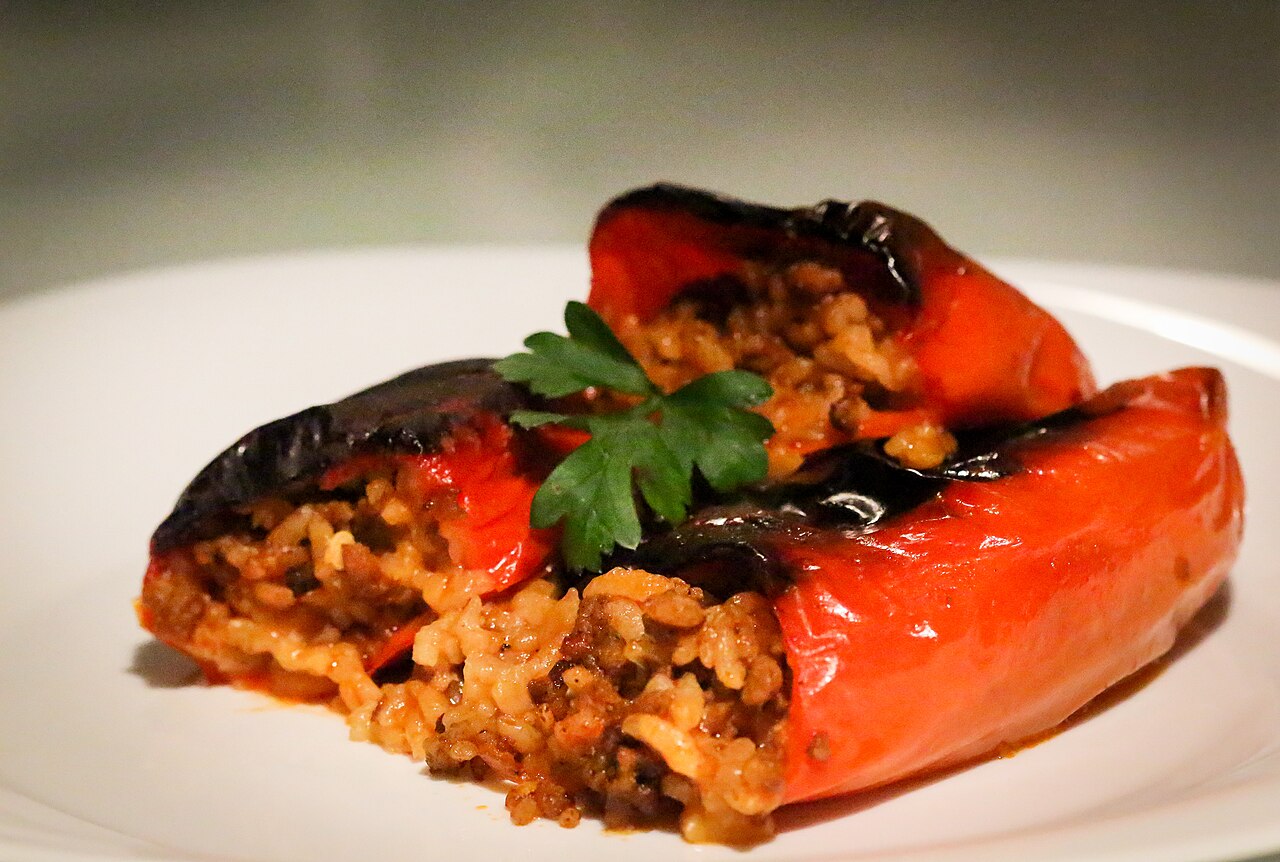
Peppers filled with rice, or with rice and minced meat, and baked in a light tomato sauce.
See the recipe
Serves 4
1 h 30 min
Ingredients
8 medium peppers
400 g minced pork or beef, or a mix
100 g short-grain rice, rinsed
1 onion, finely chopped
1 teaspoon paprika, salt, pepper and chopped parsley
500 ml tomato passata
2 tablespoons sunflower oil
Method
Heat the oven to 180°C. Cut the tops off the peppers and remove the seeds.
Fry the onion in the oil until soft. Mix it with the meat, rice, paprika, parsley, salt and pepper.
Fill the peppers loosely, leaving room for the rice to swell, and stand them upright in a baking dish. Put the tops back on as lids.
Mix the passata with 250 ml of water and a pinch of salt and pour it around the peppers.
Cover and bake for 50 minutes, then uncover and bake for 15 to 20 minutes more, until the peppers are soft and the rice is cooked. Make sure the meat is fully cooked through.
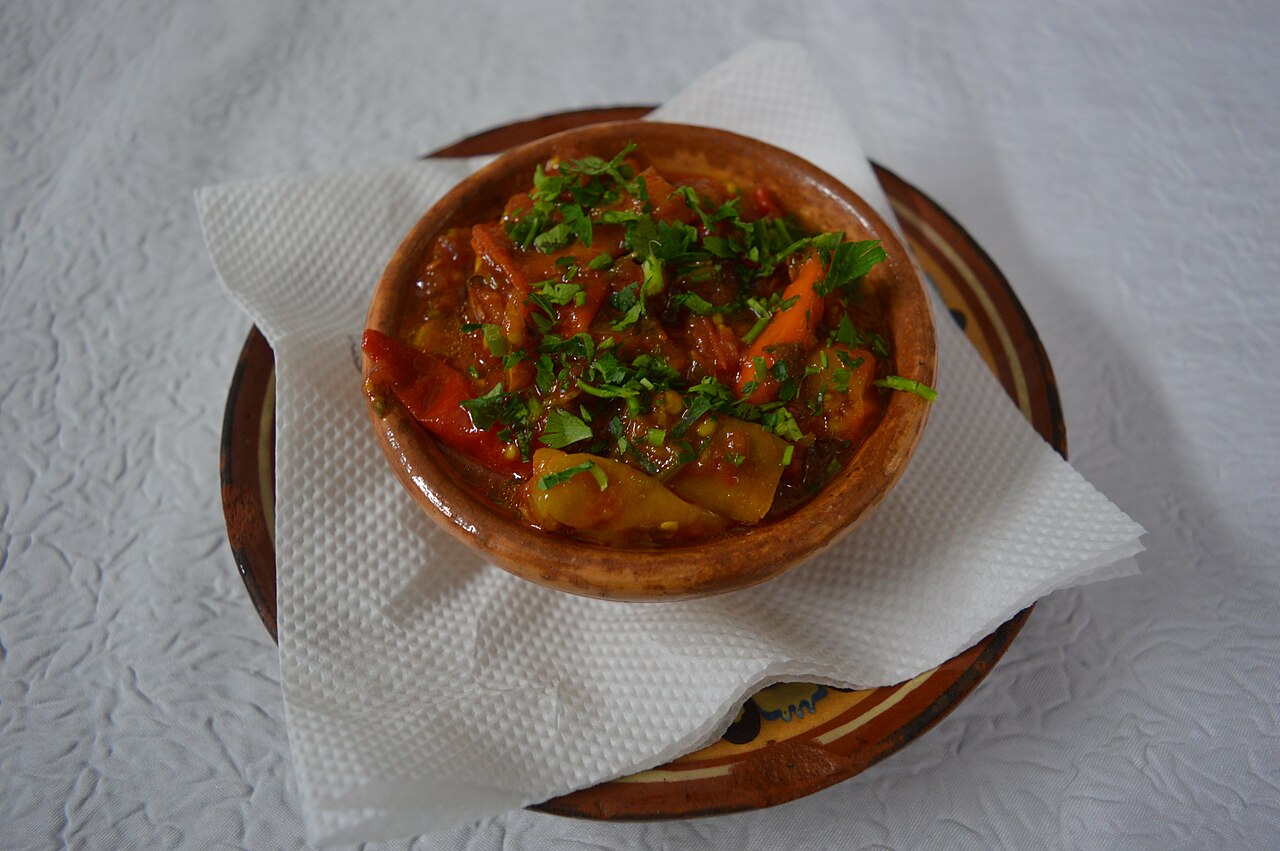
A summer and autumn relish of roasted red peppers, tomatoes and garlic, often with aubergine. It is chunkier and fresher than ajvar.
Pindžur is also made in Serbia, Bulgaria, Bosnia and Herzegovina and Croatia, and in some places the names pindžur and ajvar are used for the same thing.
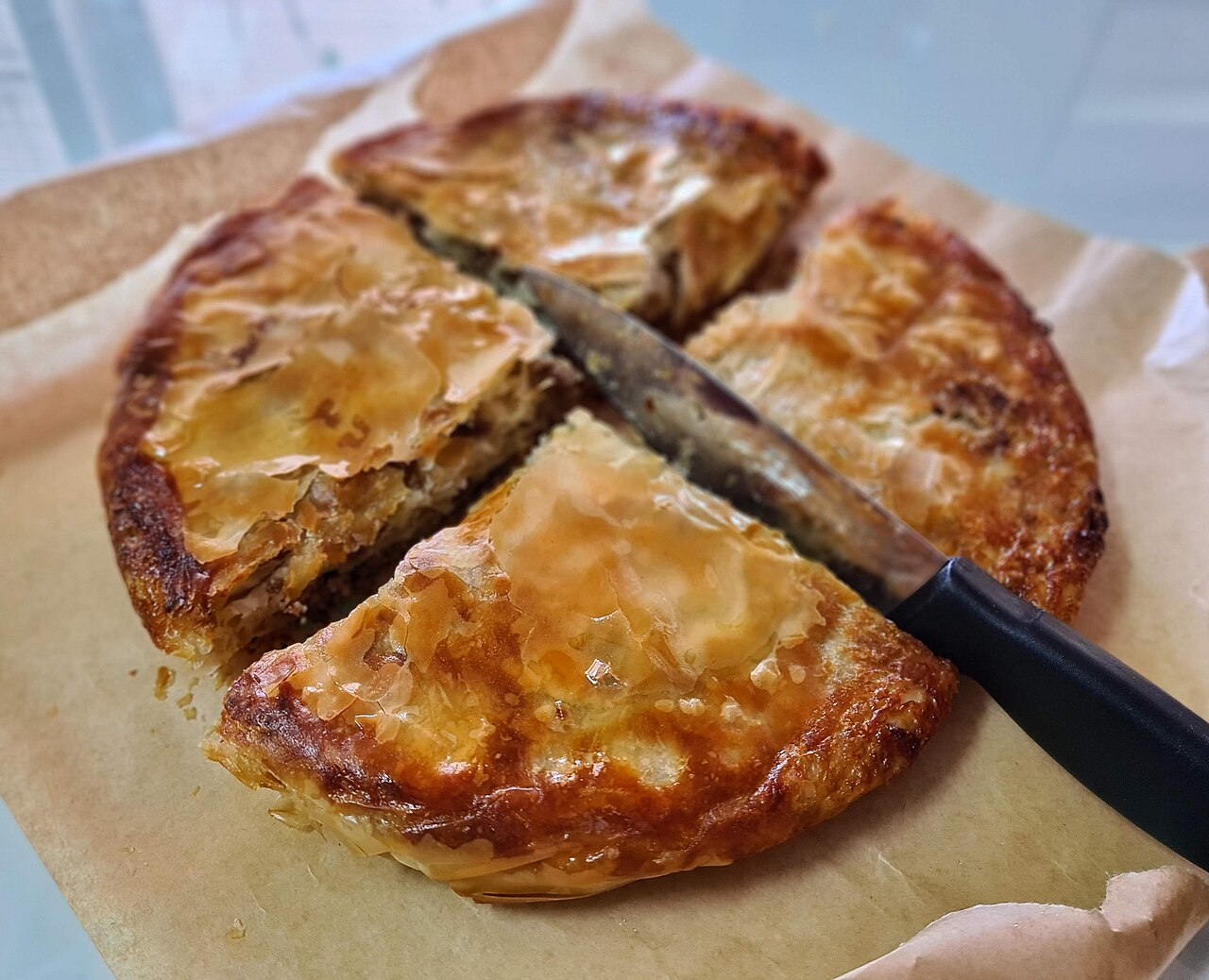
A pie of very thin layers of pastry filled with white cheese, eggs, leeks or spinach, or in winter with pickled cabbage. It is best eaten warm, often with yogurt.
The name comes from zelka, the Macedonian word for cabbage, the traditional winter filling.
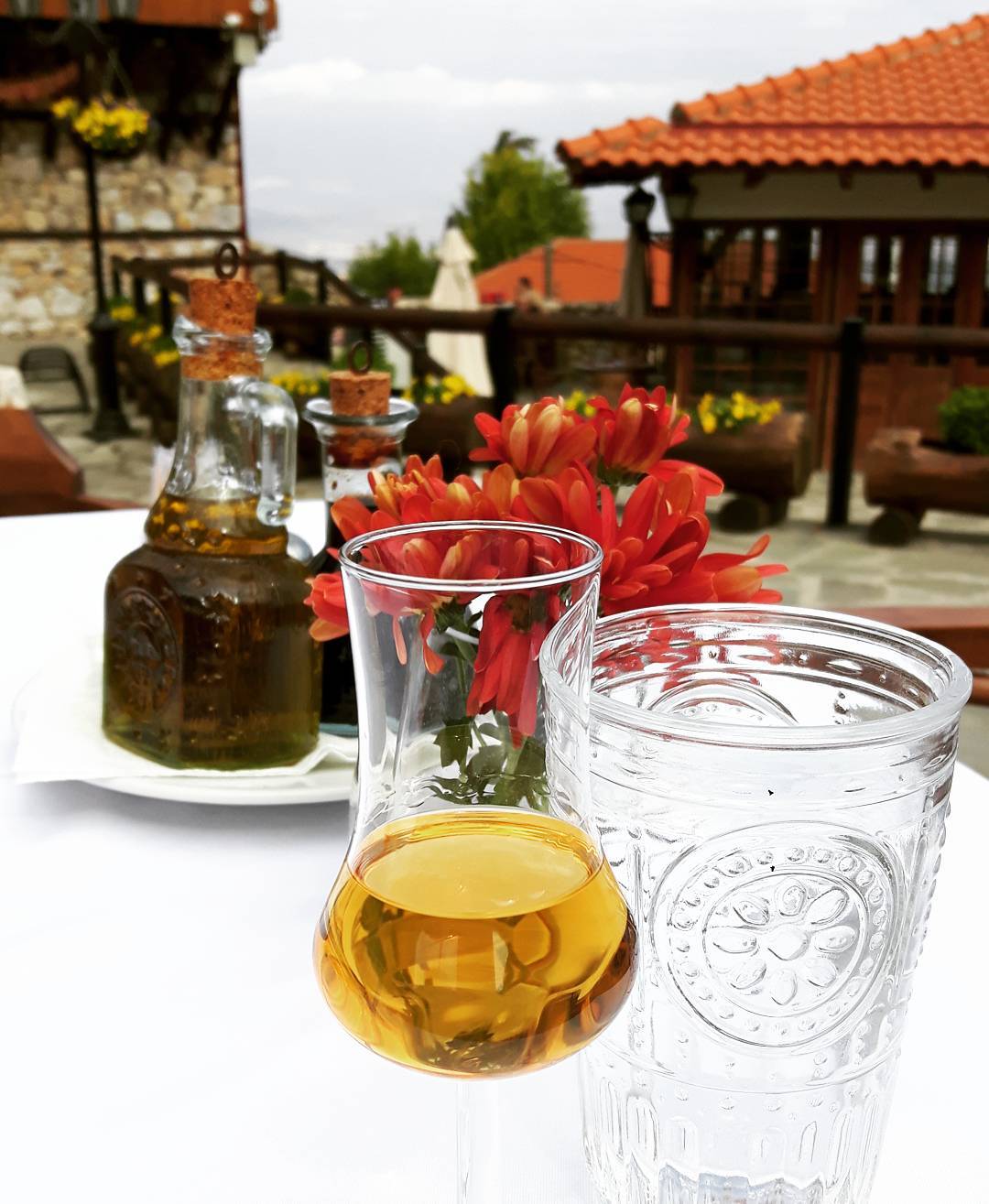
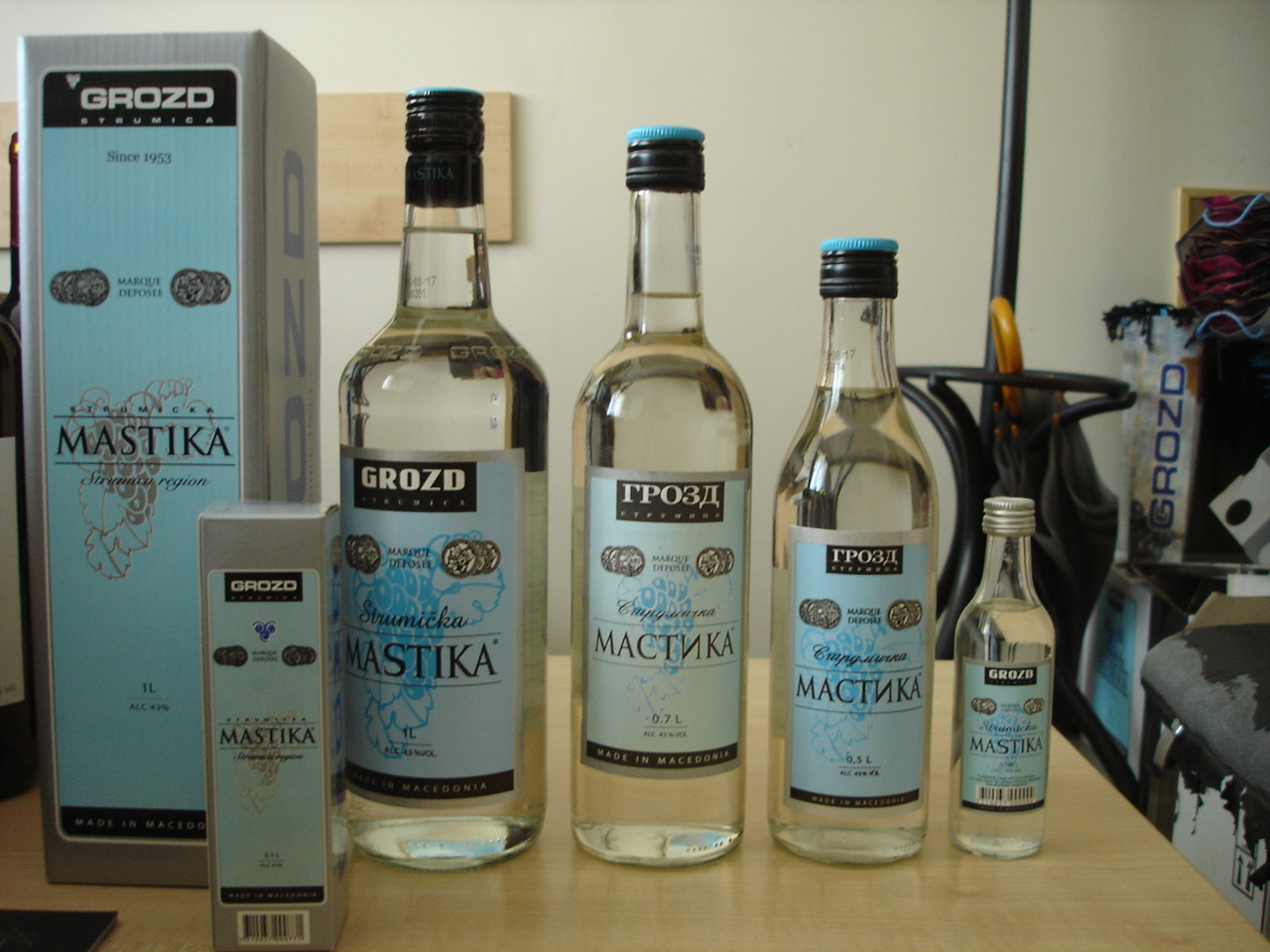
A strong brandy, most often made from grapes, sipped slowly with salad before a meal.
Rakija is the everyday spirit of the Macedonian table, and homemade rakija is sold at many markets. It is strong, so anyone who does not drink alcohol can politely say no.
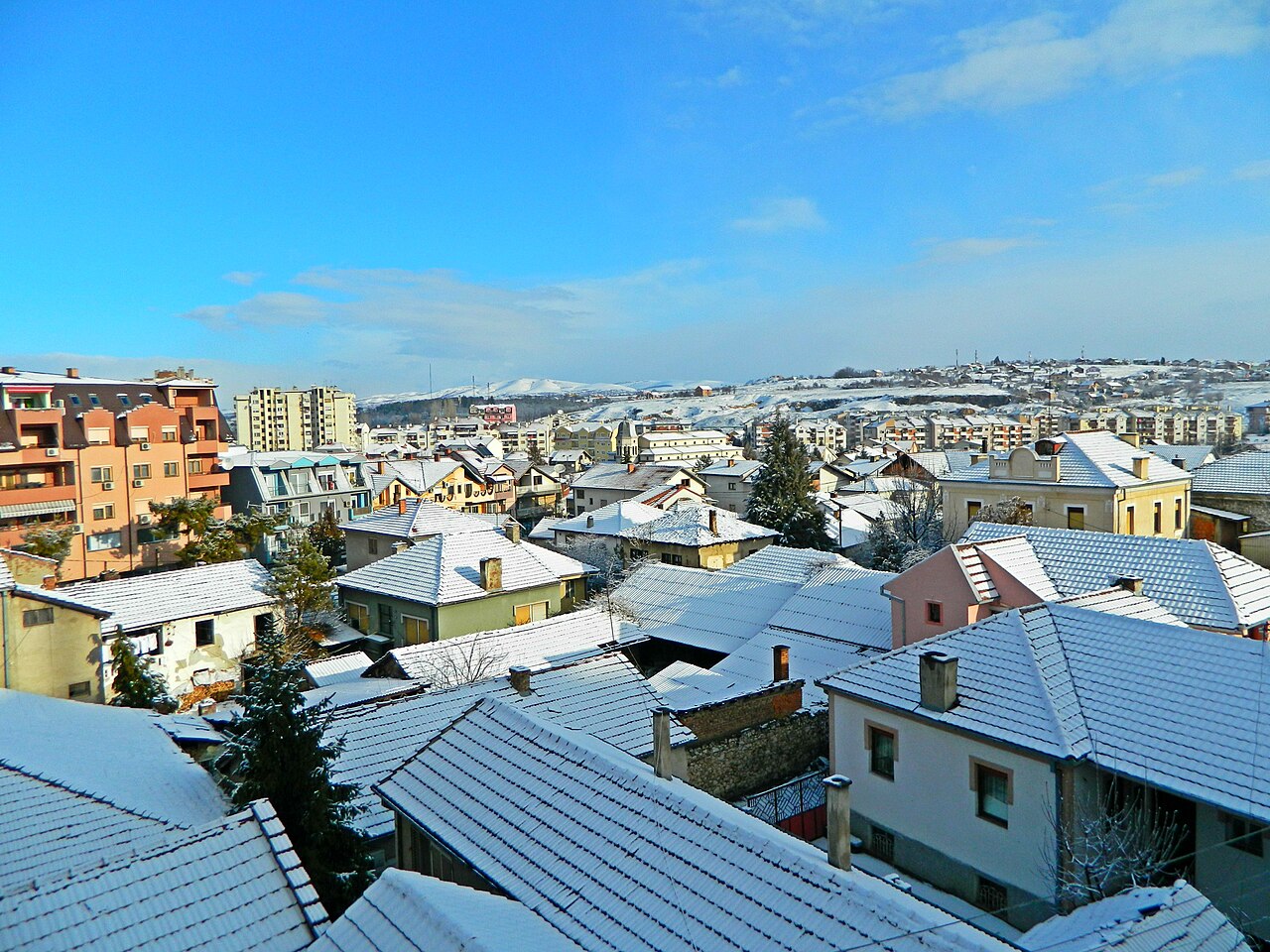
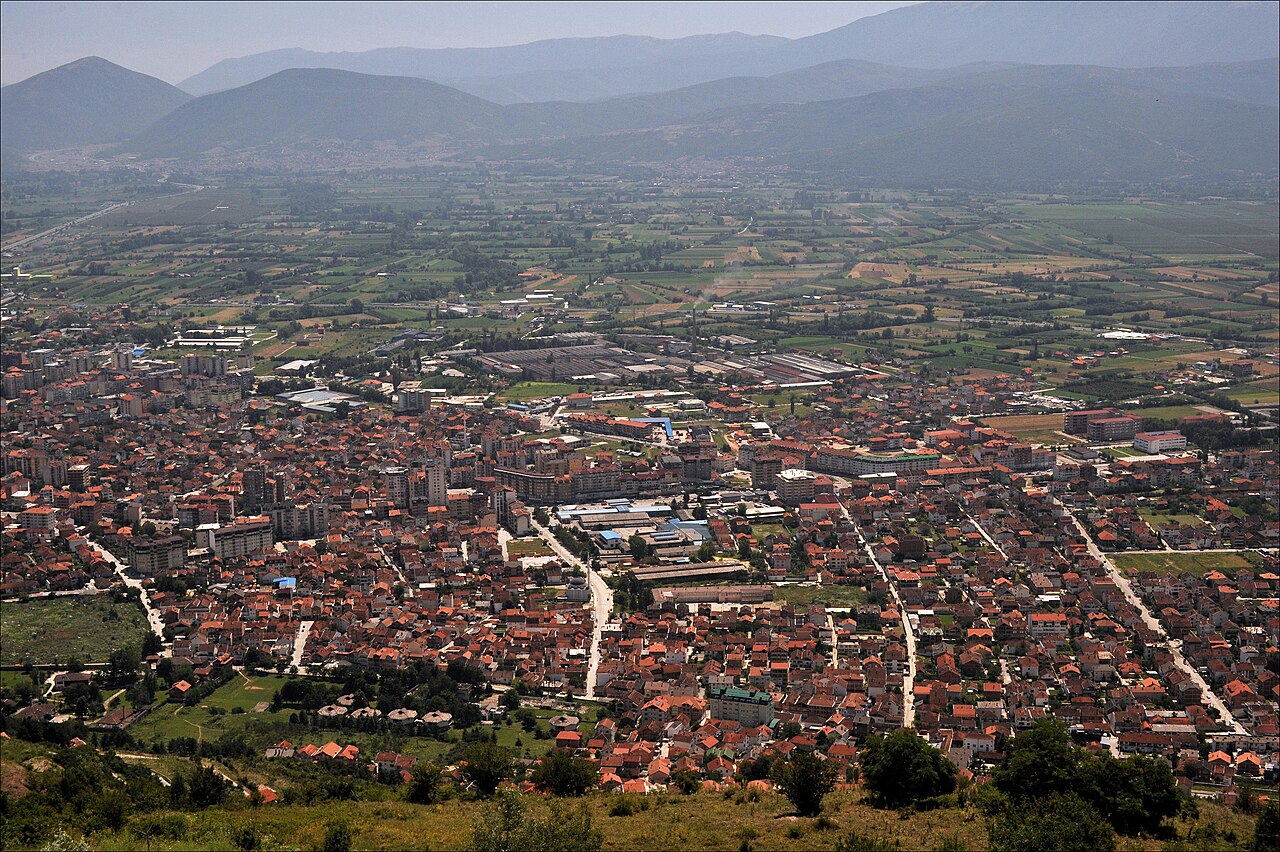
North Macedonia's towns are small and close together: Skopje on the Vardar in the north, Tetovo below the Šar Mountains, the main centre of the Albanian community, old trading towns such as Štip, Prilep and Bitola, and the lake towns of Ohrid and Struga in the south-west.
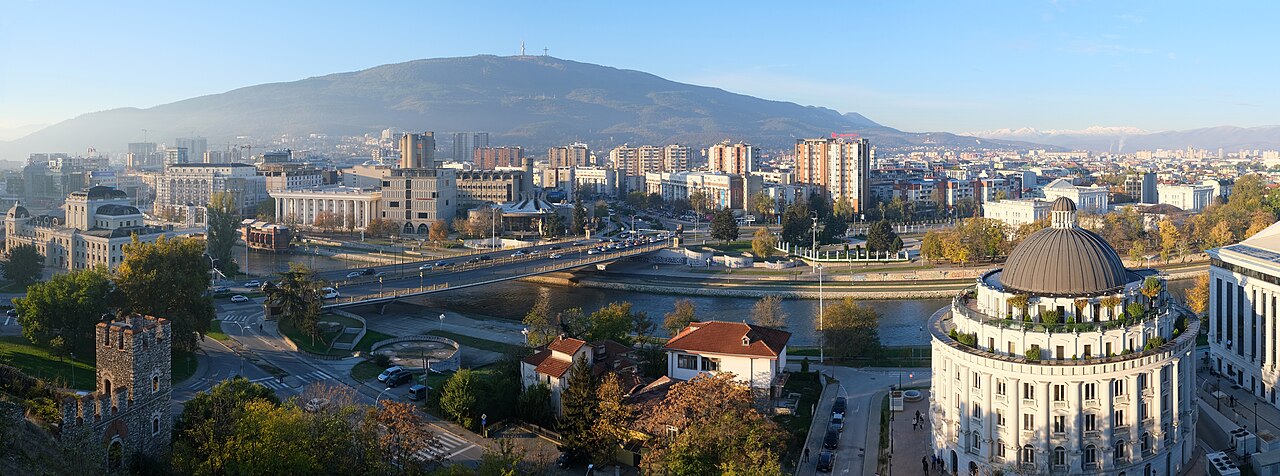
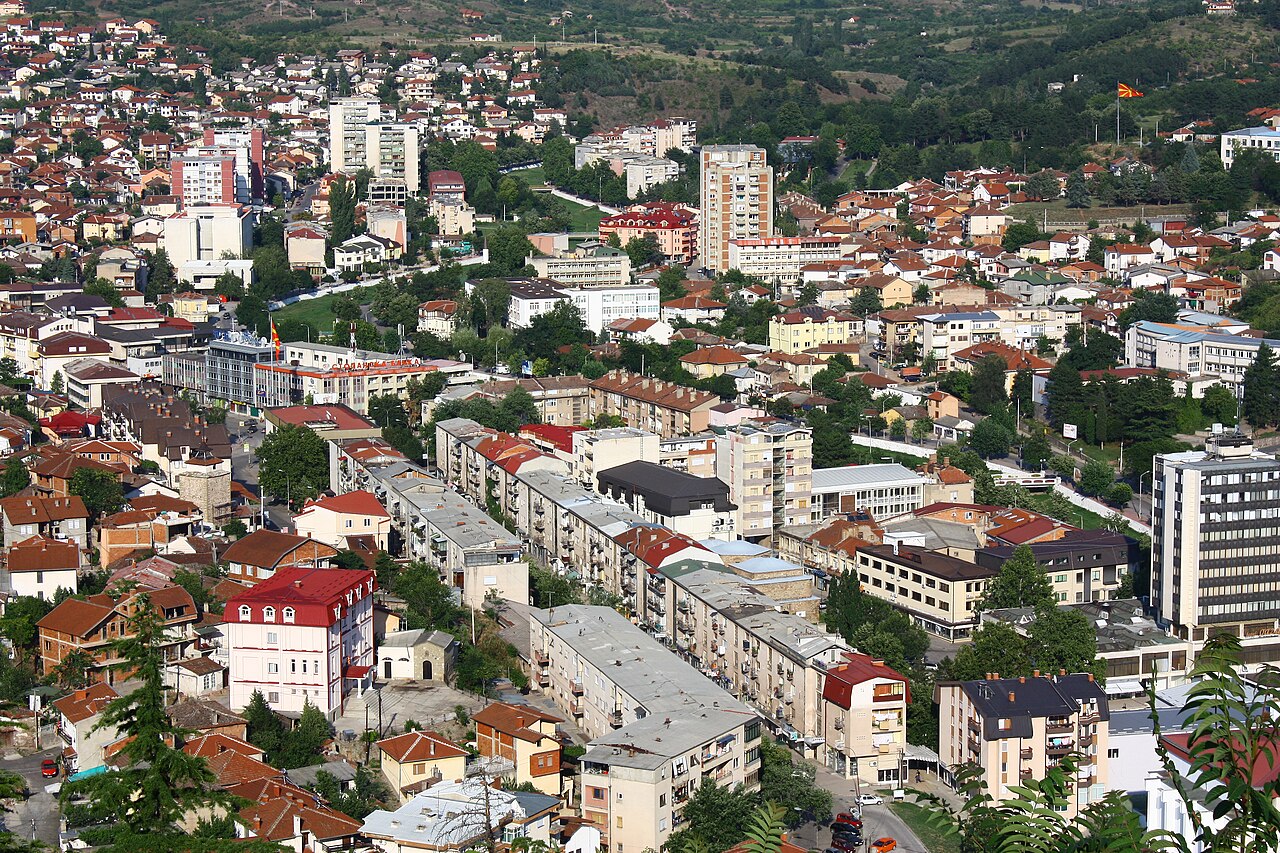
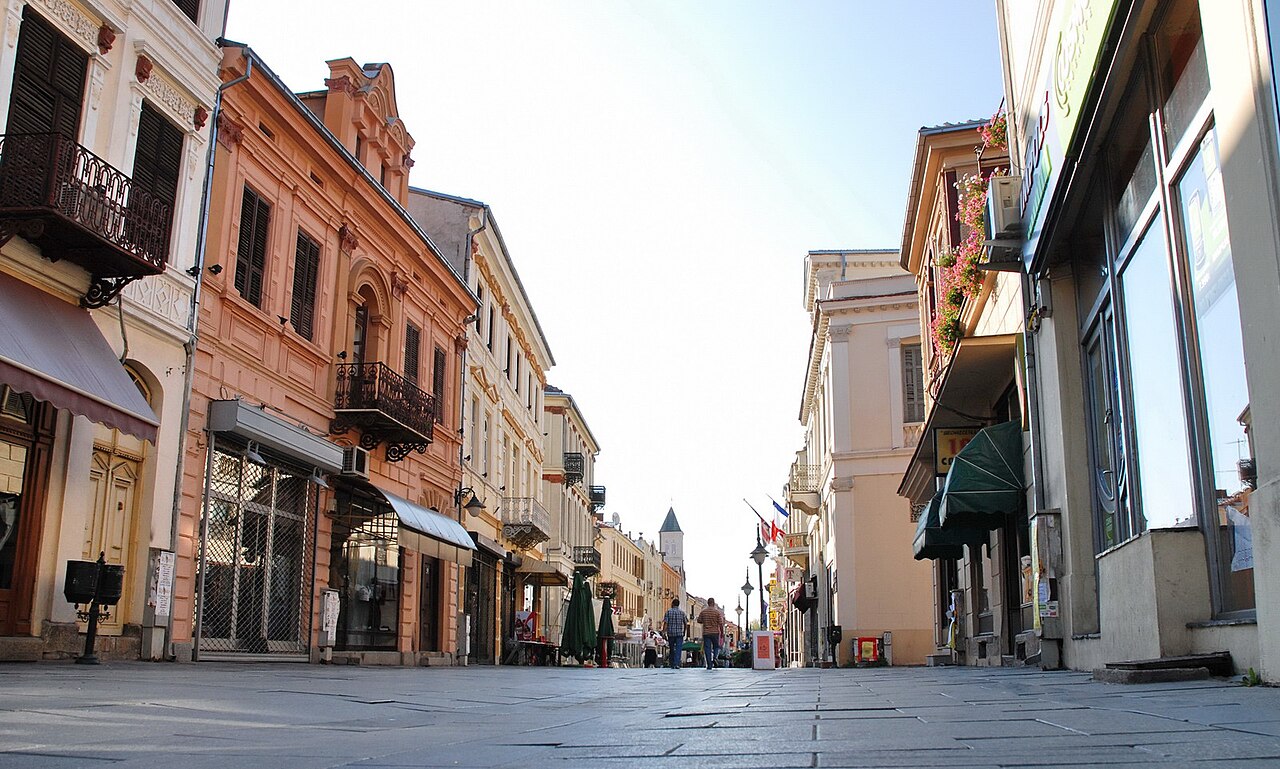
The capital and largest city, home to about 526,000 people in 2021. It lies on the Vardar river, with the Ottoman Old Bazaar on the north bank and a centre rebuilt after the 1963 earthquake on the south bank.
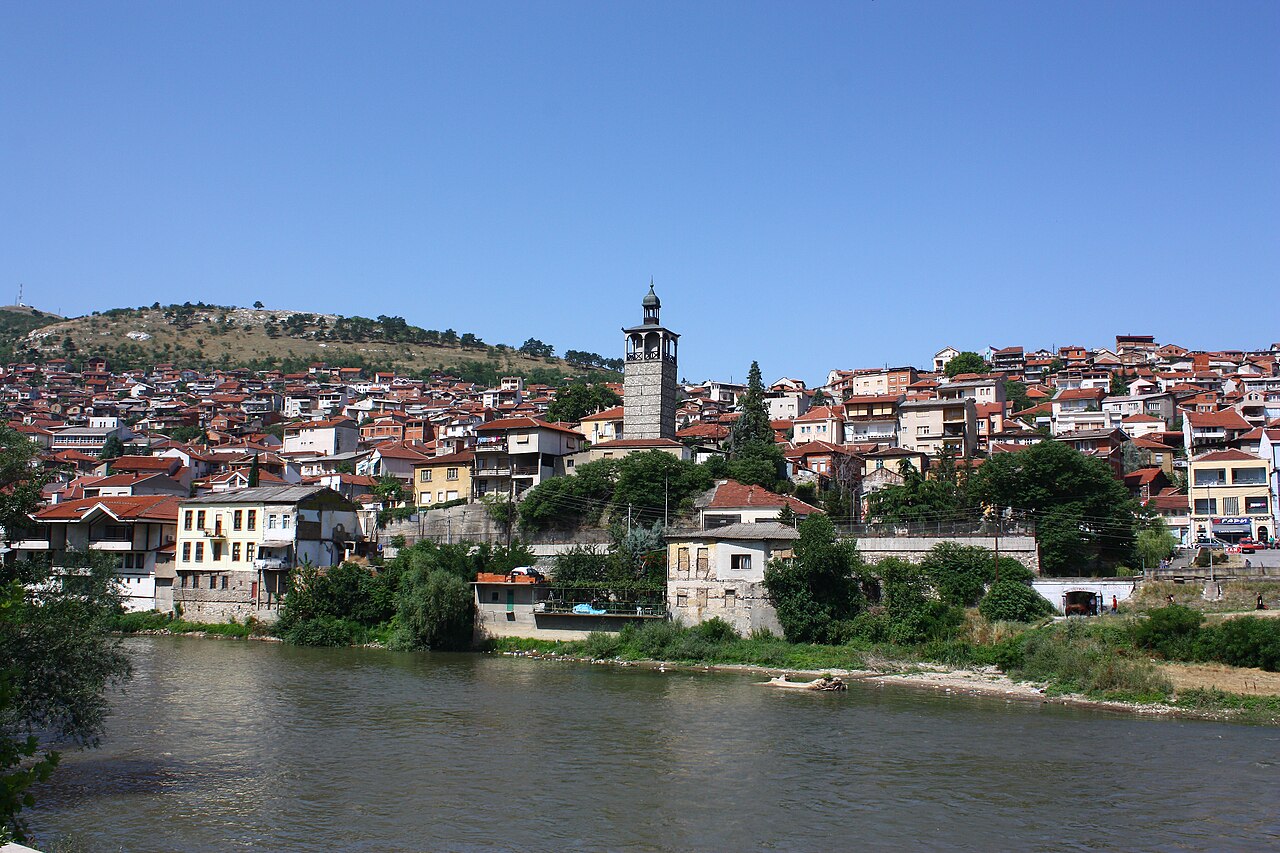
A town on the Vardar in the middle of the country. After the Second World War it was called Titov Veles, and the name returned to Veles in 1996. The ruins of ancient Stobi lie to the south-east.
A lively university town in the east, on the Bregalnica, the country's second-longest river. It is the centre of the Macedonian textile and fashion industry.
One of the oldest and largest cities, at the foot of Baba Mountain in the south-west. In late Ottoman times it was called Manastır and had so many foreign consulates that it was known as the city of the consuls.
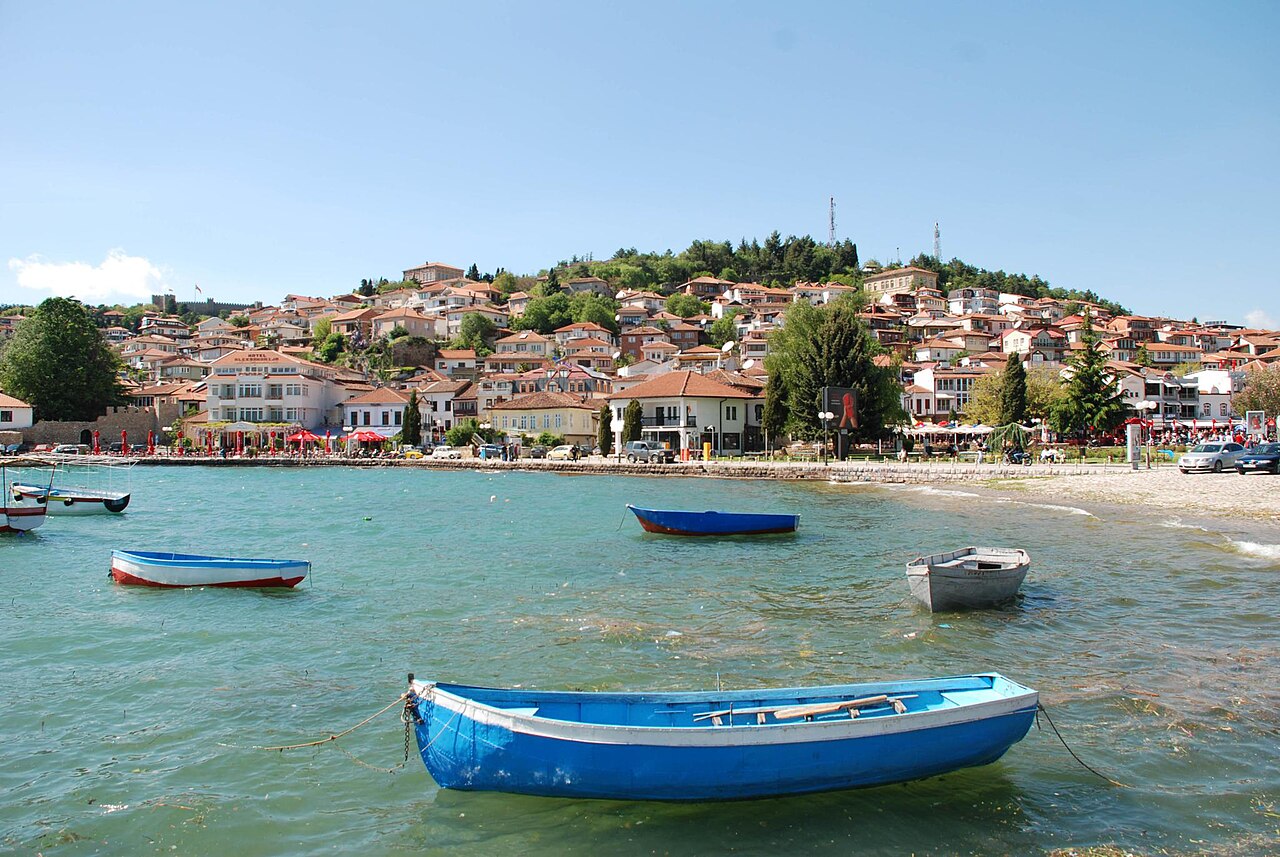
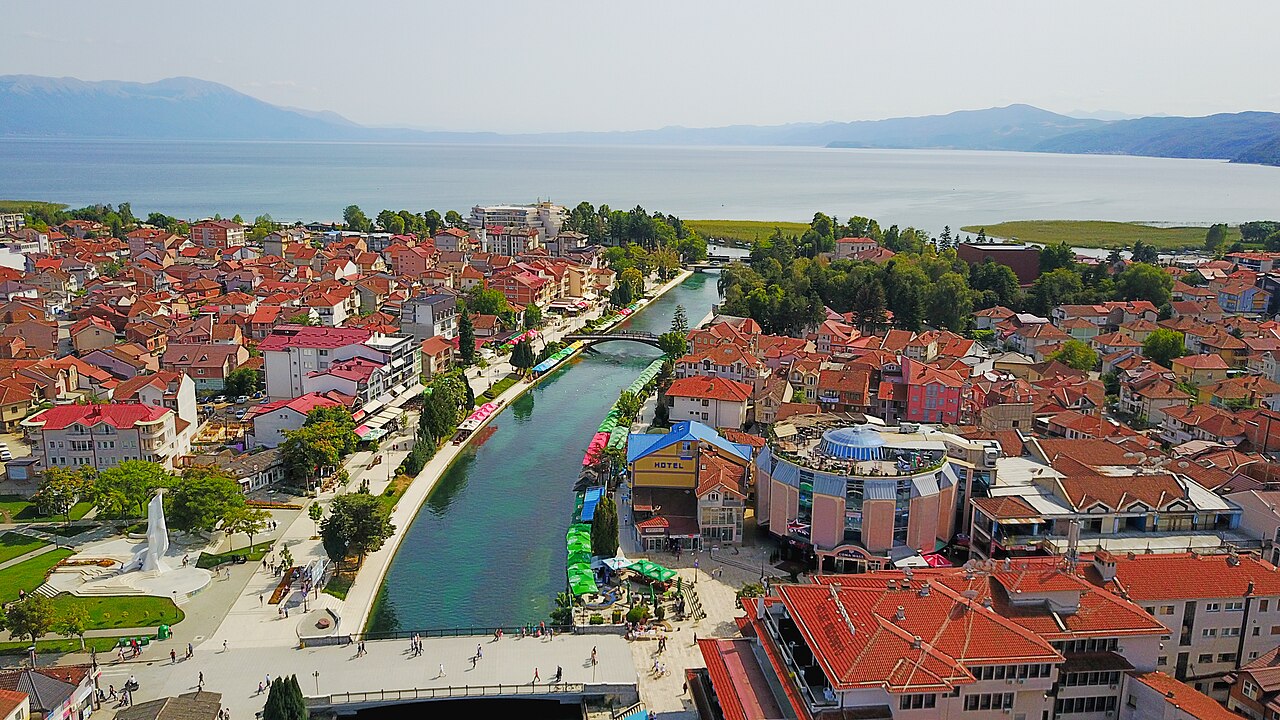
The largest town on Lake Ohrid, with about 38,000 people in 2021. It is said to have once had 365 churches, one for every day of the year, and is sometimes called the Jerusalem of the Balkans.
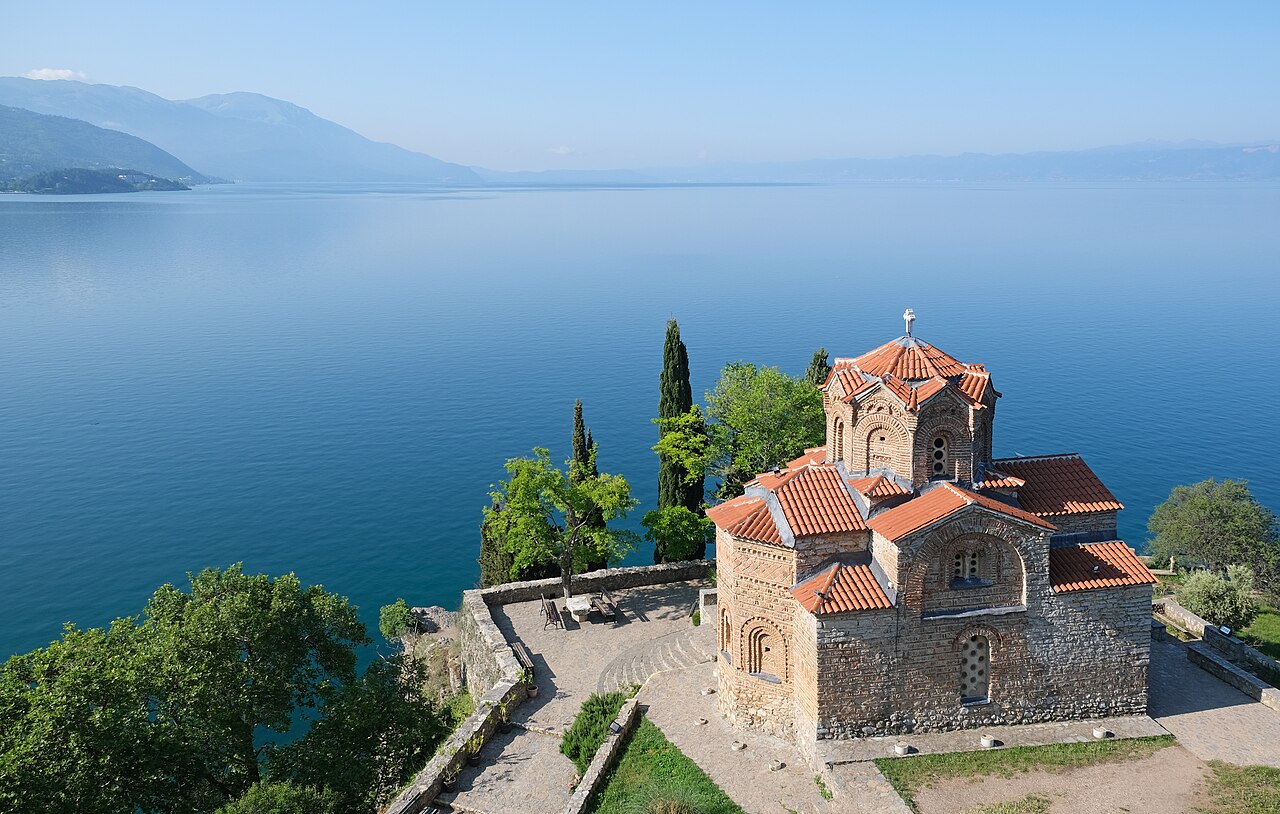
A small church on a cliff above Lake Ohrid, probably built in the 13th century, with a fresco of Christ in its dome. It is part of the UNESCO-listed Ohrid region, which is protected for both its nature and its culture.
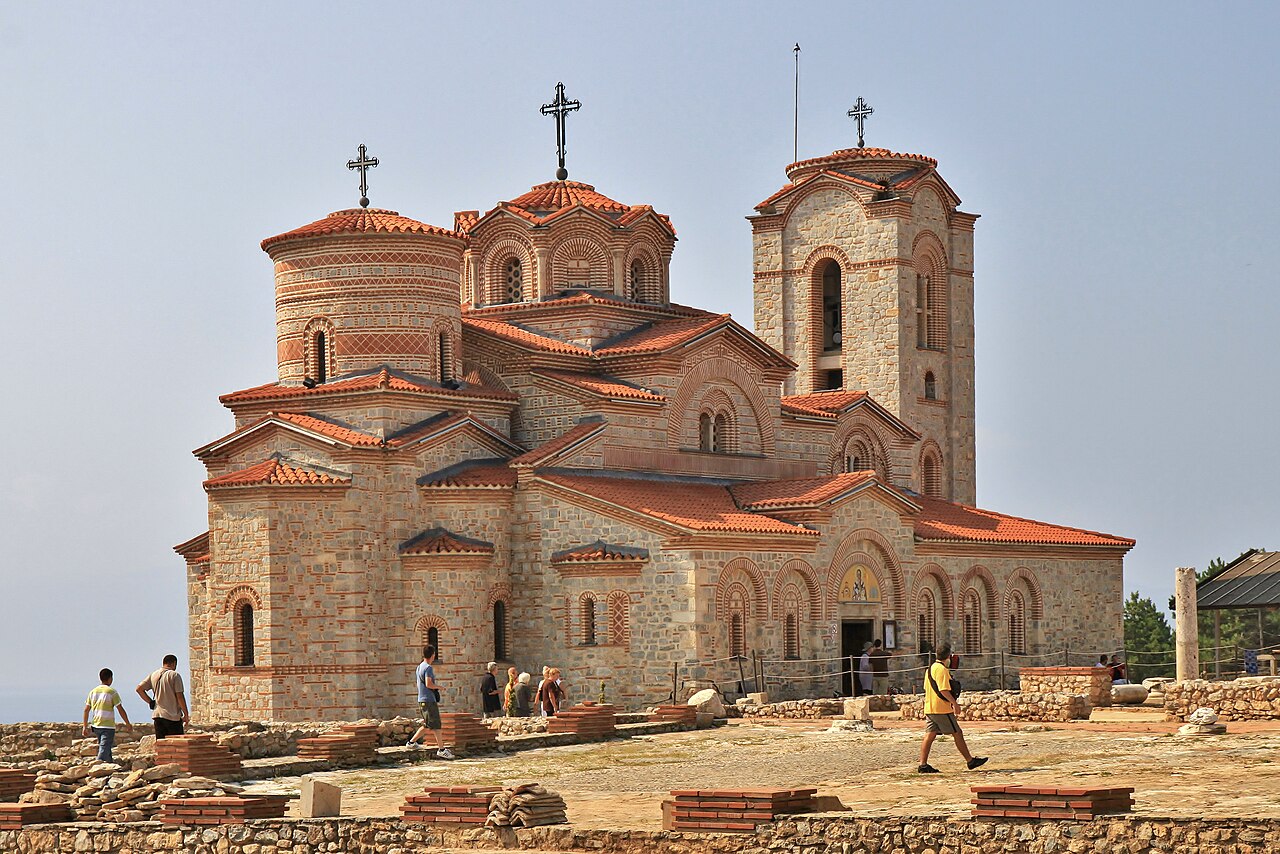
A holy site on the hill below Samuel's Fortress, where Saint Clement built a church in 893 on the foundations of an older basilica. In Ottoman times it became a mosque. Today the site is being restored, and the church of St. Panteleimon stands there again.
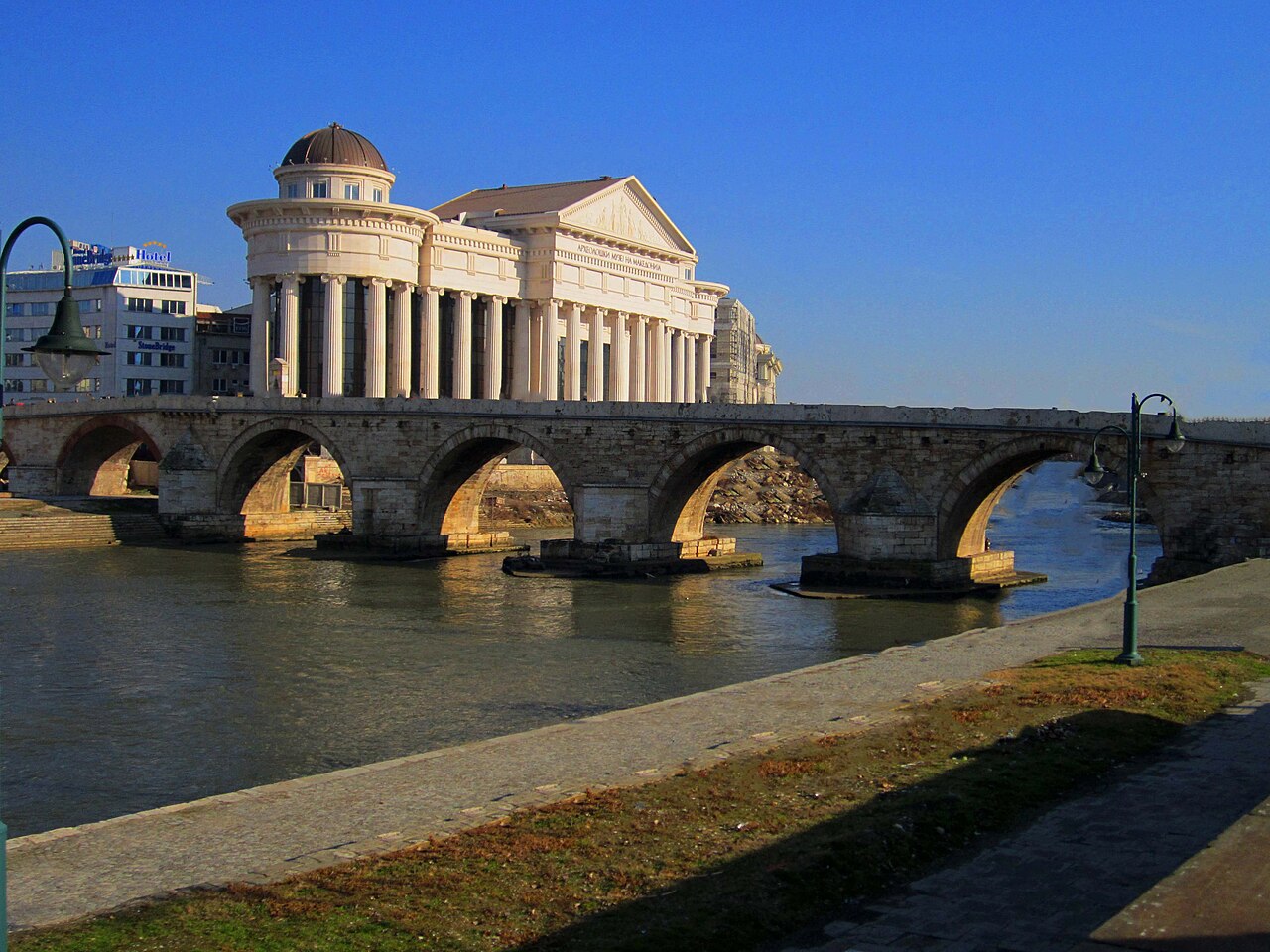
A 214-metre stone bridge with 12 arches across the Vardar, built on Roman foundations under Sultan Mehmed II between 1451 and 1469. It links Macedonia Square with the Old Bazaar and is the symbol of Skopje.
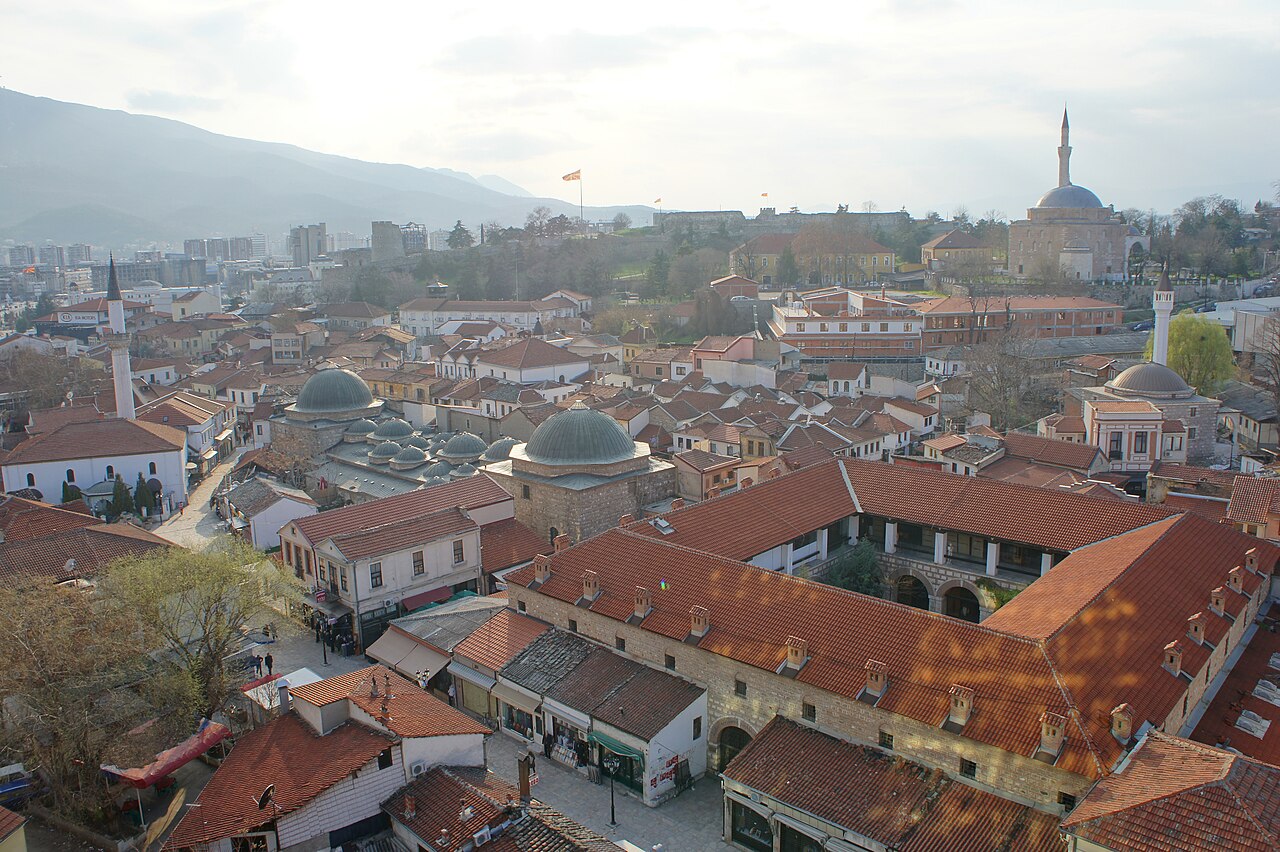
One of the oldest and largest marketplaces in the Balkans, a trading quarter since at least the 12th century. Its lanes are full of small shops, mosques, old inns, Turkish baths and a clock tower.
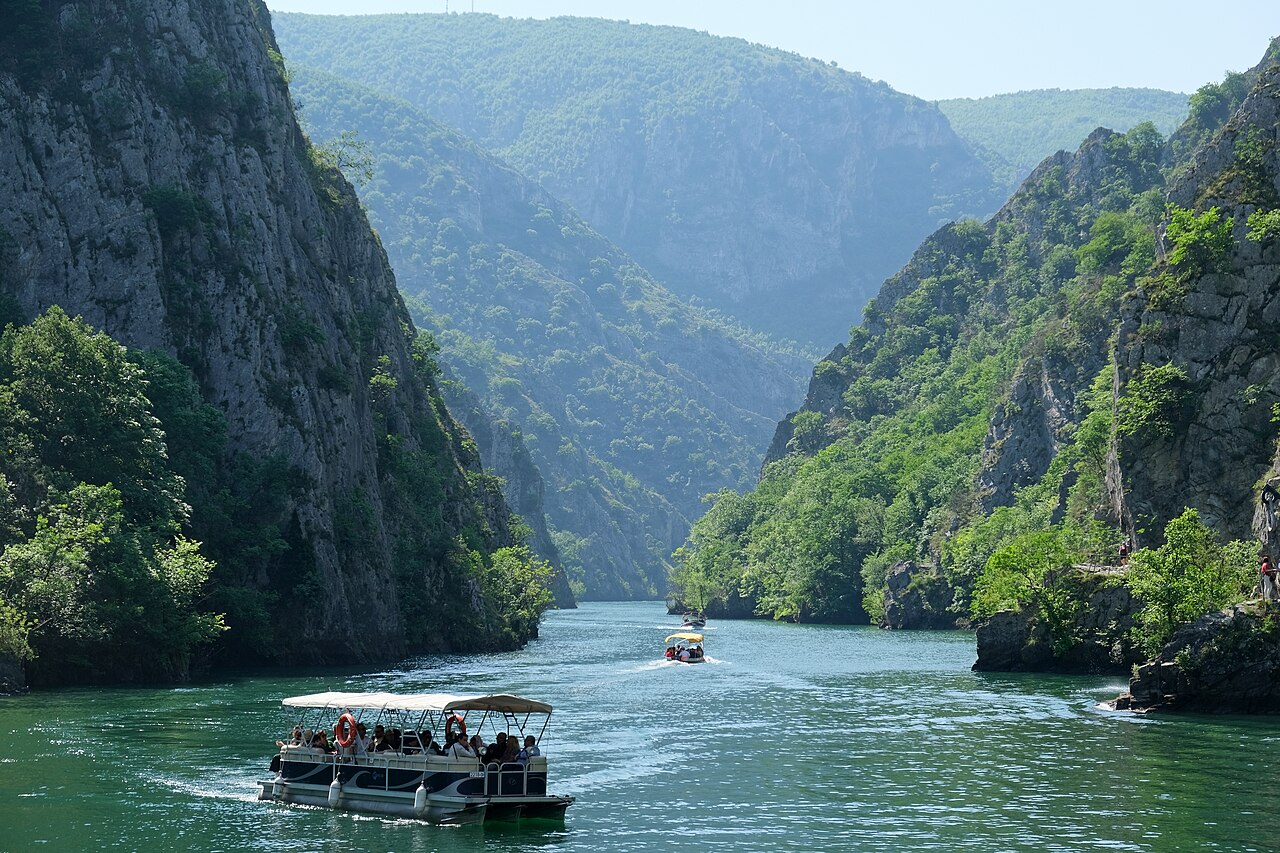
A steep canyon of the Treska river just west of Skopje, with a small lake, caves and medieval monasteries. It is one of the most popular places in the country for walking and kayaking.
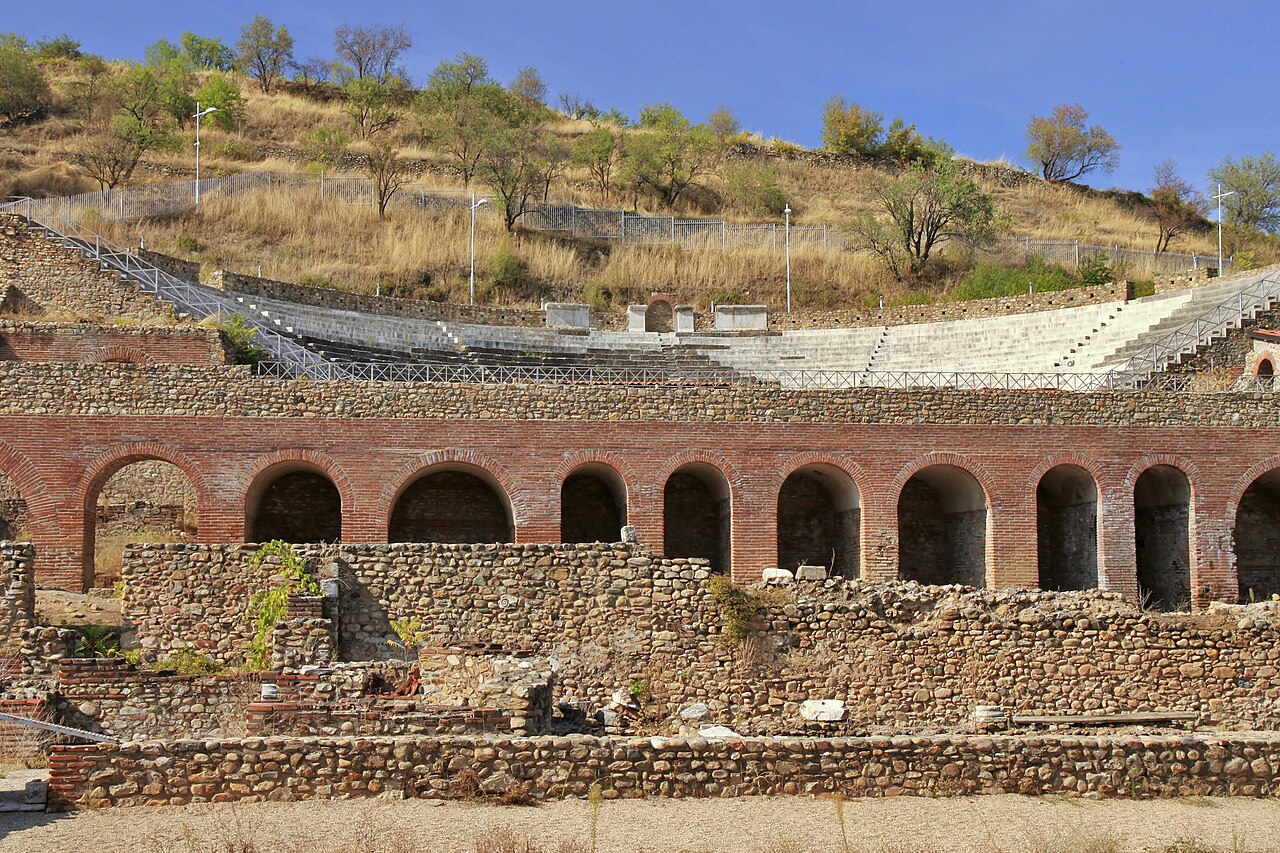
The ruins of a city founded by Philip II of Macedon, 2 km south of Bitola, on the Roman road called the Via Egnatia. Visitors can see a Roman theatre, baths and early Christian basilicas with fine floor mosaics.
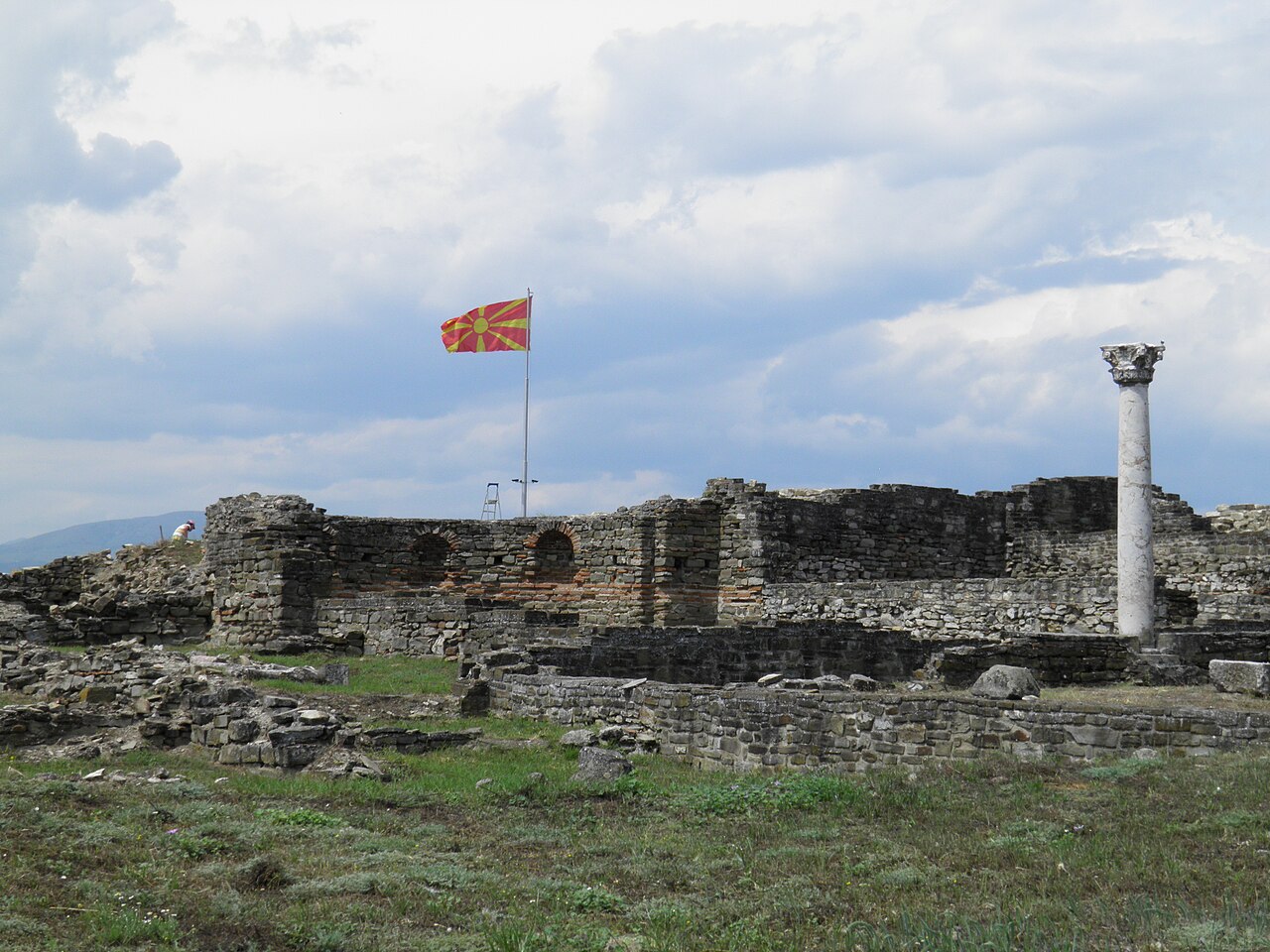
The ruins of an ancient city where the Crna river meets the Vardar, near Gradsko. It later became the capital of the Roman province of Macedonia Salutaris, and its ruins, including a 3rd-century theatre, can be explored today.
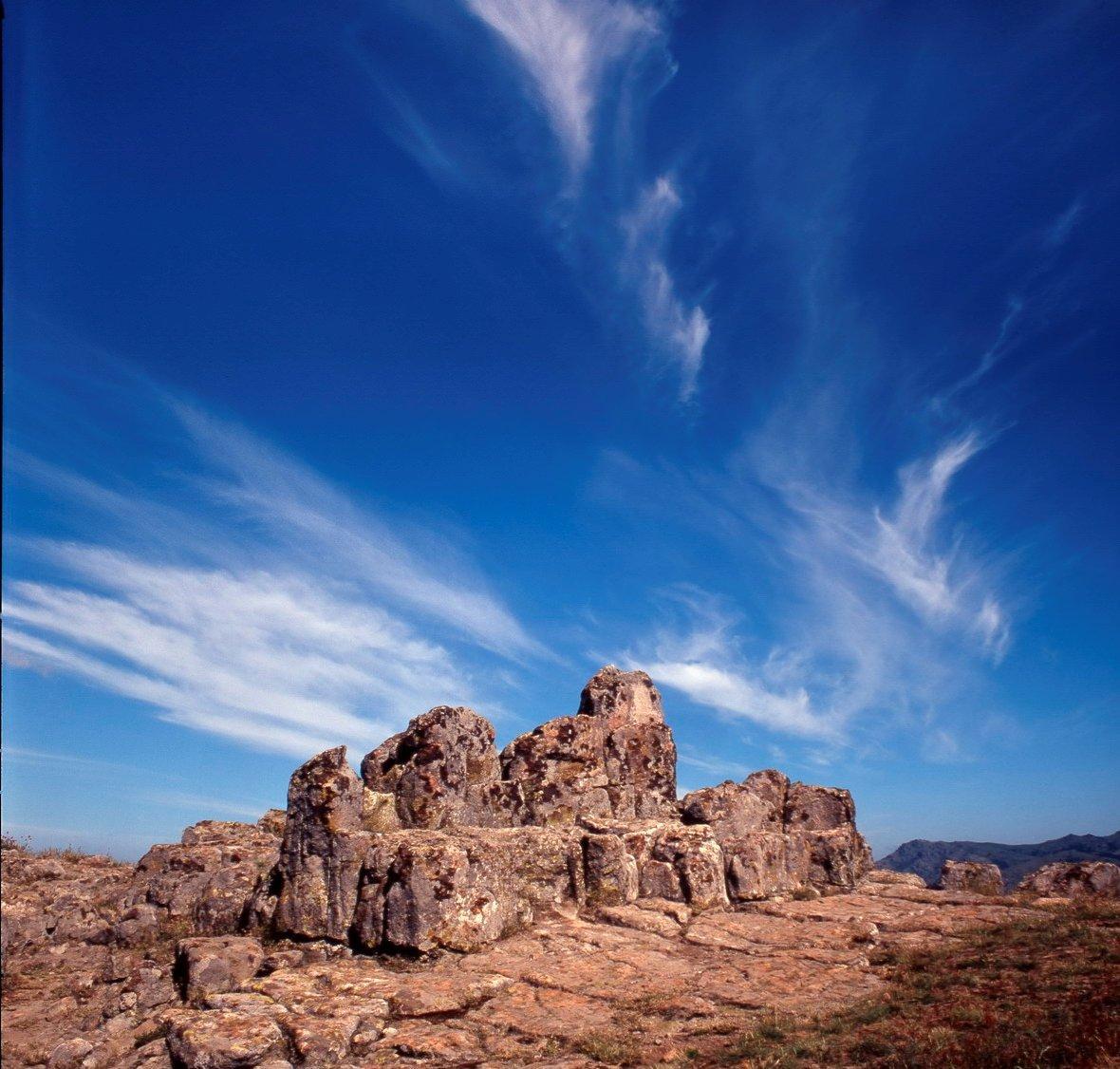
A Bronze Age site on a rocky summit about 30 km from Kumanovo, with finds from about the 19th century BC. Some researchers see it as an ancient observatory for following the sun and moon. As of 2026 it is on UNESCO's tentative list.
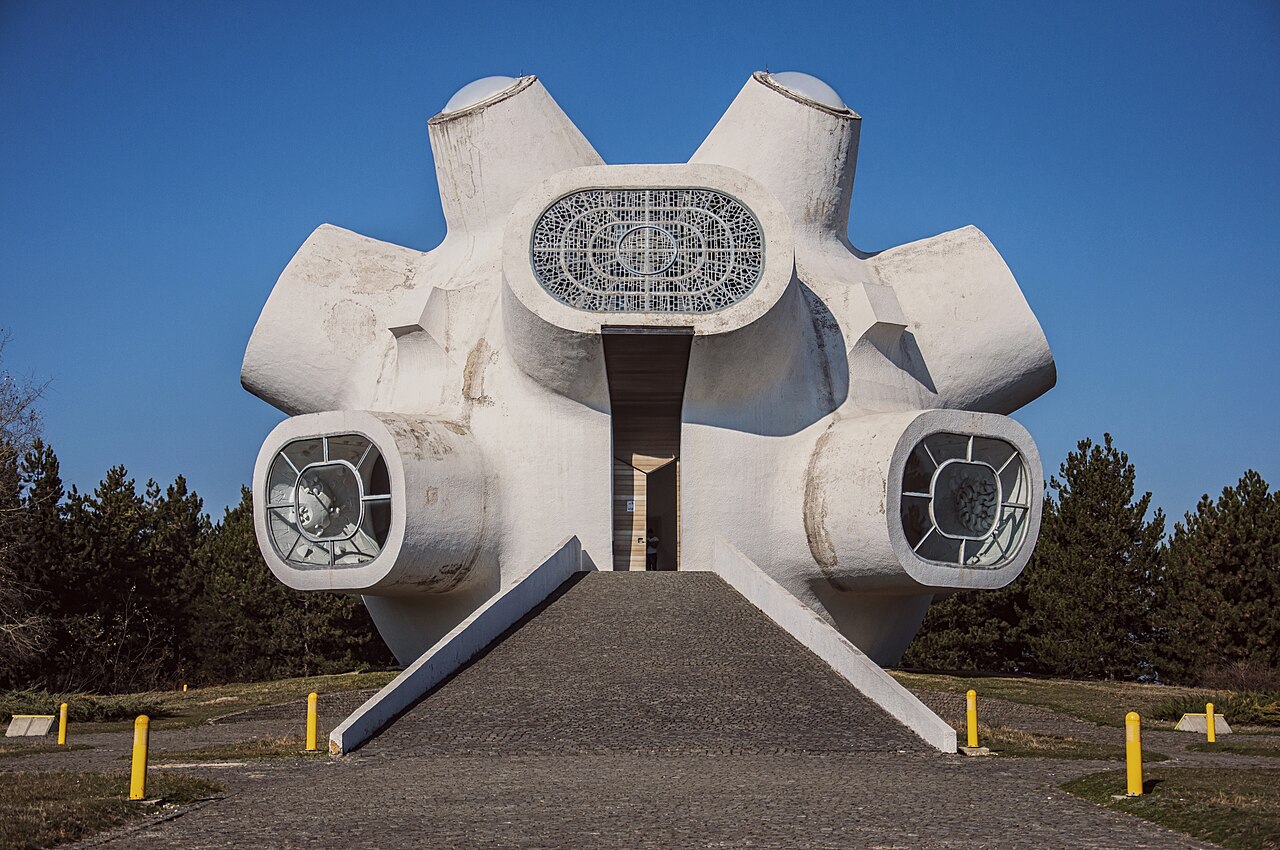
A striking domed monument with stained-glass windows above Kruševo, opened on 2 August 1974. It honours the rebels of the 1903 Ilinden Uprising and the partisans of the Second World War.
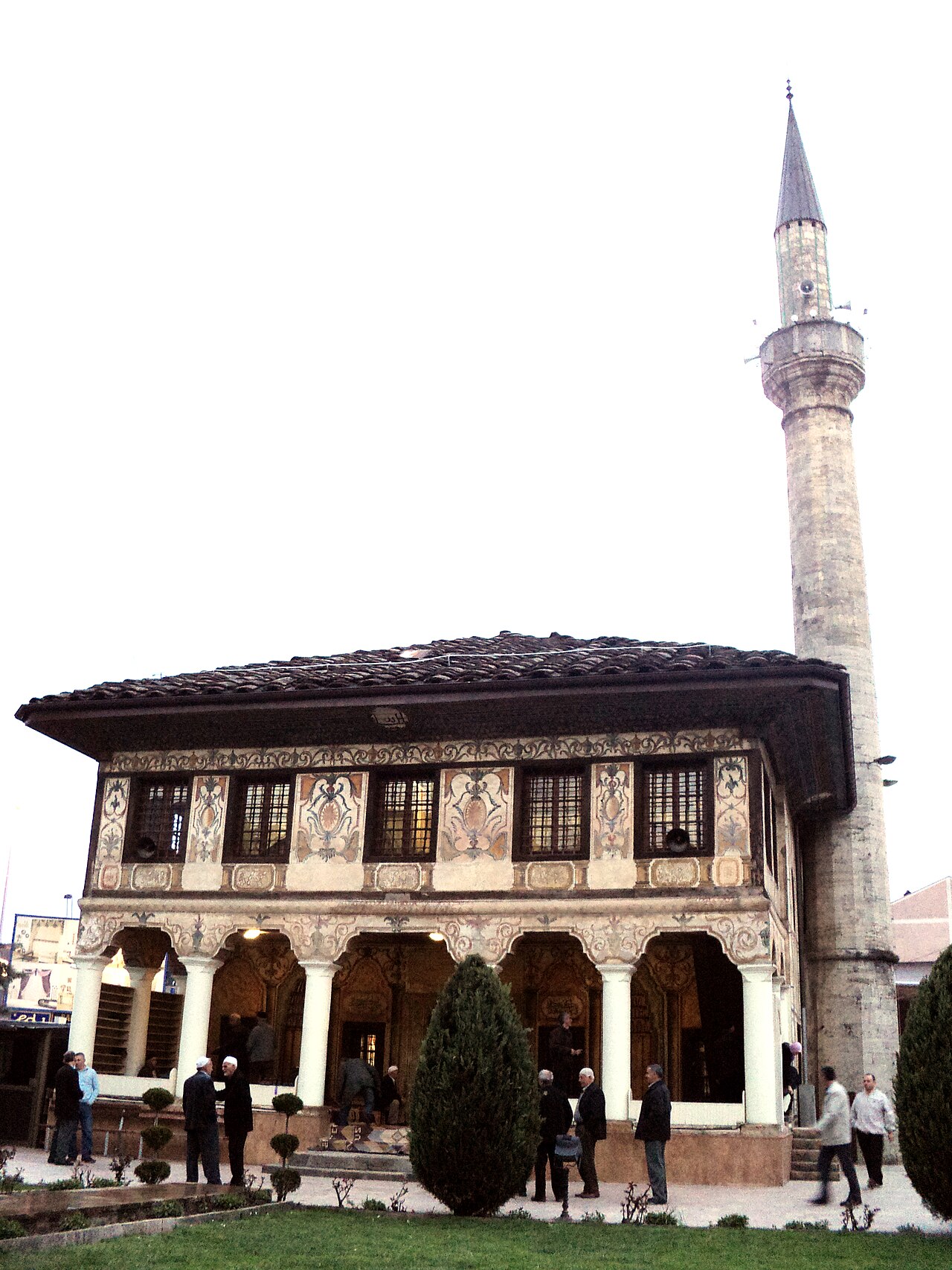
A mosque by the Pena river in Tetovo, first built in 1438 and rebuilt in 1833. Instead of the usual tiles, it is covered inside and out with bright painted flowers and patterns.
Mother Teresa was born in Skopje in 1910 and lived there until 1928. A memorial house now stands on the site of the church where she was baptised.
02
Lake Ohrid is one of the oldest and deepest lakes in Europe. It is up to 288 metres deep and is home to more than 200 species found nowhere else.
03
Ohrid is said to have once had 365 churches, one for every day of the year.
04
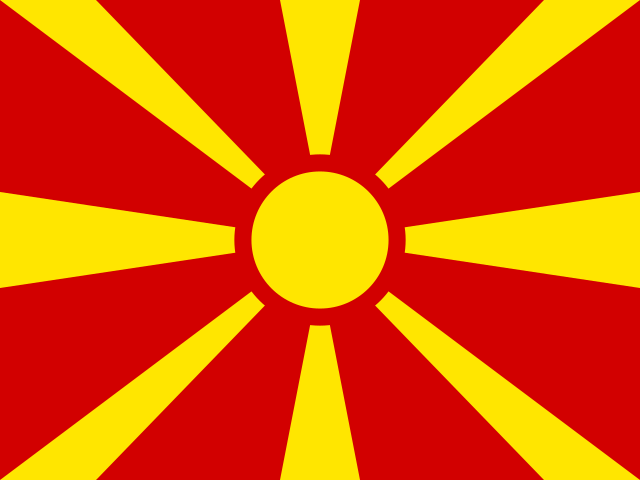
The flag shows a yellow sun with eight broadening rays on a red field. It was designed by Miroslav Grčev and adopted on 5 October 1995.
05
The documentary Honeyland, about a beekeeper of wild bees in a remote village, was nominated in 2020 for the Academy Awards for both Best Documentary Feature and Best International Feature Film. It was the first non-fiction film nominated in both categories.
06
The Manaki brothers, pioneers of Balkan cinema, had their photography studio in Bitola, then called Manastır. Their 1905 film The Weavers is regarded as the first motion picture shot in the Balkans, and Bitola has held a film festival in their honour since 1979.
07
The country's rivers flow towards three different seas: the Aegean, the Adriatic and the Black Sea. The Vardar alone drains about 80% of the land.
08
The Macedonian alphabet is a form of Cyrillic with 31 letters. It was standardised in 1945.
09
The name of the denar comes from the denarius, a silver coin of ancient Rome.
10
Mustafa Kemal Atatürk, the founder of modern Turkey, studied at a military school in Bitola in late Ottoman times.
11
The Struga Poetry Evenings, held every year since 1961, have given their Golden Wreath award to poets such as W. H. Auden and Mahmoud Darwish.
12
More than 30,000 eggs were used to prepare the paint for the decorations of the Painted Mosque in Tetovo.
13
Water from Lake Prespa, which lies about 150 metres higher, flows through underground channels in the mountains and comes out in springs that feed Lake Ohrid.
The currency is the Macedonian denar. Cards and contactless payment are widely accepted, and many places also take euros, but carry some denars for markets, taxis and small cafés. As of 2026, many ATMs charge their own fee of about 200 to 300 denars on top of your bank's, so check before you withdraw.
Your hotel registers you
Visitors must be registered with the police within 48 hours of arrival. Hotels do this automatically when you check in; if you stay privately, make sure your host does it.
Check your passport dates
As of September 2026, UK government advice says your passport must be valid for at least 90 days after the date you arrive. Other nationalities should check their own government's advice before travelling.
Emergency numbers
The European emergency number 112 works in North Macedonia. The police can also be reached on 192 and the ambulance on 194. For roadside help, call 196.
Headlights on, day and night
Traffic drives on the right. Dipped headlights must be on in daytime as well as at night, and the alcohol limit is 0.05%, lower for new and professional drivers. Mountain roads can be narrow and winding, so allow extra time.
Learn a few Cyrillic letters
Macedonian is written in Cyrillic. Road signs also show town names in Latin letters, but menus, shop signs and bus tickets in smaller towns are often in Cyrillic only, so knowing a few letters helps a lot.
No photos of military sites
It is illegal to photograph military installations and sites of government or strategic importance. If in doubt, put the camera away.
Tread gently with politics
In everyday speech many people still call their country simply Makedonija, Macedonia. Relations with neighbouring countries and between communities are sensitive topics, so it is wiser to ask questions than to offer opinions.
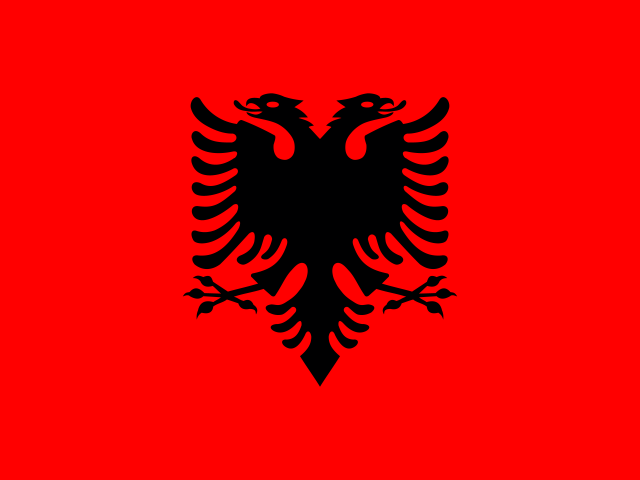 Albania
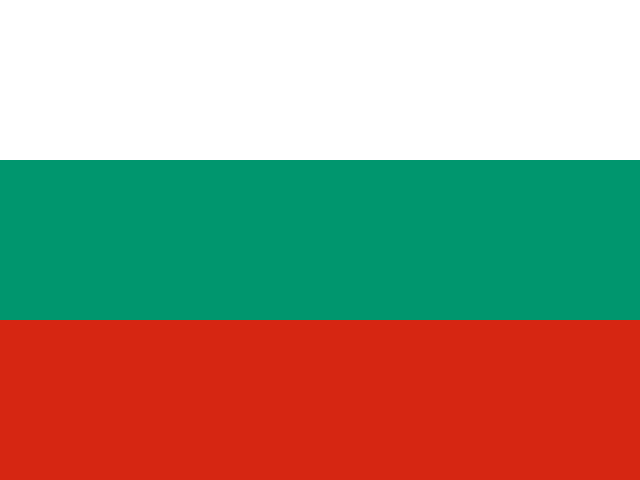 Bulgaria
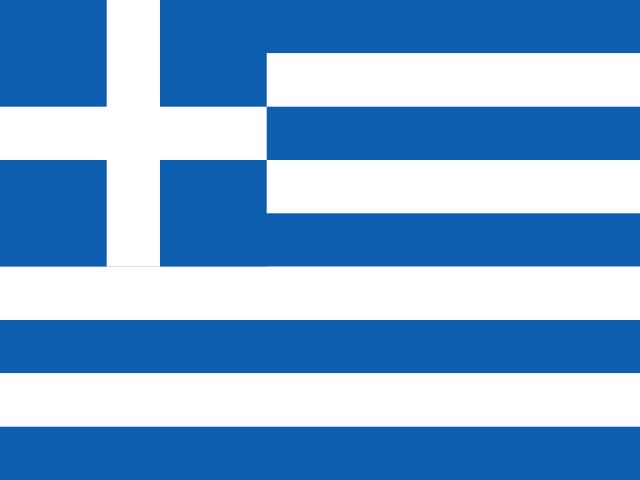 Greece
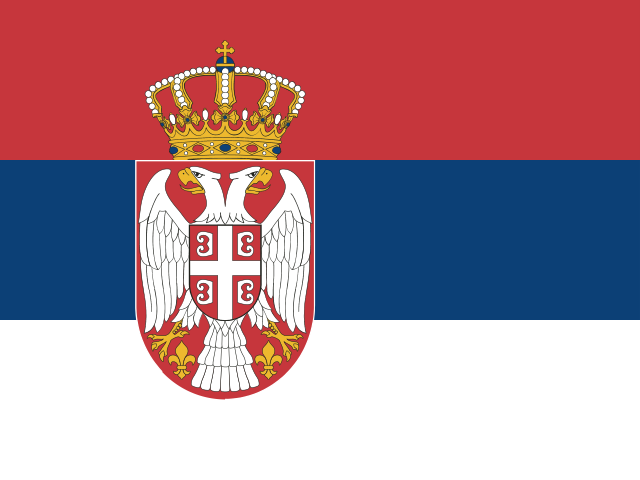 Serbia