A small, mountainous Balkan country of deep ancient lakes, frescoed Byzantine churches, Ottoman bazaars and beans baked slowly in clay dishes.
North Macedonia is a landlocked country in the middle of the Balkan peninsula. Its heart is the valley of the Vardar river, which runs from the north-west past Skopje and on to Greece and the Aegean Sea. Mountains frame the country on every side, and three large lakes lie on its southern borders: Ohrid, Prespa and Dojran. Lake Ohrid is one of the oldest and deepest lakes in Europe.
In ancient times the land was home to the Paeonians and other peoples, and its southern part was joined to the kingdom of Macedon under Philip II. Later came the Romans, the Byzantines and medieval Slavic states, then about five centuries of Ottoman rule. After the Balkan Wars of 1912 and 1913 most of the territory came under Serbia, and after the Second World War it became one of the six republics of socialist Yugoslavia. It left Yugoslavia peacefully in 1991.
Questions to ask the older generation
Memories fade faster than photos. Ask these over a meal or a phone call, and write the answers down.
Which town or region of North Macedonia did our family come from? Was it near Kumanovo, Tetovo, Veles?
Who was the first in the family to leave North Macedonia, when, and why?
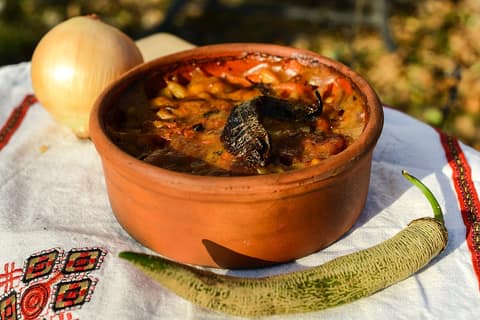
Which dishes from North Macedonia were cooked at home? Did anyone make Tavče gravče or Ajvar?
Does anyone in the family still speak Macedonian, or use a few words of it?
Were there songs, prayers, games or holidays from North Macedonia that the family kept?
Are there old photos, letters or documents from North Macedonia? Who has them?
If you could visit North Macedonia together, where would you go first?
A short history of North Macedonia
The story of North Macedonia runs from ancient kingdoms and Roman towns, through medieval empires and a great school of Slavic letters in Ohrid, to five centuries of Ottoman rule, life in Yugoslavia and independence in 1991.
356 BC
Philip II takes the south
King Philip II of Macedon, father of Alexander the Great, added Lynkestis, Pelagonia and the southern part of Paeonia to his kingdom. Around this time he founded the city of Heraclea Lyncestis, whose ruins stand near Bitola.
AD 886
Clement's school in Ohrid
Saint Clement, a disciple of Cyril and Methodius, founded a school of learning in Ohrid. The Ohrid Literary School helped to spread the Cyrillic script among the Slavs. Clement is the patron saint of Ohrid and of North Macedonia.
1346
Dušan crowned in Skopje
Stefan Dušan, who had made Skopje the capital of the Serbian Empire, was crowned emperor in the city. After his death the empire broke up into smaller states.
1903
The Ilinden Uprising
On Ilinden, St Elijah's Day, rebels rose against Ottoman rule. In the town of Kruševo they declared a republic that lasted from 3 to 13 August before the uprising was crushed. Its leaders are remembered as national heroes.
1944
ASNOM founds a Macedonian state
On 2 August 1944, the anniversary of the Ilinden Uprising, the partisan assembly ASNOM met in secret and proclaimed a Macedonian state within Yugoslavia, with Macedonian as its official language.
1991
The independence referendum
On 8 September 1991 voters approved independence from Yugoslavia. The country left the federation peacefully, and 8 September is celebrated as Independence Day.
2001
The Ohrid Agreement
From February to August 2001 government forces fought ethnic Albanian insurgents in the north and west. The Ohrid Framework Agreement of 13 August ended the conflict and gave more rights to the Albanian community, including wider use of the Albanian language.
2020
NATO membership
On 27 March 2020 North Macedonia became the 30th member of NATO. In July 2022 it opened accession talks with the European Union.