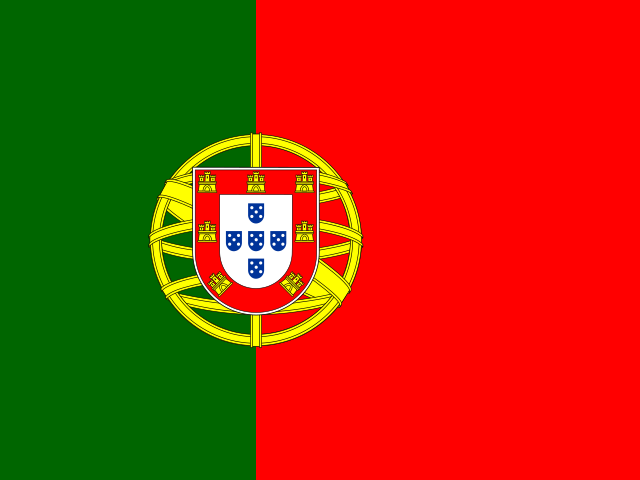
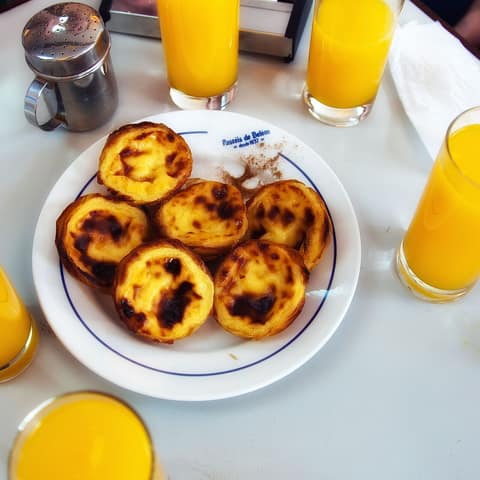
Seafaring explorers, custard tarts and fado, on the sunny Atlantic edge of Europe.
Portugal lies on the western side of the Iberian Peninsula, facing the Atlantic Ocean, with Spain as its only land neighbour. Far out in the ocean it also includes two groups of islands, Madeira and the Azores. The north is green and hilly, while the south, the Alentejo and the Algarve, is a land of rolling plains, cork oaks and golden beaches.
Portugal became a kingdom in the 1100s, and its borders on the mainland have barely changed since 1297. In the 1400s and 1500s its sailors led the Age of Discovery: they sailed around Africa to India, reached Brazil and built trading posts as far away as China and Japan.
Questions to ask the older generation
Memories fade faster than photos. Ask these over a meal or a phone call, and write the answers down.
Which town or region of Portugal did our family come from? Was it near Porto, Braga, Guimarães?
Who was the first in the family to leave Portugal, when, and why?
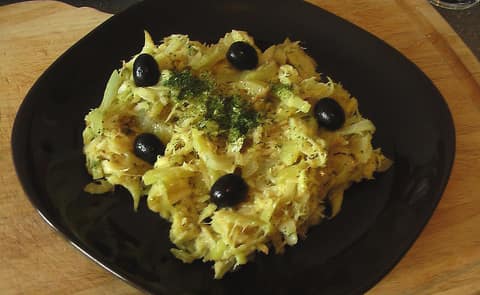
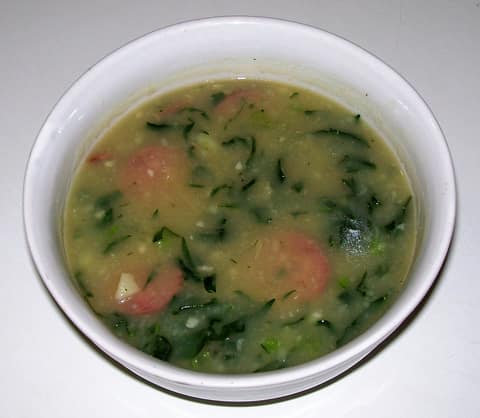
Which dishes from Portugal were cooked at home? Did anyone make Bacalhau à Brás or Caldo verde?
Does anyone in the family still speak Portuguese, or use a few words of it?
Were there songs, prayers, games or holidays from Portugal that the family kept?
Are there old photos, letters or documents from Portugal? Who has them?
If you could visit Portugal together, where would you go first?
A short history of Portugal
From Lusitanian warriors who fought Rome to the explorers who opened the sea route to India, Portugal's small corner of Europe has had a very large part in world history.
139 BC
Viriathus is killed
Viriathus, leader of the Lusitanian people, won several victories against the Romans before he was betrayed and murdered in his sleep in 139 BC. The Portuguese remember him as a national hero. Rome went on to conquer the region, which became the province of Lusitania.
1147
Lisbon is captured from the Moors
Afonso Henriques, who had called himself king in 1139, took Lisbon after a siege of about four months, with the help of crusaders from northern Europe on their way to the Holy Land. Lisbon became the capital about a century later, in 1255.
1386
The Treaty of Windsor is signed
After English archers helped Portugal beat Castile at the Battle of Aljubarrota in 1385, King John I and England signed a pact of lasting friendship, sealed by his marriage to the English princess Philippa of Lancaster. The alliance is still in force today.
1498
Vasco da Gama reaches India
After sailing around the southern tip of Africa, Vasco da Gama landed near Calicut (Kozhikode) in India on 20 May 1498. He had opened the first sea route from Europe to Asia, and the spice trade made Lisbon rich.
1640
Portugal regains its independence
On 1 December 1640 the Duke of Braganza was proclaimed King John IV of Portugal. After years of war, Spain accepted Portugal's independence in 1668. The date, 1 December, is a national holiday.
1807
The royal court sails for Brazil
Days before Napoleon's army reached Lisbon, the royal family and about 10,000 courtiers sailed for Brazil. From 1808 to 1821 Rio de Janeiro was the capital of the Portuguese empire.
1974
The Carnation Revolution
On 25 April 1974 army officers overthrew the Estado Novo, the dictatorship built by António de Oliveira Salazar, with very little bloodshed. People put red carnations into the soldiers' guns, which gave the revolution its name. Democracy followed, and Portugal's African colonies soon became independent.
1999
Macau is handed back to China
At midnight on 20 December 1999 Portugal handed Macau, its last territory in Asia, to China, ending 442 years of Portuguese rule there.