Islam reaches Qatar
In 628 the Prophet Muhammad sent an envoy to Munzir ibn Sawa Al-Tamimi, a leader in Eastern Arabia, and most of the Arab tribes of Qatar accepted Islam.
Qatar is a small, flat peninsula that reaches about 160 km north into the Persian Gulf from the Arabian Peninsula. Its only land border is with Saudi Arabia in the south. Most of the country is stony desert, with sand dunes in the south and salt flats along parts of the coast, and its highest point is a hill just 103 m high.
For centuries people here lived from pearl diving, fishing, trade and herding camels. The pearl trade collapsed in the 1920s, but oil was found at Dukhan in 1940, and in 1971 geologists found the North Field, a vast gas field under the sea that Qatar shares with Iran. Gas and oil turned Qatar into one of the richest countries in the world.
Memories fade faster than photos. Ask these over a meal or a phone call, and write the answers down.
People have camped on the Qatar peninsula since the Stone Age, fishing, diving for pearls and trading with Mesopotamia and Bahrain. Islam arrived in the 7th century. In the 18th century the town of Zubarah grew rich on pearls, and in the 19th century the Al Thani family of Doha rose to lead the peninsula, first under Ottoman rule and then, from 1916, under a treaty with Britain. Qatar became independent in 1971, and oil and gas made it one of the wealthiest countries in the world.
In 628 the Prophet Muhammad sent an envoy to Munzir ibn Sawa Al-Tamimi, a leader in Eastern Arabia, and most of the Arab tribes of Qatar accepted Islam.
Setting out from Zubarah, the Al Khalifa took control of the islands of Bahrain, where their family still rules. For decades afterwards they also claimed parts of Qatar.
As the Ottoman Empire expanded into Eastern Arabia, Ottoman troops arrived at Al Bidda, part of today's Doha, in December 1871, and the Al Thani accepted Ottoman rule.
In March 1893 Ottoman troops marched on Jassim bin Mohammed's fort at Al Wajbah, west of Doha. After hours of fighting the Ottomans retreated, and they later conceded defeat. Qatar stayed part of the empire, but Qataris see the battle as a founding moment of their state.
Drilling began at Dukhan on the west coast in October 1938, and the well struck oil more than a year later. World War II delayed production for several years.
Qatar took part in talks about a union with Bahrain and the Trucial States, but in the end chose its own path and became independent on 3 September 1971. The same year the North Field, one of the largest gas fields in the world, was discovered offshore.
On 5 June 2017 Saudi Arabia, the United Arab Emirates, Bahrain and Egypt cut ties with Qatar and closed their land, sea and air routes to it, including Qatar's only land crossing.
From 20 November to 18 December 2022 Qatar hosted the first football World Cup in the Middle East. Because of the summer heat it was played in November and December, and Argentina won the final at Lusail Stadium.
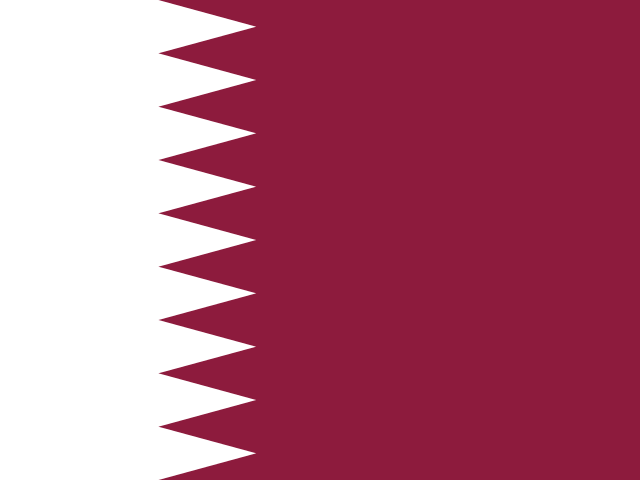
Cook one of the recipes, print the large-print pack about Qatar, and finish with the big-screen quiz or the words crossword. Grandchildren can colour the flag.
Our sister site Daily Ancestor helps you read the real documents: ship passenger lists, Ellis Island arrivals, naturalization papers and census pages, with a free plan of which records exist for each ancestor.