 Saudi Arabia
Islam reaches Qatar
In 628 the Prophet Muhammad sent an envoy to Munzir ibn Sawa Al-Tamimi, a leader in Eastern Arabia, and most of the Arab tribes of Qatar accepted Islam.
Start the trip Skip to the quiz About five relaxed minutes.
A free large-print PDF. Choose what goes in: facts, map, history, dishes and recipes, phrases, fun facts, a quiz with or without answers. Made for clubs, care homes, libraries and family afternoons.
Qatar is a small, flat peninsula that reaches about 160 km north into the Persian Gulf from the Arabian Peninsula. Its only land border is with Saudi Arabia in the south. Most of the country is stony desert, with sand dunes in the south and salt flats along parts of the coast, and its highest point is a hill just 103 m high.
For centuries people here lived from pearl diving, fishing, trade and herding camels. The pearl trade collapsed in the 1920s, but oil was found at Dukhan in 1940, and in 1971 geologists found the North Field, a vast gas field under the sea that Qatar shares with Iran. Gas and oil turned Qatar into one of the richest countries in the world.
As of June 2026 about 3.2 million people live in Qatar, and around nine in ten of them are foreign residents, many from South Asia. Most people live in and around Doha, the capital. Visitors come for the Museum of Islamic Art and the National Museum, the lanes of Souq Waqif, desert trips to the Inland Sea, and the stadiums of the 2022 FIFA World Cup, the first held in the Middle East.
People have camped on the Qatar peninsula since the Stone Age, fishing, diving for pearls and trading with Mesopotamia and Bahrain. Islam arrived in the 7th century. In the 18th century the town of Zubarah grew rich on pearls, and in the 19th century the Al Thani family of Doha rose to lead the peninsula, first under Ottoman rule and then, from 1916, under a treaty with Britain. Qatar became independent in 1971, and oil and gas made it one of the wealthiest countries in the world.
In 628 the Prophet Muhammad sent an envoy to Munzir ibn Sawa Al-Tamimi, a leader in Eastern Arabia, and most of the Arab tribes of Qatar accepted Islam.
In the 1760s families of the Bani Utbah, among them the Al Khalifa, settled at Zubarah on the northwest coast. With a sheltered harbour and strong walls, it became one of the great pearl trading towns of the Gulf.
Setting out from Zubarah, the Al Khalifa took control of the islands of Bahrain, where their family still rules. For decades afterwards they also claimed parts of Qatar.
After a war between Qatar and Bahrain, the British political resident Lewis Pelly made a settlement that treated Qatar as separate from Bahrain and recognised the leading role of Mohammed bin Thani of Doha.
As the Ottoman Empire expanded into Eastern Arabia, Ottoman troops arrived at Al Bidda, part of today's Doha, in December 1871, and the Al Thani accepted Ottoman rule.
On 18 December 1878 Jassim bin Mohammed Al Thani took over from his father as leader of the peninsula. Since 2007 the date has been celebrated as Qatar National Day.
In March 1893 Ottoman troops marched on Jassim bin Mohammed's fort at Al Wajbah, west of Doha. After hours of fighting the Ottomans retreated, and they later conceded defeat. Qatar stayed part of the empire, but Qataris see the battle as a founding moment of their state.
On 3 November 1916, after the Ottomans had left, the ruler of Qatar signed a treaty with Britain. Qatar became a British protectorate, with its own ruler in charge of affairs at home.
Drilling began at Dukhan on the west coast in October 1938, and the well struck oil more than a year later. World War II delayed production for several years.
On 31 December 1949 the first barrel of oil left for export. Oil money soon replaced the pearl trade, which had collapsed in the 1920s.
Qatar took part in talks about a union with Bahrain and the Trucial States, but in the end chose its own path and became independent on 3 September 1971. The same year the North Field, one of the largest gas fields in the world, was discovered offshore.
UNESCO added the ruined pearling town of Al Zubarah to its World Heritage List, Qatar's first World Heritage Site.
On 5 June 2017 Saudi Arabia, the United Arab Emirates, Bahrain and Egypt cut ties with Qatar and closed their land, sea and air routes to it, including Qatar's only land crossing.
On 5 January 2021, at a Gulf Cooperation Council summit in Al-Ula, Saudi Arabia, the leaders signed a declaration that ended the three-and-a-half-year crisis.
From 20 November to 18 December 2022 Qatar hosted the first football World Cup in the Middle East. Because of the summer heat it was played in November and December, and Argentina won the final at Lusail Stadium.
Qatari food grew out of the desert and the sea: fish and dates, rice brought by traders from India and Persia, and spice mixes such as bizar, made with black pepper, coriander, cinnamon, cloves, ginger, cardamom and turmeric. A traditional meal is a large shared platter of spiced rice with meat or fish, eaten with the right hand, and a guest is welcomed with Arabic coffee and dates before anything else. Many Qatari dishes are shared with the other Gulf countries, sometimes under different names. Traditional restaurants, called matbakh, are easy to find around Souq Waqif and the Corniche.
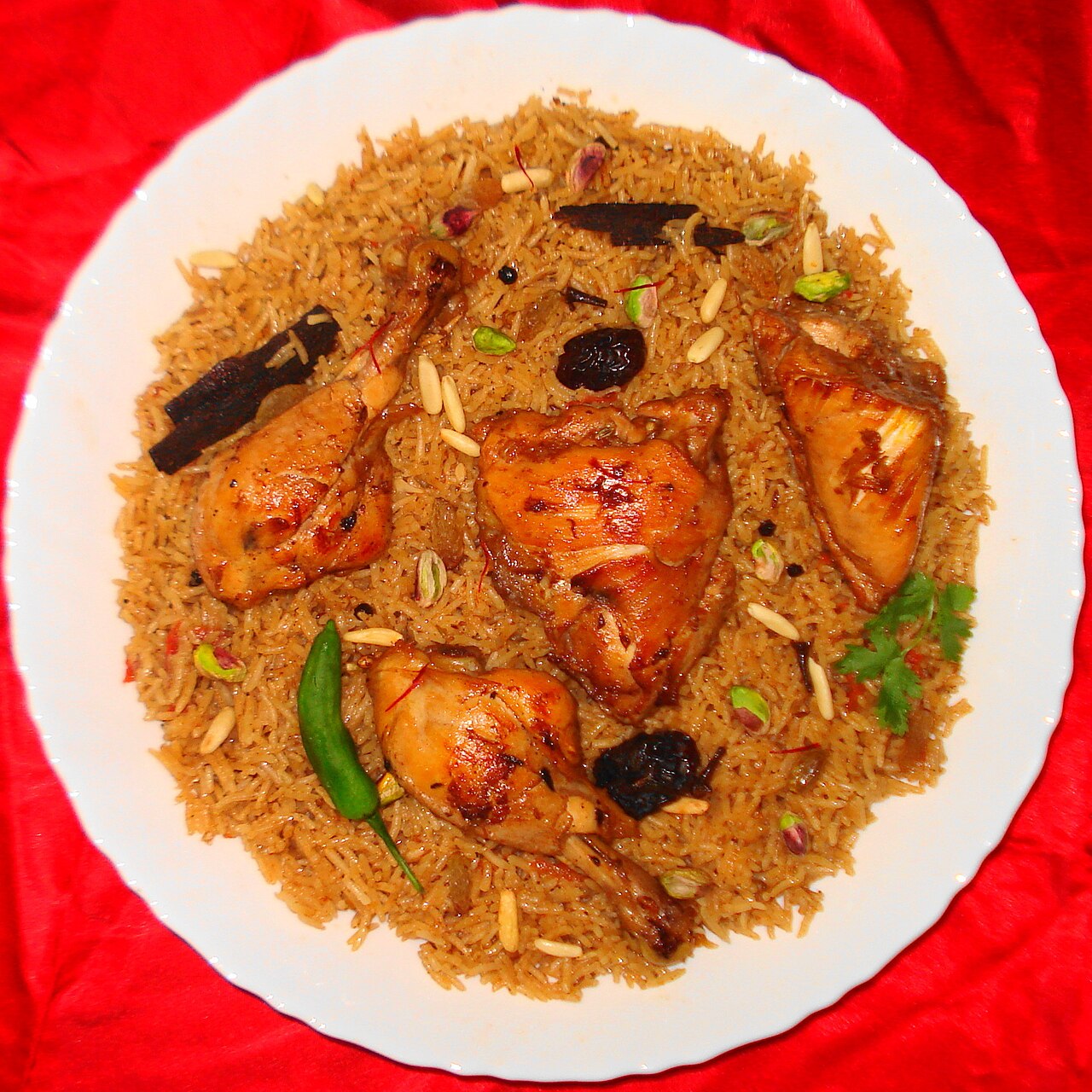
Rice cooked in a spiced stock with lamb, chicken or fish, onions and tomatoes, flavoured with the bizar spice mix and dried lime. It is served on a large platter in the middle of the table.
Machboos is the Gulf version of the dish that Saudis call kabsa, and versions of it are loved all around the Gulf.
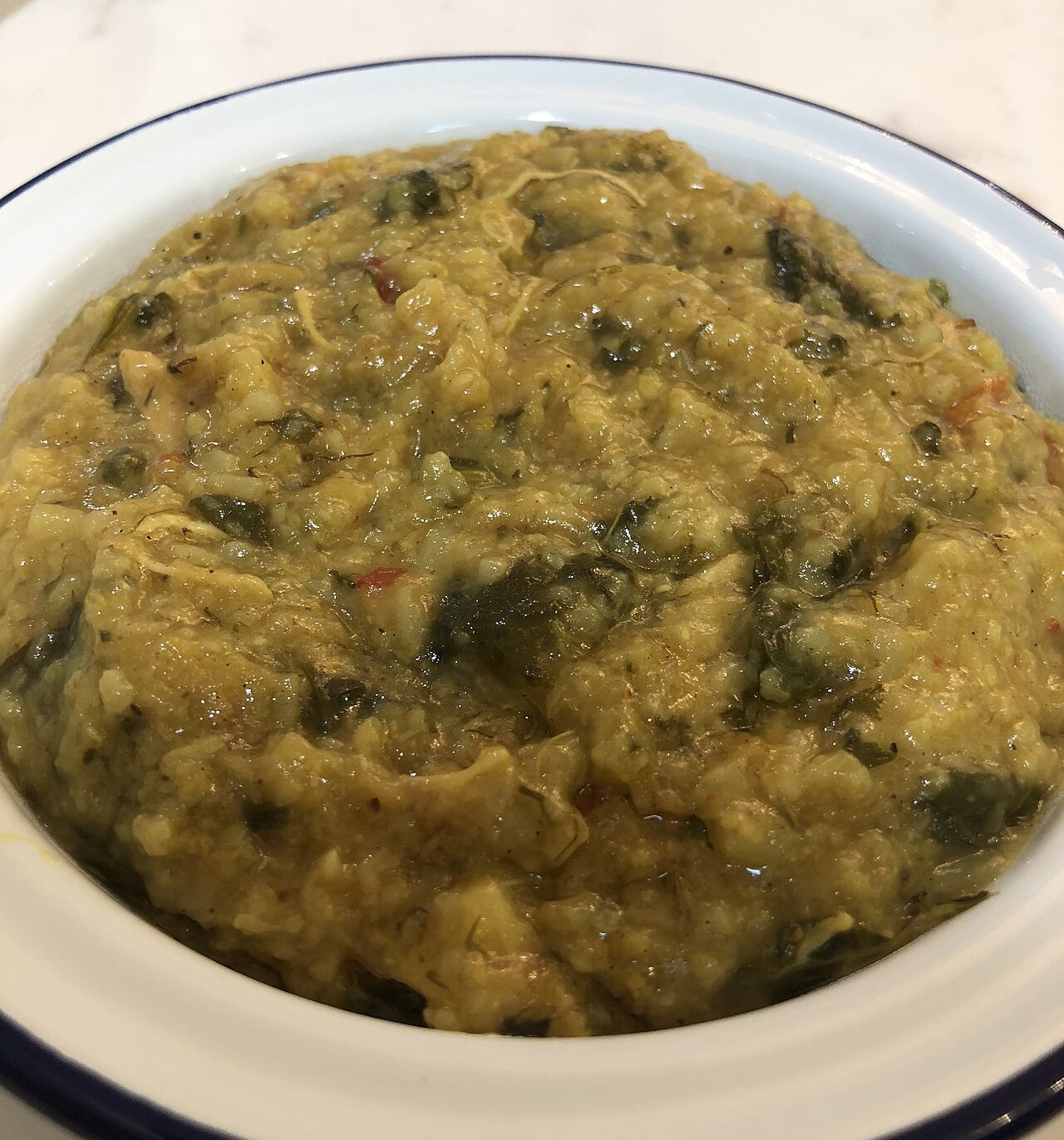
A thick, warming porridge of chicken and rice cooked until the rice falls apart, spiced with turmeric, cumin, cardamom, ginger, cloves, cinnamon and black pepper. It is eaten piping hot.
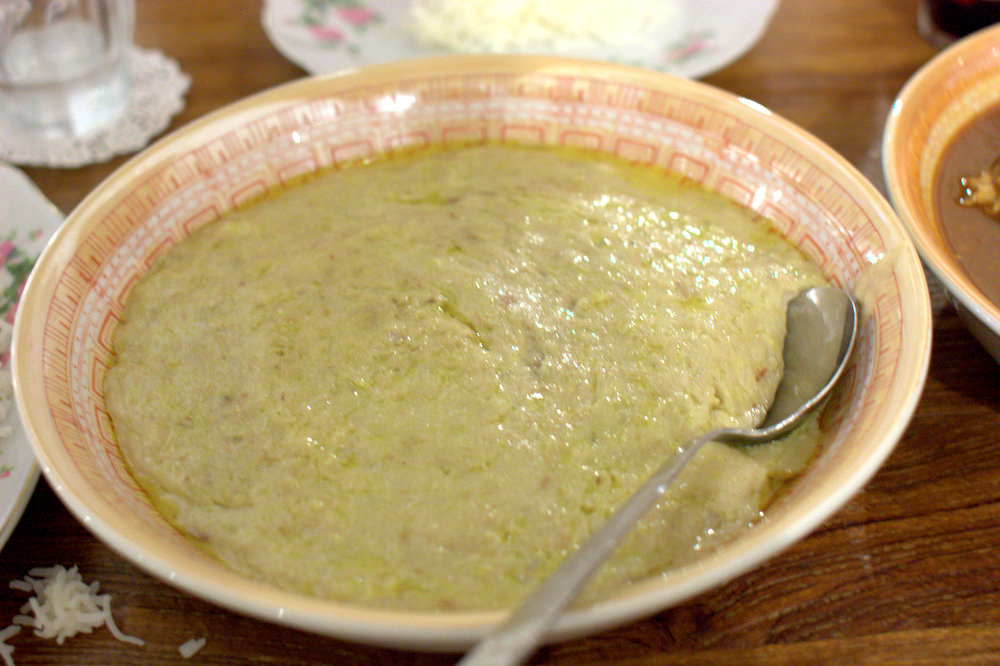
Wheat and meat or chicken cooked slowly for hours and then beaten into a smooth, thick porridge, finished with a spoonful of melted ghee.
Harees and thareed top the list of dishes on Qatari tables at iftar, the evening meal that breaks the fast in Ramadan.
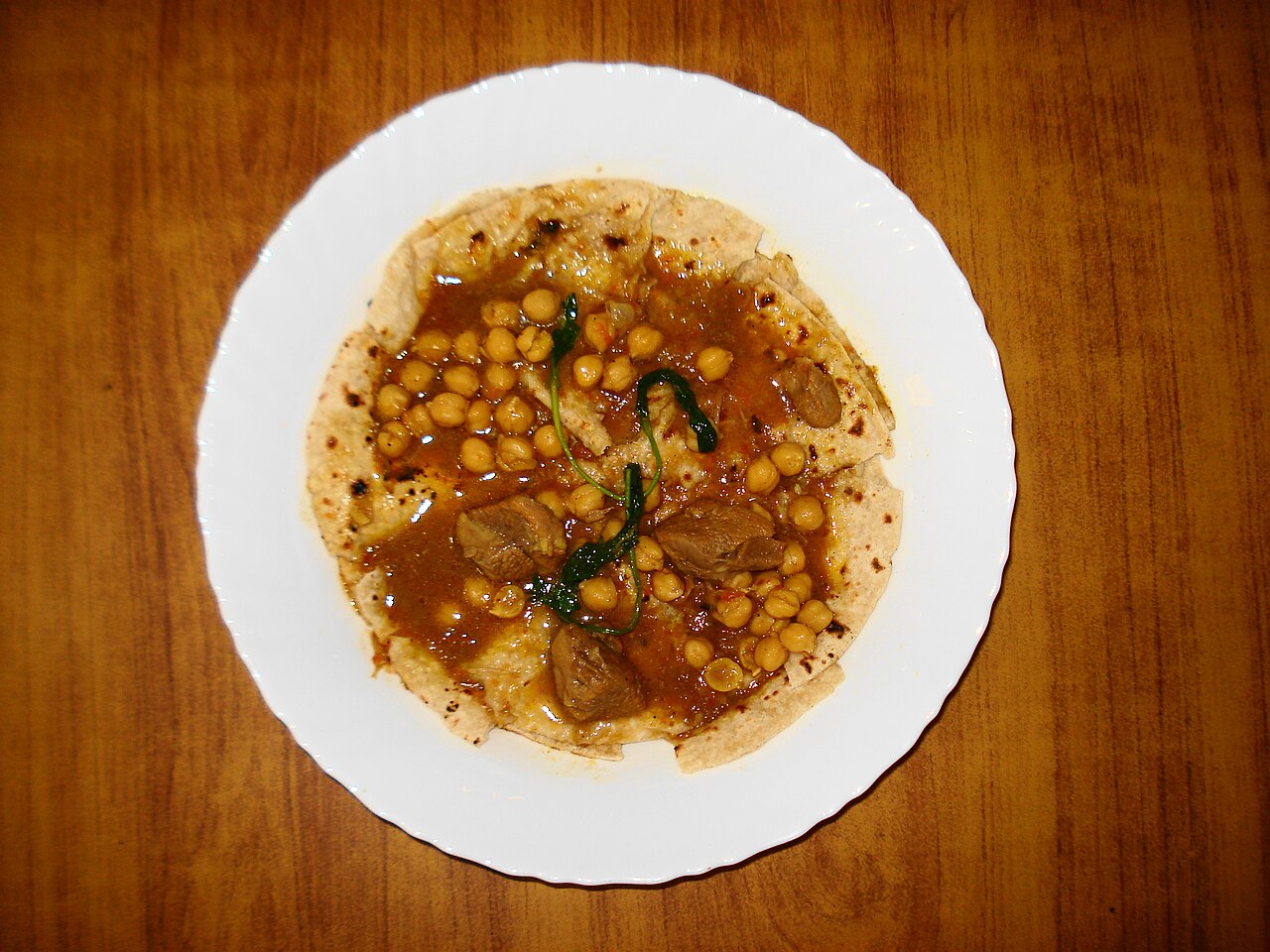
Pieces of thin, crisp regag bread soaked in a stew of lamb or chicken with vegetables, so that the bread drinks up the broth. Some families make it with vegetables only.
Thareed is an old dish: bread soaked in meat broth is mentioned in early Islamic writings.
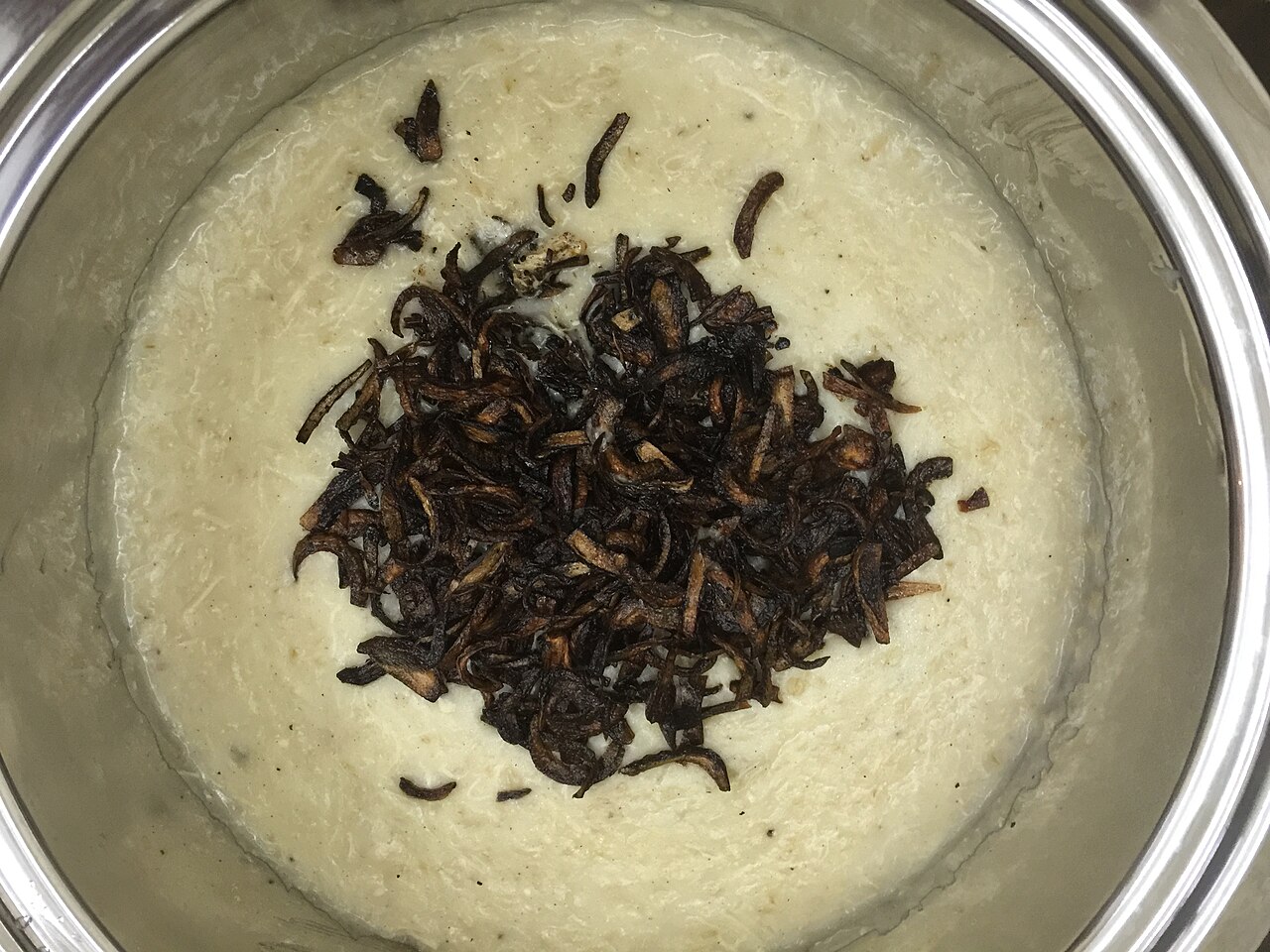
Crushed wheat cooked slowly with chicken, ghee and onions until soft and creamy, then topped with fried onions and green peppers.
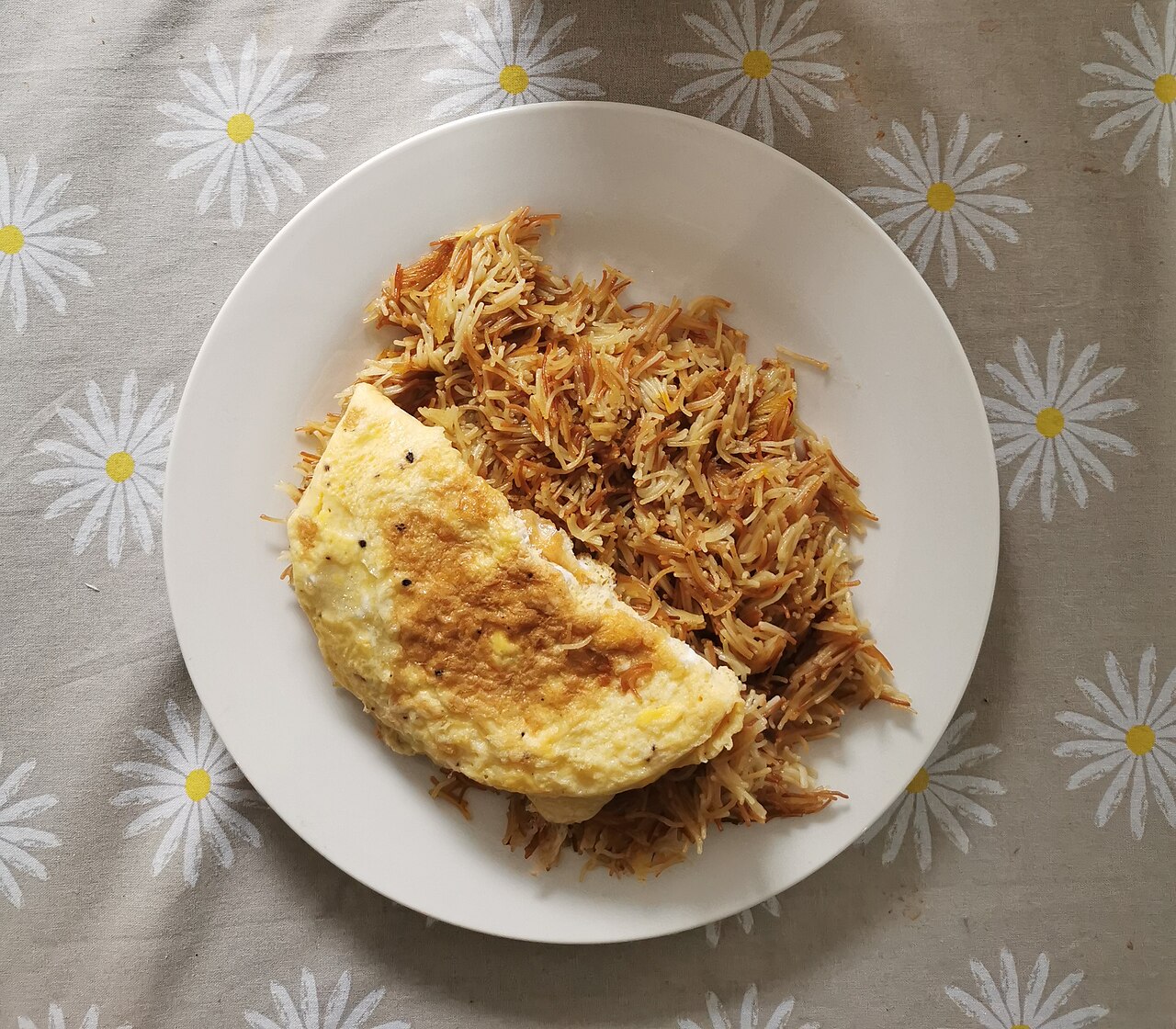
Thin vermicelli noodles cooked with sugar, cinnamon, saffron and cardamom, often with a thin omelette laid on top. The mix of sweet noodles and savoury egg is the whole point.
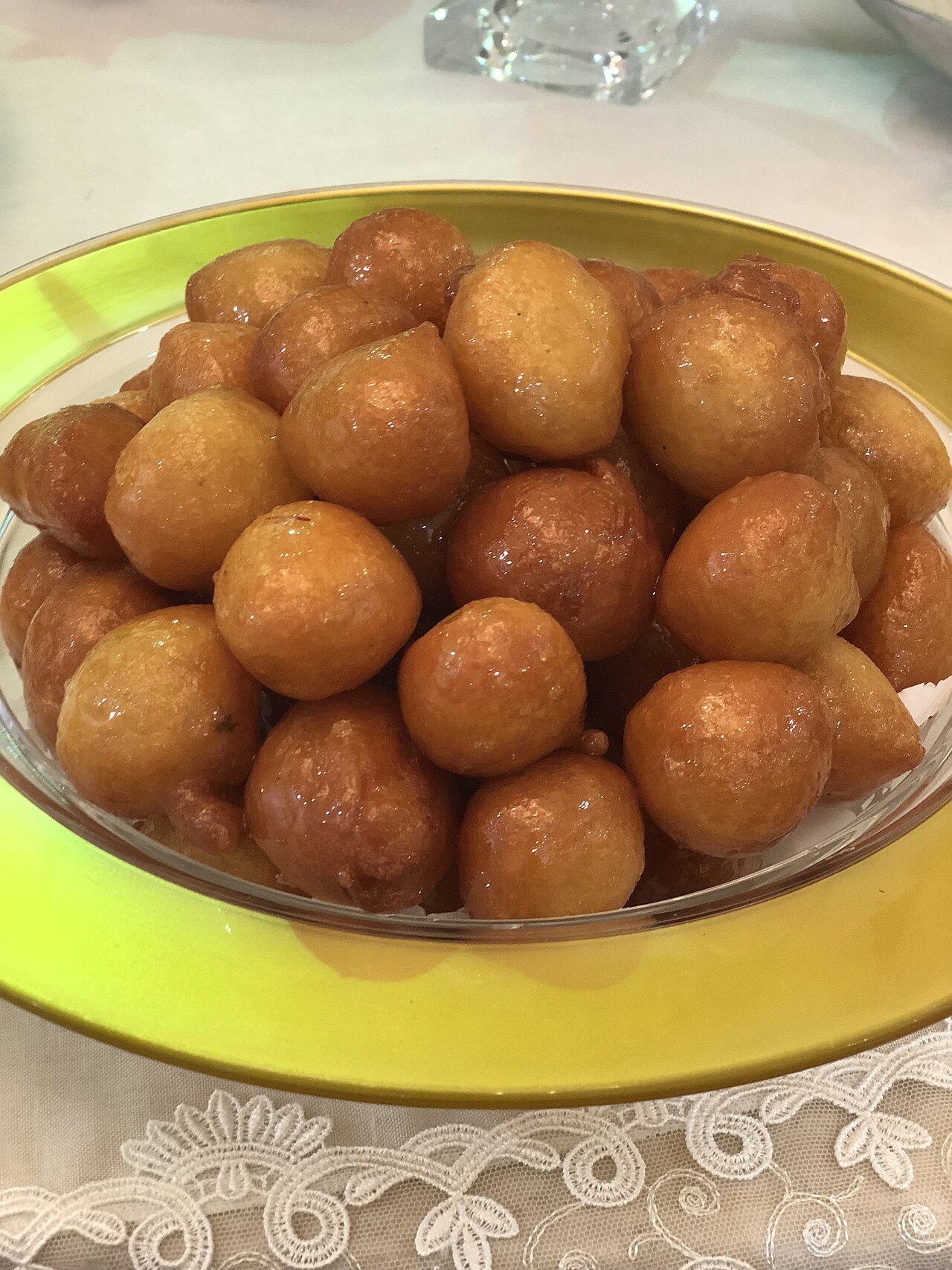
Small balls of yeast batter flavoured with saffron and cardamom, deep-fried until crisp and golden outside and soft inside, then drizzled with date syrup or honey.
The name means 'little bites'. In Ramadan they are served at the late-night family feast called ghabqa.
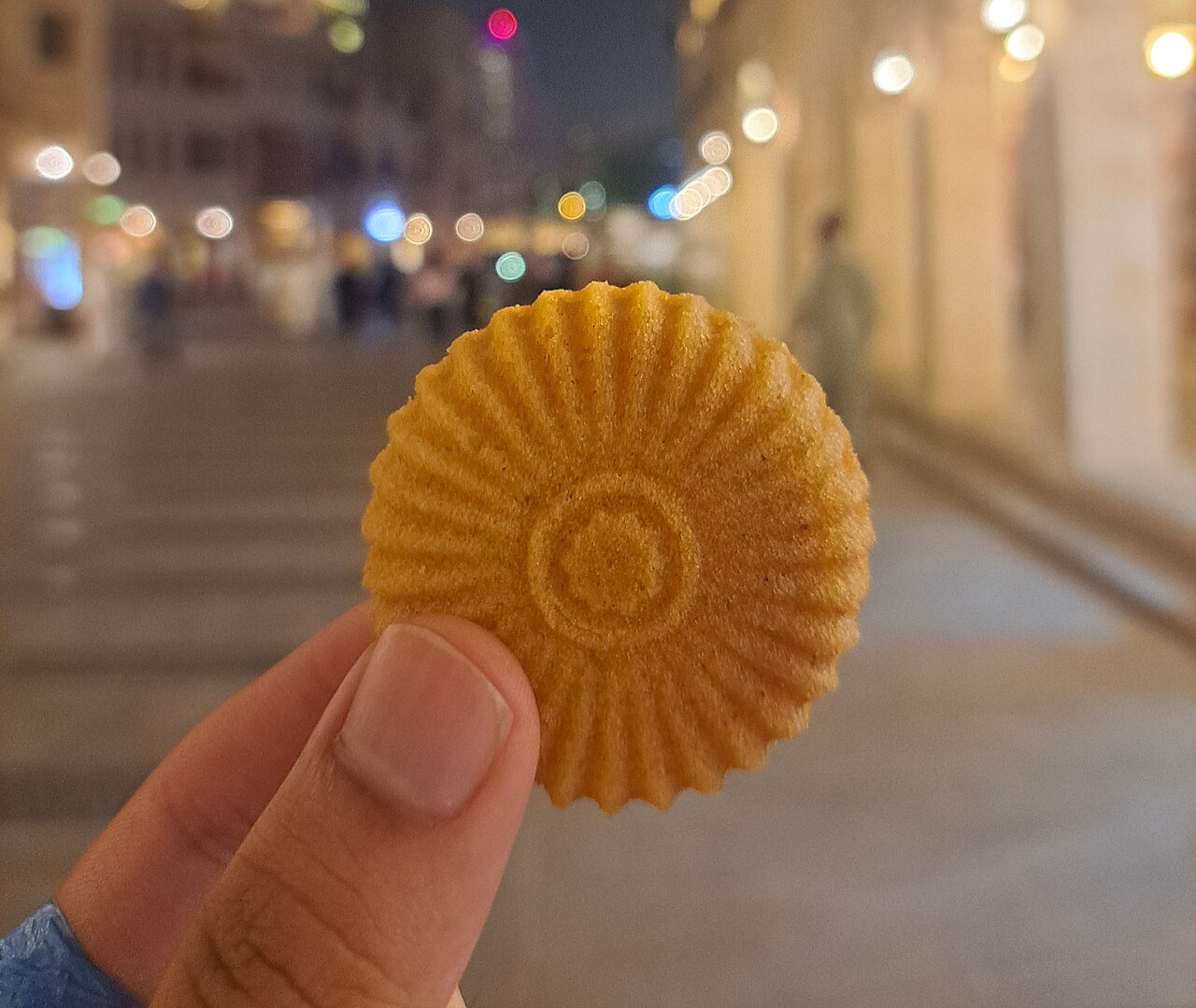
Small, biscuit-like discs of fried dough, dusted with powdered sugar or drizzled with honey. They are a favourite with tea or coffee.
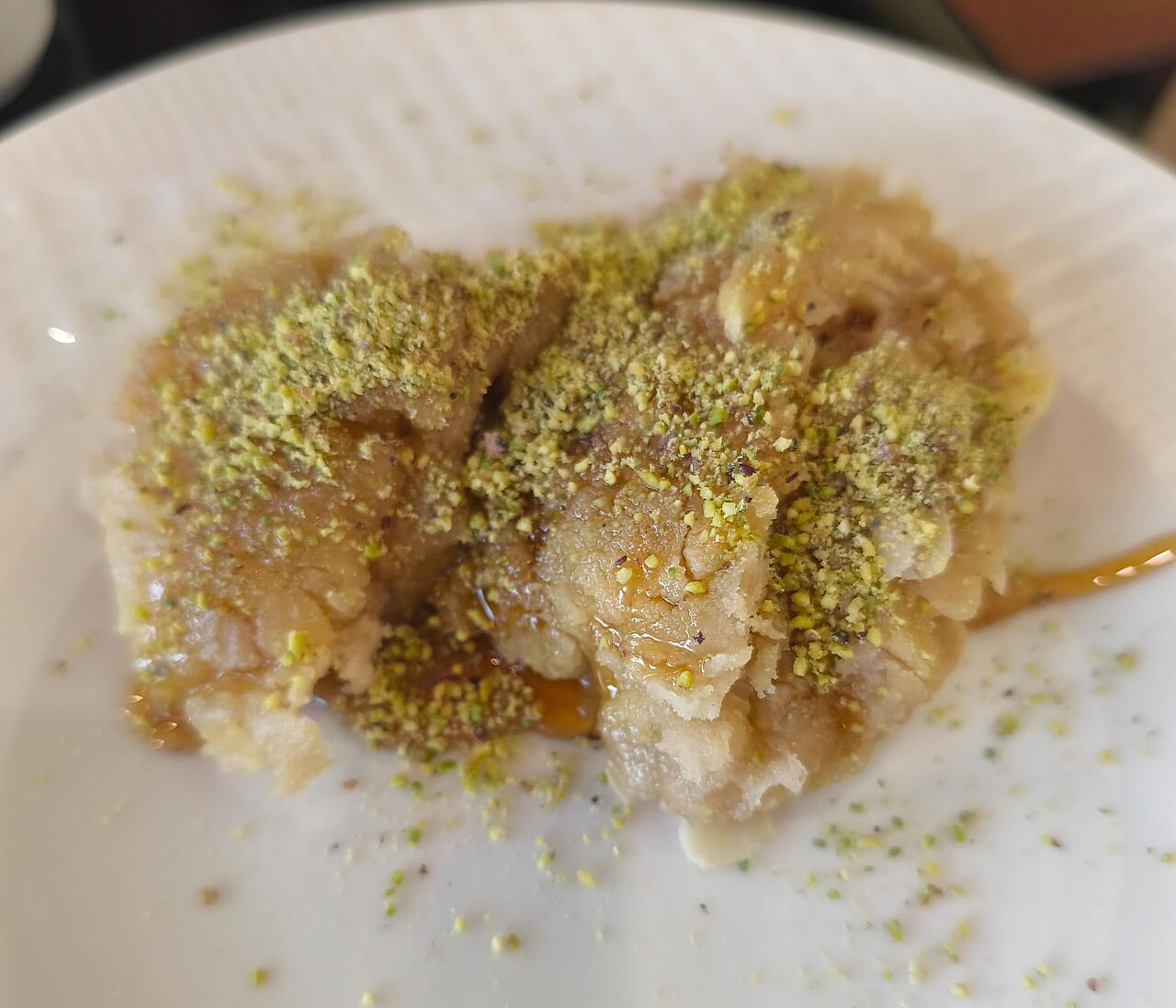
A soft, crumbly sweet of roasted flour mixed with soaked seedless dates, sugar, butter and oil, scented with saffron, cardamom and rose water.
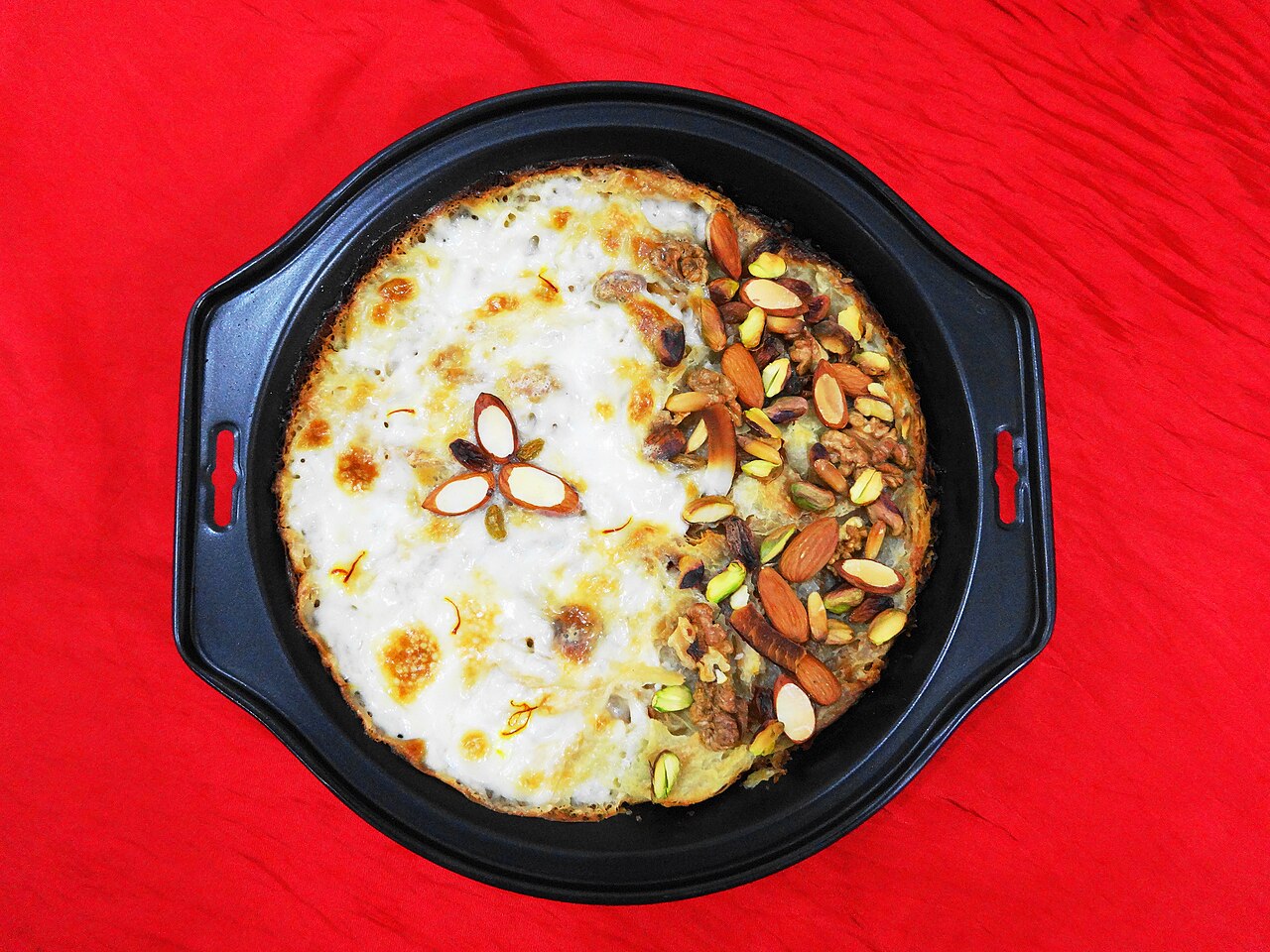
A warm pudding of pieces of bread or pastry soaked in sweet milk with cinnamon, often with nuts, baked in the oven until the top is golden brown.
The name means 'Ali's mother'. The dish is a national dessert of Egypt, and the Qatari version differs a little.
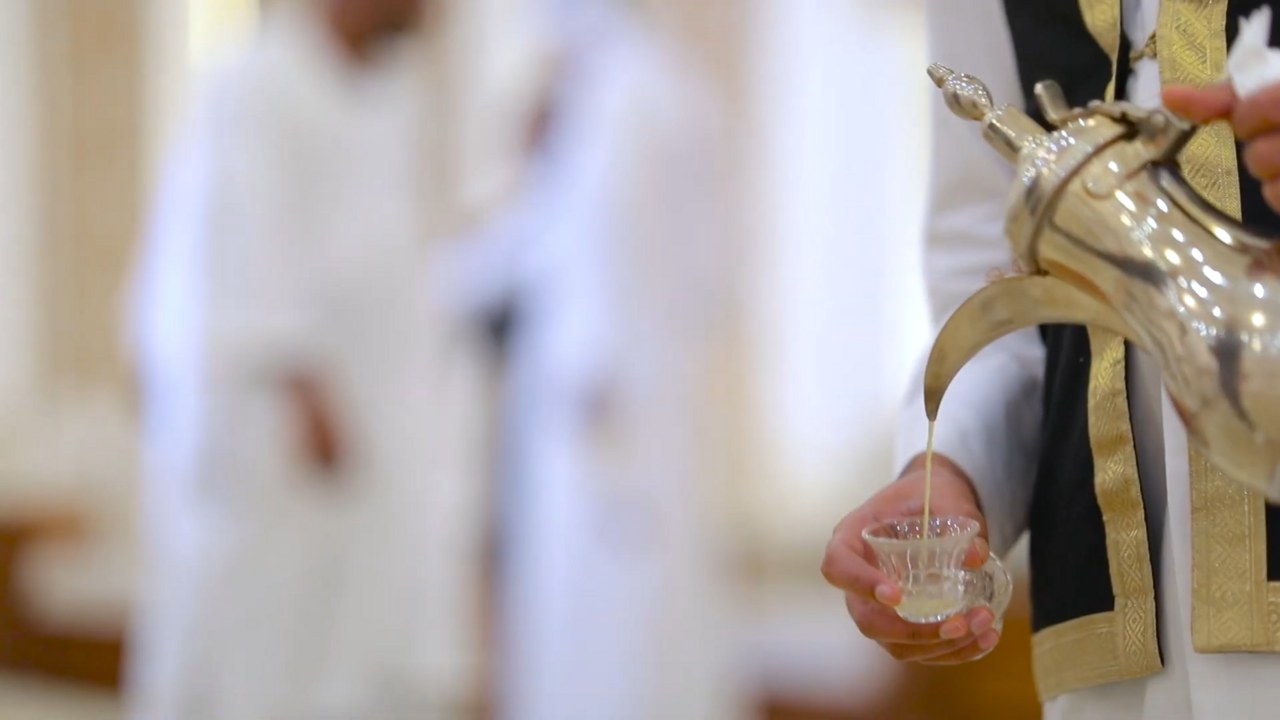
Lightly roasted coffee brewed with cardamom, and sometimes saffron and cloves, poured without sugar from a brass pot into small cups without handles. It is almost always served with dates.
Arabic coffee is on UNESCO's list of the intangible cultural heritage of humanity. Qatar, Saudi Arabia, Oman and the United Arab Emirates nominated it together in 2015, and Jordan joined the listing in 2024.
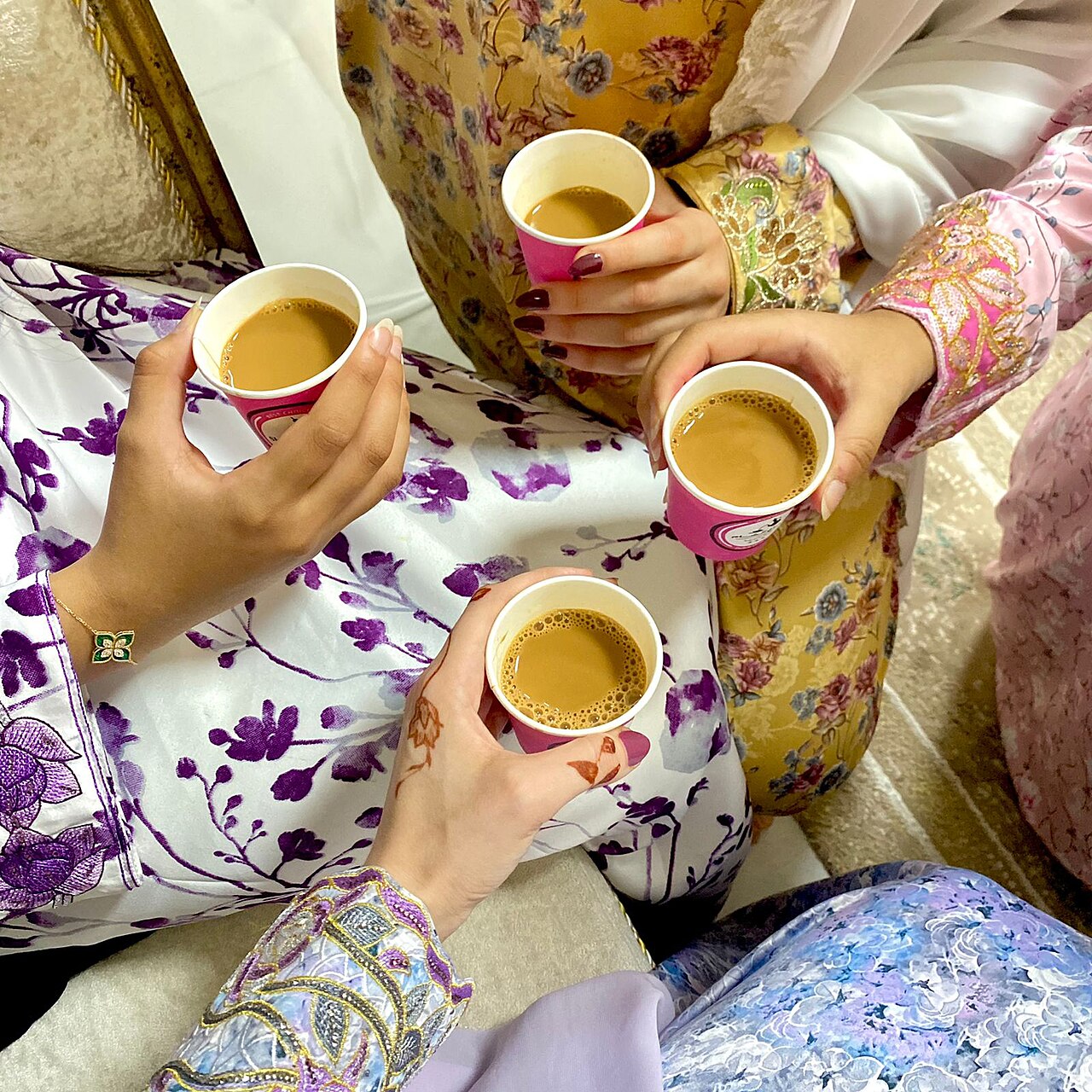
Strong black tea simmered with evaporated milk, sugar, cardamom and sometimes saffron until it is thick, sweet and caramel-coloured. It is popular all over Qatar, although Qataris themselves more often drink Arabic coffee.
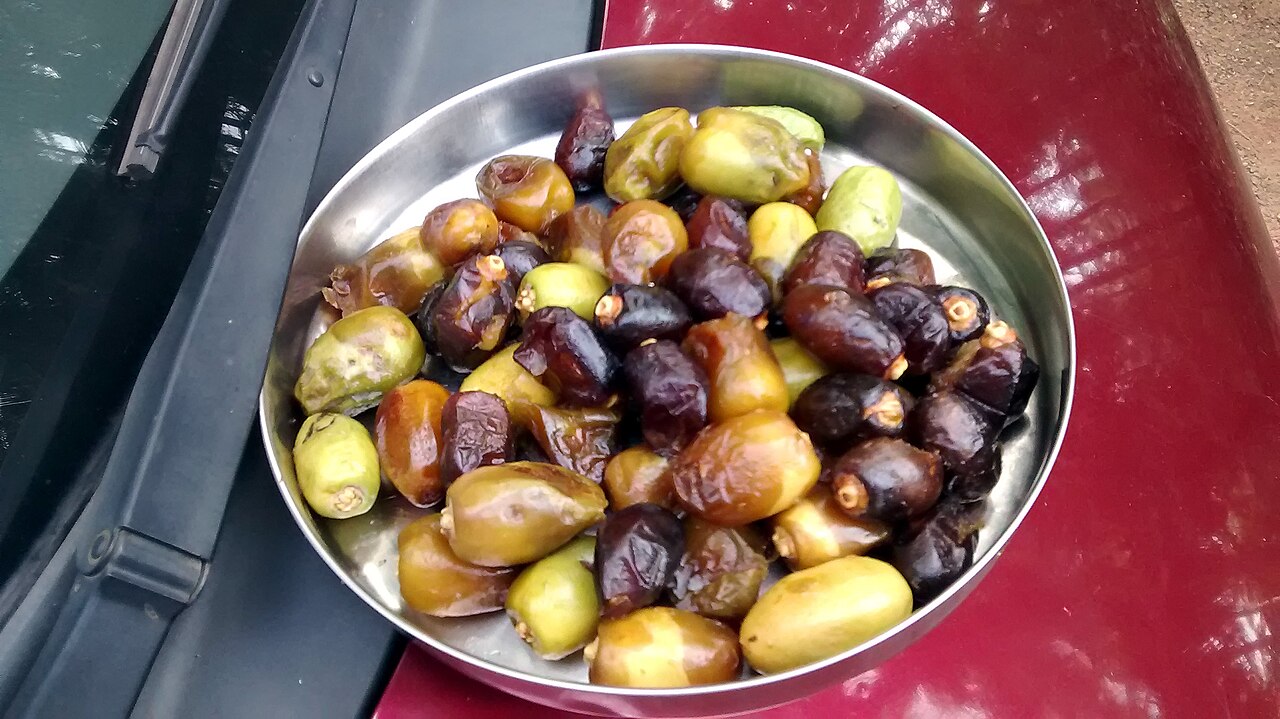
Dates are Qatar's best-loved fruit, offered to every guest with Arabic coffee and used to break the fast in Ramadan. Every year a local dates festival at Souq Waqif shows off the harvest of Qatari farms.
Two palm trees appear on Qatar's national emblem, together with a traditional dhow.
Almost all of Qatar's towns lie on the coast, where they grew as pearling and fishing villages. Doha and its suburbs, with Al Rayyan to the west and Lusail to the north, are home to most of the people. Smaller towns such as Al Wakrah, Al Khor and Madinat ash Shamal keep more of the old seafaring life, while Dukhan and Mesaieed were built for the oil industry.
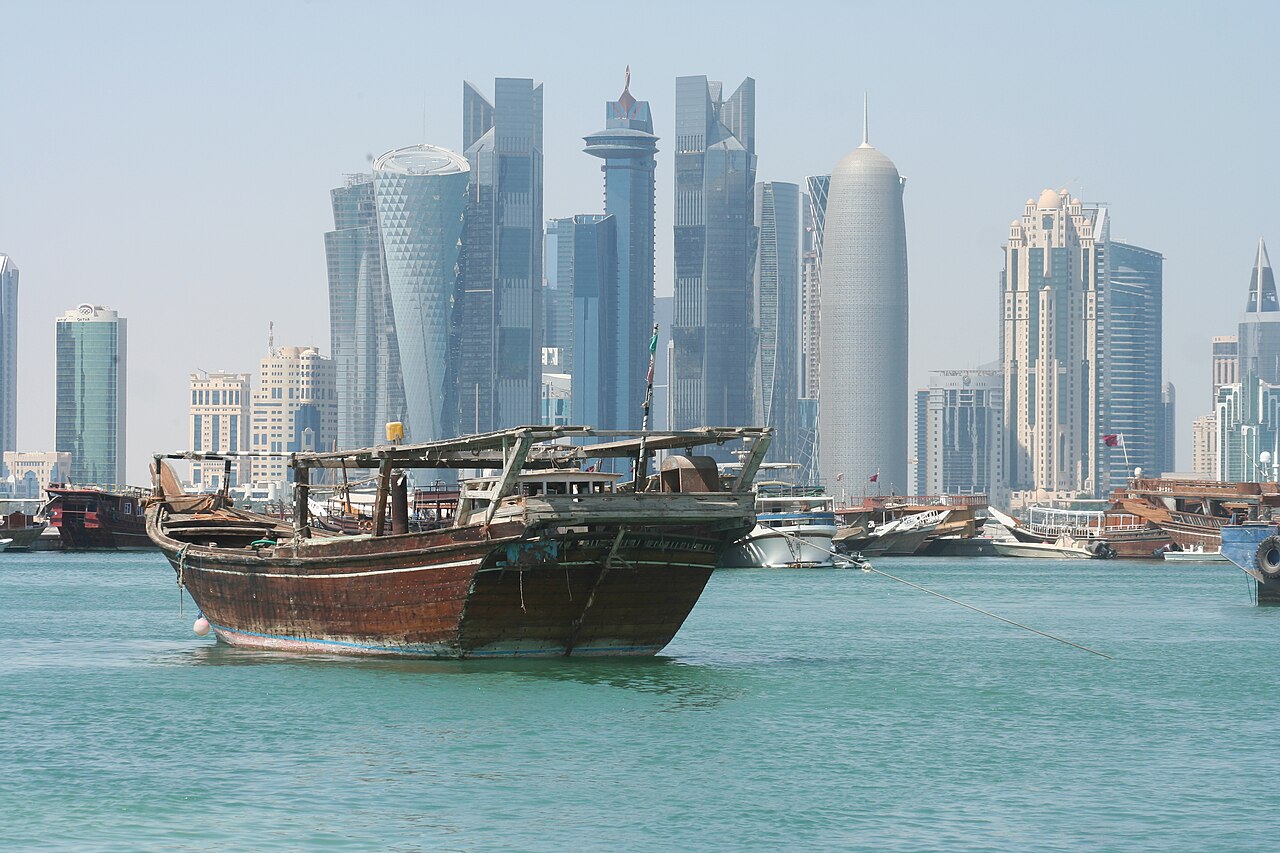
The capital and by far the largest city: more than 80 percent of Qatar's people live in Doha and its suburbs. It was founded in the 1820s as an offshoot of the older settlement of Al Bidda, grew rich on pearling, and became the capital at independence in 1971. Today the curve of Doha Bay is lined with the Corniche promenade, with the towers of West Bay at one end and the Museum of Islamic Art at the other.
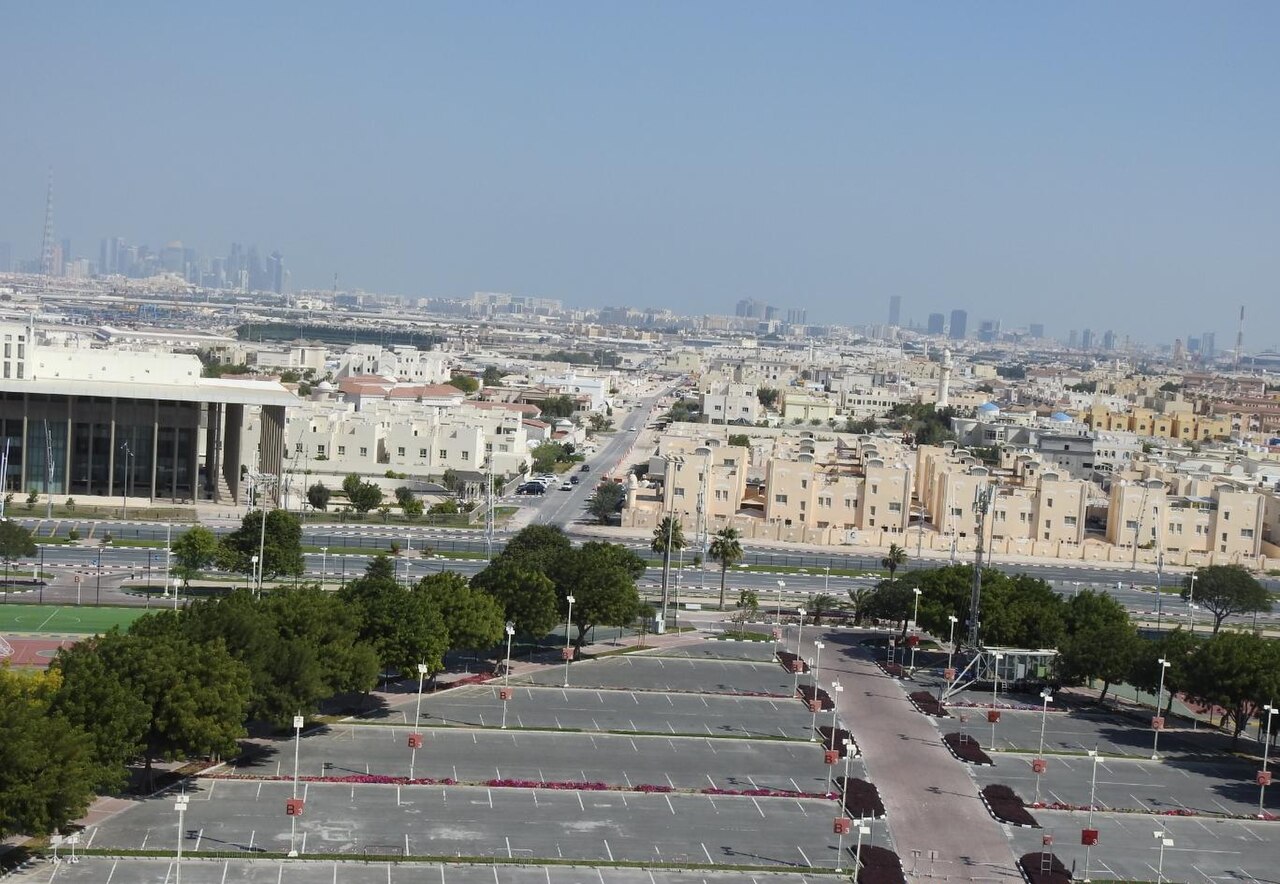
A large city that has grown together with Doha into one metropolitan area. Its name comes from the Arabic word for irrigation, because low ground here once collected rainwater for plants. Part of the metropolitan area is Education City, a district for universities and research.
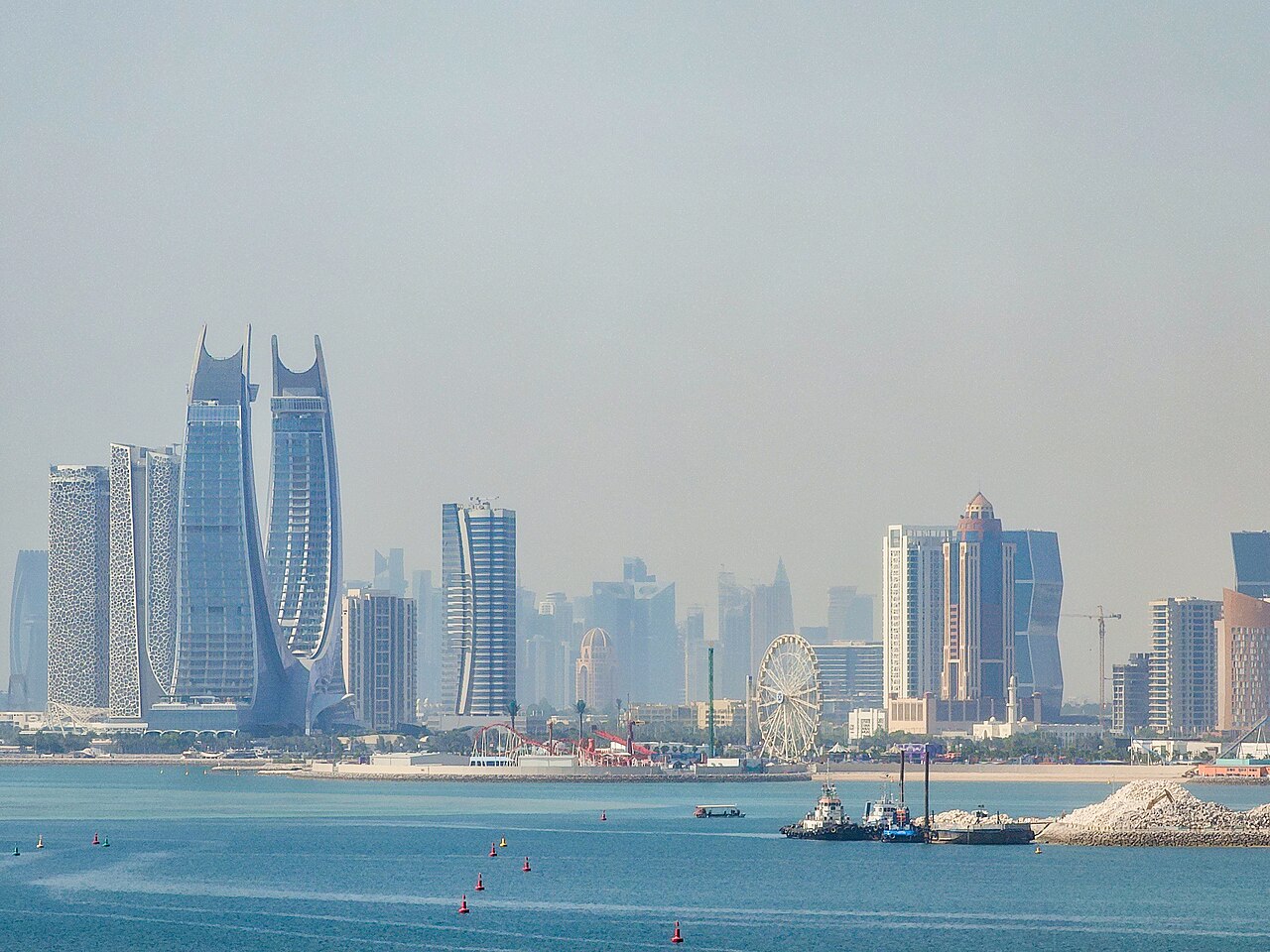
A new planned city about 23 km north of central Doha, built on the site of an old village that was once the home of Sheikh Jassim bin Mohammed. Its stadium hosted the 2022 World Cup final, and its race track hosts the Qatar Grand Prix.
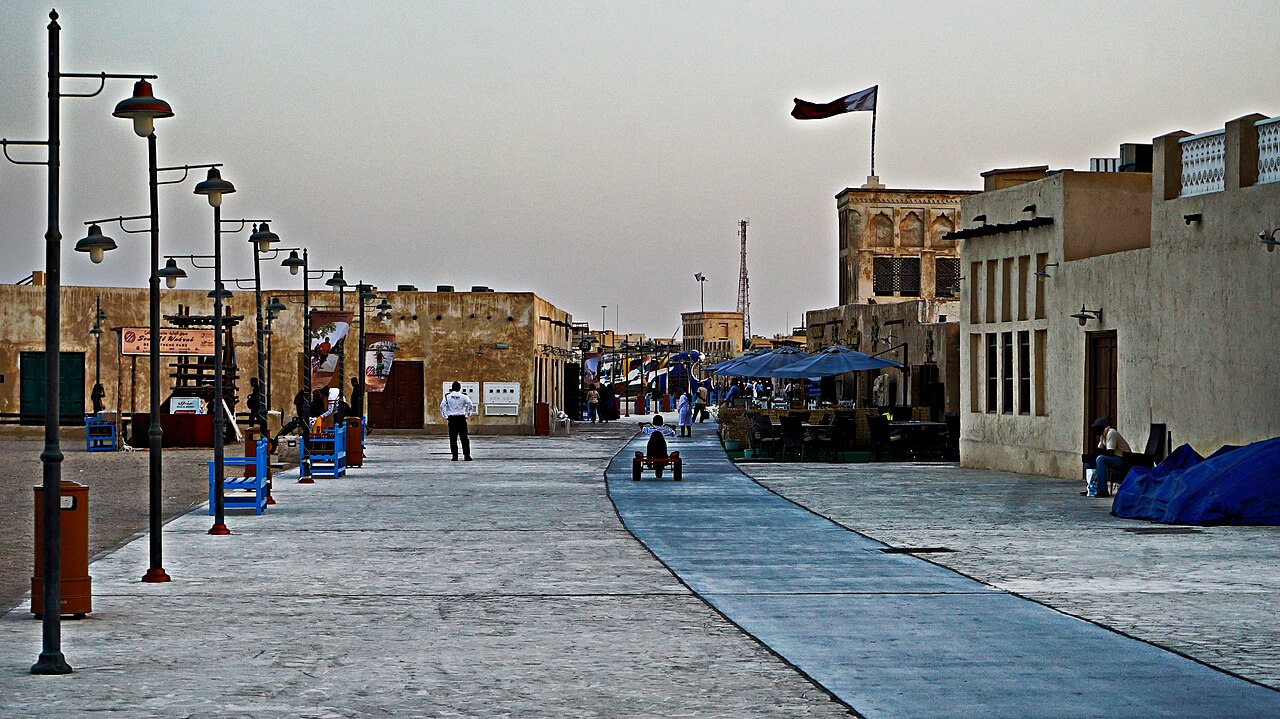
An old fishing and pearling town just south of Doha; around 1920 some 300 boats were based here. Its seaside souq, opened in 2014, is popular on cool evenings, and the town hosted World Cup games at Al Janoub Stadium.
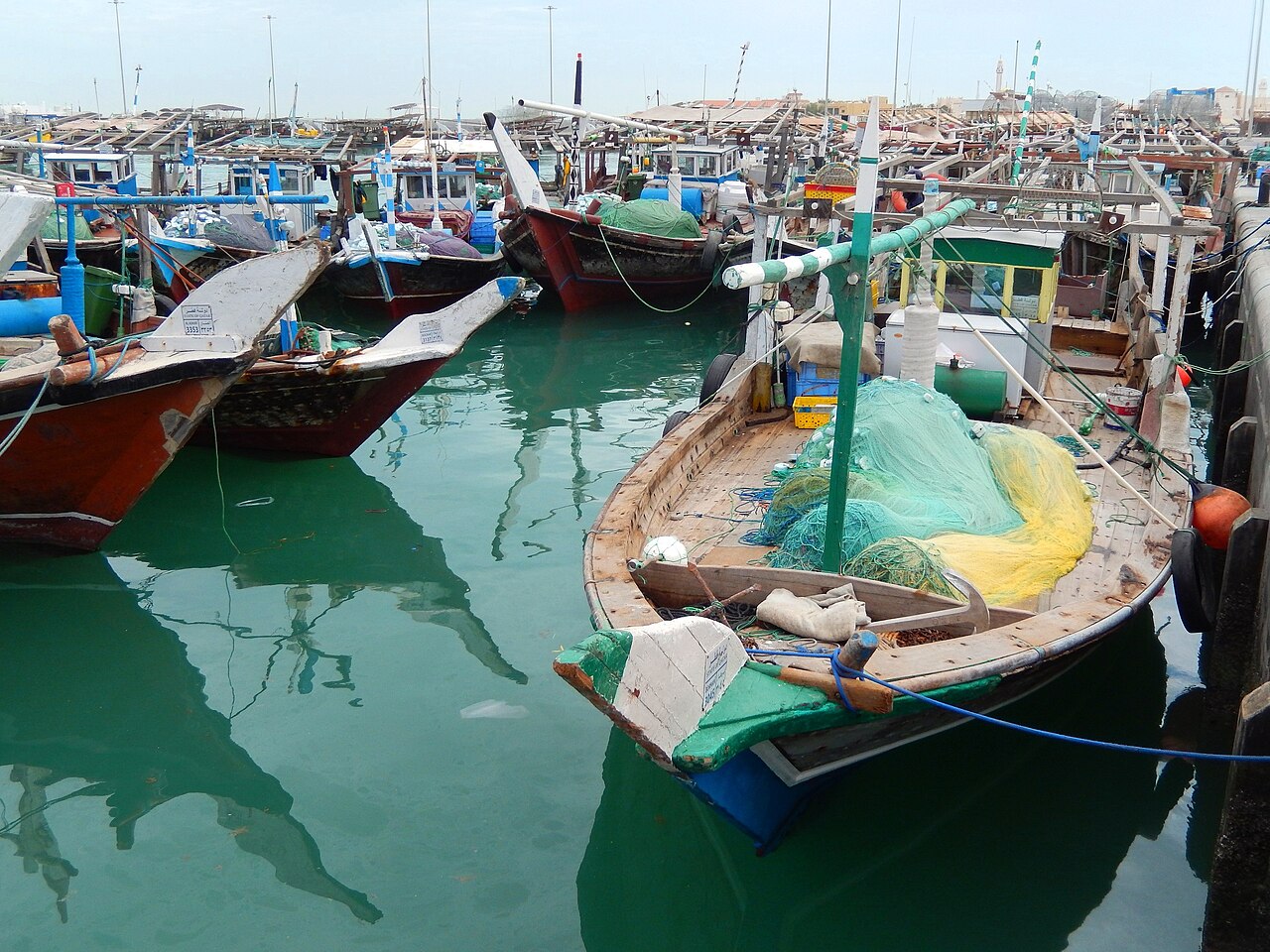
A harbour town about 57 km north of Doha. Its name means 'the bay', and it was once known for pearling; today its harbour is still full of fishing boats. Nearby, the coast toward Al Thakhira has the thickest mangrove forests in Qatar.
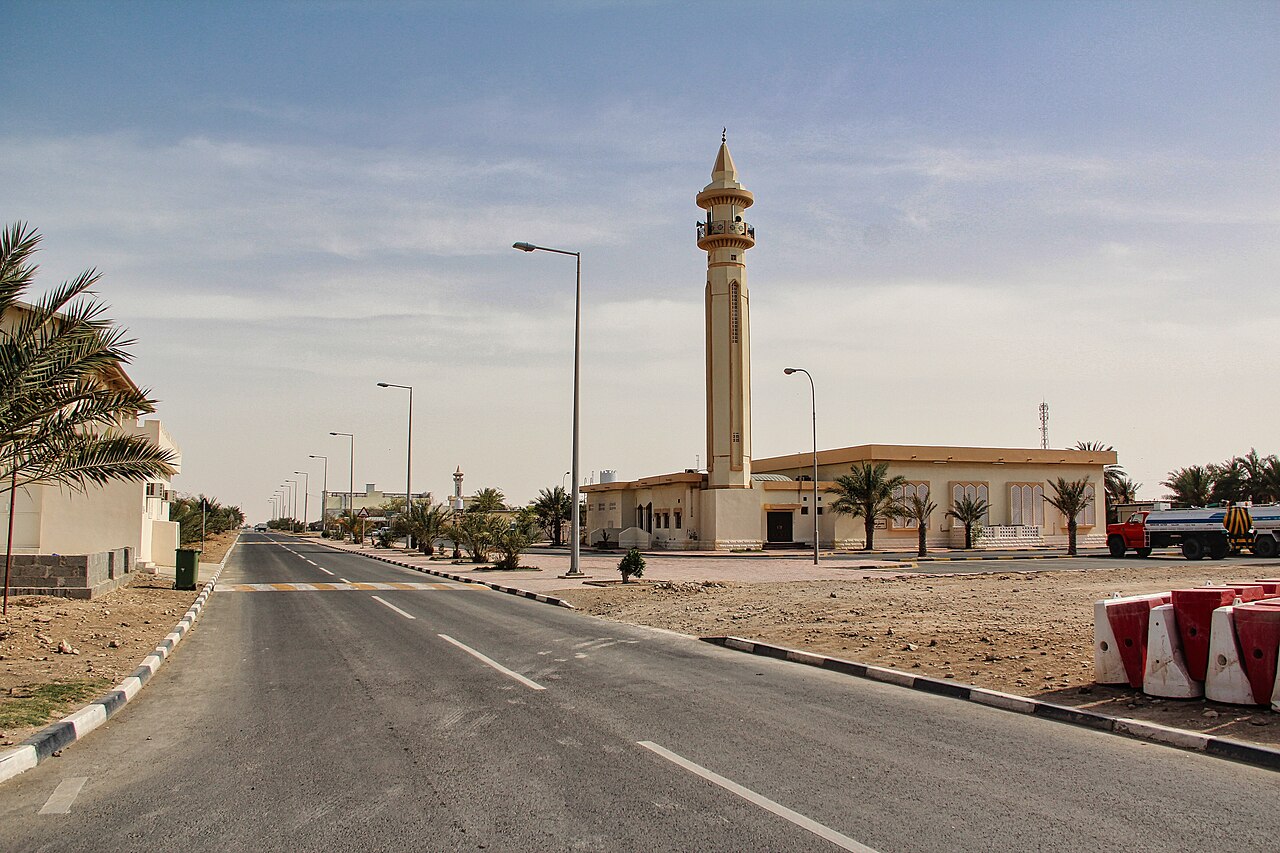
The main town of the far north, more than 100 km from Doha. Its name means 'city of the north'. It was founded in the 1970s between two old fishing villages to bring government offices and services to northern Qatar.
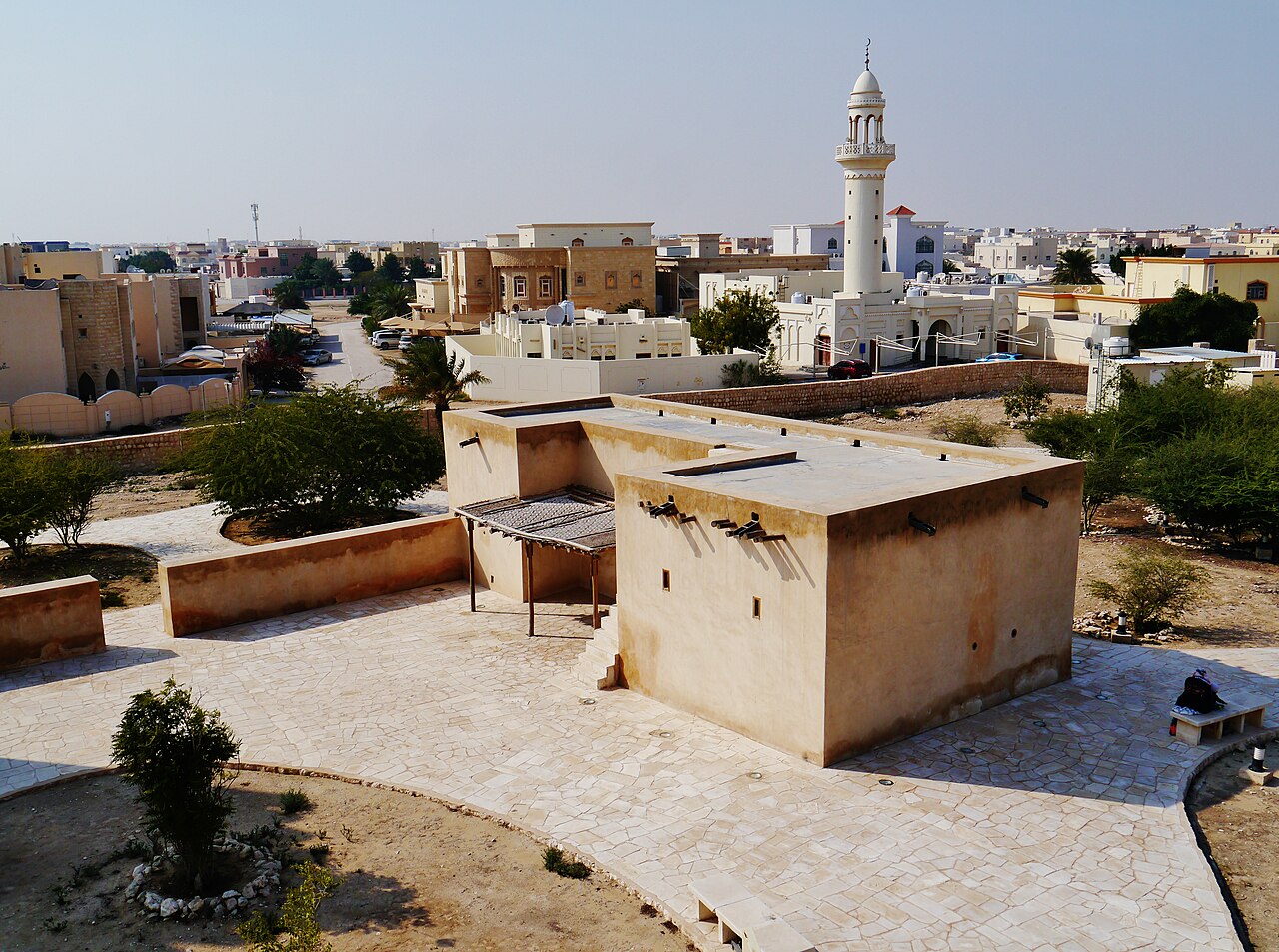
A town of farms and wells about 21 km north of Doha, founded around 1910 by Sheikh Mohammed bin Jassim Al Thani, who refurbished the Barzan Towers as his winter home and a lookout.
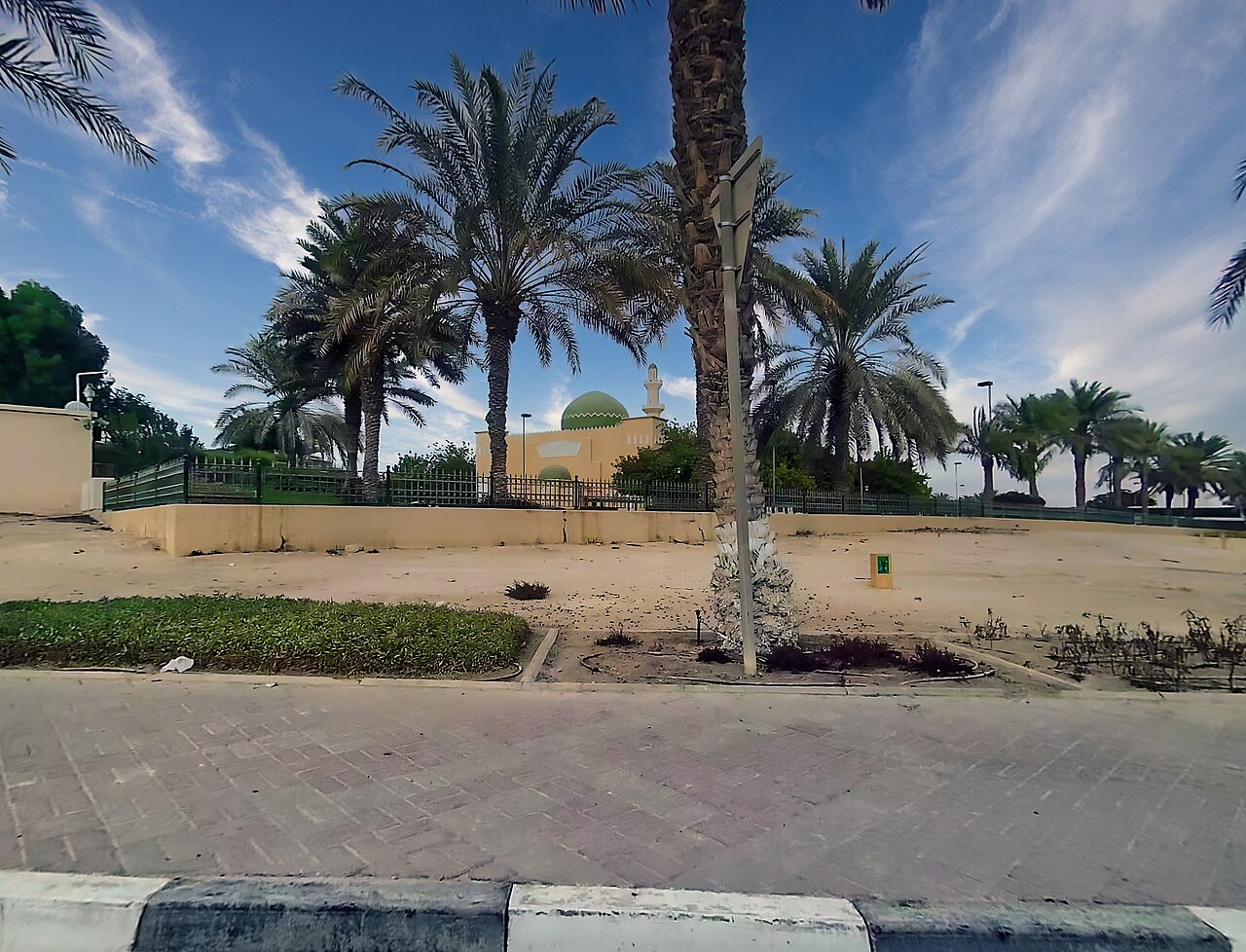
An oil town on the west coast, about 80 km from Doha, where Qatar's first oil was found. It is run by the state oil company, and visitors need a pass to enter. Its name means 'smoke', after the clouds around the nearby hills of Jebel Dukhan.
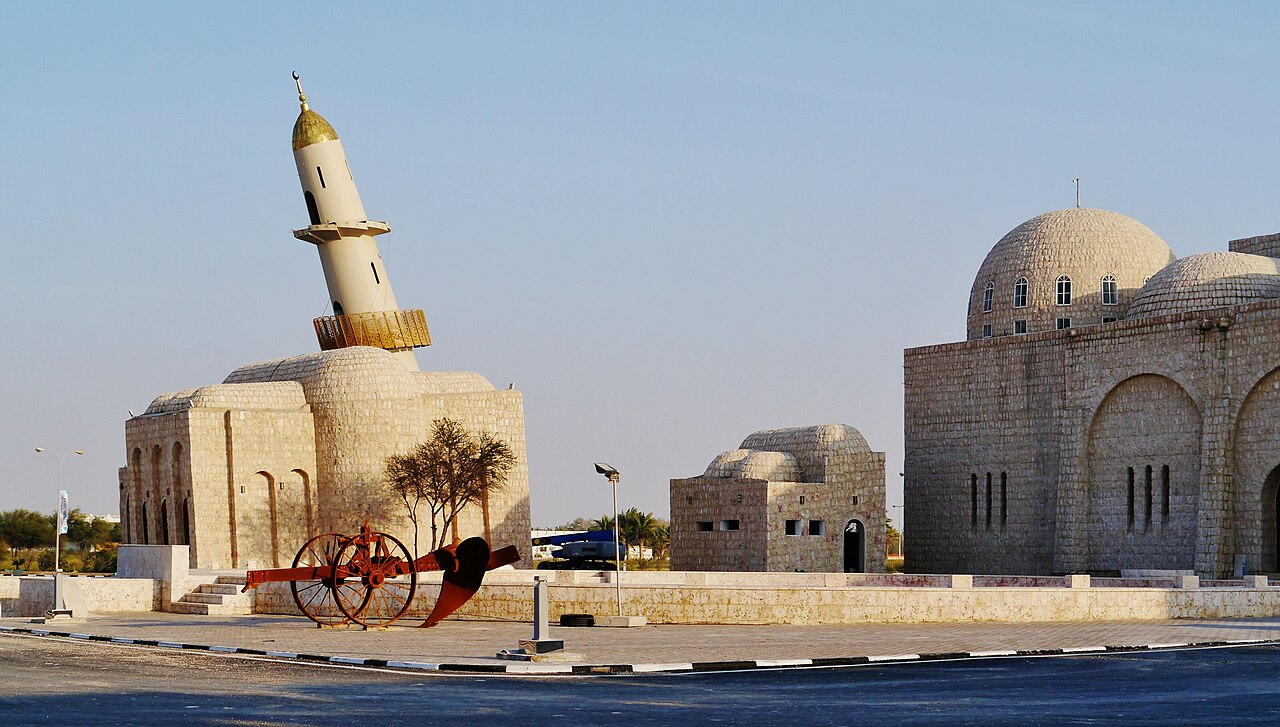
A desert town in the middle of the country and the seat of Qatar's newest municipality, created in 2014. It is the home of Qatar's main camel racetrack, where small robots ride the camels instead of jockeys.
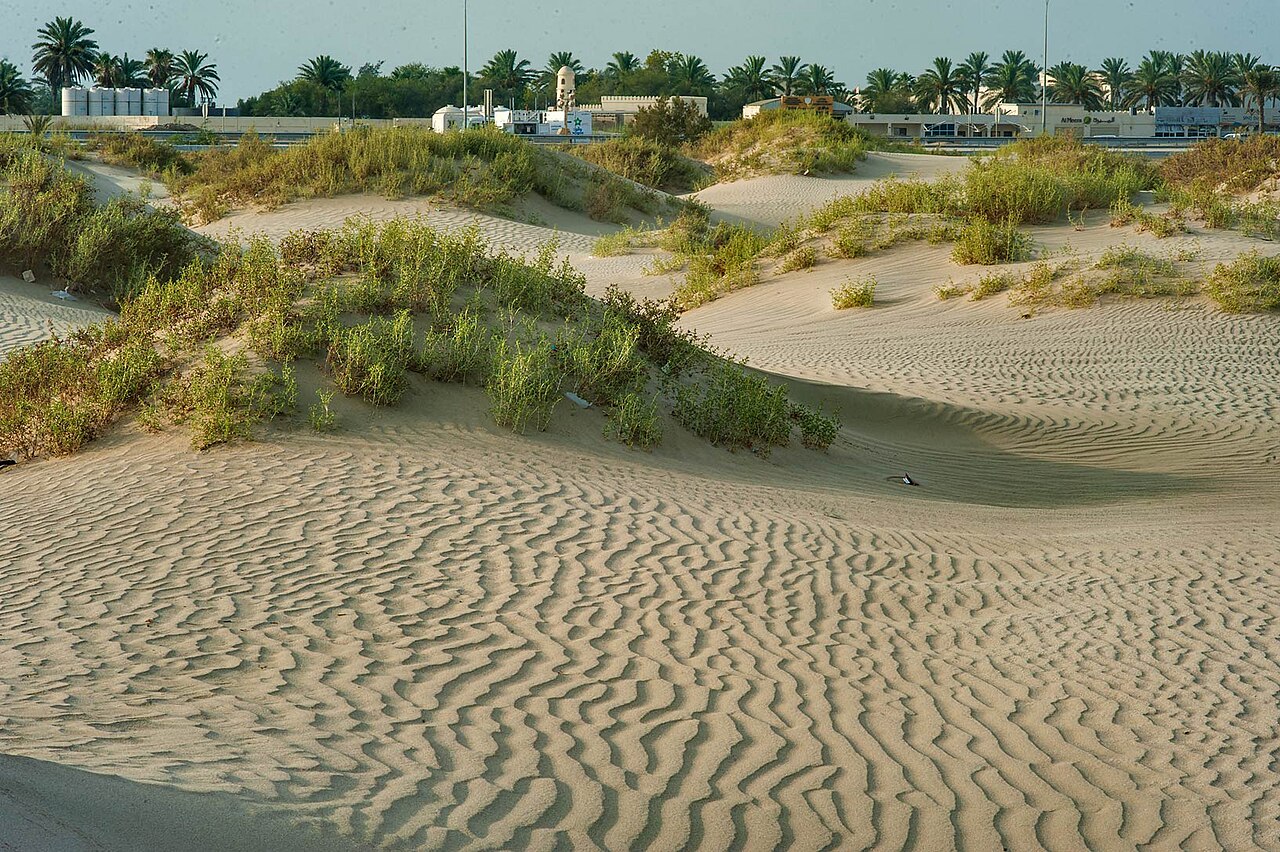
An industrial port town 36 km south of Doha, founded in 1949 as an oil tanker terminal. For more than 20 years it was Qatar's only deepwater port. Its Sealine beach resort is the usual starting point for trips across the dunes to the Inland Sea.
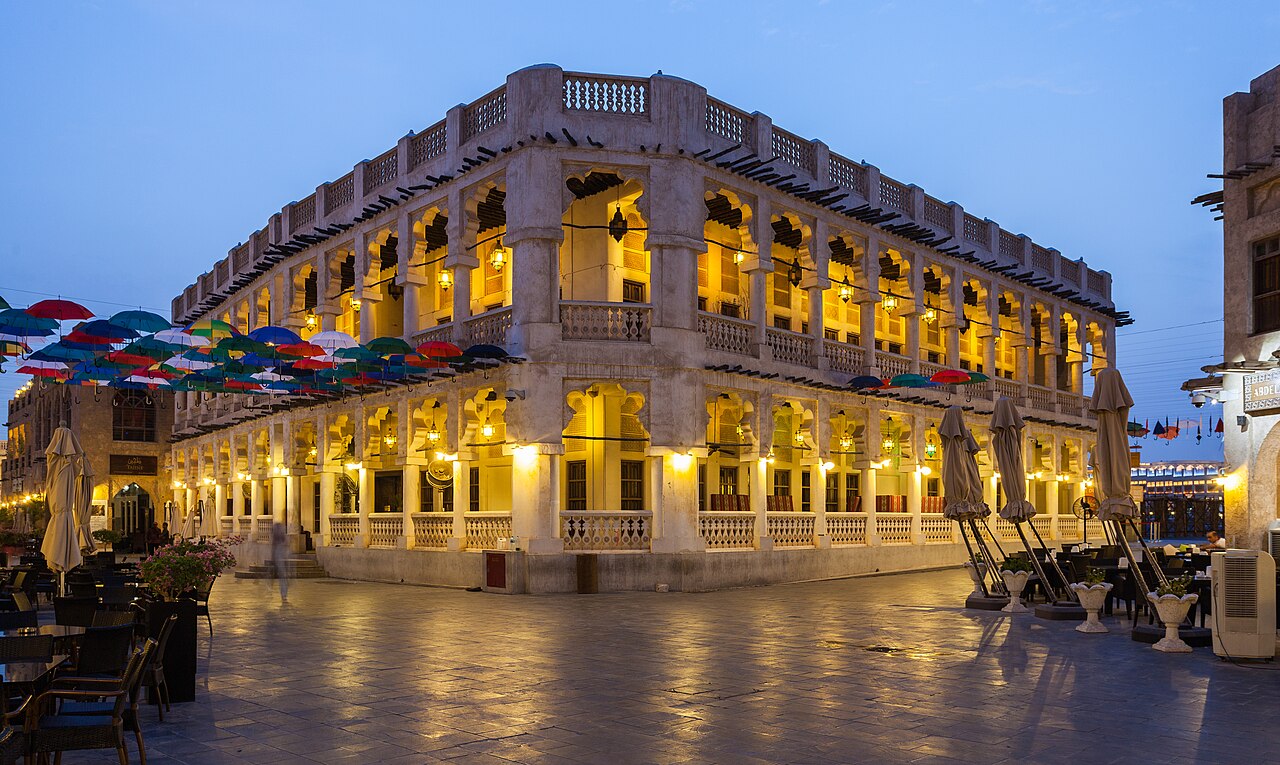
Doha's old market, whose name means 'the standing market'. Its buildings, dating back to the late 19th or early 20th century, were restored in 2006 in the traditional style. Today its lanes are full of spices, traditional clothes, handicrafts, souvenirs, cafes and restaurants, and there is even a falcon souq selling falcons and everything a falconer needs.
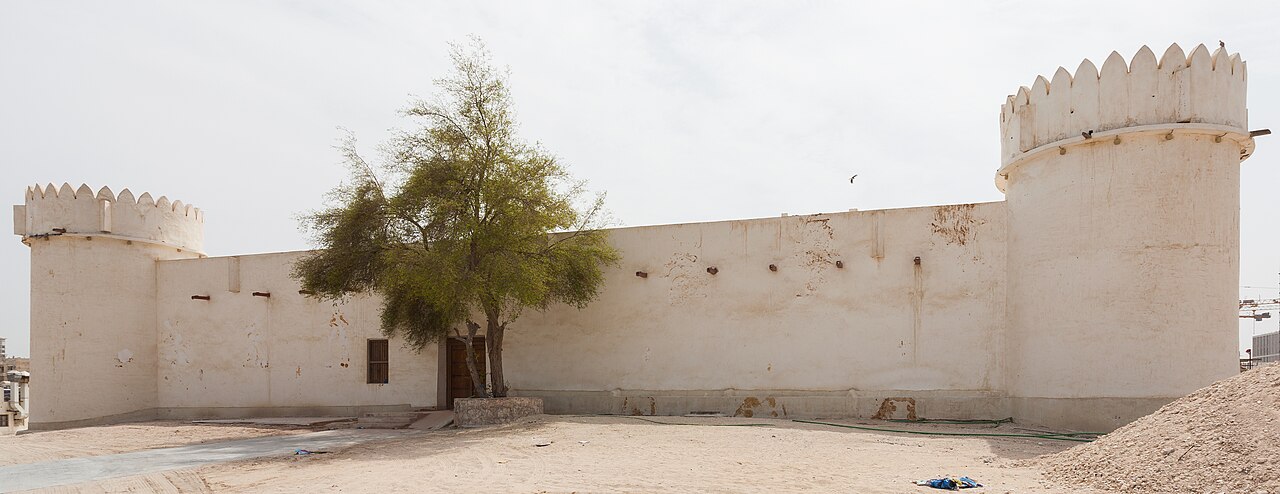
A historic fort in the middle of the Souq Waqif area, also known as the Doha Fort. It was rebuilt in 1927 by the ruler Sheikh Abdullah bin Jassim Al Thani on the site of an older police post and jail.
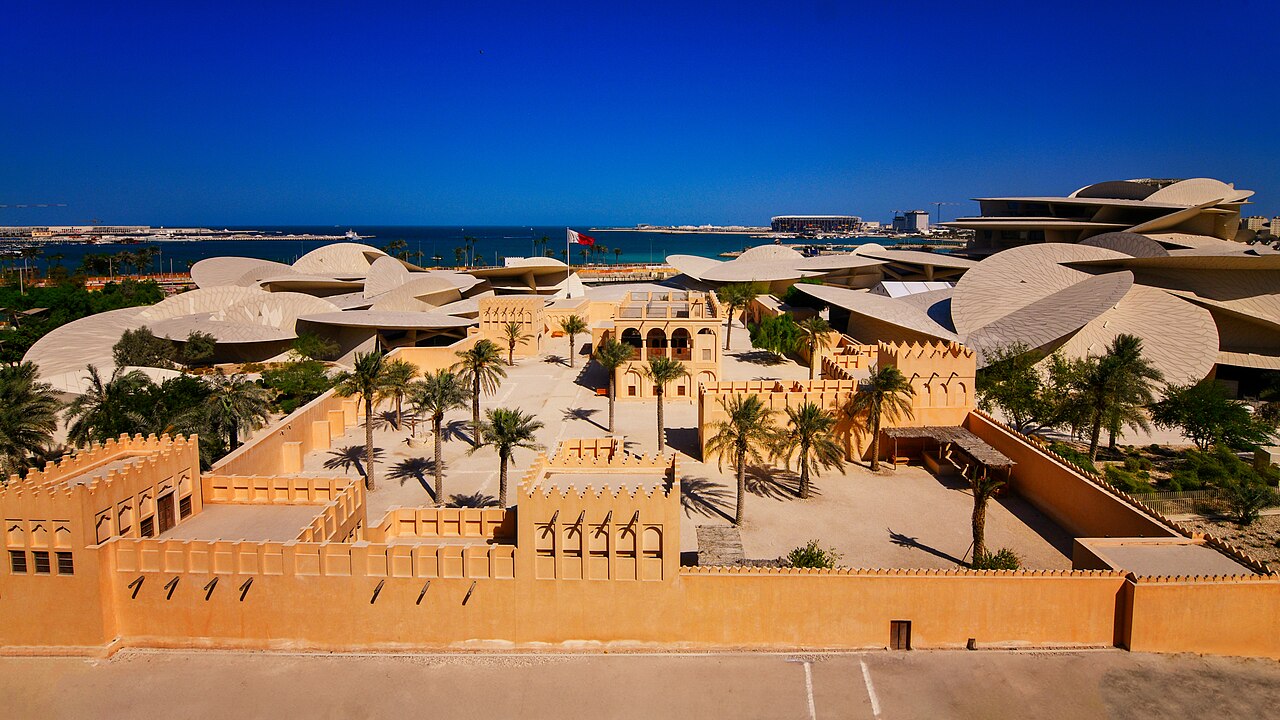
The museum's new building, opened in 2019 and designed by the French architect Jean Nouvel, is shaped like a desert rose, a crystal formation found in Qatar's sands. It wraps around the restored early-20th-century palace of Sheikh Abdullah bin Jassim Al Thani, the heart of the museum, and its galleries tell Qatar's story from the desert and the sea to the age of oil.
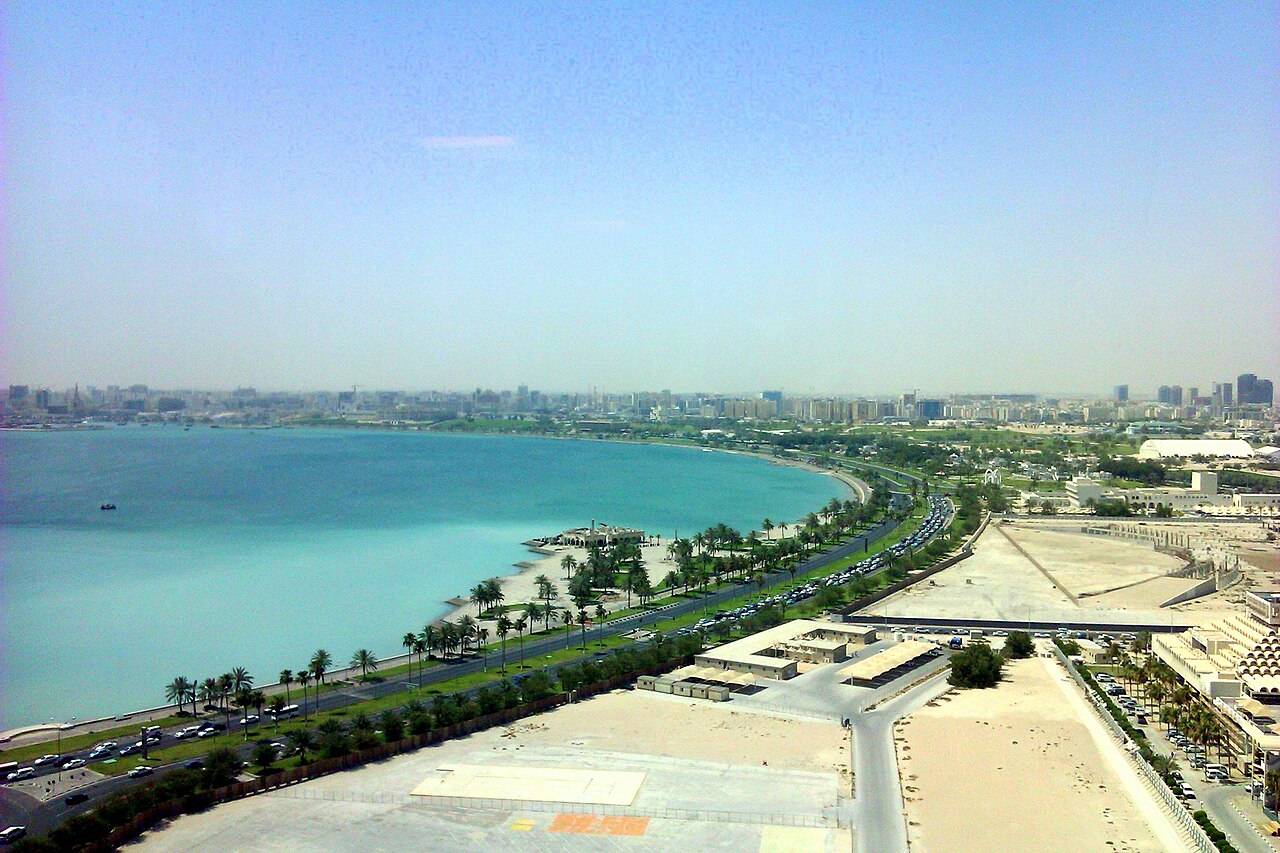
A seafront promenade that curves for 7 km around Doha Bay, from the towers of West Bay in the north to the old city in the south. Wooden dhows tie up near the Museum of Islamic Art, and the National Day parade is traditionally held here on 18 December. It is at its best on a winter evening.
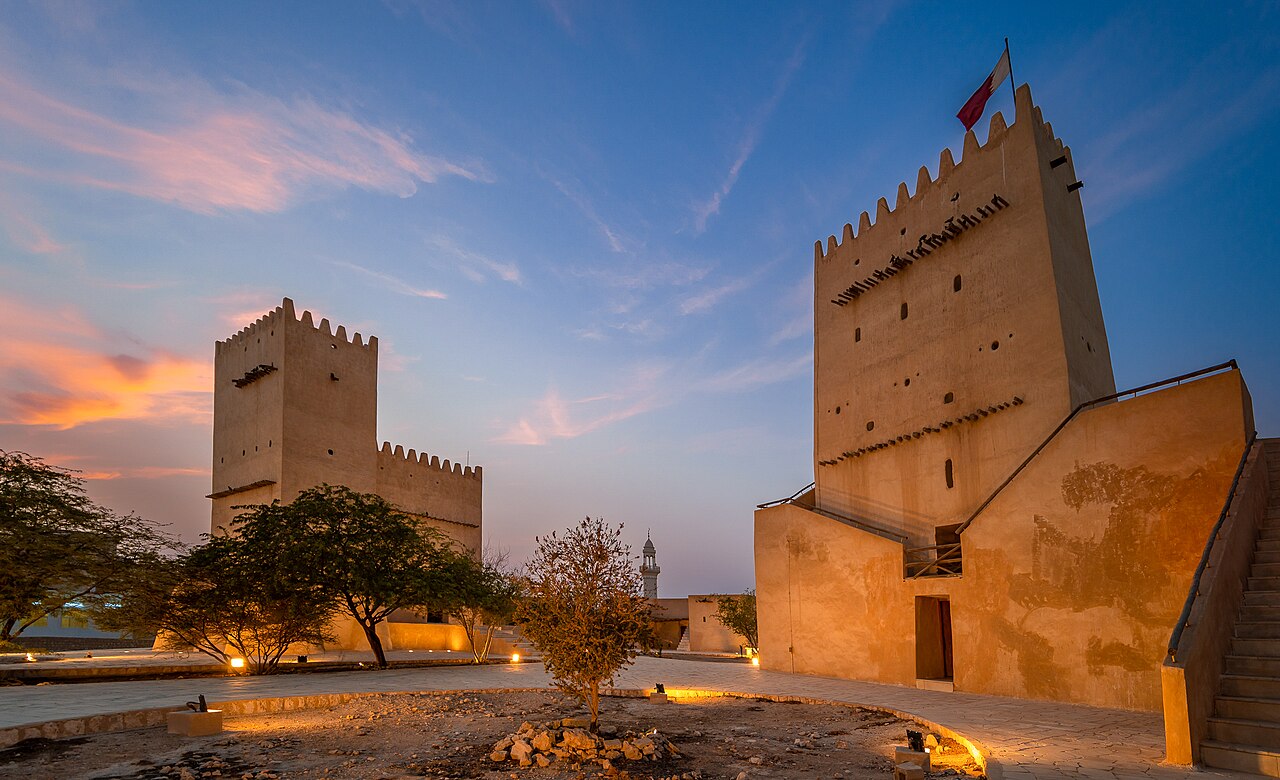
Watchtowers 16 m high, built of coral rock and limestone in the late 19th century and renovated in 1910. They guarded a rawda where precious rainwater collected, and may also have served as lookouts for ships and for watching the moon. Barzan means 'high place' in Arabic.
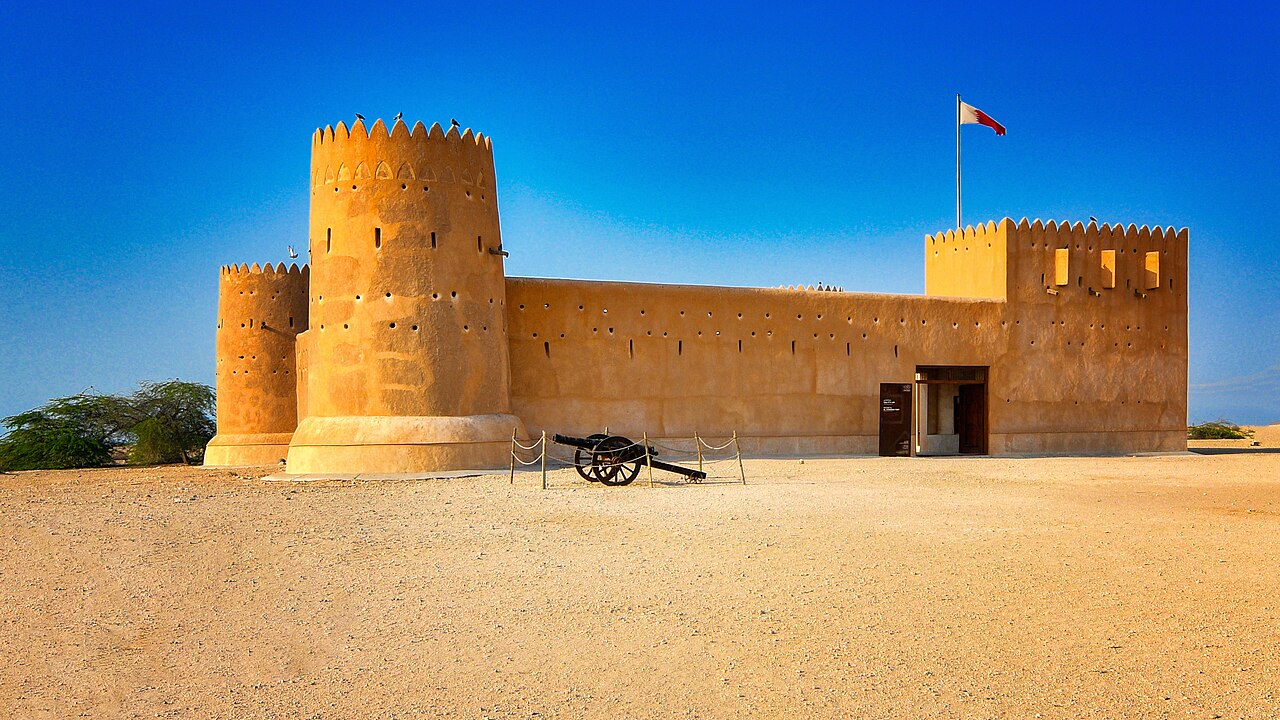
The ruins of a walled pearling and trading town on the northwest coast, founded in the 18th century and later abandoned. It is one of the best preserved towns of its age in the Gulf, and Qatar's first World Heritage Site. Beside it stands Al Zubara Fort, a square fort built in 1938 with three round towers and one rectangular tower, now a museum.
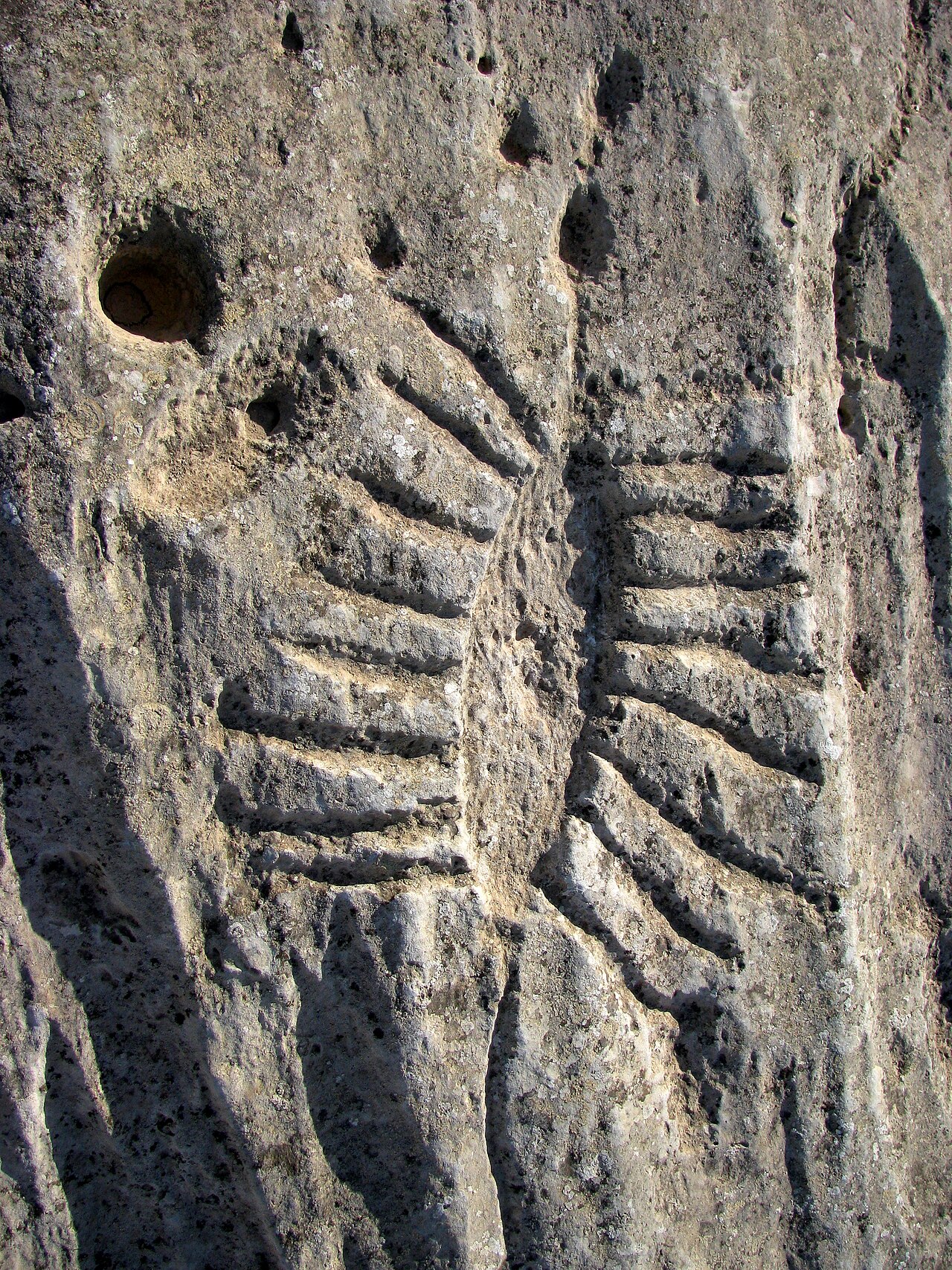
Low limestone ridges near the northeast coast covered with about 900 rock carvings: cup marks and other patterns, animals such as fish and ostriches, and boats. They are the largest rock art site in Qatar, and Danish archaeologists recorded them in the 1960s and 1970s.
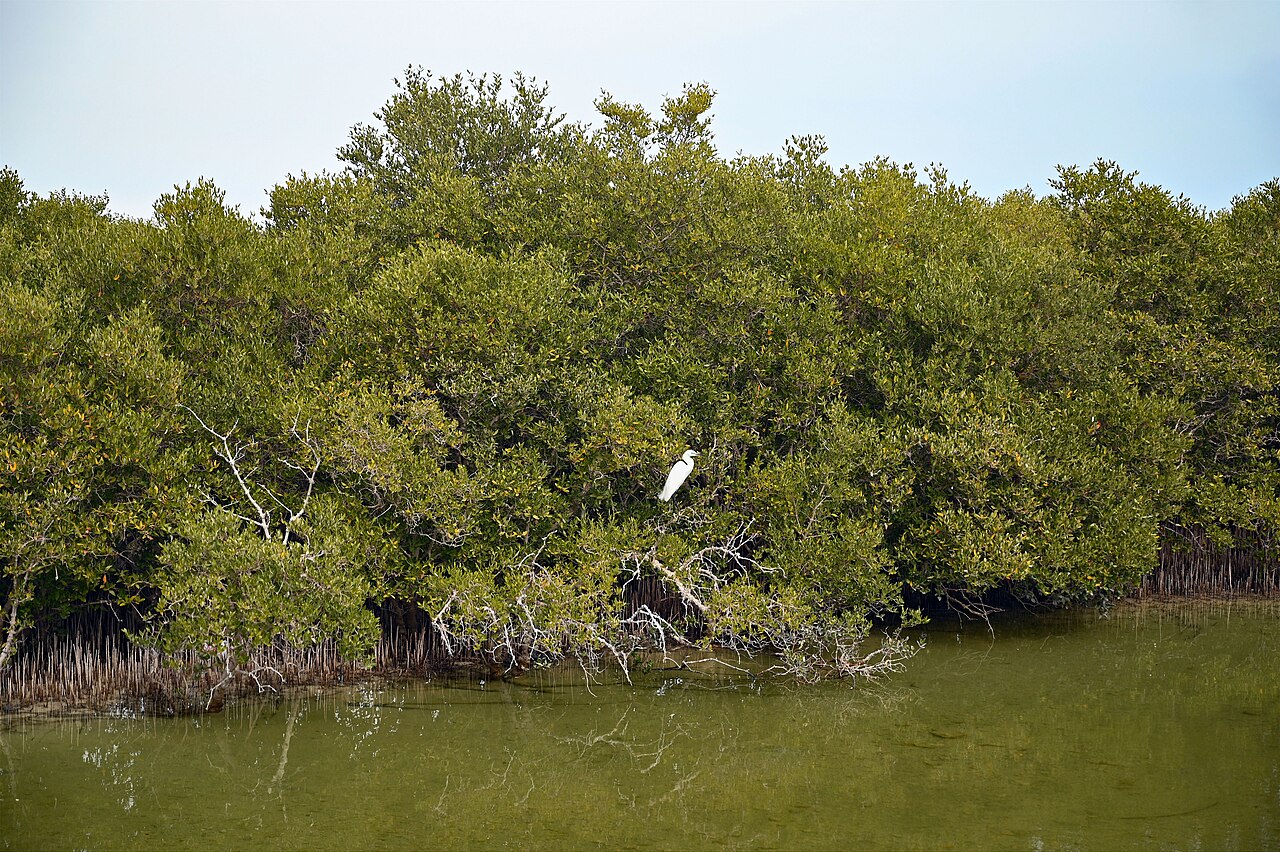
Green mangrove forests along the shallow creeks between Al Khor and Al Thakhira, protected as a nature reserve since 2006. They are one of the few places in Qatar with natural trees. Herons, egrets and other birds feed in the channels, and visitors explore them by kayak.
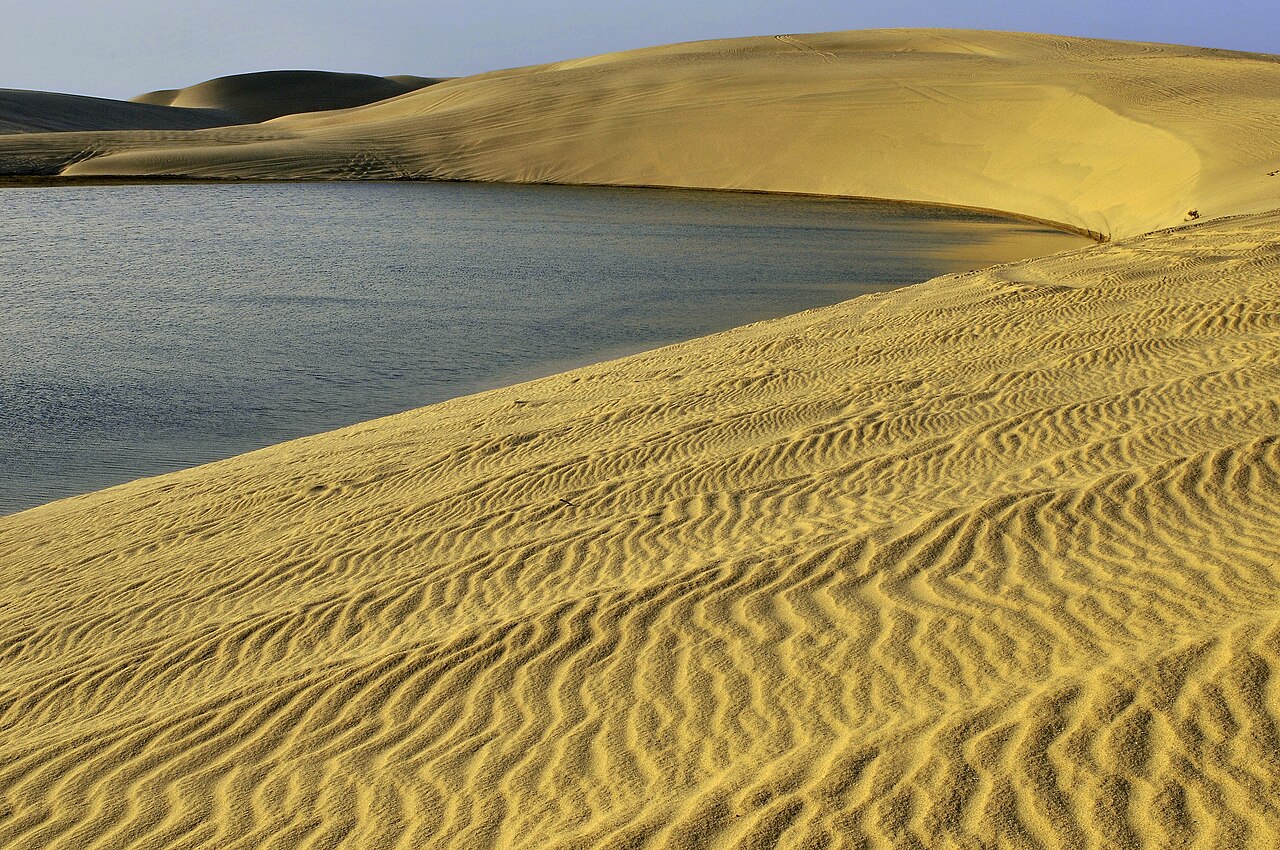
A wide inlet of the sea in the far southeast, on the border with Saudi Arabia, about 78 km south of Doha. Sand dunes up to about 60 m high surround the water, so here the desert meets the sea. It became a nature reserve in 2007 and, as of 2026, is on UNESCO's Tentative List.
Qatar's highest point, Qurayn Abu al Bawl, is only 103 m above sea level, lower than many city towers.
The North Field under the sea off Qatar is part of the largest natural gas field in the world, which Qatar shares with Iran; the Iranian part is called South Pars.
The Qatari riyal has been pegged to the US dollar at 3.64 riyals for many years, so its value hardly changes against the dollar.
Until 1966 Qatar used the Indian rupee, in a special version called the Gulf rupee.
The 2022 FIFA World Cup in Qatar was the first held in the Middle East and the first played in November and December, to avoid the summer heat. The final was played on 18 December, Qatar National Day.
At the camel races of Al Shahaniya, the camels are ridden not by jockeys but by small robots.
The Arabian oryx is Qatar's national animal, and an oryx is shown on the tails of Qatar Airways planes.
In 1907 Doha had about 350 pearling boats with some 6,300 men. A British official wrote that if the pearls ran out, Qatar would 'practically cease to exist'.
In the middle of Ramadan, children in Qatar and other Gulf countries dress in traditional clothes and go from door to door singing for sweets and nuts. The custom is often called Gargee'an.
Souq Waqif has its own falcon souq, where falcons are sold together with hoods, perches and even GPS trackers for the birds.
The Doha Metro opened on 8 May 2019, and Hamad International Airport, Qatar's main airport, opened in 2014.
Qatar National Day moved in 2007 from 3 September, the day of independence, to 18 December, the day in 1878 when Jassim bin Mohammed Al Thani became ruler.
The Roman writer Pliny the Elder, in the 1st century AD, gave one of the earliest descriptions of the people of the peninsula, whom he called the Catharrei.
Arabic is written from right to left; each word is shown in simple Latin letters with the Arabic script in brackets. 'Kh' sounds like the ch in Scottish 'loch', and in the Gulf the letter qaf is often said as a hard 'g', so qahwa (coffee) becomes gahwa Pronunciation is written the way it sounds; the capital letters show where the stress goes.
Some phrases change with the person you speak to: 'shlonak' is for a man and 'shlonich' for a woman. Almost everyone in Doha also speaks English, but a few words of Arabic are warmly received
In 2026, during the war involving Iran, Qatar was targeted by repeated Iranian missile and drone attacks. Most were intercepted, but some hit targets including a military air base and the Ras Laffan gas plant, and Qatar's airspace was closed for a time. As of November 2026, British government advice says the situation in the region remains unpredictable, that the risk of sudden escalation is high and that airports and airspace can close at short notice. Before and during your trip, check your own government's official travel advice for Qatar.
From May to September Qatar is very hot and humid, with days usually around 40 °C and sometimes near 50 °C, and sandstorms are common. From November to March days are a pleasant 22 to 30 °C and the evenings are cool; October and April are warmer, at around 33 to 36 °C.
Men and women should cover their shoulders and knees in public, including in malls and while driving. The rule is strictly applied in government buildings, hospitals and banks, where you may be turned away. Swimwear is for beaches and pools.
Alcohol is sold only in licensed hotels, restaurants and bars, and the legal age is 21. Drinking or being drunk in public is illegal, you may not bring alcohol into the country, and there is zero tolerance for drinking and driving. Importing vapes and e-cigarettes is also illegal.
During the holy month of Ramadan, avoid eating, drinking, smoking or chewing gum in public in the daytime, even in your car, and avoid loud music and dancing. The evenings, with their iftar meals, are lively and welcoming.
Photographing people without their permission, or sharing such pictures, can bring a heavy fine or prison. Do not take pictures near military, government, religious or construction sites, and remember that swearing and rude gestures are criminal offences.
Doha has a modern metro with three lines, and the light blue Karwa taxis are run by the state transport company. To drive into the desert, for example to the Inland Sea, use a proper four-wheel-drive car, go in convoy and carry water and a phone, or book a tour with a driver.
In Qatar one number, 999, reaches the police, the ambulance and the fire service.
10 friendly questions about what you just read. No timer, and the ones you miss come back later for review.
Want a short note when a new country is ready? Get it by email (once a day at most, you can stop any time).
One short notification at 9 tomorrow morning with the new country and puzzles, then each morning. Turn it off any time.
On an iPhone or iPad, first add World Stroll to your home screen (Share, then Add to Home Screen), then open it from there.
Memories, a dish to cook, a place you want to see. Only you can see this. It saves by itself.
Your notes are kept in My collection.