Snowy peaks, blue lakes, cheese, chocolate and punctual trains, in four languages at the heart of the Alps.
Switzerland is a small, mountainous country in the middle of Western Europe, with no coast. The Alps cover about 60 percent of it, the Jura hills run along the north-west, and between them lies a green plateau of lakes, farms and cities where most people live. About 9.1 million people live here, in 26 cantons that each keep a great deal of self-government.
It is a country of four national languages. German is the main language of the north and centre, French of the west, Italian of the south, and Romansh is spoken in parts of the canton of Graubünden. Many Swiss switch easily between two or three languages, and signs, banknotes and food packets are printed in several of them.
Questions to ask the older generation
Memories fade faster than photos. Ask these over a meal or a phone call, and write the answers down.
Which town or region of Switzerland did our family come from? Was it near Zurich, Geneva, Basel?
Who was the first in the family to leave Switzerland, when, and why?
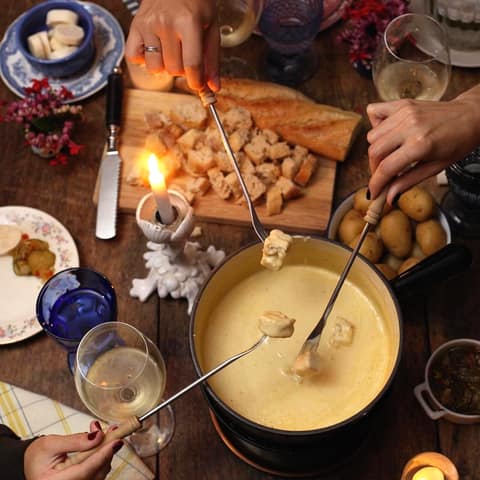
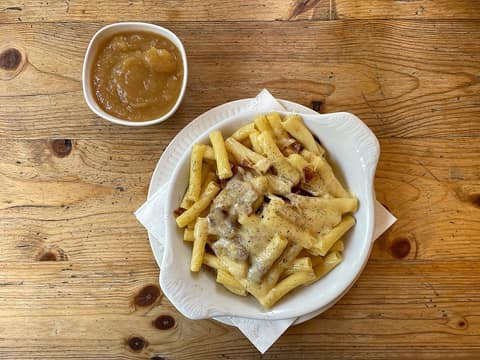
Which dishes from Switzerland were cooked at home? Did anyone make Cheese fondue or Raclette?
Does anyone in the family still speak German as used in Switzerland, or use a few words of it?
Were there songs, prayers, games or holidays from Switzerland that the family kept?
Are there old photos, letters or documents from Switzerland? Who has them?
If you could visit Switzerland together, where would you go first?
A short history of Switzerland
From a mountain alliance in 1291 and battles against the Habsburgs to the Reformation, neutrality, a short civil war and a modern federal state, Switzerland grew slowly, canton by canton, into one of Europe's most stable countries.
1291
The Federal Charter
In early August 1291, the communities of Uri, Schwyz and Unterwalden in the central Alps agreed to help each other against outside threats and to settle disputes without foreign judges. The charter became the symbol of the country's founding, and Swiss National Day is held on 1 August. The original is kept in a museum in Schwyz.
1386
The Battle of Sempach
On 9 July 1386, the Confederates defeated a Habsburg army near Sempach, and Duke Leopold III was killed with many of his knights. A later legend says Arnold von Winkelried threw himself onto the enemy's pikes to open a gap, but the story first appears more than a century afterwards.
1519
Zwingli starts preaching in Zurich
In 1519, Huldrych Zwingli became the preacher at the Grossmünster in Zurich, and his sermons launched the Swiss Reformation. Switzerland split into Protestant and Catholic cantons, a divide that shaped its politics for more than 300 years.
1648
The Peace of Westphalia
The treaties that ended the Thirty Years' War in 1648 formally recognised the Swiss Confederation as independent of the Holy Roman Empire.
1847
The Sonderbund War
In November 1847, seven Catholic, conservative cantons that had formed a separate alliance, the Sonderbund, were defeated by federal troops under General Guillaume Henri Dufour in less than a month. Fewer than 150 people were killed, and it was Switzerland's last civil war.
1863
The Red Cross is founded in Geneva
Shocked by the suffering of wounded soldiers after the Battle of Solferino in 1859, the Geneva businessman Henry Dunant called for an organisation to help them. The International Committee of the Red Cross was founded in Geneva on 17 February 1863, and the first Geneva Convention followed in 1864. Dunant shared the first Nobel Peace Prize in 1901.
1971
Women win the federal vote
In February 1971, Swiss men voted to give women the right to vote in national elections, after rejecting it in 1959. The last canton to hold out, Appenzell Innerrhoden, had to give women the vote in cantonal matters after a Federal Supreme Court ruling in 1990.
2008
Switzerland joins the Schengen Area
On 12 December 2008, Switzerland joined the Schengen Area, so there are no routine passport checks at its borders with its neighbours. It is still not a member of the European Union: voters rejected the European Economic Area in 1992, and the old application to join the EU was withdrawn in 2016.