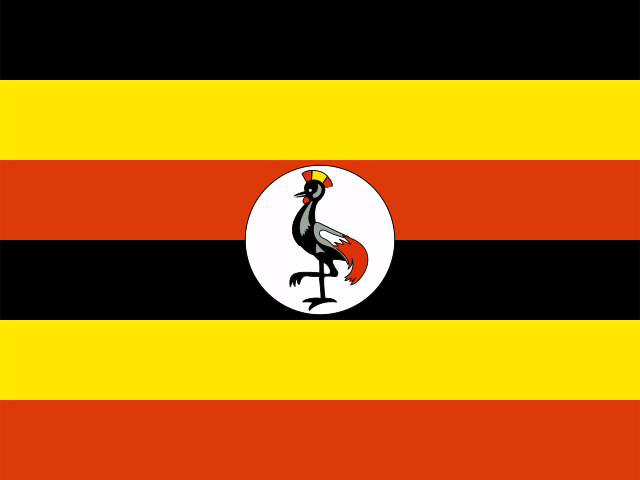
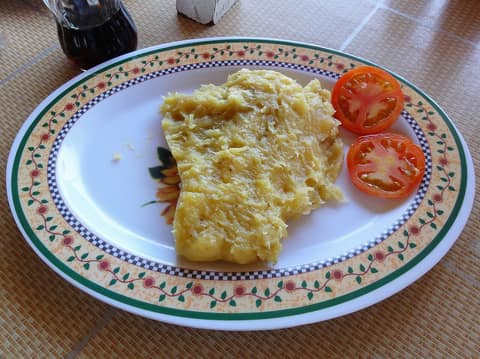
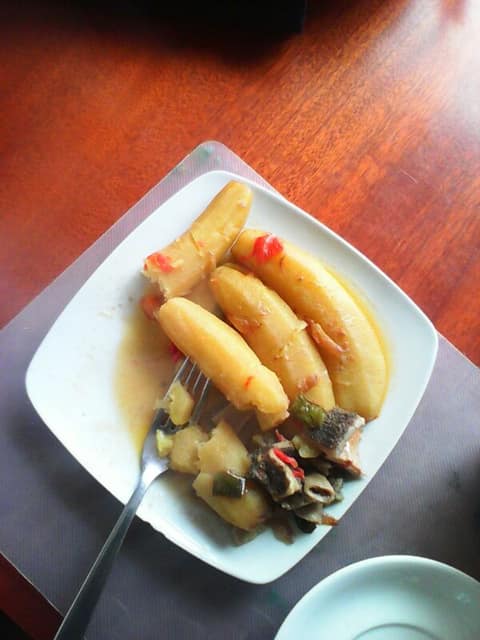
Green hills and great lakes on the equator, the place where the Nile leaves Lake Victoria, gorillas in misty forests and a plate of steamed matooke, in the land Winston Churchill called the Pearl of Africa.
Uganda is a landlocked country in East Africa, lying across the equator on a high plateau about 900 m above the sea, so it is warm but rarely very hot. Much of the south is taken up by Lake Victoria, Africa's largest lake, which Uganda shares with Kenya and Tanzania. At Jinja the Nile flows out of the lake and begins its long journey north, through Uganda and on towards Egypt. In the west rise the snowy Rwenzori Mountains, and in the east the old volcano Mount Elgon.
The country takes its name from Buganda, the largest of several old kingdoms around the lakes, whose kings, the Kabakas, ruled from the hills where Kampala now stands. Britain made Uganda a protectorate in 1894, and it became independent on 9 October 1962. The years that followed were hard, above all the military rule of Idi Amin in the 1970s and the wars that ended it, but the south has been peaceful for decades and Uganda is now a republic of about 46 million people.
Questions to ask the older generation
Memories fade faster than photos. Ask these over a meal or a phone call, and write the answers down.
Which town or region of Uganda did our family come from? Was it near Entebbe, Jinja, Gulu?
Who was the first in the family to leave Uganda, when, and why?
Which dishes from Uganda were cooked at home? Did anyone make Matooke or Groundnut sauce?
Does anyone in the family still speak Luganda, or use a few words of it?
Were there songs, prayers, games or holidays from Uganda that the family kept?
Are there old photos, letters or documents from Uganda? Who has them?
If you could visit Uganda together, where would you go first?
A short history of Uganda
People have lived around the great lakes of Uganda for many thousands of years. About 3,000 years ago Bantu-speaking farmers arrived in the south and Nilotic-speaking herders in the north, and in time strong kingdoms grew up: Bunyoro-Kitara, Buganda, Ankole, Toro and Busoga. Arab traders came from the coast in the 1830s and British explorers in the 1860s, looking for the source of the Nile. Britain ruled Uganda from 1894 to 1962. After independence came years of coups and war, and since the late 1980s a long period of peace in most of the country.
1862
Speke reaches the Nile at Jinja
In July 1862 the British explorer John Hanning Speke reached the northern shore of Lake Victoria and saw the Nile pouring out of the lake over a set of waterfalls near today's Jinja. He named them Ripon Falls and declared that he had found the source of the Nile, a claim that caused fierce arguments in Britain for years.
1886
The Uganda Martyrs die at Namugongo
Kabaka Mwanga II ordered the execution of young men at his court who had become Christians and refused to give up their faith. On 3 June 1886 many of them were burned to death at Namugongo, near Kampala. The 22 Catholic martyrs were made saints in 1964, and every 3 June huge crowds of pilgrims gather at Namugongo.
1900
The Buganda Agreement is signed
In March 1900 British officials and the regents of the young Kabaka signed the Buganda Agreement. It recognised the Kabaka and his council, the Lukiiko, under British rule, and divided much of Buganda's land between the royal family, the chiefs and the Crown.
1954
The Owen Falls Dam is completed
A hydroelectric dam was built at the outlet of Lake Victoria near Jinja and finished in 1954. It brought electricity to much of Uganda, and its rising water covered the Ripon Falls that Speke had seen.
1972
Uganda's Asians are expelled
In August 1972 Amin ordered Uganda's Asian minority, most of them of Indian origin, to leave the country within 90 days. Tens of thousands of people lost their homes and businesses; many settled in Britain. Some families returned years later and got their property back.
1986
The National Resistance Army takes Kampala
After a guerrilla war that began in 1981, the National Resistance Army took Kampala in January 1986. Peace slowly returned to the south, although a rebel war in the north lasted for about two more decades.
1995
A new constitution
On 8 October 1995 Uganda's fourth constitution was promulgated after years of public consultation by a constitutional commission and debate by an elected assembly. It is still in force, with later amendments.
2023
The Kasubi Tombs leave the danger list
In 2010 a fire destroyed the great thatched tomb house of the Buganda kings at Kasubi. After years of careful rebuilding with traditional materials and skills, UNESCO removed the site from its List of World Heritage in Danger in 2023.
sseboSSEH-bohsir, gentleman (a polite way to address a man)
nnyaboNNYAH-bohmadam (a polite way to address a woman)
omuntuoh-MOON-tooperson
kabakakah-BAH-kahking (the title of the king of Buganda)
Food and drink
amazziah-MAHZ-zeewater
emmereehm-MEH-rehfood
caayiCHAH-yeetea
Towns and regions
Kampala, Central Region, near the northern shore of Lake Victoria: The Kasubi Tombs of the Buganda kings, The cathedrals on Namirembe and Rubaga hills.
Entebbe, Central Region, on a peninsula in Lake Victoria: Entebbe International Airport, The National Botanical Gardens, laid out in 1898.
Jinja, Eastern Region, Busoga, on Lake Victoria: The source of the Nile, White-water rafting and kayaking.
Gulu, Northern Region, Acholi sub-region: Acholi culture, music and dance, Trade with South Sudan.
Mbarara, Western Region, Ankole: Long-horned Ankole cattle, Dairy products and eshabwe.
Fort Portal, Western Region, Tooro: The Tooro kingdom, Crater lakes in the hills around it.
Mbale, Eastern Region, Bugisu: Mount Elgon, Sipi Falls.
Kabale, Western Region, Kigezi highlands: Lake Bunyonyi, Terraced hillsides.
Arua, Northern Region, West Nile: Cross-border trade, The West Nile region.
Kasese, Western Region, Rwenzururu: Rwenzori Mountains National Park, Queen Elizabeth National Park.
Masindi, Western Region, Bunyoro: The road to Murchison Falls, The historic Masindi Hotel, built in 1923.