Green hills and great lakes on the equator, the place where the Nile leaves Lake Victoria, gorillas in misty forests and a plate of steamed matooke, in the land Winston Churchill called the Pearl of Africa.
Your trip to Uganda
Ready for the trip?
10 questionsAbout 3 minutesNo timer
Explore Uganda
You have explored 0 of 9 parts. Scroll on to discover the rest.
A free large-print PDF. Choose what goes in: facts, map, history, dishes and recipes, phrases, fun facts, a quiz with or without answers. Made for clubs, care homes, libraries and family afternoons.
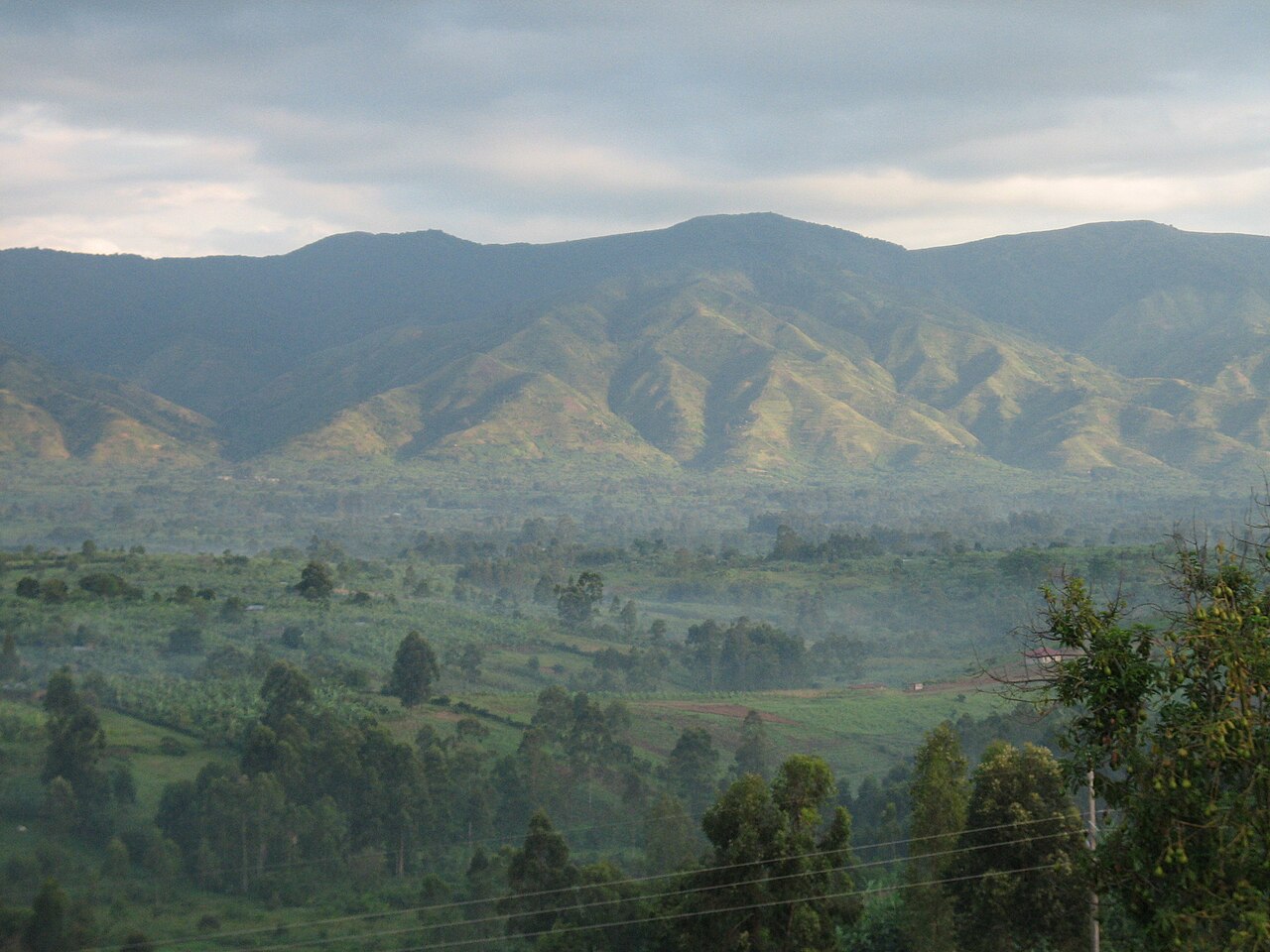
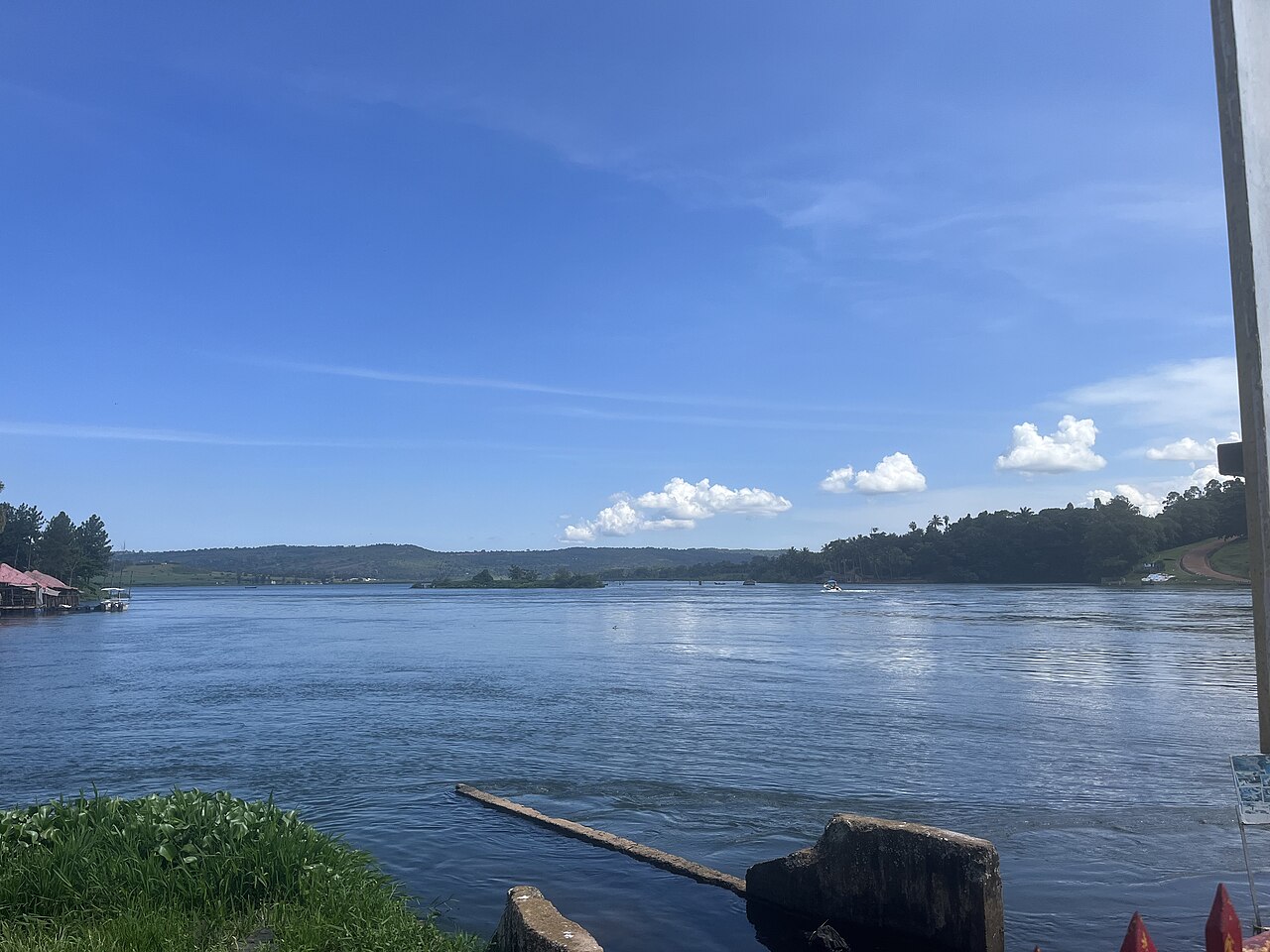
Uganda is a landlocked country in East Africa, lying across the equator on a high plateau about 900 m above the sea, so it is warm but rarely very hot. Much of the south is taken up by Lake Victoria, Africa's largest lake, which Uganda shares with Kenya and Tanzania. At Jinja the Nile flows out of the lake and begins its long journey north, through Uganda and on towards Egypt. In the west rise the snowy Rwenzori Mountains, and in the east the old volcano Mount Elgon.
The country takes its name from Buganda, the largest of several old kingdoms around the lakes, whose kings, the Kabakas, ruled from the hills where Kampala now stands. Britain made Uganda a protectorate in 1894, and it became independent on 9 October 1962. The years that followed were hard, above all the military rule of Idi Amin in the 1970s and the wars that ended it, but the south has been peaceful for decades and Uganda is now a republic of about 46 million people.
Uganda is one of the youngest countries in the world: about half of its people are under 18. English and Swahili are the official languages, and Luganda, the language of Buganda, is the most widely spoken local language. Visitors come for the mountain gorillas of Bwindi, the chimpanzees, lions and hippos of the national parks, the white water of the Nile and the green, fertile countryside that made Winston Churchill call it the Pearl of Africa.
CapitalKampala
PopulationAbout 45.9 million at the 2024 census
Official languageEnglish and Swahili (Swahili since a constitutional change in 2005). Luganda is the most widely spoken local language
CurrencyUgandan shilling (UGX)
AreaAbout 241,000 km², including large lakes
GovernmentPresidential republic, under the constitution of 1995
Highest mountainMargherita Peak on Mount Stanley, Rwenzori Mountains, 5,109 m, on the border with DR Congo
Longest riverThe Nile, which leaves Lake Victoria at Jinja and flows north through the country as the Victoria Nile and the Albert Nile
NeighboursKenya, South Sudan, DR Congo, Rwanda and Tanzania. Uganda has no coast; it shares Lake Victoria with Kenya and Tanzania
People have lived around the great lakes of Uganda for many thousands of years. About 3,000 years ago Bantu-speaking farmers arrived in the south and Nilotic-speaking herders in the north, and in time strong kingdoms grew up: Bunyoro-Kitara, Buganda, Ankole, Toro and Busoga. Arab traders came from the coast in the 1830s and British explorers in the 1860s, looking for the source of the Nile. Britain ruled Uganda from 1894 to 1962. After independence came years of coups and war, and since the late 1980s a long period of peace in most of the country.
1862
Speke reaches the Nile at Jinja
In July 1862 the British explorer John Hanning Speke reached the northern shore of Lake Victoria and saw the Nile pouring out of the lake over a set of waterfalls near today's Jinja. He named them Ripon Falls and declared that he had found the source of the Nile, a claim that caused fierce arguments in Britain for years.
1877
Missionaries arrive in Buganda
Anglican missionaries of the Church Missionary Society reached the court of Kabaka Muteesa I in 1877, and French Catholic missionaries followed in 1879. Christianity, Islam and the old beliefs soon competed for influence at the royal court.
1886
The Uganda Martyrs die at Namugongo
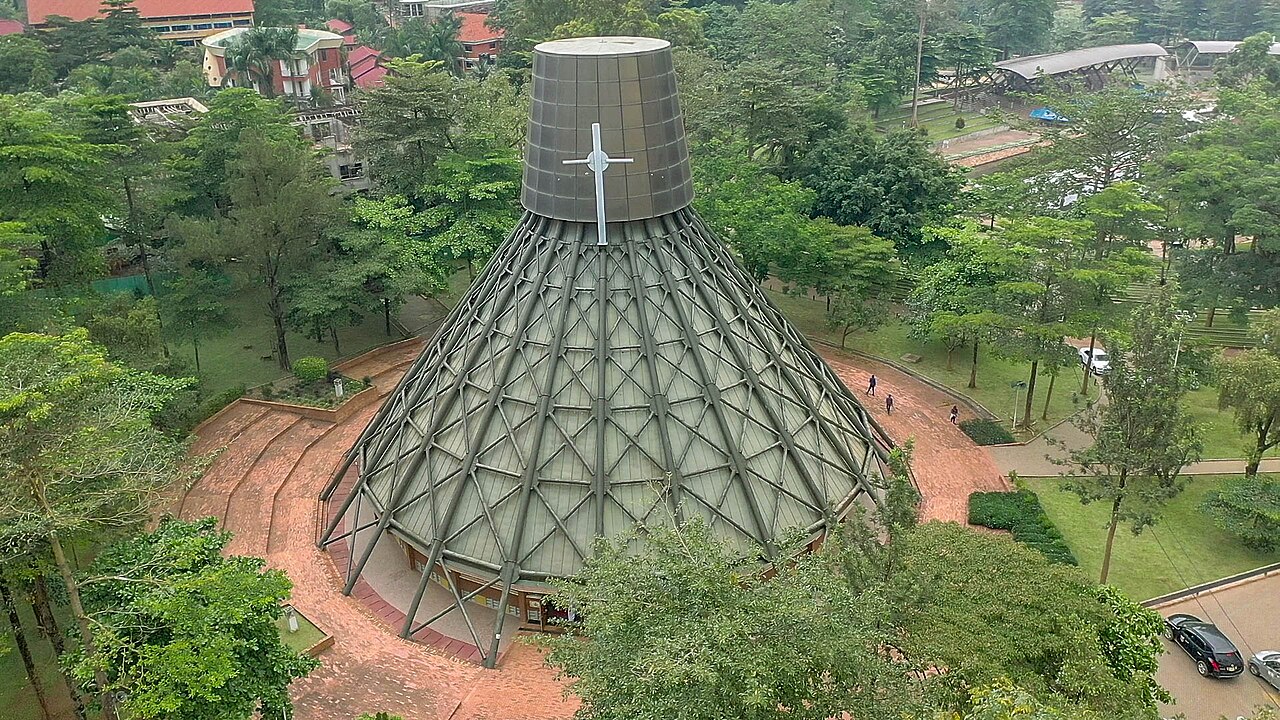
Kabaka Mwanga II ordered the execution of young men at his court who had become Christians and refused to give up their faith. On 3 June 1886 many of them were burned to death at Namugongo, near Kampala. The 22 Catholic martyrs were made saints in 1964, and every 3 June huge crowds of pilgrims gather at Namugongo.
1894
Britain declares the Uganda Protectorate
After religious wars in Buganda and the collapse of the Imperial British East Africa Company, the British government declared a protectorate over Buganda in 1894. Treaties with Toro, Ankole and Bunyoro later extended it to roughly the borders of today's Uganda.
1900
The Buganda Agreement is signed
In March 1900 British officials and the regents of the young Kabaka signed the Buganda Agreement. It recognised the Kabaka and his council, the Lukiiko, under British rule, and divided much of Buganda's land between the royal family, the chiefs and the Crown.
1922
Makerere is founded
In 1922 a technical school was opened on Makerere Hill in Kampala. It grew into Makerere University, which for decades trained doctors, teachers and future leaders from all over East Africa.
1954
The Owen Falls Dam is completed
A hydroelectric dam was built at the outlet of Lake Victoria near Jinja and finished in 1954. It brought electricity to much of Uganda, and its rising water covered the Ripon Falls that Speke had seen.
1962
Uganda becomes independent
On 9 October 1962 Uganda became independent from Britain, with Milton Obote as prime minister. The next year the Kabaka of Buganda, Edward Muteesa II, became the country's president, a largely ceremonial role. 9 October is Independence Day.
1971
Idi Amin seizes power
On 25 January 1971, while Obote was abroad, army commander Idi Amin took power in a military coup. His eight years of rule are remembered for widespread killings of opponents and ordinary people, and for an economy that fell apart.
1972
Uganda's Asians are expelled
In August 1972 Amin ordered Uganda's Asian minority, most of them of Indian origin, to leave the country within 90 days. Tens of thousands of people lost their homes and businesses; many settled in Britain. Some families returned years later and got their property back.
1979
Amin is overthrown
After Ugandan troops invaded northern Tanzania in late 1978, the Tanzanian army and Ugandan exiles fought their way north and took Kampala on 11 April 1979. Amin fled into exile and never returned.
1986
The National Resistance Army takes Kampala
After a guerrilla war that began in 1981, the National Resistance Army took Kampala in January 1986. Peace slowly returned to the south, although a rebel war in the north lasted for about two more decades.
1993
The old kingdoms are restored
Most of the kingdoms abolished in 1967 were allowed back in 1993 as cultural institutions without political power. In July 1993 a new Kabaka of Buganda was crowned, and Tooro and Bunyoro soon restored their traditional rulers too.
1995
A new constitution
On 8 October 1995 Uganda's fourth constitution was promulgated after years of public consultation by a constitutional commission and debate by an elected assembly. It is still in force, with later amendments.
2005
Multiparty politics returns
In a referendum in July 2005 voters chose to bring back competing political parties, which had been restricted for almost twenty years. The same year a change to the constitution made Swahili Uganda's second official language, beside English.
2023
The Kasubi Tombs leave the danger list
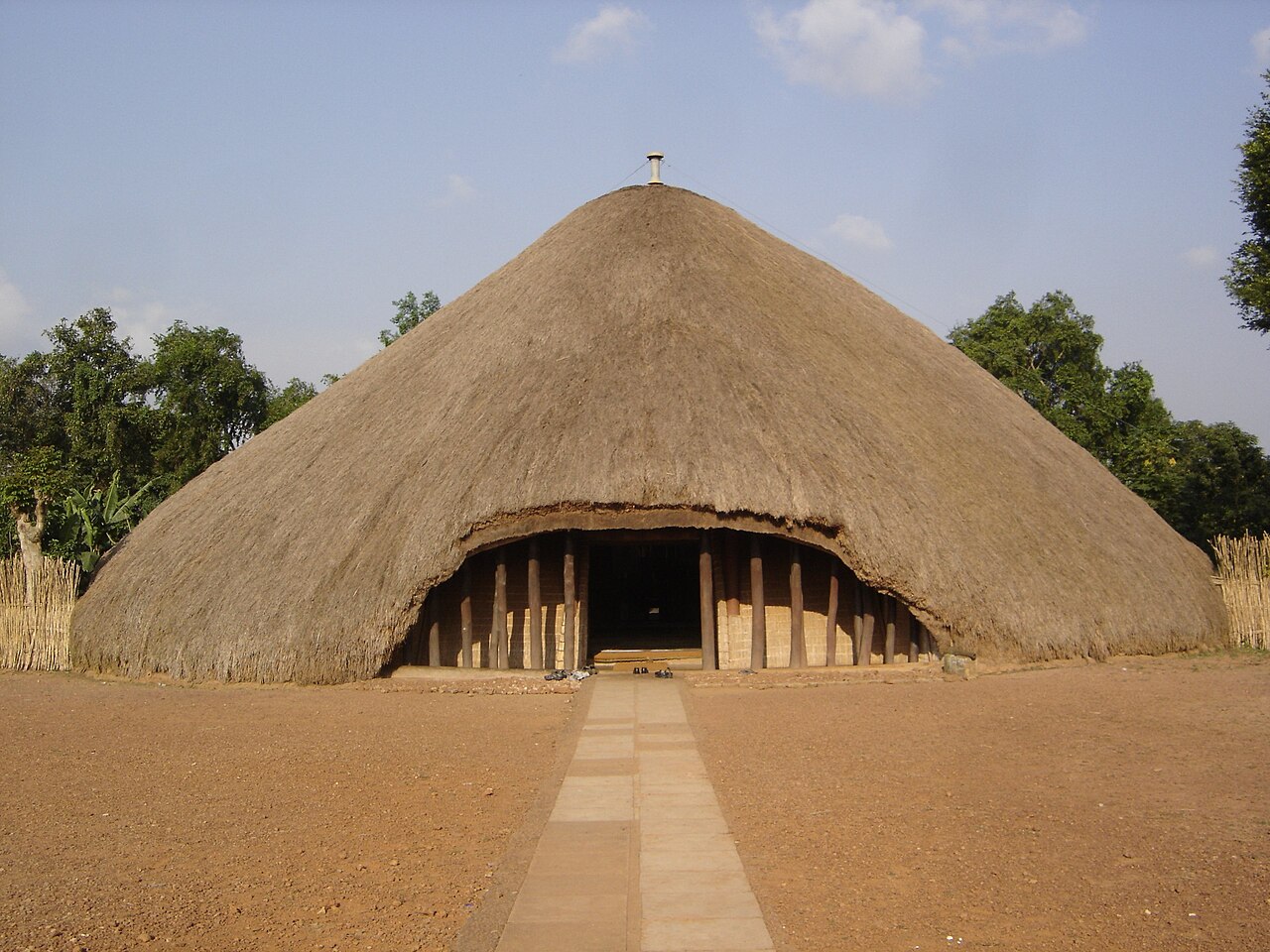
In 2010 a fire destroyed the great thatched tomb house of the Buganda kings at Kasubi. After years of careful rebuilding with traditional materials and skills, UNESCO removed the site from its List of World Heritage in Danger in 2023.
Ugandan cooking is simple, filling and based on what grows in the fertile soil: green cooking bananas, maize, millet, cassava, sweet potatoes, beans and groundnuts. A main meal is usually a big serving of a starchy food, steamed matooke in the centre and south, posho made from maize flour, or millet bread in the west, north and east, with a sauce or stew of groundnuts, beans, greens, fish or meat poured over it. Breakfast is often tea with bread or katogo, and the streets are full of quick snacks such as the rolex, a chapati rolled around an omelette. Indian dishes like chapati and samosas, brought by the railway workers and traders of the 1890s, are now part of everyday Ugandan food.
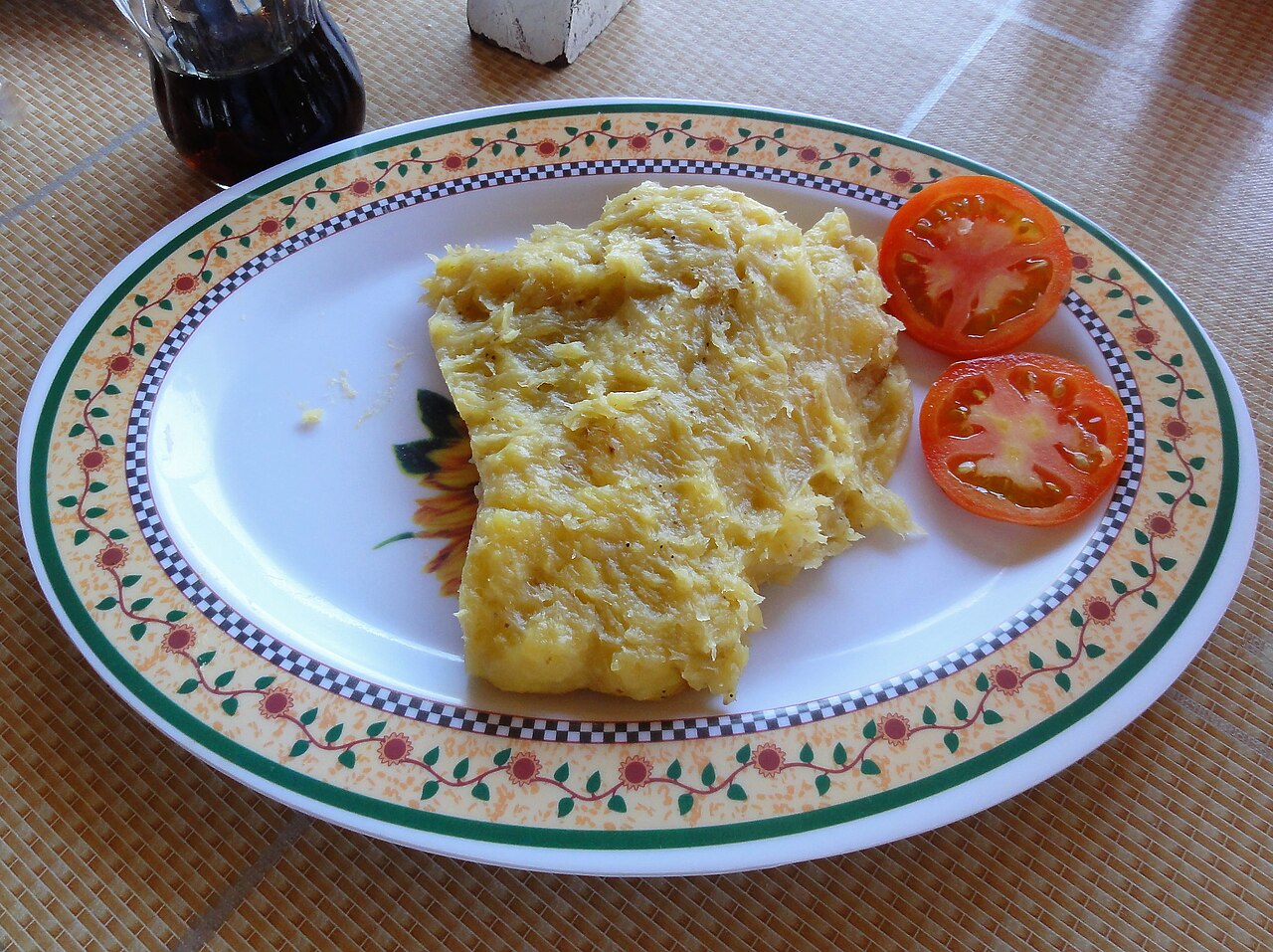
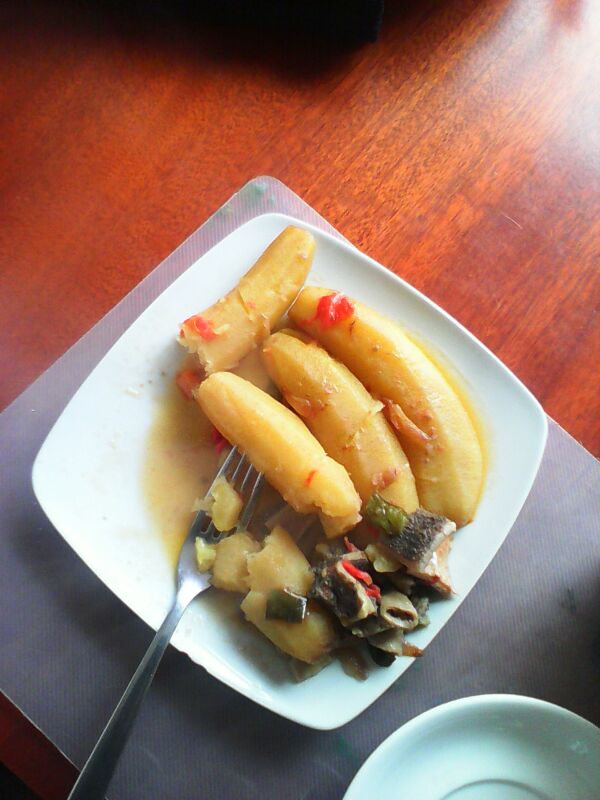
Green cooking bananas, peeled, wrapped in banana leaves and steamed for a long time until soft, then mashed into a smooth yellow mound. It is served with groundnut sauce, beans, meat or fish stew, and is considered a national dish.
Matooke is not a plantain but its own group of East African Highland bananas, harvested green and always cooked.
See the recipe
Serves 4
1 h 15 min
Ingredients
8 to 10 green cooking bananas (matooke, or green plantains if you cannot find them)
A few banana leaves (from Asian or African grocers) or baking paper and foil
Water for steaming
A little oil for your hands and knife (the sap is sticky)
Salt (optional)
Method
Oil your hands and knife, then peel the bananas: cut off both ends, slit the skin lengthwise and lift it off. Put the peeled bananas in a bowl of cold water so they do not turn brown.
Line a large pot with a rack or a few banana stalks, add about 3 cm of water, and lay banana leaves over the rack so they hang over the sides.
Put the bananas on the leaves, fold the leaves over to make a tight parcel, cover with more leaves and the lid.
Steam on low heat for about 45 minutes, topping up the water now and then, until the bananas are soft.
Keeping them in the leaves, press and squeeze the parcel with your hands (use a cloth, it is hot) until the bananas are mashed. Steam for 15 more minutes and serve with groundnut sauce.
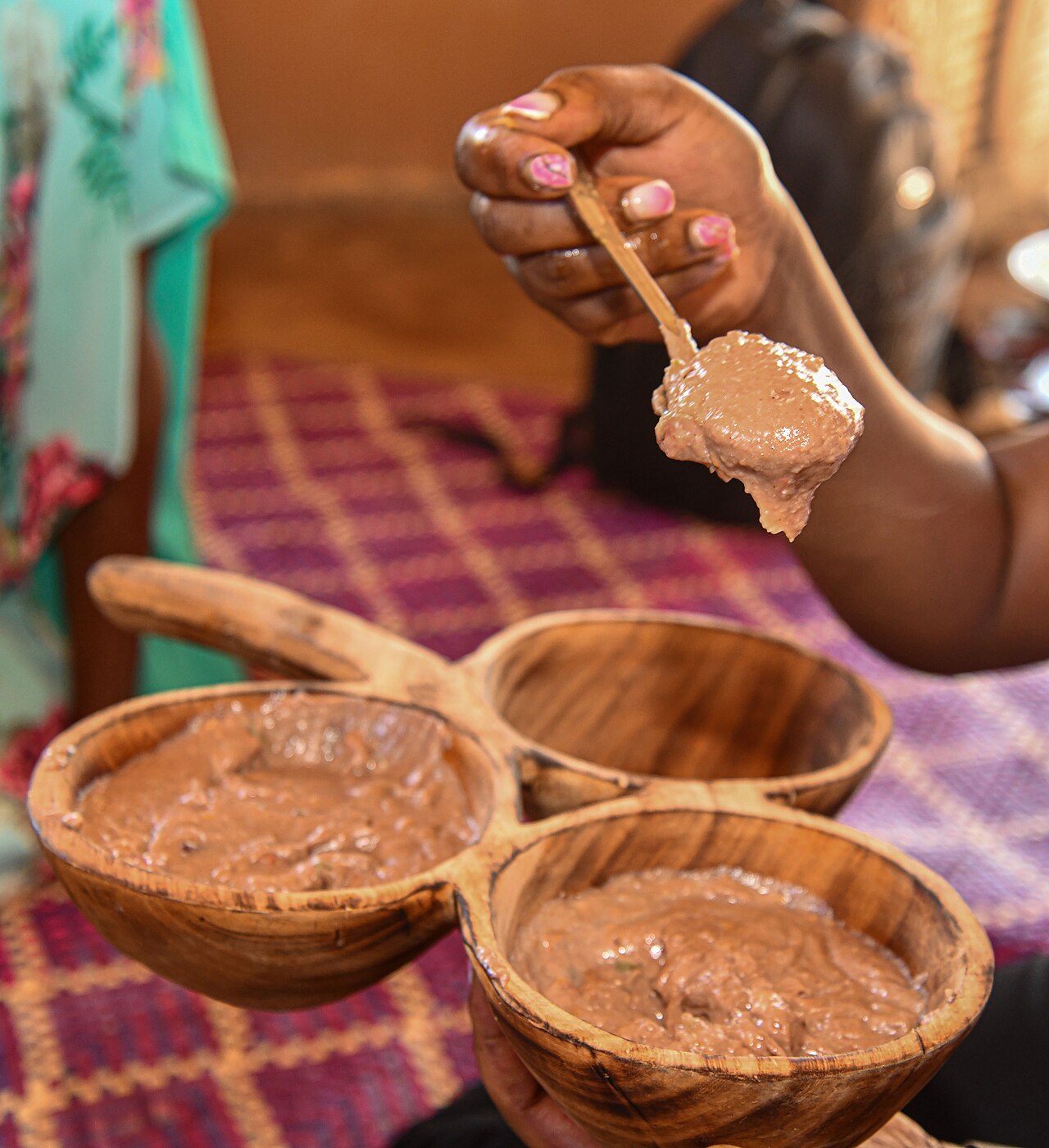
A smooth, thick sauce of ground roasted peanuts cooked in water with onion and tomato. It is one of the most common sauces in the country and is poured over matooke, posho, rice or sweet potatoes, sometimes with smoked fish, meat or mushrooms added.
Groundnuts are also a favourite snack: roasted nuts are sold on the street in twists of paper.
See the recipe
Serves 4
35 min
Ingredients
200 g smooth, unsweetened peanut butter or finely ground roasted peanuts
About 600 ml water
1 onion, finely chopped
2 tomatoes, chopped
1 tablespoon oil
Salt
Method
Fry the onion in the oil for 5 minutes until soft, then add the tomatoes and cook for 5 minutes more.
In a bowl, stir the peanut butter with 200 ml of the water until smooth.
Add the peanut mixture and the rest of the water to the pan and bring slowly to a simmer, stirring.
Cook gently for 15 to 20 minutes, stirring often so it does not stick, until it is thick and creamy. Add more water if it gets too thick.
Season with salt and serve over matooke, posho or rice. Warn guests: this dish contains peanuts.
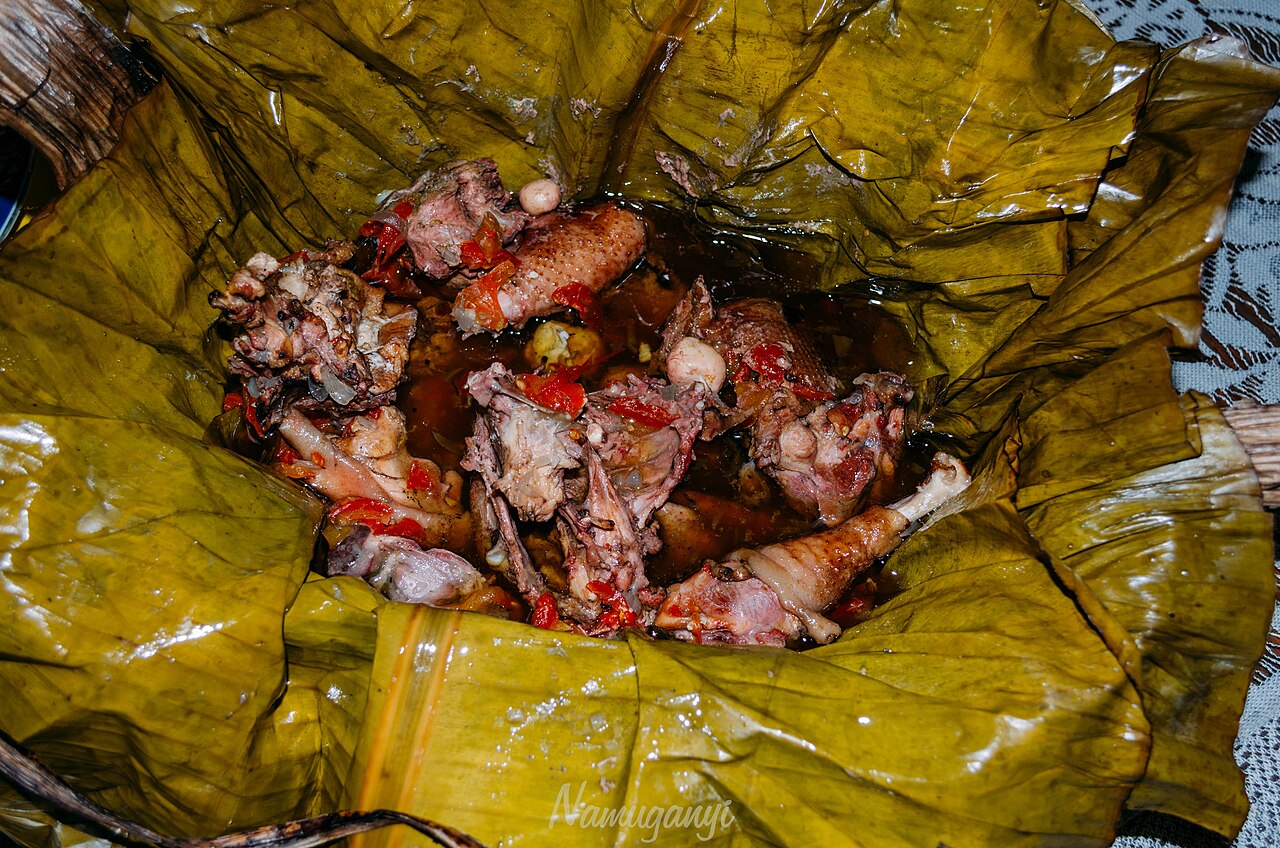
A stew of chicken, beef, goat, fish or groundnuts with mushrooms, wrapped in parcels of smoked banana leaves and steamed slowly, so the meat takes on a gentle smoky taste. Each guest is given a parcel to open at the table.
In the Buganda tradition, the royal chef Kawuuta first served luwombo to the Kabaka in 1887, and for a long time it was kept for royalty and chiefs. Today anyone can enjoy it, and it is still a favourite at weddings and introduction ceremonies.
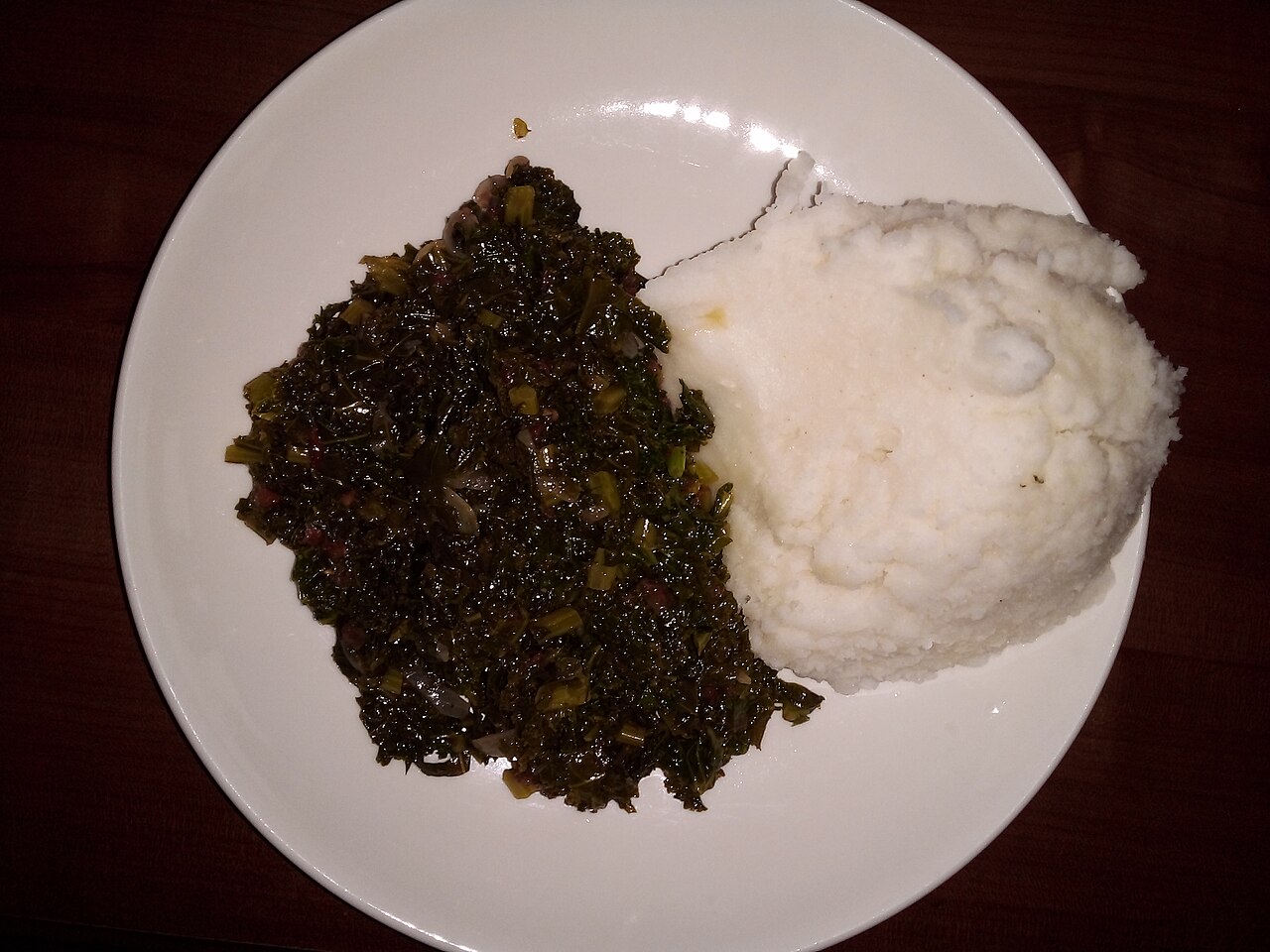
White maize flour stirred into boiling water until it becomes a firm, smooth dough, then cut into slices or served in a mound. It is cheap and filling, eaten with beans, greens or groundnut sauce, and is a standard meal in schools.
The same dish is called ugali in Kenya and Tanzania. A thin version of posho is eaten as porridge for breakfast.
See the recipe
Serves 4
20 min
Ingredients
1 litre water
300 to 400 g white maize flour (maize meal)
A pinch of salt (optional)
Method
Bring the water to the boil in a heavy pan, with the salt if you like.
Sprinkle in about a third of the flour and stir well until smooth. Let it bubble for 2 minutes.
Add the rest of the flour a little at a time, stirring and pressing firmly with a wooden spoon, until the dough is thick and pulls away from the pan (you may not need all of it, or you may need a little more). Take care, it can spit.
Lower the heat, cover and leave for 3 to 5 minutes, then turn it over once more.
Turn it out onto a plate, shape it with a wet spoon and serve hot with beans or groundnut sauce.
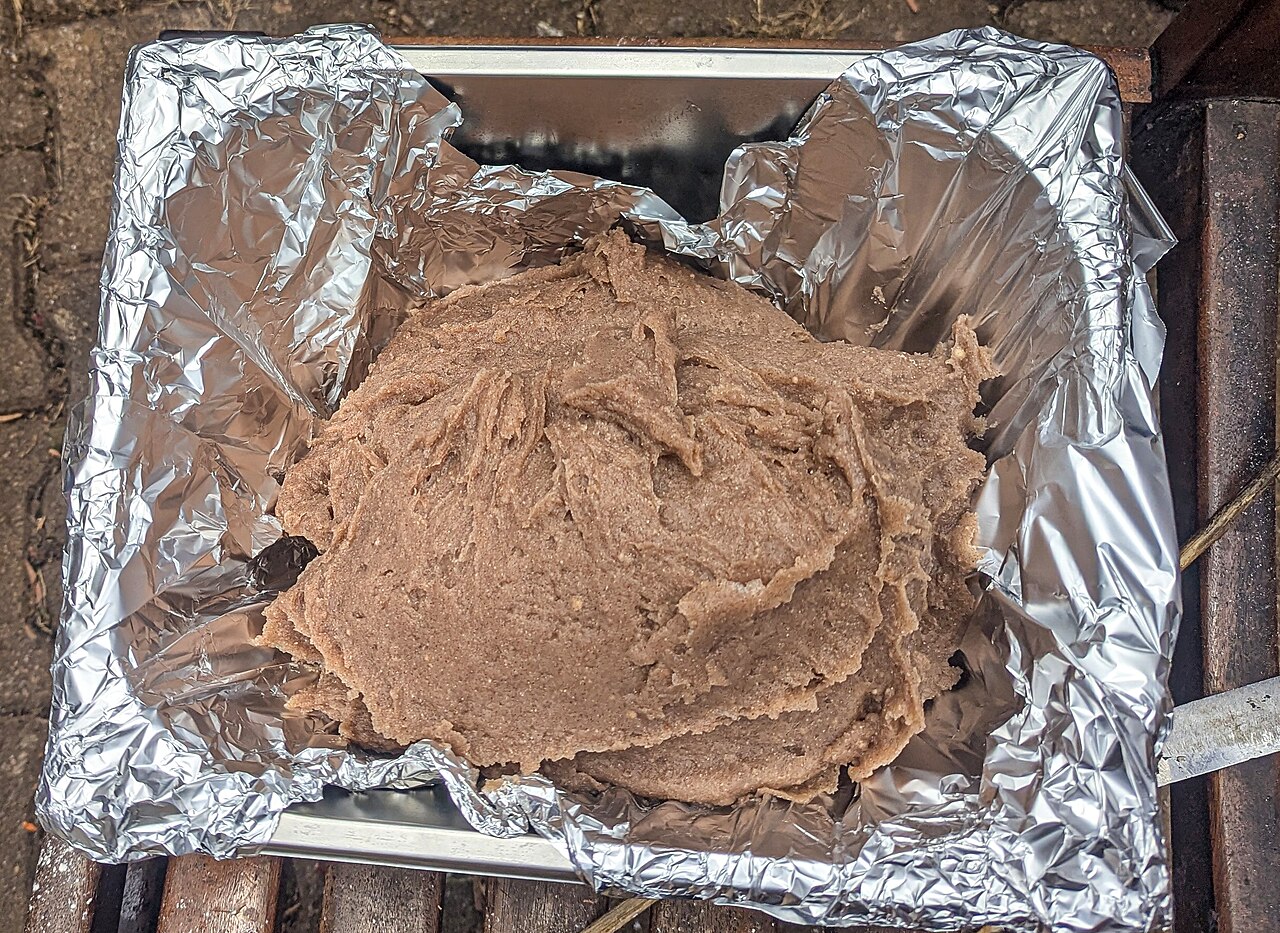
A firm, dark brown dough made by stirring millet flour, sometimes mixed with cassava flour, into boiling water. It is eaten with the hands, dipped into sauces such as firinda, eshabwe or groundnut sauce.
Buganda and western Uganda, now all over the country
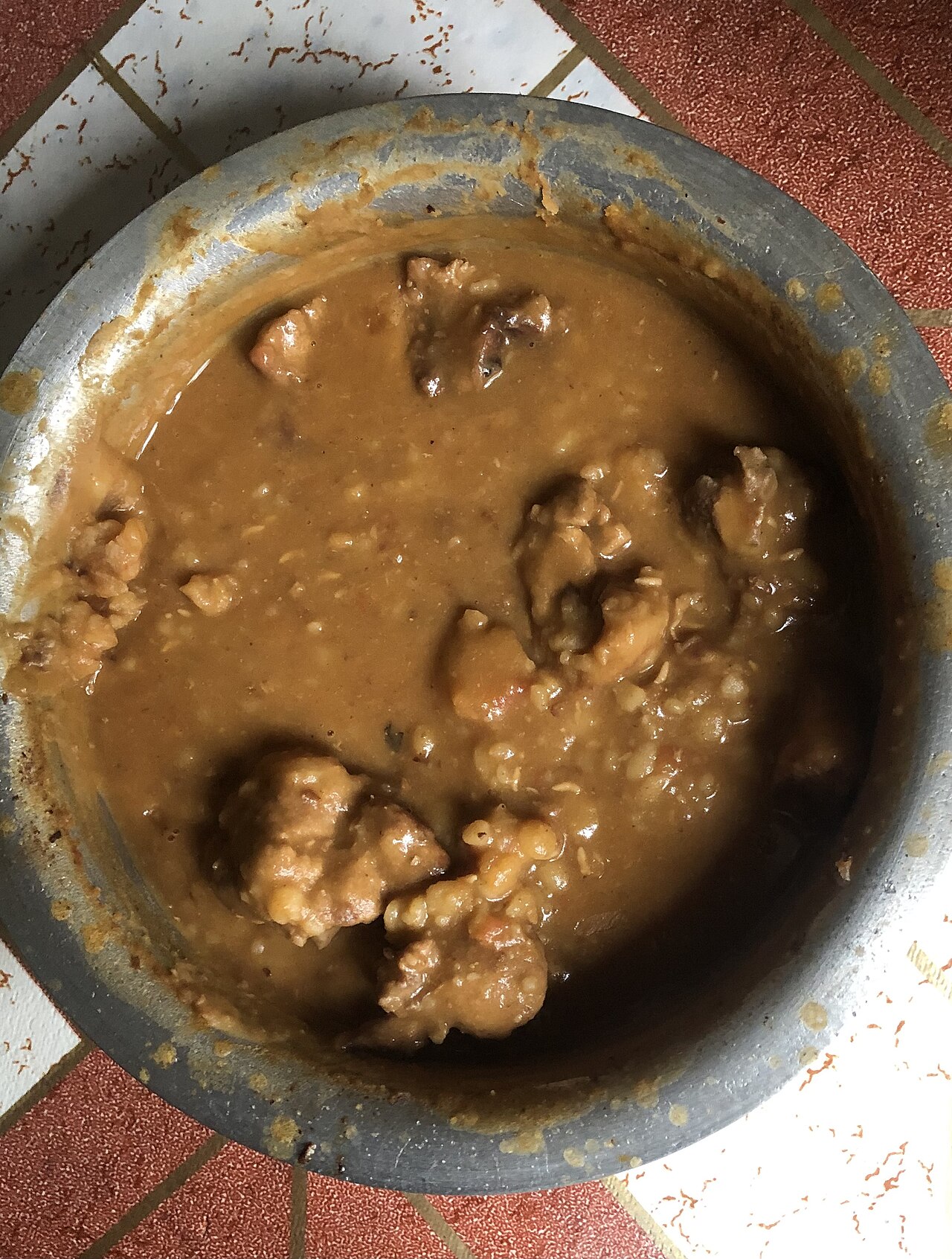
A one-pot breakfast of chopped green matooke cooked in a tomato and onion sauce, usually with beans, offal, meat or groundnuts. Once thought of as a poor man's food, it is now loved by everyone.
See the recipe
Serves 4
40 min
Ingredients
500 g peeled green cooking bananas (matooke) or green plantains, cut into chunks
2 tablespoons oil
1 onion, chopped
1 green pepper, chopped
3 tomatoes, grated or chopped
1 teaspoon curry powder, 1 teaspoon ground cumin and 1/2 teaspoon black pepper
400 g tin of beans, drained and rinsed
About 500 ml water, salt and fresh coriander
Method
Fry the onion in the oil until lightly browned, then add the pepper and tomatoes with a little salt and cook for 2 minutes.
Add the banana chunks and stir for a minute.
Pour in the water, cover and cook over medium heat for about 15 minutes, until the bananas are almost soft.
Stir in the spices and the beans and simmer for 10 minutes more, until the bananas are tender and the sauce is thick.
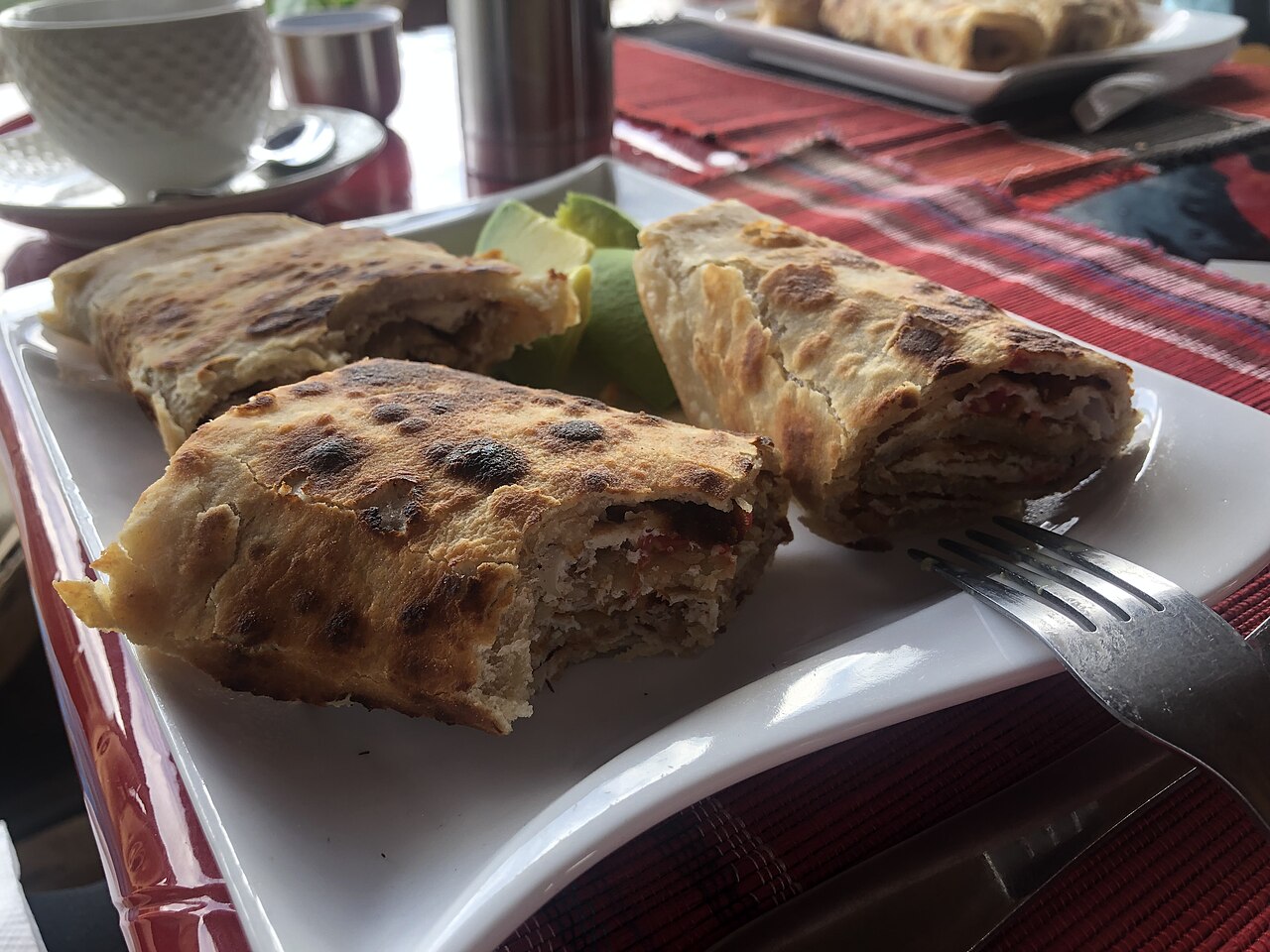
A fresh chapati rolled around an omelette made with onion, tomato and cabbage. It is cooked to order at roadside stalls from morning to night and is the country's favourite street food.
The name has nothing to do with watches: it comes from 'rolled eggs', said quickly. The idea spread from stalls near Makerere University, where students wanted a cheap, quick meal.
See the recipe
Serves 2
20 min
Ingredients
2 chapatis or ready-made paratha
4 eggs
1 small tomato, finely chopped
1 small onion, finely chopped
A handful of finely shredded cabbage
2 tablespoons oil, salt and black pepper
Method
Beat the eggs in a bowl with the tomato, onion, cabbage, salt and pepper.
Heat half the oil in a frying pan over medium heat and pour in half the egg mixture.
Cook for about 3 minutes until the top is nearly set, then lay a chapati on top.
Turn the whole thing over so the chapati is underneath and cook for 1 to 2 minutes more, until the egg is fully cooked and the chapati is warm.
Roll it up tightly with the chapati on the outside, wrap in paper or foil and eat straight away. Repeat for the second rolex.
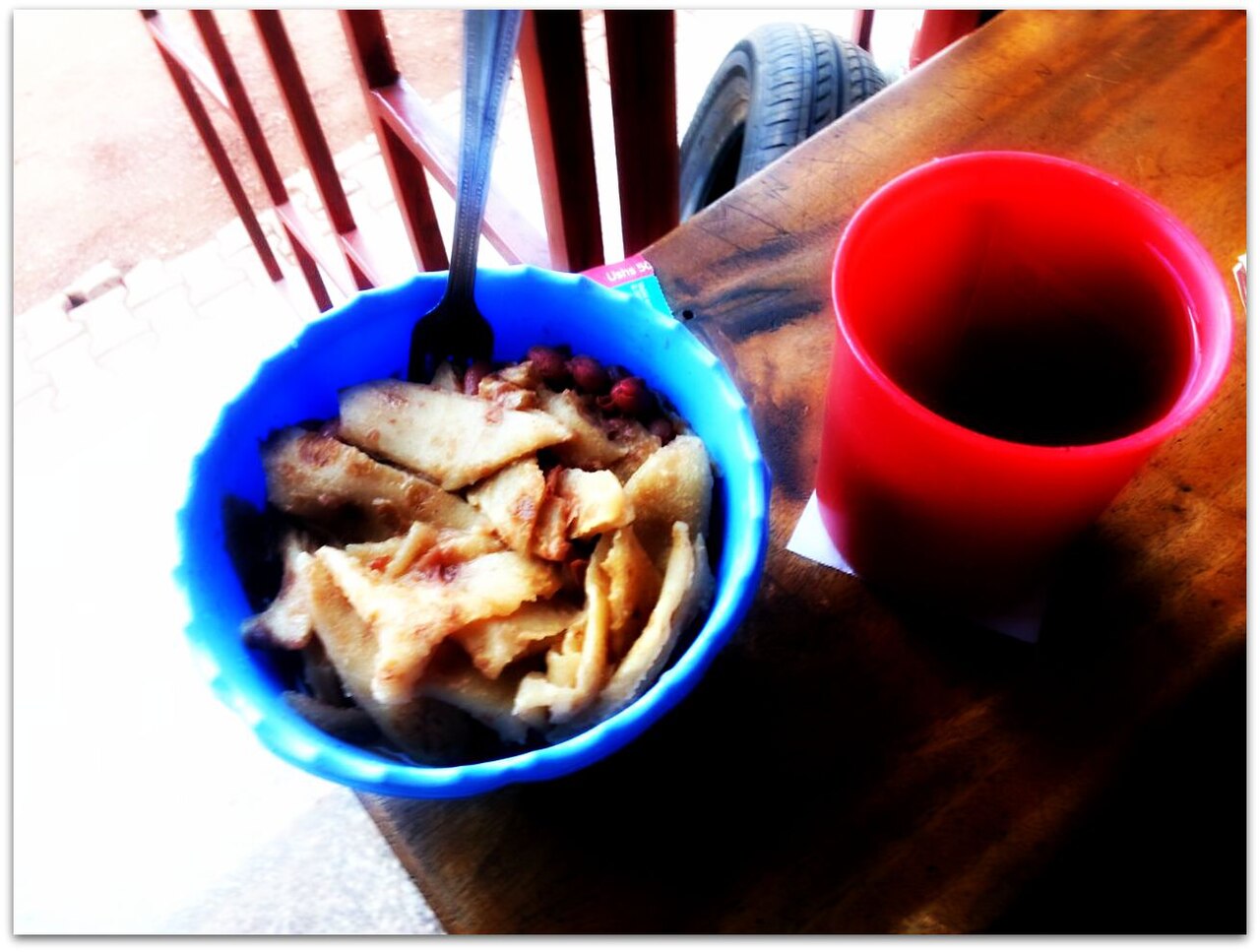
Chapati cut into small pieces and mixed with fried beans, sometimes with avocado or meat stew. It is cheap and filling and popular with students and workers.
The name was made popular by a song, and people joke that eating it makes you as strong as a commando.
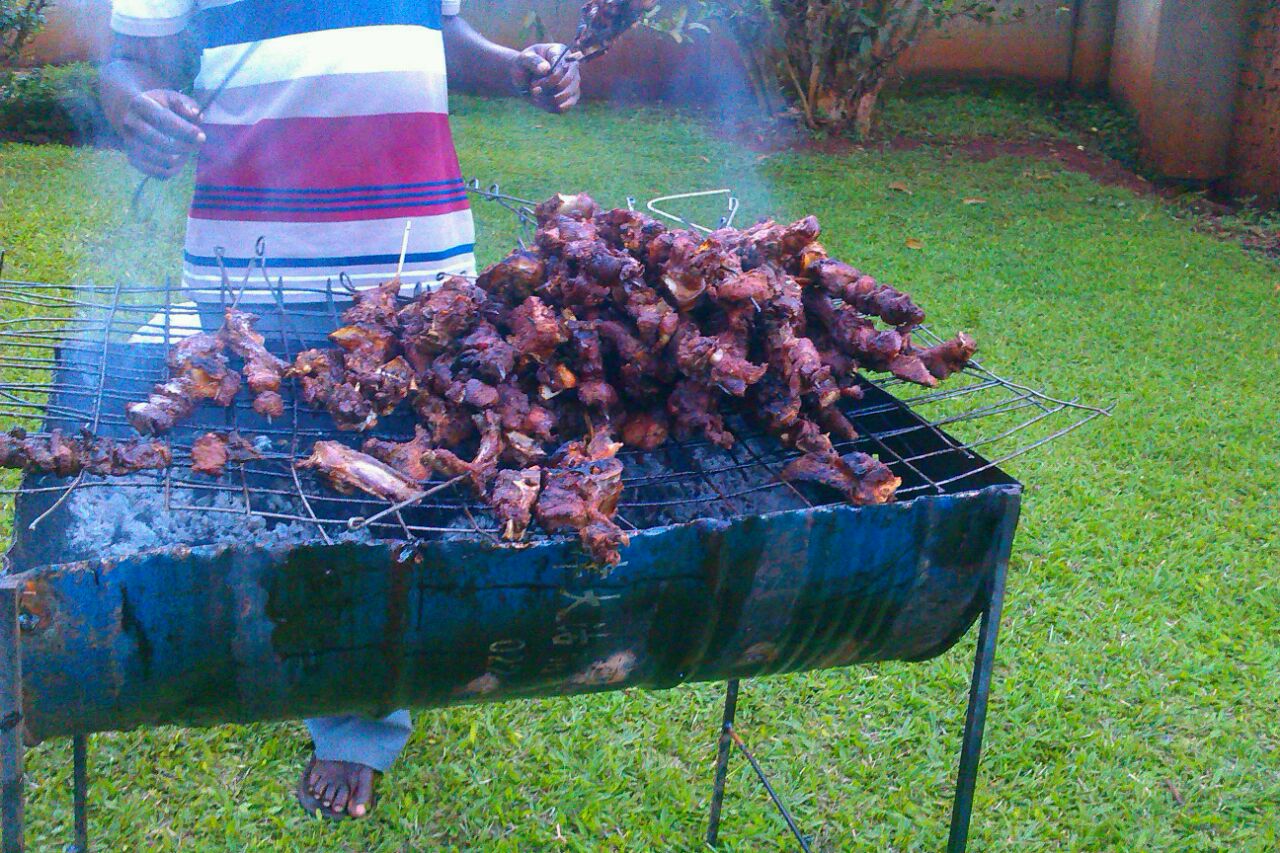
Pieces of beef, goat, chicken or liver threaded on skewers, often with onion, and roasted over charcoal. It is sold at roadside grills, markets and bus stops, and is especially popular in the evening.
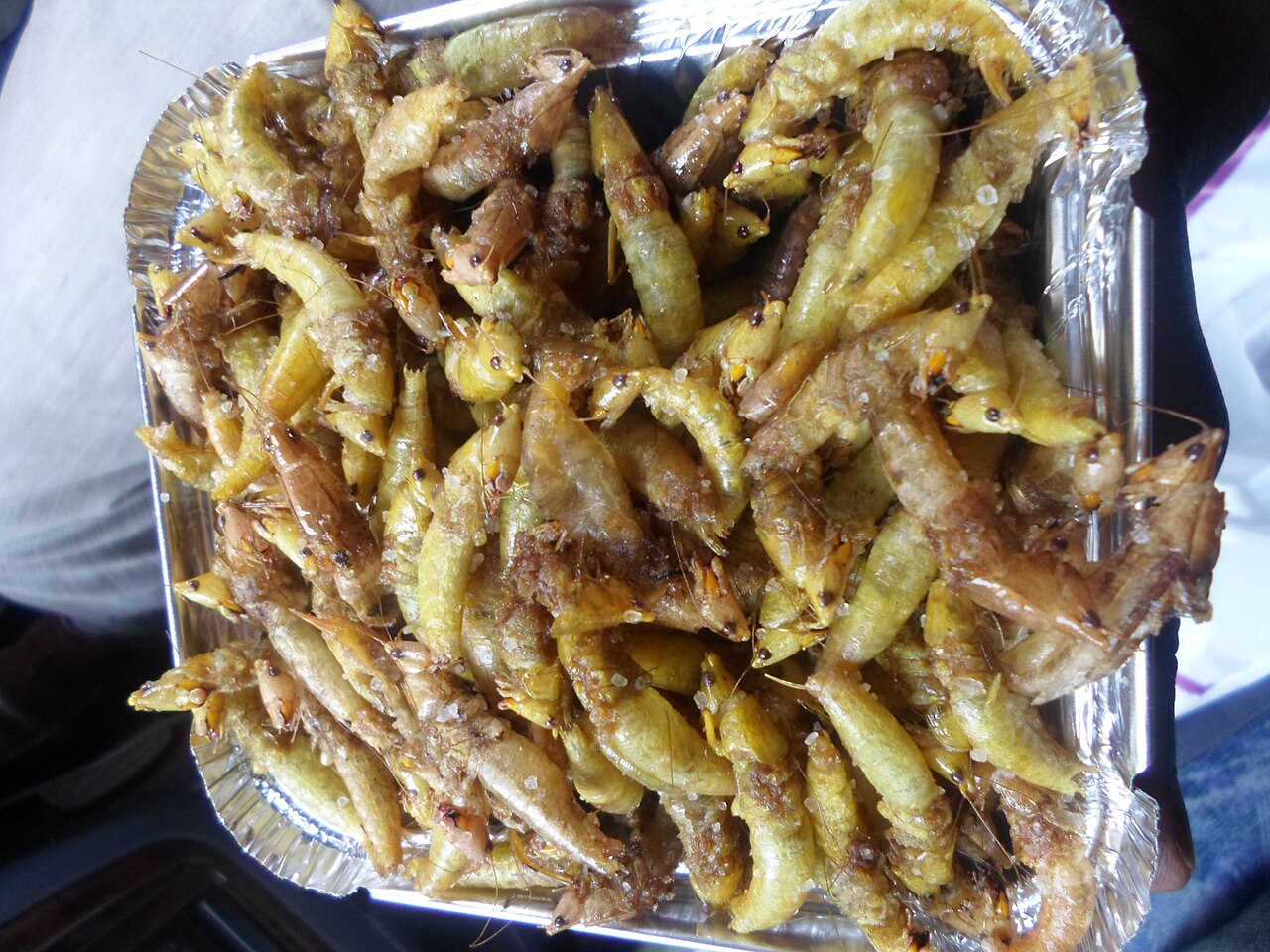
Bush crickets (katydids), green insects related to grasshoppers, collected when they swarm in the rainy seasons, then cleaned and fried, sometimes with onion and chilli, until crunchy. They are sold in paper cones as a seasonal treat.
The nsenene season comes with the rains, usually around May and November. The insect is also the totem of one of the clans of Buganda.
Bugisu, on the slopes of Mount Elgon in eastern Uganda
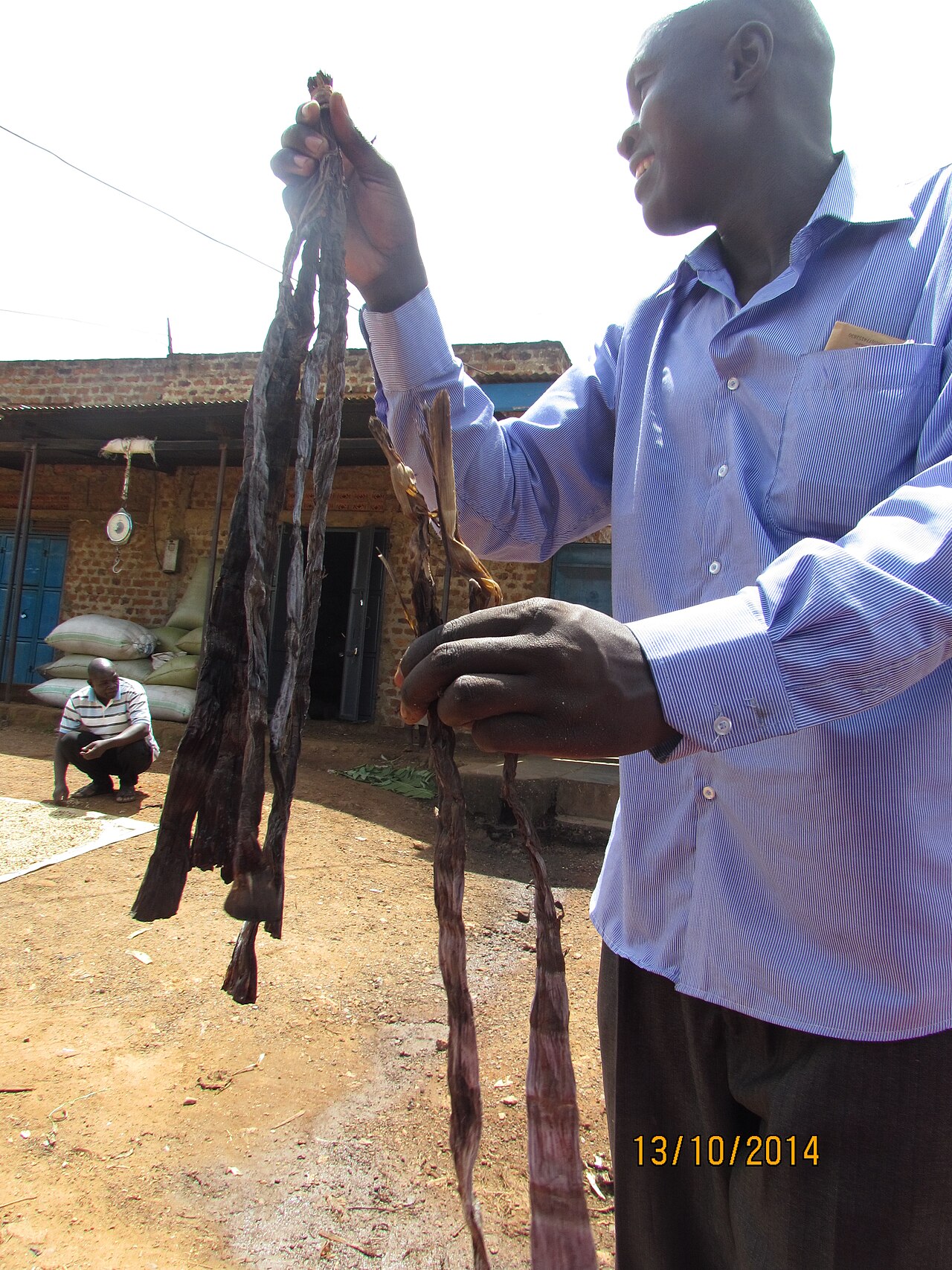
Bamboo shoots that are smoked and dried to keep, then boiled until tender and cooked into a sauce with peanut or sesame paste. It is served with matooke, posho or sweet potatoes.
Malewa is an important dish at Bugisu ceremonies, including the famous imbalu coming-of-age ceremony for young men.
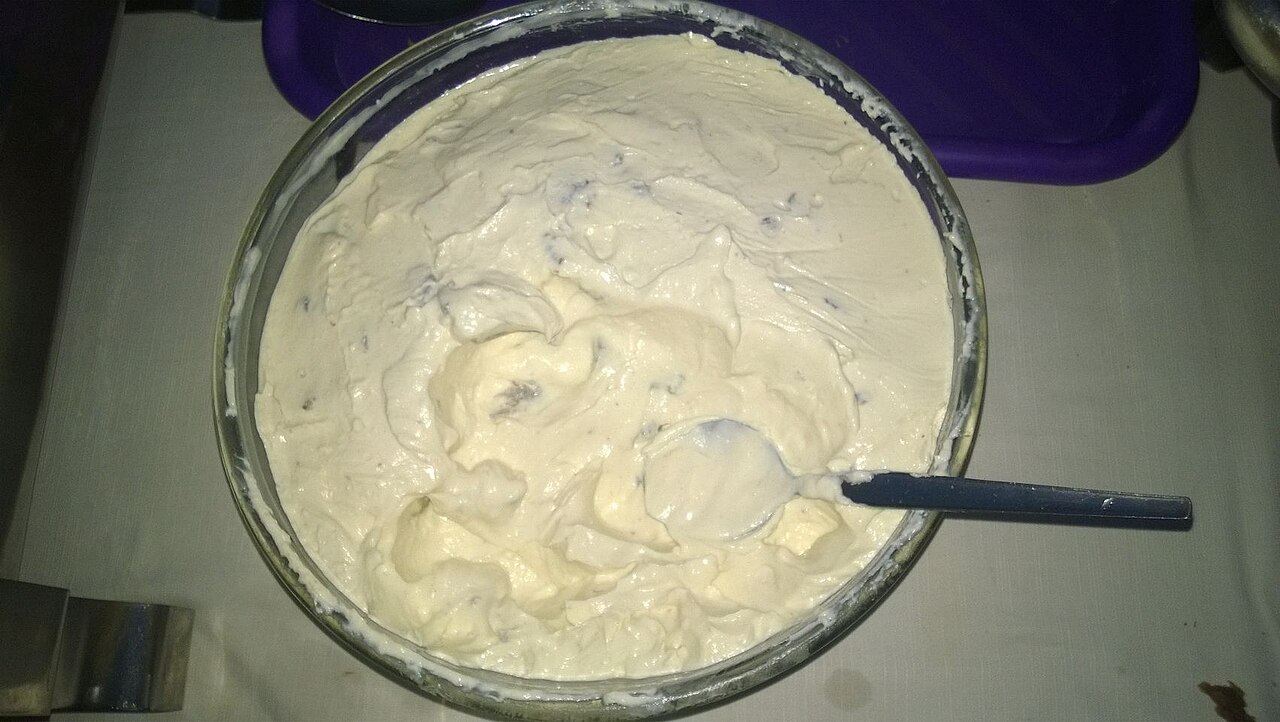
A white, creamy sauce made by washing ghee from cow's milk and whipping it with salted water until it turns from yellow to white. It is served with millet bread, matooke or sweet potatoes, often with roasted meat.
Traditionally it was made by older women who had to stay silent while they worked, because talking was believed to spoil the eshabwe.
Western Uganda, among the Batooro, Banyoro and Bakonzo
Dry beans soaked and skinned one by one, boiled until soft and mashed into a smooth sauce with onions, tomatoes and ghee or oil. It is a sign of hospitality and is served at weddings and ceremonies, usually with millet bread.
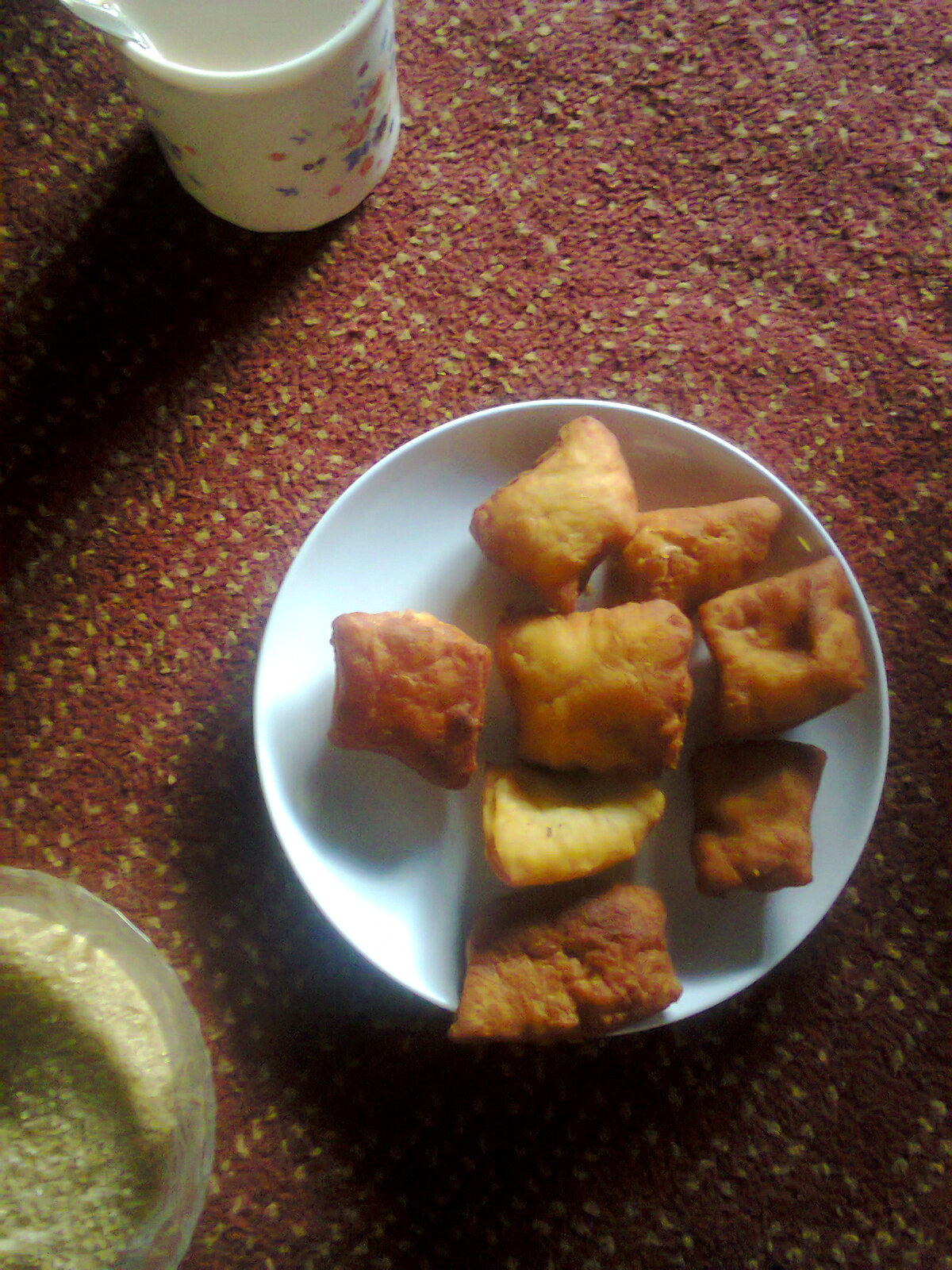
Lightly sweet fried dough, often flavoured with cardamom, cut into triangles or squares. It is eaten for breakfast with tea or as a snack at any time of day.
Table manners
Wash your hands before and after the meal. In many homes someone brings a jug of water and a basin and pours water over your hands.
Traditional foods such as matooke, posho and millet bread are often eaten with the fingers. Use your right hand.
Visitors who arrive at mealtime are usually invited to join the family. Accept at least a little food; refusing everything can seem unfriendly.
Wait for the host or the eldest person to start before you begin to eat.
At a wedding or an introduction ceremony in Buganda, each guest may be served a parcel of luwombo. Open the smoked banana leaf carefully and eat from it like a bowl.
Saying 'Webale' (thank you) to the cook after a meal is always appreciated.
Most Ugandans live in the green, rainy south and west, around Lake Victoria and in the highlands near the borders with Rwanda and DR Congo. Kampala is by far the largest city, Entebbe on the lake shore is home to the international airport, and Jinja sits where the Nile leaves Lake Victoria. The drier north has fewer and smaller towns, with Gulu and Arua as the main centres.
Central Region, near the northern shore of Lake Victoria
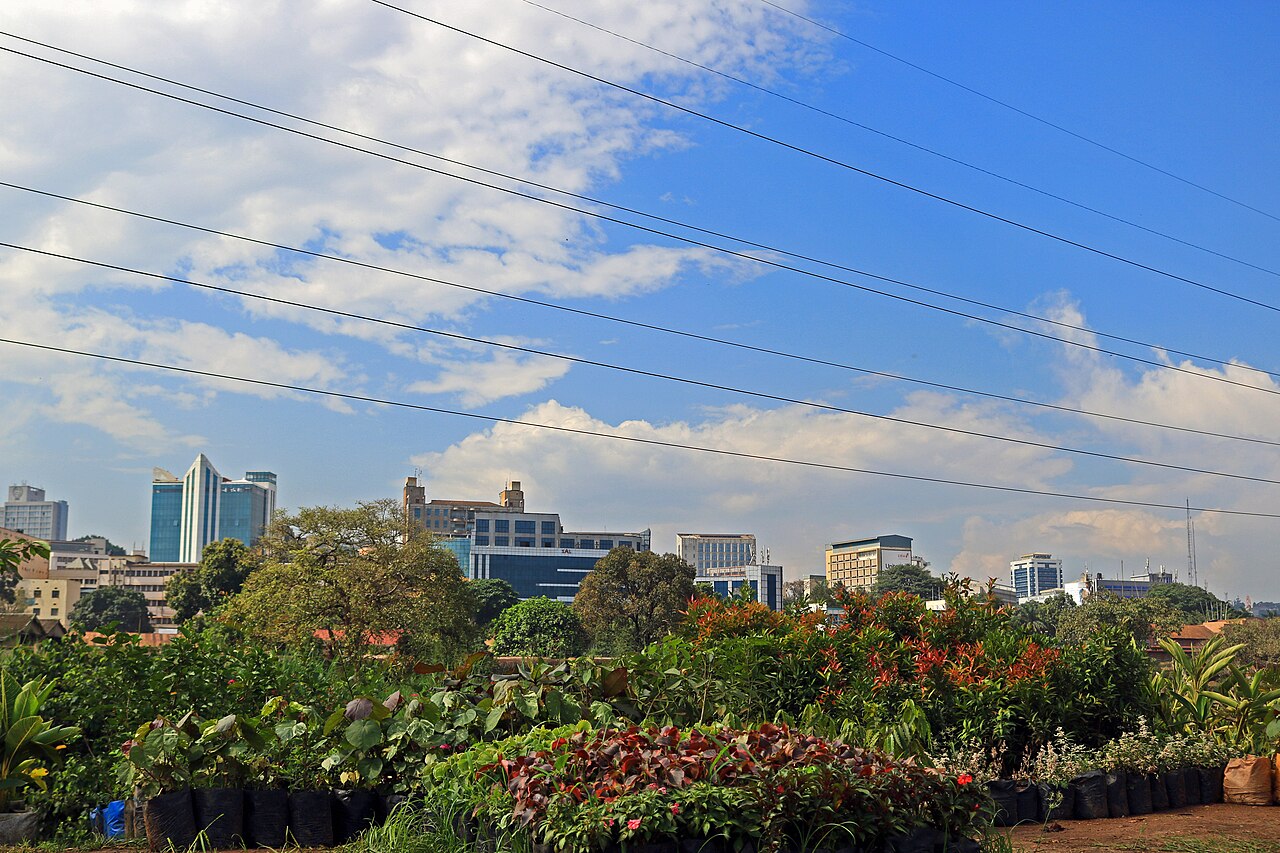
The capital and largest city, with about 1.8 million people in the city itself at the 2024 census and several million in the wider area. It grew up on a group of green hills, once the seat of the Buganda kings, and its name comes from the Luganda for 'hill of the impala'. Kampala became the capital at independence in 1962.
The Kasubi Tombs of the Buganda kings
The cathedrals on Namirembe and Rubaga hills
Makerere University
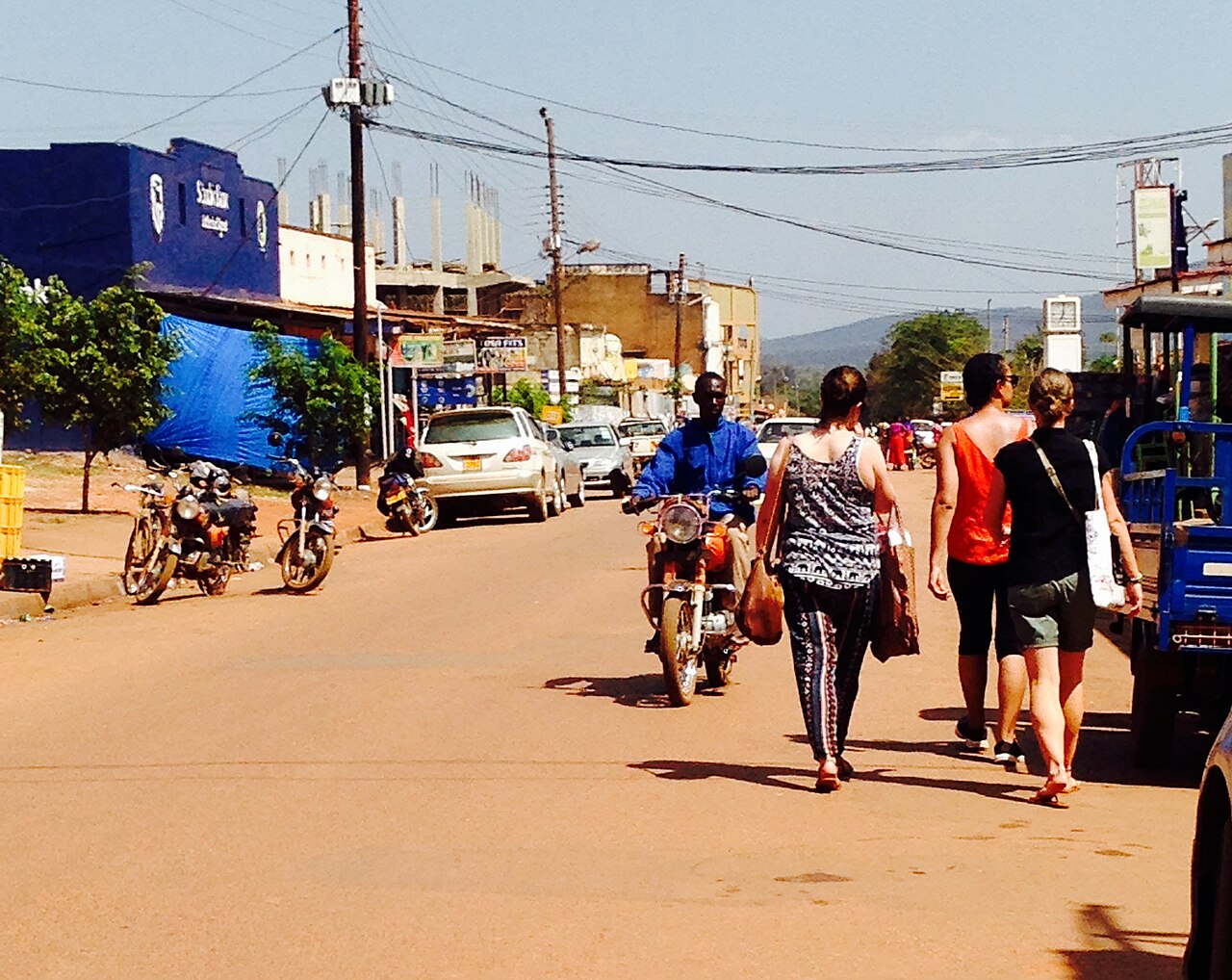
Busy markets, boda boda motorbike taxis and lively music
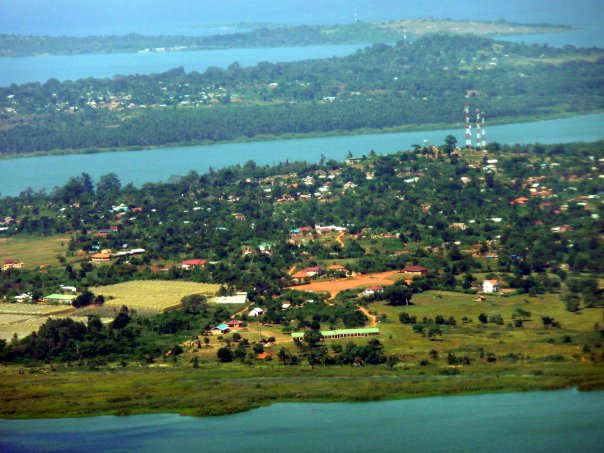
A green, quiet town on the shore of Lake Victoria, about 35 km from Kampala. It was the seat of the British government until independence, and it is home to Uganda's main international airport and the State House.
A lakeside city about 80 km east of Kampala, at the point where the Nile flows out of Lake Victoria. Its name comes from the word for 'stones', after the flat rocks that once lay by the falls. It was an important industrial town and is now a centre for adventure sports on the river.
The largest city in northern Uganda, about 330 km from Kampala by road, and the heart of the Acholi people. It suffered greatly during the long rebel war in the north, which ended in the mid-2000s, and has since grown into a busy trading town on the road to South Sudan.
The main city of south-western Uganda, about 270 km from Kampala by road, in the rolling grasslands of the old Ankole kingdom. It is a centre of cattle farming, and its name comes from a local grass.
A cool, green highland city at about 1,500 m, seat of the Tooro kingdom, with the Rwenzori Mountains on the horizon. It is named after the British diplomat Sir Gerald Portal, whose base was here.
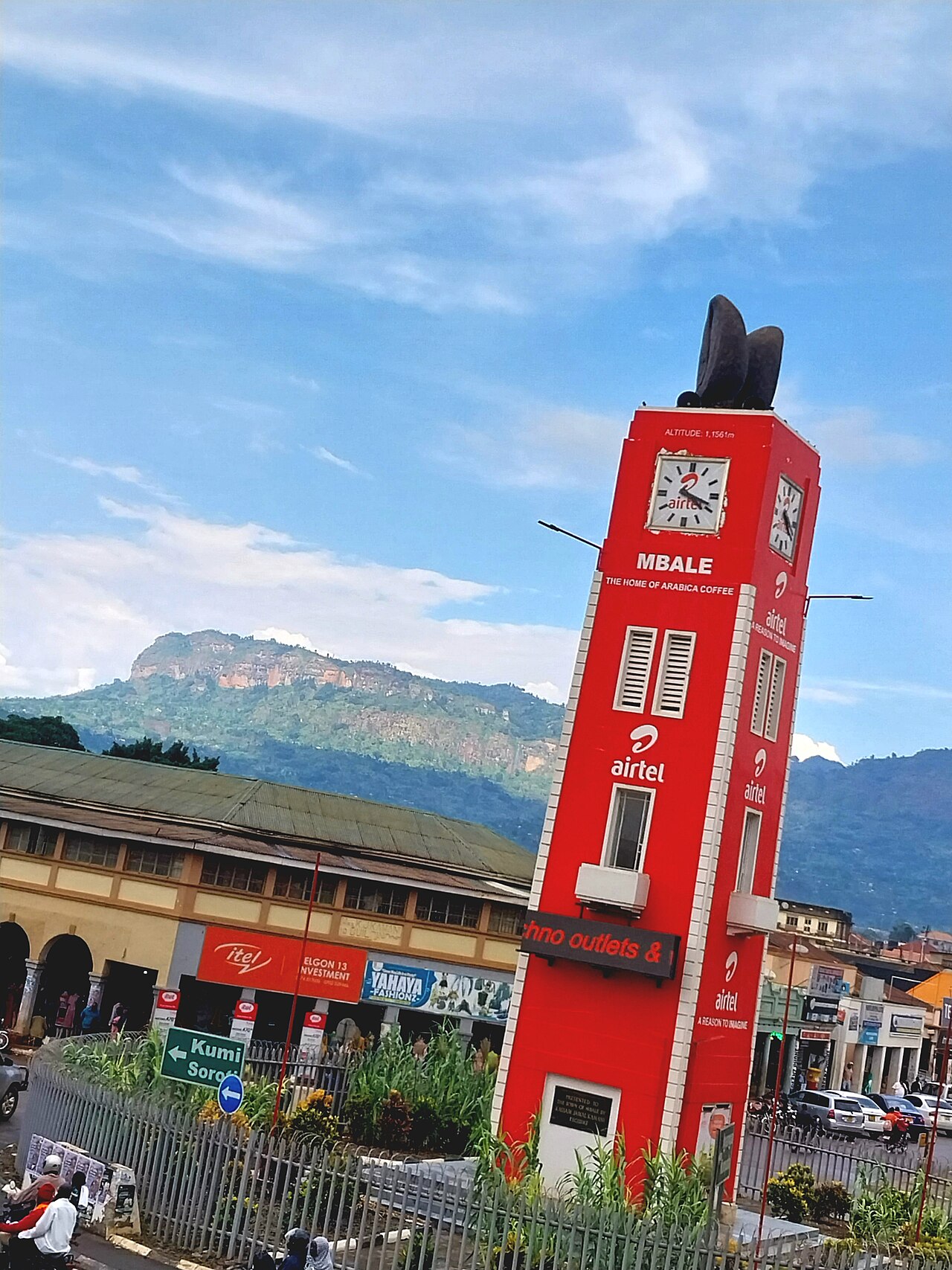
A city in the east, about 225 km from Kampala, at the foot of Mount Elgon. The slopes above it are famous for Arabica coffee, and it is the base for trips to Sipi Falls and the mountain.
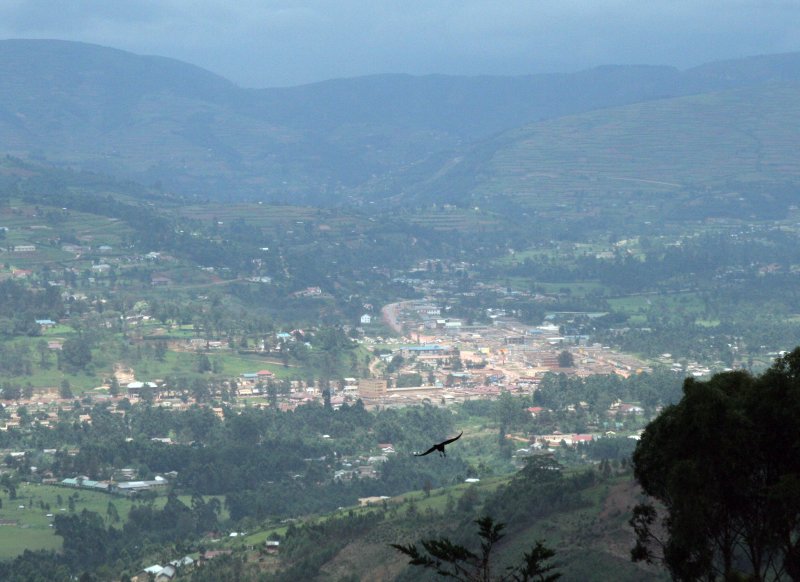
A cool highland town at about 2,000 m in the far south-west, near the border with Rwanda. Steep hills covered with terraced fields surround it, and it is the gateway to Lake Bunyonyi and the gorilla forests of Bwindi.
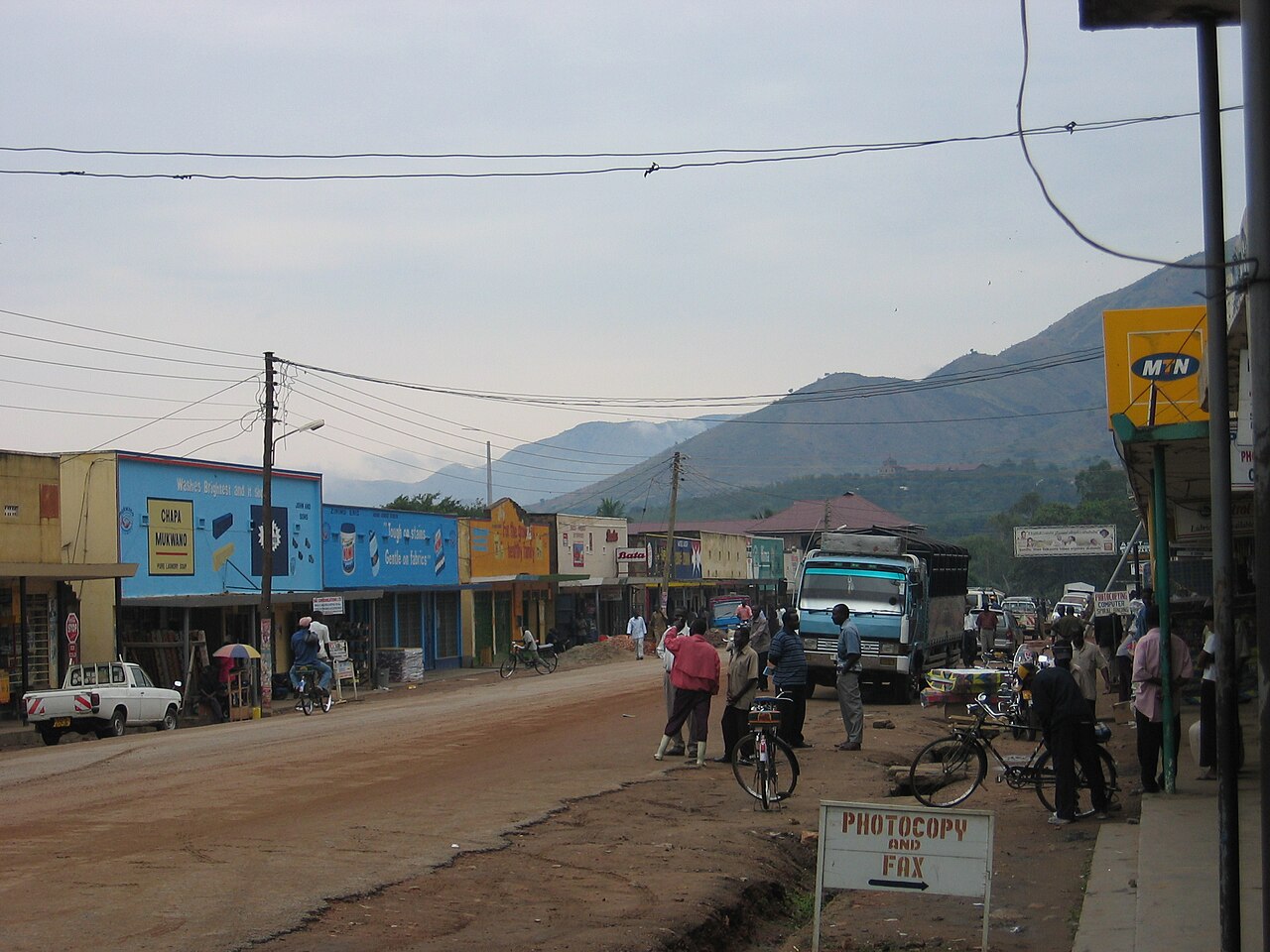
The main town of the West Nile region in the far north-west, close to the borders with DR Congo and South Sudan. It is an important market and trading town for all three countries.
A town on the hot plain between the Rwenzori Mountains and Lake George. It is the main starting point for climbs into the Rwenzori and lies close to Queen Elizabeth National Park.
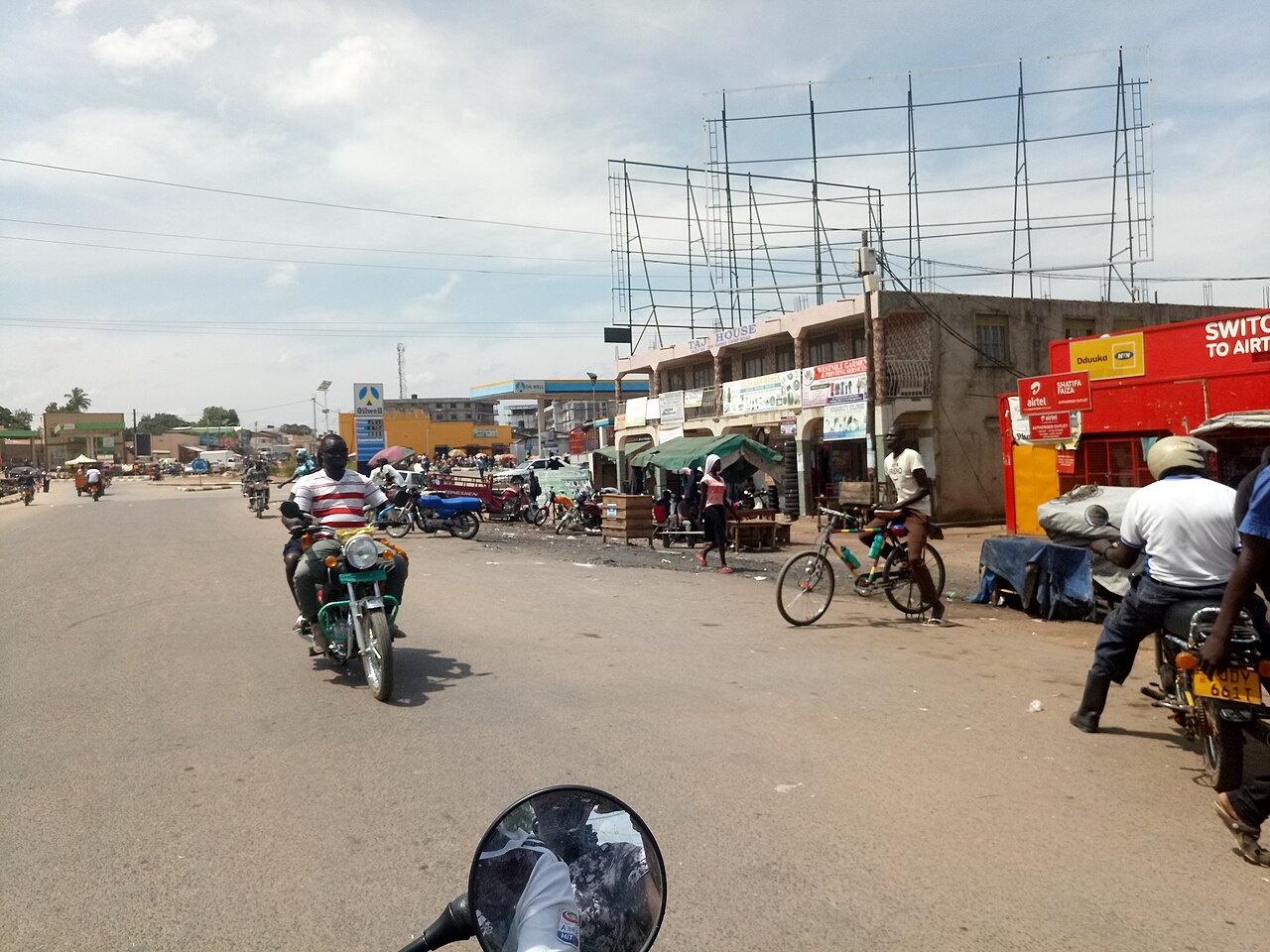
A town in the old kingdom of Bunyoro, about 210 km north-west of Kampala by road. It lies on the main road to Murchison Falls National Park and is a stop for travellers heading north.
The place where the Nile flows out of Lake Victoria to begin its journey north through Uganda, South Sudan, Sudan and Egypt to the Mediterranean. Speke saw the river leave the lake here in 1862. The waterfalls he described now lie under the water behind a dam, but boats take visitors to the spot where the lake becomes the river. The Nile's most distant headwaters are streams far to the south-west, in Rwanda and Burundi, that flow into Lake Victoria.
The burial place of four Kabakas of Buganda on Kasubi Hill in Kampala. The great round tomb house, Muzibu Azaala Mpanga, is built of wooden poles, reeds, bark cloth and a huge thatched roof. It burned down in 2010 and has been rebuilt by traditional craftsmen. A UNESCO World Heritage Site since 2001.
A Catholic basilica built in 1968 on the spot where many of the Uganda Martyrs were burned to death in 1886, about 12 km north-east of central Kampala. An Anglican shrine stands nearby. Every year on 3 June, Martyrs Day, hundreds of thousands of pilgrims come, many from Kenya, Rwanda and Tanzania.
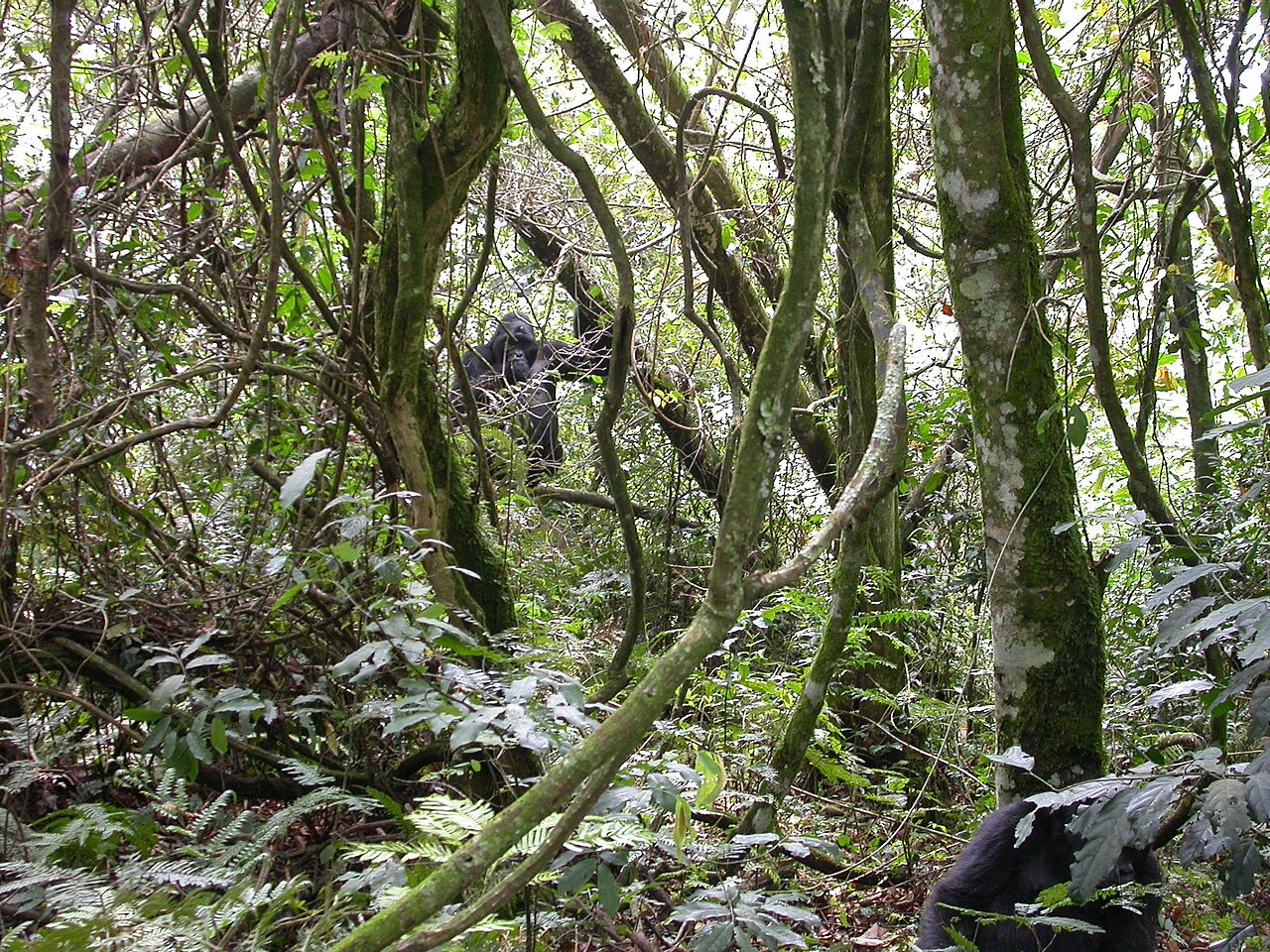
A steep, ancient rainforest on the border with DR Congo, explored only on foot. It is home to about 459 mountain gorillas by the 2018 count, almost half of all those left in the world, and visitors can hike with rangers to spend time with a gorilla family. A UNESCO World Heritage Site since 1994.
A range of mountains with glaciers and snow just north of the equator, reaching 5,109 m at Margherita Peak, the highest point in Uganda. Explorers linked them with the Mountains of the Moon, which the ancient geographer Ptolemy described as the source of the Nile. Giant groundsels and lobelias grow on the misty upper slopes. A UNESCO World Heritage Site since 1994.
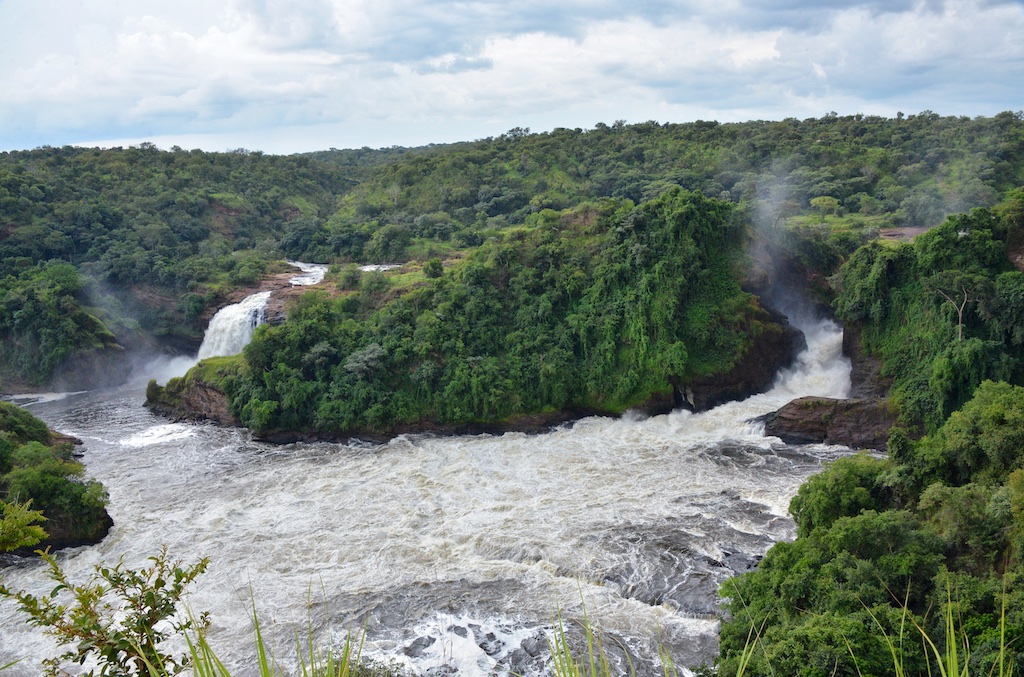
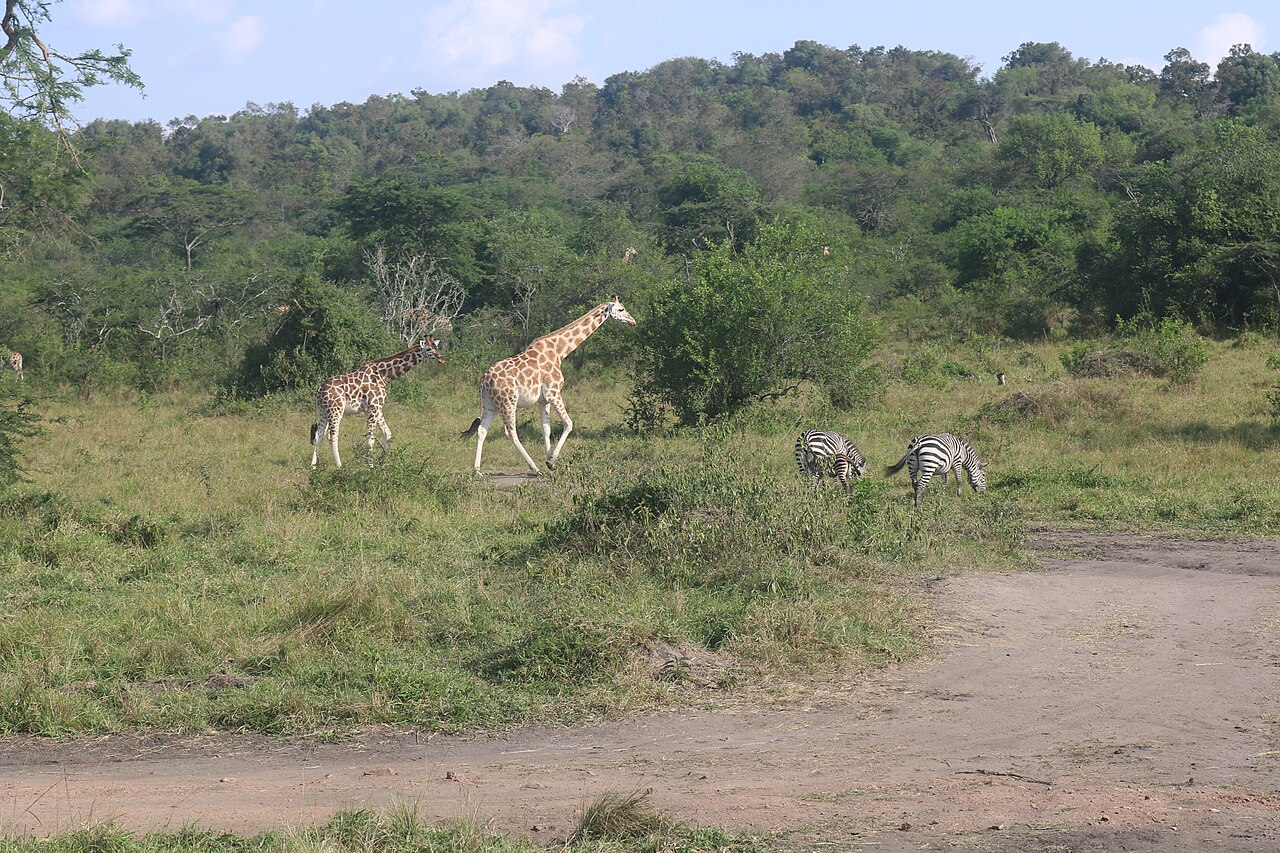
Here the whole Nile squeezes through a gap in the rocks only about 7 m wide and crashes 43 m down into a pool below. The falls lie in Uganda's largest national park, where boat trips on the river pass hippos, crocodiles and elephants, and lions and giraffes live on the savanna.
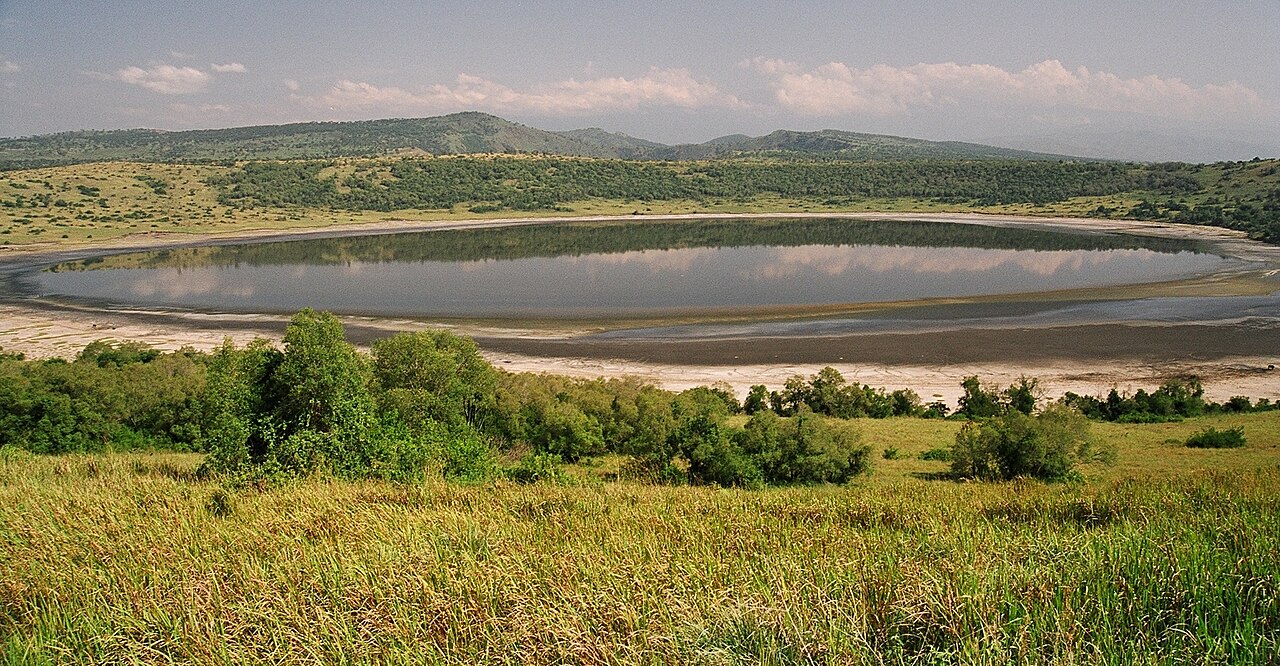
A park of savanna, crater lakes and forest between Lake Edward and Lake George, renamed after Queen Elizabeth II visited in 1954. Boat trips on the Kazinga Channel pass great numbers of hippos, buffaloes and water birds, and in the Ishasha area in the south lions often rest in the branches of fig trees.
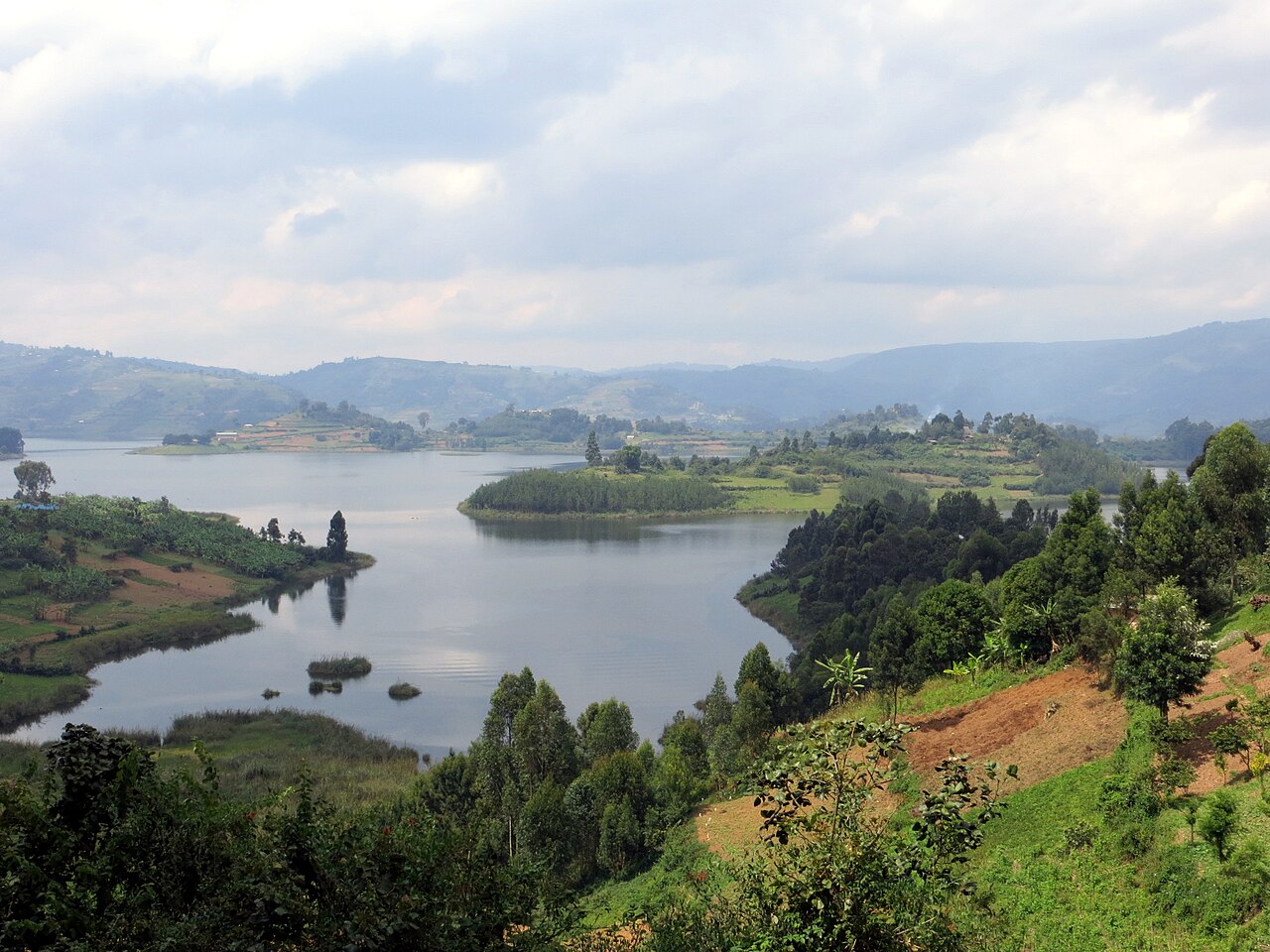
A long, winding lake at almost 2,000 m in the south-western highlands, about 7 km from Kabale, with 29 islands and steep terraced hills around it. Its name means 'place of many little birds'. It is a peaceful place for canoe trips and rest after gorilla trekking.
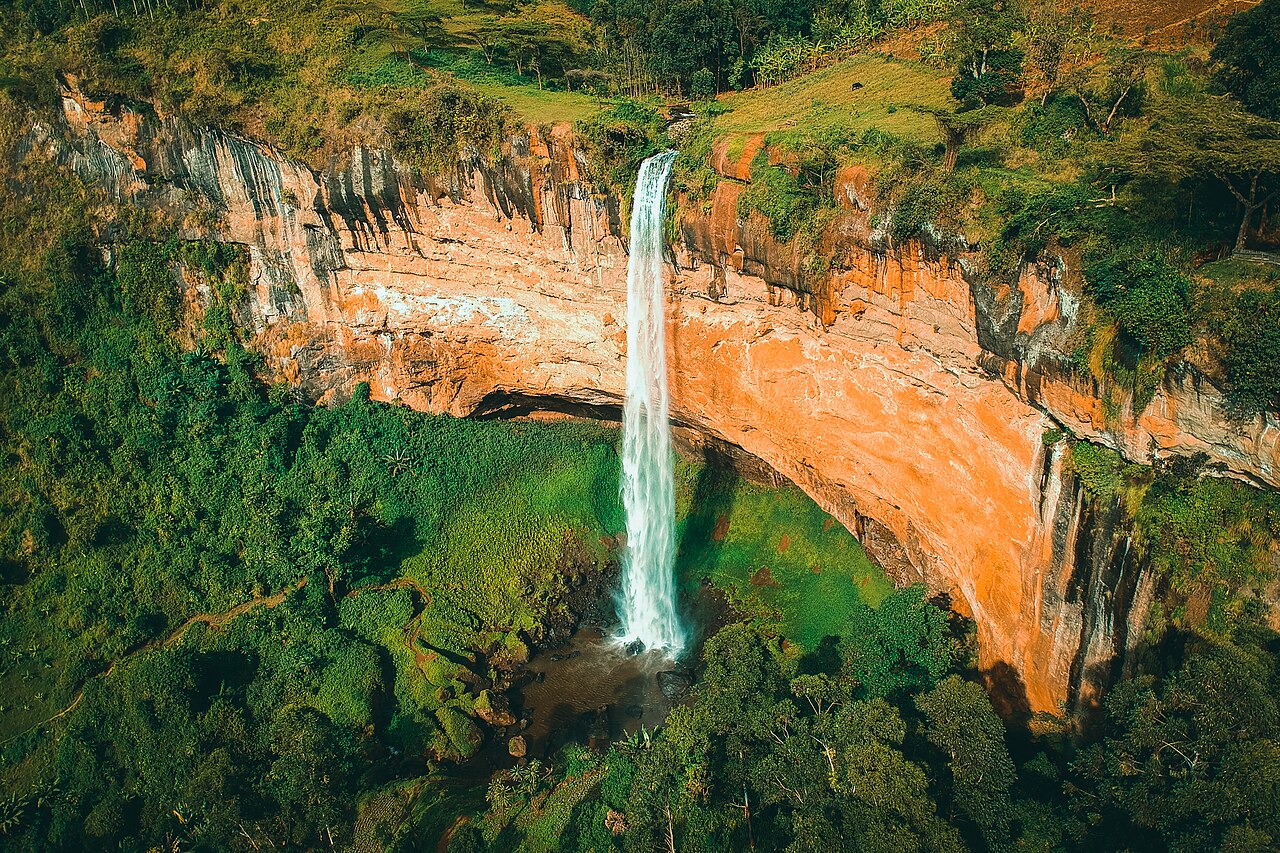
A series of three waterfalls on the slopes of Mount Elgon, the highest about 95 m tall, with wide views over the plains below. Walking trails lead through coffee gardens between the falls, and local farmers show visitors how Arabica coffee is grown and roasted.
A small park of lakes, swamps and open grassland about 30 km east of Mbarara. It is home to zebras, impalas, elands, buffaloes, hippos and more than 300 kinds of birds, and the long-horned Ankole cattle of local herders graze around it.
Uganda is named after Buganda, the largest of its old kingdoms. The kingdom still exists today as a cultural institution with its own king, the Kabaka.
02
The equator crosses Uganda. At Kayabwe, on the road from Kampala to Masaka, a monument marks the line, and visitors can stand with one foot in each hemisphere.
03
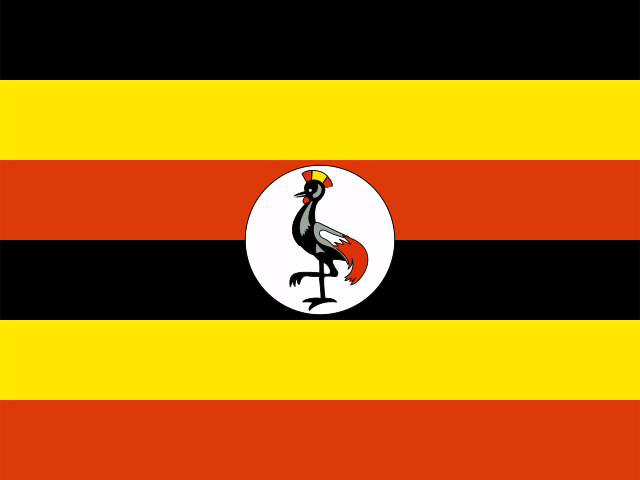
Uganda's flag has six stripes, black, yellow and red repeated twice, with a grey crowned crane in a white circle in the middle. The crane is the national bird.
04
About 45 per cent of Lake Victoria, Africa's largest lake, lies in Uganda. Tanzania has 49 per cent and Kenya 6 per cent.
05
As of the 2018 count, about 459 mountain gorillas lived in Bwindi Impenetrable National Park, almost half of all mountain gorillas in the world.
06
Uganda is one of the youngest countries on Earth: at the 2024 census about half of all Ugandans were under 18.
07
The snowy Rwenzori Mountains are often linked with the 'Mountains of the Moon', which the ancient Greek geographer Ptolemy named as the source of the Nile.
08
Making cloth from the beaten inner bark of a fig tree is an ancient craft of the Baganda. UNESCO recognised barkcloth making in Uganda as part of the world's intangible cultural heritage.
09
At the 1972 Olympics in Munich, John Akii-Bua won Uganda's first Olympic gold medal, in the 400 metres hurdles, in a world record time of 47.82 seconds.
10
Stephen Kiprotich won the marathon at the 2012 London Olympics, only Uganda's second Olympic gold medal, forty years after the first.
11
Kampala grew up on seven hills, and its name comes from the Luganda words for 'hill of the impala', after the antelopes that once grazed there.
12
The name of the rolex, Uganda's favourite street snack, has nothing to do with watches: it comes from 'rolled eggs'.
13
Every year on 3 June, Uganda Martyrs Day, huge crowds of pilgrims gather at Namugongo near Kampala; in 2015 an estimated 2 million people came.
English and Swahili are the official languages, but Luganda, the language of Buganda, is the most widely spoken local language, heard all over Kampala. It is a tonal language, and doubled letters are held longer; the capital letters in the guide only show the syllable that usually sounds strongest. Pronunciation is written the way it sounds; the capital letters show where the stress goes. Audio is coming soon.
Greetings
webaleweh-BAH-lehthank you
weerabaweh-eh-RAH-bahgoodbye (to one person)
yeeYEHyes
neddaNEHD-dahno
mwattuMWAHT-tooplease
People
sseboSSEH-bohsir, gentleman (a polite way to address a man)
nnyaboNNYAH-bohmadam (a polite way to address a woman)
omuntuoh-MOON-tooperson
kabakakah-BAH-kahking (the title of the king of Buganda)
Food and drink
amazziah-MAHZ-zeewater
emmereehm-MEH-rehfood
caayiCHAH-yeetea
kaawaKAAH-wahcoffee
amatookeah-mah-TOH-kehgreen cooking bananas, and the dish made from them
As of September 2026 most visitors must apply for a Uganda visa online before travelling, or for the East Africa Tourist Visa that also covers Kenya and Rwanda. You also need a certificate showing that you have been vaccinated against yellow fever, and officials may ask to see it on arrival. Your passport should be valid for at least six months.
Check official travel warnings
Most visitors travel in Uganda without trouble, but there have been attacks in the past near the border with DR Congo, including in parks in the west. Check your government's current travel advice before you go and again before visiting border areas.
Book gorilla permits early
Gorilla trekking permits in Bwindi and Mgahinga are limited each day and cost several hundred US dollars, so book months ahead through the Uganda Wildlife Authority or a licensed operator. The hike can take several hours on steep, muddy slopes; good boots, gloves and a walking stick help.
Take care on the roads
Boda bodas, the motorbike taxis, are quick and cheap, but they have many accidents and some passengers have been robbed, so the UK government advises visitors to avoid them; if you do ride one, wear a helmet and ask the driver to go slowly. Outside Kampala and the Kampala to Entebbe road, avoid travelling by road after dark.
Ask before taking photos
It is forbidden to photograph military, official or diplomatic sites, and this includes the Owen Falls Dam at the source of the Nile near Jinja. Always ask people before you take their photo.
Protect your health
Malaria is found in most of the country, so ask your doctor about tablets and use a mosquito net and repellent. Many lakes and slow rivers carry bilharzia, so do not swim unless you know the water is safe, and drink bottled or boiled water.
Dress modestly and greet first
Ugandans are warm and polite, and a proper greeting matters before any question or purchase. Away from tourist areas, dress modestly: long trousers or skirts below the knee are best.
Know the emergency numbers
As of September 2026 the emergency number for police, fire and ambulance is 999. Keep the number of your hotel, tour operator and embassy with you.
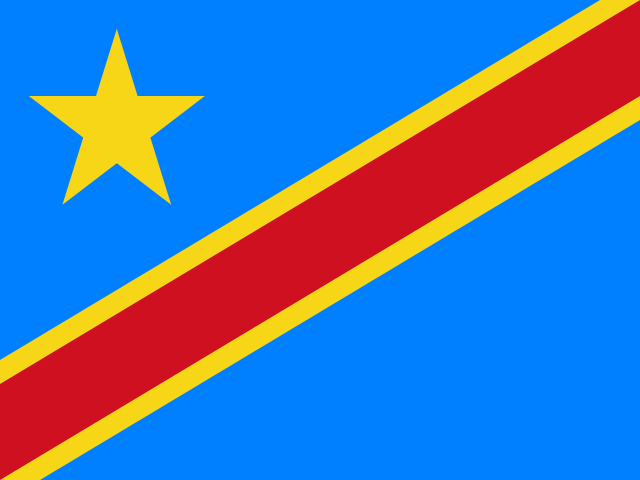 DR Congo
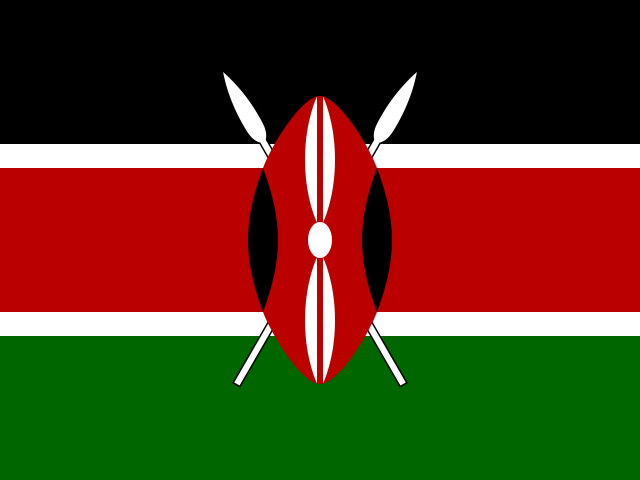 Kenya
Kenya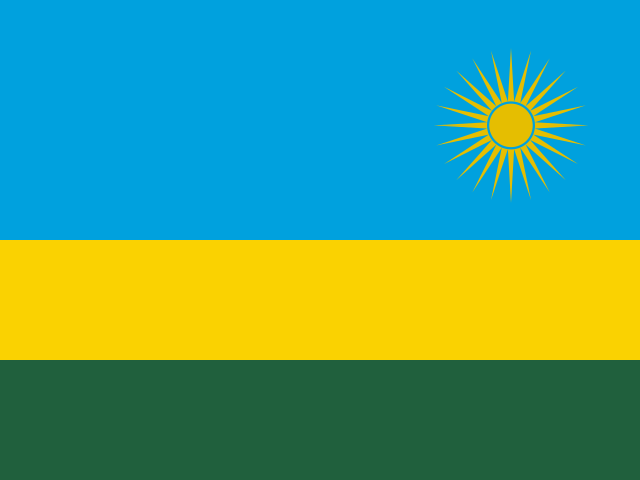 Rwanda
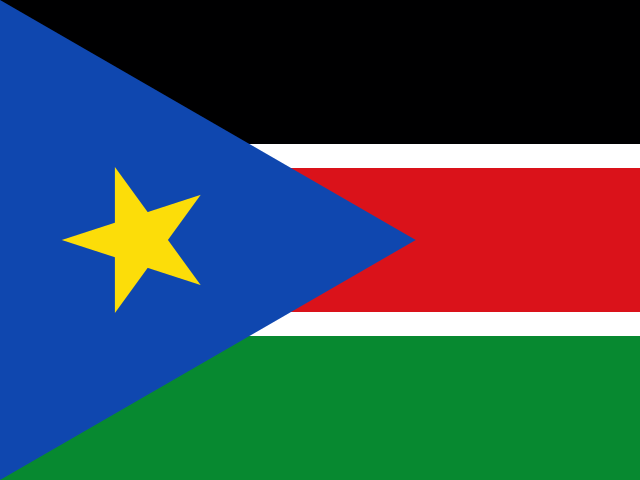 South Sudan
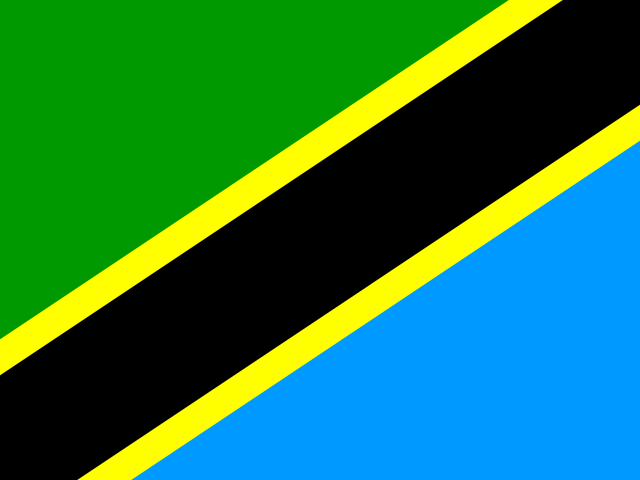 Tanzania