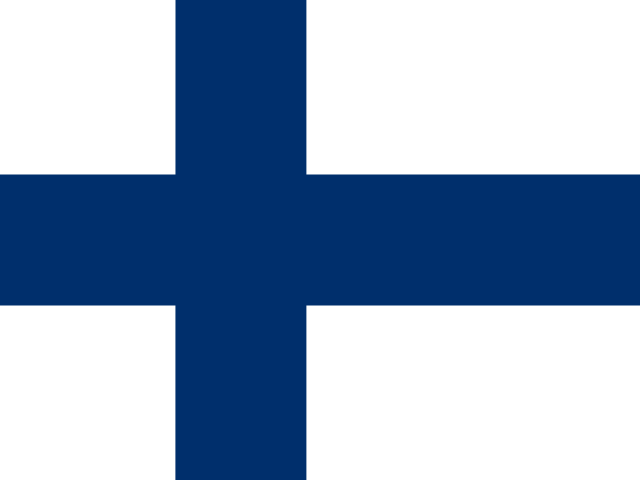
Finland trivia: 48 questions and answers
The country at a glance
What is the capital of Finland?
- A. Helsinki
- B. Tampere
- C. Oulu
- D. Stockholm
Show the answer
Helsinki. Helsinki, on the Gulf of Finland, is the capital and largest city. Stockholm is the capital of Sweden.
Which two languages are the national languages of Finland under its Constitution?
- A. Finnish and Swedish
- B. Finnish and Russian
- C. Finnish and Norwegian
- D. Finnish and English
Show the answer
Finnish and Swedish. Finnish and Swedish are the two national languages. Three Sámi languages also have official status in the Sámi homeland in the north.
Finland became a member of NATO in 2023.
True or false?
Show the answer
True. True. Finland joined NATO on 4 April 2023, after decades of military non-alignment.
History
On which date did the Finnish Parliament declare independence in 1917, now celebrated as Independence Day?
- A. 6 December
- B. 1 May
- C. 17 March
- D. 14 July
Show the answer
6 December. On 6 December 1917 Parliament approved the Declaration of Independence, and 6 December is Finland's Independence Day.
Until 1809, Finland was part of which kingdom?
- A. Sweden
- B. Denmark
- C. Poland
- D. Prussia
Show the answer
Sweden. Finland was part of the Kingdom of Sweden from the Middle Ages until 1809, when it became a Grand Duchy within the Russian Empire.
In 1812 the capital of Finland moved to Helsinki. From which city did it move?
- A. Turku
- B. Tampere
- C. Oulu
- D. Kuopio
Show the answer
Turku. The capital moved from Turku to Helsinki on 8 April 1812, on the orders of Emperor Alexander I, to bring it closer to St Petersburg.
Who compiled the Kalevala, Finland's national epic, first published in 1835?
- A. Elias Lönnrot
- B. Jean Sibelius
- C. Mikael Agricola
- D. Tove Jansson
Show the answer
Elias Lönnrot. Elias Lönnrot compiled the Kalevala from folk poems. Sibelius was a composer, Agricola translated the New Testament and Tove Jansson created the Moomins.
The Winter War began when the Soviet Union invaded Finland in November 1939.
True or false?
Show the answer
True. True. The Soviet Union invaded on 30 November 1939. The war ended with the Moscow Peace Treaty on 13 March 1940; Finland kept its independence but lost about 9 percent of its land.
Women in Finland first won the right to vote after independence in 1917.
True or false?
Show the answer
False. False. Women won the vote in 1906, while Finland was still a Grand Duchy. It was the first place in Europe where all adult women could vote, and 19 women were elected to parliament in 1907.
Food and drink
What is the most common filling of Karelian pasties (karjalanpiirakka) today?
- A. Rice porridge
- B. Minced reindeer
- C. Salted herring
- D. Cloudberry jam
Show the answer
Rice porridge. Today most Karelian pasties have a thin rye crust around rice porridge, and they are served with egg butter.
Kalakukko, from the Savo region, is fish and pork baked inside what?
- A. A rye crust, like a loaf of bread
- B. A cabbage leaf
- C. A hollowed pumpkin
- D. A crust of salt
Show the answer
A rye crust, like a loaf of bread. Kalakukko is fish and pork baked for hours inside a rye crust, like a loaf of bread, so that the fish bones soften.
Poronkäristys, a classic dish from Lapland, is made with which meat?
- A. Reindeer
- B. Lamb
- C. Chicken
- D. Wild boar
Show the answer
Reindeer. Poronkäristys is thinly sliced reindeer meat, fried and simmered, and served with mashed potatoes and lingonberries.
Mämmi, a dark rye pudding, is traditionally eaten at Christmas.
True or false?
Show the answer
False. False. Mämmi is an Easter dessert, eaten cold with cream and sugar.
Rye bread (ruisleipä) was chosen as Finland's national food in a public vote.
True or false?
Show the answer
True. True. In a public vote around Finland's 100th year of independence, dark rye bread was chosen as the national food.
Runeberg tortes are eaten until 5 February in memory of which person?
- A. Johan Ludvig Runeberg
- B. Jean Sibelius
- C. Alvar Aalto
- D. Tove Jansson
Show the answer
Johan Ludvig Runeberg. The tortes are named after the national poet Johan Ludvig Runeberg, and 5 February is Runeberg Day. Legend says he liked one for breakfast.
Sima, a sweet homemade lemon drink, is traditionally made for which festival?
- A. Vappu, on 1 May
- B. Christmas
- C. Independence Day
- D. Easter
Show the answer
Vappu, on 1 May. Sima is made for Vappu, on 1 May, the May Day festival, and is served with doughnuts or funnel cakes.
Cities
Which city, built beside the Tammerkoski rapids, was called the 'Manchester of the North' because of its factories?
- A. Tampere
- B. Rovaniemi
- C. Porvoo
- D. Inari
Show the answer
Tampere. Tampere grew around textile mills powered by the Tammerkoski rapids, which earned it the nickname 'Manchester of the North'.
Oulu is a European Capital of Culture in 2026.
True or false?
Show the answer
True. True. Oulu, the largest city in northern Finland, shares the title for 2026 with Trenčín in Slovakia.
The village of Inari, in the far north, is known as the capital of which people's culture?
- A. The Sámi
- B. The Vikings
- C. The Karelians
- D. The Estonians
Show the answer
The Sámi. The Sámi: Inari is known as the capital of Sámi culture, with the Siida museum and the Sajos cultural centre.
Jyväskylä is a port city on the Gulf of Bothnia.
True or false?
Show the answer
False. False. Jyväskylä is inland, in the lake district, on the northern shore of Lake Päijänne.
Landmarks
Suomenlinna, the sea fortress off Helsinki, was begun in 1748 by which country?
- A. Sweden
- B. Russia
- C. Denmark
- D. Germany
Show the answer
Sweden. Sweden began building the fortress, then called Sveaborg, in 1748 as a defence against Russia. It surrendered to Russia in 1808.
What is special about Temppeliaukio Church in Helsinki?
- A. It is built directly into solid rock
- B. It floats on a lake
- C. It is made of ice every winter
- D. It has no roof
Show the answer
It is built directly into solid rock. It is built directly into solid rock, with a copper dome and skylights, which is why it is also called the Rock Church.
Which of these is a UNESCO World Heritage Site?
- A. Old Rauma
- B. Helsinki Cathedral
- C. Temppeliaukio Church
- D. Turku Castle
Show the answer
Old Rauma. Old Rauma, the wooden old town of Rauma, was inscribed in 1991. The other three are famous, but they are not World Heritage Sites.
Petäjävesi Old Church, a World Heritage Site, is built of what?
- A. Pine logs
- B. Granite
- C. Red brick
- D. Marble
Show the answer
Pine logs. The church was built of pine logs from 1763 to 1765, and it is on the World Heritage List for its Nordic wooden church architecture.
Olavinlinna Castle, founded in 1475, stands on an island and hosts an opera festival each summer.
True or false?
Show the answer
True. True. The castle stands on an island in a strait between two lakes in Savonlinna and is the stage of the Savonlinna Opera Festival.
Finlandia Hall in Helsinki was designed by Alvar Aalto.
True or false?
Show the answer
True. True. Alvar Aalto designed it down to the last detail, and it opened in 1971. In 2026 it became part of the 'Aalto Works' World Heritage Site.
Siida, in the village of Inari, is a museum about what?
- A. Sámi culture and the nature of northern Lapland
- B. Finnish wartime aircraft
- C. The Moomins
- D. Mobile phones
Show the answer
Sámi culture and the nature of northern Lapland. Siida is about Sámi culture and the nature of northern Lapland: it is home to the Sámi Museum and the Northern Lapland Nature Centre, and won the European Museum of the Year Award in 2024.
Fun facts
About how many lakes larger than 500 square metres does Finland have?
- A. About 188,000
- B. About 1,900
- C. About 19,000
- D. About 1.9 million
Show the answer
About 188,000. Finland has about 188,000 lakes larger than 500 square metres (187,888 by one official count).
According to UNESCO, about how many saunas are there in Finland?
- A. About 3.3 million
- B. About 33,000
- C. About 330,000
- D. About 33 million
Show the answer
About 3.3 million. UNESCO counts about 3.3 million saunas in a country of about 5.5 million people.
As of the 2026 World Happiness Report, Finland had been ranked the happiest country in the world nine years in a row.
True or false?
Show the answer
True. True. Finland has been ranked first every year since 2018. The ranking is based on how people rate their own lives from 0 to 10.
Because of rising seas, Finland's land area is shrinking year by year.
True or false?
Show the answer
False. False. The land is still rising after the Ice Age, so Finland gains about 7 square kilometres of land each year.
The Finnish word for the northern lights, revontulet, literally means what?
- A. Fox fires
- B. Sky rivers
- C. Snow lights
- D. Bear dances
Show the answer
Fox fires. Revontulet means 'fox fires', from an old belief that the lights were the glow of a fire fox's fur.
Which unusual sport began in Sonkajärvi, Finland, in 1992?
- A. Wife carrying
- B. Bog snorkelling
- C. Cheese rolling
- D. Toe wrestling
Show the answer
Wife carrying. Wife carrying began in Sonkajärvi in 1992: a runner races along a course carrying a partner.
In which language did Tove Jansson write her Moomin books?
- A. Swedish
- B. Finnish
- C. English
- D. German
Show the answer
Swedish. Tove Jansson, a Finland-Swedish writer, wrote the Moomin books in Swedish.
Words
What does the Finnish word 'sisu' mean?
- A. Grit and determination
- B. A sauna stove
- C. A summer cottage
- D. A winter coat
Show the answer
Grit and determination. Sisu means grit and determination, the strength to keep going when things are hard. It is seen as part of the Finnish character.
What do Finns call their country in Finnish?
- A. Suomi
- B. Sisu
- C. Saari
- D. Sauna
Show the answer
Suomi. Finland is Suomi in Finnish. Sisu means grit, saari means island and sauna is the same in English.
In a sauna, what is 'löyly'?
- A. The steam that rises when water is thrown on the hot stones
- B. The wooden bench
- C. The bunch of birch twigs
- D. The cold lake outside
Show the answer
The steam that rises when water is thrown on the hot stones. Löyly is the steam that rises when water is thrown on the hot stones of the sauna stove, and the heat that comes with it.
The Finnish word 'kiitos' means 'please'.
True or false?
Show the answer
False. False. Kiitos means 'thank you'.
Phrases
What do people in Finland say when they raise a glass?
- A. Kippis!
- B. Kiitos!
- C. Moi!
- D. Anteeksi!
Show the answer
Kippis!. Kippis! means cheers. Kiitos is thank you, moi is hi and anteeksi is excuse me.
How do you ask 'Where is the toilet?' in Finnish?
- A. Missä on vessa?
- B. Mitä kuuluu?
- C. Paljonko tämä maksaa?
- D. Puhutko englantia?
Show the answer
Missä on vessa?. Missä on vessa? means where is the toilet. The others mean how are you, how much is this, and do you speak English.
'Tervetuloa' means 'Welcome'.
True or false?
Show the answer
True. True. Tervetuloa means welcome, and you will see it on many signs and doormats.
In Finnish, the main stress falls on the first syllable of a word.
True or false?
Show the answer
True. True. The main stress is on the first syllable, as in KEE-tohs (kiitos) and HÜ-vaa (hyvää).
Local customs and tips
On which side of the road do people drive in Finland?
- A. On the right
- B. On the left
- C. It depends on the region
Show the answer
On the right. In Finland people drive on the right, and headlights must be on whenever you drive.
Finnish law requires car headlights to be on whenever you drive, even on sunny summer days.
True or false?
Show the answer
True. True. Headlights must be on while driving, in every season.
What is the official emergency number in Finland?
- A. 112
- B. 100
- C. 118
- D. 115
Show the answer
112. The emergency number in Finland is 112. It is free from any phone, and help is available in Finnish, Swedish and English.
Under 'everyone's right', you may pick wild berries in Finnish forests, but not right next to someone's home.
True or false?
Show the answer
True. True. Everyone's right lets you walk in the countryside and pick wild berries and mushrooms, even in private forests, but not close to people's homes.
In Finland, you are not allowed to wear a swimsuit in any sauna.
True or false?
Show the answer
False. False. Finns usually go to the sauna without clothes, but at a home sauna a swimsuit or towel is fine, and mixed public saunas usually ask you to wear a swimsuit. Only the saunas at swimming pools usually ask you to go without one.
In Helsinki, street signs show names in Finnish and which other language?
- A. Swedish
- B. Russian
- C. English
- D. German
Show the answer
Swedish. Helsinki is a bilingual city, so signs are in Finnish and Swedish. Its Swedish name is Helsingfors.
Answer key
The country at a glance
- A. Helsinki
- A. Finnish and Swedish
- True
History
- A. 6 December
- A. Sweden
- A. Turku
- A. Elias Lönnrot
- True
- False
Food and drink
- A. Rice porridge
- A. A rye crust, like a loaf of bread
- A. Reindeer
- False
- True
- A. Johan Ludvig Runeberg
- A. Vappu, on 1 May
Cities
- A. Tampere
- True
- A. The Sámi
- False
Landmarks
- A. Sweden
- A. It is built directly into solid rock
- A. Old Rauma
- A. Pine logs
- True
- True
- A. Sámi culture and the nature of northern Lapland
Fun facts
- A. About 188,000
- A. About 3.3 million
- True
- False
- A. Fox fires
- A. Wife carrying
- A. Swedish
Words
- A. Grit and determination
- A. Suomi
- A. The steam that rises when water is thrown on the hot stones
- False
Phrases
- A. Kippis!
- A. Missä on vessa?
- True
- True
Local customs and tips
- A. On the right
- True
- A. 112
- True
- False
- A. Swedish
More about Finland
- The trip to FinlandMap, story, food, phrases and a friendly quiz.
- Finland word searchCities and dishes in large print.
- Finnish words crosswordLearn a few words while you solve it.
- Colour the flag of FinlandPrint it or colour it in on the screen.
- Finnish rootsA family guide: history, recipes and words for the grandchildren.
- Before you goPhrases, customs and tips for travellers.
- Printable packLarge print, with a quiz and answers.