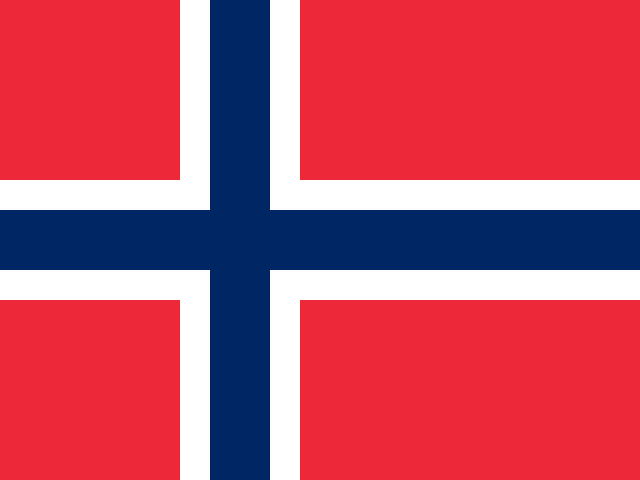
 Norway
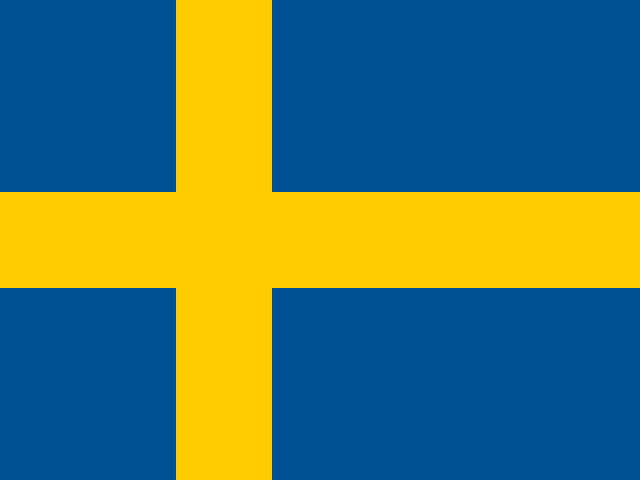 Sweden
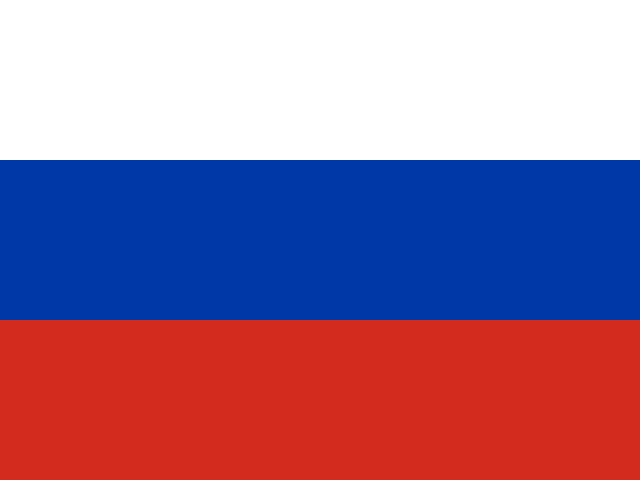 Russia
First settlers after the Ice Age
As the great ice sheet of the last Ice Age melted, people moved into the land around 9000 BC. For thousands of years they lived by hunting, fishing and gathering, and later by farming and trade around the Baltic Sea.
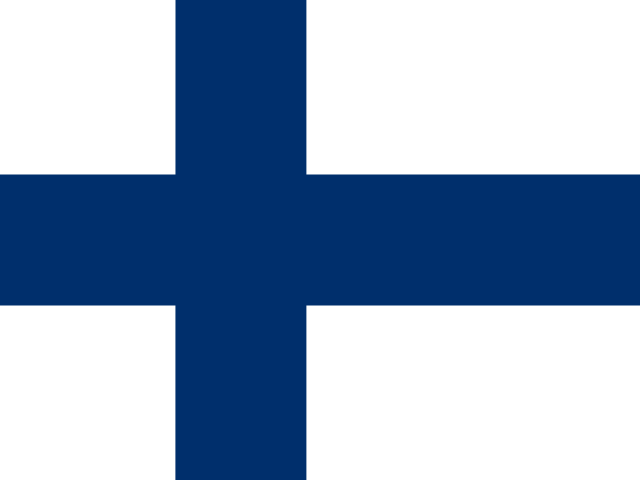
A free large-print PDF. Choose what goes in: facts, map, history, dishes and recipes, phrases, fun facts, a quiz with or without answers. Made for clubs, care homes, libraries and family afternoons.
Finland is a Nordic country in the far north of Europe. It borders Sweden, Norway and Russia, with the Gulf of Bothnia to the west and the Gulf of Finland to the south, across from Estonia. It is a land of forests and water: about three quarters of the country is forest, and there are about 188,000 lakes larger than 500 square metres. A quarter of Finland lies north of the Arctic Circle, where the summer sun does not set for weeks and the long winter nights can bring the northern lights.
For more than five centuries, from the Middle Ages until 1809, Finland was part of the Kingdom of Sweden. It then became an autonomous Grand Duchy within the Russian Empire, and on 6 December 1917 it declared independence. During the Second World War Finland fought the Soviet Union twice, in the Winter War and the Continuation War. It lost land, but it kept its independence and its democracy.
Today Finland is a parliamentary republic of about 5.65 million people. It joined the European Union in 1995, uses the euro, and became a member of NATO in 2023. Finnish and Swedish are both national languages, and in the north live the Sámi, an Indigenous people with their own languages, of whom there are about 10,000 in Finland. Finns love their saunas, a tradition on UNESCO's list of intangible cultural heritage, and as of 2026 Finland has topped the World Happiness Report for nine years in a row.
Finland's story runs from Stone Age hunters who followed the melting ice, through more than five centuries under Sweden and a century as a Grand Duchy of Russia, to independence, two hard wars and a modern European democracy.
As the great ice sheet of the last Ice Age melted, people moved into the land around 9000 BC. For thousands of years they lived by hunting, fishing and gathering, and later by farming and trade around the Baltic Sea.
From the mid-1200s Sweden gradually took control of Finland. In 1323 Sweden and Novgorod made peace at Nöteborg and drew a border across Karelia. For centuries it separated the Catholic, later Lutheran, west from the Orthodox east.
Mikael Agricola, later Bishop of Turku, completed the first Finnish translation of the New Testament in 1548. There was no standard written Finnish at the time, so his books laid the foundations of Finnish spelling, and he is called the father of literary Finnish.
In 1640 Queen Christina of Sweden founded the Royal Academy of Turku, Finland's first university, at the proposal of the governor-general Per Brahe. After a great fire in Turku in 1827 it moved to Helsinki, where it is today the University of Helsinki.
In the Finnish War of 1808 to 1809 Russia conquered Finland from Sweden. At the Diet of Porvoo in 1809, Emperor Alexander I promised to uphold Finland's laws and Lutheran faith. Finland became an autonomous Grand Duchy within the Russian Empire, and in 1860 it got its own currency, the markka.
On 8 April 1812 Emperor Alexander I moved the capital from Turku to Helsinki, closer to St Petersburg. Helsinki had been founded in 1550 by King Gustav I of Sweden as a small trading town, and was now rebuilt with grand buildings around Senate Square.
On 28 February 1835 Elias Lönnrot published the Kalevala, a national epic he compiled from folk poems collected in Karelia and elsewhere. A longer version of 50 poems followed in 1849. It inspired Finnish artists and the growing national movement, and 28 February is Kalevala Day.
In 1906 a new one-chamber parliament was created, and all adult women and men gained the right to vote and to stand for election. Finland, then still a Grand Duchy, was the first place in Europe where all adult women could vote and stand for parliament, and in 1907 nineteen women were elected.
After the Russian Revolution, the Finnish Parliament approved the Declaration of Independence on 6 December 1917. Soviet Russia recognised it on 31 December 1917. 6 December is Finland's Independence Day.
From January to May 1918 a short but bitter civil war was fought between the socialist Reds and the conservative Whites, who won. About 38,000 people died, many of them in prison camps after the fighting. The wounds took decades to heal. In 1919 Finland became a republic.
On 30 November 1939 the Soviet Union invaded Finland. Finnish soldiers held out through the depths of winter until the Moscow Peace Treaty of 13 March 1940. Finland kept its independence but gave up about 9 percent of its territory, and about 420,000 people from the lost areas, mostly in Karelia, had to be resettled.
In June 1941, after Germany attacked the Soviet Union, war between Finland and the Soviet Union broke out again, with Finland fighting alongside Germany. It ended with the Moscow Armistice on 19 September 1944. Finland lost land again and paid war reparations, then fought the Lapland War of 1944 to 1945 to drive German troops out of the north.
From 19 July to 3 August 1952 Helsinki hosted the Summer Olympic Games. Helsinki had agreed to take over the 1940 Games after Tokyo withdrew, but they were cancelled because of the war. Helsinki is still the most northerly city ever to host the Summer Olympics.
After a referendum in 1994 in which about 57 percent voted yes, Finland joined the European Union on 1 January 1995, on the same day as Austria and Sweden. It adopted the euro in 1999, and euro notes and coins replaced the markka in 2002.
For decades Finland stayed militarily non-aligned. After Russia's full-scale invasion of Ukraine in 2022, public opinion changed quickly, and on 4 April 2023 Finland became the 31st member of NATO.
Finnish food is simple and fresh, built on rye, potatoes, fish from the lakes and the sea, milk and butter, and wild berries and mushrooms from the forests. Breakfast is traditionally porridge, dark rye bread is on the table at almost every meal, and coffee, often with a sweet cardamom bun, is drunk several times a day. Many traditional dishes are cooked slowly in the oven.
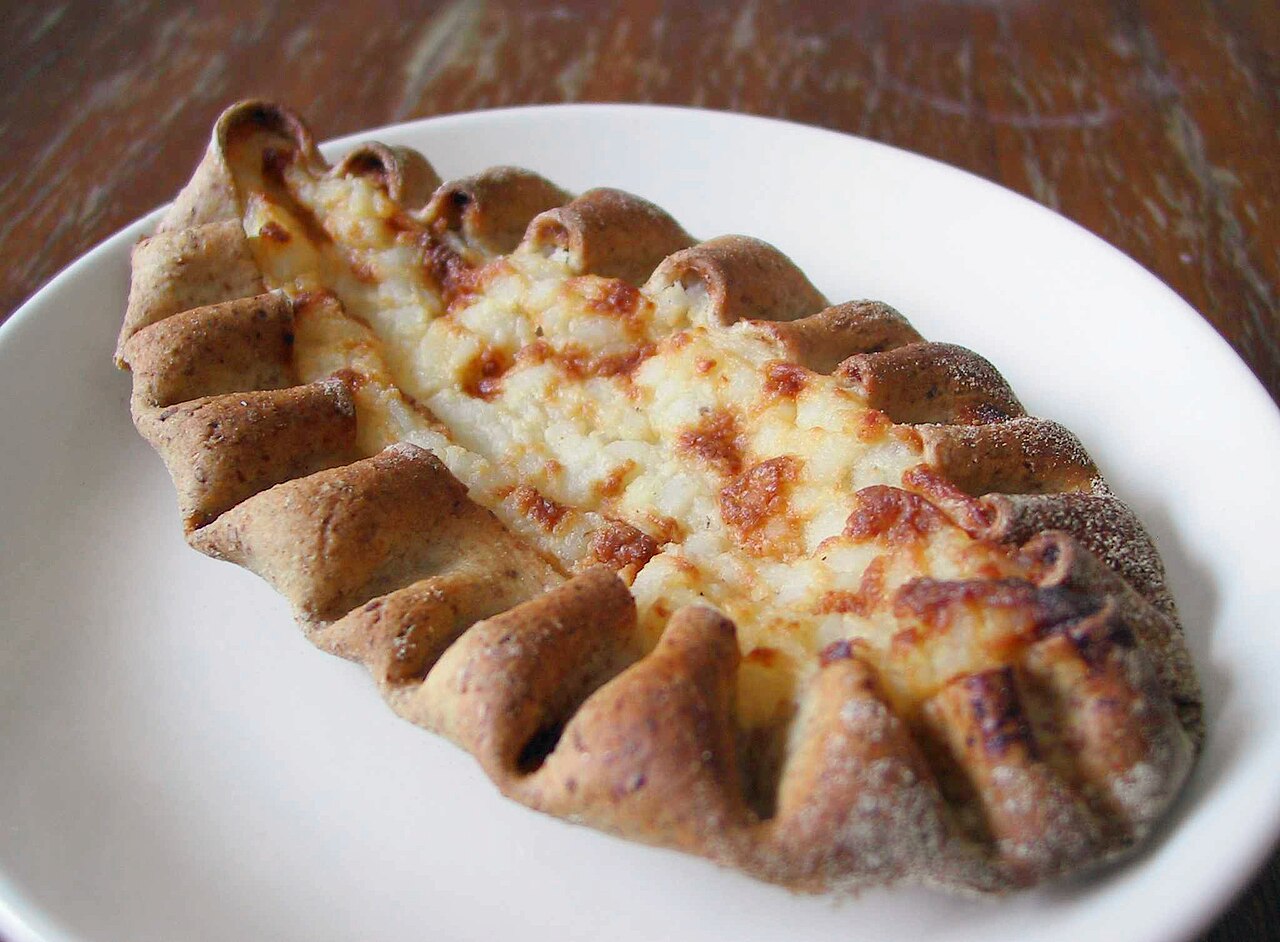
Small open pasties with a thin, crinkled rye crust around a filling of creamy rice porridge. They are served warm with egg butter, a spread of butter mixed with chopped hard-boiled egg.
Since 2003 the name karjalanpiirakka has been protected in the European Union as a Traditional Speciality Guaranteed, so pasties made another way must be sold under another name.
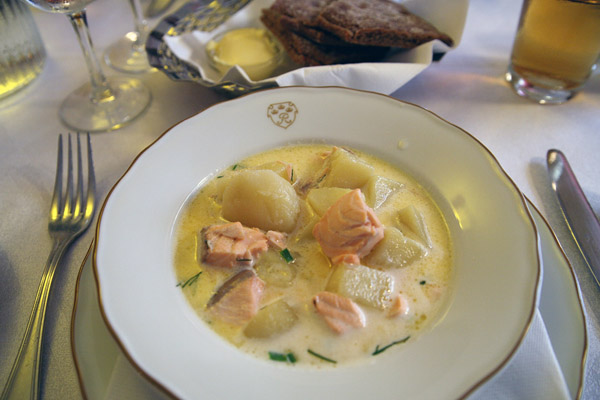
A creamy soup of salmon, potatoes, carrots and leeks, seasoned with allspice and finished with plenty of fresh dill. It is served hot with rye bread and butter.
Salmon is the most popular fish in Finland, and lohikeitto is one of its best-loved salmon dishes.
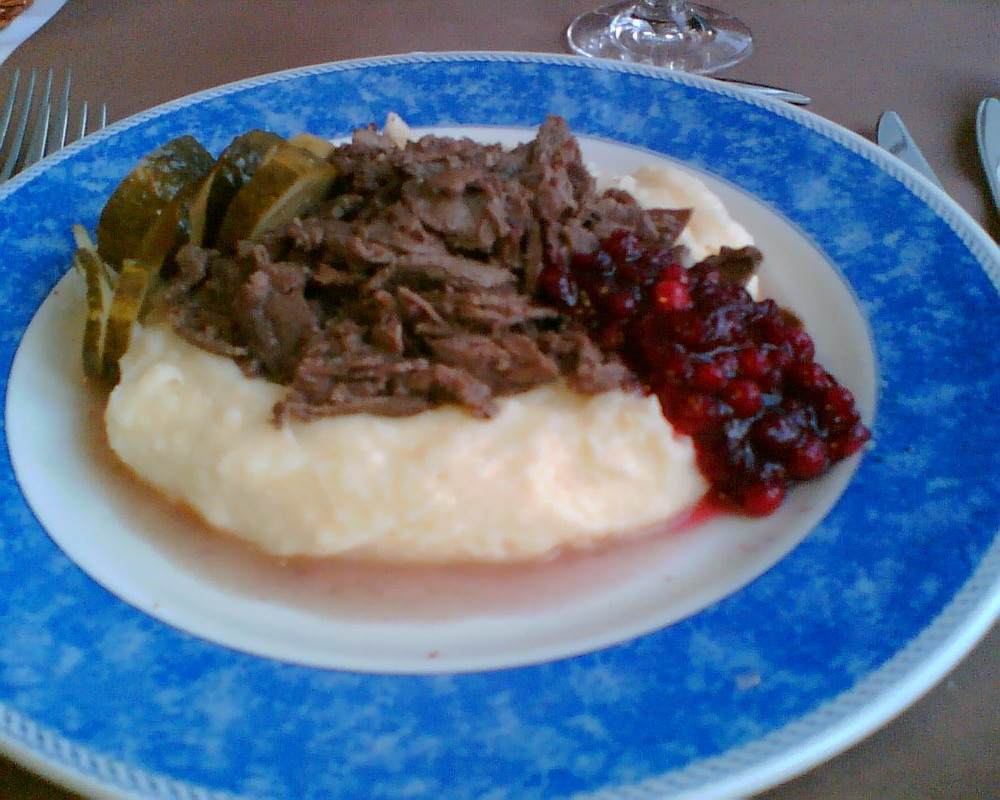
Thin shavings of reindeer meat, fried in butter and then simmered until tender, served with mashed potatoes and lingonberries. It is perhaps the best-known traditional meal of Lapland.
The meat is sliced while it is still frozen, which makes it easy to cut very thin. In Finland it is often served with pickled cucumber too.
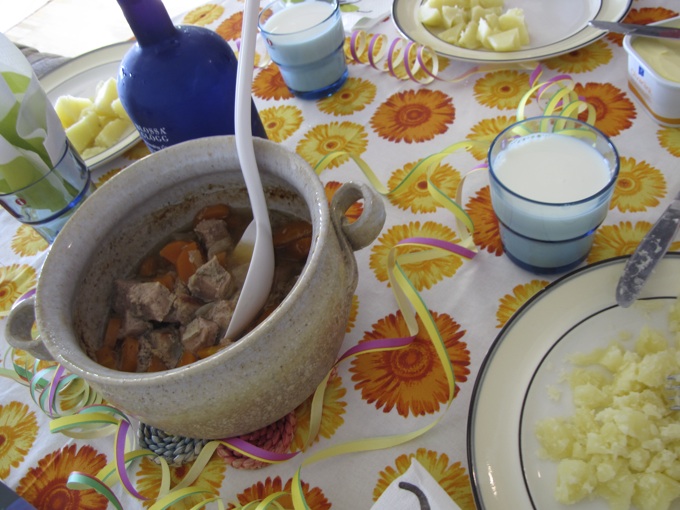
Chunks of beef and pork, and sometimes lamb, slowly cooked in the oven with onions, black peppercorns, allspice and bay leaves until very tender. It is served with potatoes and lingonberry jam.
In a 2016 national poll to choose Finland's national dish, Karelian hot pot came second, after rye bread.
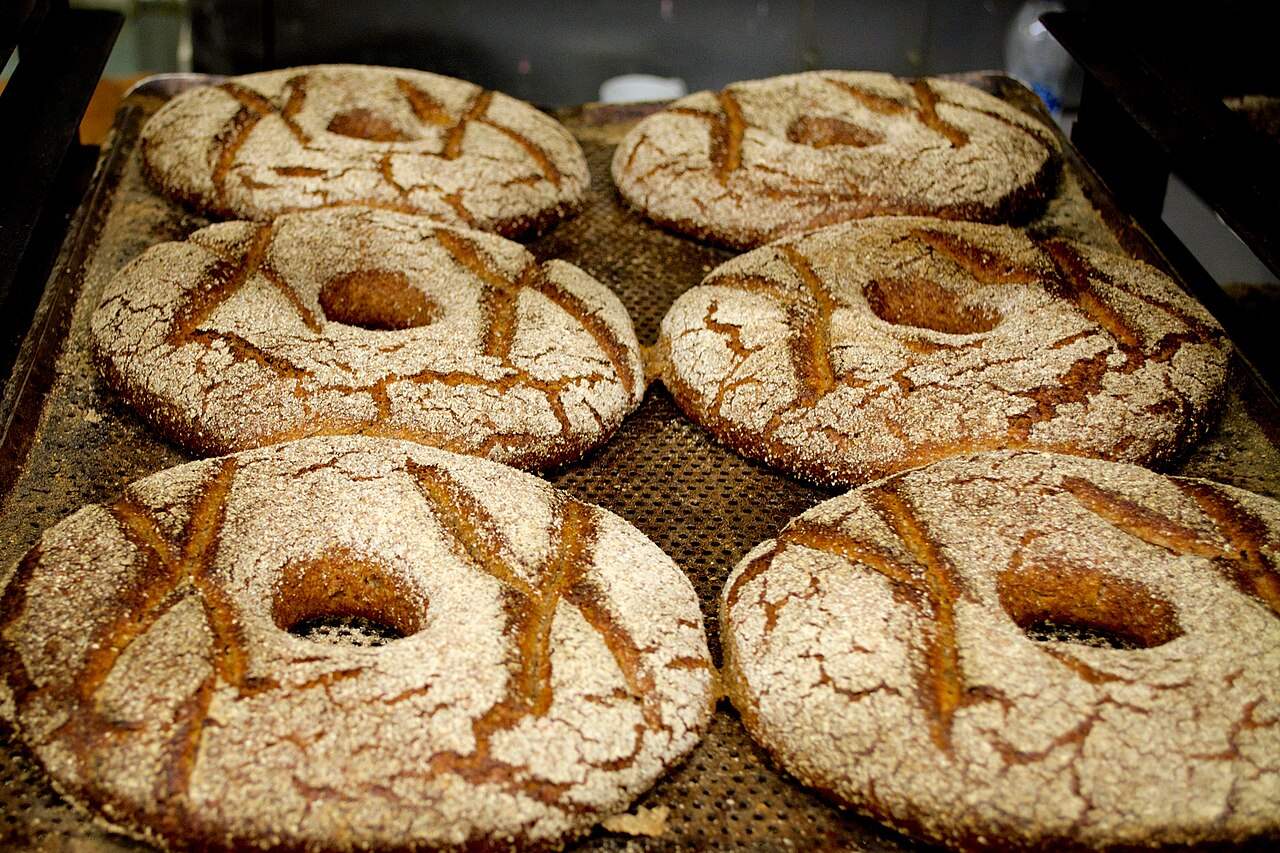
Dark, dense and slightly sour bread made from rye flour, water and salt with a sourdough starter. Unlike some rye breads elsewhere, Finnish rye bread is not sweetened.
In a public vote held around Finland's 100th year of independence, rye bread was chosen as the national food.
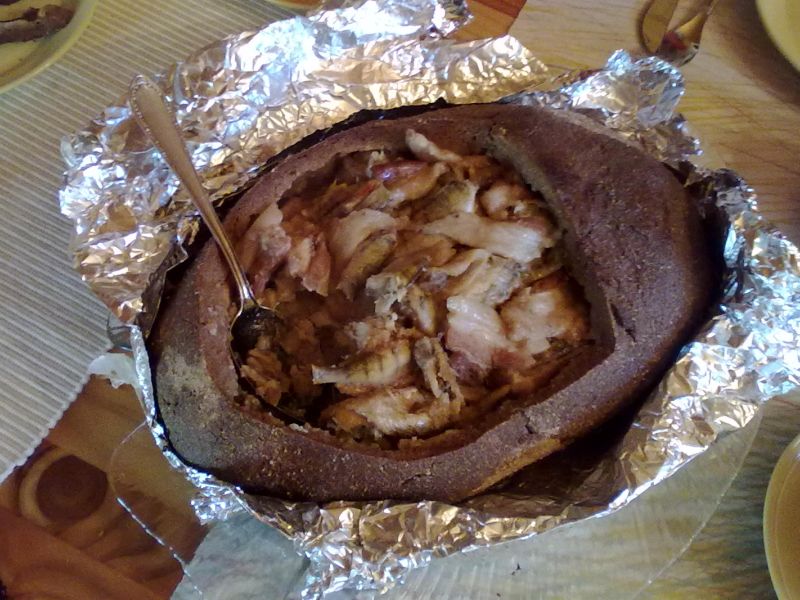
Small fish such as vendace or perch, with pork or bacon, baked for hours inside a thick rye crust, so that the fish bones soften. From the outside it looks like a big loaf of bread. You cut a lid from the top and eat the filling with pieces of the crust.
Kalakukko keeps for a long time while unopened, so it was once a practical lunch for workers away from home. It has had Traditional Speciality Guaranteed status in the EU since 2002.
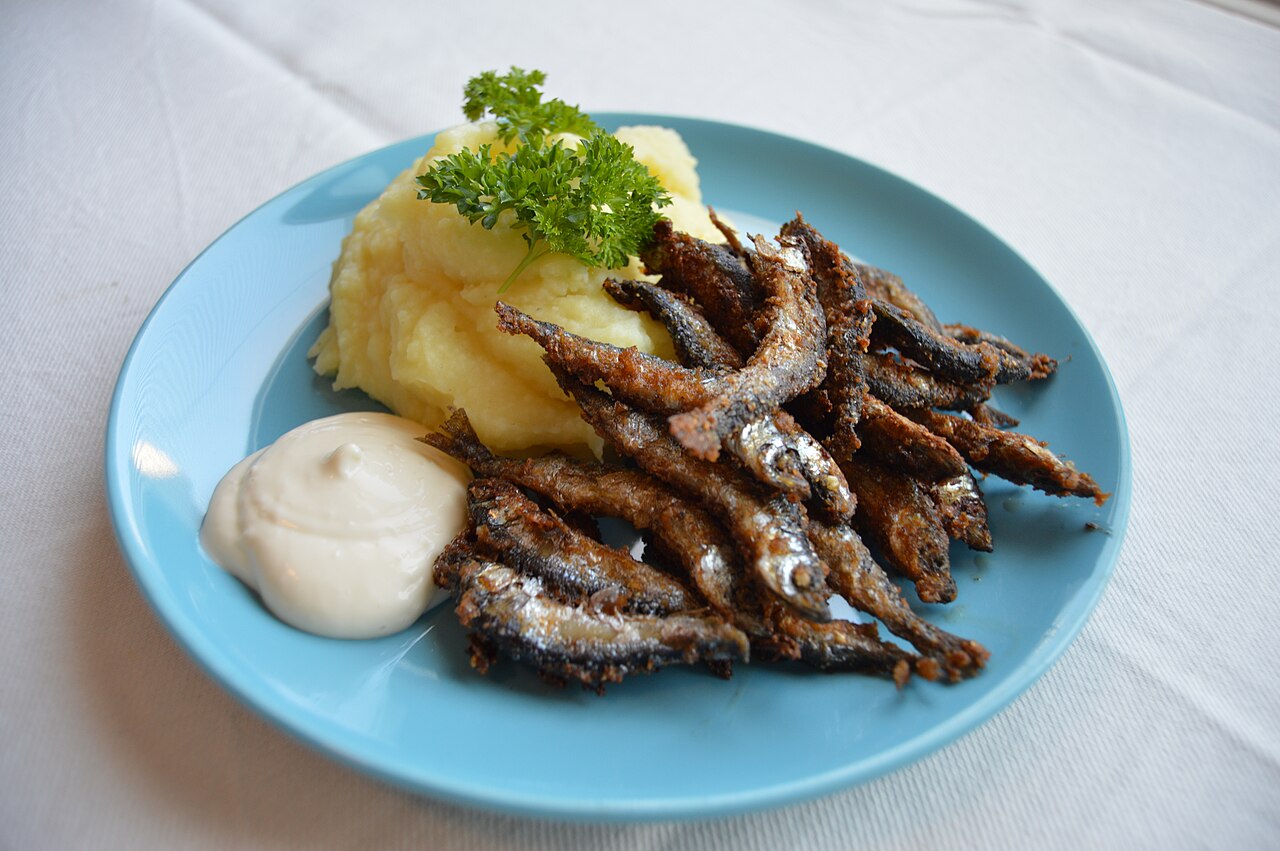
Vendace, small freshwater fish from the lakes, rolled in flour and fried until crisp. They are eaten whole, often with mashed potatoes.
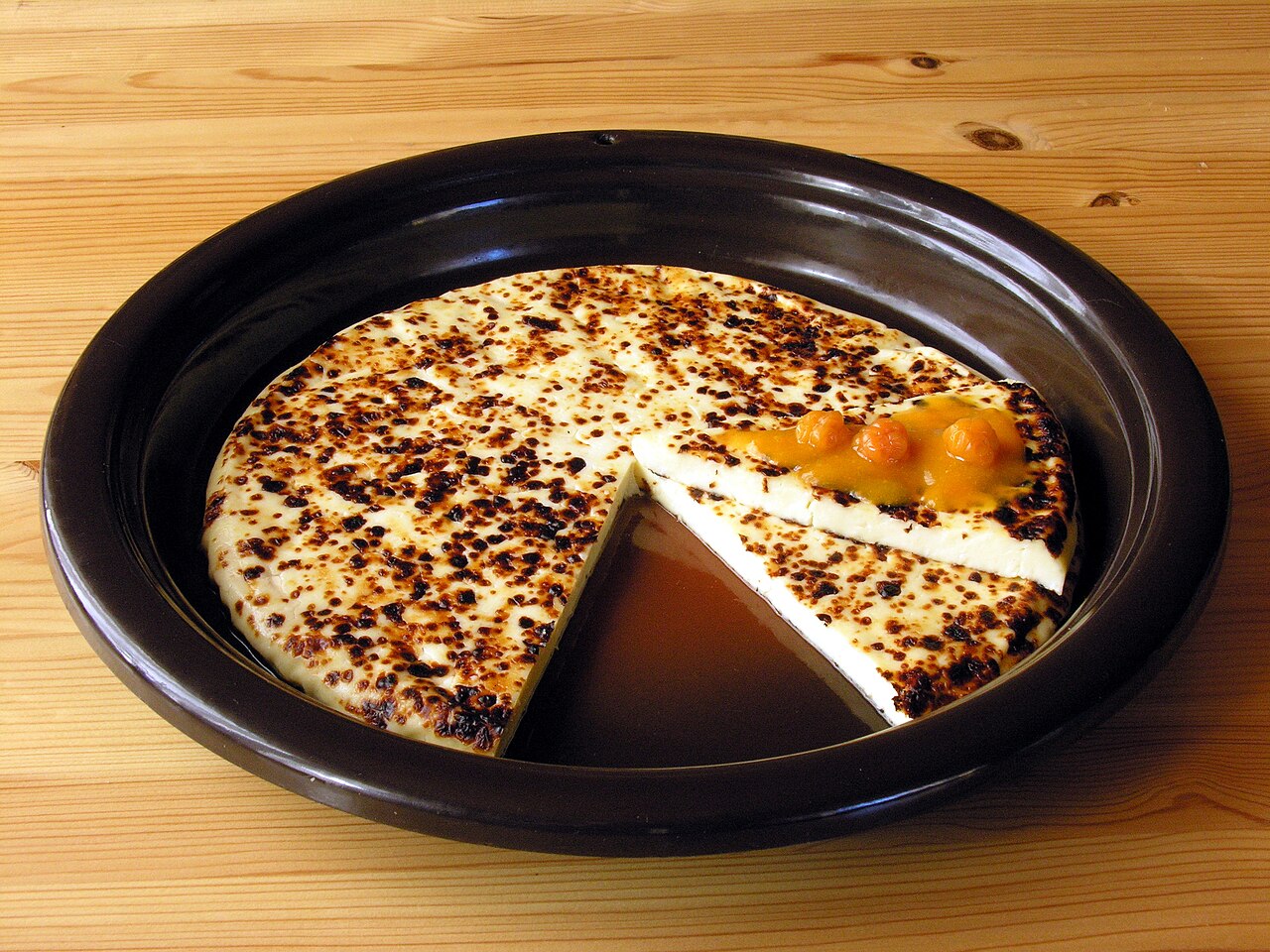
A mild fresh cheese, pressed into a flat round and baked or grilled until it has brown spots. It squeaks against the teeth, and is served warm with cloudberry jam or sliced with coffee.
Traditionally it was made from the rich first milk of a cow that has just calved. Some people put pieces in a cup and pour hot coffee over them.
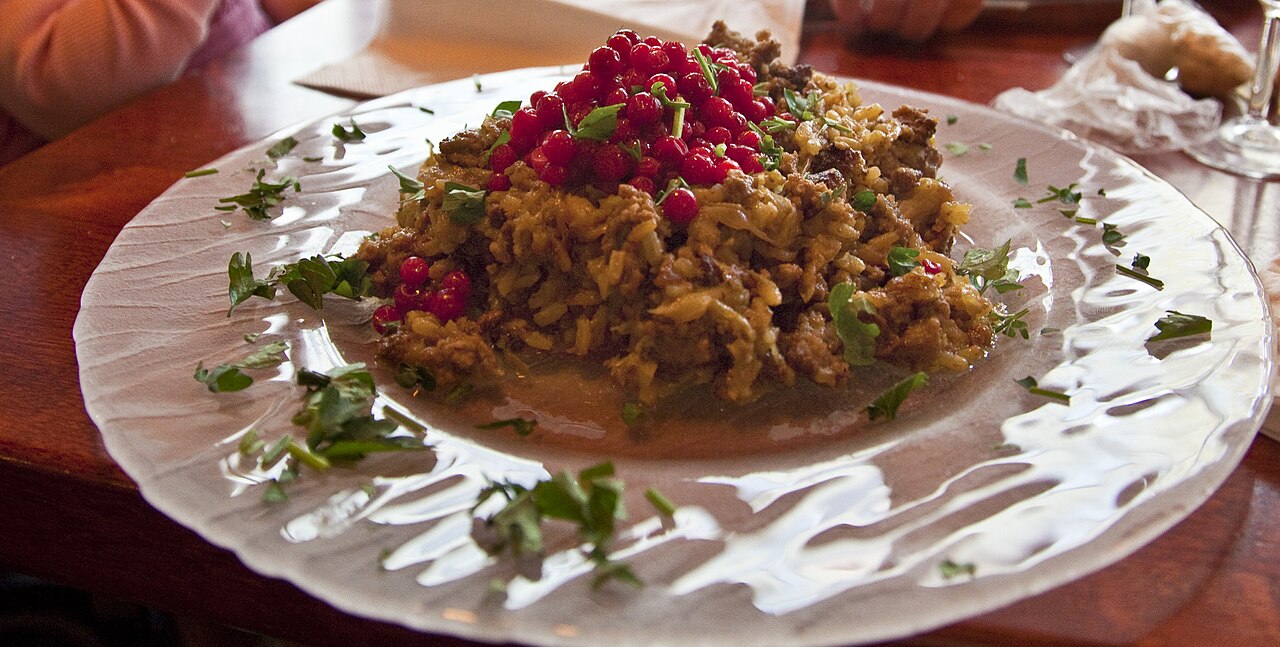
An oven-baked casserole of cabbage, minced meat and rice or barley, with onion, marjoram and a little syrup. It is served with lingonberry jam.
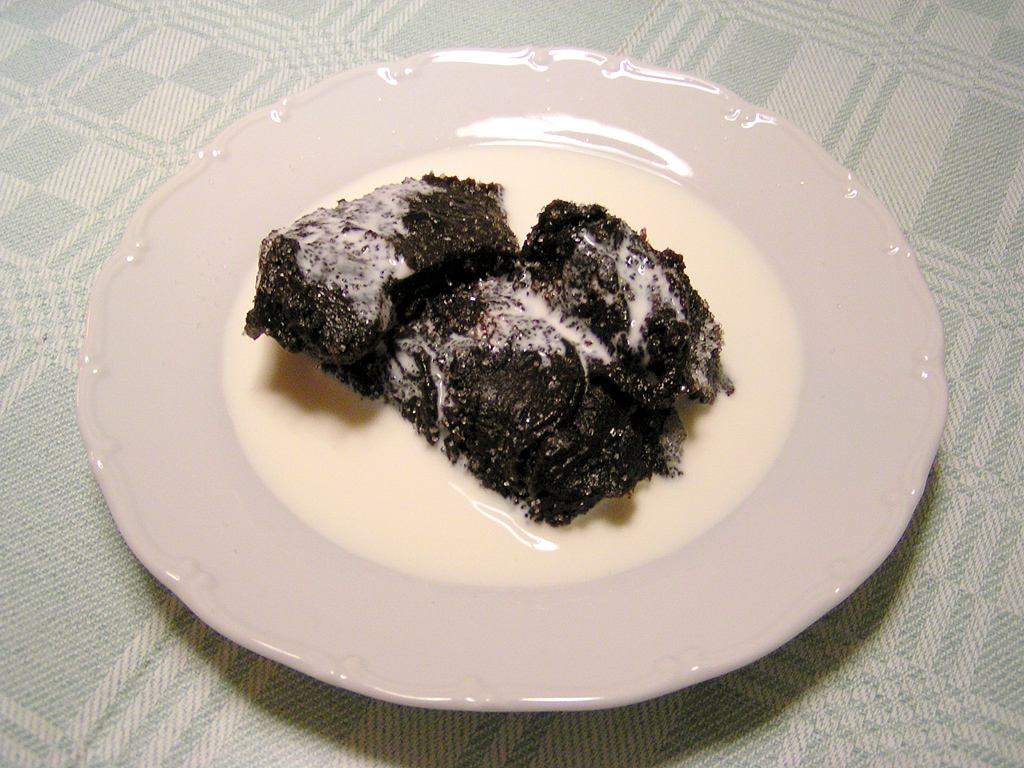
A dark brown Easter pudding made from rye flour and malted rye, baked slowly in the oven and eaten cold with cream and sugar.
It was first mentioned in writing in the 16th century. Traditionally it was kept in small boxes made of birch bark, and today's cardboard packages still copy their look.
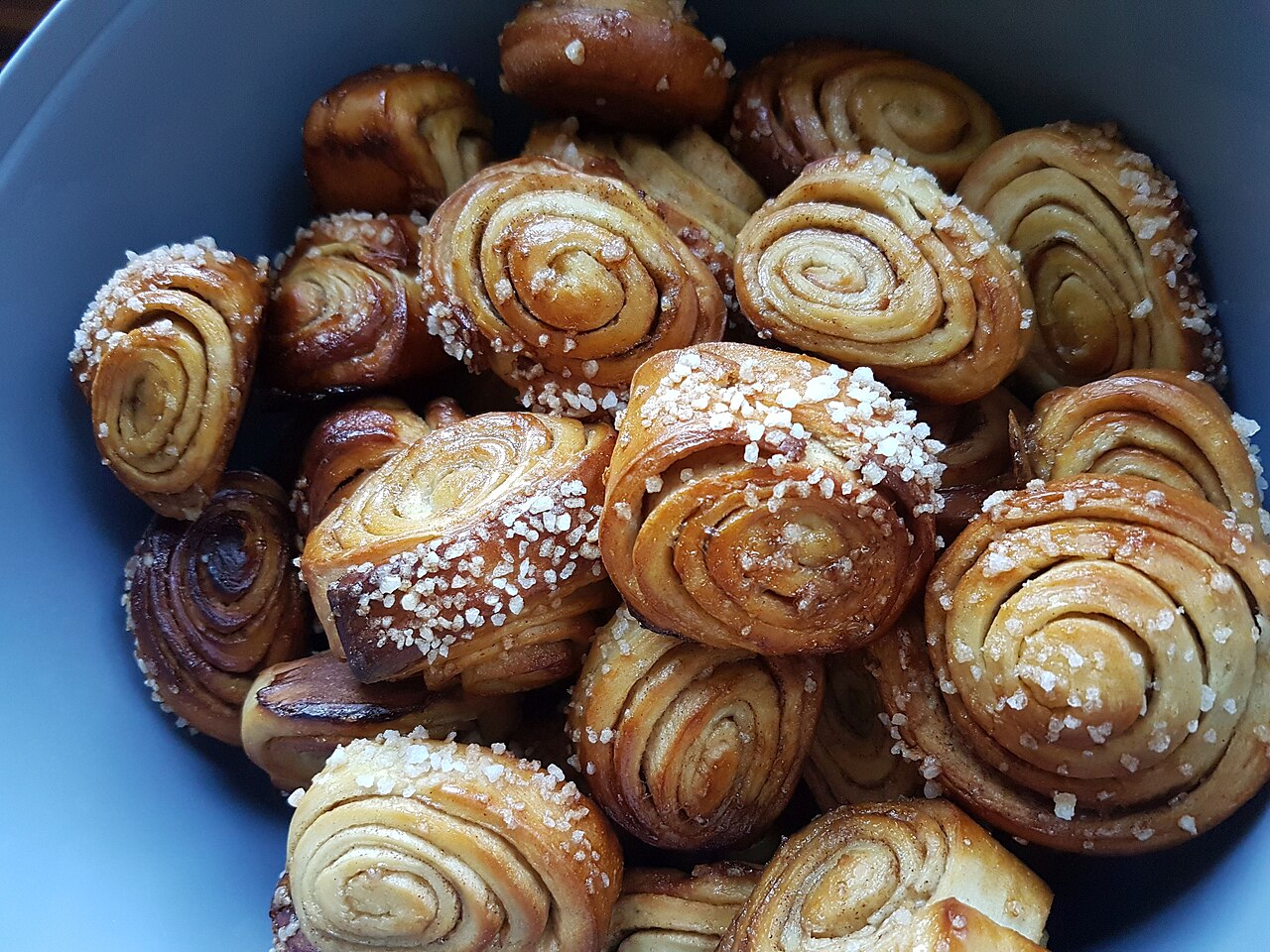
Large buns of sweet dough flavoured with cardamom, rolled up with butter, sugar and cinnamon and topped with pearl sugar. They are a favourite with coffee.
The name means 'a slap on the ear'. Finnish cinnamon buns are flavoured with cardamom as well as cinnamon, and can be up to 20 cm across.
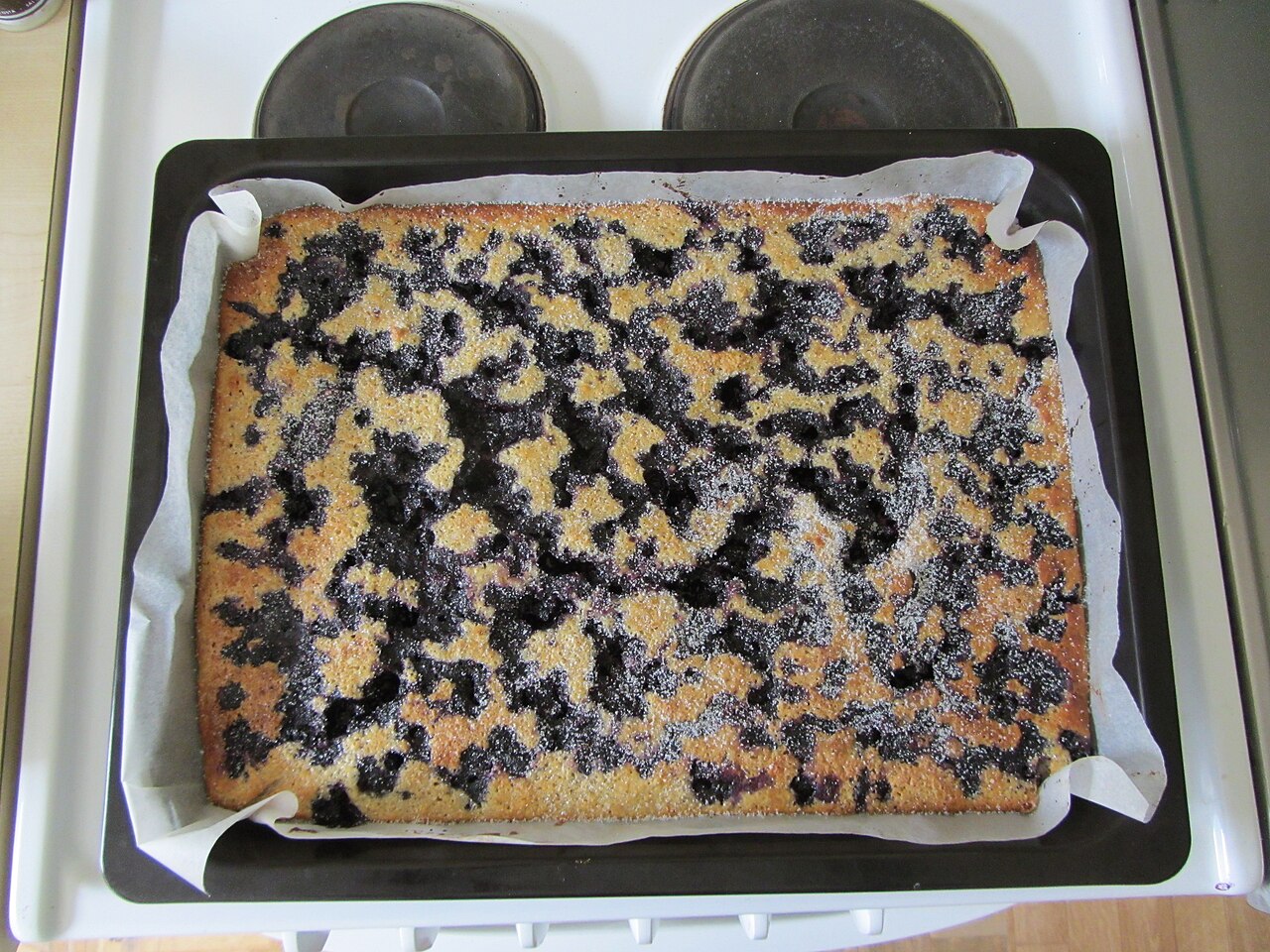
An open pie filled with wild bilberries, small dark blue berries picked in the forests. It is often served with cream or ice cream.
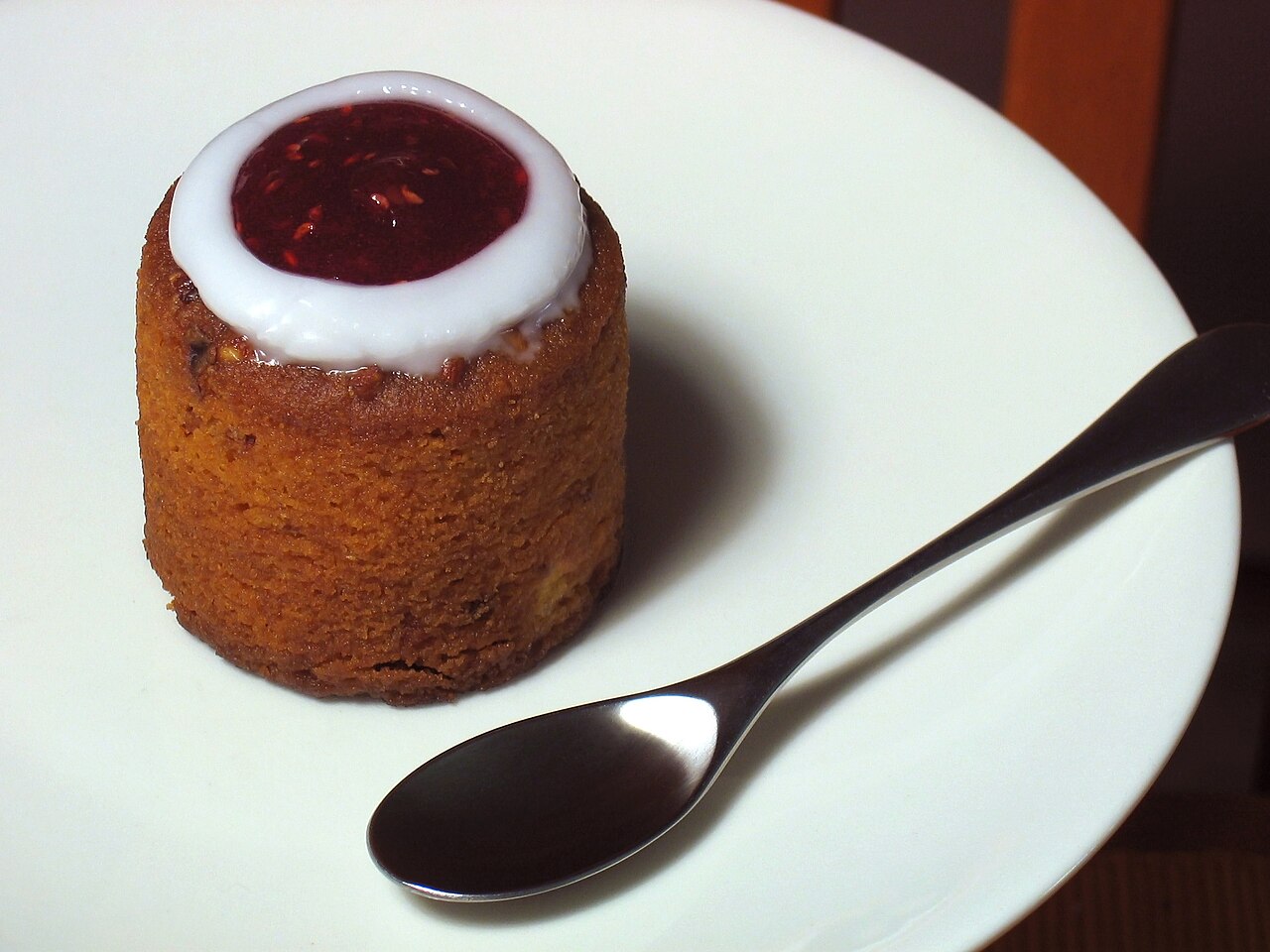
A small cake of about 100 grams, flavoured with almonds and a little rum or arrack, topped with raspberry jam inside a ring of icing. It is eaten from early January until Runeberg Day on 5 February.
It is named after the national poet Johan Ludvig Runeberg, who, legend says, liked to eat one for breakfast. In Porvoo, where he lived, some cafés sell them all year.
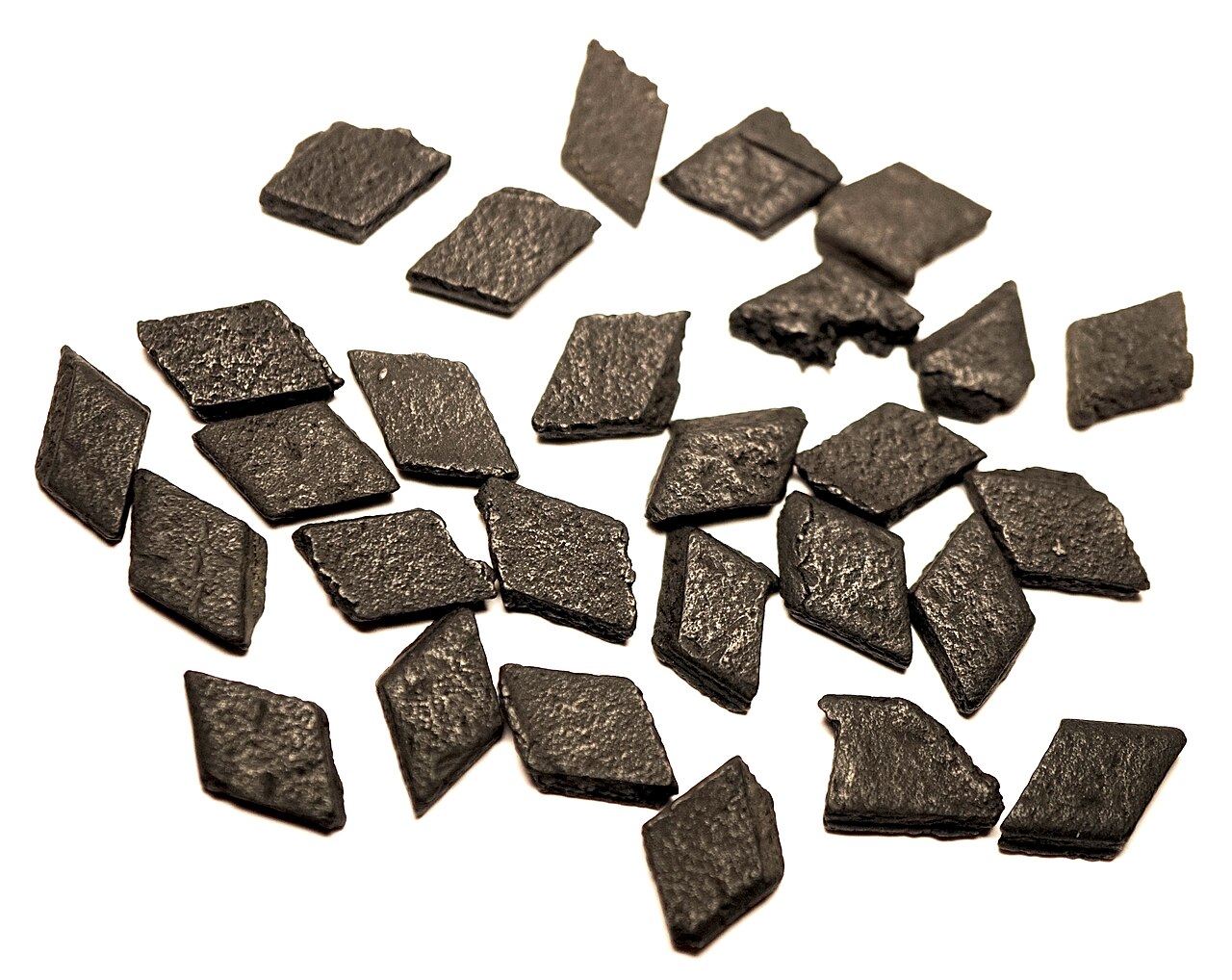
Black liquorice sweets flavoured with salmiak salt, which gives them a strong salty, slightly sharp taste. Many visitors are surprised by it, and many Finns love it.
Salmiak salt was once used as a cough medicine, and salty liquorice may have started in pharmacies. By the 1930s it was being made in Finland as pastilles. Like all liquorice, it is best eaten in moderation, especially by people with high blood pressure.
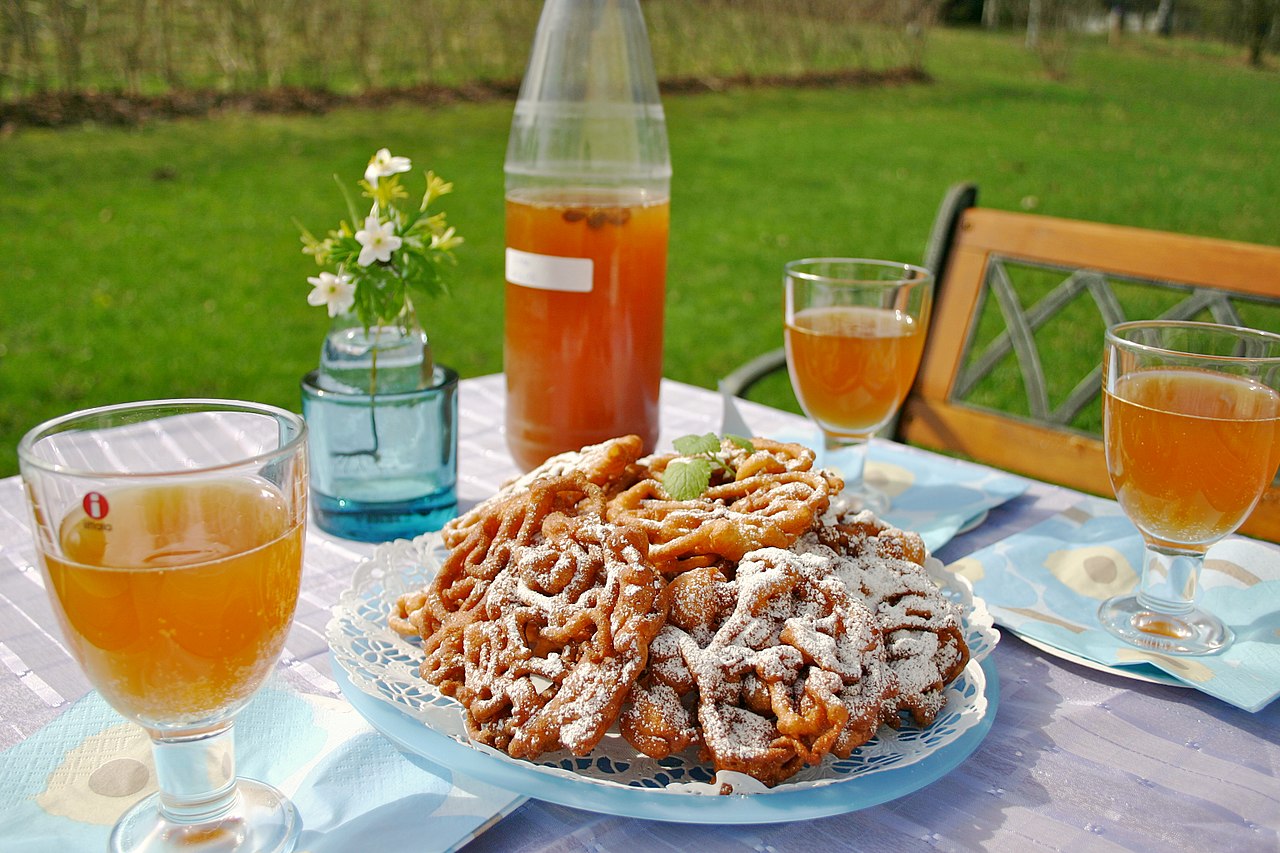
A sweet, fizzy, homemade lemon drink, fermented for a few days with a little yeast, sugar and lemon. It has very little alcohol. It is made for Vappu, the May Day festival on 1 May, and served with doughnuts or funnel cakes.
Raisins are added to each bottle. When they swell and float to the top, the sima is ready to drink.
Most Finns live in the south, around Helsinki and in the cities of the lake district. Further north the towns grow smaller and further apart, and in Lapland reindeer outnumber the traffic on many roads. Many towns have two names, one in Finnish and one in Swedish.
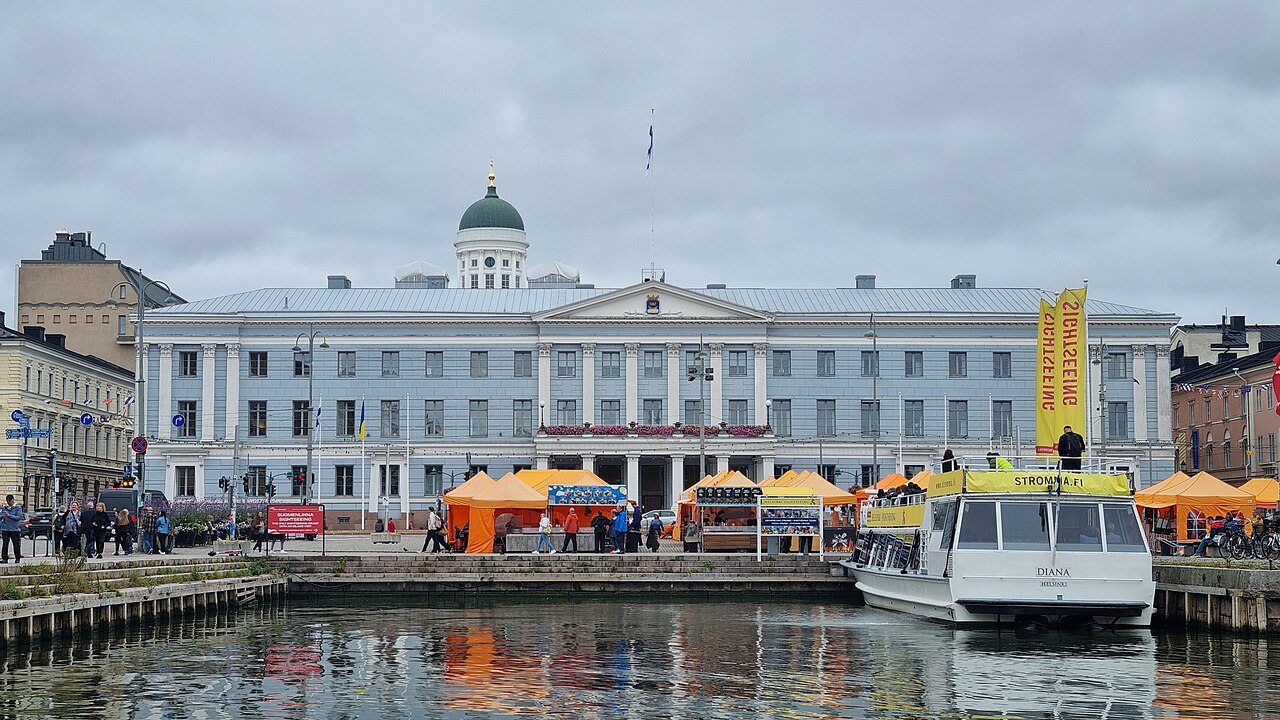
The capital and largest city, on the Gulf of Finland, with about 1.6 million people in its metropolitan area. It was founded by the King of Sweden in 1550 and became the capital in 1812. It is a bilingual city, called Helsingfors in Swedish.
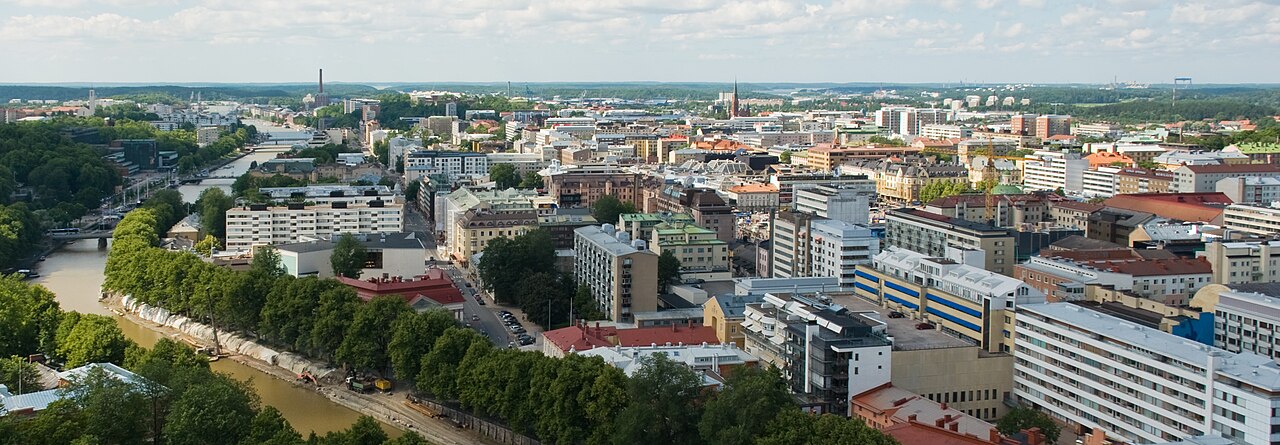
Finland's oldest city, on the Aura River in the southwest, first mentioned in 1229. It was the most important town under Swedish rule and briefly the capital of the Grand Duchy. Its Swedish name is Åbo.
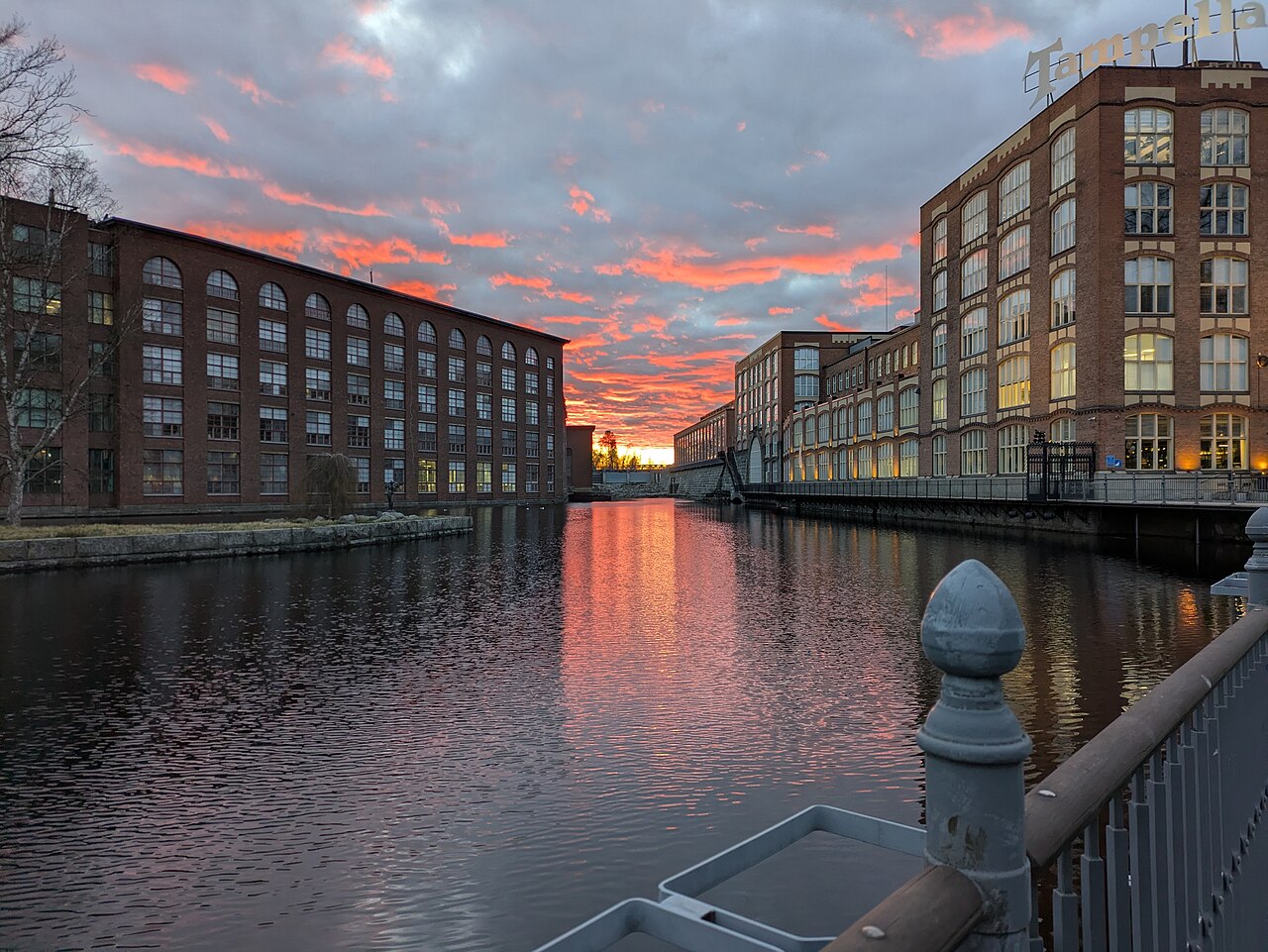
The largest inland city in the Nordic countries, built on both sides of the Tammerkoski rapids between two large lakes. Its textile mills earned it the nickname 'Manchester of the North'.
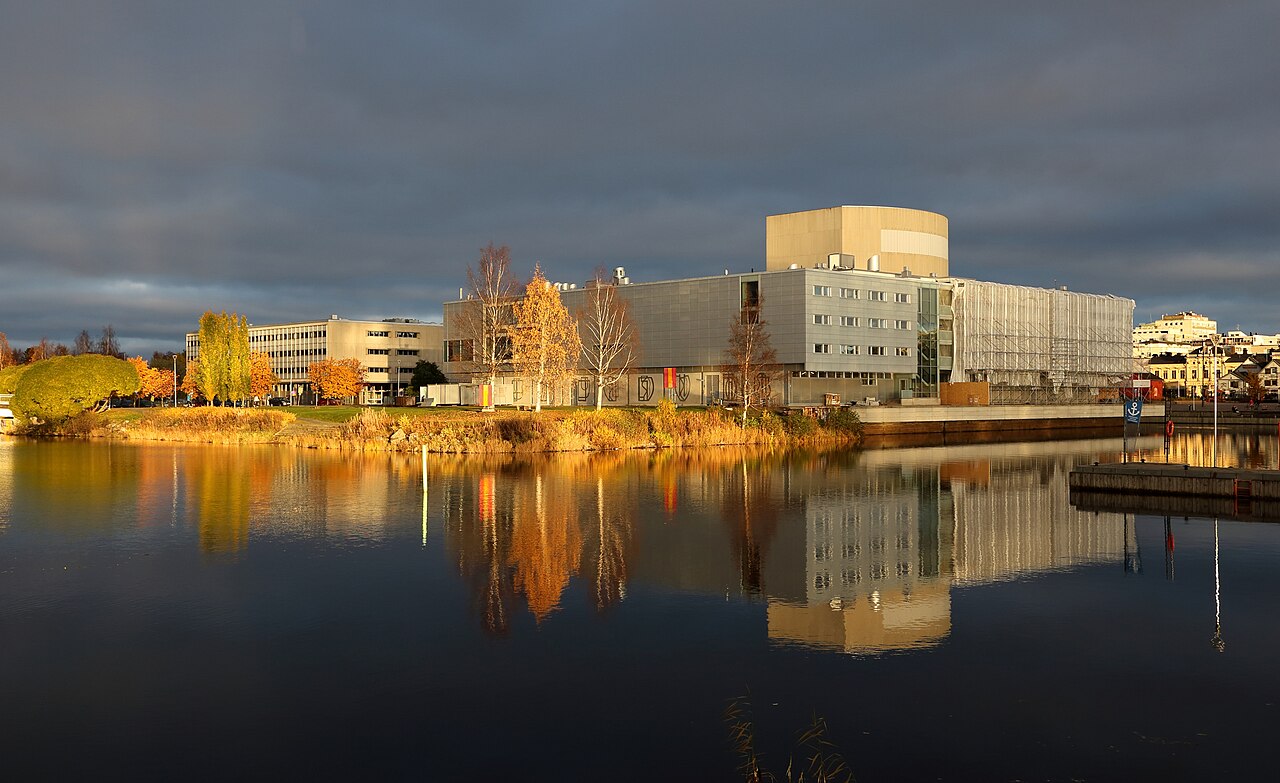
The largest city in northern Finland, at the mouth of the Oulu River on the Gulf of Bothnia, founded in 1605. It is a centre of technology, and a European Capital of Culture in 2026.
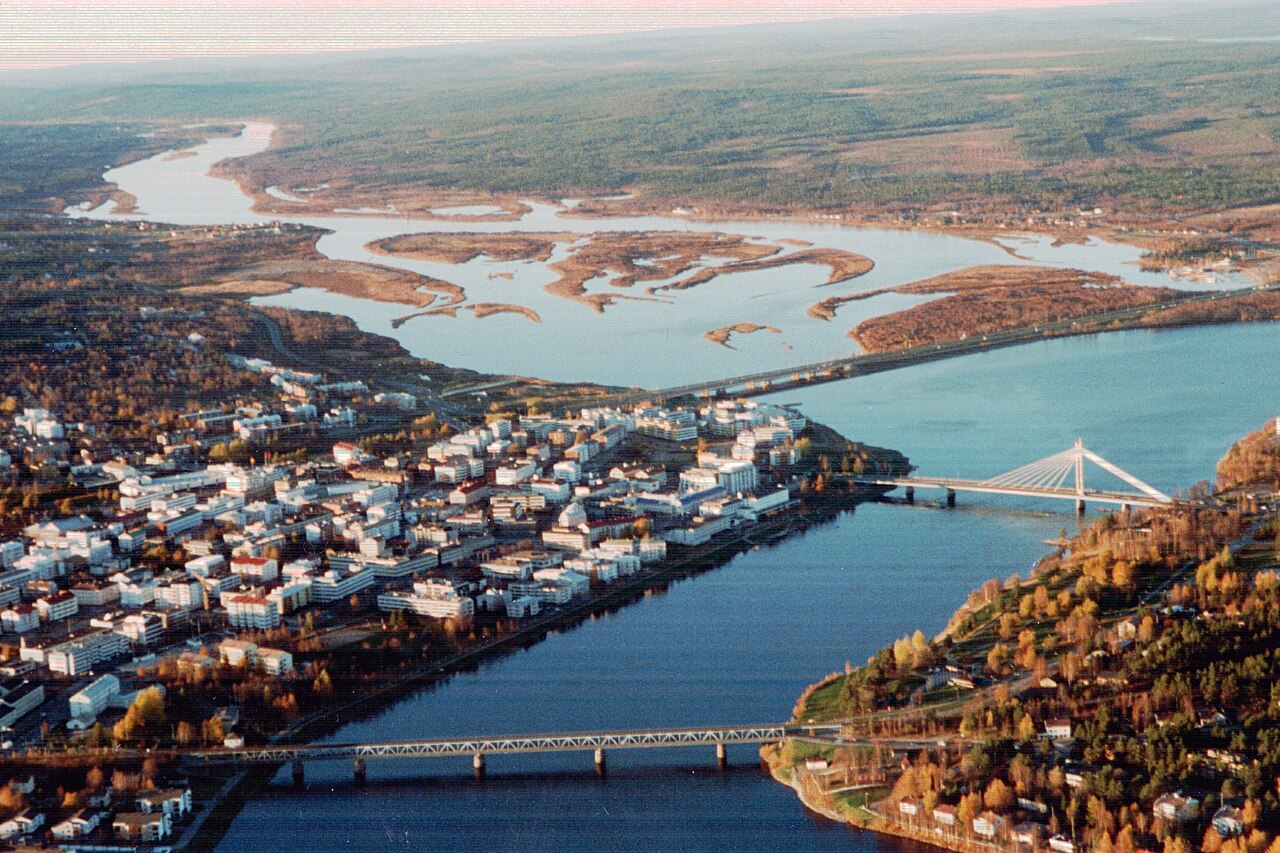
The capital of Lapland, a few kilometres south of the Arctic Circle, where the Ounasjoki joins the Kemijoki river. Most of the town was destroyed in 1944 during the Lapland War, so few buildings are older than that.
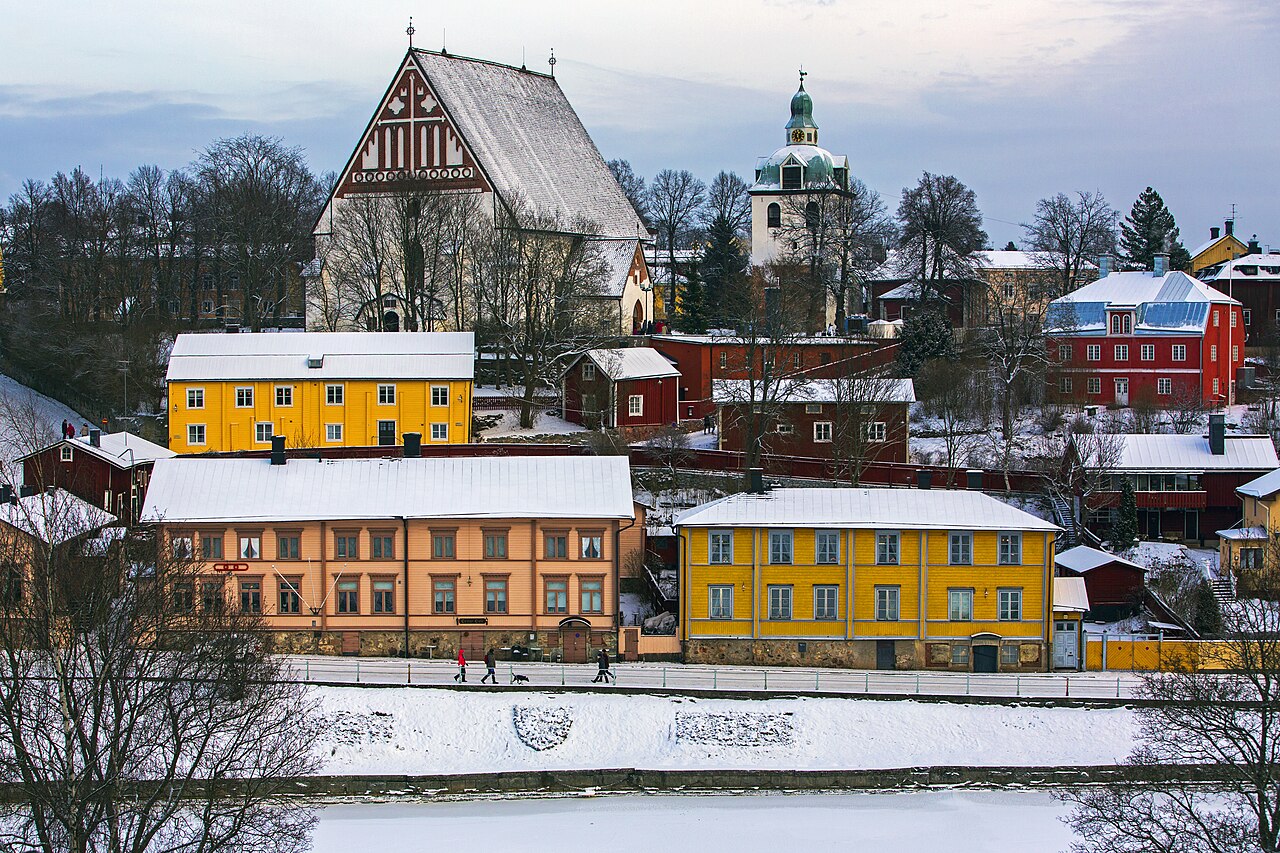
One of Finland's six medieval towns, on the south coast about 50 km east of central Helsinki. Its well-preserved old town surrounds a 15th-century cathedral. In 1809 it hosted the Diet of Porvoo.
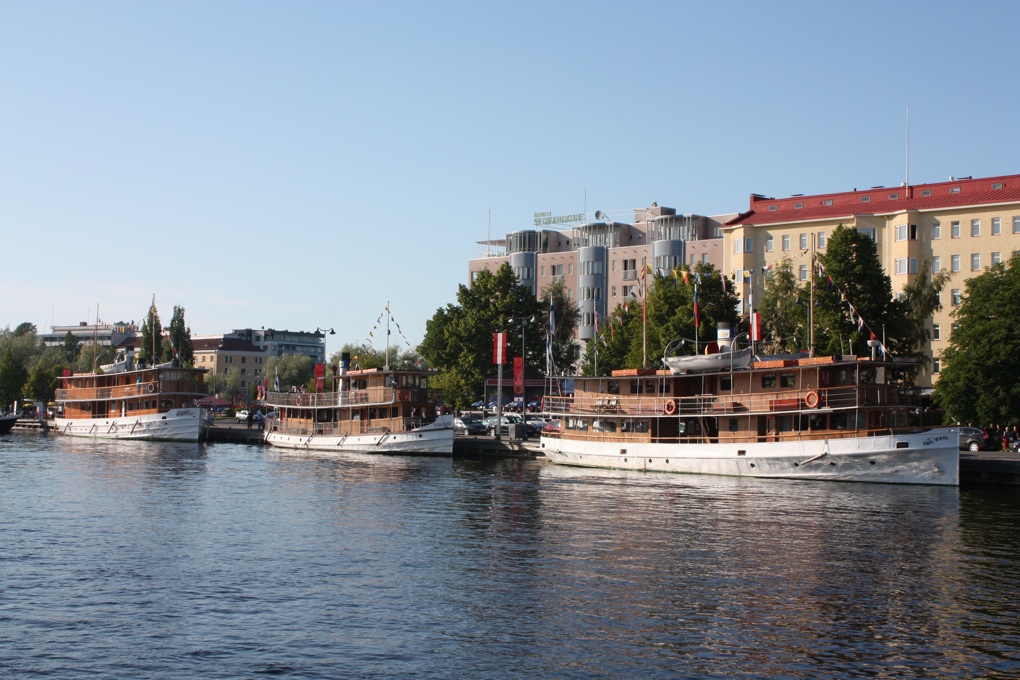
A lakeside town in the heart of the Saimaa lake district, often called the 'Capital of Saimaa'. It was founded in 1639 beside the medieval castle of Olavinlinna.
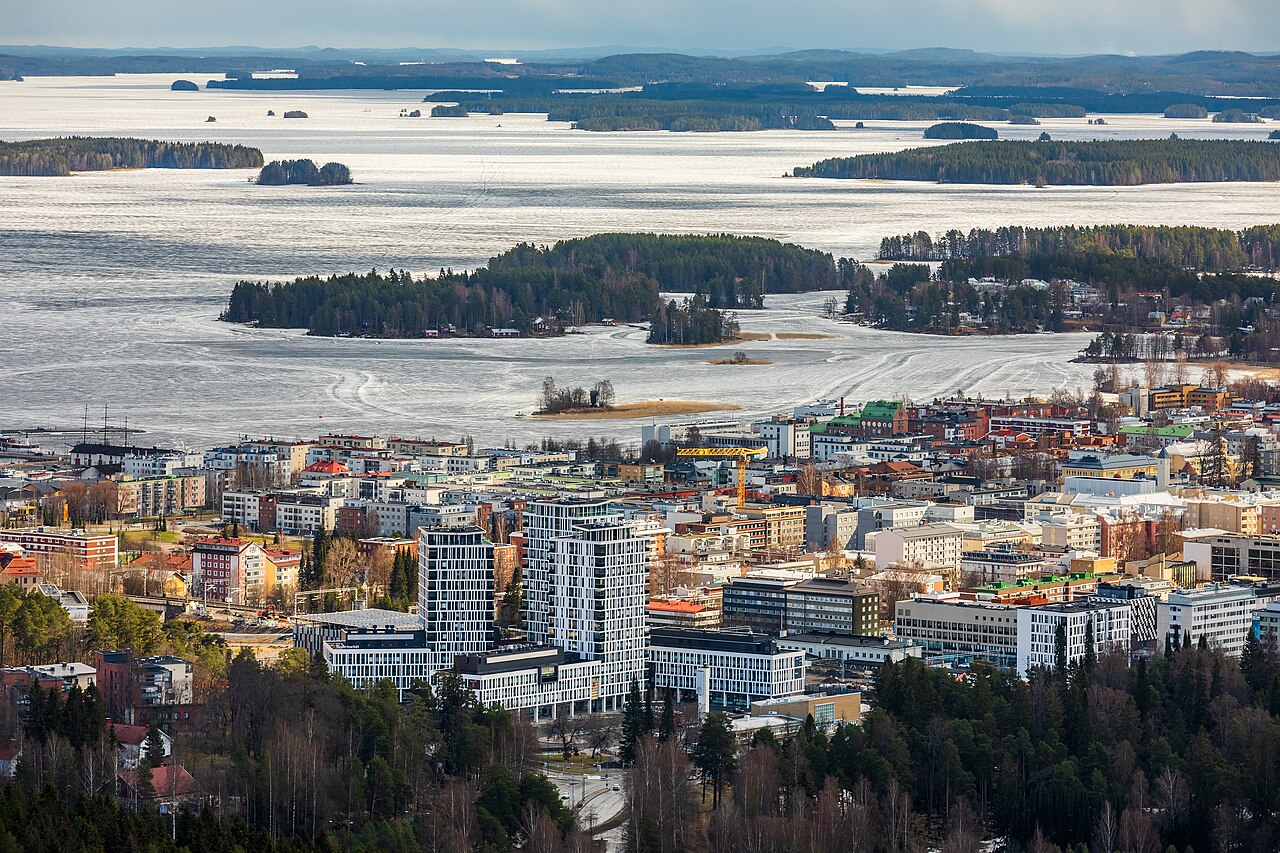
The regional capital of North Savo, in the lake district on the shores of Lake Kallavesi, and one of the main cities of eastern Finland.
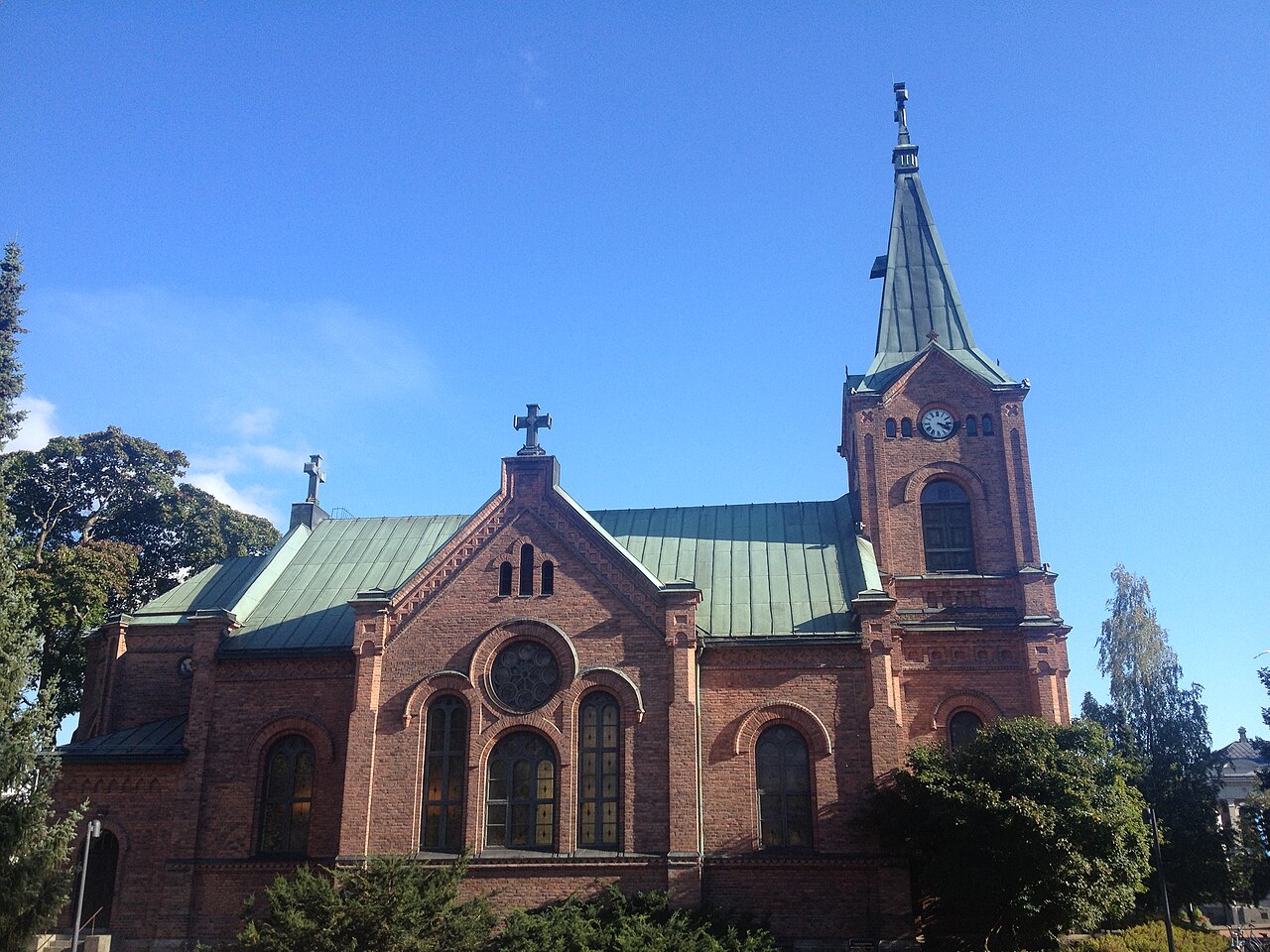
A university city on the northern shore of Lake Päijänne, nicknamed 'the Athens of Finland' by Elias Lönnrot. Buildings by the architect Alvar Aalto can be seen all over the city, and several of them, such as Säynätsalo Town Hall, are part of UNESCO's 'Aalto Works'.
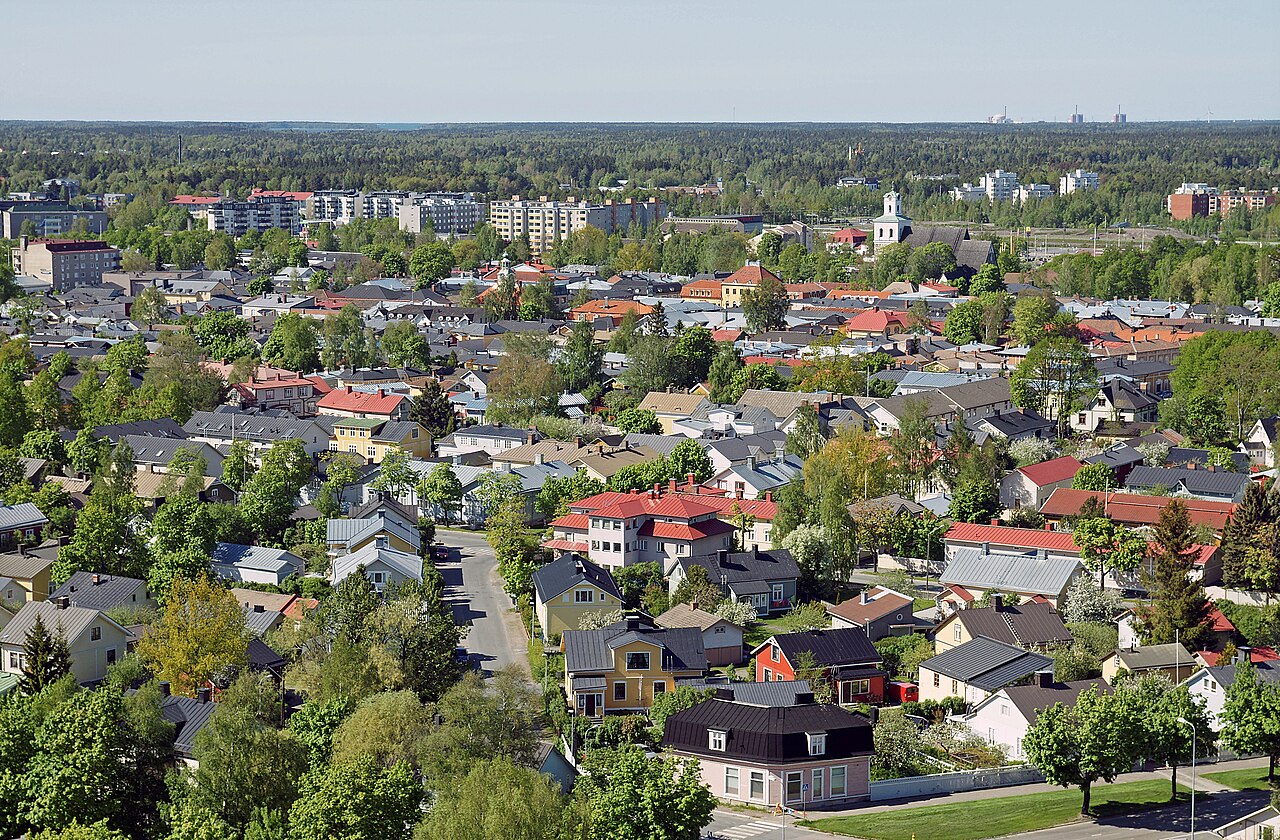
A town on the west coast by the Gulf of Bothnia, granted town rights in 1442. Its old centre of about 600 wooden buildings is a World Heritage Site.
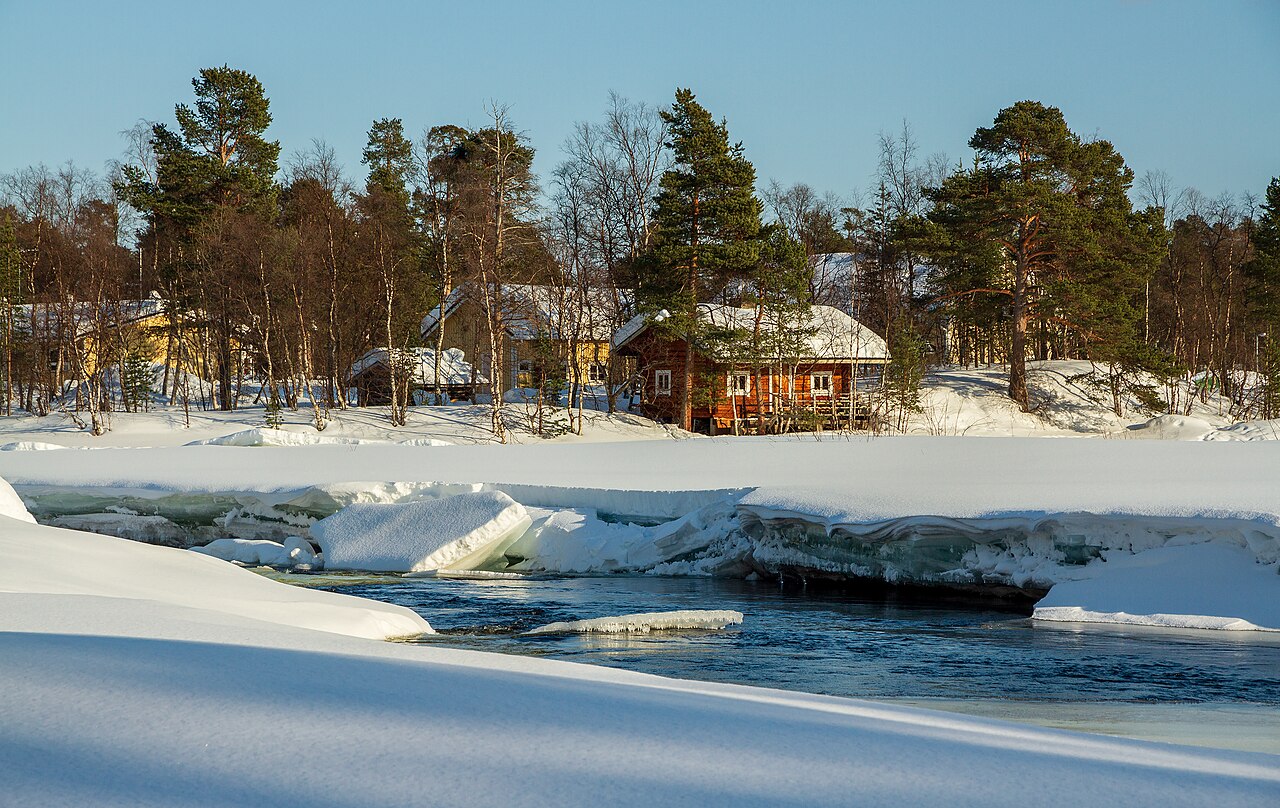
A village on Lake Inari in Finland's largest municipality, well north of the Arctic Circle. It is known as the capital of Sámi culture, and its municipality has four official languages: Finnish and three Sámi languages.
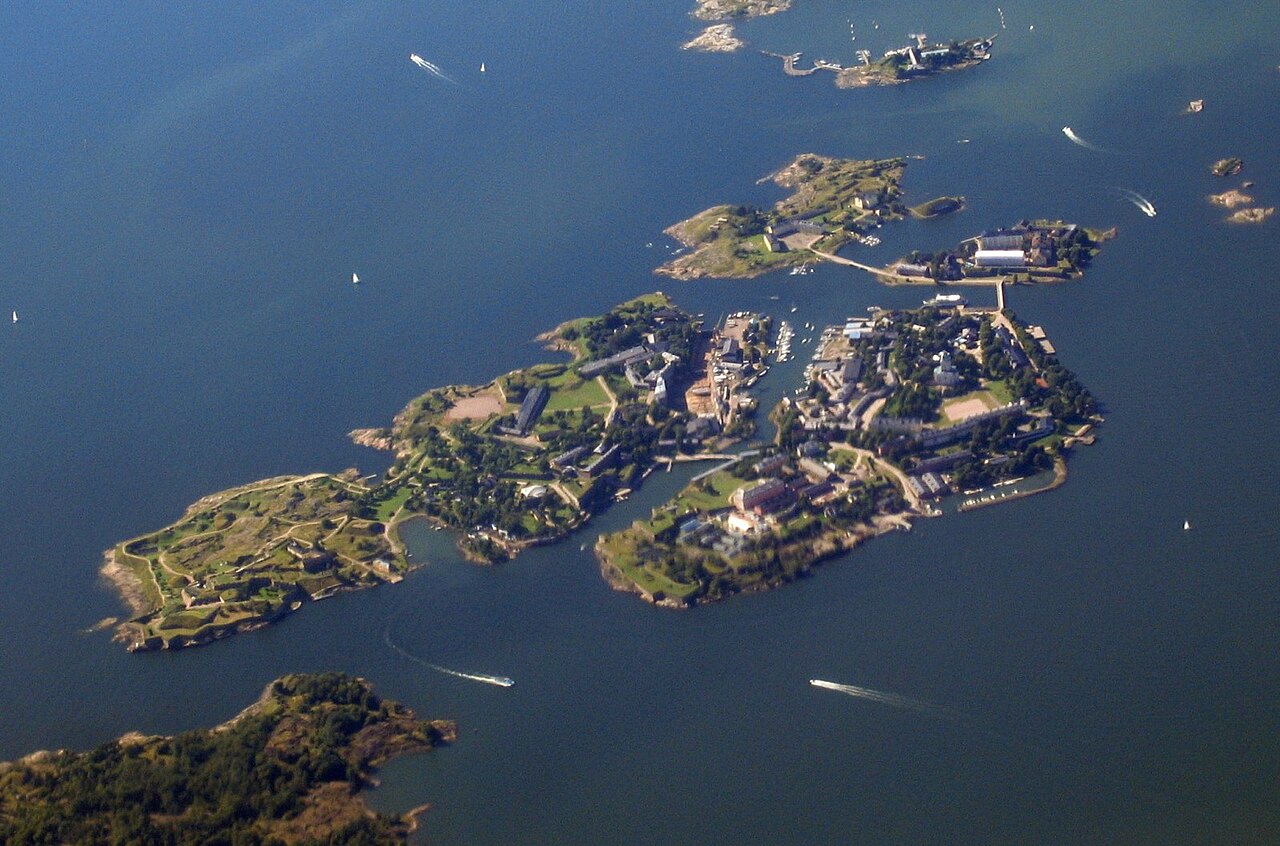
A sea fortress on eight islands, six of them fortified, about 4 km southeast of Helsinki's city centre. Sweden began building it in 1748 as a defence against Russia and called it Sveaborg. It surrendered to Russia in 1808, and after independence it was renamed Suomenlinna, 'Fortress of Finland'.
UNESCO World Heritage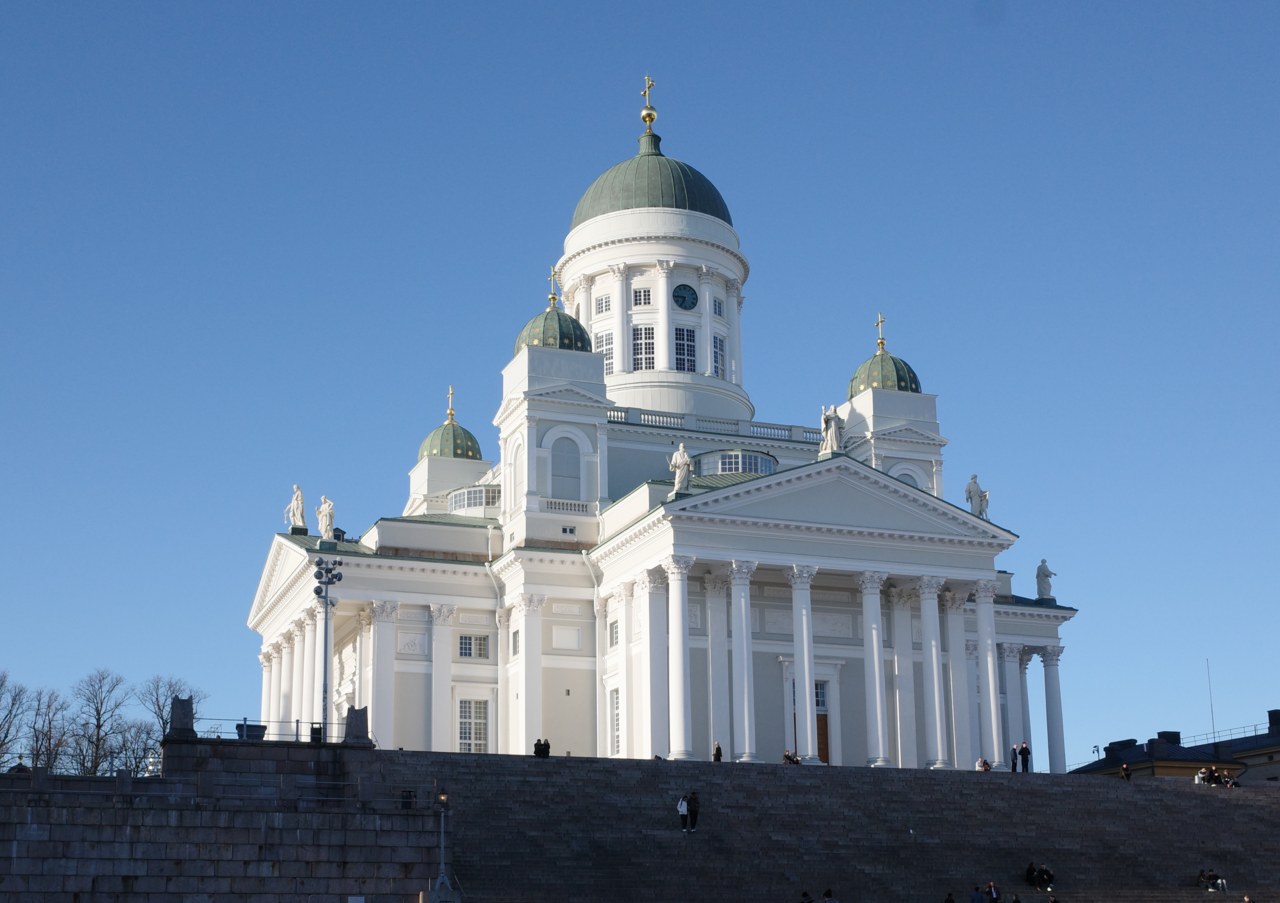
The white Lutheran cathedral with a tall green dome and four smaller domes, above Senate Square. Designed by Carl Ludvig Engel, it was built from 1830 to 1852 and was called St Nicholas' Church until independence.
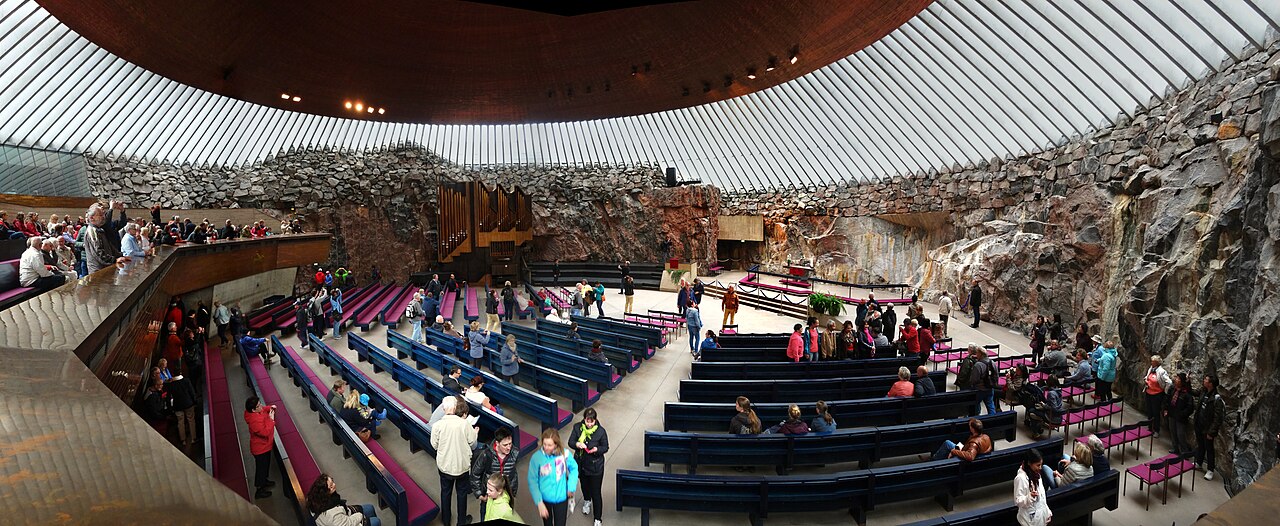
A Lutheran church opened in 1969, built directly into solid rock and lit by a ring of skylights around a copper dome. Its rough rock walls give it excellent acoustics, so it is often used for concerts.
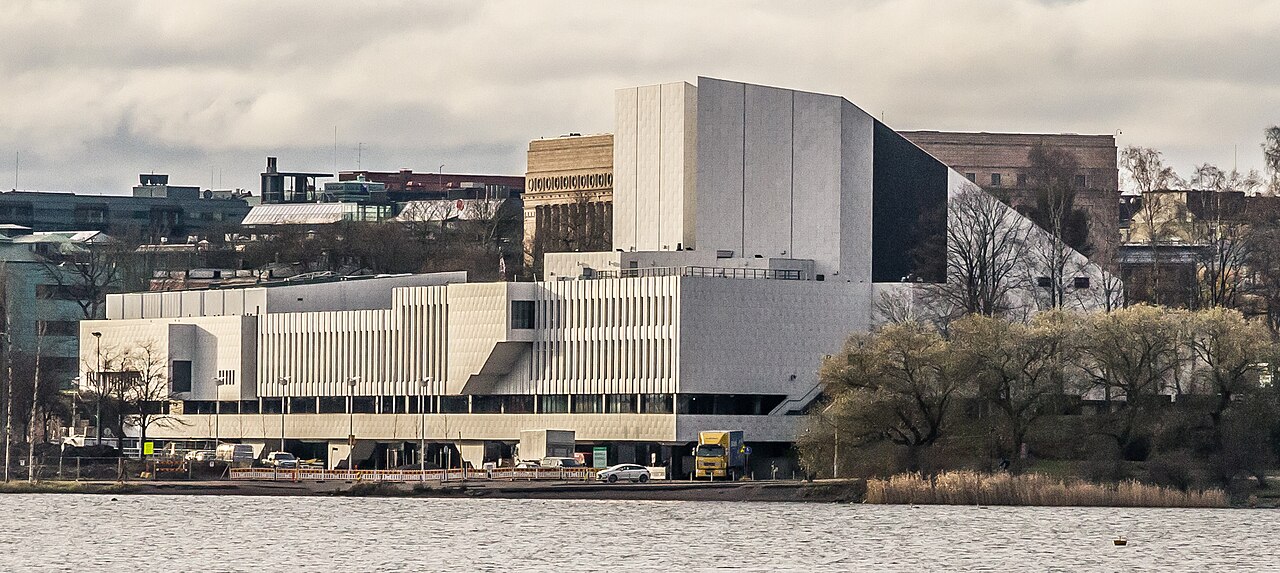
A white concert and congress hall on Töölönlahti Bay, designed down to the last detail by Alvar Aalto and opened in 1971. The 1975 Helsinki summit of 35 world leaders was held here. In July 2026 it became part of the 'Aalto Works' World Heritage Site.
UNESCO World Heritage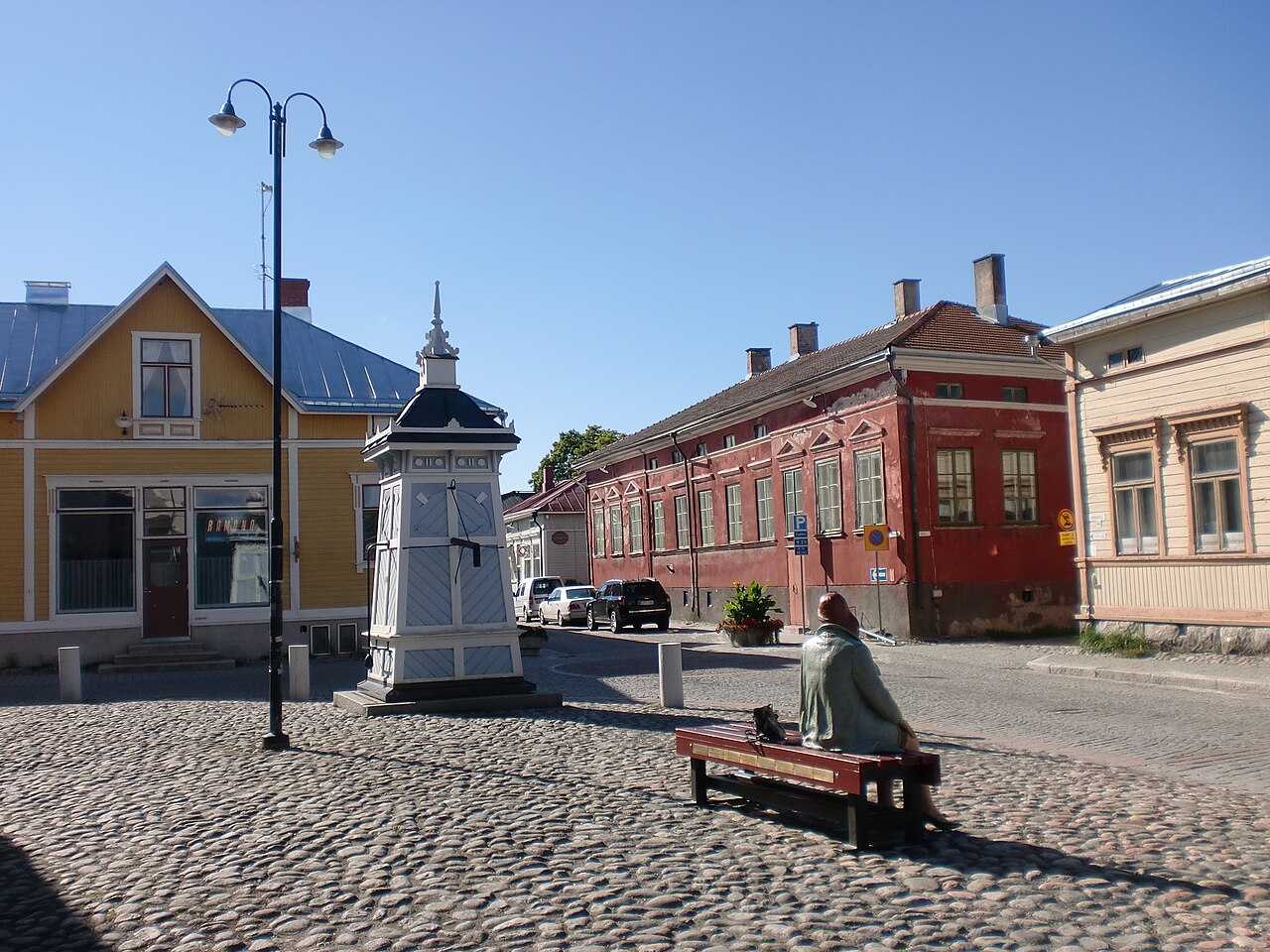
The wooden old centre of Rauma, with about 600 buildings on a street plan that goes back to the Middle Ages. Most houses were built after great fires in 1640 and 1682. The Church of the Holy Cross, a Franciscan monastery church inaugurated in 1512, has medieval paintings.
UNESCO World Heritage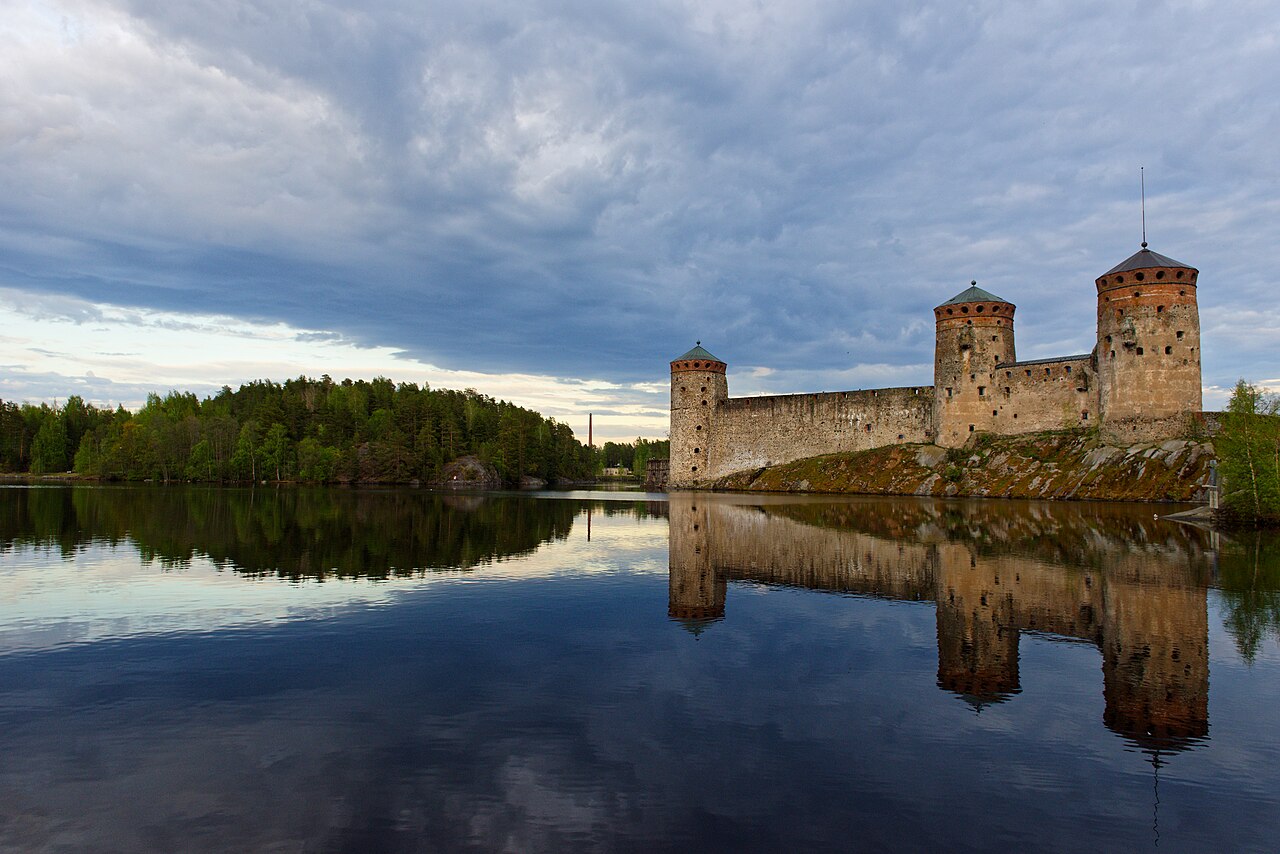
A three-towered castle founded in 1475 on a rocky island in the strait between two lakes. It is the northernmost medieval stone fortress still standing, and every summer it is the stage of the Savonlinna Opera Festival.
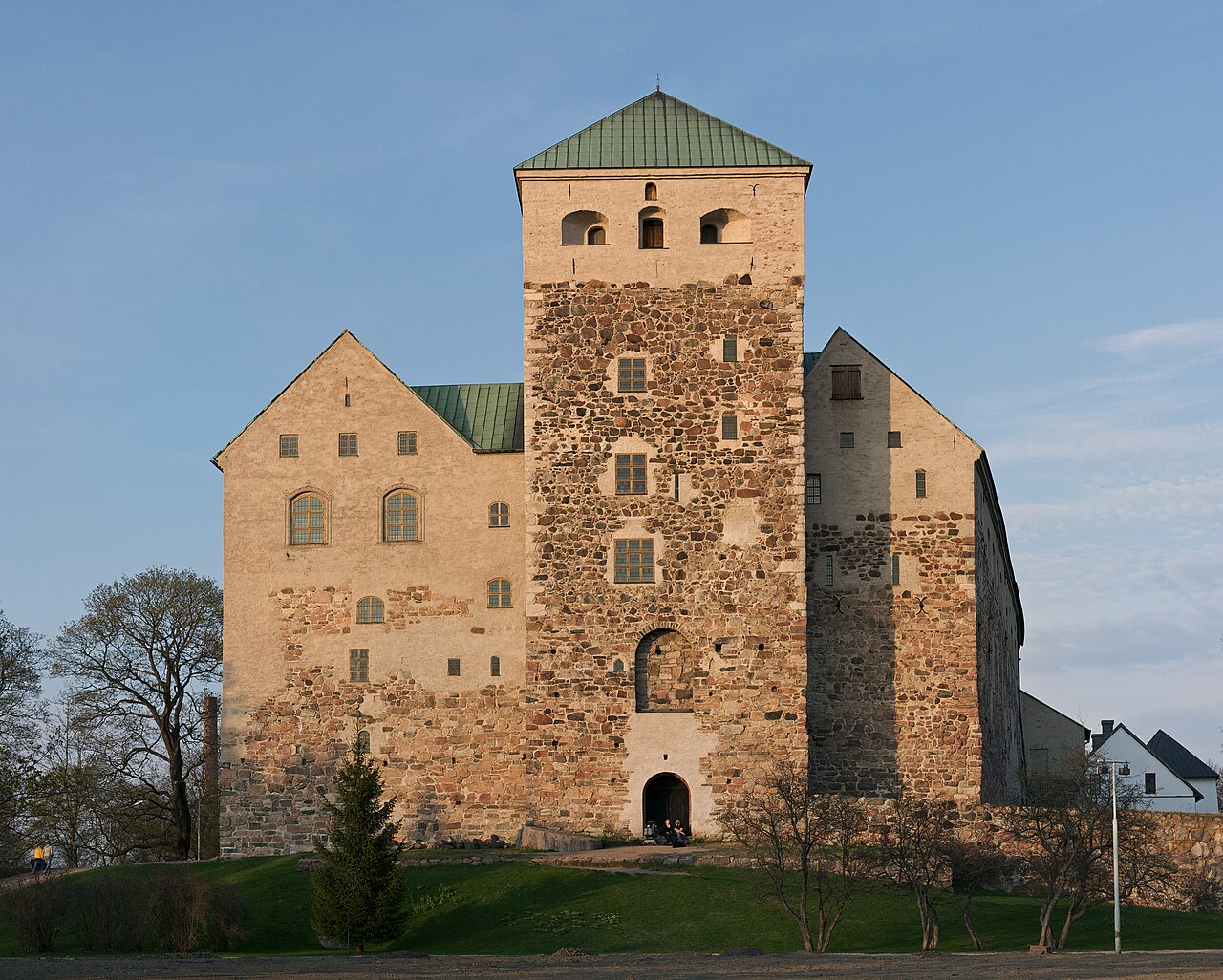
A great stone castle on the banks of the Aura River, begun around 1280. It is the largest surviving medieval building in Finland and served as a fortress and centre of government in Finland until the early 1800s. Today it is a museum.
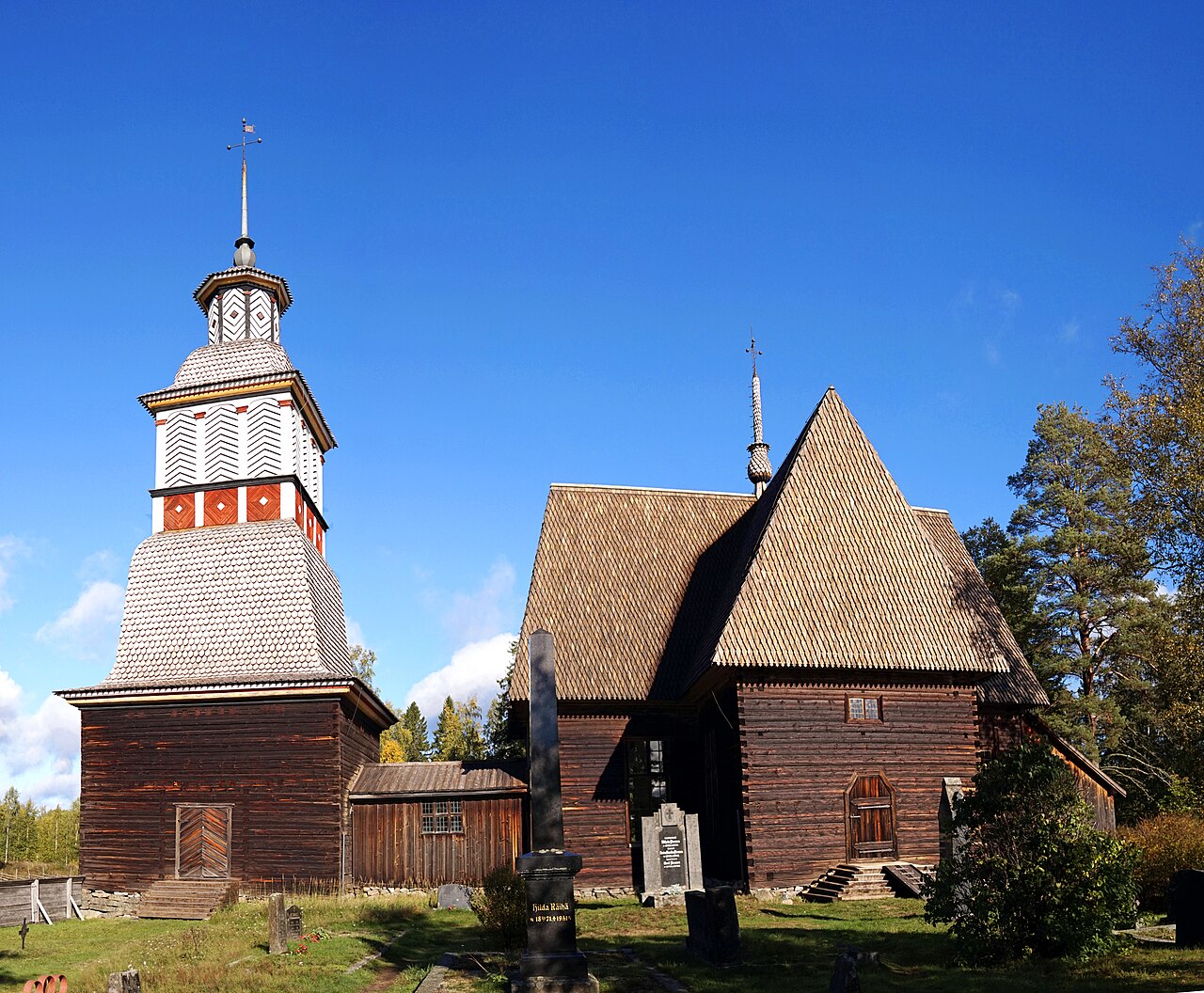
A wooden church built of pine logs from 1763 to 1765 by the village builder Jaakko Leppänen, with a bell tower added in 1821. It is about 30 km west of Jyväskylä and is a World Heritage Site for its Nordic wooden church architecture.
UNESCO World Heritage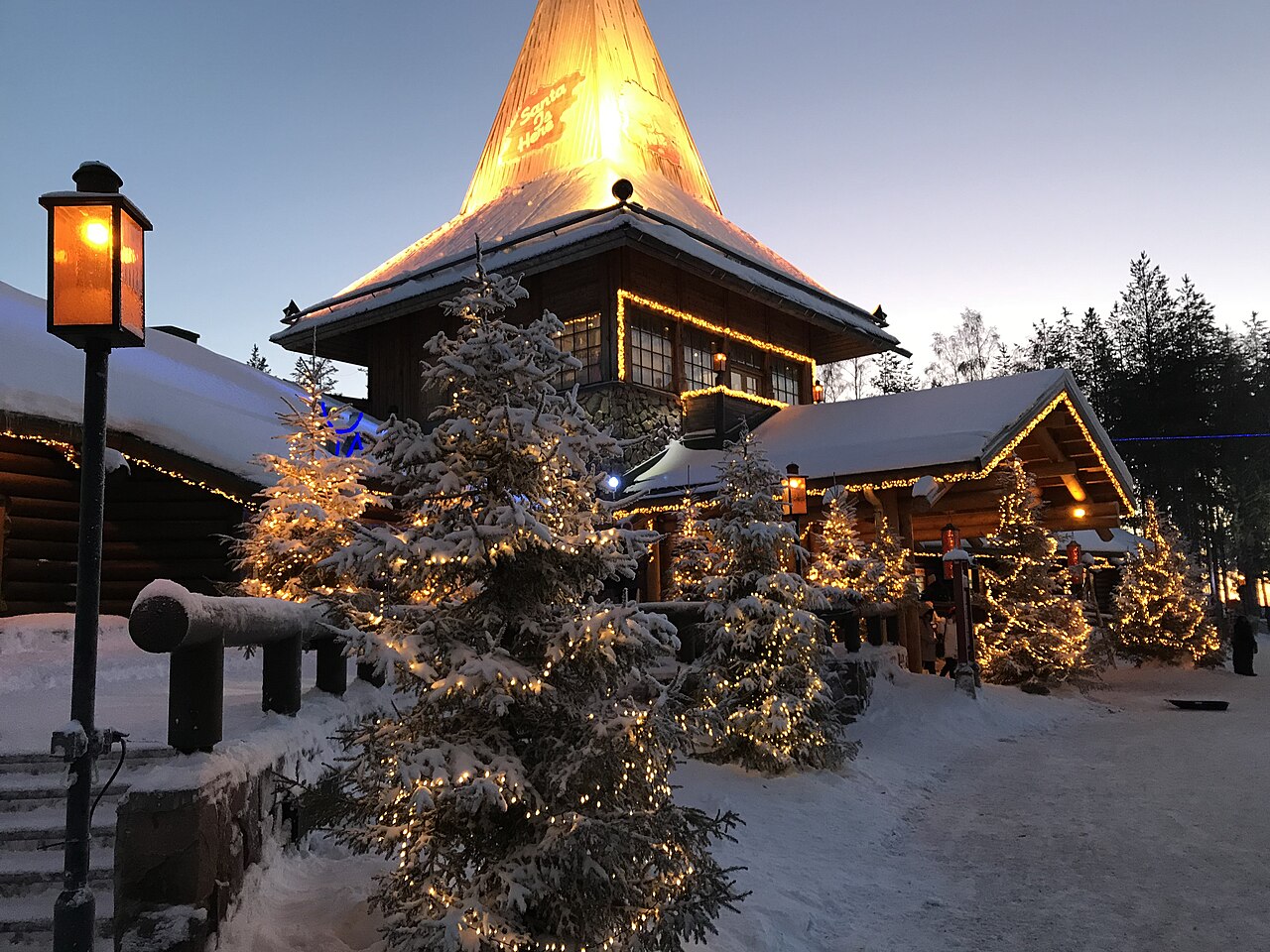
A Christmas village about 8 km northeast of the centre of Rovaniemi, near the airport. Visitors meet Santa Claus in his office and send cards from Santa's Main Post Office, a real Finnish post office. A white line marks where the Arctic Circle ran in 1865; today the circle lies a few hundred metres further north.
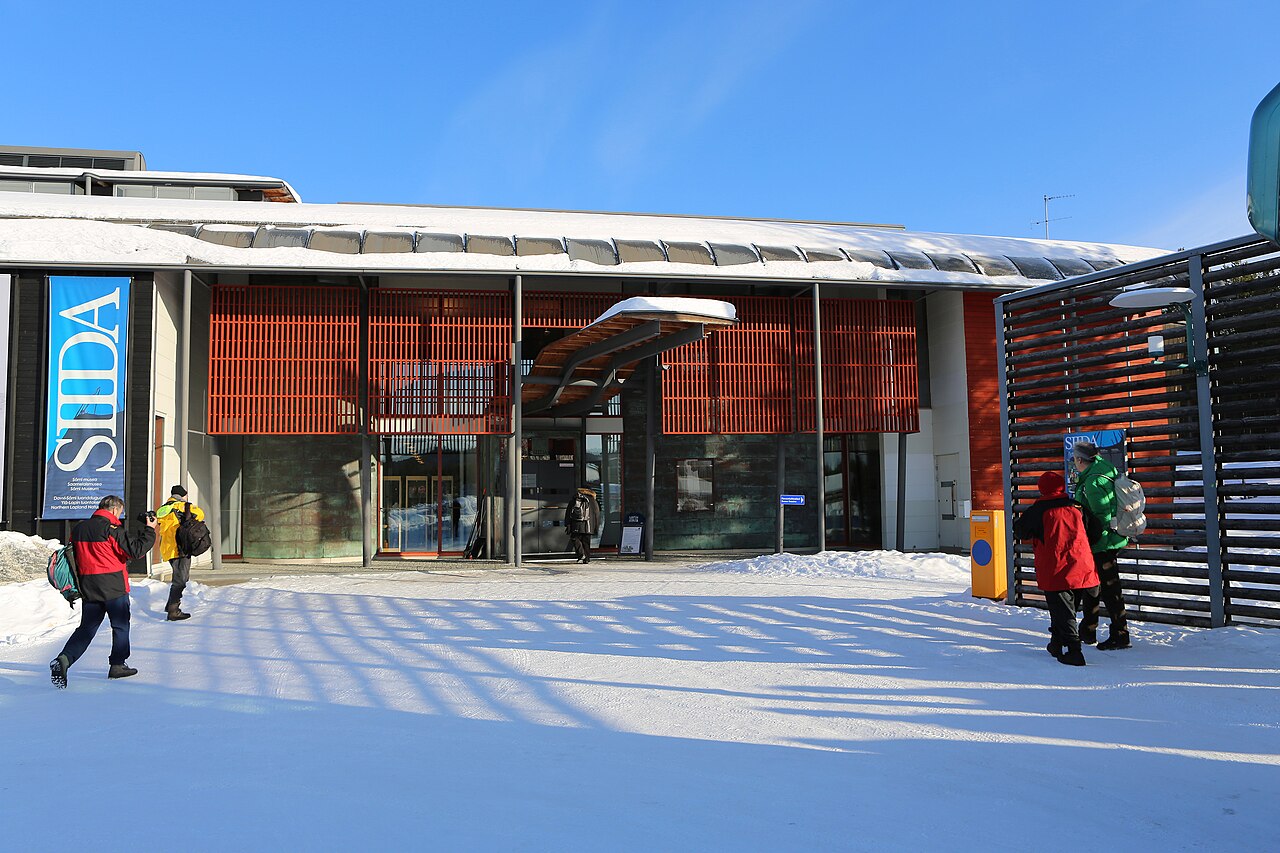
A museum on the shore of Lake Inari, home of the Sámi Museum and the Northern Lapland Nature Centre, opened in 1998. It tells the story of the Sámi people and of the northern nature, with an open-air museum in summer. In 2024 it won the European Museum of the Year Award.
Finland has about 188,000 lakes larger than 500 square metres (187,888 by one official count), and about 179,000 islands. The largest lake, Saimaa, is the fourth-largest natural freshwater lake in Europe.
According to UNESCO, Finland has about 3.3 million saunas for about 5.5 million people. Finnish sauna culture was added to UNESCO's list of the intangible cultural heritage of humanity in 2020.
As of the 2026 World Happiness Report, Finland has been ranked the happiest country in the world nine years in a row, every year since 2018. The ranking is based on how people rate their own lives on a scale from 0 to 10.
Finland is slowly getting bigger. The land is still rising after the weight of the Ice Age glaciers was lifted, by about 1 cm a year near the Gulf of Bothnia, so the country gains about 7 square kilometres of land each year.
At Finland's northernmost point the sun does not set for more than 70 days in summer, and in winter it does not rise for about 50 days.
The Finnish word for the northern lights, revontulet, means 'fox fires'. It comes from an old belief that the lights were the glow of a fire fox's fur.
In 1906 Finland, then a Grand Duchy of Russia, became the first place in Europe where all adult women could vote and stand for parliament. In 1907 Finnish voters elected 19 women.
The Moomins, the round white trolls loved around the world, were created by the Finnish writer and artist Tove Jansson. She wrote the nine Moomin novels in Swedish, between 1945 and 1970, and also made Moomin picture books and comic strips.
Nokia, famous for its mobile phones, started in 1865 as a pulp mill in the Tampere region.
The sport of wife carrying, in which a runner races along a course carrying a partner, began in Sonkajärvi, Finland, in 1992.
Every August since 1996, the city of Oulu has hosted the Air Guitar World Championships, where people play imaginary guitars to rock music.
In July 2026, 13 buildings and groups of buildings by Alvar Aalto and his closest partners Aino and Elissa Aalto, including Finlandia Hall in Helsinki, were added to the UNESCO World Heritage List as 'Aalto Works'. As of 2026, Finland has eight World Heritage Sites.
Santa Claus Village near Rovaniemi has its own official Finnish post office, where letters to Santa arrive from all over the world.
Finland has won the Eurovision Song Contest once, in 2006, when the hard rock band Lordi sang 'Hard Rock Hallelujah'.
Finnish is not related to Swedish or Russian: it belongs to the Uralic family, with Estonian as a close relative. The main stress is on the first syllable. Guide: 'ä' sounds like the a in 'cat' (written 'a' in the guides), 'ö' like the u in 'fur' (written 'Ö'), and 'y' like the German ü, an 'ee' said with rounded lips (written 'Ü'). Double letters are held longer. Pronunciation is written the way it sounds; the capital letters show where the stress goes. Audio is coming soon.
Cars drive on the right. Finnish law requires headlights to be on whenever you drive, in every season. Usual speed limits are 50 km/h in towns, 80 km/h on country roads and up to 120 km/h on motorways in summer.
Yellow signs with an elk mark places where elk often cross. In Lapland, reindeer are often on or beside the road, so drive with care.
Between 1 November and 31 March, winter tyres are required whenever the weather or road conditions call for them.
The weather can change quickly. Winters in Lapland can reach minus 30 °C, while Helsinki summers often reach plus 25 °C. Wear layers, and in winter choose wool, which stays warm even when wet.
Around midsummer the sun does not set for weeks in the north, so bring a sleep mask. In winter the far north has very little daylight, and on long, clear nights you may see the northern lights.
Under 'everyone's right' you may walk in the countryside and pick wild berries and mushrooms, even in private forests, but not right next to someone's home.
In bilingual towns, signs show both Finnish and Swedish names, for example Helsinki and Helsingfors, or Turku and Åbo.
The emergency number in Finland is 112. It is free from any phone, including foreign mobiles, and operators can help in Finnish, Swedish and English.