Australians usually eat three meals a day: breakfast, lunch and dinner, with a morning or afternoon tea break for many. Everyday food has British roots, such as meat pies, roasts and fish and chips, but waves of migrants brought Italian, Greek, Lebanese, Vietnamese, Chinese and Indian cooking, and good espresso coffee is found in almost every town. The warm climate makes outdoor eating popular, from a backyard barbecue with friends to a sausage sizzle outside the hardware shop. Aboriginal peoples have eaten native foods, from seeds and nuts to fish and game, for tens of thousands of years, and the macadamia nut is a native Australian plant. Some favourite sweets, such as pavlova and Anzac biscuits, are loved on both sides of the Tasman Sea, and Australians and New Zealanders still argue, in a friendly way, about who made them first.
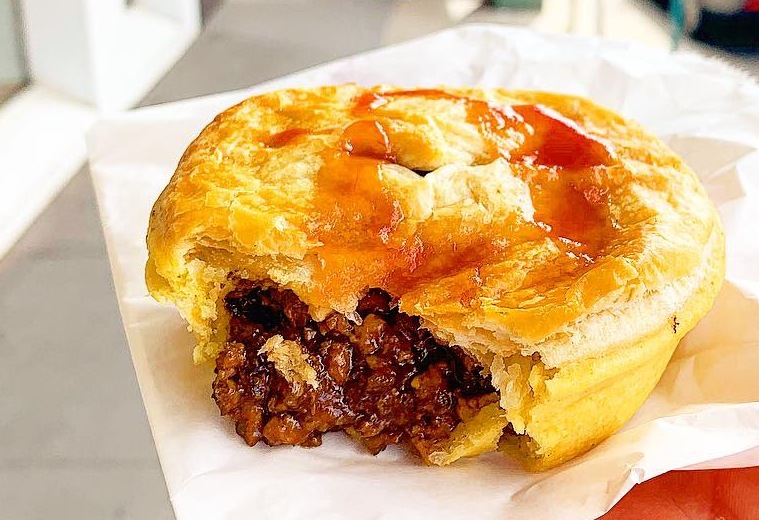
A hand-sized pie of minced or diced beef in thick gravy, with a shortcrust base and often a flaky top. It is eaten hot, straight from the hand, usually with tomato sauce squeezed on top.
The meat pie has been described as Australia's national dish, and it is the classic snack at a football match. Food rules say a commercial meat pie must be at least 25 percent meat.
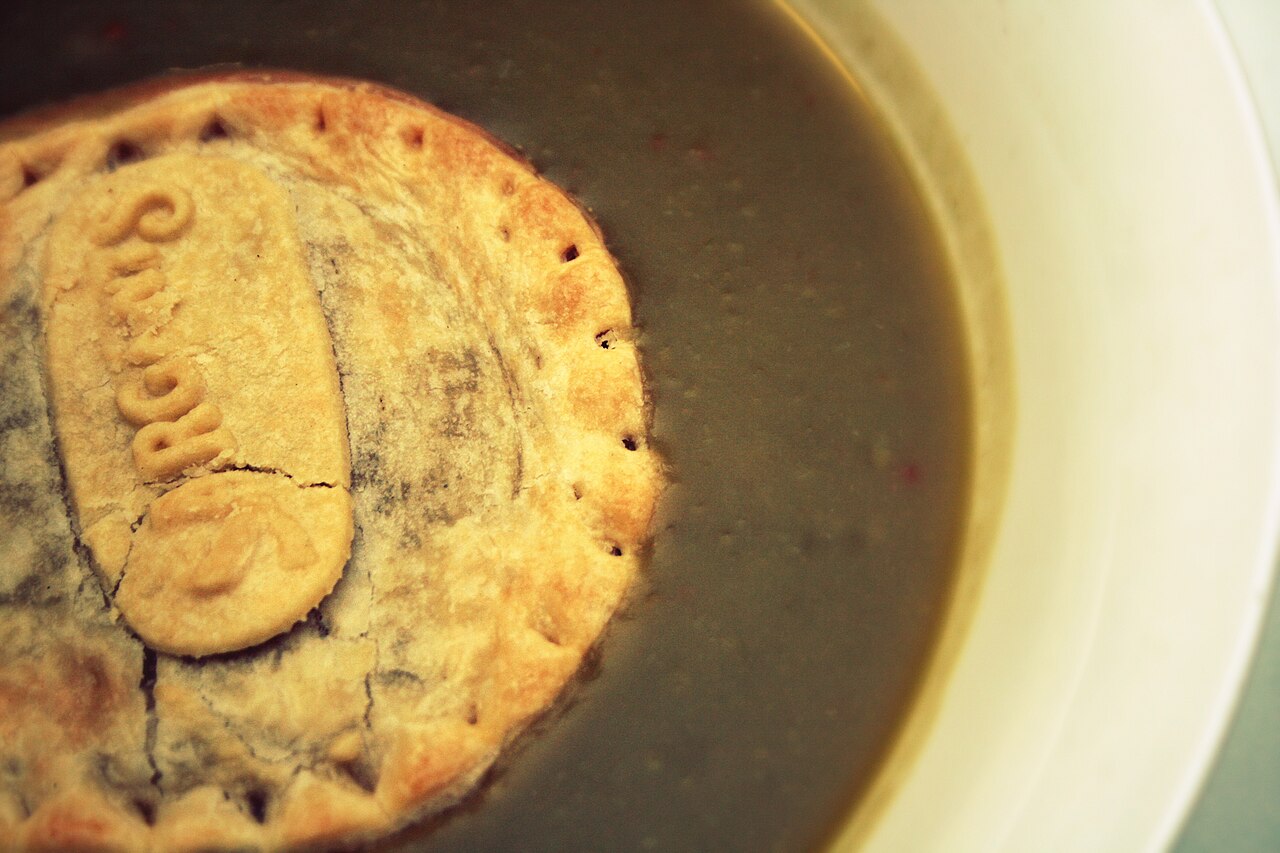
A meat pie sitting in, or turned upside down into, a bowl of thick green pea soup, usually with a swirl of tomato sauce on top.
It was sold late at night from pie carts on Adelaide's streets, and in 2003 the National Trust of South Australia named it a South Australian Heritage Icon.
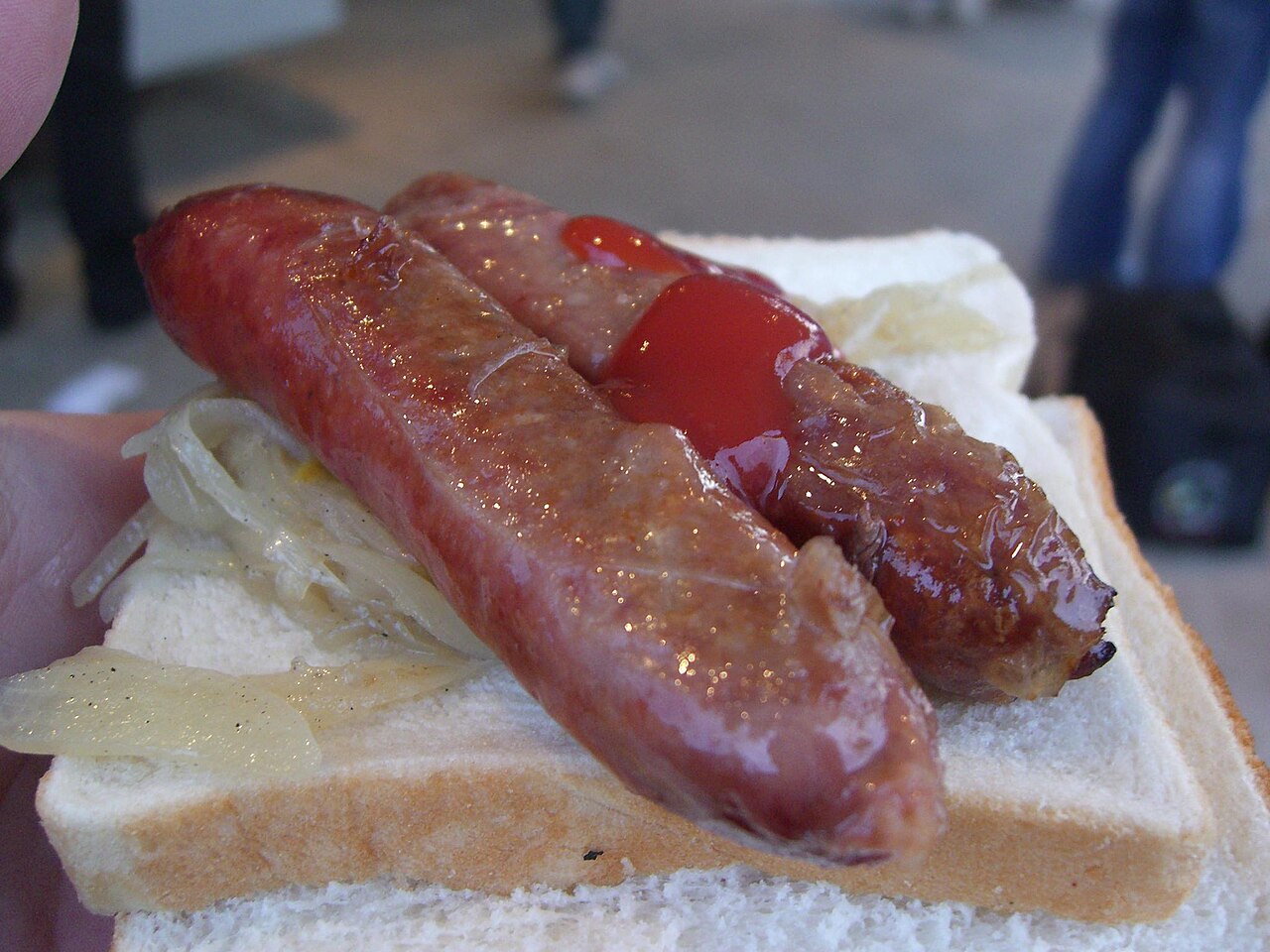
A barbecued sausage, often called a 'snag', wrapped in a slice of white bread with fried onions and tomato sauce or mustard. It is sold cheaply at fundraisers for schools, sports clubs and charities.
Sausage sizzles are so common outside polling places on election day that the sausages there are nicknamed 'democracy sausages'.
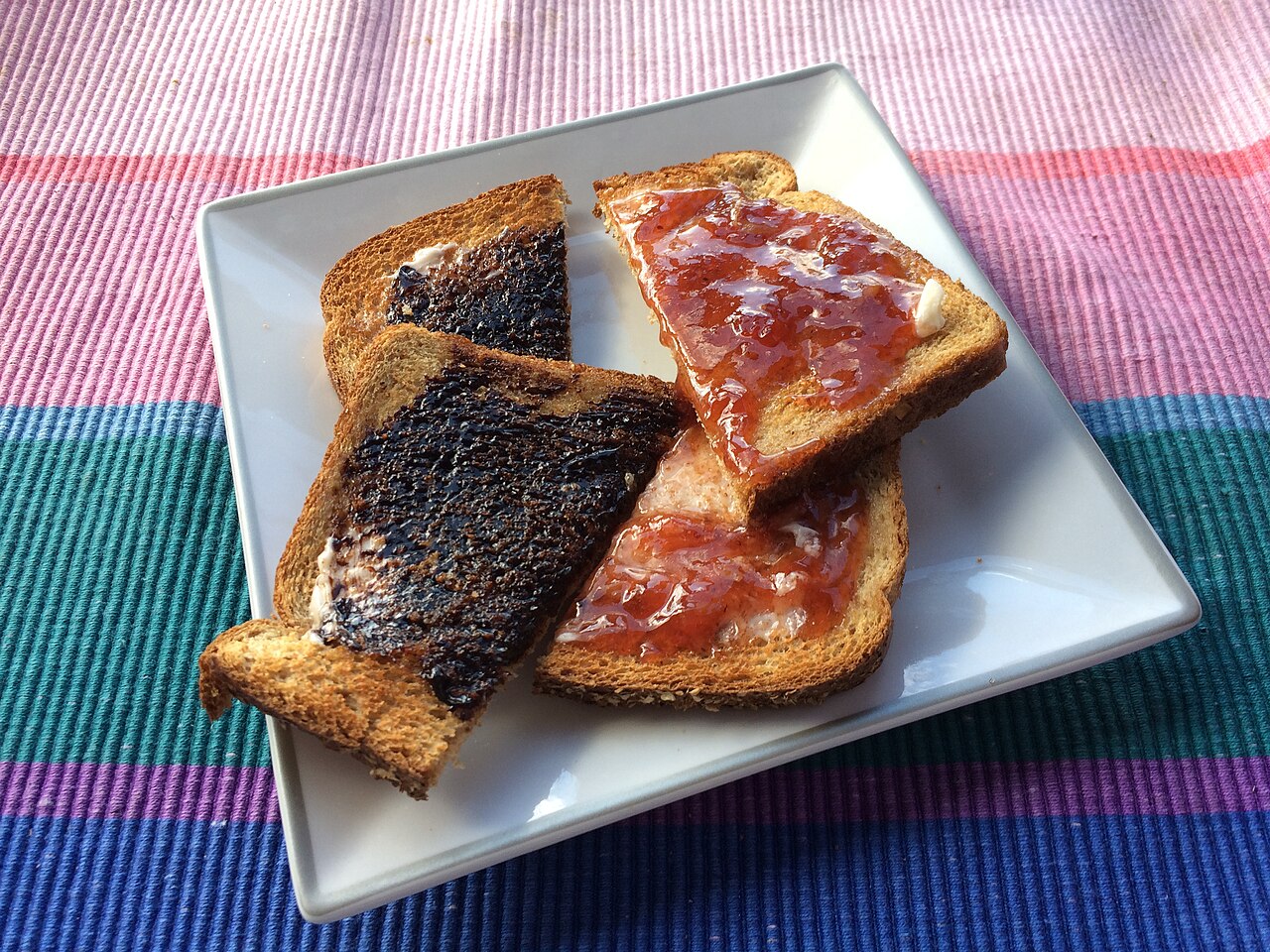
Hot buttered toast with a thin scrape of Vegemite, a thick, dark brown, salty spread made from leftover brewer's yeast. It has a strong taste, so it is spread very thinly.
The chemist Cyril Callister developed Vegemite in Melbourne in 1922, when imports of the British spread Marmite were disrupted after the First World War. It went on sale in 1923.
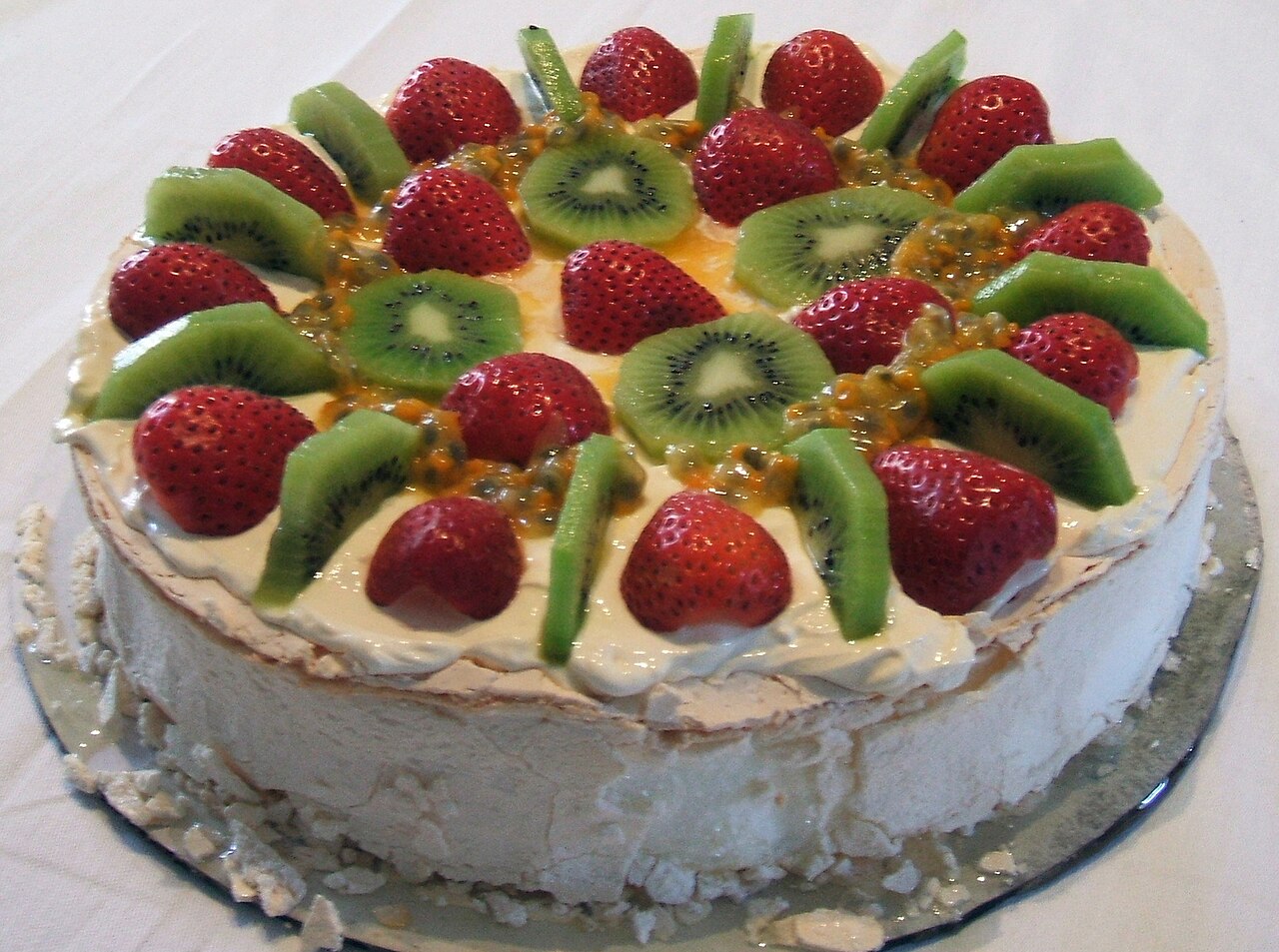
A large round of baked meringue, crisp outside and soft like marshmallow inside, topped with whipped cream and fresh fruit such as strawberries, kiwi fruit and passionfruit. It is a favourite summer dessert, especially at Christmas.
It was named after the Russian ballerina Anna Pavlova, who toured Australia and New Zealand in the 1920s. Both countries claim to have invented it, and food historians still disagree.
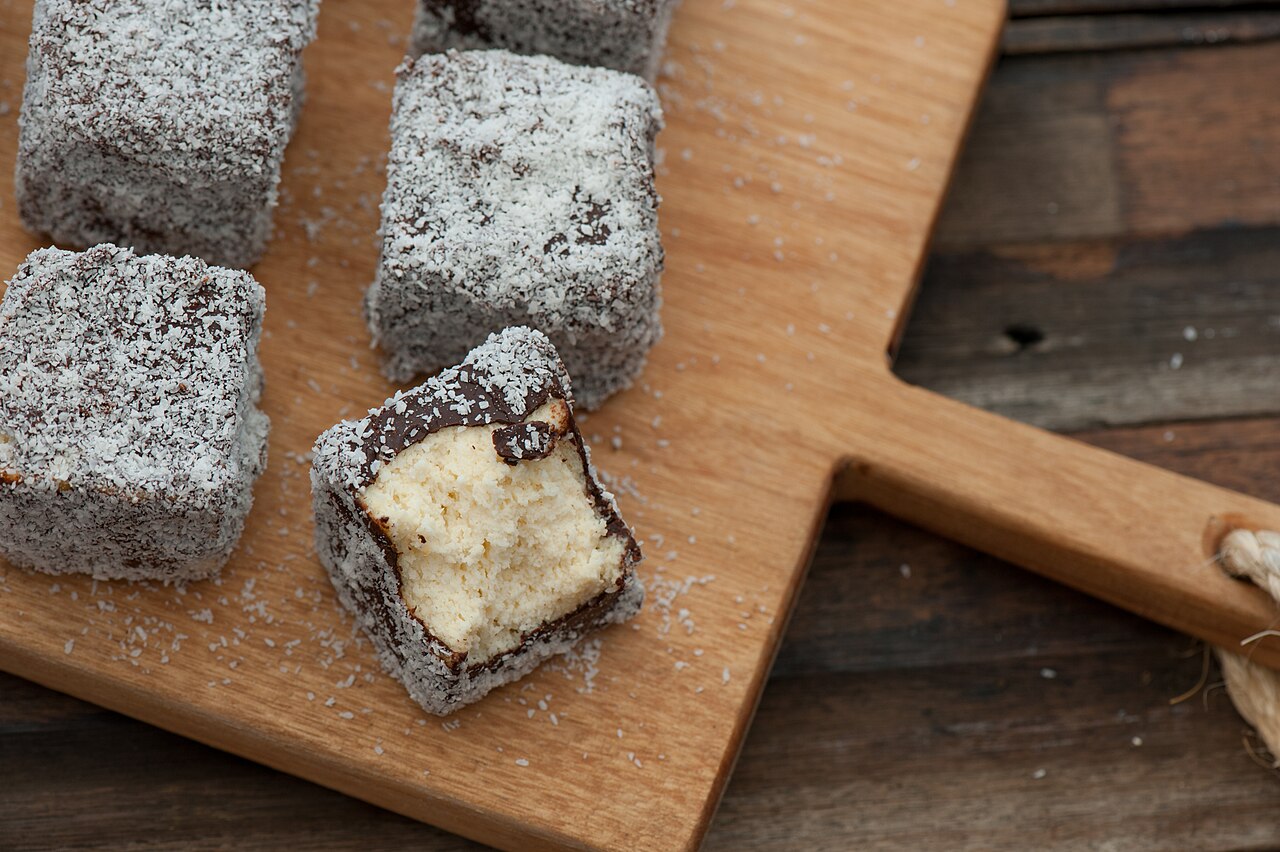
Squares of sponge or butter cake dipped in thin chocolate icing and rolled in desiccated coconut. Some are cut in half and filled with jam and cream.
They are believed to be named after Lord Lamington, Governor of Queensland from 1896 to 1901. The most popular story says his French-born chef, Armand Galland, made them from leftover cake for unexpected guests.
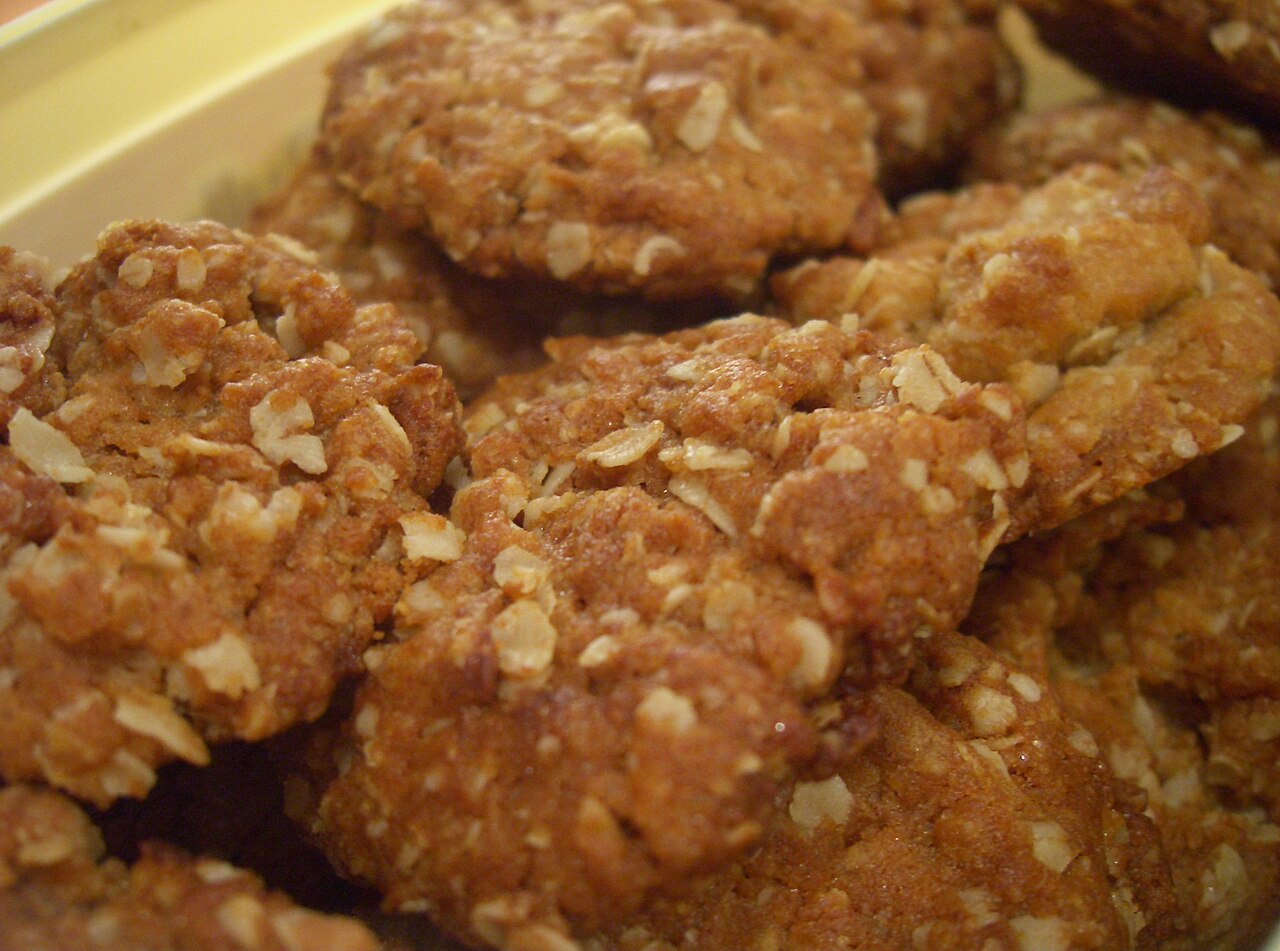
Crunchy or chewy biscuits of rolled oats, flour, sugar, butter, golden syrup and usually coconut, with no eggs. They are baked at home especially around Anzac Day on 25 April.
They are linked with the soldiers of the ANZAC corps, as women's groups are thought to have sent biscuits that kept well in the post. The name 'Anzac' is protected by law in Australia, but Anzac biscuits may be sold as long as they stay close to the traditional recipe and are called biscuits, never cookies.
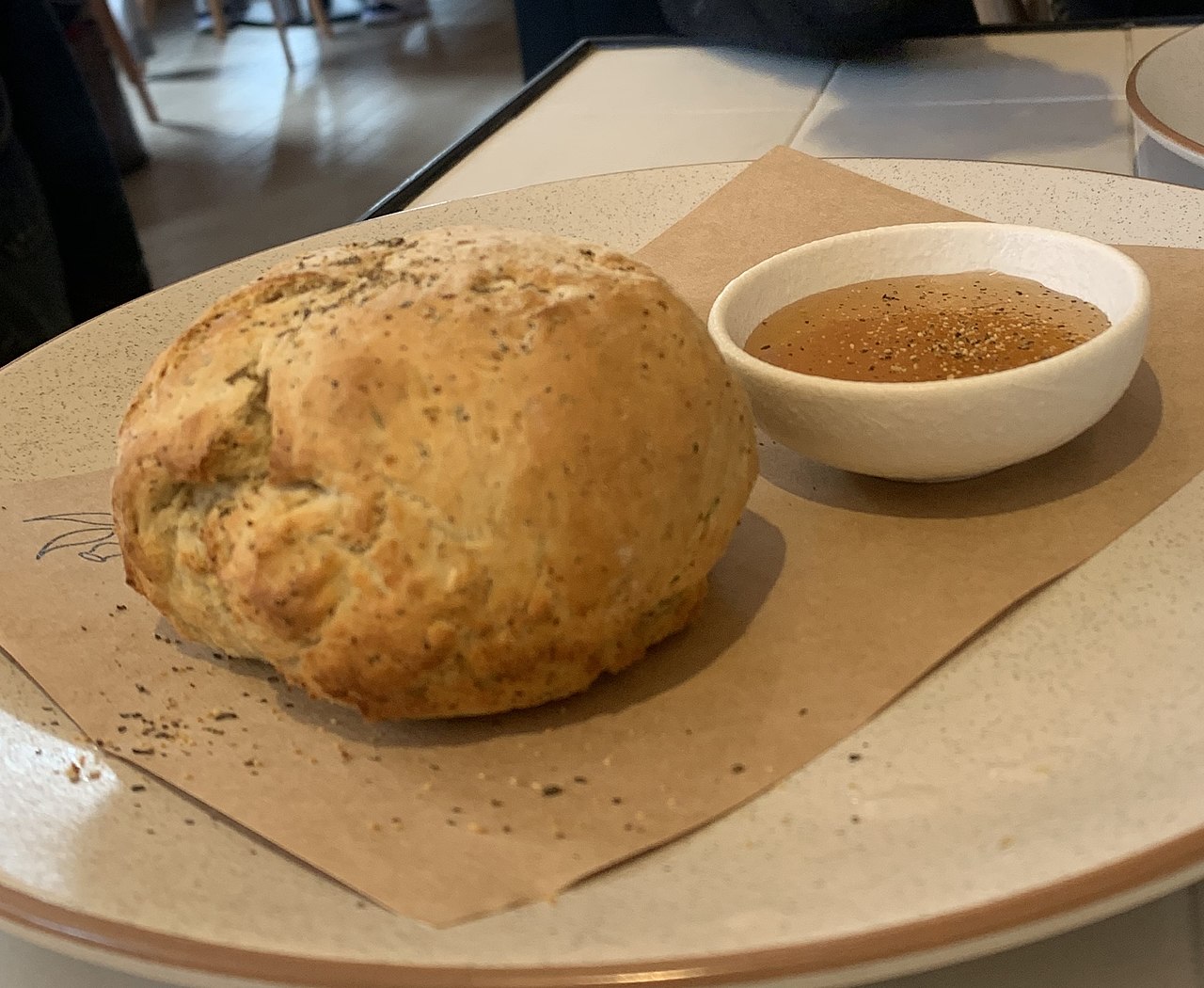
A simple bread of flour, water and salt, with a little butter if there is any, traditionally baked in the hot ashes of a campfire or in a camp oven. It is eaten warm with butter, jam or golden syrup.
Stockmen who spent long weeks in remote areas lived on damper, tea and whatever meat they had. It is different from bush bread, which Aboriginal peoples have made for thousands of years by grinding native seeds.
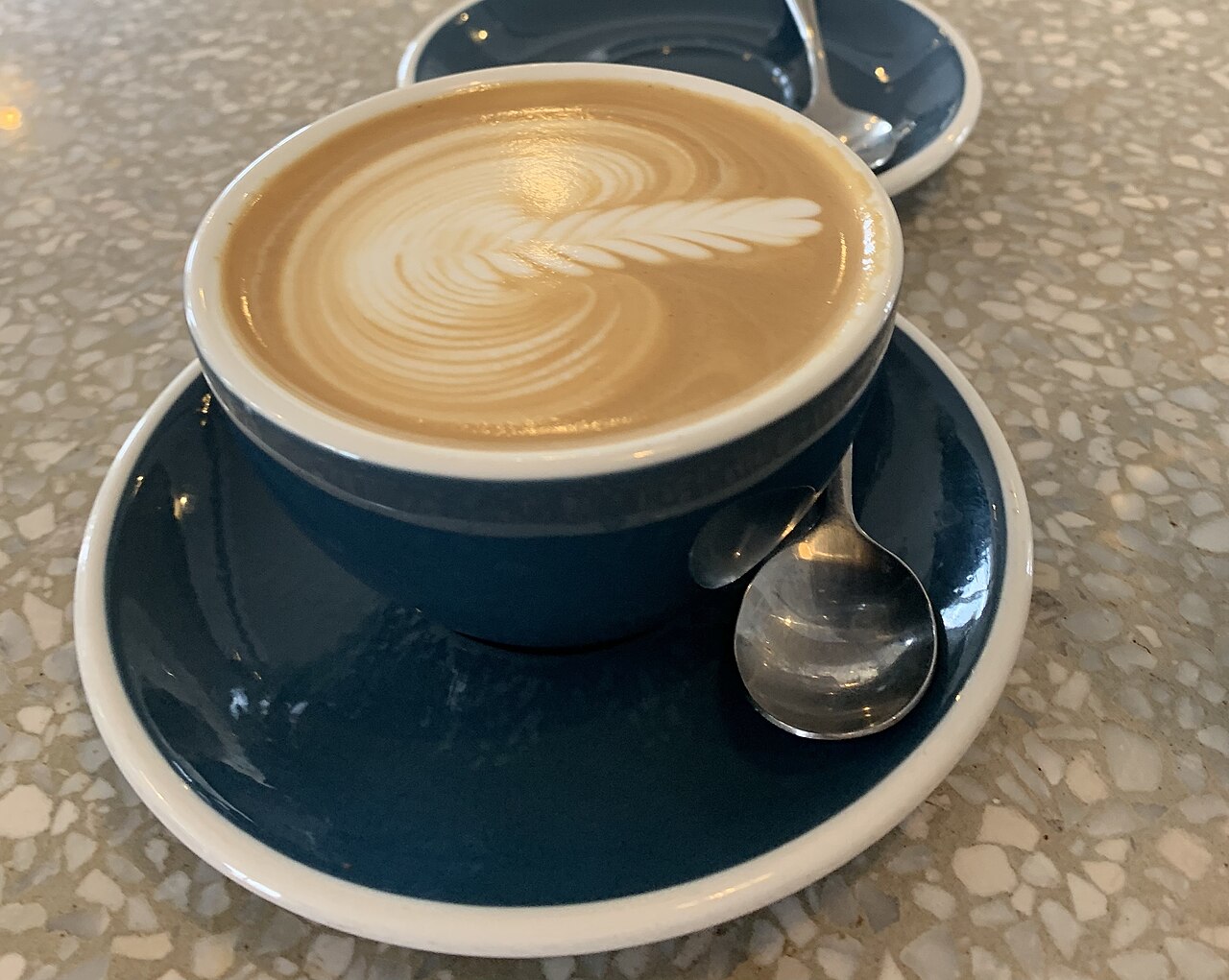
Espresso coffee with steamed milk and only a very thin layer of fine foam on top, usually stronger in taste than a latte and without the thick froth of a cappuccino.
Cafés in both Australia and New Zealand claim to have invented the flat white, and nobody knows for sure who was first.
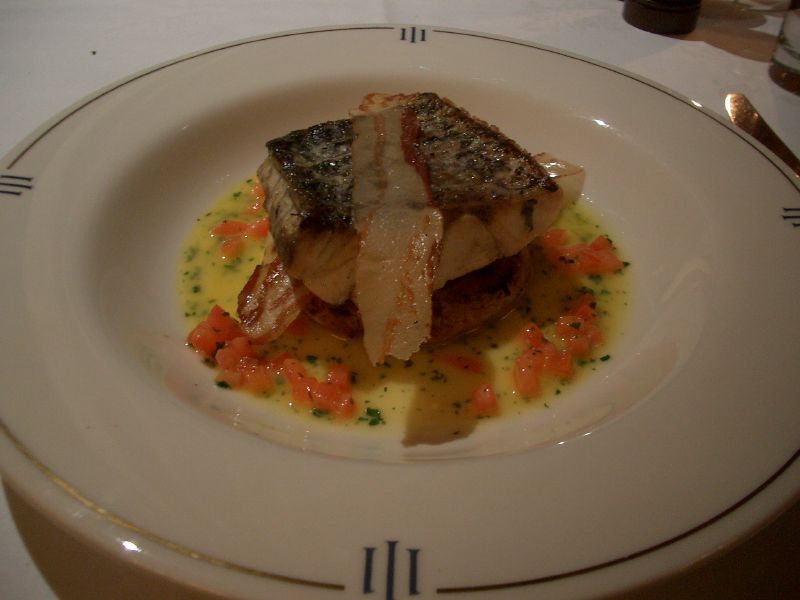
A large fish of the tropical rivers and coasts with firm, mild white flesh. It is often pan-fried or grilled with crispy skin, or served as fish and chips.
Its name is a loanword from an Aboriginal language of the Rockhampton area in Queensland, said to mean 'large-scaled river fish'.
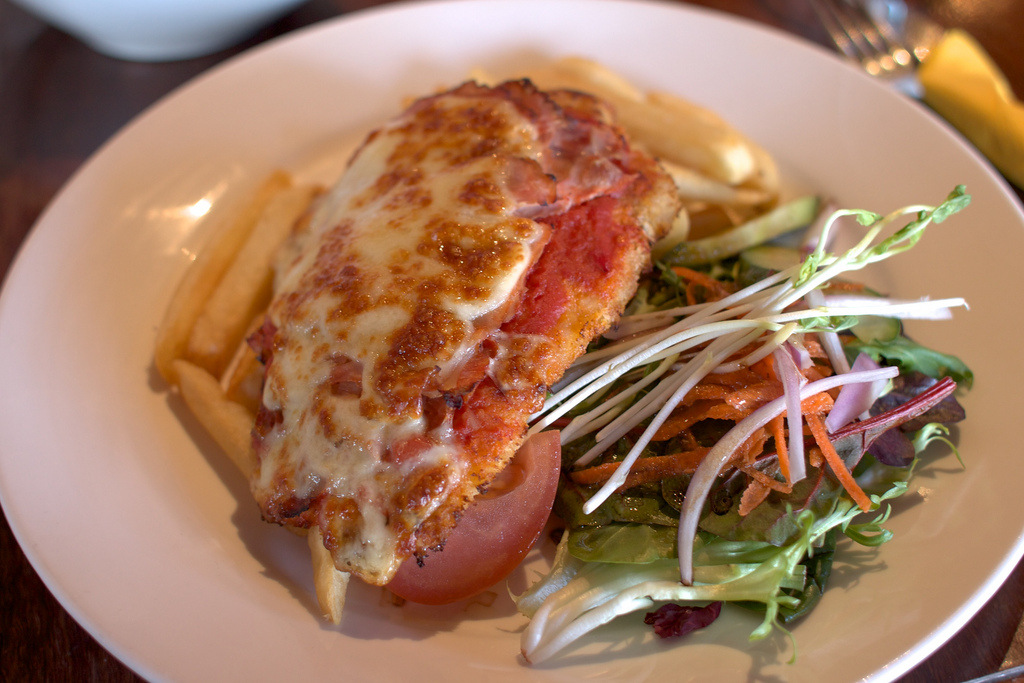
Chicken parmigiana: a crumbed, fried chicken breast topped with tomato sauce, ham in some places and melted cheese, usually served with chips and salad. It is a classic meal in Australian pubs.
Whether it is called a 'parma' or a 'parmi' depends on where in Australia you are. It was on restaurant menus in Adelaide as early as 1953.
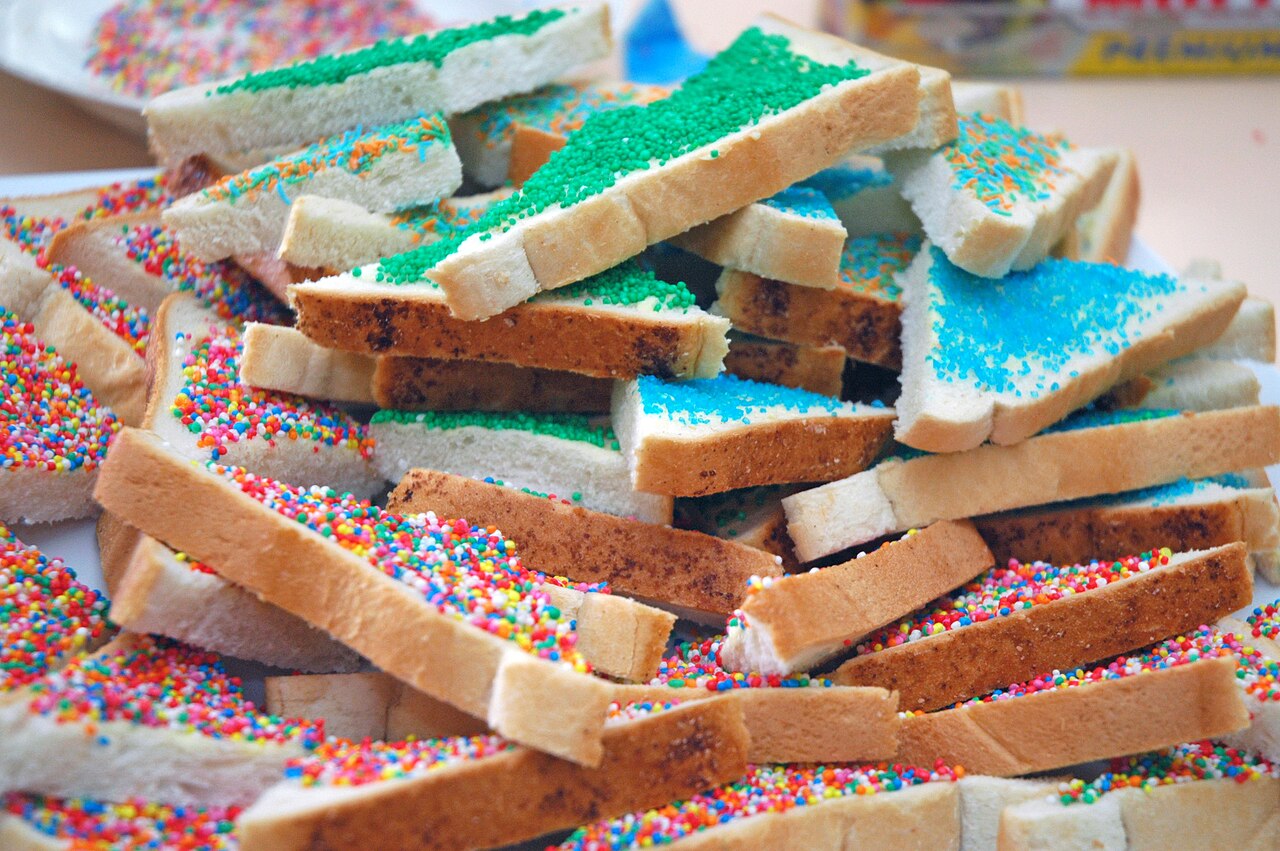
Slices of white bread spread with butter and covered with 'hundreds and thousands', tiny round coloured sprinkles, then cut into triangles. It is a must at children's birthday parties.
The first known mention of the name was in a Hobart newspaper, The Mercury, in April 1929.
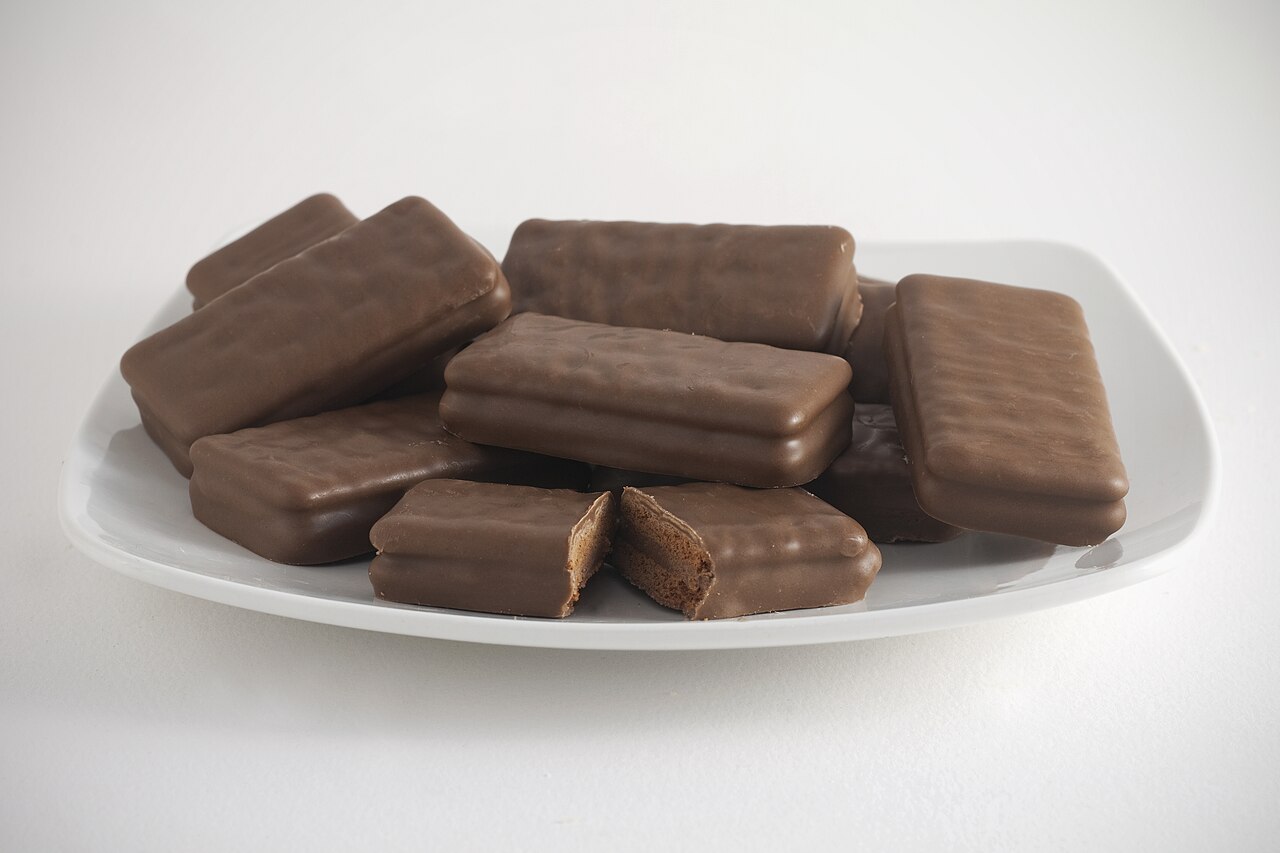
A chocolate biscuit made of two malted biscuits with a chocolate cream filling, all coated in chocolate. Many Australians bite off opposite corners and sip hot drink through it, which is called a 'Tim Tam slam'.
It went on sale in 1964 and was named after Tim Tam, the horse that won the 1958 Kentucky Derby, which Ross Arnott had watched.
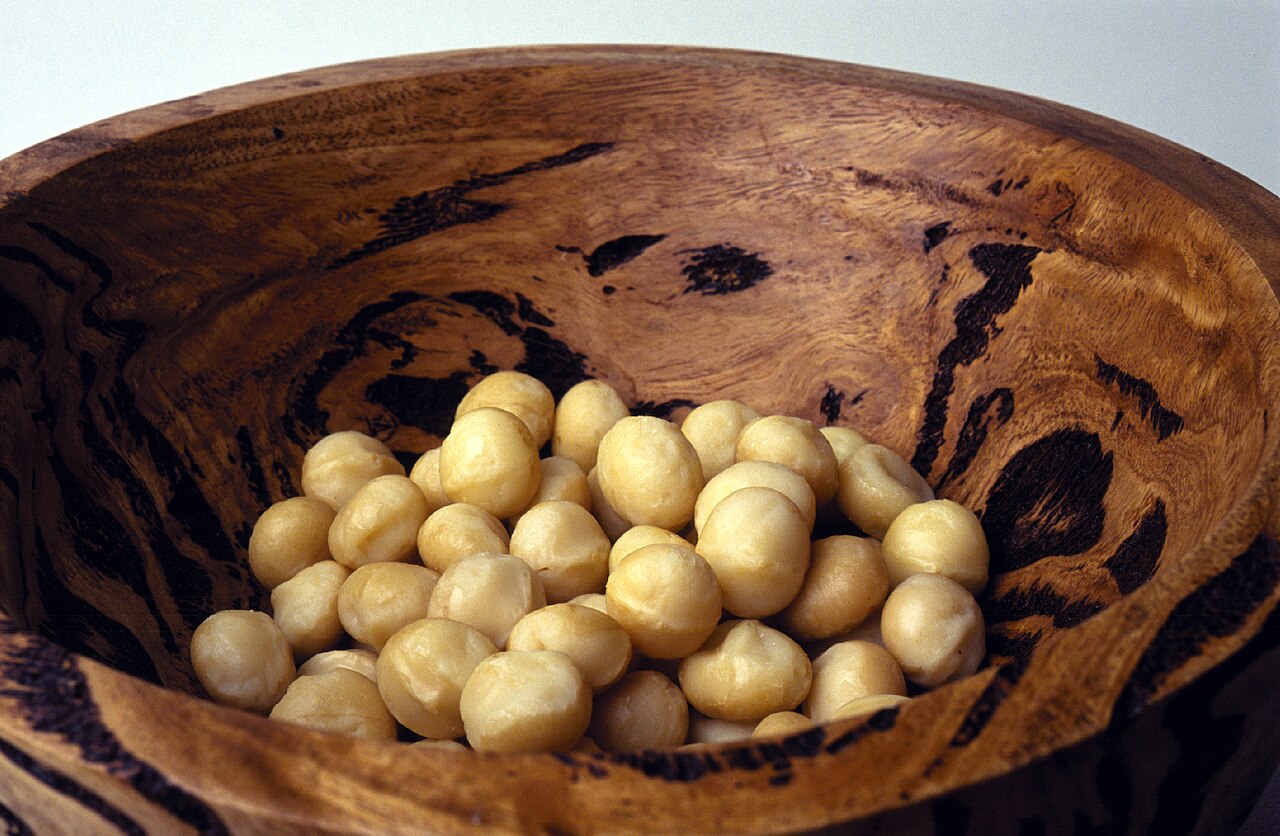
Round, creamy, buttery nuts with a very hard shell, eaten roasted and salted, or baked into biscuits and cakes.
The macadamia tree grows wild only in eastern Australia, and it was an important bush food for Aboriginal peoples. Seeds taken to Hawaii in 1882 were first planted as windbreaks, and Hawaii later became the world's biggest grower for about a century.
At the table in Australia
If you are asked to 'bring a plate' to a party or gathering, it means bring a dish of food to share, not an empty plate.
In a pub, friends often take turns to buy a round of drinks for the group, called a 'shout'. 'It's my shout' means 'I'm paying'.
Meat pies are usually eaten from the hand, not with a knife and fork, often with tomato sauce on top.
At a barbecue, the host usually cooks the meat outside, and guests may bring a salad, a dessert or their own drinks.
Christmas comes in the middle of summer, so many families have a cold lunch with seafood and salads, and pavlova for dessert.